❌

Reading view

Startup plans to put nuclear-powered data centers in the sea β€” modular units could be much faster to deploy, but questions about reliability and longevity remain

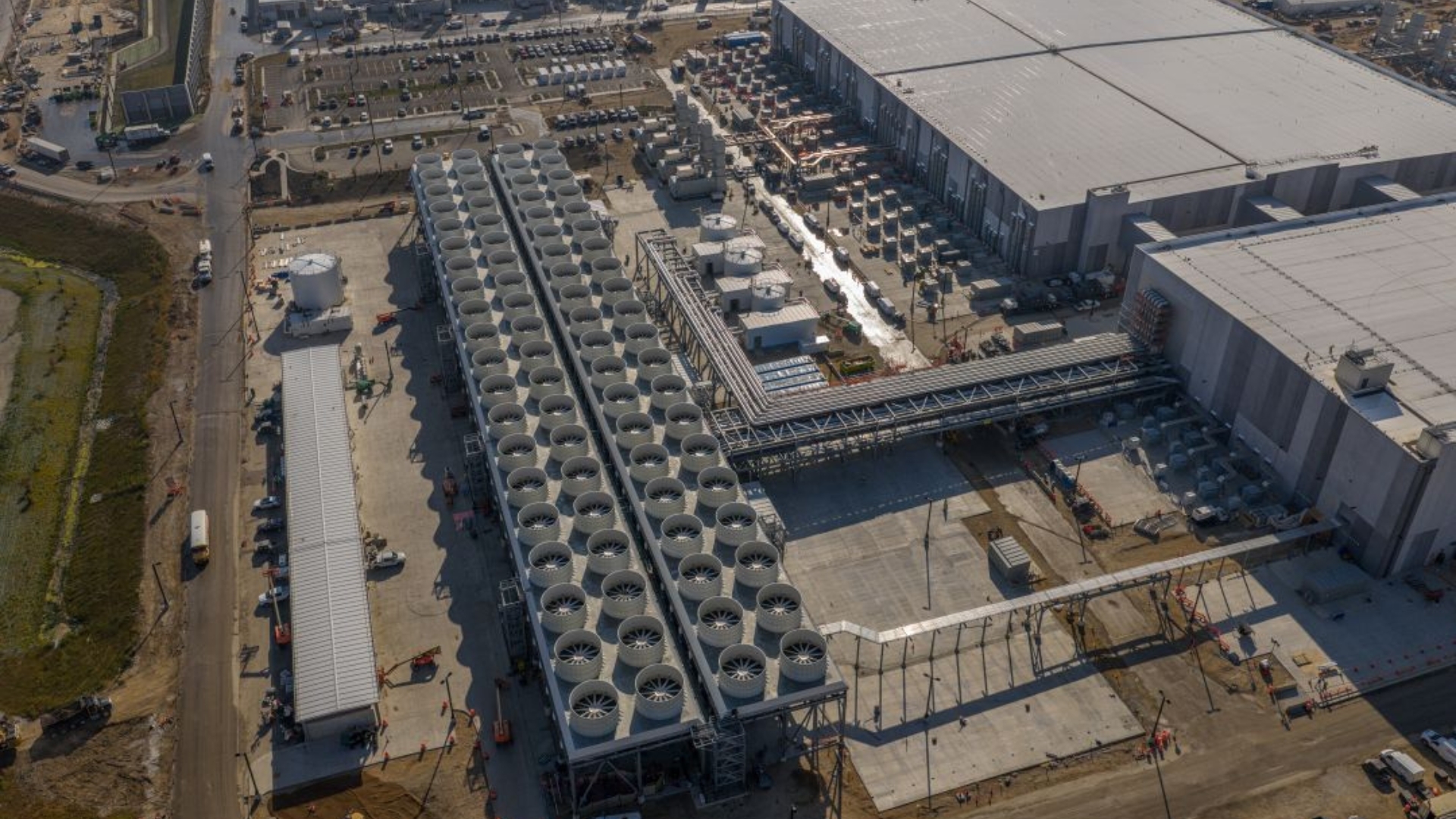
Data centers on land are facing increasing opposition and having a hard time getting off the ground β€” from power connection issues that can take months or years to resolve, to neighborhood concerns about noise and air pollution, as well as their impact on the local water supply. One startup called Atomarine wants to solve this by building nuclear-powered data centers on barges and deploying them at sea.
There have already been various proposals to put data centers out at sea (or even submerged) from established names and startups. We’ve seen conventional examples from companies like Samsung Heavy Industries and Japanese shipping company MOL who to put the servers on dedicated ships and are powered by liquefied natural gas (LNG). There are also more innovative solutions from startups that want to put them in the bases of ocean-based wind turbines or in wave energy converters.

Atomarine differs by building data centers as floating barges, similar to floating oil platforms, which can be deployed anywhere β€” even in international waters. This should help cut down on the permitting process, and it doesn’t have to worry about disturbing neighbors. The electricity needed to run the infrastructure is then delivered by a power ship moored alongside the barge supplied by LNG ships. Once small modular nuclear reactors (SMRs) become commercially available and certified for shipboard use, operators can then swap out the conventionally powered electricity suppliers with a nuclear one relatively quickly. And because these data center barges are modular in nature, it would be relatively easy to upgrade and scale the floating data center.

While this project sounds promising, building a megastructure like this comes with several challenges. The biggest one is that the ocean is massive and unpredictable, so these barges must be engineered to face extreme weather conditions, making them quite expensive to deploy. It must also be connected to high-speed internet (unless the operators plan to ship tons of drives daily), so they’ll have to lay undersea cables, as well. Furthermore, data servers are particularly sensitive equipment, so they must be upgraded to ensure that they can withstand the continuous rolling motion and the salty environment of the sea. There’s also the question of an SMR’s viability in shipborne use, although the U.S. Navy already has a good track record of running nuclear reactors aboard massive vessels.

The mounting opposition against data centers, both by the general public and politicians, is making it harder and more time-consuming to build new projects across the U.S. While an ocean-based data center like this is likely going to be significantly more expensive and technically challenging than land-based developments, this might become the fastest option in the future if the idea proves to be viable.

  •  
  •  

Big Tech’s A.I. Spending Keeps Rising. So Do the Jitters.

Amazon joined a procession of tech giants that ramped up their spending on artificial intelligence, as its capital expenditures soared 69 percent. Concerns over the industry’s spending are mounting.
  •  

Rules of the road needed for orbital data center constellations

Starcloud

As companies develop large constellations of orbital data center satellites, experts say now is the time to start thinking about some critical space safety topics and rules of the road.

The post Rules of the road needed for orbital data center constellations appeared first on SpaceNews.

  •  

Iran struck Amazon data centers again amid widening war, satellites show

Satellite images have revealed new damage to Amazon data centers in the Middle East along with at least one crucial Saudi oil facility, following missile and drone attacks by Iran and its Houthi allies.

The images from Europe’s Copernicus Sentinel-2 satellites provide evidence of a widening war as the United States and several Gulf states exchange military strikes with Iran, the Houthi faction in Yemen, and Iran-backed militias in Iraq. Such satellite images also offer independent verification of claimed war damage, despite the US government having pressured US commercial firms and even Europe to restrict satellite imagery of the region.

Three Amazon data centers in the United Arab Emirates and Bahrain were already previously damaged by Iranian drone strikes on March 1. Those earlier attacks stuck Amazon with months of expected repairs and forced Amazon Web Services customers in the Middle East to migrate workloads to other cloud regions.

Read full article

Comments

Β© Samuel Boivin/NurPhoto via Getty Images

  •  

Sophia Space and Caltech claim patent for space data centers

SAN FRANCISCO – Sophia Space announced the award July 30 of a patent, shared with the California Institute of Technology, covering large, modular space-based data centers. The patent, issued July […]

The post Sophia Space and Caltech claim patent for space data centers appeared first on SpaceNews.

  •  

Trump Administration Is Repurposing Federal Land for A.I. Data Centers

In the latest example, the Energy Department will convert a shuttered Cold War-era uranium enrichment facility into a data center campus and gas plants.

Β© Kenny Holston/The New York Times

President Trump and Energy Secretary Chris Wright during a White House event last week in which 200 companies vowed to prevent A.I. data centers from driving up power costs.
  •  

Gas Is Letting Data Centers Grow Beyond the Grid

Artificial intelligence is heating up the race to build data centers, and with BloombergNEF projecting 194 gigawatts of demand by 2035, the biggest challenge isn't computing power…. It's electricity. Faced with years-long grid connection delays, developers are turning to on-site gas generation to bring projects online faster, creating a rapidly expanding market for turbines, engines, fuel cells and battery storage. Choosing the right technology is a trade-off between speed, cost, efficiency and emissions. And while on-site generation is often seen as a temporary bridge, developers are also weighing what role those assets could play once permanent grid connections become available.
  •  
❌