❌

Reading view

Apple Presses for 20% Cut in iPhone 18 OLED Panel Prices on 'Chipflation'

Apple's iPhone 17 Pro. (Photo: Apple)

Apple is strongly demanding lower display panel prices as rising memory semiconductor prices push up the cost of building iPhones.

According to industry sources on July 24, Apple has proposed a price of about $70 for organic light-emitting diode (OLED) panels for the iPhone 18 Pro Max, which it will unveil this year. The industry estimates that Samsung Display and LG Display are supplying the panels at an average of $66.5, even lower than that figure. That is about 20% below the previous model.

iPhone OLED prices have fallen with each new product in the past as well. Depending on supply timing and conditions, iPhone 16 Pro Max panels at times exceeded $100, but fell to the $80 range for the iPhone 17 Pro Max. Panels for the iPhone 18 Pro Max are about 20% lower than that. On top of the usual generational price decline, the size of the reduction has grown this time, according to industry officials.

Notably, the OLED panels for the iPhone 18 will use M16, the latest organic material set, which improves luminous efficiency, lifespan and color characteristics. Panel makers must adjust process conditions and stabilize yields to suit the new material. Product specifications and production difficulty have risen, yet prices have instead fallen.

Rising memory semiconductor prices have worked as a negative factor, as smartphone makers seek to absorb the cost increase by cutting procurement costs for other components such as displays and camera modules.

Samsung Display President Lee Cheong said on July 22 at K-Display 2026 that "this year is extremely difficult because of chipflation," adding that "very strong pressure is coming in to lower component and display prices." LG Display President Jeong Cheol-dong also said of the pressure to cut prices that the company is "being affected to some degree," but that it is "at a manageable level because we are pursuing cost innovation."

According to market research firm UBI Research, Samsung Display is expected to supply 46 million OLED panels for the bar-type iPhone 18 this year, comprising 2 million for the standard model, 18 million for the Pro and 26 million for the Pro Max. LG Display's expected volume is 41.09 million panels, made up of 1.09 million for the standard model, 19 million for the Pro and 21 million for the Pro Max.

"Apple is demanding steep price cuts from panel suppliers on the grounds of rising memory prices," an industry official said. "Supply prices are falling even for high-specification products using the latest organic materials, so panel makers' second-half earnings will vary depending on supply volumes, yields and the extent of cost reductions."

  •  

Low-Res Flexible OLED Adoption Rises Amid "Chipflation"

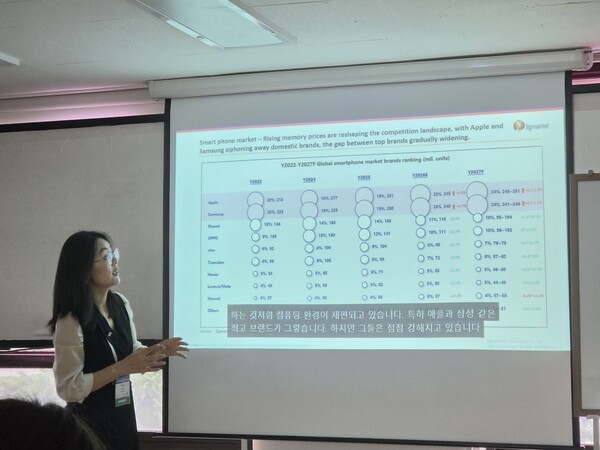
Lisa Lee, CEO of Sigmaintell, speaks during a media briefing held in Gangnam-gu, Seoul, on July 23. (Photo: THE ELEC)

Smartphone makers are expected to expand the use of lower-resolution flexible organic light-emitting diode (OLED) panels in mid- and low-end models as memory prices rise. Rather than reducing OLED adoption, companies are seeking to lower cost pressure by adjusting specifications for components such as memory capacity and display resolution.

Lisa Lee, chief executive officer of market research firm Sigmaintell, said during a media briefing held at the Fastfive shared office in Gangnam-gu, Seoul, on July 23 that "smartphone brands are considering applying flexible OLED displays with slightly lower resolutions to low-end markets." She added that "device makers are looking for ways to reduce costs by combining different specifications."

Smartphone manufacturers are asking component suppliers, including panel and camera makers, to lower prices in order to offset rising memory costs. They are also reviewing adjustments to product configurations, including system-on-chip (SoC) specifications, memory capacity and display resolution.

Sigmaintell said SoCs account for a larger share of smartphone component costs than panels and cameras, meaning manufacturers are likely to restructure the overall cost structure of products rather than seek price reductions from individual components alone. The company said product strategies may differ by segment, with mid- and low-end devices reducing memory capacity or screen resolution while premium models maintain existing specifications.

"Panels and cameras are less expensive than SoCs, limiting the potential for cost reductions," Lee said. "Brand companies are looking for ways to lower costs not only in panels and cameras but also across other components."

Smartphone makers are seeking to maintain OLED adoption partly to reduce the burden on consumers caused by higher prices. Keeping existing specifications unchanged could significantly increase manufacturing costs for budget smartphones, making price increases unavoidable.

Instead of raising prices alone, manufacturers are expected to maintain product competitiveness by offering features that consumers can directly perceive, such as OLED displays. "Even if prices increase, companies will likely provide new features along with the higher price," Lee said. "Applying OLED to new products is one possible approach."

Flexible OLED panels use bendable substrates instead of glass. They have traditionally been used mainly in premium smartphones, but their adoption has expanded into mid-range and budget devices as Chinese panel manufacturers increase supply and panel prices decline.

The smartphone market is expected to contract again next year. Sigmaintell forecasts global smartphone shipments will decline 3.3% to 1.0264 billion units next year from 1.0614 billion units this year. If rising memory prices and weakening demand for budget smartphones intensify, shipments could fall further to 975 million units.

The decline in smartphone demand is expected to continue through the first quarter of next year, with the pace of contraction slowing from the second quarter. The Chinese market is expected to experience a larger decline than the global market due to its higher share of low-end smartphones.

The memory shortage is being driven by rising demand for artificial intelligence (AI) servers. Sigmaintell said consumer memory supply is being reduced as demand for DRAM and high-bandwidth memory (HBM) used in AI servers increases.

Rising memory prices are also expected to affect smartphone shipments by manufacturer. Sigmaintell expects Apple and Samsung Electronics to maintain or expand their market shares due to stable component supply chains, while Chinese smartphone makers with higher exposure to mid- and low-end products will face greater pressure from rising costs.

However, the decline in smartphone sales is not expected to immediately translate into lower demand for OLED panels. Smartphone makers continue to transition products from liquid crystal displays (LCDs) to OLEDs, while adoption of lower-specification flexible OLED panels could increase in mid- and low-end models.

"Even if the overall smartphone market shrinks, the share of flexible OLEDs will continue to expand," Lee said. "In particular, we expect penetration of low-cost flexible OLED products to increase."

  •  

Coway Blue Wheels Win Jeju International Wheelchair Basketball Tournament

Players and officials of the Coway Blue Wheels pose for a group photo after winning the 13th Jeju Special Self-Governing Province Governor's Cup International Invitational Wheelchair Basketball Tournament at Jeju Halla Gymnasium on July 20. (Photo: Coway)

Coway’s wheelchair basketball team, the Coway Blue Wheels, won the Jeju Special Self-Governing Province Governor’s Cup International Invitational Wheelchair Basketball Tournament.

Coway said on July 23 that the Blue Wheels captured the title at the 13th Jeju Special Self-Governing Province Governor’s Cup International Invitational Wheelchair Basketball Tournament, held at Jeju Halla Gymnasium from July 17 to 20. The team remained undefeated from the preliminary round through the final.

The tournament featured seven teams from South Korea and overseas, including the Coway Blue Wheels, the Jeju Special Self-Governing Province team, the Chuncheon Tigers, and teams from Japan.

The Blue Wheels defeated Suwon Mugunghwa Electronics 65-38 and Daegu Metropolitan City Hall 97-60 in the preliminary round to finish first in their group and advance to the final. They then beat the Jeju Special Self-Governing Province team 65-59 in the championship game. Kim Ho-yong and Kwak Jun-sung each scored 20 points, while Kim Sang-yeol added 13.

Kwak Jun-sung was named the tournament’s Most Valuable Player (MVP), while Head Coach Kim Young-moo received the Best Coach Award.

The Blue Wheels also won the Asia-Oceania Club Exchange Tournament in 2024. This year, the team has claimed titles at the Holt National Wheelchair Basketball Tournament, the Korea Post President’s Cup Wheelchair Basketball Tournament, and the Jeju international tournament.

“Our players maintained their focus until the end, which enabled us to win the championship,” Head Coach Kim Young-moo said. “We will continue striving for strong results in the remaining tournaments this season.”

The Coway Blue Wheels were established in 2022. They are the only corporate-operated wheelchair basketball team among South Korea’s professional wheelchair basketball clubs. During the off-season, the team organizes wheelchair basketball experience programs and school sports club competitions.

  •  

​Roh Tae-moon "Seven Years of Foldable Experience Will Be Difficult to Replicate"

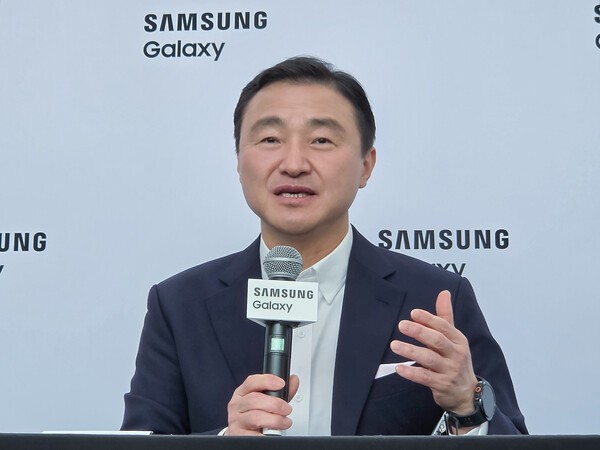
Roh Tae-moon, President, Chief Executive Officer and Head of the DX Division at Samsung Electronics, speaks at a media briefing following the Galaxy Unpacked 2026 event in London on July 22.

Samsung Electronics Co. is expanding its foldable smartphone lineup to three models.

​Roh Tae-moon, President, Chief Executive Officer and Head of the Device eXperience (DX) Division at Samsung Electronics, said at a media briefing held after the Galaxy Unpacked 2026 event at Old Billingsgate in London on July 22 that foldable smartphones have moved beyond introducing a new form factor and become part of consumers' everyday lives.

​"Foldables have moved beyond the stage of introducing a new form factor and have become part of everyday life," Roh said. "We have broadened customer choice to meet increasingly diverse consumer expectations."

​Samsung unveiled the Galaxy Z Fold8, Galaxy Z Fold8 Ultra and Galaxy Z Flip8 at the event, expanding its foldable portfolio from the two-model Fold and Flip lineup it had maintained since launching its first foldable smartphone in 2019.

◇​"We Welcome More Foldable Competitors, but Seven Years of Experience Cannot Be Matched"

​Roh said he expects more companies to enter the foldable smartphone market in the future.

​"As the foldable market matures, more companies will enter," he said. "That means foldables are becoming mainstream and the market is expanding, which we welcome."

​However, Roh emphasized that Samsung's seven years of accumulated user experience will be difficult for competitors to replicate in a short period. Foldable devices are not defined solely by folding hardware, he said, but also require the operating system, user interface and third-party applications to be optimized for different display configurations.

​"The competitiveness of Samsung's foldables comes from integrating hardware innovation, Galaxy AI and the consumer experience into a single product," Roh said.

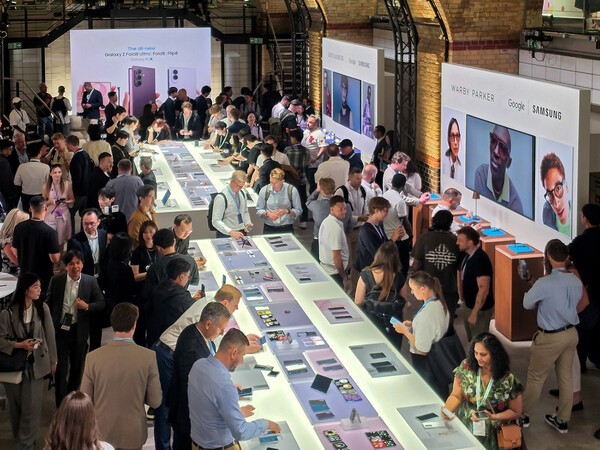
Samsung Electronics' Galaxy Unpacked 2026 event at Old Billingsgate in London on July 22.

◇Galaxy AI Installed Base to Reach 800 Million Devices

​Samsung aims to increase the number of devices capable of using Galaxy AI to 800 million by the end of this year, including existing devices upgraded through software updates.

​"The competitive advantage of AI will not be how intelligent it is, but how well it understands users," Roh said. "People do not want to learn AI—they want it to provide practical help in their daily lives."

​He said AI will evolve beyond simply answering questions into agentic AI capable of completing tasks on behalf of users.

​Samsung plans to leverage both proprietary and third-party AI models. The company will use its in-house Samsung Gauss model and Bixby for Samsung applications and device functions, while deploying external models such as Google Gemini for features integrated with Google's services.

​Samsung also plans to expand partnerships beyond Google. The company is already working with Perplexity and is evaluating the adoption of additional third-party AI models.

​"We are not committed to a single AI solution," Roh said. "If an external AI model is suitable for the mobile user experience and services, we will adopt multiple AI models."

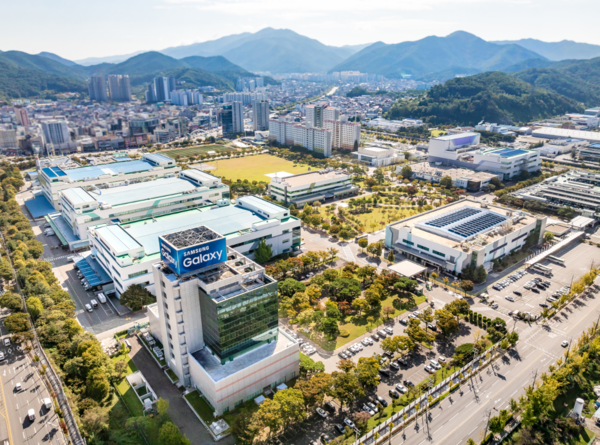
Samsung Electronics' Smart City campus in Gumi, South Korea.

◇CEO-Led Organization to Accelerate Robotics Commercialization

​Samsung is also moving its robotics business from research and development into commercialization. The company recently established the Robotics Experience (RX) Business Promotion Office, reporting directly to Roh, bringing together robotics technologies and personnel that had previously been spread across multiple organizations.

​"We created a dedicated organization to properly begin the full-scale commercialization of the advanced development and investments we have made in robotics over many years," Roh said. "Robotics is one of the key future growth drivers for the DX Division."

​Samsung previously became the largest shareholder of Rainbow Robotics and has operated its Future Robotics Task Force. The company plans to first deploy robots in manufacturing facilities to verify the technology before expanding into enterprise and consumer markets.

​Samsung is also preparing a successor to the Galaxy Ring.

​"We will not release new products mechanically according to a fixed schedule," Roh said. "We will launch them when innovations that satisfy consumers are ready. We are preparing Galaxy Ring 2 to deliver a new wearable experience."

​◇Cost Increases Beyond Supply Chain Efforts May Be Reflected in Prices

​Roh said Samsung will work closely with supply chain partners to minimize the impact of rising memory and key component costs. The company said it coordinated supply volumes and delivery schedules in advance with strategic suppliers to ensure stable production of the Galaxy Z Fold8 series.

​However, Samsung left open the possibility of reflecting cost increases in product prices if they exceed what can be absorbed through supply chain optimization.

​"We will not pass 100% of higher production costs on to consumers and will work with our partners to minimize the burden," Roh said. "However, if cost pressures exceed a manageable level, we will have no choice but to reflect part of the increase in the product's launch price."

  •  

Display Industry Calls for Government Support to Foster Inorganic Light-Emitting Display Sector

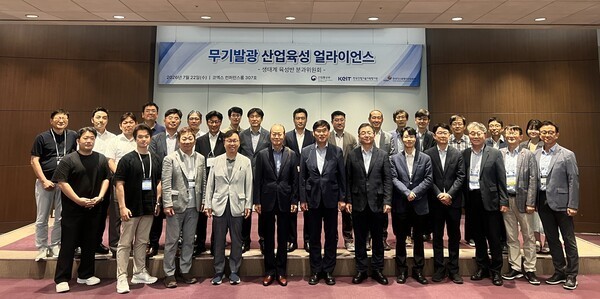
Representatives from 21 member companies pose for a group photo during the 2026 Regular Meeting of the Inorganic Light-Emitting Display Subcommittee at COEX in Seoul on July 22. (Photo: Korea Display Industry Association)

South Korea's display industry has begun formulating policy recommendations to accelerate development of the inorganic light-emitting display industry, including microLED technologies. The proposals will be submitted to the government in October.

The Korea Display Industry Association (KDIA) announced on July 22 that it held the 2026 Regular Meeting of the Inorganic Light-Emitting Display Subcommittee at COEX in Seoul.

The meeting brought together 21 companies spanning materials, components, equipment, panel manufacturing and finished products, including subcommittee chair Seoul Viosys. Participants discussed policy measures needed to expand the market for inorganic light-emitting displays and strengthen the industry's global competitiveness.

Inorganic light-emitting displays use inorganic materials as light-emitting devices and encompass technologies such as microLED, quantum dot (QD) and nanoLED displays. Compared with organic light-emitting diode (OLED) displays, they offer longer operating life and higher brightness. However, commercialization has progressed slowly because of high production costs and the lack of standardized manufacturing technologies.

The South Korean government has operated the Inorganic Light-Emitting Industry Alliance since 2023. In April 2024, it launched the industry subcommittee to collect feedback and address challenges facing companies in the sector.

During the meeting, participants identified industry needs in four key areas: infrastructure and standards, technology development, tax incentives and policy support, and workforce development. They also emphasized the need for government measures to encourage private-sector investment and research and development.

KDIA said it will consolidate the industry's recommendations and submit them as policy proposals at the next meeting of the Inorganic Light-Emitting Industry Alliance, scheduled for October.

In 2025, the government launched a 484 billion won initiative to build an ecosystem for inorganic light-emitting displays. The program aims to strengthen domestic capabilities in core technologies while developing supply chains for materials, components and manufacturing equipment.

Overseas, Taiwan's AUO launched a microLED smartwatch with Garmin in 2025, while Chinese display manufacturers are also expanding production capacity for the technology.

"Inorganic light-emitting displays are a future growth engine that South Korea must secure to maintain its leadership as an unrivaled display powerhouse," said Lee Seung-woo, executive vice president of the Korea Display Industry Association. "The association will serve as a central platform to help the government and industry work together as one team and turn that vision into tangible results."

  •  

Samsung Expands Galaxy Ecosystem Beyond Foldables With AI Smart Glasses

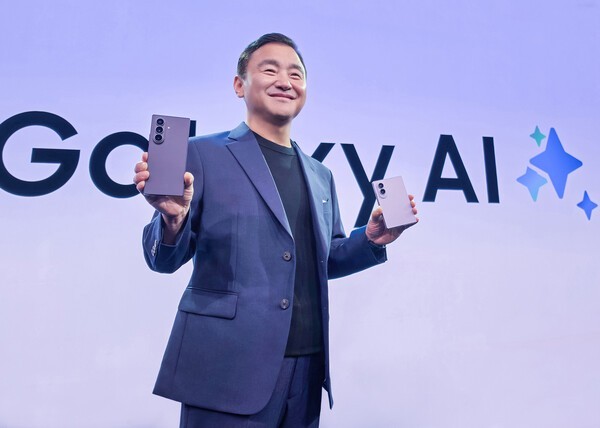
TM Roh, president and head of Samsung Electronics' Device eXperience (DX) Division, introduces the Galaxy Z Fold8 Ultra, Galaxy Z Fold8 and Galaxy Z Flip8 during the Galaxy Unpacked 2026 event at Old Billingsgate in London on July 22. (Photo: Samsung Electronics)

Samsung Electronics unveiled its next generation of Galaxy devices—including foldable smartphones, smartwatches and AI-powered smart glasses—laying out a broader vision for an agentic AI ecosystem in which smartphones, wearables and eyewear work together to anticipate users' needs.

At its Galaxy Unpacked 2026 event in London on July 22, Samsung introduced the Galaxy Z Fold8 Ultra, Galaxy Z Fold8 and Galaxy Z Flip8, alongside the Galaxy Watch Ultra2, Galaxy Watch9 and its upcoming Intelligent Eyewear, which is scheduled to launch later this year.

The company expanded its foldable smartphone lineup from two models to three by adding the flagship Galaxy Z Fold8 Ultra. The Fold8 Ultra features an 8-inch main display, a 200-megapixel camera and a 5,000mAh battery. It measures 4.1mm thick when unfolded and weighs 215 grams.

The standard Fold8 is designed with media consumption in mind, offering a 7.6-inch main display and a 5.5-inch cover display while weighing 201 grams. The Flip8 emphasizes portability with a weight of 180 grams and a thickness of 6.1mm, allowing users to access major apps and AI features directly from the cover screen without opening the device.

Both the Fold8 and Fold8 Ultra are the first Samsung smartphones to incorporate Flex Titanium, a structural technology combining a titanium alloy film with a reinforced titanium plate. Samsung said the redesigned internal support structure and hinge reduce thickness while improving durability and minimizing display creases. Peak display brightness has also increased 15% from the previous generation to 3,000 nits.

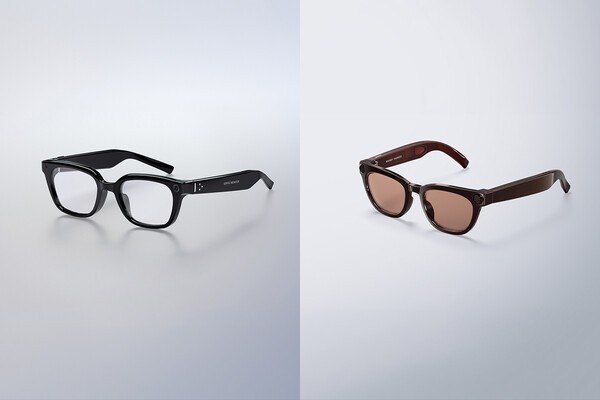
Samsung's Intelligent Eyewear designs created in collaboration with Gentle Monster (left) and Warby Parker. (Photo: Samsung Electronics)

The new devices feature Gemini Intelligence, jointly developed with Google, enabling contextual AI interactions across multiple applications. The system understands both on-screen content and conversations, allowing users to perform tasks such as searching for a restaurant, making a reservation and adding the appointment to their calendar in a single workflow. Samsung said the AI currently integrates with more than 40 applications, including food delivery, shopping and reservation services.

Samsung also introduced Now Nudge, an AI feature that proactively recommends next actions based on context. For example, it can suggest creating a calendar event when users make plans during a conversation or recommend saving a location after it is searched. On larger foldable displays, users can simultaneously view their conversation with the AI assistant and the progress of ongoing tasks.

Samsung is also expanding AI beyond smartphones through its Intelligent Eyewear platform. The smart glasses integrate cameras, microphones, speakers and sensors into the frame, allowing them to recognize the user's surroundings. They can translate foreign-language menus into spoken audio, capture meeting documents and whiteboards, and automatically organize the content in the Samsung Notes app.

The Intelligent Eyewear runs on the Android XR platform and is powered by Qualcomm's Snapdragon AR1 Gen 1 processor. Samsung said the device provides up to nine hours of battery life on a single charge. Eyewear brands Gentle Monster and Warby Parker collaborated on the industrial design, and Samsung has revealed four design variants to date.

Galaxy Watch Ultra2. (Photo: Samsung Electronics)

Samsung also strengthened the health monitoring capabilities of its smartwatch lineup. The Galaxy Watch Ultra2 features an 800mAh battery—35% larger than its predecessor—and a display with peak brightness of up to 5,000 nits. It adds dedicated trail running and diving modes while upgrading durability with an IP69K rating for water and dust resistance.

The Galaxy Watch9 monitors heart rate, respiratory rate, skin temperature and blood oxygen saturation during sleep to detect changes in users' health conditions. It also provides a heart health score based on sleep quality, physical activity and body composition, along with personalized exercise and recovery guidance.

Samsung said each Galaxy device has a distinct role within its AI ecosystem: smartphones understand user behavior and digital content, smartwatches monitor physical health and AI glasses perceive the surrounding environment. By combining information gathered across all three devices, the company aims to deliver proactive AI experiences that recommend actions before users issue commands.

"As AI continues to evolve, mobile devices will become the products that understand users best and integrate most naturally into everyday life, serving as the closest point of interaction with consumers," said TM Roh, president and head of Samsung Electronics' Device eXperience (DX) Division. "The Galaxy Z series will further advance the mobile experience through highly refined foldable devices while delivering personalized AI services that usher in the next era of intelligence."

  •  

LG Display Posts 107.7 Billion Won Operating Loss in Q2, Returns to First-Half Profit

LG Display returned to a cumulative operating profit in the first half despite seasonal weakness and one-off costs related to workforce optimization. (Photo: THE ELEC)

LG Display returned to a cumulative operating profit in the first half of the year despite the seasonal slowdown in demand and one-off costs related to workforce optimization.

The company said on July 22 that it posted revenue of 5.6121 trillion won and an operating loss of 107.7 billion won for the second quarter.

Revenue rose 0.4% from 5.587 trillion won a year earlier. The operating loss narrowed by 8.4 billion won from 116.1 billion won in the second quarter of 2025.

For the first half of the year, LG Display reported cumulative revenue of 11.1461 trillion won and an operating profit of 39.0 billion won. Compared with revenue of 11.6523 trillion won and an operating loss of 82.6 billion won in the same period of 2025, revenue declined 4.3%, while the company returned to profitability. First-half earnings improved by 121.6 billion won year over year.

The first half is typically a seasonally weak period for the display industry as device manufacturers adjust component inventories ahead of new product launches in the second half of the year. The second quarter also included one-off costs related to workforce optimization.

LG Display said it maintained first-half profitability by further strengthening its OLED-centered business structure despite seasonal weakness and one-time expenses. Excluding those one-off factors, the company's core business also remained profitable during the second quarter.

In the second half, LG Display plans to strengthen its competitiveness through technology-driven cost innovation. Beyond simple cost reductions, the company will improve efficiency across development, manufacturing and production by accelerating its AI transformation (AX), further enhancing its business fundamentals.

In its small- and medium-sized display business, LG Display will focus on differentiated technologies to strengthen competitiveness in the high-end segment. The company said its stable technology development and mass-production capabilities will allow it to respond flexibly to changes in market demand.

In the large-sized display business, LG Display aims to reinforce its leadership in the premium market with differentiated technologies and cost-competitive products. As the monitor market continues to shift from liquid crystal display (LCD) to OLED technology, the company plans to expand its lineup of high-value products, including gaming OLED monitors, and increase shipments.

"We will continue improving our full-year performance and further solidify a stable earnings structure by advancing cost innovation and strengthening business competitiveness in the second half," said Kim Sung-hyun, chief financial officer of LG Display.

  •  
❌