❌

Reading view

Vulcan Centaur swapped out again: NASA goes with SpaceX Falcon Heavy rocket for launch of space weather mission

NASA is shaking things up for its next mission to research the sun.

The six satellites of NASA's Sun Radio Interferometer Space Experiment (SunRISE) mission are poised to launch to Earth orbit soon, to serve as an early warning system for incoming solar storms. They were originally slated to lift off on a United Launch Alliance (ULA) Vulcan Centaur rocket but have now been assigned a SpaceX Falcon Heavy, according to a NASA mission update.

SunRISE will fly to space as part of a rideshare mission sponsored by the U.S. Space Force's (USSF's) Space Systems Command (SSC). Though it's not stated specifically in the NASA release, that may be a hint as to why the mission's rocket was changed. On its most recent launch, USSF-87, Vulcan experienced an anomaly in one of its solid rocket boosters β€” the second such incident to occur during the rocket's four launches to date.

Vulcan succeeded in delivering the USSF-87 payload to its designated orbit on that launch, but the recurrence of the booster issue during ascent prompted the Space Force to pause national security launches on Vulcan until it could be addressed. Which mission SunRISE will be manifested on has not yet been released, but SSC has already shifted other launches between Vulcan and SpaceX's Falcon 9, so NASA's change in rockets for SunRISE could indicate either that the mission has been remanifested on a different SSC rideshare, or that another SSC mission has been shifted from Vulcan entirely.

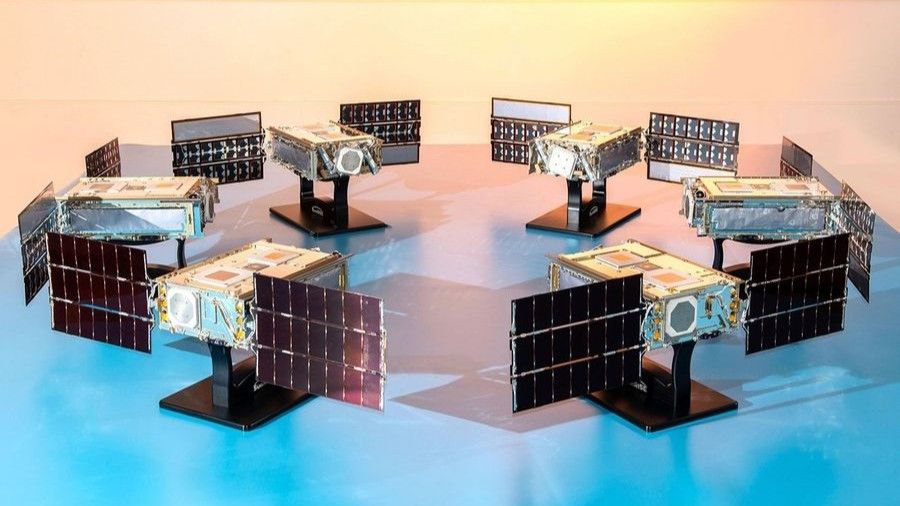
SunRISE is a heliophysics study under the NASA Science Mission Directorate's "missions of opportunity" umbrella and is part of the Explorers Program run by Goddard Space Flight Center in Greenbelt, Maryland. It consists of six small satellites, each about the size of a mailbox. The mini-constellation's mission is led by scientists at the University of Michigan and will be managed out of NASA's Jet Propulsion Laboratory in Southern California.

The half-dozen smallsats will be delivered to an orbit about 22,000 miles (35,000 kilometers) above Earth β€” just above a geostationary parking altitude β€” and fly in a giant 10-mile (16-km) "X" formation, each extending its roughly 10-foot (2.5-meter) antenna booms to act as a single large radio telescope to track solar radio bursts. These kinds of bursts travel faster than the energetic particles from a solar storm, and precede their arrival when shot towards Earth.

Powerful solar storms, like the one that hit Earth in January, are capable of disrupting or disabling satellites by interfering with onboard electronics, sensitive instruments and communications systems. If a storm is severe enough, it can pose a radiation threat to astronauts in orbit and even airborne passengers flying near Earth's poles, where the planet's magnetic field is weaker.
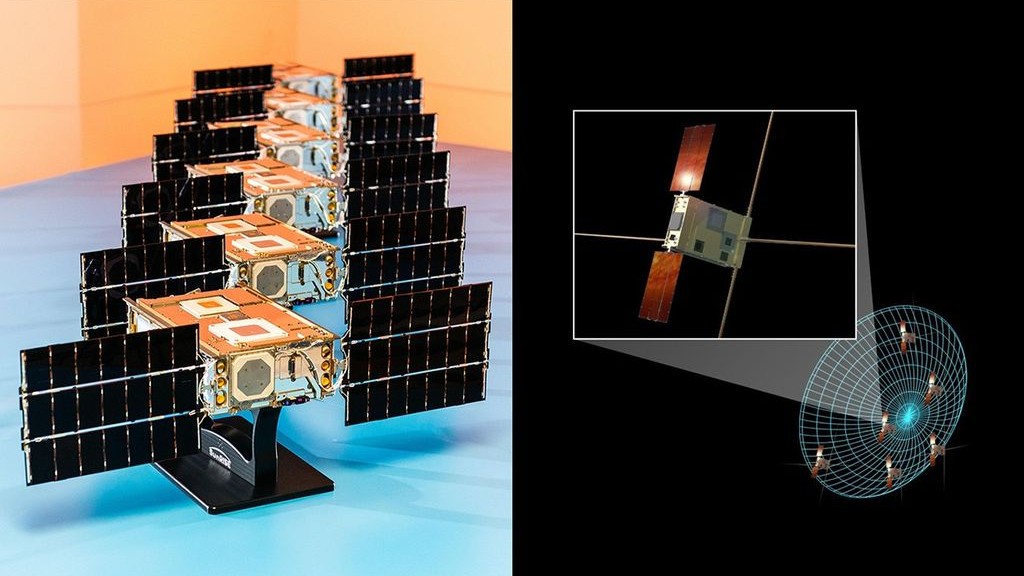
a split image: on the left, six small satellites on a table. on the right, those satellites fly in space in formation within an illustrated circle.

The SunRISE satellites, seen at left, will fly in formation, illustrated on the right, working as one large radio telescope in Earth orbit. (Image credit: NASA/JPL-Caltech)

SunRISE will help researchers better understand the behavior of incoming solar radio bursts, but the mission won't serve as an alert system by itself. Instead, scientists will use data collected by the spacecraft to improve prediction models for impending space weather, which in turn could lead to mitigation plans to better thwart the effects of such solar events on orbital infrastructure.

Falcon Heavy is SpaceX's heavy-lift launch vehicle, capable of launching up to 58,860 pounds (26,700 kg) to geostationary transfer orbit. It's a triple-booster rocket that consists of three modified Falcon 9 first stages, and has launched 12 times since it debuted in 2018. Four of those have delivered national security payloads to orbit, with the most recent of those, USSF-52, launching in December 2023. Falcon Heavy's most recent flight overall occurred this past April, when it sent the Viasat-3 F3 telecom satellite to orbit.

Falcon Heavy's next mission will lift off with NASA's Nancy Roman Space Telescope, currently set for no earlier than Aug. 30. SunRISE is scheduled to launch later this year, but a more specific launch window has not yet been announced.
  •  

Should Artemis IV astronauts actually land near the moon's south pole? Artemis II pilot says the lunar equator might be better

The moon's south pole has long been the target of NASA's Artemis lunar landing missions, but one Artemis astronaut is questioning if that's still the best plan.

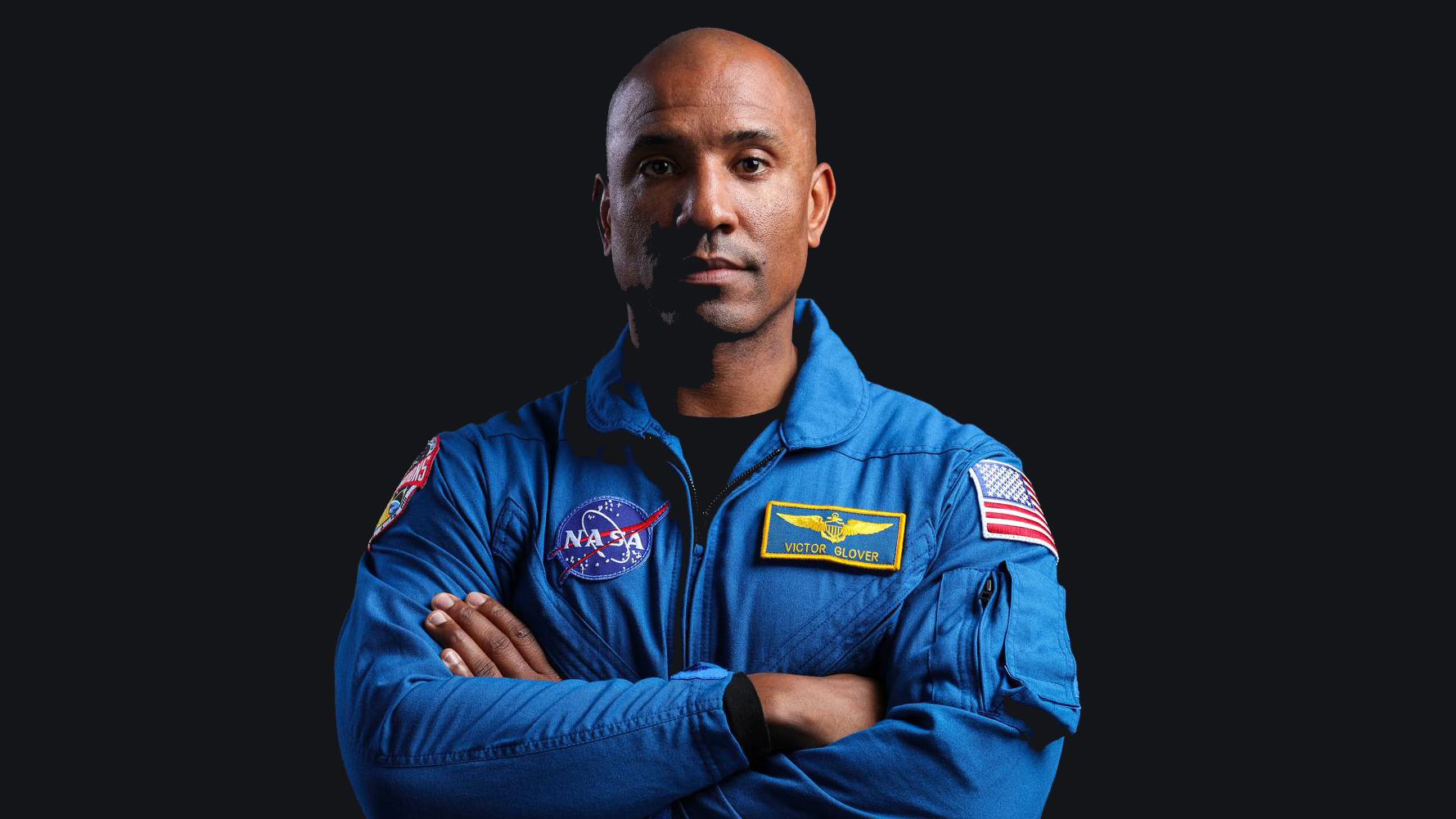
NASA's Victor Glover, who piloted the Artemis II mission around the moon this past April, proposed a different approach while speaking at the NASA Exploration Science Forum at the agency's Ames Research Center in California on July 21, according to a report published on Space News. "I think we need to be realistic and work our way to the south pole, and maybe not try to go there first," Glover said.

Instead, Glover suggested aiming closer to the moon's equator, where missions can land in areas not at risk of falling out of daylight, and in regions reachable by orbits that allow for quick transfers back to Earth in case of an emergency, according to Space News. That argument aligns with other recent Artemis program changes that NASA has introduced to gradually expand successive mission goals, but whether space agency officials will take his advice depends on what the top priority for Artemis moon landings is deemed to be.

a male astronaut wearing a blue flight suit stands with his arms crossed against a dark background

NASA astronaut Victor Glover, the pilot of the Artemis II moon mission. (Image credit: NASA)

NASA has long targeted the lunar south pole due to its abundance of water ice. Permanently shadowed areas inside craters in this region are believed to harbor large ice deposits, which scientists believe can be used as a resource in the production of several space-travel essentials, like potable water, radiation shielding and rocket fuel. That goes a long way toward achieving the Artemis program's ultimate goal of creating a sustainable, long-term base on the surface of the moon, and using the lessons learned in building that outpost to enable the eventual occupation of Mars.

There is, however, a secondary motivation behind NASA's ramped-up urgency to see its Artemis missions succeed in a timely manner. China has also set its sights on the lunar surface, stoking fears in some U.S. officials about the implications of Chinese astronauts staking some sort of claim at the moon's south pole before American astronauts are able to get there.

During a Senate Commerce Committee hearing last year, several space industry experts, including former NASA Administrator Jim Bridenstine, urged lawmakers not to let that happen. Mike Gold, president of civil and international space at Redwire, told senators that China beating the U.S. back to the moon would mean "a global realignment that will impact our economy, our tax base, our ability to innovate and our national security."

If not just getting back to the moon first, but being the first with boots on the ground at the south pole, is the priority, Glover's suggested approach may not get NASA there in time. China is making fast progress with its lunar program; it has already demonstrated robotic landings and sample returns on both the moon's near and far side and begun developing hardware for a crewed landing by 2030.

NASA's next Artemis mission, Artemis III, is scheduled for next year. It will launch four astronauts aboard the Orion space capsule for rendezvous and docking tests with the program's two commercial lunar lander vehicles, SpaceX's Starship and Blue Origin's Blue Moon. If all goes according to plan on that mission, NASA is targeting late 2028 for the program's first moon landing on Artemis IV. To pull that off, one of the two landers has to be up to the task, and both have faced significant delays that have raised questions about their readiness on NASA's timeline.

To facilitate south pole landings, NASA previously laid out a lunar near-rectilinear halo orbit (NRHO) β€” a high-altitude, elliptical polar orbit β€” where Orion would dock with the lunar Gateway space station, and then crews would transfer to and undock aboard one of the Artemis landers to descend to the surface. Gateway is no longer part of the picture, however; the agency has sidelined that outpost to push ahead with a surface base.

But NRHO on its own also introduces some complications that SpaceX and Blue Origin have raised while developing their lunar landers, as well as safety concerns for astronauts facing a potential emergency situation on the moon's surface. Because of its highly elliptical shape and long orbital period, opportunities to launch from the moon's south pole to rendezvous with Orion in NRHO open up just once a week.

To highlight the potential risks imposed by relying on an NRHO, Glover brought up a hypothetical situation β€” an astronaut health issue that requires a medical evacuation just after landing at a lunar south pole moon base.

"You’re stuck for a week," Glover said. "That’s a big deal to me, and I don’t like that plan … The equator gives me opportunity to save that person."

If the point of Artemis' returning astronauts to the moon as soon as possible is landing there at all, then there's no need for the first of those missions to aim for the south pole, Glover argued. "If you want to go fast, go familiar … If we want to land soon, familiar, daylight, equator."

"I think we need to be realistic and work our way to the south pole, and maybe not try to go there first," he added.

SpaceX is also eyeing an equatorial orbit when Starship flies on the Artemis IV mission, and NASA may already be quietly shifting the mission's landing site to a higher latitude. During a June 9 event that revealed the Artemis III, SpaceX Customer Operations and Integration Vice President Jessica Jensen outlined an Artemis IV mission plan with Starship that didn't involve NRHO.

"We have an updated plan with NASA that includes docking Starship with Orion in Earth orbit instead of NRHO, and then we use Starship to actually do the translunar injection with Orion attached," Jensen said, stressing the same benefits that Glover expressed during the July 21 forum.

"The crew can also abort off the lunar surface nearly any time, versus waiting up to days from NRHO," she said. "In addition to improving crew safety, these new Artemis IV orbits also significantly lower the amount of propellant Starship needs to aggregate in space, since we now just have a more direct route to the moon, and this lower schedule risk overall."

  •  

Space Force orders 36 more Golden Dome missile-tracking satellites, for $1.75 billion

The U.S. Space Force is adding three dozen spacecraft to its growing constellation designed to detect and track incoming missiles from orbit. The Space Development Agency (SDA) announced the agreements, worth a combined $1.75 billion, on July 14, naming L3Harris Technologies and Sierra Space as the recipients.

Each company will provide 18 Accelerated Missile Defense Tranche 3 (AMDT3) spacecraft, for a total of 36 satellites that will grow the SDA Proliferated Warfighter Space Architecture's Tranche 3 Tracking Layer constellation, part of the Trump Administration's Golden Dome initiative. All 36 are expected to be ready for launch by the end of 2028, according to an SDA statement.

SDA's contracts with each company differ slightly. One calls for "18 missile warning and missile tracking variant space vehicles" from Sierra Space, while the other requests "18 missile defense variant space vehicles" from L3Harris, all equipped with infrared sensors to add to the constellation's global network.

L3Harris will receive up to $955 million for its 18 satellites, which the Space Force describes as "Hypersonic and Ballistic Tracking Space Sensor-like" (HBTSS) spacecraft. Sierra Space's agreement has the potential to reach $798 million for its 18-satellite contribution. Altogether, the 36 spacecraft will be distributed across four orbital planes as part of a hybrid missile-defense architecture designed to provide "global stereo coverage" of next-generation missile threats.

The Tracking Layer uses infrared imaging in low Earth orbit to detect and track missiles, and it transfers that data in real time through a low-latency communications network to military forces on the ground. According to the agency, the new satellites will increase the constellation's coverage and integrate into the spacecraft of SDA's first three Tranches.

β€œAMDT3 expands upon SDA’s previous and current Tracking Layer generations β€” Tranches 1, 2 and 3," said SDA Director G.P. Sandhoo, "marking another milestone in delivering a resilient, global missile warning, missile tracking, and missile defense capability.”

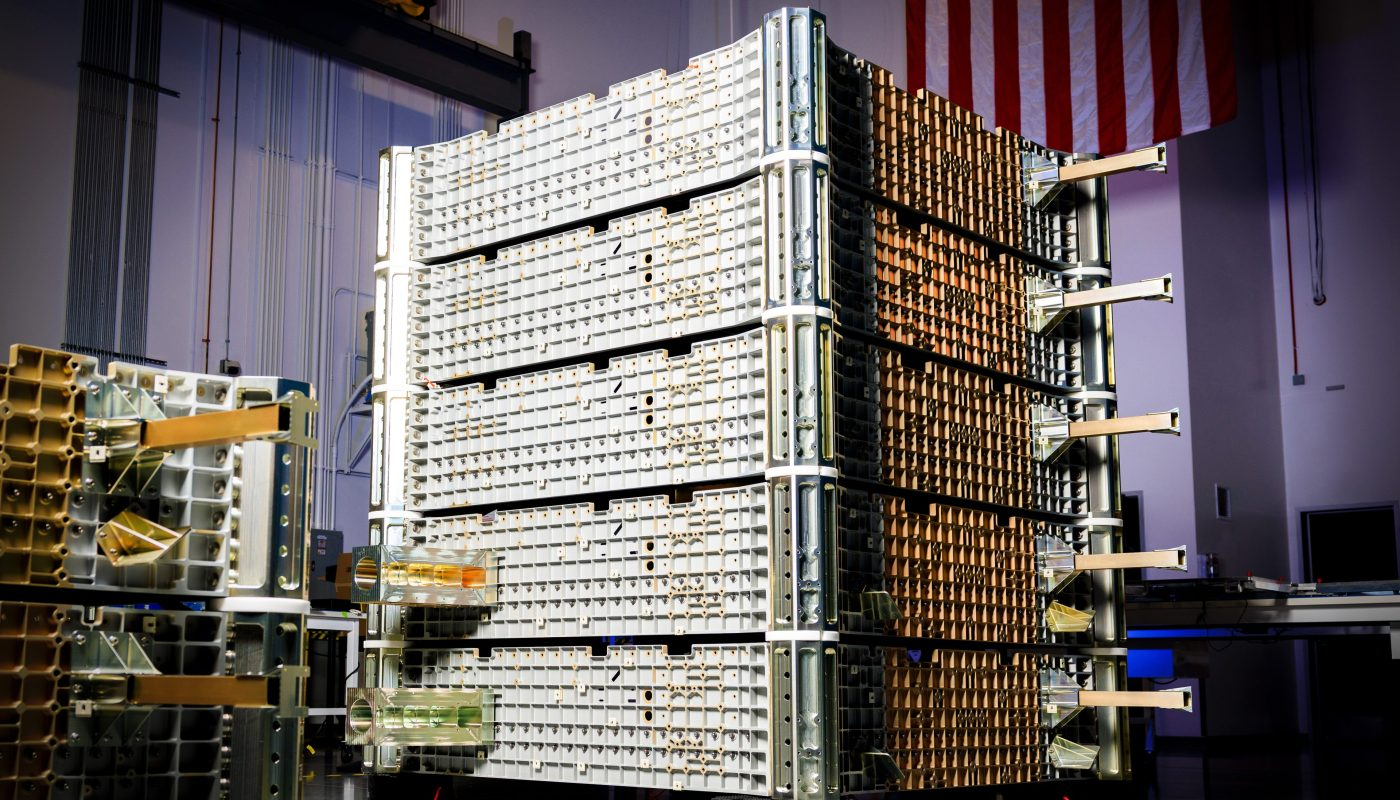
Sierra Space will base its satellites on the Horizon vehicle, from the company's Eclipse satellite series, which it also used in the design of the spacecraft it provided for the Tranche 2 Tracking Layer program, according to a Sierra Space release.

a stack of rectangular satellites is stacked in a dimly lit room

Stack of Satellites from Sierra Space. (Image credit: Sierra Space)

L3Harris plans to build on the success of the HBTSS satellites the company developed for the Military Defense Agency, according to an L3Harris release. The company "has more than 70 missile tracking and defense satellites on order, including five on orbit, between MDA’s HBTSS program and SDA’s Tracking Layer across Tranche 0, 1, 2 and 3," the company said.

The 36 satellites from L3Harris and Sierra Space are in addition to the 72 Tranche 3 Tracking Layer spacecraft SDA ordered in December 2025, via contracts worth $3.5 billion. L3Harris was included in those agreements as well, along with Lockheed Martin, Rocket Lab and Northrop Grumman. In total, the two rounds of awards bring the Tranche 3 constellation to a planned 108 satellites, worth about $5.25 billion. If all goes to plan, all of them will be available to launch by the end of 2029.

The newly contracted satellites from L3Harris and Sierra Space could begin heading to space sooner than that, however. SDA describes the new contracts as "accelerated," though a launch timeline has not been established to the overall group. Once in orbit, the Space Force will assume responsibility for the satellites' operation and integration "in support of joint force operations and delivering warfighting capabilities," the SDA statement said.

  •  

Artemis III astronauts will beam 4k video from Orion to Earth using SpaceX Starlink lasers

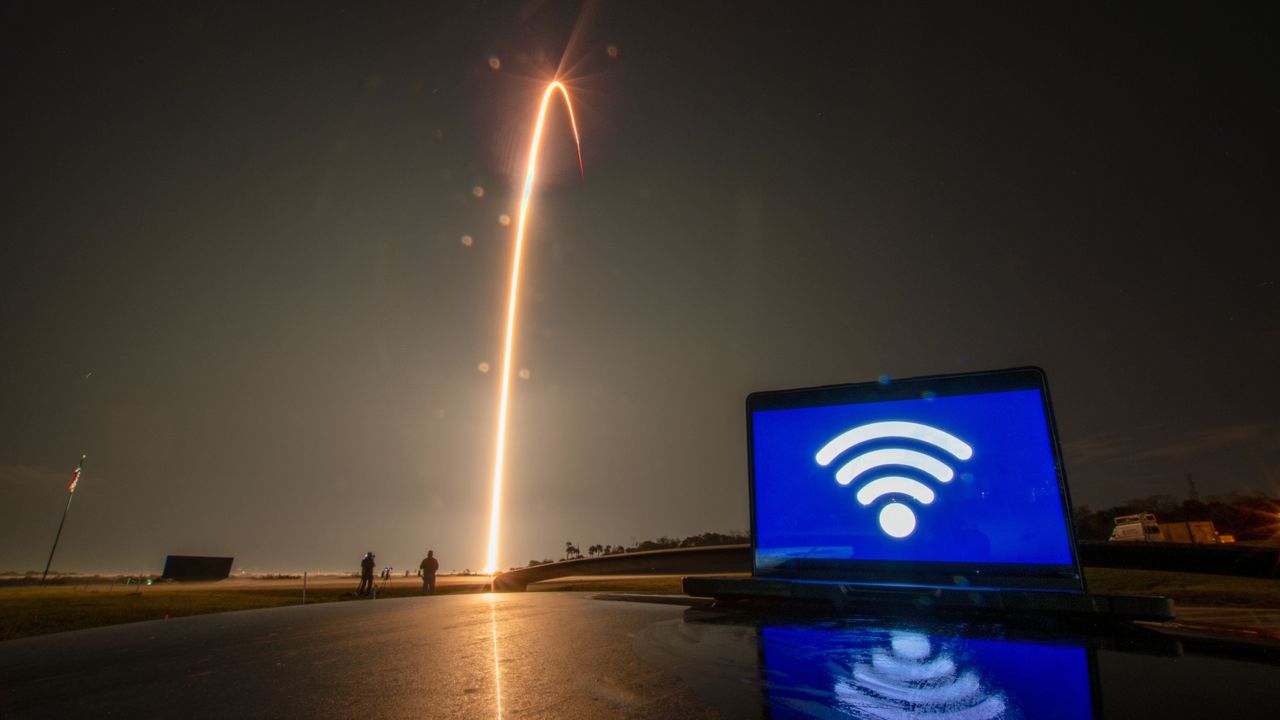
Orion is getting an upgrade on Artemis III, and the astronauts aboard are getting WiFi (sort of).

NASA is partnering with SpaceX to equip the Orion spacecraft for Artemis III with a pair of Starlink mini laser terminals, designed to operate on SpaceX's existing Starlink network. The two panels will be installed on Orion's exterior, and will augment the spacecraft's existing communications systems.

The added capability is expected to provide a greater data capacity from Orion to NASA's mission control in Houston, which may include high-definition live video from orbit. The mission is currently scheduled for the second half of 2027, and will also include another sizable contribution from SpaceX: a Starship rocket.

SpaceX currently operates more than 10,000 Starlink spacecraft in LEO, which provide satellite internet coverage across nearly the entire globe to commercially-available wireless terminals about the size of a laptop. Combined, those more than 10,000 and counting satellites are equipped with over 25,000 lasers currently in operation in LEO to maintain the network's interconnectedness, according to a NASA update.

The company previously demonstrated the Starlink constellation's use as a communication relay network during the privately funded Fram2 mission that launched the first human into a polar orbit around Earth in 2025. SpaceX frequently utilizes its high-data capabilities to stream high-definition live views of its Falcon 9 and Starship rocket launches from orbit.

Artemis III is the third in a program of NASA missions with the goal of returning astronauts to the moon and establishing a permanent base on its surface. Artemis III is designed as a practice run for NASA's Orion capsule to rendezvous and dock with the program's commercial lunar lander vehicles, Starship, and Blue Origin's Blue Moon spacecraft, in low Earth orbit (LEO). That's a lot closer to home compared to the Artemis II mission that NASA launched in April of this year.

Artemis II was Orion's first flight with astronauts onboard, and flew a 10-day mission around the far side of the moon. NASA used laser communications during Artemis II as well, using terminals on Orion and ground stations at NASA's Jet Propulsion Lab in California and White Sands Complex in New Mexico to transmit data loads too big for the agency's Near Space and Deep Space radio networks. With flight sticking to LEO during Artemis III, communication limitations become a lot easier to surmount.

If all goes according to plan during Artemis III, NASA has scheduled the first Artemis moon landing on the following mission, Artemis IV. NASA is targeting 2028 to launch Artemis IV, and has selected Starship as the lunar lander that will return astronauts to the lunar surface.

  •  
❌