Un internaute a découvert qu’un satellite de télécommunication Starlink de SpaceX est passé devant un satellite d’imagerie de la surface Terre pendant qu’il survolait le Texas. L’image a été retrouvée sur Google Earth. Que nous dit cet événement pas si anodin que cela ?
Emergency SOS via satellite is now available in Andorra and Iceland, allowing supported iPhone and Apple Watch users to contact emergency services when cellular and Wi-Fi coverage are unavailable.
Apple added both countries to an updated support document, expanding the feature to 20 supported markets. Users in Andorra and Iceland can call or text 112 before choosing the satellite option when an ordinary emergency connection cannot be completed.
The expansion covers every iPhone 14 or later model running iOS 26.4 or newer. Apple Watch access requires Apple Watch Ultra 3 with watchOS 26.4 or later.
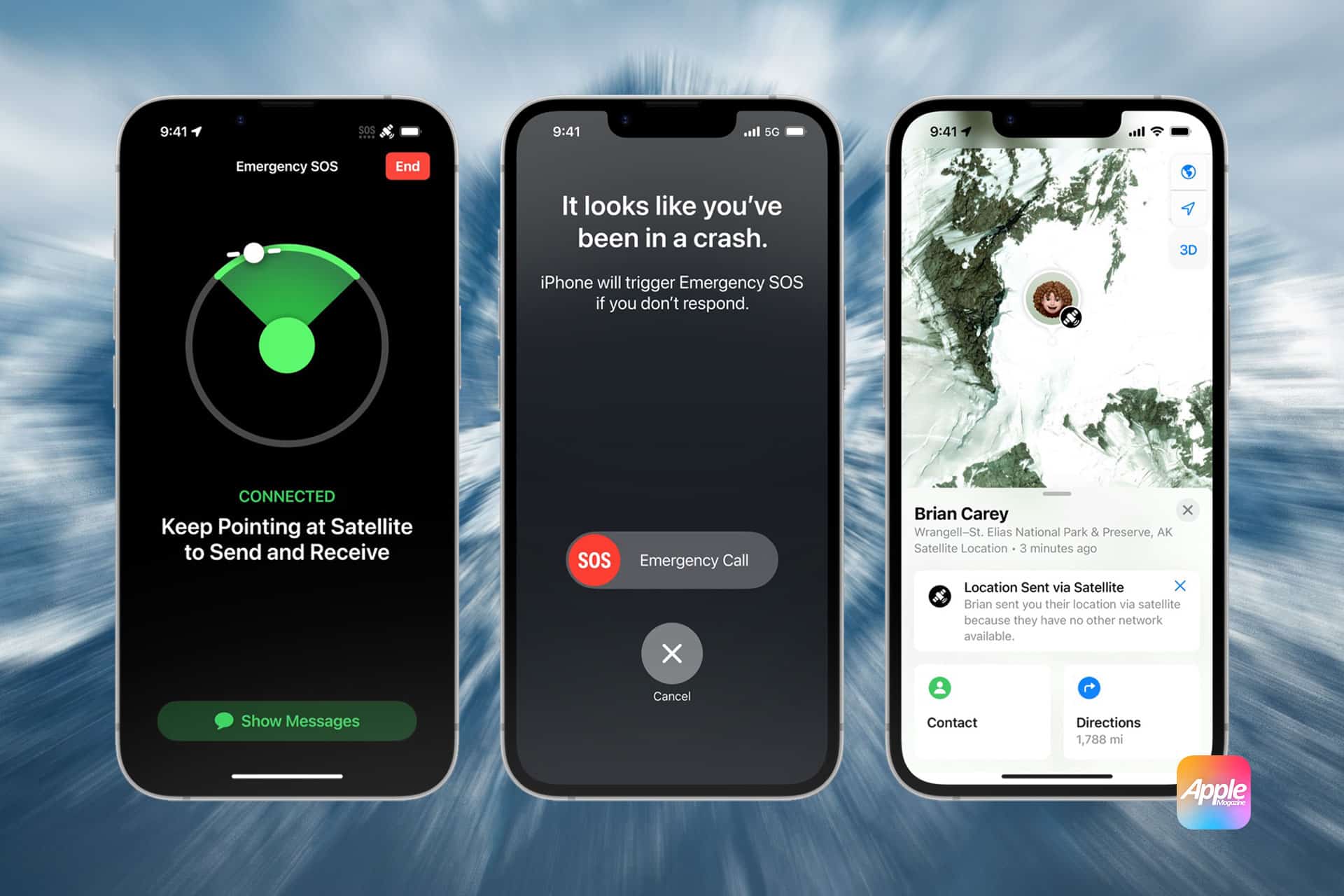
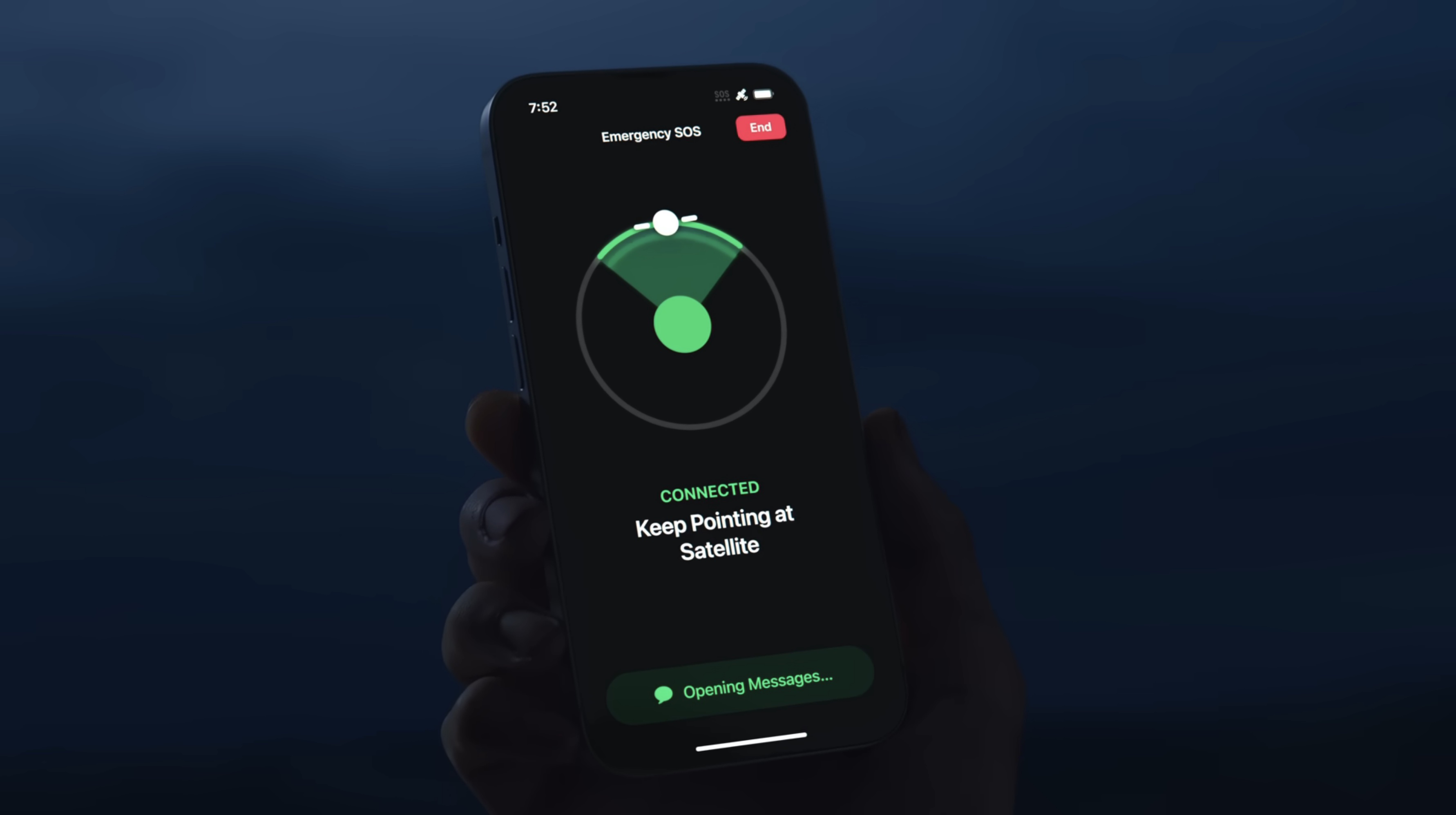
Emergency SOS does not turn the devices into conventional satellite phones. The system is designed for short emergency exchanges in locations where normal communication networks cannot be reached. Users must remain outdoors with a sufficiently clear view of the sky and follow onscreen directions while the device establishes and maintains a connection.
Emergency SOS via Satellite Reaches 20 Markets
Emergency SOS via satellite first launched in the United States and Canada in November 2022 with the iPhone 14 lineup. Apple gradually added European countries, Australia, New Zealand, Japan and Mexico as regulatory approval and emergency-service support became available.
Andorra and Iceland now join Australia, Austria, Belgium, Canada, France, Germany, Ireland, Italy, Japan, Luxembourg, Mexico, the Netherlands, New Zealand, Portugal, Spain, Switzerland, the United Kingdom and the United States.
The addition is particularly relevant for travelers and residents exploring mountainous or remote terrain.
Andorra contains extensive hiking, cycling and skiing areas across the Pyrenees, where cellular coverage can become unreliable beyond populated valleys and resorts. Iceland presents a different but equally demanding environment, with large rural areas, volcanic landscapes, glaciers and routes far from conventional infrastructure.
Satellite availability does not guarantee a connection everywhere. Mountains, deep valleys, dense tree cover and tall structures can obstruct the line between the device and a passing satellite. Apple also warns that satellite connectivity may not function in locations above 62 degrees latitude, which can affect some northern regions.
Most of Iceland lies below that threshold, although environmental conditions and the position of surrounding terrain can still influence performance.
International travelers can generally use Emergency SOS while visiting a supported country, even when the feature is not offered in their home market. Exceptions apply to devices purchased in certain countries or regions where Apple satellite connectivity is restricted.
iPhone 14 and Newer Models Gain the Expansion
Every version of iPhone 14 and later contains the hardware required for Apple satellite features. Users in Andorra and Iceland must install iOS 26.4 or a newer release before relying on Emergency SOS.
The system appears only when the iPhone cannot reach cellular service or Wi-Fi. Apple recommends trying the local emergency number first because another carrier network may still be able to complete the call even when the user own provider shows no coverage.
When the call fails, the iPhone offers Emergency Text via Satellite. The user answers a short series of questions describing the emergency, including the type of assistance needed and whether anyone is injured.
The compressed questionnaire reduces the amount of information that must be transmitted through the limited-bandwidth satellite connection. Once connected, the iPhone sends the responses and location to an emergency dispatcher or an Apple-supported relay center capable of contacting local responders.
In Andorra and Iceland, the applicable emergency number is 112.
Users can also choose to notify emergency contacts. When Medical ID and emergency contacts have been configured in the Health app, selected details can be shared during the incident.
The conversation does not operate at the speed of an ordinary text exchange. Under ideal conditions, a message may require approximately 30 seconds to send. Light or moderate foliage can extend that delay beyond one minute, while heavier obstructions may prevent a connection entirely.
The iPhone displays guidance showing which direction to turn or move as satellites pass overhead. The phone can remain connected while the screen is locked, but it should not be placed inside a pocket or backpack during the exchange.
Apple Watch Ultra 3 Works Without an iPhone Nearby
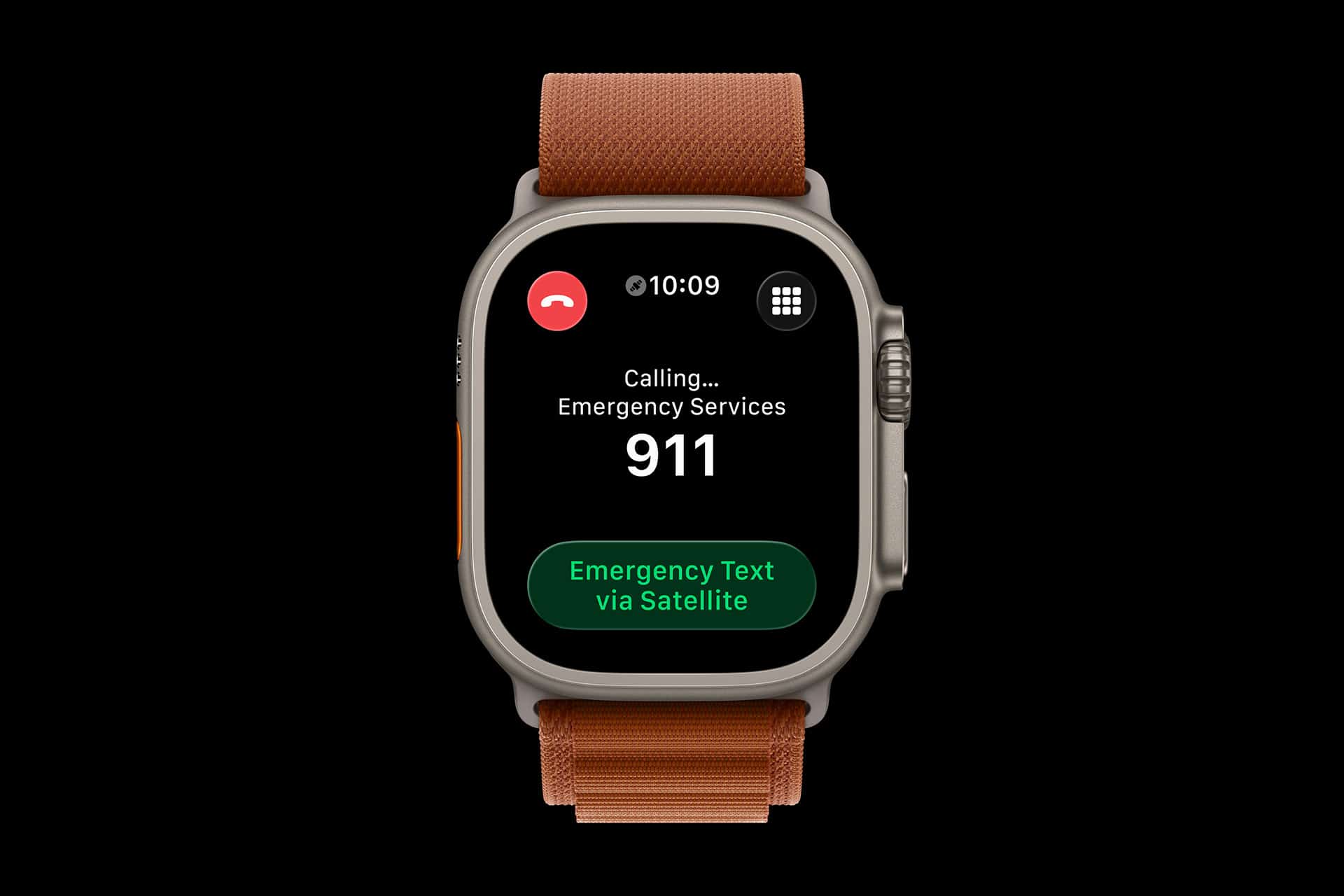
Apple Watch Ultra 3 brings similar protection directly to the wrist, allowing users to contact emergency services even when an iPhone is not available.
Emergency SOS via satellite on Apple Watch Ultra 3 does not require an active carrier plan. Apple includes the service at no additional charge for two years following activation of the watch.
When cellular and Wi-Fi connections are unavailable, users can attempt an emergency call or open Messages and text 112. If the message cannot be delivered through an ordinary network, the watch presents the satellite emergency option.
Apple Watch Ultra 3 also guides the wearer toward the satellite connection. The device can remain in its normal position on the wrist rather than being held above the head, although the user may be instructed to turn or move away from an obstruction.
A wet watch may have more difficulty maintaining satellite communication, an important limitation for swimmers, boaters and users caught in severe weather.
The watch can send the emergency questionnaire, location, elevation, Medical ID information and battery level. Emergency contacts can also receive information about the incident when the user has enabled that option beforehand.
Crash Detection and Fall Detection add another layer. If iPhone 14 or later or Apple Watch Ultra 3 detects a severe crash or hard fall and the user remains unresponsive, the emergency notification may be transmitted over satellite when cellular and Wi-Fi networks are unavailable.
Image Credit: Apple Inc.
Preparation Matters Before Going Off-Grid
Apple provides a connection demonstration that allows users to practice finding a satellite without contacting emergency services.
On iPhone, the demonstration can be opened through the Satellite controls or the Emergency SOS section in Settings. Apple Watch Ultra 3 users can add the Satellite control to Control Center or place a satellite complication on the watch face.
Testing the process before a remote trip helps users understand how quickly conditions can affect the connection. A clear field may establish contact rapidly, while a canyon or heavily wooded trail may require movement toward more open terrain.
Medical ID and emergency contacts should also be completed before leaving network coverage:
Health > Profile > Medical ID
A Medical ID can provide responders with information such as allergies, medical conditions, medications and emergency contacts. Users remain responsible for deciding which personal details they want stored and shared.
Emergency SOS via satellite is included free for two years after activating an iPhone 14 or newer model. Apple provides the same two-year period with Apple Watch Ultra 3, although the company has not established the long-term price that may apply after promotional access ends.
The arrival in Andorra and Iceland gives hikers, drivers, skiers and other travelers another route to help, but the safest preparation still includes checking weather conditions, sharing an itinerary and carrying adequate power before moving beyond ordinary network coverage.
Les flammes sont visibles à des kilomètres. Mais vus du ciel, les incendies de Gironde et des Landes révèlent une autre réalité. Satellites et radars météorologiques montrent des phénomènes invisibles à l’œil nu qui disent toute la violence des feux.
The research team behind the discovery said the unusual object, which orbits a brown dwarf that orbits a large, Sun-like star, doesn’t fit normal astronomical categories, leaving them unsure what to name it.
If confirmed, the unusual space object would be the first moon without a host planet ever discovered. Such a confirmation would also make the newly termed “exosatellite” the first exomoon of any type discovered outside our Solar System.
Moon-Like Object Part of ‘Super Weird’ System
According to a statement announcing the moon-like object, ESO student Kevin Hoy had been monitoring the CD-35 2722 star system for months. The measurements that spotted the new, moon-like object were taken with the observatory’s CRIRES+ instrument using the radial velocity method that spotted the first planet around a Sun-like star.
During that time, the researcher and lead author of a study detailing the find said he noticed the system was “super weird” compared to our local Solar System. While the star at the center of the system, with a mass of about half of our Sun, was not unusual, they also determined that it is orbited by a brown dwarf. Brown dwarfs are astronomical objects too small to be a star, but too massive to be a planet, making the pairing unusual. Still, it was not unheard of.
The region in the sky around CD-35 2722, a star orbited by a brown dwarf, which is itself orbited by an object at least as massive as Jupiter. The ‘moon’ orbiting the brown dwarf is not visible, but it has been detected via the gravitational pull it exerts on the brown dwarf (Image Credit: ESO/Digitized Sky Survey 2).
However, according to Hoy, when the team spotted a third, smaller object in the system, they were left confused. Measurements indicated it is at least as massive as Jupiter, suggesting it may be a moon orbiting the Brown Dwarf, only without a host planet.
“The satellite we report is a giant gaseous body orbiting a highly massive companion, itself several times the mass of Jupiter,” explained Alice Zurlo, Director of the Millennium Nucleus of Young Exoplanets and their Moons (YEMS) in Chile project and collaborator on the study.
Mysterious ‘Exosatellite’ Defies Traditional Classification
The team has temporarily named the moon-like object an “exosatellite.” However, Hoy said the object’s status as a ‘third wheel’ in the system makes them want to classify it as a moon, “even if it is nothing like the small, rocky moons we have in our system.”
“This system is somewhat hard to define using Solar-System-based words like ‘planet’ and ‘moon’,” the researcher explained. “The exosatellite is clearly massive enough to be a planet, but it does not orbit a star, though it orbits an object that orbits a star.”
Director Zurlo said the differences between the observed system and our own Solar System have added to the difficulty in labeling the moon-like object.
“We have a clear delineation between the planets and the Sun in the Solar System, so defining things like moons is simple,” Zurlo explained. “In the CD-35 2722 system, where we are blurring the lines between stars, planets, and moons, the whole thing becomes more complicated to describe.”
“This System is Truly Unique and Represents a Breakthrough”
When discussing the significance of the moon-like object, Director Zurlo said detecting satellites in other systems will help researchers better understand the diversity in formation and evolution of planets, moons, and other moon-like objects. The director also noted the historical nature of the detection.
“As exotic as it is, this system is truly unique and represents a breakthrough: the first plausible detection of an exosatellite,” the researcher explained.
Moving forward, the team said the increased sensitivity of the 39-meter mirror on the ESO’s in-development Extremely Large Telescope (ELT) will allow for the detection of even smaller moons, including potentially spotting moons the size of Earth’s largest satellite. The researchers said such detections will likely force the astronomical community to reconsider how planetary objects are labeled, especially those in systems so radically different from our own.
The study “Planetary-mass exosatellite detected around the substellar companion of a star” was published in the journal Nature.
Christopher Plain is a Science Fiction and Fantasy novelist and has spent the last six years as Associate News Editor and Head Science Writer at The Debrief. Follow and connect with him on X, learn about his books at plainfiction.com, or email him at christopher@thedebrief.org.
Emergency SOS via satellite is now available in Andorra and Iceland, according to an updated Apple support document.
Available on the iPhone 14 and newer and the Apple Watch Ultra 3, Emergency SOS via satellite allows you to text emergency services when you are in a supported area without Wi-Fi or cellular connectivity. The feature requires iOS 26.4 and watchOS 26.4 or later in Andorra and Iceland.
HELSINKI — A classified satellite launched by China in June is operating in a creative orbit, giving it a unique vantage point over the geostationary belt. Shijian-31 launched on a […]
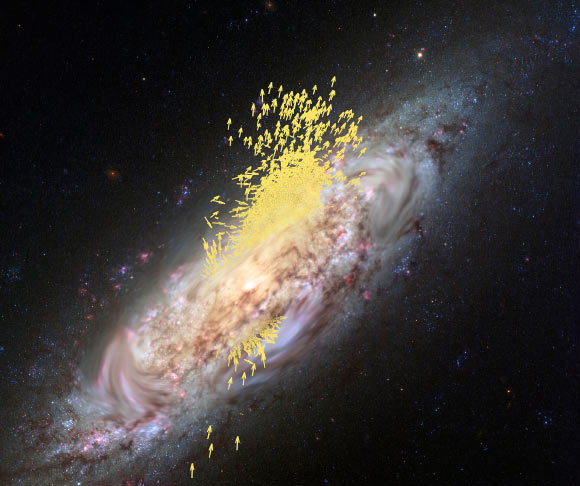
A head-on collision with another galaxy billions of years ago may have dramatically reoriented the Milky Way’s disk, according to new supercomputer simulations that reveal how violent mergers can leave spiral galaxies looking surprisingly normal today.

 Login




 Emergency SOS via satellite is now available in Andorra and Iceland, according to an updated