Historians and archaeologists know that maize was a central food source and cultural symbol across the ancient Maya world, but much of what is known has come from studies focused on large Maya cities and elite burials.
Historians and archaeologists know that maize was a central food source and cultural symbol across the ancient Maya world, but much of what is known has come from studies focused on large Maya cities and elite burials.
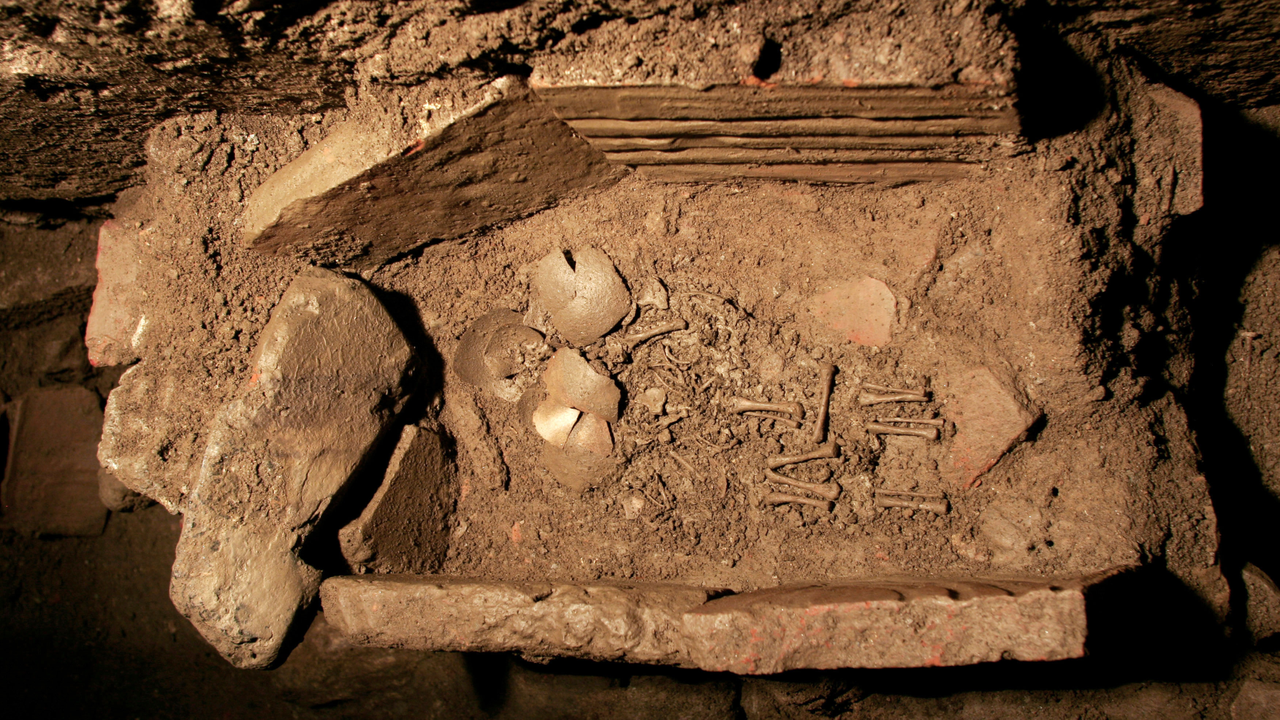
Archaeologists in El Salvador have uncovered the unusual burial of a face-down human skeleton that was interred along with a ceramic vessel shaped like a sea turtle nearly 3,000 years ago. The burial may be from a pre-Maya civilization that practiced human sacrifice.
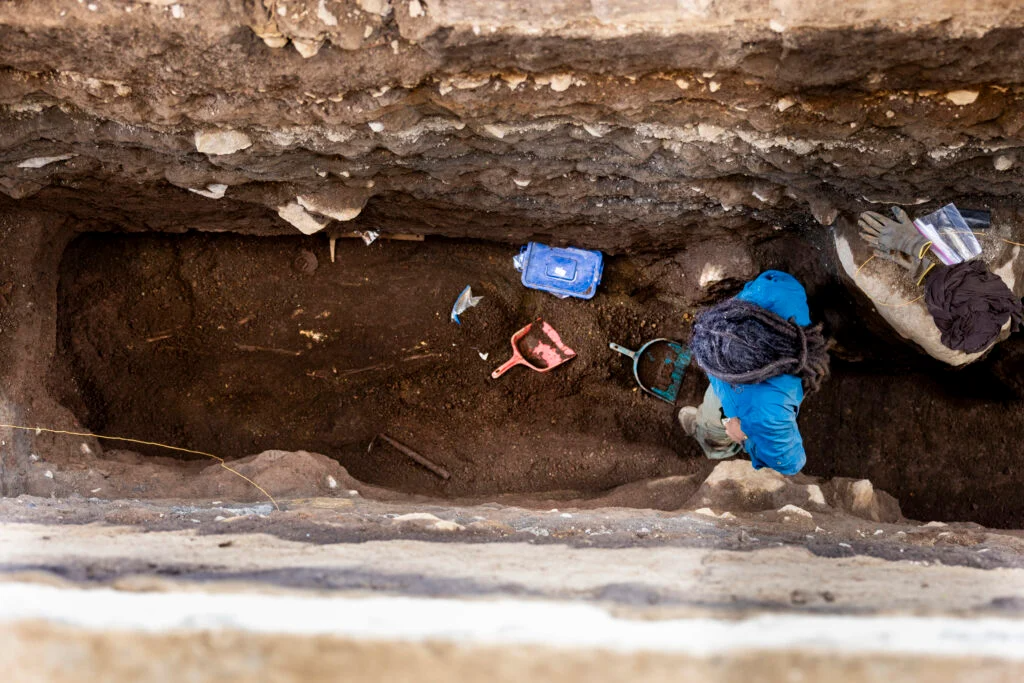
According to a translated statement from El Salvador's Ministry of Culture, the burial was found July 2 in Antiguo Cuscatlán, a suburb of San Salvador, during excavation work directed by Carlos Flores Manzano, an archaeologist and doctoral student at Yale University.
Although the skeleton has not been radiocarbon-dated yet, it was discovered underneath a layer of volcanic ash from an eruption of the Plan de la Laguna volcanic crater thought to date to between 850 and 830 B.C., during the Middle Preclassic period (roughly 1000 to 400 B.C.) in Mesoamerica.
A ceramic vessel shaped like a sea turtle was discovered in the grave. (Image credit: El Salvador Ministry of Culture)
During this period, societies in southeastern Mesoamerica were becoming more sedentary and developing more complex cultures, archaeologists have found. But in addition to the archaeological remains of crop cultivation and painted ceramics discovered over the years in Antiguo Cuscatlán, experts have pointed to some burials as evidence of human sacrifice — and the newly uncovered burial may be similar.
In the late 1970s, archaeologist William R. Fowler excavated at Chalchuapa, an ancient town east of Antiguo Cuscatlán with thousands of years' worth of history. While digging in an area known as Structure E3-7, Fowler found 33 human skeletons — mostly adult males — that he interpreted as sacrifices of war captives due to signs that their feet and arms were bound.
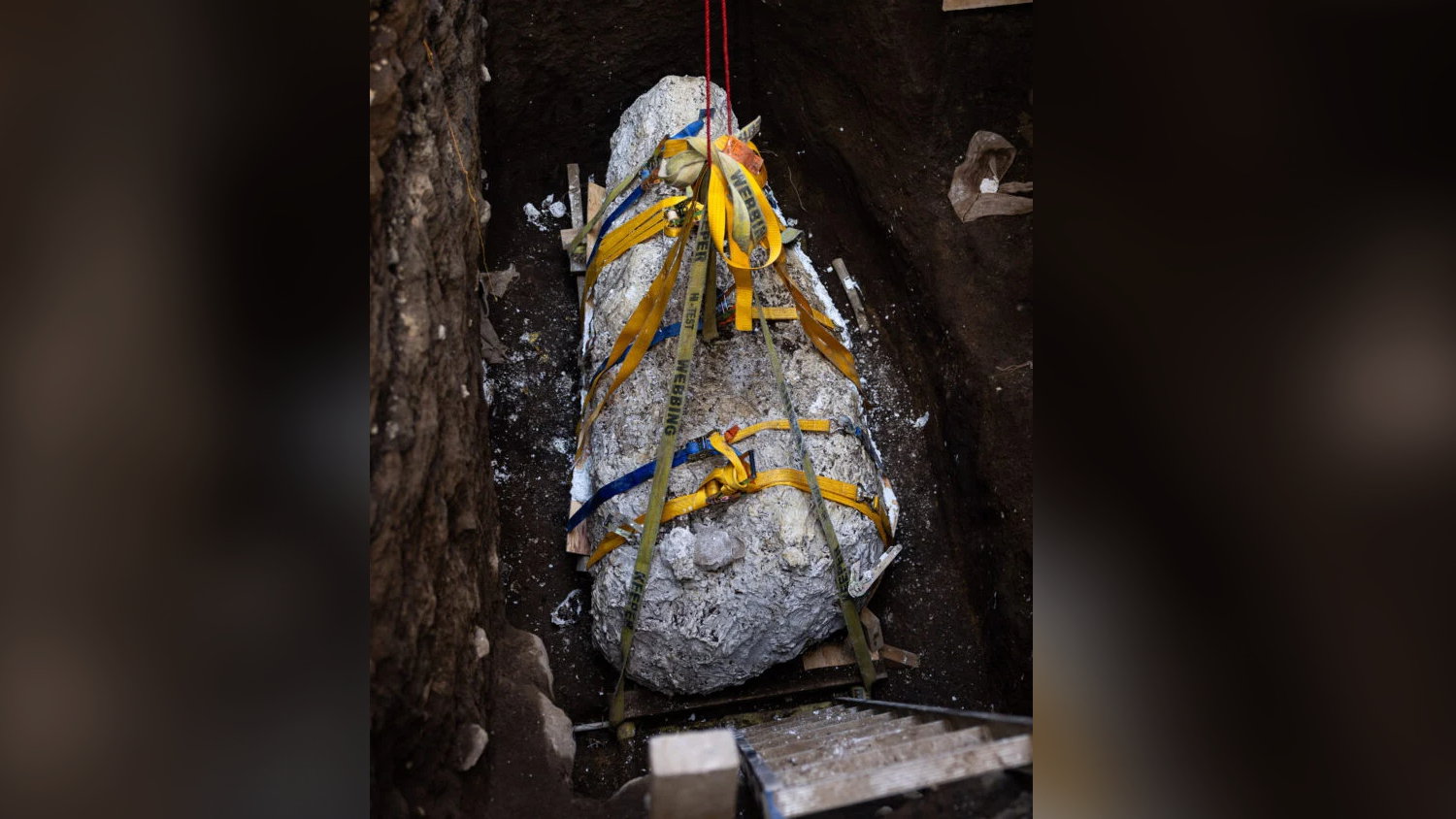
The burial was encased in plaster to prevent damage during recovery. (Image credit: El Salvador Ministry of Culture)
According to the El Salvador Ministry of Culture's statement, the newly uncovered burial is likely not the only one in the area. Archaeologists may eventually find a burial mound with several dozen skeletons, similar to what Fowler uncovered at Chalchuapa. However, Fowler's interpretation of human sacrifice has been questioned in recent years, including by Flores Manzano in a 2020 study.
Instead of being linked to sacrifice, the unusual burial position might be related to an ancient understanding of the cosmos and underworld, Flores Manzano told Diario El Salvador. If that's the case, the sea turtle ceramic vessel found near the skeleton's hand may be associated with Orion's Belt, which features in later Maya astronomy as part of a sacred journey.
The fragile burial was encased in plaster before being removed for further study. Flores Manzano said the skeleton will now undergo chemical analysis so researchers can learn more about the individual's life, diet and possible cause of death. He expects the analyses to take about a year, after which the results will be announced to the public.
How much do you know about the first people to reach the Americas? Find out with our First Americans quiz!
What it means: In archaeology, lithics refers to artifacts made of stone. Scientists used to think Homo sapiens was the only human species to make stone tools. But like many oversimplified stories about human evolution, this one turned out to be a bust. Humans in Indonesia were making sharp-edge stone flakes 1.5 million years ago, before our species even existed.
How to use it in a sentence: Lithics preserve well, so scientists base a lot of what we know about ancient civilizations on their stone tools, while artifacts such as textiles or leather rot away.
Can you crack our science word of the day puzzle, Chain Word?
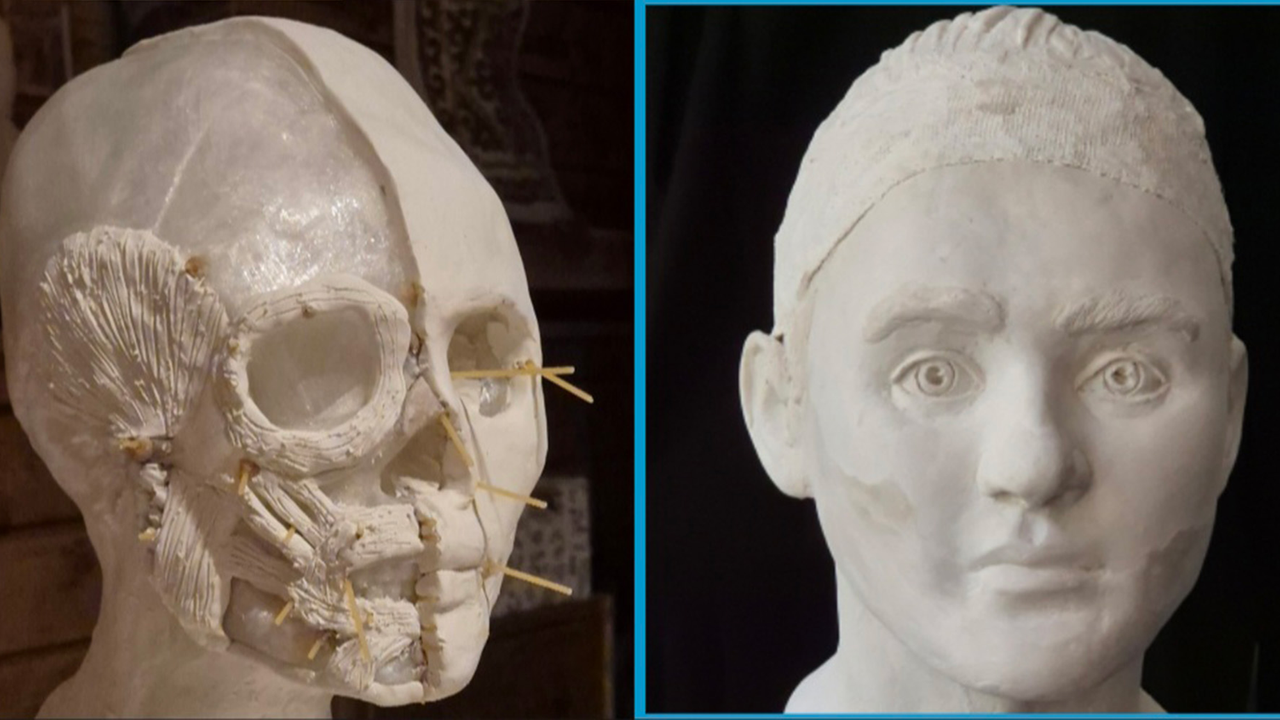
Researchers from the Vrije Universiteit Brussel (VUB) are playing a key role in the summer exhibition wONDERLAND at the Yper Museum. Thanks to interdisciplinary research on more than 1,000 excavated skeletons, they have succeeded in giving the anonymous medieval city dweller a face and a voice once again after centuries.
Museums, libraries, archives and heritage organizations face a difficult problem: Many of the objects they preserve are made from materials that naturally deteriorate.
Archaeologists have uncovered a rare and unusual burial of premature twins in a 1,200-year-old tomb near the Temple of Artemis at Ephesus in Turkey. Although the burial was found in an abandoned latrine, researchers think the intention was to protect the babies in the afterlife.
"This interment was made in an unexpected and exceptional setting," Lilli Zabrana, an archaeologist at the Austrian Academy of Sciences who co-authored a new study detailing the discovery, told Live Science in an email. Burials previously discovered at Ephesus were made in a dedicated cemetery outside the boundaries of the ancient temple.
"What is even more unusual is that the burial contains two premature infants, who were probably twins, which is a rather rare occurrence," study co-author Caroline Partiot, a bioarchaeologist at the Austrian Academy of Sciences, told Live Science in an email. Evidence of a rare genetic condition found in one of the infants makes the finding even more unique, the researchers noted.
In the study, published online July 13 in the journal Childhood in the Past, Partiot and Zabrana analyzed bones found in a tomb that was likely built in the eighth to ninth century, during the middle Byzantine era. The grave was placed within an abandoned latrine channel, originally built during the second or third century, Zabrana said, but the latrine was a later addition to a Roman odeum — a building used for musical performances — that was built in the first century within the sacred area of the famous Temple of Artemis at Ephesus (one of the Seven Wonders of the Ancient World), which was originally built around 550 B.C.
When excavators opened the cist, or stone-lined grave, they saw two tiny skeletons buried side by side. Based primarily on the size of the bones, Partiot and Zabrana estimated the skeletons were from infants who were likely born prematurely at around 33 to 34 gestational weeks, or 7.5 months in utero. (A full-term pregnancy typically lasts between 39 and 40 weeks.)
"The hypothesis that they were twins is based on the fact that they have very similar ages at death and were buried in direct contact with one another," Partiot said. "However, it will only be possible to confirm whether they were indeed twins through future DNA analyses."
Although the researchers did not find any evidence of trauma or disease on the babies' skeletons, they did notice a rare bone called a supernumerary cervical rib. This hereditary trait involves the growth of an extra rib bone that forms at the back of the neck in about 1% of people and usually doesn't cause any problems. However, Partiot has found that, in babies, there is an association between cervical ribs and anomalies in Hox genes — a group of genes that code for specific body parts during embryonic development — that can lead to stillbirth, prematurity or sudden infant death.
"To the best of our knowledge, no cases of twins with cervical ribs have been documented in an archaeological context" before this one, the researchers wrote.
The twins may have been buried in an odd location outside the known burial grounds at Ephesus because they died as premature infants who probably hadn't been baptized yet, the researchers proposed. The infants' final resting place was likely a kind of "practical compromise" between Christian burial practices and local customs, the researchers wrote in the study.
The team found no evidence of the twins' mother nearby or in the Ephesus cemetery. "It is possible she died at the same time, but it is also possible that she did not; it is difficult to say," Partiot said. "Both infant mortality and maternal mortality were very high at the time."
But the twins' protective cist grave preserved their skeletons for more than a millennium, which "clearly indicates that this was a respectful burial rather than the disposal of human remains," Zabrana said. Ultimately, the tomb reveals a family's "intention to care for the two deceased infants in death, and to acknowledge their fleeting place within the community," the researchers wrote.
What do you know about the bones in your body? Test your knowledge with our human skeleton quiz.
Today, people speak or sign around 7,500 languages. Yet this figure provides only a snapshot of a constantly changing history. How many languages existed before written records? Did agriculture reduce linguistic diversity by allowing expanding farming populations to replace smaller hunter-gatherer groups? Or did population growth initially create more opportunities for new languages to emerge?
The silkworm moth, whose caterpillars have been used in silk production since antiquity, may have been brought to southern Central Asia 4,000 years ago—nearly 2,000 years earlier than previously assumed—according to new research from Washington University in St. Louis.
Human sacrifice was deeply ingrained in Inca civilization. Children and young people were selected for sacrifice to appease the gods and sacred mountain spirits. Being chosen was considered a great honor for both the victims and their families. Now, research into the remains of three individuals sacrificed as part of an ancient Inca ritual is revealing new insights into how they died.
Fish, shellfish, maize, manioc, rice and even chicken eggs. Molecular residues preserved in more than 180 ceramic vessels from southern Brazil have made it possible to reconstruct what different communities were cooking more than a century ago, showing that access to food varied according to the origin and social status of their inhabitants.
Archaeologists in Slovakia have uncovered a large Roman military camp likely used by Marcus Aurelius' troops during conflicts with Germanic tribes in the late second century. The "extremely rare" camp came as a surprise to archaeologists, as it holds the hastily buried remains of numerous soldiers in unusual graves, including wells.
Remains of the 18.2-acre (7.4 hectare) camp were found near the town of Šurany in southwestern Slovakia, according to a translated July 17 statement from MH Invest, which excavated the area along with the Institute of Archaeology at the Slovak Academy of Sciences (SAS).
"We have a unique opportunity to explore practically an entire Roman marching camp, which is extremely rare in the European context," Matej Ruttkay, director of the SAS Institute of Archaeology, said in the statement. "We are clearly investigating a place that disappeared immediately after the military conflict between the Romans and the Germans."
Between A.D. 166 and 180, the Romans fought a series of battles against a Germanic people called the Marcomanni, who lived north of the Danube River along the border of the Roman Empire in what are now Slovakia and the Czech Republic. Marcus Aurelius, who reigned as Roman emperor from 161 to 180, commanded troops in the Marcomannic Wars with the goal of defending and securing Rome's border against barbarian invasions. But the wars ended upon Marcus Aurelius' death, when his son Commodus negotiated a peace with the Marcomanni, according to third-century Roman historian Cassius Dio.
The newly discovered Roman military camp had clear defensive characteristics, including five entrance gates, fortifications, and a curved ditch-and-rampart system typical of marching or legionary camps, according to the statement. The Šurany camp is only the second Roman military installation ever found in western Slovakia; the first camp, discovered in 2024 by SAS archaeologists, is thought to be where Marcus Aurelius wrote part of his Meditations.
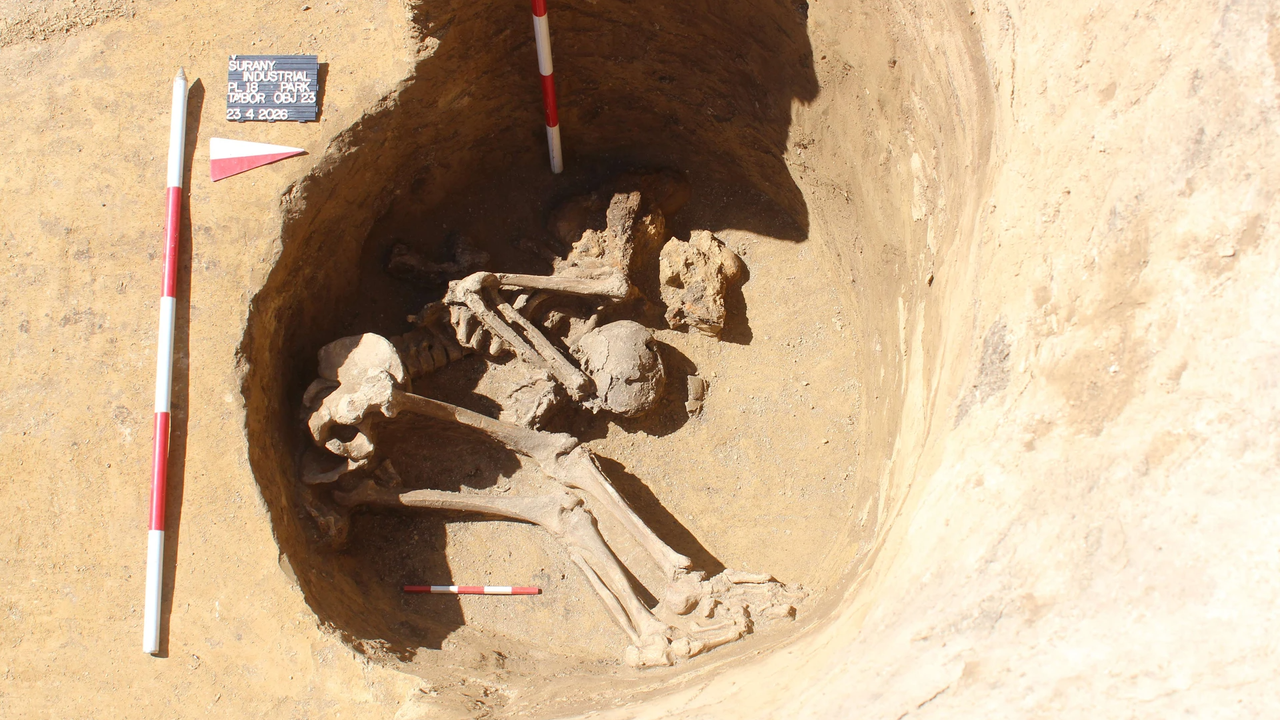
The Šurany camp surprised archaeologists with a large number of skeletons — and parts of skeletons — buried in ditches, wells and hastily dug shallow graves, according to the statement.
"Our preliminary findings indicate that in most cases these are Roman soldiers," Marek Vojteček, an archaeologist at the SAS Institute of Archaeology, said in the statement. "Numerous components of Roman military equipment and weaponry were also found with the skeletal remains, such as spears, arrowheads, parts of helmets, segmented and scale armor, legionary brooches, coins, and the characteristic 'caligae' military sandals, from which iron nails on the soles have been preserved," he said.
X-ray analysis of blocks of clay revealed the intact sandal nails, which are now stored at the SAS Institute of Archaeology's specialized laboratory for further analysis. "It is literally a miracle to see the original footwear of a Roman soldier and even to be able to determine its size," Michal Cheben, an archaeologist at the SAS Institute of Archaeology, said in the statement.
The unusual burials raise important questions about the use and abandonment of this Roman military camp, according to Cheben, including whether the soldiers died from combat injuries or disease and why the bodies weren't looted before being thrown into storage pits and wells. "Laboratory analyses and further genetic and anthropological research may provide answers," Cheben said.
Because the camp was so large and the artifacts so numerous, a comprehensive analysis of the site will take several years and will involve international experts in carbon dating, soil analysis, isotopic analysis and ancient DNA, according to the statement.
"This is a long-term process, so many results will only become known in the coming years," Ruttkay said.
From Augustus to Nero, see how much you know about ancient Rome's famous leaders with our Roman emperor quiz!
For more than a century, two enormous structures cutting across the desert southwest of Egypt’s famous Red Pyramid have been assumed to be ancient transport features—perhaps roads or ramps used to haul limestone blocks duringpyramidconstruction. However, a new study argues that archaeologists may have been looking at the wrong answer all along.
Instead of transportation infrastructure, researchers now suggest the mysterious earthworks could represent a nearly 4,600-year-old sophisticated hydraulic engineering system, with two giant dams built to capture, regulate, and redirect water through the desert landscape.
If confirmed, the discovery would dramatically revise our understanding of how thebuilders of Egypt’s pyramidsengineered not only stone, but water itself.
The new research, published in Nature Heritage Science, combines satellite imagery, historical maps, digital elevation modeling, watershed analysis, and paleoclimate data to reexamine the little-studied features at Dahshur, the royal necropolis where Pharaoh Snefru built both the Bent Pyramid and the Red Pyramid.
While no excavation has yet confirmed the interpretation, researchers argue that the structures display multiple characteristics far more consistent with dams than with construction ramps.
“This study presents, for the first time, evidence of two ancient, giant dams built across Wadi Dahshur, Egypt, along with a water diversion channel west of the Red Pyramid,” researchers write. “Satellite imagery and watershed mapping show that the two long structures, previously interpreted as stone transport ramps, exhibit the technical signature of dams, each extending 600–700 m and anchored to the valley flanks.”
Egypt’s Red Pyramid of Dahshur. (Image Source: Olaf Tausch/Wikicommons)
The findings add a fascinating new chapter to one of archaeology’s enduring mysteries. How did ancient Egyptians organize the enormous logistical operation required to construct the pyramids during the Fourth Dynasty?
The Red Pyramid, completed around 2600 BCE during Snefru’s reign, is widely recognized as Egypt’s first successful “true” pyramid. Scientists have spent decades studying the monument itself. However, much less attention has been devoted to the surrounding landscape and the engineering systems that may have supported its construction.
According to researchers, the wider landscape may have been far more technologically sophisticated than previously appreciated.
The two massive structures stretch approximately 2,000 to 2,300 feet (600 to 700 meters) across Wadi Dahshur. Earlier researchers interpreted one as a transport route leading from nearby quarries while considering the other a natural rise in the terrain. However, the new analysis points to several features that appear difficult to reconcile with those interpretations.
Rather than following the valley, both structures run directly across it, anchoring into the surrounding hillsides much like embankment dams. One also contains a distinctive zigzag geometry that the researchers argue resembles a duckbill spillway—a specialized overflow design still used in modern hydraulic engineering because it can safely release significantly larger volumes of water than a straight spillway of the same width.
No securely identified duckbill-style spillway has previously been documented from ancient Egypt. So if that interpretation is correct, it would mean that the Dahshur structure is one of the earliest known examples of this type of hydraulic design anywhere in the world.
Researchers believe the two structures may have functioned together as a multi-stage flood-control system.
In their proposed scenario, one dam traps sediment carried by flash floodswhile allowing cleaner water to pass into a second reservoir. From there, water could have been diverted through an artificial channel running remarkably close to the western side of the Red Pyramid before reconnecting with the surrounding drainage network.
That canal is especially intriguing because it raises the possibility that water may have played a more direct role inpyramid construction than traditionally assumed.
Historic Royal Air Force aerial photograph of Egypt’s Red Pyramid showing the two enigmatic linear structures southwest of the pyramid that a new study suggests may be ancient dams rather than long-assumed transport ramps. (Image Source: Royal Air Force/UCL Institute of Archaeology/Landreau, et al.)
Researchers have long known that the ancient Egyptiansexploited waterways for transporting heavy stone. Previous discoveries at Giza revealed harbor basins and canals associated with pyramid construction, while papyrus records from Wadi el-Jarf describe crews transporting limestone by boat during Khufu’s reign.
The newly proposed Dahshur canal could represent another piece of that larger hydraulic network.
If maintained at a stable water level, it could have assisted in transporting heavy materials on barges or water-assisted sleds over relatively flat ground. Even beyond transportation, the water could have supported workers, supplied construction areas, mixed mortar, reduced dust, and later been adapted for irrigation or ceremonial uses.
The hypothesis also depends on a very different view of Egypt’s climate nearly 4,600 years ago.
Today, the Dahshur plateau lies within an extremely arid landscape, making the idea of dams initially seem ridiculous. However, paleoclimate evidence reviewed by the researchers suggests northern Egypt during the Old Kingdom was considerably wetter than it is today.
Although the Sahara was already drying following the end of the African Humid Period, seasonal rainfall appears to have remained substantially higher than modern levels. Even infrequent storms could have produced powerful flash floods racing through normally dry wadis.
The study estimates that while average annual rainfall may have ranged between roughly 2 to 6 inches (50 to 150 millimeters), individual storm events could generate enough runoff to create destructive floodwaters requiring engineered control systems. Rather than depending solely on the annual Nile inundation, Egyptian engineers may also have exploited seasonal runoff flowing through desert valleys.
That broader perspective fits with growing evidence that water management extended well beyond the Nile floodplain itself.
Other nearby examples showing evidence of water management well beyond the Nile floodplain include the famous Sadd el-Kafara dam, located less than 12 miles (20 kilometers) east of Dahshur, which is generally regarded as one of the world’s oldest large dams.
Additional archaeological sites around Saqqara and Giza likewise show increasing evidence of canals, flood-control structures, and carefully engineered landscapes associated with pyramid construction.
Even so, the researchers stress that their interpretation is still a hypothesis awaiting archaeological confirmation.
The structures themselves have never been excavated. Much of the area lies within a military zone, limiting direct access, while centuries of windblown sand have buried much of the earliest construction. Modern roads, pipelines, and other infrastructure have also altered parts of the site, making efforts to reconstruct its original appearance more difficult.
Future excavations will therefore be critical. Researchers hope sediment studies could determine whether deposits behind the structures resulted from flowing water rather than drifting desert sand.
Excavations may also reveal construction techniques, protective stonework, spillway features, and datable material capable of establishing whether the structures truly belong to Snefru’s era.
If those investigations support the new interpretation, they would suggest that Old Kingdom engineers possessed a much wider understanding of landscape-scale hydraulic engineering than previously identified.
More intriguing, the study hints that similar forgotten infrastructure could still lie covered beneath Egypt’s deserts, disguised as ordinary landscape features or misidentified for generations.
“Nevertheless, the convergence of geomorphological evidence, watershed connectivity, hydraulic plausibility, and regional cultural context supports the interpretation of the Dahshur structures as intentional large-scale hydraulic installations rather than incidental landscape features,” researchers write. “Other hydraulic structures are most probably lost in the desert, waiting to be identified as such.”
Tim McMillan is a retired law enforcement executive, investigative reporter and co-founder of The Debrief. His writing typically focuses on defense, national security, the Intelligence Community and topics related to psychology. You can follow Tim on Twitter:@LtTimMcMillan. Tim can be reached by email: tim@thedebrief.org or through encrypted email:LtTimMcMillan@protonmail.com
The face of a young woman crowned with a laurel wreath, buried in elaborate clothing and unusual cork sandals, has appeared nearly 1,700 years after her death.
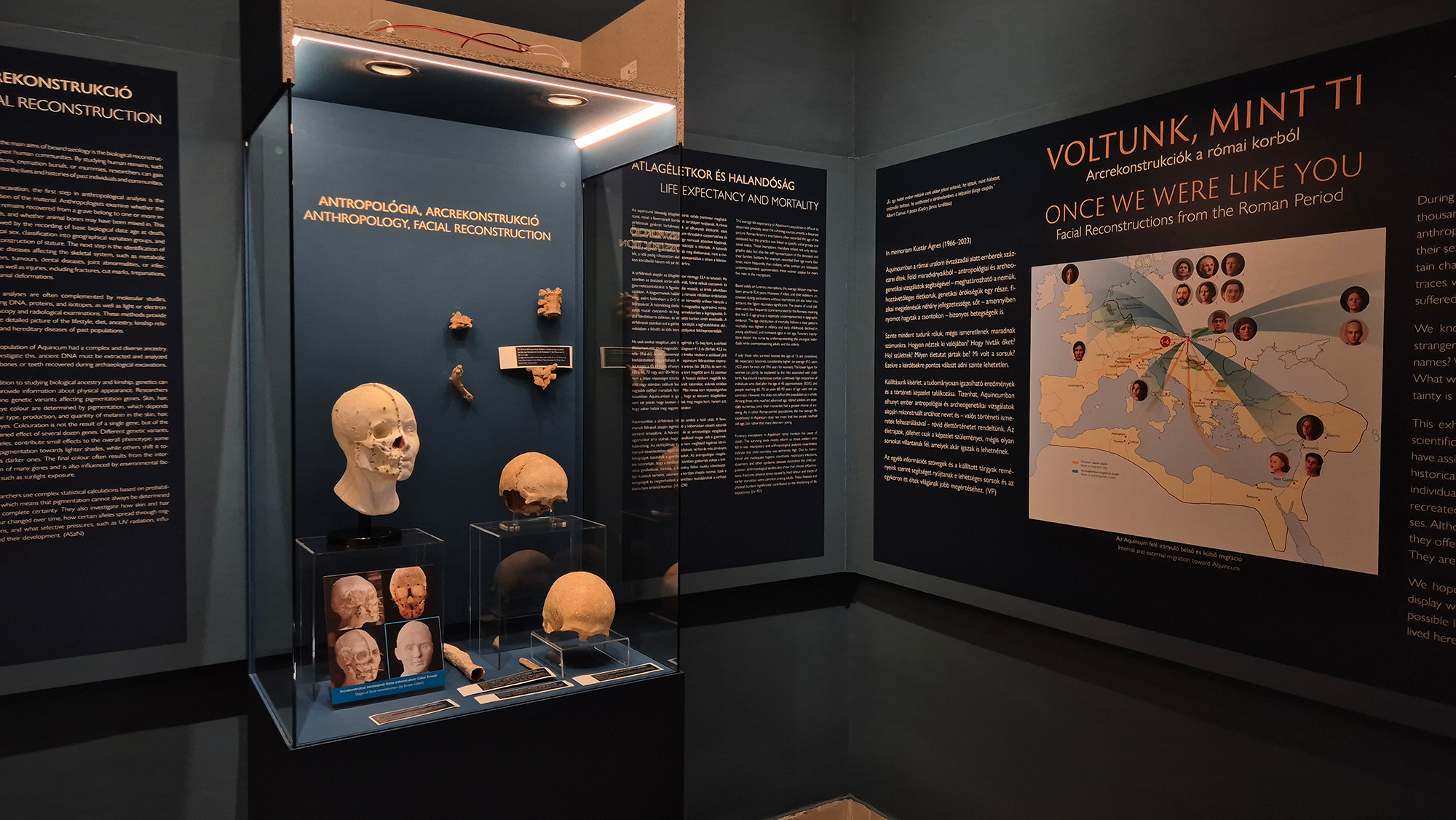
She is one of 16 people from Aquincum, a Roman-era city in present-day Hungary, whose faces have been reconstructed for "Once We Were Like You," a new exhibition at the Aquincum Museum in Budapest. The display pairs skulls excavated in and around the ancient city with scientifically informed approximations of how their owners may have looked in life.
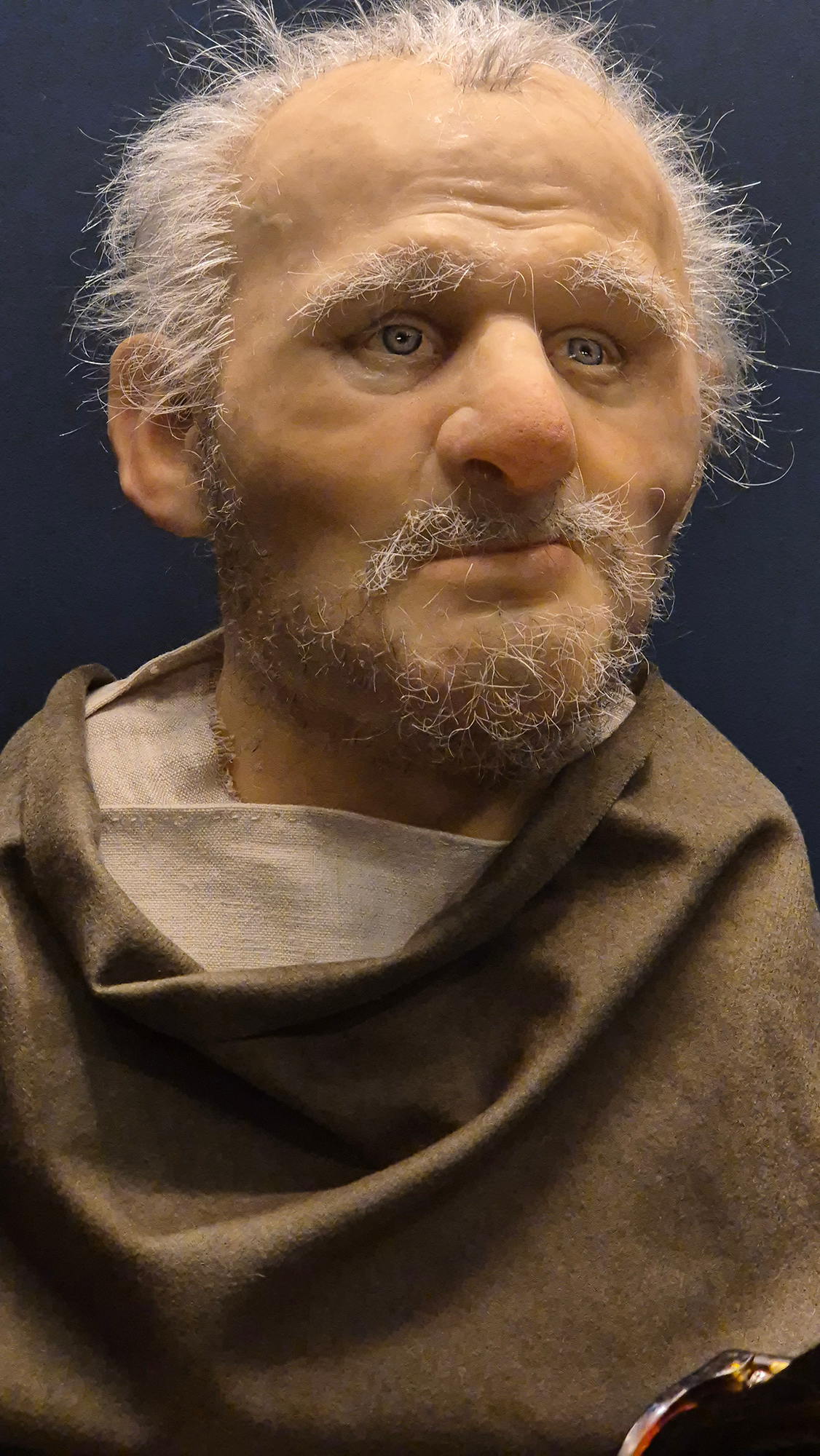
Six of the reconstructions are hyperrealistic silicone models, complete with artificial eyes, human hair, eyebrows, eyelashes and, in some cases, beards. The exhibition, which runs through Oct. 31, includes men, women and a child who lived during the region's period of Roman rule.
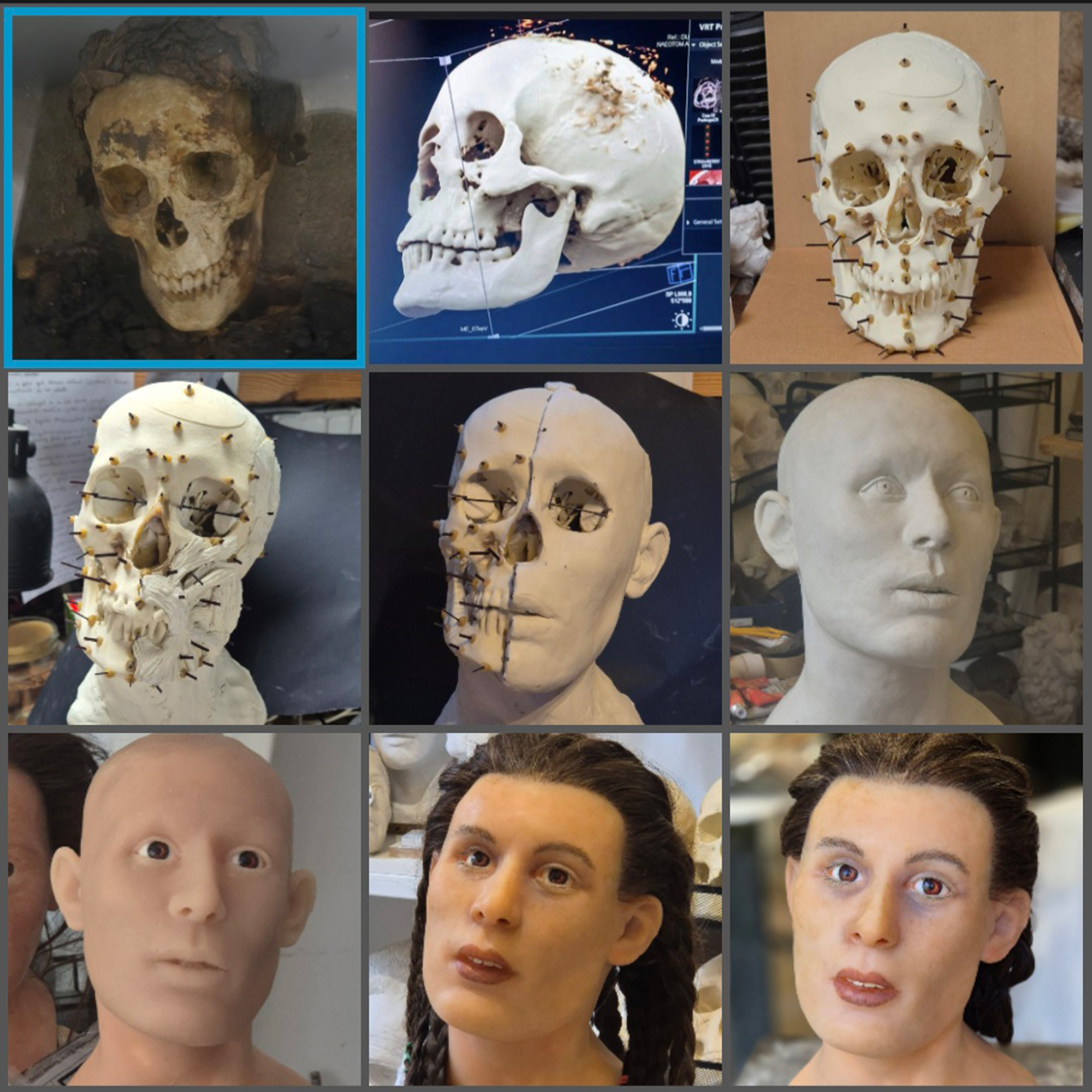
"The face is the most important feature for recognizing a person," Emese Gábor, a forensic facial reconstruction specialist who sculpted the silicone faces, told Live Science in an email. Although a skull cannot reveal every detail of a person's appearance, reconstruction lets museum visitors encounter the faces as those of "a real human being rather than as skeletal remains," she said.
The entrance to the "Once We Were Like You" exhibit at the Aquincum Museum in Budapest. (Image credit: Gábor Lakos Aquincum Museum Budapest)
Rebuilding a Roman face
Aquincum stood on the Danube frontier of the Roman Empire in what is now Budapest. The city was home to a diverse population in the first through fourth centuries, and genetic and archaeological analyses of the individuals in the exhibition point to connections with regions including present-day Italy, Scotland and Syria, as well as Sarmatian groups from the Eurasian steppe and Celtic communities that lived in the region before Roman rule.
The remains of those who lived here have also been unearthed, and continue to be discovered today during the excavation of cemeteries," according to a statement from the museum.
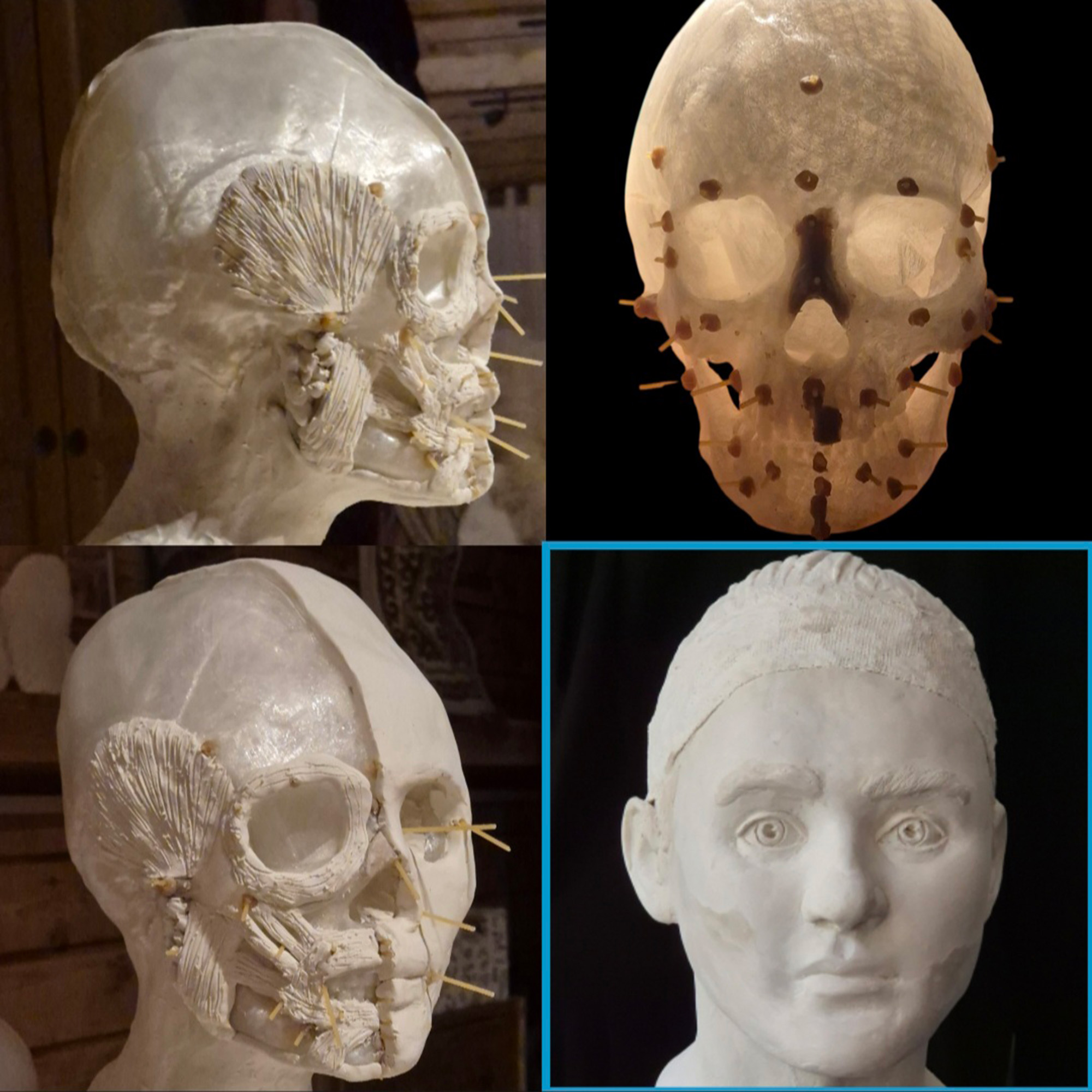
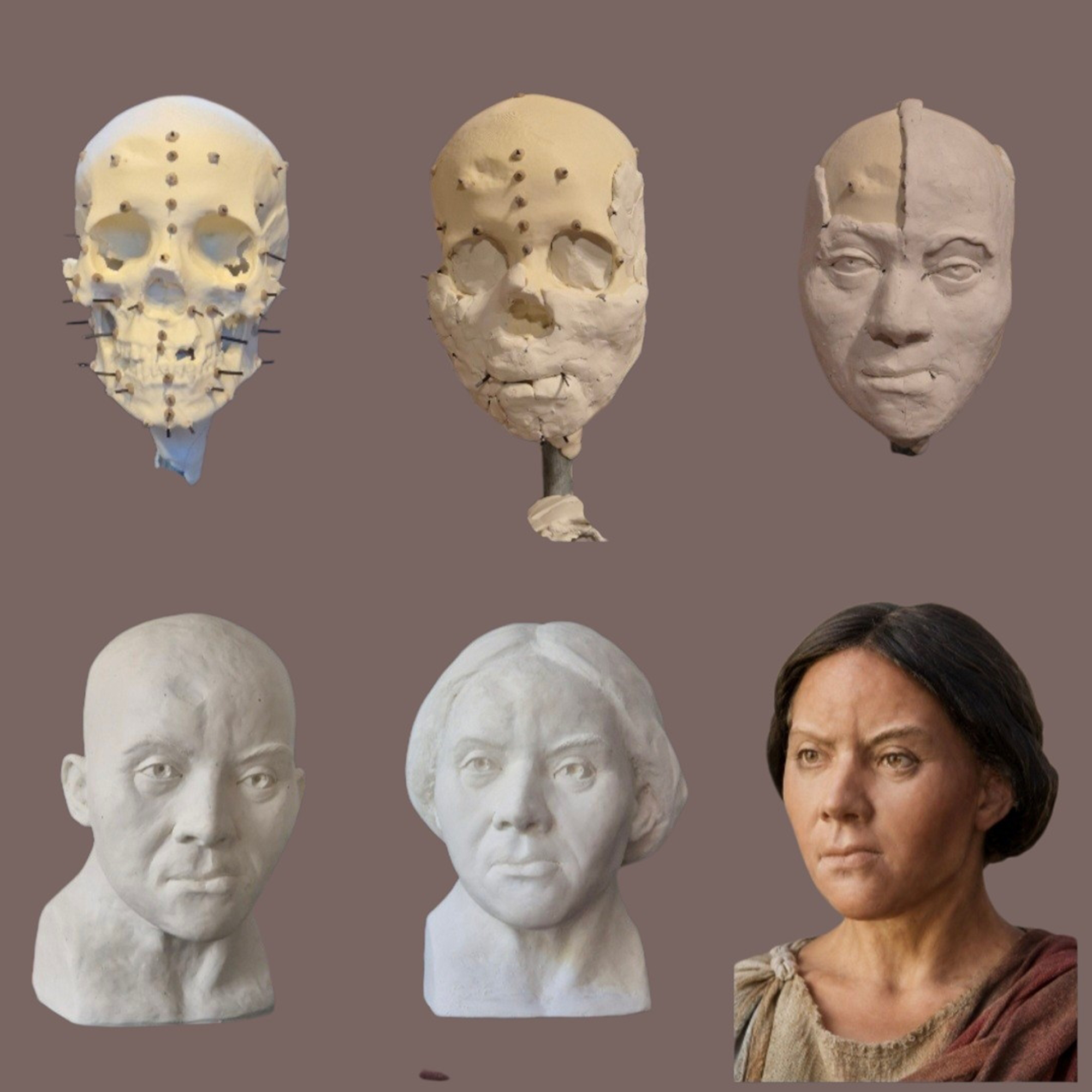
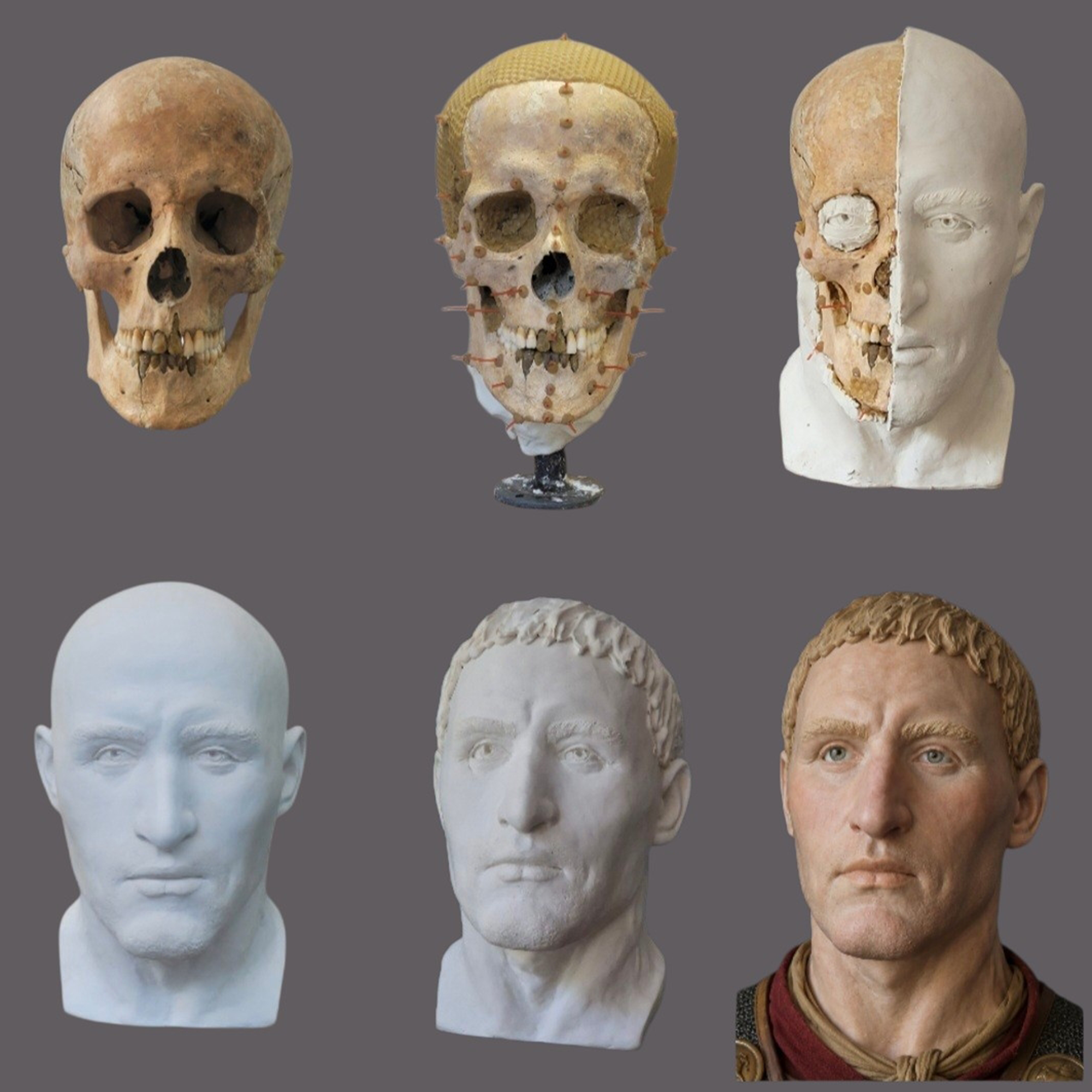
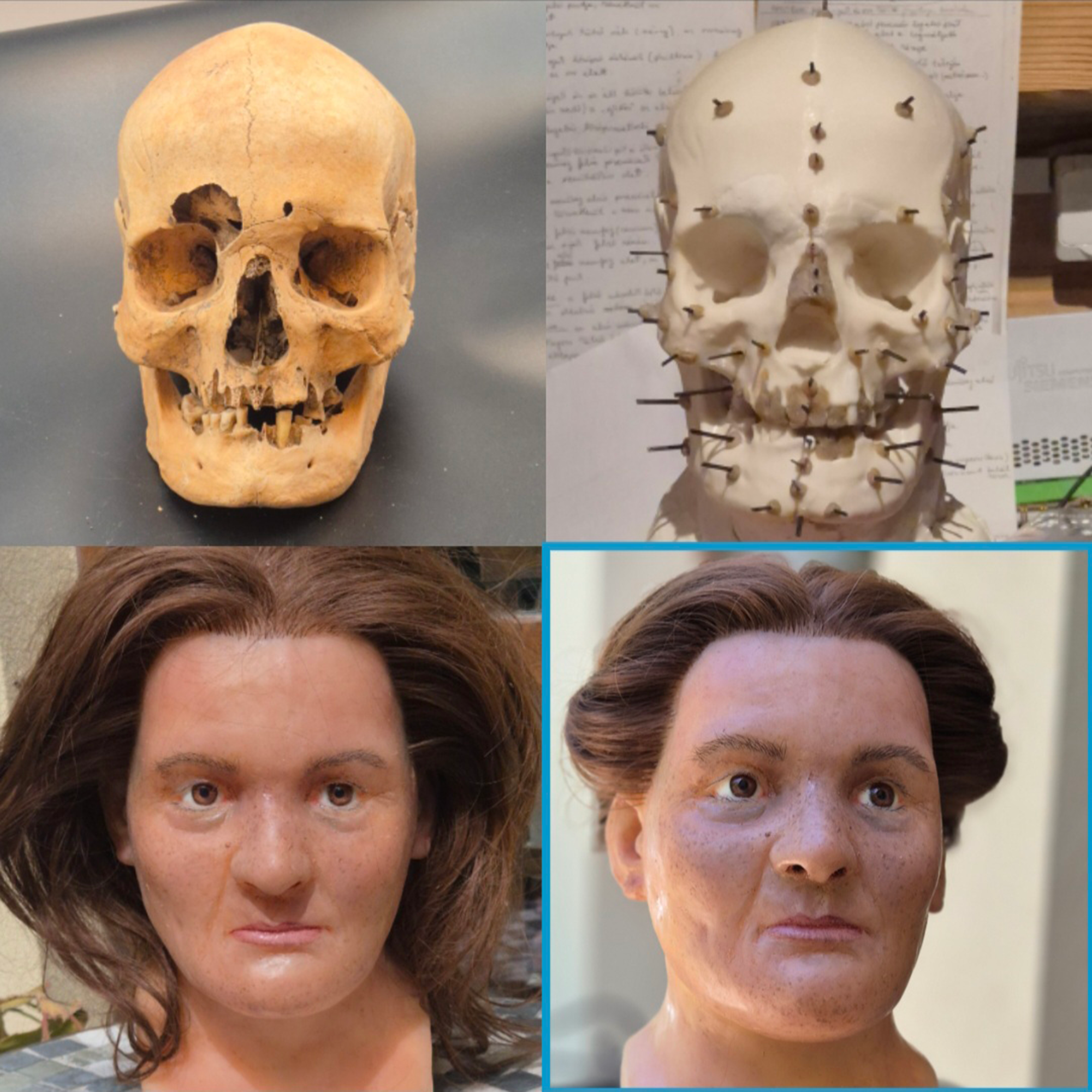
Creating a reconstructed face begins with a high-resolution 3D CT scan of the original skull. Specialists then produce an exact 3D-printed replica, allowing experts like Gábor to work without repeatedly handling or disturbing the ancient remains.
"The latest scientific advances — including 3D scanning, CT imaging, archaeogenetic (ancient DNA) analysis and facial approximation research — are incorporated whenever possible," she said.
"If a hyper-realistic reconstruction is required, I create a mould and cast the face in coloured silicone, finishing it with real human hair, eyebrows, eyelashes and, where appropriate, a beard," she said.
Ancient DNA can sometimes provide additional clues about pigmentation, including probable eye, hair and skin color. But the results are still approximations, not portraits. For instance, hairstyle, expression and many details of the person’s appearance are usually more speculative.
The woman with the laurel wreath
Of all the people she reconstructed, Gábor said she found it especially difficult to forget the woman known as the Jablonka Road mummy.
The woman's skeleton was relatively well preserved, but the soft tissue on her face had decayed, leaving only the skull. A laurel wreath still rested on her head, and, according to Gábor, her burial contained fine clothing, a spindle for weaving, bird-shaped cork sandals and a painted male portrait that had been placed near her feet. Archaeologists have suggested that the portrait may have represented her husband or father, although his identity is unknown.
The silicon reconstruction of an ancient construction worker. (Image credit: Gábor Lakos Aquincum Museum Budapest)
"Based on these details, the archaeological context and the anthropological data, it was the archaeologists who pieced together her story while I reconstructed her face," Gábor said. "That was very moving."
Other individuals selected for the exhibition include those of a young girl who died in childhood and a woman interpreted as a nurse or healer who was buried in a children's cemetery. Some of the other reconstructions include a construction worker, a military officer and a blacksmith.
Two women appear to have met particularly violent or punitive ends. They were buried face down with their legs bound together, Gábor said. The exhibition's interpretation associates one woman with an accusation of witchcraft and the other with poisons, although such details are historical interpretations rather than evidence-based findings from the burials.
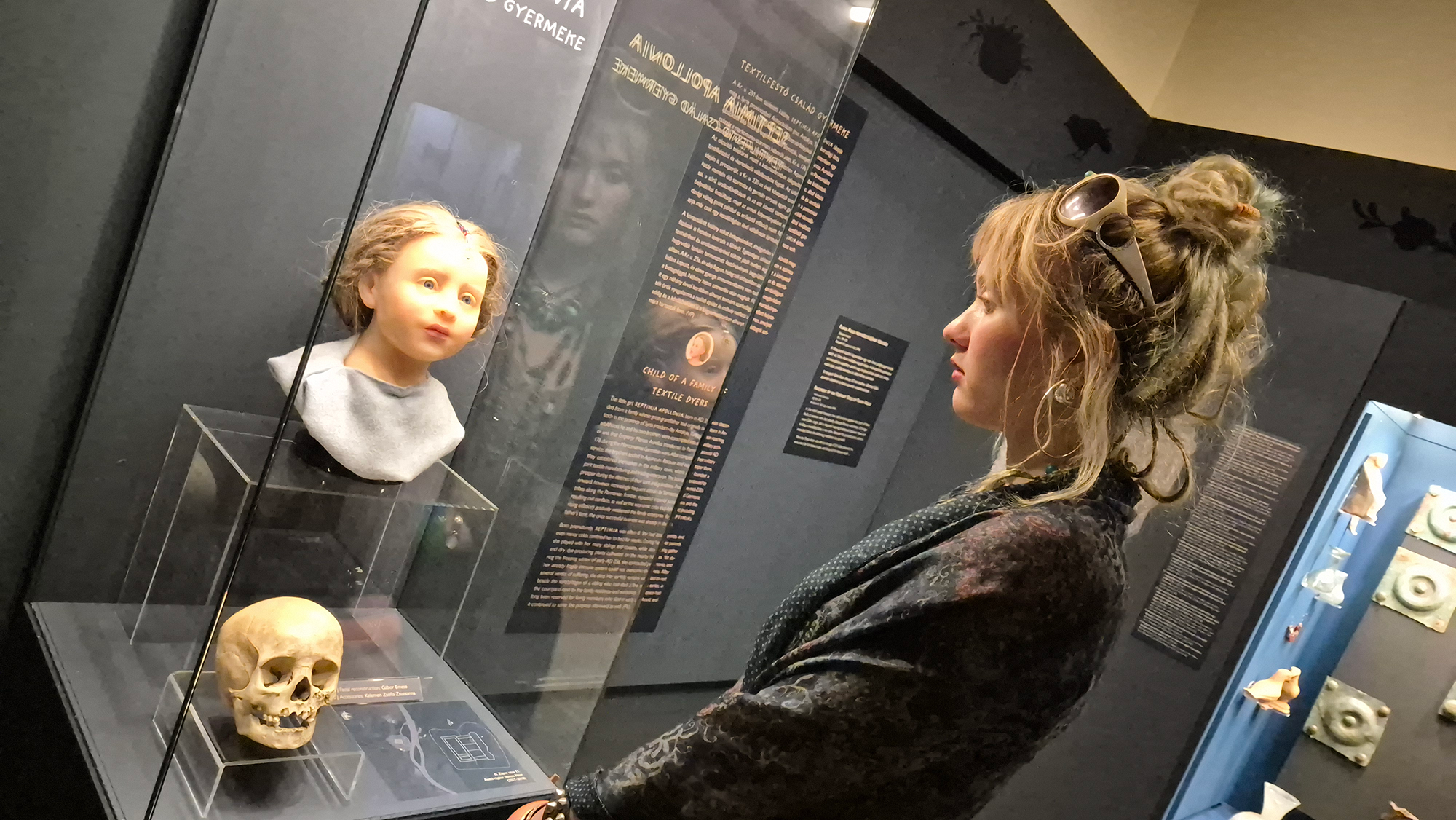
Gábor stands in front of a display showing the reconstructed face of a child from Aquincum. (Image credit: Gábor Lakos Aquincum Museum Budapest)
"Every reconstruction is a journey," Gábor said. "As I shape each face, I find myself reflecting on that person's life again and again, and by the end, they no longer feel like anonymous remains, but like real people."
Analyses of the skeletons suggest that many of the individuals endured strenuous physical labor, periods of hunger and chronic inflammation. This evidence led museum curators to conclude that many represented the less wealthy inhabitants of Roman society — people whose names and experiences were unlikely to appear in surviving written histories.
For Gábor, the physical reconstructions offer something that a digital image cannot: Visitors can stand face-to-face with a life-size person, walk around the model and study it from different angles. Her hope is that this encounter encourages visitors to think beyond the scientific data and imagine the full lives that once surrounded the excavated bones.
"When you see a face, you don't just see bones in a display," Gábor said. "You see a person — someone who was born, who grew up, who worked, who loved, who laughed, who struggled, who fought with challenges, who raised children. Some were sick. Not everyone died of illness. Some died in accidents. Some through violence. And eventually, all of them died. That sense of shared humanity helps spark empathy."
Can you match these historical maps to the empires that ruled them? Test your geography skills with our ancient empires quiz!
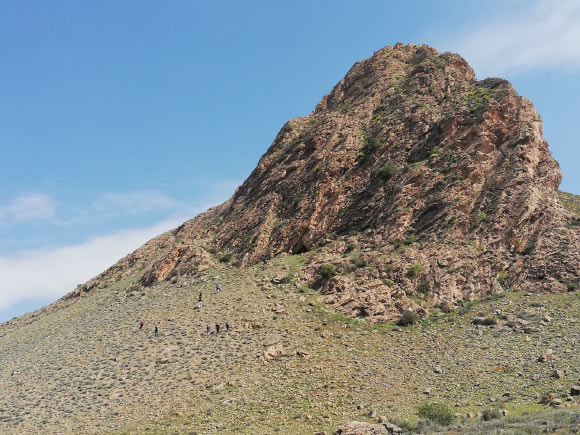
Ararat-1, a modest limestone cave that lies at an elevation of 1,034 m on the eastern flanks of the Ararat Depression in central Armenia, has yielded a striking puzzle about how Middle Paleolithic humans moved across their landscape.
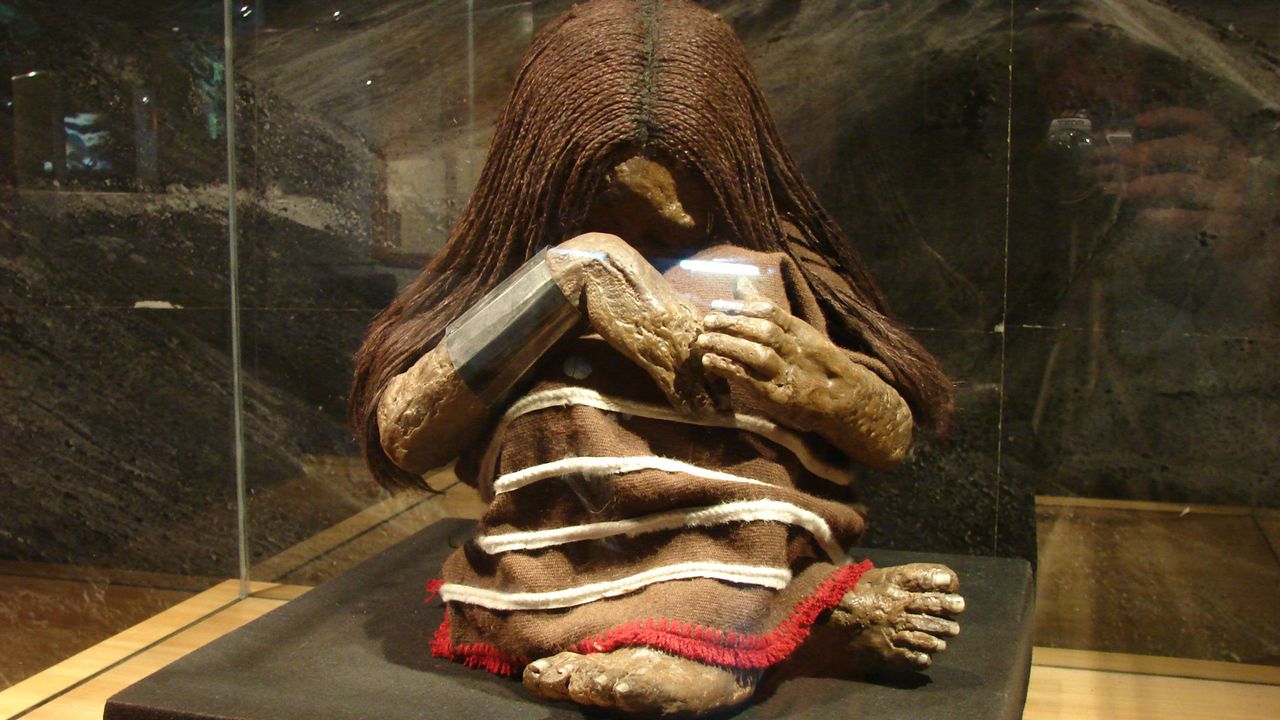
Inca boys and girls chosen for human sacrifice trekked through Inca communities for thousands of miles on sacred pilgrimages before their ritual deaths, often near high peaks in the Andes Mountains, a new analysis of their mummies reveals.
The research also looks again at the manners of their deaths and found that none of three children in the Inca ritual, known as Capacocha, died in the ways that scientists previously thought.
"Capacocha was not limited to the final act of offering at the mountain," study first author Verónica Silva-Pinto, an archaeologist at Diego Portales University in Santiago, Chile, told Live Science in an email. "It was an extended ritual process that began months earlier and involved mobility, dietary changes, the participation of different communities, and the creation of sacred landscapes."
But some other experts, while welcoming the study, are cautious about some of its details.
The new study is based on new examinations of three Capacocha mummies from two sites: The "Niño de El Plomo" or El Plomo Boy, who was about 8 or 9 years old in the 15th century when he was sacrificed near the 17,700 foot (5,400 meter) summit of Cerro El Plomo, now in central Chile; and two girls, one about age 9 and the other about 18, who were sacrificed about 30 years earlier near the top of what's now Cerro Esmeralda in northern Chile's Atacama Desert.
An aerial view of Cerro El Plomo in the Andes of Chile, where El Plomo Boy was sacrificed in about 1480. (Image credit: dreamextreme via Getty Images)
It was long thought that the El Plomo boy had died from hypothermia, or exposure to freezing temperatures, on the high peak, and that the Cerro Esmeralda girls were killed by strangulation. But the new study, published July 15 in the journal Science Advances, rejects those ideas.
Human sacrifice
Archaeologists found the El Plomo Boy in 1954 and the two Cerro Esmeralda girls in 1976. The new study applies modern archaeological techniques to them for the first time.
It "demonstrates that previously investigated contexts can continue to provide crucial information when revisited using new technologies, minimally invasive methods, and an ethical perspective," Silva-Pinto said.
Their examinations with CT scans and microscopy revealed that El Plomo Boy had been killed with blunt force trauma to the head — an injury that wasn't apparent to the initial investigators. The two Cerro Esmeralda girls, meanwhile, were previously thought to have been strangled because of marks on their necks. But the new study found that the marks were probably caused by their clothing after death, and that the hyoid bones of their throats were not fractured or displaced, which happens in most strangulations. The cause of the girls' deaths should now be considered "indeterminate," the researchers said.
A new study finds that El Plomo Boy — whose mummy is shown here being weighed — didn't die from exposure to the cold, but from blunt force trauma to the head. (Image credit: FPG via Getty Images)
Silva-Pinto said the forensic examination should be considered within the Andean worldview, which didn't see death as the end of existence.
"Death was not necessarily understood as an absolute end, but rather as a transformation or passage into the realm of divinities, ancestors, and sacred forces," she said. "The individuals who were offered acquired a new ritual status and could become mediators between communities, mountains, divinities, and the state."
Sacred pilgrimage
The researchers carried out chemical studies on tiny samples of hair from the mummies by looking at isotopes, or different versions of the same element that have varying numbers of neutrons in their nuclei. The isotopes from food and water people consume are incorporated into their hair, shedding light on where they've lived. The team also examined samples of fractured bones for radiocarbon dating.
The hair isotopes showed that the children had moved over long distances between "ecologically distinct regions." The researchers estimated that El Plomo Boy traveled between 1,615 and 1,740 miles (2,600 and 2,800 kilometers) over his last nine months, probably starting from the Inca capital Cuzco, at the heart of the Inca Empire. The Cerro Esmeralda girls probably traveled between 560 and 745 miles (900 and 1,200 km) in their final three months.
Silva-Pinto said the pilgrimages connected outlying regions with the high mountains and other sites where the ceremonies culminated. "Along the routes, local communities would have received the pilgrims and participated in ceremonies involving the sharing of food and beverages," she said. The routes thereby became sacred landscapes, and the central Inca state used this to consolidate its presence in incorporated territories, she said.
The radiocarbon dates for the mummies showed they were all sacrificed in the 15th century: the Cerro Esmeralda girls in about 1450 and El Plomo Boy in about 1480. "The chronology shows that these were not isolated events, but rather a practice carried out at different moments," Silva-Pinto said.
Bioarchaeologist Dagmara Socha from the University of Warsaw in Poland, who studies the Capacocha mummies but who was not involved in this particular examination, cautioned that the conclusions drawn from the isotope analysis might be flawed. "Isotopic analyses alone do not allow us to reconstruct the potential route taken during the journey," she told Live Science in an email. "In several cases, the observed isotopic changes were not statistically significant and may also reflect seasonal variation in diet."
The study is "interesting and potentially valuable, but some of the interpretations go beyond what can be reliably concluded from the available evidence," she told Live Science in an email.
Archaeologist Pablo Mignone of Argentina's Institute for Research in Social Sciences and Humanities, who was also not involved, said the paper's interpretive framing could be questioned. "The paper leans on a fairly centralized, top-down narrative: children brought to Cuzco and then dispatched as instruments of 'biopolitical conquest,'" he told Live Science in an email.
But earlier studies showed that Capacocha individuals sometimes started their trek in Inca regions, not only at the capital: '''Cuzco as the sole engine of conquest' is an interpretive choice that neither this study nor the broader body of comparative evidence on Capacocha unequivocally supports," Mignone said.
How much do you know about the first people to reach the Americas? Find out with our First Americans quiz!
In the millennia that followed the last Ice Age, early humans began making their way into the inland mountains of southern Norway as ancient glaciers receded, revealing new portions of the landscape.
However, the landscape in this region made it impossible for fish to make their way upstream into high mountain lakes, impeded by waterfalls and other barriers. Somehow, fish appeared in these upland bodies of water anyway—so how did they get there?
The natural answer to this ancient question is that humans must have carried fish from regions further downstream, populating these ancient and once-lifeless lakes with an abundant food source. The question archaeologists have been unable to answer is when, precisely, these ancient transplants of wildlife took place.
Now, archaeologists with the University of Oslo believe they have finally solved this longstanding riddle, with the discovery of the remains of 7,000-year-old fish traps that reveal the likely period during which early Mesolithic inhabitants of the region engaged in some of its earliest fish farming.
Radiocarbon dating of wood used in ancient fish traps in Norway’s Lake Tesse revealed them to be approximately 7000 years old (Image Credit: Antiquity, https://doi.org/10.15184/aqy.2026.10392)
The discovery not only offers archaeological evidence for when fish were likely first introduced into the region, but also reveals that agriculture was not the only means of nature management that these early Norwegians engaged in.
“For more than 100 years, it has been known that the fish inhabiting watercourses in the Norwegian mountains are descended from specimens translocated by humans,” says Axel Mjærum, a researcher at the University of Oslo and the lead author of a new study detailing the findings.
“However, until now, it has remained unclear when people first began transporting fish upstream into lakes and rivers that originally lacked natural fish,” he adds.
A 7000-Year-Old Discovery Leads to a Breakthrough
Offering a rare opportunity to unravel some of this mystery, the discovery of ancient fish traps constructed from wood, the remnants of which were discovered in southern Norway’s Lake Tesse, provided a unique look at the period during which fish transport and harvesting likely began.
Radiocarbon dating of the wood from the traps reveals that Salmo trutta, the region’s brown trout species, were relocated to the lake during the Mesolithic period.
Growing to considerable sizes, this species of trout was an ideal, high-protein food source that could readily be harvested from the lake once a thriving population had been established.
Although agriculture would later become a major source of food for these ancient Scandinavians, the period during which the fish traps are dated to predates farming in the region, which supports the idea that these people were hunter-gatherers, and also fishermen.
Environmental Management in Ancient Scandinavia
More broadly, the findings by Mjærum and his colleagues reveal the degree to which these Mesolithic Scandinavians were managing their food supply through direct control of the natural environment, setting the pace for several more millennia of food production.
Even today, brown trout are among the many fish species sportsmen harvest—the descendants of the very same fish originally carried to southern mountain Norwegian lakes thousands of years ago.
Mjærum says that the ancient Mesolithic Norwegian’s “release of brown trout into previously fishless lakes in the Norwegian mountains around 5000 B.C. is a very clear example of humans’ general capacity to reshape entire ecosystems, even before the introduction of farming.”
The study, “The introduction of fish to the Scandinavian mountains by hunter-fisher-gatherers 5000 BC,” appeared in the journal Antiquity.
Micah Hanks is the Editor-in-Chief and Co-Founder of The Debrief. A longtime reporter on science, defense, and technology with a focus on space and astronomy, he can be reached atmicah@thedebrief.org. Follow him on X @MicahHanks, and at micahhanks.com.
Archaeologists from the Israeli Antiquities Authority and Tel Aviv University, conducting excavations in the City of David, have unearthed massive wooden beams burned during the destruction of the First Temple in 586 BCE.
The research team behind the discovery notes that the huge wooden support beams, which were surprisingly well preserved for ancient wood structures, allow for much more precise dating of the site. The researchers also highlight the apparently deliberate efforts by the city’s rebuilders to leave the ruins in place for future generations to witness.
2,600-Year-Old Wooden Beams Preserved by Melting Plaster
According to a statement emailed to The Debrief, the ancient, charred wooden beams discovered within the Jerusalem Walls National Park were relics from a collapsed building destroyed by “the intense fire of the First Temple’s destruction” over 2,600 years ago.
“The beams appear to have served as the roof of an inner courtyard in a building from the First Temple period,” explained Excavation Director Efrat Bocher.
Burnt tree trunks exposed in the City of David. Photo by Reut Vilf, City of David.
Although not unprecedented, the team said that finding intact wood relics of this advanced age is rare, since organic materials like wood typically break down over such extended time periods. In this case, they suggest that the surprisingly intact beams were likely preserved by melting plaster, “sealing the burnt wood beneath.”
“During the destruction, they collapsed onto the floor,” Director Bocher explained. “We believe that the plaster cladding of the building’s walls, melted by the fire, covered the charred wooden beams, and ultimately enabled their exceptional preservation.”
Growth Rings Help Archaeologists Narrow the Site’s Dating Range
When discussing the historic and scientific value of the discovery, Dr. Johanna Regev of the Israel Antiquities Authority, who studied the wooden beams up close, noted the exceptional rarity of finding ancient wood with “such a large number” of visible growth rings.
“Here, in the City of David, we found thick beams with many rings, offering significant research potential,” Dr. Regev said.
The tree rings that were exposed in the City of David. Photo by Efrat Botzer.
For example, the researcher explains, more growth rings help scientists date sites and materials with increased precision and “higher dating resolution.”
“Until now, we could date finds within a range of hundreds of years,” Dr. Regev explained. “Now we can attain much greater precision, narrowing the dating range down to as little as ten years.”
City’s Rebuilders Left Ruins in Place as a “Testament to the Destruction”
While the historic site was witness to a tragic destruction, the research team said returning residents beginning to rebuild the city appear to have intentionally left the remains untouched for future generations to see.
“[They] probably made a deliberate decision to preserve the memory of the destruction by leaving behind remains that tell the story of the catastrophe,” the team explained.
Ruins of the destruction uncovered in the Israel Antiquities Authority excavations at the City of David. Photo by Reut Wilf, City of David.
Dr. Yiftah Shalev, who directs the excavation on behalf of the Israel Antiquities Authority alongside Prof. Yuval Gadot of Tel Aviv University, said the idea of a landscape of memory is “familiar from many cultures around the world.”
“Preserving memory is a human need, seeking to preserve what once existed,” Dr. Shalev explained. “Here we see it in its clearest form: a deliberate choice to leave ruins in place as a testament to the destruction and build the new layer over them.”
On a more personal note, Director Bocher noted the serendipitous timing of the discovery “just before Tisha B’Av.” According to Hillel.org, the holiday, which is recognized as the saddest day on the Jewish calendar, “is a day of mourning for tragedies across Jewish history, most particularly the destruction and loss of the first and second Temple and Jerusalem.”
“This discovery makes you feel that you are witnessing the very moment of destruction, the moment when it all happened,” the researcher concluded, adding that “it’s deeply moving.”
Christopher Plain is a Science Fiction and Fantasy novelist and has spent the last six years as Associate News Editor and Head Science Writer at The Debrief. Follow and connect with him on X, learn about his books at plainfiction.com, or email him at christopher@thedebrief.org
For decades, scholars have debated whether the Qumran sect associated with the Dead Sea Scrolls actually used its unusual 364-day calendar, or viewed it as more of a theoretical ideal.
Now, a new study published in the Tarbiz Quarterly for Jewish Studies suggests that neither explanation is fully accurate. Instead, Prof. Eshbal Ratzon argues that the community used the calendar for a time before seasonal drift and changing Hasmonean politics prompted them to abandon the system.
A Calendar as a Religious Statement
Ratzon, a professor at Tel Aviv University, set out to answer a question that has puzzled scholars for decades. Unlike the approximately 365.25-day solar year, the Qumran calendar consisted of exactly 364 days. The calendar used 364 days because the number divides evenly into 52 seven-day weeks, so every festival would always fall on the same weekday each year.
To the Qumran sect, this order in the calendar demonstrated what they saw as God’s perfect design. They believed God set the calendar at Creation and that people could not change it. This belief clashed with Jerusalem’sreligious leaders, whose priests used a lunisolar calendar that most Jewish people followed during the Second Temple period.
Reading the Evidence Differently
The mathematics that gave the calendar its perceived order also led to practical issues. A 364-day year lags behind the solar year by about a day and a quarter each year, causing festivals to drift by nearly a month over two decades. After several decades, a spring harvest festival could fall in winter. For a group that linked its holidays to agriculture, this gradual shift was a serious problem.
Two main theories have shaped the debate for years. One suggests that the sect occasionally added extra days to correct the drift, while the other argues that the 364-day calendar was only a theoretical model and not used in daily life. Ratzon argues that the Dead Sea Scrolls do not clearly support either view. Nearly twenty of the recovered scrolls concern calendars or astronomy, highlighting the importance of the subject within the community. The Book of Jubilees, a key text for the sect, goes further by criticizing the lunar calendar and presenting the 364-day system as the original calendar given to Moses at Sinai.
“The Qumran calendar has long been regarded as one of the Qumran sect’s defining features, but also as one of the most baffling mysteries of the Dead Sea Scrolls,” Ratzon said.
Why the Sect Moved On
Ratzon’s reconstruction sees the abandonment of the calendar as a two-stage process, rather than a single failure. The growing seasonal drift made the calendar increasingly impractical. At the same time, the sect’s relationship with the Hasmonean rulers improved under Alexander Jannaeus, who supported religious decisions closer to the sect’s views and disagreed with the Pharisees who led the Temple in Jerusalem.
According to Ratzon, improving relations with the Hasmonean rulers made it possible for the sect to adopt the Temple calendar for daily use, while still holding the 364-day system as an ideal. They believed it was valid at Creation and would be restored in the future.
The debate over the Qumran community has continued for decades. While Ratzon’s proposal does not settle that debate, it offers a new explanation for how a calendar once central to the sect’s identity could eventually become more of a religious ideal than a practical system.
Austin Burgess is a writer and researcher with a background in sales, marketing, and data analytics. He holds an MBA, a Bachelor of Science in Business Administration, and a data analytics certification. His work focuses on breaking scientific developments, with an emphasis on emerging biology, cognitive neuroscience, and archaeological discoveries.
The research team behind the new analysis said the evidence also suggests that the ancient cave has been in continuous use throughout the entire timespan, offering scientists a rare glimpse into the magic and spiritual beliefs of Australia’s ancient inhabitants.
Oral Traditions Said Coggs Cave was Used for Magic and Spiritual Rituals
According to a statement announcing the ‘magical’ discovery, 19th-century ethnographic reports recorded a network of caves in Gippsland and the Southern Victorian Alps. Those same reports also noted that local oral traditions suggested that the caves were used by powerful women and men called “mulla-mullung” and other spiritual practitioners for magic, healing, and “cursing” rituals.
Previous archaeological expeditions determined that these caves, including the study site at Cloggs Cave, were occupied throughout the past 25,000 years. However, little direct evidence has been provided to support the oral traditions of magic and healing taking place within the caves.
Instead of cave art or other magical relics that may not have survived the passage of time, the research team, led by Dr Elle Grono, School of Culture, History and Language, ANU College of Asia and the Pacific, Australian National University, Canberra, Australia, focused on phytoliths, which are microscopic silica bodies from plants recovered from Cloggs Cave. To gain insight into the potential uses of Cloggs Cave, the studied phytoliths were recovered from its buried deposits.
GunaiKurnai Elder Uncle Russell Mullett at the cave entrance of Cloggs Cave (Image Credit: Jess Shapiro, courtesy of GunaiKurnai Land and Waters Corporation).
When detailing the process, Dr. Grono said that phytoliths have the advantage of mostly accumulating where a plant decays. Conversely, plant pollen can be dispersed by winds or insects, diminishing some of their historic site value. This difference is critical, Grono said, because phytoliths found inside Cloggs Cave must have come from humans or other animals bringing them inside.
“No plants grow inside the cave due to a lack of light, so the phytoliths must have been carried in by people or by animals such as possums on their fur or through their scats,” the team leader explained.
Excavation of Ashy Deposits Includes Unexpected “Standing Stone”
To determine the taxonomic groups of the thousands of recovered phytoliths, the team examined the samples under a microscope. To ensure the samples were from plants brought into the cave by humans and not animals, the team used specimens collected from one pit that was 1.5 meters deep and a second that was 2.3 meters deep.
Grono said the team also exclusively studied half-burnt phytoliths from “ashy” layers within the pits. The researcher noted that this extra selection criterion also helps ensure the samples came from samples brought into the caves by humans, “as unburnt ones might have arrived through either means.”
Microscopic images of burnt grass phytoliths from Cloggs Cave. Most of the images depict phytoliths from the inflorescences and leaves of grasses. The scale bar indicates 20 microns. Refer to the journal article for details (Image Credit: Grono, David, Mullett, Stevenson, Petchey, Delannoy, McDowell, Miller, Morley, Fresløv, Jenkin, and GunaiKurnai Land and Waters Aboriginal Corporation).
The top layer of the two pits consisted of 73 thin, ashy layers of burnt plant material. When the research team performed optically stimulated luminescence and carbon dating tests to establish when the material was laid down, the latter via accelerator mass spectrometry, the results placed the deposition of the material between 4,400 and 1,600 years ago.
When searching through the ashy pits, the team found a 28-cm-high “standing” stone. They note that subsequent analysis showed that the stone was likely erected in Cobbs Cave “by Old Ancestors for ritual purposes around 2,000 years ago.”
A 2,000-year-old standing stone, depicted during excavations. Burnt phytoliths came from the ashy layers surrounding the standing stone (Image Credit: Bruno David, courtesy of GunaiKurnai Land and Waters Corporation).
The “Old Ancestors” Were Selective About Which Grasses Were Brought Inside
When the analysis was complete, the team had identified 29 different phytolith types representing a wide range of plants. This included woody plants, herbs, and grasses.
The team determined that as much as 97% of the burnt matter came from grass. This included disparate species, such as grasses that prefer temperate or cooler climates and grasses that prefer warm and humid conditions to thrive, deposited in the same ash layer.
“Here we show that the Old Ancestors selected whole grasses from the wider landscape and carried them into Cloggs Cave to spread out in thin layers and burn,” Dr. Grono said. “Over time, sediments covered these burnt layers, preserving each layer on top of another over thousands of years.”
The researchers said the taxonomic analysis revealed that the “Old Ancestors” were selective of which grass types they brought into the cave and which ones they omitted. For example, they avoided what the team noted were “diverse species” of grasses still plentiful in nearby riparian forest and open woodland before European settlement.
“The phytoliths found at Cloggs Cave were from different parts of grass plants such as stems, leaves, flowers, and roots, indicating that whole grasses were brought in, including the inedible parts,” Grono explained.
Selection and Burning Consistent With “Magic and Rituals”
Although there is no direct record of the reason the ancient people selected and burned grass inside of Cobbs Cave, dating back thousands of years, Professor Bruno David from Monash University, who co-led the excavations with GunaiKurnai Land and Waters Corporation, said the behavior is “consistent with GunaiKurnai traditional practices of using ash to perform magic and rituals.” Professor David also noted the practice could allow the participants to track the footsteps of anyone entering the cave, “including spirit beings.”
The team also found macro-botanical evidence, including fat-smeared trimmed wooden sticks from Casuarina trees, in deeper and older pit deposits. Professor David said this discovery suggests that “other kinds of rituals using woody plants” were also performed in Cobbs Cave.
When discussing the historical significance of the discovery, the researchers said that finding partially or completely burned phytoliths “throughout the dated deposits” suggests that humans intentionally brought selected plants and grasses into the cave and burned them “over the entire timespan of the past 25,000 years.”
Christopher Plain is a Science Fiction and Fantasy novelist and has spent the last six years as Associate News Editor and Head Science Writer at The Debrief. Follow and connect with him on X, learn about his books at plainfiction.com, or email him at christopher@thedebrief.org

 Login