❌

Reading view

SpaceX's Starship megarocket makes the 'softest splashdown' ever after launching next-gen Starlink satellites in Flight 13 test (video)

SpaceX launched the world's most powerful rocket on a critical 13th test flight late Friday, but there was no triskaidekaphobia on this mission.

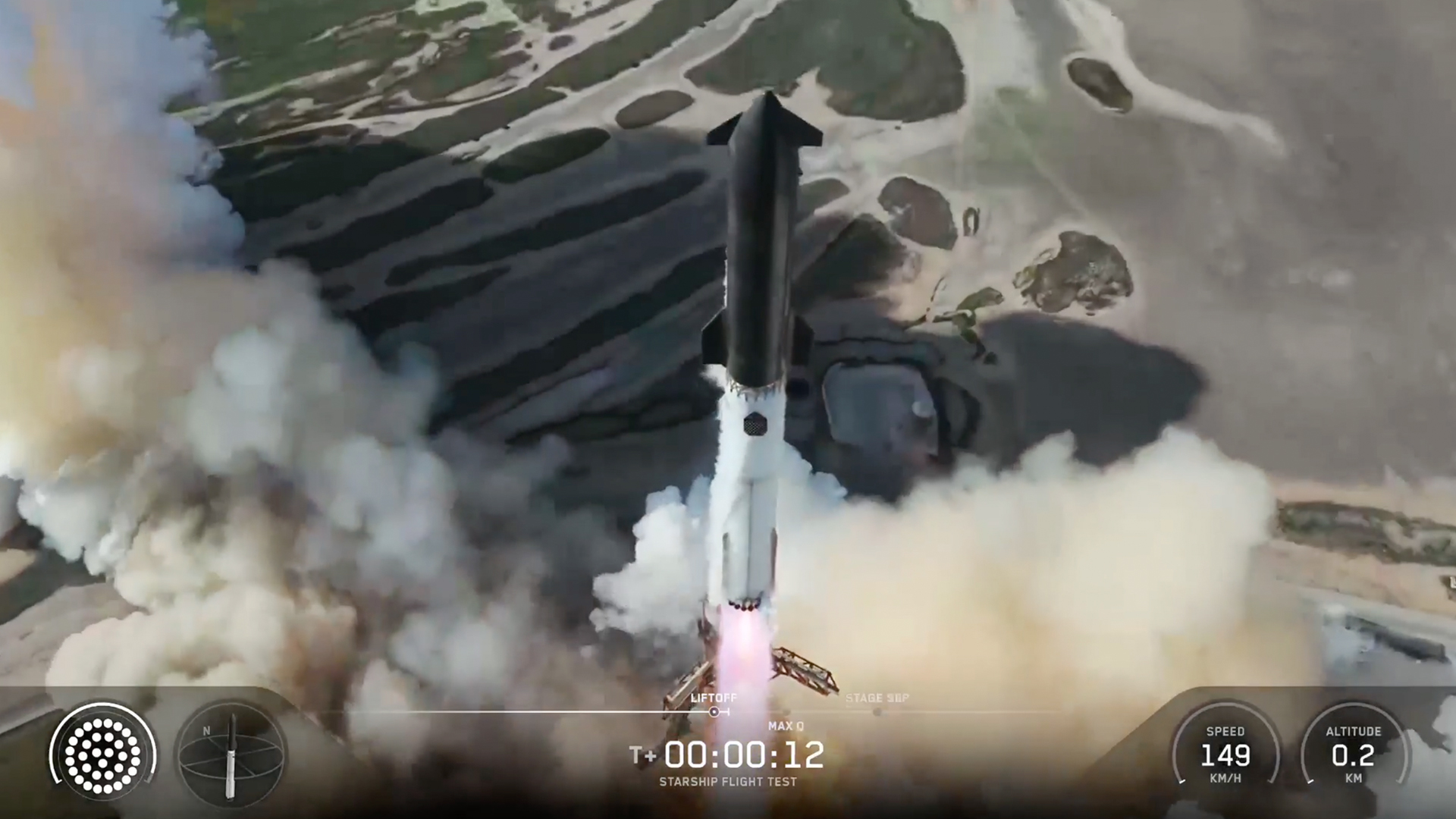
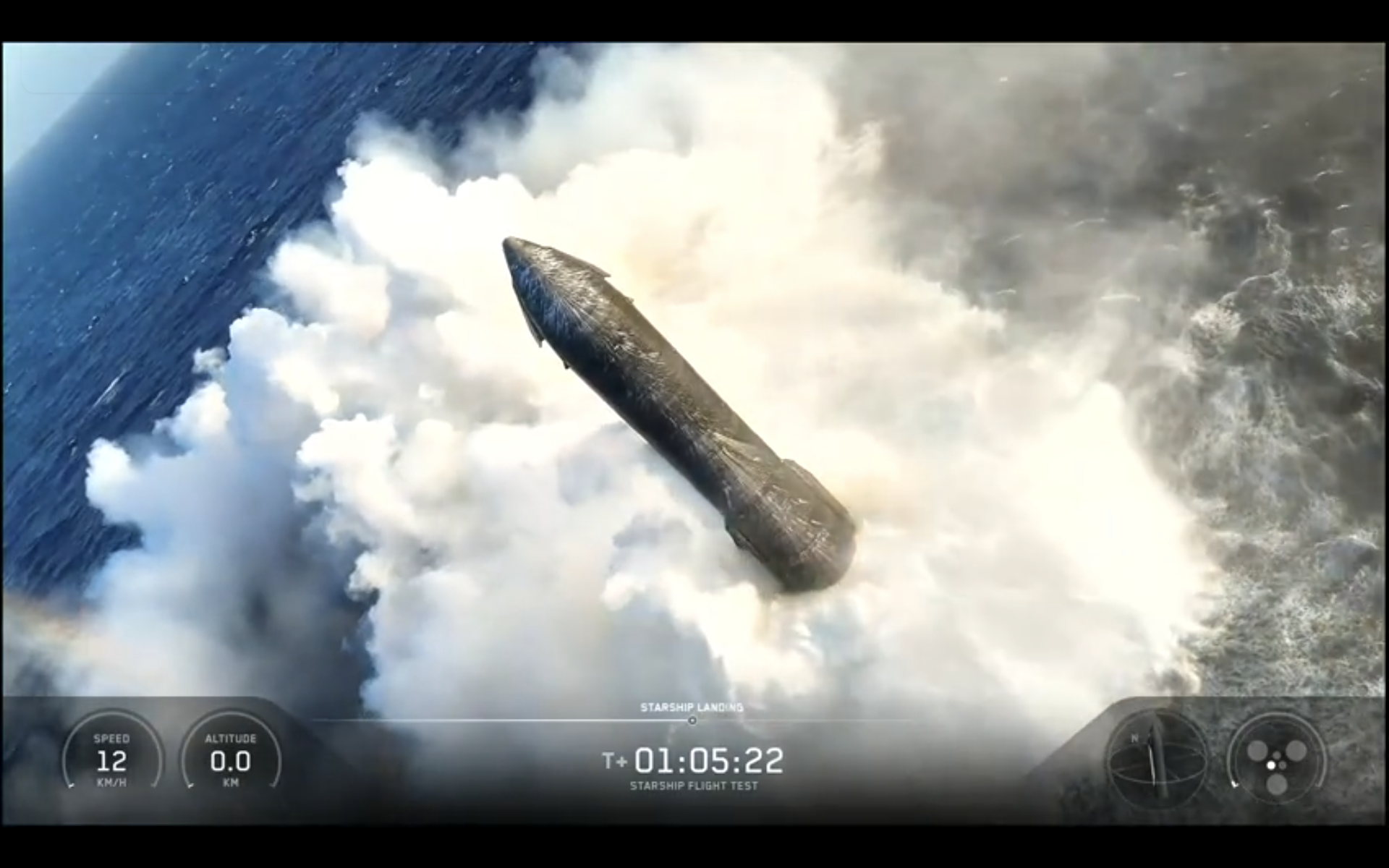
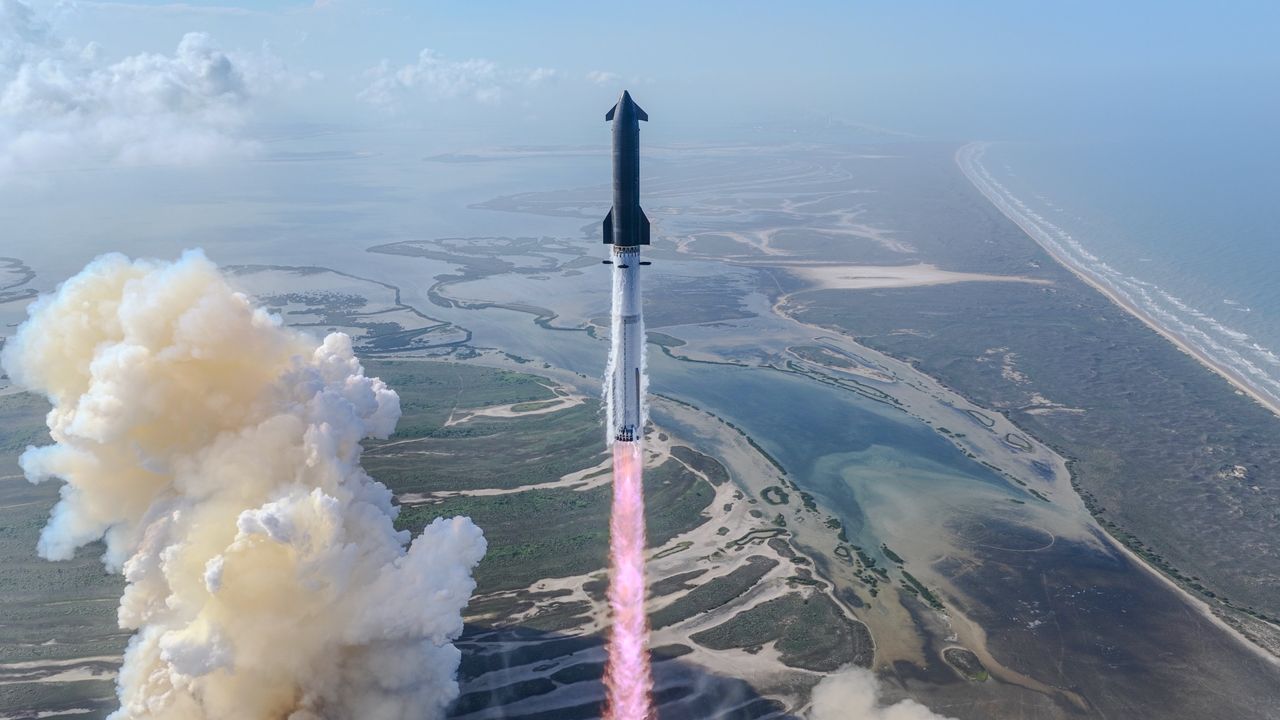
The July 24 test launch, Space's Starship Flight 13 mission, sent a towering rocket the size of a 40-story skyscraper into space from South Texas, returned its massive Booster to Earth, and then β€” in a feat perhaps none saw coming β€” gently landed its Starship upper stage in the Indian Ocean, where it tipped over to float belly up on the sea.

"Starship is intact, floating in the ocean and transmitting telemetry!" SpaceX CEO Elon Musk wrote on X.
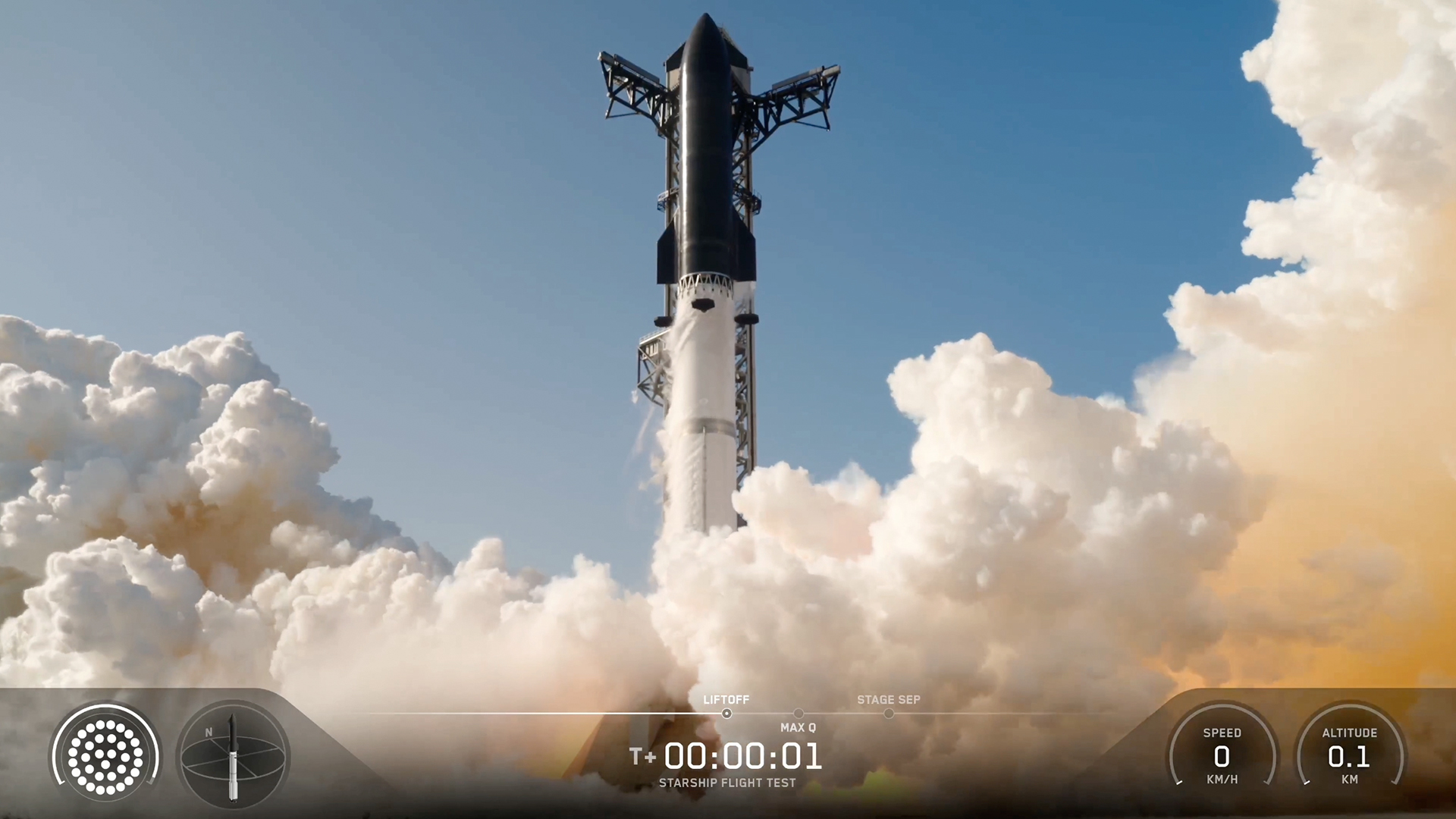
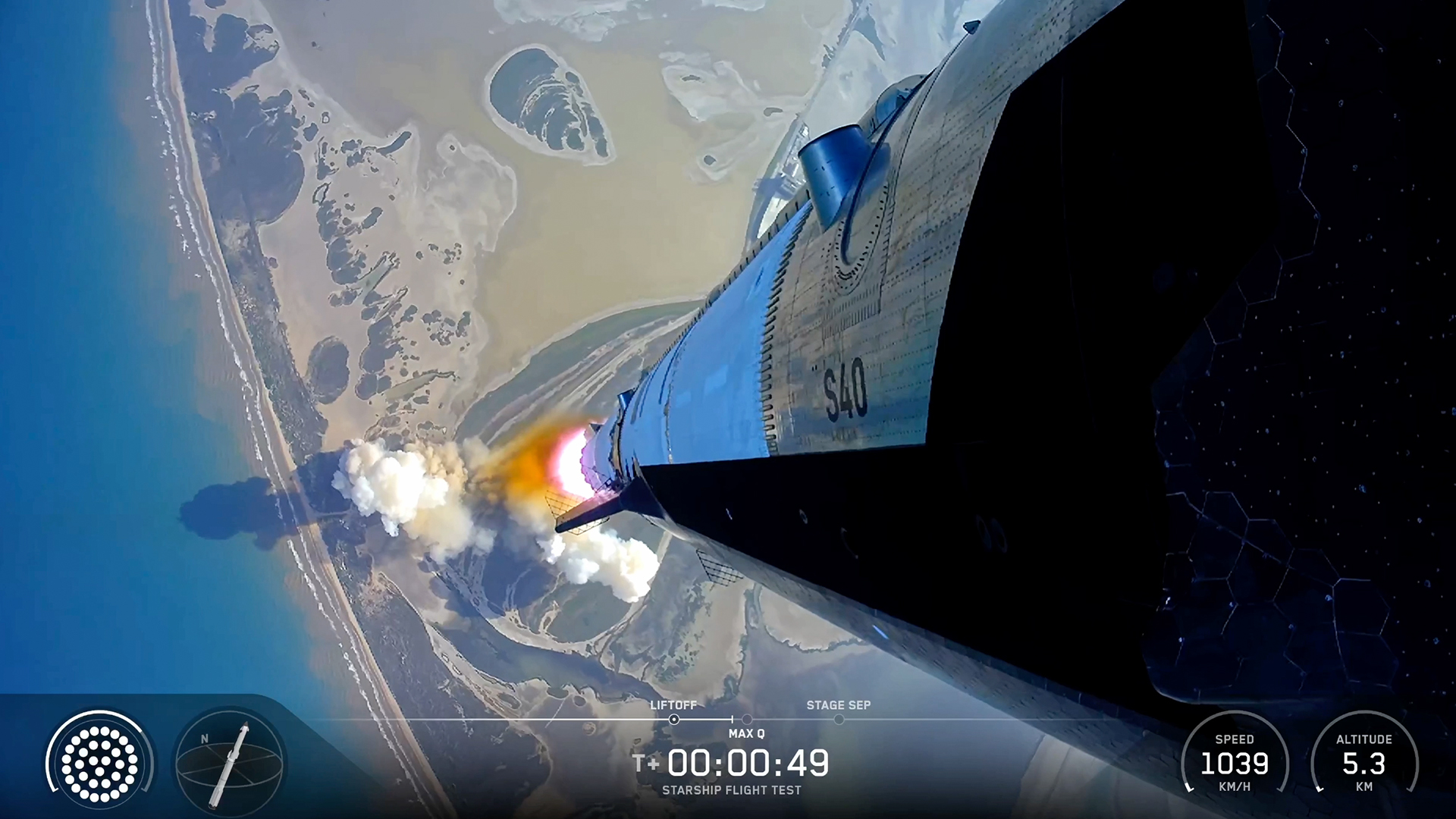
A towering SpaceX Starship Flight 13 rocket lifts off into a blue sky belching twin plumes of smoke.
SpaceX's Starship Flight 13 test flight lifts off from Starbase, Texas on July 24, 2026.SpaceX
SpaceX Starship launches from Starbase,  Texas.
SpaceX's Starship Flight 13 test flight lifts off from Starbase, Texas on July 24, 2026.SpaceX
A towering SpaceX Starship Flight 13 rocket lifts off into a blue sky.
SpaceX's Starship Flight 13 test flight lifts off from Starbase, Texas on July 24, 2026.SpaceX

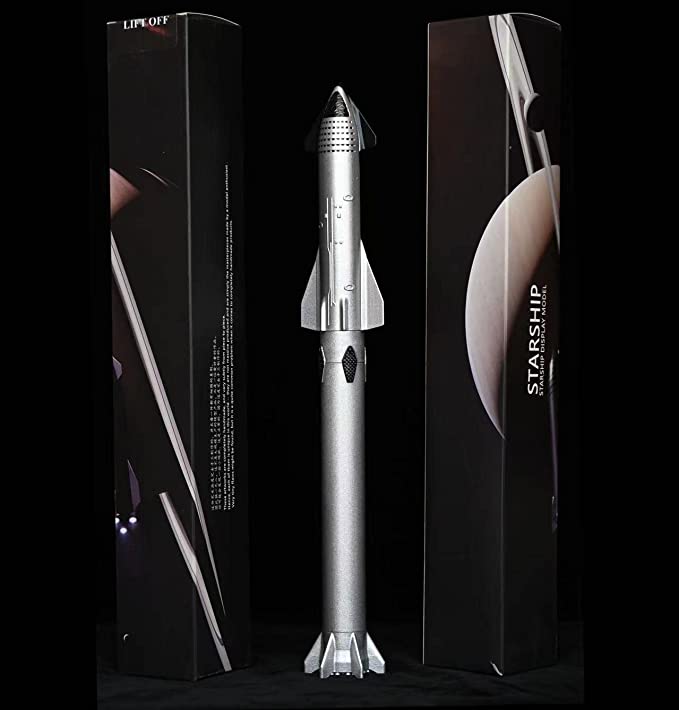
Starship Die Cast Rocket Model Was $47.99 Now $39.99 on Amazon.

Even if you can't see SpaceX's Starship in person, you can score a model of your own. Standing at 13.77 inches (35 cm), this is a 1:375 ratio of SpaceX's Starship as a desktop model. The materials here are alloy steel and it weighs just 225g.View Deal

"That is a first," SpaceX spokesperson Dan Huot added in live commentary as a drone beamed stunning views of Starship bobbing in the waves. "That is the softest splashdown we have ever had with Starship in the Indian Ocean."

The splashdown capped what appeared to be a mostly successful test flight of SpaceX's biggest Starship ever. With a mighty roar, Starship Flight 13 lifted off from SpaceX's Starbase, Texas launch site at 6:51 p.m. EDT (2251 GMT) on a test flight that lasted just over one hour.

It was only the second flight of the company's new Starship Version 3 design, or V3, and SpaceX was hoping for a better outing than its first attempt in May. During that previous test, the Starship Flight 12 mission, the massive Super Heavy first-stage Booster suffered engine problems after stage separation and failed to make a water landing in the Gulf of Mexico. It crashed instead.

Lucky Flight 13

Friday's Starship Flight 13 mission fared a bit better.

SpaceX initially tried to launch Flight 13 on July 16, but the rocket aborted the try at the last second due to engine issues. SpaceX replaced some first-stage Raptor engines in time for a July 23 launch attempt, but waved off due to weather, setting the stage for Friday's successful liftoff.

Minutes into the flight, the Super Heavy Booster successfully separated from its Ship upper stage, aced a flip maneuver and returned to Earth. There was a problem during the landing burn. Only five engines appeared to fire when 13 were required to slow the Booster to landing speed. It hit the Gulf waters harder than planned, its camera views cutting out.

"It didn't look like we lit all 13 engines that we were planning for that initial landing burn," Huot said. "We were targeting a softer splashdown and, as you saw, it came in with quite a bit of velocity."
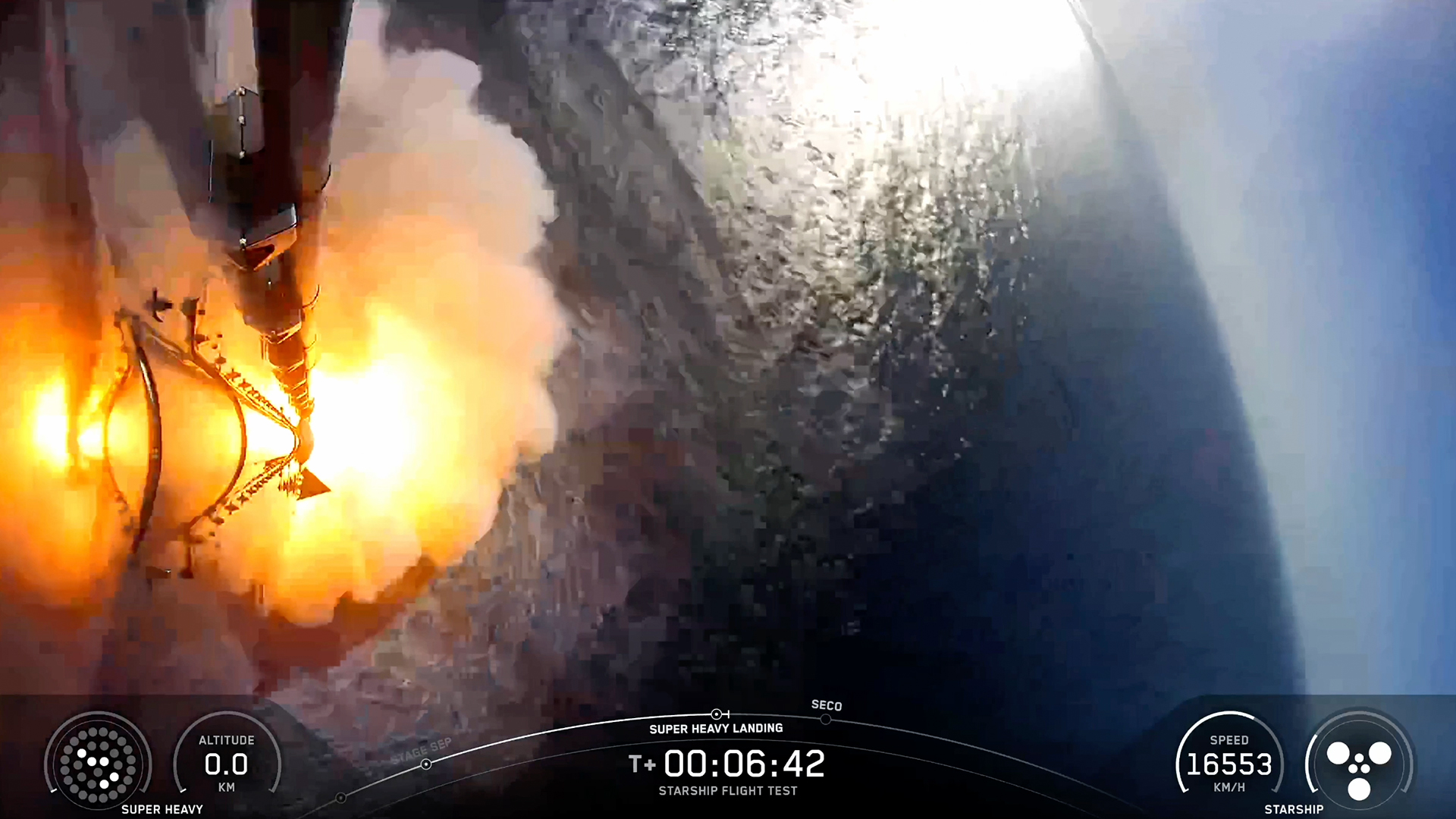
A SpaceX Super Heavy booster splashes down in the Gulf of Mexico.

SpaceX's Starship Flight 13 Booster hits the Gulf of Mexico waters hard, with only 5 of 13 planned engines firing during a landing burn, on July 24, 2026. (Image credit: SpaceX)

Starlink V3 makes a debut

Starship is intact, floating in the ocean...'

- Elon Musk, SpaceX CEO

Despite the Booster's rough landing, there were clear successes on Starship Flight 13.

While sailing on its suborbital trajectory, Flight 13's Ship upper stage deployed 20 next-generation Starlink Version 3 internet satellites β€” large, flat satellites equipped with laser communications links and expansive solar arrays that will replace SpaceX's current Starlink internet megaconstellation.

Starship is designed to launch 60 Starlink V3 satellites at a time, spitting them out through a slit-like payload bay door like a giant PEZ candy dispenser. All 20 Starlink V3 satellites deployed smoothly, with the last two switching on flashlights and looking back at their Ship carrier before floating off into orbital darkness. The satellites did not stay in space. They fell to Earth and burned up (by design) due to their suborbital flight path.

The Ship upper stage (which SpaceX also refers to as Starship) then reignited one of its six Raptor engines to test a critical engine relight capability that will allow future Starships to enter and leave orbit. The burn went off without a hitch β€” a milestone since SpaceX had not always performed the burn if a test didn't go smoothly.

Then it was time for reentry, with cameras beaming back stunning views of Starship wrapped in super-hot plasma as it fell back to Earth. The spacecraft executed a three-engine burn to flip over into a vertical landing position, but did shift down to two engines, then one before it toppled over to rest on the waves.

The sight of a floating Starship triggered a cacophony of cheers from SpaceX teams at Starbase and its Hawthorne, California rocket factory in the company's livestream. After all, Starships usually explode after they tip over.

"This is just the first time we've put a Starship into the water," SpaceX's Dan Huot said during live commentary. He called it SpaceX's "softest splashdown" ever. "This is a dream scenario for this team that's trying to get this heat shield data."
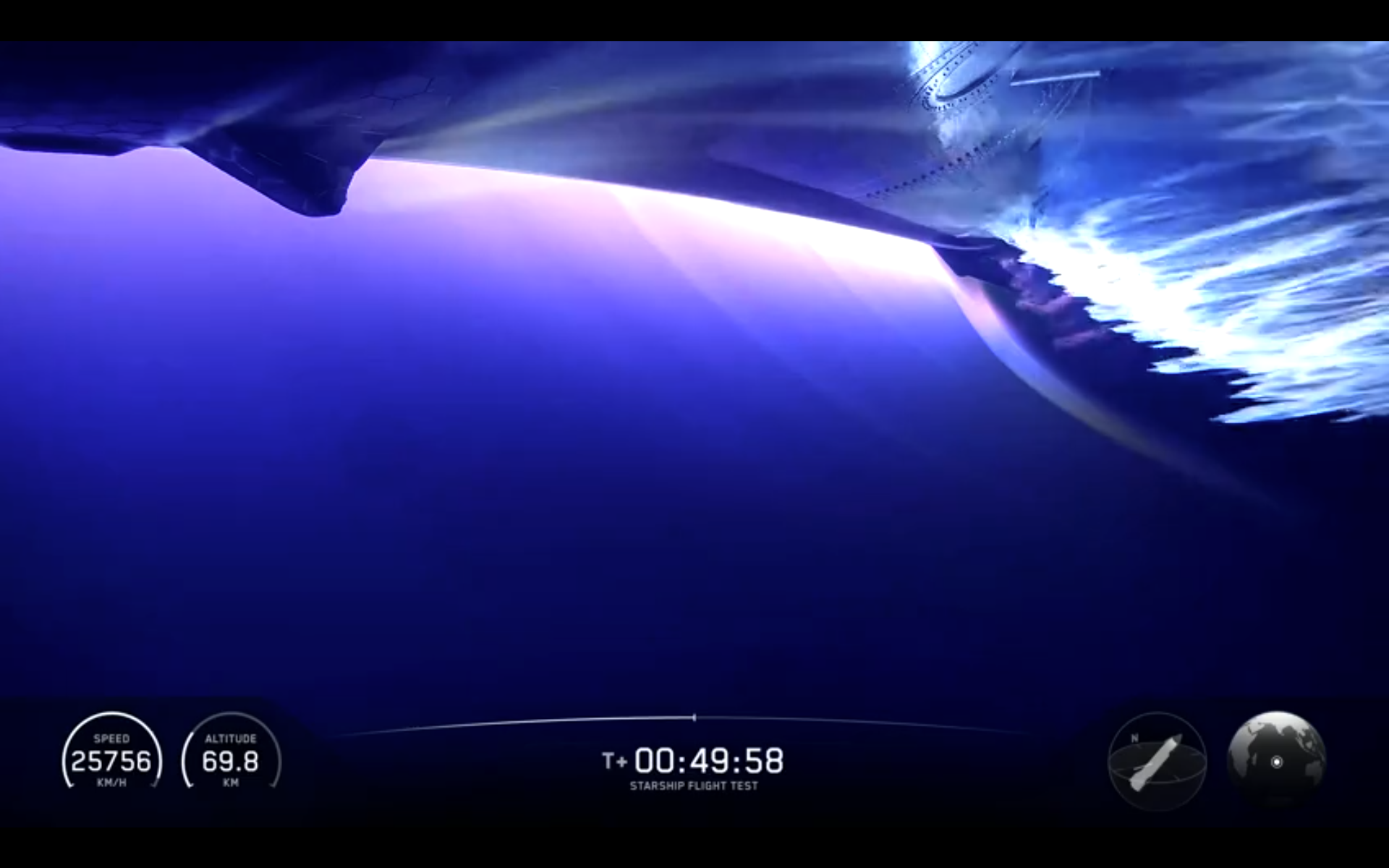
SpaceX's Starship Flight 13 during reentry

A view of SpaceX's Starship Flight 13 Ship vehicle wrapped in plasma during reentry on July 24, 2026. (Image credit: SpaceX)

The heat shield isn't the only thing SpaceX's recovery team will be looking at.

Live views from Starship showed its six engines intact along with its flaps and other systems. Teams will be poring over what they can retrieve from the sea to help improve future Starship upgrades.

SpaceX is developing Starship to be a fully reusable launch system, a 407-foot-tall (124 meters) megarocket capable of taking Starlink fleets to orbit as easily as it lands NASA astronauts on the moon. That part is key.

NASA has tapped SpaceX's Starship to land its Artemis IV astronauts on the moon in 2028, but SpaceX has yet to ever complete an entire Earth orbit with Starship after 13 test flights and three years of launches. It's been a decade since Elon Musk first unveiled what SpaceX now calls Starship during a 2016 speech.
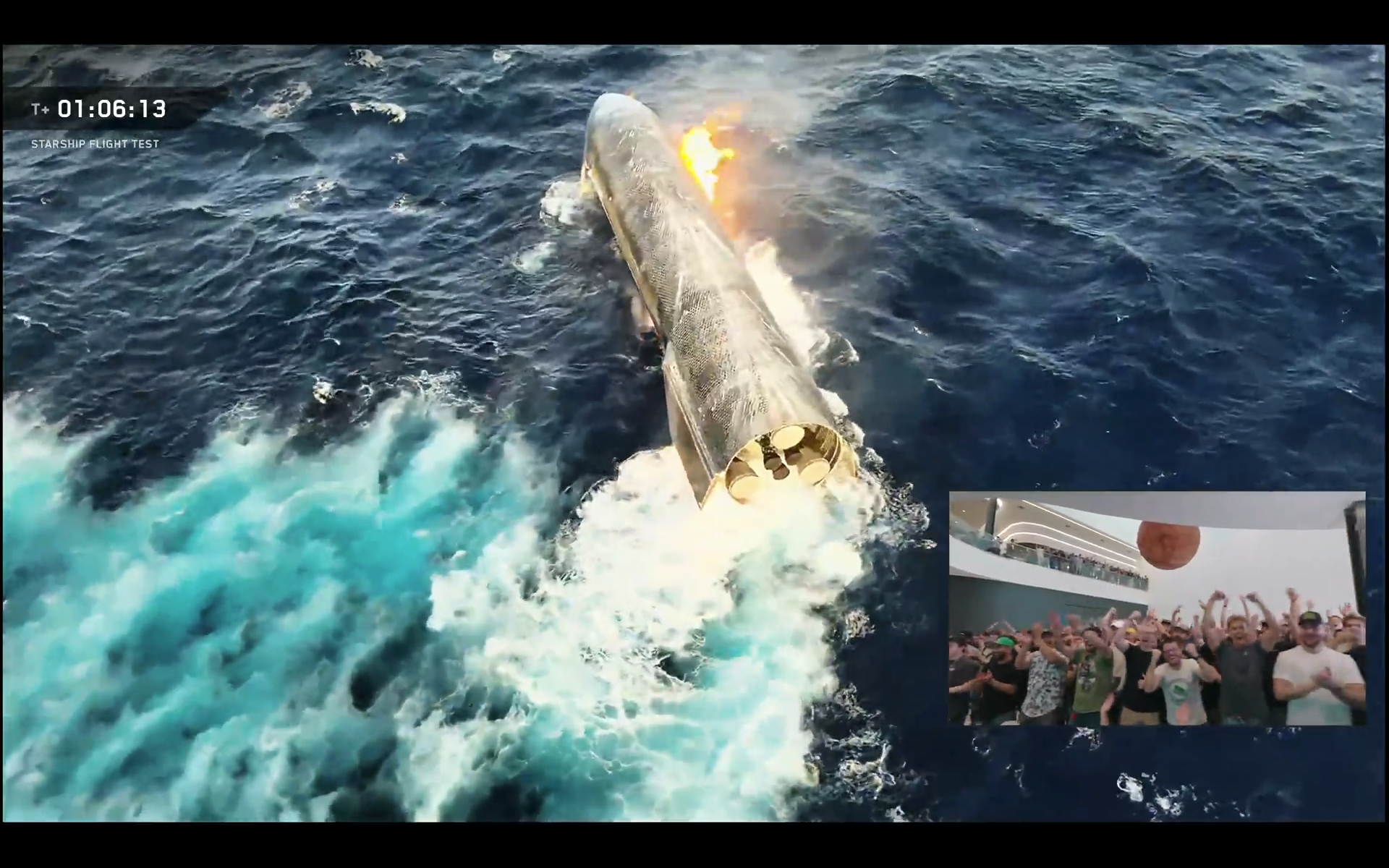
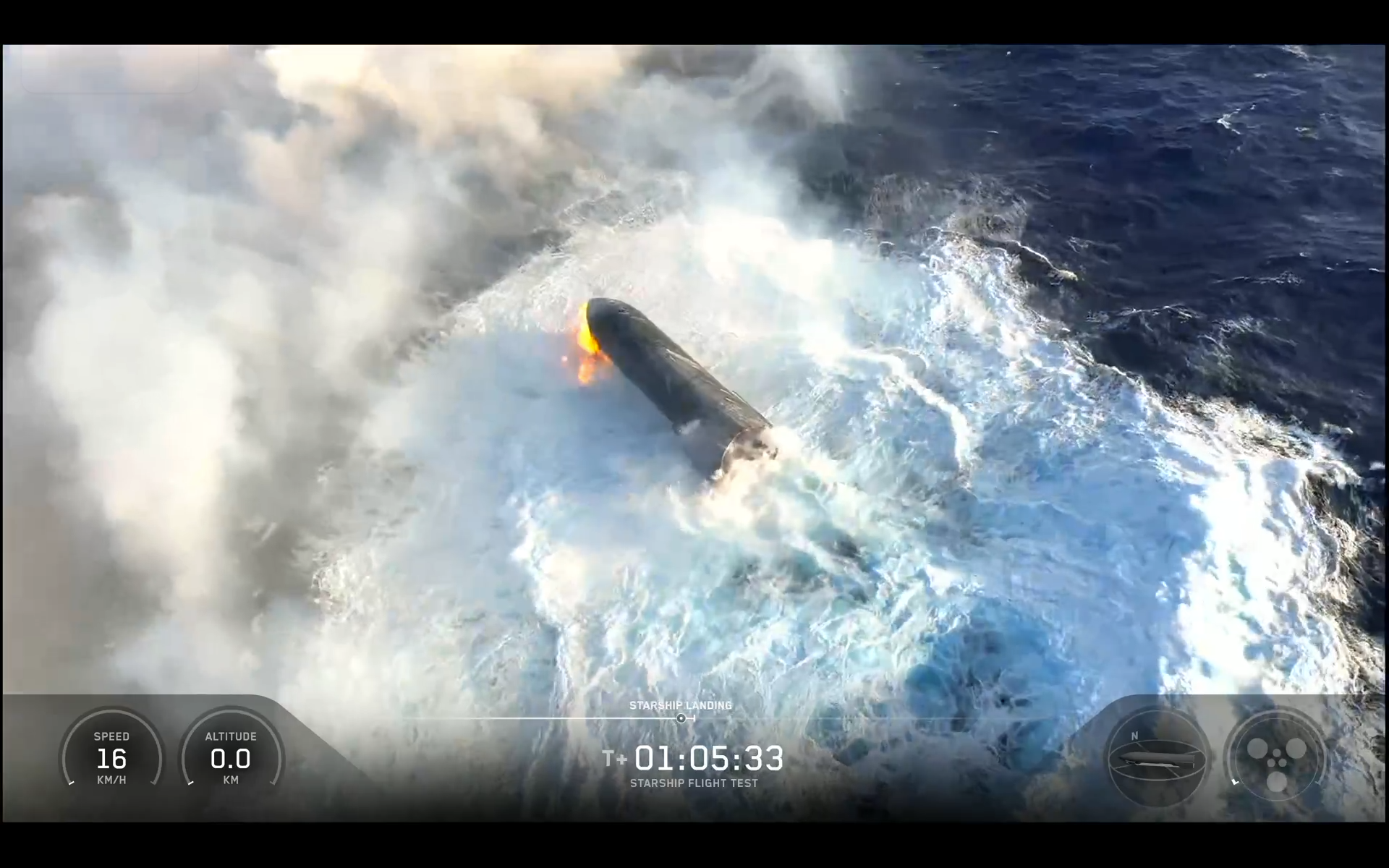
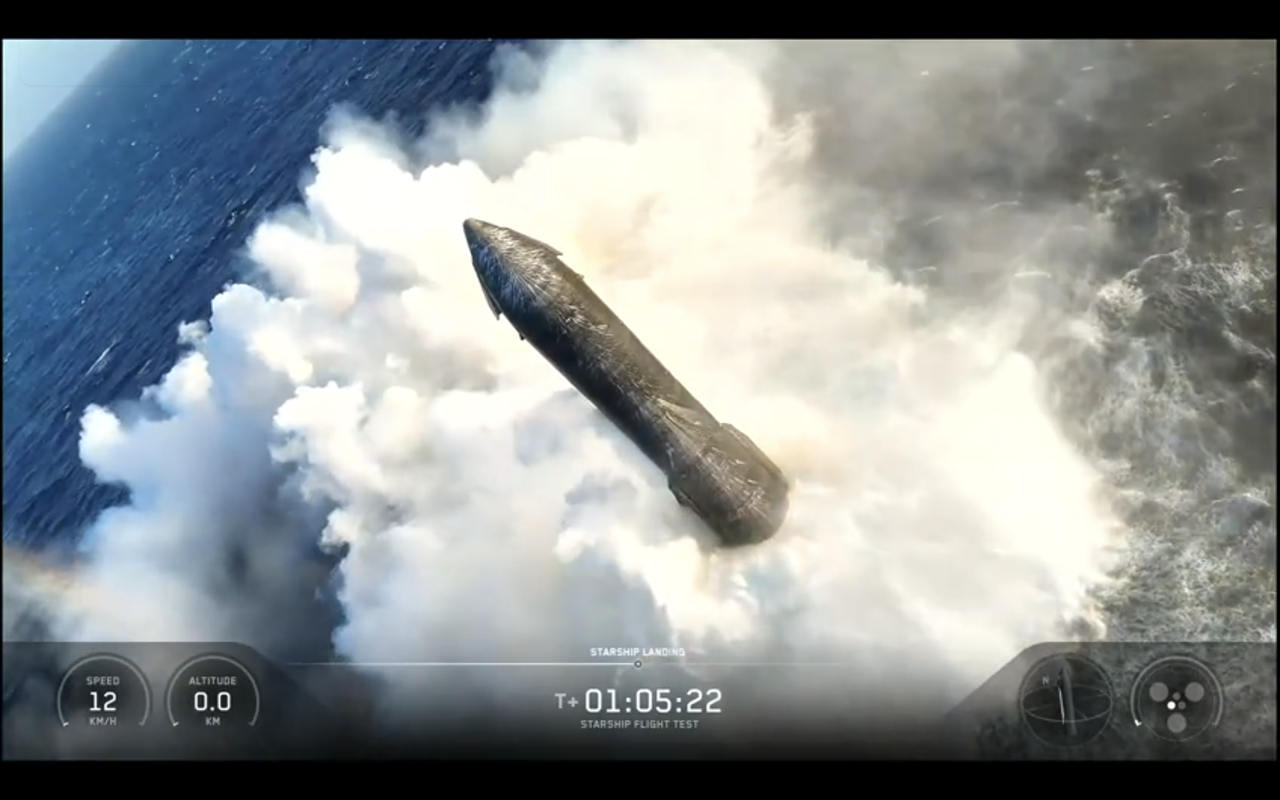
A SpaceX Starship vehicle floats in the Indian Ocean after Flight 13 splashdown
SpaceX's Starship Flight 13 Ship vehicle floats in the Indian Ocean just after splashdown on July 24, 2026.SpaceX
A SpaceX Starship vehicle floats in the Indian Ocean after Flight 13 splashdown
SpaceX's Starship Flight 13 Ship vehicle floats in the Indian Ocean just after splashdown on July 24, 2026. Some flames are visible at the nose. SpaceX
A SpaceX Starship vehicle floats in the Indian Ocean after Flight 13 splashdown
SpaceX's Starship Flight 13 Ship vehicle floats in the Indian Ocean just after splashdown on July 24, 2026. The flames near the nose are now gone.SpaceX
A SpaceX Starship vehicle floats in the Indian Ocean after Flight 13 splashdown
A view of SpaceX's Starship Flight 13 Ship during its final landing and splashdown in the Indian Ocean on July 24, 2026.SpaceX

Over the next two years, SpaceX must not only send a Starship into orbit. The company also aims to return a Ship to Earth to catch it in the "chopsticks" of its Mechazilla launch pad at Starbase. (The company has already done so with its Super Heavy Booster stages.)

SpaceX also must successfully demonstrate in-space Starship refueling, complete an orbital tanker version of Starship, and finish a crewed lander version complete with a life support system that can keep astronauts alive on the moon. That's a lot on the Starship to-do list and NASA is watching.

"Congrats on getting Flight 13 underway," NASA Administrator Jared Isaacman wrote on X after the launch. "Excited for what will be learned from this mission. When Starship comes online, its capabilities will be game-changing, not least of which will be ensuring we never give up the Moon again!" In a lunar coincidence, Friday's launch coincided with the 57th anniversary of the Apollo 11 astronauts' return to Earth after their historic moon landing flight.

But for now, SpaceX is clearly celebrating.

"I'm a little over the moon right now," Huot said. "Wow. Lucky number 13. Hell of a great day for Starship."

Starship Die Cast Rocket Model Was $47.99 Now $39.99 on Amazon.

Even if you can't see SpaceX's Starship in person, you can score a model of your own. Standing at 13.77 inches (35 cm), this is a 1:375 ratio of SpaceX's Starship as a desktop model. The materials here are alloy steel and it weighs just 225g.View Deal

  •  

Meet NASA’s New X-59 Test PilotΒ 

NASA’s X-59 test pilot Mike Lippert stands in a hangar in front of NASA’s quiet supersonic research aircraft, wearing a tan NASA flight suit and holding a flight helmet under the right arm. The X-plane in the background displays the NASA logo, tail number 859, and β€œX-59” marking.
NASA’s X-59 test pilot Mike Lippert stands in front of the agency’s X-59 quiet supersonic research aircraft at NASA’s Armstrong Flight Research Center in Edwards, California, on Wednesday, June 24, 2026.
NASA/Carla Escamilla

NASAΒ addedΒ a newΒ X-59Β test pilot to support theΒ agency’sΒ Quesst mission:Β Mike Lippert,Β a research test pilotΒ basedΒ atΒ NASA’s Armstrong Flight Research Center in Edwards, California.Β Β 

β€œThisΒ fulfills a lifelong dream of conducting airborne research and experimental flight test for NASA in the high desertΒ β€”Β contributing toΒ humankind’sΒ understanding of the science of flight and the nature of the world around us,” LippertΒ said.Β 

Lippert willΒ flyΒ the X-59,Β along with the F-15 and F-18Β supportΒ aircraftΒ toΒ monitorΒ the quiet supersonic X-planeΒ whenΒ it’sΒ in the air.Β He joinsΒ Nils LarsonΒ andΒ JimΒ β€œClue” Less, who have beenΒ flyingΒ the X-59 since itsΒ first flight in October 2025.Β Β 

A South Carolina native,Β Lippert served 20 years with theΒ U.S.Β Marine Corps before retiringΒ last yearΒ as a lieutenant colonel. Like his fellowΒ testΒ pilots, he boasts an impressiveΒ flight resume,Β includingΒ logging more than 2,600 hours of flight time in 60Β different typesΒ ofΒ aircraft.Β Β 

Lippert said he finds test pilot work especially rewarding.Β 

β€œFor me, the joy of taking part in experimental flight test and airborne research is the experience of discovery and learning something new every day,” he said. β€œIt is incredibly rewarding to be part of a team solving complex problems and venturing into the unknown, together.” 

Lippert spentΒ the majority ofΒ hisΒ career flying the AV-8B Harrier operationally and serving as a test pilot in the F-35 program. He is also an aerospaceΒ engineer, earningΒ aΒ bachelor’sΒ degreeΒ from the United States Naval Academy in Annapolis,Β Maryland,Β and aΒ Master of Science in flight test engineering from the U.S. Air Force Test Pilot School at Edwards Air Force BaseΒ inΒ California. Additionally, he earnedΒ aΒ Master of Science in systems engineering from the Naval Postgraduate School in Monterey, California.Β Β 

LippertΒ is currently pursuing a doctoral degree in aerospace engineering at the University of Alabama Graduate School in Tuscaloosa,Β where hisΒ research focuses on high-speed gas dynamics, including supersonic and hypersonic fluid mechanicsΒ β€”Β complementing hisΒ work on theΒ QuesstΒ mission.Β 

Lippert is busy preparing for hisΒ roleΒ at NASAΒ byΒ flying trainingΒ flightsΒ onΒ supportΒ aircraftΒ and spending time in the X-59 simulator. He is expected to begin flying the X-59Β later this summer.Β 

More X-59 to Explore

quesst-logo-horizontal-051826sm

Read more on the Quesst mission page.

The post Meet NASA’s New X-59 Test PilotΒ  appeared first on NASA Science.

  •  

Michael T. Lippert

Pilot standing in front of the X-59 aircraft in a hangar. His arms are crossed in front of him and he's wearing a tan flight suit.

Michael T. Lippert

NASA Pilot

Michael T. LippertΒ is a research test pilot at NASA’s Armstrong Flight Research Center in Edwards, California. He is assigned to fly the agency’s X-59 quiet supersonic research aircraft, along with the F-15 and F/A-18 support aircraft, and to support NASA’s advanced air mobility research projects.

Experience

Prior to joining NASA in 2026, Lippert served 20 years in the U.S. Marine Corps before retiring as a lieutenant colonel in 2025. He was a flight instructor at Naval Air Station Kingsville in Texas, where he trained U.S. Navy and Marine Corps officers in tactical jet aircraft. He has more than 2,600 hours of flight experience in 60 types of aircraft.

The bulk of his career was spent flying the AV-8B Harrier operationally and serving as a test pilot in the F-35 program. During his last two assignments, he served as the chief test pilot of Marine Operational Test and Evaluation Squadron One at Marine Corps Air Station Yuma in Arizona, and as the government flight test director of the F-35 Integrated Test Force at Naval Air Station Patuxent River in Maryland.

Education

Lippert earned a bachelor’s degree in aerospace engineering in 2005 from the United States Naval Academy in Annapolis, Maryland, and a Master of Science in flight test engineering in 2016 from the U.S. Air Force Test Pilot School at Edwards Air Force Base, California. Lippert also earned a Master of Science in systems engineering in 2019 from the Naval Postgraduate School in Monterey, California. He is currently pursuing a doctoral degree in aerospace engineering at the University of Alabama Graduate School in Tuscaloosa, Alabama. His research focuses on high-speed gas dynamics, including supersonic and hypersonic fluid mechanics.

Awards

Lippert is an associate fellow of the Society of Experimental Test Pilots and a member of the American Institute of Aeronautics and Astronautics. He was part of the multi-agency team that received the Collier Trophy in 2018 for the Automatic Ground Collision Avoidance System.Β He also contributed to the team that received a Silver Medal from the Royal Aeronautical Society for F-35 testing aboard HMS Queen Elizabeth, a British Royal Navy aircraft carrier.

The post Michael T. Lippert appeared first on NASA Science.

  •  

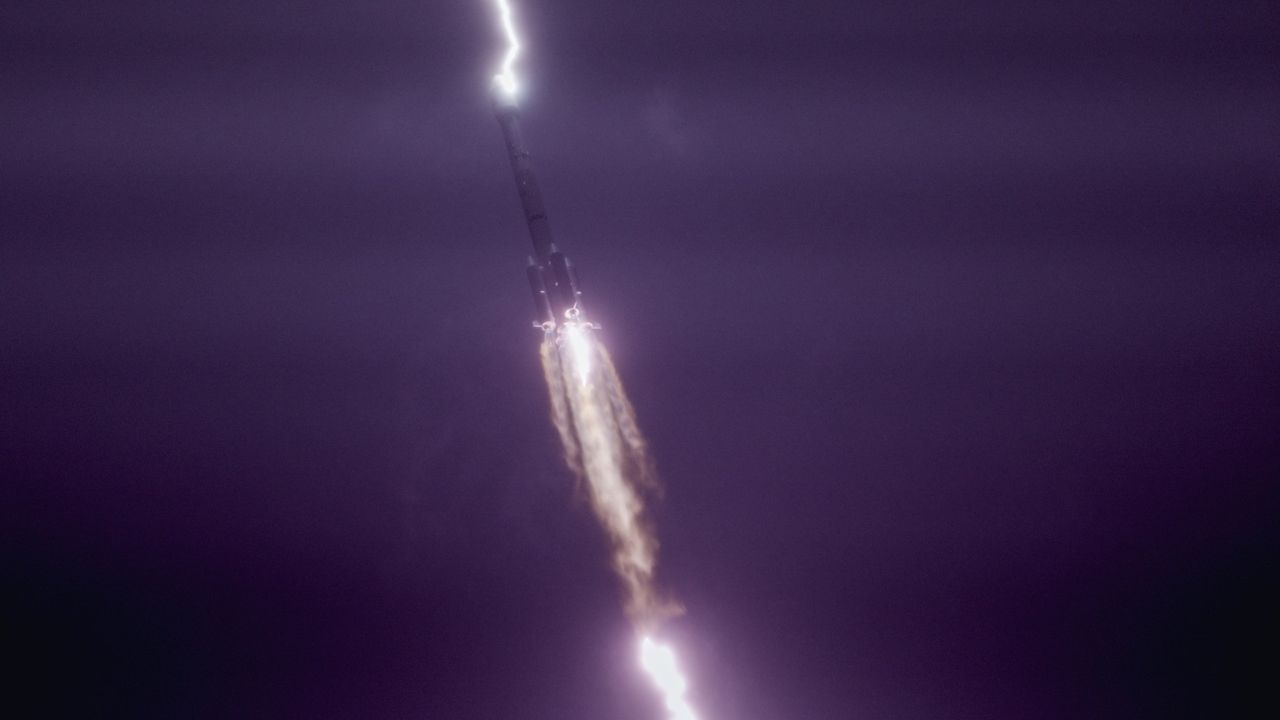
Lightning strike on Chinese rocket captured in epic launch photo

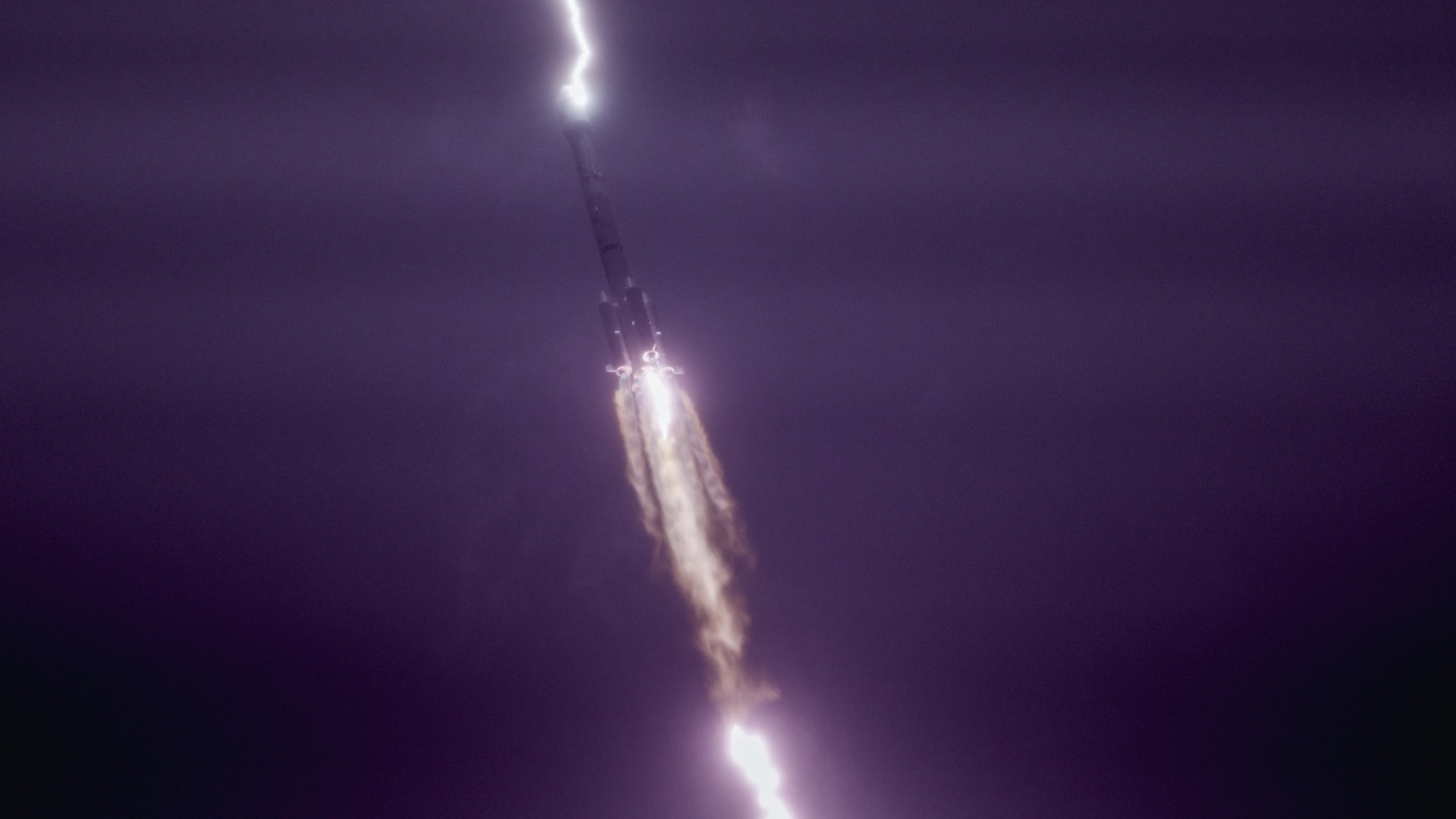
lightning strikes a rocket in the sky

A Long March-3B carrier rocket carrying the Tianlian II-06 satellite blasts off from the Xichang Satellite Launch Center on July 23, 2026 in Xichang, Sichuan Province of China. (Image credit: Zhou Quan/VCG via Getty Images)

Lightning struck a Chinese rocket shortly after liftoff this week, as seen in incredible video and photographs.

A Long March-3B rocket lifted off from China's Xichang Satellite Launch Center on Thursday (July 23) carrying a communications relay satellite destined for geostationary orbit. Some 30 seconds into flight, lightning struck the rocket, leading to awestruck cries from crowds gathered nearby to watch the launch.

Despite the strike, the rocket delivered the satellite to its intended orbit as planned, according to the China Aerospace Science and Technology Corporation (CASC). The satellite will help relay communications to the nation's Tiangong Space Station and other crewed missions.

This isn't the first time lightning has struck a rocket shortly after liftoff. A lightning bolt famously struck the Saturn V rocket carrying NASA's Apollo 12 mission, the second to ever land astronauts on the moon. In fact, the rocket was struck twice.

According to a report NASA issued after the mission, some non-essential instruments and sensors experienced "permanent effects" from the strikes. Nevertheless, the mission put astronauts Charles "Pete" Conrad, Alan Bean and Richard "Dick" Gordon on the moon as planned.

More recently, lightning struck a Russian Soyuz rocket in 2019 shortly after it launched. Like in this most recent example, the vehicle was able to place its Glasnost communications satellite in orbit despite the strike.

Une fusée Longue Marche 3B vient de se prendre la foudre peu après son décollage de Xichang.Ce n'est pas la première fusée à subir ça, la Saturn V et la Soyouz-2 ont été aussi foudroyées par exemple. Aucun échec n'est lié à la foudre... pour l'instant.pic.twitter.com/vrAqaGAnnCJuly 23, 2026

But not all rockets struck by lightning fare so well. In 1987, a bolt struck the United Launch Alliance Atlas/Centaur-67 rocket, leading to a malfunction in one of the computers that guided the vehicle and "ultimately causing the breakup of the vehicle," NASA wrote in a report of the incident.

The incident led to NASA developing strict Lightning Launch Commit Criteria (LLCC) to lower the risk of strikes by further defining weather conditions that would delay launches. "Since Atlas/Centaur-67 and the rigorous implementation of the LLCC, no other launch vehicles have intercepted or triggered lightning on launch in the United States," NASA wrote in a technical paper outlining the criteria.

  •  

β€œEverywhere We Looked, We Found the Temperature Rising”: NASA Identifies a β€œSurprise” Heat Signature Below the Surface of Jupiter’s Moon Io

NASA’s Juno mission scientists have reported the first successful temperature measurements below the surface of Jupiter’s moon Io, including indications of significant heating within the moon’s shallow subsurface.

Collected during a pair of close flybys of the Solar System’s most volcanically active world, the Juno mission measurements were described as a complete β€œsurprise” since the instrument was designed for a different purpose.

β€œ[The readings] break new observational ground for both fiery and icy worlds beyond our planet,” the team said.

MWR Instrument Designed to Probe Jupiter’s Atmosphere Provides Double Duty

Due to the extreme gravitational pull of its host planet, Jupiter, Io is repeatedly stretched and pulled as its slightly elliptical orbit carries it around the massive gas giant. This repeated motion generates a tremendous amount of heat, which the scientists note is β€œmany times greater” than the same type of heat generated on Earth.

However, a detailed understanding of this process has remained elusive, as the only data on the moon’s inner heat came from infrared telescope observations. The team notes this data is limited to the temperature of Io’s upper rocky surface layer.

Conversely, Juno is equipped with an instrument called the Microwave Radiometer (MWR). According to the team’s statement announcing the successful subsurface temperature detection, Juno’s Microwave Radiometer was custom designed by Scott Bolton, the mission’s principal investigator at Southwest Research Institute in San Antonio and a co-author of the study detailing the team’s findings, to β€œpeer beneath Jupiter’s top clouds” for a closer look at the gas giant’s complex atmosphere.

β€œThe MWR’s six microwave antennas serve as a single instrument, simultaneously detecting microwaves at a wide range of wavelengths, from about half an inch to 20 inches (1.3 to 51 centimeters),” the team explains.

β€œEverywhere We Looked, We Found the Temperature Rising”

Bolton said the team’s novel approach allowed the instrument to observe wavelengths from different depths, β€œproviding a new way to characterize the deep atmosphere of giant planets and the subsurface crusts of icy and rocky moons.” This included observations of Jupiter’s other β€˜Galilean’ moons, Ganymede and Europa.

β€œAt Ganymede and Europa, we explored tens of miles below the surface, assuming their ice shells were mostly pure water,” the mission scientists explained.

However, Bolton added, using the instrument to successfully probe into Io’s volcanic rock β€œwas an unexpected discovery.”

Io
This map represents data captured by the Microwave Radiometer instrument aboard NASA’s Juno, indicating heat rising from just beneath the surface of Jupiter’s moon Io. The colors illustrate a distinct temperature gradient across the moon, with the most extreme, localized heat output in red. Image Credit: NASA/JPL-Caltech/SwRI/USGS.

The feat was accomplished during a pair of flybys on December 30, 2023, and February 3, 2024, where Juno came within roughly 930 miles (1,500 km) of Io’s surface. Shannon Brown, the paper’s lead author at NASA’s Jet Propulsion Laboratory in Southern California, said that during these flybys the MWR instrument measured the moon’s thermal emission β€œat depths ranging from a few inches down to tens of feet.”

β€œEverywhere we looked, we found the temperature rising by more than 40 degrees Fahrenheit just several feet into the surface β€” a gradient far steeper than solar heating alone can explain,” Brown said.

Jupiter's moon Io
This graphic illustrates the areas of Io sampled by the Microwave Radiometer instrument aboard NASA’s Juno spacecraft during two close flybys of the Jovian moon. Image Credit: NASA/JPL-Caltech/SwRI/USGS.

Although more information is likely needed to make a conclusive determination, the team said that the data suggests two possible explanations for the readings. The first option is heat rising steadily through what the team termed a β€œconductive crust.”

β€œWhile this background heat flow β€” measured at 1 to 3 watts per square meter β€” is relatively gentle on a local scale (roughly equivalent to a small nightlight glowing under every square yard), across the entire moon it represents a release of energy up to 30 times Earth’s average,” they explained.

Another possibility proposed by the joint research team suggested that the heat signal detected by Juno’s MWR could be coming from cooling lava flows covered by 30 to 35 feet (9 to 11 meters) of solidified crust that cover approximately 10% of Io’s surface β€œat any given time.”

A Similar Instrument Could be Used to Scan Earth

When discussing the implications of the team’s findings, Bolton said the β€œsurprising” ability to see below Io’s surface β€œhas important implications for studying Earth’s volcanoes.” He also noted that if scientists used a similar instrument to measure areas on Earth near volcanoes, they might see a similar heat signature in the planet’s subsurface temperature gradient, β€œproviding new information on how terrestrial volcanoes work.”

β€œIo provides a unique window into learning how tidal heating works throughout the cosmos, a fundamental process that provides energy and heat to worlds that are far from their parent star,” Bolton explained. β€œThis process can not only create the most volcanic body in the solar system, in the case of Io, but also fuels the subsurface oceans on the moons of giant planets, such as Europa and Ganymede.”

β€œUp until this point, we could only observe the heat escaping at the surface or through eruptions,” the mission scientists added. β€œNow we can characterize how the heat is moving from the interior toward the surface.”

NASA has additional information about Juno available at the mission’s official webpage.

Christopher Plain is a Science Fiction and Fantasy novelist and has spent the last six years as Associate News Editor and Head Science Writer at The Debrief. Follow and connect with him on X, learn about his books at plainfiction.com, or email him at christopher@thedebrief.org.

  •  

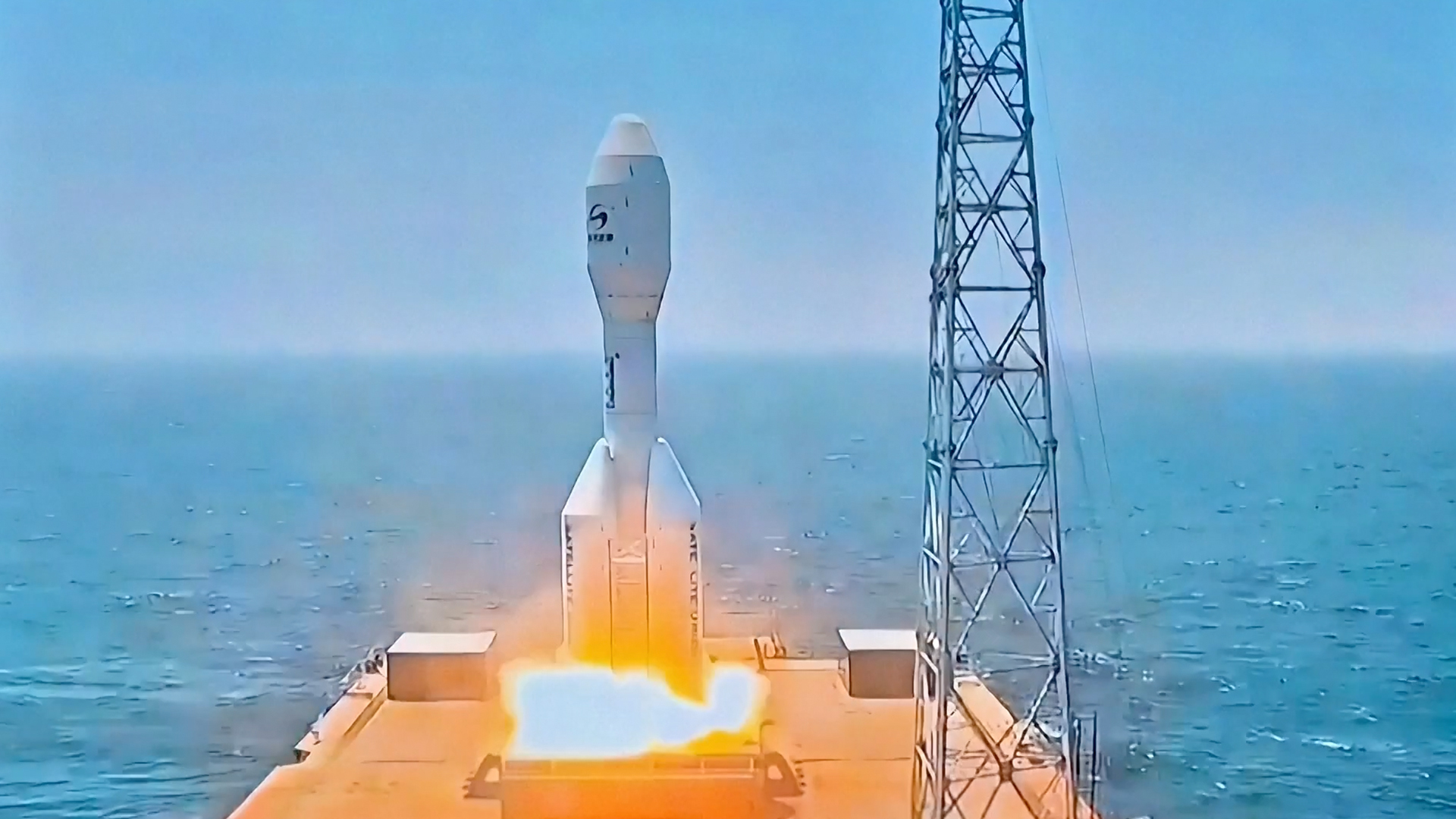
China's record-breaking Gravity-1 rocket launches 9 satellites from a ship at sea (video)

The world's most powerful solid-fuel rocket just aced its third-ever mission.

Gravity-1, a distinctively squat and stubby rocket, launched Tuesday night (July 21) from the deck of a ship stationed off the coast of Shanghai.

Liftoff occurred at 10:54 p.m. EDT (0254 GMT and 10:54 a.m. Beijing time on July 22), according to the state-run Chinese outlet Xinhua, which further reported that all nine satellites reached "their designated orbits." Details about those satellites were not provided.

a short white rocket launches from the deck of a ship at sea

Orienspace's Gravity-1 rocket launches nine satellites to orbit from a ship at sea on July 21, 2026. (Image credit: CCTV)

Gravity-1 is operated by Orienspace, a company based in the eastern Chinese province of Shandong. The rocket stands about 100 feet (30 meters) tall β€” less than half the height of SpaceX's workhorse Falcon 9 vehicle.

Gravity-1 consists of three core stages and four strap-on boosters, all of which feature solid rocket motors. The launcher can haul up to 14,300 pounds (6,500 kilograms) of payload to low Earth orbit (LEO), making it the most powerful solid rocket in the world. (For comparison: The liquid-fueled Falcon 9 can deliver a maximum of 50,265 pounds, or 22,800 kg, to LEO.)

The Chinese vehicle now has three flights under its belt, all of which launched from ships at sea and achieved full mission success. Gravity-1's first two flights occurred in January 2024 and October 2025.

There won't be such a long gap before Gravity-1 flies again, if all goes to plan. The rocket is expected to launch a batch of Chinese internet satellites in the next few months, according to the state-run outlet CGTN.

And Orienspace's ambitions don't end with Gravity-1. The company is also developing Gravity-2 and Gravity-3, larger, more powerful rockets that will feature liquid-fueled core stages and solid rocket boosters.

Gravity-2 could be ready to fly by the end of the year, CGTN reported. And that vehicle will likely lift off from an ocean-based pad as well.

"Sea launch of solid-propellant rockets paves the way for future launch of liquid rockets at sea," said Gravity-1 chief designer Xu Guoguang, according to CGTN. "We are also considering other methods, such as launching from drilling platforms."

  •  

'The court has to intervene now': Indigenous groups and conservationists condemn SpaceX's South Texas land swap

The fight continues against SpaceX's controversial South Texas land swap.

That deal, which the company made with the U.S. Fish and Wildlife Service (USFWS), gives SpaceX 727 acres (294 hectares) of public land that's currently part of the Lower Rio Grande Valley National Wildlife Refuge. In exchange, the company hands over 683 acres (276 hectares) of its territory in the area, not all of it contiguous, to the USFWS.

Last month, a coalition of conservation and tribal groups sued the USFWS over the swap, saying it degrades the refuge and violates multiple laws, including the National Wildlife Refuge System Improvement Act of 1997. And yesterday (July 20), those groups filed an emergency injunction, asking a federal judge to stop the exchange until the courts can rule on the ongoing case.

"Federal officials are racing to fork over America's public lands to one of wealthiest corporations on Earth before the courts can even weigh in," Laiken Jordahl, national public lands advocate at the Center for Biological Diversity, said in a statement yesterday (July 20).

"This refuge is one of the last places left for the public to enjoy nature in the Rio Grande Valley," Jordahl added. "Why should Texans be forced to surrender even more of their public lands to a trillion-dollar corporation? The court has to intervene now, because once these refuge lands are transferred to SpaceX, they’re gone forever."

The land set to be transferred to SpaceX is near Starbase, the manufacturing and launch hub for the company's Starship megarocket. SpaceX sees Starship as transformational; it's the biggest and most powerful launcher ever built, and it's designed to be fully and rapidly reusable.

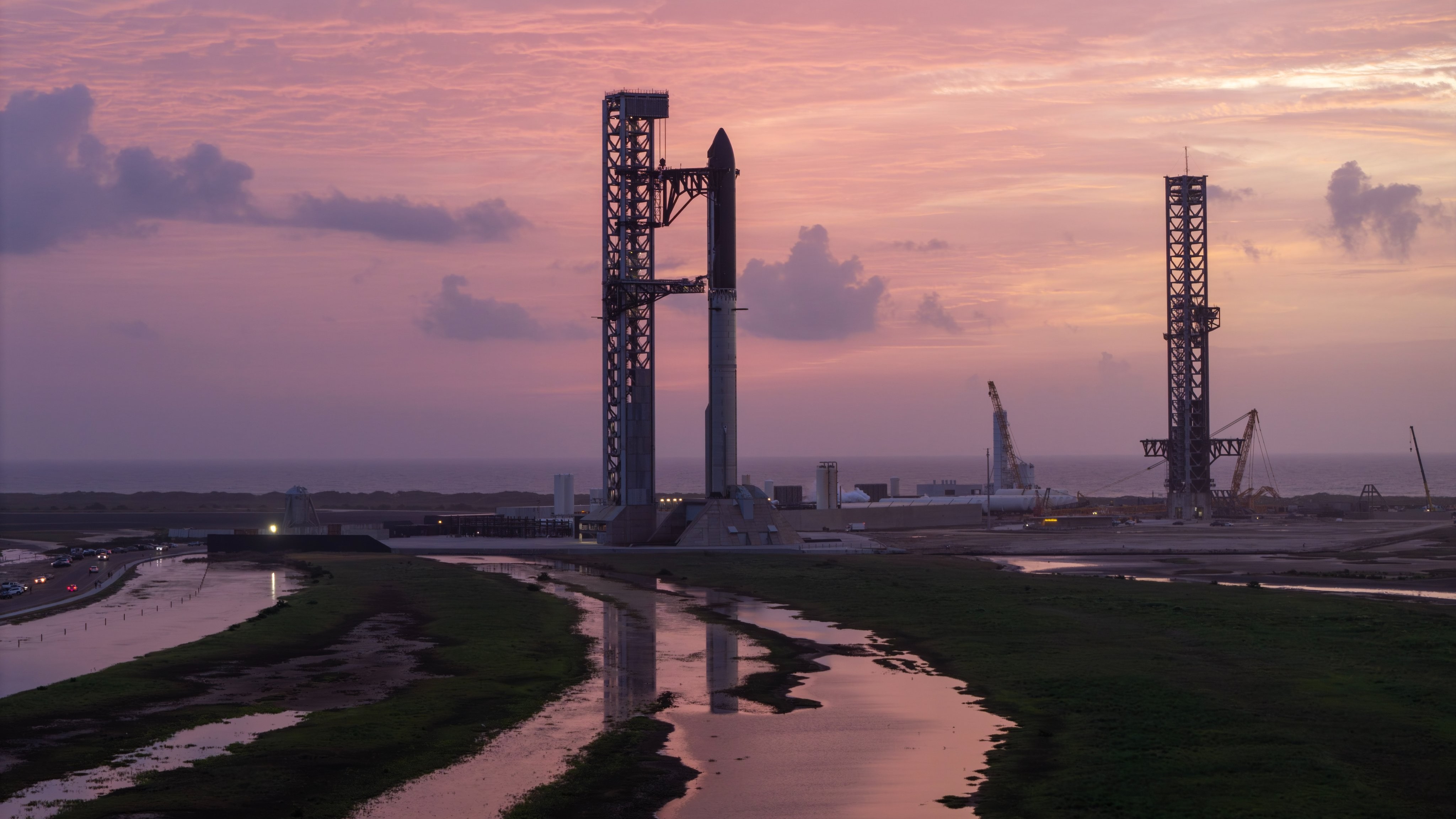
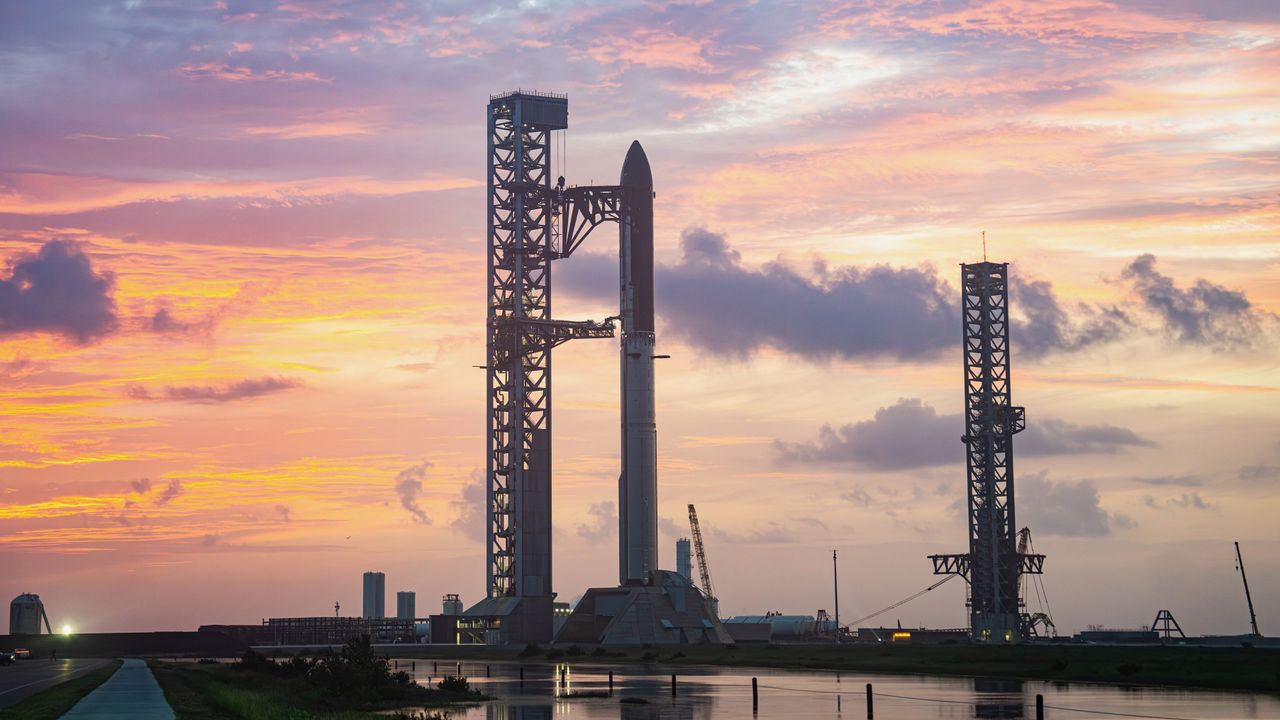
A giant steel rocket stands next to a launch tower reflected in streams of water in the foreground against a rich pink cloudy sky

SpaceX's Starbase site sits amid wetlands with high biodiversity in South Texas. (Image credit: SpaceX)

Starship remains in the development-and-testing phase. It has flown 12 suborbital test flights to date, all of them from Starbase, and is gearing up for Flight 13 this Thursday (July 23).

These launches pose a threat to the wildlife that the 90,000-acre (36,420 hectares) refuge was established to protect, according to the Center for Biological Diversity, a conservation nonprofit based in Tucson, Arizona.

"A 2024 study found that, after one launch, every single monitored shorebird nest near the launch site suffered egg damage or loss," the organization said in yesterday's statement. "Instead of taking any enforcement actions or working with SpaceX to reduce or eliminate its harm to the refuge, the Service [USFWS] is now citing the resulting degradation as justification for handing the public land to SpaceX."

Some of the land being transferred to SpaceX is part of the Palmito Ranch Battlefield National Historic Landmark, where the final battle of the Civil War was fought. This means the swap also violates the National Historic Preservation Act, according to the Center or Biological Diversity.

The Center or Biological Diversity and its partners also take issue with how the land deal was made.

"The proposed land exchange was first made public in March, but records obtained under the Freedom of Information Act show internal agency planning began as early as April 2025," yesterday's statement reads. "In those discussions with the regional director of the Service, the agency developed 'the most expedited schedule possible' for completing a land transfer and recommended hiring additional staff to meet what they described as an 'optimum timeframe.'"

The plaintiffs in the lawsuit against the USFWS are the Center for Biological Diversity, Save RGV, the Carrizo/Comecrudo Nation of Texas, Inc., and the South Texas Environmental Justice Network.

  •  

Metal spheres found in Australia show how little we still know about falling space debris, experts say

Once again, the "Land Down Under" is on the apparent uptick for falling space debris.

In early July, the Australian Space Agency reported that objects recovered, dubbed "space balls," are likely pressure vessels from a space launch vehicle. Six spherical pieces of space junk were found in the small seaside community of Forrest Beach, near Ingham. Australian Queensland Fire Department crews swung into action to assist partner agencies following the discovery of the potentially hazardous objects. Scientific teams safely secured a number of the items, establishing a 165 feet (50-meter) "exclusion zone" around them to assure public safety. The nature and origin of the debris are still being investigated.

This latest incident is part of an unwanted legacy of being the "fall guy" for space remains, from the U.S. Skylab space station debris that fell into Western Australia in 1979; a chunk of a SpaceX Dragon trunk found in New South Wales in 2022; a pressure vessel that washed up in Perth from an Indian booster in 2023; along with a section of Chinese Jielong-3 rocket in October 2025.

In fact, these incidents are becoming so common that the Australian Space Agency has put together a trio of steps to take if suspected space debris is discovered:

  • Step 1: Do not handle the debris. Space objects are built from a range of materials that may be hazardous. They should only be handled by appropriately trained and equipped professionals.
  • Step 2: Contact the local authorities if (a) the situation is potentially urgent (e.g. there is a life-threatening situation) or (b) otherwise contact the 24/7 Police Assistance Line for further advice.
  • Step 3: Notify the Australian Space Agency, who may support authorities with technical expertise, liaise with foreign counterparts and operators, and advise on the country's treaty obligations. The ASA can advise local authorities on the appropriate response to a confirmed space debris event.

Indeed, if an item is definitely found to be space debris, the Australian Government has worldwide obligations to notify the launching authority of its discovery, and upon request, may be required to return the space junk.

a metallic sphere on a sandy beach

A metallic sphere found in Australia in July 2026 is believed to be space debris. (Image credit: Queensland Fire Department)

"Even if they heat up, they don't care."

For Marlon Sorge, executive director of the Aerospace Corporation's Center for Orbital and Reentry Debris Studies (CORDS), it's no surprise that the recent so-called space balls endured their plunge from space.

"Very often they will be made of something like titanium which is really good at surviving," Sorge told Space.com. "In spite of them being metal, they tend to decelerate more than, say, a solid hunk of metal. They can 'float down' a little bit more gently than some other things," he said.

Sorge said that this class of space debris decelerates quicker, and also once on the surface the pieces are also more recognizable than broken up chunks of metal. Furthermore, if made of titanium, "even if they heat up, they don't care." In other words, they tend to survive reentry intact.

There's more awareness in the space debris study community that materials like titanium are potentially an issue, said Sorge. If you go to something like Composite Overwrapped Pressure Vessels (COPV), also commonly used in manufactured space hardware, that too is an issue you have to deal with, he said.

Bigger picture

But ultimately, many of these debris concerns could be mitigated with more responsible behaviors from space agencies and launch providers, Sorge said.

"In the bigger picture with [rocket] upper stages," Sorge added, "just don't let them randomly reenter. Bring them down via controlled reentry and then if they are survivable it doesn't matter because you dump them somewhere where there aren't any people."

As for the Australian-found space leftovers, these tanks are clearly coming from non-controlled reentry events, said Sorge, dropping out of the sky and washing up onshore.

Over the years, the Aerospace Corporation has studied recovered pressure vessels like those from the Australian affair. The welcome mat is open for contributions from countries that are on the receiving end of space objects, Sorge advised.

Some information can be gleaned from such appraisals, like what shape the recovered debris is in, what degree of temperatures they were exposed to. Also, such a hands and eyes-on look can point out what they didn't experience, which is also useful data, Sorge said.

If observers could track and observe incoming debris on its way down, it could be extremely helpful in identifying points of origin. That's currently a challenge, Sorge said. "If we get an impact location and a time of reentry that really helps us figure out what's going on," he said.

On the whole, there's a lot more attention being paid to the implications stemming from reentering, human-made, space leftovers.

"The real challenge is that this is still an area that we don't completely understand. We get surprises now and again," Sorge concluded, "because we know only so much. There's certainly a lot more awareness now than earlier years to be proactive in thinking about this."

a metallic sphere on a sandy beach

A metallic sphere found in Australia in July 2026 believed to be space debris. (Image credit: Queensland Fire Department)

Atmospheric drag wins

"It may seem surprising that pieces of the same rocket can show up in Australia, Canada or on a farm in Africa, but that's actually what we'd expect," said Michelle Hanlon, executive director of the Center for Air and Space Law at the University of Mississippi School of Law.

"Objects in low Earth orbit pass over much of the planet as the Earth rotates underneath them. If a reentry isn't controlled, the exact point where it finally comes down can shift by thousands of kilometers depending on when atmospheric drag finally wins," Hanlon told Space.com.

Since most of the Earth is ocean, that's where most debris ends up, Hanlon said. "Every now and then, though, a tough piece survives and lands somewhere people can find it β€Šβ€” or lands in the ocean and gets swept swiftly to shore."

Country of origin?

Hanlon said that the pressure vessels like those found in Australia are a good example.

"They're built to withstand enormous pressures, so they are also among the pieces most likely to survive reentry. That's why they seem to turn up so often," said Hanlon.

Why are recovered space debris so hard to identify, their country-of-origin?

"I'm not sure stamping everything with a country-of-origin is the answer," said Hanlon. "Many of these objects can already be identified by their design, serial numbers or by matching them to launch and registration records. And there's no guarantee a label would even survive reentry."

For Hanlon, the bigger issue is traceability. "Can authorities quickly figure out what the object is, whether it poses any danger and which state should be contacted? Better information-sharing and better tracking would be far more useful than a 'Made in' stamp," Hanlon said.

"One thing I'd also point out is that we're seeing more of these simply because we're launching a lot more things into space. That's actually a sign of how active the space sector has become, not necessarily that it's becoming less safe," said Hanlon.

Even if reentries go exactly as planned 99.9 percent of the time, more launches mean more reentries, which means more chances that a particularly durable piece survives and lands somewhere unexpected.

All-in-all, the Australian incident of space balls is another sobering reminder that space activities don't end when a mission does, Hanlon concluded. "End-of-life disposal is now just as much a part of responsible space operations as launch."

This recent debris incident has a bit of a cosmic coincidence to it, too, Hanon added. "It's funny that we're having this conversation just as 'Spaceballs: The New One' is gearing up."

The sequel is being filmed in Australia.

  •  

SpaceX Falcon 9 rocket sends Starlink satellites to orbit a day after rare launch abort

Twenty-four Starlink satellites reached low Earth orbit on Tuesday (July 21), a day later than originally scheduled due to a last-second rocket engine abort.

SpaceX at first tried to launch the broadband internet relay units on a Falcon 9 rocket on Monday morning (July 20), but an unexpected engine cutoff at the point of ignition scrubbed the day's attempt. The company did not provide a reason for the abort.

By Tuesday, whatever the problem was had been addressed and the Falcon 9 was ready to fly. It liftoff off at 10:49 a.m. EDT (1449 GMT; 7:49 a.m. PDT local time) from Space Launch Complex 4 East at Vandenberg Space Force Base in California. About an hour later, after a normal ascent, the new Starlink batch (Group 17-39) were deployed into their intended orbit.

"Deployment of 24 Starlink satellites confirmed," SpaceX posted on social media.

Previous Booster B1082 missions:

USSF-62 | OneWeb Launch 20 | NROL-145 | 18 Starlink missions

The Falcon 9 rocket's first stage, Booster 1082, completed its 23rd mission by touching down atop the droneship "Of Course I Still Love You" positioned in the Pacific Ocean.

The Starlink network provides worldwide access to the internet, especially to areas where other means of connection are not possible. The megaconstellation also enables in-flight wifi and direct-to-cell services for select providers.

Tuesday's Starlink launch was SpaceX's 85th Falcon 9 launch of the year. SpaceX experienced a similar but unrelated last-second abort on its first attempt at launching its 13th test flight of its Starship megarocket on Thursday (July 16). That flight has now been rescheduled for Thursday (July 23).

  •  

Electra to build $850M Ohio factory for EL9 hybrid-electric plane

Electra is putting $850 million into its first aircraft factory, and it picked Springfield, Ohio to build the EL9 Ultra Short, its nine-passenger hybrid-electric plane that can take off in as little as 150 feet.

The plant will eventually build up to 800 aircraft a year and create nearly 2,000 jobs, the company said Tuesday. That’s a big commitment for a plane that hasn’t flown yet.

  •  

SpaceX launches satellite repair drone with 10-foot robotic arms to Earth orbit (video)

SpaceX launched a trailblazing satellite-servicing mission today (July 21).

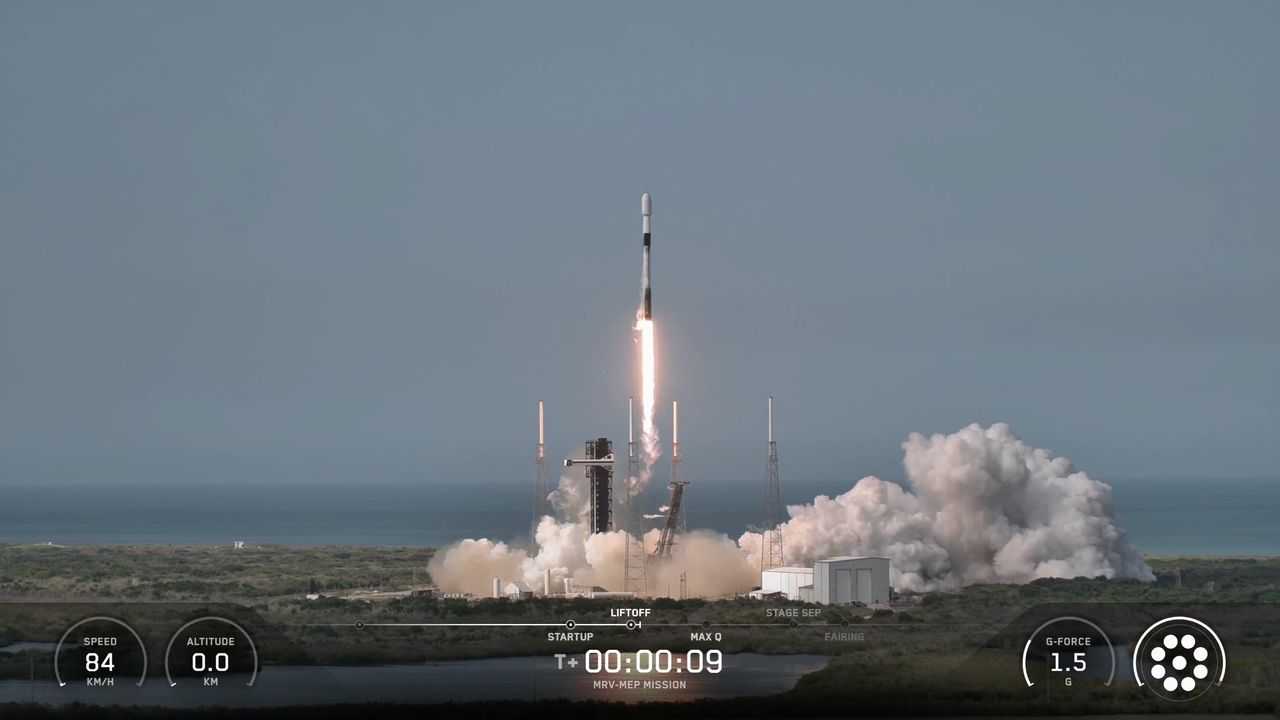
A Falcon 9 rocket lifted off from Florida's Cape Canaveral Space Force Station today at 5:15 p.m. EDT (2115 GMT).

SpaceX called today's launch MRV-MEV, because it's sending up a Mission Robotic Vehicle and three Mission Extension Pods (MEPs). These spacecraft will be operated by SpaceLogistics, a subsidiary of Virginia-based aerospace giant Northrop Grumman.

two large robotic arms are attached to a spacecraft in a white-walled clean room

Northrop GrummanΒ integrated the robotics payload, developed by the Naval Research Laboratory (NRL), onto its Mission Robotics Vehicle at the company’s Dulles, Virginia facility. (Image credit: Northrop Grumman)

MRV-MEV is headed to geostationary orbit (GEO), 22,236 miles (35,786 kilometers) above Earth. At this altitude, orbital speed matches the velocity of our planet's rotation, allowing spacecraft to "hover" over the same patch of ground continuously. For this reason, GEO is a popular destination for spy, communications and weather satellites.

The new mission will work to extend the lives of such satellites. The MRV is equipped with two 10-foot-long (3 meters) robotic arms, a system developed by the U.S. Defense Advanced Research Projects Agency (DARPA) with the help of the Naval Research Laboratory. The spacecraft will use those arms to attach the MEPs β€” the first three ever to launch β€” to three separate satellites in GEO.

"Once installed, the MEP uses electric propulsion to provide orbit control and momentum unloading for a client satellite," Northrop Grumman wrote in an MEP fact sheet. "The MEP is controlled by the customer via a self-contained C- or Ku-band telemetry and command system, and [is] capable of providing up to eight years of life extension for a typical 2,000 kg satellite in GEO."

The Australian satellite operator Optus booked one of the MEPs, and Intelsat hired out the other two, according to Tech Times.

The MRV and MEPs will reach GEO separately. When it's rendezvous time, the robotic-armed spacecraft will grab an MEP and ferry it over to its client satellite, Tech Times reported. The MRV will then remain in GEO after it has installed the third MEP, waiting for other such "satellite jetpacks" to reach orbit.

In addition to installing MEPs, the MRV "can relocate, inspect, repair and upgrade spacecraft while in orbit," Northrop Grumman's website states.

"MRV includes a Northrop Grumman-developed Passive Refueling Module (PRM), the first refueling interface standard approved by the U.S. Space Force, which enables MRV to be refueled in orbit," it adds. "With advanced robotics technology and Northrop Grumman's proven experience in satellite servicing, the mission delivers an unprecedented capability and new class of system that can continuously evolve to support novel or increasingly advanced missions for our nation, making assets in space more resilient."

That "proven experience in satellite servicing" consists of two previous Northrop Grumman projects. Mission Extension Vehicle-1 (MEV-1) β€” the first-ever commercial satellite-servicing spacecraft β€” launched in October 2019 and successfully rendezvoused with its target in GEO (the communications satellite Intelsat 901) four months later. MEV-2 launched in August 2020 and docked with Intelsat 10-02 the following April.

Neither MEV-1 nor MEV-2 used Mission Extension Pods, however. Each of those previous efforts employed a single servicing craft, which made its way to the target satellite, docked and performed life-extension duties on its own.

All went according to plan during the launch: The Falcon 9's upper stage deployed the MRV 35.5 minutes after liftoff and the three MEPs at 10-minute intervals after that, according to SpaceX.

In a departure from most Falcon 9 missions, there was not a first-stage landing today.

"Due to the additional performance needed to launch these payloads to geosynchronous transfer orbit, this will be the 32nd and final flight for the Falcon 9 first stage booster supporting this mission, which previously launched CRS-24, Eutelsat HOTBIRD 13F, OneWeb 1, SES-18 and SES-19, and 27 Starlink missions," SpaceX's MRV-MEP mission description reads.

SpaceX's rocket-reuse record is 36 flights, set earlier this month during a Falcon 9 launch of the company's Starlink internet satellites.

MEV-MEP was SpaceX's second launch of the day. The company also sent 24 Starlink craft to orbit atop a Falcon 9 from California this morning.

Editor's note: This story was updated at 5:23 p.m. ET with news of successful liftoff. It was then updated again at 11:05 a.m. ET on July 22 with news of successful payload deployment, and to note DARPA's key role in this mission.

  •  

SpaceX targets July 23 for crucial Starship Flight 13 test launch after abort

SpaceX has pushed the next launch of its Starship megarocket back a few more days.

Elon Musk's company is now targeting Thursday (July 23) for Flight 13 of Starship, the giant, fully reusable vehicle it's developing to help get people to the moon and Mars, among other spaceflight tasks.

If all goes to plan, the 408-foot-tall (124.4 meters) Starship will lift off from SpaceX's Starbase site in South Texas on Thursday during a 90-minute window that opens at 6:45 p.m. EDT (2245 GMT; 5:45 p.m. local Texas time). You can watch the action live here at Space.com, courtesy of SpaceX.

It will be the second launch attempt for Starship Flight 13. The first came last Thursday (July 16) and ended in an abort, which occurred just as the giant rocket's 33 first-stage Raptor engines were firing up.

"To be confident of a good flight, 2 Raptors will be removed & replaced. Most probable launch timing is early next week," Musk said on July 16 via X, the social media platform he owns.

SpaceX first targeted today (July 20) for Flight 13's second try. On Sunday (July 19), however, the company announced that it had pushed that date back to no earlier than Thursday.

Starship Die Cast Rocket Model Was $47.99 Now $39.99 on Amazon.

Even if you can't see SpaceX's Starship in person, you can score a model of your own. Standing at 13.77 inches (35 cm), this is a 1:375 ratio of SpaceX's Starship as a desktop model. The materials here are alloy steel and it weighs just 225g.View Deal

Flight 13 will be the second launch of Starship Version 3 (V3), the latest, most advanced iteration of the megarocket. V3 is the variant that will land astronauts on the moon for NASA's Artemis program and fly SpaceX's first Mars missions, if all goes to plan.

The plan for the upcoming suborbital launch is similar to that of Flight 12, which lifted off on May 22. Starship's Super Heavy first stage will aim to steer itself back to Earth for a controlled splashdown in the Gulf of Mexico, while the Ship upper stage will do the same halfway around the world, off the coast of Western Australia.

SpaceX accomplished the latter objective on Flight 12 but not the former; Super Heavy suffered engine issues during its return to Earth and ended up hitting the Gulf waters hard.

Flight 13 will do a few new things, however. For example, it will carry 20 of SpaceX's next-gen Starlink V3 internet satellites, which have never flown to space before. SpaceX plans to build a constellation of 100,000 Starlink V3 spacecraft in low Earth orbit over the coming years, and Starship will do all of the heavy lifting.

These 20 Starlinks won't stay aloft for long, however. Since Ship is flying on a suborbital trajectory, the satellites will come back to Earth relatively quickly β€” about 20 minutes after deployment, according to SpaceX's Flight 13 mission description.

Starship debuted in April 2023. All of its test flights to date have been suborbital.

  •  
❌