❌

Reading view

Magnetic Nanoparticles Restore Movement in Mice With Parkinson’s-Like Symptoms

Human Brain Degenerated Substantia Nigra Parkinson’s DiseaseResearchers have developed a magnetic method for influencing deep-brain circuits without permanently implanted electrodes. A magnetic field may offer a new way to reach circuits buried deep within the brain without permanently implanting electrodes. An international research team injected magnetic nanoplatelets into a targeted brain region and used them to improve movement problems in mice [...]
  •  

Scientists Reveal How Exercise May Protect the Aging Brain

Neuroscience Exercise Dementia Brain BoostA new study strengthens the case for exercise as a critical way to protect the brain from age-related decline, including dementia and Alzheimer’s disease. During sleep, the brain activates a cleanup network that helps remove accumulated waste. A review led by Victoria University (VU) researcher Dr. James Broatch examined whether exercise could strengthen this glymphatic [...]
  •  

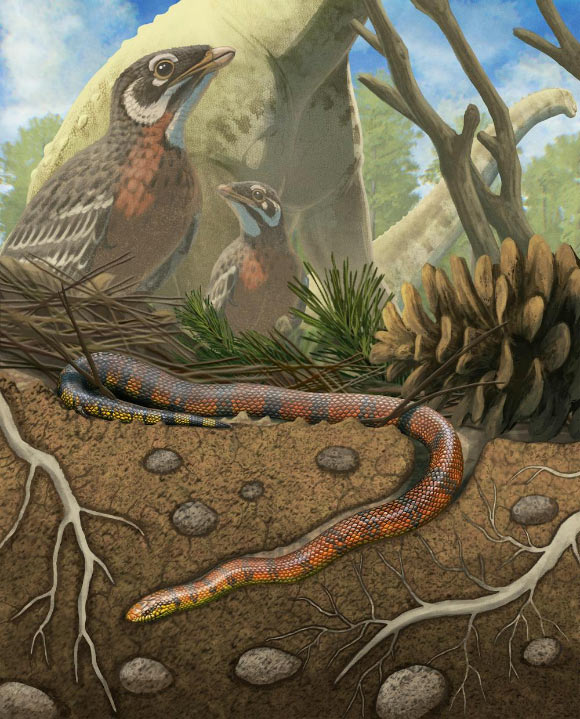
Did Early Snakes Burrow, Swim or Crawl? 80‑Million‑Year‑Old Fossil Suggests: All Three

Life reconstruction of Tametara mirim. Image credit: Gabriel Ugueto.

Paleontologists have unearthed a remarkably preserved fossil snake in Brazil that is reshaping ideas about how the earliest snakes lived and complicating the long-running debate over whether their ancestors burrowed underground, swam in the sea or crawled the surface.

The post Did Early Snakes Burrow, Swim or Crawl? 80‑Million‑Year‑Old Fossil Suggests: All Three appeared first on Sci.News: Breaking Science News.

  •  
❌