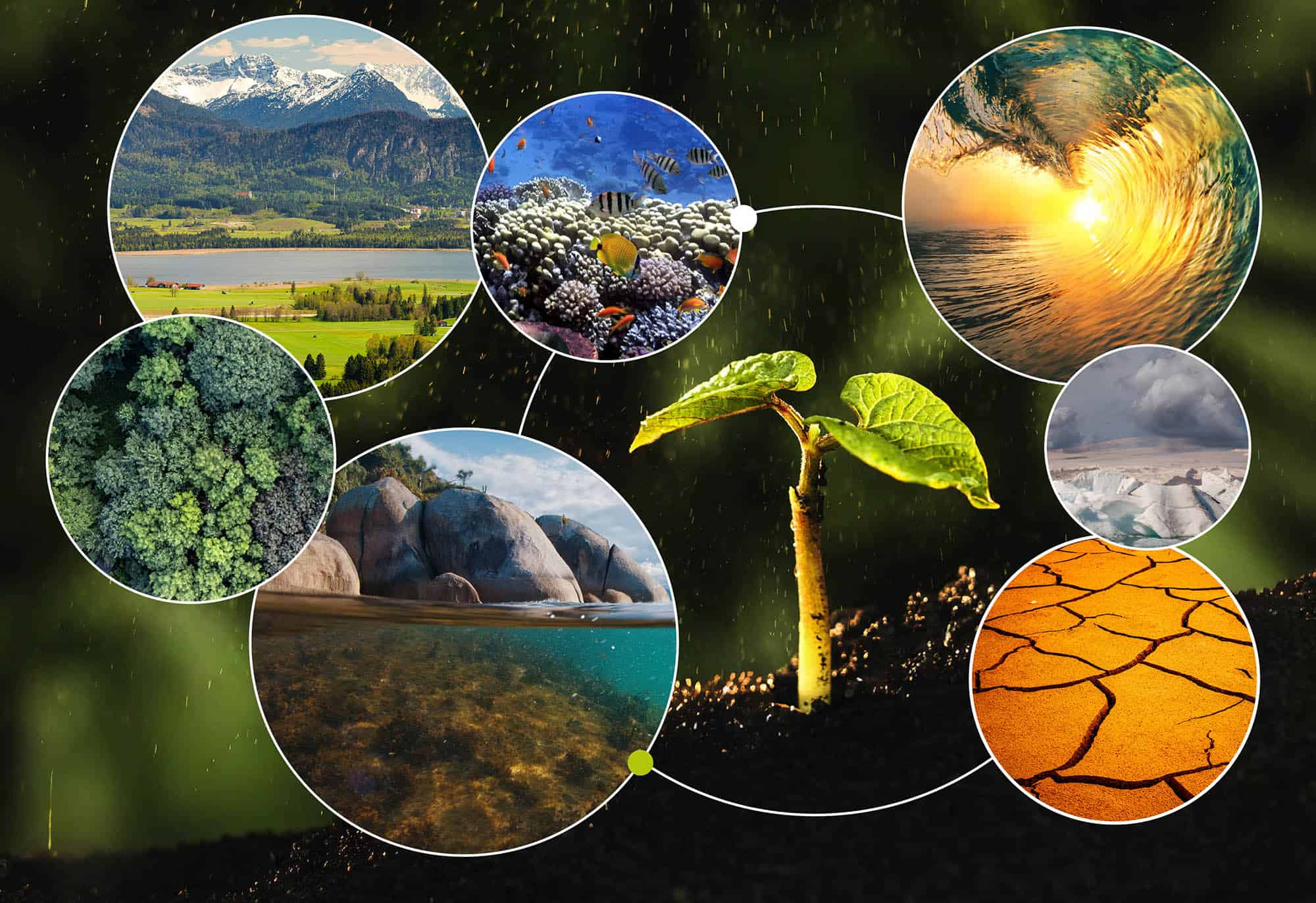
Environmental Research: Climatewas launched in 2022, with the aim of uniting multidisciplinary communities. With a scope that is intentionally broad, the mission of the journal is to publish innovative research examining the causes, consequences, and solutions of climate variability and change. Since our launch, we have published more than 270 articles covering physical and biogeochemical processes that shape Earth’s climate across spatial and temporal scales; the human and ecological dimensions that shape climate-related risks and impacts; and the design, analysis and evaluation of climate mitigation, adaptation, and risk-management strategies and solutions. This webinar will explore the current state of climate research, including changes in the field over the last five years since the launch of the journal, and direct us toward the future.
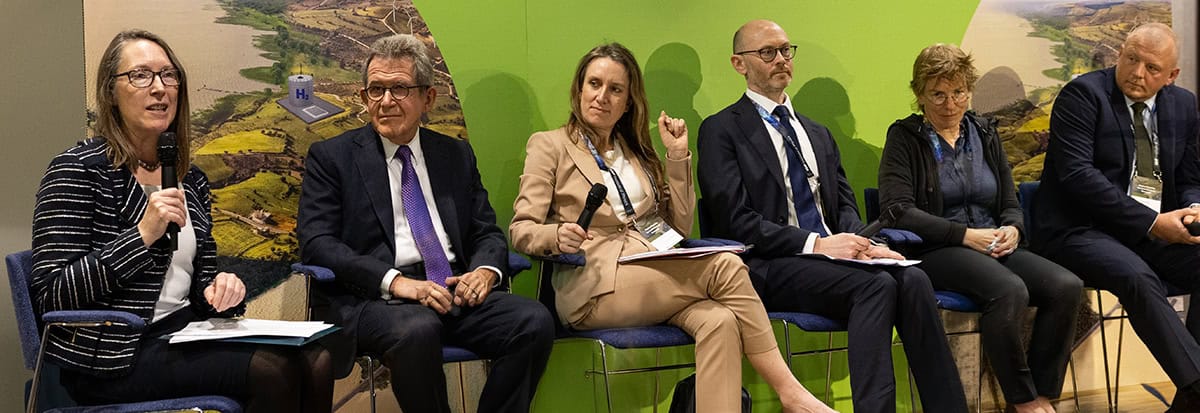
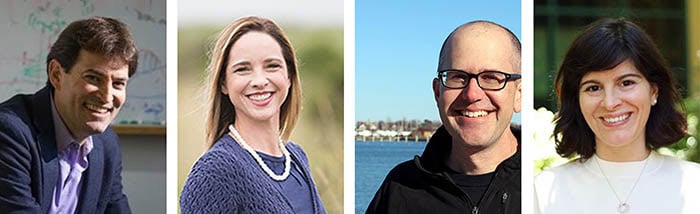
Left to right: Noah Diffenbaugh, Katharine Mach, Andrew Pershing, Inês Azevedo
Moderator: Noah Diffenbaugh, Stanford University
Noah Diffenbaugh is the William Wrigley Professor and Kimmelman Family Senior Fellow in Stanford’s Doerr School of Sustainability, and the Olivier Nomellini Family University Fellow in Undergraduate Education. His research is focused on understanding what aspects of the climate system most directly and acutely impact people and ecosystems. Noah has served as a Lead Author for the Intergovernmental Panel on Climate Change (IPCC), and as editor-in-chief of the peer-review journals Geophysical Research Letters and Environmental Research: Climate. He has provided testimony and scientific expertise to federal, state and local officials. Noah is an elected Fellow of the American Geophysical Union (AGU), a recipient of the James R. Holton Award and William Kaula Award from the AGU, and has been recognized as a Kavli Fellow by the U.S. National Academy of Sciences.
Katharine Mach, University of Miami
Katharine Mach is professor and chair of the Department of Environmental Science and Policy at the University of Miami Rosenstiel School of Marine, Atmospheric, & Earth Science. During spring 2025, she was the Coleman P. Burke Distinguished Visiting Professor at the Yale School of Environment. Her research assesses climate-related risks and response options to address increased flooding, extreme heat, wildfire and other hazards. Through innovative approaches to integrating evidence, she informs effective adaptations to the risks.
Katharine was the 2020 recipient of the Piers Sellers Prize for world-leading contribution to solution-focused climate research. She has served as a chapter author or lead in the Fourth through Sixth US National Climate Assessments and the IPCC Sixth Assessment Report and as a member of the National Academies Climate Security Roundtable. She serves as co-editor-in-chief for Climate Risk Management, an editorial board member for Oxford Open Climate Change and Environmental Research: Climate, and an advisory committee member for the Aspen Global Change Institute. Across all of her research projects, she engages in relevant policy processes and explores and discusses climate risk and adaptation with the media, the private sector, nongovernmental organizations and communities.
Andrew Pershing, Climate Central
As chief programme officer, Andrew Pershing, PhD, leads Climate Central’s climate science activity. His role includes bridging primary research and media analysis to amplify critical work on climate change and climate impacts and make it accessible to audiences around the world. As the director of attribution science and climate fingerprinting, Andrew is developing tools like the Climate Shift Index to quantify how climate change has increased the likelihood or severity of conditions in the atmosphere and ocean. He works closely with communications experts at Climate Central and our partners to help the media and others to incorporate this information into their content.
Andrew has led interdisciplinary research teams to study the impact of global warming on marine ecosystems in the northwest Atlantic. More recently, his work has focused on how climate trends interact with decisions that people make and on how marine ecosystems store and process carbon. As a communicator, Andrew has deep experience working with journalists to present climate science on air and in print.
Inês Azevedo, Stanford University
Inês M Lima Azevedo is a professor in the Energy Science & Engineering department at Stanford University. She is a senior fellow at both Stanford Woods Institute for the Environment and for Precourt Institute for Energy. She has a BSc in environmental engineering (2004) and a MSc in engineering policy and management of technology from IST-Portugal, and a PhD in engineering and public policy from Carnegie Mellon University (2009). Inês is passionate about solving problems that include environmental, technical, economic and policy issues, where traditional engineering approaches play an important role but cannot provide a complete answer. In particular, she is interested in assessing how energy systems are likely to evolve, which requires comprehensive knowledge of the technologies that can address future energy needs and the decision-making process followed by various agents in the economy.
About this journal
Environmental Research: Climate explores the causes, consequences, and solutions of climate variability and change, by uniting research communities across the entire spectrum of the climate system.
Editor-in-chief: Noah Diffenbaugh Stanford University, USA
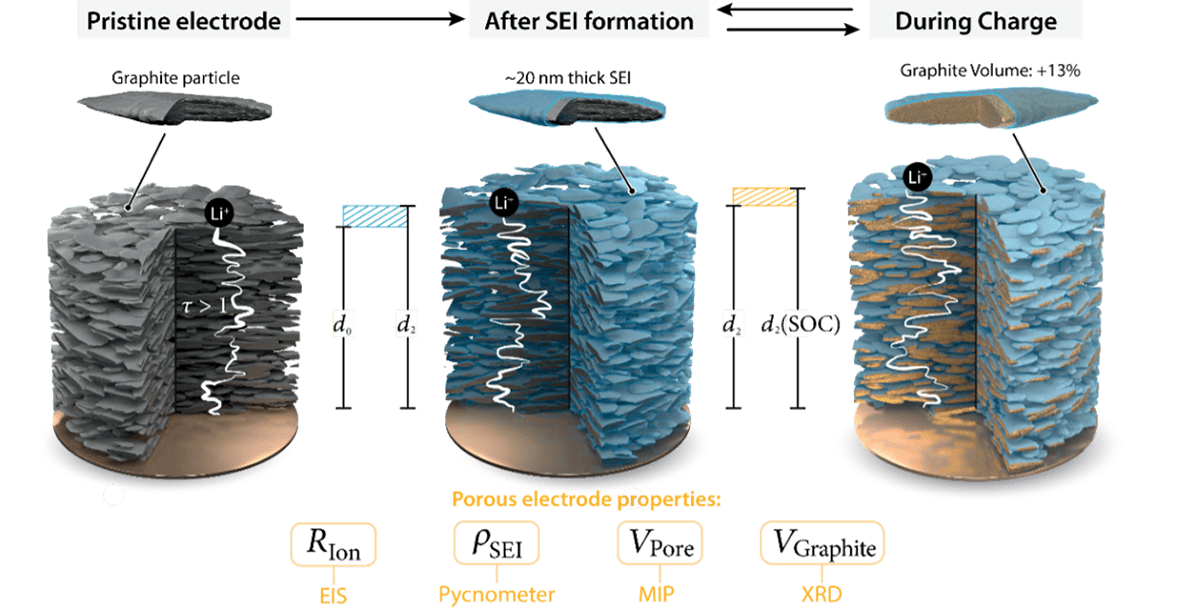
The fast-charging performance of lithium-ion batteries is strongly influenced by the structure of porous electrodes and its evolution during battery operation. In such electrodes, ionic transport is governed by the electrolyte conductivity as well as by the porosity, tortuosity and thickness of the electrode. The latter parameters undergo both reversible and irreversible changes, induced by the lithiation and delithiation of graphite particles and by the formation of the solid–electrolyte interphase (SEI).
We will discuss how SEI formation alters electrode thickness, porosity and tortuosity. Particular emphasis will be placed on how these structural changes depend on the initial electrode porosity and how SEI formation can be quantitatively linked to the evolution of transport properties.
Second, we will address state-of-charge–dependent effects. Graphite particle expansion during lithiation changes the pore structure, influencing electrode porosity, thickness and pore volume. It will be shown how these changes affect ionic resistance and electrolyte transport, and how they connect to macroscopic effects such as the recently described electrolyte-motion–induced salt inhomogeneity (EMSI).
Together, these insights provide a coherent picture of how SEI formation and state-of-charge-dependent expansion alter ionic transport in porous graphite anodes, offering guidance for electrode design and improved methodologies for realistic parameter determination used in battery modelling and fast-charging optimisation.
Lennart Reuter received his PhD from the Technical University of Munich (TUM) in June 2025 under the supervision of Hubert Gasteiger and is now a postdoctoral researcher at Uppsala University. His research centres on identifying and quantifying material and electrolyte decomposition processes in lithium-ion batteries. He implemented OEMS for gas analysis in the presence of volatile commercial electrolytes and developed a novel three-electrode cell for the operando detection of parasitic side reactions. In addition, he investigated structural and transport changes in porous electrodes during operation, including the characterisation of porous transport properties by electrochemical impedance spectroscopy (EIS).
Jonas Dickmanns is a PhD candidate at the Chair of Technical Electrochemistry, supervised by Hubert Gasteiger at the Technical University of Munich (TUM), focusing on advanced lithium-ion battery cell chemistry and anode materials. He received his MSc in chemistry from TUM, where he worked on the electrochemical characterisation of graphite. He later expanded his research to other anode materials, including microscale silicon and silicon/carbon composites. His work investigates key electrode processes such as solid–electrolyte interphase (SEI) formation, structural evolution of anodes, and electrolyte interactions. The goal of his research is to enhance the performance, stability and lifetime of next-generation lithium-ion batteries.
“The most beautiful thing we can experience is the mysterious,” wrote Albert Einstein. “It is the source of all true art and science.” It is a reminder that wonder – particularly in the natural world – lies at the heart of both disciplines. When it comes to an issue as multifaceted and emotive as climate change, it feels only natural to turn to art as well as science to make sense of what is happening around us.
The latest episode of Physics World Stories brings together two artists doing exactly that. Host Andrew Glester speaks first with Tom Bailey, a performance and environmental artist from Bristol-based creative company Mechanimal. Bailey has recently returned from an extraordinary 600 kilometre journey through the Arctic borderlands — spanning Norway, Finland and Sweden — travelling by ski, sledge, foot and boat, and occasionally dressed as a reindeer.
Arctic art Tom Bailey on his 600 km climate journey and performance tour in the Arctic borderlands. (Courtesy: Tom Bailey and Natasha Soonchild)
Travelling between festival performances, Bailey immersed himself in a region undergoing dramatic change: shifting weather patterns, transforming landscapes, and growing international interest in its mineral resources, raising urgent questions about governance and access. Central to his vision is a “more-than-human” perspective, advocating for nature to have formal representation in international decision-making, not merely as a resource to be managed, but as a presence with its own legitimate interests.
A climate video game with beautiful music
Composer Naomi Hart approaches the crisis from a different angle. After a conversation with her daughter about fears for the future left her saddened but resolute, she channelled that emotion into Save Progress – a short video game exploring how human connection can help us to think about the world and the choices ahead. In the podcast, Hart talks about her creative choices; the game combines an intentionally old-school design with specially composed synthesizer music. Save Progress takes around 10 minutes to play: give it a try.
To keep track of how physicists are investigating climate change and developing solutions, visit the Environment and Energy section of the Physics World website.
Data centres that house AI infrastructure are on track by the end of the decade to consume nearly three times as much electricity annually as Pakistan, Bangladesh and Nigeria combined. That is according to a report published by the United Nations University Institute for Water, Environment and Health (UNU-INWEH), which also discovers that the water footprint of such centres could match the annual domestic needs of all 1.3 billion people in Sub-Saharan Africa by 2030.
For hundreds of millions of people, generative AI is now woven into their daily lives. ChatGPT processes 2.5 billion prompts each day and, by integrating AI into its search engine, Google processes billions of AI-assisted interactions.
Behind every virtual compute, however, stands sprawling data centres that operate thousands of high-performance processors. Data centres consume vast amounts of electricity and water to operate, cool servers and transmit data.
Day-to-day search queries account for 80-90% of data centres’ energy costs. An average text-based prompt consumes about 0.42 Watt-hours (Wh) of electricity. ChatGPT interactions alone result in 383 GWh per year — enough to cover the domestic electricity needs of nearly three million people in Sub-Saharan Africa.
As of late 2025, only 32 countries had AI-specialized data centres, with nearly half of global data centres located in the US. More than 150 countries, including most of Africa and South America, lack infrastructure to participate in the AI economy.
Those who benefit least from AI, however, often bear a disproportionate share of its cost. Vulnerable communities near data centres face air pollution, drought conditions, and land shortage.
Even regions in the Global South that are devoid of data centres are impacted by mineral extractions to build AI hardware. Such extractions are energy-intensive, deplete water, and pollute the environment.
A responsible ecosystem
The report finds that the land footprint of data centres could span an area roughly 10 times the size of Mexico City by the end of the decade. Additionally, it projects that 2.5 million metric tonnes of e-waste could be produced annually from AI hardware — equivalent to scrapping 250 Eiffel Towers each year.
UNU-INWEH director Kaveh Madani says that the report is not “a case against artificial intelligence” adding that the technology is improving the lives of billions of people worldwide. “[The report] is a call for using it responsibly and addressing its unintended impacts proactively to make it sustainable and equitable,” adds Madani.
To build a responsible AI ecosystem, the report calls for a multilateral approach. AI developers should improve efficiency of design and transparently report their environmental footprint. International and national governance should engage local communities in siting decisions and enforce standardized environmental disclosure while investors should consider environmental impact in their due diligence.
For individuals, the report encourages users to avoid unnecessary use, choose the smallest model capable of the task and write concise prompts.
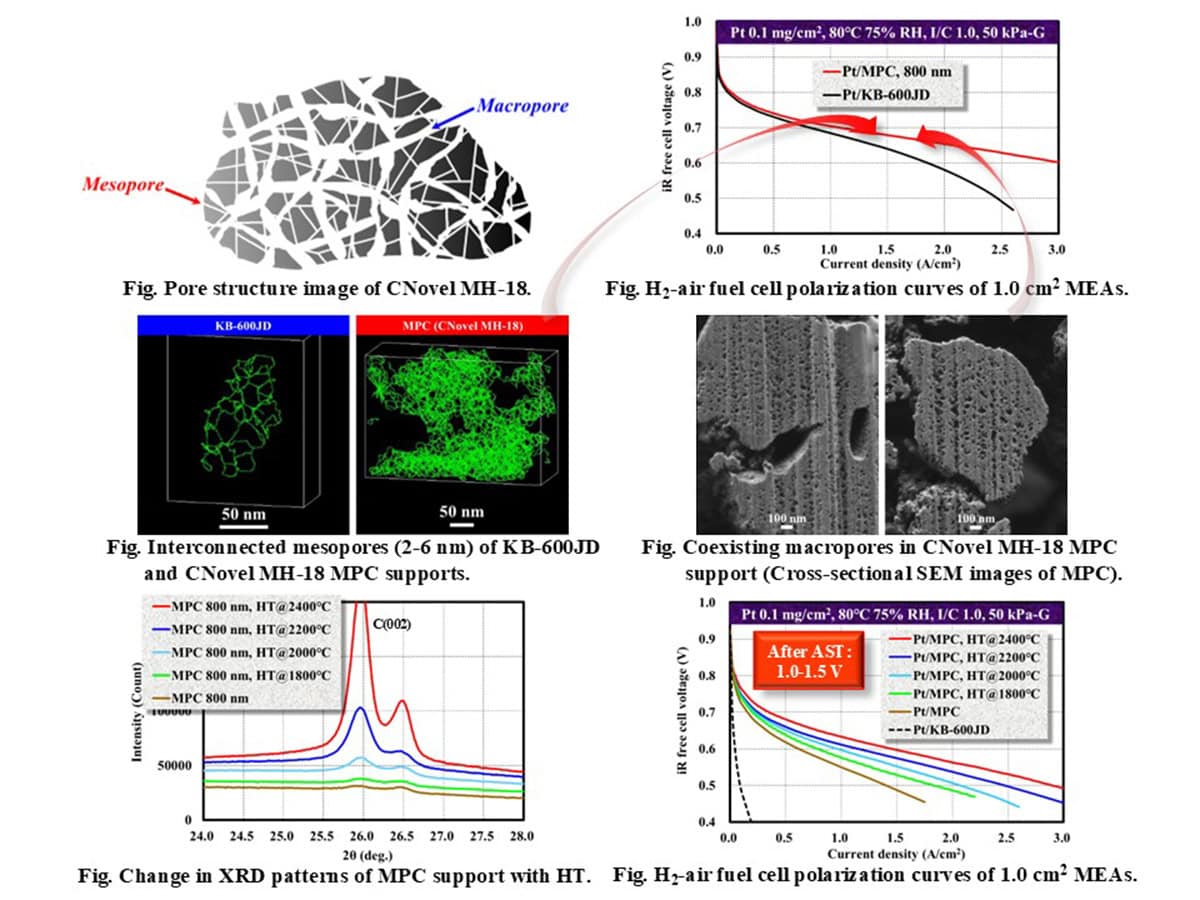
In 2020, Toyota Motor Corporation launched the FC-EV of MIRAI-II adopting mesoporous carbon of nano-dendrite (MCND) support for the PtCo alloy catalyst NPs to suppress ionomer poisoning. Concurrently, we began using the CNovel® MH-18 mesoporous carbon (MPC) support mass-produced by TOYO TANSO, Osaka, Japan. The characteristics of the MPC support were entirely different from those of the conventional Ketjen Black EC-600JD (KB-600JD) porous carbon support.
The MPC support has a primary particle size of approximately 2 μm (KB-600JD: 40–50 nm) and consists of isolated particles lacking the chain-like structure seen in KB-600JD. Thanks to very unique porosity of the MPC support, that is, the coexistence of highly interconnected mesopores (2–6 nm) and macropores, allows oxygen molecules to access the Pt catalyst NPs from all directions within the MPC support, resulting in higher cell voltages compared to the Pt/KB-600JD catalyst at high current density regions.
The MPC support was ground to approximately 800 nm using a bead mill. Since the grinding generates new surfaces on the MPC support, the ground MPC support was heat treated in an Ar atmosphere at temperatures ranging from 1800°C to 2400°C to improve the durability of the MPC support. The durability of the Pt/MPC (800 nm) catalyst was evaluated using a triangular-wave potential cycle of 1.0–1.5 V vs RHE in MEAs. The Pt/MPC (800 nm) catalyst using the freshly milled MPC support exhibited higher durability than the Pt/KB-600JD catalyst. This is because although new surfaces were formed by bead milling, the purchased MPC (2 µm) was heat treated at 1800°C under an Ar atmosphere during TOYO TANSO’s final manufacturing process.
The durability of the Pt/MPC (800 nm) catalyst increased with rising the heat-treatment temperature, and the catalyst using MPC support (800 nm) heat-treated at 2400°C exhibited the highest durability under a triangular-wave potential cycle of 1.0–1.5 V vs RHE.
XRD and HR-TEM analyses revealed that the carbon (002) plane grew further upon the heat treatment. The N2 gas adsorption/desorption isotherms measured at 77 K for the MPC supports indicated that porosity of the MPC support decreased with increasing the heat-treatment temperature, and the surface area of the freshly milled MPC support, 1338 m2/g, decreased to 351 m2/g after the heat treatment at 2400°C. Considering the durability and the porosity retention of the MPC support (800 nm), a heat-treatment temperature in the range of 2000°C–2200°C is considered suitable.
Hideo Daimon
Hideo Daimon completed his MSc in chemistry at the Faculty of Science, Kwansei Gakuin University, in 1984, he joined the research and development department at Hitachi Maxell, Ltd. At Hitachi Maxell, he conducted research on magnetic materials prepared via chemical routes; friction and wear of thin-film magnetic recording media, protective coatings and lubricants for the thin-film media, and electrodeposition and electroless plating of Ni and Ni-P films.
In 2000, he began synthesizing PtFe, PtRu and Pt nanoparticles for use in fuel cells. Daimon moved to Doshisha University in 2010, where he has been researching Pt and Pt-based catalysts used in cathodes for PEFCs, including Au@Pt- and Pd@Pt core-shell structured catalysts, as well as PtCo alloy catalysts. Currently, he is engaged in research on mesoporous carbon supports to enhance the cell performance and durability of PEFCs applied to FCEVs.
From heatwaves to extreme rainfall, the impact of climate change is rapidly becoming a reality in our daily lives and a danger to our planet. But physicists are in a great position to help, with physics-based research bringing about practical, real-world solutions, whether it’s more efficient solar cells, better climate models, or novel materials for capturing carbon dioxide from the atmosphere.
There are huge economic and commercial benefits from such work too. A 2023 report from the Institute of Physics (IOP), entitled Physics Powering the Green Economy, estimates there are almost 1800 companies in the UK and Ireland taking green technologies to market with a combined turnover of £750bn.
Last year a follow-up IOP Impact report entitled Unleashing Physics to Power the UK Energy Sector identified the most promising physics technologies for transforming the UK’s energy system. These fall into three main areas: energy generation (nuclear power, photovoltaics), storage (batteries) and transmission (high-temperature superconductors).
The clean-energy revolution will not be easy, however. As the IOP report points out, the UK has a strong research base, good international collaborations, and a growing pipeline of spin-out and early-stage companies. But the country doesn’t invest enough in technology scale-up facilities, faces critical skill shortages, and isn’t great at recycling either.
To discuss how physicists are supporting the green economy – and what more they can do – a panel debate was recently held at the IOP in central London. Attended by Prince Edward, the Duke of Edinburgh, as well as about 100 business leaders, policy chiefs, senior physicists, and IOP and IOP Publishing staff, it was chaired by Tara Shears, the IOP’s vice-president for science and innovation.
The panel featured ex-BP boss John Browne, who now works in green energy, Emily Nurse from the UK’s Climate Change Committee, former Sizewell C energy-strategy director David Cole, solar-cell physicist Jenny Nelson from Imperial College, and Nellie Technologies founder Stephen Milburn. The following is an edited extract of the discussion.
Physicists for a greener future
Green game-changers Tara Shears (far left) chairing the panel debate at the Institute of Physics in London on how physics can support the green economy. It featured (from left to right) John Browne, Emily Nurse, David Cole, Jenny Nelson and Stephen Milburn. (Courtesy: Carmen Valino)
John Browne is chair of BeyondNetZero, a climate-growth equity venture firm. He was group chief executive of energy giant BP from 1995–2007, having joined the firm in 1966 after studying natural sciences.
Emily Nurse, who was originally an experimental particle physicist, is the director of net zero at the UK’s Climate Change Committee, which advises the UK government on reducing emissions and adapting to the impacts of climate change.
David Cole, an engineer by training, was at the time of the discussion director of energy strategy at the Sizewell C nuclear-power plant, which is being built in Suffolk in the UK. When complete, it is expected to meet up to 7% of the UK’s total electricity demand. He is now executive president, consulting, at energy firm Wood.
Stephen Milburn is a physicist who is founder and chief executive of the firm Nellie Technologies in South Wales. It removes carbon dioxide form the atmosphere using biomass, which can then be used as animal feed or construction material.
What role are physicists currently playing in our quest for a greener economy?
John Browne: I made a wonderful decision 60 years ago, when I was 18, which was to read physics. After graduating, I became an engineer, but over the last 30 years physics has come back in to my life as I’ve found myself doing something very important – trying to get to net zero. Physics, you see, touches absolutely everything.
All that I’ve ever done – whether it’s renewable energy or “old energy” [fossil fuels] in my old life – starts with physics. Whether you’re involved in chemistry, biology, electronics or engineering, it could not exist without a much deeper understanding of physics. We have to make sure everybody knows that – but I don’t think people currently do. They tend to think engineering is the only enabler for commercialization, but physics is there.
Emily Nurse: I started out as a particle physicist working at CERN on the Large Hadron Collider but for the last four years, I’ve been involved in climate policy and now work with the UK’s Climate Change Committee. We are the UK government’s official advisers on its climate targets – and assessing progress towards meeting those targets. As we celebrate global decarbonization to date, we need to remember it’s all underpinned by physics.
Take the rise of solar power for example, which has been the fastest growing source of global electricity generation for the last 20 years in a row. Solar installations in 2024 were double those in 2022. Along with wind, solar has led to a reduction in electricity from fossil fuels. We’re seeing the costs of solar plummeting and they just keep falling further.
In the UK, solar power has been growing more slowly, but it’s starting to pick up and is going to be a really important part of the electricity mix. We’ve also got a lot of wind here in the UK – it’s a very windy island after all. I would also like to give a shout out to heat pumps: as a physicist, how can you not love their efficiency?
David Cole: I am an engineer, not a physicist, but I’ve spent my career in lots of different sectors and been fascinated with the role that energy plays in creating a better society. What’s really interesting at Sizewell C is the ownership structure, which involves both state and private investment. It’s the first time private investment has been used for a new nuclear build in the UK.
I hope it leads to a virtuous circle, in which the more plants we build, the more we can reap from that investment
David Cole
Getting this hybrid financial structure over the line was not trivial – it took a lot of effort – but I think it will drive great performance. We’re also trying to use as much UK content in the plants as possible, whether that’s materials, skills or technology. I hope it leads to a virtuous circle, in which the more plants we build, the more we can reap from that investment. Sizewell C will, in other words, bring down energy costs, which is fundamental to economic growth.
Jenny Nelson: I have been active in research into solar photovoltaic (PV) materials and devices for over 30 years and we should celebrate how much has happened in the field during that time. In the last 10 years, we have seen capacity increase globally by more than a factor of 10, we’ve seen the efficiency of solar cells increase, and we’ve seen the cost come down almost by a factor of eight, all of which is remarkable.
Those innovations are firmly rooted in physics – whether it’s changes in device structure… or of the optical properties of materials
Jenny Nelson
The cheapest form of electricity globally, in other words, is now from solar PV, which was not the case 30 years ago. These developments have come partly from economies of scale and partly from technological innovations that have now fed through into production. Those innovations are firmly rooted in physics – whether it’s changes in device structure due to our understanding of semiconductor physics or new developments in the optical properties of materials.
The next generation of PV cells, which are likely to be silicon-based tandem devices, will also depend on scientific breakthroughs and innovations.
Stephen Milburn: I’m chief executive of Nellie Technologies, which is based in South Wales on the site of a former chemical-weapons storage facility. We’re using biomass waste for removing atmospheric carbon dioxide, and if you visit us, you’ll see all kinds of activity: in one corner there’s chemistry, in another engineering and in the next there’s biology and biochemistry. But physics is at the heart of the technology. Physicists are a bit arrogant when we say we think we can do everything, but the fact is we probably can.
But we should also celebrate the work that has gone on to create a market in which carbon-emission credits can be bought and sold. Trading carbon credits has been a bit of a dark activity over the last 10 years, with double counting and bad things happening purely by firms wishing to make a profit. However, the market does have the power to regulate itself – in fact the alignment we’re starting to see between the UK and the EU will help greatly.
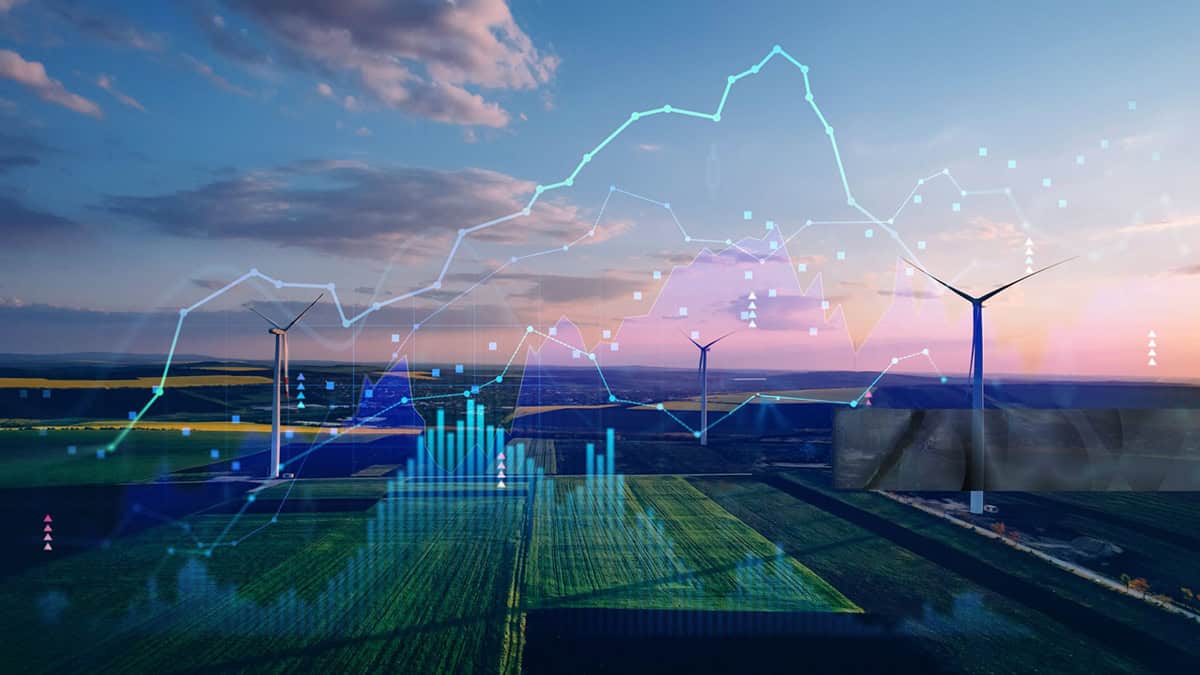
Challenging times Technologies to store, generate or transmit energy are rooted in physics. (Courtesy: iStock/Galeanu Mihai)
What are the biggest growth opportunities for the green-economy sector?
John Browne: First, we can do much more with what we’ve already got – for example we could increase our offshore wind or rethink whether we should go back into onshore wind. Second, we can improve what we’re doing – for instance, by increasing the efficiency of solar panels to their theoretical maximum, which would make rooftop solar economically attractive. Third, there are new opportunities, such as metallic organic frameworks and nuclear fusion.
What we do here in the UK needs to move the needle globally, which means thinking about how to scale and finance it properly
John Browne
However, the UK needs to avoid doing things that others are doing much better. The race for the best battery in the world is, for example, probably going to be won elsewhere. What we do here in the UK needs to move the needle globally, which means thinking about how to scale and finance it properly. The UK shouldn’t end up as a secondary player.
Emily Nurse: The UK has made a lot of progress in our quest to reach net zero by 2050. Since 1990, for example, we’ve halved our carbon emissions, mainly by decarbonizing electricity – phasing out coal, reducing gas generation, while significantly increasing wind, solar and other renewables. Electricity generation now accounts for only around 7% of UK emissions, which are dominated by transport (cars and vans) and heating (oil and gas boilers).
Reducing emissions still further will predominantly come from moving to electric technologies, including electric vehicles and heat pumps, and by further decarbonizing the electricity supply. There will be a backbone of wind and solar, but to ensure a secure supply, we’ll need nuclear, carbon capture and storage, hydrogen and batteries. We’ll have to reduce emissions from agriculture and land use too.
A report from the Confederation of British Industry (CBI) last year estimated that the net-zero economy grew by 10% in 2024, which is three times faster than the rest of the UK. But we’ll need more innovations to continue to bring costs down – and we’ll also need to provide incentives to boost the take-up of electric technologies. If we do that, there’ll be an overall saving to the UK economy in about 15 years’ time, our analysis suggests. There are huge opportunities for green growth to come from this investment.
David Cole: I agree that for the UK to be competitive, the cost of energy has to come down – not just for domestic customers but businesses too. In fact, there are two main opportunities First, we have to adopt a “whole-systems” approach. If we’re building a power station, for example, can we use every bit to its maximum potential?
Let’s say I’m running a direct air-capture plant operating at 25–30 ºC – can I use the waste flow from my coolant system to encourage new industries? Can it support nearby hydrogen generation plants or companies making, say, synthetic aviation fuel? Those questions involve thinking about physics and engineering as well as materials science, which is also super important.
Whichever way you look at it, we’re talking about building a lot of hardware, which involves materials. How much energy per unit mass are they using? Can we recycle those materials? What can we do with the waste products? Ultimately, what is really important is energy security: where does your energy come from, who made it and what impact does it have on the environment?
Jenny Nelson: The net-zero economy is growing significantly faster than the rest of the economy and I think that will continue. But decarbonizing the power sector only addresses part of the problem and we’re going to see a big transition across the rest of industry, agriculture and elsewhere that will generate a wide range of opportunities and stimulate the economy too. I’m not just talking about rolling out more renewables, but about integration – bringing together the generation and storage of energy, ensuring that we are managing demands and have the right infrastructure.
As for my area of photovoltaics, we’ve seen great ideas and technologies come out of the UK that are very likely going to be developed outside the UK because the manufacturing capacity isn’t here. Nevertheless, those ideas and innovations can still benefit the country through licensing, partial manufacturing and new technology.
One thing to remember about solar power is it’s distributed. You can have solar generation without being connected to the grid. That not only opens some markets for certain applications where you want to generate electricity locally, but it also provides a route to energy security through back-up generation, towards which solar power will be an important part.
Stephen Milburn: Having a strong green-technology manufacturing base is a huge opportunity for the UK. My company is based in South Wales, where we have lots of highly skilled people who used to work in traditional industries but now don’t have many places to go. Yes, there’s a fantastic semiconductor industry here, but when it comes to deploying green technology we cannot outsource that responsibility to other parts of the world.
Green tech needs to be deployed in the UK’s industrial heartlands… if we don’t nurture jobs and skills here there’s a real risk they will be gone forever
Stephen Milburn
Green tech needs to be deployed in the UK’s industrial heartlands to take advantage of the skills we already have, but which we are at risk of losing. In fact, if we don’t nurture those jobs and skills here there’s a real risk they will be gone forever. Having a strong green-technology manufacturing base is a huge opportunity for the UK.
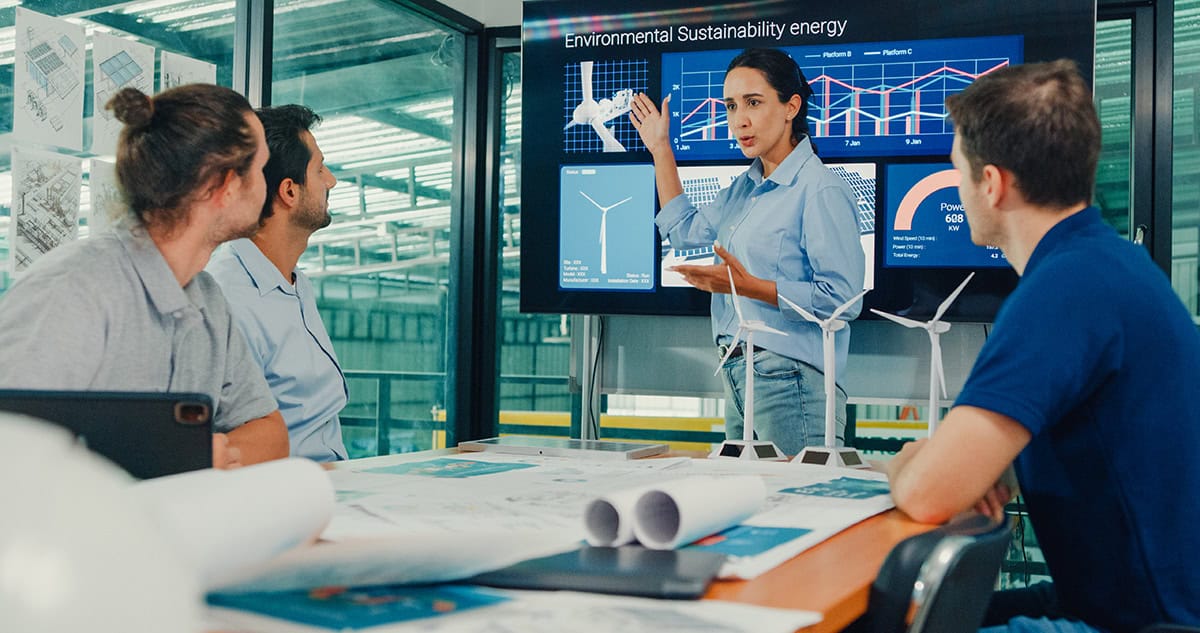
Deep thinkers Combining analytical minds with great problem-solving skills, physicists are well placed to tackle the challenges of climate change. (Courtesy: iStock/MTStock Studio)
What needs to happen so that these opportunities can be put into practice?
Stephen Milburn: Many science graduates leave university equipped with solid academic rigour and a great scientific understanding, but they often lack practical green-technology skills. This summer my company is therefore hoping to launch a climate apprenticeship programme, which will allow graduates to pick up those skills. We need to build green-tech skills in the real economy, in particular those that will deal with climate change.
Jenny Nelson: The UK must do more to support its own innovations. We need better regulations to avoid unnecessary bottlenecks. We need to invest in infrastructure like the grid. We should completely avoid subsidizing fossil fuels and instead divert any subsidies into alternative economies. Finally, we need to train and educate people, showing the public the potential of green technology so that they become part of the transition, for example by generating their own electricity.
David Cole: We need to integrate our policies on industry, energy, land use and AI so that we can invest in them all as growth areas. In particular, I’d like to see a long-term nuclear programme in which we build a fleet of new reactors all of the same design, which will drive down costs by letting us replicate a particular technology. It’s also vital that we get a high proportion of UK content and technology into these reactors, which will lead to a virtuous circle, with money coming back into the economy that we can re-invest in industrial and academic partnerships.
Emily Nurse: What’s vital is consistency in policies; we need certainty. In the UK, we are fortunate to have world-leading climate legislation in the form of the 2008 Climate Change Act, which does not just make it a legal requirement to reach net zero by 2050 but also gives us targets along the way. It means we know what we need to do in both the medium- and long-term, which gives certainty to investors, businesses, innovators and consumers.
What’s really important is communication – supporting communities through the transition and making sure they realize the benefits
Emily Nurse
So the first thing we need to do is keep the Climate Change Act. Then, of course, we’ve got to address barriers to delivery, including having the right incentives to electrify the economy. And what’s really important is communication – supporting communities through the transition and making sure they realize the benefits, not just in terms of reducing carbon production but of having cleaner, better and more efficient technologies too.
John Browne: First, we must never stop investing in people who can discover things and translate them into real commercial products. Second, we need to understand how to scale things, which means focusing on the winners and getting rid of things that are “nice to have” but aren’t going anywhere. That’s not easy because you have to push people to say, “You’ve done great work, but you’ll have to stop”.
What’s more, to scale new technology, people have to learn what it takes. When I’m in the US, I often speak to chief executives who can explain their technology to the financier who’s supporting it, whereas here in the UK that often doesn’t happen.
Third, we need to maintain confidence in what we’re doing. I often talk to people who think that it’ll be really expensive to get to net zero, but in fact estimates suggest that each household would only have to spend an average of about £150 a year to get there. So it’ll be less than the cost of a TV licence to get to net zero.
Of course the investment needed will be “lumpy” – it’s not as simple as just levying a fee – but the point about governments is that they can smooth things out. That is what they have done in the past and it’s what they should continue to do.
For more information about the IOP’s work on the green economy, click here. You can also keep up to date with the all latest research in the field through IOP Publishing’s series of open-access Environmental Research Journals at this link.

 Login


 Lennart Reuter received his PhD from the Technical University of Munich (TUM) in June 2025 under the supervision of Hubert Gasteiger and is now a postdoctoral researcher at Uppsala University. His research centres on identifying and quantifying material and electrolyte decomposition processes in lithium-ion batteries. He implemented OEMS for gas analysis in the presence of volatile commercial electrolytes and developed a novel three-electrode cell for the operando detection of parasitic side reactions. In addition, he investigated structural and transport changes in porous electrodes during operation, including the characterisation of porous transport properties by electrochemical impedance spectroscopy (EIS).
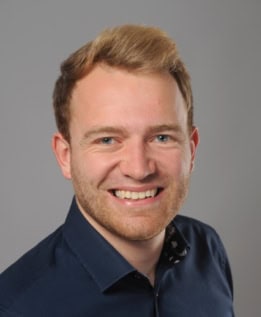 Jonas Dickmanns is a PhD candidate at the Chair of Technical Electrochemistry, supervised by Hubert Gasteiger at the Technical University of Munich (TUM), focusing on advanced lithium-ion battery cell chemistry and anode materials. He received his MSc in chemistry from TUM, where he worked on the electrochemical characterisation of graphite. He later expanded his research to other anode materials, including microscale silicon and silicon/carbon composites. His work investigates key electrode processes such as solid–electrolyte interphase (SEI) formation, structural evolution of anodes, and electrolyte interactions. The goal of his research is to enhance the performance, stability and lifetime of next-generation lithium-ion batteries.