NASA is picking up the pace on its Artemis III mission preparations, pressing forward on multiple fronts to assemble launch vehicle hardware and beginning routine simulations inside Artemis mission control.
The agency is "full steam ahead," according to a July 13 NASA update. Across Kennedy Space Center (KSC) in Florida, components of Artemis III's Space Launch System (SLS) rocket are coming together, undergoing tests and awaiting transportation for final integration ahead of next year's launch. NASA is targeting mid-to-late 2027 for Artemis III, which will launch four astronauts into low Earth orbit (LEO) aboard the Orion spacecraft. It will be the second crewed mission of NASA's Artemis program, which aims to establish a permanent human presence on the moon.
Artemis III will be a critical stepping stone in NASA's lunar landing architecture, despite the mission not actually flying to the moon. Instead, SLS will launch Orion and its four-person crew into LEO for rendezvous and docking operations with the program's two commercial lunar lander vehicles: SpaceX's Starship and Blue Origin's Blue Moon spacecraft.
With the completion of the massively successful Artemis II mission that flew astronauts around the moon in April and the second half of 2026 beginning to count down, NASA has shifted into full gear to complete assembly and testing of the hardware that will launch Artemis III.
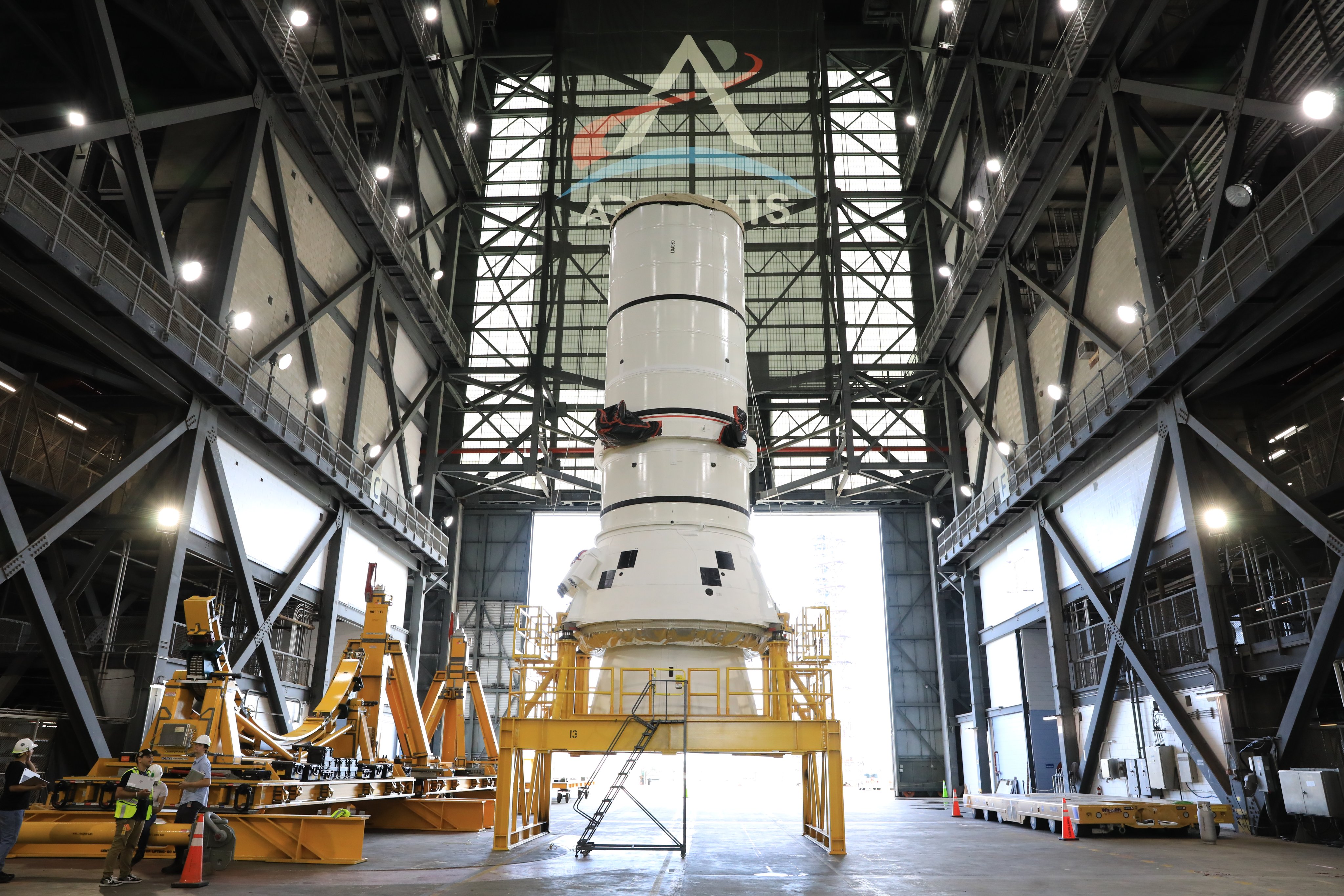
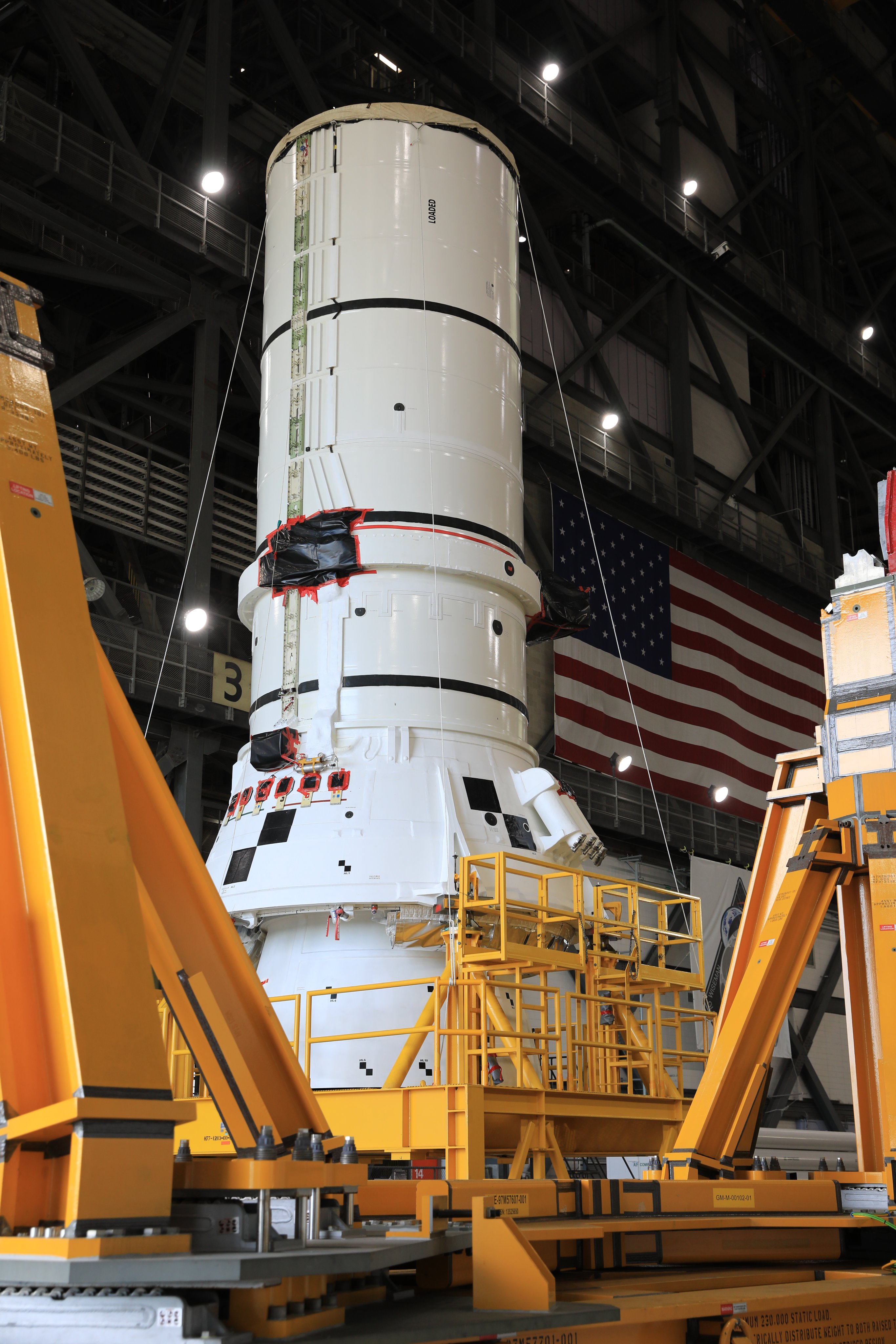
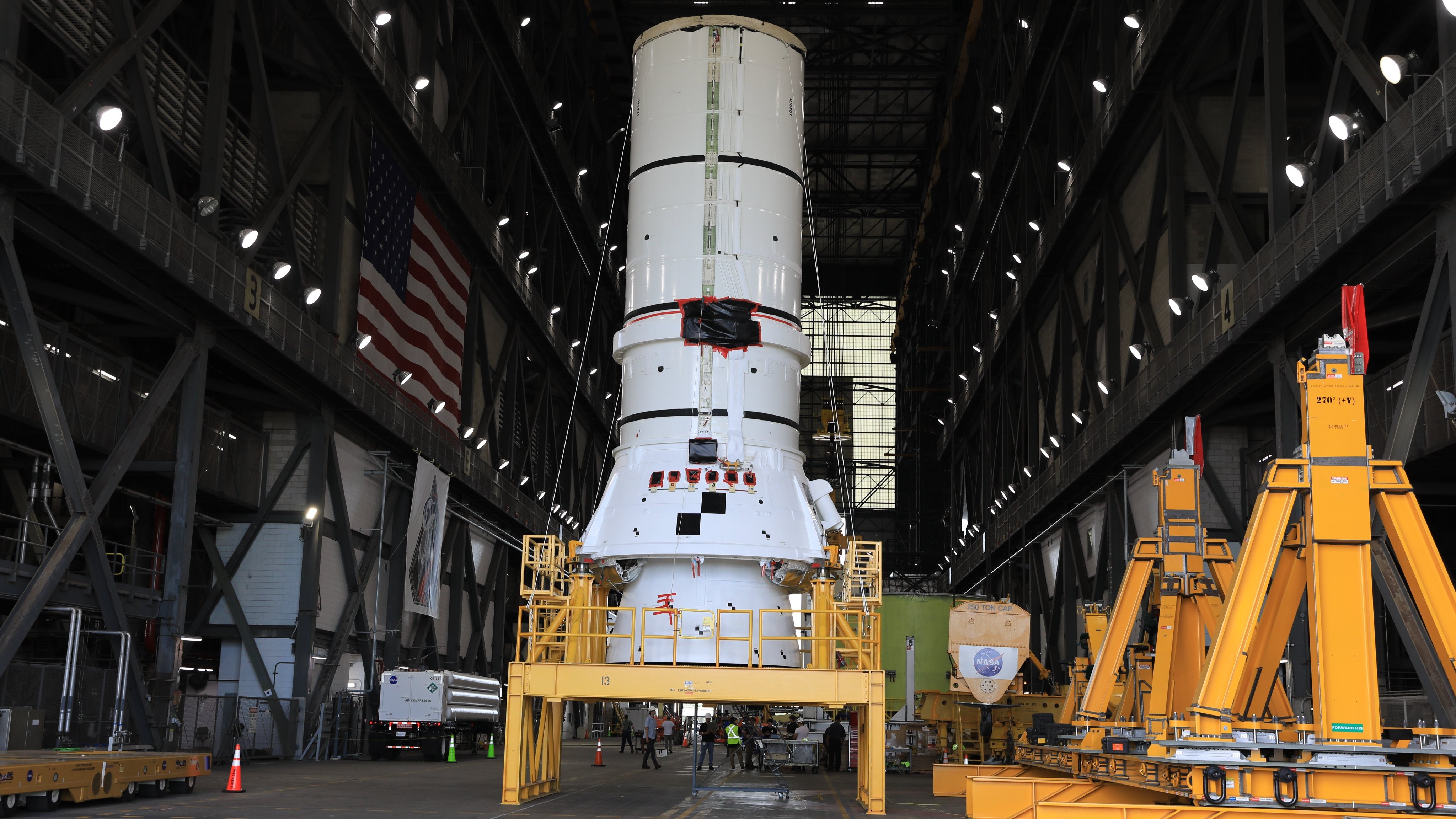
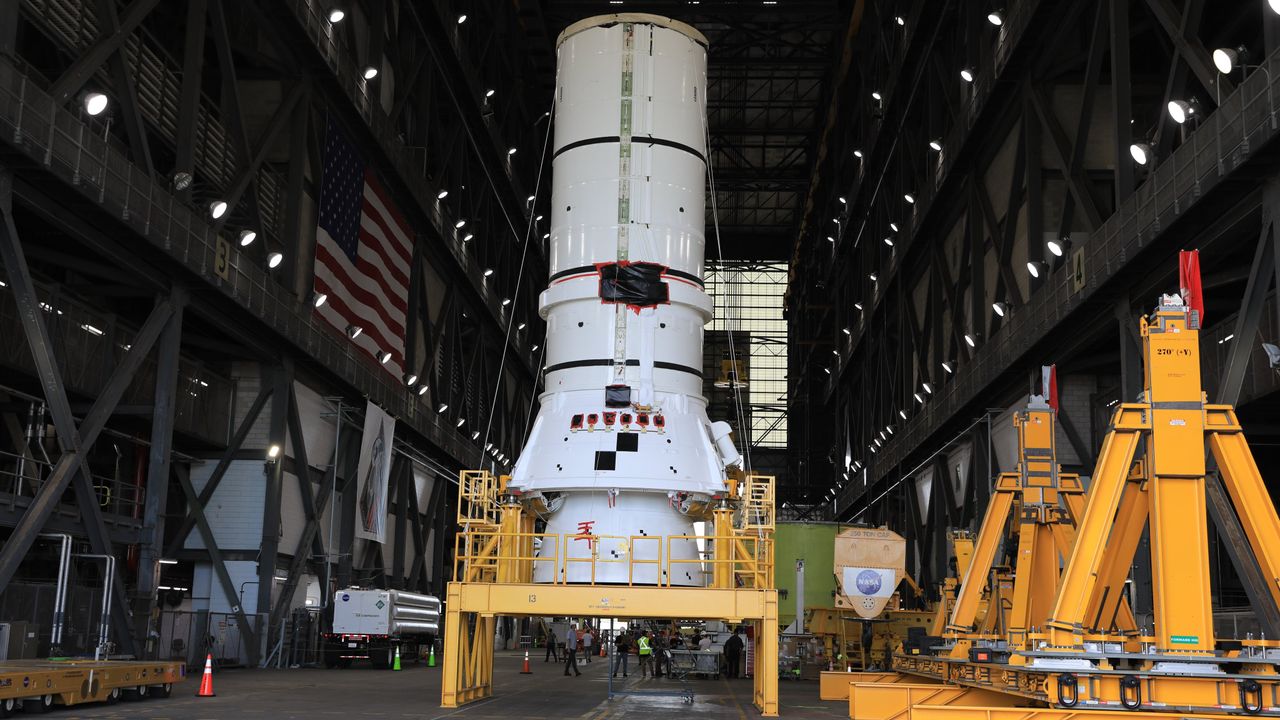
Several components for the mission's SLS rocket have arrived in the Vehicle Assembly Building (VAB) at KSC. The SLS core stage was delivered at the end of April, and it was connected with the rocket's engine block section in May. The first two of the core stage's four RS-25 engines arrived in June and will be installed on the SLS engine block once the remaining two are delivered, after which NASA plans to begin integration with the mobile launch platform (MLP) and launch operations tests. A temporary weather cap was also delivered in June, which will protect the stage when NASA transports it to the launch pad for tests before the full vehicle is stacked.
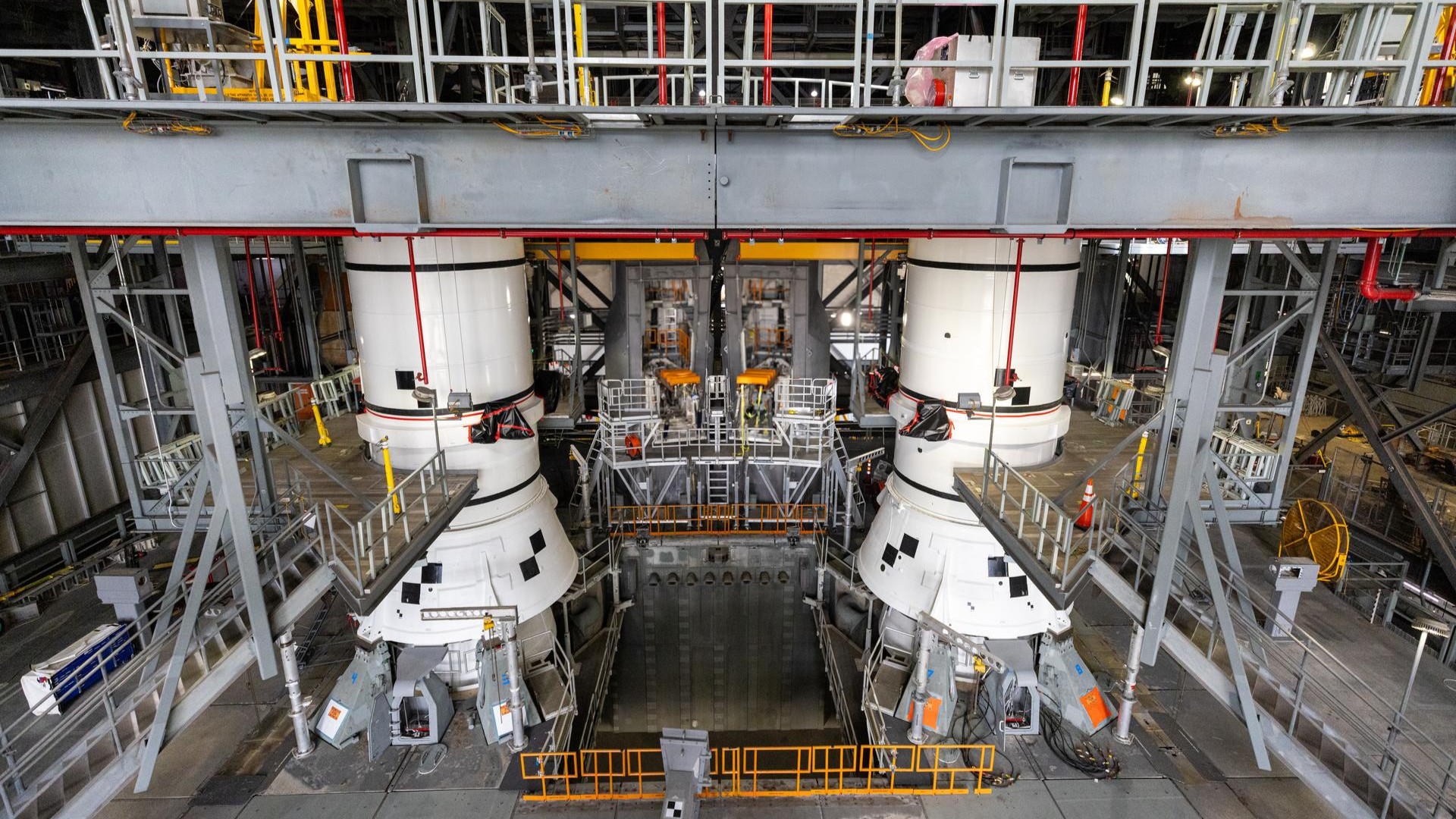
The bottom segments of both SLS solid rocket boosters (SRBs) were delivered over the last week, and they have been mounted on the MLP, according to NASA's update. The upper SRB segments arrived at KSC via train in June and will undergo inspection and testing before the twin boosters are fully stacked.
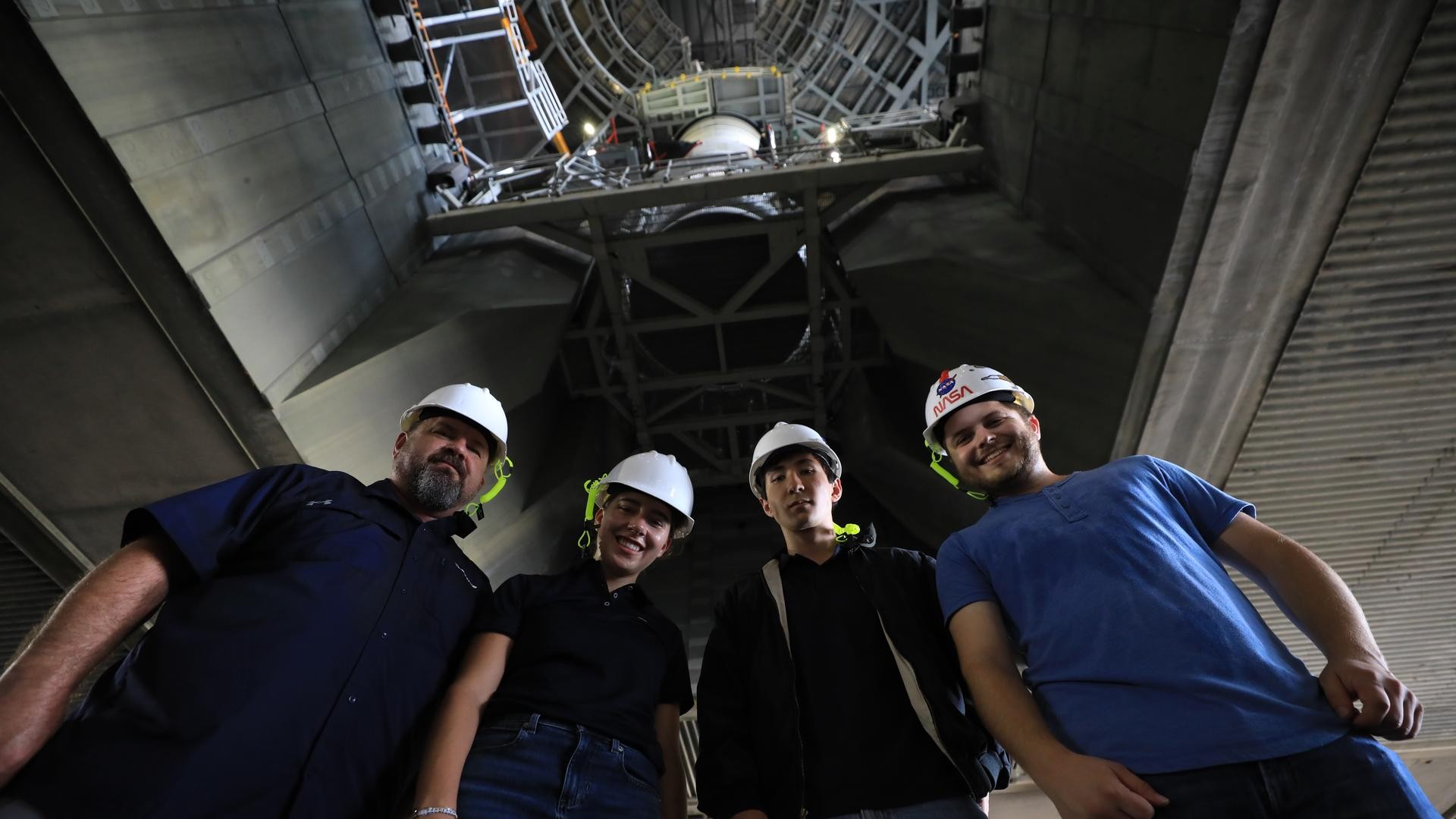
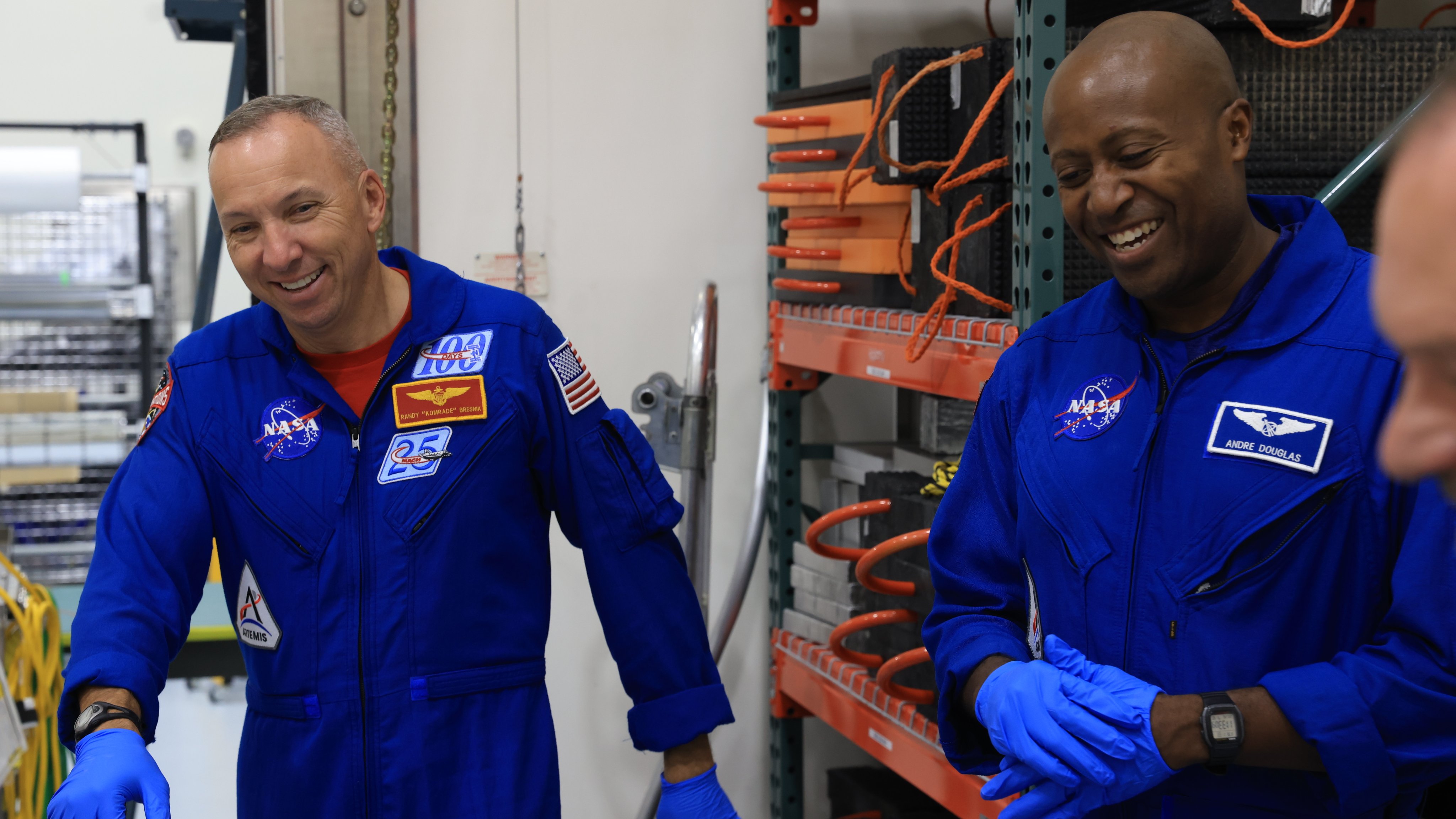
Per NASA: Artemis launch director Charlie Blackwell-Thompson participates in the launch countdown simulation on July 2, 2026, in Firing Room 1 of the Launch Control Center.NASA/Chad SiwikPer NASA: Employees pose for a photograph following work inside the VAB to secure the left-hand aft assembly solid rocket booster segment to the mobile launcher at the VAB on July 9, 2026.NASA/Ben SmegelskyPer NASA: The left-hand and right-hand aft assembly solid rocket booster segments for NASA’s Artemis III SLS (Space Launch System) rocket are secured to the mobile launcher at the agency’s Vehicle Assembly Building at NASA’s Kennedy Space Center in Florida on July 11, 2026. NASA/Frank MichauxPer NASA: Artemis III astronauts Randy Bresnik and Andre Douglas visit the Multi-Payload Processing Facility at NASA's Kennedy Space Center on July 10, 2026.NASA/Cory Huston
Inside KSC's Neil Armstrong Operations and Checkout Building, the Artemis III Orion is making significant progress — engineers have now finished installation of the spacecraft's heat shield.
Artemis III will be the first Orion mission to use an upgraded heat shield, featuring design improvements gleaned from analysis of unexpected wear on the heat shield flown on Artemis I. Orion's service module is also currently inside the Operations and Checkout Building and recently completed acoustic testing. Both the service module and Orion capsule are now being prepared for joining and eventual transportation to the VAB for stacking.
The pieces for Artemis III are coming together at @NASAKennedy.The twin solid rocket boosters? They’re getting stacked.The launch team? They’re simulating the countdown.The heat shield? It’s now attached to the Orion spacecraft.Full steam ahead for Artemis III. pic.twitter.com/2f92kv6HEiJuly 13, 2026
On the personnel side of things, Artemis III team members at KSC have begun monthly launch simulation tests to hone procedures for SLS propellant loading, terminal count operations (the final 10 minutes prior to liftoff) and launch day operations. Those tests will continue regularly leading up to Artemis III's launch next year, according to NASA.
As teams across NASA are busy readying all the pieces for Artemis III, others are looking ahead to the program's first lunar landing, planned for Artemis IV. That mission, scheduled for late 2028, will deliver a crew of astronauts to the surface of the moon for the first time since 1972. The SLS that will get them there is also coming together piece by piece.
The liquid oxygen (LOX) tank for the Artemis IV SLS core stage was recently relocated within NASA's Michoud Assembly Facility in New Orleans, positioning the tank for testing as it enters its next phase of production.
Rocket Lab has completed a major qualification test for its formidable Archimedes engine, which will power the company's next-gen Neutron launch vehicle.
As Rocket Lab continues with regular launches of its workhorse small-lift Electron rocket, development of Neutron has carried on in the background, progressing toward a possible debut later this year. The company recently completed a full-duration burn of a second-stage Archimedes, paving the way for integration with Neutron in the coming months.
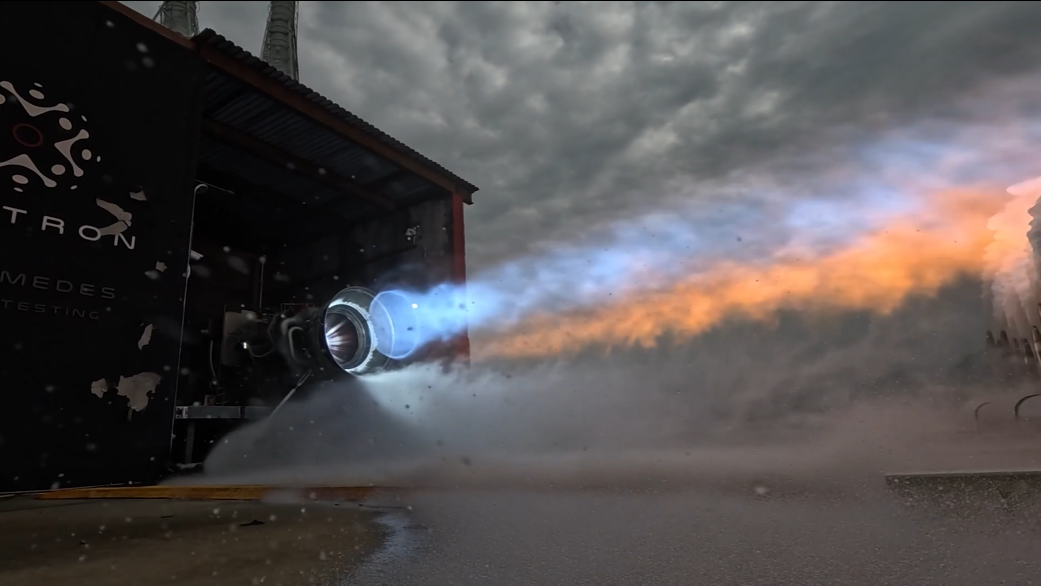
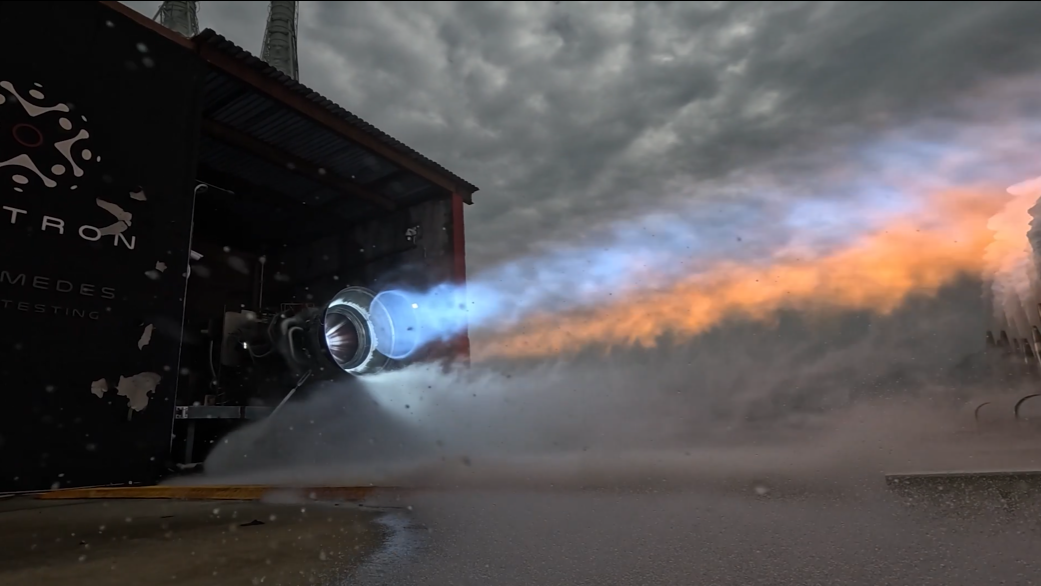
The burn took place at Rocket Lab's Archimedes Test Complex, housed at NASA’s Stennis Space Center in Mississippi. The full-duration test aimed to simulate flight-like requirements and lasted just under 5.5 minutes. "What a thing of beauty," the company said in a July 13 social media post announcing the success, calling it a "critical preparation for Neutron's first flight."
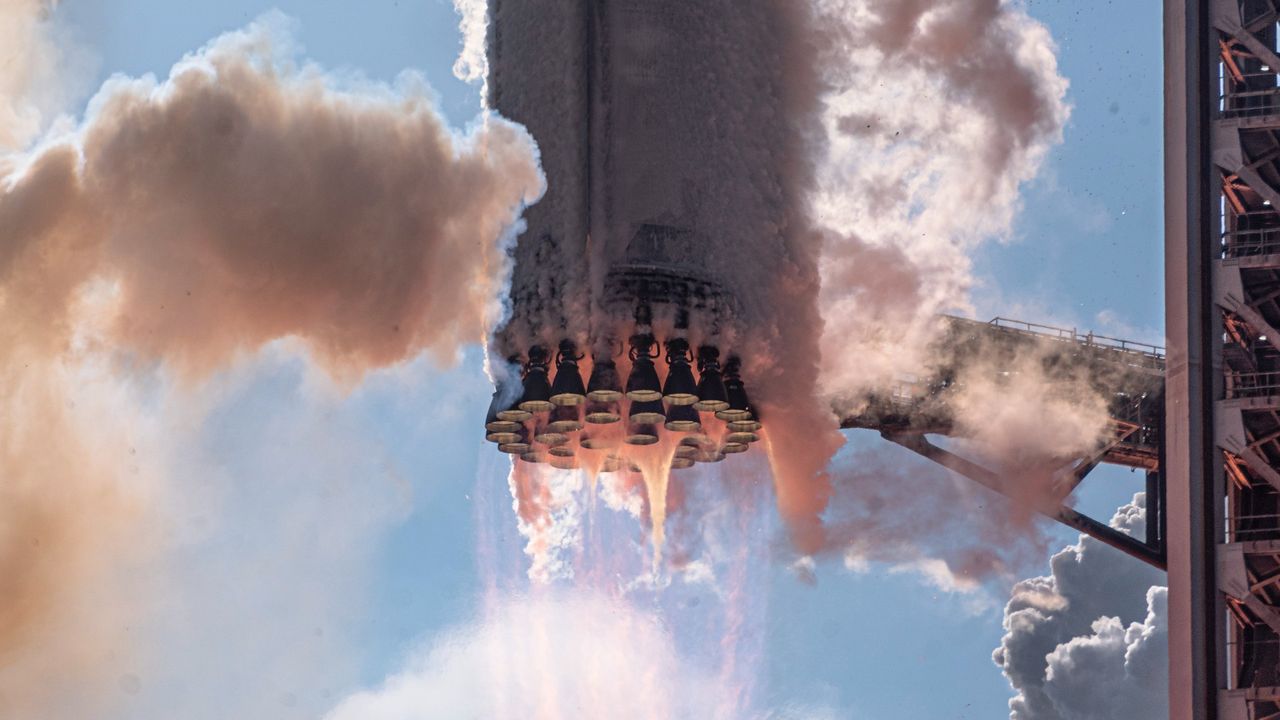
Rocket Lab performs a test burn of its Archimedes engine at NASA's Stennis Space Center in Mississippi. (Image credit: Rocket Lab)
Neutron is equipped with eight Archimedes engines on its first stage, which together provide nearly 1.5 million pounds of thrust at liftoff. The output of each is comparable to that of each Merlin 1D engine, which powers the first stage of SpaceX's Falcon 9 rocket. Like the Falcon 9, Neutron is also designed for partial reusability: Its first stage will be capable of returning for landing back at its launch site or on droneship vehicles stationed at sea.
The vehicle's second stage, however, is unique compared to other rockets. Conventional launch vehicles secure their payloads inside protective fairings that fall away from the rocket completely once damaging aerodynamic forces disappear in the vacuum of space. But Neutron's fairing halves separate like a clam shell. Rocket Lab has dubbed the system the "Hungry Hippo," after the popular children's game.
Neutron's fairings are also unique in the way they house the rocket's second stage, which emerges from the open fairing jaws to provide its payload a final push into orbit. A single vacuum-optimized Archimedes (AVac) powers Neutron's second stage. It features an engine bell that stretches about eight feet (2.5 meters) taller than the rocket's first-stage engines and produces 1.2 times the thrust of its first-stage counterparts in a vacuum.
Archimedes second stage engine full duration burn - complete ✅ (and what a thing of beauty). The AVac (Archimedes Vacuum) engine produces 1.2x lbf of its Stage 1 variant and stands ~2.5m taller thanks to its extended nozzle optimized for the vacuum conditions of space.Recent… pic.twitter.com/zFb6cKNy1gJuly 14, 2026
For the recent engine test, Rocket Lab installed a shorter sea-level variant skirt on the AVac to compensate for its grounded altitude, which can expose the full-length nozzle to "flow separation and instability," the company's post said. "Stub skirts are used to anchor our engineers' analysis for how the engine will perform with the full nozzle in vacuum conditions."
Rocket Lab had targeted late 2025 for Neutron's debut but pushed that date to the first half of 2026 as last calendar year was approaching its end with the rocket far from being ready for launch. Neutron's timeline suffered another blow in January, when the main stage tank ruptured during a pressure test taking place at the company's Wallops, Virginia, launch facility.
Setbacks aside, Rocket Lab founder and CEO Peter Beck has repeatedly voiced his stance that the Neutron team is focused on reaching orbit when the vehicle is ready, not meeting an arbitrary target date.
SpaceX's massive Starship, the world's largest and most powerful rocket, was scheduled to launch its critical test flight on Thursday, July 16, at 6:45 p.m. EDT (2245 GMT) from Starbase, Texas. The mission was scrubbed at the very end of the countdown. SpaceX is now targeting July 20 for Starship Flight 13.
You can see our latest updates on the Starship V3 (short for Version 3) rocket, including its test flight goals, system upgrades and more. Flight 13 is the 13th test launch of the Starship vehicle since 2023.
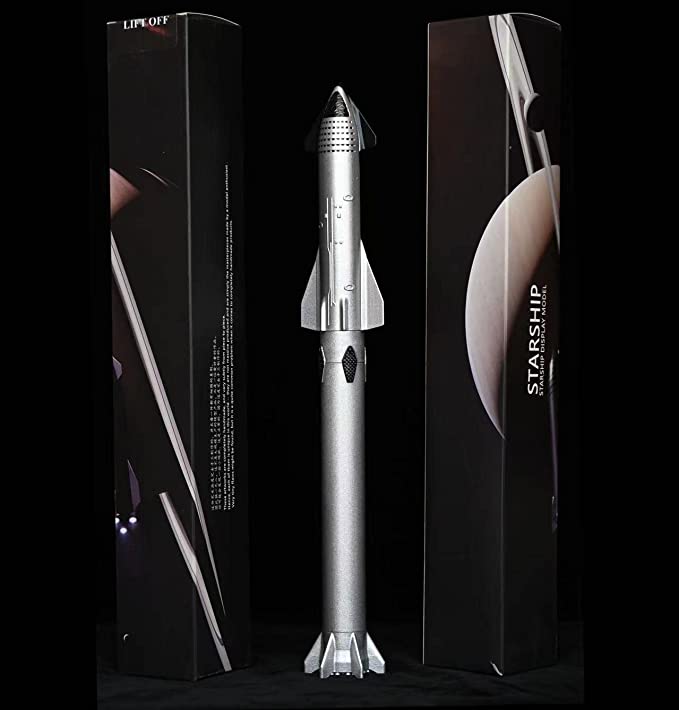
Even if you can't see SpaceX's Starship in person, you can score a model of your own. Standing at 13.77 inches (35 cm), this is a 1:375 ratio of SpaceX's Starship as a desktop model. The materials here are alloy steel and it weighs just 225g.View Deal
SpaceX targeting July 16 for Starship Flight 13
The next Starship launch has arrived!
SpaceXis targeting no earlier than July 16 for the next launch of its massive Starship rocket, the company announced on in a post on X. Flight 13 will be the second launch of the vehicle's Version 3 configuration and will be similar in profile to Flight 12. It will be the second launch for Starship "Version 3" (V3), a bigger, more powerful upgrade from previous Starship designs, and will come a little less than two months after V3's debut.
A 90-minute launch window will begin on Thursday at 6:45 p.m. EDT (2245 GMT). A livestream of the mission will begin about 30 minutes prior to liftoff and stream on the company's mission page, profile on X and here on Space.com.
Following a static fire engine test last Friday (July 10), SpaceX has lowered the Flight 13 Super Heavy, Booster 20, from the launch stand and transported the stage back to its hangar at the company's Starbase, Texas, facility.
The booster will roll back to the pad in the next day or so, along with Ship 40, the Flight 13 Starship upper stage. The pair will be stacked a Starbase's pad 2, where it's expected the rocket will undergo at least one additional engine test prior to launch.
SpaceX is still targeting July 16 for liftoff of Starship's 13th test flight, scheduled to get off the ground during a 90-minute window that opens at 6:45 p.m. EDT (2245 GMT).
SpaceX readying Starship to launch in just over 24 hours
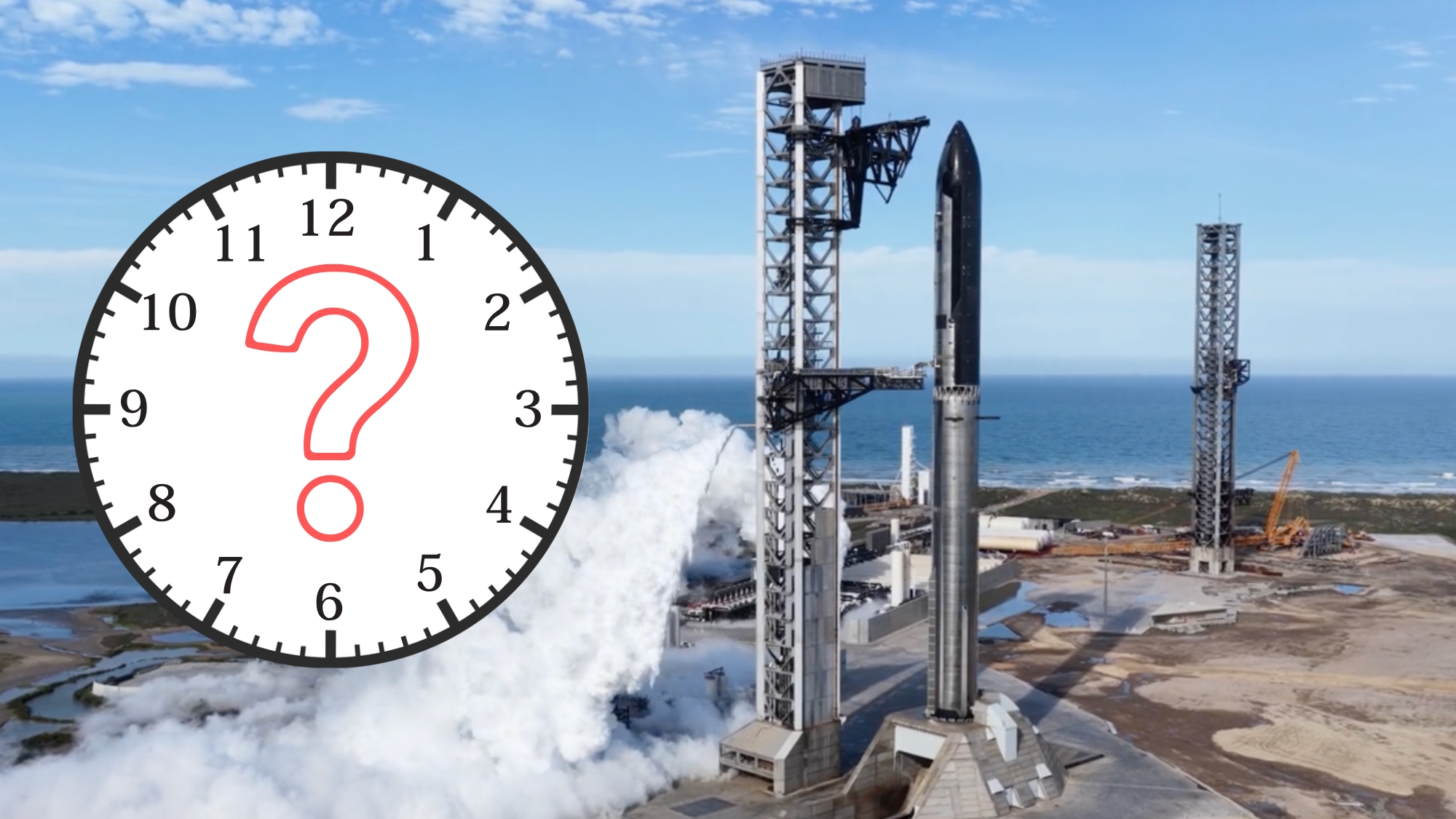
(Image credit: Background: SpaceX, clock added in Canva Pro)
Starship's next big test launch is just a day away.
SpaceX has transported Booster 20, the Super Heavy first stage for the massive launch vehicle, back to pad 2 at the company's Starbase facility in Texas. If all goes according to plan, that will be its last relocation before launch, currently scheduled for tomorrow (July 15) during a 90-minute launch window beginning at 6:45 p.m. EDT (2245 GMT).
Ship 40, Starship's upper stage for Flight 13, will be trasnported to the pad today, and stacked on Super Heavy for a full wet dress rehearsal to confirm the vehicle's readiness ahead of tomorrow's launch attempt.
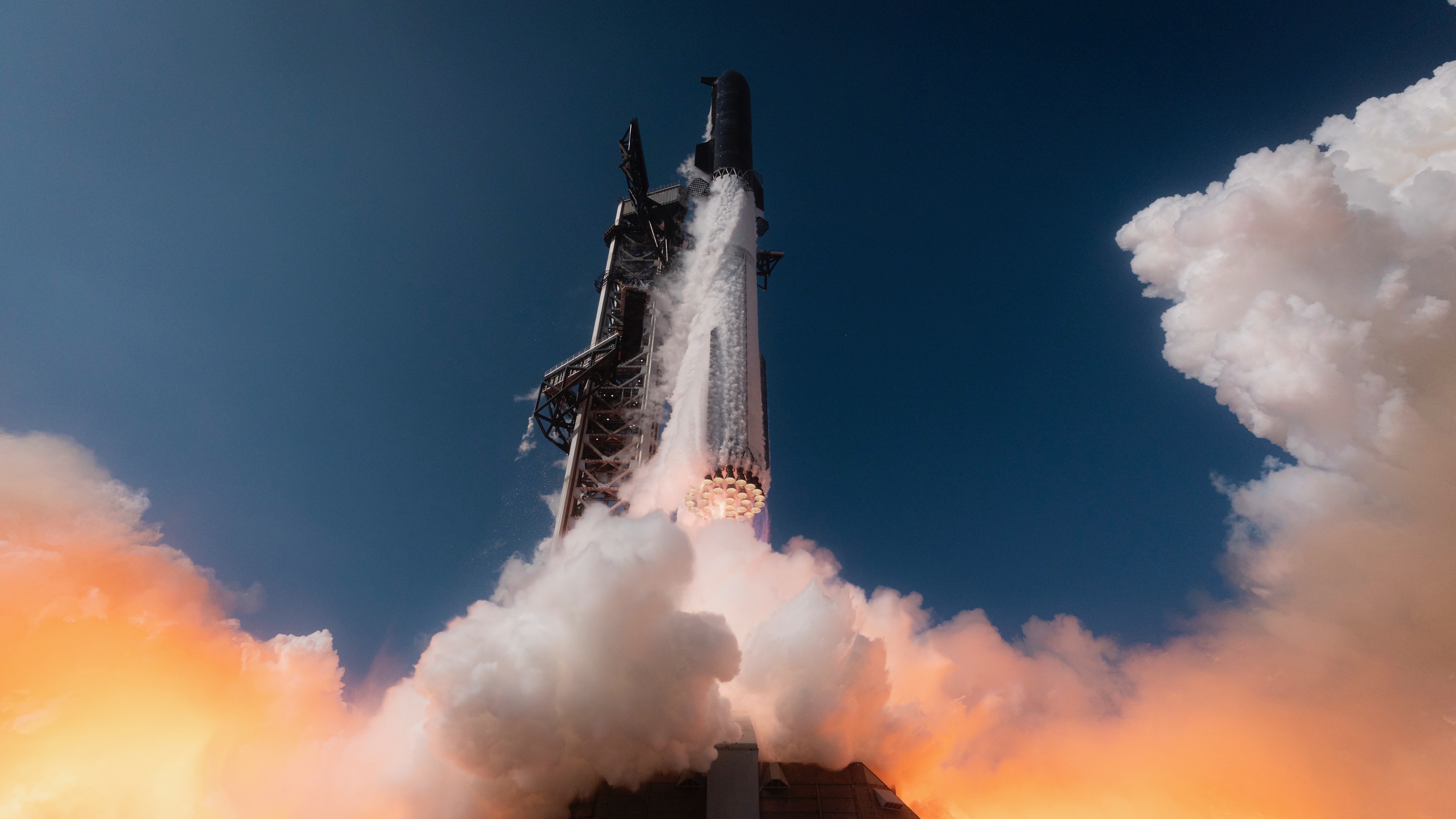
SpaceX's first Starship V3 vehicle launches on a test flight on May 22, 2026. (Image credit: SpaceX)
SpaceX's massive Starship rocket is stacked and ready for this evening's Flight 13 launch. Booster 20, the Super Heavy vehicle supporting the mission, was rolled back to Starbase's pad 2 yesterday, with the upper stage Ship 40 joining the booster overnight, when the two were stacked for (hopefully) the final time before liftoff.
SpaceX is progressing toward a 90-minute launch window that opens today (July 16) at 6:45 p.m. EDT (2245 GMT). The mission can be streamed live here on Space.com, or directly via SpaceX on the Flight 13 website and the company's X account. Read our full mission breakdown for a complete mission profile:
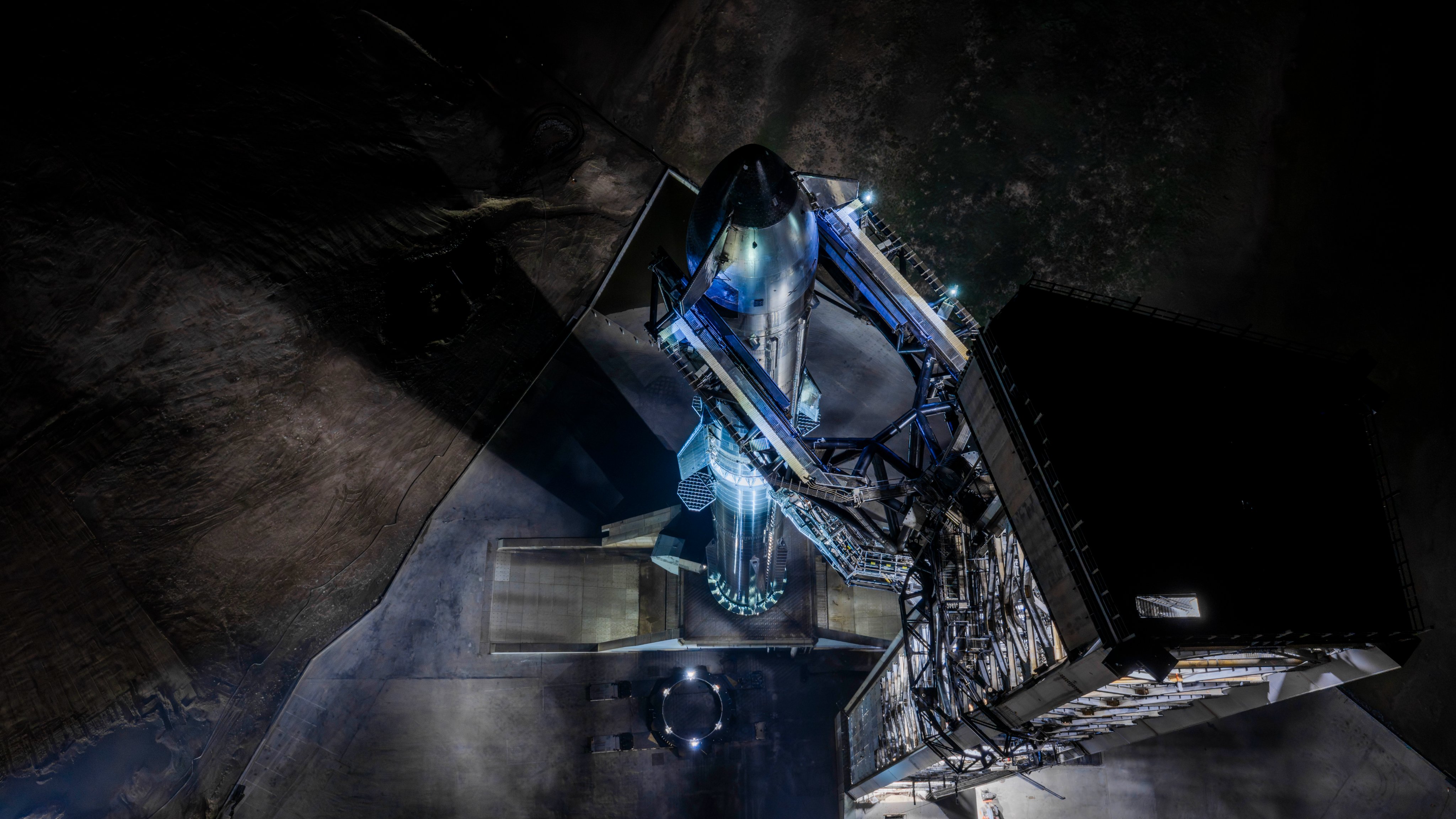
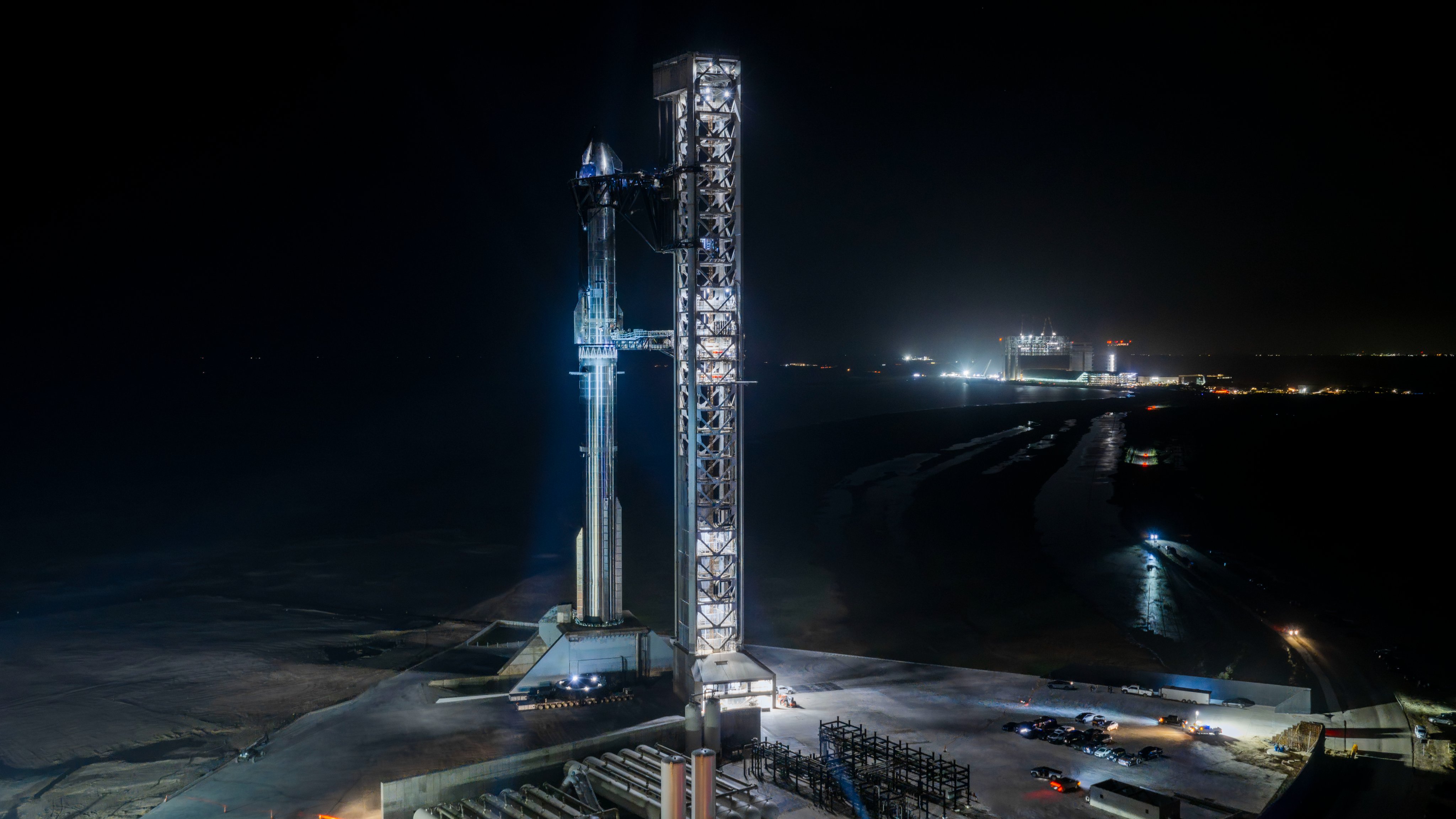
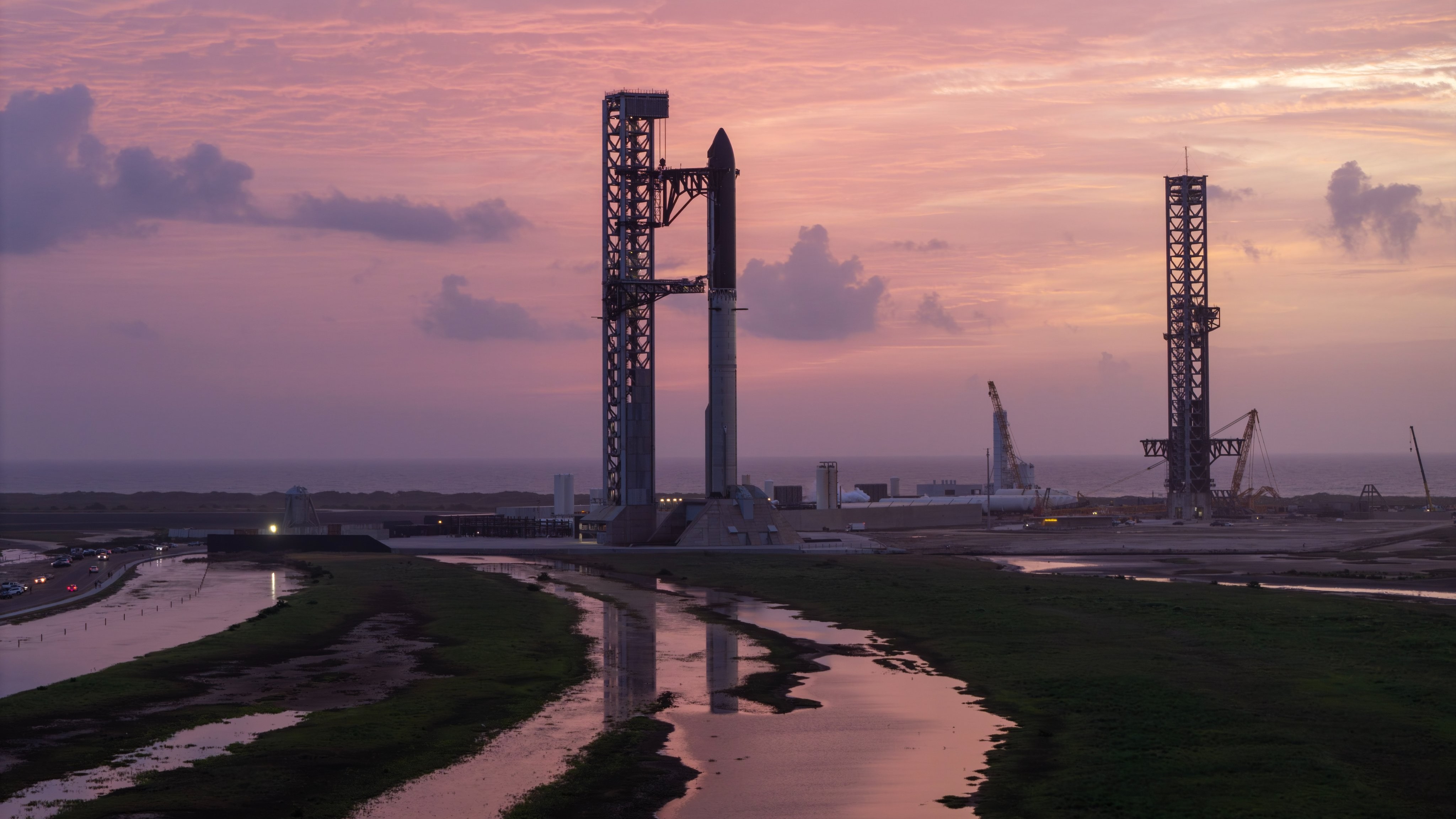
SpaceX has released photos and video of last night's Starship stacking. Super Heavy 20 was rolled back to pad 2 yesterday (July 15), with Ship 40 following its trail after sunset. Both recently completed static test fires of the Raptor 3 engines, followed by final prelaunch checkouts back at their respective hangars.
Now that both have been transported to the launch pad and stacked, SpaceX is preparing the rocket and ground infrastructure for liftoff.
The Flight 13 launch window opens at 6:45 p.m. EDT (2245 GMT), and will last for up to 90 minutes.
Stacking Starship for Flight 13 pic.twitter.com/L4XN6gqgRtJuly 16, 2026
Starship Flight 13 on track for launch
Starship Flight 13, with Booster 20 and Ship 40 stacked at Starbase pad 2 on July 16, 2026. (Image credit: SpaceX)SpaceXSpaceXSpaceX
SpaceX is moving ahead today with Starship Flight 13, according to a post on the company's social media page. Beach and road closures around Starbase close to the public this afternoon around 1:30 p.m. EDT (1730 GMT), clearing all but essential personnel from the surrounding facility.
A 90-minute launch window will open at 6:45 p.m. EDT (2245 GMT), with several opportunities for teams to reset if liftoff doesn't occur at the top of the window. SpaceX's livestream is expected to begin about 30 minutes before launch, and will be simulcast here on Space.com.
On track for Starship’s 13th flight test later today – the 90-minute launch window opens at 5:45 p.m. CT. Live coverage starts ~30 minutes before launch https://t.co/QF9Qolqlvp pic.twitter.com/9drzTb14C0July 16, 2026
SpaceX Straship Flight 13 launch stream is live
Live coverage has begun for SpaceX's Starship Flight 13! You can watch the action and follow along with live updates here, and on the Space.com homepage. SpaceX's direct stream is available on the company's website.
Liftoff is currently set for 6:45 p.m. EDT (2245 GMT), with a launch window that extends to 8:15 p.m. EDT (0015 GMT, July 17).
Super Heavy booster propellant load had begun
(Image credit: SpaceX)
SpaceX has begun loading cryogenic fuel into the Super Heavy booster at Starbase's pad 2. Starship uses a mixture of liquid methane and liquix oxygen, together known as "methalox," to power both Super Heavy and Ship stages of Starship.
SpaceX is fueling Starship for Flight 13 right now, and is not tracking any issues as the opening of the launch window approaches. The day began with a 90% probability of favorable launch conditions, according the SpaceX livestream host Dan Huot, who is voicing confidence in the success of today's mission.
According to SpaceX commentators, success on today's mission will open the door for "near future orbital flights" and the first-ever attempt to catch Starship's Ship upper stage using the launch tower at Starbase's pad 2.
Barring any delays in fueling or weather constraints, Starship is scheduled to lift off at 6:45 p.m. EDT (2245 GMT). The launch window extends for 90 minutes.
T-1 minute to launch!
(Image credit: SpaceX)
SpaceX has entered the terminal count for Starship! Just one minute to go until Starship Flight 13 liftoff! Let's go!
SCRUB
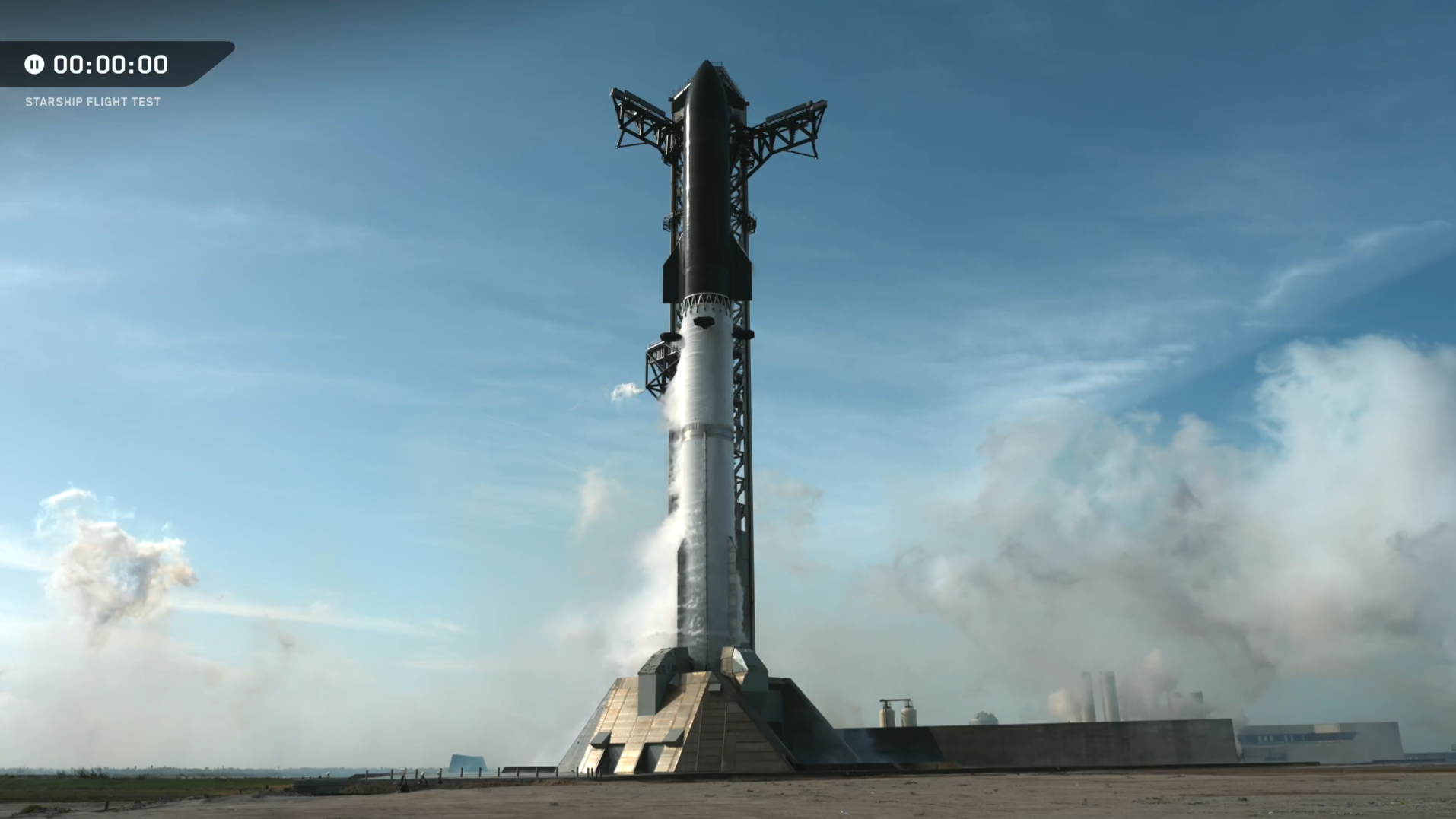
Starship's onboard systems initiated and automated aboard at T-0. (Image credit: SpaceX)
SpaceX's Starship Flight 13 is scrubbed for the day.
At T-0, the rocket's automated flight computer initiated a hold and abort call. It isn't immediately clear what caused the abort, but its execution so far into the countdown means a scrub for the day. "We did trigger a hold on the booster that aborted our liftoff as we were starting to light those Raptor engines," SpaceX livestream host Dan Huot said.
"At this point," Huot said as the coverage ended, "they're going to get into [propellant] offload. We're gonna get all the methane, all the oxygen off the vehicle, and then we'll figure out next steps."
A new launch date for Starship Flight 13 has not been determined.
SpaceX assessing new launch date
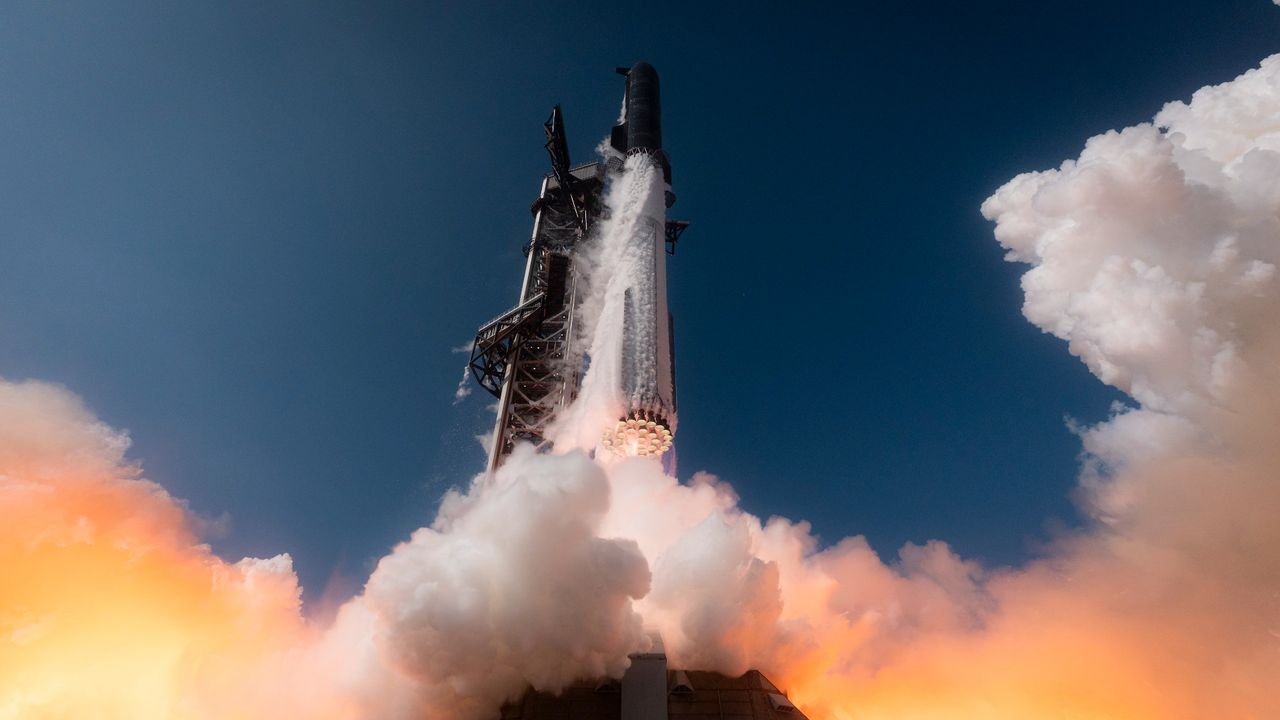
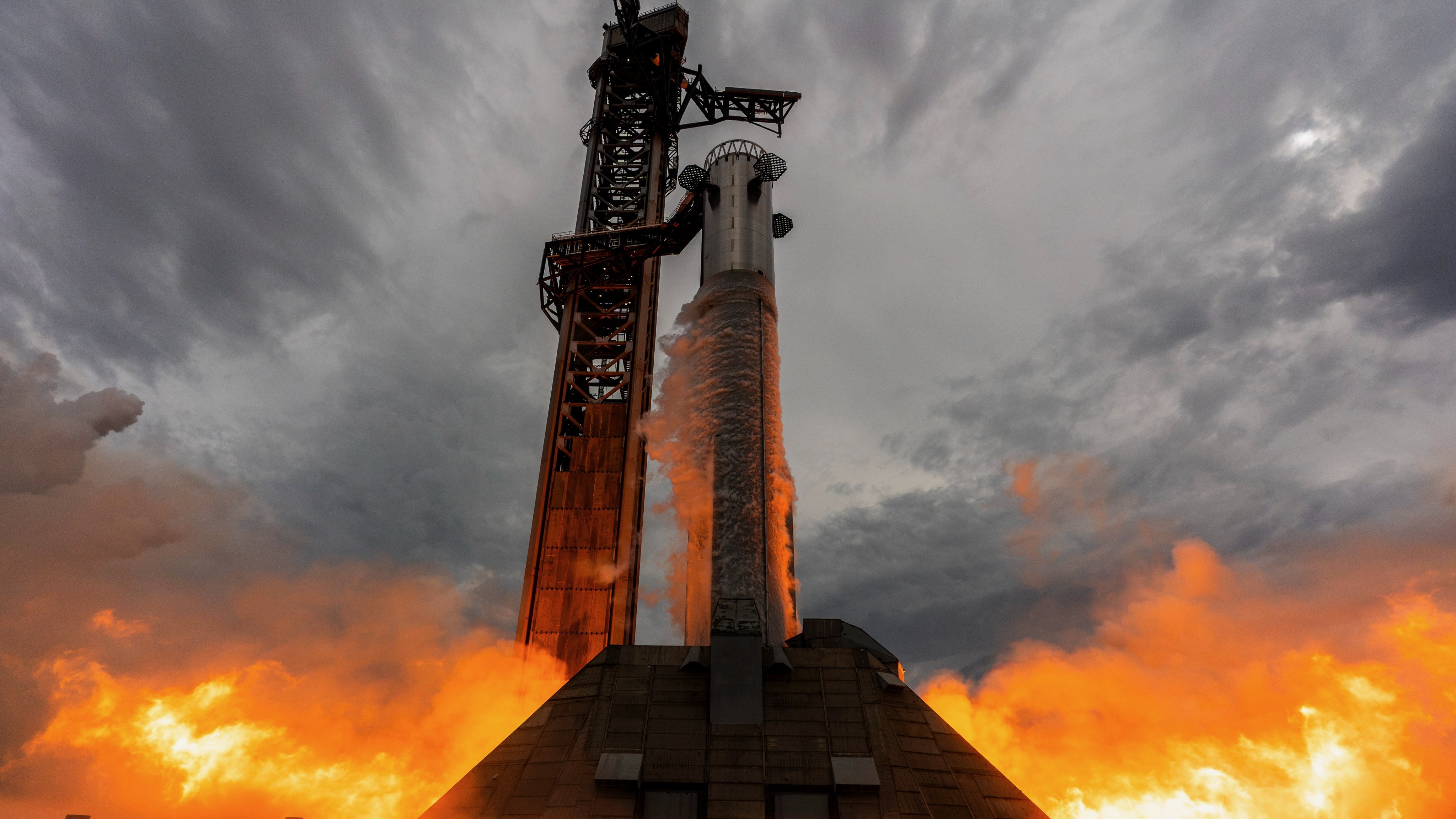
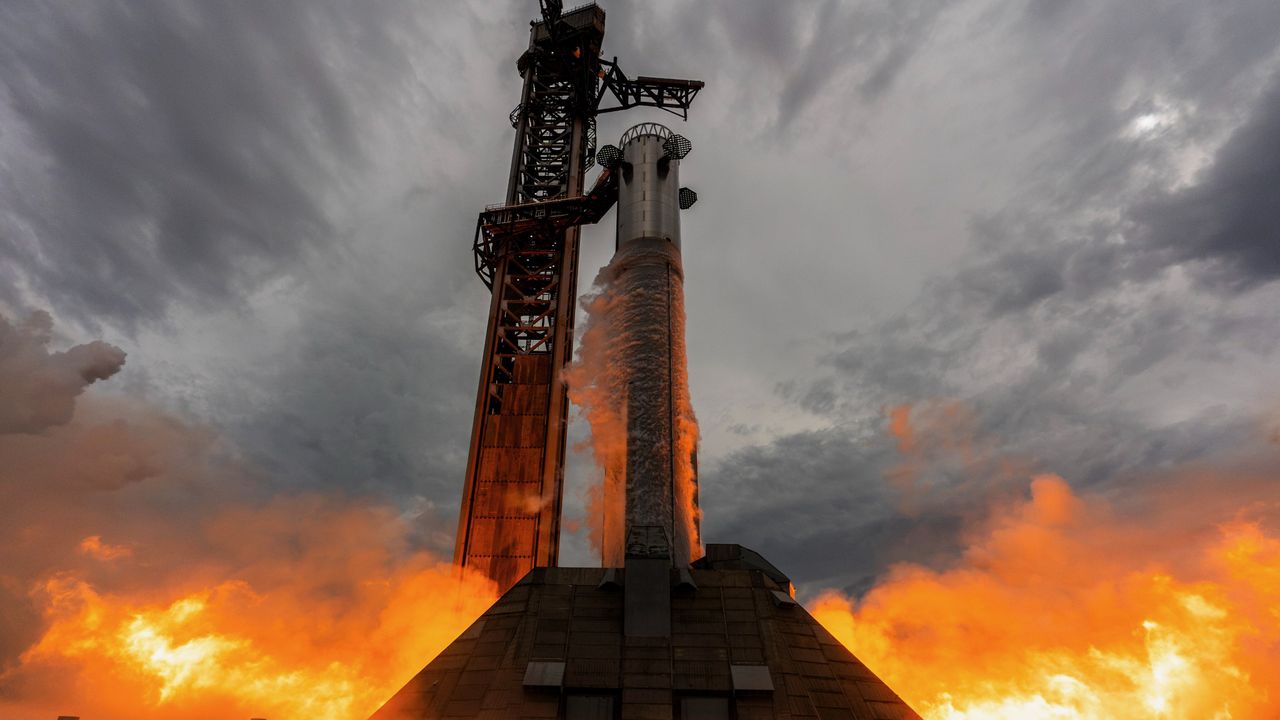
The 33 Raptor 3 engines on Starship's Super Heavy booster seen from beneath the Starbase pad 2 launch stand on July 16, 2026. (Image credit: SpaceX)
Following the last-second scrub of last night's Starship Flight 13 launch, SpaceX stood down from Thursday's launch attempt.
It was not immediately clear what caused the automated abort, but SpaceX CEO Elon Musk posted to social media shortly after the launch was called off, saying a failure of a few of Straship's Raptor 3 engines failed to light at ignition. "Next launch attempt hopefully in a few days," Musk said in a post.
He clarified later yesterday evening, saying, "To be confident of a good flight, 2 Raptors will be removed & replaced. Most probable launch timing is early next week."
To be confident of a good flight, 2 Raptors will be removed & replaced. Most probable launch timing is early next week.July 17, 2026
SpaceX targeting July 20 for Starship Flight 13 test launch
We have a new (tentative) launch date: After a last-second abort scuttled SpaceX's first attempt to launch Starship Flight 13 yesterday (July 17), the company is now targeting no earlier than Monday (July 20) for the liftoff. The 90-minute launch window opens at 6:45 p.m. EDT (2245 GMT; 5:45 p.m. local time).
You can watch the launch here at Space.com when the time comes and learn about the mission in our Flight 13 preview.
Yesterday's abort was triggered when several of the 33 Raptor engines on Starship's first-stage booster failed to ignite as planned, according to SpaceX founder and CEO Elon Musk. "To be confident of a good flight, 2 Raptors will be removed & replaced," Musk said via X, the social media platform he owns, shortly after yesterday's abort.
July 20 is a very meaningful date in spaceflight history, by the way. Apollo 11 landed on the moon on July 20, 1969, and NASA's robotic Viking 1 lander touched down on Mars exactly seven years later.
The assembly of NASA's next Artemis rocket is well underway, with the recent arrival of one of the launch vehicle's solid fuel booster sections to the agency's integration facility at Kennedy Space Center in Florida.
The bottom segment of the left-hand solid rocket booster (SRB) that will help launch Artemis III was transported to KSC's Vehicle Assembly Building (VAB) this week, according to a NASA social media post. It's one of two SRBs that will be affixed to either side of NASA's Space Launch System (SLS) rocket, which together provide a combined 7.2 million pounds of force — more than 75% of the rocket's power at liftoff.
"Soon, assembly of the rocket will begin as we prepare to send crew aboard Orion to test the rendezvous and docking capabilities needed for future lunar landings," the NASA post said.
It took about one year for NASA to stack the Artemis II SLS once each of the rocket's components were delivered to the VAB. The same timeline gives Artemis III a small amount of wiggle room, as it progresses toward a targeted launch in mid-to-late 2027 — and stacking of the entire rocket may not begin immediately.
The Artemis III SLS core stage arrived in the VAB in May. Unlike the core stage's arrival for Artemis II, Artemis III's was delivered without the engine section. Once that's attached, it may be some time before other components are stacked onto the main vehicle. NASA Administrator Jared Isaacman has said that the agency aims to complete a wet dress rehearsal on the rocket before the end of the year. In the meantime, other SLS components and SRB segments will continue arriving at the VAB.
Each SRB stands about 177 feet (54 meters) tall. They're packed with polybutadiene acrylonitrile (PBAN), ammonium perchlorate, and aluminum powder, which bring their combined weight to 3.2 million pounds (1.45 million kg). Unlike liquid-fueled rocket engines, once the SRBs' solid propellants ignite, they cannot be turned off. Without them, the four RS-25 engines on SLS's core stage would not be powerful enough to lift the rocket off the launch pad.
NASANASANASA
Artemis III will be the second crewed mission of the Artemis program — NASA's next-generation push to return astronauts to the moon. And, while Artemis III itself won't actually fly to the moon, it will help progress the hardware and spacecraft technologies the space agency needs to ensure success on future missions to the lunar surface.
Like Artemis II, which flew four astronauts on a 10-day mission around the moon in April, the Artemis III astronauts will launch on SLS aboard the Orion spacecraft — but they won't fly beyond low Earth orbit this time. Instead, the four-person crew will spend about two weeks testing out rendezvous and docking procedures with prototypes for the two Artemis moon landers, both of which have been privately contracted by NASA.
Big move for @NASAArtemis III!The left-hand aft assembly solid rocket booster segment for NASA’s Space Launch System arrived at the Vehicle Assembly Building at Kennedy Space Center. This segment is part of one of two boosters that will provide more than 75% of the rocket’s… pic.twitter.com/L7k4Qh3Jn9July 8, 2026
The space agency has partnered with SpaceX and Blue Origin for those vehicles, each of which is expected to launch once the Artemis III crew are on orbit. They'll first meet up with Blue Origin's lander, Blue Moon. After docking, the astronauts will have the opportunity to enter Blue Moon's crew cabin, where they will also have the chance to test parts of the Artemis extravehicular activity (EVA) suit designed for astronauts to wear on the lunar surface.
A rendezvous with SpaceX's Starship will follow Orion's stint with Blue Moon. SpaceX has indicated it will fly a boilerplate Starship V3 (Version 3) vehicle equipped with a docking adapter, but it will not have a crew cabin. V3 is SpaceX's newest version of Starship, which has been upgraded for high launch efficiency and capacity, but it will lack a fully developed life support system in time for the Artemis III launch next year.
If all goes according to plan and NASA is able to maintain its current mission timeline, the first moon landing of the Artemis program will take place on Artemis IV, scheduled to launch in late 2028.
SpaceX is targeting this week for the next launch of its massive Starship vehicle.
Following engine tests on both Starship stages in the last two weeks — igniting all six Raptor 3s on the "Ship" upper stage and all 33 Raptor 3s on the "Super Heavy" first stage — SpaceX is proceeding with the launch of Starship Flight 13, which is scheduled for no earlier than Thursday (July 16), according to a July 11 SpaceX social media post.
It will be the second launch for Starship "Version 3" (V3), a bigger, more powerful upgrade from previous Starship designs, and will come a little less than two months after V3's debut on Flight 12. To validate those upgrades, SpaceX didn't add any major objectives to Starship Flight 12 that hadn't already been proven on the spacecraft's previous V2 configuration. But the new design didn't quite check all the necessary boxes last time around, so Flight 13 will largely attempt an improved outcome of the same mission.
Though still in its development phase, Starship is designed for full reusability. Unlike SpaceX's Falcon 9 first-stage booster, which is equipped with legs capable of touching the rocket down on coastal landing zones or one of the company's droneships at sea, both Ship and Super Heavy are designed for a return directly to the launch site, where chopstick-like arms on the "Mechazilla" tower catch the stages out of mid-air.
SpaceX has yet to attempt such a recovery with Ship but has succeeded in doing so with Super Heavy three times so far. Two of those caught boosters were then reflown on subsequent launches. When flying the new V3 hardware during Flight 12, though, SpaceX opted for Super Heavy to perform a soft splashdown in the Gulf of Mexico, rather than risk launch pad infrastructure on an unproven vehicle, but Super Heavy didn't make it to the planned touchdown zone.
According to a new SpaceX analysis, a sequence change in Ship's engines, which ignite before the two rocket halves physically detach in a maneuver known as "hot staging," led to a 90-degree error in Super Heavy's orientation after separation. Super Heavy's boostback burn was also cut short when five of its 33 engines failed to relight. SpaceX says it has introduced a modified startup sequence for Ship and hardware updates to Super Heavy to address the orientation anomaly and ignition issues, respectively, "along with updates to engine alarms and aborts to match the conditions seen in the multi-engine flight environment."
Ship ran into a bit of trouble during Flight 12 but also managed to pull off some firsts. One of the spacecraft's three vacuum-optimized Raptors was lost 40 seconds after stage separation, but it still reached its designated suborbital trajectory, demonstrating its "engine out" capabilities, according to the SpaceX update. The loss did, however, prevent Ship's in-space engine relight attempt. SpaceX traced the failure to "interconnected causes" and has introduced a number of fixes for the upcoming Flight 13, "with additional reliability improvements planned in upcoming versions of the Raptor engine."
Flight 12 also featured the first deployment of two of SpaceX's Starlink internet satellites equipped with cameras for inspecting Ship's heatshield tiles and exterior conditions while in space. They were deployed with several Starlink V3 mass simulators, a payload that's getting an upgrade of its own for Flight 13.
SpaceX conducts a static fire test with Ship 40, the upper-stage spacecraft slated to fly Starship's 13th test flight. (Image credit: SpaceX)
Stowed inside Ship's payload bay for Flight 13 are the first functional Starlink V3 satellites that Starship will deliver to space. SpaceX plans to eventually launch perhaps 100,000 of the upgraded version of its internet satellite constellation spacecraft, which it says will increase the capacity and speed of its wireless network services. SpaceX is including 20 Starlink V3 satellites aboard Flight 13, which will be released for functionality testing while in space. Six of those will be outfitted with cameras for the same type of heatshield inspection performed during Flight 12. Ultimately, due to Starship's suborbital trajectory on this launch, all of these satellites are expected to burn up in Earth's atmosphere about 20 minutes after they are deployed.
For Flight 13, Super Heavy's main objectives will be the successful launch and separation from the Ship upper stage, a complete boostback burn and a soft splashdown in the Gulf of Mexico. In addition to the deployment of Ship's 20 Starlink V3 payloads, SpaceX is also planning the in-space relight of one of the spacecraft's Raptor engines, followed by the successful descent and soft splashdown of the stage in the Indian Ocean.
Even if you can't see SpaceX's Starship in person, you can score a model of your own. Standing at 13.77 inches (35 cm), this is a 1:375 ratio of SpaceX's Starship as a desktop model. The materials here are alloy steel and it weighs just 225g.View Deal
The Federal Aviation Administration (FAA) announced the closure of its investigation into SpaceX's Flight 12 mishaps this morning (July 13), approving the compnay's corrective actions and clearing the way for Flight 13.
SpaceX is targeting the launch of Flight 13 during a 90-minute window beginning on Thursday at 6:45 p.m. EDT (2245 GMT). A livestream of the mission will begin about 30 minutes prior to liftoff and stream on the company's mission page, profile on X and here on Space.com.
If everything goes smoothly, it's very likely that SpaceX will attempt the first Starship V3 recovery back at its Starbase, Texas, launch site for either Super Heavy or both stages on the following mission, Flight 14, but there are a number of other technical achievements Starship has left on its checklist before the vehicle can become fully operational. Those include launching into a stable orbit, demonstrating successful rendezvous and docking with other spacecraft, and conquering the technological hurdle of transferring and maintaining cryogenic fuels for long-term use in zero-g.
SpaceX is hoping to accomplish all that within the year — quite a tight timeline. NASA has contracted Starship as one of two lunar lander vehicles to deliver astronauts to the surface of the moon on the agency's Artemis program missions and is expecting a crew-capable version to be ready by 2028 for Artemis IV. The company plans to fly a boilerplate Starship V3 equipped with a docking adapter for NASA's Artemis III mission in 2027, which will launch astronauts aboard an Orion spacecraft for rendezvous operations demonstrations with Starship, as well as Blue Origin's Blue Moon lander, in low Earth orbit.
German company Isar Aerospace is expanding its operations overseas after signing an agreement with Canada's Maritime Launch Services for use of its Spaceport Nova Scotia.
The deal allows Isar to design and operate the pad infrastructure based on the company's needs, in order to launch its Spectrum rocket. In return, Maritime Launch Services (MLS) will provide the pad and surrounding facilities for vehicle stage and payload integration, testing and a mission control hub for launch operations.
The agreement grants Isar a $150 million, 10-year lease for the MLS launch site, with the option to extend up to an additional 10 years. Development of the facility is scheduled to begin later this year, with Isar targeting 2028 for its first orbital launches from the new site.
"Canada is the next step in our roadmap to bring full end-to-end launch capability to sovereign nations," Alexandre Dalloneau, Isar's mission and launch operations vice president, said in a company statement on Tuesday (July 7). "And we are proud to be doing it here in, and together with, Canada.”
By 2029, Isar hopes to be able to support up to 40 launches from the new Canadian site. “By combining Isar Aerospace’s launch vehicle, Spectrum, with Spaceport Nova Scotia’s licensed infrastructure, we are creating the conditions for reliable orbital launch services from Canada," MLS President and CEO Stephen Matier said in the same statement.
MLS has positioned Spaceport Nova Scotia as a multi-user launch center, designed for expansion based on future customer needs. It's one of Canada's first-ever facilities designed to support orbital launches — Canadian company NordSpace is constructing a launch pad of its own with a similarly flexible framework, but neither it nor Isar has yet carried out a successful orbital launch.
Isar has tried, however. Spectrum launched for the first time in March 2025, from Europe's Andøya Spaceport in Norway, but the rocket began to tumble shortly after clearing the tower and fell back to Earth in a fiery explosion. Since then, the company has rolled Spectrum out several times for a second launch opportunity but has run up against either weather or technical delays that have scrubbed each attempt.
Still, that hasn't slowed the company's efforts. Dalloneau sees Isar's success as one of international importance.
“While every nation needs data from space, almost no nation has the end-to-end capability to access it independently. This makes launch capacity one of the most consequential bottlenecks in defense and intelligence today, and we are here to close it," he said.
It looks like SpaceX's next Starship flight is on the horizon, and it may lift off sooner than you might think.
SpaceX today (July 10) completed a brief static fire of the Starship Super Heavy booster tapped to launch the 13th test flight of the massive, mega-lift vehicle.
Booster 20 — the latest Super Heavy to roll off the assembly line — was transported to the pad at SpaceX's Starbase, Texas, facility yesterday (July 9) and hoisted onto its support stand using the launch tower's stalwart "Mechazilla" chopstick arms. By early Friday, SpaceX began preparations leading up to the prelaunch engine test, including closing Boca Chica beach around 8 a.m. EDT (1200 GMT) and transferring fuel to the pad's tank farm ahead of loading propellant onto the vehicle.
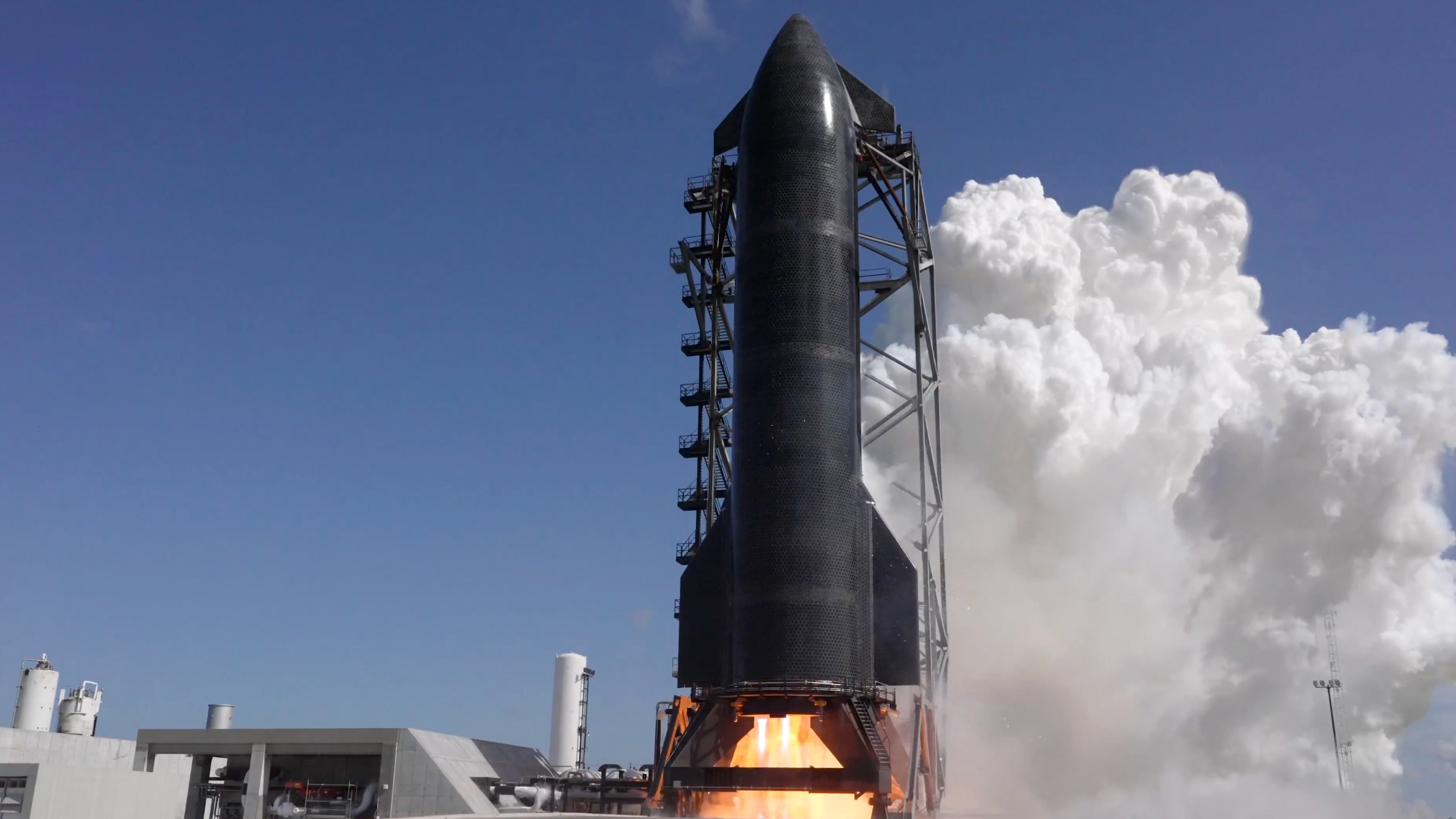
SpaceX conducts a static fire test with a Super Heavy booster on July 10, 2026, to gear up for the upcoming 13th test flight of its Starship megarocket. (Image credit: SpaceX)
This is the second "Version 3" (V3) booster to reach the pad at Starbase for testing, and is equipped with 33 of SpaceX's upgraded Raptor 3 engines. Those engines ignited in a blazing heat on Friday just before 11 a.m. EDT (1500 GMT), and underwent a roughly 25-second burn simulating on the launch stand the duration and flight conditions for an actual launch.
The successful completion of Booster 20's static test fire paves the way for Starship's upcoming test launch, Flight 13. That could launch as early as Wednesday (July 15), according to a notice from the Federal Aviation Administration.
Compared to Version 2 (V2), Starship V3 packs a much stronger punch. The rocket was upgraded with enhanced avionics to reduce mass and increase launch capacity, a taller fuel tank with a larger volume, and equipment for transferring propellant between spacecraft, which will be needed to fulfill many of the missions Starship is being designed to carry out.
A handful of those missions will be for NASA's Artemis program, and the agency's plans to return to the moon. Starship is one of two lunar landers currently contracted to deliver astronauts to the lunar surface, so, its success and timely demonstration of the technologies needed to do so are coming under a microscope as the timeline for those missions shrinks.
Flight 13 will follow the same basic timeline as Flight 12, which lifted off in May with mixed success. Flight 12 was the first launch of Starship V3, and prompted SpaceX to fly a slightly more conservative mission than many previous tests, which have built on previous successes with increasingly expanding goals. Starship's last flight sent the vehicle's upper stage, Ship, on a suborbital trajectory with a soft splashdown in the Indian Ocean. SpaceX ran into some issues, though, when the rocket's Super Heavy booster (Booster 19) failed to maneuver itself for a soft ocean splashdown of its own. Ship (Ship 39) also ran into an engine anomaly that caused SpaceX to forgo the stage's in-space engine relight demonstration.
Ship 40 and Booster 20, the Starship vehicles that will fly on Flight 13, will follow the same set of mission objectives to shake out the remainder of kinks in Starship V3. Spacex hopes the mission will pave the way for further technology demonstration tests the vehicle needs to complete before reaching full operational status. That includes the retrieval of both stages back at their Starbase launch pad, for refurbishment and reuse on future flights.
SpaceX conducts a static fire test on July 2, 2026, with Ship 40, the upper-stage spacecraft slated to fly Starship's 13th test flight. (Image credit: SpaceX)
Starship is designed to be fully reusable, and capable of delivering over 100 tons to low Earth orbit. Once the rocket begins regularly delivering payloads, Ship and Super Heavy will be able to both return to Starbase to be caught by the Mechazilla arms on both of the site's two launch towers. SpaceX has succeeded in a handful of V2 Super Heavy catches during its previous flight tests, and managed to launch two of those recovered boosters on subsequent missions, but has not yet attempted to do the same with a Ship upper stage.
That's because landing Ship is much different than landing Super Heavy. SpaceX has a lot of practice landing and reflying rocket boosters. The company's workhorse Falcon 9 rocket launches several times a month, and is routinely recovered, refurbished and reflown within a short few weeks. A batch of Starlink satellites recently launched on one of SpaceX's most-flown Falcon 9 boosters, which broke a reflight record as it touched down for the 36th time after delivering its payloads to orbit. Though it lacks the landing legs of Falcon 9, Super Heavy's descent back to Earth is very similar to a Falcon 9 booster, and therefore less complex an engineering question to have to solve compared to Starship's upper stage.
Ship drops through the atmosphere belly-first, allowing the black, hexagonal heat shield tiles that cover half the vehicle to absorb the blazing temperatures of reentry. Fins near the spacecraft's nose and base control its orientation and attitude, which remains mostly horizontal during its freefall. To an extent, Ship's descent profile is not very unlike the space shuttles, except for its actual touchdown, which differs significantly.
As Ship's altitude decreases toward sea level, the vehicle performs a "flip and burn" maneuver that swings the whole stage upright and arrests its descent for a soft touchdown — eventually back at the Starbase pad on future launches, but once again in the Indian Ocean for Starship's upcoming mission.
Flight 13 will give SpaceX a chance to demonstrate that descent profile again using Ship 40, while also working through the booster and engine issues encountered during Flight 12. If all goes according to plan, the launch will bring Starship V3 closer to more ambitious tests, including orbital insertion, propellant transfer and the recovery of both stages back at Starbase.

 Login