❌

Reading view

‘Keys to the kingdom’: hackers who gained access to heart of London transport network jailed

Thalha Jubair, 20, and Owen Flowers, 19, sentenced to five and a half years each for cyber-attack that cost Transport for London £39m

The data of millions of commuters was stolen, Londoners were left out of pocket and 27,000 Transport for London staff were forced to reset their passwords.

Over four days in 2024 a pair of teenage hackers had London’s transport network at their mercy. Thalha Jubair and Owen Flowers had burrowed into the heart of Transport for London’s IT systems and held the “keys to the kingdom”.

Continue reading...

© Photograph: William Barton/Alamy

© Photograph: William Barton/Alamy

© Photograph: William Barton/Alamy

  •  

A Shameful Day for the Church of England

It's a shameful day for the Church of England, says Julian Mann, as its General Synod passes an anti-Israel motion pledging to "engage with" what the Chief Rabbi calls a "shocking" document containing "so much falsehood".

The post A Shameful Day for the Church of England appeared first on The Daily Sceptic.

  •  

L'Australian Space Agency (ASA), in collaborazione con le autorità di gesti…

L'Australian Space Agency (ASA), in collaborazione con le autorità di gestione delle emergenze, ha isolato Forrest Beach nel Queensland dopo il ritrovamento di sei sfere metalliche argentate. Gli oggetti si sono rivelati essere "space balls", ovvero serbatoi a pressione in leghe di titanio utilizzati nei vettori spaziali, precipitati in mare a causa del rientro incontrollato di un razzo e spinti a riva dalle correnti. Alice Gorman, archeologa spaziale della Flinders University, ha ipotizzato che i serbatoi si siano staccati prima del raggiungimento delle orbite più alte, data l'assenza di bruciature termiche evidenti. L'intervento di messa in sicurezza ha richiesto l'uso di tute protettive speciali per scongiurare contaminazioni da idrazina, un propellente altamente tossico e infiammabile potenzialmente rimasto all'interno dei contenitori.
  •  

Lawyers to investigate claims of GB power grid cover-up over blackout risk

Operator brings in independent legal firm to look into whistleblower allegations relating to June heatwave

Great Britain’s grid operator has brought in independent investigators to look into accusations that its staff were involved in a cover-up over the power system being at a greater risk of blackouts during the heatwave.

The government-owned energy system operator will face the scrutiny of an external legal firm after a whistleblower claimed that control room staff were warned against leaving a paper trail relating to efforts to stabilise the power system during record high temperatures in late June.

Continue reading...

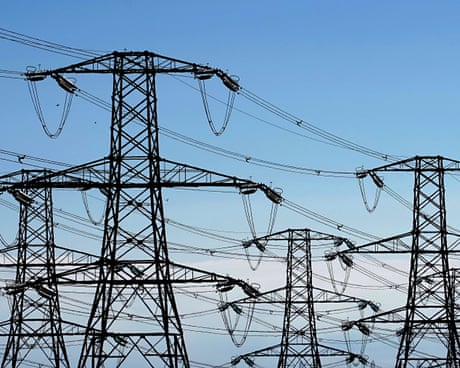
© Photograph: Gareth Fuller/PA

© Photograph: Gareth Fuller/PA

© Photograph: Gareth Fuller/PA

  •  

Was Odysseus’ Ithaca Never an Island? Scholars Challenge Centuries-Old Assumption

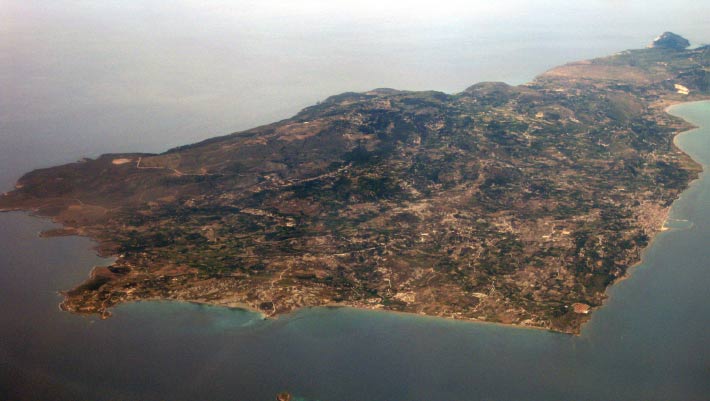
Paliki peninsula on the island of Kefalonia, Ionian Islands, Greece. Image credit: Christos Vittoratos / CC BY-SA 3.0.

For as long as readers have pored over Homer’s Odyssey they have pictured Ithaca, the homeland Odysseus fights for ten years to reach, as an island unto itself.

The post Was Odysseus’ Ithaca Never an Island? Scholars Challenge Centuries-Old Assumption appeared first on Sci.News: Breaking Science News.

  •  

‘A lot of red flags’: plans for New Zealand’s first AI datacentre spark concern as locals demand greater transparency

Plans to build a NZ$3.5bn datacentre in Makarewa in the country’s south has drawn concern about electricity and water use, and potential noise pollution

People living near the site of New Zealand’s first planned AI datacentre are calling for more transparency about the project, especially about how the centre’s huge electricity and water use and potential noise pollution could affect them.

Singapore-based company Datagrid has secured approval to build a NZ$3.5bn (US$2bn) AI datacentre on a 49-hectare site in Makarewa, just north of New Zealand’s southern-most city, Invercargill. Construction is due to begin this year, with the centre becoming operational by 2028.

Continue reading...

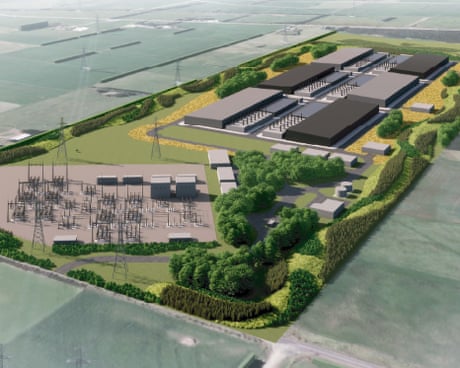
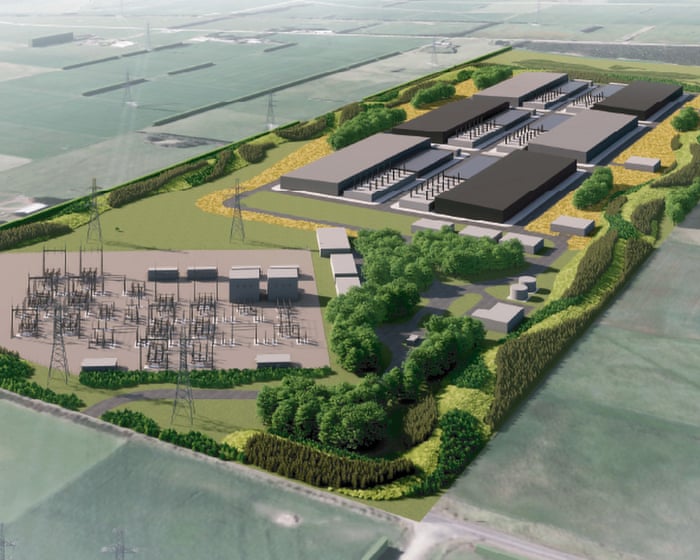
© Composite: Datagrid NZ

© Composite: Datagrid NZ

© Composite: Datagrid NZ

  •  

New Species of Long-Necked Dinosaur Identified in Thailand

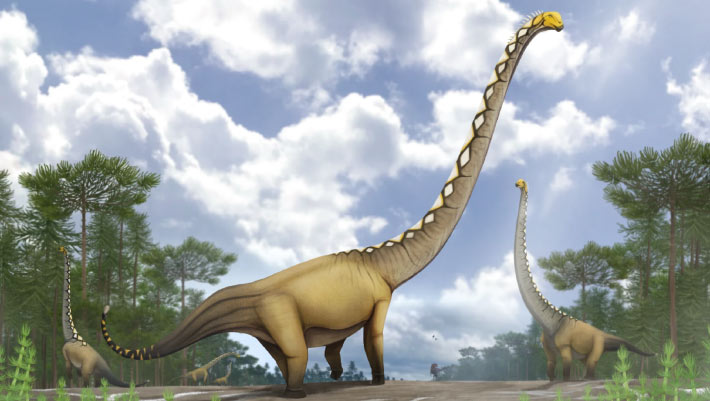
Life reconstruction of a herd of five individuals of Uragasaurus kalasinensis inhabiting a Late Jurassic forest in Thailand, accompanied by a pair of rhamphorhynchoid pterosaurs and a metriacanthosaurid theropod. Image credit: Pakorn Chotchaiyaporn.

Paleontologists working in northeastern Thailand have identified a new species of mamenchisaurid sauropod dinosaur, offering fresh evidence that a group of giant sauropods once thought to be almost exclusively East Asian also roamed mainland Southeast Asia.

The post New Species of Long-Necked Dinosaur Identified in Thailand appeared first on Sci.News: Breaking Science News.

  •  

Scholars Uncover Evidence of ‘Lost’ Medieval Manuscripts Using Simulations—Along With a New Concern for Historians

New evidence for the existence of “lost” ancient medieval manuscripts, long forgotten from memory, is now being uncovered by researchers using agent-based computer simulations.

The findings, reported by Jean-Baptiste Camps and colleagues, relied on a novel approach to uncovering evidence for these long-lost texts: a complexity science approach that allowed them to estimate the volumes of lost ancient literature that once existed, by inferring references to such texts from existing chivalric narratives beginning in the 12th century.

The team’s findings also bring to attention a new concern for historians, since according to their simulations, as much as 60% of all ancient texts from this period, and more than 95% of manuscripts once believed to have existed, may have been lost to time. The findings were recently reported in PNAS Nexus.

Evidence of “Lost” Medieval Manuscripts?

The names we commonly associate with epic tales passed down to us from ancient literature are not the only heroes of yore that existed—they are merely the ones whose stories survived.

For every Gilgamesh, Thor, and King Arthur, it is possible that several more heroic characters from undiscovered ancient epics also exist. However, based on Camps and his team’s findings, they are probably unrecoverable stories, lost to time apart from scant references that occasionally appear in the few surviving manuscripts that have made their way down to us throughout time.

Some of the problems that have contributed to this concerning loss of ancient knowledge are technological. In the days before the invention of the printing press, texts had to be copied manually—a process that led to both innovations, but also errors and inconsistencies as these early copies were made.

From existing copies of surviving ancient texts, scholars can often infer a significant amount of information based on subtle (or in some cases, not-so-subtle) changes that appear from one version to the next. Philologists, researchers who study the structure, historical development, and relationships between languages, refer to the evolutionary “trees” encompassing such texts and their evolution through time as stemmata.

What’s ‘Stemmata’ With You?

Since modern stemmata are based only on existing copies, they lack the full evolutionary history of texts and fail to account for versions that have been forever lost, which may have contained significant differences or additional information.

Jean-Baptiste Camps and his colleagues’ new model has revealed a key discovery: that the early years of a text’s creation, and the number of copies that were made during that time, are of crucial importance to their survival.

As one might guess, the fewer copies that are made, the more endangered the text becomes. However, another implication based on the team’s modeling is that if no copies of the original work are made, all the surviving derivatives generally form what scholars recognize as a subsidiary branch of that manuscript’s family tree.

And therein lies the issue: one that has sobering implications for the preservation of knowledge from ancient times.

Roland’s Unknown Song

As an example, the researchers point to the Song of Roland, an 11th-century account of the Frankish military leader Roland’s deeds at the Battle of Roncevaux Pass. The events in question took place in AD 778, during the reign of Charlemagne, and the account remains the oldest single surviving major work of French literature.

However, the version of the tale we know today comes to us from several different manuscript copies that were made over time. While this speaks to the tale’s popularity in the Medieval world of the 12th to the 16th centuries, it also underscores the fact that its oldest, original versions are probably unknowable to us today.

But how is such knowledge lost to time? Arguably, one of history’s most famous examples involves the famous burning of the library at Alexandria—a story which is itself somewhat contested by modern scholars, in that rather than one catastrophic loss of information resulting from the destruction of a single building, a range of factors over an extended period are more likely to have resulted in the loss of this wealth of knowledge from the ancient world.

This is merely one example; a range of other instances involving random occurrences, accidents, and cataclysmic events point to additional reasons for the fragility of knowledge. One that Camps and his colleagues point to is obvious: the Black Death, which, in addition to raging through Europe and decimating human populations, also likely contributed significantly to the destruction of ancient manuscripts.

Knowledge must be protected, in other words, and the team’s recent findings only underscore how fragile it is—and also how easily it can be lost.

The team’s study, “On the transmission of texts: Written cultures as complex systems,” appeared in PNAS Nexus on July 7, 2026.

Micah Hanks is the Editor-in-Chief and Co-Founder of The Debrief. A longtime reporter on science, defense, and technology with a focus on space and astronomy, he can be reached at micah@thedebrief.org. Follow him on X @MicahHanks, and at micahhanks.com.

  •  

How do ice sheets melt?

Nearly 170 billion tons of ice melt off the Greenland Ice Sheet every year, but scientists don’t fully understand the process by which this melting occurs. Researchers in the past suggested that liquid water forms at the glacier’s surface, where warm air and sunlight melt the ice. This meltwater travels down through cracks in the glacier and along the bedrock beneath it and flows out to sea. 

However, some scientists view this model as too simple because it assumes water only flows downward and ignores how temperature affects water movement. They argue that an oversimplified melting model is unreliable for predicting how future ice sheets will behave.

One group of researchers tested this by investigating how water movement across Greenland is controlled by lakes beneath the ice sheet, called subglacial lakes. They monitored a newly discovered subglacial lake using high-resolution satellite images taken from 2012 to 2019 and 3D surface maps generated from the images. They focused on ice sheet changes from July 22 to August 1, 2014, during a suspected subglacial lake drainage event. A drainage event is like a water balloon that’s too full, bursting from excess pressure. 

They examined images of the Greenland ice sheet taken from Landsat-8, 3D surface maps from the Polar Geospatial Center, and data from ICESat and ICESat-2 taken in the summer of 2014. Based on these data, the researchers identified a 2-square-kilometer (0.8-square-mile) region of ice rising 10 to 15 meters (about 30 to 50 feet), forming a dome on the ice sheet’s surface. They suggested that this dome formed when a large, meltwater-fed lake developed on the bedrock beneath the ice sheet, pushing the ice upward. 

They also saw that on July 22, 2014, the dome began to collapse. Over the next 10 days, it dropped by 85 meters (about 280 feet), forming a basin. Using the dome’s dimensions, the researchers estimated that 90 million cubic meters, or about 3 billion cubic feet, of water drained from the lake at an average rate of 100 cubic meters, or about 3500 cubic feet, per second over the 10 days. This is roughly equivalent to 36,000 Olympic swimming pools draining at a rate of 1 pool every 25 seconds! 

The researchers also found that during the collapse, 40-meter-high (130-foot) ice blocks were uprooted about 1 kilometer (0.6 mile) downstream from the basin, followed by 6 square kilometers (about 2 square miles) of smooth ice. The researchers hypothesized that these features formed when water burst through the ice, flowed along its surface, and then reentered the ice sheet.

Next, they used data from Landsat 5, Landsat 9, the National Snow and Ice Data Center, and the U.S. Geological Survey to demonstrate that the drainage event also affected the surrounding environment. When the water reentered the ice sheet, it flowed beneath the Harding Glacier downstream. This influx of fast-moving water reduced pressure at the glacier’s base, slowing its movement. Simultaneously, the increased drainage beneath the Harding Glacier caused 500 to 600 meters (about 1,600 to 2,000 feet) of ice to break off its end. 

In response to these changes, the researchers hypothesized that subglacial waters rose to the surface rather than sinking to the bedrock because the ice sheet was frozen to it. To test this, they simulated temperatures at the base of the ice sheet using computer-generated thermal models. They input a range of likely bedrock temperatures and ice thicknesses to simulate possible conditions under the ice sheet. They found that all the simulations predicted the glacier’s base would remain below -5°C (23°F). At such low temperatures, the ice would be frozen to the bedrock before subglacial water could drain out. Since water couldn’t flow under the glacier, it was forced to travel upward. 

The researchers used these findings to develop a new conceptual model of how glacial meltwater moves. First, surface ice melts and flows into a subglacial lake. As meltwater accumulates, pressure builds at the base of the ice sheet, forming a dome on the surface. A drainage event causes the dome to collapse. As water moves downward through the glacier, it is blocked from reaching the base because the ice is frozen to the bedrock. The water then moves upward, bursts through the surface, travels across it, and eventually reenters the glacier before draining to the ocean.

The team concluded that water movement above, through, and below glaciers is interconnected. Destructive upward flow of meltwater, followed by downward flow beneath glaciers, can weaken ice sheet structure and alter downstream glacier dynamics. Their work highlights the need for more scientists to consider the processes driving glacial ice loss.

The post How do ice sheets melt? appeared first on Sciworthy.

  •  
❌