❌

Reading view

A private company will build and launch NASA's next Mars orbiter in 2028 — and it's not SpaceX

NASA has announced a new commercial partnership for the next satellite headed to the Red Planet.

California-based Relativity Space will design, build and launch the spacecraft that carries NASA's Aeolus instrument suite to orbit around Mars, where the probe will be the first to provide daily measurements of the planet's global environment. Aeolus will collect data on Martian dust and cloud cover, winds and temperatures, according to a NASA release.

"Public-private partnerships like this are a force multiplier for science," NASA Administrator Jared Isaacman said in a statement on Wednesday (June 17).

The newly announced relationship, and others between NASA and private industry, is designed to allow the agency to concentrate its resources on important science discovery. "By pairing NASA’s world‑class instruments with commercial innovation and investment, we can deliver more science, more often, and reduce the time it takes to get essential data into the hands of researchers preparing for future human missions to Mars," Isaacman said.

Aeolus consists of four instruments, designed to work in tandem to create a complete picture of the Martian atmosphere and its behavior. In addition to refining scientific models for the Martian environment, NASA plans to use the data to reduce risks to future robotic and crewed missions landing on Mars' surface.

The science suite includes the Doppler Wind and Temperature Sounder (DWTS‑Ozone), in collaboration with GATS, designed to measure wind speeds and temperatures present up to 37 miles (60 kilometers) above the ground. The Thermal Limb Sounder (TLS), designed with Xiomas Technologies, will create vertical temperature profiles and provide data on atmospheric dust and cloud cover, while the Surface Radiometric Sensor Package (SuRSeP) collects compositional data on those clouds and dust, and tracks how the Martian surface absorbs, stores and releases energy, like heat. Finally, Aeolus' Wide‑Field Context Camera (WFCC) will take daily images to assess atmospheric activity across the whole of Mars.

Relativity Space's Terran 1 rocket successfully blasted off for its test flight but malfunctioned three minutes after liftoff.

Relativity Space's Terran 1 rocket successfully blasted off for its test flight but malfunctioned three minutes after liftoff. (Image credit: Relativity Space)

NASA is targeting 2028 for the launch of the Aeolus mission, which will be designed and built at NASA's Ames Research Center in California, where it will also be integrated on Relativity's spacecraft for testing ahead of launch. NASA has committed to support Aeolus' scientific operations for at least one Martian year (approximately 687 Earth days). However, the agency has historically extended its missions to Mars, when able.

NASA was recently forced to end operations of its MAVEN (Mars Atmosphere and Volatile Evolution) probe around Mars, after an anomaly led to a loss of communications with the satellite, but the spacecraft ran for more than a decade beyond its original one-year mission. The agency's only two active satellites orbiting the Red Planet are the Mars Reconnaissance Orbiter (MRO) and Mars Odyssey, which are both operating nearly two decades or more, respectively, beyond their initial mission timelines.

For its part, Relativity will be in charge of designing the Mars-bound spacecraft and will also be responsible for launch and for satellite operations in space. The company's pathfinder launch vehicle, the Terran 1 rocket, lifted off for the first and only time in March 2023, but it failed to reach orbit. The company then pivoted to development of the bigger, partially reusable Terran R rocket, which is expected to debut sometime later this year. Eric Schmidt, who served as Google CEO from 2001 to 2011, was appointed to lead Relativity in March 2025.

  •  

Tiny Genetic Fragments Crucial for Signaling Brain Rest Identified

In a groundbreaking study shedding light on the molecular intricacies of arousal regulation, researchers from Pompeu Fabra University (UPF) and the Centre for Genomic Regulation (CRG) have unveiled the profound influence of neuronal microexons on behavioral states in zebrafish. This study elucidates how subtle alterations in these tiny genetic fragments can trigger hyperarousal—a state marked by heightened neural excitability and pronounced insomnia-like symptoms—which echoes the pathophysiological features observed in various neurodevelopmental disorders. The implications extend far beyond aquatic models, offering a window into the conserved mechanisms of arousal that potentially inform conditions such as autism spectrum disorder and schizophrenia in humans.

Arousal represents a fundamental neurophysiological process essential for survival, enabling organisms to respond to external and internal stimuli with appropriate behavioral and neural adaptations. This highly conserved mechanism across species ensures a meticulously balanced state, modulating responsiveness between lethargy and sensory hypersensitivity. Dysregulation of this balance manifests clinically as either diminished responsiveness or excessive wakefulness and sensory overload, typical hallmarks of stress and various neurodevelopmental pathologies.

Fundamental to this regulatory system is the diversity of proteins synthesized during development and adulthood through alternative splicing—a sophisticated post-transcriptional gene editing process. Alternative splicing enables the generation of multiple functionally distinct protein isoforms from a single gene, often mediated by the inclusion or exclusion of microexons. Microexons are exceptionally short exonic sequences within neuronal genes that profoundly influence protein function and neuronal circuit dynamics despite their minuscule size.

The investigative team employed zebrafish larvae, leveraging their optical transparency and genetic tractability to scrutinize the behavioral consequences of neural microexon misregulation. Larvae exhibiting abnormal microexon patterns demonstrated conspicuous hyperarousal behaviors including disrupted swim patterns and shortened sleep duration. “These larvae not only sleep less frequently but also take considerably longer to initiate sleep,” remarks first author Tahnee Mackensen. This behavioral hyperactivity parallels neural hyperexcitability, suggesting microexon regulation as a pivotal determinant of neurobehavioral states.

At the cellular signaling level, the researchers identified dysregulated cyclic adenosine monophosphate (cAMP) cascades as a key mediator of the observed hyperactive state. cAMP is a ubiquitous second messenger involved in modulating neuronal excitability and synaptic plasticity. The altered splicing of microexons modulates cAMP synthesis and degradation pathways, leading to an aberrant excitation of forebrain neurons in hyperaroused larvae. Notably, this altered cAMP signaling manifests as heightened cAMP-dependent protein kinase A (PKA) activity and subsequent phosphorylation of the transcription factor CREB, implicating the canonical cAMP-PKA-CREB pathway in the regulation of arousal.

The study’s pharmacological interventions underscore the centrality of cAMP regulation in arousal control. Application of cAMP inhibitors normalized the elevated neural activity and behavioral hyperarousal in mutant fish, whereas artificially elevating cAMP in wild-type fish recapitulated the hyperactive phenotype. This bidirectional modulation fortifies the concept that neuronal cAMP levels function as a ‘thermostat’ for arousal states, fine-tuning neuronal excitability and behavioral responsiveness.

Beyond the immediate findings in zebrafish, this research builds upon prior observations in drosophila models demonstrating that microexon disruption similarly impairs sleep and elevates arousal. “The parallel between species indicates an evolutionarily conserved arousal mechanism,” explains Manuel Irimia, senior author. This conservation implies that microexon misregulation, while mechanistically nuanced, may contribute to the neuropsychiatric symptomatology observed in mammals, including humans.

Human neurological disorders such as autism and schizophrenia are often accompanied by sleep disruption and sensory processing anomalies attributed, in part, to aberrant microexon splicing. While microexon alterations are unlikely to be sole causative factors, they may exacerbate or modulate disease phenotypes by disturbing neural excitability homeostasis. These insights prompt a reevaluation of therapeutic strategies aimed at restoring microexon splicing fidelity or modulating cAMP signaling pathways to alleviate neurodevelopmental symptomatology.

Moreover, the link between this microexon-cAMP pathway and mood disorders such as anxiety and depression opens compelling avenues for future research. The cAMP-PKA-CREB axis has well-documented roles in synaptic plasticity and mood regulation, suggesting that microexon-associated dysregulation could contribute to broader neuropsychiatric conditions. “This discovery might just scratch the surface of a complex regulatory network influencing brain function,” notes Mackensen.

The transparency and genetic accessibility of the zebrafish model provided unparalleled opportunities to visualize and quantify internal states through behavioral readouts. Advanced imaging of larval swimming patterns and direct measurement of neurochemical parameters furnished robust correlative evidence linking genetic alterations to functional outcomes. These technical advancements highlight the integrative power of model organisms in neuroscience.

Importantly, this research received support from an array of prestigious funding bodies, including the Horizon 2020 Framework Programme, the Marie Sklodowska-Curie Actions, and the Wellcome Trust, emphasizing the global significance and collaborative nature of this work. The study’s publication in Science Advances confirms its high impact and relevance to the scientific community.

As the team pursues translational studies, the prospect of correcting arousal imbalances by manipulating cAMP pathways or restoring microexon expression presents a promising frontier. This is especially critical given that aberrant arousal and sleep disturbances profoundly impair quality of life in neurodevelopmental disorders. The findings pave the way for multidisciplinary approaches integrating molecular genetics, neurobiology, and pharmacology to develop targeted interventions.

In summation, the identification of neuronal microexons as key modulators of arousal states via the cAMP-PKA-CREB pathway in zebrafish represents a seminal advance in our understanding of the molecular substrates governing complex behavioral phenotypes. This research not only deciphers fundamental biological mechanisms but also holds translational potential to inform therapeutic avenues for neuropsychiatric conditions marked by disrupted arousal and sleep.


Subject of Research: Animals

Article Title: Neuronal microexons modulate arousal via the cAMP-PKA-CREB pathway in zebrafish

News Publication Date: 19-Jun-2026

Web References: 10.1126/sciadv.ady8291

Image Credits: UPF – CRG

Keywords: Exons, Gene splicing, Developmental neuroscience, Anxiety, Sleep disorders, cAMP signaling, Zebrafish

  •  

Google, Microsoft offer specs to help you prove your AI is behaving nicely

Google, Microsoft, OpenAI, and others want to help enterprises demonstrate that their AI applications are behaving themselves through the creation of a new foundation.

The Appia Foundation will, it explained rather impenetrably, “establish modular specifications that provide a connecting layer to bridge foundational global standards with practical, trusted assessments across the global AI value chain.”

Those specifications will help AI users ascertain whether the systems they are using meet all the obligations that apply to them in the form of standards and regulations, it said. It’s a challenging task with so much regional variation in requirements, and where the EU, for example, is more tightly controlled than the US.

The Foundation has established a set of criteria to demonstrate conformity with what is expected. There are two layers: the Requirements and Guidance layers will help users determine what is actually required, while the Assessment Enablement layer will look at how those requirements are evaluated.

Appia stressed that what it is offering are not standards — which are set by recognized international bodies such as ISO/IEC — but a means of assessing what those standards mean and how they can be used by organizations. However, the Foundation said that some of the criteria that it is introducing may become standards themselves after a period of time.

The Appia Foundation is hosted by the Linux Foundation’s Joint Development Foundation, and its other members include Arm, Ericsson, Mastercard, Mitsubishi Electric, Omron, Schneider Electric, and Siemens. It is also looking to bring academics and government into the fold, so that it can establish an advisory board.

This article first appeared on CIO.

  •  

A Bizarre ‘Bullseye’ in Space Could Hold a Major Clue to Unraveling One of the Universe’s Greatest Mysteries

New research reveals how an unusual celestial object resembling a cosmic “bullseye” could offer clues to one of the most perplexing phenomena in our universe.

The research, undertaken by physicists Pierre Sikivie and Yuxin Zhao at the University of Florida, focuses on an astronomical feature quite unlike any other—the galaxy LEDA 1313424, whose concentric rings have garnered it the apt nickname of the “Bullseye galaxy.”

Based on Sikivie and Zhao’s recent research, detailed in a new paper that appeared in The Astrophysical Journal, quantum behavior related to long-mysterious dark matter may hold the key to the galaxy’s unusual appearance.

Unraveling a Bullseye Galaxy’s Circular Secrets

In the past, astronomers have attempted to explain LEDA 1313424’s unusual concentric appearance as the likely result of an ancient collision between two galaxies.

Not so, according to Sikivie and Zhao, who now take a vastly different approach by arguing that a better explanation may involve a Bose-Einstein condensate of axions, a variety of extremely light hypothetical particles.

Bullseye galaxy
A stunning Hubble Telescope view of the Bullseye galaxy (Image Credit: NASA, ESA, I. Pasha (Yale), P. van Dokkum (Yale)).

This concept has much deeper roots that go back close to a century ago, when the first galaxy featuring an unusual concentric ring was discovered. This example, dubbed the Cartwheel galaxy, was only the first in a succession of similar astronomical discoveries involving galaxies with “ringed” appearances that incorporate as many as three annular features.

Unraveling an Annular Enigma

Explaining why these galaxies look this way has remained elusive. One theory proposed by astronomers, as noted earlier, involves impacts between two galaxies, which could create waves of density whose ripples become evident in ring-like structures surrounding the resulting galaxies.

However, a discovery in 2025 by Imad Pasha, a Yale University astronomer, and his colleagues presented an even stranger development in this ongoing concentric saga: the discovery of a galaxy that possesses not three rings, but nine of them. With its discovery, this remarkable celestial object’s unusual appearance garnered the nickname now familiar to us: “The Bullseye galaxy.”

Bullseye galaxy art concept
Artist’s concept detailing the annular features encircling LEDA 1313424 (Image Credit: NASA, ESA, Ralf Crawford (STScI))

One theory that astronomers believed may account for the galaxy’s nine concentric structures had been a hypothetical impact—and a very energetic one—that occurred about 56 million years ago. However, while investigating this possibility, Sikivie and Zhao say a problem emerged: this would mean that the outermost ring in the galaxy would have had to travel at a speed of 758 miles per second as it blasted outward from the galaxy’s center.

This speed, they say, is impossible to reconcile with what astronomers can already discern about the nature of the supposed collusion, as well as the well-characterized behavior of galactic material observed in other regions of the cosmos.

An Alternative Approach

In an effort to get to the bottom of the mystery behind this unique galaxy, Sikivie and Zhao have put forward an alternative idea: that the rings in the Bullseye galaxy might instead be a byproduct of dark matter’s mysterious properties.

According to astronomers, dark matter is believed to be a nonluminous material that populates our universe, contributing around 85% of its total mass. Despite its ubiquity, direct detections that could confirm its existence have remained elusive.

However, there are some intriguing cosmic phenomena that astronomers are aware of that are very good candidates for being indirect evidence of this mysterious material. These observations include gravitational motion that occurs in galaxies, whereby the accumulation of dark matter is believed to manifest in the appearance of spherical halos encircling them.

In the past, Sikivie has explored this possibility, and whether current prevailing theories about dark matter, such as the idea that hypothetical particles known as axions, may offer the best interpretation of the physical reality behind dark matter.

If dark matter is indeed related to axions, it would also be required to obey what astrophysicists call conservation of angular momentum. According to Sikivie, when axions and galaxies interact, a phenomenon should emerge where portions of dark matter halos closest to the center would become oriented in structural forms known as “caustic rings.”

“We had earlier proposed that disk galaxies have caustic rings of dark matter with a pattern of ring radii, very similar to the pattern of ring radii observed in LEDA 1313424,” Sikivie recently said.

With this idea in mind, Sikivie and Lhao then turned their attention to the mysterious bullseye of LEDA 1313424 and “fitted the observed ring radii to the pattern of ring radii in the caustic ring interpretation,” from which they discerned that “LEDA’s rings are the imprint of caustic rings of dark matter on the baryonic matter in LEDA’s disk.”

Strange Quantum Behaviors

A further aspect of the researchers’ theory involves the quantum behavior that axions are expected to engage in.

Under extremely cold conditions, these hypothetical dark matter particles could collectively occupy the same quantum state, forming what is known as a Bose-Einstein condensate—a strange state of matter in which quantum effects become visible on macroscopic scales.

According to the team, such a condensate could interact with ordinary matter in ways that match astronomical observations. If the duo is correct, this could imply that ring-shaped galaxies such as LEDA may not result from galactic collisions at all—instead, these unique cosmic structures might be evidence of dark matter axions that have undergone Bose-Einstein condensation.

Presently, much like dark matter, axions have remained hypothetical and frustratingly difficult to detect. Of course, given their elusiveness, this also makes them a very good candidate in terms of helping scientists close in on the dark matter mystery, and new models are helping to provide potentially compelling new resolutions for such problems.

For now, mysterious ringed galaxies remain mysterious. However, as the work of researchers like Sikivie and Lhao progresses, one of astronomy’s more unusual recent discoveries is gradually coming into focus, while providing fresh insight into the intriguing quantum nature of dark matter.

The team’s recent paper, “The Nine Rings of the Galaxy LEDA 1313424,” appeared in The Astrophysical Journal.

Micah Hanks is the Editor-in-Chief and Co-Founder of The Debrief. A longtime reporter on science, defense, and technology with a focus on space and astronomy, he can be reached at micah@thedebrief.org. Follow him on X @MicahHanks, and at micahhanks.com.

  •  

Mercury was once expected to be far too hot for ice, sitting closest to the Sun — but radar observations revealed bright patches near its poles, and NASA’s MESSENGER spacecraft later confirmed that many of them were water ice, preserved inside craters where sunlight never reaches.

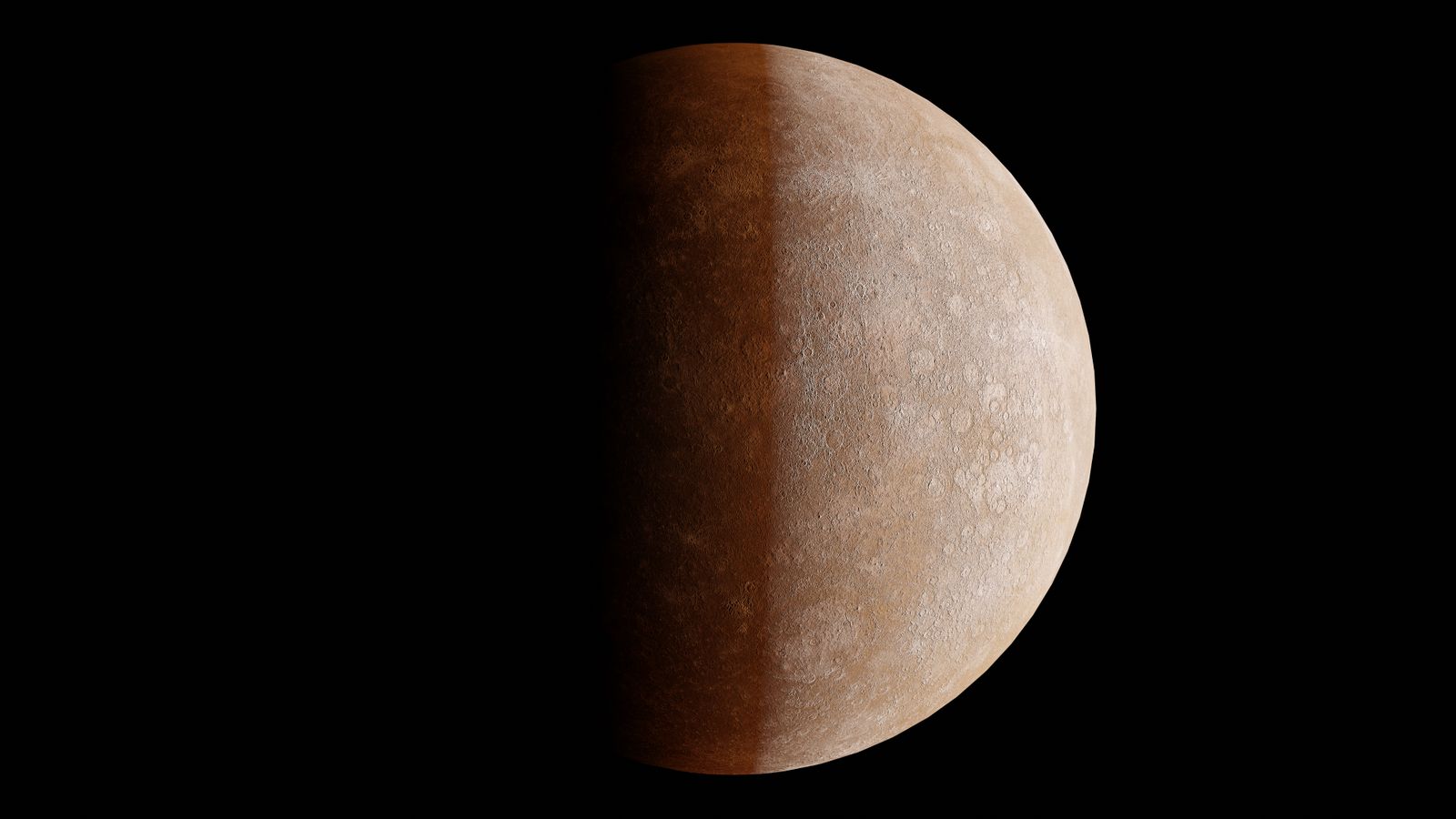
The cratered surface of the planet Mercury against black space.

Mercury is the closest planet to the Sun, and for a long time that was reason enough to assume it could not hold ice anywhere. The surface in direct sunlight can reach well over 400 degrees Celsius. And yet there is water ice on Mercury, tucked into craters near its poles where the Sun has never reached, and a NASA spacecraft has confirmed it.

The claim sounds like a contradiction. The explanation is geometry.

The radar hint

The first sign came in 1991, when the Arecibo radio telescope in Puerto Rico bounced radar off Mercury and picked up unusually bright patches near both poles. Bright radar returns of that kind are the sort of thing water ice produces, and many of the patches lined up with large impact craters that the Mariner 10 spacecraft had mapped in the 1970s.

It was a strong hint rather than proof. Radar brightness can be caused by other materials too, so for two decades the polar patches were a promising suspect awaiting a closer look.

Why ice can survive next to the Sun

The reason ice is even possible on the hottest planet comes down to how Mercury sits. Its spin axis is almost perfectly upright relative to its orbit, tilted by only about a hundredth of what Earth manages. With essentially no tilt, the floors of deep craters near the poles never catch a single ray of sunlight.

Those permanently shadowed floors are among the coldest places in the solar system, far colder than anywhere on Pluto, sitting at roughly minus 170 degrees Celsius and staying there for billions of years. A planet can bake on average and still keep a few pockets that the Sun has never touched. Ice trapped in one of them has nowhere to go.

What MESSENGER actually showed

The closer look came from MESSENGER, the NASA spacecraft that orbited Mercury from 2011 to 2015. In 2012 its team reported not one measurement but three that pointed the same way.

Its neutron spectrometer detected the signature of hydrogen concentrated at the north pole, in the amounts you would expect from buried water ice. Its laser altimeter found the polar deposits were either unusually bright or unusually dark exactly where the temperature models said surface ice, or ice under a dark covering, should sit. And those thermal models tied the whole picture together. Taken together, as the mission team concluded, water ice is the main constituent of Mercury’s north polar deposits.

The convergence is the point. Any one of those readings could be argued with. Three independent methods agreeing is much harder to dismiss, which is why 2012 is when the radar suspicion became a confirmed finding.

The ice is mostly hidden

One detail complicates the tidy image of gleaming polar ice. Across most of the deposits, the ice is not exposed at the surface at all. It is buried under a dark layer, thought to be rich in complex organic compounds, in the spots that are cold enough to preserve buried ice but a little too warm to keep it stable right at the surface.

Only in the very coldest craters does the ice sit exposed and bright. So the picture is layered: dark organic material on top, water ice beneath, with the proportions set by exactly how cold each crater floor stays.

What is still open

Where the water came from is not fully settled. Impacts from comets and water-bearing asteroids are the usual explanation, with some contribution possible from chemistry driven by the solar wind. However it arrived, the cold traps near the poles held on to it.

The same phenomenon turns up at the Moon’s poles, which matters for anyone planning to use lunar ice as a resource. Mercury itself will get another visitor before long: the European and Japanese BepiColombo mission is on its way and due to settle into orbit in the coming years, carrying instruments that can sharpen what MESSENGER began. The headline is already secure. There is ice on the planet nearest the Sun, and it has been there, in the dark, for a very long time.

The post Mercury was once expected to be far too hot for ice, sitting closest to the Sun — but radar observations revealed bright patches near its poles, and NASA’s MESSENGER spacecraft later confirmed that many of them were water ice, preserved inside craters where sunlight never reaches. appeared first on Space Daily.

  •  
❌