❌

Reading view

'It's a huge deal': Archaeologists discover second cannonball from the Battle of the Alamo, and it was likely fired by Texans

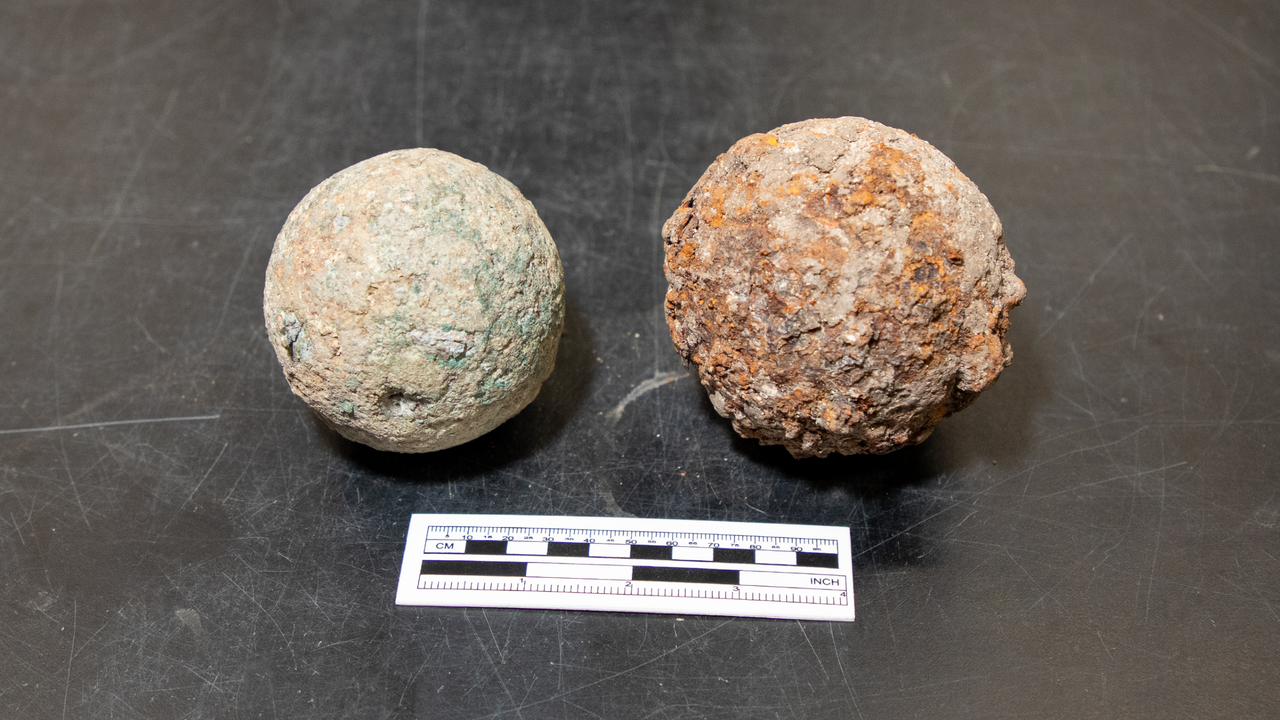
Archaeologists have discovered an iron cannonball fired by Texans at the Battle of the Alamo in 1836. This is the second intact cannonball they have discovered from the famous conflict. The first one, a bronze cannonball, was found earlier this year and was likely fired by the Mexican army.

"It's a huge deal," Tiffany Lindley, director of archaeology at the Alamo, said in a video statement from Alamo Trust. "We all thought, 'There's no way we can top it,'" she said, referring to the bronze cannonball discovered March 5, just a day before the 190th anniversary of the conflict that killed Davy Crockett, "and then we found another one."

Both cannonballs were recovered from the northeast corner of the church at the Alamo, which was originally built in 1718 as a Spanish mission and fortress in what is now San Antonio. But the Alamo is better known as the location of an 1836 battle during the Texas Revolution, in which Anglo-American settlers and Hispanic Texans known as Tejanos seceded from the Republic of Mexico.

In a 13-day siege culminating in a deadly assault on March 6, 1836, Mexican troops, commanded by Gen. Antonio López de Santa Anna, surrounded the Alamo and killed the 180 Texan rebels defending the structure, including Davy Crockett. The cry "Remember the Alamo!" was used in later skirmishes in the Texas Revolution as soldiers fought Mexican troops for independence.

The newly excavated iron cannonball was found June 2, according to a statement from Alamo Trust.

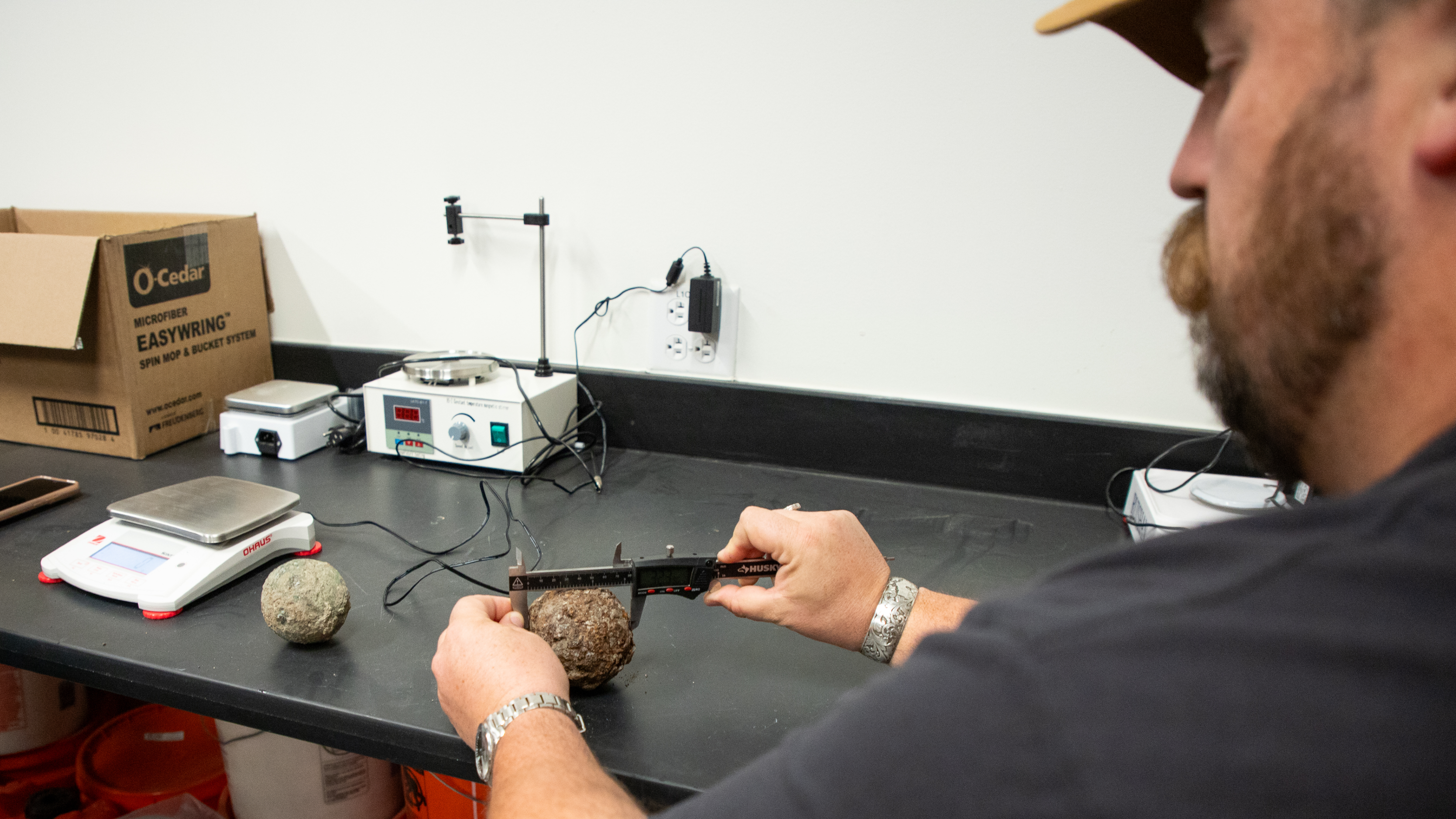
Of the two cannonballs, "the newest one is slightly larger" and was likely fired from a cannon that shot 6-pound [2.7 kilogram] cannonballs, Kolby Lanham, a senior researcher and historian at the Alamo, said in the statement. "The likelihood is that the bronze one belonged to the Mexican Army and the iron one belonged to the Texans."

Over the years, archaeologists have found numerous pieces of ammunition and shrapnel at the Alamo, Lindley said, but these cannonballs are the first examples of solid shots — spherical projectiles fired from a gun or cannon — they have ever found.

"It's just a huge kind of once-in-a-lifetime deal," Lanham said. "But obviously, it's happened twice."

a light-skinned man measures a metal cannonball with calipers in a lab setting

The size and weight of the cannonball suggests it was fired by a cannon that shot 6-pound cannonballs. (Image credit: Alamo Trust)

The Mexican and Texan cannonballs were found near each other, so they are likely the historic remains of the two sides shooting at each other in the fateful siege nearly two centuries ago.

"Whenever they were dropped the very first time — possibly in 1836, probably — they haven't been touched since, and that's what makes them extra special," Lindley said. "I don't think you can undersell it."

The Alamo remains an active archaeological site, where experts have discovered artifacts that span its centuries of history, from Indigenous stone tools that predate the Spanish mission through the late 19th century, when the structure was converted into a general store and warehouse.

Can you identify these historical objects of war? Test your smarts with our weapons of the world quiz!

  •  

Oldest known plague victims found in a 5,500-year-old burial ground in Siberia — and many of them were children

Hunter-gatherers in Siberia fell victim to lethal plague outbreaks around 5,500 years ago, marking the oldest known evidence of plague to date, a new study finds.

A research team investigating the Stone Age remains identified ancient DNA ion over a dozen individuals that came from previously unknown strains of Yersinia pestis, a bacterium that causes pneumonic, bubonic and septicemic plague.

The disease that infected these hunter-gatherers, most likely pneumonic plague, probably spilled over from wild marmots, and ravaged through family groups living around Lake Baikal, according to the study, published Wednesday (June 17) in the journal Nature.

Ancient DNA from the two newfound plague strains revealed a unique gene that codes for proteins that trigger massive immune responses, perhaps explaining why children were the most likely to die from the disease, the authors wrote in the study.

The discovery of two deadly plague outbreaks in prehistoric hunter-gatherers challenges the long-standing assumption that epidemics first occurred after the rise of agriculture, study first author Ruairidh Macleod, a researcher of ancient genomics at the University of Oxford, told Live Science.

"We got the really striking result that we found lots and lots of plague here far earlier than we expected," Macleod said. This is "the closest we'll probably ever get to a direct smoking gun demonstrating the virulence [the ability of germs to cause disease] of these early plagues."

Plague has played an extremely important part in human history and continues to infect people today. The strain of Y. pestis that affects people today still causes epidemics, predominantly in Africa, although seven human cases, on average, are reported in the U.S. each year. Nowadays, Y. pestis cases that are caught early can be treated with antibiotics.

Understanding how the disease has evolved over time is essential for gaining insight into how Y. pestis may change in the future, study co-author Eske Willerslev, an evolutionary geneticist at the University of Copenhagen, said at a news conference Tuesday (June 16), ahead of the study's publication.

Prehistoric plague outbreaks

Research suggests that plague outbreaks devastated communities long before the Black Death, the catastrophic epidemic that swept through 14th-century Europe and killed around 25 million people, or between 25% and 33% of Western Europe's population at the time.

For example, repeated plague outbreaks have been identified from between 5,300 and 4,900 years ago in farmers from what is now Scandinavia. However, whether these early plague strains were deadly or simply caused mild sickness has been hotly debated because the bacterium lacked some known disease-causing genes.

Now, a close inspection of the ancient DNA of hunter-gatherers buried in four cemeteries along the banks of the Angara River, which flows out of Lake Baikal, has provided "the best kind of evidence that we could probably hope for" that prehistoric plague strains were lethal and resulted in mass death, Macleod said.

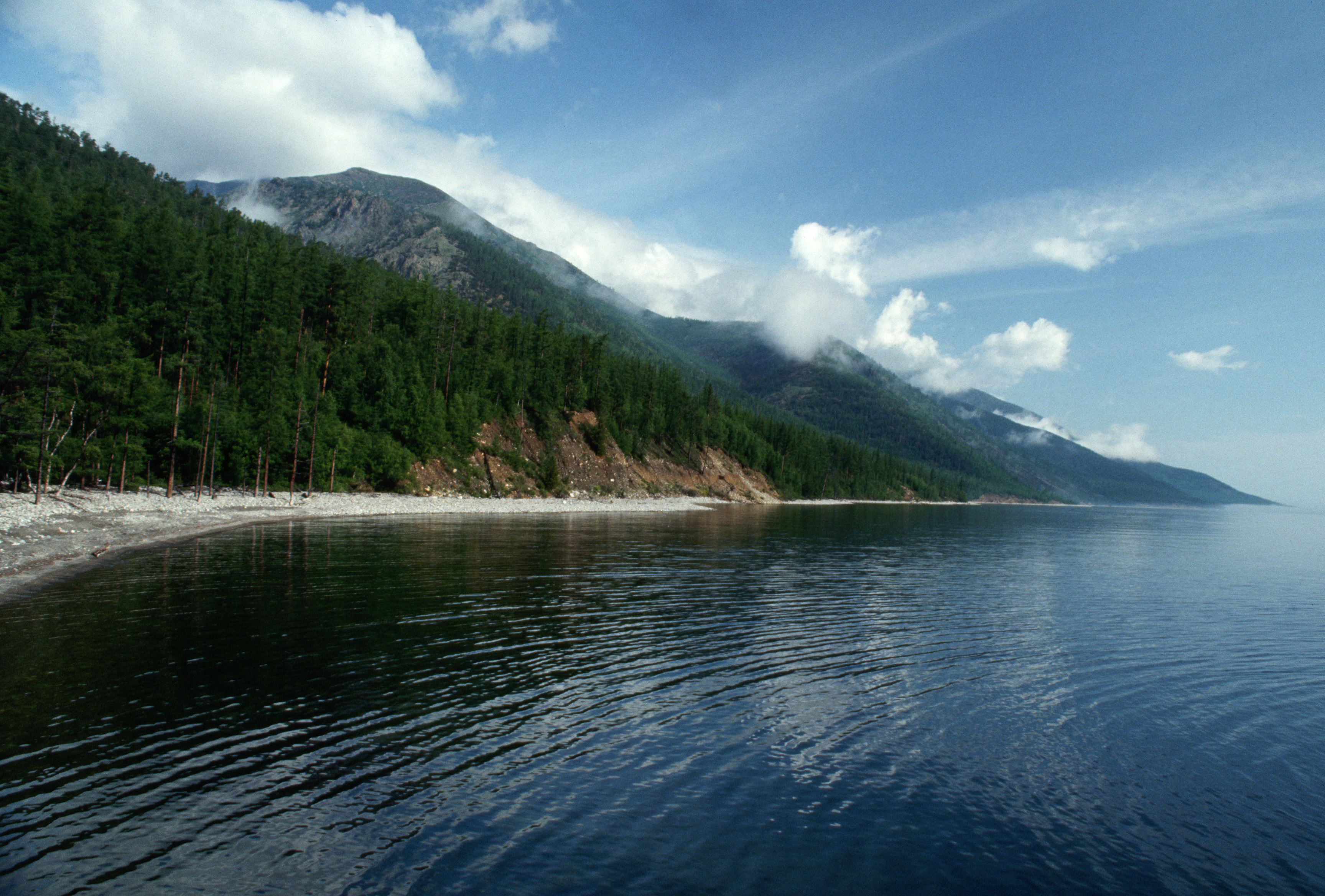
Coastline of Lake Baikal

Lake Baikal is in southeast Siberia. (Image credit: Ralph White via Getty images)

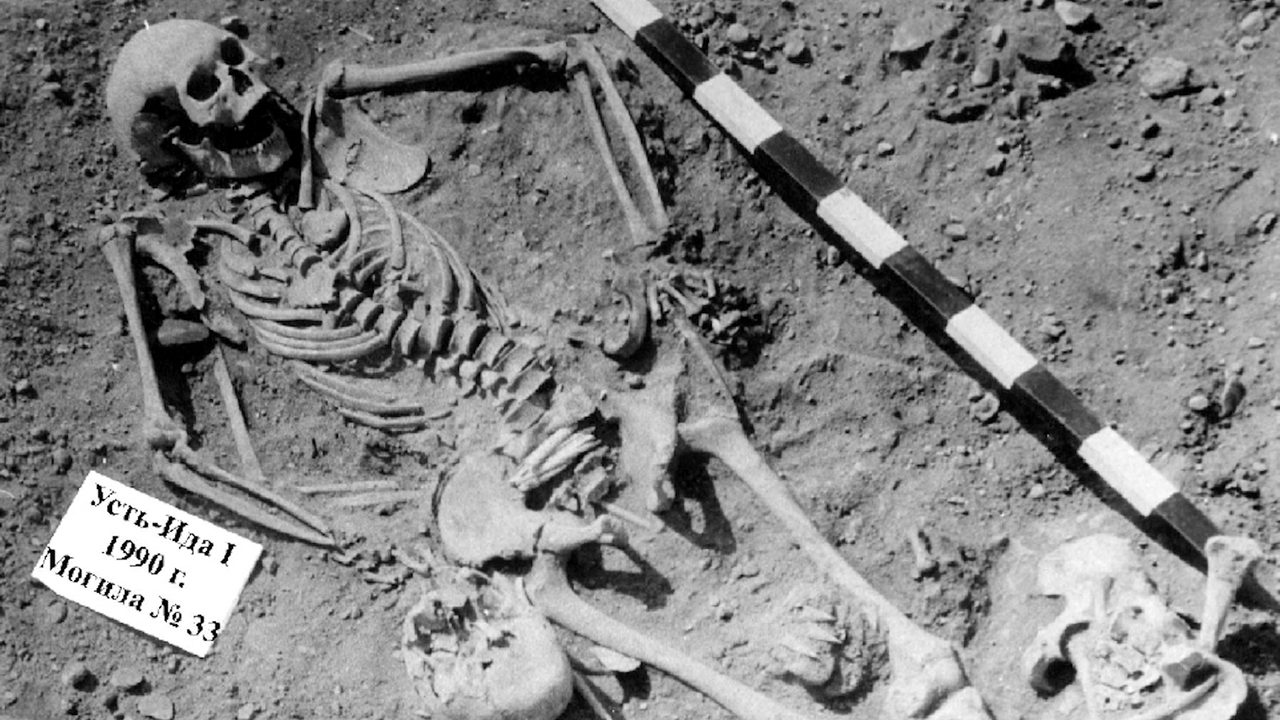
During previous excavations of these cemeteries, researchers noticed that an unusually high number of children had been buried over a short period. There were no signs of violence or other injuries, Macleod said at the news conference, leaving the archaeologists stumped as to why so many children died.

Macleod and his team stepped in to see if ancient DNA could shed light on this mystery.

The researchers extracted ancient DNA from the teeth of 46 individuals at the four cemeteries. They checked whether any were related while also scanning for ancient DNA from known germs.

To their surprise, they identified large amounts of Y. pestis in 18 individuals. These cases spanned two distinct disease outbreaks: one lasting from around 5,596 to 5,341 years ago, and another most likely spanning 5,126 to 4,926 years ago.

Some graves contained the remains of multiple infected individuals who were buried at the same time, suggesting they died during the same outbreak. One grave belonged to three closely related young girls, while another held a nephew and aunt.

"There must have been survivors who knew these people when they were alive and what their identities were and what their biological relationships were to bury the dead and bury them in shared graves," Macleod said.

It is currently not possible to identify plague-specific antibodies that would identify which individuals survived the outbreaks, he added.

The findings help to support the idea that prehistoric populations were impacted by plague, Aida Andrades Valtueña, a researcher who specializes in ancient pathogens at the Max Planck Institute for Evolutionary Anthropology in Germany but was not involved in the study, told Live Science in an email.

However, more complete sequencing of the plague DNA is needed to confirm that the various cases were from the same outbreak, rather than from separate infections, she noted.

What do you know about the Paleolithic, Mesolithic and Neolithic eras? Find out with our Stone Age quiz.

  •  

An Ancient Maya City Was Lost for Centuries—This Student Accidentally Rediscovered it Hidden in Google Data


An ancient Maya settlement, lost to the forest for centuries, was unexpectedly discovered by a Ph.D. student who fell down an internet rabbit hole.

Tulane University Ph.D. candidate Luke Auld-Thomas was more than a dozen pages into Google search results when he came across a laser survey conducted in Mexico by CartoData for environmental monitoring purposes.

Published in the journal Antiquity, Auld-Thomas and his colleagues reported the discovery of an ancient Maya site hidden within neglected LiDAR data, buried at the bottom of a Google search query.

LIDAR Discovery

While advances in remote sensing technology have transformed archaeology over the last two decades, Maya archaeology is often imagined as the result of laborious expeditions through dense jungle terrain in search of long-lost ruins. Instead, Auld-Thomas made a major discovery from the comfort of home.

LiDAR creates a 3D map by firing laser pulses at a landscape from above using drones, aircraft, or other aerial platforms. In this case, the original survey data showed only a dense forest canopy, making the site indistinguishable from the surrounding terrain. However, once that upper layer was digitally removed, a sophisticated settlement came into view.

Located in Mexico’s southeastern state of Campeche, the lost city contains plazas, causeways, ball courts, and pyramids that had remained unseen for centuries. Although the LiDAR operators were focused on environmental monitoring and did not investigate the data at this level, Auld-Thomas and a colleague recognized the archaeological significance of what they were seeing and identified the site, naming it Valeriana.

Maya Site Detail
The Maya site Valeriana contains a dense mixture of buildings, many of which have been identified by the researchers. Credit: Luke Auld-Thomas/Antiquity

Valeriana 

During their classic period, between 250 and 900 AD, the Maya developed the rugged Campeche landscape into complex urban environments.

The city of Valeriana, which the team found in the data, turned out to be the second-largest Maya site in North America, eclipsing Calakmul, some 100 kilometers distant. According to the researchers’ estimate, 30,000 to 50,000 people resided in the city between 750 and 850 AD, and it possibly served as a regional capital.

The site’s tropical setting has been a subject of debate among archaeologists, who question whether the population density of typical tropical settlements is skewed by the overrepresentation of large, dense settlements in the data. The team’s discovery of a dense and sophisticated urban environment comprised of nearly 7,000 buildings suggests that such dense sites are not unusual.

While the site contains many features typical of Maya cities, one unusual element particularly intrigued the researchers, consisting a sinkhole leading to a partially collapsed cave system, surrounded by a narrow quatrefoil-shaped ditch—a form frequently used in Mesoamerican art to symbolize caves and sinkholes.

Because the feature lacks substantial embankments and is relatively small in scale, the team does not believe it served a defensive purpose. However, its unusual design may warrant further investigation.

LiDAR Discoveries

Remote-sensing technologies such as LiDAR have transformed archaeology in recent decades, allowing researchers to identify hidden sites across vast and inaccessible landscapes without setting foot on the ground.

In 2013, LiDAR surveys revealed extensive urban networks surrounding Cambodia’s Angkor region, once the heart of the Khmer Empire. Researchers later used the technology to digitally strip away the Guatemalan rainforest canopy, uncovering more than 60,000 previously unknown structures. Using traditional survey methods, discoveries on that scale would likely have taken generations to achieve.

Remarkably, Valeriana itself has yet to be surveyed in person. At present, LiDAR imagery remains the only detailed view of the site. The researchers note that field investigations in Mesoamerica rarely result in fewer structures being identified than LiDAR suggests. In many cases, apparent false positives are offset by previously overlooked features discovered during ground surveys.

For now, Valeriana remains concealed beneath the forest canopy much as it has been for centuries. The researchers hope these remote sensing technologies will reveal more such hidden sites in the coming decades; if funding is sufficient to cover more area with drone-based LiDAR systems, they are almost certain that more discoveries similar to Valeriana could await discovery.

The paper, “Running Out of Empty Space: Environmental Lidar and the Crowded Ancient Landscape of Campeche, Mexico,” appeared in Antiquity on October 29, 2024.

Ryan Whalen covers science and technology for The Debrief. He holds an MA in History and a Master of Library and Information Science with a certificate in Data Science. He can be contacted at ryan@thedebrief.org, and follow him on Twitter @mdntwvlf.

  •  

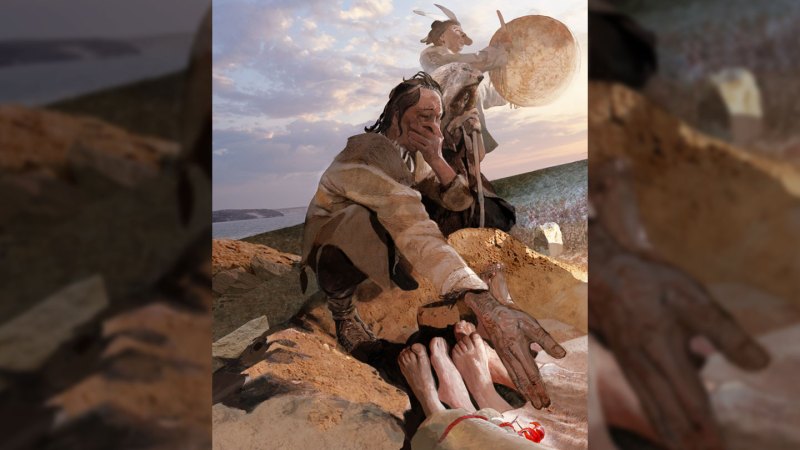
Ancient DNA uncovers deadly plague outbreak among Siberian hunter-gatherers 5,500 years ago

Plague is commonly associated with rats, crowded medieval cities, and the epidemics that swept across Europe during and after the Middle Ages. But a new study published in Nature shows that the disease was already lethal 5,500 years ago, when it killed humans in small, mobile hunter-gatherer communities—long before the rise of agriculture and cities created the conditions usually associated with plague epidemics.

  •  

“This is Far from an Ordinary Burial”: Archaeologists Have Made Rare Discoveries in an ‘Elite’ Siberian Grave

A burial site uncovered by archaeologists in southern Siberia has revealed a series of unusual discoveries, which include ritually broken artifacts surrounding human and horse remains.

The burial site was uncovered in the Sayan Mountains and was discovered during a survey in advance of railway construction planned for the area. Archaeologists believe that the grave dates to the tenth century.

Originally uncovered in 2014, excavations at the site of the unusual grave and several others found nearby have been ongoing, revealing discoveries that researchers say are unusual for the period and location.

“It is quite clear that this is far from an ordinary burial,” according to Andrey Poliakov, a researcher with the Russian Academy of Sciences and one of the co-authors of a new study detailing the findings, which appeared in Bulletin of Novosibirsk State University, Series: History, Philology.

Curious Discoveries in a Siberian Grave

Among the unusual discoveries in the Siberian grave were human remains—those belonging to a woman, as well as a newborn child—and animal remains belonging to a horse, including the creature’s skull, skin, and limbs, and a spine that belonged to a sheep.

The woman’s remains were also accompanied by several artifacts, which included bronze earrings, a spindle whorl crafted from stone, and an iron knife. Also associated with the woman’s remains was a mirror, which archaeologists believe may have been intentionally broken for ritual purposes—a practice maintained by many ancient cultures throughout the world.

Siberian elite burial
The woman’s remains at the burial site in the Sayan Mountains revealed a range of artifacts, many of which were dated to earlier times, suggestive of heirlooms that may represent an “elite” burial (Image Credit: Press Service of the Institute of the History of Material Culture of the Russian Academy of Sciences)

Eastern Connections

Also of interest was the design of the mirror, which features carvings of a vine that winds along the artifact and clusters of grapes. The research team believes this could indicate that this artifact, and possibly some of the others found in the grave, may have originated from China.

Additionally, the researchers report that items associated with the remains of the horse contained within the burial site are associated with older periods, which would have made them antiques at the time they were included within the grave. Another example of artifacts with possible eastern origins includes a stirrup, which features decorations that bear resemblance to ancient art found in China and India.

Such stirrups were often employed by nomads who once dwelt on the Eurasian Steppe, and featured on the left side of their saddles—a position which archaeologists also believe may have held ritual significance.

An Elite Burial from the 10th Century

According to the researchers in their study, “The entire set of items constitutes a complete set of riding horse equipment,” which they say has “an archaic appearance and could be preserved for a long time as ‘family heirlooms’.”

The researchers add that such items were particularly popular in ancient nomadic society along the Eurasian Steppe and were viewed “as an indicator of social prestige” during the 8th and 9th centuries.

The unusual collection of artifacts within the grave was considered a rare find for this region, although further interpretation about the remains of the woman and the infant, which may had been her child, may be required.

The paper, “Riding Horse Equipment from a Medieval Burial on the Idzhim River in the Usinskaya Basin,” by Andrey Poliakov and colleagues, appeared in Bulletin of Novosibirsk State University, Series: History, Philology.

Micah Hanks is the Editor-in-Chief and Co-Founder of The Debrief. A longtime reporter on science, defense, and technology with a focus on space and astronomy, he can be reached at micah@thedebrief.org. Follow him on X @MicahHanks, and at micahhanks.com.

  •  

Ancient Microbes Preserved in Rapidly Thawing Arctic Middens Are Waking Up—Could They Pose a Threat to Us Today?


New analysis of ancient frozen Greenland rubbish heaps, called middens, has revealed new insights into several ancient societies that have passed through the country over the last five millennia. The findings include insights into ancient diseases and animals that the inhabitants kept but didn’t eat.

Although the team noted the potential risk that climate change could release dangerous ancient microbes into the modern environment, their analysis found little evidence that the pathogens they identified could pose a threat beyond the immediate area around the middens.

Ancient Middens Offer Historical Insights Beyond Traditional Artifacts

Archaeologists have often excavated items discarded by ancient societies from trash heaps to learn more about the people who lived there. Although such excavations often unearth things like animal bones and mollusk shells, offering insights into diet and hunting habits, these ancient rubbish heaps can also contain human artifacts, such as discarded blades and other tools.

In a country like Greenland, where different peoples have settled the region since 2,500 BCE, the ancient middens may also contain microbes that could offer researchers an entirely different type of historical data. For example, microbial data from middens could reveal which diseases ancient populations had to survive. The team notes that microbes could also help determine what ancient societies kept “but perhaps didn’t eat.”

Still, studies of ancient midden microbes are limited, leaving a gap in historical knowledge. The authors of the new paper also highlight that rapidly increasing Arctic warming could release infectious diseases to which humans have lost immunity over the ensuing generations.

Over One Thousand New Species Were Identified

To bridge the information gap, Dr Frank Møller Aarestrup, a professor at the National Food Institute of Denmark Technical University and corresponding author of the article detailing the team’s research, examined samples collected during 2020 and 2021 expeditions in West and South Greenland. During those expeditions, scientists collected samples from middens locked in time by permafrost, dating back as far as 4,500 years.

ancient microbes
The authors during their fieldwork studying ancient middens in Greenland. Image Credit: Louise Hindborg Mortensen.

Among the middens sampled were the ancient Norse sites of Kapisilit and Narsarsuaq, where researchers collected soil samples from what the new paper’s authors termed “historic winter enclosures.” The site also contained evidence that it was a summer grazing ground for livestock.

After selecting several soil samples, Dr. Aarestrup’s team sequenced the DNA of ancient microbes found in the midden samples. Next, they compared the data, including entire bacterial communities, to 143 soil samples previously collected from areas of permafrost far away from any known historical human settlements.

According to the team’s statement, the sequencing revealed a total of 1,207 species and differing ranges of bacterial species per midden. In denser areas, the team identified as many as 202 species, whereas less microbe-dense middens had as few as nine.

The team’s analysis also found several species that had not been previously identified. This resulted in the team labeling the unidentified microbes using what they termed “broad taxonomic categories” above the genus and species level, such as family and order.

Preserving the ‘Biological Legacy’ of Human Activity

When comparing the microbial communities in the ancient middens with those from samples collected away from human settlements, the team found a significantly richer community of ancient bacteria preserved in the middens. The team notes that this discrepancy confirms that the middens “preserved the biological legacy of human activity.”

The most soil-like bacterial communities were identified within the oldest Paleo-Inuit middens. The researchers said the finding suggests that the microbial “imprint” left behind by humans and animals diminishes over time.

Bacterial communities were also associated with the types of waste discarded in each ancient midden. For example, although most middens contained bacteria associated with human and animal hosts, middens from colonial-era Nuuk contained decomposing seal skins. The middens from colonial-era sites were also rich in the bacterium Clostridium perfringens, which the team notes is “a major cause of food poisoning.”

Risk of Ancient Pathogens is Low

Although the team identified strains of bacteria that can cause botulism or other life-threatening conditions, such as toxic shock syndrome, sepsis, and gangrene, they also found a diversity of antimicrobial-resistance genes in the genomes of bacteria collected from the same middens.

According to the study authors, finding the two sets of genes in ancient and modern soil layers “signaled that microbes resistant to antimicrobials can linger in permafrost for centuries.”

Fortunately, the team’s analysis found that most of the identified microbes, including potentially dangerous pathogens, don’t spread far from middens, even those undergoing defrosting. As a result, the team said that these ancient microbes  “pose little risk to public health,” at least for the time being.

“Here we show that the risk of release of ancient pathogens from ancient middens in Greenland is currently low,” Dr. Aarestrup explained.

Instead, the researcher noted that Arctic middens appear to function like “long-term natural experiments,” in which both human- and animal-associated bacteria, including “opportunistic” species carrying resistance genes, remain detectable centuries later as a broader “legacy of human activity.”

The study “Microbial composition of archaeological middens: Tracing Human Footprints Through Centuries in Greenland’s Ancient Settlements” was published in Frontiers in Microbiology.

Christopher Plain is a Science Fiction and Fantasy novelist and Head Science Writer at The Debrief. Follow and connect with him on X, learn about his books at plainfiction.com, or email him directly at christopher@thedebrief.org.

  •  

Ancient Microbes in Greenland’s Rubbish Heaps Reveal Insights into Old Farms, Seal Hunts, and Toilets

Greenland, with its vast icy expanses and challenging environment, harbors a rich tapestry of human history etched into its landscape over millennia. The island’s archaeological record tells tales of successive human inhabitations that have left behind more than just stories and artefacts; it preserves complex biological legacies embedded within ancient refuse deposits known as middens. These middens, essentially ancient domestic rubbish heaps composed of animal bones, excrement, mollusk shells, and various artefacts, offer not only archaeologists but also microbiologists a unique window into the past. Their frozen state in Arctic permafrost has allowed microbial communities trapped over thousands of years to persist, raising compelling questions about the nature and dynamics of these ancient microbial populations.

The study of microbial life within these middens is far more than a niche query; it intersects with pressing concerns about human health, ecosystem integrity, and the potentially resurging threats posed by ancient pathogens. As the Arctic warms at an alarming rate—currently estimated to be three to four times faster than the global average—the thawing permafrost raises fears that dormant microbes, including pathogens from bygone eras, might be released back into the environment. The microbial fingerprints preserved in these deposits chronicle past human and animal interactions, environmental conditions, and disease ecology, providing invaluable data to reconstruct historical microbiomes and understand their evolution through millennia.

In groundbreaking research reported recently in Frontiers in Microbiology, scientists led by Dr. Frank Møller Aarestrup of the Technical University of Denmark embarked on an ambitious project to characterize the microbial composition of Greenland’s archaeological middens. Their experimental approach involved rigorous sampling of frozen middens from multiple chronological layers spanning approximately 4,500 years of human history—from the earliest Paleo-Inuit cultures to medieval Norse settlers and early Danish colonists. Employing advanced DNA sequencing techniques and bioinformatics, the team reconstructed diverse and complex bacterial communities present in these ancient deposits and compared them with microbes from surrounding pristine permafrost soils, unperturbed by human activity.

One of the striking revelations from this study was the extraordinary microbial richness residing within the middens. From as few as nine to as many as 202 bacterial species per midden, the researchers identified an aggregate of 1,207 distinct bacterial species across all samples. Intriguingly, many species could not be identified beyond broad taxonomic categories, underscoring the vast unknown microbial diversity in Arctic archaeological contexts and the general paucity of data on cold-environment microbiomes. This discovery shines a light on the hidden microbial world preserved under layers of ice and soil, aspects that have remained largely unexplored until now.

The middens invariably featured richer bacterial communities than adjacent soils, affirming their role as biological archives chronicling the legacy of human presence and activity. Among the deposits, middens linked to the Paleo-Inuit exhibited bacterial compositions closely resembling natural soil communities, suggesting a fading microbial imprint over thousands of years. Conversely, Norse and colonial middens revealed bacterial assemblages heavily influenced by human-related waste, livestock farming, and domestic activities, evidencing the intimate connection between past humans, their animals, and local microbes.

Practically, these midden microbiomes hosted a variety of bacteria associated with human and animal hosts. Notably, the researchers detected species such as Clostridium massilliamazoniense, innocuous but indicative of human fecal matter presence, alongside more pathogenic taxa like Clostridium baratii, which can lead to botulism, and Paeniclostridium sordellii, linked to severe human illnesses including toxic shock syndrome and gas gangrene. Such findings highlight how midden microbial communities serve as time capsules, preserving signatures of diseases that may have affected historic populations, which hold relevance to the emerging field of paleomicrobiology.

Furthermore, the microbial composition differed markedly depending on the nature of the organic waste constituting each midden. Middens from Greenland’s early colonial era, particularly those in Nuuk containing decomposing seal skins, harbored Clostridium perfringens, a bacterium notorious for causing food poisoning. Meanwhile, middens filled with animal carcasses were dominated by gut bacteria such as Romboutsia species and Paraclostridium sordellii. Early Norse deposits, rich in decomposing bones, exhibited an abundance of unknown species within the Proteobacteria and Clostridiaceae groups. This substrate-specific microbial differentiation provides new perspectives on historic dietary patterns, hunting practices, and animal domestication in Greenland.

An essential aspect of the team’s work was the investigation of antimicrobial resistance (AMR) genes within these ancient bacterial genomes. The researchers uncovered a diverse array of resistance genes, demonstrating that ancient permafrost soils and middens contained bacteria equipped with antimicrobial defense mechanisms. The persistence of these genes in both ancient and modern soil layers indicates the long-term stability and environmental retention of genetic elements conferring antibiotic resistance, a critical insight into the evolutionary history of AMR and its environmental reservoirs. Despite this, spatial analyses suggested that upon thawing, microbes from the middens do not tend to disperse widely, limiting the risk of pathogen spread under current conditions.

Importantly, the authors emphasized that the immediate threat to public health from ancient pathogens emerging from Greenland’s thawing middens is currently low. Dr. Saria Otani, co-author and associate professor, noted that the microbiome released from melting permafrost appears to be rapidly outcompeted or replaced by contemporary environmental microbes, reducing opportunities for ancient pathogens to proliferate. Nonetheless, this dynamic balance could shift with accelerating climate warming, necessitating vigilant monitoring.

To that end, the researchers advocate for the incorporation of microbiome characterization into routine archaeological protocols during future excavations at permafrost sites. The spatially and temporally resolved microbial data obtained could serve as early warning markers for pathogen emergence and inform conservation strategies during the rapidly unfolding Arctic environmental transition. This interdisciplinary study brilliantly exemplifies how combining microbiology, archaeology, and environmental science can unlock secrets buried in ice and soil, informing both our understanding of the past and preparations for an uncertain microbial future.

This pioneering research hence sets a precedent for microbiome-informed archaeology, where the “dustbins of history” are not merely relics of human culture but bearers of ancient microbial life, antimicrobial resistance, and metabolic potential. By resolving these ancient microbial ecosystems, scientists are better positioned to trace human-animal-environment interactions across centuries and to anticipate the potential consequences of microbial releases driven by climate change.

As global temperatures continue their inexorable rise, the Arctic remains a hotspot for uncovering hidden biogeochemical dynamics playing out beneath melting permafrost. Greenland’s middens now stand as invaluable archives that illuminate the intertwined narratives of human migration, settlement, livestock domestication, and the microbial world shaped by these processes. The revelations from these frozen repositories reinforce a broader vision of archaeology enriched by microbial ecology, where ancient microbial communities provide vital clues for understanding human history, health, and environmental change on a planetary scale.


Subject of Research: Not applicable

Article Title: Microbial composition of archaeological middens: Tracing Human Footprints Through Centuries in Greenland’s Ancient Settlements

News Publication Date: 17-Jun-2026

Web References:
Frontiers in Microbiology Article

Image Credits: Louise Hindborg Mortensen

Keywords: Archaeology, Animal domestication, Anthropology, Archaeological sites, Prehistory, Microbial ecology, Infectious diseases, Gastrointestinal disorders, Health and medicine, Human biology, Public health, Land use, Iron Age

  •  

Frozen Greenland middens preserve 4,500 years of farms, seal hunts and toilets

Greenland has a long and checkered history of human settlement: several Paleo-Inuit cultures since approximately 2,500 BCE, descendants of Vikings between the 10th and 15th centuries, and early modern Danes since 1721. All left their traces on the landscape, for example in the form of ancient domestic rubbish heaps. Composed of waste like animal bones, excrement, mollusk shells and human artifacts, these middens are a precious resource for archaeologists.

  •  
❌