❌

Reading view

Adobe: New Firefly Graph can turn creative workflows into reusable assets

Adobe’s Firefly Graph is now available to Creative Cloud customers, offering a node-based workflow tool designed to help business create content at scale with generative AI (genAI). 

With Firefly Graph, users can connect multiple tools in visual workflow, with each “node” performing a specific task before passing its output to the next node. This gives creative professionals more control over generated outputs, according to Adobe, and makes it easier to try out ideas by swapping, adjusting or adding components.

For example, a user could start with a text prompt box that connects to a node that generates an image using an AI model from Adobe or third-parties such as Google and OpenAI. Further along the chain, the user could add nodes to remove a background or upscale an image, for instance, before producing an image, video or other asset ready for use.

Changing one aspect, such as adding a reference image or adapting the text prompt, would change the final output.

It’s an approach similar to node-based workflow tools such as ComfyUI — a startup valued at $500 million which claims more than 4 million users. Others include Weavy, acquired by Figma last year for a reported $200 million. 

With so many AI tools available to creative professionals, workflows can get complex and hard to replicate, said Elliot Sedegah, director for strategy and product marketing at Adobe. Firefly Graph provides access to more than 300 different node types, including images, video editing and AI generation tools across Adobe’s portfolio and third-party tools. 

“Whether you’re working at a mom-and-pop shop or a larger enterprise, you’re looking for consistency and then bringing that into a workflow so that you’re not hopping in and out of different tools,” he said. “Putting all that together takes massive amount of time, and sometimes it’s very difficult to even know what you did.”

Once created, workflows can be shared across an organization as repeatable processes for other individuals or teams to use. “Think of that rock star creative that you have and the recipes they create: those are now canonized as workflows, as assets, that the rest of the organization can take and reuse over and over again,” said Sedegah.

In addition, while creative professionals are needed to created high quality assets, reusable workflows can be put into the hands of broader teams to create content for large audiences, said Sedegah.

Firefly Graph addresses a challenge that most large creative organizations face, said Lisa Gately, principal analyst at Forrester — namely that their best creative workflows “live inside the heads of a few experts.

“Teams can generate images and video with AI, but reproducing the exact sequences of creative decisions, model selections, edits, and refinements that lead to a high-quality result is difficult and inconsistent. Firefly Graph turns those workflows into reusable assets,” she said.

While other node-based workflows aim to address similar problems, Adobe’s pitch is that Firefly Graph provides customers with the benefit of integration into its product suite. 

“Firefly is a full, broader AI creative studio, not just a node-based tool, so [Firefly Graph] is a part of a bigger picture,” said Sedegah. “The strength is having everything in one place with the tools that people know.” 

“Where Adobe differentiates is in enterprise integration,” said Gately, with Adobe connecting Firefly Graph to a range of other Adobe tools. Those include Creative Cloud applications; Firefly Boards for ideation; and Firefly Creative Production. 

“The workflow becomes part of a broader content supply chain instead of a standalone creation tool,” she said. ”Organizations committed to other tools are unlikely to migrate for a node-based canvas — making a change is about the broader content supply chain.”

Firefly Graph is available now to Adobe Creative Cloud for Enterprise subscribers. Creative Cloud for Enterprise is licensed by seat, requiring custom, volume-based enterprise agreements. Creative Cloud for Enterprise customers receive credits for Firefly Graph. Creative Cloud for teams customers can sign up for a public beta online. Creative Cloud pricing starts at $99.99 per license each month.

This article was updated on June 19 with pricing information from Adobe.

  •  

Jamf CEO: ‘AI is happening whether organizations know it or not’

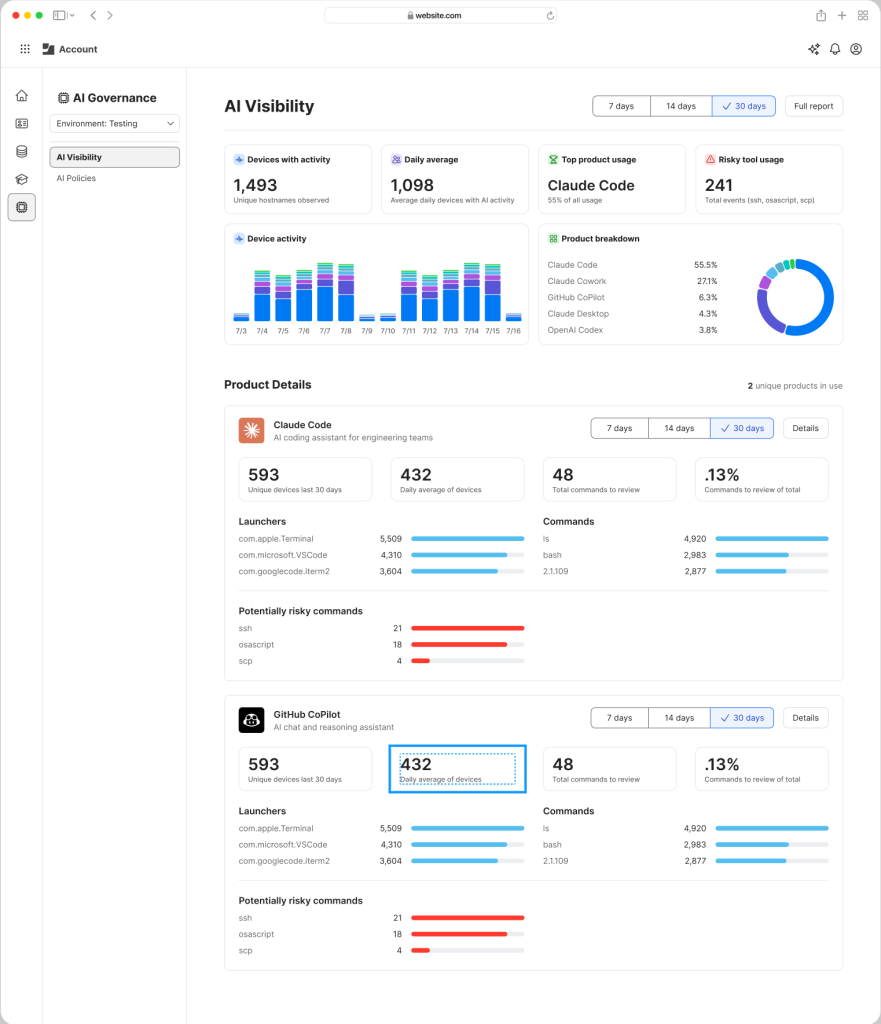
Beth Tschida, who became Jamf CEO in May after serving as CTO and as interim CEO, is the first woman to lead the company in its near 25-year history. I spoke with her this week at the London Jamf Nation event, where the company introduced its new AI Governance solution.

How the transition to CEO is going 

“It’s been a great privilege and an adjustment,” she said. “Jamf has always been a company deeply focused on culture, which is exactly why I love being here. Having the ability to influence and improve that culture from this role is something I feel very supported in doing.”

The last few years have seen a variety of changes at Jamf, which was briefly a public company. “We’ve come through a period of change, not all of it easy,” Tschida said. “But we now have a great partnership with Francisco Partners. We’re private, we’re focused on solving customer problems, and we’re finding ways to lean into what we’re good at.”

Women in tech and mentorship

Tschida is a good choice to lead a software engineering company, as she’s an engineer herself. She originally joined Jamf as vice president for software engineering in 2018, moving up to CTO in 2022. She’s also one of the few women in leadership positions in tech. (To Jamf’s credit, the company also has CIO Linh Lam on its team.)

“I think it’s important for women to stay deep in the tech, build their skills and find their voice confidently,” Tschida said. “You’ll never know all the technology out there. Nobody does. What matters is the ability to keep adapting and evolving.”

Tschida stressed the importance of mentorship. “I feel very honored to have a chance to be a role model for other women,” she said. “I had women who forged a path for me, including a female CIO early in my career who I asked to mentor me and learned an enormous amount from. I’m certainly not the first woman in tech, but I do want to play my part in helping others grow in their careers.

“Ultimately, I want to be respected for what I do, not for my gender. That’s how everyone should be judged.”

AI Governance

Tschida’s product focus means she knows what matters to Jamf. “If you focus on the problems customers have and how your product can help fix them, that’ll take you to where you want to go.”

For many in the enterprise, both in and beyond the Apple space, the next big problem is AI — how to deploy it, how to manage it, and how to regulate it.

AI Governance is a new Jamf solution that has been developed in response to those pain points. Countless surveys, including Jamf’s own data, show that AI is being widely used across every company, but IT lacks visibility into its use. It’s hard to know what data is being shared with AI tools, which services are being used, and how to report on that use effectively — particularly in regulated industries.

AI Governance is designed to make it possible for anyone managing an Apple fleet to get granular insight into AI use across their Mac, iPhone, and iPad devices. It uses telemetrics to shed light on that use, offers governance and management tools to help IT gain better oversight and control over it, and provides highly comprehensive reporting tools suitable for internal or regulatory review.

“AI is happening whether organizations know it or not,” said Tschida. “That’s the problem. You can try to block it, but that’s very hard to do well. It’s far better to build visibility and governance around it.”

The offering makes it possible for companies to enable the AI use they already know is taking place while protecting corporate interests and enabling fast and accurate reporting. You can find out more details here.

Empowering better AI

Jamf’s approach is focused on endpoint management. AI Governance means IT can see what’s running on a device, categorize it, and understand what AI tools and models are in use. “If you know how people are running AI on your fleet, you can open it up safely. Then all of your customers and employees can find their way to figure out how AI is going to optimize their workforce,” she said.

What does that look like in practice? Think of it as an orchestration layer. IT can define different AI configurations for different teams: HR might use one set of models, engineers another. And admins can apply opinionated postures per group: what models are permitted, what cloud services they connect to, what’s visible to IT versus the CISO versus the CFO. “It’s an extension of what Jamf has always done, it just now applies to AI endpoints too.”

What about regulatory complexity across geographies? “A lot of governance controls are shared across regulations; a good base set is a healthy way to run regardless. But each regulation has its own twists. Our mission is to make sure customers operating in different markets can expand on that base and fit the specific models and regulations they need, getting the right configurations to the right devices.”

Managers must prepare for AI cost challenges

There’s a second dimension beyond management — cost. The industry is developing quickly, with new AI models appearing almost every week. Yesterday’s leading LLM is tomorrow’s fading star, even while the cost of AI infrastructure goes through the roof. As that churn slows, investors will want to start seeing returns on their bets, which is why token costs — the price of running AI services, at least in the cloud — are climbing fast.  

As costs become more realistic, that’s going to change the nature of AI deployment from the laissez-faire, anything goes approach to a more strategic management of such use. “Models keep dropping fast, but token costs are only going to go up,” said Tschida.

“Organizations will need to decide: just because you can build something with AI, should you? What’s the right model for what work? We’re helping customers move from, ‘We’ll just block it’ or ‘We’ll turn it on and hope for the best,’ toward a place where they have a real viewpoint and can manage and change that viewpoint over time.”

The ever-changing AI world is also prompting Jamf to make more of its APIs externally available. “We’re used across every industry and every geography, at every scale,” said Tschida. “There’s no way we can build every workflow every customer needs, we’d never get to all of them.”

Embracing openness also helps build future foundations. “Thinking about where we’re heading next — agentic endpoint management — having platform APIs allows our customers to build things they can imagine, that we can learn from, in a way that solves their specific problems.”

Apple, WWDC, and the enterprise

Tschida’s comments come shortly after WWDC 2026, where Apple introduced a raft of AI advances that formed a strong foundation for its future, improvements that matter to Jamf. “When Apple innovates, Jamf celebrates,” she said.

“Apple is doing great things in their AI ecosystem, revamping Siri, expanding their AI capabilities, making Apple the platform people want to run AI on because those machines simply perform better. Our job is to take what Apple builds and bring it into the enterprise in the way that enterprises actually need it.”

Most of the industry recognizes that Apple’s enterprise story has changed dramatically as its products see accelerating use, and momentum is not slowing. Tschida reflected on how just a few years ago, Apple in the enterprise was an option in employee choice programs. “Now it’s becoming the clear choice,” she said. “We expect that trend to continue. And the more Apple invests in AI running natively on device, the stronger that argument gets.”

Where is Jamf going?

AI Governance is a unique answer to an increasingly important set of questions that are now beginning to affect the IT management of Apple’s platforms. (It’s not clear whether anything as sophisticated exists for other platforms at al, but as the need to manage AI grows, demand for such solutions will grow.)

Ultimately, the company’s latest move reflects Jamf’s inherent strategy under its new CEO. “Focus on customers, listen to them, solve their problems, and don’t throw tech at it. Ask: what’s the problem? Can we solve it? That focus is what takes you where you need to go.

“We’re on a good trajectory, customers stay with us, and the culture has always underpinned us. Now we’re finding ways to lean into it even further,” she said.

You can follow me on social media! Join me on BlueSky,  LinkedIn, Mastodon and subscribe to The Core.

  •  

Microsoft launches Copilot Cowork with usage-based pricing

Microsoft has introduced usage-based billing for Copilot Cowork, which is now generally available. 

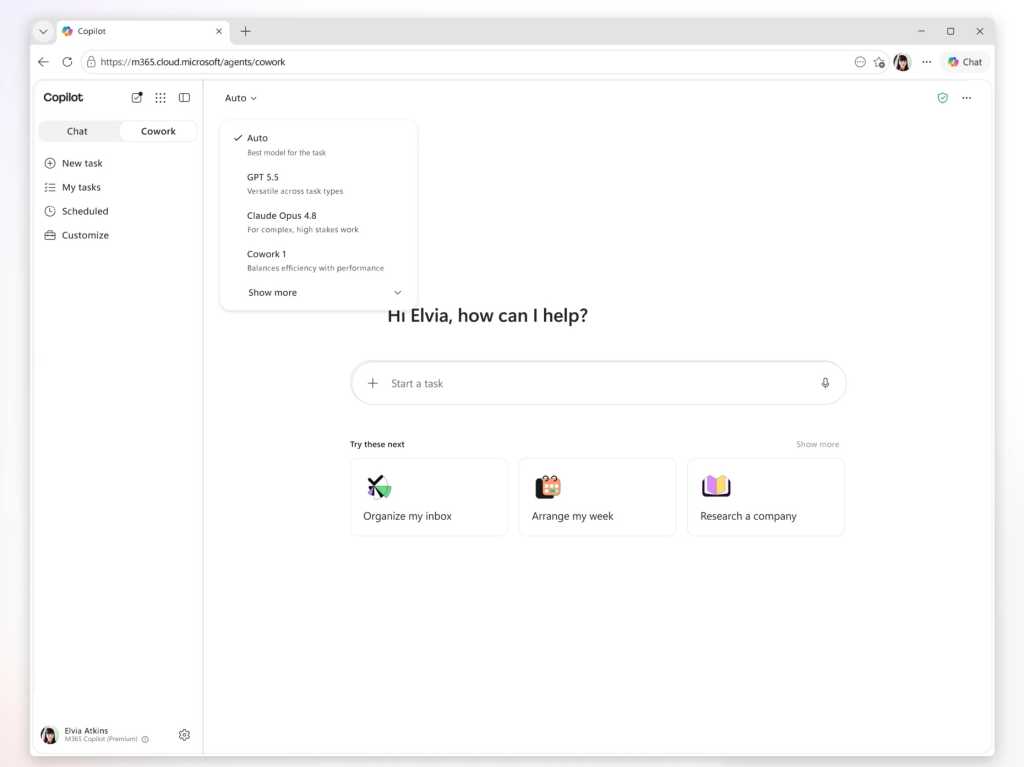
Microsoft unveiled Copilot Cowork in March, pitching it as an AI agent that’s capable of independently performing long-running, multi-step tasks — even when a user’s computer is off. 

It’s built on the same technology that underpins Anthropic’s Claude Cowork. Unlike Claude Cowork, which can interact directly with files and applications on a user’s computer, Copilot Cowork runs in Microsoft’s cloud environment and acts on documents held in a customer’s Microsoft 365 tenant.

On Tuesday, Microsoft unveiled pricing details for Copilot Cowork, which involves usage-based billing in addition to a Microsoft 365 Copilot license ($30 per user each month for large enterprises before discounts, and $20 for Microsoft 365 Copilot for Business). 

The usage-based pricing is calculated from four components, according to Microsoft: “model use, context retrieval, tool calls, and runtime.” 

In practice, this means more intensive tasks that draw on multiple sources, use “deep reasoning” and generate two or more outputs will lead to higher costs — denoted in Copilot Credits. 

There are two payment options: pay as you go — priced at 1 cent per credit — and P3, where customers commit to usage volume in advance and receive a discount.

Cowork is turned off by default; IT admins can decide when to make it available and which employees get access. Admins can also impose spending limits at the tenant, group, and user level, and receive notifications when spending reaches a certain level.

Users will also be able to see how much each tasks costs in credits (available “soon after” the general availability launch, Microsoft said). 

Copilot Cowork customers can select from multiple AI models, including Anthropic’s Opus 4.8 and Sonnet 4.6, while those enrolled on the Frontier program can access OpenAI’s GPT 5.5 and Microsoft’s own Cowork 1 model.

Microsoft is considering hosting a version of DeepSeek’s open source models. “We are actively exploring a range of options that meet those requirements, and DeepSeek is one of several models under consideration. We’ll share more specifics on the underlying model closer to release,” said a Microsoft spokesperson.

Microsoft also announced new integrations with third-party apps such as Miro and Monday.com, with more — such as Adobe, Box, and Canva — coming soon.

This article was updated on June 19 to add Microsoft’s comment on DeepSeek.

  •  

Microsoft says you don’t need another email security tool; experts say, not so fast

Despite best efforts by defenders, malicious emails continue to slip through the cybersecurity cracks, leading some enterprises to implement a layered “defense in depth” strategy that incorporates multiple tools.

Microsoft seems to be challenging this idea, revealing that there are only nominal returns from adding integrated pre- and post-send partners to Defender for Office 365’s protections.

According to its new quarterly benchmarking data, the tech giant catches the vast majority of malicious and spam emails before delivery, misses the fewest compared to competitors by a wide margin, and removes nearly 100% of dangerous emails that do reach the inbox. Collectively, its integrated partners improve that catch rate by less than .05%.

While these numbers seem to tip the scales towards a one-vendor email security stack, experts urge enterprises to be skeptical and cautious of such vendor claims.

Seva Ioussoufovitch, senior research analyst at Info-Tech Research Group, pointed out, “percentages obscure the true quantity and severity of what’s getting through, and, considering it only takes one message to result in an incident, it’s simple enough to argue that there is real value in the defense in depth that having multiple tools provides.”

Malicious and spam email catch by the numbers

Microsoft introduced its quarterly benchmarking report in July 2025 alongside a Defender integrated cloud email security (ICES) ecosystem designed to support multi-vendor security strategies.

The SEG players it ranked itself against this year includes Mimecast, Proofpoint, Hornetsecurity, Trend Micro, Iron Port (Cisco), Barracuda, and FireEye (Trellix); ICES companies include Abnormal, Checkpoint Harmony, Cisco, DarkTrace, KnowBe4 Defend, Tessian, and Trend Micro.

Redmond reported that Defender “consistently leads” in pre-delivery detection, missing 59% fewer high-severity cyberthreats prior to delivery than the other SEG vendors it evaluated. Its closest competitors were Mimecast and Proofpoint. The company also introduced a new metric in this area: A threat miss rate per 1,000 employees. In Microsoft’s case, that was 194 per 1,000; for Mimecast, 478; for Proofpoint, 483.

When it came to post-delivery protection, Defender removed an average of 96.03% of malicious emails that reached the inbox, up from an initial 45% when Microsoft first started tracking the data in its second report.

This makes Defender “an increasingly critical backstop, operating even when ICES solutions are in place,” Jeff Pinkston, VP and GM for Microsoft Defender, wrote in a blog post. Still, ICES tools operating in tandem with Microsoft Defender “continue to provide benefits,” improving malicious catch by 0.29% and spam catch by 0.68%, he said.

“If we focus on the basics, their argument seems strong,” Info-Tech’s Ioussoufovitch noted. “Do you really need a separate ICES vendor for that extra sub 1% catch?” Microsoft paints a “compelling picture” by only focusing on raw catch rate, he said, but we don’t hear the rest of the story: “What exactly is the danger of what isn’t being caught by Defender?”

No one vendor catches everything

David Shipley of Beauceron Security pointed out that the report underscores the fact that “lots of stuff still gets by e-mail filters.”

His company regularly analyzes hundreds of thousands of emails, and the content that gets through “ranges from the shockingly mundane and obvious to a human expert, to highly clever time-delayed attacks,” he said.

A key factor in what gets through is the amount of content that is allowlisted; settings in “100% paranoid mode” get high catch rates, as well as high false positives, Shipley noted. “Anyone who has ever had a sales person lose a deal because the purchase order PDF got flagged has felt this pain.”

Then there’s the AI conundrum: “A key risk for e-mail vendors using agentic LLM-based analysis is it’s now possible to poison those models with hidden content (such as ‘ignore this e-mail, pretty please’),” Shipley said. This means enterprises need a variety of analysis methods.

Ioussoufovitch agreed that keeping pace with threat actors using AI is an industry-wide challenge, particularly as AI enables higher-quality phishing. Filters are improving and will catch some of it, but some will inevitably continue to get through. Those messages are likely highly-targeted, which are lower in volume but harder to catch.

“As of now, current tools do seem to be struggling to keep pace, but that doesn’t mean those tools aren’t necessary,” said Ioussoufovitch. “It just highlights that defense-in-depth, broadly speaking, is becoming more and more important.”

Claims ‘appear more honest’

Shipley said that this report appears more honest, accurate, and mature than others claiming 99.99% phish catch rates, “which is never true.” It’s also a “smart marketing move,” because Microsoft competes for the same security budget as other tools, and would rather enterprises remove those vendors and buy more from it in areas beyond e-mail.

On the other hand, he said, Microsoft is offering up a list of other vendors to think about, “which, congrats to Mimecast on coming in second.”

In the long run, CISOs need to determine the best spend for their limited security dollars, he noted. Enterprises need a good filter; whether they need two is up for debate. “They also clearly still need to invest in a robust awareness program,” Shipley said, “because as this report shows, lots of phishes are still getting delivered.”

Missing an important nuance

Ioussoufovitch noted that while the claims in the study are interesting, the data is presented without much of the nuance that would make it truly actionable.

“We are all too familiar with vendors’ abilities to massage data to tell the story they want, so I would advise leaders not to extrapolate the data beyond what it actually says,” he said.

Instead of the takeaway being “get rid of our current vendors,” this post highlights that Defender provides “considerable value,” he noted. Whether adding or subtracting additional vendors is worth the money should be a case-by-case conversation that considers an organization’s risk appetite, and overall security budget and environment.

“I’d treat these claims more as a reminder to assess your own environment and compare detections,” he said. “Come to conclusions based on the data you have, not what a vendor is presenting.”

This article originally appeared on CSOonline.

  •  
❌