❌

Reading view

L'acqua del rubinetto italiana è sicura nel 99,1% dei casi con controlli ri…

L'acqua del rubinetto italiana è sicura nel 99,1% dei casi con controlli rigorosi, ma un italiano su tre non si fida nonostante i dati. Può contenere residui di cloro, microplastiche o metalli in tubazioni vecchie, ma non compromette la sicurezza. Leggere, usare vista e olfatto per verificare, e contattare il Comune se l'acqua è torbida o con odori sgradevoli.
  •  

Global map of Earth’s mycorrhizal fungal networks could help protect them

Fungi are living below your feet. Roughly 110 quadrillion kilometers of living fungal threads are woven through the world’s soils. Stretched end-to-end they would cover a distance nearly a billion times that from Earth to the sun. Now, scientists have mapped where those networks are, how dense they are, and what threatens them. Last year, researchers published global analyses in Nature about the diversity patterns of underground mycorrhizal fungal communities along with the Underground Atlas to help decision makers visualize where to prioritize conservation. Now, they ask the question: How much fungal infrastructure exists, and where? A new study published in Science by researchers with the Society for the Protection of Underground Networks (SPUN) and collaborators produced the first global maps of arbuscular mycorrhizal (AM) fungal network density and biomass. “There could be up to 10 meters (32 feet) of mycorrhizal network in just a teaspoon of soil,” lead author Justin Stewart of SPUN said in a press statement. Nearly all land plants live in partnership with arbuscular mycorrhizal fungi. The fungi exchange water and nutrients for carbon made from sunlight. These underground networks act as a living circulatory system for the planet, and the new study found they move an estimated 4 billion tons of CO2 equivalent into soils annually, roughly 11% of global human-related emissions. To build the density maps, the team drew on data from more than 16,000 soil cores collected across nine biomes referenced in 322 published studies. They developed machine-learning models to predict network density…This article was originally published on Mongabay

  •  

Canada confirms lithium-rich brine while sustaining 1,400 cubic meters daily flow

Canadian-based critical minerals company E3 Lithium has commissioned Phase 2 of its Clearwater Project Demonstration Facility in Alberta and confirmed lithium concentrations of 75.8 milligrams per liter in brine produced during ongoing reservoir testing.

The company said the latest results support the consistency of lithium-bearing brine chemistry across the Clearwater Project and the broader Bashaw District, a key factor as it advances plans for commercial lithium production.

The demonstration facility is currently being used to test reservoir performance over an extended period. Brine is pumped from a production well and immediately reinjected into a separate injection well, allowing engineers to evaluate flow behavior and reservoir response under operating conditions.

According to the Alberta-based company, the facility achieved stable production and injection through the well pair. During early operations, an electrical submersible pump maintained the targeted flow rate of 1,400 cubic meters per day.

Brine tests confirm consistency

The company regularly collected brine samples during operations and sent them to an independent third-party laboratory for analysis. Results confirmed lithium concentrations of 75.8 mg/L, matching expectations for the resource.

E3 said the reservoir data generated through the testing campaign will be used to update its reservoir development plan and support a feasibility study for the Clearwater Project.

The next stage of operations will focus on analyzing the relationship between brine and natural gas within the reservoir. The information is expected to support the design of the front end of a future commercial processing plant.

The demonstration facility forms part of E3’s broader effort to reduce technical risks before moving toward large-scale lithium production.

“With Phase 2 operations underway, E3 has begun a series of project-scale de-risking activities for the Clearwater Project,” said Chris Doornbos, CEO and chair of E3 Lithium.

The company added that the current campaign has already processed more brine through the two new wells than all of its previous testing programs combined.

Scaling toward production

Lithium demand continues to grow as automakers and battery manufacturers seek additional supplies of the metal used in electric vehicle batteries and energy storage systems.

For E3, the demonstration facility serves as a bridge between laboratory-scale testing and commercial deployment. Data collected from reservoir operations, brine chemistry studies, and future process testing will be used to refine engineering designs and operating plans.

“We have already moved more brine through these two wells than E3 has handled through all its previous testing combined, and we expect to continue to operate the pump as needed over the coming 24 months,” Doornbos said.

He added that confirmation of reservoir performance and lithium grades at the new wells strengthens confidence in the predictability of the resource.

The company plans to continue operating the demonstration facility while advancing front-end engineering design work and completing a feasibility study for the project. The resulting data will help determine the design of a future commercial facility and support decisions related to full-scale development.

  •  

US Air Force B-52 bomber crashes after takeoff, shutting down Edwards airfield

A US Air Force B-52 Stratofortress crashed shortly after takeoff from Edwards Air Force Base in Southern California on Monday, sending a towering plume of black smoke over the desert installation and triggering a large-scale emergency response.

The bomber went down at about 11:20 a.m. local time at the base, located roughly 100 miles northeast of Los Angeles in the Mojave Desert. Officials have not said how many people were aboard the aircraft or whether anyone survived.

Video captured by local news helicopters showed smoke continuing to rise from the crash site hours later. The area near the runway appeared heavily scorched, with blackened ground marking the impact zone. Few recognizable pieces of the aircraft could be seen from the air. The cause of the crash remains unknown.

Emergency response continues

Edwards Air Force Base said emergency crews rushed to the scene immediately after the aircraft went down. In an initial statement, the base said the situation remained ongoing and that additional details would be released as they became available.

🇺🇸 A US Air Force B-52 bomber crashed shortly after takeoff from Edwards Air Force Base in California. pic.twitter.com/G56SEDLkkS

— PAryan 8🪽8 (@RebelGoy88) June 15, 2026

Officials later posted an update on X, saying the installation had shut down its airfield while first responders carried out rescue and recovery operations. Aircraft headed to Edwards were diverted elsewhere, and the base suspended all non-commercial visitor passes until further notice.

Update- 12:48 PDT: The airfield has been closed, and all inbound aircraft are being diverted.

All non-commercial visitor passes have been suspended until further notice to allow the installation to focus entirely on emergency response operations.

— Edwards Air Force Base (@EdwardsAFB) June 15, 2026

A spokesperson for the installation declined to provide additional details from local media as authorities focused on the response effort. Investigators are expected to examine the wreckage, maintenance history, and flight information to determine what led to the accident.

Questions surround crew

The Air Force has not identified the crew members involved or disclosed their condition. The B-52H typically operates with a five-person crew consisting of pilots and specialized officers responsible for navigation and electronic warfare duties.

As news of the crash spread, lawmakers offered support to those affected. Rep. Jay Obernolte, whose district includes Edwards Air Force Base, said he and his wife were praying for everyone involved, including the crew, their families and the first responders working at the scene. Rep. Lisa McClain also expressed support, saying her prayers were with those impacted by the crash.

My prayers are with everyone involved in the B-52 crash at Edwards Air Force Base this afternoon. Thank you to the emergency crews responding right now. Our service members carry the weight of this nation’s defense every single day. We are with them.

— Chairwoman Lisa McClain (@RepLisaMcClain) June 15, 2026

Aging bomber fleet

The B-52 Stratofortress first entered service in the 1950s and remains one of the oldest aircraft still flying in the US military inventory. The Air Force currently operates 76 B-52H bombers. Despite their age, the aircraft continue to fly operational missions and have undergone repeated modernization efforts.

Monday’s incident marks the most serious B-52 accident in years. The last fatal crash involving the bomber occurred in 2008, when six Air Force personnel died after a B-52 crashed near Guam during preparations for a ceremonial flyover.

Boeing stopped building the aircraft in 1962, meaning the Air Force can no longer replace lost bombers with newly manufactured airframes. For now, investigators remain focused on the immediate task of understanding what happened at Edwards Air Force Base and determining the fate of those aboard the aircraft.

  •  

Facebook’s new AI Mode search gets its info from public posts

A screenshot of AI-generated search results in Meta’s AI Mode on Facebook

Your public Facebook posts could help inform AI-generated results in Meta's new AI Mode. When you search on Facebook, the "AI Mode" option will appear alongside the usual search modes like "People" and "Marketplace." It's one of several new AI features Meta is rolling out starting today, including photo presets that swap sports jerseys onto fans and suggestions for collage templates.

A screenshot of AI-generated search results in Meta's AI Mode on Facebook

Instead of "just links," it gives users AI-generated results that pull from publicly-posted content across Meta's platforms, like the AI search feature in its new Reddit-like Forum app. Users can also ask Meta's AI follow-up questions in response to the search …

Read the full story at The Verge.

  •  

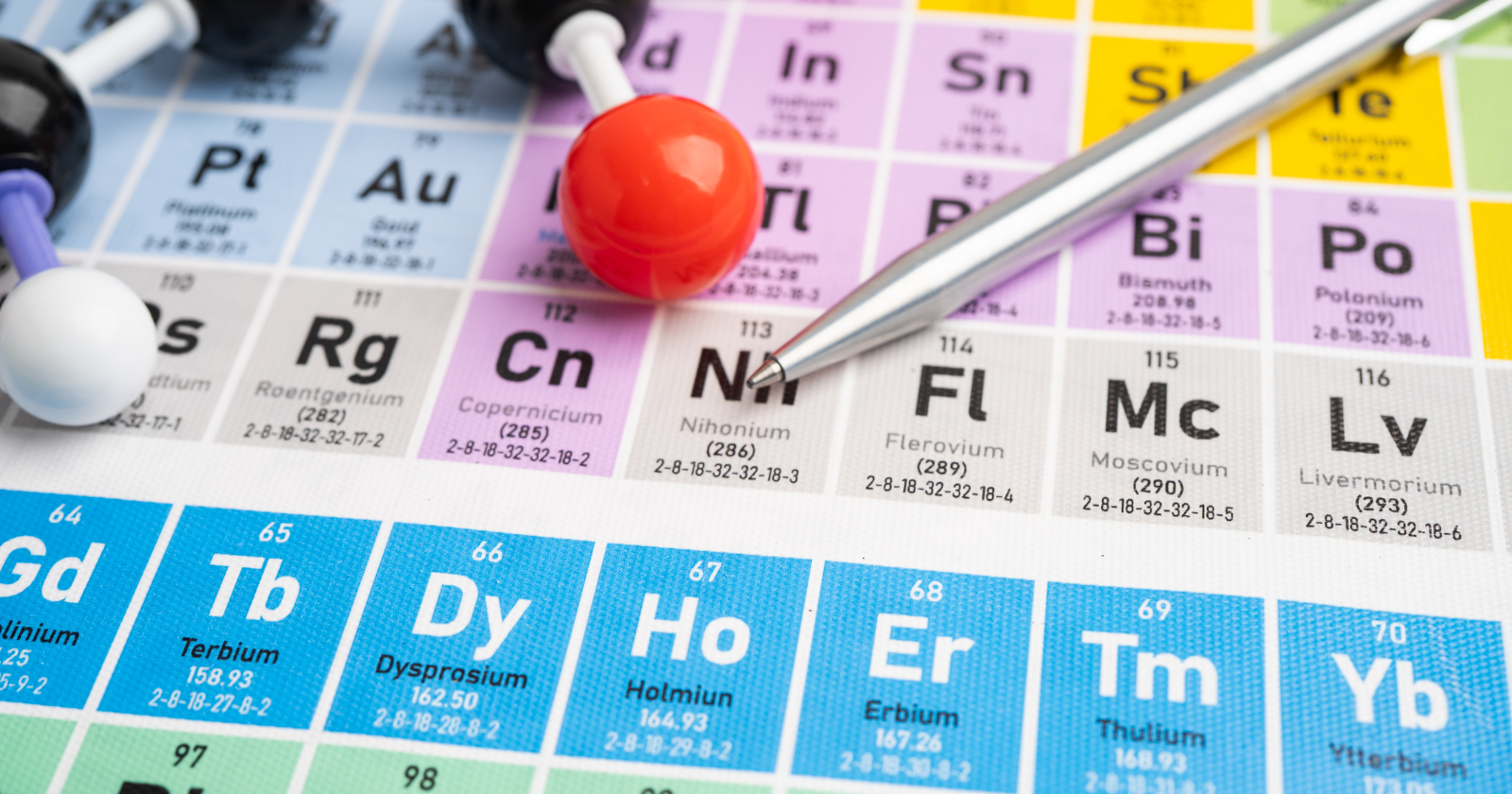
In 1869, Dmitri Mendeleev arranged the known elements into a table and left gaps for what had not yet been discovered, but the detail that makes the periodic table remarkable is that chemistry became organized enough to predict missing pieces of reality

In March 1869, Dmitri Mendeleev presented to the Russian Chemical Society a way of laying out around sixty elements then known. He ordered them by atomic weight and broke the line into rows so that elements with similar chemical behaviour fell into the same columns. Where the pattern called for an element that no one had found, he did not close the line up. He left the space empty and described what should eventually fill it.

The arrangement is now so familiar that the gaps are easy to overlook. They are the part worth dwelling on. Other people had already noticed that the elements repeat their properties at regular intervals. What Mendeleev did with the repetition was different in degree: he trusted the pattern enough to bet against the existing inventory, and to say, in print, that the inventory was incomplete in specific places by specific amounts.

What the table was built on

The organising idea was periodicity. Run through the elements in order of increasing atomic weight and their properties do not change steadily; they cycle. A reactive light metal is followed some steps later by another reactive light metal, a pungent gas by another pungent gas. Mendeleev arranged the rows so that these recurrences stacked into vertical groups, lithium above sodium above potassium, and so on.

Atomic weight was the only quantity he had to order by. He did not know what caused the periodicity, because the structure of the atom was still decades away. He was working from measured weights and observed chemistry, and arranging both until the columns made chemical sense. In a few cases the weights and the chemistry disagreed, and he chose the chemistry, placing an element where its behaviour fit even when its measured weight argued for somewhere else.

The gaps and the predictions

For three of the empty spaces, Mendeleev went further than leaving a blank. He gave the missing elements provisional names built from the Sanskrit prefix eka, meaning one, so that eka-aluminium meant the element one place below aluminium. For each he estimated an atomic weight, a density, and a set of chemical properties, reading them off the neighbours that surrounded the hole.

The estimates were close enough to be checked. Eka-aluminium arrived in 1875, when the French chemist Paul-Émile Lecoq de Boisbaudran isolated a new metal he called gallium; its density, once measured carefully, matched Mendeleev’s figure. Eka-boron arrived in 1879 as scandium, identified by Lars Fredrik Nilson in Sweden. Eka-silicon arrived in 1886 as germanium, found by Clemens Winkler in Germany, and its properties tracked the prediction closely enough that the agreement is still the standard example taught from the episode.

Three confirmed predictions within seventeen years did more for the table than any argument could. A scheme that merely tidied the known elements would have been one convenience among several. A scheme that named absent elements and described them before anyone had seen them was harder to dismiss.

He was not the only one, and that matters

Mendeleev did not invent the idea that the elements form a periodic series. Alexandre-Émile Béguyer de Chancourtois had plotted them on a spiral in 1862. John Newlands, in London, had published his “law of octaves” in the mid-1860s, noting that every eighth element resembled the first, and had been mocked for it. The German chemist Lothar Meyer was developing his own table at almost the same time as Mendeleev and arguably had the periodicity of physical properties drawn more cleanly.

What separated Mendeleev’s version was not priority but nerve. Newlands had let the known elements set the length of his pattern. Mendeleev let the pattern set the length, and treated mismatches as evidence that an element was missing or that a measured weight was wrong, rather than as evidence against the scheme. The historian Eric Scerri, who has written the standard modern account of the table’s development, has argued that this willingness to subordinate the data to the system, and then to stake testable predictions on it, is the better explanation for why Mendeleev’s name attached to the result.

Where the 1869 table was wrong

The story is usually told as a clean run of successful forecasts. It was not clean. Mendeleev predicted elements that were never found, including light elements he expected to sit before hydrogen, tied later to his mistaken belief in a luminiferous ether. Several of his other interpolations did not pan out as described.

Two larger problems sat outside the 1869 table entirely. The noble gases, argon and its relatives, were discovered in the 1890s and formed a whole column that the original scheme had not anticipated; Mendeleev was at first reluctant to accept them. And the ordering principle itself was incomplete. A handful of pairs, tellurium and iodine among them, sat in the right chemical place but the wrong weight order. The reason became clear only in 1913, after Mendeleev’s death, when Henry Moseley showed that the elements are properly ordered not by weight but by nuclear charge, the atomic number. The table Mendeleev built by chemical intuition turned out to be tracking a physical quantity he had no way to measure.

That is the honest shape of it. The gaps were the achievement, and the parts he filled wrongly belong in the same account as the parts he filled before anyone else could.

The part worth keeping

The detail in the headline is fair: by 1869 the chemistry of the elements had become ordered enough that a missing piece could be described before it was found. That is a particular kind of confidence, and it is rarer than the finished table makes it look. It requires a pattern reliable enough to extrapolate from, and someone prepared to be checked against an empty square.

Mendeleev was prepared to be checked, and within his lifetime three of the squares filled in close to where he had said they would. The ones that did not fill in, and the deeper rule that only emerged after he was gone, are part of why the table is interesting rather than merely useful. It was right enough to predict, and wrong in ways that pointed at the physics underneath.

The post In 1869, Dmitri Mendeleev arranged the known elements into a table and left gaps for what had not yet been discovered, but the detail that makes the periodic table remarkable is that chemistry became organized enough to predict missing pieces of reality appeared first on Space Daily.

  •  

Una molécula atrapada en helio superfluido acaba de mostrar una sombra que la ciencia no podía fotografiar. El experimento permitió “dibujar” por primera vez la forma espacial de su función de onda

Un equipo científico logró detectar cómo se distribuye una molécula dentro de una gota de helio superfluido, revelando una especie de sombra cuántica imposible de ver con luz convencional. El resultado ofrece una forma inédita de observar la función de onda, una de las ideas más abstractas de la física cuántica.

  •  

La VPN con 45 días de garantía vuelve a bajar el precio y nadie lo vio venir: CyberGhost a 1,59 USD/mes por 26 meses

CyberGhost VPN, la única VPN del mercado con garantía de devolución de 45 días, ha vuelto a bajar su plan de 2 años + 2 meses a 1,59 USD/mes, un 88% de descuento sobre el precio mensual. Servidores en 100 países con redes de 10 Gbps, 7 dispositivos simultáneos, WireGuard y política de no registros certificada. El precio más bajo en la historia del servicio.

  •  
❌