❌

Reading view

Boston Dynamics Atlas shows signs of general intelligence for factory work, reports say
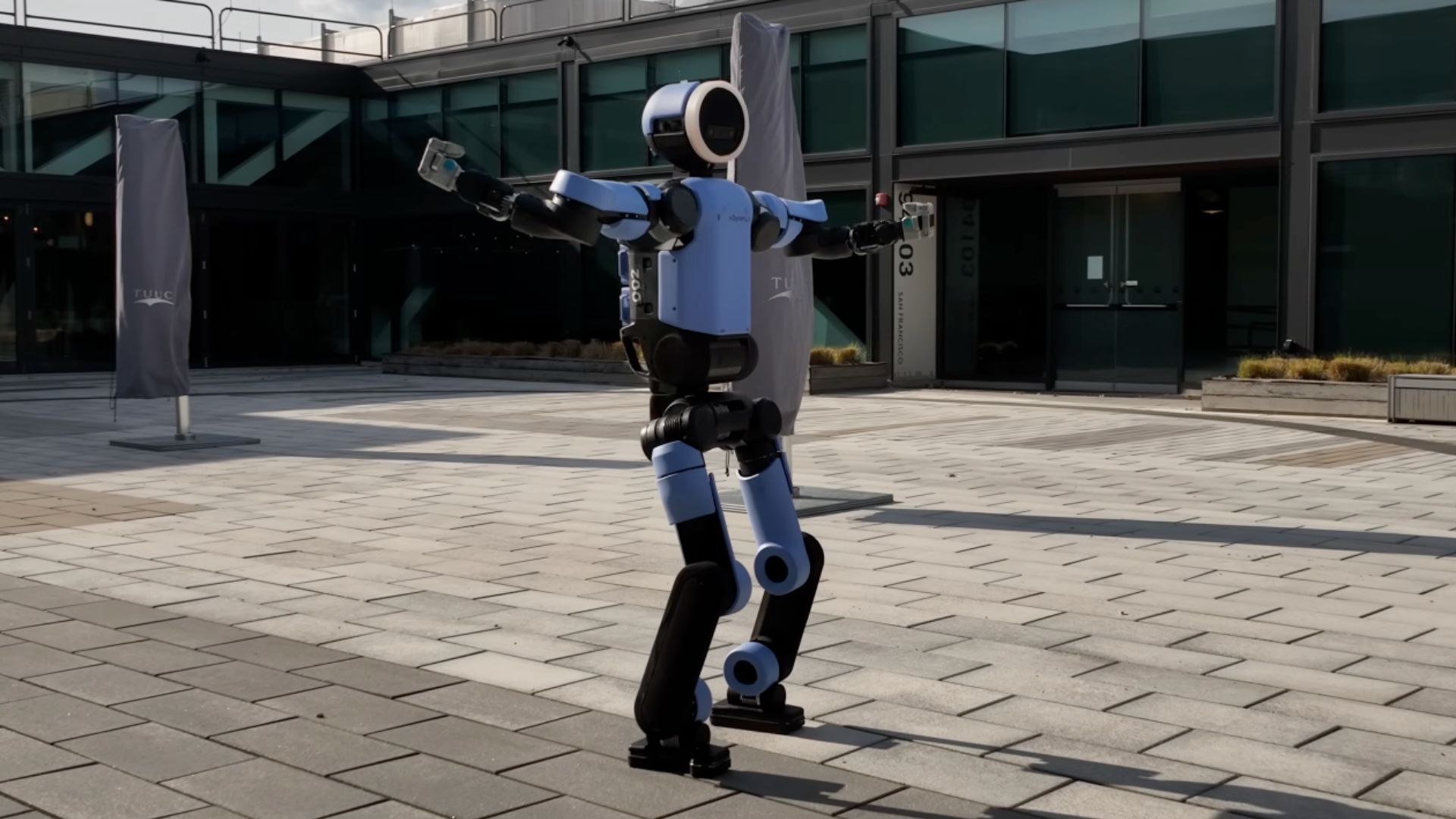
New reports suggest that Boston Dynamics’ Atlas is approaching the autonomy needed for industrial deployment.

The assessment follows recent demonstrations by Boston Dynamics that indicate significant progress in developing general intelligence.

Experts suggest advancements now enable humanoid robots to adapt to unfamiliar environments and perform a broader range of tasks beyond preprogrammed actions.

Recently, the US robotics firm launched a campaign featuring Atlas, using football to showcase human-centered robotics, AI, and human-robot interaction.

Atlas gains intelligence

Boston Dynamics is making rapid progress toward commercializing humanoid robots, with its Atlas platform approaching the level of autonomy required for industrial deployment, according to a new report from KB Securities.

Analyst Kang Sung-jin said recent demonstrations by Boston Dynamics, Hyundai Motor Group’s US-based robotics subsidiary, point to major advances in the development of humanoid robot “general intelligence” — the ability to adapt to unfamiliar environments and perform a broad range of tasks without relying solely on preprogrammed instructions, reports The Korean Herald (TKH).

A key factor behind this progress is the company’s accelerated training framework. According to the report, Boston Dynamics can run simulations equivalent to millions of hours of robot training in a single day. The resulting behaviors and skills can then be transferred to a physical Atlas robot in roughly one hour, significantly shortening development cycles and enabling faster deployment of new capabilities.

The report credits strategic collaborations with Google DeepMind and Nvidia for helping drive these advancements. DeepMind contributes expertise in artificial intelligence and learning systems, while Nvidia provides the high-performance computing infrastructure needed for large-scale simulation and robot training.

Recent Atlas demonstrations also highlight notable improvements in physical intelligence and whole-body control. In one example, the humanoid robot moved a refrigerator using coordinated movements across its entire body, while another video showed Atlas performing dynamic kicking motions that required balance, agility, and precise motor control, reports TKH.

Kang said the demonstrations reinforce Hyundai Motor Group’s commitment to industrial humanoid robotics and position Boston Dynamics as a leading contender in the emerging market. He projects the company could secure 15 percent of the global humanoid robot market by 2035 and as much as 60 percent of the premium industrial humanoid segment.

Atlas industrial leap

Boston Dynamics says one of the key advantages of its new Atlas humanoid robot is a significantly reduced “sim-to-real gap” — a common robotics challenge where skills learned in simulation fail to transfer reliably to the physical world. The company attributes this improvement to Atlas’ simplified hardware design, which makes it easier to create highly accurate simulations for training.

Unlike many humanoid robots that use numerous actuator types and complex mechanical systems, Atlas relies on just two actuator types across its body. Its arms and legs are also designed symmetrically, simplifying both control and simulation. This streamlined architecture allows engineers to train the robot more efficiently in virtual environments and rapidly transfer those capabilities to the real machine.

Boston Dynamics also redesigned Atlas to eliminate cables running across joints, enabling continuous joint rotation while reducing wear and maintenance requirements. The added flexibility allows the robot to perform movements that are difficult for conventional humanoids.

The company highlighted Atlas’s ability to handle heavy industrial tasks. Although the robot was trained using loads weighing between 50 and 70 pounds (23–32 kilograms), it successfully moved a refrigerator weighing more than 100 pounds (45 kilograms) during testing. According to Boston Dynamics, such tasks require more than visual perception, demanding full-body coordination, weight anticipation, balance, and precise force control.

The company added that Atlas’s athletic feats, including handstands and backflips, serve a practical purpose by helping develop balance, agility, slip recovery, and endurance needed for real-world industrial environments.
💾

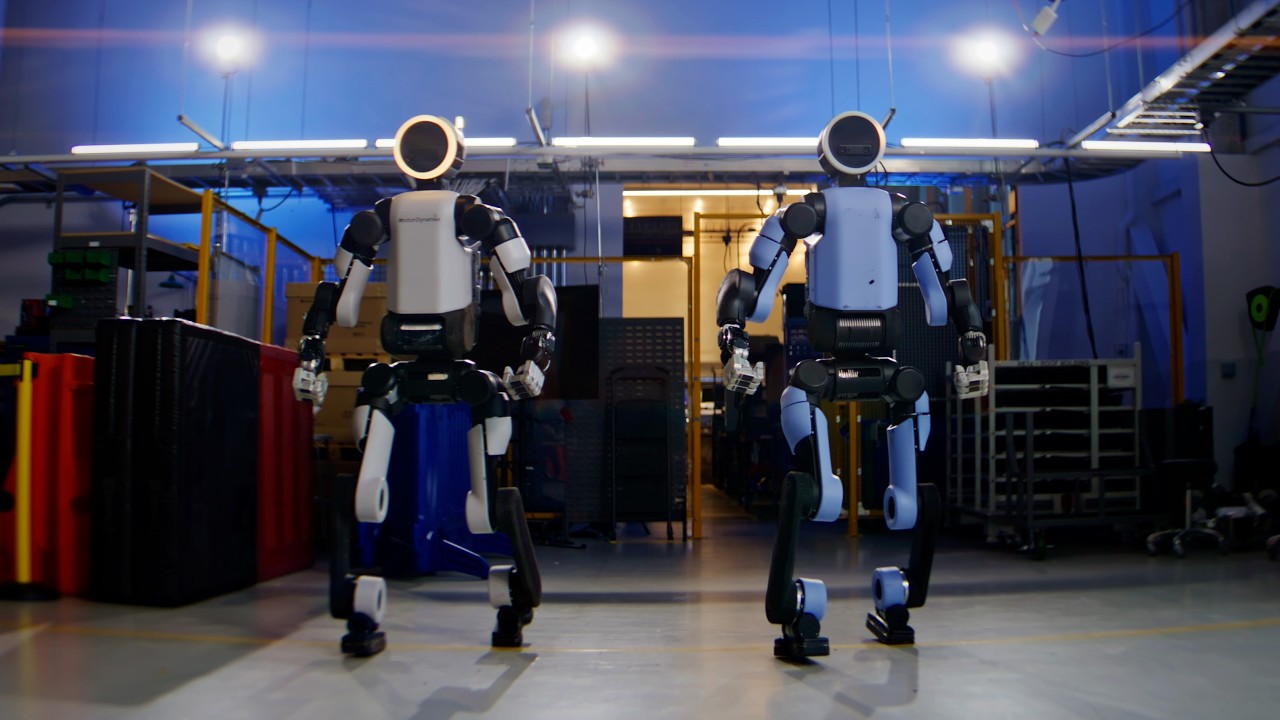
Boston Dynamics’ Atlas nears industrial autonomy, adapting to new environments and handling tasks beyond preprogramming.
  •  

Samsung-backed 7 DOF robot is learning to work inside a giant e-commerce warehouse

A mobile robot developed by Samsung-controlled Rainbow Robotics has reportedly begun testing inside a Coupang fulfillment center, marking what could be its first deployment in a live commercial warehouse environment.

According to a report by The Korea Herald, Coupang is evaluating Rainbow Robotics’ RB-Y1 robot to determine whether it can reliably sort, transport, and handle goods within one of South Korea’s highly automated logistics networks. While neither Coupang, Samsung, nor Rainbow Robotics has publicly confirmed the pilot, industry sources told ETNews that a larger deployment could follow if the tests prove successful.

The reported trial represents an important step for the RB-Y1, which until now has primarily been used by universities, research institutions, and industrial partners for testing and development.

A different kind of humanoid

Unlike the bipedal humanoid robots grabbing headlines worldwide, the RB-Y1 takes a more practical approach. The machine combines a wheeled autonomous mobile base with a dual-arm upper body designed to mimic the movement of a human torso. 

The robot stands approximately 1.4 meters tall and weighs 131 kilograms. Its two robotic arms offer seven degrees of freedom each and can handle payloads of up to 3 kilograms per arm.

Mounted on a high-speed wheeled platform capable of traveling at 1.5 meters per second, the robot is designed to navigate warehouses, factories, and research facilities while performing tasks such as picking, sorting, and manipulating objects.

Rainbow Robotics says the platform uses a 20-axis whole-body control system to maintain stability during movement and when handling items. The company also developed collision-avoidance software that prevents the robot’s arms from interfering with each other during operation.

Why Coupang is interested

For Coupang, South Korea’s largest e-commerce company, warehouse automation has become increasingly important as the company seeks to improve efficiency and reduce operating costs.

The company has invested heavily in robotics, automation, and artificial intelligence in recent years. According to The Korea Herald, Coupang has invested more than $84 million in global AI startups since 2023 as part of broader efforts to modernize its logistics infrastructure.

The potential benefits extend beyond productivity. South Korea’s Serious Accidents Punishment Act holds executives legally accountable for fatal workplace accidents, creating additional incentives for companies to automate potentially hazardous tasks.

With a payload capacity better suited to lighter goods than heavy lifting, the RB-Y1 would likely be deployed for sorting, picking, and moving smaller items if the pilot progresses to commercial use.

Samsung’s growing robotics ambitions

The trial also highlights Samsung’s expanding ambitions in robotics. Samsung increased its stake in Rainbow Robotics to 35 percent before making the company a subsidiary, identifying robotics as one of its next major growth areas alongside artificial intelligence and advanced semiconductors.

The move comes as South Korea continues to lead the world in industrial automation. According to the International Federation of Robotics, the country has the highest robot density globally, with roughly 1,012 industrial robots for every 10,000 manufacturing workers. More than seven times the global average.

If the Coupang pilot proves successful, it could provide one of the clearest signs yet that advanced mobile manipulators are beginning to transition from research laboratories into large-scale commercial logistics operations.

  •  

Taiwan’s new ‘intelligent’ humanoid robot combines sensing and adaptive interaction

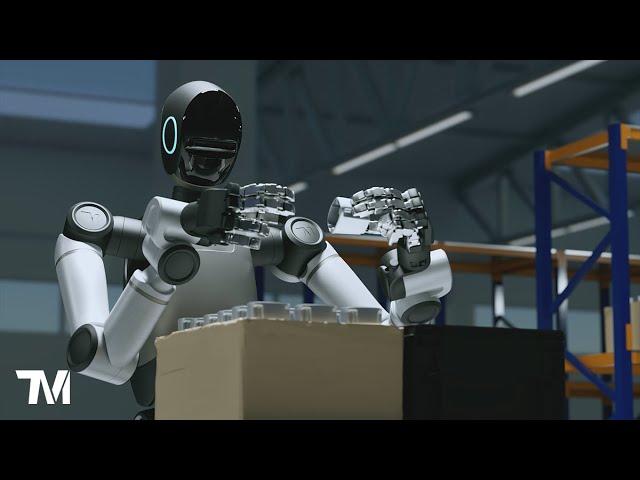
A Tawniese firm has unveiled its first humanoid robot capable of interacting with the physical world.

TM Technology, known primarily for integrated circuit design, has expanded its operations into sectors such as construction, green energy, and smart manufacturing, with support from its parent, Yinglin Group.

TM Technology said the humanoid robot combines advanced hardware and software as part of a broader intelligent platform strategy, representing a significant step in its efforts to develop next-generation AI-powered robotic systems.

Recently, Techman Robot from Taiwan unveiled its TM Xplore I humanoid at Nvidia GTC 2026 in San Jose, highlighting a collaboration with QCT and Nvidia.

Embodied AI emerges

As per reports, TM Technology’s newly unveiled humanoid robot combines AI, advanced manufacturing, biomimetic engineering, and multi-modal sensing technologies to operate in complex real-world environments. Designed as an embodied AI system, the robot features a layered architecture that mirrors key functions of the human nervous system.

At its core is an AI-powered “brain” responsible for semantic understanding, reasoning, task planning, and decision-making. A dedicated “cerebellum” subsystem manages balance, posture control, locomotion, and coordinated movement, enabling the robot to perform tasks with greater stability and precision. The platform also incorporates a sophisticated perception suite that combines 3D vision systems, LiDAR sensors, and force-sensing technology to create a detailed understanding of its surroundings and support real-time interaction, reports Taiwan News (TN).

The humanoid is equipped with multi-degree-of-freedom joints and dexterous robotic hands, enabling it to manipulate objects and perform a wide range of physical tasks. According to the company, the robot can handle transportation, inspection, assembly, and other precision operations that require coordinated motion and environmental awareness. Unlike traditional industrial robots that follow pre-programmed routines, the system is designed to adapt to changing conditions through learning-based interaction and intelligent decision-making.

TM Technology said the development marks a shift from conventional hardware manufacturing toward integrated intelligent platforms. The company expects initial deployment in factories and logistics environments, where autonomous robots can assist with repetitive and labor-intensive tasks, before expanding into healthcare, caregiving, and household service applications as the technology matures, reports TN.

Taiwan’s humanoid push

Another Taiwanese firm, Techman Robot, recently unveiled its next-generation humanoid robot, TM Xplore I. The robot reflects Techman’s strategy of combining artificial intelligence with industrial automation under its “See · Think · Act – Powered by AI Robotics” framework.

Unlike traditional bipedal humanoids, TM Xplore I features a humanoid upper body mounted on a wheeled mobile base, a design intended to improve stability, mobility, and operational reliability in factory environments. The platform combines autonomous navigation with dexterous manipulation, enabling it to transport materials, interact with workers, and perform precision tasks in industries such as semiconductor manufacturing, electronics assembly, and automotive production.

The robot is powered by Nvidia’s Jetson Thor computing module, providing high-performance edge AI capabilities for real-time decision-making. It also incorporates Vision-Language-Action (VLA) technology, allowing it to process visual and language inputs simultaneously and translate them into physical actions. Techman’s software stack supports multimodal sensor fusion, generative AI inference, and autonomous operation.

TM Xplore I further leverages Nvidia’s robotics ecosystem, including Isaac Sim for simulation-based training and testing, FoundationStereo for AI-powered depth perception, and Isaac GR00T for enhanced dexterity and autonomy. Together, these technologies enable faster deployment, improved adaptability, and more efficient automation in smart manufacturing environments.

💾

Taiwan's TM Technology unveils its first humanoid robot, combining AI, sensing, and robotics for real-world tasks.
  •  

China’s new welding robot cuts 70mm steel, boasts 30-ton capacity, 20-year life

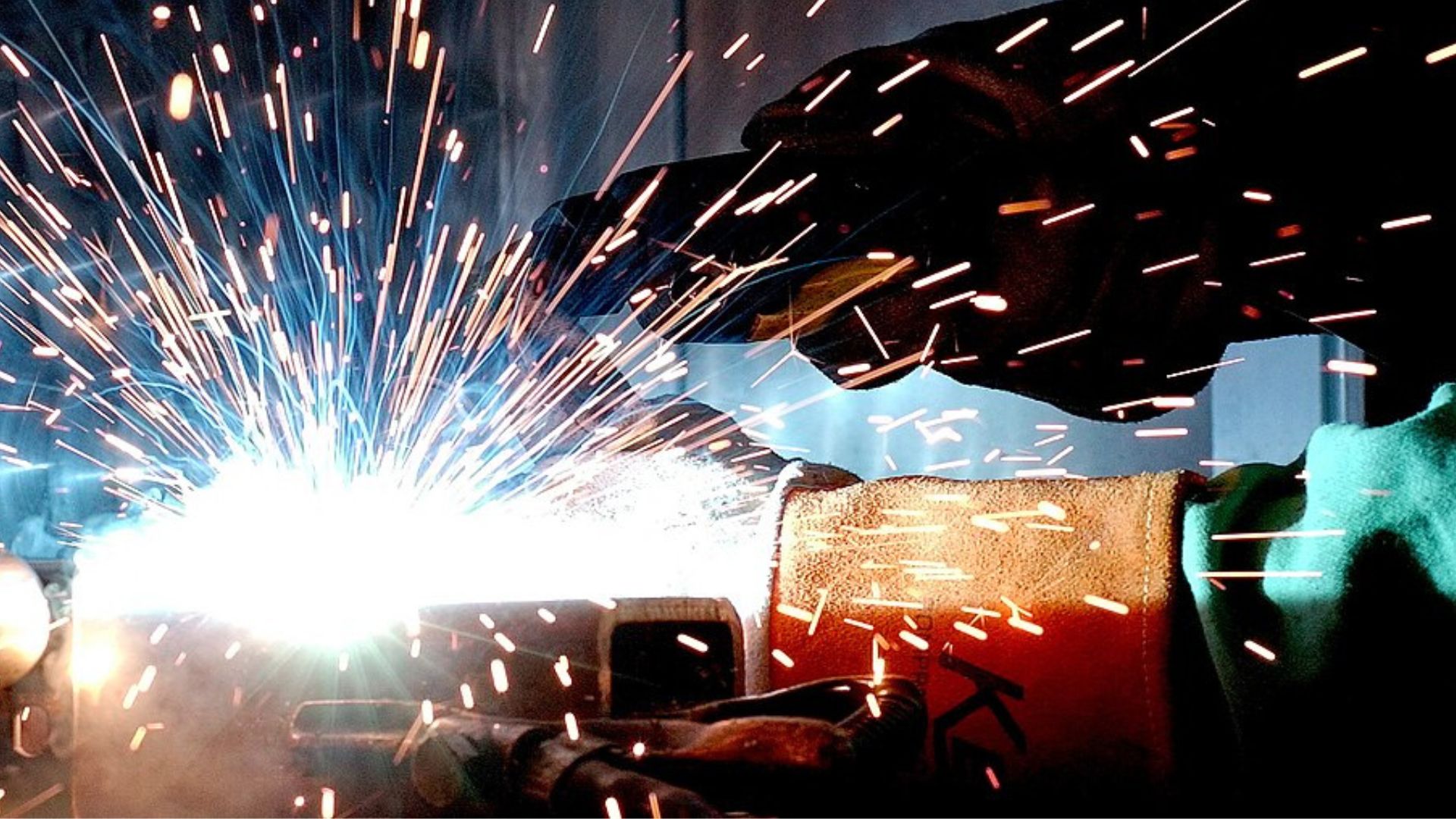
China has reportedly deployed its first domestic AI-driven marine welding system at a smart manufacturing base in Tianjin.

Developed by Offshore Oil Engineering Co., the robotic system is designed to handle highly complex, customized, and heavy welding scenarios for offshore oil and gas platforms.

The robot is fully capable of handling specialized offshore components, including module nodes, buckle rings, and deepwater jacket strengthening rings.

20 years of life

Automotive manufacturing was long seen as the peak of robotic welding precision due to its uniform parts, but marine engineering presents a much tougher challenge. 

Marine welders handle massive, oddly shaped, and heavy components such as deepwater jacket strengthening rings and module nodes. All these tasks require a far higher level of adaptive, heavy-duty automation. This new AI-driven system aims to solve this. 

Built for extreme heavy-duty manufacturing, the system has a 20-year service life and a massive 30-ton maximum load capacity. Global Times reported that it can slice through and fuse steel up to 70 millimeters thick. Moreover, it has an overall operational efficiency exceeding 40 percent. 

Equipped with artificial intelligence, visual weld seam recognition, and intelligent 3D laser vision alignment, the mechanical arm scans its environment in real time. It maps out a custom multi-layer path-planning strategy for each unique piece of steel.

With just a single command, the robot automatically handles the entire welding process from start to finish. It manages tasks independently, using real-time data to seal the initial root pass and automatically correct its trajectory on the go.

“The robots can be activated with a single click to complete intelligent welding of product components, and are equipped with functions such as intelligent weld path correction, intelligent root pass welding, and dual-sided four-wire intelligent filling,” the company stated in an earlier release.

Plus, the AI’s precision ensures a first-pass qualification rate of over 98 percent, thereby eliminating the need for costly, time-consuming structural re-work.

AI-powered marine welder

Getting the system factory-ready was a grueling trial by fire. Before entering full active duty, the robot system underwent nearly 10 months of on-site debugging to ensure it could withstand the harsh realities of a shipyard. 

The engineering team pushed the technology to its limits, conducting roughly 1,000 rigorous welding experiments to fine-tune the AI before clearing it for the front lines of manufacturing.

Reportedly, the advanced welder isn’t working alone. An independently developed intelligent grinding robot was deployed right alongside it. 

Using cutting-edge technologies such as intelligent visual positioning and real-time force-control compensation, this autonomous companion ensures the steel is perfectly prepped and finished. 

The grinding robot has already proven its worth on the shop floor, successfully processing more than 500 steel sections while clocking a sleek 15 percent boost in operational efficiency.

It solves the issues of poor accessibility and difficult precision control, allowing the robot to execute complex spatial welds on massive structures where human operators and standard machinery struggle.

Driven by China’s expanding “AI Plus” initiative, heavy industry is rapidly moving from dangerous, labor-intensive shipyards into highly automated, self-correcting digital ecosystems. For human crews, this transformation removes them from hazardous sparks and toxic fumes, shifting their roles from manual laborers to supervisors of a faster, tireless robotic workforce.

💾

China has reportedly deployed its first domestic AI-driven marine welding system at a smart manufacturing base in Tianjin.
  •  

Pemba humanoid robot eyes Mount Everest summit after historic 20,312-ft climb

A Unitree G1 humanoid robot is being prepared for a planned Mount Everest expedition later this year after taking part in a high-altitude test on Mount Chimborazo in Ecuador.

The robot, named Pemba, was provided by Eastworlds Labs, the AI robotics initiative of Virtuals Protocol. It was part of a Geologic Dome expedition that placed the robot at 20,312 feet on June 5, 2026.

The Chimborazo mission is being treated as an early test before the planned Everest trek in the fall. Mount Chimborazo is known for a unique geographical fact. Its summit is the farthest point from Earth’s center and the closest point to the Sun on Earth.

Eastworlds Labs said the expedition supports its larger goal of bringing autonomous AI agents into the physical world.

The team also documented the mission and plans to create a trailer for the Everest expedition. The project is working with the production crew behind Netflix’s 14 Peaks: Nothing Is Impossible.

Everest is the next challenge

The planned Mount Everest trek will take the project into one of the world’s most difficult mountain environments.

For Eastworlds Labs and Geologic Dome, the aim is not only to place a robot in extreme terrain.

The larger goal is to test whether humanoid robots can support conservation, research, and monitoring in places that are hard or dangerous for people to reach often.

According to Eastworlds Labs, the Unitree G1 robot will be donated to the local Sherpa community for the Everest expedition. The company said this will connect the project’s legacy to the region where the next mission will take place.

The Everest plan follows the Chimborazo expedition, where Pemba was the only humanoid robot used. The Unitree G1 weighs 77 pounds (35 kg) and can fold down to 690 mm, which made it easier to transport through difficult terrain.

During the Ecuador mission, the team disassembled the robot and carried it between camps. It was then reassembled at different stages of the journey.

Chimborazo test pushed the robot

Mount Chimborazo gave the team a difficult test before Everest.

Temperatures on the mountain can fall to 5 degree Fahrenheit (-15°C), while wind gusts can reach 55 miles per hour (90 km/h). To help the robot handle these conditions, the Unitree G1 was fitted with custom cold-weather jackets, gated enclosures, and composite feet.

The robot’s autonomy system was trained in NVIDIA Isaac Sim at 1,620 times real-time speed. Eastworlds Labs said the system achieved 85 percent sim-to-real transfer on uneven terrain.

The robot was also pretrained to respond to wind turbulence and recover its balance on technical alpine terrain.

Communication during the expedition was supported by a proprietary mesh relay across camps. Satellite internet at each camp delivered 25 ms latency. This stayed below the 50 ms limit needed for live teleoperation with Reflex’s latency software.

Conservation goal behind the mission

The Everest plan is part of Geologic Dome’s broader conservation work.

The organization is building autonomous infrastructure for conservation zones. This includes communication relays, AI-powered ecological monitoring, and energy-independent robotic platforms.

Eastworlds Labs said it sponsored the Chimborazo expedition and is also contributing funding toward Geologic Dome’s nature conservation work.

Geologic Dome is currently testing its approach across three sites. These include equatorial forest in the Democratic Republic of Congo, montane cloud forests in Ecuador, and the full Himalayan altitude gradient in Nepal.

  •  

Open-source swarm robotics: Custom ESP32 MiniBots turn chess pieces into autonomous robots

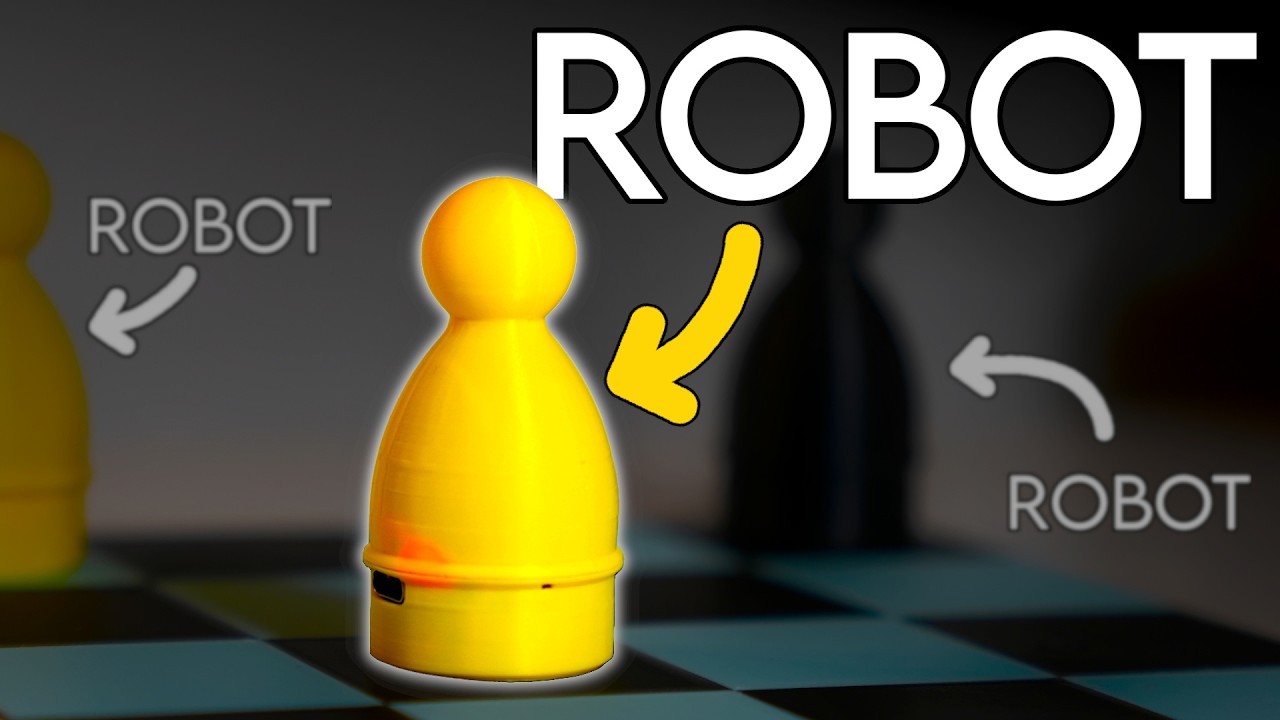
A hardware developer known online as 3DprintedLife has unveiled an open-source swarm robotics project that transforms each individual chess piece into an autonomous micro-robot capable of independent navigation, wireless communication, and self-localization.

The custom-engineered setup, appropriately named MiniBots, addresses a major challenge in miniaturization and hardware integration. To build a fully operational self-playing board using this methodology, every single piece must operate as a standalone robotic unit.

This means each individual bot requires its own processing unit, onboard power supply, dedicated motor drivers, locomotion mechanism, and positioning sensors, all while remaining small enough to fit within the standard squares of a functional chessboard layout.

Inside the Hardware of a MiniBot Piece

The physical architecture of each MiniBot piece is built around a highly compact, custom-designed printed circuit board (PCB) that fits neatly inside a 3D-printed outer shell. At the heart of each robot’s electronic stack is an ESP32-C3 microcontroller module.

Chosen for its miniature footprint and integrated wireless capabilities, this single-core module manages the primary firmware operations and low-level control loops.

For movement, each micro-robot relies on two ultra-miniature PMO8-2 stepper motors, each coupled with a specialized onboard stepper driver integrated circuit (IC).

These tiny motors drive a set of miniature wheels using direct friction engagement, allowing the piece to pivot, turn, and travel precisely across the smooth surface of the chessboard. Powering this array is a small 170 milliampere-hour (mAh) Lithium-Polymer (LiPo) battery tucked inside the base.

To coordinate the movements of up to 32 independent robots simultaneously, the system uses a dual-tier control hierarchy. A centralized command hub module acts as the master controller, utilizing the low-latency ESP-NOW wireless protocol to communicate directly with each piece.

The hub’s main board, which also operates on an ESP32-C3 wireless interface, connects to a Raspberry Pi single-board computer (SBC) via a serial link. The Raspberry Pi handles the high-level coordination and execution scripts using Python-based software.

Overcoming the self-localization bottleneck

The most complex hurdle of the swarm design is positioning. For a piece to successfully navigate to a destination square, it must first establish exactly where it is located on the 8×8 playing grid. While the developer initially considered using ultrasonic location sensors, the final design pivoted to a specialized electromagnetic tracking system.

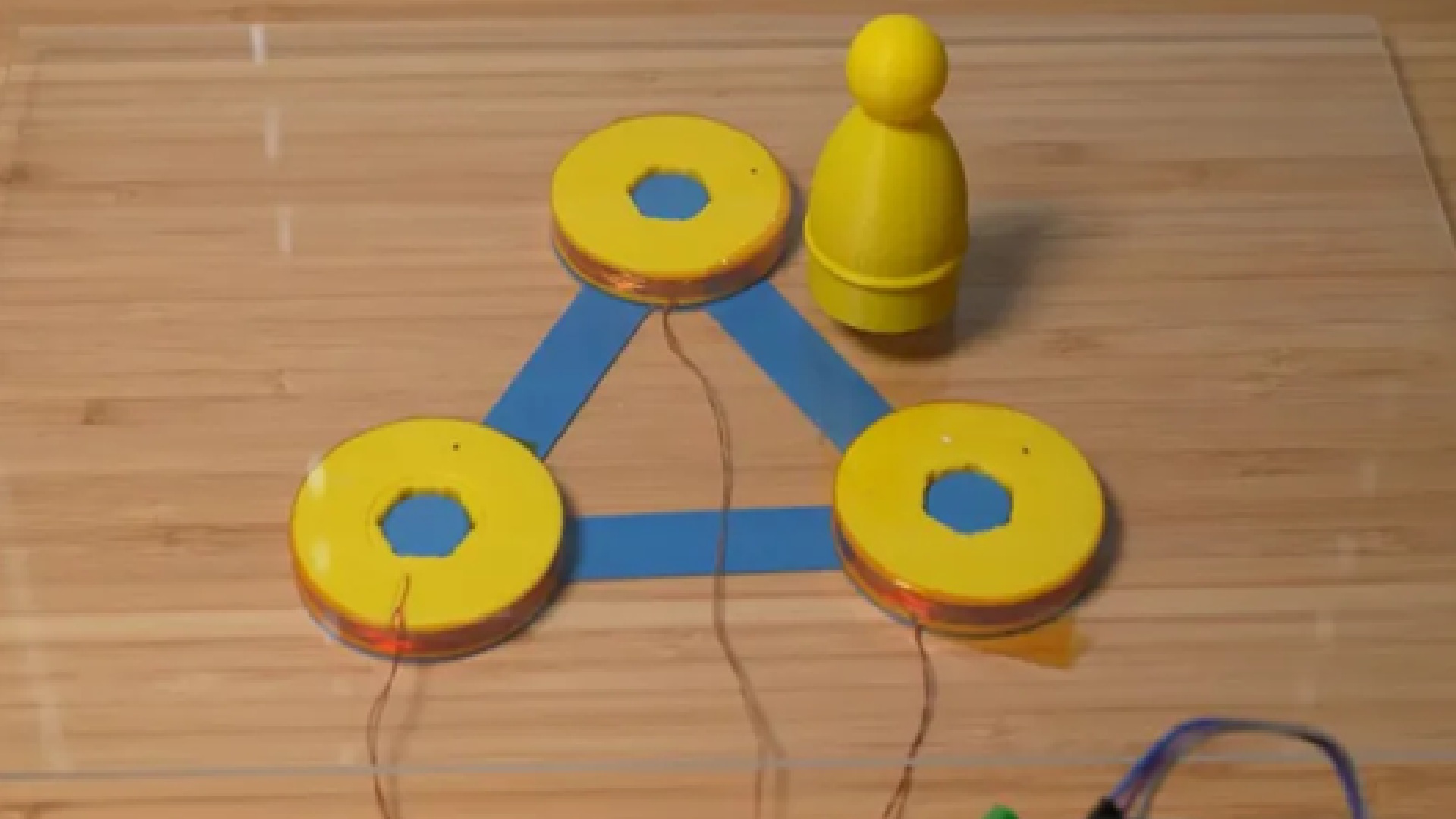
The completed system embeds a series of scanning electromagnets directly beneath the surface of the chessboard. Concurrently, each MiniBot is outfitted with an internal magnetometer that measures local magnetic field intensity.

By utilizing precise clock synchronization via ESP-NOW, the board activates its underground electromagnets within a strict, sequential timing window.

As the electromagnets fire, the magnetometer inside the chess piece records the shifting field strengths. The onboard software takes these real-time intensity readings and runs a triangulation algorithm.

This process allows the robot to calculate its precise coordinate location relative to the active magnetic sources, effectively mirroring standard radio triangulation techniques on a micro-scale.

Prototype status and open-source potential

While a single-piece prototype has successfully demonstrated the viability of the movement and positioning algorithms, scaling the concept up to a full 32-piece swarm presents ongoing debugging challenges.

During structural testing, the developer noted that the single-core architecture of the ESP32-C3 introduced minor timing bugs in the localization firmware, which will require minor software alterations in a future update.

Additionally, implementing robust power-saving modes and designing a streamlined, multi-device recharging dock remain critical areas of focus before the swarm can play a complete, automated game.

💾

Open-source MiniBots turn chess pieces into autonomous robots using ESP32 and electromagnetic localization.
  •  

US: Los Alamos lab’s new tool detects hallucinations in machine vision models

Researchers at Los Alamos National Laboratory have developed a new tool called the Prelim Attention Score, or PAS, to help detect when a vision-language model’s output is grounded in the image and when it may be relying too heavily on its own generated text.

The system is being viewed as a means to enhance vision-language model safety and trustworthiness.

“The PAS is a real-time, plug-and-play metric that acts as an internal monitor for the AI,” said Manish Bhattarai, a Los Alamos computer scientist.

“The system works with major existing vision-language models and requires minimal additional computational overhead, making it an efficient way to detect potential hallucinations. PAS achieves state-of-the-art accuracy in catching hallucinations, offering developers a practical path toward safer and more trustworthy multimodal AI systems,” he added.

Tracking where the model gets its answer

Most commonly used vision-language models are autoregressive. They generate each new token, or word, partly by relying on the words they have already produced.

While this process helps the model form coherent responses, it can also cause the system to lean too strongly on its own previous output rather than the image itself.

PAS monitors a vision-language model’s prediction of each token. By doing so, it helps identify where the model is drawing information from and where hallucinations are likely to occur. The tool then presents a score that alerts users to the possible presence of hallucinations in the output.

A low-overhead hallucination detector

Many autoregressive vision-language models are based on transformer architectures, a class of deep-learning neural networks that use attention patterns to weigh information as they generate an output.

The Los Alamos team studied how these models attend to the image, the text prompt and the model’s own preliminary generated words.

When PAS is integrated into a vision-language model workflow, it can run alongside the model as it handles a request.

For object mentions in the response to an image and text input, PAS computes an attention-based score showing how strongly the model relied on its own previously generated words.

The closer the PAS score is to zero, the less likely it is that the model has produced a hallucination.

“By understanding the way a vision-language model pays attention to preliminary information, PAS can help identify the exact instance where a model begins to over-rely on its own words,” said Xuan Nhat Hoang, Los Alamos intern.

“Our tool reads signals the AI is already producing, representing a low-overhead way to help ensure that information is reliable and useful,” he added.

Reliability checks for visual workflows

PAS could be used in applications where images, documents, diagrams and text are analyzed by vision-language models.

The researchers say it could eventually support reliability checks in areas such as medical imaging, scientific document analysis, engineering diagrams, remote sensing and other visual workflows where unsupported claims could affect downstream decisions.

The Los Alamos team is presenting PAS at the Computer Vision and Pattern Recognition 2026 conference, sponsored by the IEEE and Computer Vision Foundation, in Denver this month.

The work was supported by the Laboratory Directed Research and Development program at Los Alamos.

  •  
❌