Typing a fewletters and numbers into my web browser, I find myself gaping at the identity documents of complete strangers. The passport of a young woman from Germany. The passport of a man from Spain with glasses resting on his head. The front and back of another man's driver's license, a stereotypically goofy expression on his face.
They were all sitting unprotected at public URLs, with no password or access control of any sort. If I sent you a link, you could have looked at someone's passport.
"We have to do something about it as fast as possible, because people will find this and resell it. It will do damage," Sammy Azdoufal told me i …
Microsoft's Xbox division will be hit with significant layoffs next month, according to people familiar with Microsoft's plans.
The company has been preparing for the layoffs internally for weeks, with Xbox CEO Asha Sharma hinting about "making hard choices" last month. Sources suggest the cuts could even involve a studio closure, or changes to the Xbox studio lineup. In a recent Giant Bomb episode, rumors of 1,000 layoffs for Microsoft's Xbox division were mentioned. Bloomberg also reported today that the cuts would be "major," and involve budget cuts for marketing and other areas of Microsoft's Xbox business.
The Google TV Streamer has been updated to Thread 1.4, allowing you to access a way to manually share its Thread credentials. | Photo by Jennifer Pattison Tuohy / The Verge
Apple and Google are updating their smart home streaming devices to Thread 1.4. As first spotted by Matter Alpha and 9to5 Google, the latest spec has arrived on compatible Apple TVs in the tvOS 27 developer beta and the Google TV Streamer through a software update.
Thread is one of the connectivity protocols the interoperability standard Matter runs on. The original plan was for Thread Border Routers to all work seamlessly …
The CFTC is considering its first regulation for prediction markets, as arrests over "insider trading" on everything from military operations to Google Search data continue to stack up. As CoinDesk reports, a notice of proposed rulemaking says "the proposal would establish a structured framework for evaluating whether such contracts involve an activity enumerated in Section 5c(c)(5)(C) of the Commodity Exchange Act -activity that involves terrorism, assassination, war, gaming, or conduct that is unlawful under federal or state law-and, if so, whether that contract is contrary to the public interest."
I see it often. Hardworking professionals in cafés, airports, or parks hunched over a laptop while carefully dragging their fingers over their PC’s trackpad to navigate some email, project, or alert that can’t be ignored. They would prefer a mouse to a trackpad, but are reluctant to travel with one.
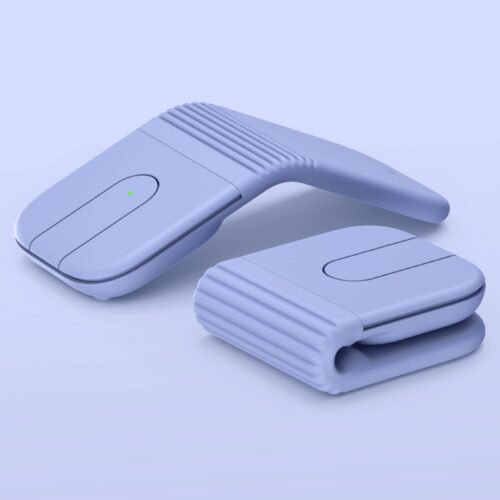
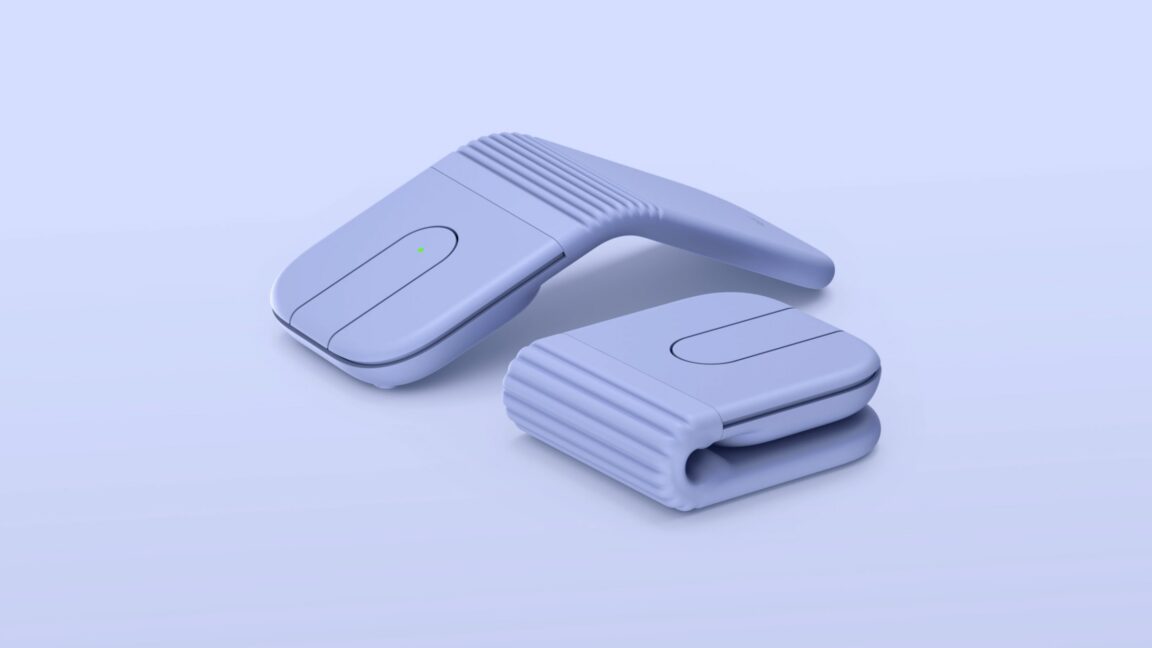
When you’re on the go, carrying a mouse can seem burdensome or unnecessary. But I’d argue that it’s worth the boost in efficiency and comfort when navigating your computer, tablet, or phone. For the people who refuse to carry a bulky mouse with them, even when they plan to use their computer away from their desk, I’m glad Logitech launched the Mobi Fold, a foldable, wireless mouse. But I’d still push reluctant mobile mouse users toward something even more comfortable.
Logitech’s Mobi Fold
The mouse's PAW3222 sensor supports 400-4,000 DPI in 100-DPI increments.
Credit:
Logitech
The Logitech Mobi Fold released today for $80 folds in half so that it’s easy to carry around. Logitech’s announcement claimed that it found that “while 72 percent of professionals own a mouse, only 26 percent actually use one when working in public places.” The announcement didn’t explain Logitech’s methodology, but it seems that someone at the Swiss company has also grimaced at the awkwardly bent wrist of people using laptop trackpads in public.
A novel electrolyte technology that overcomes the persistent limitations of aqueous batteries has been developed by a Korean research team. The team, led by Professor Hoseok Park of the Department of Chemical Engineering, has succeeded in dramatically improving the cycle life and capacity of aqueous batteries simply by adding a small amount of a special material to the electrolyte. The findings were published in Nano-Micro Letters.
In a blog post running more than 3,100 words, Microsoft vice chair and president Brad Smith addressed the recent spate of viral clips from graduation ceremonies, like former Google CEO Eric Schmidt getting an earful at the University of Arizona, or the speaker in Florida who seemed surprised when students booed at the mention of AI as "the next industrial revolution." The videos speak to a broader societal sentiment around AI - the technology is deeply unpopular even as technology compani …
A group of independent musicians is suing Google claiming it trained Lyria on their uploads. | Image: Cath Virginia / The Verge
If you've uploaded a song to YouTube, Google almost certainly considers your video fair game for training its Lyria music AI, it just won't admit it right now.
Their lawsuit is based on the unsupported hypothesis that Google trained on their specific works. Even accepting their untested allegations as fact, the Complaint cannot stand. Plaintiffs each granted YouTube, and Google - which provides the service-a broad license to use the uploaded con …
Instagram is going to let you tweak what its algorithm shows you on your main feed. With the Your Algorithm feature, "you can now see the topics we think you're interested in, and change them, across all the major parts of Instagram," according to Instagram boss Adam Mosseri. Right now, the feature will only surface topics, but Instagram is working on "supporting requests for people, different moods or vibes, content types, and more."
The company has been slowly giving users more agency over some algorithms on Instagram, having already launched the Your Algorithm feature for your Reels feed and the Explore page. With Wednesday's announcemen …
A US Army helicopter gunship was apparently struck by an Iranian Shahed drone before going down near the Strait of Hormuz—but it's unclear whether the one-way attack drone was deliberately aimed or achieved more of a lucky accidental strike.
Axios correspondent Barak Ravid first reported an unnamed US government official’s comments that an Iranian drone had hit the US Army AH-64 Apache helicopter before the latter went down on June 8. The New York Times later confirmed that reporting through more anonymous US officials, including one official who said US military investigators were still evaluating whether the Iranian drone strike on the helicopter was intentional or accidental.
Iran has fired thousands of such Shahed drones against a wide range of military and civilian targets in the Gulf region since February 28, 2026, when the United States and Israel began the war by jointly attacking Iran with a barrage of bombs and missiles. But Shahed drones have mainly struck stationary targets such as Amazon data centers and energy facilities, sometimes hitting slow-moving commercial ships in the Strait of Hormuz.
With Sleep Studio the Echo Glow can light up to let kids know when they should be sleeping or can get out of bed. | Image: Amazon
Amazon has launched a new feature for its Echo and Echo Kids smart speakers called Sleep Studio that's designed to make the daily transition to bedtime more enticing for kids and less stressful for parents and caregivers. The feature uses a combination of bedtime stories, relaxing sounds, and guided meditations along with scheduling and customization options accessible only to adults.
Sleep Studio is now available to those with a $5.99 per month Amazon Kids Plus subscription at no extra cost. Amazon offers a free one month trial of the service, but purchasing an Echo Kids device will also get you a complementary six or 12-month subscription …
Anthropic released Claude Fable, its first Mythos-class AI model, yesterday and it's already causing concerns inside Microsoft. Sources tell me that Microsoft is limiting the use of Claude Fable 5 for employees because of Anthropic's new data retention requirements.
While Microsoft quickly rolled out Claude Fable 5 to its GitHub Copilot and Foundry customers, I'm told the model isn't available in the model picker that Microsoft employees use for internal versions of GitHub Copilot. All other Claude models are still available internally at Microsoft, because they operate under Zero Data Retention (ZDR) rules.
Google is making some changes to how it saves your interactions with Search. In an email sent to users, Google says it will save the images, files, audio, and video you use to search under a new "Search Services History"setting.
While Silicon Valley continues pushing aggressively into large language models and consumer-facing AI products, many European companies are focused on applying AI to complex systems already embedded into everyday life.
Tappy is a tiny wireless remote that doesn’t look like one.
Following the launch of the surprisingly popular Kobo Remote, Boox has released its own device to ease the burden of reaching for an e-reader’s touchscreen that’s an arm’s length away. The Tappy isn’t Boox’s first page-turning remote, but its design takes a much different approach to the company’s slim but boring B.T. Remoter. The Tappy feels like a mashup of wireless remotes, fidget toys, and macro pads, with a healthy dash of retro charm.
While the Kobo Remote looks like a streaming dongle accessory with a design that prioritizes ergonomics, the Tappy can be best described as a miniature keyboard distilled to just two buttons that draws its design inspiration from a retro typewriter. It’s not as comfortable to hold as Kobo’s accessory, but it’s small enough to sit discreetly in your hand. There are also four rubber feet on its underside so it won’t slide around if used on a desk, and it’s available in two very glossy color options: olive green and a bright orange that I tested.
Tappy’s two round buttons don’t use actual keyboard switches but they have about a quarter-inch of travel and are satisfying to press when you’re in need of something to fidget with. Out of the box, the buttons are labeled with a pixelated heart and steaming mug of coffee, which I just don’t understand. I immediately switched to the included alternatives that are instead labeled with an X and an O, but more customizability, even if it was just a sheet of stickers I had to apply myself, would be preferred. Forward and back arrows, or even just a plus and minus, would be welcome alternatives to what’s included.
Pairing the Tappy to a Boox device is easy, but don’t misplace the fold-out quick start guide that walks you through the process. After powering it on using a sliding metal switch on the side, you put the remote into pairing mode by holding down both buttons for about two seconds until a single LED on the side flashes blue. From there, you just need to connect to it through your Boox device’s Bluetooth settings. When you power it back on in the future, it reconnects automatically.
The buttons’ default functionality is Reading mode that turns pages forward and back or controls volume when outside a reading app, but the Tappy can be switched to two other modes. Multimedia mode changes the buttons’ functionality to skipping tracks in music, video, podcast, or audiobook apps, while Browsing mode lets you scroll up and down through long webpages or social media feeds for as long as you’re pressing either button.
Pressing both buttons for about five seconds switches modes, which causes the LED to momentarily flash green. Repeating that process cycles through Reading, Multimedia, and Browsing modes, and every time you switch, a notification pops up at the top of your Boox device letting you know the current mode. But it’s not persistent and can be easily missed. A trio of labeled LEDs indicating the Tappy’s current mode or even having the single LED display a different color for each one would make it easier to know what mode it was in at a glance, especially when using the remote with other devices.
While Tappy works best with Boox e-readers and tablets running the company’s V4.2 firmware or later (which includes recent hardware like the Boox Palma 2 Pro), it can also be used with other Android mobile devices, and iPhones and iPads, with varying levels of functionality. The functionality is supported in both the Kobo and Kindle Android apps, but not in the iOS or iPadOS versions. However, I was able to use the Tappy on my iPhone and OnePlus phone to scroll webpages, control music playback, and adjust the volume.
The bigger challenge when using the Tappy with non-Boox hardware is you don’t get the useful pop-up notifications letting you know which mode you’ve just switched to. And without any LED indicators, the only way to know what mode Tappy is in is to just press the buttons and see what happens. Did the volume go up and down? Great, you’re in Reading mode and are just two switches away from the Browsing mode you want.
Other e-readers from companies like Pocketboot or BigMe are supported, according to Good e-Reader’s testing, but I had no luck getting the Tappy to work with the Kobo and the Kindle. That’s unfortunate because while I still regularly enjoy using the Kobo Remote for reading at night, I would happily abandon it for the Tappy. The tiny remote has already replaced my Apple Watch for skipping tracks when streaming my iPhone through my HomePod, even if its buttons occasionally get accidentally pressed when it’s bouncing around my pocket. At $29.99 it’s the same price as the Kobo Remote, but its buttons are more satisfying to use and it’s more than just a one-device accessory.
Global data centre capital expenditure is on course to exceed $1 trillion in 2026 according to new research from Dell’Oro Group, as hyperscale AI deployments accelerate and rising memory and storage costs push overall server spending higher.
The research company raised its worldwide data centre capex outlook for the year following a strong Q1, citing a combination of AI expansion, continued investment in general-purpose infrastructure and component cost inflation as the primary drivers.
Baron Fung, senior research director at Dell’Oro Group, stated rising memory and storage pricing substantially increased overall server system costs in the quarter and will likely remain a major capex growth factor throughout the year.
“At the same time, AI infrastructure deployments continue to accelerate rapidly, while hyperscalers also expanded general-purpose infrastructure to support public cloud growth, agentic AI workloads, and rising AI-related storage requirements,” he said.
The scale of spending among the largest cloud providers is striking. Amazon, Google, Meta, and Microsoft, the top four US hyperscalers, increased data centre capex by 78% year-on-year, reflecting the intensity of the AI infrastructure race.
On the supply side, Dell led server OEM revenue followed by Supermicro and Lenovo, though white-box vendors serving the hyperscale market accounted for most overall server revenue. Nearly all server vendors benefited from higher memory-driven system pricing.
Despite already exceptional spending growth in the first half of the year, Dell’Oro expects capex growth to accelerate further in the second half, driven by the ramp-up of Nvidia’s Vera Rubin platform and refresh cycles for hyperscaler custom accelerator platforms.
Beyond the major cloud providers, Fung noted select enterprise verticals and sovereign cloud providers are also increasing AI infrastructure adoption, “though growth remains constrained by uncertain returns and infrastructure readiness”.
“While near-term demand remains healthy, some spending may have been pulled forward ahead of expected price increases later this year,” explained Fung.
The Apple Watch Series 11 is $100 off in all colors.
Apple’s upcoming watchOS 27 update will bring Siri AI and other exciting features to the Apple Watch Series 9 and newer Apple Watch models. If you’re contemplating an upgrade, all colorways of the GPS-enabled 42mm Apple Watch Series 11 — the latest model — are on sale for $299 ($100 off) at Amazon, Walmart, and Target, matching its best price so far. You can customize your look by picking up a discounted Apple Watch band at Woot, starting at $14.99 ($35 off).
Apple’s Series 11 watch is a solid upgrade, especially for those who are still using an Apple Watch Series 6 or older. Battery life is one area where you’ll see big improvements, with up to 24 hours on a single charge. It also has a more durable, scratch-resistant design and bright, wide-angle OLED screen. While it has the same S10 chip as the $219 Apple Watch SE 3 that we recommend to most people, the Series 11 has a host of extra features, including hypertension notifications, an ultra-wideband chip, a brighter (and more pixel-dense) screen, plus a depth gauge, to name most of the differences.
As previously mentioned it’s one of a few Apple Watch models that will support watchOS 27 when it arrives this fall. The update will bring a redesigned app grid, custom Wallet passes for cards that use barcodes or QR codes, and new Siri AI capabilities. Beyond asking Siri AI to handle a range of tasks from your wrist, it will also be able to surface information stored across your Apple devices, and let you continue conversations after starting them on your iPhone.
You can buy the Beats Studio Buds Plus wireless earbuds for $99.99 ($70 off) at Amazon, Best Buy, Target. That matches their best price so far this year, and includes the slick translucent option we were particularly fond of. The Studio Buds Plus deliver a good combination of excellent sound, solid noise cancellation, and comfort, while working well with both Android and iOS devices. They’re also water-resistant and last up to nine hours on a charge, with swappable ear tips for a more secure fit. Read our review.
Fujifilm will be releasing a new Instax Mini 13 on June 25th, but if you’d rather save some money — or pick up a fun Father’s Day gift — Fujifilm’s Instax Mini 12 is on sale for $79.95 ($14 off) at Amazon, Best Buy, and Target, which is one of its better prices in recent months. While it lacks Mini 13’s self-timer, the Mini 12 is an excellent instant camera, producing clear, natural-looking prints and offering a simple, beginner-friendly experience that’s easy for all ages to enjoy.
The last-gen 11-inch LTE-enabled iPad Air with 128GB of storage is on sale for $499 ($250 off) at Best Buy, putting it at the same price as the Wi-Fi-only model. Its M3 chip isn’t as powerful as the newer M4’s, but it’s still fast, and it touts support for Apple Intelligence. It’ll be compatible with iPadOS 27 when it’s released in the fall, which adds Siri AI updates and makes transferring files to an external drive faster, among many other improvements. Read our review.

 Login


 The mouse's PAW3222 sensor supports 400-4,000 DPI in 100-DPI increments.
Credit:
Logitech