❌

Reading view

Cast

The Cast

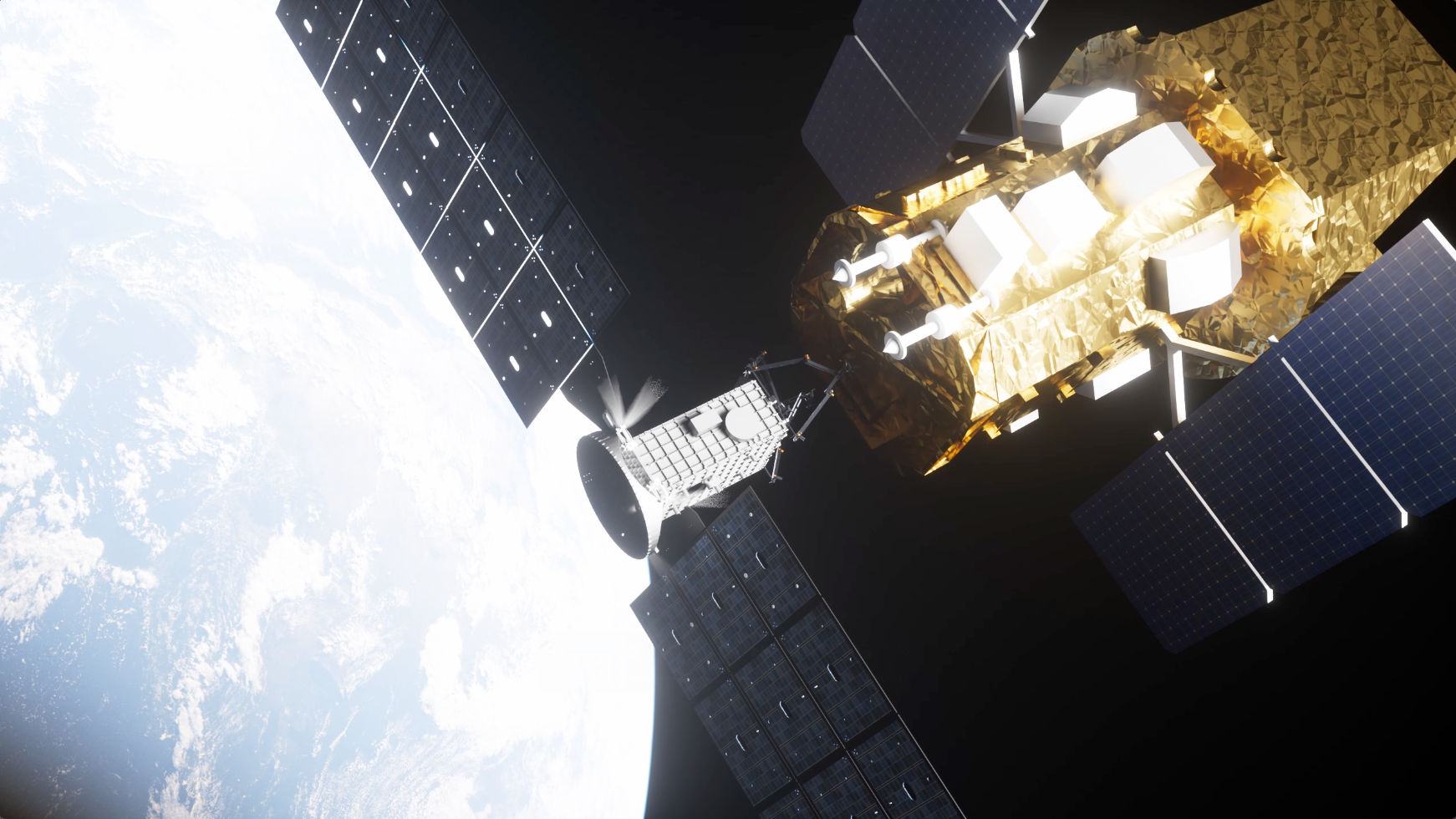
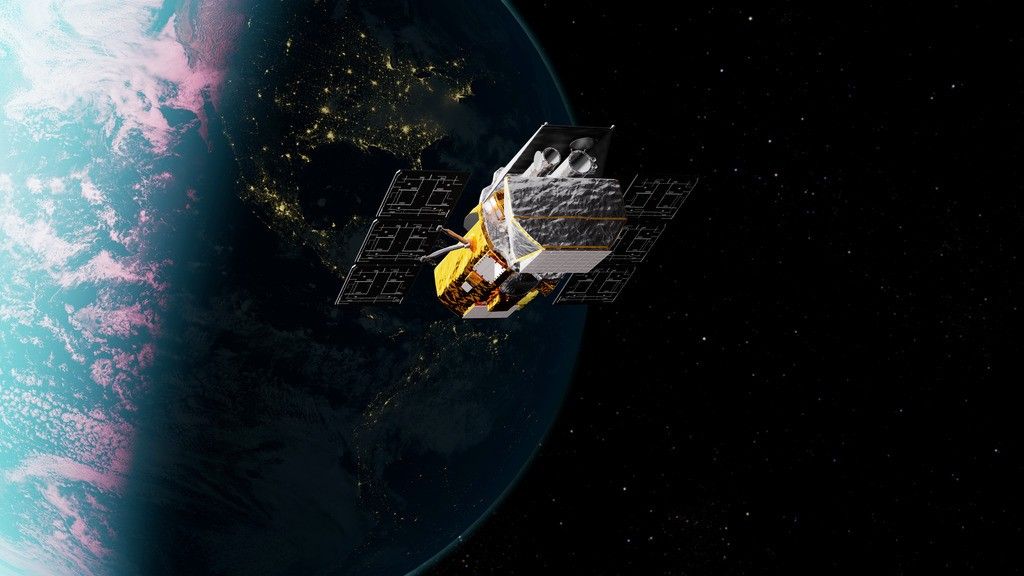
Illustration of the LINK and Swift satellites

About Swift

The Neil Gehrels’ Swift Observatory is NASA’s astrophysics multitool, capable of quickly observing a wide range of cosmic objects in visible, ultraviolet, X-ray, and gamma-ray light. It launched as the Swift Gamma-ray Observatory on Nov. 20, 2004. In 2018, the agency renamed it in honor of Neil Gehrels, who helped develop the mission and served as its first principal investigator.

At launch, Swift was a first-of-its kind multiwavelength observatory designed to study gamma-ray bursts, the most powerful explosions in the cosmos, using its three telescopes.

The spacecraft, which was built by Northrop Grumman (formerly General Dynamics), is named after the bird for its ability to rapidly turn to study bursts and their afterglows, which has made it a key player in NASA’s fleet of spacecraft that participate in time-domain astronomy, the study of astronomical objects across various divisions of time, from microseconds to decades or more.

Swift is also important to multimessenger astronomy, which involves detecting light — the best-known astrophysical “messenger” — emitted from sources discovered by observatories sensitive to non-electromagnetic signals, like high-energy particles and space-time ripples called gravitational waves. It has contributed to the study of everything from comets in our solar system to black hole activity in distant galaxies.

In January 2025, the Swift team realized the spacecraft would re-enter the atmosphere in the summer of 2026. NASA decided to attempt to boost the observatory to advance U.S. private spacecraft servicing, demonstrating a key capability for the future of space exploration, and extend Swift’s scientific lifetime.

Lead NASA center:Goddard Space Flight Center
Operations center:
Pennsylvania State University’s Eberly College of Science
Launch: November 20, 2004
Wavelengths: Visible, ultraviolet, X-ray, gamma-ray
Height: 18.5 feet (5.6 meters)
Weight: 3,200 pounds (1,470 kilograms)
Solar panel length: 13 feet (4 meters)
Infographic of some of Swift’s science highlights
This infographic highlights some of the achievements of NASA’s Neil Gehrels Swift Observatory, which has become the agency’s astrophysics multitool since launching in 2004. The spacecraft studies a wide range of objects, from those near Earth, to stars, black holes, and gamma-ray bursts — the most powerful explosions in the cosmos.
NASA’s Goddard Space Flight Center
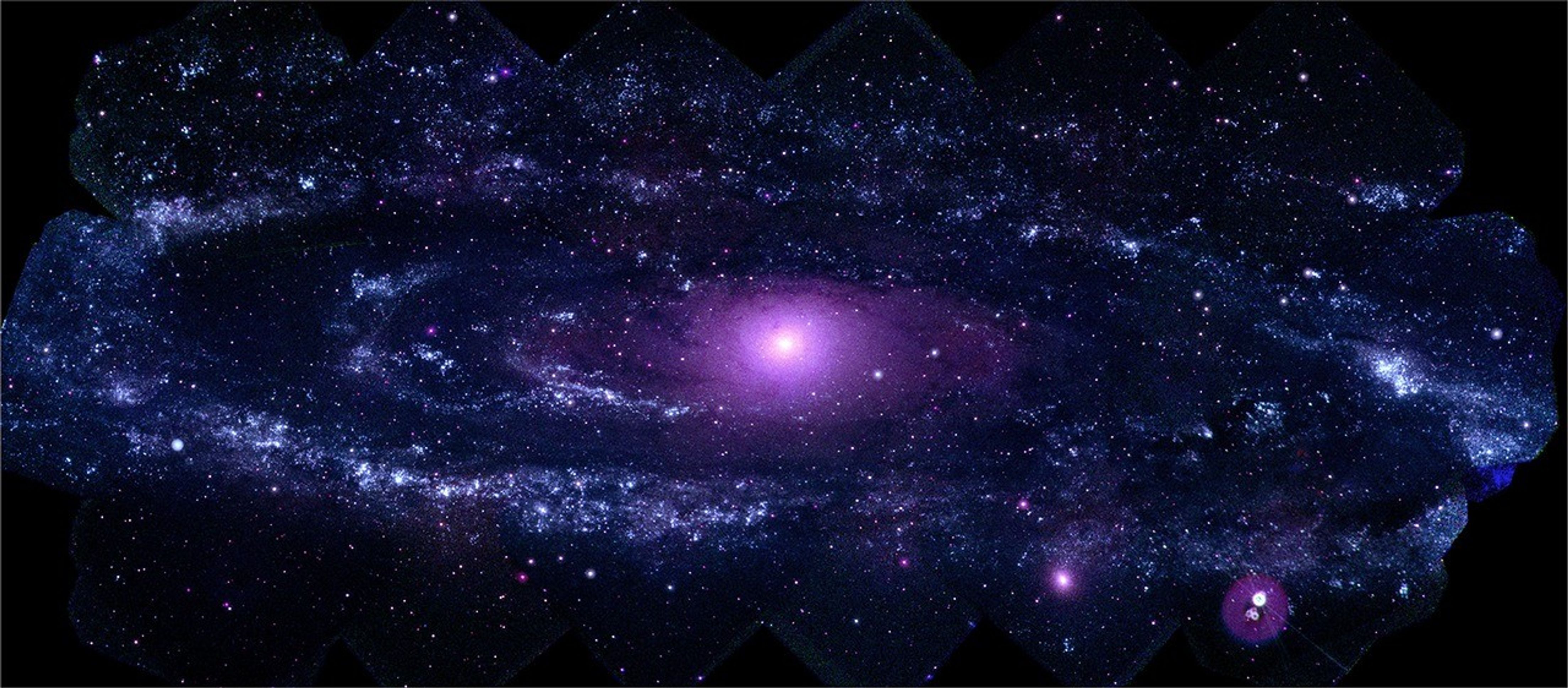
Swift's UV Portrait of the Andromeda Galaxy
Swift viewed our neighboring spiral galaxy Andromeda, also called M31, in ultraviolet light. The image was made from 330 snapshots from Swift’s Ultraviolet/Optical Telescope. Some 20,000 ultraviolet sources are visible in the image, including M32, a small galaxy in orbit around M31. Dense clusters of hot, young, blue stars sparkle in the disk beyond the galaxy’s smooth, redder central bulge.
NASA/Swift/Stefan Immler (GSFC) and Erin Grand (UMCP)
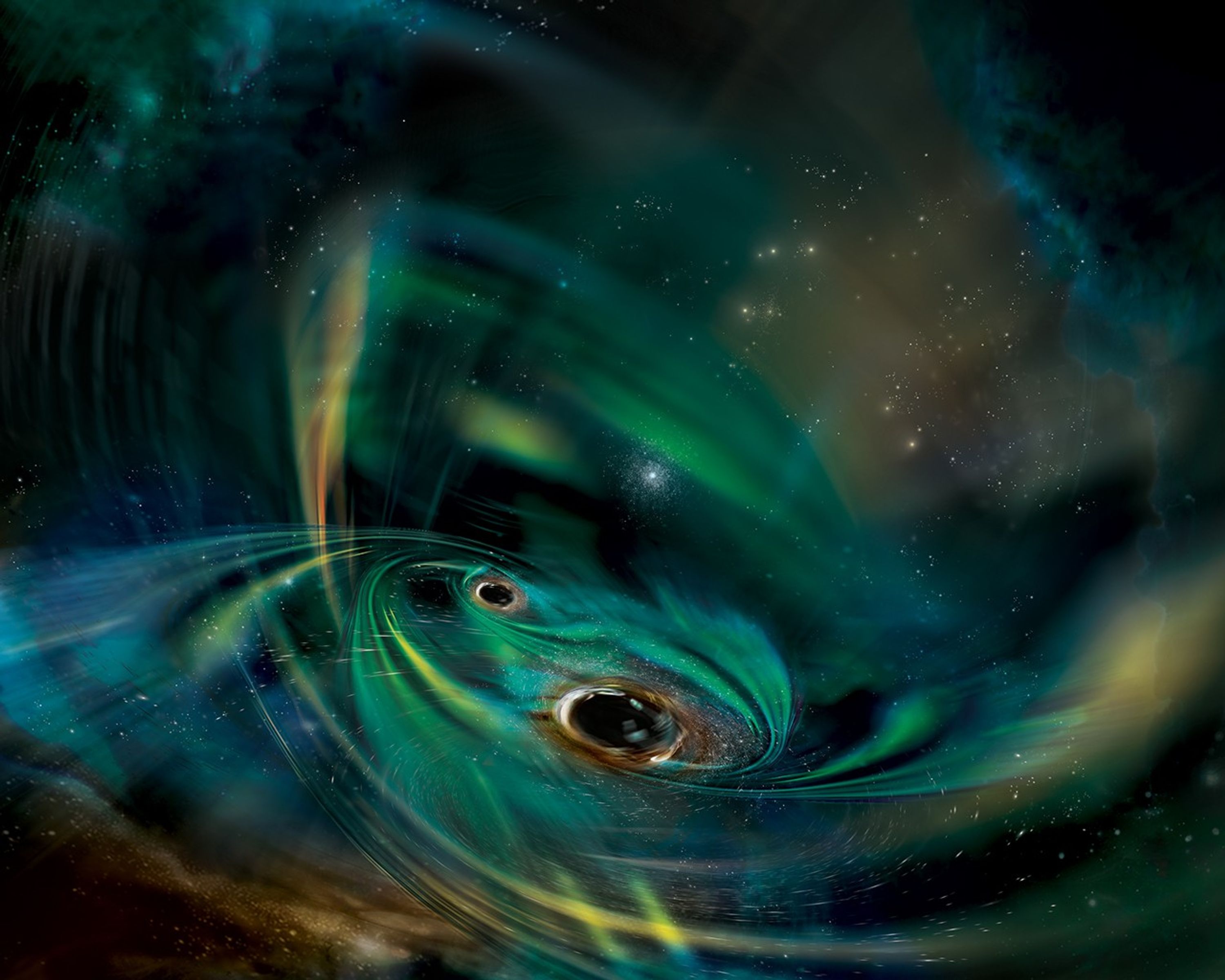
Two black holes are illustrated orbiting in a cloud of gas.
A pair of monster black holes swirl in a cloud of gas in this artist’s concept of AT 2021hdr, a recurring outburst studied by Swift and the Zwicky Transient Facility at Palomar Observatory in California.
NASA/Aurore Simonnet (Sonoma State University)

About LINK

NASA contracted Katalyst Space, in Flagstaff, Arizona, to boost Swift in September 2025. The company had one year to design, build, test, and launch its LINK robotic servicing spacecraft to meet, grab, and lift Swift.

The Katalyst team constructed LINK at its Broomfield, Colorado, facility and tested it there and at NASA’s Goddard Space Flight Center in Greenbelt, Maryland.

LINK will launch on a Northrop Grumman Pegasus XL rocket in June 2026. Once in space, the Katalyst team will spend several weeks checking out the satellite’s major systems, including power, navigation, and sensors.

Then LINK will approach Swift and complete a visual survey. The Katalyst team has identified several potential grab points, but after 20 years of wear and tear in space, those locations need to be verified with the Swift team before moving forward.

After the inspection is complete, LINK will use its three robotic arms to secure Swift before slowly boosting it to nearly its original orbit of around 370 miles (600 kilometers) over the course of several months. LINK’s three ion thrusters are powered by about 130 pounds (60 kilograms) of xenon gas.

Once the lift is complete, LINK will detach from Swift and re-enter Earth’s atmosphere.

Company: Katalyst Space
Launch: June 2026
Height: 5 feet (1.5 meters)
Weight: 935 pounds (425 kilograms)
Solar panel length: 20 feet (6 meters)
Propulsion: Three xenon-fueled thrusters
Robotic arms:Three, deployed after launch
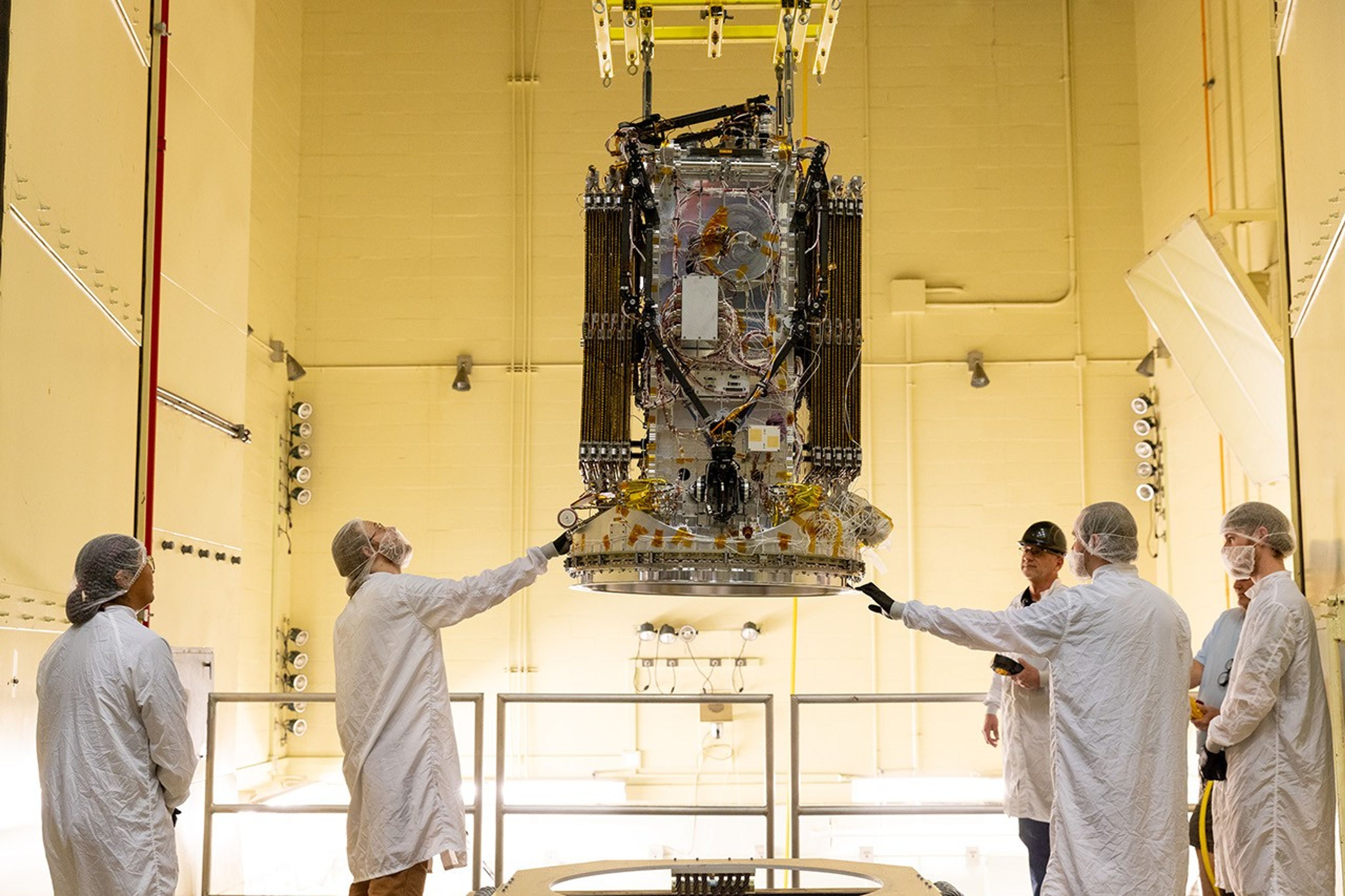
People maneuver a spacecraft into a large chamber.
Engineers from Katalyst Space Technologies in Flagstaff, Ariz., stabilize their LINK robotic servicing spacecraft as it moves into a vibration chamber at NASA’s Goddard Space Flight Center in Greenbelt, Md., on April 15, 2026. The vibration chamber simulated the intense shaking LINK will experience during launch.
NASA/Scott Wiessinger
Two people stand next to a spacecraft inside a large black chamber.
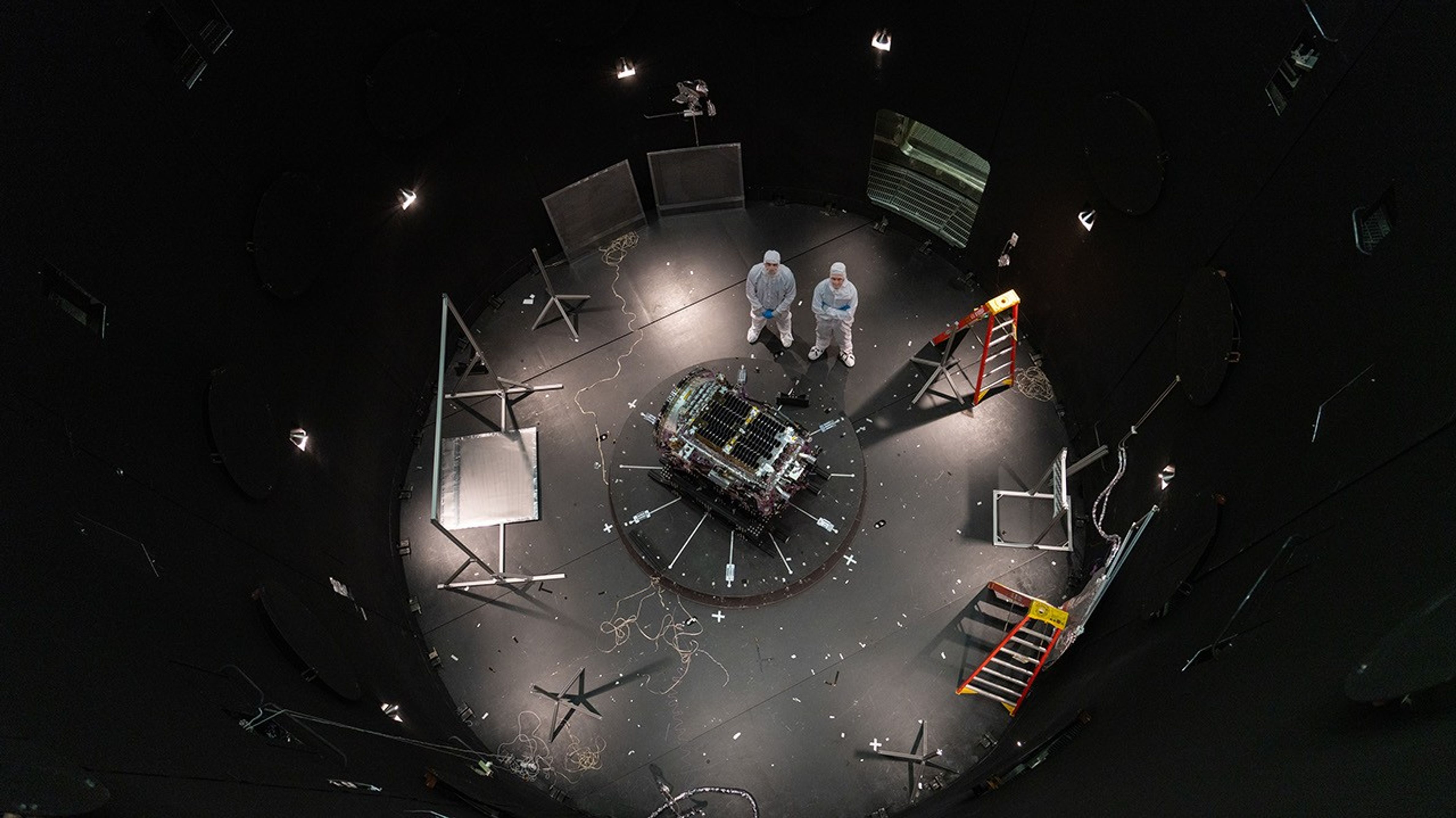
Kieran Wilson, LINK’s principal investigator at Katalyst, and Hunter Robertson, a space systems engineer at Katalyst, stand next to their spacecraft inside the SES (Space Environment Simulator) at NASA Goddard on April 17, 2026, ahead of thermal vacuum testing. During testing in the SES, LINK fired its three thrusters, deployed one of its three arms, and experienced space-like hot and cold temperatures.
NASA/Sophia Roberts
Engineers in clean suits unbox a satellite.
Engineers from Katalyst Space unpack LINK at NASA Goddard on April 14, 2026. The satellite underwent vibration and thermal testing ahead of launch in June.
NASA/Sophia Roberts

About Pegasus XL

The Pegasus XL was the first U.S. air-deployed orbital launch vehicle and the first commercially developed launcher. Originally produced by Orbital Sciences Corporation, the rockets are now operated by Northrop Grumman, which is headquartered in Falls Church, Virginia.

The Pegasus XL can carry payloads up to about 1,000 pounds (450 kilograms).

To launch the Pegasus XL, Northrop Grumman’s Stargazer, a modified L-1011 aircraft, carries the rocket to around 40,000 feet before releasing it. After several seconds in free-fall, the Pegasus XL fires the first of its three-stage rocket motors, typically delivering its payload into orbit in about 10 minutes.

Because Northrop Grumman can launch the Pegasus XL from almost anywhere in the world, Katalyst selected the rocket for deployment to reach Swift’s low-inclination orbit near the equator on the mission’s condensed timeline.

LINK will take off from above Kwajalein Atoll, part of the Republic of the Marshall Islands in the South Pacific Ocean.

Company: Northrop Grumman
Length: 57 feet (17 meters)
Weight: 53,000 pounds (24,000 kilograms)
Payload weight: Up to 1,000 pounds (450 kilograms)
Launch altitude: 40,000 feet
Launch location:Kwajalein Atoll, Marshall Islands
An airplane with a rocket attached to the bottom
Northrop Grumman’s modified L-1011 Stargazer takes off from Vandenberg Air Force Base in California on Oct. 1, 2019. The company’s Pegasus XL rocket, containing NASA’s ICON (Ionospheric Connection Explorer), is attached beneath the aircraft.
NASA/Randy Beaudoin
An Orbital Sciences technician completes final checks of NASA's Nuclear Spectroscopic Telescope Array, or NuSTAR, before the Pegasus payload fairing is secured around it.
A technician completes final checks of NASA’s NuSTAR (Nuclear Spectroscopic Telescope Array) before the Pegasus payload fairing is secured around it ahead of the satellite’s launch in 2012.
NASA
Watch how a Pegasus XL rocket, dropped by Stargazer, carried NASA's Cyclone Global Navigation Satellite System into orbit.
Northrop Grumman

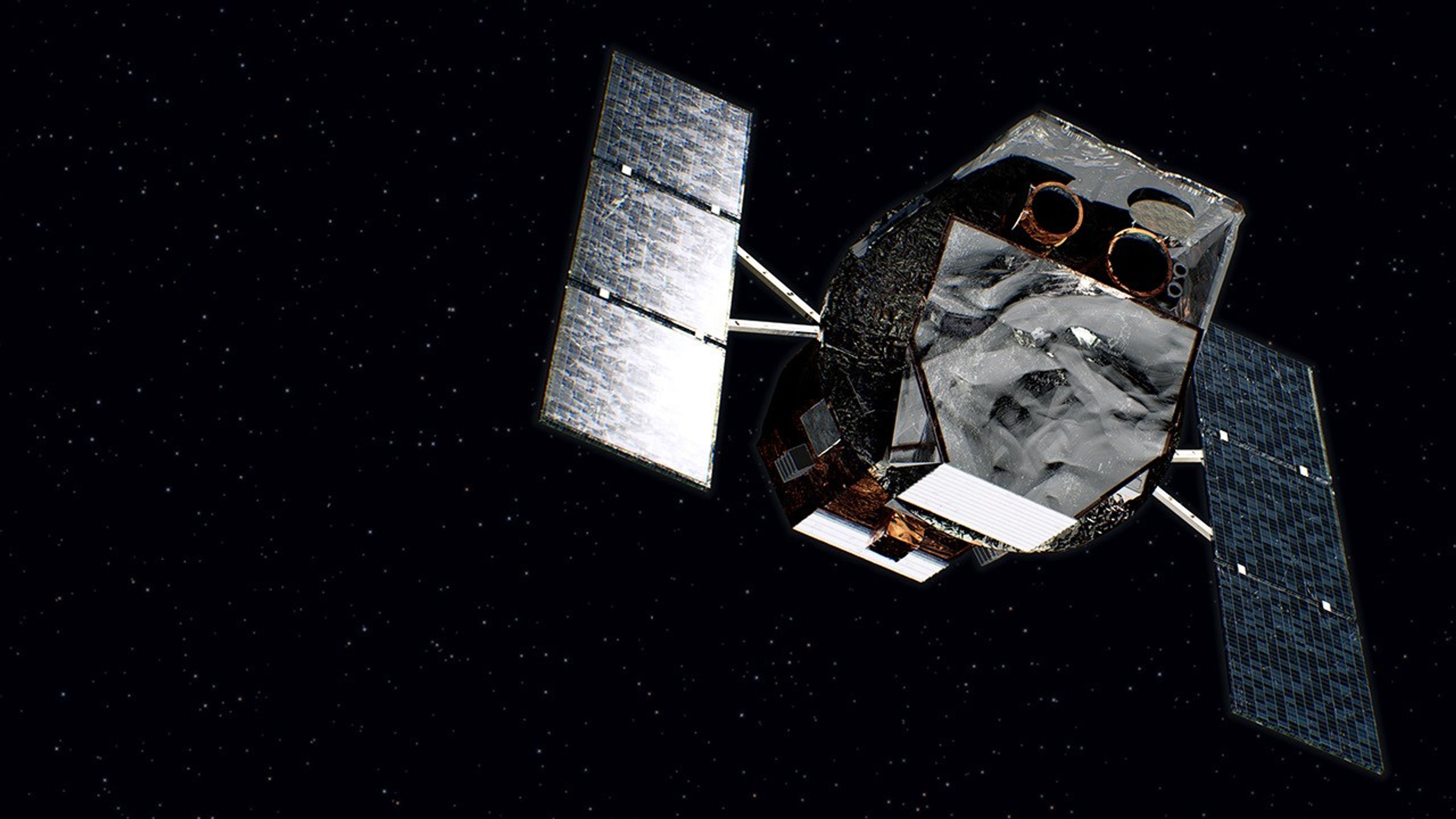
Artist's concept of the Swift spacecraft in orbit

Swift Boost Mission Homepage

Get the highlights of the plan to lift NASA’s Swift.

Illustration of the LINK and Swift satellites

Timeline

Catch up on the progress of the Swift Boost Mission.

A spacecraft against a white background

Swift Blog

Subscribe to keep up with Swift boost news.

The post Cast appeared first on NASA Science.

  •  

Timeline

The Timeline

Illustration of the LINK and Swift satellites

  • January 2025

    NASA analysts generate annual altitude forecasts for the agency’s fleet of spacecraft in low-Earth orbit. In November 2023, predictions for NASA’s Neil Gehrels Swift Observatory showed a split in its re-entry possibilities, with some showing re-entry in the following two years and others much later, in the 2030s. In 2024, the Sun reached its solar maximum, triggering intense space weather that was more active than expected. The activity caused Earth’s atmosphere to expand slightly and increased its drag on Swift. By January 2025, almost all the models had Swift re-entering by the summer of 2026.

    On the left, the Sun shown in gold. It's fairly uniform and labeled Solar Minimum. On the right, the Sun in gold has several bright active regions. It's labeled Solar Maximum.
  • August 2025

    NASA supported concept studies from two U.S. companies to raise Swift to a higher orbit as part of its effort to drive the development of the nation’s private spacecraft servicing industry and demonstrate a key capability for the future of space exploration.

    Read more

    Artist's concept of the Swift spacecraft in orbit
  • September 2025

    NASA awarded Katalyst Space, based in Flagstaff, Arizona, $30 million to move forward with an attempt to boost Swift. The company had less than a year to design, build, test, and launch its LINK satellite to meet, grab, and lift the observatory.

    Read more

    Katalyst logo
  • November 2025

    Katalyst selected Northrop Grumman’s Pegasus XL rocket to launch LINK. Northrop Grumman’s Stargazer, a modified L-1011 aircraft, can deploy the Pegasus XL almost anywhere. By launching from Kwajalein Atoll part of the Republic of the Marshall Islands in the South Pacific Ocean, Northrop Grumman can deliver LINK directly into Swift’s low-inclination orbit close to the equator.

    An airplane with a rocket attached to the bottom
  • December 2025

    Normally, Swift points to different areas of the sky to observe science targets with its Ultraviolet/Optical and X-ray telescopes. In December 2025, Swift’s operations team at Pennsylvania State University’s Eberly College of Science in University Park began altering the spacecraft’s science strategy to reduce drag and extend Swift’s time above the 185-mile (300-kilometer) mark for as long as possible. Below this point, a boost attempt becomes more difficult. The team replaced around 25% of science targets with spots on the sky that caused Swift to be pointed in the most streamlined position possible.

    A spacecraft against a black background
  • February 2026

    The December operational changes helped slow Swift’s descent. The team switched entirely to selecting pointing positions that minimized drag. This meant observations with the Ultraviolet/Optical and X-ray telescopes stopped.

    Read more

    The Swift spacecraft in space.
  • April 2026

    Katalyst finished LINK’s integration at its Broomfield, Colorado, facility. The spacecraft is about 6 feet (1.8 meters) tall, weighs around 880 pounds (400 kilograms), and has three robotic arms and three xenon-fueled thrusters. Each of its two solar arrays span around 20 feet (6 meters).

    People maneuver a spacecraft into a large chamber.
  • April 2026

    The Swift team paused observations with the spacecraft’s Burst Alert Telescope. The change reduced the amount of power Swift had been using, allowing the operations team to point the solar panels to the optimal position to further reduce drag. Prior operational changes had already extended Swift’s time above the 185-mile mark until the fall of 2026.

    Read more

    A spacecraft against a white background
  • May 2026

    Katalyst completed vibration and thermal vacuum testing at NASA’s Goddard Space Flight Center in Greenbelt, Maryland. These assessments replicate some of the conditions LINK will experience during launch and in orbit. LINK used the Space Environment Simulator chamber, which Swift also used over 20 years ago.

    Read more

    Two people stand next to a spacecraft inside a large black chamber.
  • June 5, 2026

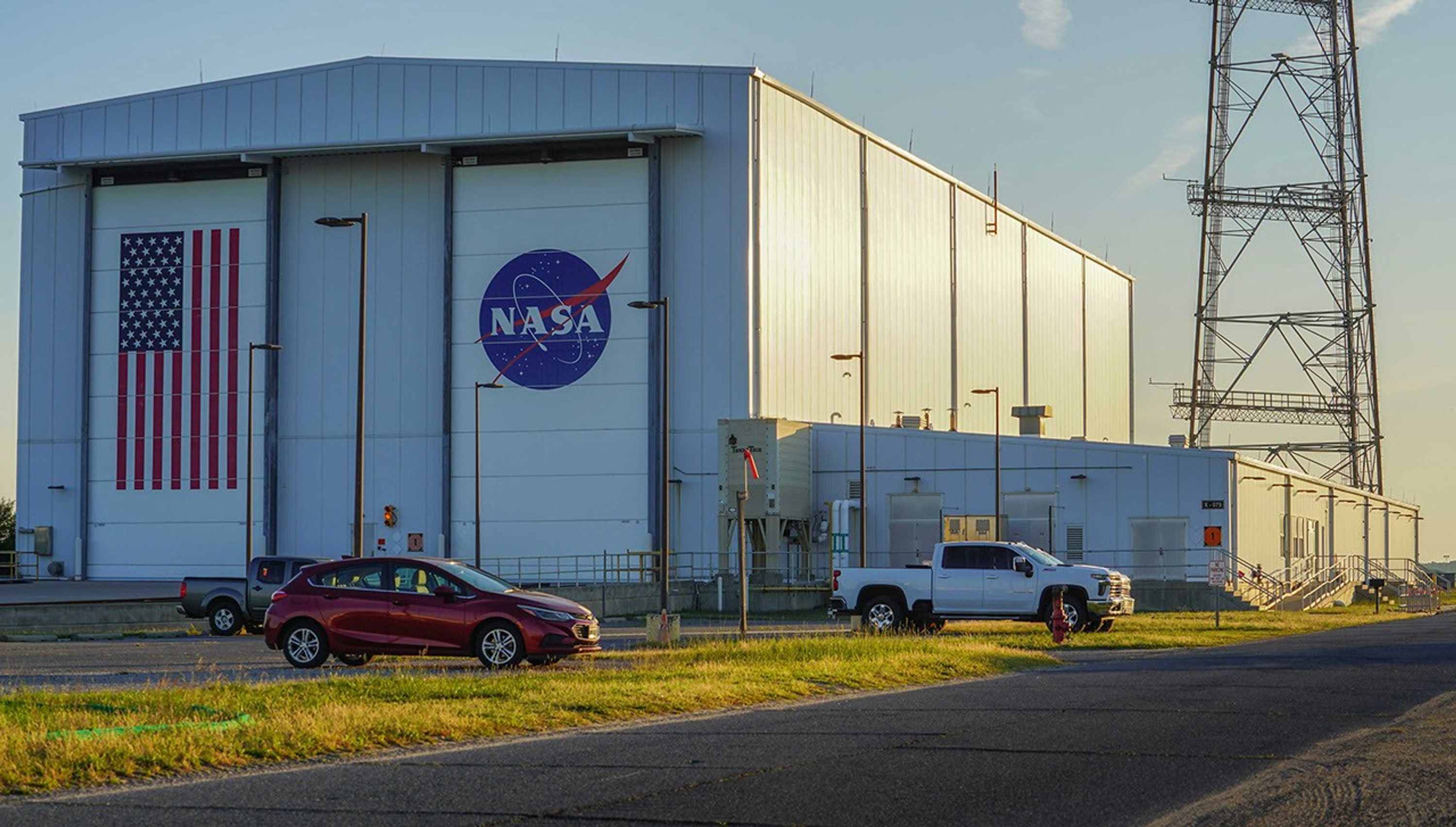
    The Katalyst team arrived with LINK at NASA’s Wallops Flight Facility in Virginia. Northrop Grumman began installing the satellite into the Pegasus XL rocket inside the Horizontal Integration Facility there.

    Explore

    The horizontal integration facility, which is a large white building.
  • Upcoming …

    Northrop Grumman will attach the Pegasus XL to the bottom of its Stargazer, a modified L-1011 aircraft, at NASA Wallops before it departs for the Kwajalein Atoll, part of the Republic of the Marshall Islands in the South Pacific Ocean. From there, the plane will climb to about 40,000 feet (12,000 meters) and drop the rocket. The Pegasus XL’s three solid rocket motors will fire in sequence and deliver LINK to orbit.
     
    After launch, the Katalyst team will assess LINK’s major systems, including power, navigation, and sensor arrays before it approaches Swift. Engineers will spend several weeks surveying the observatory to assess potential grab points. When LINK has secured Swift, it will fire its own ion thrusters to slowly raise the observatory’s orbit over the course of several months.

    Illustration of the LINK and Swift satellites
    Katalyst Space

Artist's concept of the Swift spacecraft in orbit

Swift Boost Mission Homepage

Get the highlights of the plan to lift NASA’s Swift.

People in cleans suits work on a spacecraft in a large chamber.

Cast

Learn more about Swift, LINK, and Pegasus XL.

A spacecraft against a white background

Swift Blog

Subscribe to keep up with Swift boost news.

The post Timeline appeared first on NASA Science.

  •  
❌