❌

Reading view

The fastest humans in the galaxy just got a spiffy patch to prove it

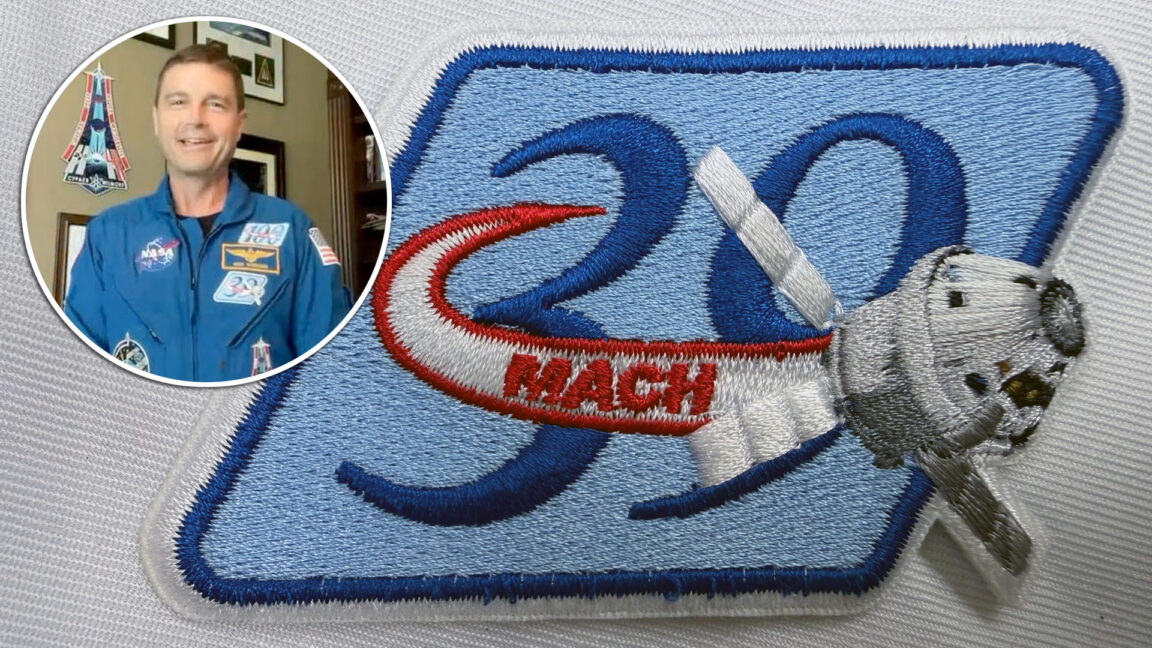
NASA's Artemis II crew are the fastest people alive, and now they have the patch to prove it.

Mission Commander Reid Wiseman, pilot Victor Glover, and mission specialists Christina Koch and Jeremy Hansen (the latter with the Canadian Space Agency) spent 10 days in early April flying by the Moon. Their journey took them farther away from Earth than any humans have gone (52,756 miles [406,771 km]) and then, on the way back on board their Orion spacecraft Integrity, they sped up to about 24,664 miles per hour (39,693 k/ph) reentering the atmosphere.

Only three other people in history have traveled faster. NASA's Apollo 10 astronauts Thomas Stafford, John Young, and Eugene Cernan set the record for the highest speed attained by a crewed vehicle relative to the Earth's surface: 24,791 mph (39,897 kph) on May 26, 1969.
Read full article

Comments

© Reid Wiseman/A-B Emblem/collectSPACE

  •  

Astronomers Finally Find Milky Way’s Missing Black Hole Wind

This image shows the evidence for the wind blowing away from Sagittarius A*: the white dot in the center of the image shows the supermassive black hole; in orange is data from ALMA, mapping the location of cold gas composed of carbon monoxide in the image; in blue is X-ray data from Chandra; a large cone-shaped cavity, visible as an absence of cold gas in the ALMA data, is filled by hot X-ray-emitting gas in the Chandra data. Image credit: NASA / CXC / UMass / Wang et al. / ALMA / ESO / NAOJ / NRAO / Longmore et al. / Minniti et al.

After a 50-year search, astronomers have uncovered evidence that Sagittarius A* -- the 4.3-million-solar-mass black hole that resides at the center of our Milky Way Galaxy -- is blowing a hot cosmic wind into its surroundings, carving out a giant cavity near the Galaxy’s heart.

The post Astronomers Finally Find Milky Way’s Missing Black Hole Wind appeared first on Sci.News: Breaking Science News.

  •  

Fatos espaciais da missão Artemis IV vão ter uma nova camada de proteção para os astronautas na Lua

O Liquid Cooling and Ventilation Garment (LCVG) serve como uma camada adicional de proteção para os astronautas da Artemis IV e foi desenhado para regular a temperatura corporal e assegurar a ventilação durante as caminhadas na Lua.

The post Fatos espaciais da missão Artemis IV vão ter uma nova camada de proteção para os astronautas na Lua appeared first on Tek Notícias.

  •  

NASA’s New Technology Lets Spacecraft Switch Between Networks

Polylingual Experimental Terminal (PExT)NASA just demonstrated a technology that lets spacecraft communicate across multiple networks, paving the way for a more flexible and reliable space internet. NASA’s experimental Polylingual Experimental Terminal (PExT) has successfully completed its primary technology demonstration, marking an important step toward more flexible communications in space. Because the project met its original goals and continues [...]
  •  

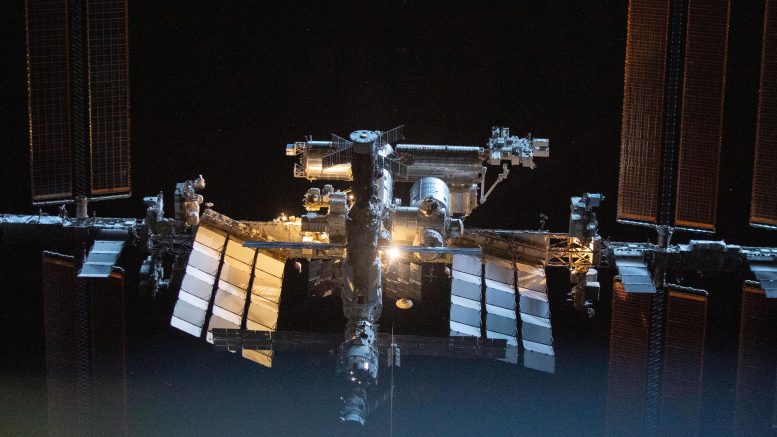
NASA’s Latest Update on International Space Station Leak

Space Station Pictured From SpaceX Crew Dragon CropNASA has released a new update on a long-running air leak aboard the International Space Station, detailing recent developments involving a troubled section of the orbiting laboratory and precautionary measures taken to protect the crew. The issue involves the PrK transfer tunnel inside Russia’s Zvezda service module, where cracks have been causing small atmosphere leaks [...]
  •  
❌