
❌

Reading view

Emergency SOS via Satellite Expands to Andorra and Iceland

Emergency SOS via satellite is now available in Andorra and Iceland, allowing supported iPhone and Apple Watch users to contact emergency services when cellular and Wi-Fi coverage are unavailable.

Apple added both countries to an updated support document, expanding the feature to 20 supported markets. Users in Andorra and Iceland can call or text 112 before choosing the satellite option when an ordinary emergency connection cannot be completed.

The expansion covers every iPhone 14 or later model running iOS 26.4 or newer. Apple Watch access requires Apple Watch Ultra 3 with watchOS 26.4 or later.

Emergency SOS does not turn the devices into conventional satellite phones. The system is designed for short emergency exchanges in locations where normal communication networks cannot be reached. Users must remain outdoors with a sufficiently clear view of the sky and follow onscreen directions while the device establishes and maintains a connection.

Emergency SOS via Satellite Reaches 20 Markets

Emergency SOS via satellite first launched in the United States and Canada in November 2022 with the iPhone 14 lineup. Apple gradually added European countries, Australia, New Zealand, Japan and Mexico as regulatory approval and emergency-service support became available.

Andorra and Iceland now join Australia, Austria, Belgium, Canada, France, Germany, Ireland, Italy, Japan, Luxembourg, Mexico, the Netherlands, New Zealand, Portugal, Spain, Switzerland, the United Kingdom and the United States.

The addition is particularly relevant for travelers and residents exploring mountainous or remote terrain.

Andorra contains extensive hiking, cycling and skiing areas across the Pyrenees, where cellular coverage can become unreliable beyond populated valleys and resorts. Iceland presents a different but equally demanding environment, with large rural areas, volcanic landscapes, glaciers and routes far from conventional infrastructure.

Satellite availability does not guarantee a connection everywhere. Mountains, deep valleys, dense tree cover and tall structures can obstruct the line between the device and a passing satellite. Apple also warns that satellite connectivity may not function in locations above 62 degrees latitude, which can affect some northern regions.

Most of Iceland lies below that threshold, although environmental conditions and the position of surrounding terrain can still influence performance.

International travelers can generally use Emergency SOS while visiting a supported country, even when the feature is not offered in their home market. Exceptions apply to devices purchased in certain countries or regions where Apple satellite connectivity is restricted.
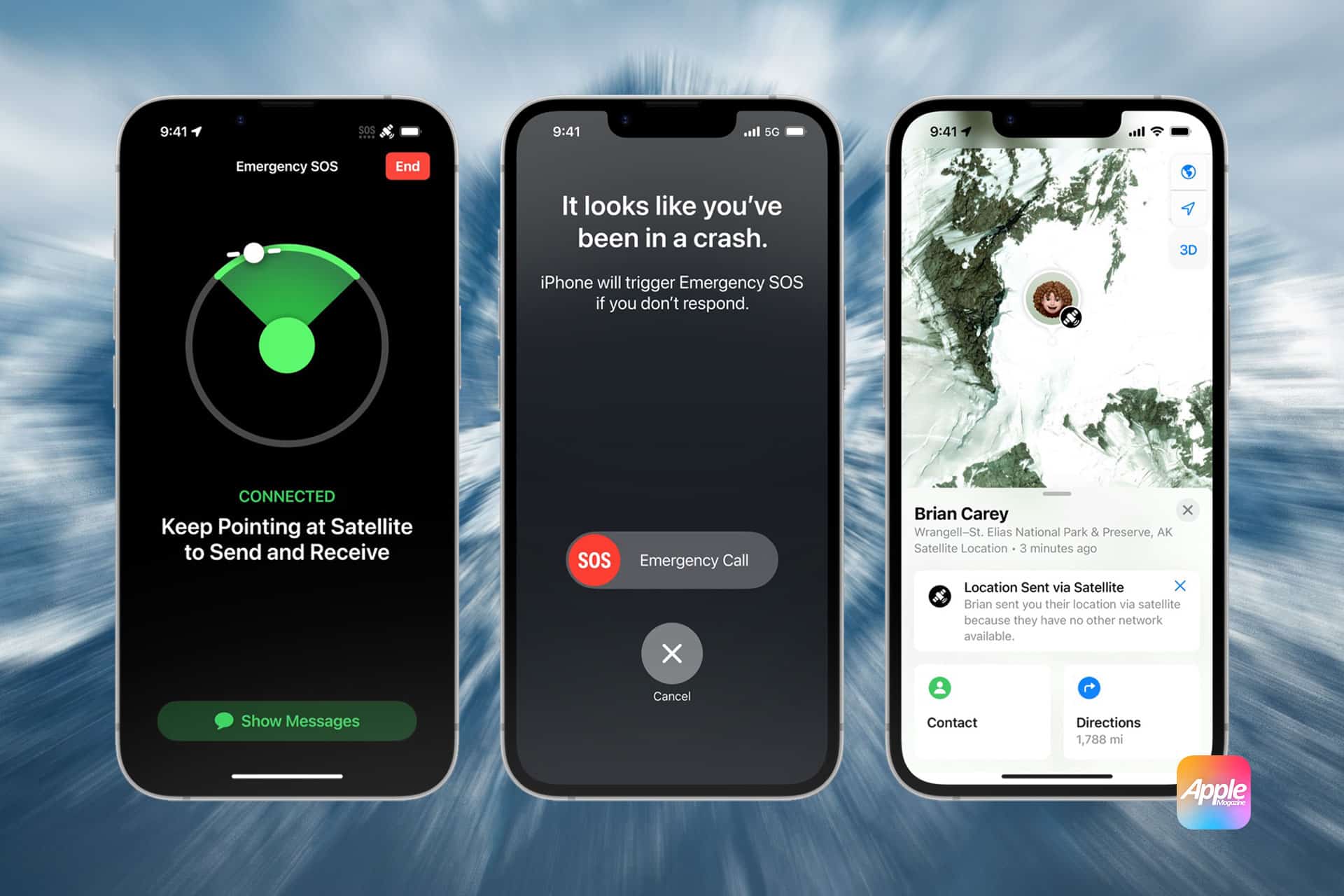
Three smartphones display various screens: left shows a satellite connection with instructions, center shows a crash detection alert for Emergency SOS, and right displays a map with a location marked for emergency notification.

iPhone 14 and Newer Models Gain the Expansion

Every version of iPhone 14 and later contains the hardware required for Apple satellite features. Users in Andorra and Iceland must install iOS 26.4 or a newer release before relying on Emergency SOS.

The system appears only when the iPhone cannot reach cellular service or Wi-Fi. Apple recommends trying the local emergency number first because another carrier network may still be able to complete the call even when the user own provider shows no coverage.

When the call fails, the iPhone offers Emergency Text via Satellite. The user answers a short series of questions describing the emergency, including the type of assistance needed and whether anyone is injured.

The compressed questionnaire reduces the amount of information that must be transmitted through the limited-bandwidth satellite connection. Once connected, the iPhone sends the responses and location to an emergency dispatcher or an Apple-supported relay center capable of contacting local responders.

In Andorra and Iceland, the applicable emergency number is 112.

Users can also choose to notify emergency contacts. When Medical ID and emergency contacts have been configured in the Health app, selected details can be shared during the incident.

The conversation does not operate at the speed of an ordinary text exchange. Under ideal conditions, a message may require approximately 30 seconds to send. Light or moderate foliage can extend that delay beyond one minute, while heavier obstructions may prevent a connection entirely.

The iPhone displays guidance showing which direction to turn or move as satellites pass overhead. The phone can remain connected while the screen is locked, but it should not be placed inside a pocket or backpack during the exchange.

Apple Watch Ultra 3 Works Without an iPhone Nearby

Apple Watch Ultra 3 brings similar protection directly to the wrist, allowing users to contact emergency services even when an iPhone is not available.

Emergency SOS via satellite on Apple Watch Ultra 3 does not require an active carrier plan. Apple includes the service at no additional charge for two years following activation of the watch.

When cellular and Wi-Fi connections are unavailable, users can attempt an emergency call or open Messages and text 112. If the message cannot be delivered through an ordinary network, the watch presents the satellite emergency option.

Apple Watch Ultra 3 also guides the wearer toward the satellite connection. The device can remain in its normal position on the wrist rather than being held above the head, although the user may be instructed to turn or move away from an obstruction.

A wet watch may have more difficulty maintaining satellite communication, an important limitation for swimmers, boaters and users caught in severe weather.

The watch can send the emergency questionnaire, location, elevation, Medical ID information and battery level. Emergency contacts can also receive information about the incident when the user has enabled that option beforehand.

Crash Detection and Fall Detection add another layer. If iPhone 14 or later or Apple Watch Ultra 3 detects a severe crash or hard fall and the user remains unresponsive, the emergency notification may be transmitted over satellite when cellular and Wi-Fi networks are unavailable.
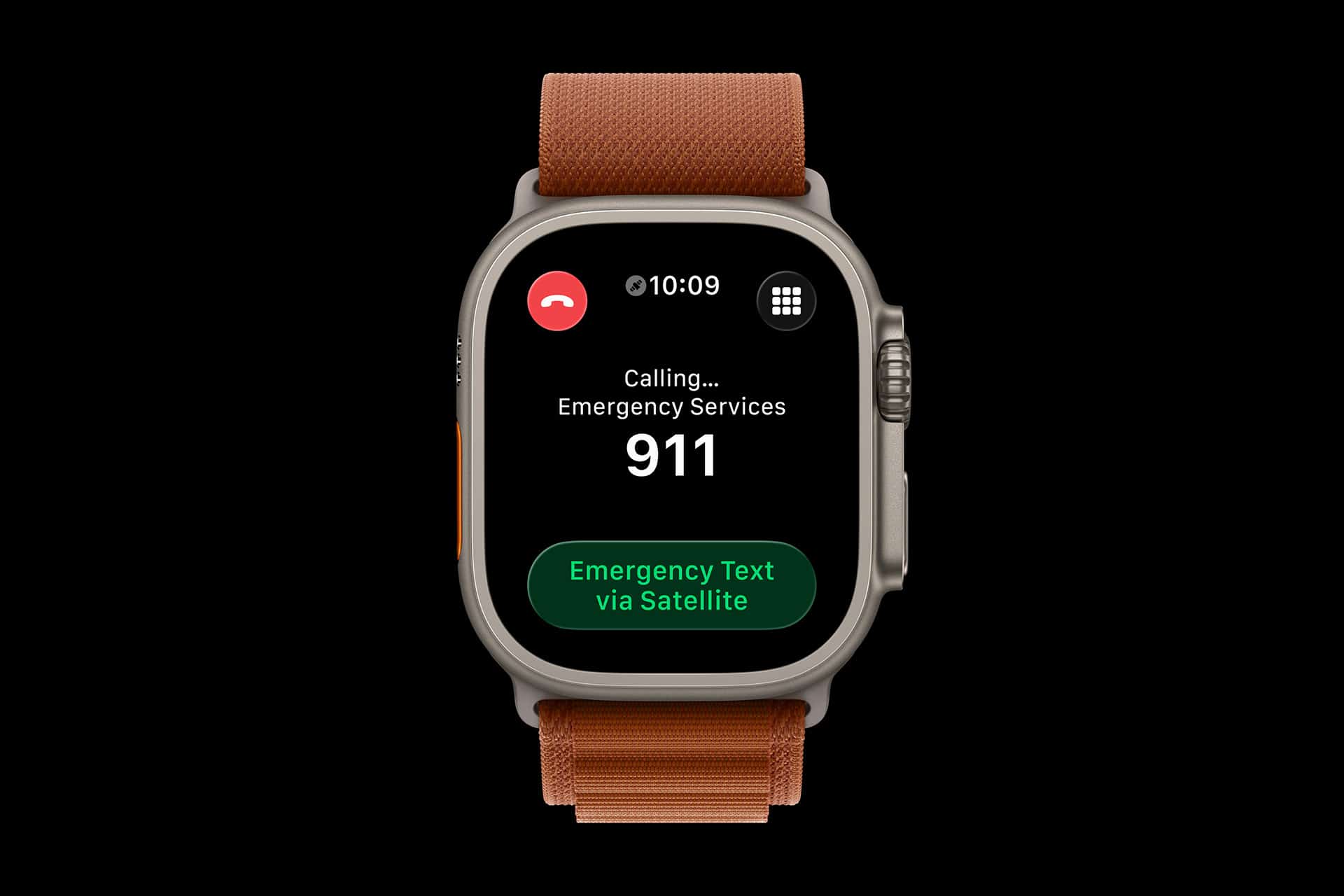
A smartwatch with an orange band displays an Emergency Apple Alerts screen, showing "Calling... Emergency Services 911" and a green button labeled "Emergency Text via Satellite." The time on the watch is 10:09.
Image Credit: Apple Inc.

Preparation Matters Before Going Off-Grid

Apple provides a connection demonstration that allows users to practice finding a satellite without contacting emergency services.

On iPhone, the demonstration can be opened through the Satellite controls or the Emergency SOS section in Settings. Apple Watch Ultra 3 users can add the Satellite control to Control Center or place a satellite complication on the watch face.

Testing the process before a remote trip helps users understand how quickly conditions can affect the connection. A clear field may establish contact rapidly, while a canyon or heavily wooded trail may require movement toward more open terrain.

Medical ID and emergency contacts should also be completed before leaving network coverage:

Health > Profile > Medical ID

A Medical ID can provide responders with information such as allergies, medical conditions, medications and emergency contacts. Users remain responsible for deciding which personal details they want stored and shared.

Emergency SOS via satellite is included free for two years after activating an iPhone 14 or newer model. Apple provides the same two-year period with Apple Watch Ultra 3, although the company has not established the long-term price that may apply after promotional access ends.

The arrival in Andorra and Iceland gives hikers, drivers, skiers and other travelers another route to help, but the safest preparation still includes checking weather conditions, sharing an itinerary and carrying adequate power before moving beyond ordinary network coverage.

The post Emergency SOS via Satellite Expands to Andorra and Iceland appeared first on AppleMagazine.

  •  

Early Holocene Black Sea Outflow Slows Aegean Convection

In an extraordinary advance in our understanding of early Holocene oceanographic dynamics, a recent study reveals a vigorous outflow from the Black Sea into the Aegean Sea around 11,000 years ago, profoundly impacting the onset of sluggish deep-water convection in the latter basin. This groundbreaking research, conducted by Evangelinos, CampderrΓ³s, Trias-Navarro, and their colleagues, challenges previous assumptions about early Holocene marine circulation patterns in the Eastern Mediterranean and redefines the complex interplay between regional hydrology and oceanographic processes.

The early Holocene epoch, roughly spanning from 11,700 to 8,200 years ago, marked a period of significant climatic transitions following the last glacial maximum. During this time, melting ice sheets contributed to substantial changes in sea level and the freshwater budget of marine basins. The Black Sea, situated at the nexus between continental freshwater inputs and the marine Mediterranean environment, played a pivotal role in modulating regional water mass exchanges. However, prior investigations offered limited insights into the magnitude and influence of its connection to the Aegean Sea.

Employing an integrated approach combining paleoceanographic proxies, high-resolution sediment core analyses, and advanced numerical modeling, the research team meticulously reconstructed the timing, intensity, and consequences of Black Sea outflows during the early Holocene. The results show a robust and sustained volumetric discharge from the Black Sea through the Dardanelles strait, substantially enhancing the salinity and density gradients in the Aegean basin. This intensified outflow propagated a cascade of oceanographic changes, triggering an early onset of sluggish deep-water convection which is key for nutrient cycling, biogeochemical processes, and the overall circulation of the Eastern Mediterranean.

The Black Sea’s outflow was largely driven by postglacial freshwater accumulation and subsequent overspill, a process linked to rapid ice sheet retreat and enhanced riverine inputs from the Eurasian hinterland. These inputs altered the hydrological balance in the Black Sea, elevating its water level sufficient to breach the sill thresholds connecting it with the Aegean. This breach was not a gentle trickle but an energetic pulse of brackish to saline waters that modulated the stratification within the receiving basin. The stratification evolution critically influenced vertical mixing and the ventilation of deeper waters, which prior to this event had been far more vigorous or perhaps absent.

Geochemical signatures extracted from sediment cores, including stable isotope ratios and trace metal concentrations, provide compelling evidence for this intensified Black Sea outflow. Notably, the team documented shifts in Ξ΄18O and Ξ΄13C signatures compatible with an influx of lower salinity waters at depths that coincide with emergent changes in benthic foraminiferal assemblages. These biological proxies reflect alterations in oxygenation and nutrient availability, tightly coupled to the changes in water column mixing. By correlating these findings with hydrogen isotopic measurements in organic molecular biomarkers, the researchers further elucidated detailed hydrological conditions that underpinned the Black Sea discharge dynamics.

Hydrodynamic modeling simulates the complex interactions between the discharged Black Sea water and the Aegean’s resident water masses, illustrating the resultant sluggish deep-water convection patterns. Unlike the vigorous overturning seen in other Mediterranean sub-basins, the Aegean’s deep-water formation at this time was subdued, governed by the altered buoyancy forcing from the Black Sea influx. Such sluggish convection slows the renewal of deep waters and reshapes elemental cycling, impacting nutrient regeneration and carbon sequestration, with far-reaching consequences on regional marine ecosystems.

This shift in oceanographic conditions at the start of the Holocene further implicates climate feedback mechanisms, as changes in sea surface temperature and salinity could have influenced atmospheric circulation patterns over the Eastern Mediterranean. The study posits that the altered convection regime may have modulated regional climate variability through ocean-atmosphere interactions, potentially linked with the onset of Neolithic cultural developments along the surrounding coastlines due to modified marine productivity and resource availability.

Complementing sedimentological and geochemical datasets with finely resolved chronologies, the researchers critically examined the chronology of inflow pulses vis-Γ -vis regional climatic archives. Their findings suggest a strong temporal coherence between Black Sea outflow episodes and episodic cooling events recorded in ice cores and speleothems, underscoring a coupled ocean-atmosphere response during this pivotal climate period. This reinforces the importance of marine gateways as sensitive indicators and modulators of earth system dynamics during abrupt climate transitions.

Moreover, the paper opens new avenues for exploring how ancient oceanographic shifts influence carbon cycling. By showcasing how the sluggish Aegean deep-water convection modified the sequestration potential of organic and inorganic carbon in sedimentary reservoirs, the authors contribute crucial knowledge to the ongoing discourse on natural climate regulation mechanisms and how past ocean circulation shaped atmospheric greenhouse gas concentrations.

Applying multidisciplinary tools and innovative analytical techniques, this pioneering investigation represents a model for future studies aiming to unravel the complexity of ancient marine systems. The unprecedented level of detail achieved in reconstructing the early Holocene hydrological regime in this key geographical sector significantly advances the field of paleoceanography and environmental geosciences.

The findings have broad implications beyond academic curiosity, offering critical insights into present-day and future Mediterranean circulation in the face of anthropogenic climate change. Understanding the nuances of how natural variability and regional freshwater inputs influence ocean stratification and convection is essential for predicting ecosystem responses and regional climate feedbacks under ongoing global warming scenarios.

In sum, this study significantly enriches our comprehension of the interactions between postglacial hydrological changes, marine gateway dynamics, and ocean circulation in the Eastern Mediterranean. It highlights the Black Sea not merely as a passive recipient of climatic forces but as an active driver reshaping the marine environment and climate feedbacks in the early Holocene. The rigorous combination of sedimentary evidence, isotopic analyses, and numerical modeling provides a robust framework for future explorations into past oceanographic and climatic regimes.

As we continue to investigate the archives of Earth’s climatic past, unraveling the intricacies of water mass exchanges through narrow sills and their broader repercussions becomes increasingly imperative. This research exemplifies how integrating broad disciplinary approaches can yield transformative insights that resonate across climate science, paleoceanography, and environmental history.

This compelling narrative of the early Holocene oceanographic transformation through the Black Sea outflow is poised to capture the attention of scientists and the public alike, illuminating how ancient hydrological events continue to echo in our modern environmental and climatic landscapes.


Subject of Research:

Paleoceanographic reconstruction of early Holocene Black Sea outflow impacts on Aegean Sea deep-water convection dynamics.

Article Title:

Early Holocene vigorous Black Sea outflow and the onset of sluggish Aegean deep-water convection.

Article References:

Evangelinos, D., CampderrΓ³s, S., Trias-Navarro, S. et al. Early Holocene vigorous Black Sea outflow and the onset of sluggish Aegean deep-water convection. Commun Earth Environ (2026). https://doi.org/10.1038/s43247-026-03730-6

Image Credits: AI Generated

  •  
❌