 Login

Porsche’s electric Macan Turbo is an automotive existential crisis
The 2026 Porsche Macan Turbo EV is a two-row crossover with 630 horsepower and a 100-kilowatt-hour battery.

Weather forecasting relies on many different types of data to make accurate predictions: temperature, humidity and wind data are all used to build an accurate forecast. Researchers have now found a new way to improve weather forecasts, by adding data on water isotopes in the atmosphere.
For predicting weather, water vapour isotopes integrate key information on the history of their evaporation, condensation, mixing and transport. Heavy water (containing either deuterium or oxygen-18) exists in the atmosphere and the way that these water isotopes condense and evaporate is different to that of normal water molecules.
The release and absorption of latent heat when water condenses and evaporates is the primary energy source for atmospheric circulation. The vertical heating profile plays a major role in large-scale circulation, wave propagation, storm track positioning, cloud development and precipitation patterns. However, vertical heating structures and convective activity cannot be measured directly by satellite networks and have to be inferred instead, leading to biases and inconsistencies that degrade the accuracy of weather models.
Stable heavy water isotopes can provide a direct physical link between the latent heating processes in weather patterns through isotopic fractionation. Heavier water isotopes preferentially condense into the liquid phase because they have a greater binding energy and lower diffusive velocity. Additionally, heavy water doesn’t evaporate as easily as normal water.
Even though these water isotopes exist in small quantities, their relative abundance alters during evaporation and condensation. Observing this change in abundance of the isotopes allowed the researchers to understand where the water came from and what happened to it along the way – providing insights into the atmospheric conditions.
The research team – led by Kinya Toride from University of Colorado Boulder, NOAA and the University of Tokyo – examined data from the Infrared Atmospheric Sounding Interferometer (IASI), which provides large amounts of accurate long-term data on water vapour isotope ratios in the mid-troposphere. The researchers fed the data collected from satellite observations into a weather model using a technique called data assimilation. This approach takes the different isotope signals and translates them into the atmospheric variables that are used in weather forecasting – as the vapour behaviour alone was not sufficient to reveal atmospheric variables such as temperature, wind and humidity.
They found that inclusion of these data improved the estimation of wind, temperature and water vapour in the atmosphere, leading to more accurate weather forecasts. This included improving forecasts for up to five days ahead and providing more accurate predictions on heavy rainfall across many regions.
While it has long been theorized that water vapour isotopes could improve weather forecasting, this is the first study that has been able to show it using real-world data, rather than inside a controlled lab environment. But while the study was performed in conditions close to real operational forecasting, the researchers emphasize that it’s not something that can be implemented straightaway.
This is because there are limited real-time isotope data available and the operational forecasting models employed today by meteorologists are not designed to use such data. For isotope observations to be used in our everyday weather forecasts, a lot more real-time data will need to be collected and processed. Then either new models that incorporate these data will have to be developed or the current models will need to be adapted to include the water isotope data.
However, with more and more satellites being launched into our atmosphere, and the costs of them continuing to come down, it’s likely that more weather satellites will be available to provide these data in the coming years – and both meteorologists and weather presenters should be able to make good use of them.
The study, published in Nature Communications Earth & Environment, demonstrates the benefits of using water isotope data, particularly for predicting heavy rainfall. “Our long-term goal is to develop more accurate satellite observations of water vapour isotopes and integrate them into operational weather forecasting systems,” says co-author Kei Yoshimura from University of Tokyo in a press statement. “This additional layer of information can help make everyday forecasts more reliable.”
The post Heavy water isotopes make weather predictions more accurate appeared first on Physics World.
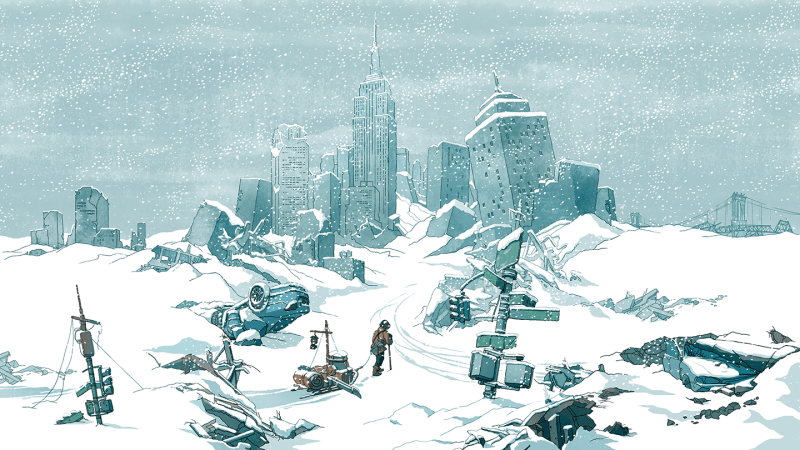
Earth has frozen over in the past — at least five times. Science fiction is full of takes about how it might happen again and the implications of a modern ice age. The problem: At a minimum, sci-fi gets the timetable for Earth turning into a “snowball” wrong — often laughably.
Here’s how some stories have portrayed it: Earth freezes. Humankind’s remnants huddle in ice caves, fending off giant alien monsters (Snowball Earth). Or people shelter in the New York Public Library as ice encases the Empire State Building (The Day After Tomorrow). Or a train hurtles in an endless loop, both protection and prison for Earth’s scant survivors (Snowpiercer).
These stories are all set in Earth’s near future, within a decade from now. And what makes their visions so chilling is that there’s at least a snowflake of truth in each. (Well, space monsters haven’t invaded Earth — yet.)
The most severe of Earth’s ice ages spanned from 720 million to 635 million years ago. It’s aptly been named the Cryogenian Period, from the Greek krýos (meaning cold) and génesis (meaning birth). At least twice during this period, glaciers extended from pole to pole. It could have amounted to a true Snowball Earth.
Although “maybe it was more of a Slushball Earth,” says Thomas Algeo. A geoscientist, he works at the University of Cincinnati in Ohio. Fossils, he says, suggest that even in the coldest times, seafloor-dwelling algae survived. They would have needed sunlight. So patches of open water must have persisted near the equator, he says.
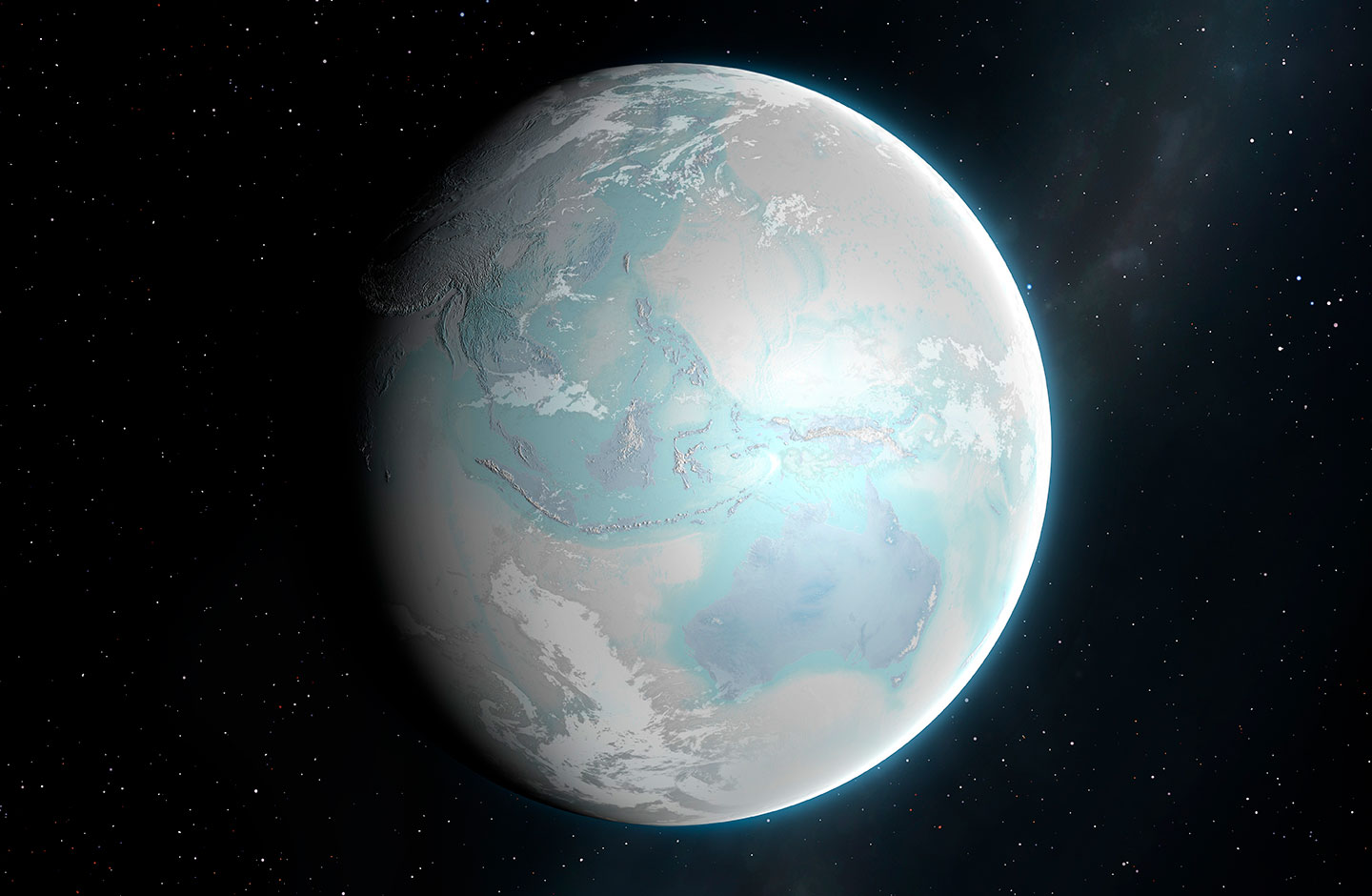
All such past deep freezes set in due to a series of geologic events. Take the Cryogenian. It developed after shifting tectonic plates caused a supercontinent to split apart. That increased rainfall and rock weathering. These dramatically reduced atmospheric carbon dioxide, which triggered a runaway cooling effect. Widespread ice, which reflects the sun’s warming rays back into space, would have exaggerated that cooling.
All of these processes are slow, which is not ideal for action flicks. Fortunately, sci-fi can play with time. It’s not unusual for fiction to take natural or human-caused climate interactions (and feedback effects) and accelerate or amp them up for drama.
The Day After Tomorrow, for example, which hit theaters in 2004, is based on a real-world scenario: the potential shutdown of a part of a global system of ocean currents. These move heat around the planet. Known as AMOC, this system is short for the Atlantic Meridional Overturning Circulation. Today, AMOC brings relative warmth to regions that might otherwise be frigid.
Back in the mid-1980s, geochemist Wallace Broecker suggested that large releases of freshwater to the North Atlantic Ocean could halt the AMOC. Such slowdowns or shutdowns in ocean currents have played a role in past ice ages, he said.
Scientists today fear it could happen again — and soon.
But to geologists, “soon” doesn’t mean in days to weeks (as portrayed in The Day After Tomorrow). For them, it means perhaps decades to a century.
The Day After Tomorrow’s filmmakers were “quite up-front” about their process, says Stefan Rahmstorf. For ultimate drama, they just “took known weather extremes — tornadoes, storm surges, cyclones, hail storms and blizzards — and amplified those.” Rahmstorf is a physical oceanographer at the Potsdam Institute for Climate Impact Research in Germany. He fact-checked aspects of the film.
Despite its super-short timeline for turning the Northern Hemisphere into a deep freeze, this film did point to some very real science, he notes. For instance, the movie starts out with its science hero giving a talk at a United Nations science meeting. Its topic was “the possible risk of a shutdown of the North Atlantic Current. I gave a very similar talk at such a UN conference in Buenos Aires in 1998,” Rahmstorf notes. “I even showed the same diagram [as the movie’s scientist].”
Snowpiercer imagines a different deep-freeze scenario. Geoengineering goes haywire in this 2013 movie, 2014 graphic novel and TV series (which ran from 2020 to 2024). Here, scientists release aerosols into the sky to reflect sunlight back to space. Their goal was to slow global warming. This idea is, in fact, based on a real type of Earth engineering known as solar-radiation management.
But in this story line, the aerosols proved an overkill. They plunged Earth into a deep freeze within weeks (hours, actually, in the novel).
Geoengineering strategies could cool Earth — just not that quickly. They would more likely take at least a few years. And they wouldn’t be that potent, either. To bring on an ice age, aerosols would have to be deliberately and repeatedly injected over generations, says Douglas MacMartin. He’s a climate engineer at Cornell University in Ithaca, N.Y.
How Earth freezes in Snowball Earth is still something of a mystery, as the manga is still in progress (though a streaming anime version debuted in April). Here, the transition to an ice world takes about a decade. And — spoiler alert — giant alien monsters might have had something to do with it. (For that, scientists don’t really have an answer.)
But the premise behind these stories — that Earth could freeze over — is grounded in very real science. It’s happened before and could again. But it won’t happen quite the way these stories tell it.
Submit your question here, and we might answer it an upcoming issue of Science News Explores
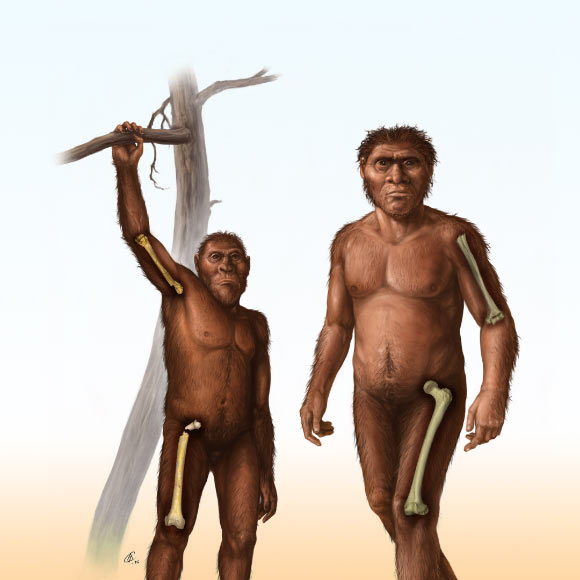
New research led by University of the Witwatersrand and University of Southern California paleoanthropologists sheds more light on one of the most debated transitions in human evolution: when our ancestors stopped regularly climbing trees and committed fully to walking on two legs.
The post Fossil Evidence Suggests Early Homo Had Abandoned Tree-Climbing by 1.8 Million Years Ago appeared first on Sci.News: Breaking Science News.
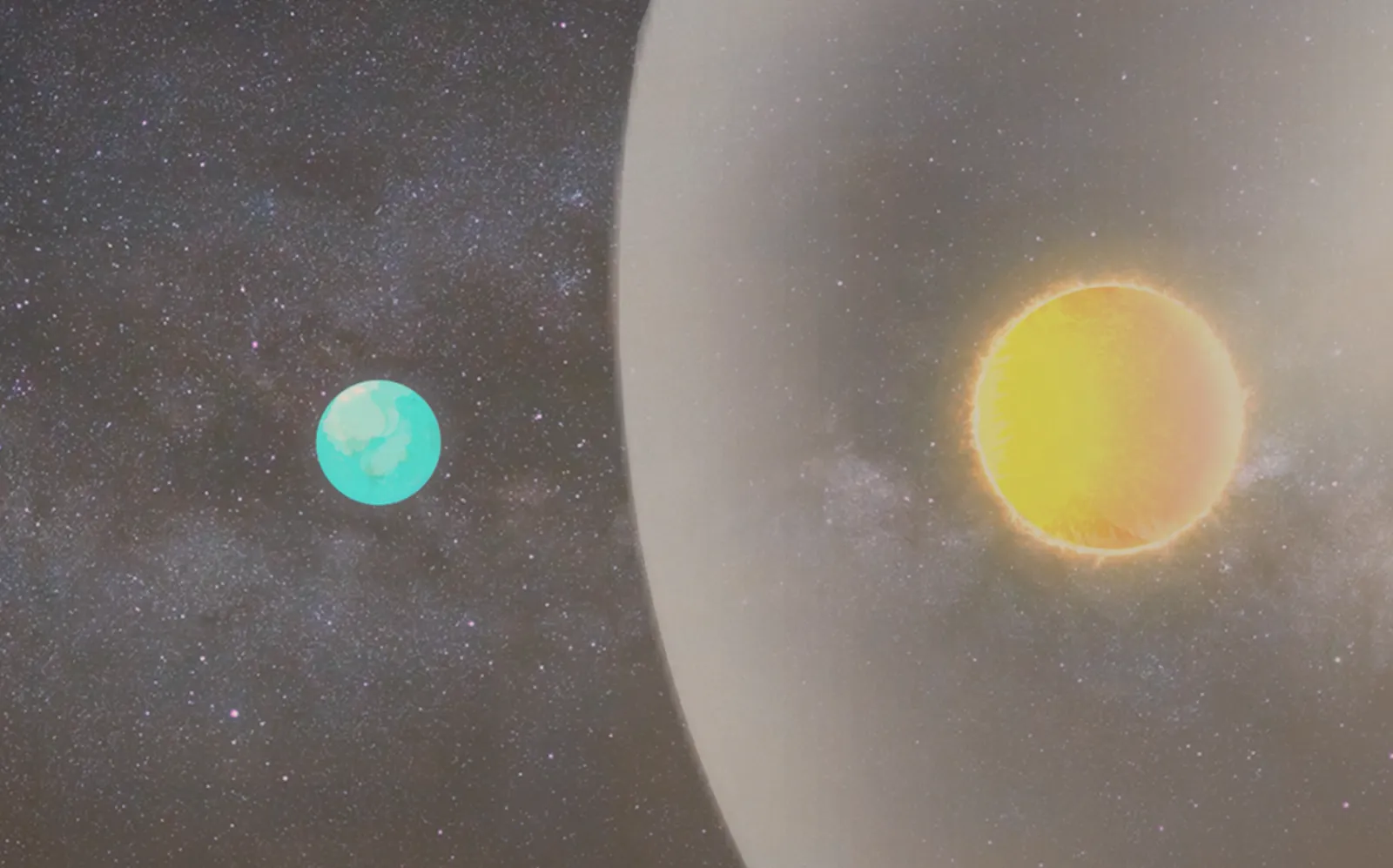
Two NASA-funded studies trace how the Sun’s changing galactic surroundings may have altered Earth’s climate and helped warm the young planet.
The post The Sun’s Ancient Journey Through the Galaxy May Have Changed Earth’s Climate appeared first on Curiosmos.

Beneath every step we take, soils hold one of the planet’s largest reservoirs of carbon, a vast, slow-moving bank of organic matter that quietly regulates how much of the world’s carbon stays locked away and how much escapes into the atmosphere as greenhouse gas. Now a sweeping new review warns that climate-driven extremes, droughts, floods, and wildfires, are rewriting the rules of that subterranean economy in ways that conventional models and land-management practices have not yet caught up with. The analysis, led by environmental scientist Nanthi Bolan of the University of Western Australia and colleagues, including a corresponding authorship by Bolan himself, synthesizes a substantial body of global evidence on how extreme weather reshapes carbon inputs to soil, microbial processing, erosion, and the sequestration of carbon that underpins soil health, water retention, nutrient cycling, and agricultural productivity.
The work, published in the journal Carbon Research, is notable for the scale of its underlying evidence base. On 14 January 2026, the authors searched Google Scholar, PubMed, and Web of Science using terms spanning climate change, extreme weather, soil carbon, microbial activity, decomposition, erosion, dissolved organic matter, and leaching. The initial sweep returned 14,218 records; after removing duplicates and screening for eligibility, 3,754 articles remained for bibliometric and qualitative analysis. From those, 187 publications were selected for detailed synthesis based on relevance, methodological rigor, and the substantive quality of their findings. Keyword co-occurrence patterns were mapped with VOSviewer, a bibliometric tool that reveals the intellectual architecture of a research field. The result is a critical review grounded in structured literature screening rather than new experimental data, but its synthesis offers one of the most comprehensive maps yet of how extremes rearrange the soil carbon cycle.
The review’s central finding is that no two extremes act alike. Drought, the most widespread disturbance, operates largely through the plant side of the equation. When rainfall fails, photosynthesis slows, plant biomass production falls, and the total flux of carbon entering soils through roots, residues, and litter declines. There is a nuance here: under moderate water stress, plants may temporarily shift a greater proportion of their fixed carbon belowground, investing in roots to chase moisture. But prolonged drought overwhelms that compensatory response. Microbial biomass shrinks, litter decomposition stalls, and the living engine of the soil carbon cycle idles. Then comes the deceptive twist: when rain finally returns, rewetting triggers a rapid pulse of carbon dioxide as starved soil microbes seize upon the accumulated substrates left behind by months of suspended activity. That post-drought CO₂ flush, the review emphasizes, can erase much of the apparent “savings” that accumulated during the dry period. Across the assembled evidence, repeated and multi-year drought was consistently associated with declining soil organic carbon, with grasslands and arable croplands showing particularly pronounced losses, ecosystems that happen to anchor much of the world’s food production.
Flooding tells the opposite story, but it ends in many of the same places. Water saturation chokes off oxygen diffusion through soil pores, forcing microbial metabolism into anaerobic pathways. That shift changes everything downstream. Prolonged waterlogging can drive the chemical reduction of iron oxyhydroxides, minerals that in oxygenated conditions act as microscopic glues binding organic carbon to soil particles. When those minerals dissolve, the carbon they held is released as dissolved organic carbon, which can then be stripped away by erosion and leaching and exported to rivers, lakes, and ultimately the ocean. The review stresses, however, that flooding is not unambiguously a carbon loss story. Wetlands and other periodically inundated ecosystems can accumulate and retain enormous carbon stocks precisely because water constrains decomposition. Whether a flood event releases carbon or banks it depends on the interplay between plant inputs, oxygen availability, and hydrological transport, a delicate balance that shifting rainfall regimes are actively destabilizing.
Wildfire is the most dramatic and immediately visible of the three forces, and its effects cascade on multiple timescales. Combustion directly strips vegetation, litter, and soil organic matter, transferring carbon to the atmosphere in hours. But fire also rearranges the physical and biological landscape of the soil in subtler ways: it can increase erosion by removing protective ground cover, alter soil wettability in ways that change hydrological behavior, restructure microbial communities, and expose previously protected carbon, once shielded inside aggregates or mineral associations, to fresh decomposition. There is a paradoxical bright spot. Pyrogenic carbon, the charcoal-like residue of incomplete combustion, is chemically recalcitrant and can persist in soils for centuries or millennia, functioning as a long-term carbon sink. Whether a fire leaves a landscape as a net carbon source or stabilizes some of its carbon in pyrogenic form depends on fire severity, soil moisture, fuel load, ecosystem type, and the trajectory of post-fire recovery. The review is clear that this balance cannot be predicted from fire alone; it is contingent, site by site, on conditions that vary widely across the globe.
Perhaps the most consequential theme running through the synthesis is that carbon responses cannot be inferred from the type of extreme event alone. Land use, soil mineralogy, hydrology, salinity, vegetation composition, microbial community makeup, and the timing of events within a season all determine whether carbon ends up stored, mobilized, or released. Iron and aluminum oxyhydroxides and clay minerals, for instance, provide mineral protection that can shield organic matter even under stress, while sandy or low-clay soils offer little such refuge. Managed croplands respond differently from native grasslands; saline coastal soils behave differently from acidic forest soils. And compound events, drought followed by wildfire, or alternating drought and flooding in rapid succession, may produce effects that are qualitatively different from those of isolated disturbances, as when a dried landscape burns more intensely, or when post-fire soils, stripped of vegetation, wash away in the first heavy rain. The review argues that the climate science and soil science communities have largely studied these disturbances one at a time, while the real world increasingly delivers them in combination.
The implications for climate mitigation and adaptation are substantial. Soil organic carbon is frequently invoked in national climate pledges and voluntary carbon markets as a bankable sink, yet the review suggests that the security of that bank depends heavily on how often and how severely extremes strike. If multi-year droughts steadily drain carbon from grasslands and croplands, or if fires repeatedly reset accumulation cycles, the effective permanence of soil carbon storage becomes far more fragile than many accounting frameworks assume. Conversely, protecting and rebuilding soil carbon delivers benefits well beyond climate: it improves water retention in drought-prone regions, supports nutrient cycling, stabilizes soil structure against erosion, and sustains the microbial diversity on which fertility depends. Carbon stewardship, in other words, is not separable from food security or ecosystem resilience; it is the same problem viewed from different angles.
The authors are candid about the limits of the current evidence base. The article does not report newly generated datasets and does not present a dedicated limitations section, and its conclusions rest on a qualitative synthesis of selected publications. Consequently, they call for improved and more consistent evidence across soil types, land uses, and both terrestrial and aquatic environments, and across multiple temporal scales, from the instantaneous CO₂ pulse after rewetting to the multi-decadal trajectory of carbon storage. Standardizing measurements of carbon pools, microbial functions, and event intensity, they argue, would make results comparable across ecosystems and enable more confident generalization, something the field currently struggles to achieve given heterogeneous methods and site-specific reporting.
Looking forward, the review sketches a research agenda that is as technologically ambitious as it is mechanistically focused. The authors recommend integrating high-resolution remote sensing with ground observations, advanced spectroscopy, molecular analyses, and integrated modeling to track carbon as it moves through soils and into waterways. They single out several priorities: characterizing microbial genomic and functional diversity as it responds to stress, quantifying carbon stoichiometry, probing the interactions between organic matter and iron and aluminum oxyhydroxides, understanding clay-mineral protection mechanisms, tracking long-term storage outcomes, and systematically studying the sequencing of compound extreme events. Each of these threads addresses a gap in the mechanistic chain that links a weather event in the atmosphere to a molecule of carbon, stabilized or released, in the soil.
What emerges from the review is a picture of the soil carbon cycle not as a stable background process but as a dynamic, contested system whose behavior under climate extremes is far less predictable than once assumed. The same storm that floods a rice paddy and exports carbon to a river delta may, a few hundred kilometers away, end a drought and briefly green a grassland, with opposite consequences for the atmosphere. As extremes grow more frequent and more compound, the review makes the case that understanding, and safeguarding, the carbon held beneath our feet will require science that is as interconnected and as restless as the weather itself.
soil organic carbon, extreme weather, drought, flooding, wildfire, carbon sequestration, microbial activity, dissolved organic carbon, erosion, pyrogenic carbon, climate change, soil health
Article Title: Impacts of climate change-induced extreme weather events on carbon dynamics in soil
Article References: Bolan, N., Messiga, A. J., Sharma, S., Mukherjee, S., Bolan, S., Salehin, S. M. U., Rupngam, T., Rajan, N., Zhang, T., Yang, Y., Jagadesh, M., & Siddique, K. H. M. (2026). Impacts of climate change-induced extreme weather events on carbon dynamics in soil. Carbon Research, 5(1), Article 58. https://doi.org/10.1007/s44246-026-00300-5
Image Credits: AI Generated
DOI: 10.1007/s44246-026-00300-5
Keywords: adaptation of land management practices to climate extremes, challenges to conventional soil carbon models, Climate change impacts on soil carbon storage, effects of droughts and floods on soil microbial activity, global evidence on soil carbon dynamics, implications for greenhouse gas emissions, influence of extreme weather on nutrient cycling and water retention, resilience of soil carbon reservoirs to climate, review of climate-driven soil carbon processes, soil erosion and carbon loss due to extreme weather, soil health and agricultural productivity under climate stress, wildfire influence on soil organic matter
What will the weather be like tomorrow, or next week or, indeed, in a month’s time? Today’s numerical weather predictions can easily answer the first two parts of this question, but they fall short beyond about 14 days. New work on predictability limits by scientists at the University of Miami and the NOAA Cooperative Institute for Marine and Atmospheric Studies (CIMAS) say that this maximum could be extended to around 129 days – but probably no further. Whether this limit can be reached in practice, however, will depend on future improvements in forecasting technologies, they say.
Numerical weather prediction was developed in the late 1940s. Indeed, it was one of the first major applications of electronic computers. As these have advanced, so have the predictions. Indeed, thanks to ever more sophisticated mathematical models capable of analysing increasing amounts of observational data, we can now predict, for example, when hurricanes will occur as far as eight days in advance – something that was deemed impossible even a few decades ago. But how far ahead can such predictions be made?
Previous attempts to determine this predictability limit have largely relied on analysing the behaviour of very small perturbations in the atmosphere. These tiny errors, however, are inaccessible either observationally or via numerical modelling, explains Zoltan Toth of the NOAA who led this new study together with his colleague Wei Zhang. “These past studies therefore had to make some assumptions about the behaviour of the small errors, and these assumptions are necessarily somewhat arbitrary.”
The method developed by Toth, Zhang and their colleagues makes no reference to this error behaviour and instead goes back to analysing the energetic balance of the atmosphere, which continually absorbs solar radiation on the molecular level. In their approach, the researchers began by considering how our planet’s atmosphere would behave as a closed system, the deterministic dynamics of which preserves information about its initial state, assumed to be perfectly known. In theory, such a hypothesis would allow forecasts of the atmosphere’s behaviour right out to infinity. This is not possible in reality, they explain, because the atmosphere is obviously not a closed system: it receives and emits radiation. In the real atmosphere, the phases of photons in sunlight are completely random and cannot be determined, injecting quantum-scale uncertainty into the atmosphere.
These unknown quantum characteristics act as noise and destroy any retained information, beginning first of all on the smallest scales, explain the researchers. As these scales become bigger, noise eventually affects all parts of the system. When the total energy in the atmosphere is entirely replaced, the ability to make any prediction is completely lost.
“Using the relatively well-measured quantities of total energy in the atmosphere and the incoming and outgoing solar radiation fluxes at its upper boundary, we estimate that the range of skilful forecasts could potentially be extended from 14 days as at present to 129 (±7) days at the most,” explains Toth.
“This result is very different from the mainstream discourse about atmospheric predictability, which to this day is strongly influenced by early publications in the field,” adds Toth. “More recently even, the authors of a 2018 article in the Bulletin of the American Meteorological Society speculated on whether current forecast systems are reaching their limits for when it comes to predicting tropical cyclones. In 2020, we argued that this limit is at least decades, if not much farther away.”
The theoretical foundation for the new methodology to determine the time limit of predictability is rather simple, he says. “At its core is a conceptual realization, which came to us intuitively. This is that the energy turnover time (that is, the time it takes for all energy in the atmosphere to be replaced by incoming solar radiation) is equivalent to the upper limit of predictability.”
While there is no complex mathematics involved, Toth notes that he and his colleagues had to find a way to describe the technique in a readily understandable way – something that was not easy, he admits, given the complexity of the subject.
Looking ahead, the researchers, who detail their present work in Advances in Atmospheric Sciences, are now looking into several other independent ways to estimate the limit of predictability. “There is no doubt, this limit has a theoretical feel to it,” Toth tells Physics World. “Yet there are a number of very practical implications for both traditional equation- and AI-based modelling of the atmosphere following on from the theory of predictability that we are also exploring in a series of ongoing studies.”
The post How far ahead can we predict the weather? appeared first on Physics World.
 A viral video shows sprinklers soaking a green lawn outside a denver data center during severe water restrictions.
Eat more fatty fish.
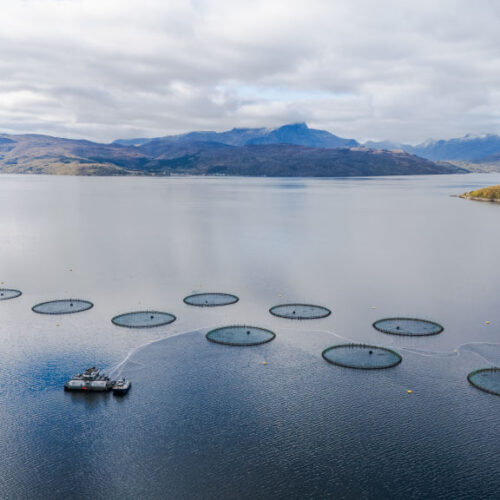
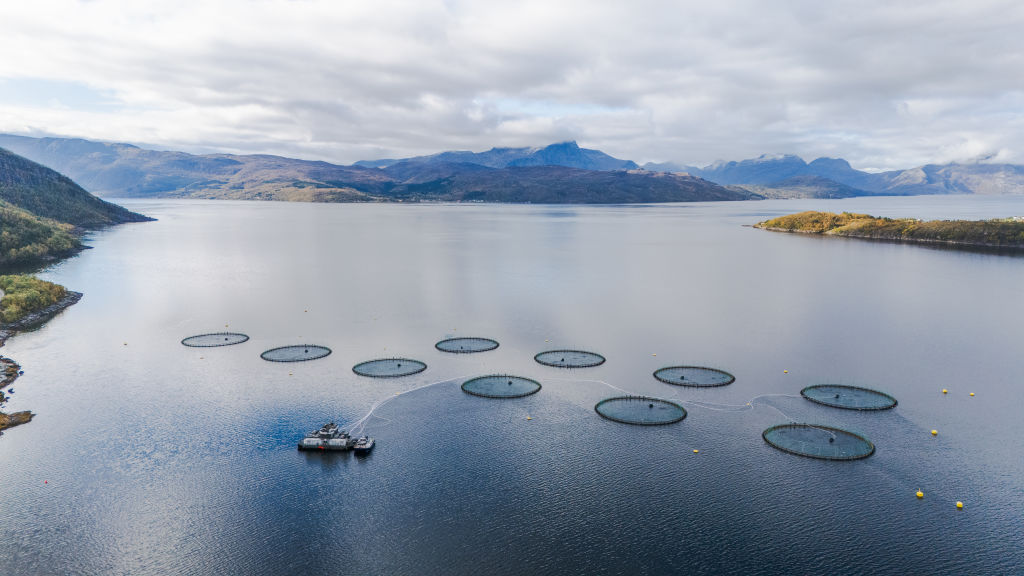
That dietary advice has changed the way the world consumes salmon, pushing consumer demand ever upward and production to higher and higher levels. Most of that demand is being met with farmed salmon: Today, nearly 70 percent of the salmon consumed on the planet are raised in pens and cages.
The US Department of Agriculture’s Dietary Guidelines for Americans recommend eating at least 8 ounces of fish a week and urges people to choose salmon or other species that are similarly high in “heart-healthy” Omega-3 fatty acids. But new research led by USDA scientists finds that levels of these fatty acids in farmed salmon have dropped considerably, potentially making the agency’s own advice, and similar recommendations, including from the American Heart Association, outdated and insufficient.
© Manuel Romano/NurPhoto

For several decades, paleontologists have described Miracinonyx trumani -- an extinct species of cheetah-like felid that roamed the North American prairies and steppe terrains more than 13,000 years ago -- as North America’s answer to the African cheetah (Acinonyx jubatus).
The post Ancient DNA Rewrites Story of Enigmatic ‘American Cheetah’ appeared first on Sci.News: Breaking Science News.
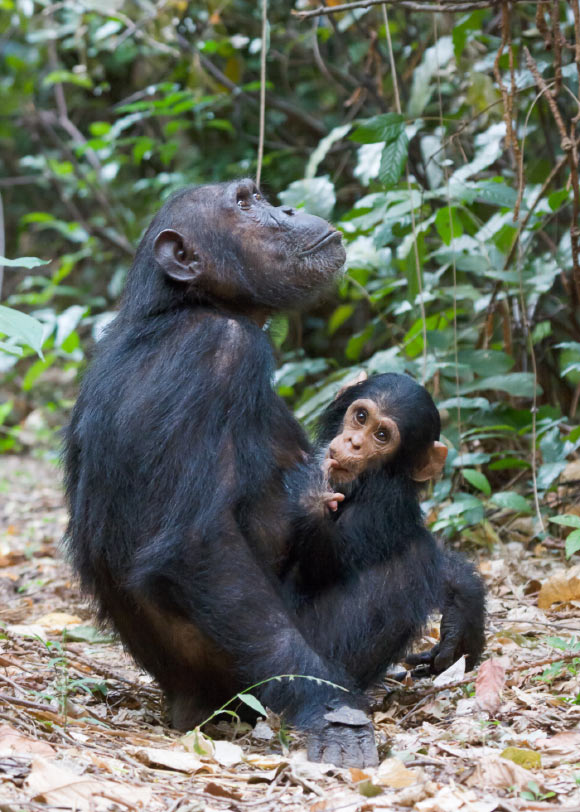
Researchers tracking grunts, whimpers and laughter across two geographically separated chimpanzee populations found that vocal differences sharpen with age.
The post Young Chimps Develop Their Own Accents, New Study Finds appeared first on Sci.News: Breaking Science News.
In Boé National Park, researchers have repeatedly encountered a small number of trees marked by gouged bark and piles of stones at their bases. These signs suggest that wild chimpanzees have returned to the same trees for years to throw rocks. According to a recent field account by University of Victoria researchers Robyn Nakano and Ammie Kalan, some of these sites have remained in use for over a decade.
This behavior, called accumulative stone throwing, has been observed in only four chimpanzee populations in West Africa. While rocks and trees are widespread in chimpanzee habitats, piling stones at specific trees is rare. Nakano, Kalan, and other researchers suggest this may be a cultural practice within certain groups rather than arising from environmental factors alone.
Video recordings collected through the Pan African Programme and analyzed in a 2016 Scientific Reports study led by Hjalmar Kühl show that mostly adult male chimpanzees throw rocks at particular trees and repeatedly return to the same trunks. During these events, the chimpanzees pant-hoot, a loud call used for long-distance communication, and sometimes perform buttress drumming by repeatedly striking the tree’s buttressed base with their hands and feet.
Pant-hooting and buttress drumming are typical features of displays put on by male chimpanzees. The fact that these behaviors occur alongside stone throwing suggests that accumulative stone throwing may have developed as a variation of these existing social displays.
Researchers suspect this behavior may be cultural rather than simply a response to environmental conditions because it occurs only in certain areas, even though appropriate rocks and trees are common throughout chimpanzees’ habitats. Within one population, only particular trees are used as throwing sites. Earlier studies have suggested that the behavior might function as a form of communication or could indicate places of symbolic significance within a community’s territory.
The behavior could also offer archaeologists a rare example of how repeated stone use and accumulation can create material traces that persist after the animals that made them have moved on.
Some primates use stones as tools, including populations that use rocks to open nuts for food. Accumulative stone throwing differs because the behavior occurs in a social context rather than during extractive foraging. The purpose of this behavior for the chimpanzees remains unclear.
Nakano and Kalan conducted their fieldwork from Béli, a village where the Dutch nonprofit Chimbo operates a solar-powered research compound with local partners. The team traveled 22 kilometers by bicycle and on foot into the savanna-woodland to establish a camp, working with field assistants Djei Baldé, Balu Séra, and master’s student Taylor Tippett from the Great Ape Behaviour Lab.
The Boé chimpanzees are not used to humans and tend to avoid them, making direct observation impossible. The team instead set up two video cameras at each known stone-throwing site and placed audio recorders nearby to monitor the area.
Each day began at 6:30 a.m. with visits to two to five sites to replace SD cards and batteries, check equipment, measure trees, and create 3D scans of rocks thrown at the trees for later analysis. The team also recorded chimpanzee nests, feeding traces, and vocalizations along the trails. Their camp was located beside the Fefine River, which continues flowing through the dry season and provides an important water source for wildlife.
The team found that most sites first identified by the Pan African Programme and revisited in 2017 remained active when Nakano and Kalan’s team returned in 2026. Chimpanzees have returned to these same trees to throw rocks for more than ten years.
The video and audio collected during this trip will allow the team to identify the age and sex of individual stone-throwers and observe how nearby chimpanzees respond to these events. This data could help the researchers determine the purpose of this behavior.
Chimpanzees’ habitat in Guinea-Bissau is becoming increasingly threatened by industrial mining. During fieldwork, the researchers discovered boreholes dug to explore bauxite, the ore used to produce aluminum. Although bauxite mining might help promote economic development, comparable operations in neighboring Guinea have caused habitat loss and pollution, with negative effects on both wildlife and local communities. The country’s political instability also presents challenges for environmental oversight.
Nakano and Kalan emphasize that losing these stone-throwing sites would be both a cultural and ecological loss, erasing a documented example of primate material culture.
Nakano and Kalan are still analyzing the footage from this field season, but the main question of why chimpanzees throw stones at these specific trees remains unanswered. Still, the evidence collected by the cameras and recorders could help determine whether the behavior functions as territorial signaling, long-distance communication, or something else entirely.
Austin Burgess is a writer and researcher with a background in sales, marketing, and data analytics. He holds an MBA, a Bachelor of Science in Business Administration, and a data analytics certification. His work focuses on breaking scientific developments, with an emphasis on emerging biology, cognitive neuroscience, and archaeological discoveries.
