Bob the Builder has been accused of spreading "Net Zero propaganda" after ditching his construction yard for installing solar panels and "low carbon heating" in a woke new advert.
Influencers aren’t just battling competitors for brand deals. They’re now battling AI versions of themselves
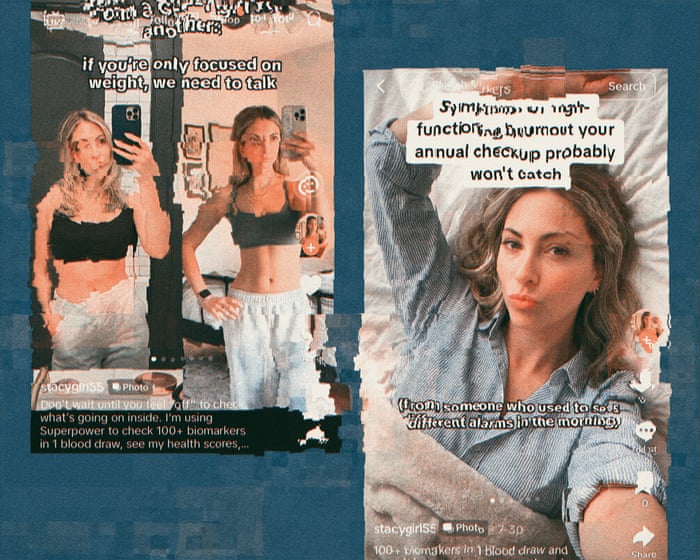
Earlier this year, Emily Schuman, the creator of the lifestyle blog Cupcakes and Cashmere, saw a photo of herself she didn’t recognize on Instagram. In a sponsored ad, Schuman, who has more than 500,000 Instagram followers, is holding up a vial of GLP-1 drugs, advertising the telehealth company Gala. There was just one problem: Schuman had never heard of Gala and had nothing to do with the ad.
The ad was based on a digitally altered version of a selfie Schuman had taken in her car and posted on Instagram years earlier. Once her followers got wind, they flooded her inbox with questions about the sponsorship as it didn’t seem consistent with Schuman’s personal brand. Soon after, Schuman discovered this was just the beginning. There was also an Instagram post where an AI version of her with darker hair appears to apply foundation to promote a makeup brand called Meroda Cosmetics, and TikTok posts with generated images of her promoting the blood testing company Superpower.
The three 28-year-old founders behind energy startup Furo moved from Silicon Valley and back to Germany, and yet secured $4 million in funding from mostly U.S. backers.
The Exploration Company (TEC) has raised $450 million to build reusable spacecraft, in what it describes as “the largest-ever Series C by a European space company.”
Meta took days to remove ads containing AI-generated child sexual abuse material (CSAM) on Facebook and Instagram. Some ads featured photos of real kids, including a press photo of a young member of a European royal family and images swiped from a popular Instagram profile of a preteen girl deemed an influencer.
In an investigation published Tuesday, the Tech Transparency Project (TTP) reported that Meta failed to detect 332 ads containing CSAM this year. The “vast majority” of ads promoted AI apps made in China, while many ads promoted so-called “nudify” apps that make it easy for bad actors to use AI and digitally alter images of children.
TTP matched “multiple CSAM ads to photos of real children that appeared online.” These ads seem to violate federal child pornography laws, since the Justice Department has clarified that AI CSAM is just as harmful as CSAM. The young royal’s image was “animated into a video of her performing a graphic sex act,” TTP found. Other ads animated a photo of a 14-year-old Instagram influencer “showing off her new sports club uniform” into “a video of her performing oral sex.” A third “preteen” victim “posing in a pink athletic outfit with pigtails” in a series of stock photos was morphed into a video where she looks frightened as she’s molested by an adult male, TTP reported.
App Tracking Transparency is at the center of a new UK lawsuit seeking approximately $2.7 billion (£2 billion), putting one of the most recognizable iPhone privacy features under fresh legal pressure. The claim follows earlier challenges to the tracking system in France, but this action seeks compensation for developers who say Apple imposed unfair restrictions on their businesses while favoring its own advertising services.
Filed on September 3 at London’s Competition Appeal Tribunal, the case represents another dispute over the rules behind the familiar permission prompt. Apple rejects the allegations and maintains that it follows the same App Tracking Transparency requirements as other developers.
The amount being sought is not a fine or an awarded payment. It is the claimants’ estimate of losses, which Apple disputes.
What the App Tracking Transparency Lawsuit Alleges
The action was brought by ATT Collective Action Limited, whose director, Ann Pope, previously led antitrust enforcement at the UK Competition and Markets Authority. Law firm Hausfeld is representing the proposed class.
According to Hausfeld’s announcement of the claim, developers argue that Apple introduced the framework unfairly, without adequate consultation, and applied more burdensome requirements to outside businesses than to its own services.
The complaint focuses partly on consent. It alleges that third-party developers must obtain permission under data-protection law and then secure an additional approval through the iOS tracking prompt. Apple’s advertising services, the claimants argue, operate under a less demanding process.
Developers also contend that the introduction left them insufficient time to adapt business models dependent on advertising.
These are allegations about how the system was designed and introduced—not established findings in this UK case. The claimants’ stated position is that privacy protections should remain compatible with fair treatment of businesses.
Image Credit: AppleMagazine
What the Tracking Prompt Actually Protects
For someone using an iPhone, App Tracking Transparency offers a direct choice about a practice that previously could be difficult to see.
An app may want to connect information about your activity with information gathered through other companies’ apps or websites. That connection can help advertisers build a profile, target advertisements, or measure whether an advertising campaign led to a purchase.
Under Apple’s explanation of the tracking rules, apps must request permission before carrying out the tracking covered by the framework. Choosing “Ask App Not to Track” blocks access to the system advertising identifier and prohibits using other identifying information to perform that tracking instead.
The feature arrived with iOS 14.5 in 2021. It does not remove advertisements, make an app anonymous, or serve as a universal switch for every kind of data collection.
That boundary matters. A retailer remembering purchases made within its own service is not automatically doing the same thing as an advertising company linking activity across unrelated businesses.
The disagreement concerns whether those distinctions, and the consent processes built around them, give Apple an unfair commercial advantage.
Apple Says the Same Rules Apply to Everyone
Apple has responded directly to the lawsuit, defending the feature as a way to give people control over tracking across other companies’ services.
In a statement reported by AFP, a spokesperson said: “Apple is bound by the exact same requirements as all developers under ATT.”
The company also pointed to support for the feature from customers and privacy advocates.
That response challenges the foundation of the developers’ case. Apple presents App Tracking Transparency as a rule based on the type of data activity involved. The claimants argue that its practical operation places competing advertising businesses at a disadvantage.
Resolving that disagreement requires more than comparing the appearance of two permission screens. The underlying data uses, consent requirements, and commercial effects all matter.
Why Free Apps Are Part of the Dispute
Advertising can support both sides of an app business. A developer may sell advertising space inside a free app while also buying advertisements elsewhere to attract new users.
A change to tracking can therefore affect how much an app earns and how confidently its developer can measure spending on promotion.
Consider a small game studio. It needs to know whether an advertising campaign brings in players who keep using the game. If measurement becomes less precise, deciding where to spend the next marketing dollar becomes harder. Separately, advertisers may value the game’s available ad space differently when less information is available for targeting.
That explains the commercial concern without proving the legal claim. Losing revenue after a privacy change does not, by itself, establish that the change was unlawful.
There is also a consumer interest that cannot be reduced to advertising performance. Someone choosing not to be tracked is expressing a preference about personal information, not making a promise to preserve a developer’s previous income.
The difficult question is whether that preference can be protected through a system that treats competing businesses fairly.
France Has Already Examined the Consent Process
The UK action arrives after a separate French competition investigation found problems with the implementation of App Tracking Transparency.
In its March 2025 decision, France’s Autorité de la concurrence distinguished between the legitimate objective of protecting privacy and the way Apple pursued it.
The authority criticized multiple consent requests and differences in treatment between Apple and outside publishers. It also highlighted the position of smaller businesses that lack the extensive first-party data available to large platforms.
Importantly, the French authority did not argue that people should lose the ability to refuse tracking. It said adjustments to the framework could address competition concerns while retaining privacy protections.
That distinction leaves room for changes to wording, consent flows, or implementation without automatically requiring the removal of the feature. The French decision, however, does not determine liability or compensation in the separate UK proceedings.
The Claim Is for Developers, Not iPhone Owners
The official claim website describes a proposed action for UK-based app developers affected since April 2021. It estimates losses across the group rather than offering a fixed payment to everyone who owns an iPhone.
The proposed scope includes developers earning advertising revenue from third-party iOS apps and developers spending money to attract users to those apps. Whether compensation becomes available depends on the proceedings and their outcome.
For U.S. readers, the filing does not announce a change to domestic iPhone settings or create a consumer refund program. There is no reason to grant an app tracking permission simply because its developer objects to the framework.
Businesses following the case should also distinguish registering interest from receiving compensation. The claim website currently invites affected organizations to provide their details; it is not distributing a settlement.
A US federal judge has sided with Google, ruling that the company will not have to sell its online advertising exchange (previously known as AdX). The US Department of Justice (DOJ) sought this remedy in the long-running ad tech antitrust trial, which Google lost in 2025. However, the remedies imposed upon Google for that loss are shaping up to be minimal.
[…]
While divesting the ad exchange would have been the most serious penalty, the government also asked for fines and court-ordered changes to Google’s business practices. It’s likely that the DOJ will get a lot of that, but we don’t know the specifics yet. Judge Leonie Brinkema has sealed the order for 14 days, giving the parties a chance to request redactions.
[…]
After all these years of hearings, appeals, and decisions, Google’s market power will remain largely unchanged going forward.
Is CarPlay really a key factor in car buyers choices? At least one statistic supports that position, raising questions about automakers ignoring customer preferences. The panel also examines Gmail’s upcoming changes, Apple’s evolving iPhone purchasing strategy, and a troubling article about advertising and tracking on computer monitors and smart displays.
A universal quantum state, long the subject of theoretical predictions, has been achieved for the first time in simulated quantum matter, according to researchers.
As materials reach tipping points, like the boiling of water or the loss of magnetic attraction, they begin to act universally. For the first time, scientists now say they have observed such an effect at the quantum level.
An international team of researchers from Caltech, the Université Paris-Saclay, and the Technical University of Munich revealed their quantum breakthrough in a recent paper published in the journal Nature. The work experimentally explores decades-old theories for the first time, providing new insight into quantum behaviors.
Universal Behavior
Tipping points are the liminal spaces of physics. In them, behavior can become universal, following the same rules, until differentiation occurs as a new state is entered. It could be compared to the orderly behavior usually seen in hotel hallways, while anything can happen behind closed doors.
To explore this concept, physicists use a theoretical framework known as conformal field theory.
“Physicists call this trait universality—the messy, microscopic details wash out, and only a few essential features survive,” explained co-author Jason Alicea, a Professor of Theoretical Physics at Caltech.
Simulating the Quantum World
Using simplified quantum computers called quantum simulators, the researchers tested two varieties of conformal field theories, Ising and tricritical Ising, both named for physicist Ernst Ising. The theories attempt to describe the emerging universal behavior of a quantum system at a tipping point into an exotic state like superposition or entanglement.
In conventional physics, these tipping points are driven by heat, but in this new work, the team is investigating exotic quantum effects that occur in the same temperature range, close to absolute zero. Like climbing the rungs of a ladder, laser manipulation can push the material through different quantum states once it reaches the tipping point.
Conformal field theory has allowed physicists to theoretically calculate the distance between these rungs for decades, but this is the first time they have been experimentally observed.
In these quantum simulators, specialized lasers called optical tweezers trap arrays of neutral atoms. This experiment focused on strontium atoms, which the optical tweezers first trapped before other lasers excited them into high-energy Rydberg states. In this high-energy state, the atoms interact so strongly that they behave as a single entity. Finally, lasers were then also used to push the strontium atoms to the tipping point.
Left to right: Yuan Le, Xiangkai Sun, Jason Alicea, Manuel Endres, Stephen Naus, and Richard Bing-Shiun Tsai in the Endres lab at Caltech (Image Credit: Caltech/Gyohei Nomura).
Viewing Quantum States
Many-body modulation spectroscopy is a new technique that researchers developed to measure the energy ladder. The technique uses lasers set to varying frequencies to shake the chain of strontium atoms and then measure the response. When a certain frequency caused a spike in the response measurement, the team identified a rung in the ladder. Notably, various settings produced results consistent with tricritical Ising theory.
“Even though we believed these theories to be true, it’s important to have an experimental realization, something you can poke and prod,” Alicea says. “To see those predictions borne out is a beautiful thing.”
Next, the researchers hope to scale up their work to study the effect on atoms in a two-dimensional grid, instead of in a single-file line. These theories are far less well understood in two dimensions, which intrigues the team.
“What excites me is that the technique doesn’t require knowing the answer in advance. Here we could check our measurements against exact predictions,” co-author Manuel Endres of Caltech concluded. “The next step is to point this at systems where nobody knows the response of the system quantitatively—including regimes that classical computers can’t reach.”
Ryan Whalen covers science and technology for The Debrief. He holds an MA in History and a Master of Library and Information Science with a certificate in Data Science. He can be contacted at ryan@thedebrief.org.
Apple’s plans for advertising in Apple Maps spark a lively discussion about whether limiting certain categories of ads creates a better user experience or puts Apple at a disadvantage against Google Maps. The MacVoices Live! panel examines the balance between relevance, discoverability, and business incentives before shifting to Apple’s expanding Sports app and the company’s […]
Neuraspace, the Portuguese space traffic management startup, announced around $18 million in fresh funding Aug. 5 to expand European space domain awareness and defense capabilities.
This to me is proof that Apple leadership is suffering from cognitive dissonance over their slide into advertising. They’re conflating cause and effect. The Apple brand stands for high-quality superior user experiences because the devices and software Apple makes traditionally deliver high-quality superior user experiences. The work Apple ships is what makes the brand what it is. But now they’re stricken with the mindset that it’s the Apple brand that makes something a high-quality superior experience.
[…]
If you refuse to admit that the ads make these services worse, you also can’t admit that there’s a reason to offer an ad-free experience. So the thinking is something like “Apple always focuses on the user experience, and never deliberately makes the user experience worse. Therefore, if an Apple service shows ads, those ads are high quality and don’t detract from the quality of the product or the experience of using it. Therefore, there’s no reason to offer users a paid ad-free tier, because there’s no reason to want to avoid Apple’s ads.”
What a brand stands for can change over time. It’s eventually determined by the products, not the mantras.
“It just works.”
“A thousand no’s for every yes.”
“What happens on your iPhone, stays on your iPhone.”
I feel bad admitting it, because some of my friends are betting on iAd revenue to feed their family, but I’m just not on board with Apple running an advertising network. I don’t want to see ads in my apps, and I don’t want Apple to ever lose even a little of what it means to be a product-driven company.
The whole thing is funny because at a fundamental level we all just know in our bones that Apple never even considered putting “Intel Inside” stickers on Macs.
[…]
Apple still treats its hardware with that level of respect. With reverence. iPhones don’t even say “iPhone” on the hardware. No model or serial numbers. No small print. Just an Apple logo on the back.
[…]
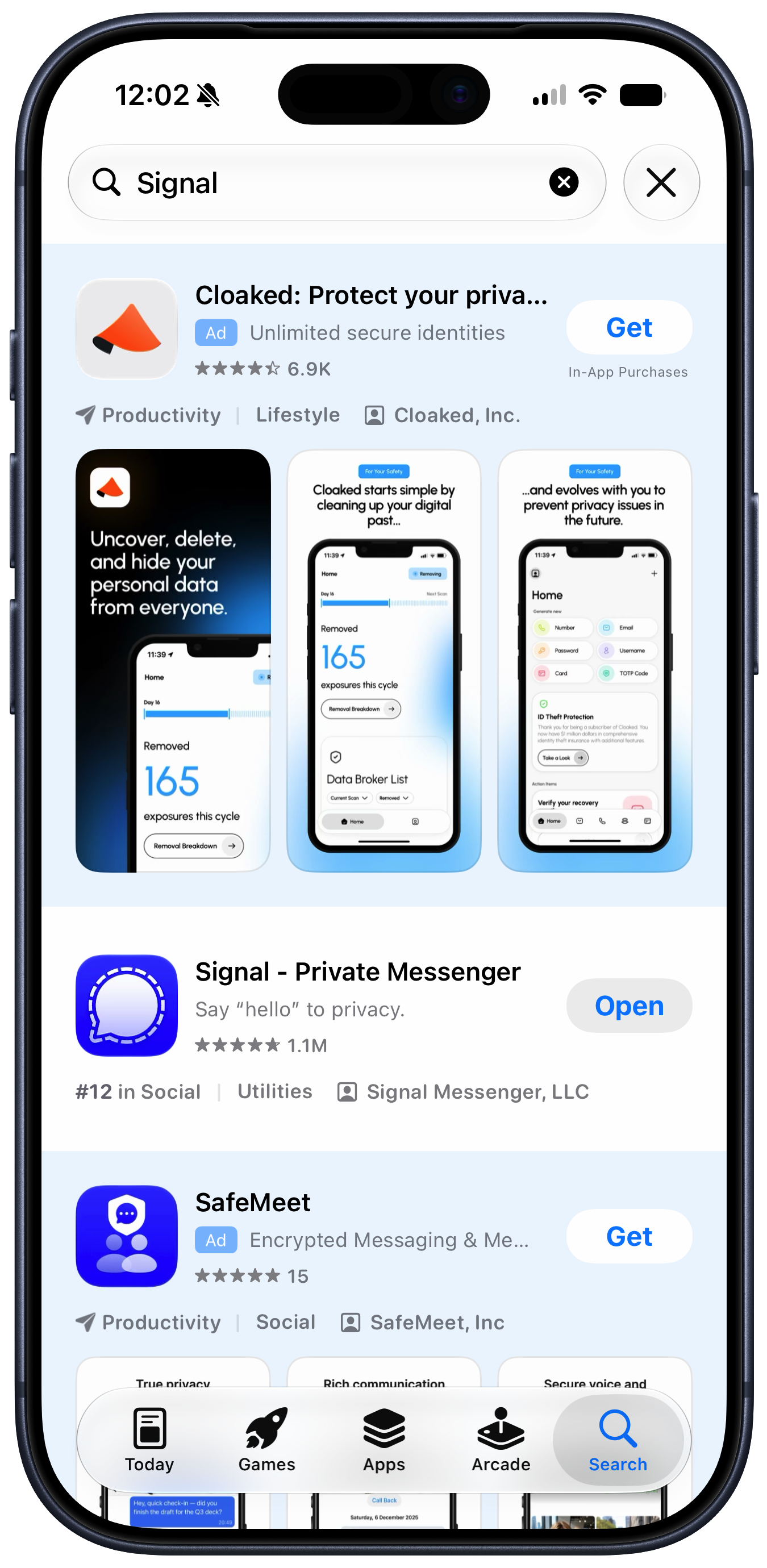
Putting themselves in customers’ shoes today, how many ads do Apple’s executives want stuck in the results when they search for an app in the App Store? We know the honest answer. But the answer evidenced by the actual App Store is “Two really big ones, including one in the first spot.”
While Apple can spin adding ads to Apple Maps as a revolutionary new way for businesses to be discovered, it’s telling that its initial announcement was hidden inside a press release about an entirely different product, and introduced as “Enhanced Discoverability in Apple Maps.” Those choices show that this isn’t something Apple is actually proud of—and that the people in charge of communicating and explaining Apple’s decisions to the world are at odds with those who are making the decisions about expanding revenue.
[…]
To this day, you’re confronted with an ad for Creator Studio every time you create a new document in those apps, and their default toolbars contain buttons that won’t work unless you subscribe to the bundle. As a result, Apple has essentially turned its free productivity suite—software that was designed to enhance the inherent value of Apple’s products—into a freemium package with upsell to a creative professional subscription bundle that’s irrelevant (and a terrible value!) for most of its existing users.
[…]
There are many more examples. Using notifications to promote subscriptions and badging the Settings app to push AppleCare plans are among the ways Apple has chosen to intervene in the user experience to drive revenue. I’m actually not opposed to the idea that Apple should communicate opportunities for its customers to get more out of their devices—but it should be careful not to cross the line into actively annoying those customers. If someone doesn’t want to see what you offer, you need to accept that and go away—not keep needling them. Apple often falls on the wrong side of that line.
[…]
It makes me wonder if the people making these decisions at Apple have lost track of the Apple brand and what it stands for.
What Snell’s column makes clear is that the incremental revenue Apple is gaining from putting shitty ads in its software comes at a price. They’re withdrawals from Apple’s brand equity. And I would argue that the value they’re detracting from the brand far out-values the dollar amount they’d padding to Apple’s bottom line.
[…]
If your competitors’ stores all smell like dogshit, don’t aim to have the store that smells the least like shit. Aim to have a store that smells pristine. “Our stores only carry a vague whiff of dogshit” is not insanely great.
The people haven’t changed, but Apple has. Strong leaders inevitably shape the personality — the spirit — of organizations over time. Apple in 2011 was peak Steve Jobs Apple. Apple in 2026 is peak Tim Cook Apple. But it was Cook who popularized the “you’re not the customer, you’re the product” argument against “free with ads” online services. But that was in 2014.
“Slippery slope” is a perfect term. But I wanted to add something here. In my experience, in the realm of UI, there is no middle notch. I’ve seen it time and time again… the moment you open the door to One, Infinity starts exerting its pull[…]
I HATE, HATE, HATE having ads pop up when I’m trying to do something else. It’s bad enough on Web sites where at least they have the excuse of having to make money some how but it rises to intolerable when they put them up on a device I’ve already paid for.
The annoyance is reason enough to dislike Apple’s ads but for me the worst thing is that they’re corrupting and inevitably lead to the user being replaced by the advertiser as the customer.

 Login