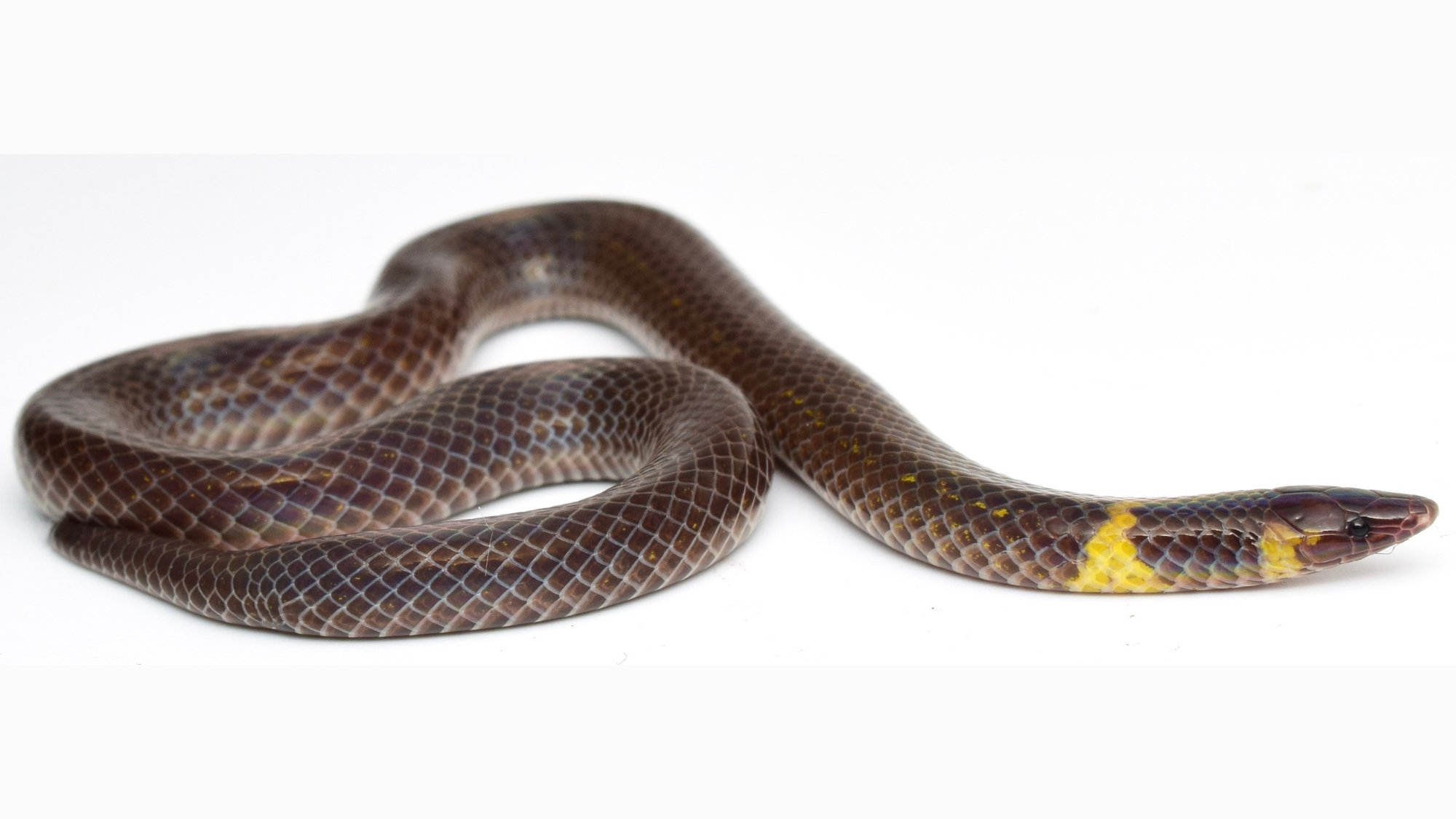
Snakes will bite, rattle their tails, and even spit venom to escape danger. But of all the world’s species, southeast Asia’s dwarf reed snake (Pseudorabdion longiceps) relies on an especially fascinating escape method. When threatened, the diminutive serpent rolls away like a speeding wheel.
An adult dwarf reed snake typically measures less than 12 inches long, but its unique locomotive maneuvers allow it to retreat as fast one foot per second—about four times faster than it travels by simply slithering on the ground. It’s not a flailing getaway, either. The snake also easily rolls along a straight path while somehow keeping its head both stable and facing forward.
Now, researchers finally have a better understanding of how the dwarf reed snake achieves such dizzying acrobatics. In a study published today in the journal Current Biology, a team at Japan’s Toho University detailed the specific physiology that enables its locomotion after filming the snakes with high-speed cameras. Essentially, the snake doesn’t rotate its entire body in a singular, forward motion—it whips one side of its body forward towards the ground while an arched portion swings down by its head in what the study’s authors call a “stroke.” The snake then alternates between its left and right side coming into contact with the ground for each successive stroke. Essentially, it’s like twirling a rope in a lateral circle while holding one end in your hand—except that end is the snake’s head.
The cumulative efforts bypass the traditional idea of a wheel requiring something like a central axle. Instead, this ingenious, highly controlled movement allows the animal to keep its head and sensory organs upright and facing ahead while traveling at such high speed. This is compounded by the dwarf reed snake directing regions of its body to engage in large, alternating rotations while stabilizing its head.
By gaining better insight into these biological mechanisms, researchers also highlight the difficulty in trying to predict an animal’s capabilities based solely on its physiology. A snake may have primarily evolved to slither—but that doesn’t mean it can’t get creative when necessary.
In November 1983, the Soviet Union came to believe that NATO might be preparing a nuclear attack. The trigger was a war game. The alliance’s annual exercise, Able Archer 83, ran from 7 to 11 November and rehearsed what would happen if a conflict in Europe escalated until nuclear weapons were released. It even simulated […]
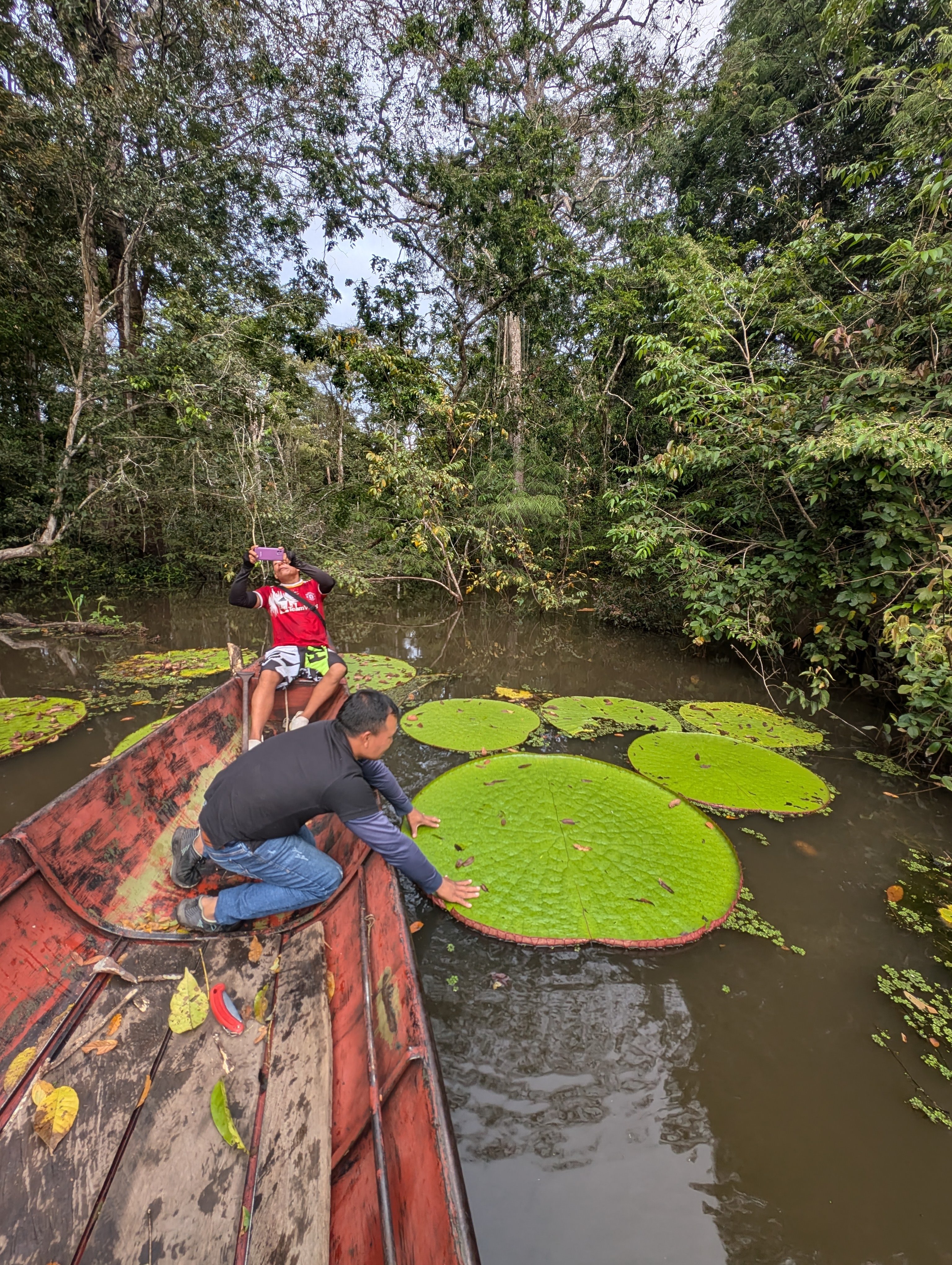
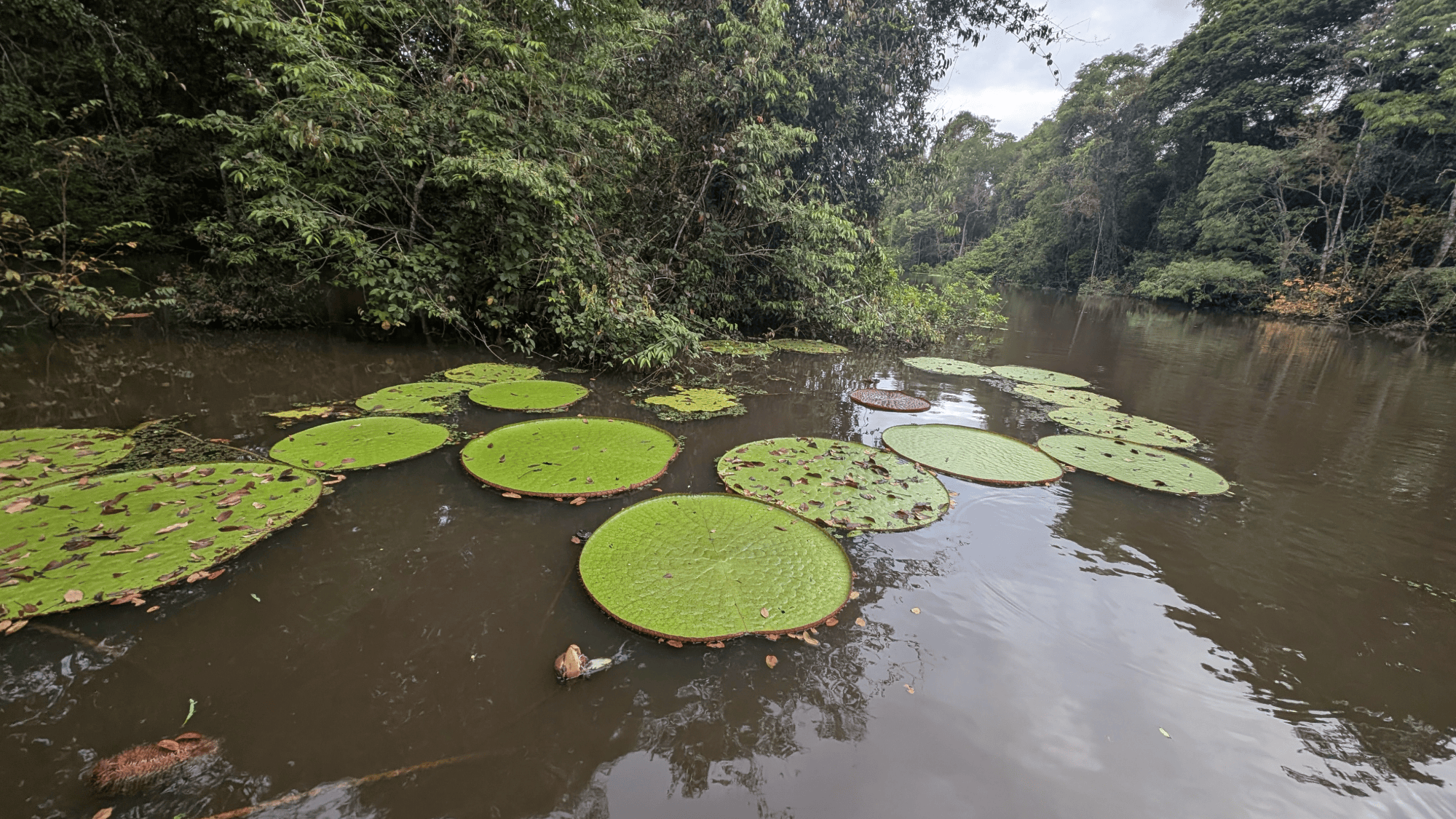
One cold December day in 2021, Colorado carnivorous plant grower Jeremiah Harris shared some pictures of wild Amazonian giant water lilies (Victoria amazonica) plants in the Inírida River in Guainía, Colombia to Instagram. There’s just one problem. No known Victoria water lily species grow there.
When water lily expert Carlos Magdalena saw the post on Instagram, he suspected a new plant species could be involved. To investigate the matter, he used satellite imagery to remotely search the Inírida River and its surrounding lakes and confirmed the presence of Victorias.
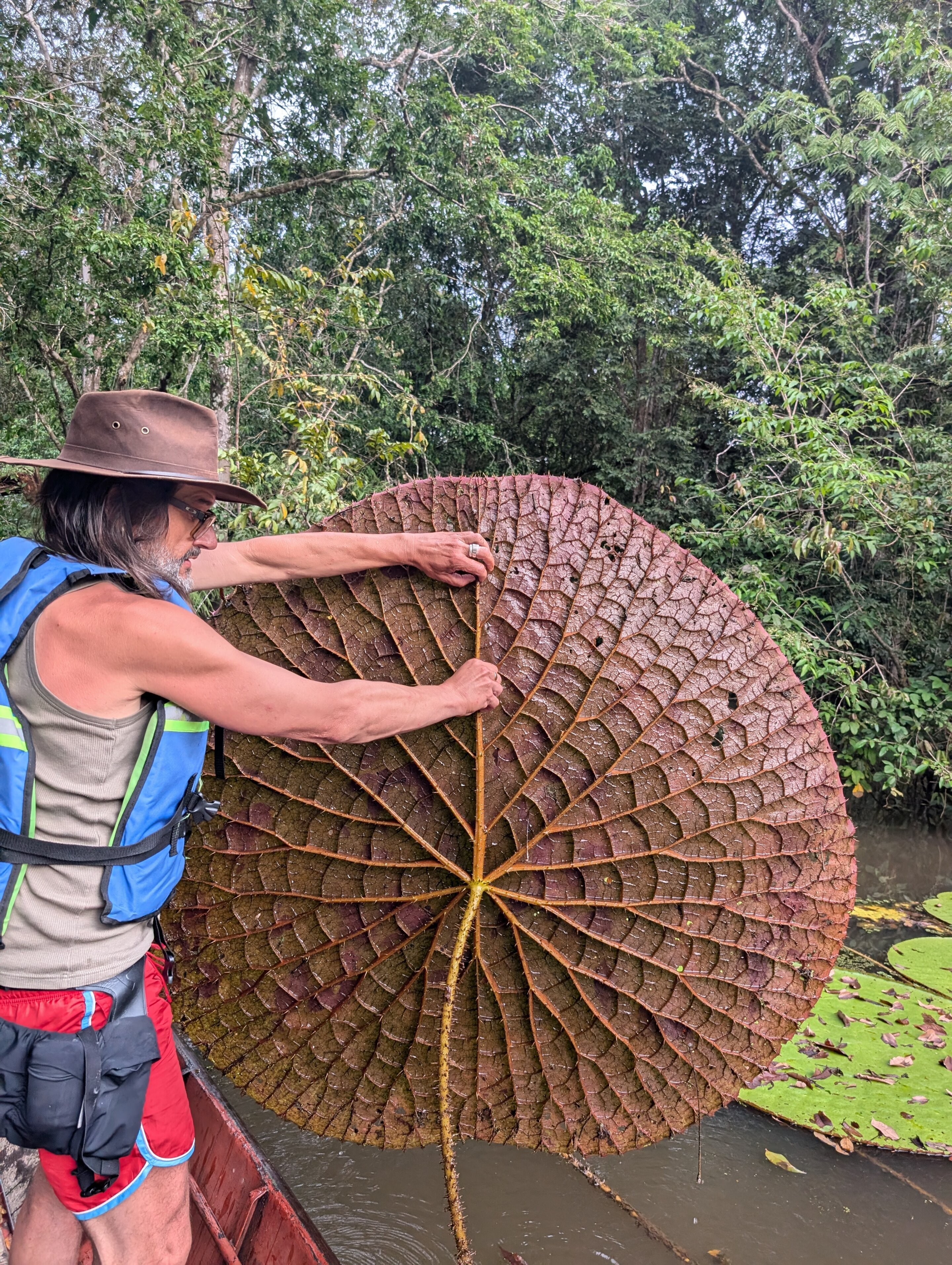
And yes, you can see these enormous plants from space. Victorias grow the world’s second largest single plant leaf.
Victoria colombiana is the fourth Victoria water lily to be described. Image: Carlos Magdalena.
Magdalena is a botanical and scientific research horticulturist at the Royal Botanic Gardens, Kew in the U.K. Along with his colleagues, the team went on a five-day expedition to Inírida. The team included members of the Indigenous reserves del río Atabapo, one of whom had seen the lilies during his childhood.
However, the trip didn’t exactly go according to plan. By their last night, they had found only two water lily plants, neither of which had flowers. This was a problem, because botanists need a flower to differentiate species. As if that wasn’t bad enough, the water lilies they found seemed to be struggling with a late rainy season.
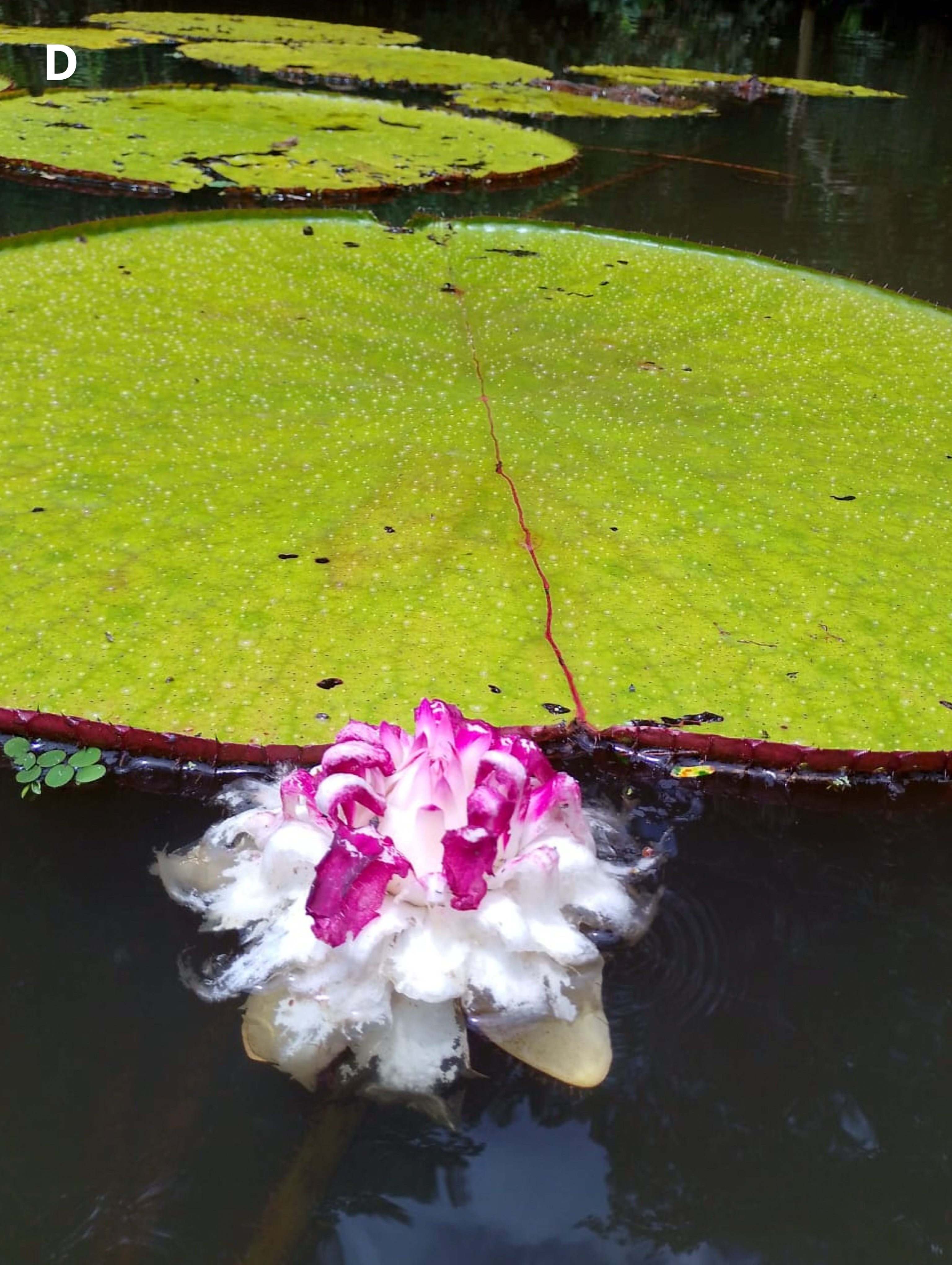
But when Magdalena described their situation to the expedition’s boat captain, Gustavo Melo, he said he knew where they could find more of this water lily. They didn’t have much time to do so, with the team’s flight back to Bogotá was at 9:00 a.m. the next morning. Thus at 1:00 a.m., Melo, a member of the Indigenous Tucano community, led them to a small lake. There, they found five more Victorias, one of which was blooming.
Horiculturalist Carlos Magdalena holds up a giant lilypad. Image: Mauricio Bernal.
“This is one of those extraordinary stories where indigenous and horticultural knowledge with the help of social media and technology came together to uncover a truly extraordinary botanical achievement,” Magdalena said in a statement.
The researchers were able to collect what they needed to start the official scientific description of the new species: Victoria colombiana. They even managed to make that early flight. In their recent study published in the journal Phytotaxa, he and his colleagues also announced the discovery of another new Victoria species, Victoria mattogrossensis.
A Victoria colombiana bud. Image: Nilo Rodriguez.
The team estimates that there are only between 30 and 50 wild V. colombiana plants, and is extremely vulnerable to extinction. They are currently working to get the plant officially categorized as Critically Endangered by the IUCN Red List.
“Now that we know this water lily exists, our responsibility is to understand it better and protect it. With so many plants in the wild threatened with extinction, we simply cannot wait any longer to take action,” Magdalena added. Experts are considering starting a naturalized population in a more accessible lake in Indigenous territory and researchers also are hoping to cultivate the species in Bogotà.
When zoology professor Daniel Baldassarre traveled to the remote Galápagos Islands of Wolf and Darwin with two other researchers, getting there proved quite a challenge. With no beaches to land a boat on, they had to approach the islands’ cliffs in a small dinghy and wait for a lull in the waves before jumping onto sharp, black lava rocks.
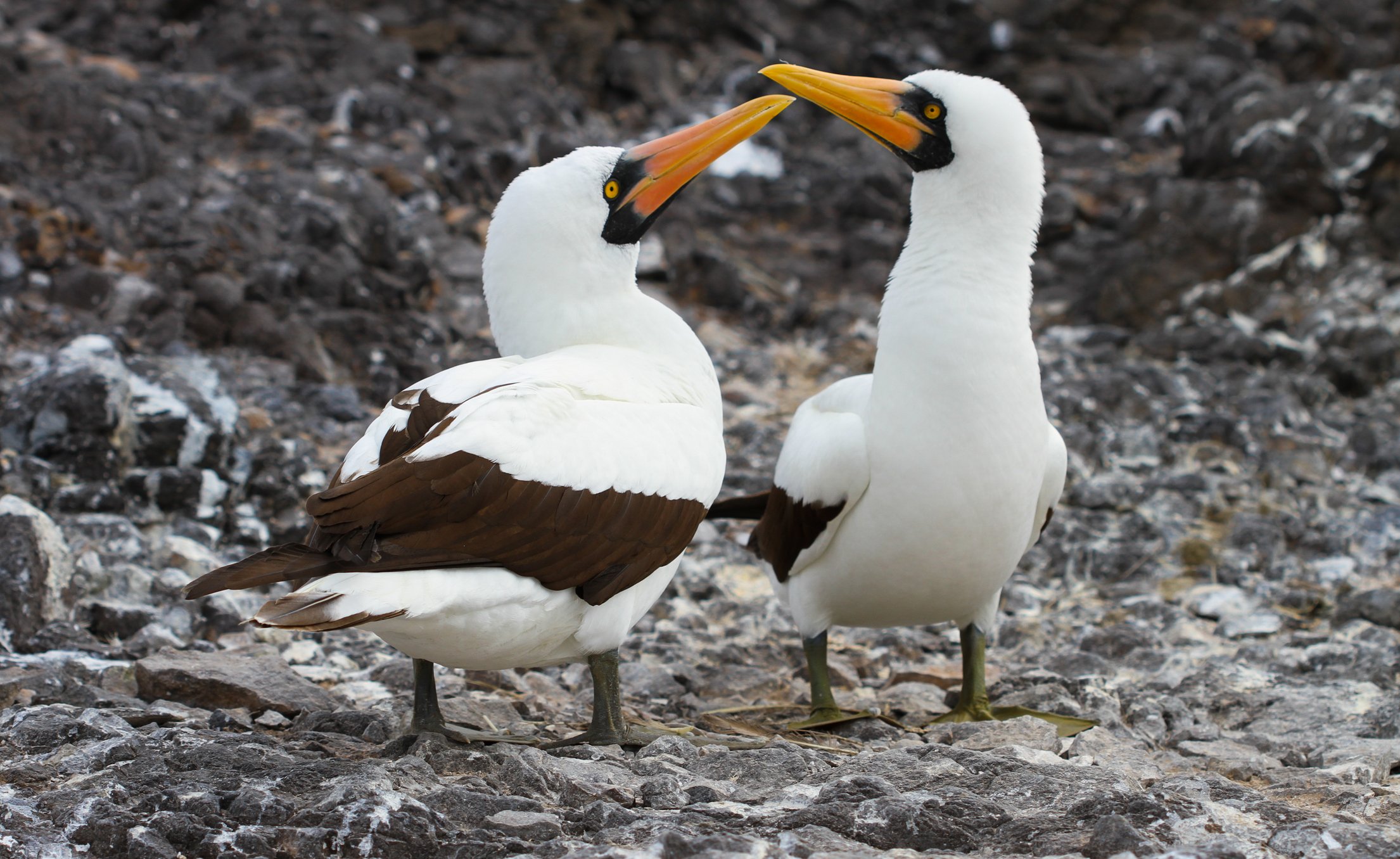
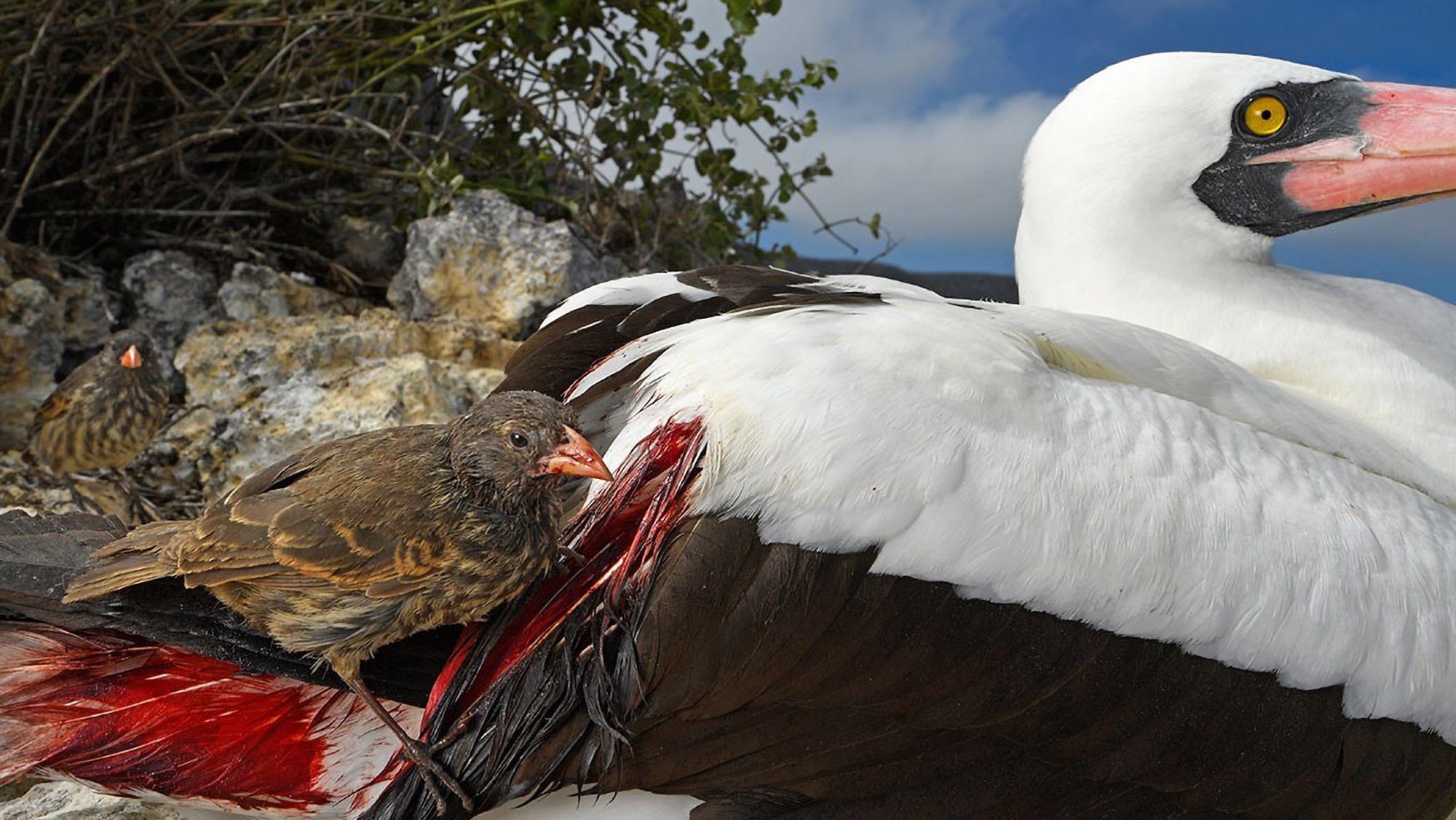
But their efforts paid off. On that trip, they saw a bird that very few people have ever set eyes on in the wild: the vampire ground finch. These finches are only found on Wolf and Darwin, and feed on the blood of much larger birds called Nazca boobies that also live on the islands.
Up close, Baldassarre and his colleagues noted the vampire finches’ blood-stained bills and their throats visibly engorged with blood. They also saw them in action.
“We observed scores of vampire finches clamouring all over the backs, tails, and wings of boobies, opening up substantial wounds with their sharp beaks, and drinking their fill of blood,” they wrote in an article for The Conversation.
Why only some birds drink blood
“Blood is a notoriously difficult food source to process and extract nutrients from, which probably partly explains why so few animals have evolved to feed on it,” Baldassarre tells Popular Science. He suspects that on these islands where freshwater is extremely rare, blood might serve as a water source for the finches.
Two Nazca boobies perform their species’ mating call. Vampire ground finches feed on Nazca boobies on the remote Galápagos Islands of Wolf and Darwin. Image: Getty Images / inthedark72
It’s not the only component of the vampire finches’ diet, however. Based on unpublished data collected by Baldassarre and his colleagues, blood makes up about one-tenth of the vampire finches’ diet.
“These finches are quite opportunistic, so they will eat just about anything they can find,” Baldassarre says. “We observed them feeding on everything from seeds to insects to broken seabird eggs.”
One theory is that vampire finches rely more on blood feeding in periods of extreme drought, when other resources are scarce. But more research is needed to see if this idea holds up in practice.
How this strange behavior evolved
Vampire finches weren’t always vampires, scientists think. The relationship between vampire finches and boobies probably started off with the finches eating parasites found on the skin and feathers of the boobies. This would have been mutually beneficial because it provided a cleaning service for the boobies and food for the finches.
But at some point in evolutionary history, in the process of picking off parasites, the finches started to create lesions on the boobies’ skin, and eventually began feeding on their blood.
Over time, their bills became more scalpel-like, perfect for making skin incisions. Their digestive system also changed. When Baldassarre and his colleagues studied the microbes found in vampire finches’ guts, they found that their gut microbiome was very different from that of other, non-blood-consuming finches on the Galápagos Islands, something they attribute to their unique diet.
Until recently, vampire finches were considered a subspecies of the sharp-beaked ground finch (Geospiza difficilis).
“But they have now been designated as their own species [Geospiza septentrionalis] because of the differences they have evolved because of blood feeding,” Baldassarre notes.
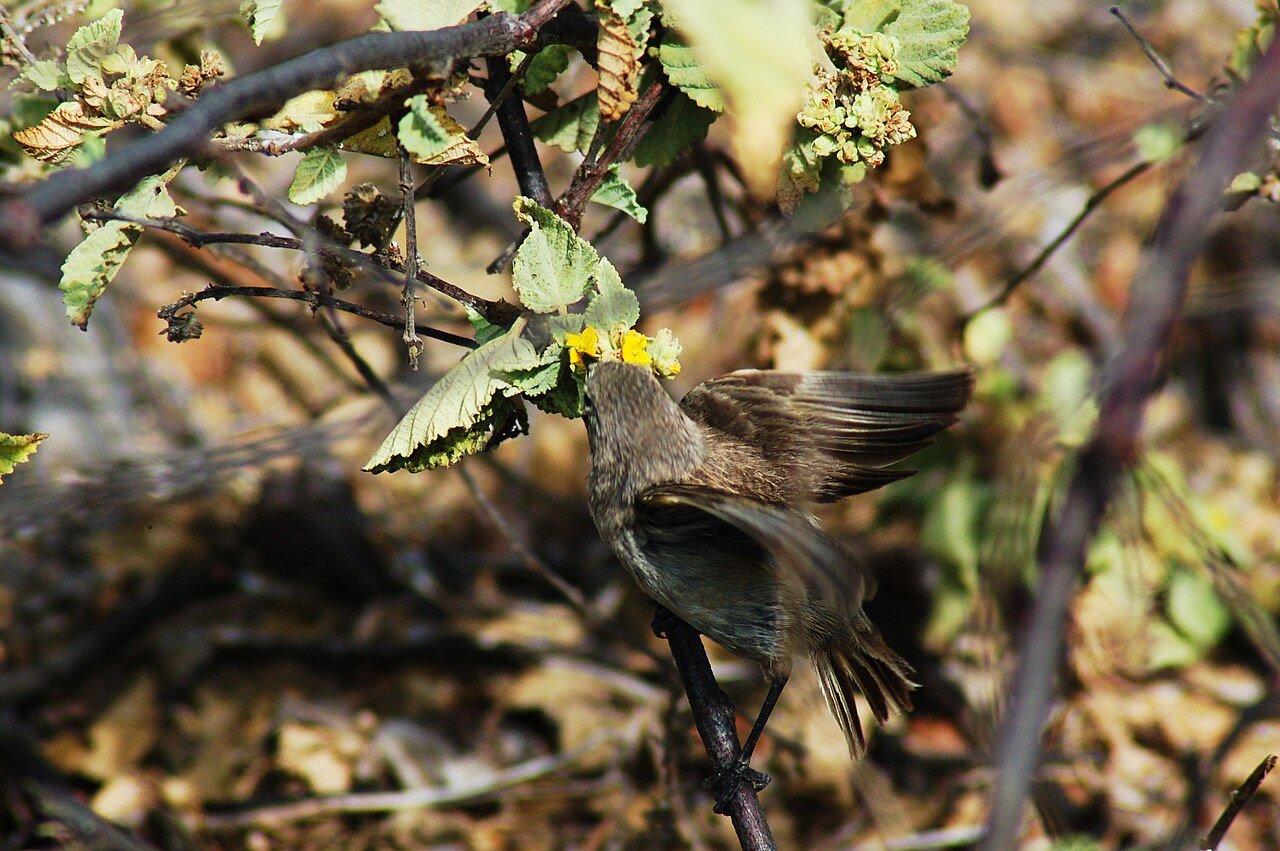
Vampire ground finches on Wolf island have been seen drinking nectar from Galápagos prickly pear flowers and other flowers. Image: Peter Wilton / CC BY 2.0
How the boobies cope
Baldassarre and his colleagues have seen vampire finches gang up on and kill nestling boobies,“but that was quite rare,” he points out.
“In most cases, the finches seem to inflict just enough damage to break the skin and extract some blood, but not too much to harm the boobies significantly.” This is similar to many parasite-host relationships, such as fleas, ticks, and mosquitoes on mammals. “You can kind of think of the vampire finches as giant mosquitoes,” Baldassarre says.
“For one, as in large animals being bitten by mosquitoes, often the damage is minimal and not noticeable, so it doesn’t elicit a strong reaction. Also, the boobies sometimes have a vested interest in staying put and guarding their spot in the colony, or perhaps nest or nestlings, so may not want to fly away. Finally, the finches seem to target hard-to-reach areas on the boobies like the base of tail feathers, so it’s likely difficult for the boobies to deter them.”
I, for one, was feeling very sorry for the boobies being constantly hounded by these small vampire birds. Until I learnt that Nazca boobies practice something called “obligate siblicide,” which essentially means that the first-hatched chick routinely attacks and kills its younger sibling. It’s a harsh, bird-eat-bird world in the Galápagos Islands.
In Ask Us Anything, Popular Science answers your most outlandish, mind-burning questions, from the everyday things you’ve always wondered to the bizarre things you never thought to ask. Have something you’ve always wanted to know? Ask us.
Many of the cutest animals on Earth have one appendage in common. Whether you’re thinking of an adorable raccoon, a kitten, or a puppy, it’s hard to imagine them without their fluffy tail. In fact, the overwhelming majority of animals have tails. Only a select few, like us humans, don’t have an external tail.
Sarah Durn: Think of some of the cutest animals you know, a puppy, a kitten, maybe a little red panda. Now, picture them without their tails.
It’s weird, right?
Tails are such a normal part of the animal world that we barely think about them, and they’re not just adorable accessories.
A kangaroo uses its big muscular tail to help it balance. Opossums can use their tails to grip branches. Fish use theirs to propel them through the water. And your dog can communicate an entire emotional journey with just a few well-timed wags.
Tails can help animals climb, swim, steer, balance, communicate, even swat away an annoying bug.
So what happened to ours? Because humans are part of a huge evolutionary family where tails are basically standard equipment.
We even briefly start developing a tail when we’re embryos. But look behind you now, and unless something has gone very unexpectedly, you probably don’t have one.
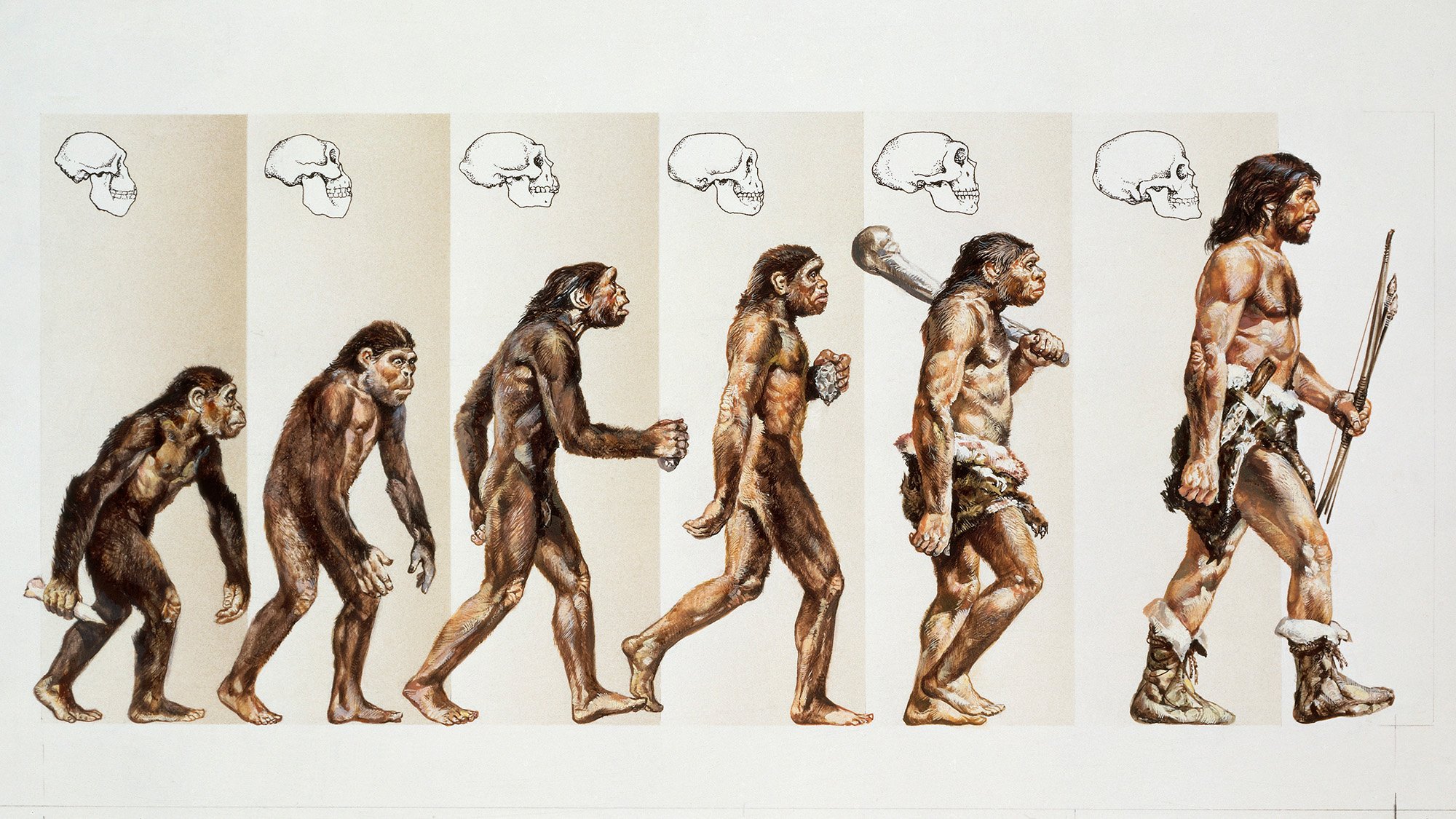
And neither do chimpanzees, gorillas, orangutans, or any of our other ape relatives. So somewhere deep in our evolutionary past, our ancestors lost their tails. But why? And what would life be like if we still had them?
No question is too simple or too out there. I’m Sarah Durn, an editor at Popular Science.
Annie Colbert: And hi, I’m Annie Colbert, editor-in-chief
SD: Here at PopSci, we’re always pondering quirky questions
AC: And this week we’re wondering: Why don’t humans have tails? Because tails are everywhere in the animal kingdom.
SD: And they’re incredibly useful. Beavers use their big flat tails to help maneuver through the water. Some monkeys can basically use their tails like an extra limb, wrapping them around branches as they climb. And rattlesnakes, of course, turn theirs into a built-in warning system
AC: So what happened to ours? Did we just lose them somewhere?
SD: Well, technically, humans never lost them.
AC: Okay.
SD: But that said, we have to go way back in our family tree, tens of millions of years back, to find out why our butts don’t have tails anymore.
AC: I’m guessing the answer isn’t because of pants?
SD: No, you are correct. This goes way beyond pants. We’re talking back to a time when our ancient ape ancestors were still hanging out in trees
AC: So when did tails disappear then? And more importantly, why would you want to give up a perfectly good tail?
SD: That’s the big question because for lots of animals, tails are incredibly useful for balance. But the way our ancient ape ancestors moved through the trees may have actually made a tail kind of pointless.
AC: So evolution really said, “We’re not using this anymore, so just get rid of it.”
SD: Yeah, pretty much. And later we’re going to get into what those ancient apes looked like and why their particular style of tree climbing may have made tails more trouble than they’re worth.
AC: And naturally, we also have to ask the important question: Would life actually be better if humans still had tails?
SD: I have some thoughts.
AC: Same. Many thoughts.
Now, before we swing into our evolutionary past, we want to know what questions are circling in your brain hole. If there’s something you’ve always wanted to know, submit your questions by clicking the “Ask Us” link at popsci.com/ask.
Again, that’s popsci.com/ask and click the “Ask Us” link
SD: We can’t wait to hear your questions
AC: We’ll be back right after this quick break to find out how humans ended up on team no tail.
SD: And stick around to the end because we’ll be joined by Science Friday host Flora Lichtman to discuss what makes a really good tail and whether she’d want one herself.
And we’re back. Okay, Annie, before this episode, how much time have you spent thinking about your tail?
AC: Absolutely none. I can confidently say I have never yearned for a tail.
SD: Yeah. No, I mean, neither have I, but I have spent a lot of time thinking about my tailbone.
AC: Uh-oh, where is this going?
SD: Yeah. Uh, a couple years ago, I was walking my Saint Bernard, Poochie, when he caught a whiff of something and took off. And me, trying to be a responsible dog walker, tried to hold onto the leash.
AC: Oh no.
SD: Yes, yes, yes. Safe to say Poochie, the Saint Bernard, won, and I fell straight onto my butt.
AC: Oh, Sarah. Ouch
SD: Yes, it was un-ideal. I ended up bruising my tailbone pretty bad.
AC: Mm.
SD: And unfortunately for me, this happened about a week before I left for a two-week long trip to Italy.
AC: Oof.
SD: Rome, Pompeii, the Colosseum, the Amalfi Coast, Puglia, all while carrying a little donut butt pillow everywhere I went.
AC: Oh my.
SD: Sometimes I even wore it as a hat.
AC: I mean, obviously.
SD: You know, sun protection is important.
AC: Crucial.
SD: Yeah, so I have actually spent a bit of time thinking about and cursing our teeny-tiny, mostly not there human tail because out we actually do have a tail. Kinda.
AC: Hmm. All right. Tell me more
SD: That tailbone I bruised, the coccyx, is at the bottom of your spine.
It’s basically what’s left of when our ancestors actually had a proper external tail.
AC: But humans had more of a tail at one point, right? Like fetuses have tails in the womb?
SD: Correct. When human embryos are developing, we actually form a little tail that extends beyond the rest of the body. But by around eight weeks, that external tail disappears.
AC: So I briefly had a tail?
SD: You did!
AC: Ugh, RIP. Gone too soon.
SD: We should all have a, like, little tail funeral upon our birth.
AC: Eh, that’s obviously the only normal response here.
SD: I mean, obviously.
Okay, but here’s the thing. Humans didn’t suddenly decide to ditch our tails. We inherited our tailless bodies from our ape ancestors.
So if we really want to figure out why humans don’t have tails today, we have to first figure out how our furry ancestors lost theirs. And for that, we have to go way back.
AC: How far back are we talking?
SD: Well, first let’s go back about five or six million years.
That’s roughly when scientists estimate the last common ancestor of humans, chimpanzees, and bonobos lived, and that doesn’t really help us with our tail mystery
AC: Because chimps and bonobos don’t have tails either.
SD: Exactly. And neither do gorillas, orangutans, or any other modern ape. So we have to keep going back.
AC: So rewind. Whoop, rewind.
SD: And eventually we get all the way back to around 25 to 30 million years ago. Megalodon is stalking the seas. Daeodon, aka “hell pigs,” were roaming North American forests. And keep in mind, we’re still tens of millions of years before the first saber-toothed cats and mammoths pop up.
And this is where things get interesting because around this time, our ape ancestors branched off from the ancestors of modern monkeys.
AC: And monkeys do have tails.
SD: Right. Most do.
So somewhere around this part of our family tree, around 25 to 30 million years ago, we finally crossed over to the tailless side from our tailed ancestors.
The frustrating thing is the fossil record doesn’t give us a perfect family album. We can’t point to one specific ancient ape and say, “There, that’s our ancestor, that’s the one that lost the tail.” But we can find clues, and one of the best clues comes from an ancient ape called Ekembo.
AC: Tell us your secret, ancient ape
SD: Yes! Tell them. So fossils from this genus have been found in Kenya and date back about 17 to 20 million years. And these animals would’ve looked pretty different from modern apes.
One species, Ekembo heseloni, probably had arms and legs that were roughly the same size. It climbed around on tree branches on all fours, and it had a long, flexible lower back, unlike modern apes. But there’s one thing we know it didn’t have.
AC: A tail?
SD: Exactly. And we can tell because of particular bone, the sacrum.
AC: And where is my sacrum?
SD: It’s right at the base of your lower spine, and it’s actually one of the places scientists can look to to figure out whether an animal could have supported a tail or not.
If you look at the sacrum of a cat or another tailed mammal, it leads into a whole bunch of tail vertebrae.
But in humans and apes, the sacrum just ends in a, you know, little point. And scientists see that little point in Ekembo heseloni. So even though this animal lived up to 20 million years ago, we know they didn’t have a tail.
AC: So by 20 million years ago, the tail was already gone.
SD: At least in Ekembo.
AC: Mm.
SD: And it’s not alone.
Another ancient ape called Nacholapithecus shows up in Kenya around 15 million years ago, and fossils of its sacrum show the same thing. It couldn’t have supported a tail either.
So we don’t know exactly which one of these ancient apes ultimately gave rise to later hominids, aka our ancestors, but we do know that tailless apes were already walking or climbing around millions and millions of years before humans existed.
AC: Okay, so we know the tail disappeared way back in our evolutionary history, but that still leaves the biggest question, which is why? Like, why would you give up a tail? They seem kind of awesome.
SD: And this is where we get into a little bit of scientific speculation because we don’t have one definitive answer.
One possibility is that it has to do with the way these early apes moved. Think about modern animals that really benefit from tails.
If you’re a cheetah sprinting and making incredibly fast turns, a tail can help you balance. Or if you’re a monkey moving quickly through the trees, a tail can be really useful. But these early apes weren’t moving like modern monkeys.
AC: So what were they doing?
SD: Well, millions of years ago, these apes probably had arms and legs that were about the same length, and scientists think they walked on all fours.
They were also climbing through trees looking for fruit. And if you’re trying to get some delicious fruit growing way out on the edge of a branch, you don’t necessarily want to go flying through the canopy.
You want to move slowly and carefully they could support their weight across multiple branches and deliberately work their way towards the good stuff.
AC: So less swinging dramatically through the jungle…
SD: …and more very cautious trip to the fruit bowl.
AC: Got it.
SD: And if you’re moving that slowly and deliberately, a tail might not give you much of an advantage. In fact, it could actually come with costs.
Your body has to spend energy growing this whole extra appendage, and then you’re dragging it around behind you where a predator could potentially grab it.
So as the University of Missouri anatomist Carol Ward told Popular Science, for these slow-moving, careful climbers, the tail just didn’t offer an advantage.
AC: So after all of this, the answer to why don’t humans have tails is basically because our ancestors stopped needing them.
SD: That’s one theory, but the important thing is that we didn’t lose our tails because humans started walking upright or because of something that happened recently in human evolution.
By the time anything resembling a human showed up, tails had already been absent from our branch of the family tree for millions and millions of years
AC: So I never really stood a chance.
SD: Nope. You were born into a long, proud lineage of tailless apes.
AC: Yet after this whole conversation, I’m starting to feel like we kinda got a bad deal.
SD: Yeah, well, before you get too jealous of Team Tail, there is someone I want us to talk to because last year Science Friday host Flora Lichtman went looking for an answer to a very important question. If you are gonna have a tail, what’s the best one to have?
AC: Ooh, yes. Let’s talk upgrades.
SD: Yes, let’s. We’ll talk with Flora about the science of tails, whether there really is a best tail for balance, and whether she’d actually want one herself. That’s after this quick break.
And we’re back with Flora Lichtman. Flora is a podcaster extraordinaire, an Emmy-nominated writer for Bill Nye’s Netflix show, Bill Nye Saves the World, and one of the hosts of Science Friday, a public radio program and podcast about science, nature, technology, and health.
Flora, thank you so much for making the time to come on Popular Science’s Ask Us Anything podcast.
Flora Lichtman: I am delighted to be here. Thank you for the invitation, and I love tails, so glad to talk about them.
SD: So yes, as you know, throughout this episode, we’ve been talking all about why humans don’t have tails when so many animals do, and last year you actually explored an important piece of this puzzle on a Science Friday episode called “In Search of the Best Tail for Balance,” which we’ll link in the show notes.
In the episode, you talked with roboticist Dr. Talia Moore and developmental biologist Dr. Ceri Weber about their work into figuring out what’s the best tail, and how a tail could actually help us build better robots.
So obviously I have to ask: Is there actually a best tail for balance?
FL: You know, of course, if you ask scientists, they’ll never give you a best because that’s their, their whole job is to find the nuance and the complicated elements of every story. But what I did learn from them is that there are ways to design tails so that they do their job better.
SD: Hmm.
FL: And the thing that I didn’t know about tails is that they’re an inertial appendage, which is not a term I’d heard.
But the way these researchers described it is that it’s like a tightrope walker’s stick.
SD: Hmm.
FL: That you use to sort of regain your balance. Like that, for animals with tails, that is a primary reason why they have a tail.
SD: Yeah.
FL: The difference, though, between a tightrope walker stick and a tail is that most tails aren’t rigid rods, right? Like, they’re curvy and they’re twisty.
So what these researchers did is this simulation to try to compare, you know, what tails work best as this inertial appendage, and they found that design matters, and, like, you can optimize basically the bones in the tail to make them work better. And they found, it turns out if you have, like, short bones, then long bones, then short bones, that gives you a very good tail.
And it turns out that a lot of mammals in the animal kingdom have tails just like this.
SD: Wow. Amazing. So after spending all of this time thinking about tails: Would you want one?
FL: You know, Sarah, I’ve been thinking about that. Here’s the problem. I already have such a problem finding pants that I like and that fit, so I feel like the tail is just not a challenge I need.
On the other hand, I’m also very clumsy, and I do feel like maybe a tail would’ve helped me in the past.
SD: Yes.
FL: …keep my balance.
SD: Yeah. Yeah, I mean, like theoretically, pants aside, if you did have a tail as a human, what would be different? What would be harder? What would be easier?
FL: I mean, besides my look, I think, the thing that would be easier is walking on a slippery, icy day in the Northeast.
SD: Mm-hmm.
FL: I think they do really help you regain balance. I like the idea of being able to swing from the trees.
SD: Yeah.
FL: I’m at the playground a lot with my kids. I feel like it would be a real flex to get on those monkey bars with a tail.
SD: Oh my God, you’d be the coolest mom.
FL: The something-ist mom for sure.
Would you want a tail?
SD: I think, yeah, I mean, I guess, like, I think I would. I think it’d be fun. I feel like it’s kinda like having wings, you know?
You’d be definitely, like, ostracized a little bit. Like, people would look at you funny, but you could do a lot of cool stuff. I don’t know. I look at squirrels, and they’re basically flying,
FL: That’s true.
SD: Okay, so you also encountered a lot of impressive tales, I’m sure, in your reporting. Do you have a favorite tale from the animal world?
FL: I’m really love seahorse tails.
SD: Oh, yeah.
FL: They’re so iconic and twisty and beautiful and they really need them because they’re these lightweight little animals that are, like, being, you know, battered by ocean waves, and they can use them to hang on.
But I was reading that not only that, which is like, that’s all cool, but actually, while most tails are cylindrical, the seahorse tail actually has a square profile, which I thought was cool, too.
So it’s… I don’t know. I’m into the seahorse tail.
SD: Yeah, no, excellent choice. Excellent, excellent choice. Flora, thank you so much for taking the time to talk tails with us. It was absolutely lovely.
FL: Delighted to be here. I would love to come back anytime.
SD: Oh, we’d love to have you.
AC: Okay, I started this episode having never really thought about having a tail, and now I definitely feel like maybe I’m missing out. Like, when I need help holding things, give me a tail.
SD: Same. Although after my tailbone incident, maybe I shouldn’t be trusted with an additional appendage.
AC: Yeah, that’s maybe for the best.
And that’s it for this episode. But don’t worry, we’ve got more episodes of Ask Us Anything live in our feed right now. Follow or subscribe to Ask Us Anything by Popular Science wherever you enjoy your podcasts.
And if you like our show, please leave a rating and a review
SD: If you could have any animal’s tail, which one would you want? Tell us in the comments.
AC: Yes, we want to know.
SD: We wanna know. Our producer is Alan Haburchak. This week’s episode was based on an article written for Popular Science by Sarah Kiley Watson, and a big thank you to Flora Lichtman for joining us.
AC: Thank you team, thank you tails, and thank you everyone for listening
SD: And one more time, if you want something you’ve always wondered about explained on a future episode, go to popsci.com/ask and click the “Ask Us” link. Until next time, be careful with your tailbone and keep the questions coming.
AC: Wait, if we had tails, what would chairs look like? And pants, and car seats.
SD: Planes? It’d be kind of cute to see all the tails lined up.
AC: I feel like we need tails. It’s time to change up humans.
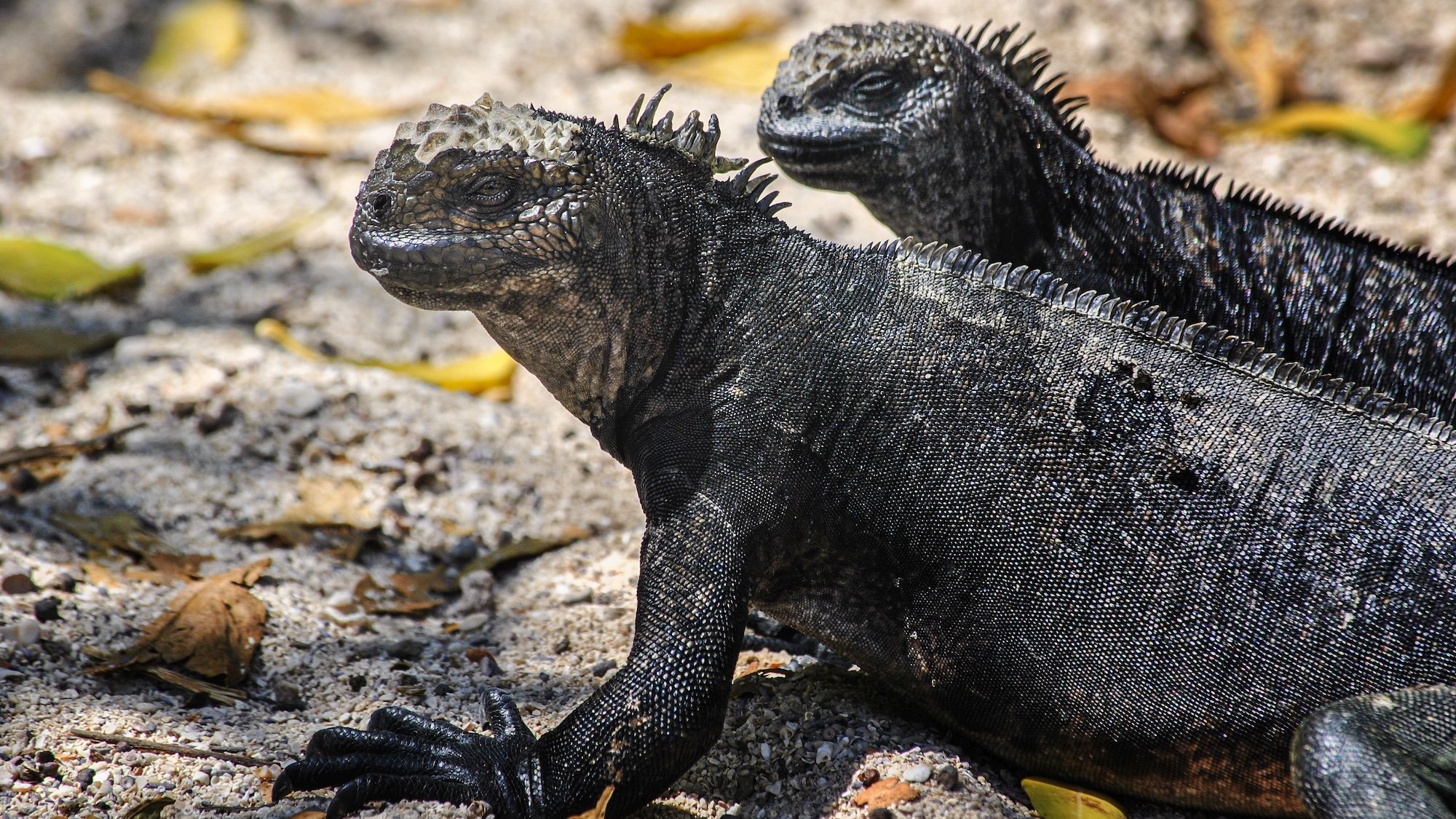
Marine biologists are sounding the alarm on behalf of the Galápagos Islands’ marine iguana (Amblyrhynchus cristatus). Without tightened regulations on the often abused exotic pet trade, researchers warn that a recent “strange uptick” in illegal animal trafficking combined with this season’s Super El Niño is further endangering the already vulnerable reptiles living on the Eastern Pacific archipelago.
“They are already shrinking in size and facing mass mortality, either by starvation or by trying to swim longer distances in search of food,” Juan José Alava, a marine ecotoxicologist at Canada’s Simon Fraser University, explained in a recent letter published in Science.
The marine iguana family encompasses at least 11 known subspecies, each specially evolved to live on the Galápagos Islands. They are the only reptiles in the world capable of foraging underwater for macroalgae, which makes up the majority of their diet. Although iguana colonies remain relatively stable, the International Union for Conservation of Nature (IUCN) still lists them as Vulnerable due to predators, mounting pollution issues, and cyclical El Niño events. Ten of the 11 recognized subspecies are also locally classified as either Critically Endangered or Endangered. Sale of iguanas is banned under the Convention on International Trade in Endangered Species of Wild Fauna and Flora (CITES), but a recent uptick in illegal trafficking along with increasingly dramatic climate shifts is adding more stress to the situation.
Ecuadorian authorities have caught people attempting to smuggle iguanas multiple times this year. In May, officials discovered at least a dozen animals inside handbags at an airport that were bound for illegal markets. Law enforcement found another 32 tied up inside a suitcase intended for similar buyers in August. Many trafficked iguanas won’t survive the stress and rough handling, but even rescued reptiles face challenges. Because subspecies are evolved to live on specific islands, ecologists must test each rescued iguana’s DNA to determine where to return them.
Smuggling hasn’t been seen within the Galápagos Marine Reserve itself, but Alava and his colleagues theorize that smugglers are capturing iguanas near Ecuador’s coastal shorelines. Traffickers then obtain CITES permits that falsely declare the reptiles are captive bred in other nations, even though no such authorized facilities actually exist. Often, smugglers are only engaged in the industry out of financial necessity or coercion.
“Artisinal fishing communities from Galapagos and coastal Ecuador, who are facing severe socioeconomic hardship and expanding organized crime activities, may feel pressured to participate in this international black market,” the letter’s authors wrote.
Conservationists are now urging a multifaceted approach to protect the animals. CITES representatives need to close existing permit loopholes, while the Ecuadorian government should focus on simultaneously breaking up organized crime and providing economic aid to struggling communities.
“Maintaining global ocean observing systems is essential, and extreme marine event forecasting and response capabilities are improving,” the authors wrote. “But responsibility and action remain fragmented across environmental [organizations], fisheries, and emergency management, and public health agencies.”
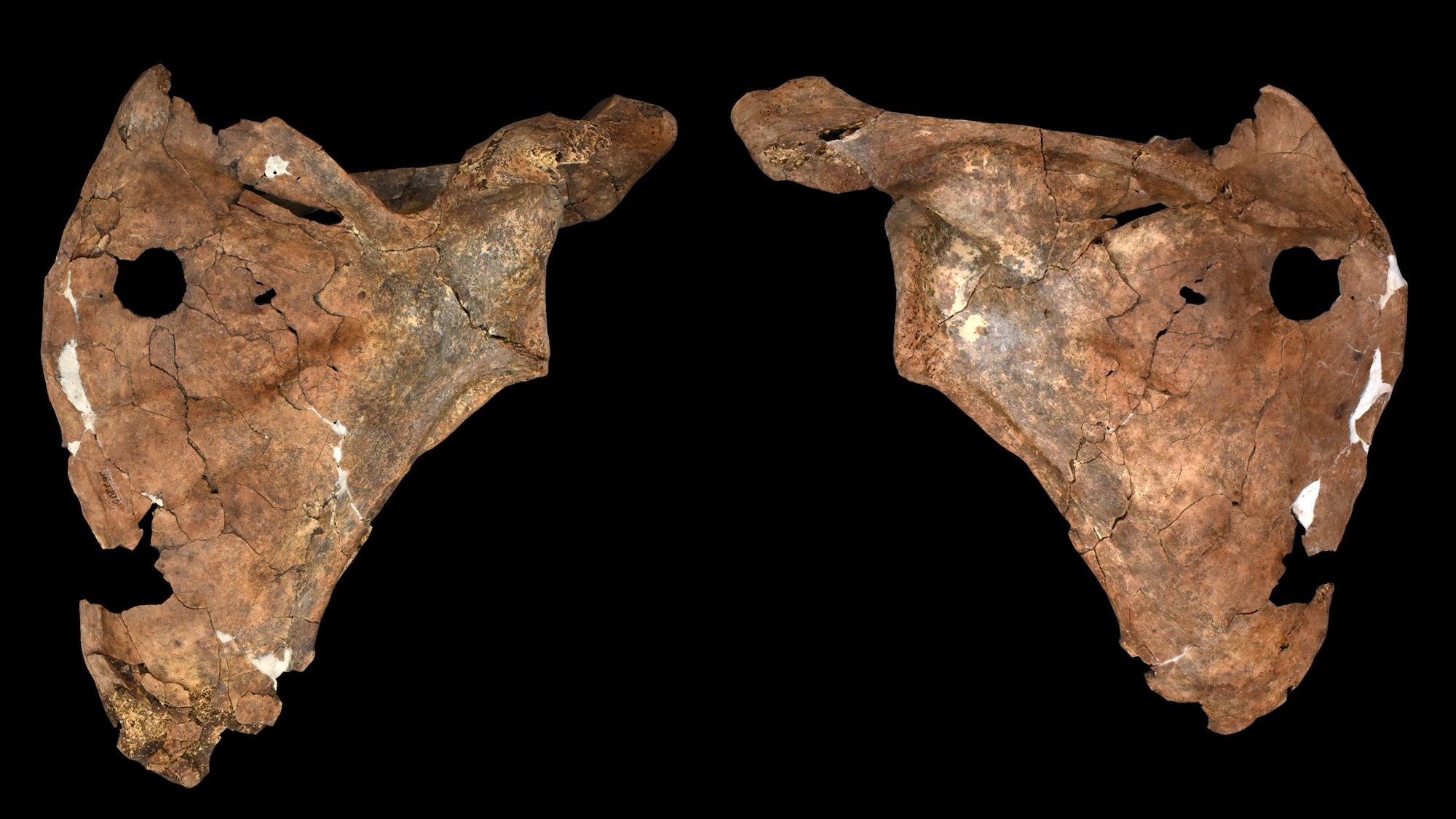
A small puncture wound through a 75,000-year-old Neanderthal shoulder blade may be the earliest evidence of death by spear on humanity’s family tree. Given forensic details such as the entry angle and overall damage, researchers believe the injury was made as an intentionally fatal “heart shot” that killed the ancient hominin within moments. The discovery is detailed in a study published today in the journal Scientific Reports.
In addition to the grisly injury, the nearly translucent bone itself makes this evidence even more striking.
“It’s extraordinary to have a perfectly preserved scapula from 75,000 years ago. These bones are so thin that you often don’t get complete scapulae from modern burials,” explained University of Cambridge archaeologist and study co-author Emma Pomeroy. “We were able to lift it out in one piece from under almost eight meters [roughly 26 feet] of rock and sediment.”
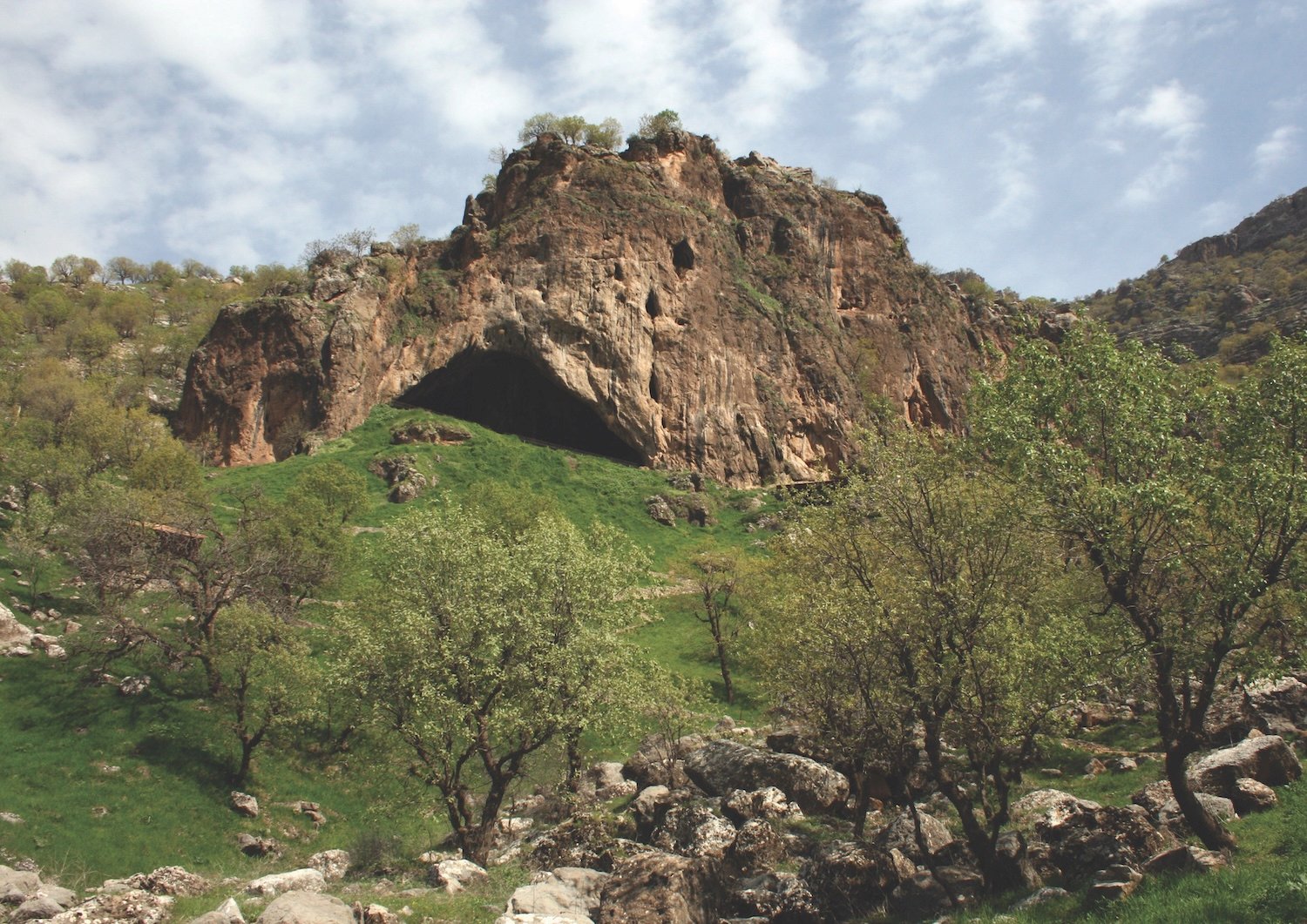
Pomeroy and her colleagues excavated the remains from inside Shanidar Cave, an archaeological site in Iraqi Kurdistan famous for containing evidence of ritualistic Neanderthal burials. The roughly 0.6 inch, nearly circular perforation on the bone was likely made with a wooden spear, since a stone or flint tip would create a flatter injury and leave behind microscopic mineral shards. The individual who inflicted the fatal injury drove the spear downward through the victim’s left chest cavity from the front, piercing major arteries and the lungs before creating the hole in the left scapula.
Located in Iraqi Kurdistan, Shanidar is a famous cave containing what appears to be early examples of Neanderthal funeral rituals. Credit: Graeme Barker
Remnants of a wooden spear weren’t found near the Neanderthal’s remains, which is understandable since the material often decomposes so quickly. That said, prior archaeological digs have revealed similar prehistoric wooden weapons dating as far back as 400,000 years. Pomeroy’s team believes a rounded spear carved from wood almost certainly caused the killing blow.
“Holes left by recreations of spears from this time are an excellent fit for the one we found in the Neanderthal scapula. That early technology absolutely works for this wound,” said Pomeroy.
Although it’s possible that a mishap like a hunting accident was the cause of death, Pomeroy argues the cumulative details suggest something far more purposeful.
“The position of the wound and the force required to push it right through the Neanderthal’s body bear the hallmarks of an intended kill shot directed towards the heart,” she added.
Another major injury the victim sustained before the possible stabbing supports this hypothesis—and complicates the story. In addition to the scapula, archaeologists documented a pair of left ribs, a right rib fragment, a nearly complete right hand, and seven teeth. Collectively, the remains indicate the Neanderthal was about 45 years old at the time of death. However, dental damage reveals the individual suffered a severe blunt-force blow to the front of the face at least a year before death. This injury split a lower front incisor lengthwise and even rotated some teeth inward.
“There’s no doubt that [they] would have had difficulty communicating and been in absolute agony for a long period of time,” said Pomeroy.
Despite this blow to the mouth, the Neanderthal survived for months or even years. This was only possible because others must have cared for the individual, including duties as simple as preparing softer foods to eat. In this sense, there is a distinct possibility the spear wound was a final, merciful act by someone close to them. According to Pomeroy, the prehistoric scene showcases both the highs and lows of what it means to be a human.
“On the one hand, we have evidence of a terribly violent end,” she said. “On the other, this was clearly an individual who was cared for during their lifetime.”
In the mid-1970s, Linnda Caporael was a college student facing a seemingly mundane decision.
A science major at U.C. Santa Barbara, she needed a humanities course to graduate. The course she chose, on women in American history, came with a term paper, and she had to pick a topic.
Caporael’s first choice—Lydia Wardell, a Quaker woman who protested Puritan persecution by walking naked into a meeting house in the 1660s—was intriguing, but already taken. So Caporael instead settled on her second choice: Ann Putnam, one of the accusers in the 1692 Salem witch trials. In doing so, Caporael reshaped the way millions of people view a nearly 300-year-old chapter of American history.
Caporael’s paper introduced the theory that the visions, convulsions, and distress the “afflicted” girls reported might not have been supernatural after all. Instead, she proposed, they could be explained by ergot, a fungus that grows on rye grain and produces a hallucinogenic toxin. In other words, blame moldy bread.
The ergot theory, despite being debunked within a year of being published, has continued to spread and thrive like fungus on rye. As recently as 2023, comedian-turned-podcasting-juggernaut Joe Rogan discussed the theory enthusiastically on his show, effectively reanimating a story that seems destined to never fully die.
“It’s sexy,” says historian Margo Burns about the enduring appeal of Caporael’s ergot theory. “It’s about drugs. It’s about witches. It’s about killing people. Also, we like to think that when there’s an unjust sentence or execution, there’s someone or something to blame.”
Burns, a Salem scholar who has spent years tracing how the ergot theory took hold and persisted, says she rarely gets through a talk on the trials without someone in the audience bringing up moldy bread.
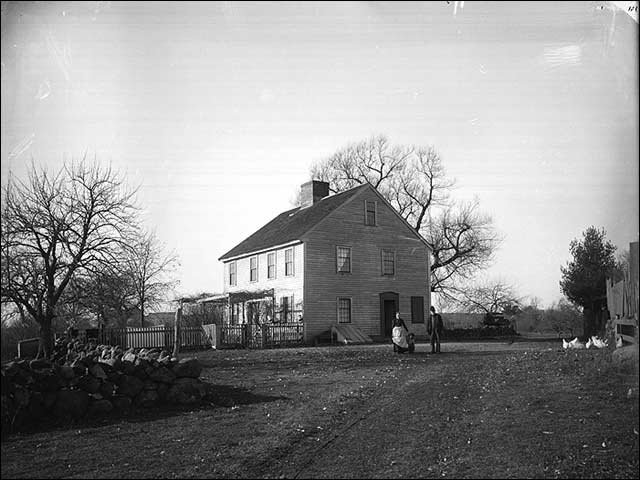
It was long thought that Ann Putnam, one of the primary accusers during the Salem witch trials, had grown up in this house, but historians now know this house was built much later, around 1891, near the Putnams’ original home location. Image: Public Domain
How a term paper went viral
The fact that a single undergraduate college paper could have such a lasting and wide-ranging impact on our understanding of the Salem witch trials seems bizarre, but it can be explained in part by a thoroughly modern phenomenon: virality. Although the World Wide Web was still decades away, Caporael’s paper found a way to spread fast through newspaper wire services.
After she started graduate school, Caporael submitted the paper to Science, which, to her surprise, published it in April 1976. That alone might have kept the theory confined within academic circles. Instead, newspaper editors saw a story with mass appeal.
“Editors and newspapers just grabbed it, saying, ‘Oh, here’s a human interest thing,’” Burns says. “And when they put it in their papers, like The Washington Post, The New York Times, The Boston Globe, it got syndicated. And the syndication of those articles went through the whole country and Canada within a matter of weeks.”
Caporael, who had explored the topic through the lens of the scientific method, wasn’t claiming to know what had happened at Salem. At the suggestion of a pre-med friend, she began looking into ergot poisoning as a possible explanation, not a definitive answer.
According to Burns, who has spoken with Caporael directly, she was only testing whether ergot could be ruled out. Working from the limited sources available to her, Caporael determined that she couldn’t rule it out. Even then, though, she called her own findings “suggestive,” not conclusive.
But that nuance didn’t survive exposure to the public, which in 1976 was already fixated on LSD and what it might do to young people. The press coverage essentially retrofitted 1692 with the anxieties of 1976, recasting the Salem girls as teenagers on a bad trip.
“You give that to the American public, which doesn’t understand there’s a difference between scientific inquiry and historical storytelling, and it’s just so compelling,” Burns says.
Debunked, but far from dead
Not all the viral attention was positive, though. Within that same year, researcher Nicholas Spanos and graduate student Jack Gottlieb published a rebuttal in Science, dismantling Caporael’s argument point by point. By their reckoning, various aspects of the Salem girls’ symptoms did not add up.
“There are a couple of different kinds of ergot poisoning, and one of them is gangrenous, so people’s fingers would start rotting,” Burns says. “And they would have gastrointestinal problems, and we don’t have any instances in the records that either of those things happened.”
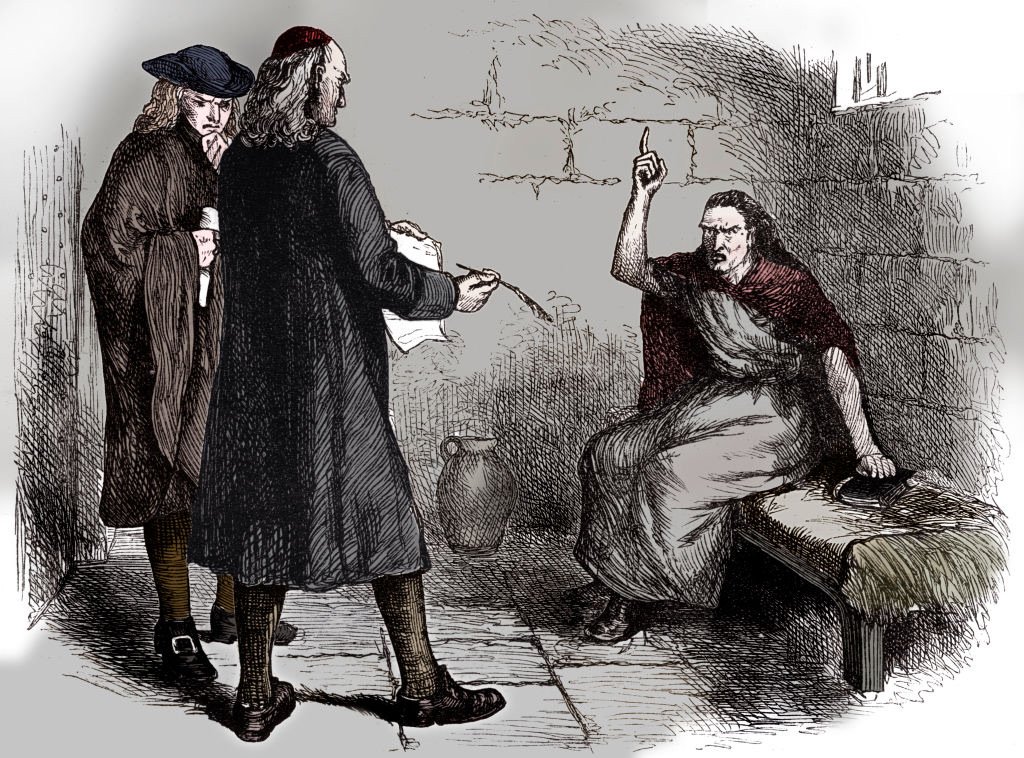
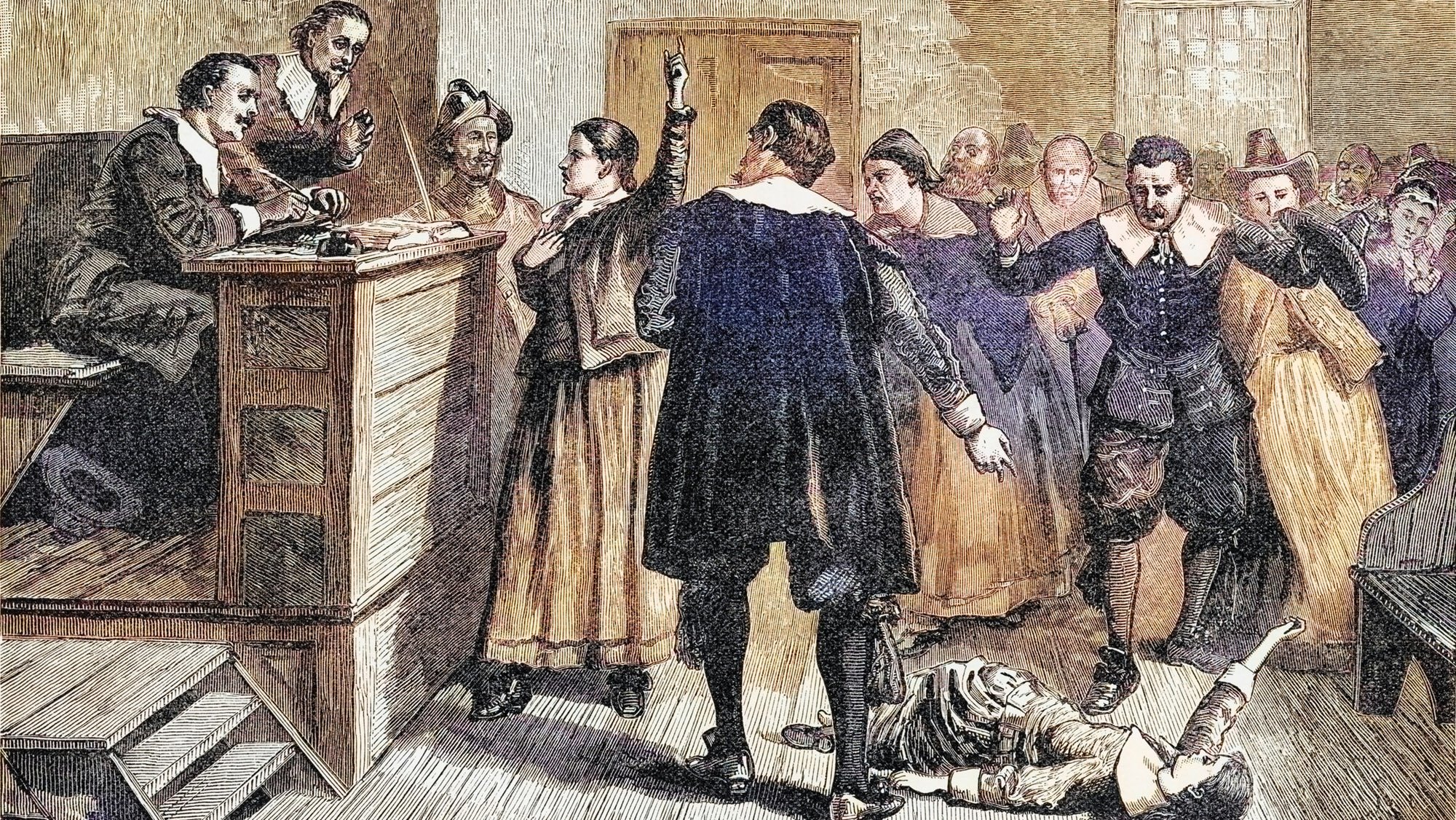
This 1880 print shows Martha Corey and her prosecutors in Salem, Massachusetts, during the witch trials. Martha Corey was accused of witchcraft, found guilty, and executed by hanging. Her husband, Giles, who defended Martha against the allegations, was also put to death. Image: Print Collector / Contributor / Getty Images
The problems for the theory didn’t end there. Ergot poisoning was thought to hit hardest among people with vitamin A deficiencies, but Salem’s residents had dairy cows and the sea nearby, and likely plenty of vitamin A. (Ironically, Burns notes, that the vitamin A argument was itself based on a discredited 1930s source that relied on circumstantial evidence and has never been replicated.) And while whole families ate from the same supply of rye, usually only one or two people per household fell ill.
The rebuttal, though methodical and logical, was little more than a momentary speed bump for the runaway popularity of the psychedelic bread story. In fact, it may have helped.
Arguing with a claim, however insubstantial, implies that it’s worth arguing about, and a formal rebuttal in Science can make a student’s term paper look like one side of a valid scientific debate.
“It’s really hard to refute something,” Burns says. “If anything, it just sort of nails it and makes it more permanent.”
“They were eating their own”
Whatever was causing young women in Salem to convulse, the atrocities that followed are much harder to grasp. By the time the panic ended, 152 people had been formally accused, 19 had been hanged, and one man, Giles Corey, had been pressed to death with stones for refusing to stand trial. Several more died in jail.
“The people who were responsible were the adults in the room,” Burns says.
To the modern eye, this looks like lunacy. To most people in 1692, though, witchcraft wasn’t superstition. It was an accepted fact, part of an invisible world in which Satan and his agents wreaked havoc on everyday life. Conflict with Indigenous peoples on the Maine frontier had sent traumatized refugees into the region, relating horror stories of attacks on their homes. Many colonists thought Satan engineered those attacks, too.
In a way, the people of Salem did exactly what Americans would do nearly 300 years later, when the psychedelic era latched onto the ergot theory: They explained strange behavior through the lens of what frightened them most.
In such a charged social climate, suspicion could fall on just about anyone, and it did. The accused weren’t just outcasts, Burns says. Many were fully covenanted members of the Puritan church.
“We’re not talking about going after ‘The Other,’” she says. “They were eating their own.”
Someone to blame
Burns knows the cost of Salem’s betrayals about as well as anyone. An associate editor of Records of the Salem Witch-Hunt, the definitive collection of the trials’ legal records, she is also the 10th-generation great-granddaughter of Rebecca Nurse, who was hanged on the charge of witchcraft in 1692.
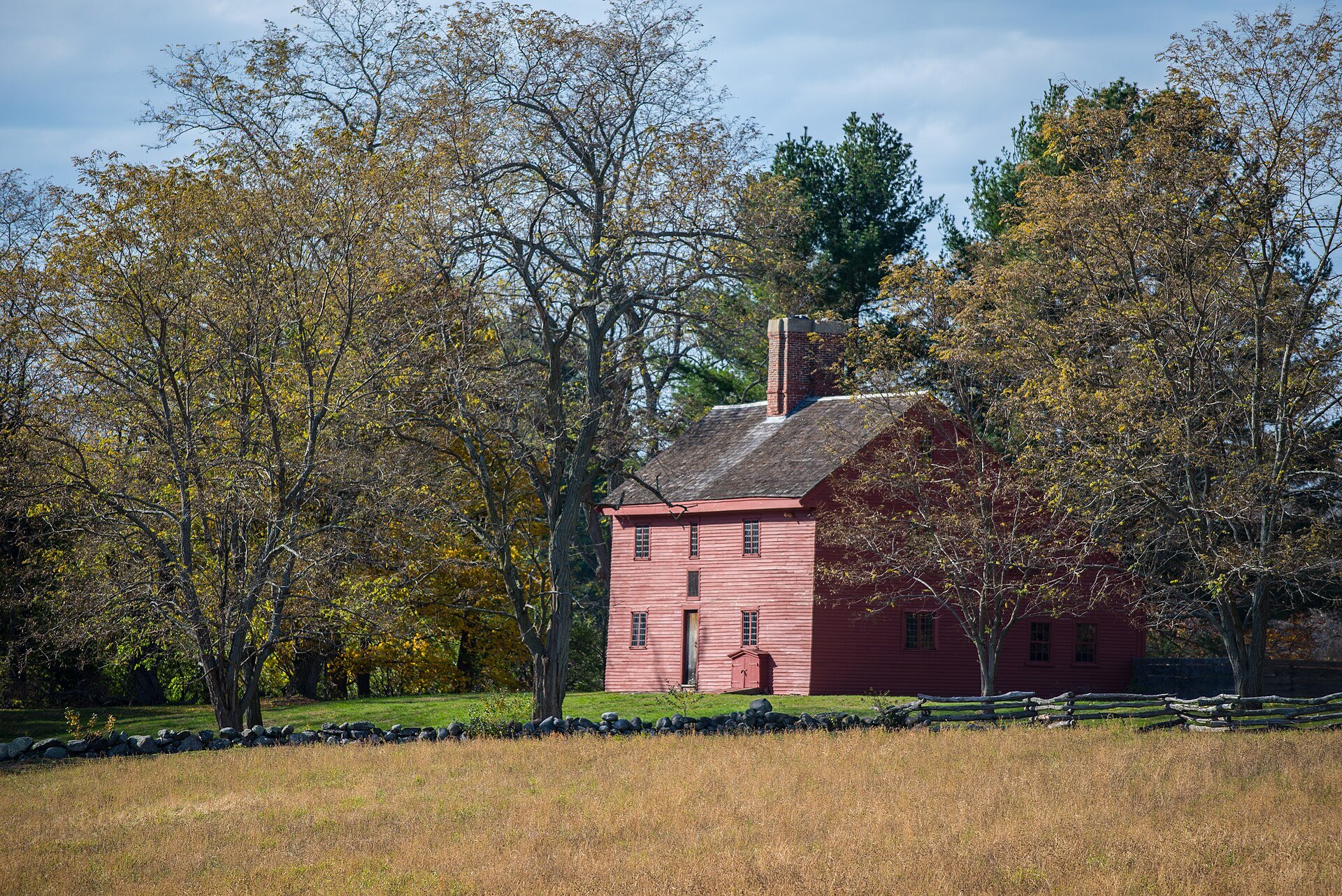
The Rebecca Nurse Farmstead still stands and is open to the public in Danvers, Massachusetts. Image: Fletcher / CC BY 4.0
Nurse, a respected member of the church in Salem Town, was tried and found not guilty. But Chief Justice William Stoughton refused to accept the verdict. He sent the jury back to reconsider a remark Nurse had made when confessed witches Deliverance Hobbs and her daughter, Abigail, were brought in to testify against her: She had said the two were “of our company.” Nurse meant that they had been jailed together, but the court heard that they were fellow witches.
When jurors asked her what she meant, the courtroom was in such an uproar that Nurse didn’t hear the question. At the time, failing to answer an accusation was treated as a confession, and the jury returned a guilty verdict. In a later appeal, Nurse wrote that she was “something hard of hearing, and full of grief,” and didn’t realize she was being asked to explain herself.
It was the kind of injustice no mere fungus could cause.
“[Chief Justice] Stoughton was singularly, individually responsible for her execution,” Burns says.
The question of who is to blame is rarely so straightforward, though. Which might be part of the ergot theory’s appeal; it offers “one silver bullet” that tidily explains everything.
“There are just so many reasons that all came together,” Burns says.
But when pressed on why she thinks it happened, she offers an answer that’s part joke, part harsh reality: “People are mean.”
In That Time When, Popular Science tells the weirdest, most surprising, and little-known stories that shaped science, engineering, and innovation.
Artificial intelligence is undeniably good at playing games, regardless of its larger societal and environmental impact. In 1997, IBM’s supercomputer Deep Blue famously beat chess grandmaster Garry Kasparov, and nearly two decades later, Google’s AlphaGo managed to defeat a human champion at the much more complex game Go. Since then, another AI seems to beat humans at incredibly complex video games like StarCraft or Dota 2 every few months. Impressive as these feats are, AI has mostly outperformed humans by making us play on its home turf, as in, simulated and structured environments. But now, a team of engineers at the Micro Air Vehicle Lab at the Delft University of Technology in the Netherlands has built a lightweight smart drone that’s fundamentally altering that dynamic.
The team entered its AI-powered quadcopter in a high-profile drone race in Abu Dhabi that pitted AI-piloted drones against human-piloted ones. The niche sport, known as first-person-view (FPV) drone racing, has pilots steer remote-controlled drones through a series of small gates at blistering speeds of 60 to 100 miles per hour. They control the drone by using goggles that give a direct feed into a camera attached to the drone’s front. From a human’s perspective, it’s as if they’re flying through the sky.
The team didn’t just fish the race. They took first place, besting several human FPV champions along the way. It marked the first time an AI-controlled drone beat a human pilot in an international racing competition. Another team from the University of Zurich built an AI-controlled drone that won a race against humans three years earlier, but only in a controlled lab setting. This more recent example showed that a simply trained machine, with minimal onboard sensors and hardware, could be inserted onto a non-controlled test track meant for human operators and still come out on top.
The team won this race in November 2025 but new details about the science behind this achievement are published today in the journal Science Robotics.
“Instead of giving the robot increasingly powerful sensors and computers, we wanted to find out how much intelligence we could extract from very limited resources,” Delft University aerospace engineer and study co-author Christophe De Wagter said in a statement. “Drone racing provided an extreme environment in which to test these ideas outside the laboratory. It pushed us to develop AI that was not only fast but also robust, and able to adapt when external reference measurements were unavailable.”
Drone racing: a sport built on human-machine connectivity
FPV drone racing isn’t for the faint of heart—or, more accurately, for those with a weak stomach. Footage of drones flipping and somersaulting at extreme speeds can make even spectators feel sick. Pilots fly using a pair of joysticks that control the drone’s throttle, roll, pitch, and yaw. That human-and-machine team has to fly through several small race gates that make up a lap. The drone finishing with the fastest lap times wins. It’s an extreme sport where even a microsecond of a mistake can lead to a violent crash.
Though it’s not quite as popular as it was at its peak in the late 2010s, the sport still draws a considerable online audience. That’s pretty impressive, for a sport that only became possible thanks to simultaneous advances in several technologies. Namely lightweight batteries, miniaturized cameras, and the goggles and wireless video links that let pilots see what their drones see all had to come together for this extreme form of racing.
The fact that drone racing requires interacting with machines already equipped with sensors makes it a particularly interesting test bed for robotics and AI researchers. In 2022, the University of Zurich outfitted a drone with an AI model appropriately called Swift. That AI system collected real-time data pulled from the drone camera to “see” what it was seeing and to locate gates and avoid obstacles. An onboard neural network then parsed through all that in real time, making split-second decisions on the best routes to fly. Swift beat champion human pilots, a major feat at the time, but it did so on an indoor track measuring roughly 82-by-82-feet that the team had designed and trained the system for. When a condition even as subtle as the lighting changed, Swift’s performance suffered as a result.
Inspired by those results, the Delft team set out to build an AI racing drone that could better adapt to its environment. Like Swift, their machine called MonoRace uses a powerful AI model that interprets a video stream captured by the drone’s camera in real time. MonoRace also draws on an onboard inertial measurement unit (IMU), a sensor that tracks the drone’s acceleration and rotation. This IMU pulls data from onboard sensors as well as the camera, and helps the AI system better understand where the drone is position-wise on the track.
Timelapse image of the autonomous MonoRace racing drone flying through the final racing gate at Abu Dhabi in 2025. Image: Micro Air Vehicles Lab/Delft University of Technology.
That understanding of place makes it more equipped to fly without crashing even in less familiar environments. It also improves the drone’s perception over a solely camera-based approach, which can struggle when camera data is less than stellar. Remember, all of this is happening very, very fast.
“Flying at very high speed with only one camera is challenging because the images are blurry, deformed, and the AI system has very little time to precisely determine where the drone is,” Delft University robotics researcher and study co-author Stavrow Bahnam said in a statement. “We developed a robust way of combining what the camera sees with the drone’s own motion information, allowing it to navigate the track at high speed without GPS.”
What sets MonoRace apart from complex AI systems running on larger vehicles or humanoid robots is how stripped down it is. The entire system has to run on a tiny computer on the drone, light enough not to slow the drone down and efficient enough not to introduce lag. And yet, it’s still quite powerful, with the AI issuing an estimated 500 commands every second. Rather than train the model on one specific track, they trained it to learn how to adapt using a reinforcement learning approach. After many attempts of trial and error in a simulated environment, MonoRace figured out the best ways to quickly solve navigation problems and then apply that in the real world.
“Instead of first planning a desired flight path and conventional commands, our neural network learns to directly control the motors,” study co-author and Delft University Aerospace Engineering PhD candidate Robin Ferede added in a statement.
Putting MonoRace to the test
The team put MonoRace to the real test last November at the Abu Dhabi Autonomous Racing League, a major competition where some of the best human pilots battle to out. During its flights, MonoRace topped speeds of roughly 62 miles per hour as it looped, dove, and zipped through gates. It managed to beat out every other AI racing team in the competition, and also boasted a better time than three former human world champion pilots.
According to the team, these results make MonoRace the first AI-piloted drone to beat human pilots in an international racing competition, and could have an impact on drone racing and physical AI more broadly. With self-driving vehicles and even some humanoid robots entering larger-scale production, there’s an increasingly high demand to build AI systems that better grasp how to move about the physical world without barreling into everything around it. A drone that can do that while performing acrobatics at more than 60 miles per hour suggests that engineers are, at minimum, heading in the right direction.
So far, that hasn’t resulted in larger robots suddenly superseding humans at sports. The fastest robot sprinters, though admittedly quick in short bursts, also tend to crash into walls and burst into flames.
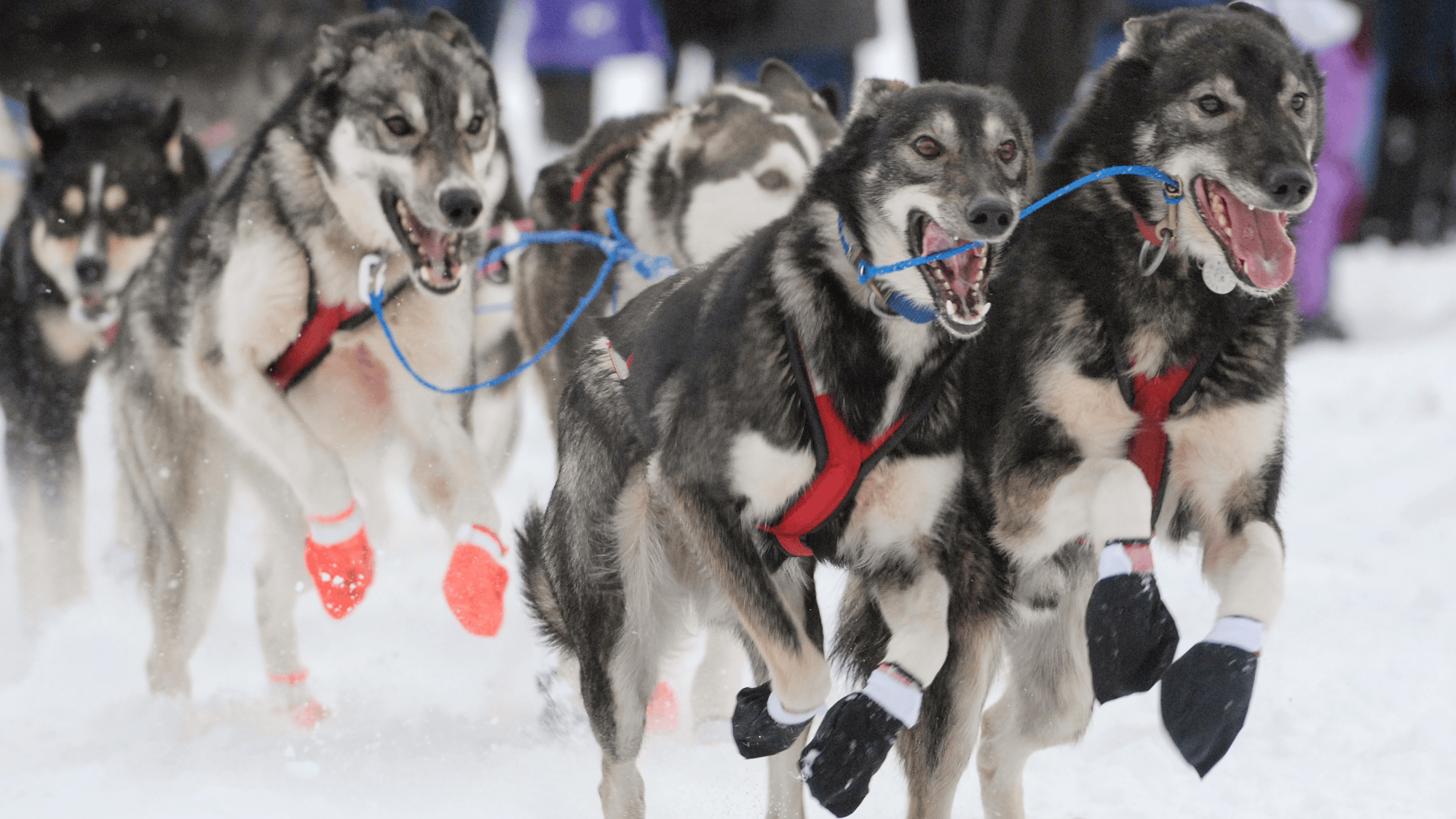
They’re some of Earth’s most powerful athletes, traversing thousands of miles of rough terrain in sub-zero temperatures, through blinding snow, and biting winds. Sled dogs have been helping humans travel across the planet’s coldest regions for centuries, hauling supplies, people, and equipment across the snow and ice. In the process, this important role that goes above and beyond simply being “man’s best friend” could have a visible impact on their evolution.
Sled dogs may have evolved shorter legs to help them pull loads more efficiently. Currently working sled dogs and those that lived about 2,000 years ago have six percent shorter leg bones than similar species, according to a study published today in the journal iScience. These findings could help biologists trace the origins of sled dogs and understand more about how dog-powered transportation spread over the past 9,000 years.
“Sled dogs have played an indispensable role in communities in the Arctic,” Mitya Kletzerman, a study co-author and an archeologist at the University of Haifa in Israel, said in a statement. “Without dogs, people couldn’t move as efficiently to hunt, relocate as conditions changed, or travel between communities to exchange knowledge and share new ideas. Understanding how the practice evolved could give us new insights into how people adapted to life in the Arctic.”
As of now, our earliest archeological evidence associated with dog sledding comes from 9,000-year-old sled parts and dog remains uncovered in 2017 on Zhokhov Island (present-day Russia). Sledding equipment like this is rarely found in the archaeological record, so it has remained difficult to pinpoint when and where the practice first emerged or spread.
Earlier studies have shown that work associated with humans can leave traces in an animal’s skeleton. Reindeer used for racing, carrying loads, and pulling have limb bone differences compared to those that do not pull. Kletzerman and her team were curious if sled dogs have also developed particular skeletal traits that have helped them adapt to all of the physical demands of pulling a sled.
In the study, the team developed a biomechanical model to help them understand how a dog’s body handles the work of pulling a sled. The model showed that one effective way to pull a sled loaded with material is for a dog to lower its center of gravity. This increases the canine’s ability to generate pulling force.
“When people or animals pull a load, it tends to tip them backward. A lower or more forward position of the center of mass counteracts this effect, allowing greater pulling force,” Kletzerman explained.
They then tested whether modern sled dogs have skeletal proportions that can lower their center of mass. They analyzed bones in 60 different modern canids, including sled dogs, wolves, spitzes, and mongrels. They then compared the lengths of five leg bones. Three in the forelegs (the humerus, radius, and ulna) and two in the hind legs (femur and tibia).
After accounting for overall skeletal size, they found that sled dogs have relatively shorter radius, ulna, and tibia bones than their non-sled pulling counterparts. These bones measured about six percent shorter on average.
“It’s unclear how this trait developed, but selective pressure may have preserved it, because it gave sled dogs an advantage over other dogs,” Kletzerman said.
To see if this characteristic already existed in ancient dogs, the team analyzed 82 ancient dog bones and three skeletons. The three skeletons were from ritually buried dogs uncovered from three archaeological sites associated with ancestral Inuit populations in present-day Chukotka, Russia, and date to 2,000 to 500 years ago.
Nearly 89 percent of the bones were consistent with the modern sled-dog pattern of shorter leg bones, as were all three ritually buried dogs. According to the team, this suggests that the skeletal pattern may be an effective way to identify that canine remains belonged to a sled dog, even when archaeological remains are incomplete or do not have any direct evidence of sled equipment.
“Dogs have been working alongside humans for thousands of years, but we’re only beginning to understand how that partnership shaped them,” Kletzerman concluded.
Griffith Observatory is one of Los Angeles’s most iconic landmarks. Part of the city’s sprawling “urban wilderness,” Griffith Park, the free public science center boasts dozens of exhibits and displays, including one of the first planetariums in the United States and the most-viewed telescope in the world.
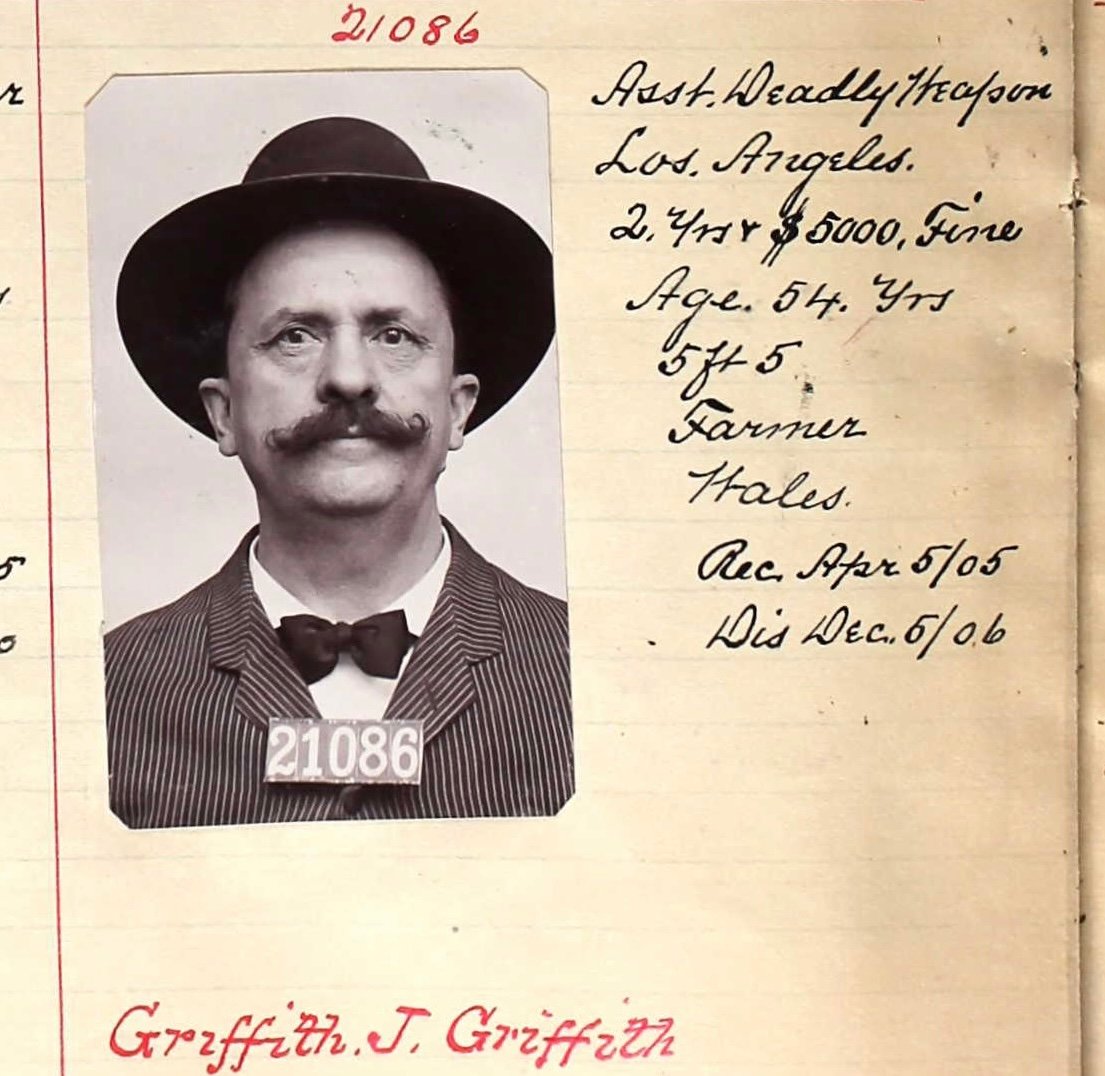
But there’s a dark secret behind Griffith Observatory’s founding. It might never have been built if it weren’t for the desperation of its namesake, Griffith J. Griffith, a wealthy real estate magnate who had once been a pillar of his community. In 1906, when Griffith first proposed the observatory as a gift to the city, he was hoping to salvage his reputation after the shocking crime he had committed three years earlier: the attempted murder of his wife.
Who was Griffith J. Griffith?
Born in Wales, Griffith immigrated to the United States as a teenager in 1865, initially settling in Pennsylvania. A few years later he moved to San Francisco, where he worked as a business journalist covering the West Coast mining industry. Griffith then used his expert knowledge of mining to work as a consultant for mining companies, earning himself a fortune.
In 1882, Griffith moved to the rapidly growing city of Los Angeles and purchased 4,000 acres of the Rancho Los Feliz land grant with an eye toward development. He rented out parcels of this land for various businesses, from homes and hotels to an ostrich farm. (Although the farm eventually failed, it proved a popular tourist attraction: Some of California’s first passenger railways were built to bring sightseers to the ostriches.)
Acquaintances described Griffith as “a roly-poly pompous little fellow” and “an egomaniac.” Known for his brash personality and humor, he dressed flamboyantly, favoring a gold-handled cane and a top hat. Griffith also called himself “Colonel,” despite having never served in the military. His grandiosity led to the mocking nickname, “the Prince of Wales.”
Acquaintances described Griffith as “a roly-poly pompous little fellow” and “an egomaniac.” Image: Public Domain
Griffith’s doomed marriage
By the mid-1880s, Griffith was a member of Los Angeles high society. He rubbed shoulders with fellow wealthy developers whose names are still visible on city maps, such as the Bixbys, the Sepúlvedas, and the Mesmers.
While some of these families traced their lineages back to the colonial aristocrats of Mexico or New England, the Mesmers, like Griffith, were recent European immigrants, having come to the United States from Alsace, France. Griffith soon began courting 22-year-old Christina Mesmer, nicknamed Tina, who was considered one of the city’s most eligible young ladies.
Not only did Tina have prominent parents, she had personally inherited a major property from a childless family friend in 1885. Known as “the Briswalter tract” after the previous owner, Andre Briswalter, it was 240 acres in a prime development area just south of downtown L.A. Worth at least 35 million dollars today, the land was used by Briswalter himself for fruit orchards, but now encompasses the neighborhood of Historic South-Central.
Griffith knew that the Briswalter land would be his if he married Tina Mesmer, and made no secret of his motives. Three weeks before they were to be married, Tina informed Griffith that she had transferred partial ownership of the property to her father. It is unknown if Tina performed this transfer willingly, but Griffith wrote to her of his fear that she had become her father’s “pawn.” In the same letter, Griffith threatened to call off the wedding unless he was made sole owner.
Wishing to avoid scandal, the Mesmers relented and the wedding proceeded in 1887. However, the rocky start to the marriage was an ill omen of things to come. In public, the two presented a harmonious image of a high society couple. In private, tensions plagued their marriage, including over religion (the Mesmers were Catholic, while Griffith was Protestant).
In 1887, Christina ‘Tina’ Mesmer, a young Los Angeles socialite, married Griffith. Image: Public Domain
At home, Griffith was paranoid and menacing. Despite publicly supporting the Temperance movement, he was secretly an alcoholic, and his drinking worsened his behavior. Griffith’s paranoia reached a fever pitch after a narrow brush with death in 1891.
While the Griffiths were in a carriage on their way to the grave of Tina’s recently-deceased mother, someone fired a gun at them from another carriage, grazing Griffith’s head. The attacker, who fatally shot himself before he could be apprehended, turned out to be an investor from the failed ostrich farm, who had been ruined and owed Griffith back rent.
How the idea of Griffith Park first emerged
In 1896, despite his private troubles, Griffith was at the height of his power. Ever-ambitious, he sought a way to immortalize himself. He was also flush with cash, having sold off most of the Briswalter tract acquired from Tina, but still owed a tax debt that he hoped the city would forgive. That Christmas, the Griffiths donated more than 3,000 acres of Rancho Los Feliz to the city of Los Angeles for the formation of a public park, to be called, of course, Griffith Park.
While Griffith spoke of wanting to give back to the community and create “a place of rest and relaxation for the masses,” generosity may not have been his only motive. Critics called the huge donation a tax scheme, and pointed out that Griffith could afford to part with the land. Not only did he have Tina’s fortune, he had already rented out the most profitable parts of the Rancho Los Feliz, and what remained was no good for purposes like farming.
Griffith shoots his wife Mrs. Tina Griffith
The more his influence grew, the more unstable Griffith became. According to Tina’s later testimony at Griffith’s trial, he pulled a gun on her for the first time in May 1903, when she threatened to leave him during an argument. “He is very proud and did not want the public to know” of their marital disputes, she said.
A few months later, the Griffiths stayed at the Hotel Arcadia in Santa Monica with their only child, 15 year-old Vandell. Tina hoped that a family vacation would calm Griffith’s nerves, but Griffith was on edge. He repeatedly asked servers in the hotel restaurant to change his food and drink, believing it had been poisoned.
On the last night of the trip, Vandell Griffith went to the beach with the hotel owner’s son, leaving his parents alone in the hotel room. While Tina was packing, Griffith approached her with a gun in his hand. He forced her to kneel and started asking her about the death of Andre Briswalter years earlier.
Apparently, Griffith now suspected that the Mesmers had poisoned Briswalter, and planned to poison him next. Griffith then asked Tina if she had ever been unfaithful. She assured him that she had not, and that Briswalter’s death had been natural, but he fired off a bullet at point-blank range.
Tina Mesmer Griffith survives
Tina leapt from the window and rolled to safety, breaking her shoulder in the fall. Hotel staff soon found her and took her to a doctor. A surgeon who attended her injuries later reported that “if the bullet had struck Mrs. Griffith one-sixteenth of an inch below where it did, it would have gone through the eye socket and into the brain.”
Tina lost her right eye, and due to the risks of infection and blood loss, doctors were not sure whether she would survive. Miraculously, she did.
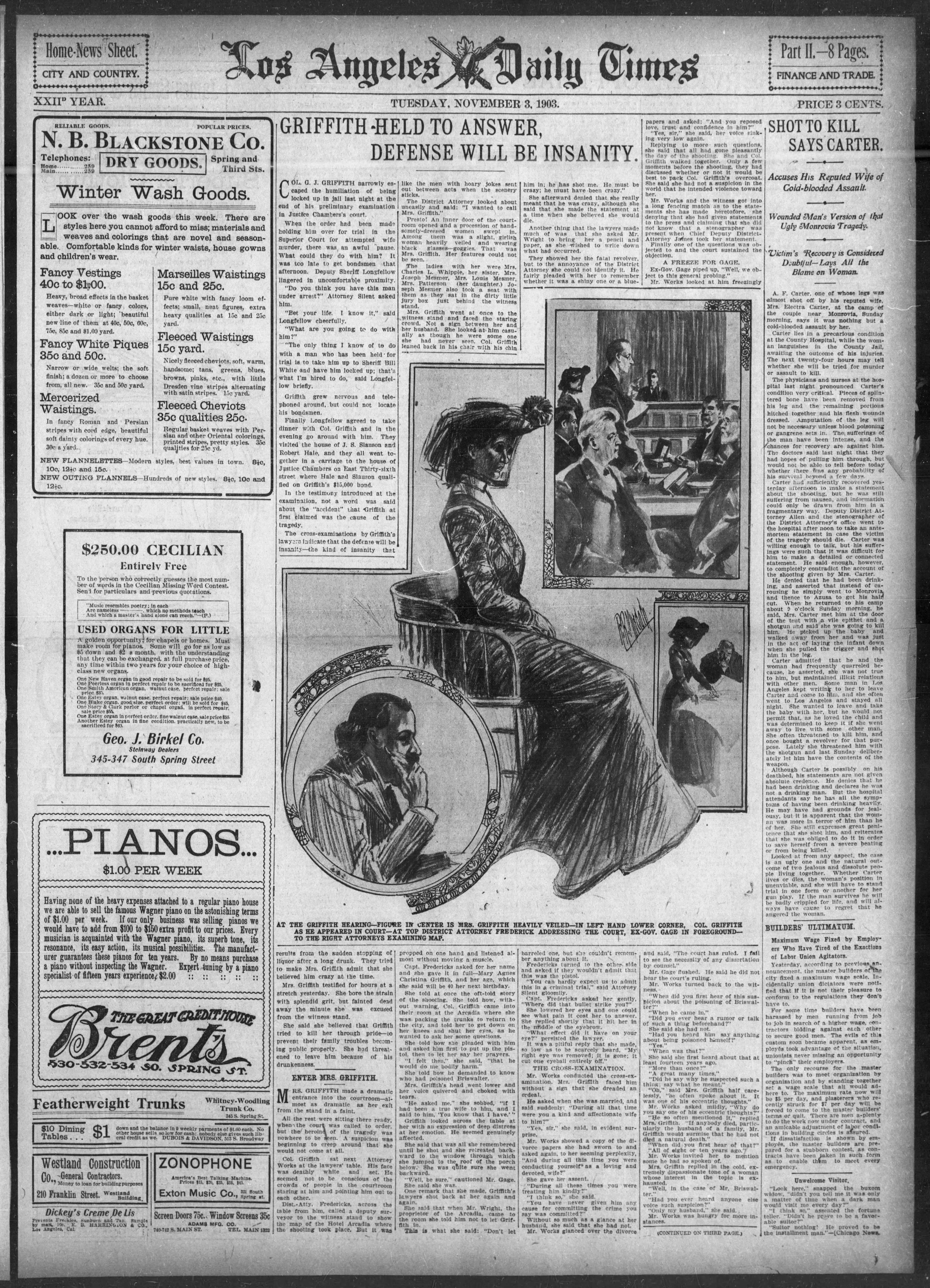
Police began searching for Griffith immediately, but it was three days before they found him at a nearby bar in the midst of an alcoholic bender. The subsequent trial became a massive media scandal. Tina took the witness stand wearing a veil and black glasses to hide her injuries.
A sketch published in The Los Angeles Times shows how Christina ‘Tina’ Mesmer wore a veil in the courtroom to conceal her injuries. Image: Public Domain
When she entered the courtroom, “she looked at [Griffith] casually as though he were someone she had never seen,” the Los Angeles Times reported, while Griffith remained motionless, listening intently. Tina testified for an hour before fainting from exhaustion, returning later that day for a second round of questioning. Only then did the extent of the Griffiths’ private problems become public knowledge.
The outcome of the trial
Griffith’s attorneys argued that he was not in his right mind; instead, his drinking had made him delusional, a case of “alcoholic insanity.” Griffith was fined and sentenced to just two years in prison.
Tina was granted a divorce on grounds of cruelty, one of the few legal justifications for divorce in 1903. She also received a cash settlement and full custody of Vandell, but she was unable to receive half of the estate, as she had asked for.
The couple’s properties had long been under Griffith’s name only, including what remained of Tina’s inheritance. As one of her lawyers told the Los Angeles Times, the law prevented her from obtaining “any approximation of what really should be hers.” However, Tina was left with enough to live on, and Griffith agreed to pay for Vandell’s future education as long as he didn’t attend a Catholic university.
The aftermath
After the trial, Tina moved in with her sister. Though she stepped away from city development, she devoted herself to Catholic charities and social events. She was apparently a big fan of whist, a four-player card game. She never remarried and continued to be known as “Mrs. Griffith” until her death in 1948 at the age of 86.
When Griffith emerged from San Quentin in December 1906, he appeared to be a changed man. He gave up drinking and devoted himself to the cause of prison reform, as well as improving facilities for visitors in the park that bore his name. He also came up with an idea for a second “Christmas gift” to rehabilitate himself in the eyes of the Los Angeles public: a free science center and an outdoor theater.
However, the city was now reluctant to associate with him. As one newspaper op-ed stated, Los Angeles was “neither so poor nor so lost to [a] sense of public decency that it can afford to accept this money.”
Griffith died of liver disease in 1919 without seeing this dream become reality, but he bequeathed the funds for the Observatory and the nearby Greek Theatre to the city in his will. The project would finally move forward more than ten years after his death.
It was Griffith and Tina’s son, Vandell Griffith, who oversaw the construction of the Observatory as president of the Los Angeles Park Board. (Vandell would later become a city police commissioner, and was described in a 1951 newspaper as “a dead honest man.”)
When the Griffith Observatory opened in 1935, it was an instant success, part of a new wave of interactive museums that made astronomy and other sciences accessible to the public. And it all goes back to a man who destroyed his own reputation. It’s a strange chapter in the history of Los Angeles, and a reminder that the legacies people leave can be complicated.
In That Time When, Popular Science tells the weirdest, most surprising, and little-known stories that shaped science, engineering, and innovation.
Thanks to some medieval human teeth, archaeologists have pinpointed when lead production first expanded across Europe during the Middle Ages. By examining dental enamel collected from graves located in central England, researchers now know the post-Roman society started mining and smelting again during the mid-7th century. As the team explains in a study published today in the journal Antiquity, the consequences of exposure to the toxic were stark—but distributed unequally among locals.
Humanity’s complicated relationship with lead dates back over 9,000 years, and our environmental exposure to the toxic metal is traceable as far as two million years ago. Lead was instrumental in prehistoric smelting advancements, and its invaluable properties paved technological progress all the way through the Industrial Revolution. However, lead is now known to cause various early developmental issues and its uses are dwindling, but tracing our reliance on the material helps contextualize and understand a society’s historical arc.
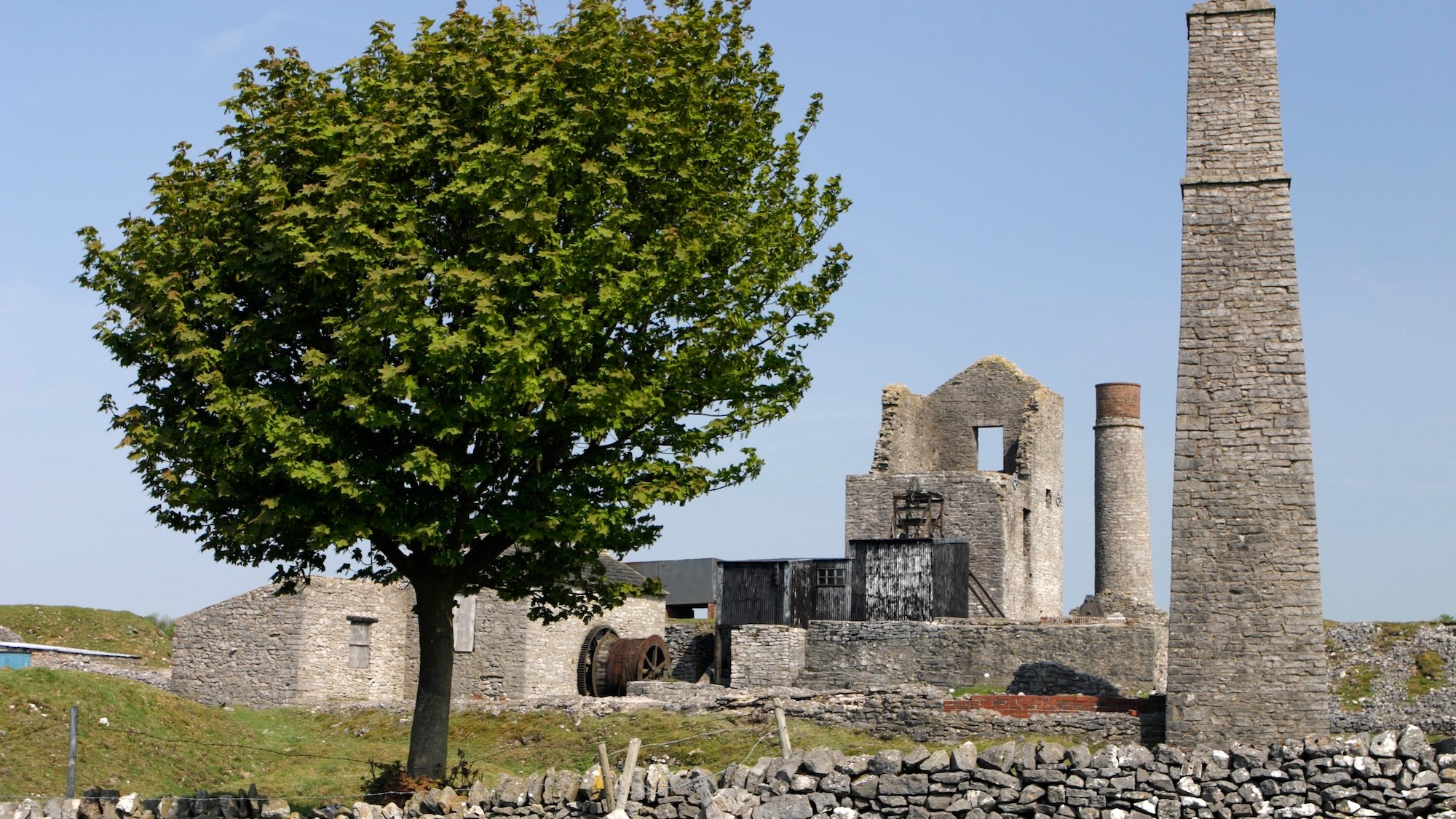
Researching these metals also isn’t easy. From the 16th to 19th centuries, manufacturers constantly re-smelted lead waste from ancient Rome and medieval England, which destroyed any discernible way to examine its prior origins and uses. Archaeologists including University of Nottingham’s Christopher Loveluck knew of another way to trace lead production in the Derbyshire Peak District, one of Europe’s largest providers of the metal during the Middle Ages
“The team is delighted to have finally confirmed definitively the date by which the early medieval lead industry was established in the Peak District…through evidence provided by the people themselves,” Loveluck said in the study’s accompanying announcement.
Archaeologists analyzed teeth from bodies buried in three Peak District cemeteries dating back to between 650 and 1500 CE. More specifically, they focused on tooth enamel. The external protective layer finishes forming during childhood, meaning any prior lead exposure stays embedded in the enamel for the rest of an individual’s life. Loveluck and his colleagues discovered that by the 7th century, the Derbyshire children’s lead levels were the same, if not higher, than those of children who lived in industrialized cities during the mid-18th and 19th centuries. By the mid-8th century, the growing lead industry had even begun to seep into surrounding regions like Castleton.
Teeth samples showed lead exposure reached its highest levels during the late 12th and early 13th centuries, which aligns with previous historical and environmental data. While the metal’s presence was ubiquitous among the population, it wasn’t necessarily the same across class or gender. High status gravesites included weapons and other personal items with lower lead concentrations than those seen in the graves of poorer residents. This implies that while the upper class owned lead-imbued possessions, they were higher quality objects. Meanwhile, working class families employed in mines and factories routinely exposed their children to larger amounts of lead.
There is also evidence that suggests women were especially at risk during this era. Three women who died between 17 and 25 years old showed particularly increased lead quantities in their tooth enamel. Overall, most of the men survived to middle or old age, while women often died during young adulthood.
“Our results indicate that in these mining communities, girls and boys alike were raised in dangerously polluted home environments,” said Castleton excavation co-director and study co-author Anna Bloxam. “This exposure…perhaps contributed to higher rates of premature death among women of child-bearing age.”
Lead contamination is still a serious issue today, although overall conditions have improved greatly since medieval England. Still, the underlying problems of environmental degradation and socio-economic vulnerabilities remain relevant today.
“This study has enabled us, for the first time…to look more deeply into the profound impact lead production had on individuals and the communities they lived in,” added University of Sheffield historian and study co-author Colin Merrony.
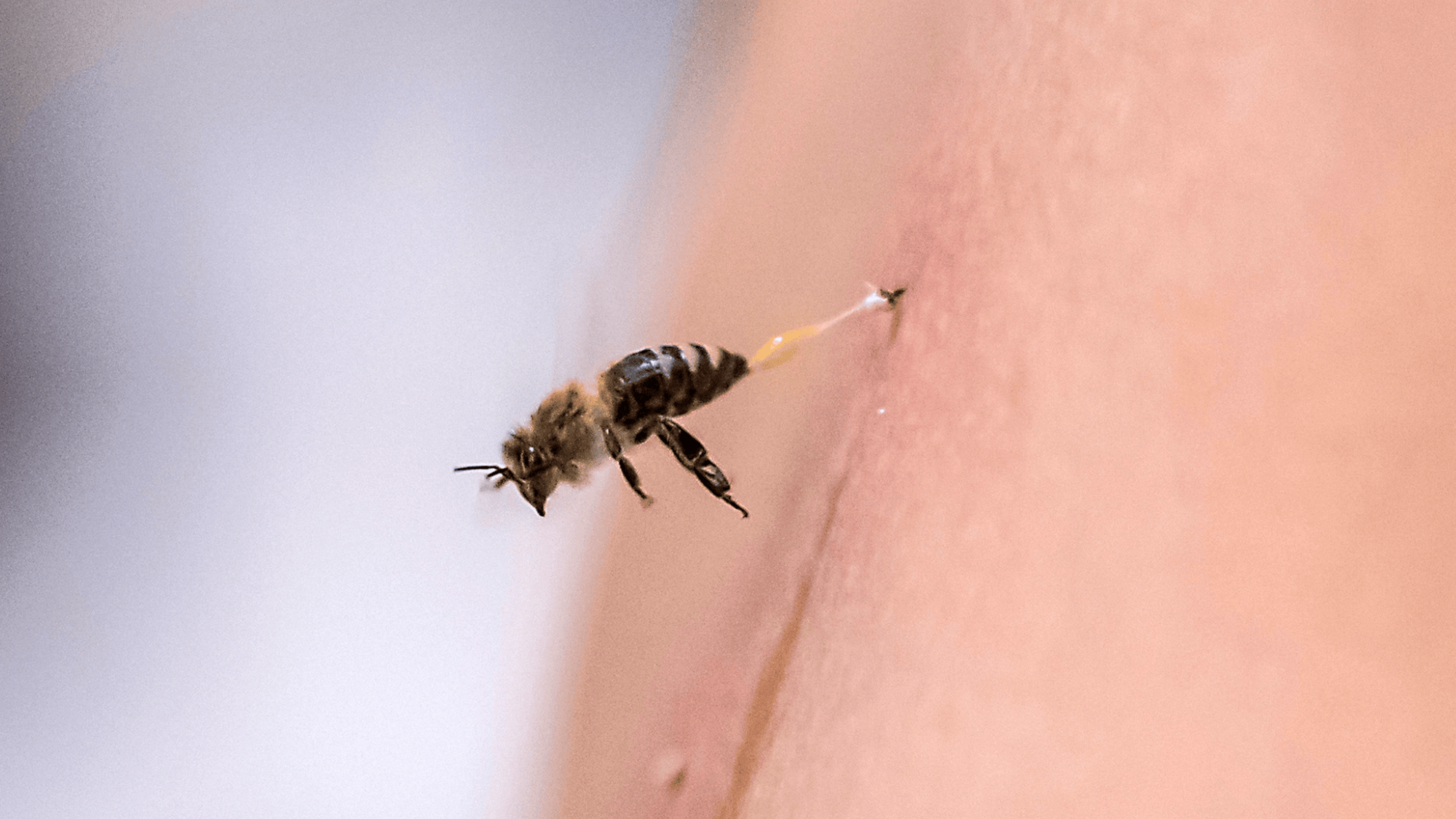
It’s one of nature’s seemingly magical tricks. A honey bee (Apis mellifera) stings a victim, and the stinger will still pump venom into a wound even after it has fully detached from the bee’s body. Thanks to some high-speed video, we may finally know the secrets behind this sting.
A team in Australia found that the tiny 2 millimeter (or only 0.08 inch) stinger of a honey bee works like a double-piston micro-pump. It pumps in two different directions and can deliver a continuous flow of venom. The findings are described in a study published today in the journal PNAS.
“We’ve known since as early as 1910 that the venom sac of a honey bee stinger empties into a chamber with little pumping elements called valves, but until now we didn’t know exactly how they work,” Fiorella Ramirez-Esquivel, a study co-author and entomologist at Macquarie University, said in a statement. “If you’ve ever been stung by a bee, you’ll know it’s a very painful process, but now we’ve been able to identify all the working parts packed into the tiny stinger.”
In bees, autotomy is when a worker bee thrusts its stinger into a target and then leaves the stinger behind. The stinger then continues to penetrate into the target tissue and inject venom all on its own.
To better understand how autotomy works, the team from Macquarie and the University of New South Wales had bees sting a clear gel that mimics human skin, while taking high-speed video. They saw that the tiny stinger itself contains several different components including one venom sac and a pumping chamber, muscles, and nerves. The stinger also has two sharp, pointed lancets. These lancets slide backwards and forwards on a system of rails (called the olistheter), similar to a reciprocating saw. These saw-like lancets are what pushes the stinger deeper into the skin and also pumps the venom.
Each of the two long lancets has a valve attached to it that sits inside of the pumping chamber. The team found that these valves change shape to form a seal during the downstroke. They then collapse during the upstroke, creating pressure for pumping while minimizing backflow when refilling.
“Finally, and perhaps most dramatically, as the valves meet in the middle of the stroke, they change shape again to push past each other,” said Ramirez-Esquivel. “This is a remarkable strategy to pump fluid since maintaining a seal is vital to effectively transmit pressure. The unique geometry of the valves is the key; they act as collapsible pistons and—by pumping in opposite directions—they’re able to deliver a continuous flow of venom.”
The team continued to explore the mechanics and flow of the stinger with microCT scans. They then used these scans to 3D print a small robot of the bulb chamber and lancets. The tiny bee-bot confirmed these key features of the pumping cycle.
“The double piston design adds complexity but it’s the key to the stinger being able to deliver venom continuously in a compact, autonomous unit,” said Dr Ramirez-Esquivel.
Understanding this mechanism could inspire designs for new micropumps to deliver medicine to human patients in a less invasive way.
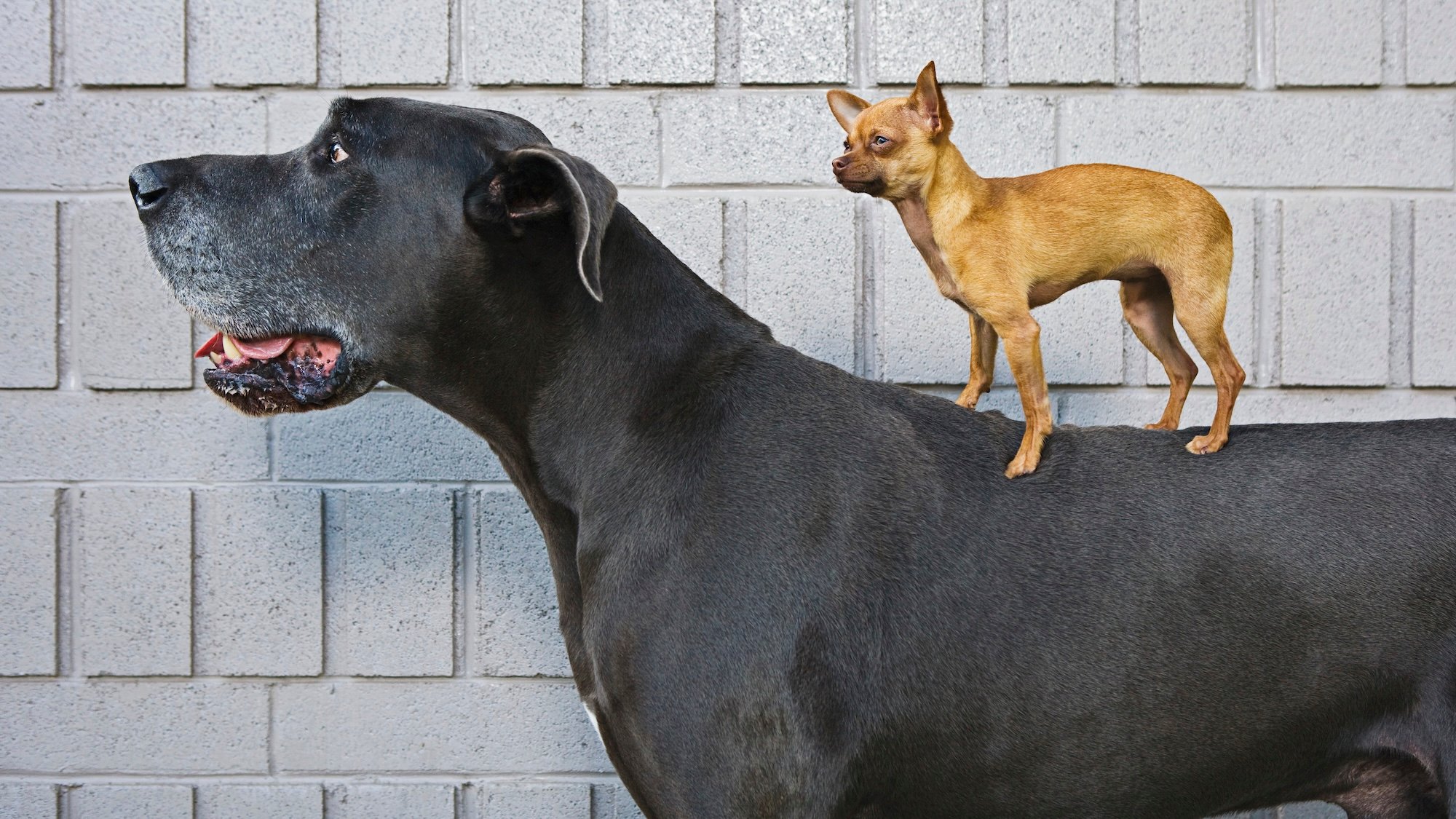
A first-of-its-kind genetic analysis of dog breeds presents the clearest insights into why larger dogs rarely outlive their smaller relatives. According to a team of biologists writing in the journal Science, the longstanding size–age correlation is likely due to “jumping genes” that inevitably begin sowing chaos inside canine DNA as dogs get older.
Most dog owners are aware of an unfortunate rule of thumb—the bigger the pooch, the shorter the lifespan. While this trend isn’t always the case, breeds like the Great Dane generally don’t stick around as long as smaller relatives like golden retrievers or even pugs. Larger dogs are also much more prone to age-related health issues and diseases. These canine traits starkly contrast with what biologists often see in other mammals, where larger species like whales frequently live much longer than tiny animals such as rodents. But these mysteries make your favorite furry friend’s genetics incredibly intriguing to researchers.
“Dogs provide an extraordinary model for understanding aging because they show dramatic variation in lifespan within a single species,” explained study co-author and Arizona State University (ASU) evolutionary biologist Noah Snyder-Mackler.
Dogs’ longstanding 30,000 plus years of companionship with humans also poses a unique opportunity for scientists. Pets and their owners share many of the same day-to-day experiences, environments, and physical habits, so it stands to reason that a better understanding of canine genes could guide future studies of human biology. Knowing this, Snyder-Mackler and his colleagues recently examined genetic data from 864 dogs stored in the Dog Aging Project. They specifically focused on mapping genome-wide DNA methylation, which allows genes to express themselves without altering their DNA sequence. DNA methylation is part of the larger epigenome influenced by external factors like stress and diet, and it’s also a widely known indicator of aging and DNA regulation.
Snyder-Mackler’s team discovered a dog breed’s aging is specifically tied to losing regulation in a class of transposable elements, or “jumping genes,” called LINE1s. These genes copy and intersperse throughout the genome by leaping between chromosomes, which damages DNA. This initially isn’t too problematic thanks to the regulation from DNA methylation, but that ability decreases with age. Less regulation means more damage in the form of genetic instability, diseases, and cancer.
“What we found is that the epigenetic regulation of transposable elements—especially LINE1s—appears to be a major factor shaping how quickly different dogs age,” Snyder-Mackler said.
Over 40 percent of LINE1-related portions of the genome lose DNA methylation as a dog ages, but the speed of decline is much faster in bigger breeds. The team’s findings showed larger dogs lost an average of 35 percent more LINE1 methylation than smaller canines.
“It suggests that faster aging in larger dogs may be driven, at least in part, by reduced control over these ‘jumping genes,’” concluded ASU genomicist and study co-author Blaise Mariner.
It’s still unclear if LINE1 behavior causes species to age, but the recent work emphasizes these genetic areas are focal points in biological aging. Beyond understanding aging differences among dog breeds, the discoveries may guide research into similar genetic changes in humans.
“If that’s the case, targeting these elements or the mechanisms that regulate them could be a promising avenue for future therapies to extend the health span in humans,” said Snyder-Mackler.
An endangered mouse is slowly returning to the Golden State. Pacific pocket mice (Perognathus longimembris pacificus) are about as large as a human thumb and about as heavy as three pennies. Unsurprisingly, they are the smallest mammals in North America and are one of many pocket mouse subspecies. But they are also one of the most endangered.
Pacific pocket mice have lived in and around Los Angeles and San Diego but before 1993, the species was believed to be extinct. When a small population was found in Orange County, the tiny rodent was listed as endangered.
Today, there are only three original populations in the wild, but groups are being reintroduced into the wild. The San Diego Zoo Wildlife Alliance and their partners recently established their third reintroduced population of Pacific pocket mice at North San Mateo, a training area within Marine Corps Base Camp Pendleton.
“This spring, we provided 50 mice to USGS [United States Geographical Survey] to establish a third reintroduced population at North San Mateo, and we’re very encouraged that reproduction has already been documented there,” Debra Shier, associate director of recovery ecology for San Diego Zoo Wildlife Alliance, tells Popular Science.
The two other reintroduced populations are also doing well. They are the Water Tank population in Laguna Coast Wilderness Park and the Wire Mountain population on Marine Corps Base Camp Pendleton. Mice there are reproducing, and the Water Tank population has a high to very high density. Additionally, the Wire Mountain population has a medium to high density, according to Shier.
The Pacific pocket mouse’s recovery is good news for the subspecies, but also for their ecosystem. Their burrows contribute to improving soil hydrology and nutrient cycling and also shelter other species, Shier added in a statement. An additional population helps return these crucial ecological functions to their native coastal ecosystems.
Since the start of its Pacific Pocket Mouse Conservation Program in 2006, the San Diego Zoo Wildlife Alliance has released over 500 of these tiny mammals into the wild, adding them to both new and established populations.
“We’re now beginning to allow the established populations to expand beyond their original fenced release areas. That’s especially important this year because of the potential for heavy winter rains associated with the forecasted El Niño,” Shier says. “We’ve found that high winter precipitation can be associated with lower overwinter survival, so allowing mice to spread out and settle in a larger area may help make these populations more resilient.”
The greatest threat to Pacific pocket mice is the loss and fragmentation of their specialized coastal habitat. Habitat loss diminishes their range and makes them vulnerable to inbreeding.
“So, recovery isn’t simply about breeding more mice,” Shier points out. “We need to protect and restore suitable habitat, establish additional populations, and maintain genetic diversity across those populations.”

 Login