 Login

Meta launches an open-weight AI model that runs on Macs
Meta and Apple have teamed up for the launch of the social media giant's newest model, Muse Spark Open, which will run locally on Apple silicon.

Apple ha rilasciato agli sviluppatori la prima beta di iOS 27.2, appena due giorni dopo il debutto pubblico di iOS 27. Insieme sono arrivate anche le prime beta di iPadOS 27.2, macOS Golden Gate 27.2, watchOS 27.2, tvOS 27.2 e visionOS 27.2.
A mancare, per il momento, è iOS 27.1. La scelta potrebbe essere legata a iPhone Duo, che arriverà sul mercato venerdì 23 ottobre proprio con questa versione del sistema operativo preinstallata. iOS 27.1 contiene infatti le modifiche sviluppate per il primo iPhone pieghevole di Apple, tra cui i nuovi layout per i due display, il dock verticale, la Dynamic Island verticale, il multitasking con due app affiancate e alcune funzioni dedicate della Fotocamera.
Rilasciare adesso una beta di iOS 27.1 avrebbe quindi potuto lasciare nel codice riferimenti a caratteristiche di iPhone Duo che Apple non ha ancora mostrato. Le prime beta di iOS 27.2 dovrebbero invece contenere pochi riferimenti, o nessuno, al nuovo dispositivo. Più avanti, con qualche beta successiva, i due rami di sviluppo dovranno comunque essere riallineati, considerando che iOS 27.1 dovrà essere distribuito prima dell'arrivo di Duo.
Con iOS 27 e iPadOS 27 Apple introduce una nuova funzione di sicurezza pensata per riconoscere in tempo reale alcuni segnali tipici delle truffe basate sull’ingegneria sociale. Si chiama “Rilevamento dei rischi di sostituzione di persona” e può intervenire ad esempio quando qualcuno si spaccia per una banca, un ente pubblico o una persona fidata per convincere l’utente a effettuare un pagamento o modificare dati sensibili.
Il problema affrontato è diverso da quello delle tradizionali protezioni dell’account. L’autenticazione a due fattori può impedire un accesso non autorizzato, ma non serve se è la vittima stessa a portare a termine volontariamente un’operazione dopo essere stata manipolata. La nuova funzione di iOS 27 prova a stimare il rischio analizzando informazioni relative al dispositivo e all’Accountt Apple nel momento in cui, all’interno di un’app compatibile, viene effettuata un’azione delicata come un pagamento o la modifica della password.
Il sistema di iOS 27 restituisce all’app uno di tre livelli:
Apple is reportedly developing an enterprise server aimed at AI developers, governments and other entities, which would use its own chips alongside Nvidia networking equipment.
Sources told The Information if Apple goes ahead with the server, it will likely not be available until 2029. The product under consideration could arrive in two versions, a smaller one with two of Apple’s planned M8 Ultra chips and a larger one with four M8 Ultra chips linked together.
The iPhone maker is considering connecting M8 chips in the server using NVLink Fusion from Nvidia, a connectivity technology designed to let third-party chipmakers plug custom processors directly into its high-speed data centre rack architecture.
The news site reported the AI server move has been supported by former hardware chief and current CEO John Ternus with the project started around a year ago.
The Information stated the effort could still be cancelled or move forward without Nvidia’s technology.
The post Apple mulls move into AI server market using Nvidia gear appeared first on Mobile World Live.
Na China, marcas como Huawei, Xiaomi, Honor e Vivo já disputam um mercado onde os dobráveis estão longe de ser uma novidade. Para o iPhone Duo, o desafio será diferenciar-se das rivais e transformar a dimensão do ecossistema da Apple numa vantagem, sobretudo através das aplicações, apontam os analistas da Omdia.
The post China vai pôr à prova a estratégia da Apple nos dobráveis. iPhone Duo conseguirá fazer frente às rivais? appeared first on Tek Notícias.
Apple is working on an AI server that would use Apple’s high-performance M-series Ultra chips found in Mac desktops. The potential product’s expected release in 2029 would mark the first Apple server to hit the market in nearly two decades—and could capitalize on the surging popularity of Apple hardware among AI developers.
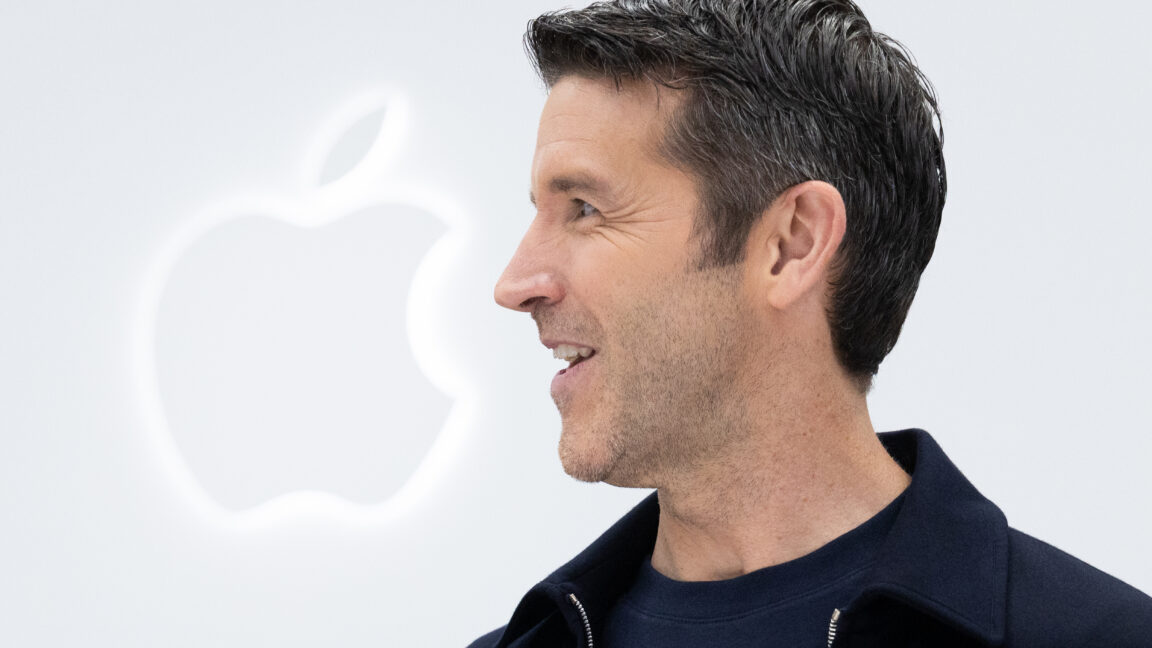
The enterprise server would come in two configurations that include either two or four of Apple’s future M8 Ultra chips, according to The Information. The project reportedly received support from new Apple CEO John Ternus when it began a year ago, back when Ternus led Apple’s hardware engineering efforts.
This revelation coincides with booming sales for Apple’s Mac mini and Mac Studio as AI developers and companies snap up the Mac computers to run AI workloads. The popularity of such computing devices that rely on Apple’s M-series Ultra chips has undoubtedly encouraged Apple’s pursuit of an enterprise server using the same chips.
© Benjamin Fanjoy/Getty Images

According to The Information, Apple is planning to get back into the server game and might just pair up with Nvidia to make it happen. Apple retired its Xserve line in 2011 and has largely left enterprise machines to other manufacturers since. But the growing demand for compute power as the AI industry continues to expand has apparently led the company to believe there is an opening for its powerful but efficient ARM-based M processors. Its Mac Mini and Mac Studio have proven popular with AI developers, which has led to shortages.
The server product, whether it's called Xserve or something else, likely won't debut until 2029. Word is that i …
The fight against AI slop is real, even in photography, which is why Apple introduced its Reference Image tech alongside its new iPhones. This shifts image verification to the moment of capture, creating a privacy-preserving digital negative that could help newsrooms, businesses, and individuals prove that images are real. Apple’s Security Research team just shared a white paper explaining how it works.
Introduced alongside the new iPhone 18 Pro series, Apple Reference Image is designed as a process to help prove the authenticity of images captured using that phone. Like so much in Apple, it’s a combined hardware/software feature that means when an image is captured, the camera also captures unalterable Reference Image data, with help from Private Cloud Compute, Apple’s cloud intelligence system.
That help means Apple thinks it now offers a system that protects image provenance to the extent of providing quantum-secure defense. The need to protect digital assets such as images from quantum-based abuse will become increasingly important as more state and state-adjacent adversaries seek out new ways to undermine security and do harm. Apple quite clearly considers that looming threat to be real; in 2024 it introduced encryption to protect iMessage against future attacks using quantum computers.
Apple is reaching out with this tech, including providing APIs for iPhones, iPads, and Macs that third-party developers can use to build support for Reference Image into their apps.
Otherwise, Reference Images can be viewed in the Photos app beside the main image, acting like a digital negative to enable visual comparison of both images. The idea is that the existence of this digital negative acts as a tool to prevent people from passing off edited or AI-altered images as being genuine pictorial narratives of events.
This will be useful in multiple situations. In the media, a news desk may turn to the feature to verify if an image is genuine or fake, while in the enterprise the tool provides a useful proof point when assessing images that relate to any workflow — that picture taken in the stock room may now be more useful as proof that stock is in hand, while a car hire firm may find it easier to prove damage during a rental period by verifying the pic. The main thing it does is help you identify changes in an image, whether those changes were wrought by human or AI.
Apple’s newly published white paper explains how it works and how the system is built to endure against interference, particularly as AI images are becoming increasingly convincing. After all, as digital enters most camera workflows at the sensor, proof of algorithmic activity isn’t necessarily enough to show an image has been altered out of its photorealistic beginning. It must be said that at this point we only have Apple’s word for the effectiveness of the solution, but I’m inclined to think it will be borne out.
Enter Apple Reference Image, which acts as a “chain of trust,” one the Apple team says is stronger and more enduring than existing approaches based on the Coalition for Content Provenance and Authenticity (C2PA) standard. Apple believes the C2PA approach remains too vulnerable because it is deployed after image capture and also creates a privacy risk by attaching images to public identity. You don’t have to look too far for instances in which photojournalists have been targeted by hostile forces once their identity has been realized, and the C2PA system arguably adds to that risk.
“Other industry solutions require a photographer or institution to vouch for an image using their own credentials,” the white paper explains. “We are concerned this puts some photographers, such as those operating in conflict zones, in a difficult position; it should not be necessary to forgo anonymity in order to prove image authenticity.”
Apple’s system is designed to kick in as images are captured, when a photographer can choose to create a securely timestamped reference image that accurately reflects what was captured by the iPhone’s camera sensor. The creation process leans into the powerful iPhone processor and also Apple’s Private Cloud Compute.
As the image is captured, the iPhone cryptographically signs pixel data immediately after capture, which shows the image to be an exact depiction of what the camera sees. The system also captures relevant metadata, including use of the Secure Enclave on iPhone to ensure some values.
That means that the Reference Image now carries deep insight into the original, down to an unchangeable record of metadata. Not only can you see the image matches, but you can ensure the metadata is also the same. Furthermore, the image is also timestamped with a value taken from Apple’s own cryptographic timestamp service. Pull it all together and the digital negative is packed with verifiable, trusted data that can be contrasted with an image you want to check.
There’s much more to this system, which Apple has built to be resilient to compromise while also protecting the privacy of the photographer. Instead of requiring the photographer act as the point of proof, Apple’s own Private Cloud Compute servers play the role by cryptographic signing of the image.
“The result is a verification model that offers photographers, newsrooms, and everyday users renewed confidence that an image they’re viewing is a photograph actually captured by a camera,” the company said. It is, I think, also interesting to consider how Apple’s newly introduced tool for cryptographic proof could potentially be applied elsewhere.
The caveat is that the protection only extends to the main camera of the iPhone 18 Pro family and is not retrospective. It won’t be available in China on launch, while in Europe you can develop and view reference images but not create them.
Now please subscribe to my daily, human-curated Apple-related news headline feed at The Core, or follow me on BlueSky, LinkedIn, or Mastodon.

Apple Intelligence is back, baby! That's right: Two years after its initial launch, Apple is giving its generative AI features their first significant upgrade, along with a new version of Siri that the company has been strongly insinuating would be a part of each of the last two macOS releases, without ever actually announcing a release date.
Generative AI is unavoidable if you install macOS 27 Golden Gate. I'm being very literal: There used to be a toggle you could hit if you wanted to turn off Apple Intelligence and delete the gigabytes' worth of AI models it would download to your disk, and now there isn't. Apple Intelligence defines the Golden Gate release, in everything from its marketing to its features to the chips it runs on to the amount of space it takes on your disk. Ready or not, here it is.
But if you can manage to look past that fanfare somehow, the operating system underneath Apple Intelligence is getting the kind of update that macOS users usually proclaim to like. Golden Gate addresses the most irritating of macOS 26 Tahoe's design sins, adds a big pile of incremental improvements, and promises a bunch of under-the-hood fit-and-finish optimizations to make common tasks feel just a little faster and more reliable than before.


© Apple
Apple Intelligence is back, baby! That's right: Two years after its initial launch, Apple is giving its generative AI features their first significant upgrade, along with a new version of Siri that the company has been strongly insinuating would be a part of each of the last two macOS releases, without ever actually announcing a release date.
Generative AI is unavoidable if you install macOS 27 Golden Gate. I'm being very literal: There used to be a toggle you could hit if you wanted to turn off Apple Intelligence and delete the gigabytes' worth of AI models it would download to your disk, and now there isn't. Apple Intelligence defines the Golden Gate release, in everything from its marketing to its features to the chips it runs on to the amount of space it takes on your disk. Ready or not, here it is.
But if you can manage to look past that fanfare somehow, the operating system underneath Apple Intelligence is getting the kind of update that macOS users usually proclaim to like. Golden Gate addresses the most irritating of macOS 26 Tahoe's design sins, adds a big pile of incremental improvements, and promises a bunch of under-the-hood fit-and-finish optimizations to make common tasks feel just a little faster and more reliable than before.
© Apple

Last week, Apple announced an iPhone unlike any it has made in the past. An iPhone that has seemingly already led several other phone manufacturers to pursue entirely different designs for their flagship products. A remarkably distinct device with the kind of "I can't believe they did that" software touches that Apple sometimes pulls off when it's at the top of its game.
That phone is not the iPhone 18 Pro.
The 18 Pro and Pro Max are in the unusual position of being the second-most interesting iPhones that Apple is launching this year. The foldable iPhone Duo stole the show at Apple's launch event, but it's not arriving until next month. …
Assinantes do Apple TV já podem conferir o primeiro episódio da aguardada sexta temporada de “Slow Horses”, série de espionagem estrelada por Gary Oldman, que retorna hoje.
Aos que nunca deram uma chance para a série, “Slow Horses” acompanha uma equipe de agentes da inteligência britânica, os quais servem em um departamento do MI5 conhecido como Slough House. Oldman assume o papel de Lamb, o brilhante (mas rabugento) líder dos espiões, que acabam indo para a Slough House devido a erros que acabaram com suas carreiras.
Reveja o trailer da sexta temporada a seguir:
A nova parte da produção acompanhará a fuga dessa equipe, enquanto Diana Taverner (interpretada por Kristin Scott Thomas) os envolve em um jogo de retaliação e vingança com riscos e consequências fatais.
Mesmo que a sexta temporada só esteja chegando agora ao Apple TV, já sabemos que “Slow Horses” terá pelo menos mais duas temporadas, já que a Maçã anunciou mais uma renovação adiantada da produção — que tem sido, há anos, uma das mais premiadas do serviço. Nesta semana, inclusive, a série faturou o prêmio de Melhor Direção de Série de Drama (recebido por Saul Metzstein) nos Primetime Emmy Awards 2026.
Além de Scott Thomas e Oldman, o elenco inclui Jack Lowden, Saskia Reeves, Christopher Chung, Rosalind Eleazar, Joanna Scanlan, Samuel West, Ruth Bradley, Hugo Weaving, Lenny Rush, Aimee-Ffion Edwards, James Callis, Tom Brooke, Jonathan Pryce e Olivia Cooke. Oldman também assina a produção executiva, ao lado de Jamie Laurenson, Hakan Kousetta, Julian Stevens, Iain Canning, Emile Sherman, Gail Mutrux, Douglas Urbanski, Gaby Chiappe e Adam Randall, que retorna também à direção.
Alguns desses nomes, vale notar, marcaram presença na première da sexta temporada, organizada pelo Apple TV na última sexta-feira (11/9) no TIFF Lightbox Theater, em Toronto (Canadá):


Como dito, apenas o primeiro dos seis episódios da sexta temporada foi liberado hoje. Os capítulos remanescentes serão disponibilizados semanalmente, às quartas-feiras, até 21 de outubro.
O Apple TV está disponível no aplicativo Apple TV em mais de 100 países e regiões, seja em iPhones, iPads, Apple TVs, Macs, dispositivos Android, smart TVs ou online — além de estar em aparelhos como Roku, Amazon Fire TV, Chromecast com Google TV, consoles PlayStation e Xbox. O serviço custa R$34,90 por mês, com um período de teste gratuito de 7 dias. Por tempo limitado, quem comprar e ativar um novo iPhone, iPad, Apple TV ou Mac ganha 3 meses do Apple TV. Ele também faz parte do pacote de assinaturas da empresa, o Apple One.
NOTA DE TRANSPARÊNCIA: O MacMagazine recebe uma pequena comissão sobre vendas concluídas por meio de links deste post, mas você, como consumidor, não paga nada mais pelos produtos/serviços usando os nossos links de afiliado.


Gli assistenti basati sull’intelligenza artificiale stanno diventando una delle porte d’ingresso principali al mondo digitale, pertanto essere integrati direttamente in uno smartphone non significa soltanto ottenere visibilità, ma può determinare quali servizi milioni di persone utilizzeranno ogni giorno. Da questa problematica nasceva lo scontro tra Elon Musk e Apple.
X Corp e xAI avevano accusato il produttore dell’iPhone di ostacolare la concorrenza dopo l’integrazione di ChatGPT in Apple Intelligence, sostenendo inoltre che applicazioni come Grok e X non ricevessero sufficiente visibilità sull’App Store. Ora quella battaglia cambia improvvisamente direzione, perché le società di Musk hanno chiesto di archiviare la causa contro Apple presso un tribunale federale del Texas.
Non sono state rese note le ragioni e, soprattutto, non è chiaro se dietro la decisione ci sia un accordo tra le parti, ma è un evento piuttosto raro. Il punto va oltre Grok, perché quando un sistema operativo integra nativamente un servizio AI, il vantaggio non è soltanto tecnico.
