❌

Reading view

Hurricane Polo Explodes in Pacific, UK Aphid Swarm Wipes Out 30 Million Lettuces, Glasgow Braces for Rubbish Pileup — Today’s Environmental Briefing for Thu, Sep 24 2026

Satellite view of Hurricane Polo swirling over the Pacific Ocean with visible eye structure

Across the stories today, a common thread emerges: the planet is speaking in signals — some subtle, some deafening — and the question is whether our institutions can listen fast enough to act.

Start with the signals themselves. El Niño has surged to record strength weeks ahead of schedule, and its fingerprints are already visible — from Hurricane Polo’s explosive intensification in the Pacific to the climate volatility rippling through global weather systems. In the UK, an aphid outbreak wiped out 30 million lettuce heads almost overnight, a small but telling example of how shifting conditions can upend food systems in ways no one budgets for. In Malawi, an unexplained weed overgrowth has choked Chia Lagoon, stranding farmers and fishers in flooded fields nearly seven months after the rains should have drained. These aren’t isolated oddities. They’re the planet’s early warning system, written in crop yields and clogged waterways.

Then there’s the human response — uneven, but not absent. Germany’s landmark pledge to phase out fossil fuels by 2045 marks a rare moment of policy catching up to urgency, moving beyond vague “carbon neutrality” language toward something more concrete. The UK’s decision to declassify a once-suppressed intelligence report — warning that climate breakdown is a direct threat to global security — suggests governments are quietly acknowledging what scientists have said for years, even if political will lags behind. And at UN climate talks in New York, amid what The Guardian describes as a genuinely grim mood, solar power’s continued growth offered rare, tangible hope. As Al Gore noted twenty years after An Inconvenient Truth, he’s surprised by the ferocity of fossil fuel pushback — but still believes, cautiously, that the fight can be won.

Behind the numbers are real communities adapting in real time. In the Andes, villagers near Villa de Arma are turning to ancient wetland systems as glaciers they once walked across vanish into bare rock. In Guam, resident Leevin Camacho learned his family’s water contained a pesticide banned since 1987 — a stark reminder that militarization and environmental cost are often intertwined, especially in the Pacific. And in Sarawak, Indigenous communities are still reckoning with displacement from the Bakun megadam three decades later, a cautionary tale as the world races toward a “clean” energy future that doesn’t always ask who pays for it.

It’s a reminder that progress and pressure often arrive together. Endangered birds on South Australia’s Eyre Peninsula won last-minute protection from a rocket launch site — a genuine conservation victory — even as a Norfolk Broads housing levy was quietly slashed, raising fears that environmental safeguards elsewhere are eroding. Meanwhile, olive ridley sea turtles nesting for the first time ever on California beaches offer something rarer: wonder. A signal, too, but one that invites curiosity rather than alarm — proof that the natural world is still capable of surprising us.

As the week unfolds, all eyes will be on whether momentum from Climate Week — bolstered even by a monster from Sesame Street reminding children it’s okay to feel both fear and courage — translates into follow-through. The data, the disasters, and the small human stories all point the same direction: the era of asking “if” is over. What remains is the harder work of “how fast,” and “for whom.”

The post Hurricane Polo Explodes in Pacific, UK Aphid Swarm Wipes Out 30 Million Lettuces, Glasgow Braces for Rubbish Pileup — Today’s Environmental Briefing for Thu, Sep 24 2026 first appeared on EnviroLink Network.

  •  

Alpabzug: Switzerland’s Alpine Alpaca Herds Make Their Autumn Descent

Alpabzug: Switzerland’s Alpine Alpaca Herds Make Their Autumn Descent

As autumn settles over the Swiss Alps, a centuries-old tradition unfolds across the high country. Known as the alpabzug, or “descent of the herds,” this seasonal ritual sees farmers guide their livestock down from summer mountain pastures to sheltered valley barns before winter’s harsh conditions set in.

This year, the tradition took a slightly unusual turn in the Griesalp area above Kiental, where roughly 70 alpacas made the journey down the mountainside. Unlike the cattle traditionally associated with the alpabzug, these woolly, long-necked animals picked their way along steep alpine trails, guided by farmers who have practiced this seasonal migration for generations. Once the herd reached the valley floor, the alpacas were loaded onto trucks for the final leg of their journey to a winter farm in Aeschi, near Spiez, in the scenic Bernese Oberland region.

The alpabzug is more than a practical necessity—it’s a cultural touchstone that reflects the deep relationship between Swiss farming communities and their mountain landscapes. As grazing pastures become inhospitable with the arrival of colder weather and reduced vegetation, moving herds to lower elevations ensures the animals’ welfare while preserving fragile alpine ecosystems from overgrazing during the dormant season. The practice also underscores how traditional agricultural methods continue to adapt, incorporating modern transport alongside age-old herding routes. For visitors and locals alike, the sight of animals winding through dramatic mountain scenery serves as a vivid seasonal marker, connecting present-day Switzerland to its enduring pastoral heritage.

The post Alpabzug: Switzerland’s Alpine Alpaca Herds Make Their Autumn Descent first appeared on EnviroLink Network.

  •  

Amid Climate Gloom at UN Talks, Solar Power Offers a Rare Ray of Hope

Amid Climate Gloom at UN Talks, Solar Power Offers a Rare Ray of Hope

As climate experts gather in New York this week for another round of high-stakes negotiations, the mood is grim. This year is on track to set a new global temperature record, and next year could break it again as El Niño intensifies. The planet has lurched from one disaster to the next: deadly European heatwaves, catastrophic flooding in Nepal that has erased entire communities, and unsettling new research suggesting the Atlantic Ocean’s major current systems may be approaching a dangerous tipping point. Despite the mounting evidence and urgency, political will to act remains stubbornly weak.

Yet amid this bleak landscape, there is one source of genuine optimism: solar power. Unlike political negotiations, which move at a glacial pace, solar technology has advanced rapidly and become dramatically cheaper, making clean energy more accessible than ever before. Advocates are now pushing world leaders to commit to an ambitious but achievable goal — bringing solar power to every corner of the globe by 2030.

The road ahead won’t be easy. Confronting entrenched fossil fuel interests and inertia among the powerful takes courage. But there’s a unifying truth that cuts through the complexity of climate politics: every person on Earth lives under the same sun. That shared reality, advocates argue, can become a source of collective strength — a reminder that the tools to address the climate crisis already exist and are within reach, if only the political will can catch up with the technology.

The post Amid Climate Gloom at UN Talks, Solar Power Offers a Rare Ray of Hope first appeared on EnviroLink Network.

  •  

Elmo Talks Climate Fear and Courage at New York’s Climate Week

Elmo Talks Climate Fear and Courage at New York’s Climate Week

When policymakers struggle to inspire real momentum on the climate crisis, sometimes it takes a three-and-a-half-year-old furry red monster to cut through the noise. That’s exactly what happened this week in New York City, where Elmo of Sesame Street fame made a memorable appearance at a Climate Week event focused on how extreme weather and rising temperatures are affecting children around the world.

Speaking in his characteristic third-person style, Elmo shared how frightened he felt during a recent storm that struck Sesame Street, an event portrayed in a recent episode featuring musician Post Malone. The storm storyline was designed to help young viewers process fear and anxiety around extreme weather, a growing reality for children as climate-driven disasters become more frequent and intense.

Elmo’s message to the crowd went beyond fear, though. He spoke about resilience and compassion in the face of frightening events, telling the audience that “courage is when you still help others,” even when you’re scared yourself. The sentiment struck a chord at an event otherwise filled with sobering statistics about how children worldwide are increasingly exposed to climate-related hazards, from heat waves to flooding to poor air quality.

Organizers say bringing beloved children’s characters into climate conversations helps make an overwhelming global issue more relatable, especially for young audiences who are already absorbing news of extreme weather. With research showing that children face disproportionate risks from a warming planet, advocates hope that even a small, fuzzy voice of comfort might help both kids and adults find the courage to act.

The post Elmo Talks Climate Fear and Courage at New York’s Climate Week first appeared on EnviroLink Network.

  •  

Tories challenge chancellor to rule out tax rises in budget as Badenoch labelled ‘embarrassment’ for Bank of England gaffe – UK politics live

The Conservatives want to brand Burnham’s administration as a ‘traditional tax and spend socialist government’

In a news release issued ahead of his speech this morning, Andrew Griffith, the new shadow chancellor, gave details of some of the questions he wants the experts he has asked to review small business regulation to address. (See 8.58am.) He said:

[Craig Mackinlay and Robert Colvile] will produce a report taking evidence from small business and self-employed organisations. While they will have a wide remit, they will consider in particular these key questions, and report in December:

-Why have past attempts to reduce the regulatory and compliance burden on small business and the self-employed failed, and what specifically should be done to reduce the burden successfully?

This is staggering. Our socialist Chancellor has dished out a big Bank of England finance job to a socialist union boss who knows nothing about finance.

Clearly, trade union donations not only buy your way into government policymaking, but also onto the Bank of England’s board. This is cronyism in plain sight.

Continue reading...

© Photograph: Anadolu/Getty Images

© Photograph: Anadolu/Getty Images

© Photograph: Anadolu/Getty Images

  •  

The AI data center e-waste problem is huge — and getting bigger

Photo collage of a server room with data visualizations.

E-waste from the AI boom has been vastly underestimated, a new report warns. By 2050, it could become enough trash to fill 23 million shipping containers - roughly enough 40-foot containers to circle the world six times if lined up in a row.

It's a significantly higher estimate of AI's e-waste than previous studies have found because the authors of the new report factor in all the infrastructure needed to support servers in data centers. The broader scope provides a clearer picture of junk AI leaves behind, according to the nonprofit Basel Action Network (BAN), which published the paper today.

"AI may feel weightless, but every model dep …

Read the full story at The Verge.

  •  

A Pompeii-Like Eruption Buried This Landscape 22 Million Years Ago—Scientists Just Discovered What Lies Beneath

The Americas experienced their own Vesuvius-style volcanic eruption 21.9 million years ago, devastating a portion of Chile worse than Pompeii.

A new study in Science Advances highlights the work of University College London Earth Sciences researchers analyzing a mountain of ancient volcanic rock covering an area six times the size of the Chilean capital, Santiago. 

The Lauca Caldera erupted to cover the area in molten ignimbrite rock up to a kilometer deep. That ancient volcanic hellscape buried the region’s terrain but, ironically, preserved it from typical erosion, providing important clues for modern climate researchers.

Modeling Volcanic Activity

“This landscape was buried by a giant volcanic eruption – a little like Pompeii, but on a vastly larger scale,” said lead author Dr Byron Adams, based at UCL Earth Sciences. “Instead of covering a town, hot mixtures of volcanic ash, rock fragments, and gas swept across an entire landscape, engulfing the terrain beneath them.”

Using detailed computer models, the UCL Earth Sciences team produced hundreds of possible landscapes to explore what the region may have once looked like. Detailed data on how rivers cut through landscapes to form mountain ranges informed predictions of what lies beneath the massive ignimbrite deposits. The researchers concluded that a low-relief landscape, such as foothills, most likely existed there at the time.

“Pompeii shows how volcanic eruptions can freeze a moment in human history. This study shows that much larger eruptions can also freeze moments in Earth history, burying whole landscapes beneath volcanic deposits and preserving clues to how mountains were being built before the eruption,” Adams said.

“We cannot dig down to see the buried landscape, but we can use the shape of the volcanic blanket and what we know about how rivers shape mountains to infer what is hidden beneath it.”

The Volcanic Andes

The findings indicate that this portion of the Andes, the world’s longest continental mountain range, rose very slowly, by only about an inch per century. At a faster rate, the landscape beneath the volcanic deposits would not fit the researchers’ models, and the slopes would have been much steeper.

The work provides new evidence in a longstanding debate among geologists over whether the Andes rose rapidly in the last few million years or developed more gradually over a much longer period. Earlier mineral analyses of the Andean range produced similar estimates based on records of temperature changes preserved in the rocks as they cooled while moving toward the planet’s surface.

“This approach gives us a new way to look back at Earth’s history. Current methods to estimate the speed at which mountains build look at chemical ‘clocks’ in the rock, but these are limited to specific moments in time. Our method can estimate rock uplift over a much longer period,” Dr. Adams said. “In this case, we estimate it would have taken millions of years to produce the subdued landscape we infer prior to the eruption.”

Other mountain ranges around the world, such as the Himalayas, can move even faster, rising several millimeters or even centimeters each year.

Climate Implications

While the team’s work covers only the middle of the Andes’ history, it still provides interesting support for the slow-movement hypothesis. For years, researchers have worked to understand how the Andes developed, as they strongly influence global and regional climate. 

By better understanding the Andes, climatologists have a more complete data set to piece together the complex problem of global climate change.

“What’s particularly exciting about this study is that it gives us a new way of piecing together that history, concluded co-author Dr Frances Cooper, also based at UCL Earth Sciences. “The same approach could be applied to volcanic deposits elsewhere in the world, helping us reconstruct landscapes buried for millions of years.”

The paper, “Landscapes Buried Beneath Large-Volume Ignimbrites Reveal Preeruptive Uplift Rates,” appeared in Science Advances on September 11, 2026.

Ryan Whalen covers science and technology for The Debrief. He holds an MA in History and a Master of Library and Information Science with a certificate in Data Science. He can be contacted at ryan@thedebrief.org, and follow him on Twitter @mdntwvlf.

  •  

Data Centers Are Causing a Huge Surge in Incredibly Toxic Chemicals Polluting the World

Data centers don’t just undergird the avalanche of AI slop polluting our social media feeds — they’re spewing an awful lot of physical slop as well.

On top of the noxious air pollution, as well as the occasionally bacteria-laden wastewater discharge, data centers are responsible for a rising tide of forever chemicals, artificial substances which never degrade naturally.

According to new reporting by The Guardian, nearly all of the top ten global producers of forever chemicals, otherwise known as polyfluoroalkyl substances, or PFAS, plan to ramp up production quotas on the back of the data center boom.

There’s a clear market demand for this: PFAS play a huge role in data center construction, where they’re used in cooling systems, AI chips, circuit boards, and fire suppression systems — not to mention the coating on thousands of miles of cables used to connect these components together.

Though components laden with PFAS are found throughout the industrial world, their use in data centers is particularly troubling. Because these facilities run almost non-stop save for the rare pause for maintenance, their components break down remarkably quickly, which means data center owners are constantly scrapping old parts in favor of new ones.

When those old components are tossed to the curb, the PFAS will almost inevitably wind up in the environment, increasing the likelihood that they wind up in the food chain. When we eat contaminated plant and animal products, these forever chemicals accumulate in our body, where they may contribute to a laundry list of debilitating health problems.

“These companies’ expansion plans show that unless governments and regulators insist on a rapid phaseout, we will face a new tidal wave of forever chemicals,” Anne-Sofie Bäckar, executive director of Swedish chemical watchdog ChemSec, told The Guardian.

Of course, PFAS are far from the only toxic discharge attributable to the AI data center boom. On Monday, the Gothamist reported that nearly 5,000 gallons of diesel fuel had somehow spilled out of the Equinix Data Center in Secaucus, New Jersey, flowing directly into a tributary creek in the New Jersey Meadowlands.

As Climate Revolution Action Network executive director Ben Dziobek told the Gothamist, it’s proof that data centers harms extend far beyond their property lines.

“Leaving this [data centers] to individual towns doesn’t make any sense,” Dziobek said. “Data centers create problems that don’t stop at municipal boundaries, whether it’s pollution or straining the grid and driving up everyone’s electric bills.”

More on data centers: The Economics of Data Centers Creating Jobs Are So Bad That They Sound Like a Joke

The post Data Centers Are Causing a Huge Surge in Incredibly Toxic Chemicals Polluting the World appeared first on Futurism.

  •  

US Confirms Orbital Weapon, Essex Wildlife Habitat Threatened by Data Centre — Today’s Environmental Briefing for Wed, Sep 16 2026

Illustration of a military satellite weapon orbiting Earth above rare UK wildlife habitat threatened by development

Across the stories today, a common thread emerges: the boundaries we once drew around “the environment” — between land and sea, sky and orbit, economy and ecology — keep dissolving, revealing how deeply intertwined these systems have become.

Start with the sky, in more ways than one. The US government’s confirmation that it has deployed a weapon in Earth’s orbit marks a genuine turning point, not just for defense policy but for how we think about the commons above our heads. Space has long been treated as neutral ground; now it’s becoming contested territory, raising quiet but urgent questions about debris, escalation, and what “environment” even means when it extends past the atmosphere. Meanwhile, back on solid ground, the UK’s climate advisers delivered a pointed message to Heathrow: a third runway cannot proceed unless airlines help pay for the emissions it would unleash, potentially through carbon removal costs. It’s a small but telling signal that growth and climate accounting are becoming inseparable in policy conversations — expansion is no longer a given, even for infrastructure long considered inevitable.

That tension between growth and limits runs through much of today’s coverage. A Guardian analysis found that the world’s twenty largest private equity firms back energy portfolios emitting more greenhouse gases than all but three countries on Earth — a stark reminder that climate accountability often hides behind layers of finance most people never see. In Venezuela, a US-backed push for “legitimate” mining and a new oil megadeal are drawing warnings from environmental and human rights groups who see familiar risks dressed in new language. And in Guinea-Bissau, industrial fishmeal factories are quietly hollowing out a food fish that coastal communities have relied on for generations. Behind the numbers are real communities adapting in real time — from Vietnamese fishers losing thousands of dollars per vessel to tangled plastic waste, to Dhaka residents like Yeasmin Begum, who has spent her life breathing the smoke of a landfill she never chose to live beside.

Yet alongside these pressures, the day’s coverage also points to growing momentum around resilience and repair. Ukrainians are turning to rooftop solar to keep homes running amid bombardment — a portrait of adaptation born from necessity. A Congolese NGO now co-manages a national reserve for the first time, a homegrown model of stewardship. Moon bears rescued from bile farms are stretching their limbs in Suffolk enclosures, and three wild dog brothers wandered 2,500 miles across Zambia in search of a mate, offering an unlikely note of hope for their species. Even Griffith Park’s mountain lion — photographed beneath the Hollywood sign — helped inspire the world’s largest wildlife crossing, proof that a single image can shift infrastructure decisions.

It’s a reminder that progress and pressure often arrive together. Some communities are innovating their way through crisis; others, like the land defenders now forming self-defense units amid rising violence, are simply trying to survive it. As Brazil’s upcoming election looms over the Amazon’s future, and Chief Raoni Metuktire — one of its most storied protectors — enters palliative care, the coming months may reveal whether today’s momentum toward stewardship can outpace the forces pulling the other way.

The post US Confirms Orbital Weapon, Essex Wildlife Habitat Threatened by Data Centre — Today’s Environmental Briefing for Wed, Sep 16 2026 first appeared on EnviroLink Network.

  •  

Top 20 Private Equity Firms Emit More Greenhouse Gases Than Most Countries, Report Finds

Top 20 Private Equity Firms Emit More Greenhouse Gases Than Most Countries, Report Finds

The world’s 20 largest private equity firms are bankrolling energy portfolios that pump out 1.5 billion tons of greenhouse gases annually, a new report reveals — a carbon footprint larger than every country on Earth except China, the United States, India and Russia.

These firms collectively oversee a staggering $7.3 trillion in assets, giving them enormous influence over how quickly, or slowly, the world moves away from fossil fuels. With that kind of financial firepower, they could be leading the charge toward renewable energy. Instead, many continue pouring money into natural gas plants and coal-fired power stations, some of which are being built specifically to feed the electricity-hungry datacenters that power artificial intelligence and cloud computing.

The findings highlight a growing tension at the heart of the clean energy transition: as demand for computing power explodes, so does the pressure to generate more electricity fast, and fossil fuels remain the quickest option for many investors. Critics argue that private equity firms, largely operating outside the public spotlight and free from the shareholder pressure that public companies face, have less incentive to prioritize emissions reductions over short-term returns.

The report raises pointed questions about accountability in an industry that touches nearly every corner of the global economy but faces far less scrutiny than publicly traded corporations. As the climate crisis intensifies and energy demands continue to climb, watchdogs say the outsized emissions from these financial giants deserve far more public attention than they currently receive.

The post Top 20 Private Equity Firms Emit More Greenhouse Gases Than Most Countries, Report Finds first appeared on EnviroLink Network.

  •  

Golden Fields Early: NSW Canola Season Bursts into Bloom Ahead of Schedule

Golden Fields Early: NSW Canola Season Bursts into Bloom Ahead of Schedule

Bright yellow fields are painting the landscape across New South Wales this season, as favorable growing conditions have pushed canola crops to flower earlier than usual. The vivid blooms are especially striking across the south-west slopes and Riverina regions, where farmers are reporting an ideal combination of rainfall and temperature that has accelerated the crop’s development.

Canola, grown widely across Australia for its oil-rich seeds, transforms paddocks into brilliant swaths of gold each spring when it flowers. This year’s early bloom offers a particularly dramatic display, drawing attention from photographers and travelers alike as the countryside lights up with color earlier in the season than growers typically expect.

The timing of the bloom reflects broader patterns in seasonal conditions that farmers monitor closely, as flowering periods can shift significantly based on rainfall, soil moisture, and temperature trends throughout the growing season. While an early flowering can signal a strong season ahead, it also means farmers must adjust their harvest planning accordingly.

The spectacle in NSW echoes similar bursts of seasonal color elsewhere in Australia, including Western Australia’s celebrated wildflower season, which has also sprung to life this year. Together, these displays highlight the dynamic and often unpredictable rhythms of Australia’s agricultural and natural landscapes, offering a vivid reminder of how weather and climate patterns continue to shape the country’s rural scenery from season to season.

The post Golden Fields Early: NSW Canola Season Bursts into Bloom Ahead of Schedule first appeared on EnviroLink Network.

  •  

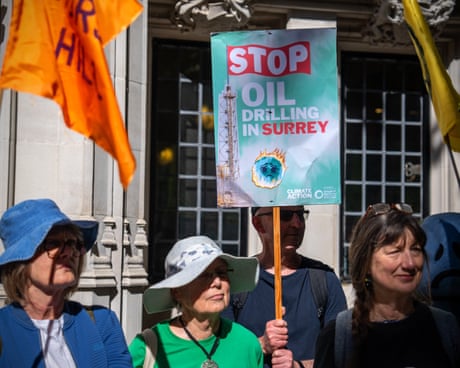
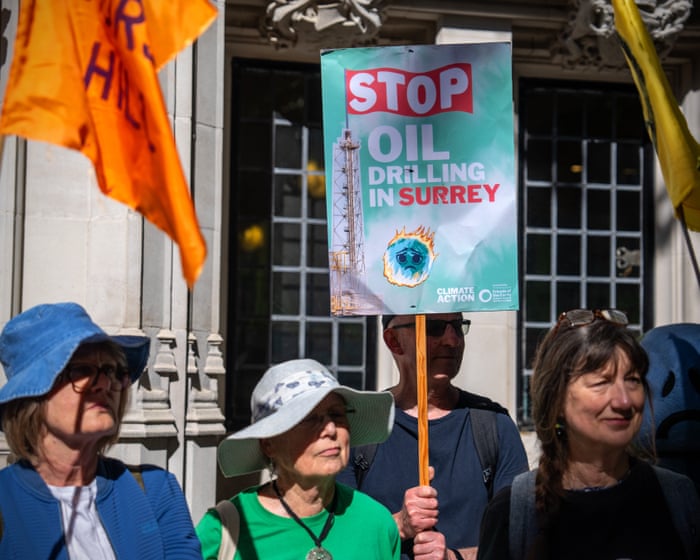
Company behind failed Surrey oilfield project sells site at massive loss

New owners apply for permission to extract oil in Horse Hill despite landmark ruling from supreme court in 2024

After years of trying to dig for oil in Surrey, the company behind the drilling project that was turned down in a landmark supreme court ruling has sold off the site for a fraction of the money it spent on it, and rebranded as a clean energy company.

Meanwhile, the new owners, who picked up the site for £1m, are applying, once again, for permission to dig.

Continue reading...

© Photograph: Carl Court/Getty Images

© Photograph: Carl Court/Getty Images

© Photograph: Carl Court/Getty Images

  •  
❌