❌

Reading view

15,000-Year-Old Stone Tool Experiments Shed Light on Mysterious Ancient Technological Transition

Stanford University scientists say experiments on ancient Chinese stone tools, including 15,000-year-old hand axes, have solved a longstanding mystery about the critical technological transition from rudimentary hand tools to more versatile ground-edged tools, suggesting these new technologies enabled uses beyond food harvesting.

The research team behind the new analysis said the discovery of ground-edged sickles and knives in Neolithic North China, likely used for fiber production and harvesting, combined with their replica-based experiments, highlights the growing technological capabilities of the transition between Paleolithic and Neolithic peoples.

“The combined experimental and archaeological evidence from the site of Peiligang indicates that the emergence of ground-edged tools marked a significant step in technological specialization from the Late Pleistocene to the Early Holocene,” the researchers write in a paper detailing the work.

Mysterious Technological Transition Hidden in 15,000-Year-Old Stone Tools

According to lead author Ran Chen and colleagues, archaeologists widely regard ground-edged cutting tools like the modern sickle as “technological hallmarks of early agriculture in North China.” However, they note, the functional foundations of this advanced toolmaking capability “remain insuf­ficiently tested.”

The research team also noted that most analyses of the transition from the Upper Paleolithic to the Early Neolithic (ca. 15,000–8,000 BP) in ancient China have viewed tools through “the lens of food production.”

“Within this framework, cutting tools, including early flakes and blades and later ground-edged sickles and knives, are often interpreted primarily as implements for harvesting cereals through cutting stems and leaves,” they explained.

The researchers said these earlier findings made them wonder whether this “food-focused perspective” could have led researchers to miss the broader range of plant resource exploitation possibilities in some of the 15,000-year-old stone tools previously discovered, prompting their replica-based experiments.

“The development of stone tool technology in North China provides a framework for reassessing this long-term relationship between plant use and technological change,” they explained.

Experiments Reveal Ground-Edged Tools Were Multifunctional Implements

To test their hypothesis, Chen and colleagues analyzed 140 stone artifacts previously collected from the Peiligang site in Henan Province, China. This included some 15,000-year-old Upper Paleolithic flaked stone tools and several more advanced Early Neolithic flaked and ground-edged stone tools.

Rather than test irreplaceable artifacts, the study authors created realistic experimental replicas.

15000-year-old stone tools mystery
A researcher demonstrates the use of an experimental sickle replica to harvest velvet leaf (Image Credit: Ran Chen).

Testing the effectiveness of the oldest, most rudimentary stone flake designs and the more technologically advanced ground-edged tools for harvesting seed-bearing grasses, the researchers found little measurable advantage between the two designs.

However, when the researchers compared the 15,000-year-old stone flake tools against ground-edged tools made thousands of years later, they found the more technologically advanced tools were “significantly more efficient at cutting thick-stemmed weeds and fiber-yielding plants.”

“Upper Paleolithic flaked tools were multifunctional implements used for processing diverse plant and animal materials, and Early Neolithic flakes continued to serve similarly flexible roles,” the study authors explain. “In contrast, Early Neolithic ground- edged tools show marked specialization in plant- related tasks.”

More Advanced Tools Emerged Through Broader Functional Demands

When discussing the experimental results, the team noted that their findings were supported by microfiber and starch residues found on some of the ancient tools, suggesting that “ground- edged sickles and knives were used not only for plant foods but also for harvesting and processing fibrous plants.”

“These findings indicate that ground- edged cutting tools emerged through broader functional demands, including fiber production, and potentially vegetation clearance, rather than cereal harvesting alone,” they explained.

Beyond the food-harvesting uses of ground-edged tools, Chen and colleagues said their identification of non-food plant labor like fiber production as an important driver of technological evolution and specialization “reframes the emergence of ground- edged tools as part of a broader technological and economic reorganization in early Holocene East Asia.”

“These findings identify nonfood plant work as an important contributor to the adoption of ground-edged cutting tools and show that tools conventionally linked to early agriculture were shaped by broader demands than food production alone,” they explained.

Finally, the study authors suggested that their analysis of 15,000-year-old Chinese stone tools could “invite renewed attention” to ancient fiber-based economies and nonfood plant use during forager–farmer transitions and in early farming societies beyond China.

The study “Plant fiber exploitation contributed to the emergence of ground-edged cutting tools in North China” was published in Proceedings of the National Academy of Sciences. 

Christopher Plain has spent the last six years as Associate News Editor and Head Science Reporter at The Debrief. Follow and connect with him on X, learn about his novels at plainfiction.com, or email him at christopher@thedebrief.org.

  •  

For 15 Years We Knew Denisovans Only From Their DNA. A Chinese Cave Just Gave Them an Arm

In 2019, workers doing routine ecological restoration at a quarry in China’s Yunnan province hit something under the soil: bones and stone tools. Nobody realized at the time that this unassuming hole — known as Bianfu Cave, “bat cave,” after its former residents — would turn out to hold the largest collection of Denisovan remains […]

  •  

4,000 Years Ago, These Ancient Seafarers May Have Brought Symbolic Art to Distant Lands Earlier Than Their First Neolithic Pottery

The ancient Austronesian maritime civilization may have carried painted art on its journeys before developing its first Neolithic pottery, according to new study findings.

The Austronesian culture traveled from Easter Island to Madagascar and Taiwan to New Zealand, demonstrating their skill as advanced seafarers of the ancient world. In a recent paper published in the Proceedings of the National Academy of Sciences, researchers from The Australian National University (ANU) and Indonesia’s National Research and Innovation Agency (BRIN) describe a 4,000-year-old artifact displaying the Austronesian Painting Tradition (APT).

The find was made on Indonesia’s Wetar Island, at the  Huknaur rockshelter, a site known for its prehistoric art, including cave art that has defied conclusive dating attempts.

Austronesian Culture

Roughly 4,200 years ago, the Austronesian people began their journeys across the sea, exploring large portions of their region. Technologically, they developed impressive boats with a focus on stability engineering to master harsh seas and highly efficient sails to travel great distances. Their success in venturing into these regions left them with a reputation as some of history’s greatest seafarers.

The defining feature of these peoples was the shared Austronesian language group, still spoken by some 386 million people across more than 1,200 languages today.

One of the primary methods archaeologists have used to trace how ancient Austronesian culture spread through the region is through traces of pottery. Surprisingly, a painted plaque was found on a preceramic layer, suggesting this intriguing artifact could predate the arrival of ceramic technology in the area, and potentially dates some of the earliest sea voyages to sometime between the Paleolithic and Neolithic eras. 

Ancient seafarer art
A 4,000-year-old painted plaque discovered on Wetar Island, Indonesia, predates the culture’s Neolithic pottery. Credit: Shimona Kealy

Austronesian Painting Tradition

Elements common to the APT art style include geometric designs, small human figures, and the boats for which they are best known. The latest example of this art appears on a stone plaque, covered in a common APT motif: a red concentric circle with radiating sun rays. Archaeologists have found similar pieces in the West Pacific, but this one’s mobility makes it extraordinary.

“This is the first portable example of Austronesian painted art ever found archaeologically,” said lead author Professor Sue O’Connor of ANU. “Portable symbols could travel with people and may have helped communicate shared identities, affiliations and beliefs between island communities. Similar sun-like designs were historically painted on boats and other objects, where they could function as symbols of protection and group identity.”

“This discovery shows that the characteristic sun-ray motif was already part of the APT during the earliest Austronesian expansion into southern Wallacea,” explained co-author Dr Simona Kealy, of the ANU. “These people were extraordinary seafarers, rapidly dispersing across thousands of kilometres of ocean. The Wetar plaque shows that art and shared symbolic traditions were part of this great maritime dispersal from its earliest phases.”

A New Type of Art

Typically, APT work is discovered on rock shelters and cave walls. While interesting, archaeologists are often confounded by the difficulty in properly dating cave wall art. Typically, such paintings are created with inorganic mineral pigments, which cannot be carbon-dated.

Now, with the first portable object ever discovered bearing the APT style, the researchers can date such a piece for the first time. Their precise results place the object during the Austronesian spread throughout maritime Southeast Asia,  sometime between 4,090 and 4,900 years ago.

“This discovery shows that Austronesian pioneers arrived with a compelling ideology represented by the APT paintings, prior to more extended contacts bringing pottery,” said co-author Dr Ceri Shipton of ANU. “People didn’t just carry technologies and possessions when they voyaged to new islands. They carried ideas, identities, and new ways of understanding the world.”

The paper, “4000-Year-Old Painted Plaque from Southeast Indonesia Reveals Austronesian Painting Tradition Preceded Neolithic Pottery,” appeared in Proceedings of the National Academy of Sciences on August 17, 2026.

Ryan Whalen covers science and technology for The Debrief. He holds an MA in History and a Master of Library and Information Science with a certificate in Data Science. He can be contacted at ryan@thedebrief.org.

  •  

A Group of Hunter-Gatherers Survived the Younger Dryas 14,000 Years Ago in a Cave in Northern Türkiye

A team of archaeologists has discovered in northern Turkey a settlement of hunter-gatherers who lived in the Koskarlı cave approximately 14,000 years ago. The remains found during the first excavation campaign, conducted in 2024, confirm that the site was inhabited by human groups during the Epipaleolithic period, a transitional stage between the Upper Paleolithic and […]

  •  

The Neanderthals of a Cave in Northern Spain Were Already Making and Reusing Bone Tools in a Standardized and Planned Way

A team of researchers from the University of Burgos and the Atapuerca Foundation has published the first detailed analysis of the bone retouchers found in the Valdegoba cave, in the municipality of Huérmeces (Burgos). This site, occupied by Neanderthals during the Middle Paleolithic, has yielded 38 bone fragments that were used as tools to retouch […]

  •  

Two 40,000-Year-Old Ivory Bird Figurines Discovered in Hohle Fels Cave, the Smallest Sculptures Found to Date at the Famous Site

Excavations carried out during 2025 in the Hohle Fels cave, located in the UNESCO World Heritage area of the Swabian Jura in southwest Germany, have yielded two new discoveries of extraordinary importance for understanding Paleolithic art. These are two representations of birds carved in mammoth ivory that are 40,000 years old and, due to their […]

  •  

Stone Tools from Armenian Cave Reveal Split Strategy for Survival 50,000 Years Ago

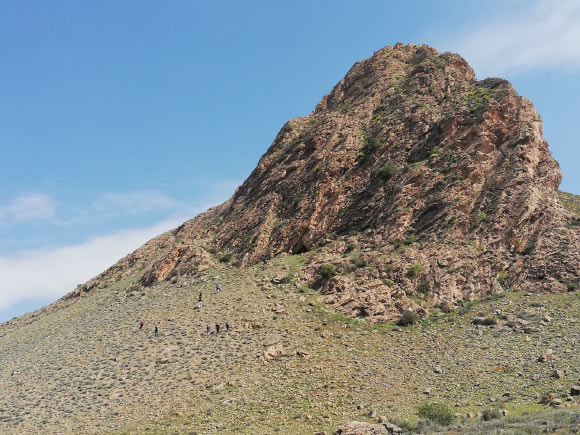
A look at Ararat-1 Cave from the bottom of the Ararat Depression. Image credit: Ariel Malinsky Buller.

Ararat-1, a modest limestone cave that lies at an elevation of 1,034 m on the eastern flanks of the Ararat Depression in central Armenia, has yielded a striking puzzle about how Middle Paleolithic humans moved across their landscape.

The post Stone Tools from Armenian Cave Reveal Split Strategy for Survival 50,000 Years Ago appeared first on Sci.News: Breaking Science News.

  •  

Ancient Turkish Cave Reveals Neanderthals and Homo sapiens Shared Same Way of Life

A group of Neanderthals in a cave. Image credit: Tyler B. Tretsven.

Üçağızlı II Cave on Türkiye’s Mediterranean coast has yielded a rare and detailed record of two Homo species living the same way of life, one after the other, over more than 20,000 years, offering new evidence that the transition from Neanderthals to modern humans in the region was far more culturally seamless than previously understood.

The post Ancient Turkish Cave Reveals Neanderthals and Homo sapiens Shared Same Way of Life appeared first on Sci.News: Breaking Science News.

  •  

Spanish Cave Sanctuary Reveals More Than 11,500 Years of Activity

Sala Keimada, a chamber of Cueva Palomera in Burgos, Spain. Image credit: Ortega-Martínez et al., doi: 10.1016/j.jasrep.2026.105818.

New radiocarbon dates from Sala Keimada, a hard-to-reach chamber of Cueva Palomera in the province of Burgos, northern Spain, suggest that generations of people returned to the sacred space from the end of the Ice Age through the Iron Age, leaving behind art, structures and offerings.

The post Spanish Cave Sanctuary Reveals More Than 11,500 Years of Activity appeared first on Sci.News: Breaking Science News.

  •  

Acheulean Toolmakers Chose Their Stone with Surprising Precision

A reconstruction of Homo longi in his habitat. Image credit: Chuang Zhao.

Geochemical analysis of 780,000-year-old stone tools from Israel suggests Acheulean (or Acheulian) hominins repeatedly sought specific basalt sources, revealing sophisticated planning and deep knowledge of their landscape.

The post Acheulean Toolmakers Chose Their Stone with Surprising Precision appeared first on Sci.News: Breaking Science News.

  •  

If I had a hammer... it might actually be a rhino tooth

One way archaeologists learn how ancient people, including Neanderthals, did things is to attempt to do those things themselves, a process called experimental archaeology. Normally, that involves making stone tools, butchering deer, or distilling birch tar. But in a new study, it meant doing very destructive things to teeth from one of the world’s most carefully protected animals.

That's because the archeologists suspected that Neanderthals once used rhino teeth as tools. By using the teeth to make stone tools, the researchers demonstrated that Neanderthals probably did the same thing, adding to what we know about the wide range of items in their toolkits.

We need to hit some rhino teeth with rocks for science

Some Neanderthal archaeological sites in Europe and Asia seem to have many more rhinoceros teeth lying around than you’d expect. We know Neanderthals hunted a now-extinct species of rhinoceros in Europe and eastern Asia, but the people who had inhabited these sites looked like they had been collecting rhino teeth for some reason.

Read full article

Comments

© By Bernard DUPONT from FRANCE - White Rhino Skull, CC BY-SA 2.0, https://commons.wikimedia.org/w/index.php?curid=55453022

  •  
❌