❌

Reading view

India Escalates Inquiry Into Apple Over Reported iOS 18 Repair Costs

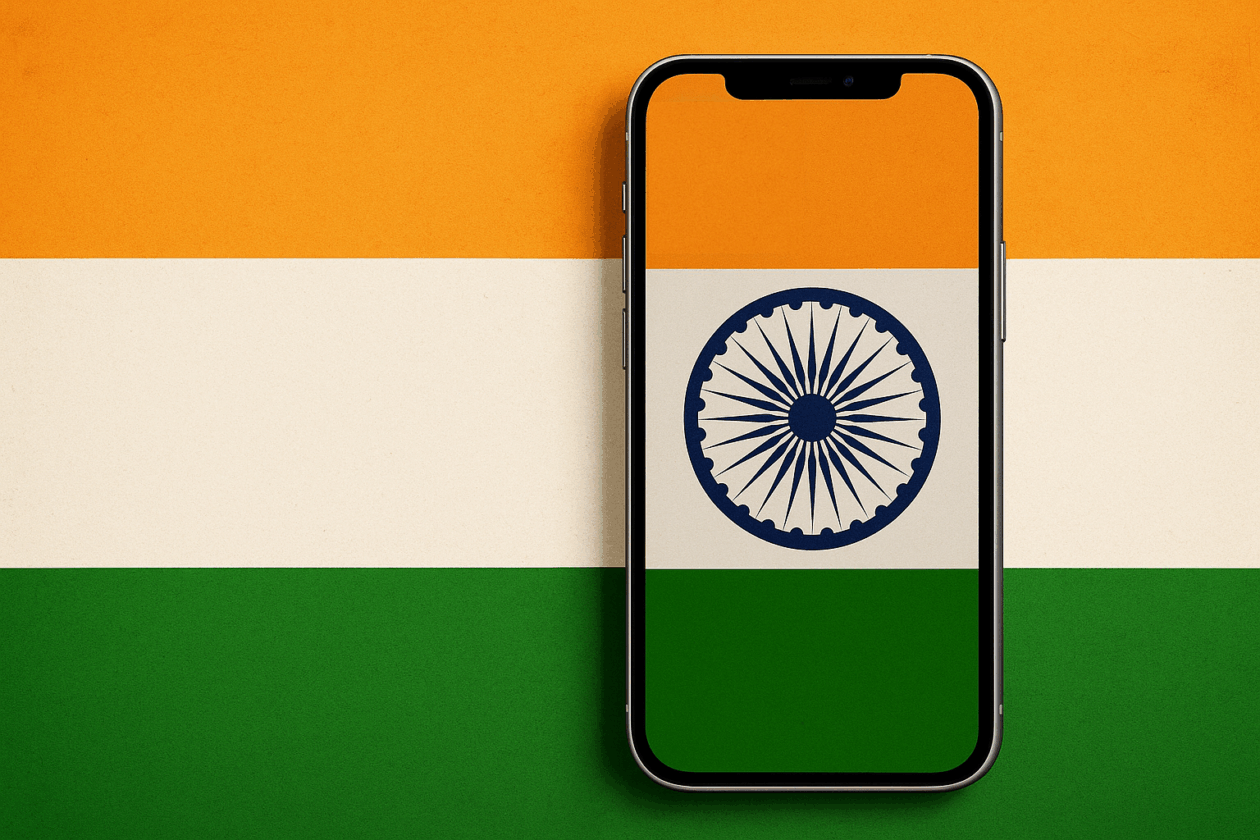
India’s Central Consumer Protection Authority has escalated an inquiry into complaints that an iOS 18 update caused display and microphone problems that led some iPhone owners to pay for repairs, according to Reuters. The reported escalation follows an earlier stage in which the regulator sought Apple’s response to the complaints. Reuters said the investigation is […]

The post India Escalates Inquiry Into Apple Over Reported iOS 18 Repair Costs appeared first on The Mac Observer.

  •  

Apple é investigada na Índia por defeitos supostamente causados pelo iOS 18

A Autoridade Central de Proteção ao Consumidor (CCPA, na sigla em inglês) da Índia está intensificando uma investigação contra a Apple envolvendo o lançamento do iOS 18, que teria causado problemas nas telas e nos microfones de iPhones — forçando, assim, consumidores do país a pagar quantias “exorbitantes” por reparos.

Segundo informações da Reuters, esse mais novo desdobramento é uma continuação de uma investigação iniciada ainda em 2024, quando o órgão regulador recebeu um grande número de reclamações relacionadas a essa atualização de software.

De acordo com alguns desses relatos, os problemas se manifestaram na forma de linhas verdes, rosas e brancas nas telas dos aparelhos — no caso do iPhone 15 (um dos modelos mais populares na época) podem custar cerca de ₹27.900 (algo em torno de R$1.500) para serem substituídas. Como updates do iOS não vêm com garantia, a Apple teria se recusado a arcar com os custos desses reparos.

O CCPA entrou em contato com a Apple em 29 de julho deste ano para informá-la que havia elevado o caso a uma “investigação detalhada” sobre o tema, citando uma possível “violação dos direitos dos consumidores”. A Apple, por sua vez, respondeu ao argumentar que softwares virem sem garantia trata-se de um “padrão global da indústria”, além de ter insistido que o iOS 18 não possuía problemas sistêmicos.

Em sua carta, a Maçã também destacou que a investigação se baseia em “apenas” 75 reclamações e disse que usuários foram lembrados nos termos de uso do seu software que ele vem “sem garantia de qualquer tipo”, bem como precisariam arcar com os custos de reparo caso haja algum problema com o software. “Exigir que cada problema seja tratado como uma violação de garantia absoluta transformaria efetivamente qualquer fornecedor de software em uma seguradora contra todos os riscos tecnológicos”, concluiu.

Em contrapartida, o CCPA disse que “cobrar dos consumidores por problemas decorrentes da própria negligência da empresa viola o princípio do comércio justo”.

Aguardemos os próximos desdobramentos.

via AppleInsider

  •  

Indian watchdog escalates Apple probe over iOS 18 warranty terms

Indian watchdog escalates Apple probe over iOS 18 warranty terms

India’s consumer regulator has intensified its investigation into Apple’s software warranty practices after complaints that the iOS 18 update damaged iPhone screens and other functions, leaving users to pay steep repair bills, according to Reuters’ Aditya Kalra.

The Central Consumer Protection Authority (CCPA) told Apple in late July that it had “escalated” the matter for a detailed inquiry by its investigation wing. The case follows a large volume of complaints that the late-2024 iOS 18 rollout caused display problems — including green, pink or white lines on screens — and microphone failures. Because Apple’s software licence agreements state that iOS is provided “without warranty of any kind,” customers say they were forced to pay for repairs themselves.The estimated cost to replace a damaged iPhone 15 screen is about 27,900 rupees ($291), more than a third of the device’s retail price in some cases. The regulator has accused Apple of violating the rights of “consumers as a class” and of charging customers for problems that allegedly stemmed from the company’s own software update.

Apple has pushed back. In an August letter and a public statement, the company said it found no systemic issues or safety concerns with iOS 18 in India, that the software underwent stringent testing, and that the CCPA case rests on a relatively small number of complaints. Apple also noted that only about 11% of iPhones in India were still running iOS 18 by June 2026. It argued that a “no warranty” clause for software is standard across the electronics industry and that users are informed of the terms before installation. Treating every software problem as a breach of an absolute warranty, Apple said, would turn software makers into insurers against all technological risk.

The dispute comes as Apple rapidly expands manufacturing and market share in India, where iPhone sales rose to a 9% share last year from 4% in 2022, according to Counterpoint Research. It also adds to existing regulatory pressure on the company in the country, including antitrust scrutiny.

If the CCPA ultimately finds violations, Apple could face fines and, more consequentially, orders to issue refunds or alter its warranty and disclosure practices. New Delhi-based consumer-law specialist Kirti Mahapatra said investigators can demand documents and hold hearings. The authority can require clearer information for customers and, in theory, changes to contractual terms—though she described the latter as unprecedented.

Apple said it would work with authorities to provide clarity on customer response to the software. The CCPA did not immediately comment.The outcome could set a notable precedent for how software updates and warranty disclaimers are treated under Indian consumer law.
‎
MacDailyNews Take:


‎
Please help support MacDailyNews — and enjoy subscriber-only articles, comments, chat, and more — by subscribing to our Substack: macdailynews.substack.com. Thank you!

Support MacDailyNews at no extra cost to you by using this link to shop at Amazon.

The post Indian watchdog escalates Apple probe over iOS 18 warranty terms appeared first on MacDailyNews.

  •  

Apple India Publishes a ₹15,000 Cashback Ceiling, and It Is Not ₹15,000 Off an iPhone 18 Pro

Apple India’s Ways to Buy page advertises instant cashback of up to ₹15,000 on eligible cards. That is a store-wide ceiling across everything Apple India sells, and the figure recorded for the iPhone 18 Pro launch offer specifically is up to ₹7,000. The distinction is worth getting right before Saturday, because the two numbers sit […]

The post Apple India Publishes a ₹15,000 Cashback Ceiling, and It Is Not ₹15,000 Off an iPhone 18 Pro appeared first on The Mac Observer.

  •  

Will Siri AI Speak Hindi? What Apple Has Published for India

Apple has published no timeline for Siri AI in Hindi, and no timeline for Apple Intelligence in Hindi either. Hindi is not among the 16 languages Apple lists, and the one dated expansion Apple has announced covers French, Japanese, Korean, Portuguese and Spanish in October. That is the honest answer to a question a very […]

The post Will Siri AI Speak Hindi? What Apple Has Published for India appeared first on The Mac Observer.

  •  

iPhone 18 Pro Exchange Offer in India: How Much Apple Says You Can Save

Apple India publishes exactly one number for its exchange offer, and it is a ceiling rather than a quote: “Save up to ₹62,000.00 when you exchange your eligible smartphone.” Apple does not publish a per-model table anywhere on its Indian site, so the specific answer to what your own phone is worth is not a […]

The post iPhone 18 Pro Exchange Offer in India: How Much Apple Says You Can Save appeared first on The Mac Observer.

  •  

Barclays faces complaint over backing for power plant near world’s largest mangrove forest

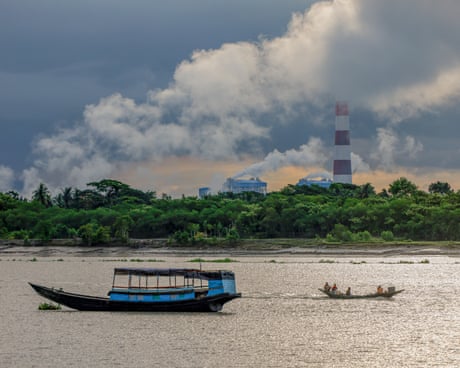
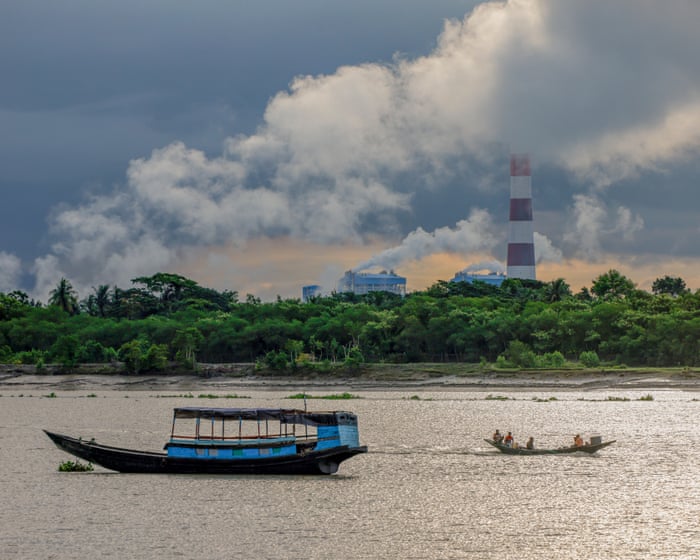
Bangladeshi complainants allege Rampal power station’s pollution and climate risks threaten the Sunderbans, a world heritage site

Barclays Bank is facing a formal complaint over its financial links to a coal-fired power station near the Sundarbans, the world’s largest mangrove forest and home to millions of people in Bangladesh and India.

Three complainants from the region have submitted a case to the UK government’s Office for Responsible Business Conduct, alleging that the British bank breached international guidelines by underwriting companies involved in the emission-heavy Maitree super thermal power project, also known as the Rampal power plant.

Continue reading...

© Photograph: NurPhoto/Getty Images

© Photograph: NurPhoto/Getty Images

© Photograph: NurPhoto/Getty Images

  •  

3.5-Billion-Year-Old Organic Chert Reveals One of Earth’s “Earliest Known Occurrences of Biologically Generated Organic Matter”

Indian scientists searching for clues to the oldest signs of life on Earth have discovered evidence of organic matter in a 3.5-billion-year-old sample of Paleoarchean volcanic–hydrothermal chert.

If confirmed, the team said the ancient chert would represent one of the oldest signs of life emerging on Earth, less than a billion years after the planet’s formation.

Searching for the Oldest Signs of Life on Earth

According to a press release announcing the discovery, some of the earliest known traces of life on Earth have typically been preserved as carbonaceous matter. Although many have been discovered in marine and hydrothermal vents, others have been unearthed in black cherts and volcanic-sedimentary rock formations.

“Kerogen, insoluble organic matter preserved in sediments, represents some of the earliest known terrestrial biosignatures which have provided important insights into the origin of life and planetary habitability,” the researchers write.

However, they also note, directly dating these ancient materials is often complicated by a lack of “suitable geochronometers.” Instead, dating ancient cherts and other early traces of life on Earth has relied on indirect constraints from surrounding materials. These include dating the ages of cross-cutting lithologies.

Ancient Organic Material Dated to 3.497 Billion Years Ago

To date, the newly discovered 3.5-billion-year-old chert, T. Mark Harrison, Trisrota Chaudhuri, and colleagues examined samples of “banded” cherts collected from the Singhbhum Craton in eastern India. Under microscopic analysis, the team found that the cherts contained “submillimeter-scale layers” alternating between carbonaceous matter and quartz-rich sedimentary material.

“The chert exhibits micron-scale alternating layers of carbonaceous and siliceous materials,” the study authors explained.

life on earth

Outcrop photo showing dark carbonaceous bands in chert. Image Credit: Trisrota Chaudhuri.

To date the material, the team analyzed a specific combination of zircon grain characteristics. This analysis indicated that the grains were “emplaced” as part of a ‘tuff.’ The team said a tuff is a volcanic ashfall “that settled on the sediments at the time of their deposition.”

Next, they tested the lead isotopes found within the zircon crystals. The team said this analysis of the material in the banded cherts suggested the organic cherts formed about 3.497 billion years ago. This date places them in the Paleoarchean Eon.

“Here, we report a 3.5-billion-year-old carbonaceous chert from eastern India containing what are interpreted to be contemporaneous tuffaceous zircons,” they write.

The team said the carbon isotope analysis yielded a value “consistent with a biological origin of relatively sophisticated metabolism.”

“Isotope data of carbonaceous matter (CM) together with stratigraphic relationships indicate a biogenic origin of the kerogen, marking this, to our knowledge, as the oldest directly dated rock with a confirmed biosignature,” they write.

Among the Earliest Known Occurrences of Biologically Generated Organic Matter

When discussing the significance of the findings, the team said the ancient Indian cherts “count among the earliest known occurrences of biologically generated organic matter.”

The research team also noted that the findings suggest Archaean-age cherts “may contain records of early life and further suggest that key biological processes were active on Earth by around 3.5 billion years ago.”

The study “Direct dating of 3.5 Ga biogenic carbon in a microbial mat remnant, Singhbhum Craton, India,” by Trisrota Chaudhuri et al. was published in the Proceedings of the National Academy of Sciences.

Christopher Plain is a Science Fiction and Fantasy novelist and has spent the last six years as Associate News Editor and Head Science Writer at The Debrief. Follow and connect with him on X, learn about his books at plainfiction.com, or email him at christopher@thedebrief.org

  •  

Apple Pay to Launch in India by October

Apple Pay will launch in India by this October, reports Business Standard, citing people familiar with the matter. Apple Pay will support major credit card networks like Visa and Mastercard, but it won't support transactions via the country's Unified Payments Interface (UPI) at launch.

Apple would need clearance from the National Payments Corporation of India (NPCI) for that to happen, plus it would need to partner with a sponsor bank for routing the transactions. Negotiations are said to be ongoing.

Bloomberg reported in February that Apple has been in talks with major Indian banks in a bid to get Apple Pay up and running in the country this year.
Related Roundup: Apple Pay

This article, "Apple Pay to Launch in India by October" first appeared on MacRumors.com

Discuss this article in our forums

  •  

Apple expands retail footprint and financing options to capture surging iPhone demand in India

Apple logo

Apple is intensifying efforts to convert India’s growing appetite for premium smartphones into higher sales by opening more retail stores and offering expanded financing deals, while simultaneously scaling up local manufacturing.

The company has built a network of Apple Stores across key cities including Mumbai, Delhi, Bengaluru, Pune, and Noida, giving customers direct access to products and services in a market long dominated by multi-brand retailers and online platforms. These physical locations allow Apple to showcase the latest iPhone models and provide hands-on experiences that help drive upgrades and first-time purchases.

To address India’s price-sensitive consumers, Apple has broadened financing partnerships. Shoppers can access no-cost EMI options for several months through major banks, instant cashback offers of up to ₹15,000 on select cards, and trade-in programs that reduce the effective cost of new devices, Bloomberg News reports. These tools lower the barrier to entry for devices that often carry higher list prices in India than in the US due to taxes and other factors.

The push comes as Apple’s India business reaches new milestones. Annual sales surpassed $10 billion for the first time in the fiscal year ended March 2026, up from about $9 billion the prior year, with iPhones accounting for the majority of revenue. Market share has expanded significantly: iPhones now represent around 10% of smartphone shipments in some recent periods, a sharp rise from roughly 1.5% a decade earlier—and the company continues to post double-digit growth even amid broader industry softness.

Manufacturing growth underpins both supply reliability and the “Made in India” appeal. Apple now assembles about a quarter of its global iPhones in the country, producing roughly 55 million units in 2025. For the first time, the full iPhone 17 lineup (including base, Plus, Pro, and Pro Max variants, plus related models) was manufactured locally from launch. Contract manufacturers such as Foxconn and Tata Electronics operate large facilities near Chennai and Bengaluru, supporting hundreds of thousands of jobs and a deepening local supplier base of more than 40 companies making components ranging from batteries to enclosures.

This dual focus on demand-side accessibility and supply-side localization positions India as both a major growth market and a strategic hedge against reliance on China. CEO Tim Cook has repeatedly highlighted the country’s potential, noting strong uptake among first-time Apple customers across iPhones, Macs, and iPads. Analysts point to premiumization trends, improved inventory management, and these retail and financing initiatives as key drivers of the shift from niche status to mainstream relevance.
‎
MacDailyNews Take: While challenges remain (including competition in the mid-premium segment, currency fluctuations, and the need for continued policy support after the original production-linked incentive scheme ended) Apple’s investments signal confidence that Indian consumer desire for iPhones will sustain long-term expansion.


‎
Please help support MacDailyNews — and enjoy subscriber-only articles, comments, chat, and more — by subscribing to our Substack: macdailynews.substack.com. Thank you!

Support MacDailyNews at no extra cost to you by using this link to shop at Amazon.

The post Apple expands retail footprint and financing options to capture surging iPhone demand in India appeared first on MacDailyNews.

  •  

How Apple and India built an alternative iPhone production hub

Apple logo

A yearslong partnership between Indian policymakers and electronics manufacturers has shifted supply chains away from China, according to Bloomberg News.

Each day, more than 150 white buses fan out on the black tar roads that run through the outskirts of the Indian city of Chennai, ferrying workers to a factory run by the Taiwanese manufacturing giant Hon Hai Precision Industry Co., better known as Foxconn. Although calling the facility a factory doesn’t quite do it justice. It’s a 160-acre fortress lined with assembly shop floors, testing and storage rooms, nine hostel towers, huge parking bays, and a power station. Roughly 40,000 employees work through three shifts, under the strict watch of almost 700 security guards, making iPhones.

About 30 kilometers (19 miles) away stands another iPhone assembly facility, this one run by Pegatron Corp., now controlled by the Tata Group. There, about 10,000 people, most of them women, work in an equally disciplined environment.

The development forms part of Apple’s broader effort to build production capacity in India as a hedge against risks concentrated in China, Bloomberg News reports in its August 5, 2026, feature.

MacDailyNews Take: Clearly, it’s very important for Apple to not have all of their eggs in one basket – especially one owned by the CCP. The sky’s the limit for Apple in India!


‎
Please help support MacDailyNews — and enjoy subscriber-only articles, comments, chat, and more — by subscribing to our Substack: macdailynews.substack.com. Thank you!

Support MacDailyNews at no extra cost to you by using this link to shop at Amazon.

The post How Apple and India built an alternative iPhone production hub appeared first on MacDailyNews.

  •  

Apple’s India sales top $10 billion on widening retail push

Apple BKC, Mumbai, India

Apple exceeded $10 billion in annual sales in India for the first time last fiscal year, underscoring surging demand for its pricey devices in a market where it’s steadily ramping up its retail network.

Revenue grew at a double-digit percentage rate in the 12 months through March from about $9 billion a year earlier, Bloomberg News reports citing a person familiar with the matter, who asked not to be identified as the information is private.

Apple’s iPhone lineup accounted for a significant majority of the sales, while demand for iPads and MacBooks also rose, the person said.

The milestone highlights Apple’s expanding presence in India through a broader retail network.
‎
MacDailyNews Take: As we wrote four years ago, “The sky’s the limit for Apple in India!”


‎
Please help support MacDailyNews — and enjoy subscriber-only articles, comments, chat, and more — by subscribing to our Substack: macdailynews.substack.com. Thank you!

Support MacDailyNews at no extra cost to you by using this link to shop at Amazon.

The post Apple’s India sales top $10 billion on widening retail push appeared first on MacDailyNews.

  •  

India proposes extending tax breaks for contract manufacturing until 2041, delivering boost to Apple

Apple logo

India has proposed extending tax exemptions until 2041 for foreign companies that provide machinery to contract manufacturers, handing a major win to Apple which had lobbied for such changes, and is fast expanding in the market.

India has been a key market for Apple as it diversifies iPhone manufacturing beyond China, and the South Asian nation is set to make 26% of the world’s iPhones in 2026, up from 6% four years ago, according to Counterpoint Research.

According to a draft of the proposed tax amendments seen by Reuters, “to provide (tax) certainty” the government has extended tax breaks until March 31, 2041 to foreign companies that provide equipment to their contract manufacturers in India.

India introduced the tax exemption for foreign companies in February, valid only until 2031, after Apple lobbied the Indian government to modify its income tax laws to ensure the company is not taxed for ownership of the high-end iPhone machinery it provides to its contract manufacturers.

Apple had feared that, unlike in China, tax laws in India could treat ownership of machinery supplied to its contract manufacturers as so-called “business connection,” exposing its iPhone profits to tax.

Tax Break for Storing Components

The extended tax exemption will apply to manufacturers of mobile phones, tablets, laptops, hearing, and wearable electronic devices, according to the draft bill that will have to be passed by the lower and upper houses of parliament.

India has also exempted from tax foreign companies’ income from storing and providing parts used to manufacture such electronics components to contract manufacturers until 2041.

The rule will apply for factories and warehouses set up in so-called customs-bonded areas — which are technically considered being outside India’s customs border. If devices are sold within India from such factories, they will attract import taxes, making such facilities attractive only for exports.

“The proposed tax changes will enable foreign companies to store and transfer critical equipment and components in India for their contract manufacturers, helping mitigate supply chain disruptions arising from trade uncertainties while providing greater tax certainty,” Riaz Thingna, a partner at Grant Thornton Bharat, told Reuters

Data Centers

India has also proposed to make it easier for foreign companies that use data center services in the country to make use of tax exemptions.

India in February announced a tax exemption until 2047 for foreign companies using data centers in the country to provide services to global clients, addressing concerns that New Delhi could in future tax their global income for using such facilities.

The bill now allows data centers to be leased, rather than be owned by the Indian partners of foreign companies.

Allowing Indian partners to lease, rather than own, data centers will lower capital requirements and make it easier for smaller and mid-sized players to enter the market, said Thingna.

MacDailyNews Take: May India convert these proposals into law ASAP!


‎
Please help support MacDailyNews — and enjoy subscriber-only articles, comments, chat, and more — by subscribing to our Substack: macdailynews.substack.com. Thank you!

Support MacDailyNews at no extra cost to you by using this link to shop at Amazon.

The post India proposes extending tax breaks for contract manufacturing until 2041, delivering boost to Apple appeared first on MacDailyNews.

  •  

Rocket Report: Lightning strikes in China; Starship launch on deck

Welcome to Edition 9.04 of the Rocket Report! We've had to wait an extra week for SpaceX to get its 13th Starship test flight off the ground. A last-second abort on July 16 led engineers to roll the booster back to its hangar in South Texas to swap out engines. Starship is now back on the launch pad. Liftoff is set for Friday evening. A flawless launch and reentry will put SpaceX on the cusp of an orbital flight later this year. Ars will have a comprehensive recap story after the completion of the test flight.

As always, we welcome reader submissions. If you don't want to miss an issue, please subscribe using the box below (the form will not appear on AMP-enabled versions of the site). Each report will include information on small-, medium-, and heavy-lift rockets, as well as a quick look ahead at the next three launches on the calendar.

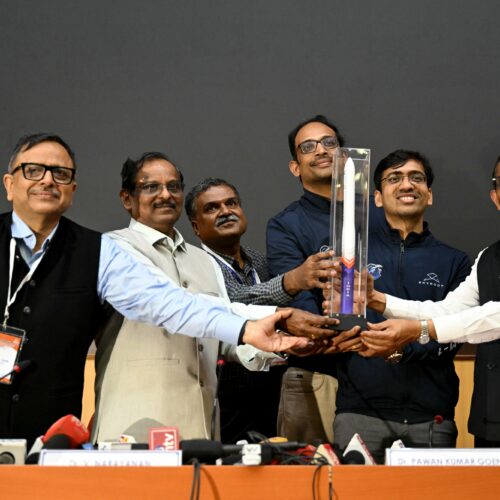
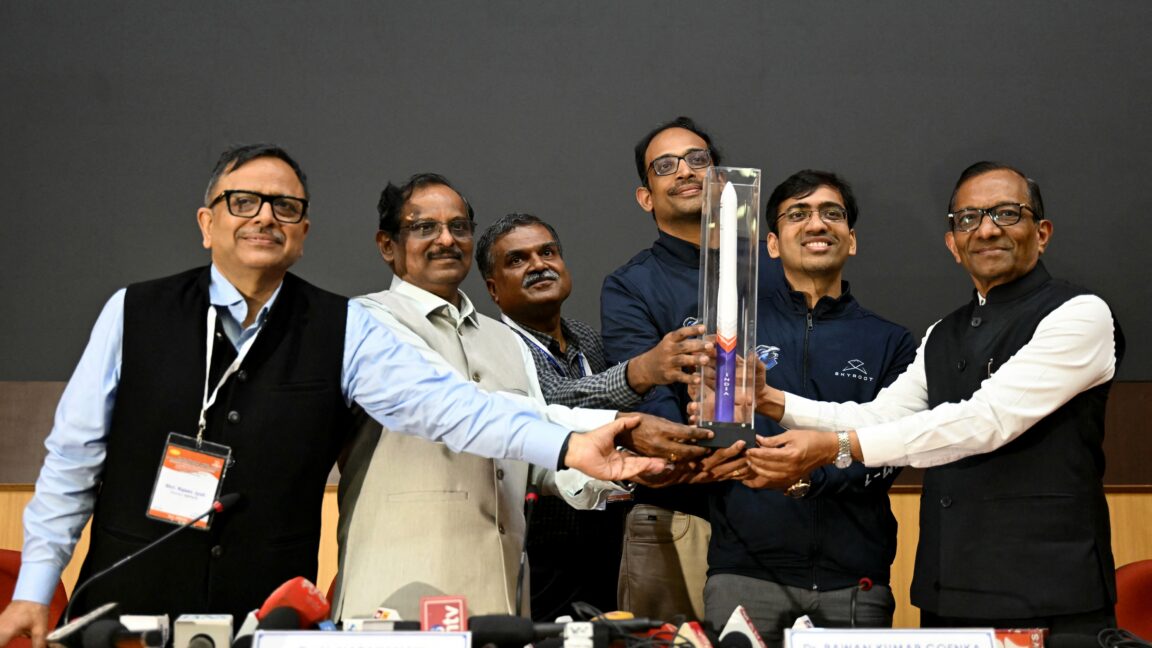
India's first private rocket reaches orbit. Indian space officials celebrated the debut flight of Skyroot Aerospace’s Vikram-1 rocket, India’s first fully commercial satellite launcher, as a “grand success” Saturday after an on-target climb into a 280-mile-high orbit following liftoff from an island spaceport in the Bay of Bengal, Ars reports. The Vikram-1 lifted off from India’s primary spaceport on Sriharikota Island around midday local time. The launch was delayed more than a half-hour to resolve a last-minute technical problem. The countdown resumed, culminating in the command to ignite Vikram-1’s solid-fueled first stage booster to propel the rocket off the launch pad.

Read full article

Comments

© Zhou Quan/VCG via Getty Images

  •  

Small Sauropod Dinosaur from Jurassic Period Discovered in India

Life reconstruction of Ceratocaudia antiqua, the earliest-known macronarian neosauropod species from India. Image credit: Connor Ashbridge / CC BY 4.0.

Paleontologists in India have unearthed a partial skeleton of a diminutive, previously unknown neosauropod dinosaur from the Middle Jurassic rocks of Gujarat’s Kachchh Basin.

The post Small Sauropod Dinosaur from Jurassic Period Discovered in India appeared first on Sci.News: Breaking Science News.

  •  

India's first privately developed rocket reaches orbit on dramatic debut launch

Indian space officials celebrated the debut flight of Skyroot Aerospace's Vikram-1 rocket, India's first fully commercial satellite launcher, as a "grand success" Saturday after an on-target climb into a 280-mile-high orbit following liftoff from an island spaceport in the Bay of Bengal.

The Vikram-1 lifted off from India's primary spaceport on Sriharikota Island at 1:35 am EDT (06:35 UTC) Saturday, around midday at the launch base along India's southeast coast. The launch was delayed more than a half-hour to resolve a last-minute technical problem. The countdown resumed, culminating in the command to ignite Vikram-1's solid-fueled first stage booster to propel the rocket off the launch pad.

Vikram-1 is modest in size compared to India's larger workhorse rockets. Skyroot's rocket stands about 72 feet (22 meters) tall, with the capability to place payloads of up to 770 pounds (350 kilograms) into low-Earth orbit. This makes Vikram-1 somewhat larger than the Electron launch vehicle developed by Rocket Lab, the world's most successful dedicated small satellite launcher.

Read full article

Comments

© R. Satish Babu/AFP via Getty Images

  •  
❌