❌

Reading view

McDonald's Halo McNuggets are dry, disappointing, and break game lore

I've probably eaten my entire body weight in chicken nuggets over the course of my life. I'm in my late 30s, so that's a lot of meals to hit that milestone, but I can confidently say that I'm a nugget expert. I've eaten 20-piece boxes since they were limited-time promotions during the summers of my childhood.

It should come as no surprise that I had to try the Halo-inspired Moa McNuggets that are currently available. I'm pretty sure this article makes the order a business expense.

I've reviewed my fair share of Xbox-related fast food items. To this day, Nether Flame Sauce is the best sauce I've ever had from McDonald's. I even reviewed an Xbox doughnut once.

So, how does the latest gaming Xbox-themed snack stack up? I'm sorry to say that the black pepper and garlic nuggets are not my favorite. They're made consistently and I'm sure there are people who like them, including our Richard Devine. But I found there to be too much pepper in each nugget.

A McDonald's black pepper and garlic chicken nugget dipped into a tub of red World of Warcraft buffalo sauce.

The Moa McNuggets are not meant to pair with the Warcraft-inspired buffalo sauce. (Image credit: Future)

The nuggets also felt dryer than standard McNuggets, which surprised me. I ordered them on two different days to see if it was a fluke, but the additional ingredients in the breading dry things out in my experience.

You may be tempted to dip the Moa McNuggets in the Dragon Breath Fiery Buffalo Dip inspired by Azeroth from World of Warcraft, but I'd recommend against it. That buffalo dip is meant to pair with Chicken Selects. Combining it with black pepper and garlic crowds the mouth. The sauce on its own is fine, albeit hotter and more vinegar-filled than Nether sauce.

I wasn't a fan of the Blamco Cheesy Potato Bites either, though basing a food item on a post-apocalyptic game isn't the best idea anyway.

Shifting back to the McNuggets you all are so eager to read about, the black pepper and garlic nuggets have an interesting history that connects them to Japan.

Blank Pixel

Reusing gaming assets

McDonald's Xbox Side Missions meal on a wooden table, featuring Halo Moa McNuggets, Fallout Blamco bites, and WoW dip.

Black pepper and garlic nuggets have appeared at McDonald's before under a different promotion. (Image credit: Future)

I found it interesting that the Moa nuggets are not new, just a rebrand. McDonald's in the UK sold the same recipe last year as part of the World Heist menu. Black pepper and garlic nuggets were first sold at McDonald's in Japan and proved popular.

So, why did McDonald's reuse its Japanese McNuggets as part of its Halo promotion? That's hard to say. According to Halo Waypoint, "the taste of Moa meat is barely distinguishable from beef." People joke that everything tastes like chicken, but it seems odd that McDonald's wouldn't make its Moa product from beef.

While I have questions about Moa meat and the lore accuracy of the latest nuggets, there is some consistency when it comes to flavors to pair with the fictional food. The Pringles Wavy Moa Burger crisps that came out in 2021 featured garlic. They also had pepper, though chili and red rather than black. Those crisps (or chips to my American audience) were also supposed to taste like beef, so I still think McDonald's is on thin ice trying to promote chicken as Moa meat.

Click to join us on r/WindowsCentral

Join us on Reddit at r/WindowsCentral to share your insights and discuss our latest news, reviews, and more.

  •  

Halo Studios is the latest Xbox Games Studio to be hit by layoffs just days after Campaign Evolved launch, as reports reveal "troubled" development

Halo: Campaign Evolved launched just days ago, and it appears Microsoft is moving quickly to make cuts at Halo Studios now that the game is out. A number of developers who were previously employed at Halo Studios have posted on LinkedIn today confirming that some roles have been laid off. (via Insider Gaming)

Halo Studios producer Nick Treitman confirmed that he was impacted by the layoffs, stating that "after 6.5 years working on Halo and dodging just as many rounds of layoffs - it has finally caught up to me. I have nothing but love for Halo and the folks at the studio, this is just a tough reality in the gaming industry right now."

DEAL: Get Surfshark VPN 86% OFF with Windows Central 🦈

Paul Morris, listed as Scrum Master at Halo Studios, also confirmed that his role had been impacted by layoffs this week. "Today, I learned my time at Halo Studios will be coming to an end following the successful launch of our latest game, Halo: Campaign Evolved. I know this is one of the most challenging job markets our industry has seen, and I know the road ahead won’t be easy."

A number of other Halo Studio employees have updated their LinkedIn pages confirming that they are now available for work. The layoffs come as new reports claim Halo: Campaign Evolved's development was troubled throughout, taking up more resources than originally planned and causing other projects such as a Halo multiplayer game to be canceled.

Halo Studios had confirmed plans to use Unreal Engine 5 in future Halo titles to help streamline development and make building Halo games faster. But for the Halo remake, it chose to use a modified version of the Halo: Reach engine known as Blam, but with Unreal Engine 5 graphics and assets on top.

Unfortunately for the studio, this led to development being more complex, with third-party studio Abstraction struggling to meet deadlines imposed by Halo Studios and being ultimately kicked off the project, forcing Halo Studios to scrap much of the work done by Abstraction and rebuild assets in the Blam engine instead.

If this story sounds familiar, that's because it closely mirrors the development of Halo: Infinite. That game also suffered from a troubled development cycle, with contractors struggling to meet deadlines and work in the Slipspace Engine (which was just the Blam engine with a new name.)

Now, with layoffs impacting Halo Studios, it's clear that Microsoft is moving forward with its confirmed 3,200 layoffs, 1,600 of which were already made back in July.

Click to join us on r/WindowsCentral

Join us on Reddit at r/WindowsCentral to share your insights and discuss our latest news, reviews, and more.

  •  

Our Milky Way Galaxy Likely Underwent Disk Flip after Ancient Galactic Collision: Study

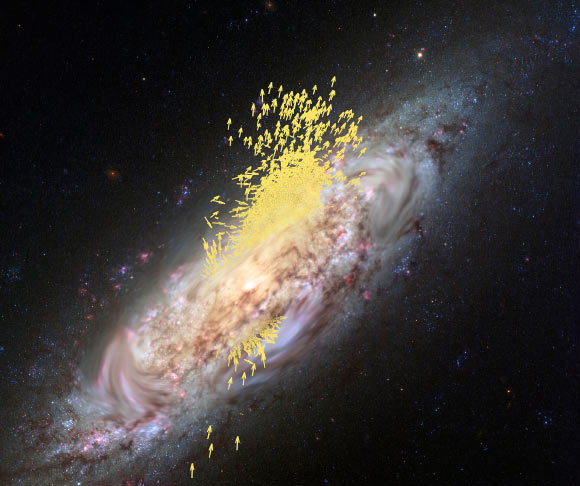
Using supercomputer simulations of galaxies like the Milky Way, Batrakov et al. found that galaxies with slowly rotating stellar haloes are more likely to have experienced a major ‘disk flip,’ where our Galaxy’s disk changed its orientation by more than 90 degrees. Image credit: Batrakov et al.

A head-on collision with another galaxy billions of years ago may have dramatically reoriented the Milky Way’s disk, according to new supercomputer simulations that reveal how violent mergers can leave spiral galaxies looking surprisingly normal today.

The post Our Milky Way Galaxy Likely Underwent Disk Flip after Ancient Galactic Collision: Study appeared first on Sci.News: Breaking Science News.

  •  
  •  

NASA asks Northrop Grumman to stop working on lunar HALO module

Three months ago, during a flashy event at its Washington, DC, headquarters, NASA announced that it was shifting the focus of its lunar plans from an orbital space station to a Moon base on the surface.

As part of this, officials said work would be paused on the Lunar Gateway planned to orbit the Moon. Of the two elements that were furthest along, NASA also revealed that one of them—the  Power and Propulsion Element—would be repurposed to serve as a core module for a nuclear-electric propulsion demonstration in deep space.

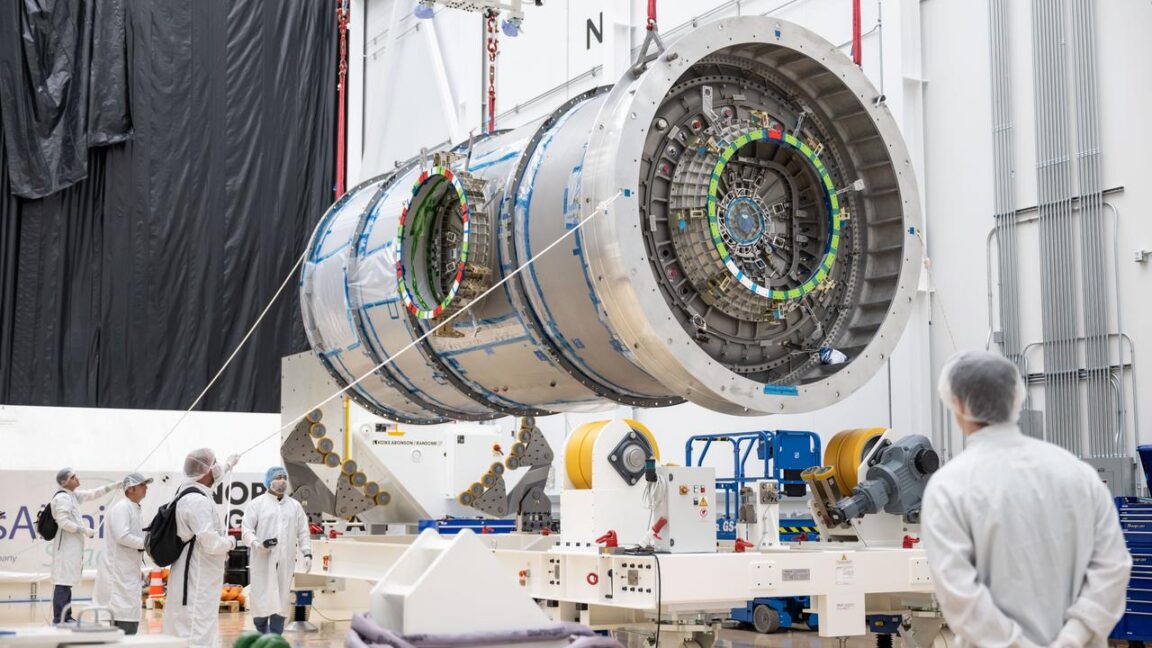
Less was said about the fate of the other major component, the Habitation and Logistics Outpost (HALO). This is the large pressurized module, 6.1 meters long, in which visiting astronauts would spend the majority of their time when visiting the Lunar Gateway. NASA has awarded contracts worth $1.1 billion to Northrop Grumman to design, build, and integrate the habitation module with the Power and Propulsion Element.

Read full article

Comments

© NASA/Josh Valcarcel

  •  

Dark Matter Still a Possibility at the Heart of the Milky Way

In an ambitious collaboration bridging continents and disciplines, researchers from the University of Vienna and the Lawrence Berkeley National Laboratory have revisited one of astrophysics’ most enigmatic phenomena—the Galactic Center Excess (GCE). For over a decade, the GCE, a subtle yet pervasive gamma-ray glow enveloping the Milky Way’s core, has stimulated intense debate and exploration within the scientific community. This new study, leveraging cutting-edge machine learning methodologies, offers fresh perspectives that reinvigorate the dark matter hypothesis as a viable explanation for the GCE, a prospect previously challenged by conventional analyses.

The Galactic Center Excess presents itself as a roughly spherical halo of gamma-ray emission, extending over thousands of light years around our galaxy’s nucleus. This faint glow eludes straightforward interpretation, primarily due to the complexities of the astronomical environment it inhabits. The region is not only densely packed with astrophysical sources but also exhibits extraordinarily bright and intricately structured gamma-ray emissions, complicating efforts to disentangle the origins of the GCE signal.

Before this study, two primary interpretations vied for dominance in explaining the GCE. One posited that the excess emanates from annihilations of dark matter particles, hypothetical constituents of the universe that interact weakly with ordinary matter and light. Dark matter, while composing approximately 85% of the universe’s matter content, remains elusive, and detecting its indirect signatures through gamma-ray emissions has been a tantalizing goal. The second hypothesis attributes the gamma-ray glow to a population of millisecond pulsars—rapidly rotating neutron stars known for their intense electromagnetic emissions. These pulsars, if sufficiently numerous and faint, could collectively mimic the characteristics of the observed GCE.

However, the astrophysical scenario faced a significant analytical hurdle. Earlier statistical approaches, while sophisticated, did not fully incorporate a vital dimension of the observed data: the energy spectrum of individual gamma-ray photons. Prior analyses predominantly focused on spatial distribution patterns, searching for point sources that could represent pulsars or diffuse emissions consistent with dark matter annihilation. Without the spectral dimension, conclusions remained inconclusive, often biased toward interpretations favoring bright unresolved sources.

The breakthrough in this new research is the implementation of an advanced machine-learning framework that simultaneously evaluates the spatial location and energy distribution of gamma-ray photons captured by telescopes. Training this model required generating over a million simulated gamma-ray skies, replicating a diverse range of scenarios that include both dark matter and pulsar contributions. By synthesizing these rich datasets, the model attains unprecedented sensitivity and discrimination power, uniquely capable of parsing subtle differences in the gamma-ray energy patterns correlated with different source populations.

The enriched analysis dramatically alters the interpretation landscape. The findings demonstrate that the putative point sources—if responsible for the GCE—would need to be extraordinarily faint, to the point where their individual characteristics blur into a diffuse glow nearly indistinguishable from what dark matter annihilation models predict. This faintness requirement for pulsars implies an astronomical population count exceeding 35,000 millisecond pulsars in the central Milky Way region. Such a number challenges existing astrophysical models and contrasts with previous studies that suggested only a few hundred to a few thousand such sources would suffice to explain the gamma-ray excess.

This new quantitative insight reopens the door for dark matter as a plausible explanation. While previous evidence tended to discount dark matter in favor of point sources, the subtlety revealed by including photon energy analysis counters these assertions. It underscores the present limitations in conclusively resolving the GCE’s origin, emphasizing that the dark matter scenario remains firmly on the table alongside pulsar hypotheses.

The difficulty in resolving the GCE nature also reflects broader challenges in high-energy astrophysics—particularly in crowded celestial environments like our galaxy’s core, where overlapping emissions from stars, supernova remnants, and other celestial objects confound the interpretation of indirect dark matter signals. Machine learning, as applied here, represents a transformative tool, capable of synthesizing immense, multidimensional datasets to disentangle complex astrophysical phenomena.

Scientists caution that these findings do not constitute direct evidence for dark matter annihilation; instead, they highlight the incomplete nature of current data interpretations. The inability to definitively favor pulsars over dark matter annihilation underscores the need for next-generation gamma-ray observatories and continued advances in modeling techniques that can incorporate even more nuanced data features, such as temporal variability and polarization signatures.

This research embodies the synergy between theoretical physics, computational innovation, and observational astrophysics, demonstrating how modern data-driven approaches can revitalize longstanding scientific debates. As gamma-ray detection technologies evolve and more data become available, the methodology pioneered here promises further refinement, potentially leading to breakthroughs in identifying signals from the elusive dark sector of the universe.

The Galactic Center Excess remains one of the most compelling mysteries in contemporary astrophysics, symbolizing the frontier where known astrophysical processes intersect with profound questions about the fundamental composition of the universe. Whether future research will tilt the scales decisively in favor of dark matter or pulsars, this study exemplifies the power of interdisciplinary collaboration and sophisticated computational methods to deepen our cosmic understanding.

Moreover, the implications extend beyond academic curiosity. Deciphering the GCE carries the promise of shedding light on the nature of dark matter, a cornerstone of cosmological structure formation and evolution. Success in this endeavor could unveil new physics beyond the Standard Model, revolutionizing our conception of the universe’s fabric and the forces that govern it at the most fundamental level.

As researchers continue to probe the galactic center’s gamma-ray glow, the intellectual journey itself enriches science, reflecting a profound human drive to illuminate the obscure workings of the cosmos. This study marks a significant stride in that journey, blending technology, theory, and observation to navigate a complex astrophysical puzzle whose solution may redefine our place in the universe.


Subject of Research: The Galactic Center Excess in gamma-ray observations and its implications for dark matter and millisecond pulsar populations.

Article Title: Energy Distribution of the Galactic Center Excess’s Sources

News Publication Date: 12-Jun-2026

Web References:
DOI link


Keywords

Galactic Center Excess, gamma rays, Milky Way, dark matter, millisecond pulsars, machine learning, astrophysics, high-energy astrophysics, neutron stars, indirect dark matter detection, gamma-ray astronomy, astrophysical sources

  •  
❌