❌

Reading view

Hurricane Polo Explodes in Pacific, UK Aphid Swarm Wipes Out 30 Million Lettuces, Glasgow Braces for Rubbish Pileup — Today’s Environmental Briefing for Thu, Sep 24 2026

Satellite view of Hurricane Polo swirling over the Pacific Ocean with visible eye structure

Across the stories today, a common thread emerges: the planet is speaking in signals — some subtle, some deafening — and the question is whether our institutions can listen fast enough to act.

Start with the signals themselves. El Niño has surged to record strength weeks ahead of schedule, and its fingerprints are already visible — from Hurricane Polo’s explosive intensification in the Pacific to the climate volatility rippling through global weather systems. In the UK, an aphid outbreak wiped out 30 million lettuce heads almost overnight, a small but telling example of how shifting conditions can upend food systems in ways no one budgets for. In Malawi, an unexplained weed overgrowth has choked Chia Lagoon, stranding farmers and fishers in flooded fields nearly seven months after the rains should have drained. These aren’t isolated oddities. They’re the planet’s early warning system, written in crop yields and clogged waterways.

Then there’s the human response — uneven, but not absent. Germany’s landmark pledge to phase out fossil fuels by 2045 marks a rare moment of policy catching up to urgency, moving beyond vague “carbon neutrality” language toward something more concrete. The UK’s decision to declassify a once-suppressed intelligence report — warning that climate breakdown is a direct threat to global security — suggests governments are quietly acknowledging what scientists have said for years, even if political will lags behind. And at UN climate talks in New York, amid what The Guardian describes as a genuinely grim mood, solar power’s continued growth offered rare, tangible hope. As Al Gore noted twenty years after An Inconvenient Truth, he’s surprised by the ferocity of fossil fuel pushback — but still believes, cautiously, that the fight can be won.

Behind the numbers are real communities adapting in real time. In the Andes, villagers near Villa de Arma are turning to ancient wetland systems as glaciers they once walked across vanish into bare rock. In Guam, resident Leevin Camacho learned his family’s water contained a pesticide banned since 1987 — a stark reminder that militarization and environmental cost are often intertwined, especially in the Pacific. And in Sarawak, Indigenous communities are still reckoning with displacement from the Bakun megadam three decades later, a cautionary tale as the world races toward a “clean” energy future that doesn’t always ask who pays for it.

It’s a reminder that progress and pressure often arrive together. Endangered birds on South Australia’s Eyre Peninsula won last-minute protection from a rocket launch site — a genuine conservation victory — even as a Norfolk Broads housing levy was quietly slashed, raising fears that environmental safeguards elsewhere are eroding. Meanwhile, olive ridley sea turtles nesting for the first time ever on California beaches offer something rarer: wonder. A signal, too, but one that invites curiosity rather than alarm — proof that the natural world is still capable of surprising us.

As the week unfolds, all eyes will be on whether momentum from Climate Week — bolstered even by a monster from Sesame Street reminding children it’s okay to feel both fear and courage — translates into follow-through. The data, the disasters, and the small human stories all point the same direction: the era of asking “if” is over. What remains is the harder work of “how fast,” and “for whom.”

The post Hurricane Polo Explodes in Pacific, UK Aphid Swarm Wipes Out 30 Million Lettuces, Glasgow Braces for Rubbish Pileup — Today’s Environmental Briefing for Thu, Sep 24 2026 first appeared on EnviroLink Network.
  •  

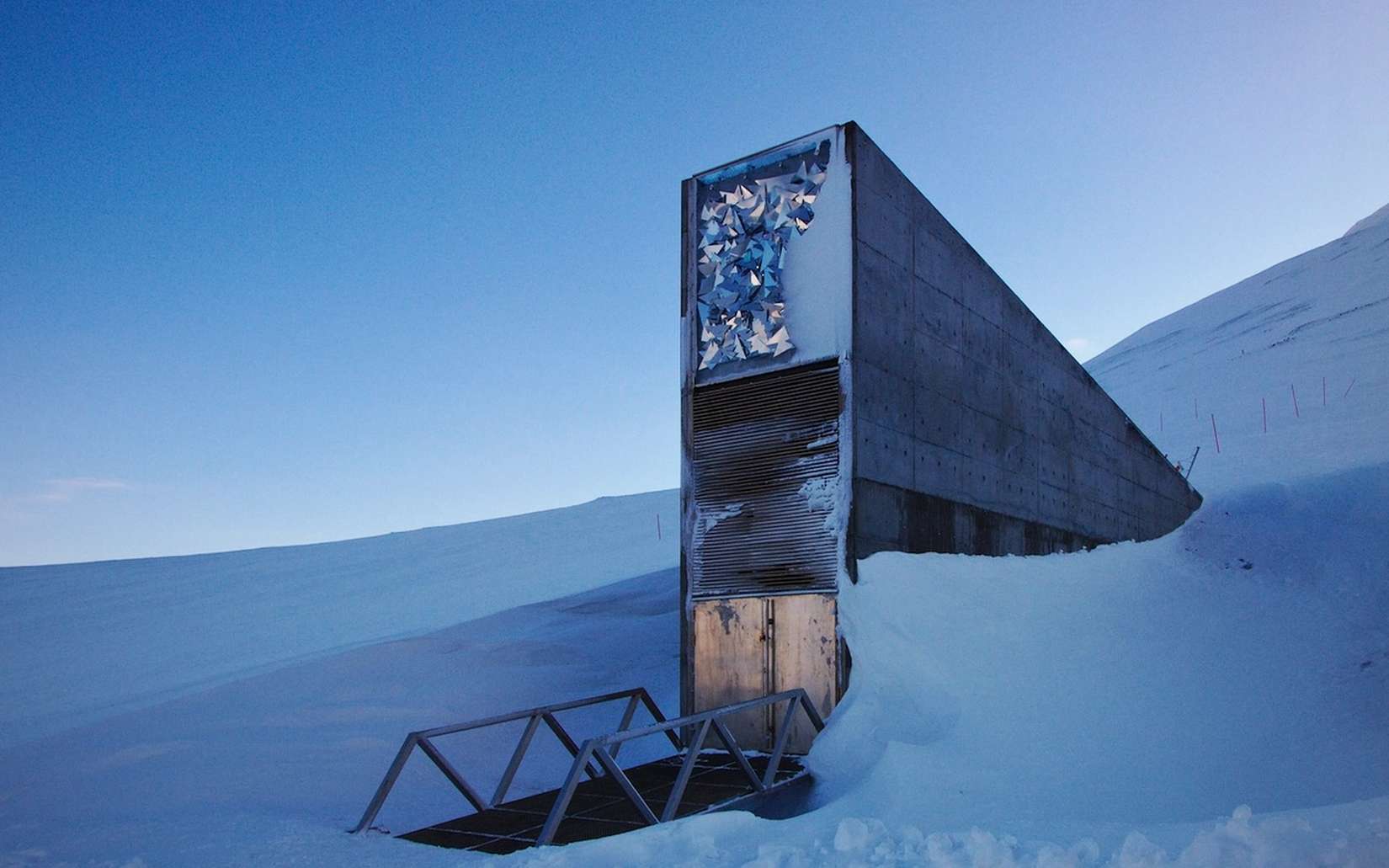
Graines « de l’apocalypse » : leur durée de conservation réelle réserve une mauvaise surprise, révèle une étude

Les banques de semences sont censées préserver une partie de notre patrimoine agricole pendant des décennies, voire bien davantage. Mais combien de temps ces graines peuvent-elles réellement rester capables de germer ? Une vaste analyse menée en Australie apporte une réponse moins rassurante...

  •  

US Confirms Orbital Weapon, Essex Wildlife Habitat Threatened by Data Centre — Today’s Environmental Briefing for Wed, Sep 16 2026

Illustration of a military satellite weapon orbiting Earth above rare UK wildlife habitat threatened by development

Across the stories today, a common thread emerges: the boundaries we once drew around “the environment” — between land and sea, sky and orbit, economy and ecology — keep dissolving, revealing how deeply intertwined these systems have become.

Start with the sky, in more ways than one. The US government’s confirmation that it has deployed a weapon in Earth’s orbit marks a genuine turning point, not just for defense policy but for how we think about the commons above our heads. Space has long been treated as neutral ground; now it’s becoming contested territory, raising quiet but urgent questions about debris, escalation, and what “environment” even means when it extends past the atmosphere. Meanwhile, back on solid ground, the UK’s climate advisers delivered a pointed message to Heathrow: a third runway cannot proceed unless airlines help pay for the emissions it would unleash, potentially through carbon removal costs. It’s a small but telling signal that growth and climate accounting are becoming inseparable in policy conversations — expansion is no longer a given, even for infrastructure long considered inevitable.

That tension between growth and limits runs through much of today’s coverage. A Guardian analysis found that the world’s twenty largest private equity firms back energy portfolios emitting more greenhouse gases than all but three countries on Earth — a stark reminder that climate accountability often hides behind layers of finance most people never see. In Venezuela, a US-backed push for “legitimate” mining and a new oil megadeal are drawing warnings from environmental and human rights groups who see familiar risks dressed in new language. And in Guinea-Bissau, industrial fishmeal factories are quietly hollowing out a food fish that coastal communities have relied on for generations. Behind the numbers are real communities adapting in real time — from Vietnamese fishers losing thousands of dollars per vessel to tangled plastic waste, to Dhaka residents like Yeasmin Begum, who has spent her life breathing the smoke of a landfill she never chose to live beside.

Yet alongside these pressures, the day’s coverage also points to growing momentum around resilience and repair. Ukrainians are turning to rooftop solar to keep homes running amid bombardment — a portrait of adaptation born from necessity. A Congolese NGO now co-manages a national reserve for the first time, a homegrown model of stewardship. Moon bears rescued from bile farms are stretching their limbs in Suffolk enclosures, and three wild dog brothers wandered 2,500 miles across Zambia in search of a mate, offering an unlikely note of hope for their species. Even Griffith Park’s mountain lion — photographed beneath the Hollywood sign — helped inspire the world’s largest wildlife crossing, proof that a single image can shift infrastructure decisions.

It’s a reminder that progress and pressure often arrive together. Some communities are innovating their way through crisis; others, like the land defenders now forming self-defense units amid rising violence, are simply trying to survive it. As Brazil’s upcoming election looms over the Amazon’s future, and Chief Raoni Metuktire — one of its most storied protectors — enters palliative care, the coming months may reveal whether today’s momentum toward stewardship can outpace the forces pulling the other way.

The post US Confirms Orbital Weapon, Essex Wildlife Habitat Threatened by Data Centre — Today’s Environmental Briefing for Wed, Sep 16 2026 first appeared on EnviroLink Network.

  •  

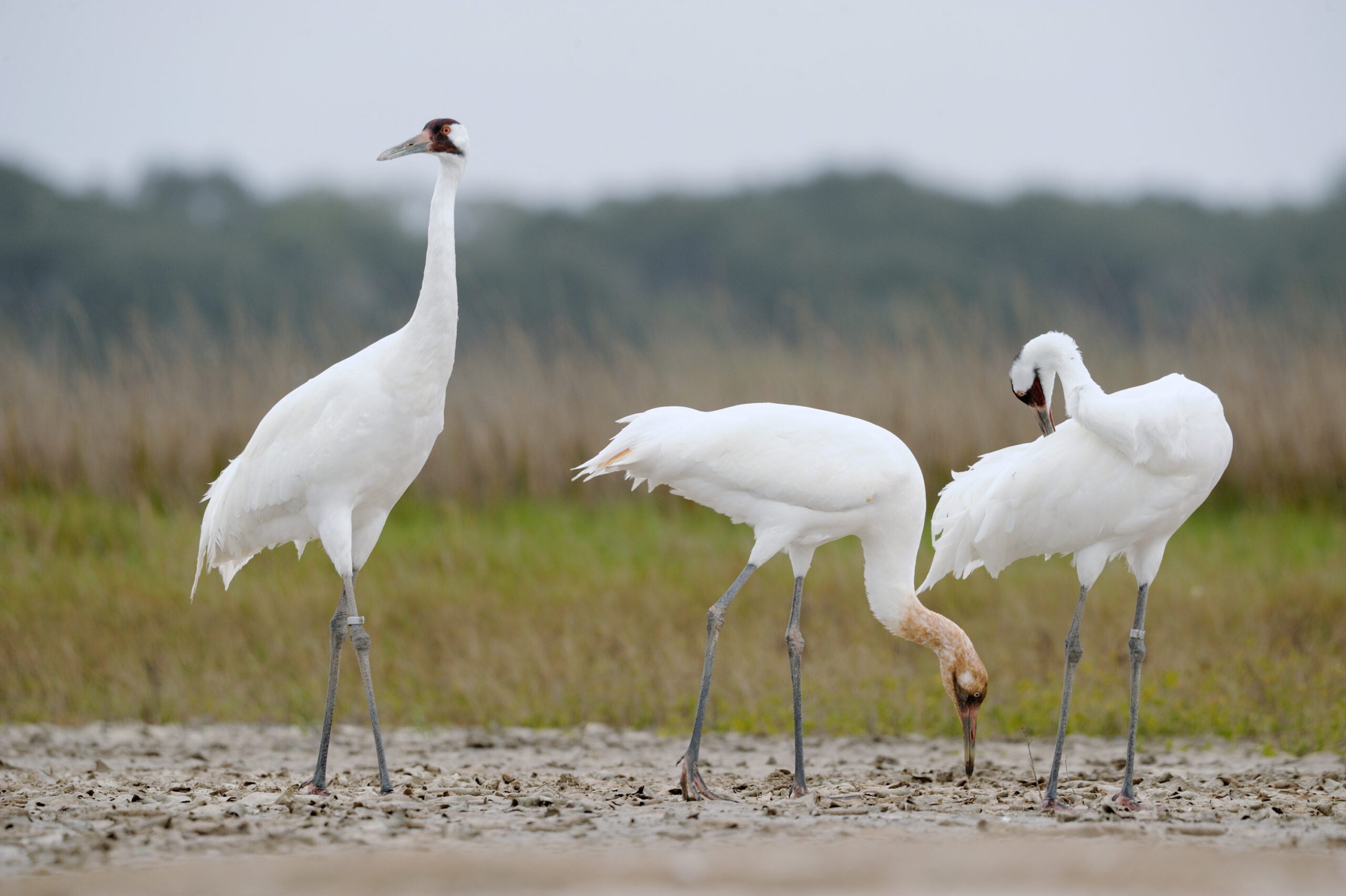
In 1941, just 14 adult whooping cranes remained on the Texas coast; the winter 2024–2025 survey around Aransas estimated 557 birds, including 41 juveniles and 193 adult pairs

Three whooping cranes (Grus americana) at Aransas National Wildlife Refuge, Texas. Photo: Klaus Nigge / U.S. Fish and Wildlife Service. CC BY 2.0 via Wikimedia Commons.

Fourteen adult whooping cranes wintered on the Texas coast in 1941. In the winter of 2024–2025, biologists flying the marshes and tidal flats around Aransas National Wildlife Refuge estimated 557 of them, including at least 41 tawny juveniles, according to the U.S. Fish and Wildlife Service’s survey announcement. The agency’s 2024–2025 whooping crane status report gives the estimate as including 193 adult pairs. It was the first time the agency had estimated the Aransas–Wood Buffalo population above 550 individuals.

The number is an estimate, not a hand tally. Whooping cranes are five feet tall and white enough to read against green cordgrass from a thousand feet up, but they move, they hide behind live oak motts, and no aerial pass catches every bird in every acre. What the Service publishes is a statistical estimate with uncertainty attached, and the 2024–2025 figure of 557 carries a 95% confidence interval of 478.7 to 645.1 birds, with a coefficient of variation of 0.137.

What the January flights measured

The survey work happened in a narrow window. Crews flew a Quest Kodiak over roughly 170,500 acres of primary survey area six separate times between January 22 and January 31, 2025, then covered about 85,250 acres of secondary area twice on February 1 and 2. The underlying Butler et al. survey report says abundance was estimated from the aerial surveys using hierarchical distance sampling, with the confidence interval expressing the uncertainty around that estimate rather than a simple difference between repeated passes.

Inside that estimate, the age and pairing structure matters as much as the total. The survey put the population at 193 adult pairs, with a 95% confidence interval of 167.5 to 221.4, and at least 41 juveniles, birds hatched in summer 2024 and still carrying rusty cinnamon feathering across the head and neck. Recruitment worked out to 8.1 chicks per 100 adults, with an interval of 6.3 to 10.5. Juveniles are the part of the count that cannot simply be carried over from an earlier winter estimate. Each one is a bird that hatched, fledged, and completed a first southbound migration.

The Canadian Wildlife Service reported at least 33 chicks fledged on the northern breeding grounds in summer 2024. The winter estimate of 41 juveniles sits above that. The joint status report says the discrepancy is likely caused by differences in survey methodology and detectability of young between the breeding-ground and wintering-ground surveys; the Butler report also notes that juvenile plumage can become less distinct by late January.

From 14 adults to a 4.33% climb

The 1941 low is the baseline against which the recovery is often described. Service biologist Matthew Butler, lead author on the survey, makes the point plainly in the agency’s announcement: today’s whooping cranes descend from the 14 adults that remained on the Texas coast that year. The species had been reduced to a single wild migratory flock wintering on a strip of Gulf coast marsh, with its northern breeding grounds not identified until later.

Those breeding grounds were in and around Wood Buffalo National Park, roughly 2,500 miles north in Canada. The Aransas–Wood Buffalo flock makes that roughly 2,500-mile migration twice each year, north toward the nesting grounds and south toward the Texas coast, threading the Central Flyway through the Great Plains.

Measured from the winter of 1938–1939 to the winter of 2024–2025, the population has grown at an average rate of 4.33% per year. That figure summarizes the long recovery record; it is an average across eight decades, not a claim that the flock grew at exactly 4.33% every year. Kevin McAbee, the Service’s Whooping Crane Recovery Coordinator, credits the long climb in the announcement to decades of cooperative work across the flyway rather than to any single intervention.

Beyond the survey box

Cranes do not restrict themselves to the polygons drawn on a survey map. During the 2024–2025 effort, observers documented 68 additional whooping cranes outside the designated primary survey area. Those birds are not simply added to 557, and the Service is careful about why. Some may represent birds not otherwise counted; some may have moved in and out of the survey boundary. The overlap is unknown, which is exactly the reason the 68 stays separate from the primary-area estimate.

What the beyond-area observations do suggest is that wintering whooping cranes are using ground beyond the refuge core, a pattern the Service has tracked as the population has grown. The annual survey itself is a cooperative operation, drawing on the Fish and Wildlife Service’s National Wildlife Refuge System Region 2, the Migratory Bird Program and Ecological Services, the Guadalupe-Blanco River Authority in Texas, and the Canadian Wildlife Service.

The recovery record still runs through a very narrow gate. Every one of the estimated 557 birds in the primary survey area in winter 2024–2025, every one of the 193 adult pairs, and every one of the at least 41 juveniles counted after arriving from Wood Buffalo traces back to the tiny remnant flock represented by those 14 adults on the Texas coast in 1941. Eight decades later, the same wild migratory population was being measured again from the air, with six passes over 170,500 acres between January 22 and January 31, 2025.

The post In 1941, just 14 adult whooping cranes remained on the Texas coast; the winter 2024–2025 survey around Aransas estimated 557 birds, including 41 juveniles and 193 adult pairs appeared first on Space Daily.

  •  

It’s almost time to airdrop rabies vaccines again

Despite major strides in education and conservation efforts, rabies remains a serious public health issue. The Center for Disease Control (CDC) estimates around 90 percent of cases occur in wildlife, but their consequences still reverberate across ecosystems and routinely endanger humans. Combating the viral disease costs the United States over $300 million every year, but the hefty price tag is justified. Contracting one of the oldest known diseases invariably causes severe symptoms like abnormal sensations, violent movements, hydrophobia, and loss of consciousness. Rabies is fatal in virtually every documented case, and still kills around 59,000 people around the world each year.

Once primarily associated with dogs, rabies has since spread to wildlife such as raccoons, skunks, bats, and foxes—making the issue much more difficult to track and control. Since 1995, the United States Department of Agriculture (USDA) has overseen a National Rabies Management Program in cooperation with state and federal departments, university researchers, and other organizations. After over 30 years of work, one of the most preferred mitigation methods is regularly placing oral rabies vaccine (ORV) bait in strategically selected wildlife areas. The easiest way to spread millions of bait blocks across thousands of square miles? Airdrops.

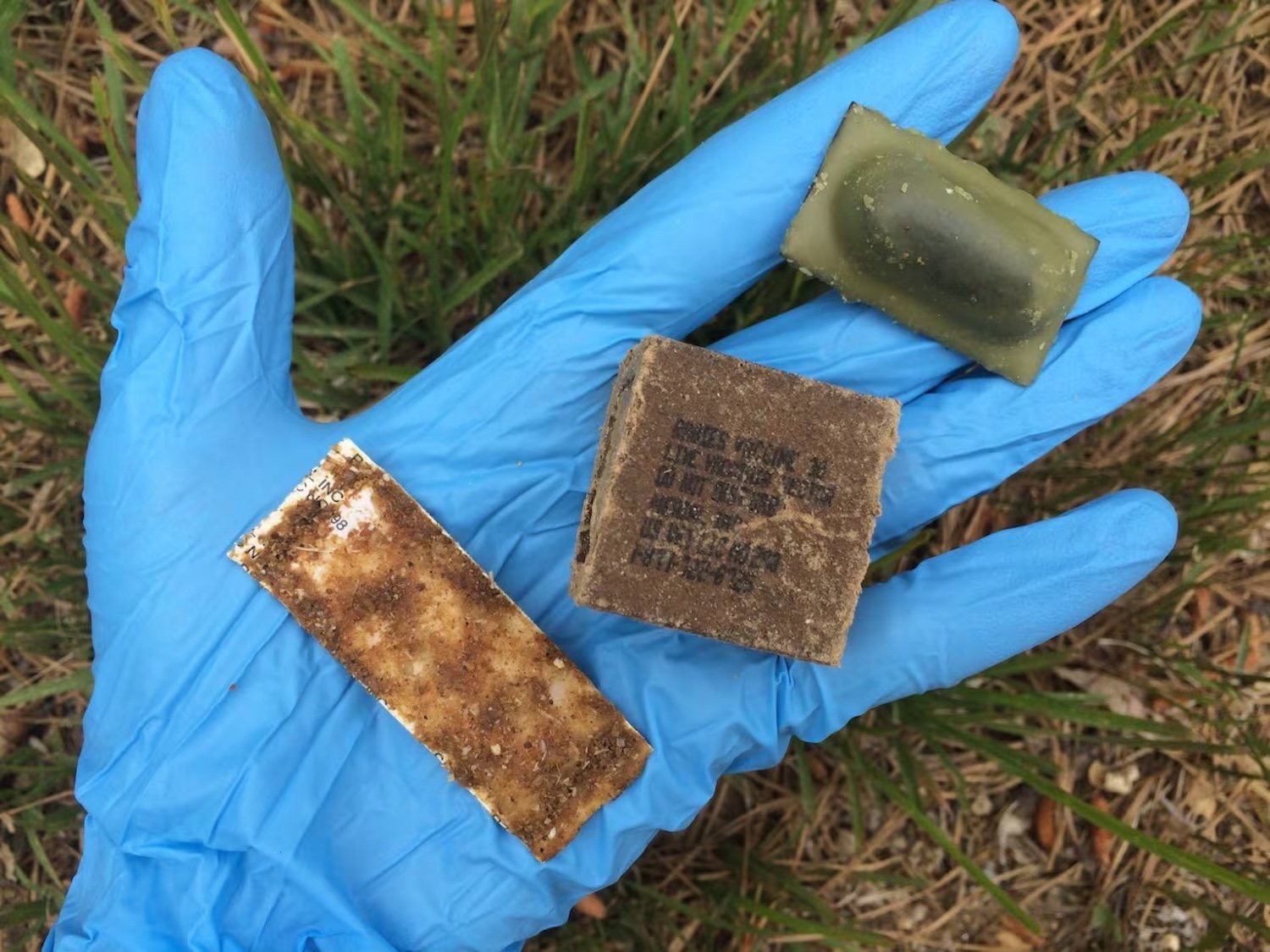
Blue gloved hand holding raccoon rabies vaccine bait packets
The bait isn’t toxic, but the USDA recommends using gloves to handle it. Credit: USDA

Next month, the USDA will once again begin tossing fishmeal-coated ORV packets from planes throughout the Southeastern states of Virginia, North Carolina, Tennessee, Georgia, and Alabama. These tiny edibles are specifically crafted to target the most prominent rabies variants seen in raccoons, coyotes, and gray foxes.

“The goal is to prevent westward spread of raccoon rabies by creating a continuous vaccine barrier that stays in front of rabies occurrence on the landscape,” a USDA spokesperson recently told FOX Carolina News. The representative added that although the distribution’s scope doesn’t currently include South Carolina, they are “very close to establishing an ORV area in South Carolina counties bordering North Carolina and Georgia in the next few years.”

If all goes as planned, the National Rabies Management Program’s geographic scope will shrink over time as the disease is regionally eliminated. Until then, anyone who accidentally comes into contact with an ORV bait brick shouldn’t worry about contracting the disease. The vaccine inside each brick is proven safe for over 60 animal species, including cats and dogs. If you happen to locate one in a residential area, the USDA recommends to either simply leave it alone, or use gloves to move it to a more remote location for its intended recipients. Always wash your hands thoroughly after handling ORV bait—and try to ignore the pungent odor of fishmeal.

The post It’s almost time to airdrop rabies vaccines again appeared first on Popular Science.

  •  

Yellowstone National Park retrieved 280 hats from hydrothermal vents this summer

Yellowstone National Park attracts more than 4.5 million visitors from around the world every year. Many sightseers arrive well prepared to admire the hotsprings, geysers, scenic lookouts, and wildlife, but there is only so much anyone can do about life’s little unexpected accidents. Each season, Yellowstone’s gusty winds are responsible for blowing away hundreds of hats, maps, and even sunglasses from the heads and hands of onlookers. And every season, park workers scour the grounds to gather up any lost items that landed far from the walkways and trails.

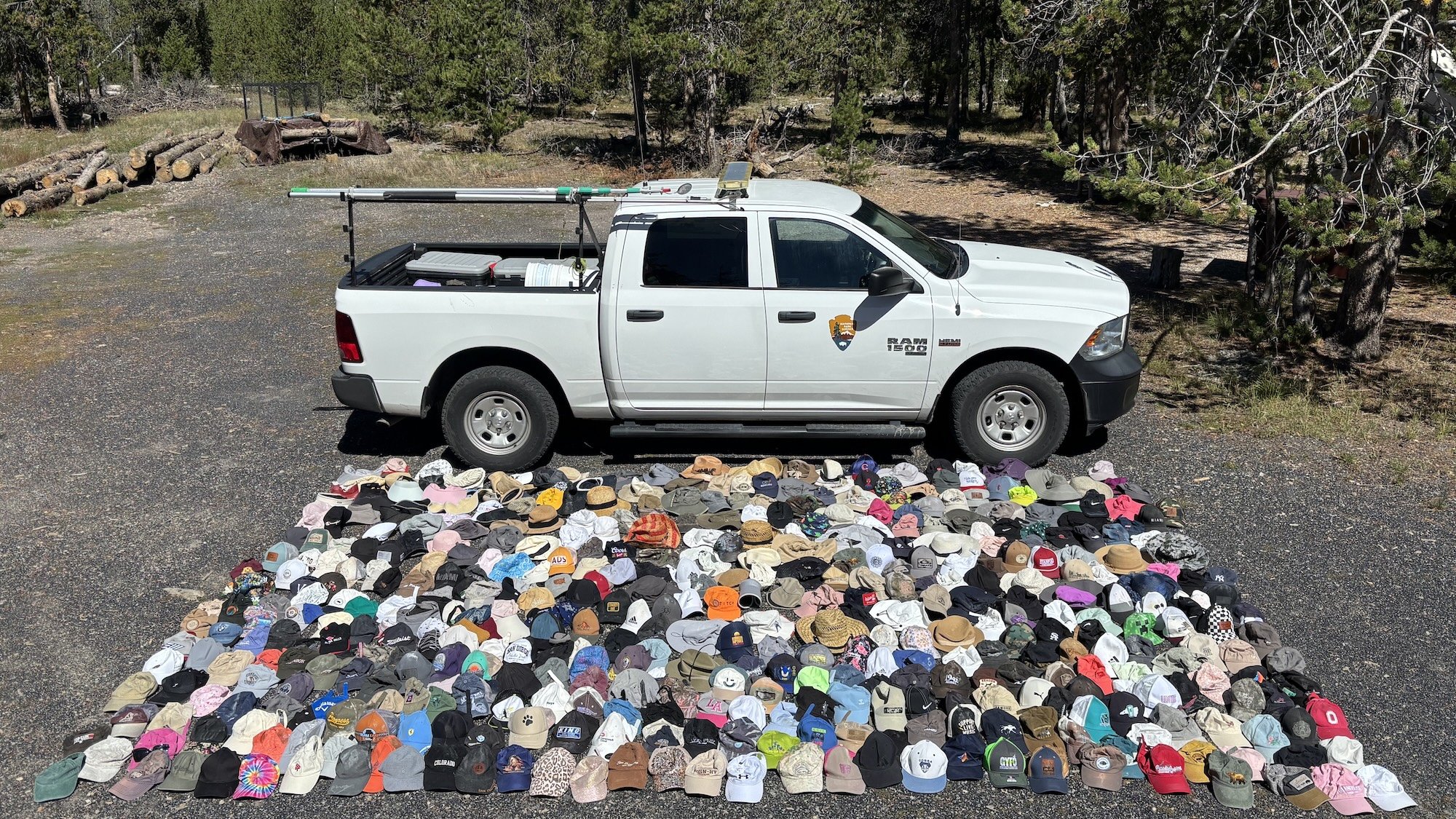
While the tally so far isn’t quite as large as last year’s haul, Yellowstone officials still impressively retrieved more than 280 hats from the hydrothermal areas. Workers cited standouts including a FIFA 2026 Men’s World Cup souvenir and a baseball cap ironically emblazoned with “Cowboy Hat.” But just because they aren’t suited for floating around roiling geysers doesn’t mean they’re destined for a landfill. Once the 2026 season draws to a close, all of the collected hats will be cleaned and donated to local clothing organizations.

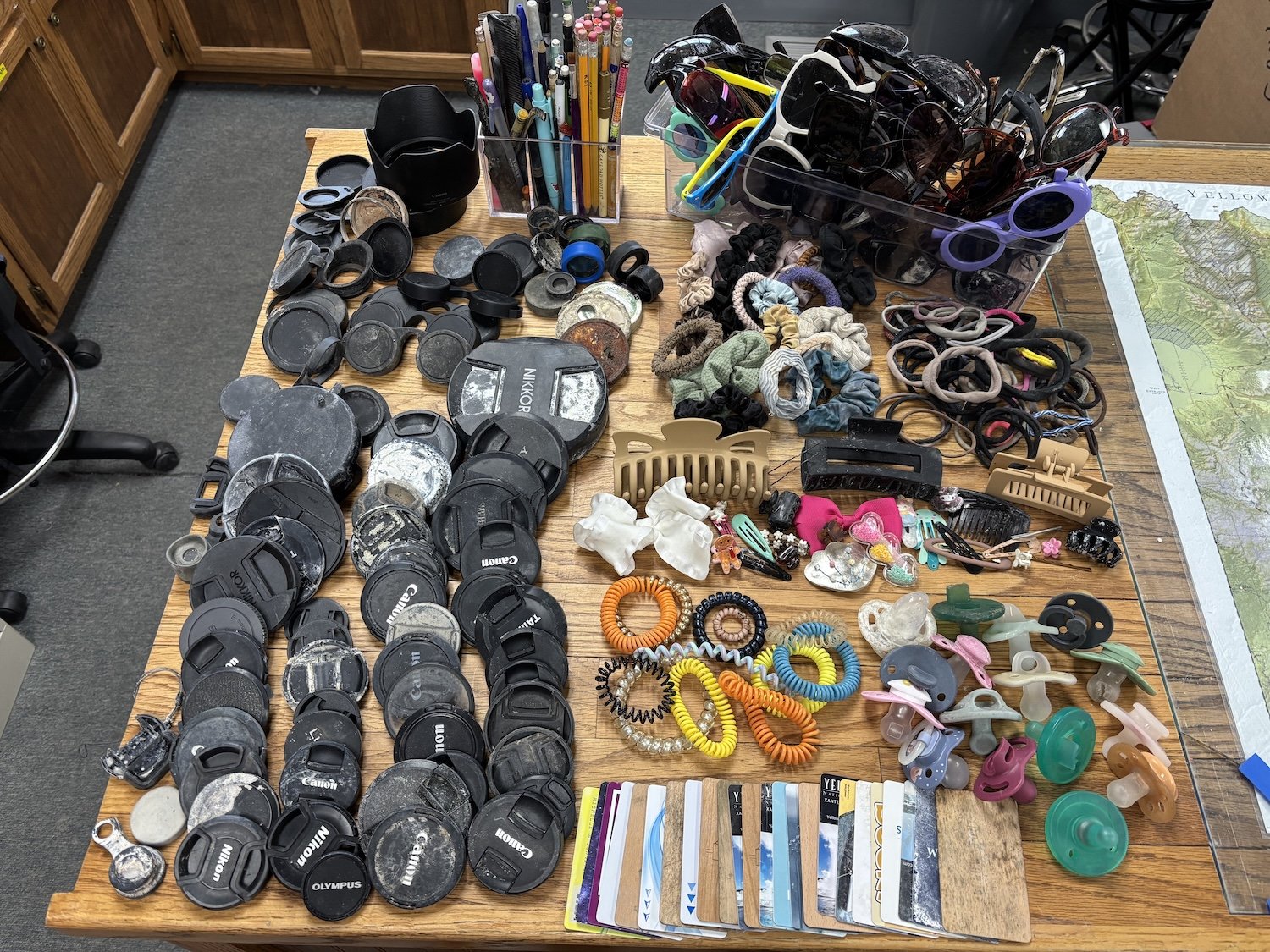
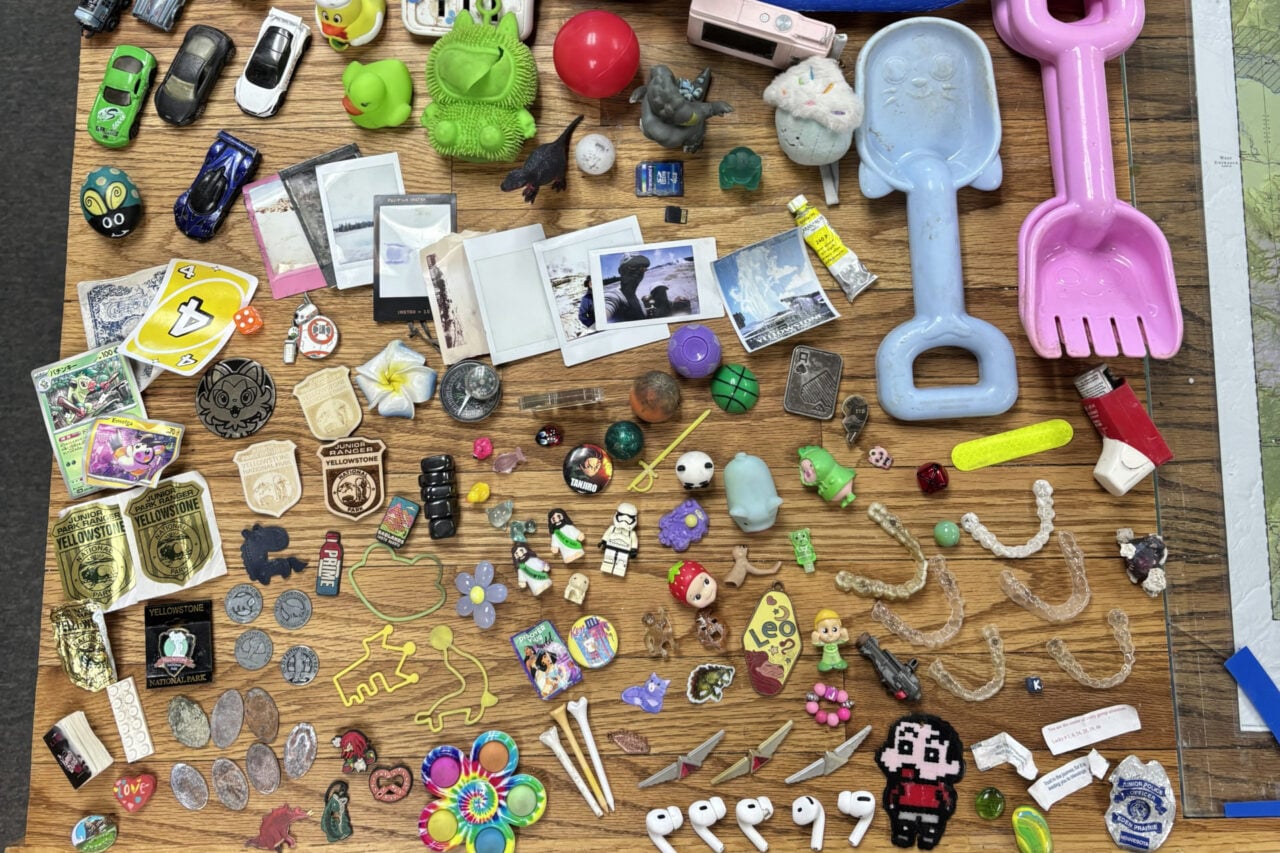
Table of random items retrieved from Yellowstone park including camera lens caps, pacifiers, hair ties, and sunglasses
Yellowstone officials recommend storing items deep in your pockets and always throwing litter into trash bins. Credit: Yellowstone National Park

Caps are only one type of lost item located amid the hunts. Workers scooped up more than $18 in coins from around the world during the summer search. Canadian dollars, euros, pesos, and yen were scattered among the U.S. change, many apparently tossed into hot springs and geysers as if they were wishing wells. Yellowstone officials took the occasion to remind everyone that hydrothermal formations are not made to receive wished-upon coins. Not only will your dream remain unfulfilled—the foreign additions often introduce destructive algae and bacteria into the delicate ecosystems.

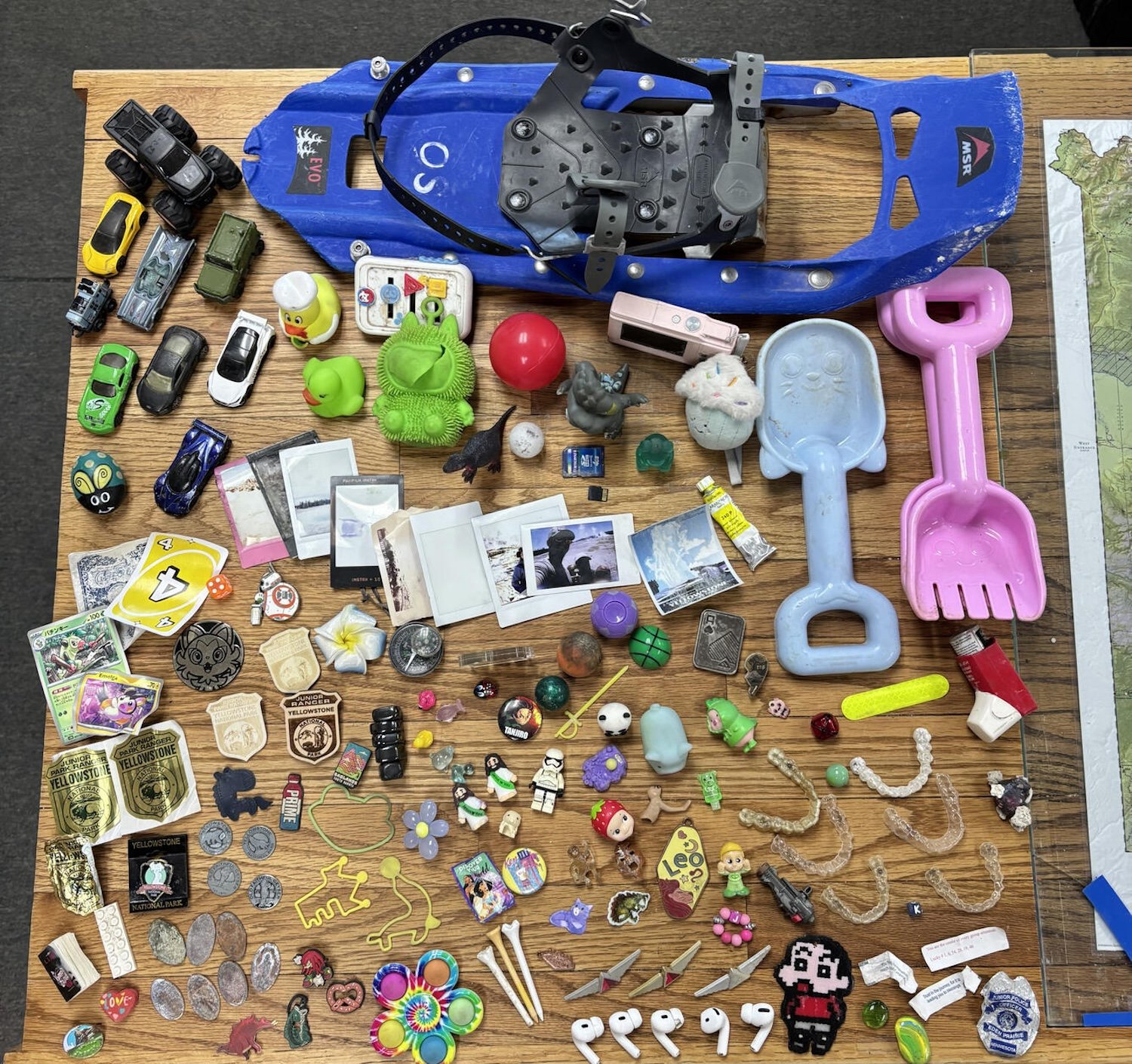
Other common detritus in the haul included plenty of paper and plastic trash, hair ties, hotel key cards, children’s toys, eyewear, and camera lens caps. Standout oddities such as AirPods, an inhaler, and even a single Uno card also made the list of finds.

Particularly odd lost items including retainers, trading cards, golf tees, and AirPods
A single Uno card was also among the fines. Credit: Yellowstone National Park

As always, Yellowstone workers reminded everyone that the seasonal roundup also serves as an excellent reminder to “stash your trash.” Visitors are encouraged to place any litter or lightweight items deep in their pockets or bags until they reach a trash can. And although headwear is always important protection from the sun, people may want to consider temporarily removing their hats while trekking through especially windy areas of the park.

The post Yellowstone National Park retrieved 280 hats from hydrothermal vents this summer appeared first on Popular Science.

  •  

Arborists use supersonic air to save 300-year-old tree that survived American Revolution

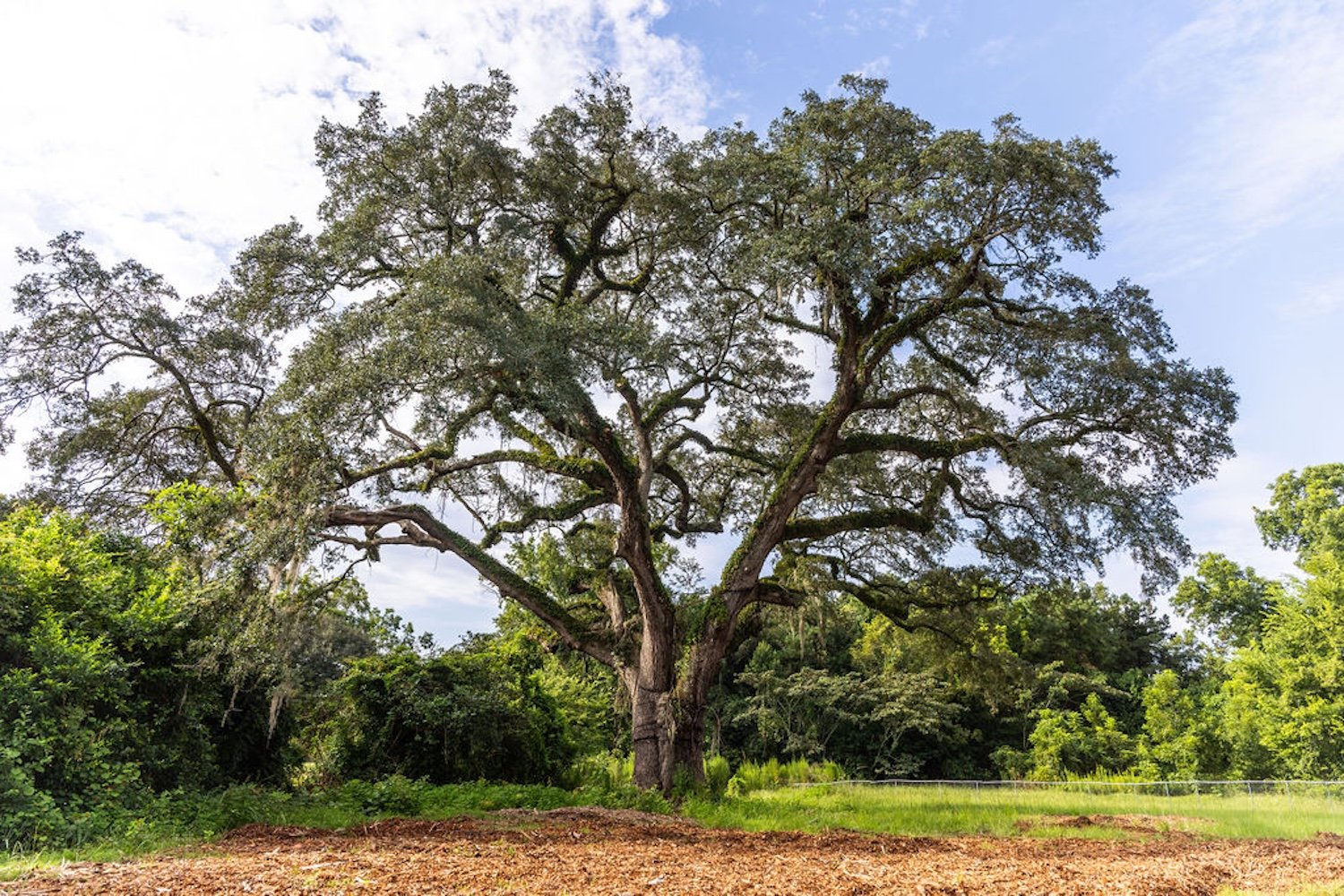
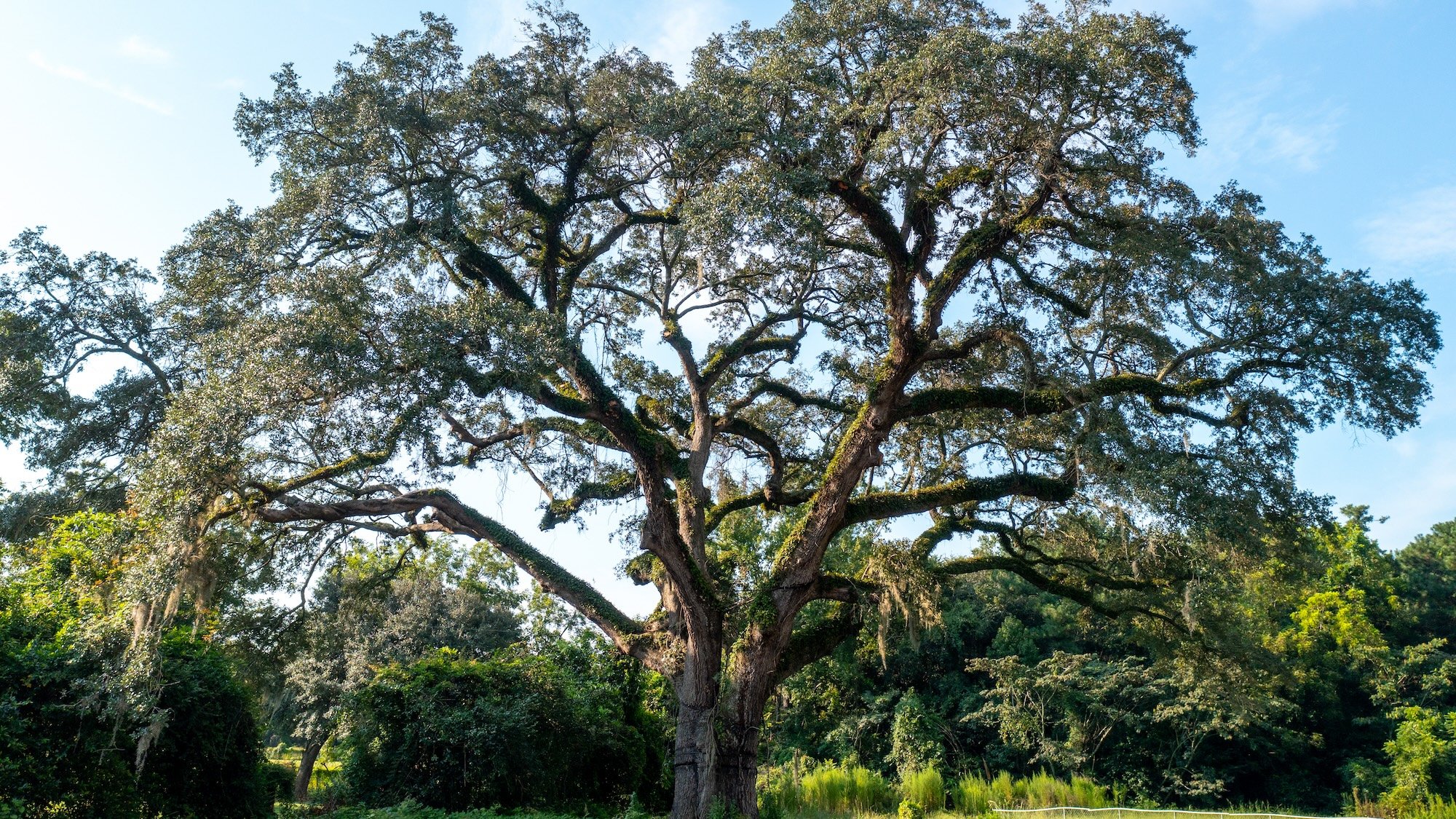
A centuries’ old “witness tree” that survived not only the Revolutionary War but a direct hit from lightning is facing yet another existential threat. Ironically, the famous oak in Eutaw Springs, South Carolina, is struggling to survive due to the strategies conservationists first used when attempting to preserve it decades ago.

The nearly 300-year-old tree was already nearing its semicentennial on September 8, 1781, when around 2,000 British and 2,500 American troops met at the Battle of Eutaw Springs. Believed to be the American Revolution’s last open-field engagement, the vicious combat was later remembered by colonial Maj. Gen. Nathanael Greene as “by far, the hottest action I ever saw, and the most bloody for the numbers engaged.” Records indicate 1,461 troops were killed, wounded, captured, or missing by the end of the conflict—although both sides claimed victory.

“That tree probably took a few lead balls itself,” arborist Aron Landsaw recently said in an Associated Press profile. 

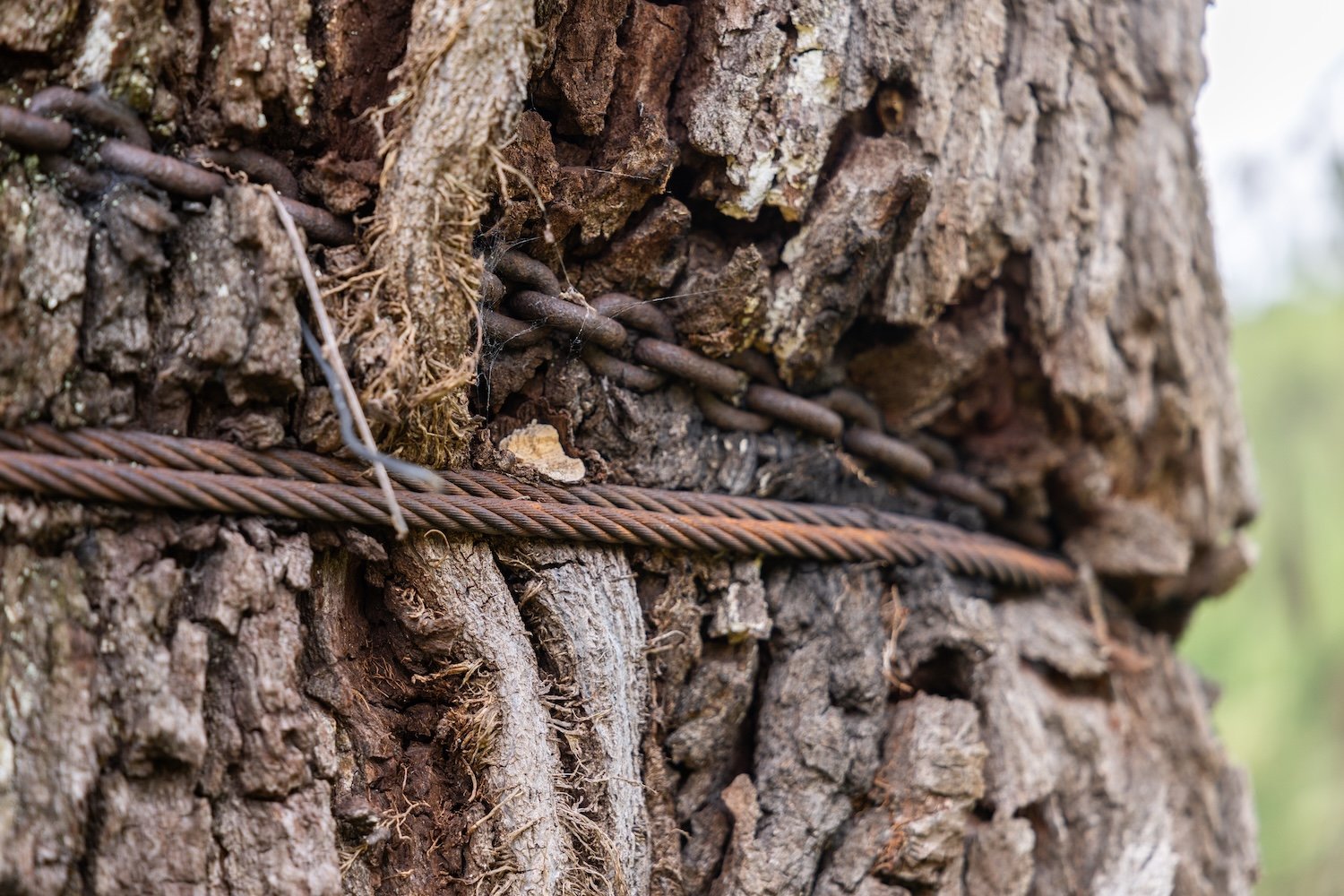
Old chains being subsumed into tree trunk
The original support chains had begun to suffocate the tree itself. Credit: SavATree KRIS MEADE

Landsaw and other conservationists are working to preserve the 45-foot-tall tree from succumbing to lingering injuries. About 50 years ago, lightning struck its base and almost split the oak in half. In an attempt to save the tree, workers at the time wrapped its splintered branches in a series of steel chains and cables. Although the strategy successfully granted the oak a reprieve, it grew so much over the last five decades that those metal lashes are cutting into the tree itself. In some areas, the cabling is now completely encased in bark.

“The chains and cables are actually choking it out. It can’t nutrients up from the soil,” explained Landsaw.

As part of the nation’s 250th anniversary, South Carolina partnered with the American Battlefield Trust and New York state-based arborists to once again bring the oak tree back from the brink of death. This time, the strategy is more high-tech than metal chains. Using specialized equipment to generate supersonic air, workers have essentially loosened all the heavily compacted earth around the tree’s roots. From there, they added a nutrient-rich kelp concoction into the dirt to further bolster the oak’s health.

Live oak 'witness tree' on sunny day in field in South Carolina
The new accessories will divert any future lightning strikes away from the tree. Credit: SavATree KRIS MEADE

Other additions were tapped directly into the tree’s primary branches. These small, strategically placed lightning rods embedded into the oak are strung together with copper cables that all connect to a primary grounded copper rod located about 10 feet away from the tree. The odd-looking accessories are intended to prevent a repeat of the incident from 50 years ago.

“If lightning does hit it, it’ll run down the copper cables and dissipate into the ground,” said Landsaw.

The last phase will involve connecting a new set of reinforcement cables into the branches before carefully getting rid of the old chainwork. The replacement cables will all connect in the center so that the tree will remain flexible during wind gusts. No tree lives forever, but with the extra TLC and a little luck, the historic oak could easily bear witness to another 100 years of history.

The post Arborists use supersonic air to save 300-year-old tree that survived American Revolution appeared first on Popular Science.

  •  

500 snails mailed to Tahiti to reclaim their natural habitat

Staff at St. Louis Zoo in St. Louis, Missouri recently opened up a very special delivery in the mail: an overnight shipment of 500 adult Partula snails. 

Their journey began at the Detroit Zoo in Royal Oak, Michigan, and it’s not quite over yet. The small invertebrates’ final destination is Tahiti, where they will be released into the wild as part of an international effort to reestablish wild populations of Partula snails. 

“The snails are sent ‘priority overnight’ via either FedEx or UPS. The snails are carefully packed using insulating materials and special ‘phase change’ packs to stabilize the temperature inside,” Mark Vassallo, Curator of Amphibians at the Detroit Zoological Society, tells Popular Science. “Currently the Detroit Zoological Society bred snails are taking a pit-stop at St. Louis Zoo where they will be fed a special diet in order to prepare them for the wild.”

Partula snails are small, tree-dwelling native to islands in French Polynesia. In Polynesian cultural heritage, each unique Partula snail shell represents an island. When humans introduced the predatory rosy wolf snail to the region to manage another invasive snail species, it wrecked Partula snail populations. 

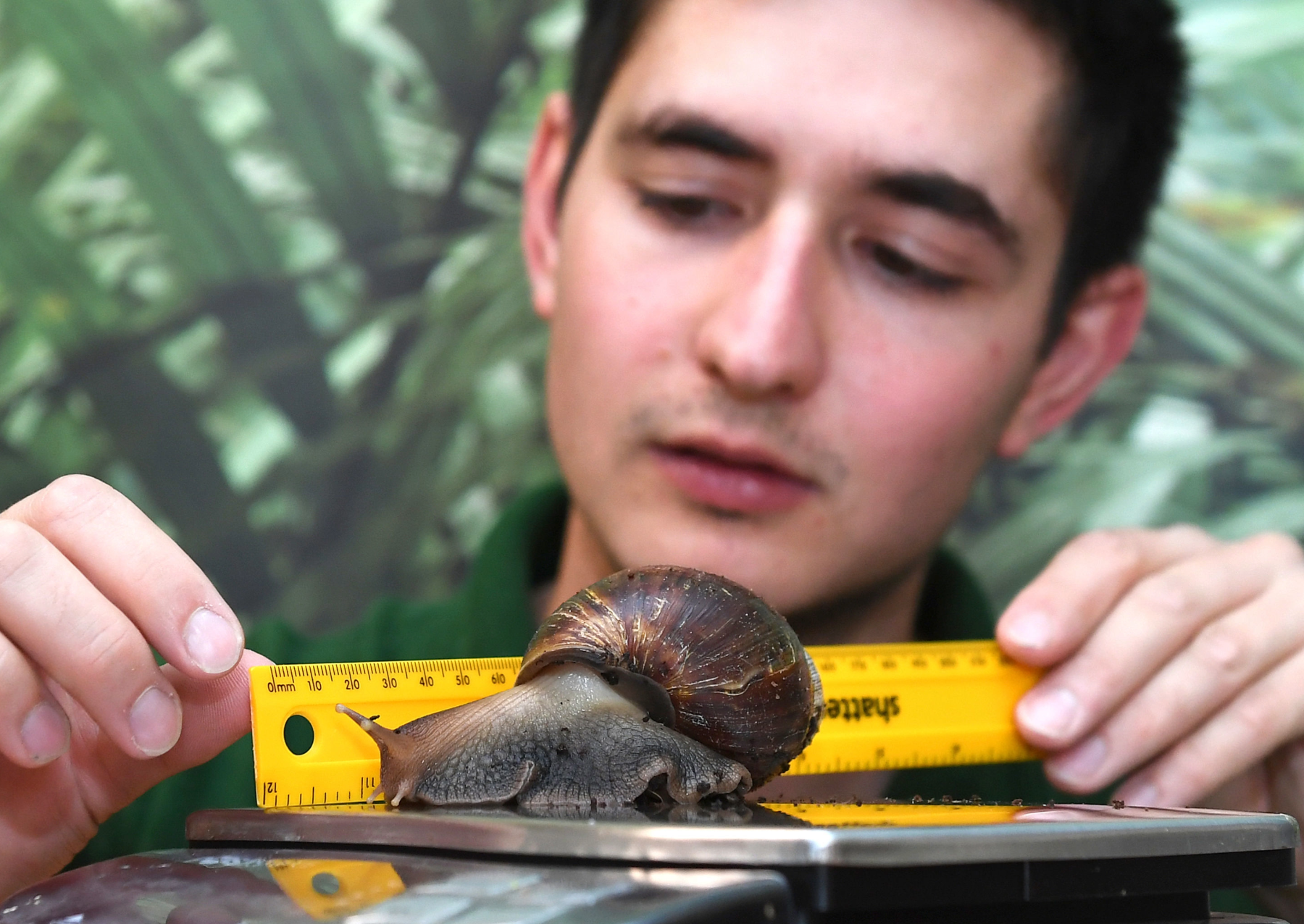
a man holds a yellow measuring tape by a large snail
A Partula snail is weighed and measured by keeper Tom Maunders, during the annual weigh-in at Whipsnade Zoo in England. Image: Joe Giddens/PA Images via Getty Images.

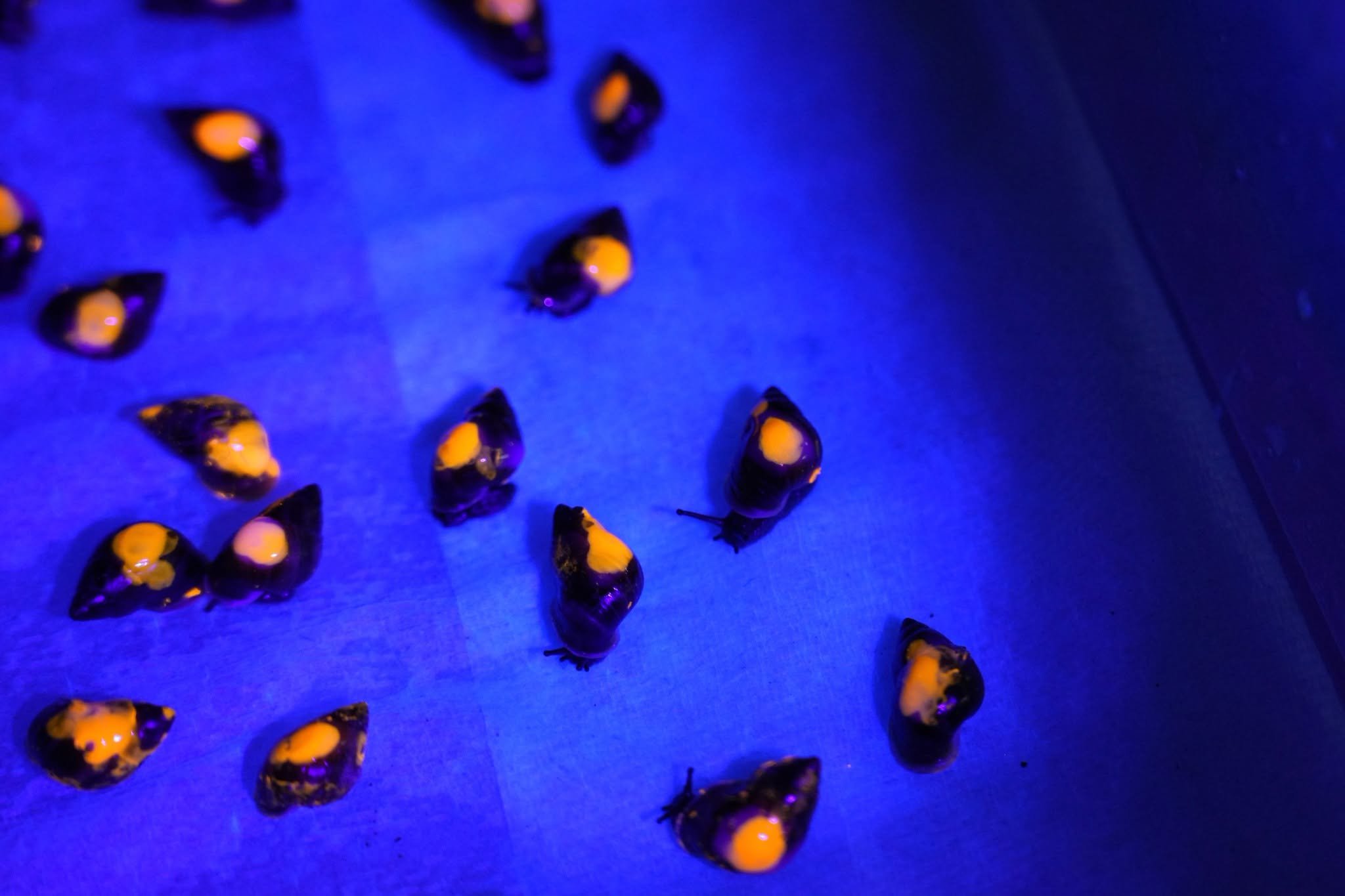
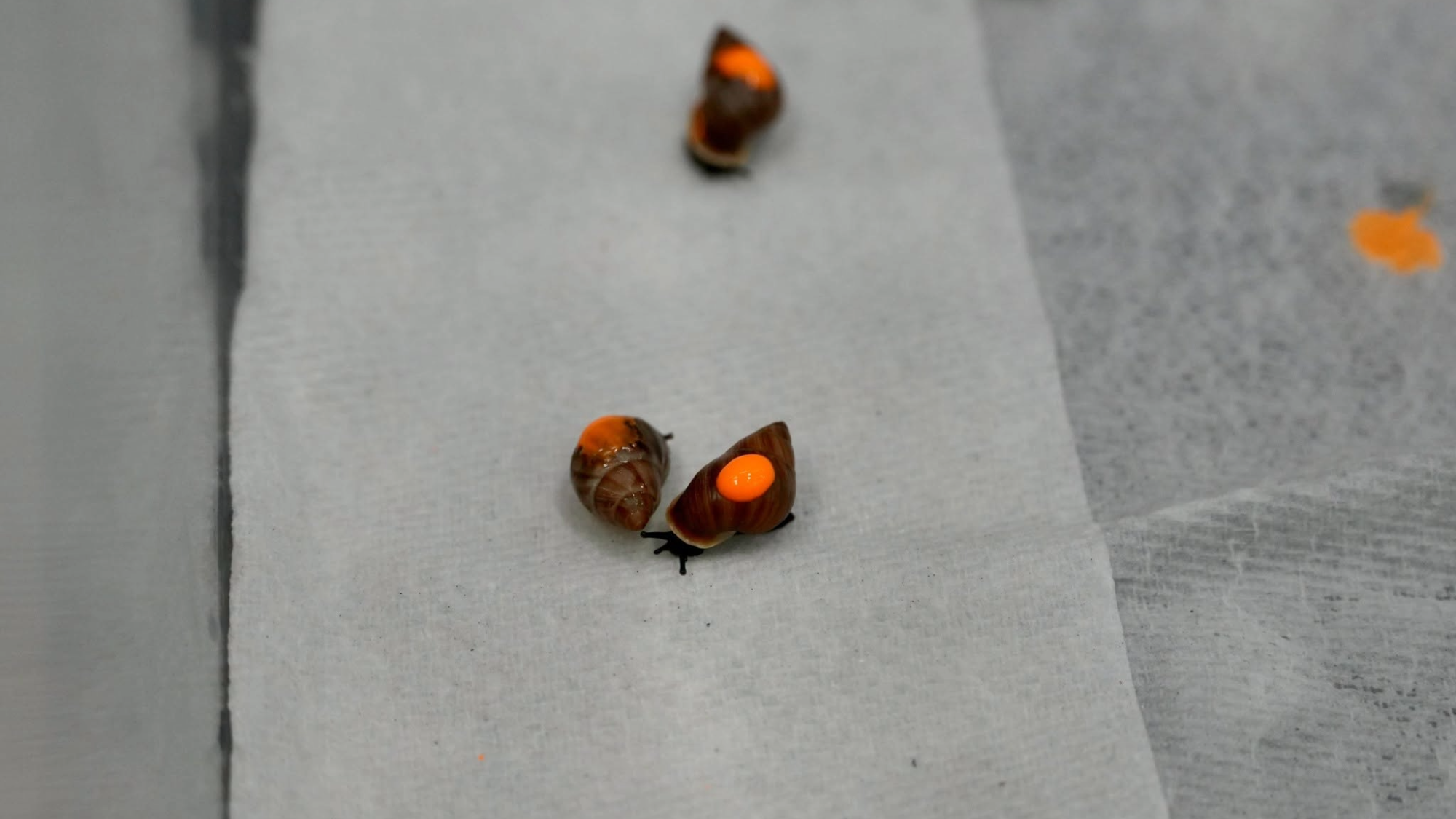
For decades, the Detroit Zoo has been breeding and raising Partula snails and helping return them to their native habitat by the thousands in Tahiti. In fact, the 500 en route right now were all bred at the zoo. Each of their shells features an orange dot of animal-safe paint that glows in UV light, which identifies them as one of the snails released in 2026. Each year has a different color, and the dots also allow conservationists to easily monitor them in their natural habitat. 

This upcoming release is part of an international recovery program that has returned 11 different Partula species formerly deemed extinct in the wild to their native environments, consisting of over 17,000 individual snails. The Audubon Nature Institute in New Orleans, Louisiana, also recently sent 200 Partula snails to Tahiti. 

snails under a blue light with orange dots on their shells
Orange markings on Partula nodosa snails bred at the Detroit Zoo glow under ultraviolet light. The markings will help researchers identify and monitor the 2026 release group after the snails are returned to the wild in Tahiti. Image: Detroit Zoo.

When asked what “success” looks like, Vassallo explains that, “Success for a conservation project can be defined in stages but ultimately, a self-sustaining population with consistent reproduction and very importantly, proper habitat that is protected to sustain that species to allow long term recovery and stabilization of that population.”

Some species of Partula snails are already extinct in the wild, such as Partula nodosa. In the wake of reintroductions of the species, however, experts were excited to observe offspring born in the wild. 

The post 500 snails mailed to Tahiti to reclaim their natural habitat appeared first on Popular Science.

  •  

Single California condor mother gets help raising her chick

Wild condor parents usually make a great parenting team. But when one female California condor (Gymnogyps californianus) in Pinnacles National Park in Central California found herself in the role of a single mother, park biologists stepped in to help.

The condor mother wasn’t able to provide sufficient care and food for her chick while on her own. Field biologists realized that when hunting for food, she returned to the nest less frequently. The chick needed more nutrition to grow and develop appropriately. 

“Based on her behavior, she had largely abandoned the nest, and the chick was unlikely to survive without intervention,” a spokesperson for the San Diego Zoo Wildlife Alliance tells Popular Science. 

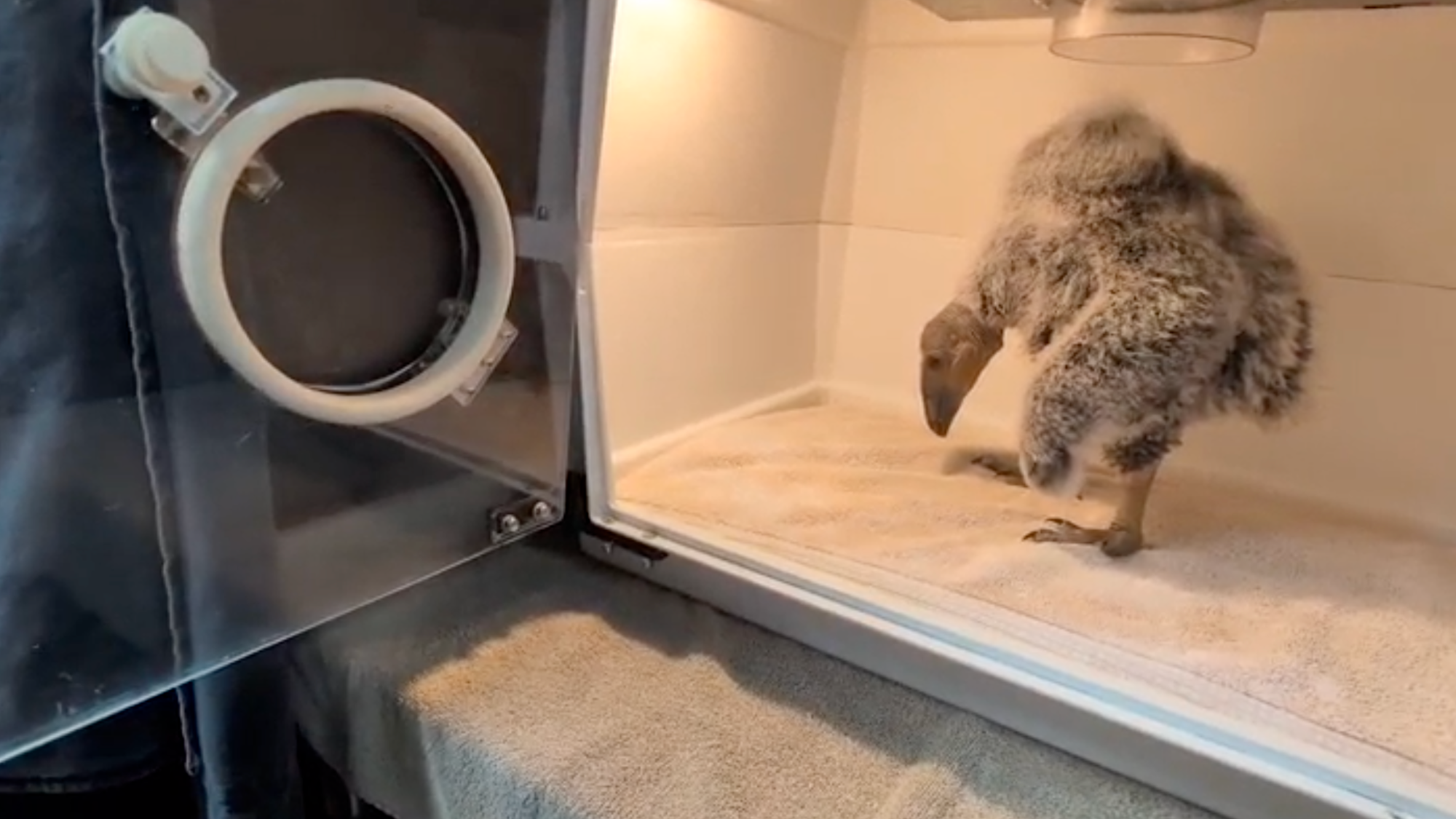
Pinnacles National Park biologists took the chick when it was around one month old and sent him to the San Diego Zoo Safari Park’s California condor breeding facility. There, he’s receiving care in a specialized puppet-rearing program. 

“The puppet-rearing program is a specialized care method used to raise young California condor chicks without allowing them to see or bond with human caretakers,” says the spokesperson. “Wildlife care specialists use hand-crafted puppets that resemble adult California condors and completely cover the caretaker’s hands and arms. Caretakers use the puppet’s beak to deliver food directly to the chick, mimicking the way an adult condor parent would feed its young in the nest.”

The chick was named Cayic (pronounced Chai-eech), meaning “strong” in the Mutsun language of the Indigenous people of California’s Central Coast. Thankfully, Cayic is demonstrating normal growth and development, and experts plan on returning him to the wild next fall.California condors are still considered critically endangered, after nearly going extinct.

As for the chick’s father, he had stopped returning to the nest and eventually died while receiving treatment for suspected lead poisoning. Lead poisoning is the greatest cause of death for California condors and a severe obstacle in the species’ recovery. The species is also threatened by the consumption of microtrash. 

California condors, or “thunderbirds” for Native Americans, are North America’s largest flying birds. Their wingspan is almost ten feet long, but their mighty reach didn’t keep them from reaching the brink of extinction. During the 1980s, there were fewer than two dozen of them in the wild. In 1986, the U.S. Fish and Wildlife Service put them all in a captive breeding and release program, including at the San Diego Zoo Safari Park. Six years later, the program had bred enough chicks to return the first condors to the wild. 

As of the end of 2025, there are 607 California condors in the world, 392 of which are in the wild. One of them is Cayic’s mom. 

“The mother may go on to pair with another male, and we hope she will have another opportunity to breed during a future breeding season,” says the spokesperson.

The post Single California condor mother gets help raising her chick appeared first on Popular Science.

  •  

16 splashy and spectacular images from the 2026 Ocean Photographer of the Year awards

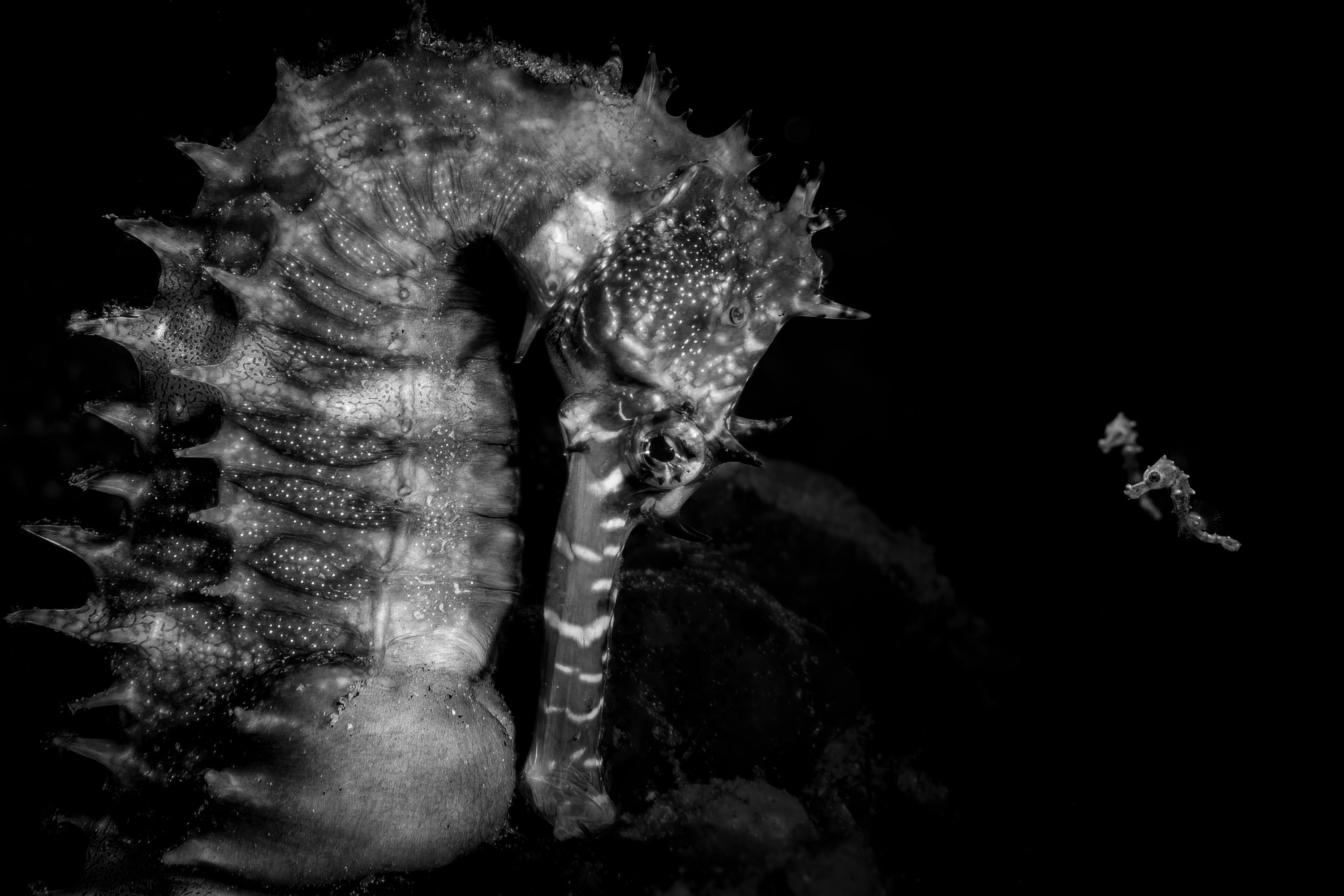
In French Polynesia, an adult seahorse floats in ocean waters alongside two juveniles. His head appears bowed, as the young fry look on curiously. The captivating black-and-white image (seen below) by photographer Julien Anton took top honors at the 2026 Ocean Photographer of the Year awards.

an adult seahorse alongside two juveniles
French Polynesia
An adult seahorse pictured with newly born juveniles in the shallow seaweed-filled waters of Moorea, French Polynesia. While it is not known if these seahorses are related, their arrangement creates the impression of a farewell, as if the tiny seahorses have gathered around their father after he has released them into the world. Seahorses are now rare in French Polynesia so this image was the result of long hours of searching among the seaweed.
Credit: Julien Anton / Ocean Photographer of the Year 2026

“Winning Ocean Photographer of the Year is an immense honour – one I’m proud to share with my family, and with the local residents, naturalists and fishermen of Tahiti and Moorea whose knowledge made this image possible,” Anton said in a statement. “We spent countless hours searching in difficult conditions, with no guarantee of finding a single seahorse. That is what made the moment so extraordinary – when the juveniles turned back towards the adult, it felt like something far beyond what I had dared to hope for. I am not a professional photographer; for me, photography is simply how I share what I see and feel. My hope is that this image can serve as a bridge between science, conservation and a world that deserves to know what is at stake.” 

The 2026 Ocean Photographer of the Year competition celebrates Big Blue’s incredible beauty while also highlighting the urgent need to protect it in a rapidly changing world. The annual contest is co-presented by Oceanographic Magazine and Blancpain.

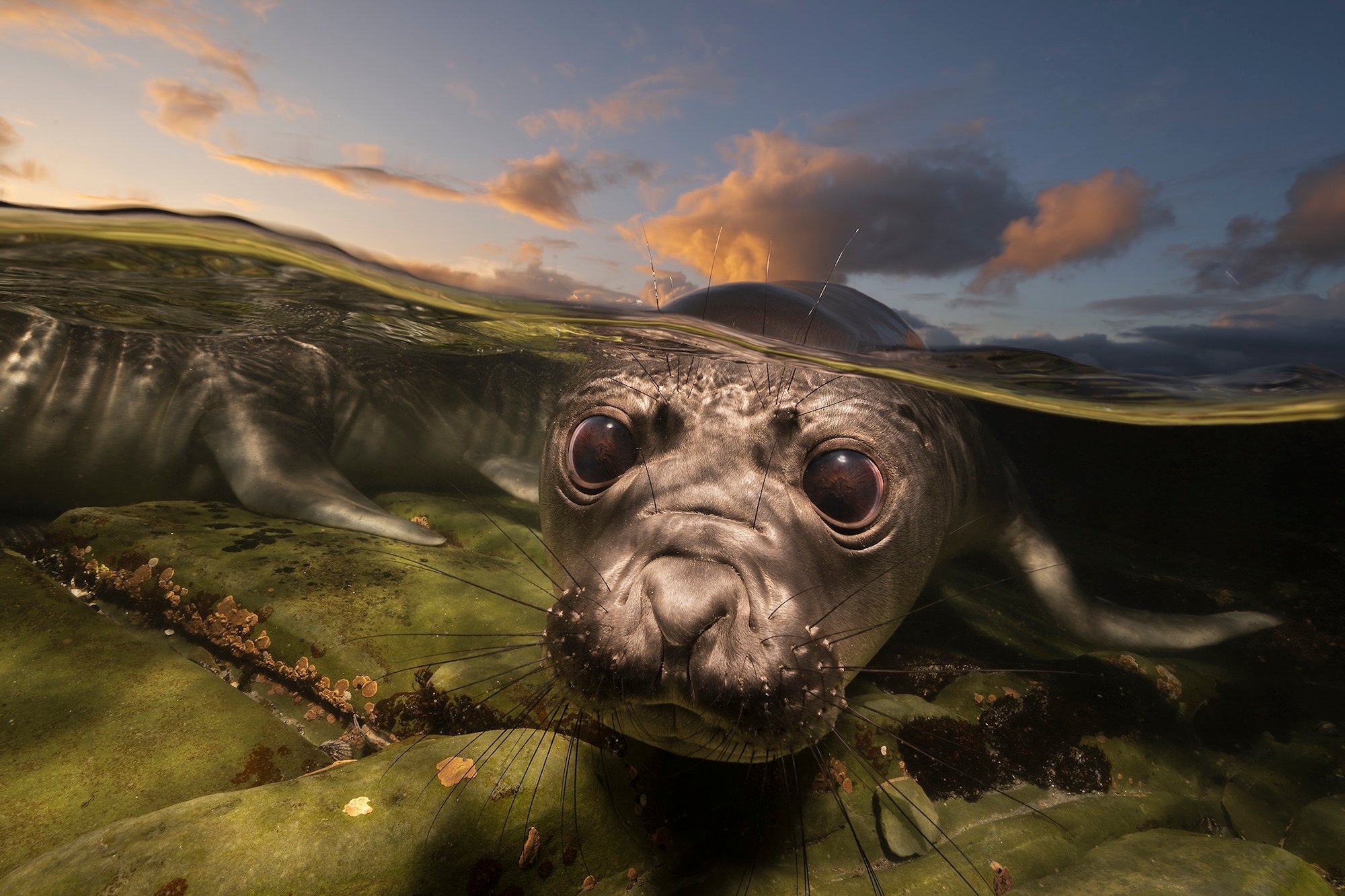
Southern elephant seal pups explore shallow rock pools
Sealion Island, Falkland Islands.
Southern elephant seal pups explore shallow rock pools on Sea Lion Island in the Falkland Islands, testing their first movements in the water after being weaned by their mothers. These young seals must quickly learn to swim and survive independently. As they climb over one another and investigate their surroundings, this scene captures a key moment in their journey from land-bound pups to ocean explorers.
Credit: Matty Smith / Ocean Photographer of the Year 2026 Credit: Matty Smith / Ocean Photographer of the Year 2026
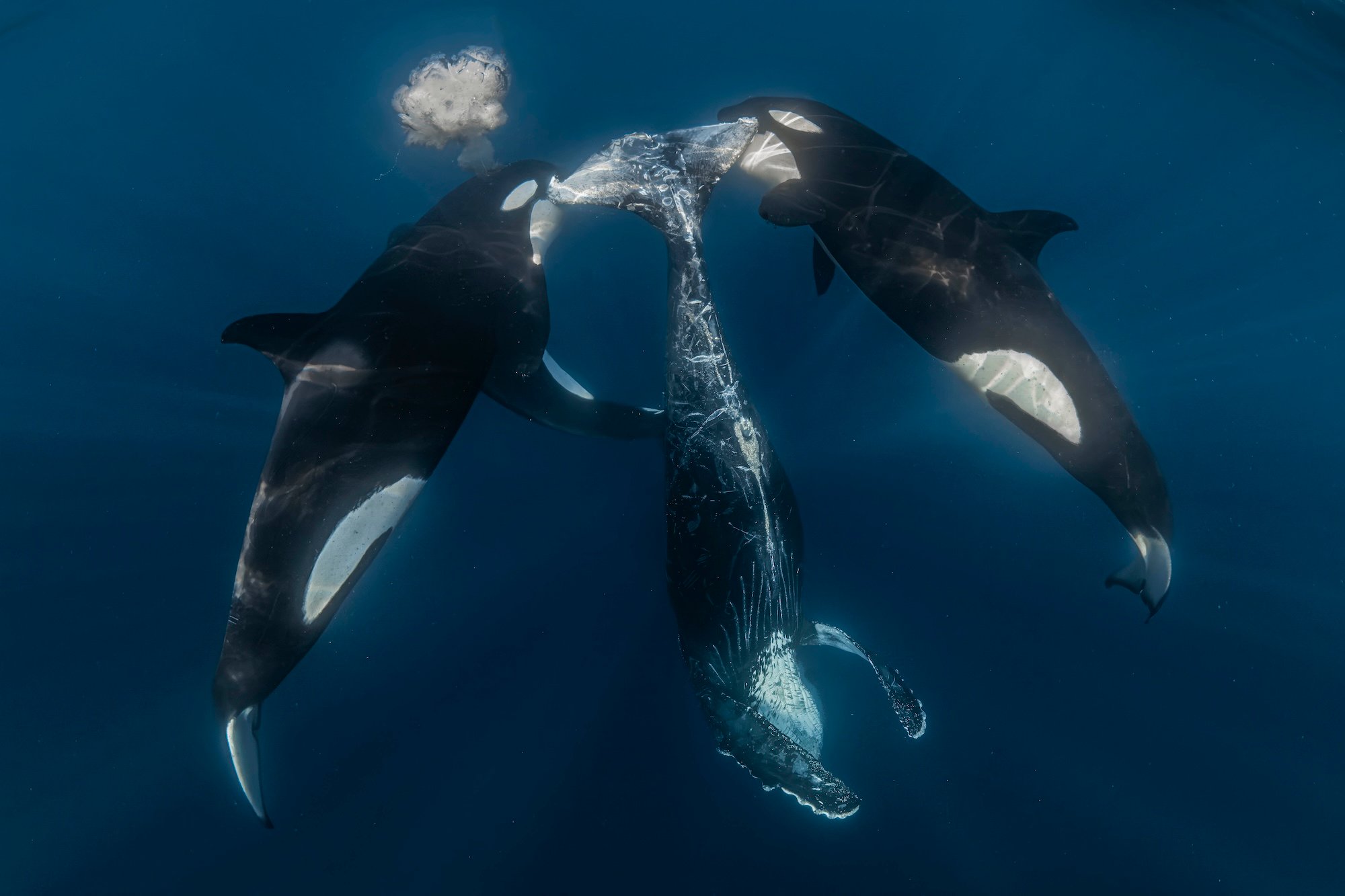
the aftermath of a successful orca hunt
Baja California, Mexico
In the Pacific waters of Mexico, this photograph captures the aftermath of a successful orca hunt. Nearly an hour after a pod separated a humpback whale calf from its mother, the orcas resurfaced carrying their prey between them. The event reveals the cooperative hunting strategies of orcas, where multiple individuals work together to isolate and subdue large prey. What the image doesn’t show is that after the kill, other scavengers, including silky sharks, were drawn to the remains, showing how one event can influence an entire marine food web.
Credit: Rafael Fernandez Caballero / Ocean Photographer of the Year 2026
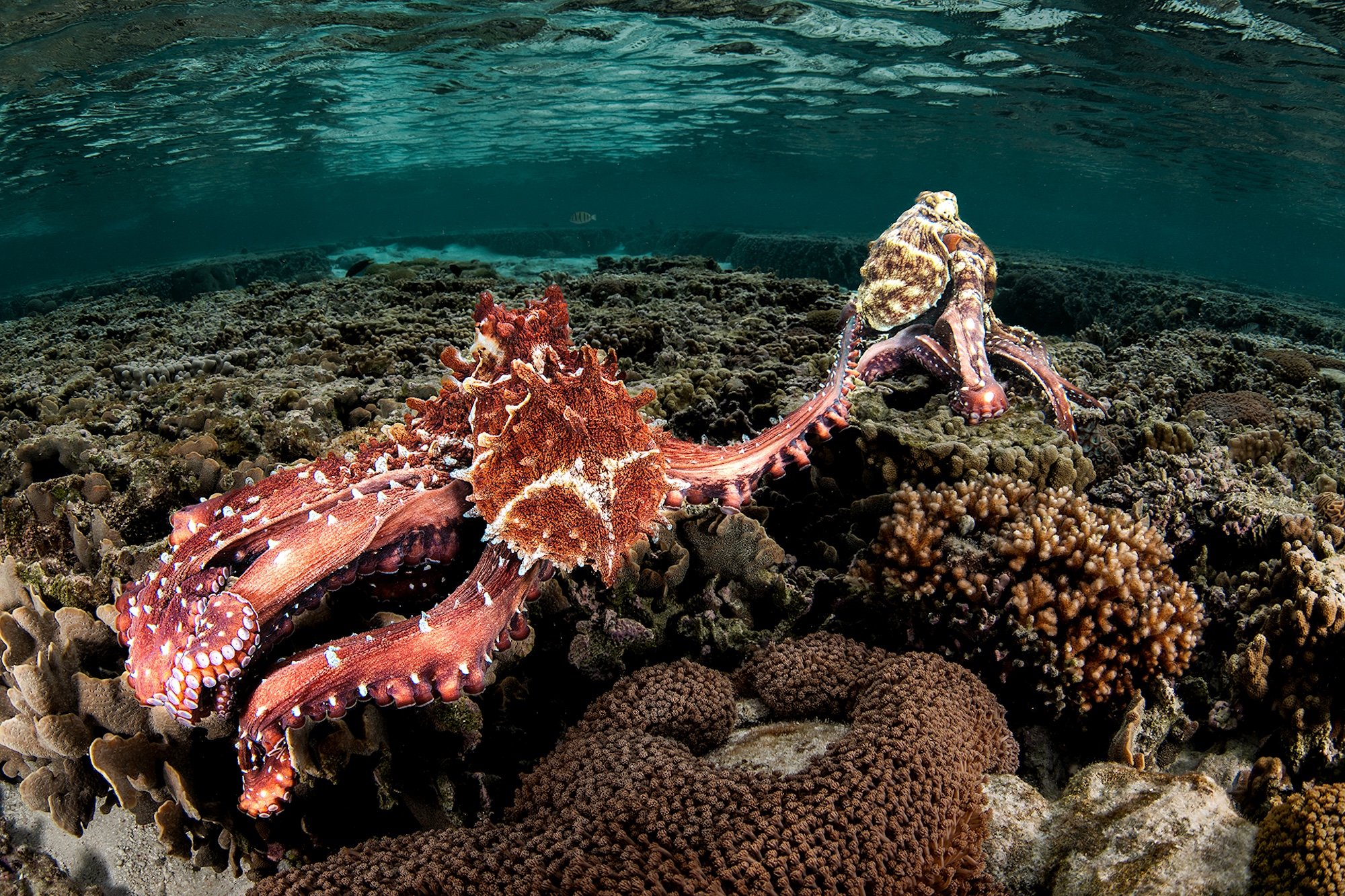
two octopuses during courtship
Lady Elliot Island, Australia 
“Arms of Connection” captures two octopuses during courtship on a shallow coral reef at Lady Elliot Island, part of Australia’s Great Barrier Reef. The male extends his specialised mating arm, known as a hectocotylus, to transfer spermatophores to the female. The interaction continued for several minutes as the male approached and the female moved across the reef before eventually accepting him.
Credit: Joshua Blank / Ocean Photographer of the Year 2026
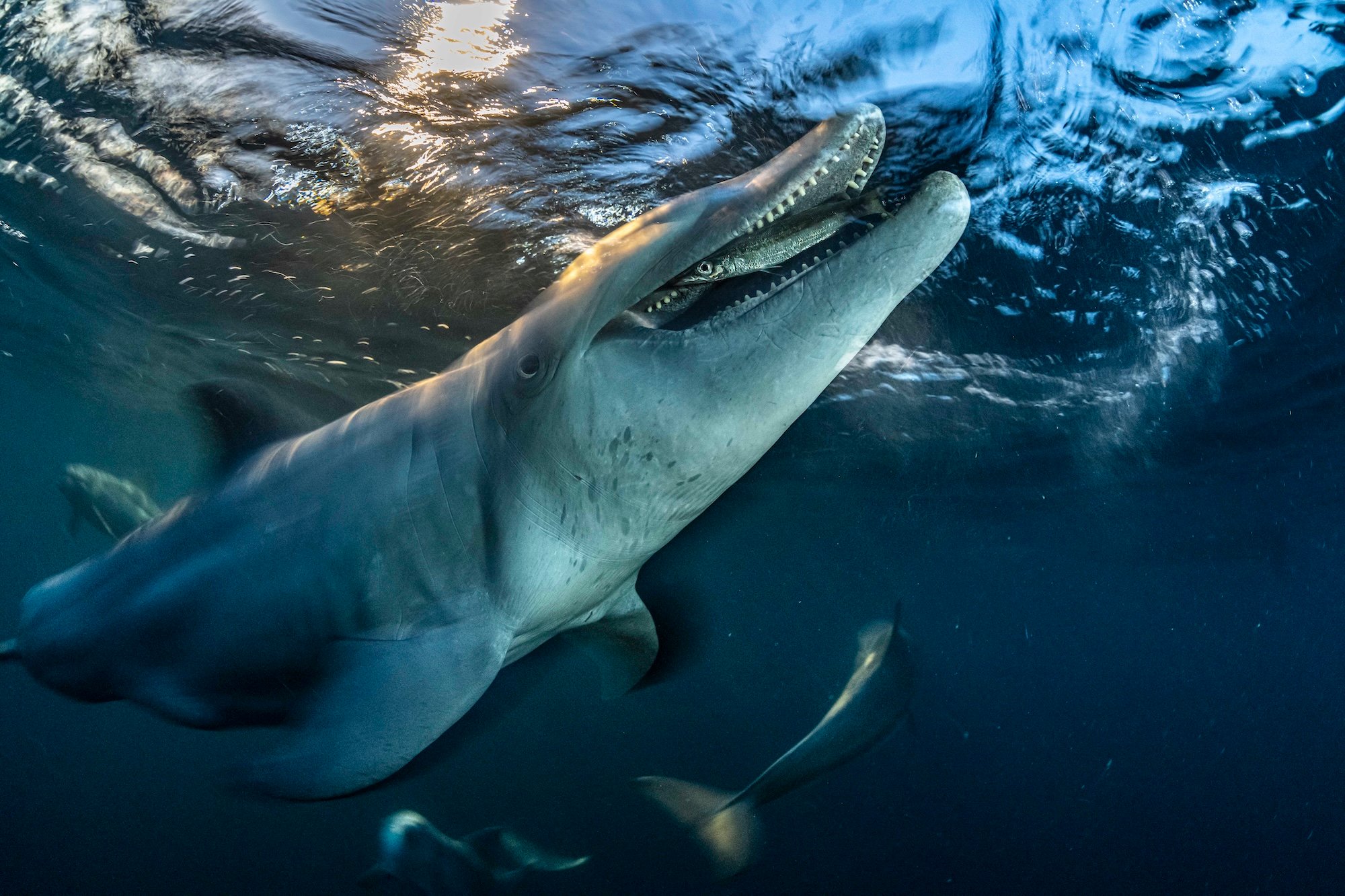
A bottlenose dolphin bites a small fish
Raja Ampat, Indonesia 
A bottlenose dolphin bites a small fish beside a traditional bagan fishing platform in Indonesia. These dolphins have learned to associate the illuminated nets with an easy source of food, often taking discarded or unwanted fish provided by fishermen. Bagan vessels use lights at night to attract fish before lowering nets from floating platforms. This image captures the close relationship between a wild predator and a human fishing practice, while revealing how animal behaviour can adapt to changing ocean environments.
Credit: Henley Spiers / Ocean Photographer of the Year 2026
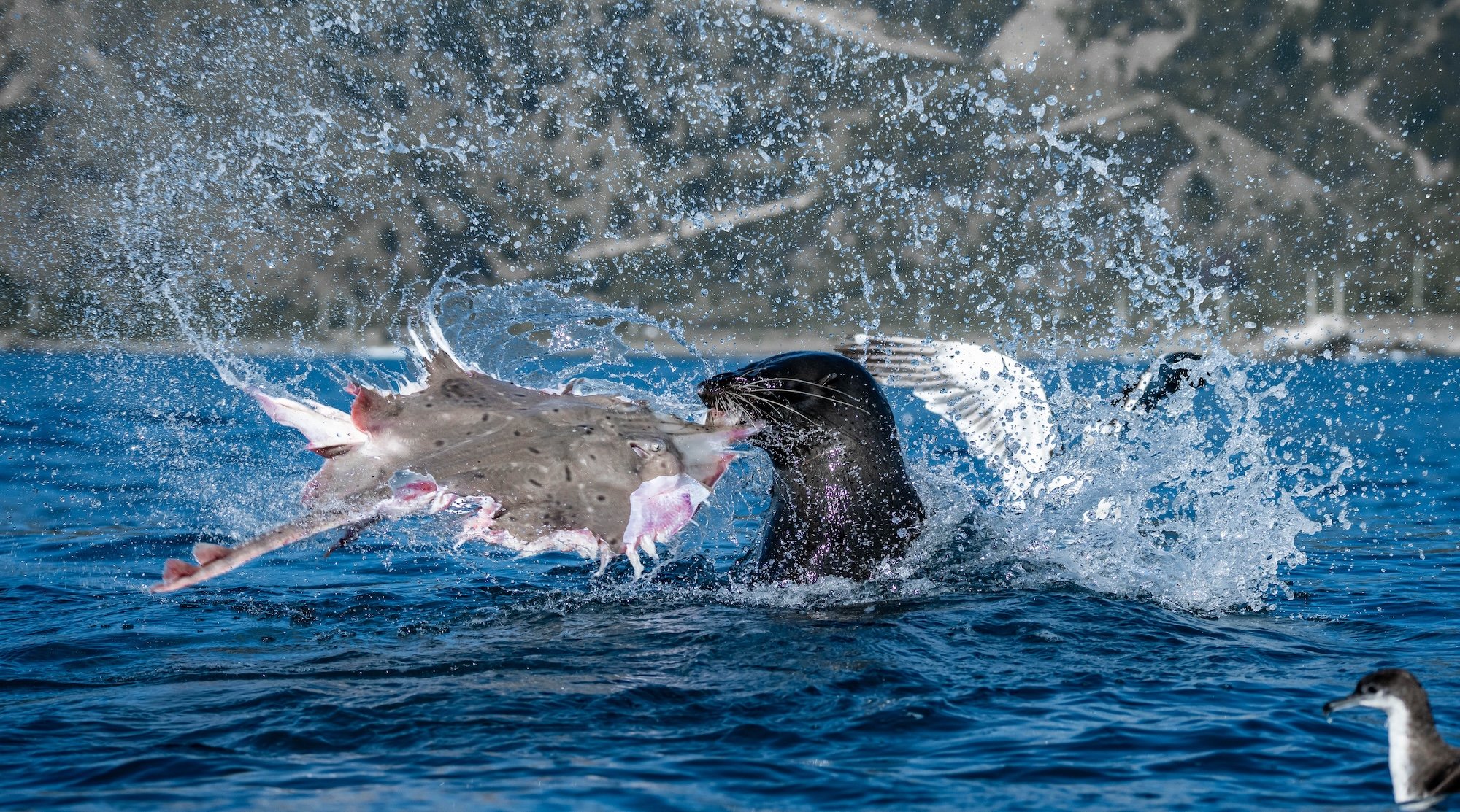
A New Zealand fur seal tears apart a rough skate
Goose Bay, New Zealand 
A New Zealand fur seal tears apart a rough skate in the waters of New Zealand, while seabirds gather for the scraps. Unable to swallow such large prey whole, the seal throws the skate repeatedly to break it into smaller pieces. Photographed from a kayak, this scene reveals the feeding strategy of a powerful predator and the chain of life that follows every meal.
Credit: Allan Cronin / Ocean Photographer of the Year 2026
A green turtle approaches the camera
 French Polynesia 
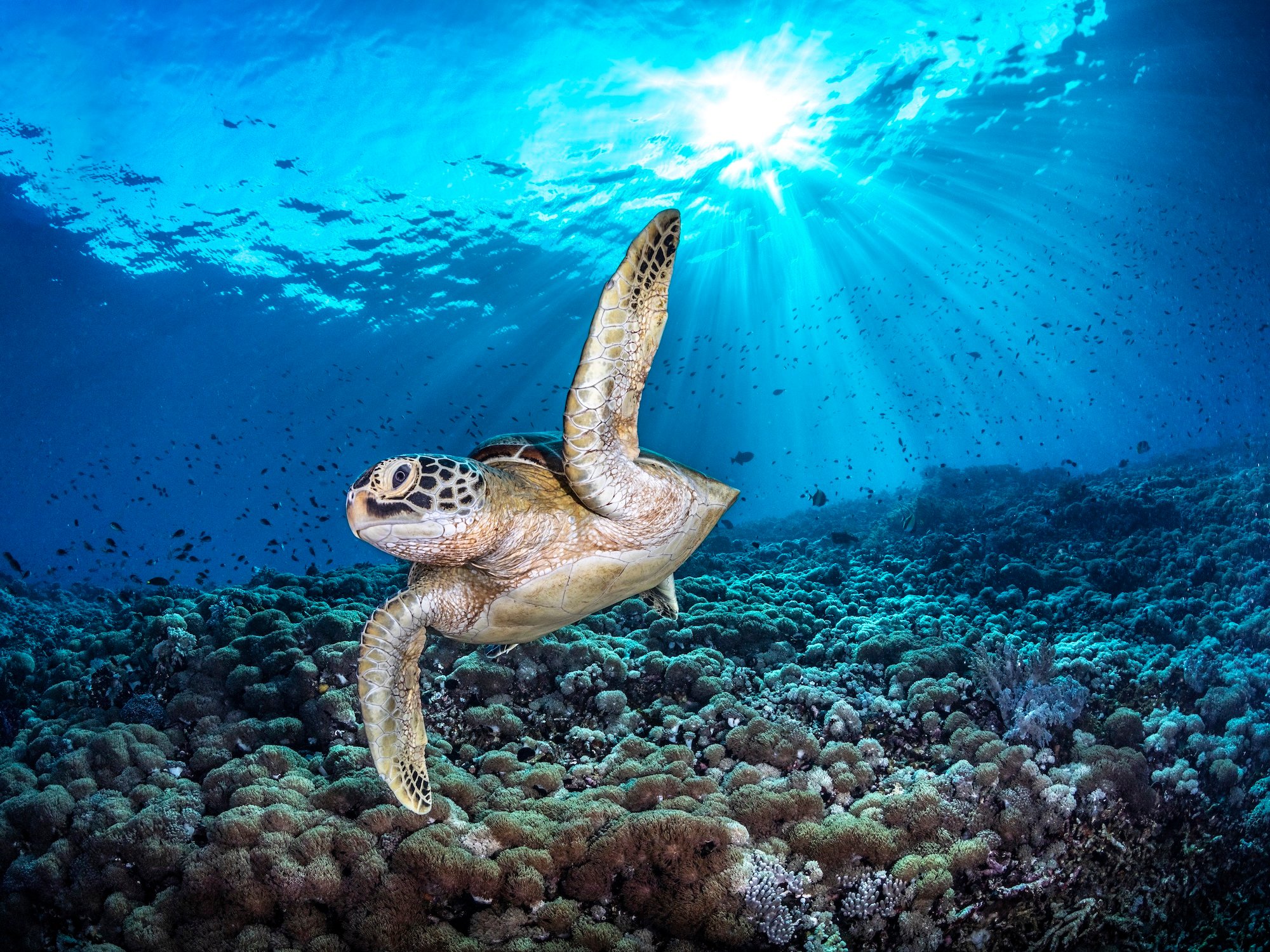
A green turtle approaches the camera, appearing curious about her reflection in its dome port. The photographer positioned the camera just below her eye level to create a more intimate portrait; staying within 3-10 metres of the surface kept the sunlight sharp, creating distinct rays through the water. A fast shutter speed and small aperture controlled the intense brightness, while a small amount of strobe light revealed the turtle’s details.
Credit: Jenny Stock / Ocean Photographer of the Year 2026 JENNY STOCK
A Caribbean reef shark swims through purple sea fans and porous sea rod
Cuba 
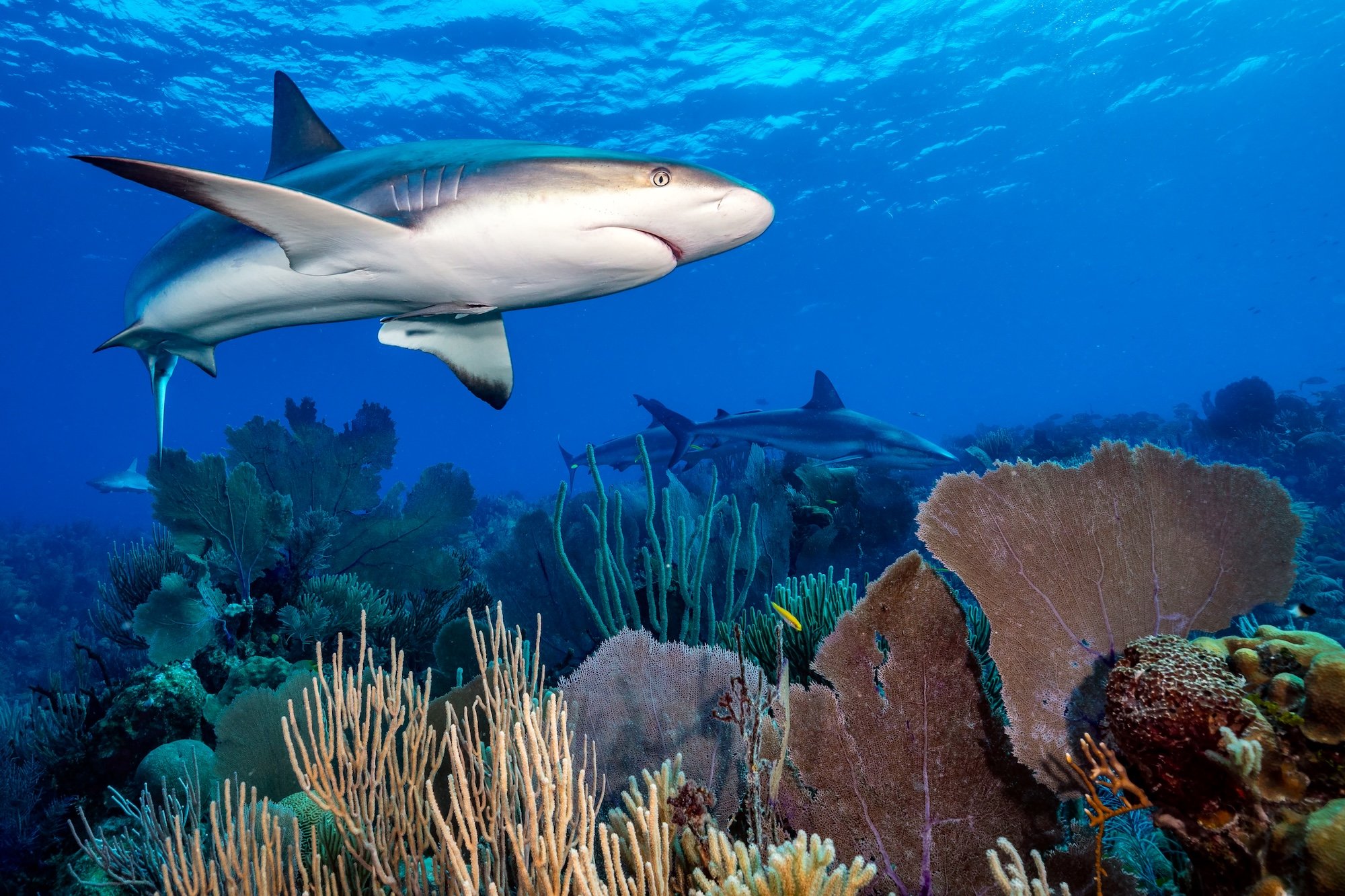
A Caribbean reef shark swims through purple sea fans and porous sea rod in Jardines de la Reina, Cuba. The marine park has been protected since 1996, with limits on fishing and visitor numbers helping its reefs and wildlife thrive. Stretching for around 90 miles, the protected archipelago is known for healthy corals and abundant marine life. Caribbean reef sharks can reach three metres in length and are important apex predators, helping maintain balance within the reef ecosystem.
Credit: Jenny Stock / Ocean Photographer of the Year 2026
A mother humpback whale and her calf
 Tonga 
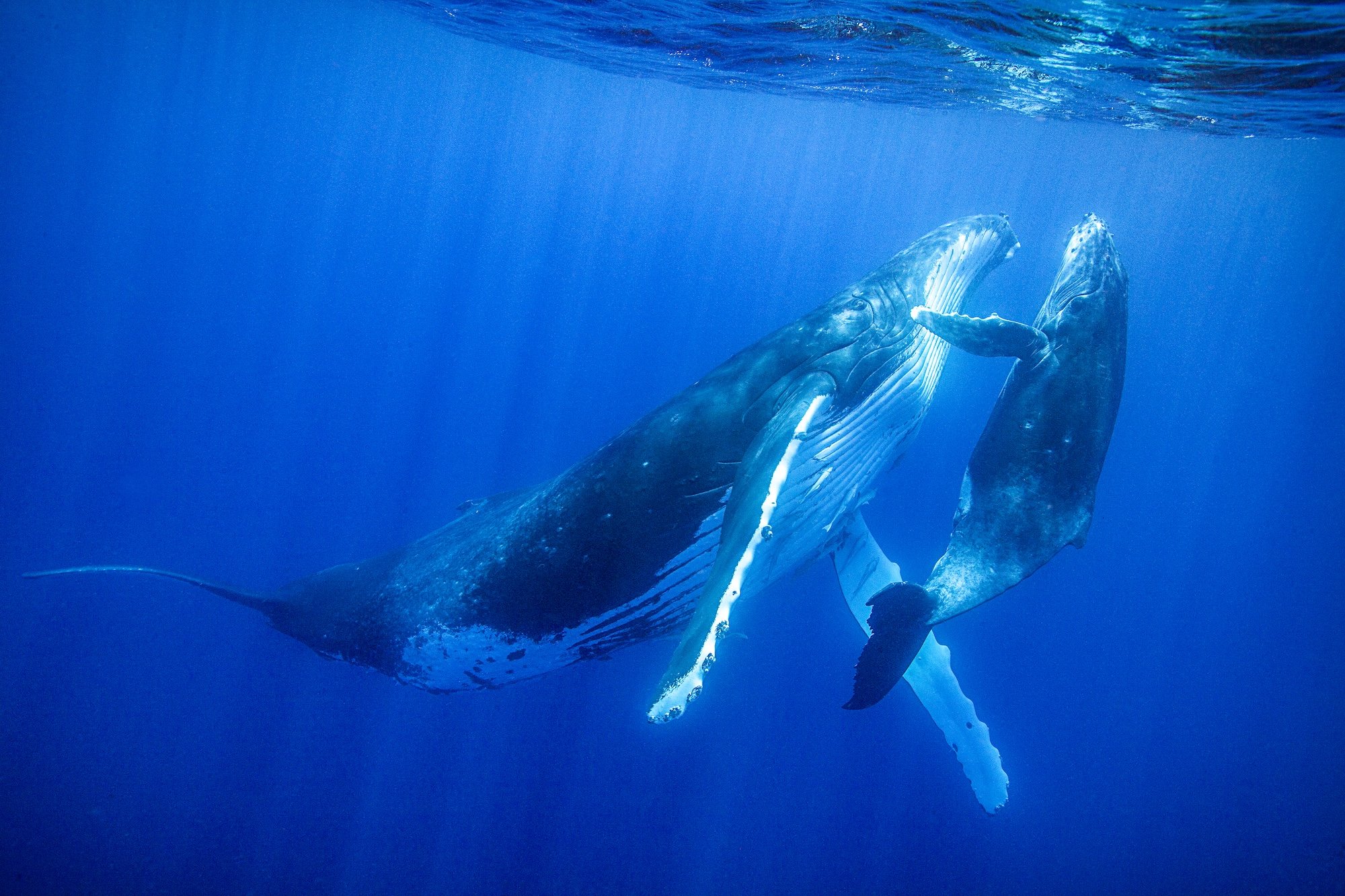
A mother humpback whale and her calf glide through Tonga’s warm, sheltered waters. The calf stays close to its mother at first, then becomes curious, swimming in playful circles and approaching the camera. The mother remains calm and watchful, guiding her young when it comes too close. Tonga’s protected waters are an important nursery, where pregnant humpbacks give birth and calves grow stronger before beginning their long journey south towards Antarctica. This encounter captures the quiet bond between mother and calf.
Credit: Jenny Stock / Ocean Photographer of the Year 2026
A male Banggai cardinalfish shelters newly hatched juveniles inside his mouth
North Sulawesi, Indonesia 
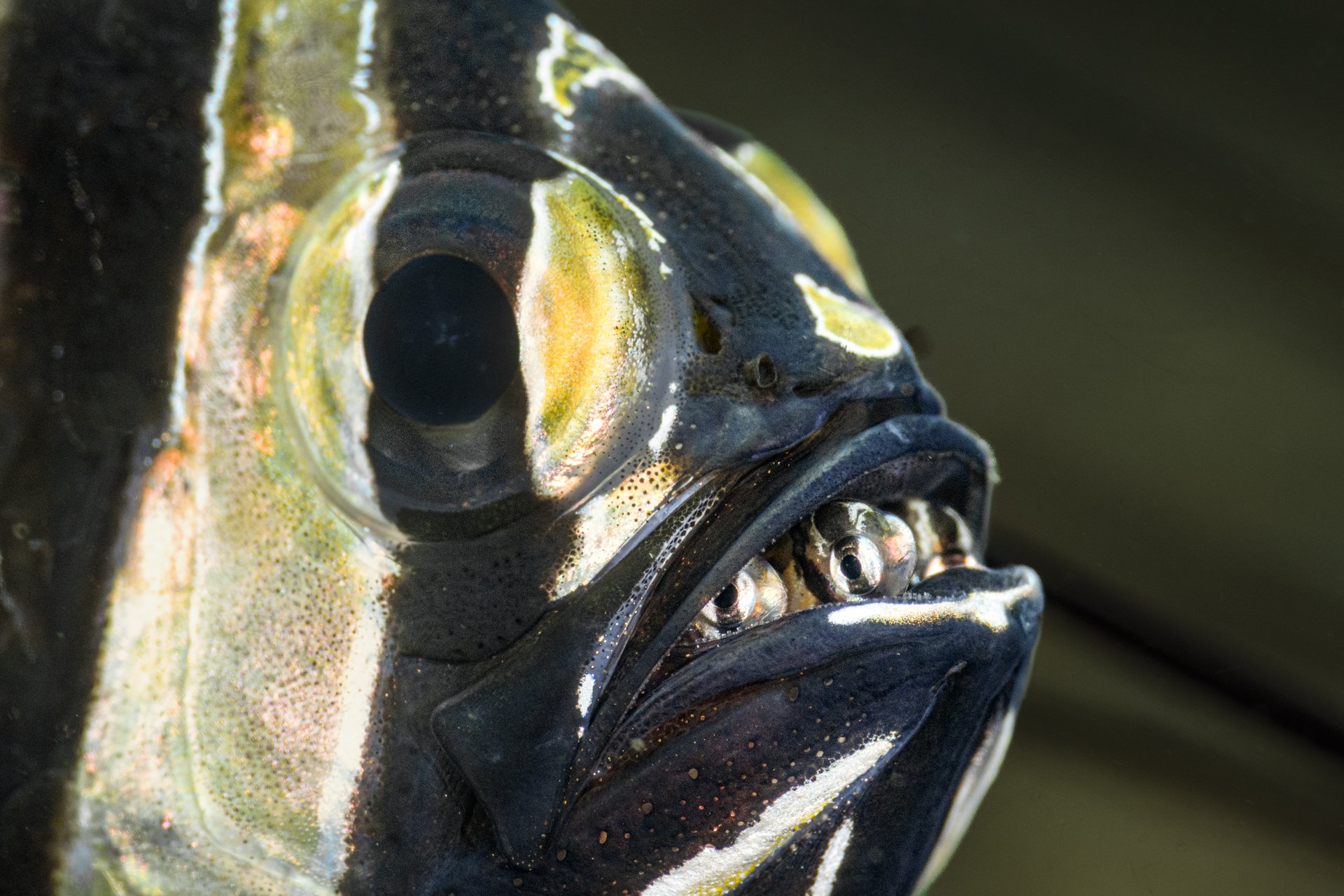
A male Banggai cardinalfish shelters newly hatched juveniles inside his mouth, continuing the parental care that follows a three-week incubation period. After hatching, the male may brood the young for another 10 days without feeding, protecting them from predators until they become more independent. This image captures two juveniles peering from their father’s mouth, revealing the specialised mouthbrooding strategy that helps this species increase the survival of its young.
Credit: Suliman Alatiqi / Ocean Photographer of the Year 2026
A pygmy seahorse clings to a delicate hydroid in the reefs
Raja Ampat, Indonesia 
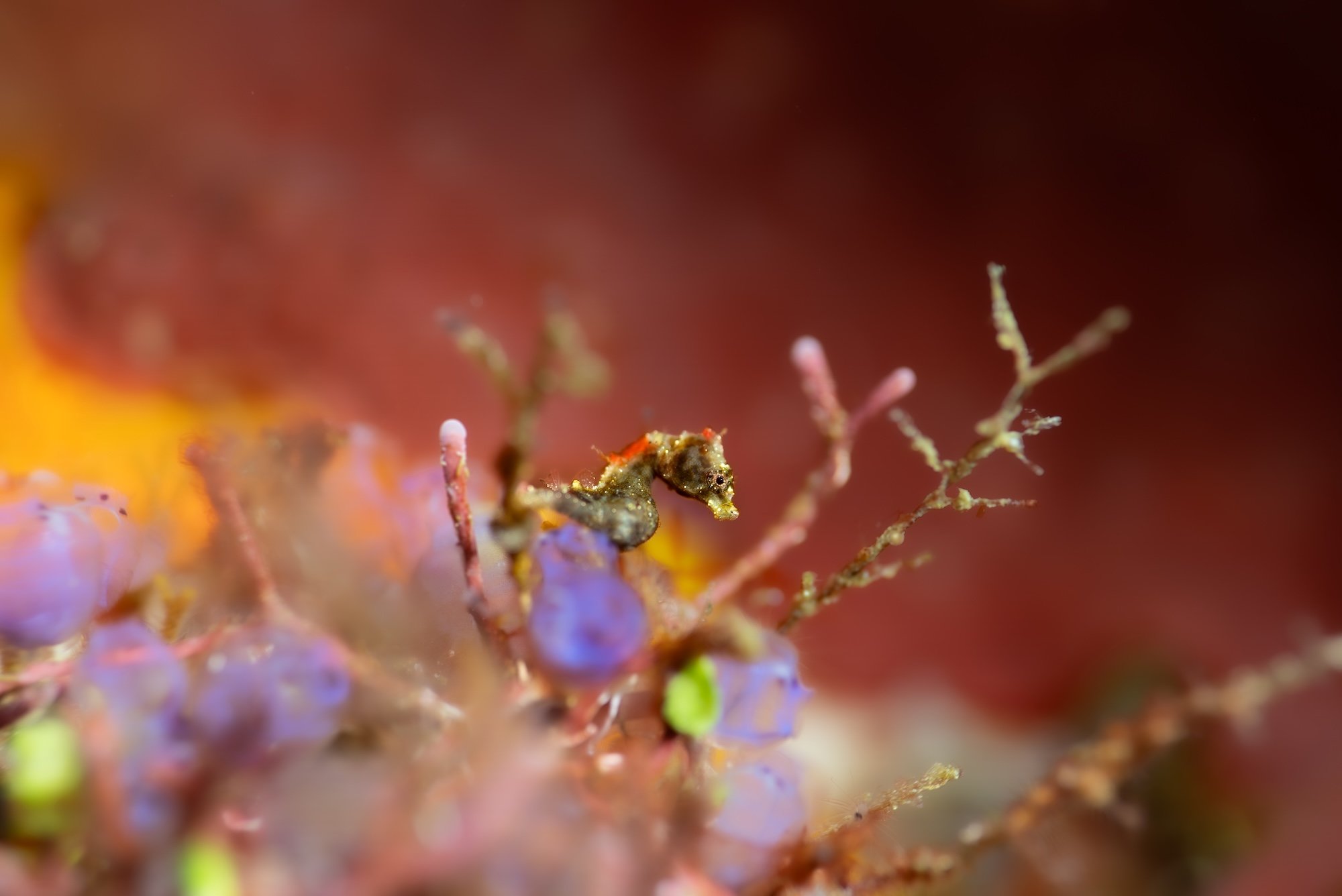
A pygmy seahorse, no larger than a grain of rice, clings to a delicate hydroid in the reefs of Raja Ampat, Indonesia. Perfectly camouflaged, these tiny animals are rarely seen, even by experienced divers. Photographing them requires patience and careful buoyancy to protect their fragile habitat, reminding us that some of the ocean’s most remarkable wildlife is also its most vulnerable.
Credit: Iris Uijttewaal / Ocean Photographer of the Year 2026
A Braun’s pughead pipefish peers from between coral polyps
Lembeh, Indonesia 
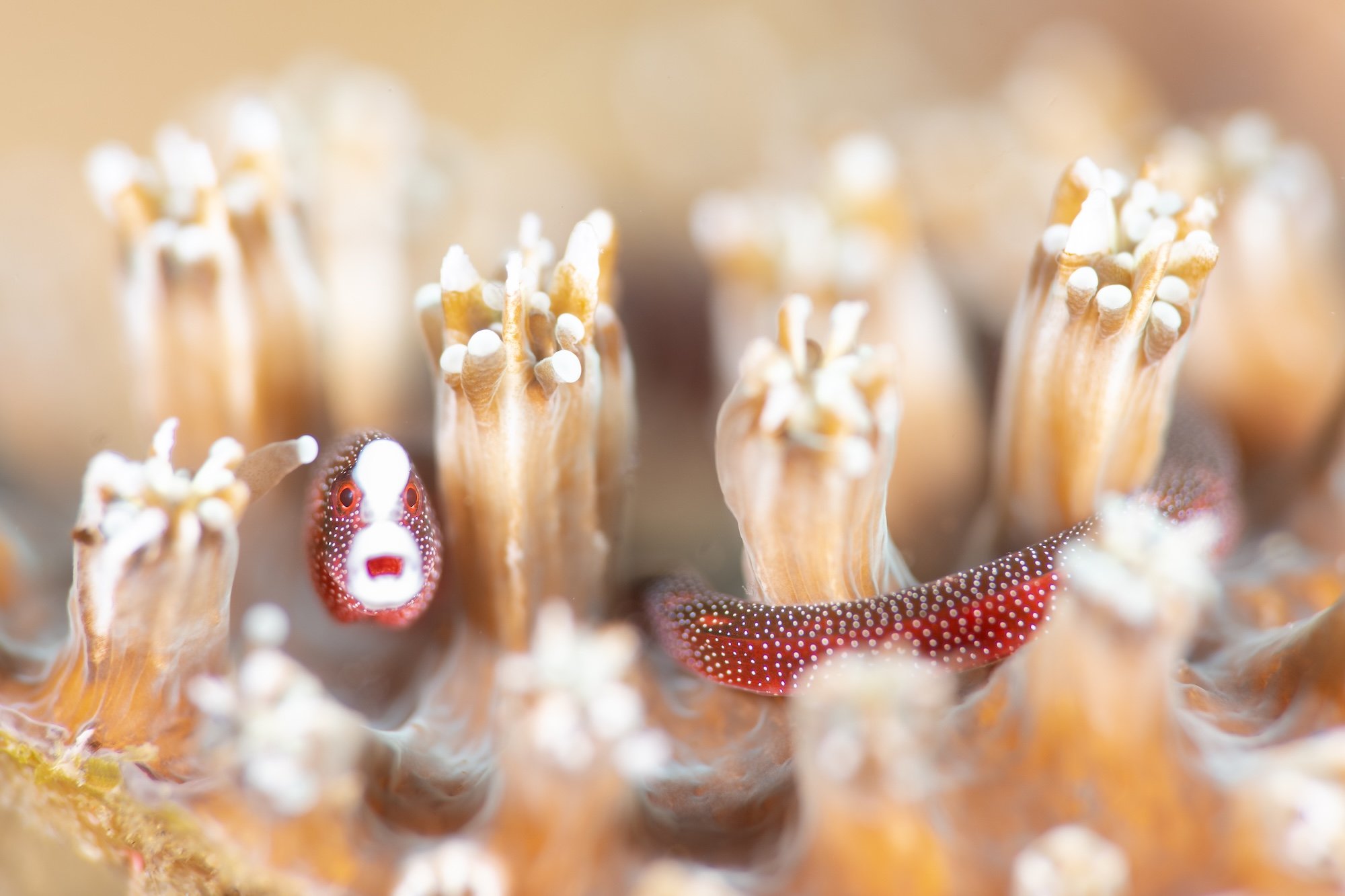
A Braun’s pughead pipefish peers from between coral polyps in Lembeh, Indonesia. Its unusual features give it a curious, almost surprised expression, helping people connect with a species rarely seen outside its coral home. Some guides damage coral colonies to make these tiny fish easier to show to visitors, but this image was captured by waiting patiently and allowing the animal to appear naturally.
Credit: Luis Arpa Toribio / Ocean Photographer of the Year 2026 Luis Arpa
Dolphins ride the waves alongside surfers
Tamarama Beach, Australia 
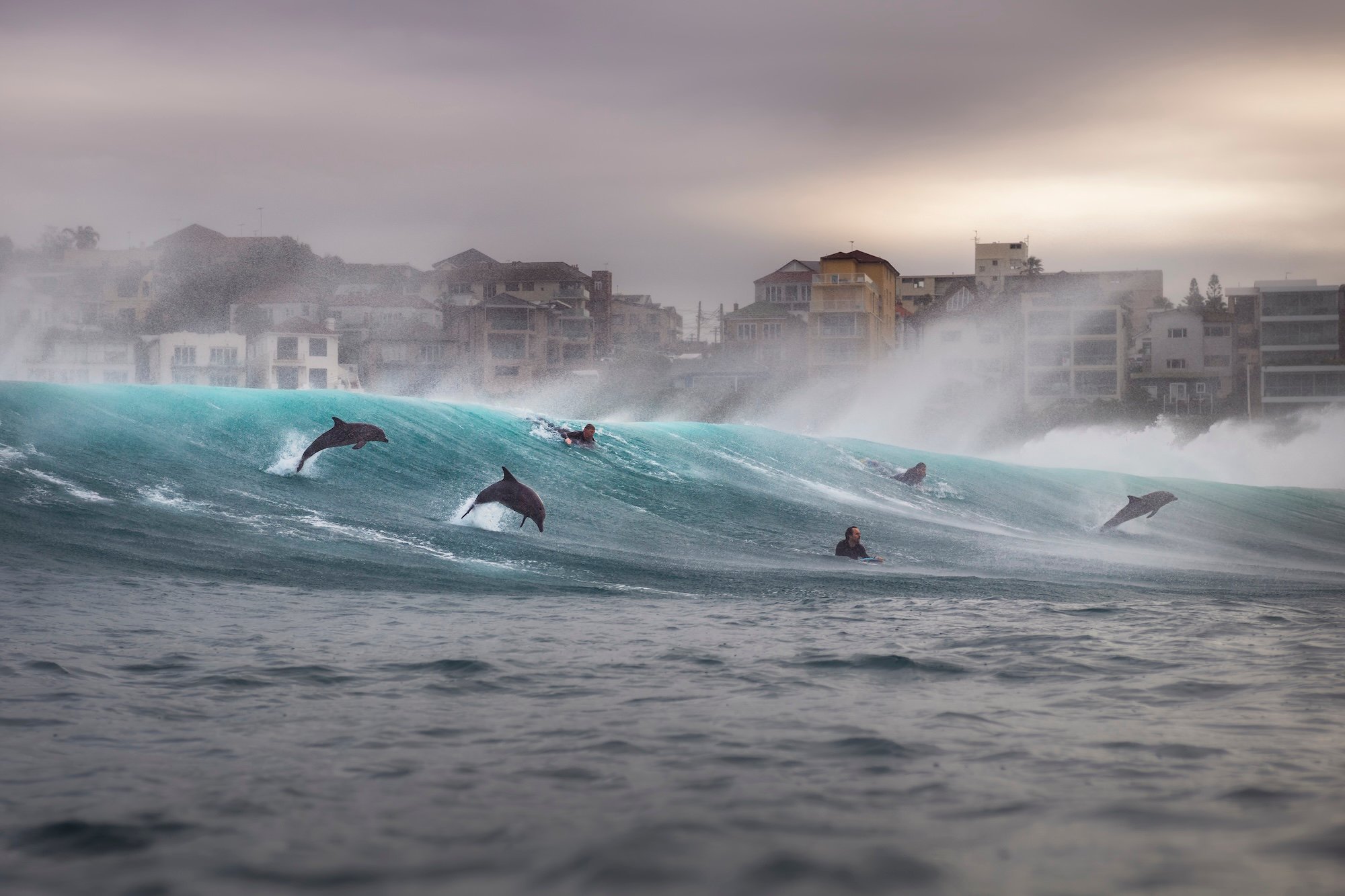
Dolphins ride the waves alongside surfers at Tamarama Beach, Sydney, during a powerful swell and offshore winds. The pod stayed with the surfers for more than an hour, moving through the lineup as naturally as the people around them. Captured from the water, this image shows the ocean as a shared space, where humans and wildlife briefly move together within the same powerful coastal environment. 
Credit: Gergo Rugli / Ocean Photographer of the Year 2026 GERGO RUGLI
A freediver is surrounded by a vast school of sardines
Panglao, Philippines 
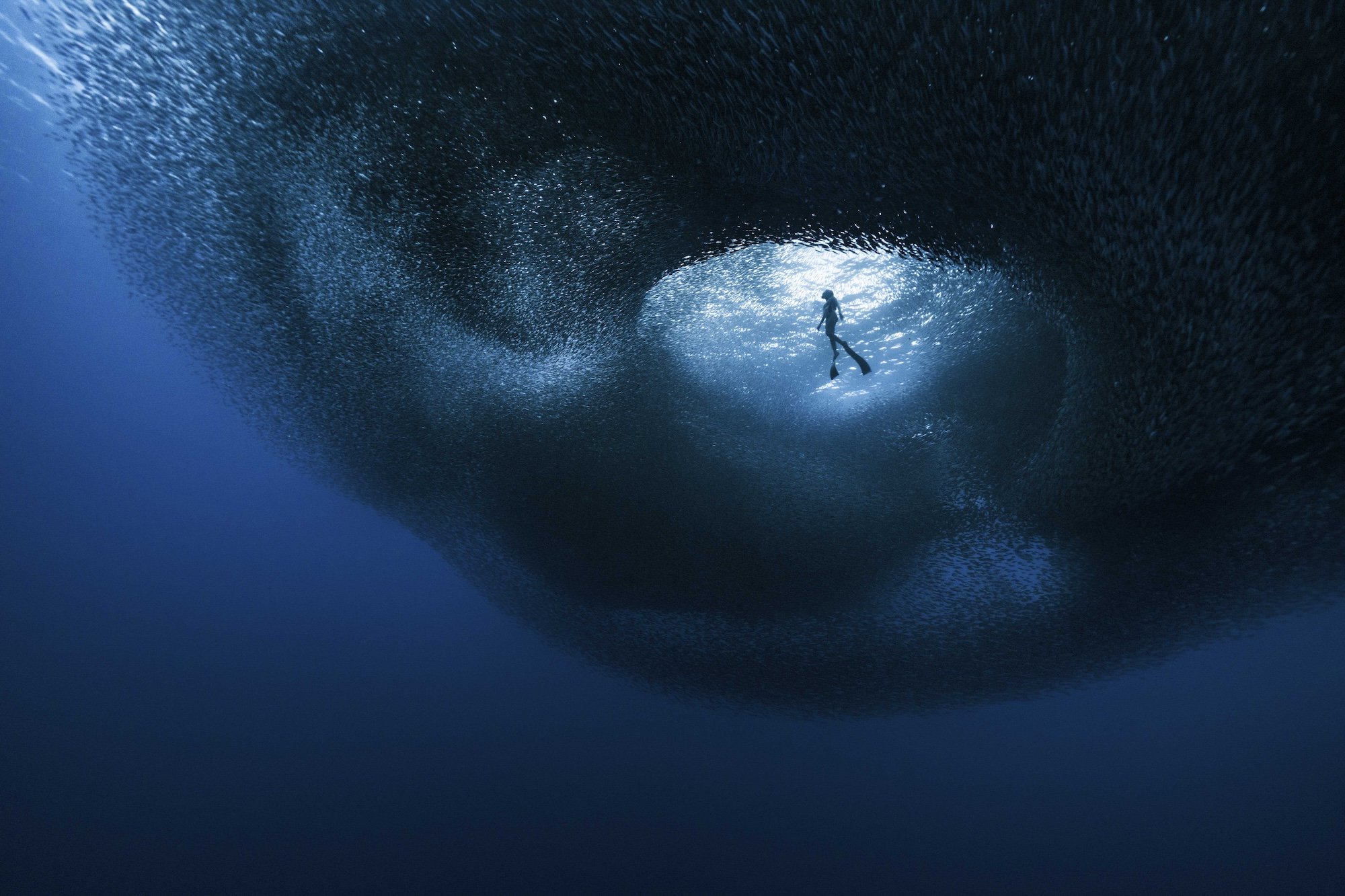
A freediver is surrounded by a vast school of sardines, which part to form a striking halo as they move around her. Captured during an unplanned morning dive, the image reveals the calm trust that can exist between people and marine life. It is a reminder that patience and respect for the ocean can lead to its most extraordinary moments. 
Credit: Benjamín Yávar / Ocean Photographer of the Year 2026
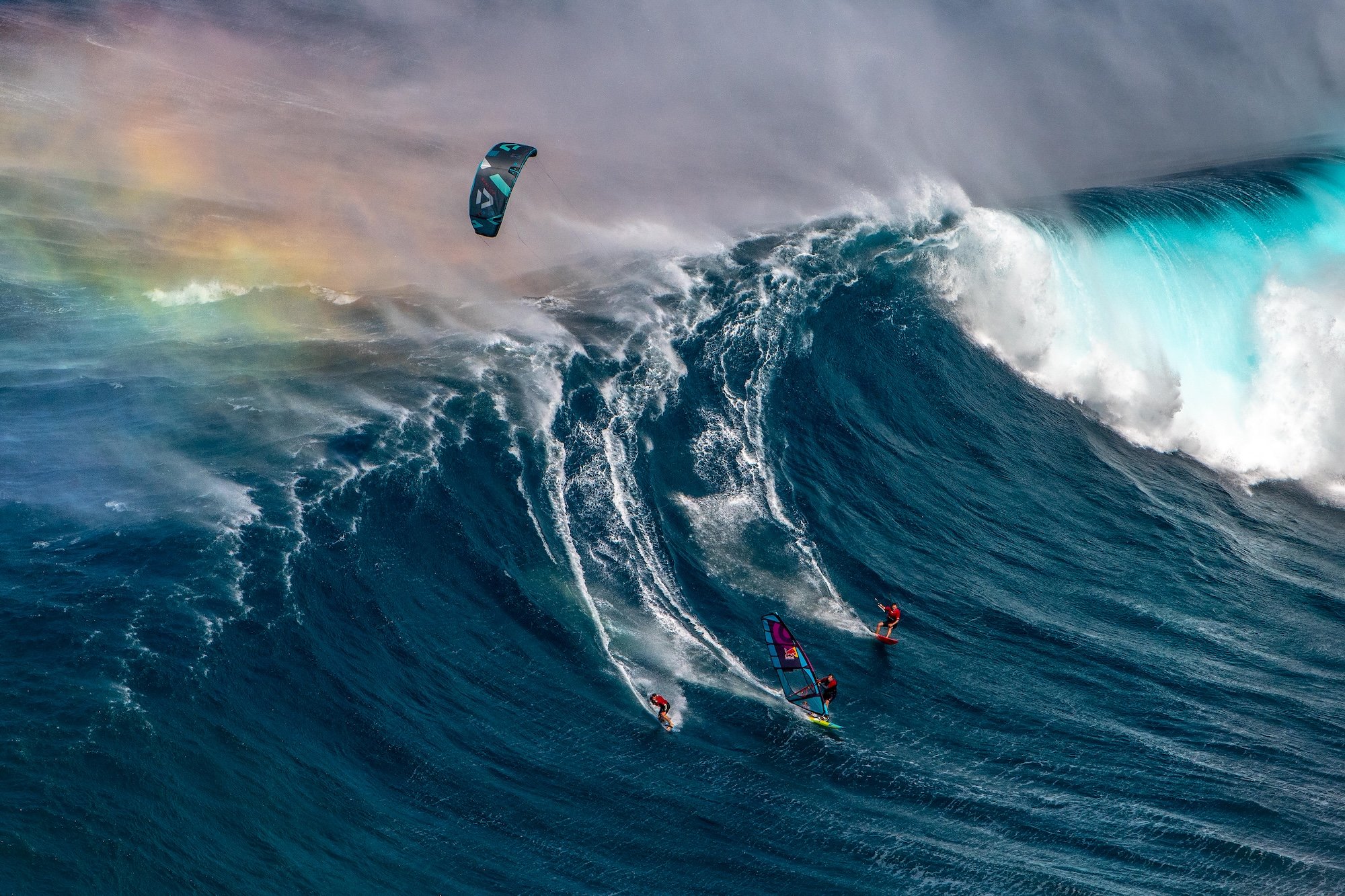
a surfer, windsurfer and kitesurfer sharing the same towering wave
Hawai’i, USA 
The photographer shot this image of a surfer, windsurfer and kitesurfer sharing the same towering wave at Pe’ahi, known as Jaws, on Maui’s north shore, from a doorless helicopter. At the time there was an unusual combination of huge swell and strong wind that allowed three different forms of wave riding to happen in harmony. In the spray, a rainbow forms. It has been created by the same wind powering the riders across the wave.
Credit: Daniel Edmond Sullivan Jr / Ocean Photographer of the Year 2026

The post 16 splashy and spectacular images from the 2026 Ocean Photographer of the Year awards appeared first on Popular Science.

  •  

Scientists unlock secrets of ancient Egyptian materials with proteomics

Credit: Museum of Mediterranean and Near Eastern Antiquities, Stockholm

The precise composition of ancient Egyptian paints, binders, adhesives, and similar materials used to make artifacts is largely unknown, in part because a full analysis would require taking samples that would damage those valuable artifacts. The development of cutting-edge, non-destructive techniques has been helping to unlock those secrets, aiding conservation efforts.

Most recently, researchers have used mass spectrometry-based proteomics to analyze the glues and adhesives in a broad set of Egyptian artifacts, according to a new paper published in the journal Science Advances. They found plenty of expected sources, such as animal collagens and egg proteins, but also plant proteins, specifically from sesame and drumstick tree (moringa) cereals.

As previously reported, the ancient Egyptians had a highly formalized (and easily recognizable) painting style, and there has been considerable interest in gaining insights into the specific pigments and painting techniques employed. Common pigments included hematite and realgar for red; goethite and orpiment for yellow; Egyptian blue; Egyptian green; carbon-based black; and calcite, gypsum, anhydrite, and huntite for white. (Just last year, Washington State University researchers were able to re-create Egyptian blue by mixing together silicon dioxide, copper, calcium, and sodium carbonate in varying proportions and heating them at very high temperatures akin to those of ancient kilns.)

Read full article

Comments

© Johan Jeppsson/Museum of Mediterranean and Near Eastern Antiquities, Stockholm

  •  

Tiny crabs discovered hitching rides on sea snakes

Many organisms often set up their homes on sea turtles. Known as epibionts, the most noticeable passengers are usually the algae and barnacles clinging to the marine reptile’s protective shell. Other epibionts include tiny crabs in the Planes genus who frequently hitch rides inside the crevices between a turtle’s shell and body.

Biologists at the Florida Museum of Natural History recently confirmed a surprising addition to crustaceans’ roster of ocean taxis, however. After examining dozens of specimens collected during surveys off Costa Rica’s Pacific Coast, researchers now know that some small crabs will occasionally climb aboard sea snakes. But these aren’t the Planes crabs the biologists expected. As they describe in a study published in the journal Ecology and Evolution, the clawed invertebrates instead belong to three species related to Planes within the same family.

University of Florida (UF) marine herpetologist Joseph Pfaller first noticed one of the suspicious crabs back in 2012 while studying the yellow-bellied sea snake (Hydrophis platurus). More specifically, he was examining the reptiles’ old skin. Sea snakes shed their scales just like their land-based cousins, but they accomplish the task much differently. Without any hard surfaces to slide against, sea snakes coil into loops to generate enough friction to remove the outer epidermal layers.

“When you find a sea snake’s skin, it’s usually in a knot,” Pfaller explained in a UF profile.

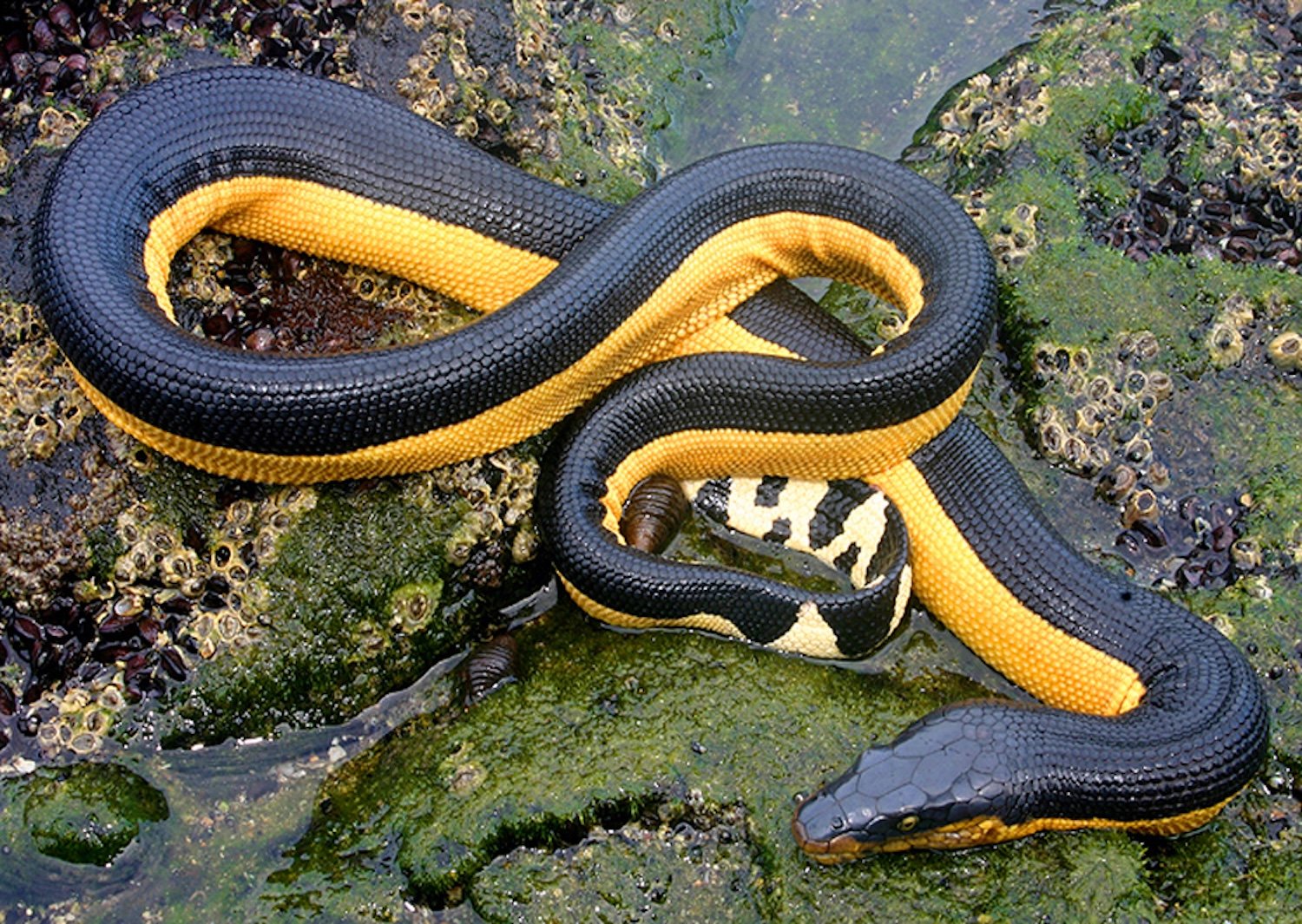
Yellow-bellied sea snake on shoreline rocks
The yellow-bellied sea snake is studied more for its appearance and behavior than its passengers. Credit: Flaxington

After only collecting a couple of snakes, Pfaller soon watched a small crab fall off one of them. He knew the ocean serpents sometimes hosted barnacles or other stationary organisms, but couldn’t recall a similar situation involving crustaceans—so he started paying attention.

Pfaller amassed 371 sea snakes by the end of his expedition, and he identified far more than crabs. Some of the reptiles also hosted shrimps, snails, and even a clingfish. Pfaller and his colleagues assumed no one previously noticed the additions because marine biologists are generally more focused on the yellow-bellied sea snakes themselves due to their colorful appearance, uncommon distribution, and fascinating underwater behaviors.

Technically speaking, most of the crabs weren’t actually crabs just yet. Instead, most of Pfaller’s collection were considered to be in megalopae—a phase between larva and adult life. That said, at least one young crab appeared to belong to the Planes genus.

Although Pfaller stored the preserved specimens at Florida Museum of Natural History, he soon transitioned to focusing on sea turtles instead of snakes. It took a decade before the oddities resurfaced. After casually mentioning the collection to University of Guam crustacean expert Robert Lasley, his colleague couldn’t resist the joke:

“‘Wait! Wait! Wait! Are you saying you have planes on a snake?’” remembered Pfaller, referencing the cult horror movie Snakes on a Plane.

One of the crab megalopa found on a sea snake. Credit: Elefánti et al.
One of the crab megalopa found on a sea snake. Credit: Elefánti et al. (2026)

The pair decided to follow up on his specimens by sequencing their DNA, assuming to confirm their Planes suspicions,but results collected by study co-author and UF invertebrate researcher Soma Elefánti weren’t what they expected.

“Honestly, the thought that we could name this study ‘Planes on a Snake’ was enough to get me motivated, but when we got the results, it was evident that something weird and interesting was going on here,” Lasley said.

As it turned out, none of the megalopae were in the Planes genus. Instead, they belonged to other species in the Grapsidae family, whose adult crabs live on Costa Rica’s coastal trees and rocky shorelines. The study authors knew most crabs release larvae into the water, regardless of living on land or in the water when adults. Because of this, they theorized that the larvae that survived long enough to transition into megalopae instinctually started scoping out a more solid habitat.

“They can swim well, but these things are also built to climb or settle onto something,” Lasley said.

The megalopae that eventually ended up on coastal drift lines likely encountered sea snakes, latched on, then were swept back out into the ocean. 

“The snakes are just there, and the crabs don’t know the difference,” explained Pfaller.

The reason no adult Planes crabs were found on the snakes can also be explained by their family tree—Planes crustaceans evolved to know better than to try making a home on the reptiles. Meanwhile, these other species in the Graspidae family are still learning. But since these floaters would never make it back to shore, evolution would have likely taught them the hard way.

“It’s not a good idea. These crabs [had] made a poor decision,” said Lasley.

The post Tiny crabs discovered hitching rides on sea snakes appeared first on Popular Science.

  •  

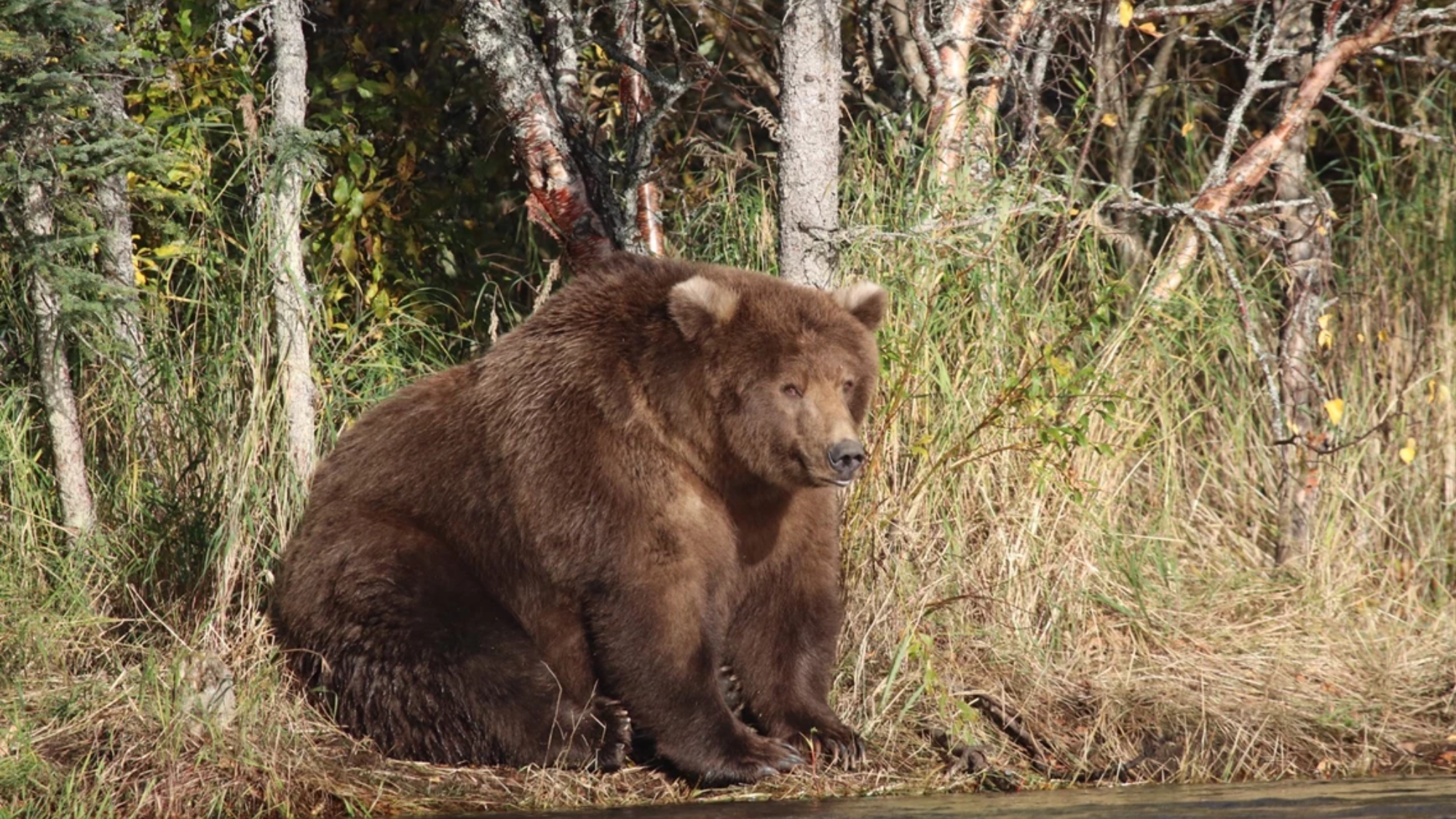
Fat Bear Week kicks off September 22

The salmon? Eaten. The days? Shorter. The bears? Fatter. 

After spending the summer eating the fatty pink salmon swimming through Katmai National Park and Preserve in Alaska, it’s time to celebrate the park’s iconic brown bears (Ursus arctos). Fat Bear Week begins on Tuesday, September 22, and here is everything you need to know. 

What is Fat Bear Week?

Think March Madness, just without the basketball and significantly more bears. Fat Bear Week is a single-elimination tournament, where bear enthusiasts from around the world can vote online for their favorite chunky bear. After each round, the bear with the most votes advances until the winner is announced on September 29. According to the Katmai Conservancy, the event began as a one-day event in 2014 with 1,700 votes cast. Only 10 years later, 1.2 million votes were cast from over 100 countries.

The brown bears return to Brooks Falls for the salmon migration every year in late June, where viewers can watch them on explore.org’s livestream. There, they will feast to fatten up for the long winter ahead. By late summer, the nutritious fish will spawn and then begin to die. The bears will then move to the lower Brooks River in September and October to eat the dead and dying salmon near the river’s mouth.

Eating all of this salmon is important because the heftier the bear, the better chance they will survive their long winter hibernation. Despite being the poster species for winter hibernation, bears are not “deep hibernators,” they way that squirrels, bats, and bees are. Bears enter a state called torpor, which is an involuntary state primarily triggered by lack of food. During this time, the bears rely on stored fat reserves for energy. A torpid bear’s eating, drinking, and waste functions will cease, as its body metabolizes these stores it put on over the summer. 

When is Fat Bear Week 2026?

This year, Fat Bear Week begins on Tuesday, September 22, and a winner will be crowned on Tuesday, September 29. 

How can I vote?

Votes may be cast from noon to 9 p.m. EDT (9 a.m. to 6 p.m. PDT and 8 a.m. to 5 p.m. ADT)

from September 22 and 29 at fatbearweek.org.

Photographs comparing the bears from earlier in the summer and later in the summer will be shown, so voters can get an idea of just how much weight the bears put on during their salmon fest. An adult male bear can go from roughly 700 pounds in the early summer to over 1,200 pounds by fall. 

Voters are also encouraged to get familiar with each bear’s life history and the unique challenges they face to survive.

Which bears are competing this year?

The 2026 Fat Bear Week Bracket will be released on Friday, September 18. 

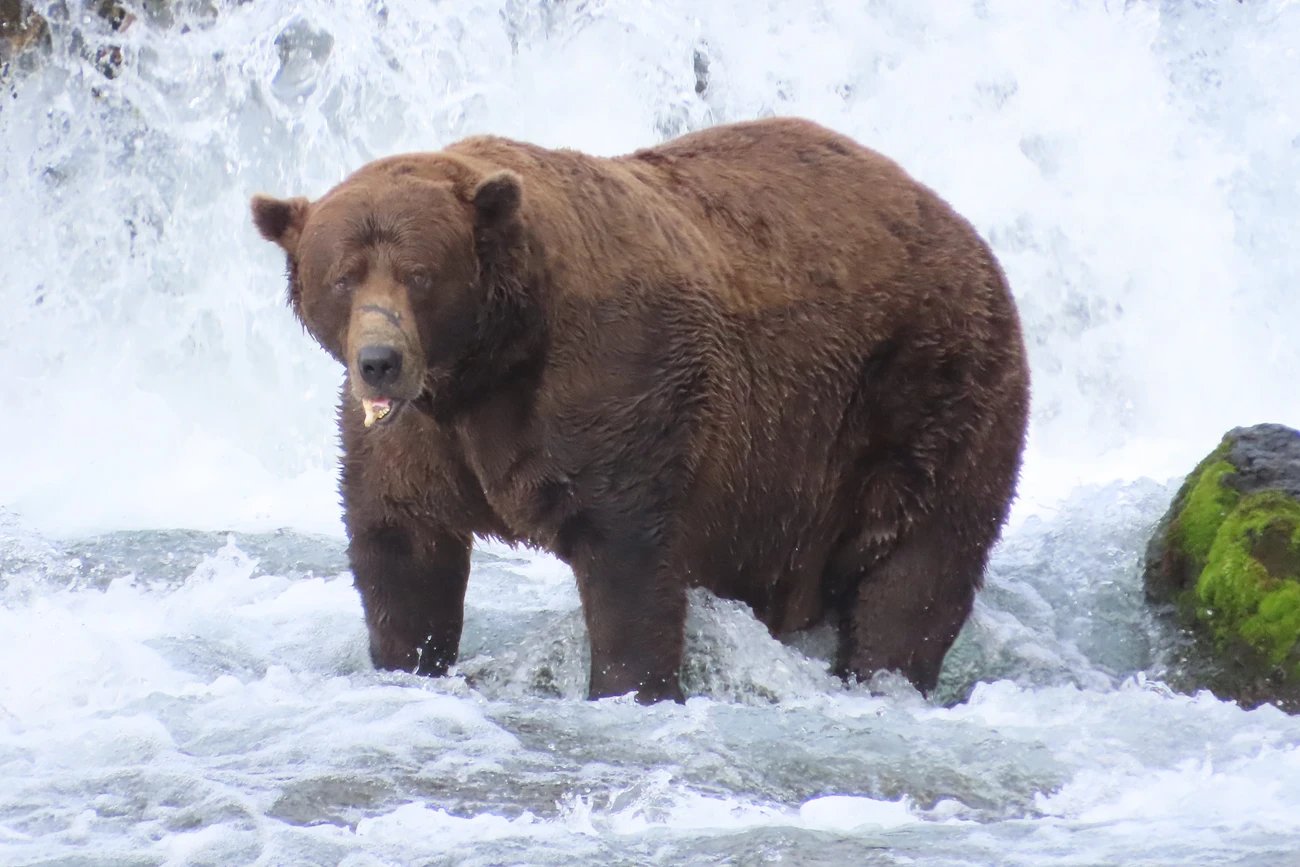
In 2025, Bear #32 (Chunk) took the crown, despite beginning the salmon run with a freshly broken jaw. He was likely injured while fighting with another bear for a mate, but he still managed to catch plenty of fish. Chunk is known for his dominance and size, but also narrow-set eyes, dark fur, a prominent brow ridge, and a distinctive scar across his muzzle. 

a large bear stands near a waterfall
Fat Bear Week 2025 champion Chunk. Image: NPS/ T. Carmack

How can I support Katmai’s bears?

Donations can be made to Katmai Conservancy’s Otis Fund. The Otis Fund is named after Bear #480 (Otis), who won four Fat Bear Week titles before his death around 2024.  All donations made between September 22 and October 3 will be matched by explore.org. 

What happened with the bears this summer?

This year’s livestream featured an example of how wild (and upsetting to humans) nature can be. On Tuesday, July 28, the live-cams captured a young brown bear cub being killed and eaten by an unrelated mother bear (Bear #806). The deceased cub was born this spring and the child of Bear #909, a 10-year-old brown bear. Bear #909 started the season with two cubs, but now lost both. 

On Sunday, August 2, one of Bear #335’s (Jolly) cubs died, after following three unrelated cubs up a tree. The mother of the cubs already in the tree attacked Bear #335’s cub, who did not survive the encounter. The identity of the mother bear who killed the spring cub was not confirmed. 

Following the first cub’s death, naturalist Mike Fitz and park rangers Christine Loberg and Sarah Bruce said this likely the first documented case occurring at Brooks River. While there is no one answer as to why mother bears are killing cubs, some experts suspect bear adoption, food scarcity, and fights for dominance all play a role. 

Additionally, this year also saw the cub with silver-hued fur, a cub who hopefully learned important lesson about porcupine quill safety, the unique fishing stylings of Bear #164 (Bucky Dent), and Bear #284’s (Electra) family who can “walk on water.”

The post Fat Bear Week kicks off September 22 appeared first on Popular Science.

  •  

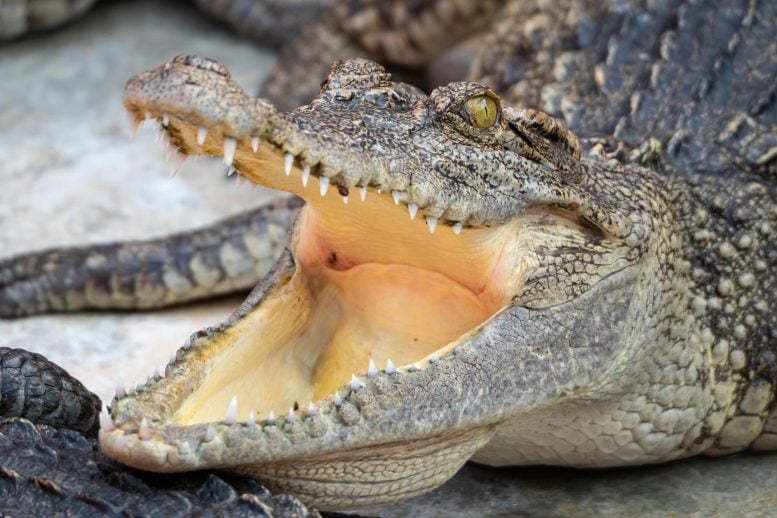
Captive Crocodiles Released Into the Wild Did Something Researchers Didn’t Expect

Saltwater Crocodile Mouth OpenCaptive-reared crocodiles adapted well after release, but a translocated wild crocodile showed strong homing instincts, offering new insights for conservation planning. A new study suggests that saltwater crocodiles born or raised in captivity may successfully adapt to life in the wild without returning to the facilities where they were bred. Researchers say the findings could [...]
  •  

Gray Wolf Spotted in Mendocino National Forest for First Time in 15 Years

Gray Wolf Spotted in Mendocino National Forest for First Time in 15 Years

A gray wolf has been confirmed roaming California’s Mendocino National Forest, marking the first verified sighting there since the species made its comeback to the state 15 years ago. Wildlife officials say the discovery signals the predator’s continued expansion across California’s wild landscapes.

The sighting was reported in late August in the far northern reaches of Lake County, roughly two hours north of San Francisco. After receiving multiple reports from residents and observers, the California Department of Fish and Wildlife investigated and officially verified a wolf’s presence in the area, according to a statement from county officials.

Gray wolves were once hunted to extinction within California’s borders, disappearing from the state for nearly a century. Their return began in earnest around 2011, when a lone wolf known as OR-7 crossed into California from Oregon, reigniting hopes for the species’ natural recovery. Since then, small numbers of wolves have gradually reestablished territory across parts of Northern California, with packs forming in areas such as Lassen and Siskiyou counties.

The latest sighting in Mendocino National Forest suggests the animals are pushing further into new territory, a development conservationists view as an encouraging sign of ecological resilience. Wolves play a critical role in maintaining balanced ecosystems by regulating prey populations and influencing the behavior of other wildlife. Wildlife officials say they will continue monitoring the region to better understand the wolf’s movements and determine whether it may be part of a larger pack venturing into unfamiliar terrain.

The post Gray Wolf Spotted in Mendocino National Forest for First Time in 15 Years first appeared on EnviroLink Network.
  •  

Can a Whole Arctic Ecosystem Evolve Fast Enough to Survive Climate Change?

Can a Whole Arctic Ecosystem Evolve Fast Enough to Survive Climate Change?

On Alaska’s remote North Slope, researchers are picking their way across spongy tussock grasses toward Galbraith Creek, a rushing meltwater stream fed by the snowy peaks of the Brooks Range. There, they carefully string up mist nets to catch white-crowned sparrows that have just completed their long migration from warmer latitudes. The birds have only a brief window to stake out territory, find mates, and raise chicks—all fueled by the explosive burst of insects that emerges each summer across the tundra.

From every bird captured, scientists collect blood, feather, and fecal samples to track what the sparrows are eating and how their diets shift as the short Arctic summer progresses. This detailed data collection is part of a groundbreaking research effort seeking to understand something far bigger than individual birds: whether an entire ecosystem—spanning streams, tundra, insects, and wildlife—can adapt fast enough, together, to survive rapid climate change.

Unlike traditional studies that examine how single species adjust to warming conditions, this project treats the Arctic as an interconnected web where the timing of ice melt, insect emergence, plant growth, and animal migration must all stay in sync. As the region warms at a pace several times faster than the global average, that synchronization is increasingly at risk. If insects hatch earlier but sparrows arrive on their usual schedule, birds could miss their crucial food window—a mismatch that could ripple through the entire food chain.

Scientists hope their findings will reveal whether coordinated, ecosystem-wide adaptation is possible, offering a preview of how fragile Arctic systems—and the species that depend on them—might fare as the climate crisis accelerates.

The post Can a Whole Arctic Ecosystem Evolve Fast Enough to Survive Climate Change? first appeared on EnviroLink Network.
  •  

Victoria’s Koala Population Half Previous Estimates, Report Reveals Chronic Poor Health

Victoria’s Koala Population Half Previous Estimates, Report Reveals Chronic Poor Health

A landmark scientific review has revealed that Victoria’s koala population is in significantly worse condition than previously believed, with numbers roughly half of earlier estimates and the animals suffering from chronic poor health. The Victorian government sat on these findings for more than a year before making them public.

The comprehensive study, conducted by the state’s Arthur Rylah Institute in partnership with researchers from major universities, was completed in June 2025 but was withheld from public release for over 12 months. The delay has raised questions about transparency in how the government handles critical wildlife data, particularly for a species considered an icon of Australian biodiversity.

The findings paint a troubling picture of koala welfare across the state, pointing to systemic health issues affecting the marsupials rather than isolated incidents. Combined with the sharp downward revision in population numbers, the report suggests previous conservation strategies may have been built on overly optimistic assumptions about how many koalas remain and how well they’re faring.

Conservationists and wildlife advocates are likely to press the government for immediate action following the report’s release, including questions about habitat loss, disease prevalence, and the adequacy of current protection measures. The revelation adds to mounting concerns about the long-term survival of koala populations in parts of Australia, where habitat destruction, bushfires, and disease have already taken a significant toll on the species in recent years.

The post Victoria’s Koala Population Half Previous Estimates, Report Reveals Chronic Poor Health first appeared on EnviroLink Network.
  •  

Great Koala National Park Carbon Credit Deal Clears Senate Despite Internal Party Revolt

Great Koala National Park Carbon Credit Deal Clears Senate Despite Internal Party Revolt

A contentious plan allowing major polluting industries to use carbon credits generated from a new koala national park in New South Wales to offset their emissions will proceed, after a deal was struck between the governing party and the Greens. The agreement means the Greens declined to join a Coalition-backed effort to block the arrangement in the Senate.

The plan has drawn criticism from environmental advocates who argue that using a protected wildlife sanctuary to generate offset credits undermines the conservation purpose of the park and allows heavy emitters to continue polluting rather than cutting emissions at the source. Supporters of the deal counter that it secures funding and formal protection for critical koala habitat that might otherwise remain vulnerable to logging or development.

The agreement did not have unanimous support within the Greens party room. Three senators — two from Tasmania and one from Western Australia — broke ranks to cross the floor and vote against the deal when it came before the Senate on Thursday afternoon. Their dissent highlights ongoing tension within the party over how far to compromise on environmental protections in pursuit of broader legislative wins, and raises fresh questions about the long-term ecological trade-offs of carbon offset schemes tied to national parks.

The koala park itself has been championed as a landmark conservation project, aiming to protect one of the last strongholds of the vulnerable species amid ongoing habitat loss from land clearing, bushfires, and climate change.

The post Great Koala National Park Carbon Credit Deal Clears Senate Despite Internal Party Revolt first appeared on EnviroLink Network.
  •  
❌