❌

Reading view

A Material Just a Few Atoms Thick Reveals Strange New Magnetism

Ultrathin Material Quantum MagnetismA material once thought to be nonmagnetic may reveal a hidden magnetic side when made just a few atomic layers thick. A newly proposed class of magnetism known as altermagnetism could open new possibilities for making computer memory smaller and more efficient. Now, researchers have found evidence that ruthenium dioxide, a quantum material long debated [...]
  •  

Scientists Discover Rain Can Damage Paint With Tiny Electrical β€œLightning”

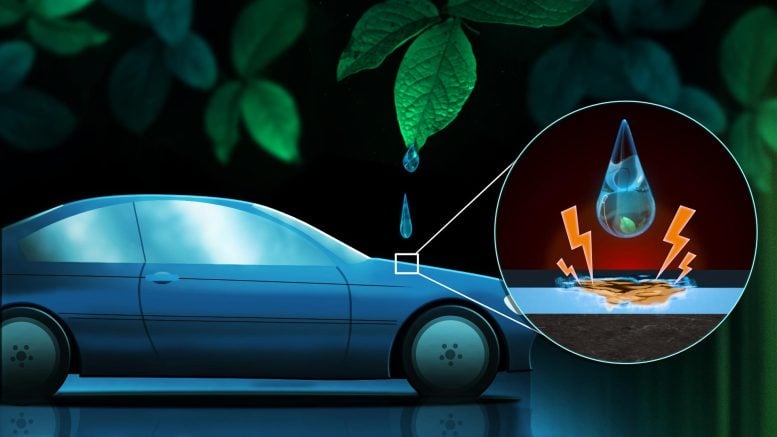
Electrical Charged Drops Cause CorrosionCharged raindrops may damage paint with tiny electrical discharges that act like microscopic lightning. Weather gradually wears down painted and coated surfaces, something anyone who has had to repaint a fence has probably seen firsthand. The same problem affects far larger structures as well. Landmarks such as the Eiffel Tower and the Golden Gate Bridge [...]
  •  

Harnessing sunlight to fight bacteria

Billions of people still suffer from hunger and food insecurity worldwide. Meanwhile, microbial contamination causes a third of global food waste annually, resulting in major economic losses and illnesses. Although antibiotics and pesticides help control contamination, their excessive use can promote bacterial resistance or leave toxic residues.Β 

One alternative uses materials that generate highly reactive forms of oxygen when exposed to light, called photocatalysts, to prolong food freshness. These molecules kill bacteria by damaging their cell components in a process called photodynamic inactivation or PDI. However, current PDI systems rely on energy-intensive lasers and long exposure times because the bacteria’s protective cell membranes block reactive oxygen molecules. As a result, the systems don’t kill bacteria effectively and risk overheating food, affecting its freshness and nutritional value.

Scientists at Zhejiang University in China thought that it would be possible to achieve a PDI system using accessible, free sunlight with the right photocatalyst. Moreover, they also wanted to integrate this photocatalyst into food packaging to combat microbes during storage.Β 

To make the photocatalyst, the researchers mixed water with a glue-like plant fiber that provides structural support, called pectin, and a chemical from plant seeds that supplies phosphorus, called phytic acid. Then they heated the mixture in a sealed reactor at 220ΒΊC (428ΒΊF) for 5 hours to form tiny structures composed of a carbon core surrounded by a phosphorus-rich shell called phosphorus-modified carbonized polymer dots or PCDs.

To incorporate the PCDs into film packaging, the researchers dissolved equal amounts of a plant fiber from konjac, called glucomannan, and another plant-derived molecule, called carboxymethylcellulose, in warm water to form a network of entangled molecular chains. Then, they added 1.5 milligrams of PCD per milliliter to this mixture, which linked the chains together like molecular fasteners. Finally, they added a moisture-binding chemical called glycerin to prevent brittleness. The researchers cast this mixture onto separate Petri dishes and dried them, forming thin, plastic-like PCD films.

To test the films, the researchers placed Escherichia coli bacteria between 2 sterilized film sheets and exposed the samples to either darkness or simulated sunlight for 20 minutes. They then transferred the microbes onto agar plates and incubated them for 15 hours, allowing surviving bacteria to form visible colonies. They compared the number of bacterial colonies with those of untreated samples to calculate the percentage of bacteria the films eliminated in each environment.Β 

Tests under darkness showed that the films eliminated about 60% of the bacteria. The researchers attributed this result to the positive electrical charge of PCDs, which attracts the bacteria’s negatively charged cell surfaces. The electrical attraction stresses their cell membranes, interfering with essential life processes. This result suggested that the films use a separate charge-based antibacterial mechanism apart from PDI, which requires light to work.

Under simulated sunlight, the films eliminated nearly 100% of the bacteria. The researchers identified 2 principal mechanisms causing this. First, the PCDs acted as tiny heaters that generated localized heat, which stretched holes in the bacterial membranes, allowing contents to leak out of their cells through a process called photoporation. Second, the PCDs generated reactive oxygen molecules that could then penetrate the bacteria. Once inside the cells, these molecules irreversibly damage the bacteria’s internal components and genetic material through PDI.Β 

The researchers also investigated whether PCD films could serve as food packaging by using them to wrap fresh strawberries. Compared with conventional nonbiodegradable polyethylene packaging where visible rotting occurred, the PCD films kept the strawberries fresh for more than 4 days by suppressing bacterial growth and regulating moisture levels. When the team tested whether the films were toxic, they found that the films are safe for humans and compatible for food applications. They also buried the films in soil for 24 days and found that they degraded by 78%, demonstrating biodegradability suitable for packaging fresh foods.

The team concluded that PCD films could be a biodegradable food packaging that combines plant-based materials with multiple antibacterial strategies. The films retained antibacterial activity in darkness and became more effective under sunlight through the combined effects of photoporation and PDI. These findings demonstrated that by combining multiple mechanisms into a single material, researchers can create multifunctional food packaging that remains effective across different storage conditions.

The post Harnessing sunlight to fight bacteria appeared first on Sciworthy.

  •  

The secret to protecting next-gen spacecraft might be eggshells

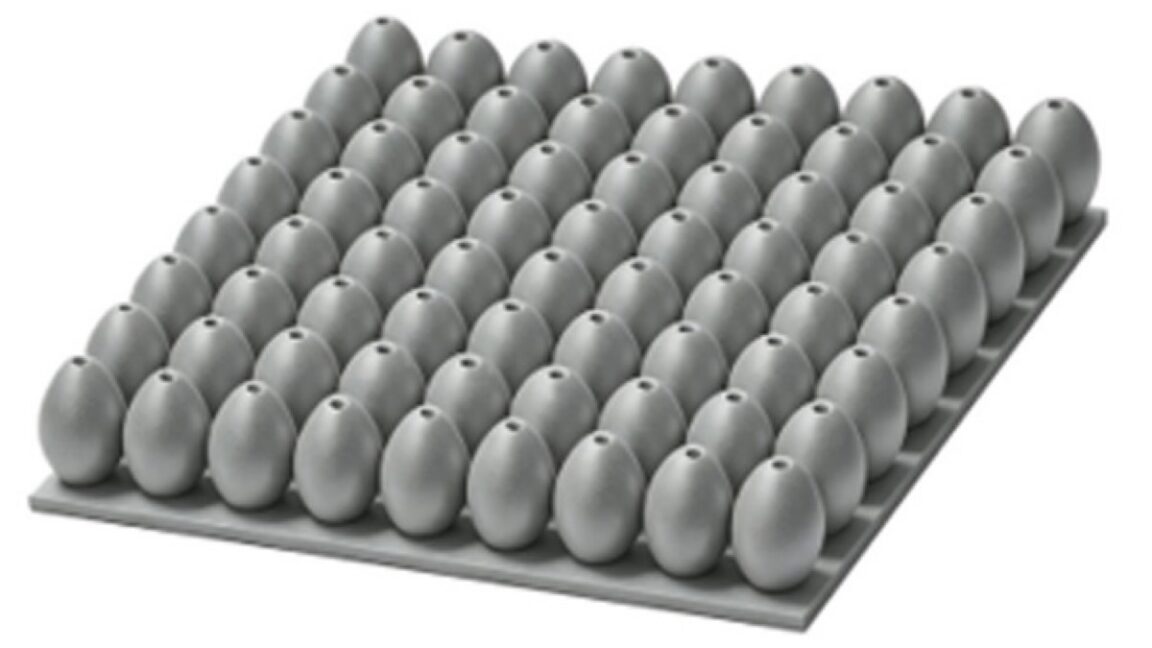
In 2007, a piece of space debris punched a bullet-like hole through the radiator panel of the US space shuttle Endeavor. The shuttle program ended in 2011, but the space debris problem has only intensifiedΒ as we launch more and more satellite constellations, telescopes, and spacecraft into orbit. That's why Chinese scientists have devised a new aluminum material inspired by eggshells that they believe could offer enhanced protection against debris fragments, according to a new paper published in the Journal of Applied Physics.

Eggshells have long fascinated scientists because of their mechanical properties. For instance, it's well known that cracking an egg requires applying just enough force to the center to achieve a clean break without completely shattering the shell. In 2012, MIT mechanical engineer Pedro Reis co-authored a paper demonstrating the link between an egg's ovoid geometry and its rigidity, a major factor when predicting how much force an object can endure before cracking. (As I wrote for Slate at the time, rigidity is related to, but distinct from, strength. If one eggshell has tiny cracks and the other doesn't, both shells have different strengthsβ€”the cracked one will break more easilyβ€”but the same rigidity.)

Reis started studying eggshells after participating in a popular physics demonstration: walking on cartons of eggs without breaking them. The key, he learned, was to align the eggs with their narrow tip (the most crack-resistant part) pointing up, and then carefully place one's feet to distribute one's weight over the entire surface area. This ensures that no single egg is overloaded. While it takes around 5.5 pounds of force to crack an egg, that depends on the direction in which the force is applied, as well as its distribution over the shell's surface.

Read full article

Comments

Β© Wang et al., 2026

  •  

Minnesota iron ore could be key to sustainable and lower cost semiconductor

For the first time, researchers at the University of Minnesota Twin Cities have demonstrated that the low-purity iron ore prevalent in Minnesota can be used to create semiconductor-quality iron sulfide, also known as "fool's gold" or pyrite. This discovery could have cost-effective and sustainable applications in future electronic devices and other technologies.

  •  

This AI Can Find the Missing Atoms That X-Rays Cannot See

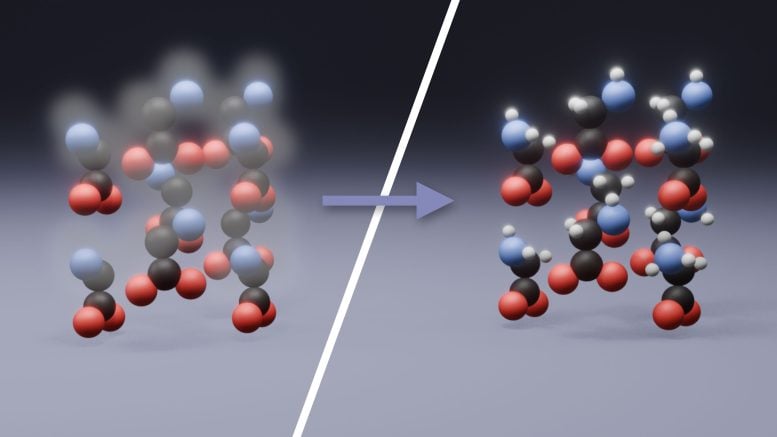
Artistic Illustration of AI Adding Hydrogen AtomsAn AI model adapted from image inpainting can reconstruct missing atoms in crystal structures with a reported 97 percent success rate. A crystal structure can appear nearly complete yet still be unusable for computer simulations because some of its atoms are missing. Hydrogen is a frequent source of these gaps, and researchers have now adapted [...]
  •  

Scientists Catch a Hidden Electronic State Forming Almost Instantly

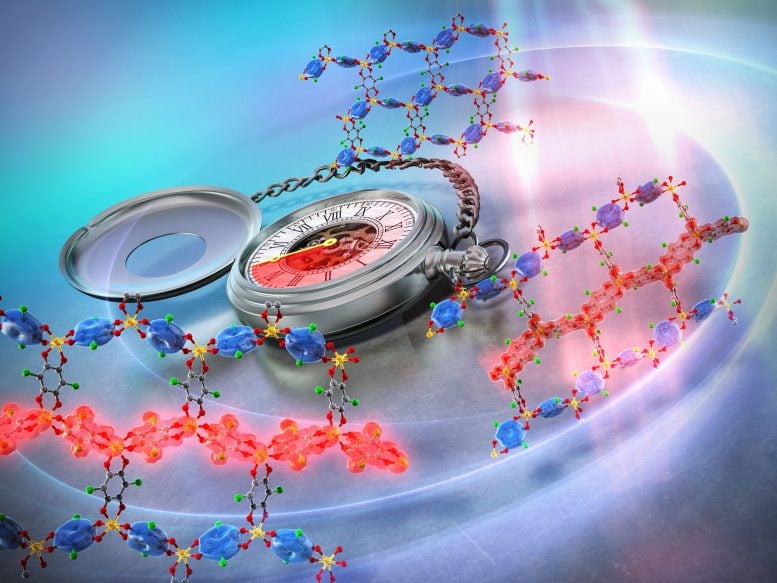
Photoinduced Hidden State Formation IllustrationResearchers observed a hidden state triggered by light forming within 30 femtoseconds. A pulse of light sent a metal-organic framework into a hidden electronic state in just 30 femtoseconds. By watching the transformation almost as it happened, researchers uncovered a fleeting intermediate stage that appears to guide the material into its new state. The work [...]
  •  

Silver nanocatalysts switch reaction sites between power generation and hydrogen production

For the first time, researchers have discovered that the same silver (Ag) nanocatalyst operates at different reaction sites depending on whether a solid oxide cell is generating electricity or producing hydrogen. This finding introduces a new design principle for improving the performance of next-generation solid oxide cells.

  •  

How snails engineer their slime

Snails are well-known for their mucus. The slime is highly valued as an anti-inflammatory and anti-aging ingredient in certain skin care products, and snails can secrete different kinds of mucus with properties tailored to specific functions. A team of German scientists has determined a recipe for how snails achieve that so-called tunability: Collagen and calcium work in tandem to achieve the varying mechanical properties, according to a new paperΒ in the journal Science.

Snail mucus is mostly water; it's the mucins (glycoproteins) and complex carbohydrates that give it that slimy, viscous texture. In addition to cosmetics, the mucus holds great potential for drug delivery. In 2020, scientists found that combining snail slime from a common garden snail with gold nanoparticles helped accelerate wound healing and exhibited anti-inflammatory properties in mice. Most relevant to this latest paper is a 2023 study on garden snail slime that identified three distinct types of secreted mucus: a hydrating version to protect its skin, one that acts as an adhesive glue, and a third that serves as a lubricant so the snail can more easily glide across a surface.

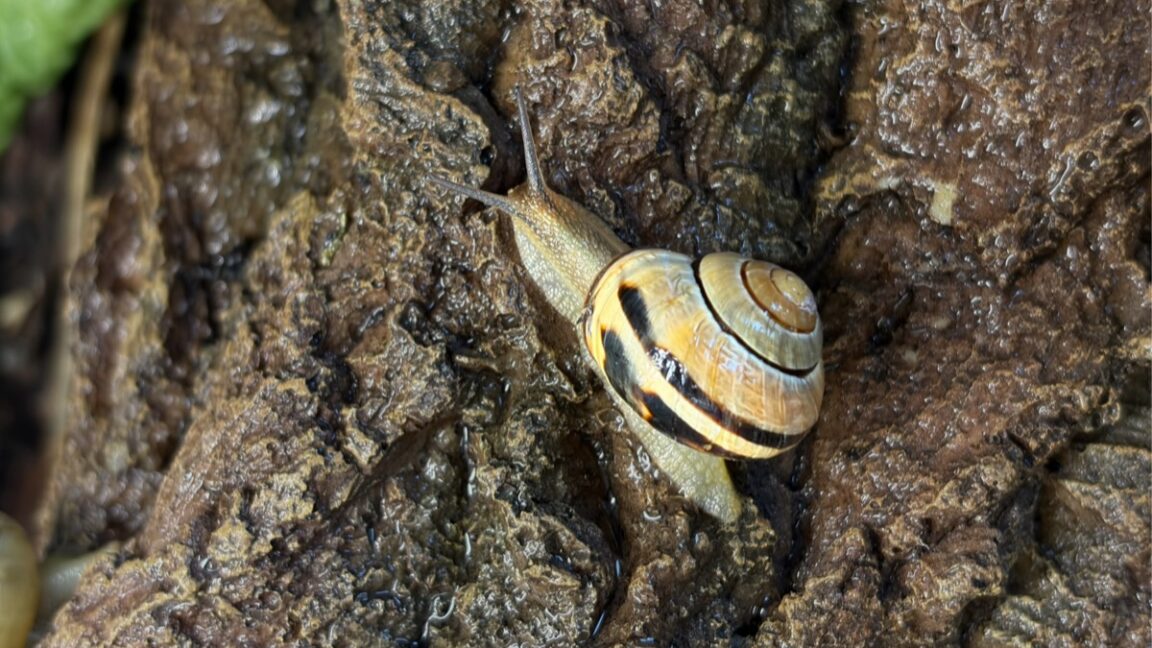
The team focused their research efforts on the grove snail/lemon snail (Cepaea nemoralis), which they deemed well-suited as subjects because the snails secrete five different kinds of mucus with distinct functions. As with the garden snails, there is one that acts as a lubricant to help with locomotion and an adhesive mucus to help the snail stick to various surfaces. Then there's a mucus layer known as the epiphragm that the snail secretes when it hibernates in winter, which contains calcite and effectively seals the shell to protect the snail from predators and harsh environmental conditions.

Read full article

Comments

Β© Max Planck Institute of Colloids and Interfaces

  •  

Researchers devise a full-color night vision goggle

Human eyes don’t register the infrared portion of the light spectrum because infrared photons don't carry enough energy to trigger the signaling pathway inside our light-sensing cells. But we’ve been able to make devices that give us a visual representation of what’s happening in the infrared.

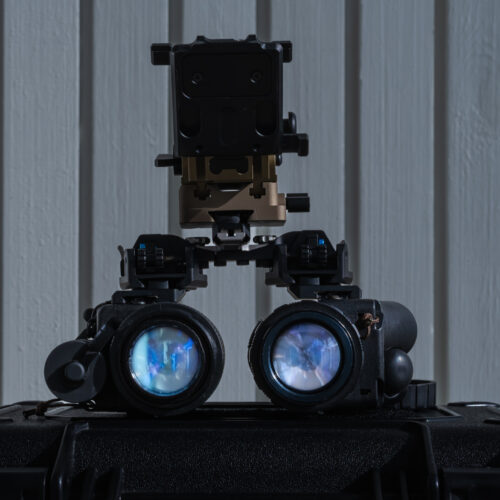
A team at the Beijing Institute of Technology, led by Xin Tang and Ge Mu, has now built a device that lets people see infrared in a new way. Instead of just translating it to visible shades of green as it’s done in standard night-vision goggles, it translates different infrared wavelengths into distinct parts of the visual spectrum, giving the eye something closer to natural vision.

Researchers achieved that by combining mercury telluride colloidal quantum dots, which absorb infrared light, and a dual-layer OLED, which converts that absorbed energy into visible color. Stacked together with the right internal wiring, they make incoming infrared radiation come out the other side as an ordinary-looking, full-color image.

Read full article

Comments

Β© Dmitri Toms

  •  

Scientists Watch Chemistry Unfold Atom by Atom

UV and X Ray Probing of 3 FluoropyridineStudy suggests a new method for tracking electronic and vibrational dynamics in real time. Within a few trillionths of a second after absorbing light, a molecule bends out of shape, shifts its electrons, and converts electronic energy into vibrations. These changes happen too quickly for ordinary instruments to follow, but flashes from the European XFEL [...]
  •  

Scientists Build the First 3D Cloak That Makes Objects Invisible To Heat

3D Printed, Hybrid Aluminum and Rubber Cloaking DeviceA new 3D material can guide heat around complex objects while shielding them from extreme temperatures and infrared detection. On an infrared camera, a warm object normally stands out clearly against cooler surroundings. Researchers have now built a three-dimensional cloak that bends heat around an object, erasing its thermal outline while protecting the space inside [...]
  •  
❌