Login

These Mice Have Partly Human Brains
The animals may help reveal the causes of brain disease in people and point the way to treatments. But researchers already are calling for new ethical guidelines.

 New experiments reveal a sophisticated posture-control system hidden inside living wood.
Chimpanzees are known to use rudimentary tools when foraging for food. According to a new paper in the journal Frontiers in Psychology, this learned behavior is passed down from adults to offspring through social learning. Specifically, adult chimps deliberately model the behavior, then turn their tools over to the youngsters so they can mimic the same motions.
"Receiving food and tools from experienced individuals, which we call food or tool transfer, may help chimpanzees learn to use technology to extract foods that are difficult to access,” said co-author Andreu Sánchez-Megías, a graduate student at the University of Barcelona and the Jane Goodall Institute Spain in Senegal. “Tool transfers thus appear to be a form of teaching, together with observation and supervised practice. It appears that mothers are the main models and teachers for young chimpanzees in this manner.”
As we have previously reported, tool use was once thought to be one of the defining features of humans, although Charles Darwin observed chimpanzees using stones to crack nuts in 1871. In 1960, the late primatologist Jane Goodall observed a chimp named David Greybeard bend a twig, strip off the leaves, and use it to spoon termites out of a nest and into his mouth. When he learned of the behavior, Goodall's mentor, Louis Leakey, famously observed, “Now we must redefine ‘tool,’ redefine ‘man,’ or accept chimpanzees as humans.” Since then, chimps have been observed making sponges out of leaves to soak up liquids, shaping sticks to collect algae, and sharpening rudimentary spears for hunting.
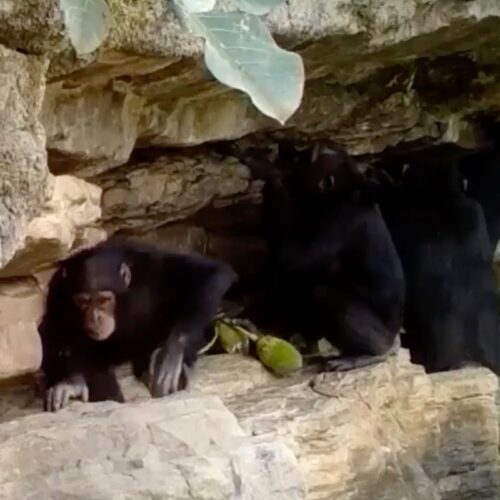
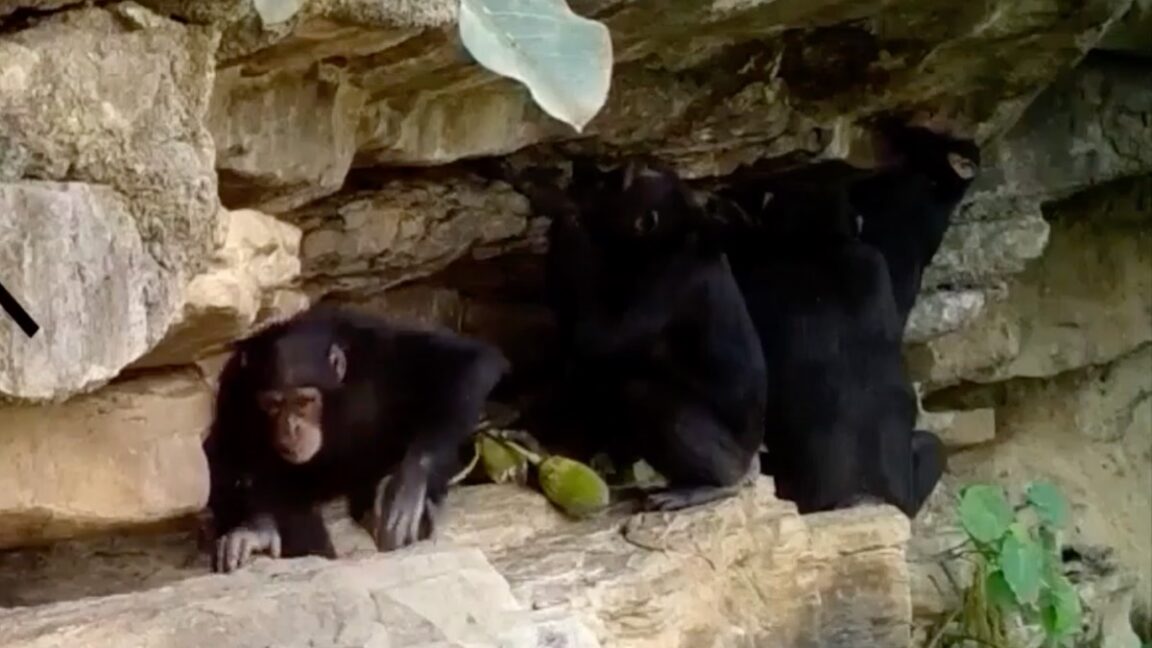
© Jane Goodall Institute Spain in Senegal
Chimpanzees are known to use rudimentary tools when foraging for food. According to a new paper in the journal Frontiers in Psychology, this learned behavior is passed down from adults to offspring through social learning. Specifically, adult chimps deliberately model the behavior, then turn their tools over to the youngsters so they can mimic the same motions.
"Receiving food and tools from experienced individuals, which we call food or tool transfer, may help chimpanzees learn to use technology to extract foods that are difficult to access,” said co-author Andreu Sánchez-Megías, a graduate student at the University of Barcelona and the Jane Goodall Institute Spain in Senegal. “Tool transfers thus appear to be a form of teaching, together with observation and supervised practice. It appears that mothers are the main models and teachers for young chimpanzees in this manner.”
As we have previously reported, tool use was once thought to be one of the defining features of humans, although Charles Darwin observed chimpanzees using stones to crack nuts in 1871. In 1960, the late primatologist Jane Goodall observed a chimp named David Greybeard bend a twig, strip off the leaves, and use it to spoon termites out of a nest and into his mouth. When he learned of the behavior, Goodall's mentor, Louis Leakey, famously observed, “Now we must redefine ‘tool,’ redefine ‘man,’ or accept chimpanzees as humans.” Since then, chimps have been observed making sponges out of leaves to soak up liquids, shaping sticks to collect algae, and sharpening rudimentary spears for hunting.
© Jane Goodall Institute Spain in Senegal

© Chona Kasinger for The New York Times

 Lipid droplets in the kidneys may help cats maintain a consistent chemical “scent identity.” Scent marks can linger long after an animal has moved on, allowing urine and other chemical signals to carry information across both distance and time. Yet the molecules responsible for odor do not remain unchanged. They evaporate, break down, and shift [...]

 GPS collars reveal hyenas retreating while male lions repeatedly close the distance.
In one of the most comprehensive investigations of its kind, researchers have taken a major step toward untangling the biology underlying suicide risk, moving the field beyond long-standing debates about whether suicidal behavior is simply a consequence of psychiatric illness. By integrating large-scale genetic data with cutting-edge approaches that map how genes act in specific brain cells and circuits, an international team has identified shared genetic liability that cuts across psychiatric diagnoses while also pinpointing druggable biological pathways that could one day inform prevention strategies. The study, published in Translational Psychiatry, offers a sweeping synthesis of how inherited risk factors may translate into molecular vulnerabilities, and it does so with a level of resolution that previous candidate-gene approaches could never achieve.
Suicide remains one of the leading causes of death worldwide, claiming more than 700,000 lives each year according to global health estimates. Despite decades of research, clinical prediction remains stubbornly imprecise, and biological models of suicidal behavior have historically been hampered by small sample sizes, inconsistent findings, and a tendency to conflate suicide risk with the psychiatric disorders with which it so often co-occurs. Major depression, bipolar disorder, schizophrenia, and substance use disorders all carry elevated suicide risk, yet most people with these conditions never attempt suicide, while some individuals who die by suicide have no diagnosed psychiatric illness at all. This paradox has long suggested to researchers that suicidal behavior may possess partially distinct biological underpinnings, and the new study set out to test that hypothesis with unprecedented statistical power.
At the heart of the work lies genome-wide association study methodology, or GWAS, which scans hundreds of thousands to millions of genetic variants spread across the entire genome in very large groups of people, comparing individuals who have experienced suicidal thoughts or behaviors with those who have not. Each variant is tested for statistical association with the outcome, and the results can be combined into polygenic risk scores, numerical summaries of a person’s inherited liability based on the cumulative small effects of thousands of variants. Because no single common variant exerts a large effect, the field depends on aggregating data across massive biobanks and cohorts, a strategy that has only become feasible in the past decade as datasets containing hundreds of thousands of individuals became available.
The research team took particular care to address a central confound: psychiatric disorders themselves are highly heritable, and any genetic signal linked to suicide could simply reflect inherited liability to depression or schizophrenia rather than to suicide specifically. To disentangle this, the investigators applied sophisticated statistical techniques, including genetic correlation analysis and conditional modeling, which allow researchers to ask how much genetic overlap remains between suicidal behavior and psychiatric conditions after accounting for their shared heritability. Their findings revealed a complex architecture. Substantial genetic correlations confirmed that suicide risk shares a meaningful fraction of its inherited basis with major psychiatric disorders, supporting the idea of a common pool of genetic liability. Yet the analyses also uncovered signals that persisted beyond what could be explained by those disorders, pointing to biological mechanisms that may be more specific to the emergence of suicidal thoughts and actions.
A key conceptual innovation of the study is its framing of “shared genetic liability” as a bridge between diagnoses. Rather than treating suicide as an epiphenomenon of any single disorder, the researchers modeled it as a transdiagnostic phenomenon, one whose risk emerges partly from inherited vulnerabilities that cut across diagnostic categories. This perspective aligns with a growing movement in biological psychiatry that emphasizes symptom dimensions and mechanisms over traditional diagnostic boundaries. From this vantage point, the genetic variants that raise risk for depression, PTSD, and schizophrenia may do so partly because they converge on shared molecular pathways, and those same pathways may govern an individual’s threshold for suicidal crises regardless of which diagnosis they carry.
Identifying genetic variants, however, is only the first step. A GWAS signal typically points to a genomic region rather than a specific causal gene or mechanism, since many associated variants fall in non-coding stretches of DNA that regulate gene activity from a distance. To translate statistical associations into biological insight, the team deployed a battery of functional genomics approaches. Transcriptome-wide association studies, known as TWAS, integrate gene expression data to identify genes whose genetically predicted expression levels are linked to suicide risk. Tissue and cell-type enrichment analyses then ask whether the implicated genes are unusually active in particular organs or cell populations. The results converged strikingly on brain tissue, and more specifically on neuronal populations, providing support for the idea that inherited suicide risk is mediated largely through gene regulation within the central nervous system.
The study’s most clinically provocative findings concern druggable biology. Using databases that catalog the protein targets of approved and investigational medications, the researchers examined whether genes implicated in suicide risk were over-represented among known drug targets. The analysis identified several classes of candidate targets, including components of neurotransmitter signaling systems, ion channels, and intracellular signaling cascades that are already the focus of pharmacological development for other conditions. This “druggable genome” approach, which has gained traction in genetics research across many diseases, offers a pragmatic shortcut for translational science: rather than waiting decades for entirely new therapeutic classes to be invented, researchers can prioritize existing or in-development compounds whose molecular targets intersect with genetically implicated pathways.
Among the pathways receiving attention in the analysis were those involving glutamatergic and GABAergic neurotransmission, the primary excitatory and inhibitory systems of the brain, which have repeatedly surfaced in studies of mood disorders and stress response. The endocannabinoid system and inflammatory signaling pathways also appeared in the convergent analyses, consistent with a broader literature linking immune dysregulation and allostatic load to suicidal ideation. Importantly, the authors emphasize that these findings identify hypotheses rather than ready-made treatments. Genetic association with a drug target does not guarantee that modulating that target will reduce suicide risk, and any therapeutic application would require extensive preclinical validation and carefully designed clinical trials. Nevertheless, the work provides a principled, data-driven map for where to look, replacing decades of largely failed candidate-gene speculation with a genome-wide evidence base.
The methodological rigor underpinning the study deserves emphasis, because the genetics of suicidal behavior has a troubled history. Early candidate-gene studies, which typically examined a handful of variants in genes related to serotonin signaling, produced findings that largely failed to replicate and in some cases were later shown to reflect statistical artifacts, small samples, and publication bias. The field has since undergone a reckoning, and modern efforts adhere to far stricter standards: preregistered analyses, very large and ancestrally diverse cohorts, replication in independent samples, and conservative multiple-testing corrections that demand genome-wide significance thresholds on the order of five times ten to the negative eighth power. The new study reflects these lessons, applying sensitivity analyses to guard against confounding from psychiatric comorbidity and examining whether findings generalize across ancestral groups, an issue of considerable importance given that most genetic discovery to date has been conducted in populations of European ancestry.
The implications for clinical practice, while still distant, are worth considering. Polygenic risk scores for suicide-related outcomes currently explain only a small fraction of individual differences in risk, far too little to be used as stand-alone screening tools, and their predictive performance is degraded in populations not represented in the discovery data. Researchers in the field are careful to stress that genetic risk is not destiny: suicidal behavior arises from an intricate interplay of inherited vulnerability, mental illness, trauma, substance use, social isolation, access to lethal means, and the availability of support. What genetics offers is not a crystal ball but a window into mechanism, and mechanistic knowledge is the raw material from which better biomarkers, risk stratification tools, and ultimately targeted interventions are built. In the near term, the druggable pathway findings are most valuable as a guide for laboratory science, directing neurobiologists toward molecular systems whose manipulation might alter suicide-relevant phenotypes in animal models and cellular assays.
Looking forward, the study signals where the field must go next. Sample sizes for suicide-specific genetic analyses remain smaller than those for major psychiatric disorders, and expanding representation across ancestries is essential if the benefits of this research are to be shared equitably. Integrating genetic data with longitudinal measures of life stress, neural imaging, and digital phenotyping may eventually allow researchers to model how inherited liability interacts with environmental triggers across the lifespan. Functional experiments in induced pluripotent stem cell-derived neurons and brain organoids could test whether the implicated genes genuinely alter stress-response circuitry or resilience. And randomized trials in patients carrying high genetic liability, though ethically and logistically complex, represent the logical endpoint of the druggable-target approach.
What the study ultimately delivers is a reframe. Suicide risk, in this analysis, is not an amorphous clinical outcome but a measurable, partly heritable trait whose genetic architecture is now being resolved with the same tools that have transformed our understanding of heart disease, diabetes, and schizophrenia. By demonstrating that shared genetic liability links suicide risk across diagnostic boundaries and by mapping that liability onto specific, pharmacologically tractable biology, the researchers have converted a long-standing clinical puzzle into a concrete research agenda. The path from genetic correlation to effective prevention is long, and no genetic finding will soon replace the human work of crisis intervention, connection, and care. But for a problem that has defied biological explanation for generations, the identification of shared, druggable mechanisms represents a genuine and hard-won advance, one that may shape suicide research for years to come.
Article Title: From shared genetic liability to druggable biology in suicide risk
Article References: Yao, K., Zhuo, C., Chen, X., Li, C., Song, H., Zou, J., & Tian, H. (2026). From shared genetic liability to druggable biology in suicide risk. Translational Psychiatry. https://doi.org/10.1038/s41398-026-04428-1
Image Credits: AI Generated
DOI: 10.1038/s41398-026-04428-1
Keywords: suicide risk, genetic liability, genome-wide association study, polygenic risk score, druggable genome, transdiagnostic psychiatry, TWAS, brain gene expression, glutamatergic signaling, psychiatric genetics, Translational Psychiatry
 From fireflies to mammals, evolution may have tuned communication to the rhythm of neurons.
In Boé National Park, researchers have repeatedly encountered a small number of trees marked by gouged bark and piles of stones at their bases. These signs suggest that wild chimpanzees have returned to the same trees for years to throw rocks. According to a recent field account by University of Victoria researchers Robyn Nakano and Ammie Kalan, some of these sites have remained in use for over a decade.
This behavior, called accumulative stone throwing, has been observed in only four chimpanzee populations in West Africa. While rocks and trees are widespread in chimpanzee habitats, piling stones at specific trees is rare. Nakano, Kalan, and other researchers suggest this may be a cultural practice within certain groups rather than arising from environmental factors alone.
Video recordings collected through the Pan African Programme and analyzed in a 2016 Scientific Reports study led by Hjalmar Kühl show that mostly adult male chimpanzees throw rocks at particular trees and repeatedly return to the same trunks. During these events, the chimpanzees pant-hoot, a loud call used for long-distance communication, and sometimes perform buttress drumming by repeatedly striking the tree’s buttressed base with their hands and feet.
Pant-hooting and buttress drumming are typical features of displays put on by male chimpanzees. The fact that these behaviors occur alongside stone throwing suggests that accumulative stone throwing may have developed as a variation of these existing social displays.
Researchers suspect this behavior may be cultural rather than simply a response to environmental conditions because it occurs only in certain areas, even though appropriate rocks and trees are common throughout chimpanzees’ habitats. Within one population, only particular trees are used as throwing sites. Earlier studies have suggested that the behavior might function as a form of communication or could indicate places of symbolic significance within a community’s territory.
The behavior could also offer archaeologists a rare example of how repeated stone use and accumulation can create material traces that persist after the animals that made them have moved on.
Some primates use stones as tools, including populations that use rocks to open nuts for food. Accumulative stone throwing differs because the behavior occurs in a social context rather than during extractive foraging. The purpose of this behavior for the chimpanzees remains unclear.
Nakano and Kalan conducted their fieldwork from Béli, a village where the Dutch nonprofit Chimbo operates a solar-powered research compound with local partners. The team traveled 22 kilometers by bicycle and on foot into the savanna-woodland to establish a camp, working with field assistants Djei Baldé, Balu Séra, and master’s student Taylor Tippett from the Great Ape Behaviour Lab.
The Boé chimpanzees are not used to humans and tend to avoid them, making direct observation impossible. The team instead set up two video cameras at each known stone-throwing site and placed audio recorders nearby to monitor the area.
Each day began at 6:30 a.m. with visits to two to five sites to replace SD cards and batteries, check equipment, measure trees, and create 3D scans of rocks thrown at the trees for later analysis. The team also recorded chimpanzee nests, feeding traces, and vocalizations along the trails. Their camp was located beside the Fefine River, which continues flowing through the dry season and provides an important water source for wildlife.
The team found that most sites first identified by the Pan African Programme and revisited in 2017 remained active when Nakano and Kalan’s team returned in 2026. Chimpanzees have returned to these same trees to throw rocks for more than ten years.
The video and audio collected during this trip will allow the team to identify the age and sex of individual stone-throwers and observe how nearby chimpanzees respond to these events. This data could help the researchers determine the purpose of this behavior.
Chimpanzees’ habitat in Guinea-Bissau is becoming increasingly threatened by industrial mining. During fieldwork, the researchers discovered boreholes dug to explore bauxite, the ore used to produce aluminum. Although bauxite mining might help promote economic development, comparable operations in neighboring Guinea have caused habitat loss and pollution, with negative effects on both wildlife and local communities. The country’s political instability also presents challenges for environmental oversight.
Nakano and Kalan emphasize that losing these stone-throwing sites would be both a cultural and ecological loss, erasing a documented example of primate material culture.
Nakano and Kalan are still analyzing the footage from this field season, but the main question of why chimpanzees throw stones at these specific trees remains unanswered. Still, the evidence collected by the cameras and recorders could help determine whether the behavior functions as territorial signaling, long-distance communication, or something else entirely.
Austin Burgess is a writer and researcher with a background in sales, marketing, and data analytics. He holds an MBA, a Bachelor of Science in Business Administration, and a data analytics certification. His work focuses on breaking scientific developments, with an emphasis on emerging biology, cognitive neuroscience, and archaeological discoveries.
New research from Indiana University suggests that when your brain makes a decision, it may not actually “make” it in the way neuroscientists have traditionally assumed.
Conventionally, decision-making has been described as a sequence: you have options to consider, you choose one, and then you act. However, neuroscientist Tom James argues that this sequence may not accurately reflect what actually happens in the brain.
Traditional models suggest that the brain has centralized processes responsible for making decisions. James argues that what people experience as “decision-making” may instead arise from ongoing interactions among perception, movement, the body, and the environment. If correct, this perspective could significantly change how scientists understand human behavior.
James describes one traditional approach to cognition as the “sandwich model”: sensory systems take in information, cognitive processes evaluate it and determine what to do, and motor systems then carry out the chosen action.
The problem, James argues, is that while scientists can identify many of the physical mechanisms involved in sensation and movement, it is much harder to locate a central point in the brain where a “decision” actually occurs.
Instead, James proposes thinking in terms of “action selection,” in which sensory, sensorimotor, and motor processes continually interact to produce behavior. But does that mean humans don’t actually make decisions?
“Of course they do. We use this language all the time, and it’s very helpful in terms of describing behavior,” James said in a statement. “The leap, I think, is to say that the brain works by having decision-making or control processes. It produces behavior that is well described in that way. But it doesn’t need a process that does that to make it look that way.”
In his view, “decision-making” may therefore be a useful way of describing human behavior rather than something the brain accomplishes through a specific, centralized process or system.
“As mental phenomena, they are defined on too abstract a level for the goals of cognitive neuroscience,” adds James.
Bridging neuroscience and philosophy, James draws on a physicalist framework associated with philosopher Daniel Dennett. Consider an object’s center of mass: it helps us describe and predict how the object behaves, but it isn’t a separate physical component causing the object to move.
James suggests decisions may work similarly. We can say someone “decided” to pick up a glass, but that does not necessarily mean there is a central location in the brain where that decision was made. Instead, the action could emerge from multiple brain and bodily processes working together.
As an analogy, James describes a robot programmed to follow a wall. Someone watching it might interpret its movements as a series of decisions, yet the robot does not require a centralized decision-making system. Instead, its sensors continually interact with its surroundings to guide its behavior.
James suggests that aspects of human behavior could be understood in much the same way.
James’s argument also addresses a longstanding philosophical problem. If the brain contains a central system that observes information and decides how we should act, what controls that controller?
This resembles what Dennett famously called the “Cartesian Theater”: the idea of an internal observer somehow watching and interpreting what happens inside the brain. But proposing such an observer only pushes the problem back another step—who, then, observes the observer?
Rather than placing a hypothetical decision-maker somewhere inside the brain, James argues that researchers should focus on the interacting physical systems that produce behavior.
That could mean studying cognition as something that emerges through the ongoing relationship between the brain, body, and environment, rather than as a sequence of isolated stages.
The feeling that “I made a decision” may remain perfectly real and useful as a description of human experience, even if there is no single place or process in the brain where that decision occurs. From James’s perspective, what we call a decision may instead be the outcome of interactions among the brain, body, and surrounding world.
This study can be found in the Journal of Cognitive Neuroscience.
Chrissy Newton is a PR professional and the founder of VOCAB Communications. She currently appears on The Discovery Channel and Max and hosts the Rebelliously Curious podcast, which can be found on YouTube and on all audio podcast streaming platforms. Follow her on X: @ChrissyNewton, Instagram: @BeingChrissyNewton, and chrissynewton.com. To contact Chrissy with a story, please email chrissy @ thedebrief.org.
A tiny microscope weighing just five grams could give neuroscientists an unprecedented view of how individual brain cells control behavior while animals move naturally. Researchers at the University of Colorado Anschutz Medical Campus and the University of Colorado Boulder have developed a head-mounted device that can both record neural activity and selectively activate individual neurons during movement. The technology could help scientists investigate how brain circuits generate behavior and how those circuits become disrupted in conditions such as Alzheimer’s disease, Parkinson’s disease and epilepsy.
The device, called Opto2P-FCM, combines two powerful techniques that have traditionally been difficult to use together in a freely moving animal. Two-photon microscopy provides detailed images of living brain tissue at cellular resolution, while optogenetics uses light-sensitive proteins to control selected neurons. By integrating both capabilities into a miniature instrument, the researchers can observe specific cells as they become active and then stimulate chosen neurons to test how they influence the surrounding network.
“These miniature microscopes have been increasingly used to study the neural basis of behavior in freely moving animals,” said Emily Gibson, PhD, associate professor of biomedical engineering at CU Anschutz and the study’s senior author. “This new microscope allows deeper penetration and higher resolution images in the brain. Importantly, it can also excite select neurons using optogenetics.”
For decades, conventional two-photon microscopes have been regarded as the gold standard for imaging neurons in living brains. These systems use infrared laser light to produce high-resolution images deep within tissue, allowing researchers to track calcium signals and other indicators of neural activity. However, conventional microscopes are generally large, stationary instruments. Animals must often remain immobilized beneath the objective, making it difficult to study brain activity during walking, exploration, social interaction or other natural behaviors.
Miniature microscopes have helped overcome that limitation by moving the imaging system onto the animal’s head. Yet reducing the size and weight of the equipment has often required compromises. Some compact systems provide lower-resolution images, while others can record neural activity but cannot stimulate precisely selected cells. The Colorado team designed Opto2P-FCM to address both problems through a dual-path optical architecture that separates imaging from stimulation.
In the imaging pathway, infrared light is directed through the brain to generate two-photon signals from fluorescent markers inside neurons. These markers can report changes in calcium concentration, which occur when neurons fire. The resulting signals are collected to create detailed images of neural activity at the level of individual cells. A separate optical pathway delivers patterned light for optogenetic stimulation, allowing researchers to activate specific neurons without disrupting the imaging beam or overwhelming the detectors.
This separation is technically important because imaging and stimulation place different demands on an optical system. High-resolution imaging requires precise focusing, efficient light collection and minimal optical distortion. Optogenetic activation, by contrast, requires intense, accurately positioned light capable of reaching the light-sensitive proteins expressed by selected neurons. Designing both functions into a device small enough to be carried by an animal required careful control of the alignment, geometry and weight of every optical component.
“This microscope is a game changer,” said Juliet Gopinath, PhD, professor of electrical, computer and energy engineering and physics at CU Boulder and a study co-author. “Being able to demonstrate a state-of-the-art instrument for both read-out and photo-stimulation of neurons is amazing.” The research team included engineers, physicists and neuroscientists who worked together to solve problems involving miniature lenses, mechanical tolerances, optical alignment and three-dimensional fabrication.
The device weighs approximately five grams, but its small size made construction unusually demanding. Mo Zohrabi, PhD, a senior research scientist at CU Boulder and co-first author, said the team initially thought such an instrument might be impossible to build because of the tight tolerances required by the optics and available 3D-printing technology. Gregory Futia, PhD, a senior research associate at CU Anschutz and co-first author, said that every component had to be designed and accounted for with extreme precision. Even slight misalignment could reduce image quality or prevent the stimulation beam from reaching the intended cells.
The researchers believe the platform could transform experiments designed to distinguish correlation from causation in the brain. Recording a neuron’s activity can show that it is associated with a behavior, but it does not prove that the cell helps produce that behavior. With optogenetic stimulation, scientists can activate a selected population and observe whether movement, decision-making or other actions change. At the same time, the microscope can record how neighboring neurons respond, providing a view of how local circuits coordinate activity.
The current Opto2P-FCM system is a prototype, and the researchers are working on future versions that could be smaller, lighter and faster. They also hope to expand the field of view so that more neurons can be monitored at once. Such improvements could make it possible to track larger networks over longer periods while animals engage in increasingly complex behaviors. By combining cellular-resolution observation with targeted manipulation in a freely moving subject, the technology may help reveal how healthy neural circuits operate and how neurological disease changes the communication between them.
Subject of Research: Miniature two-photon microscopy, optogenetics, neural circuits and brain activity during natural movement
Article Title: New Miniature Microscope Allows Scientists to Watch and Control Brain Cells During Natural Movement
News Publication Date: Aug. 11, 2026
Web References: University of Colorado Anschutz Medical Campus; University of Colorado Boulder; Optica study
References: Optica, “New Miniature Microscope Allows Scientists to Watch and Control Brain Cells During Natural Movement,” article publication date: Aug. 7, 2026
Miniature microscope, two-photon microscopy, optogenetics, neuroscience, brain imaging, neural circuits, freely moving animals, biomedical engineering, applied physics, neurological disease, brain research
Lipid nanoparticles (LNPs) have become one of the most important delivery technologies in modern medicine, helping transport messenger RNA into cells for vaccines, protein replacement therapies and experimental treatments. Yet a formulation that performs well in mice can behave very differently in humans. This species gap makes nonhuman primate studies an important step in drug development, but conventional methods for comparing multiple nanoparticles often require euthanasia and extensive tissue collection. A new study reports a way to measure the functional activity of several LNPs in the same animal using only a small blood sample.
Published in Nature Biotechnology, the work introduces a non-invasive nanoparticle barcoding platform called snapCodes. The method is designed to determine which LNP formulation successfully delivers its mRNA cargo and prompts cells to produce the encoded protein. Rather than relying on tissue harvesting, the researchers identify delivery events through DNA barcodes that can be recovered from serum and analyzed by sequencing. The approach could allow scientists to compare many candidate nanoparticles in a single nonhuman primate while reducing both animal use and the logistical burden of downstream analysis.
The central challenge addressed by the study is that nanoparticle delivery is not adequately described by measuring where an LNP travels. An LNP may reach an organ or circulate in the bloodstream without releasing its mRNA in a form that cells can translate. The new system instead records functional mRNA delivery. Each nanoparticle is associated with a distinctive DNA sequence, and the mRNA cargo is engineered to encode a fusion protein containing nanoluciferase and a SNAP-tag. Nanoluciferase is a compact enzyme that produces light in the presence of its substrate, while the SNAP-tag is a protein module capable of forming a covalent bond with specific chemical groups.
For the barcode to become a permanent molecular record of delivery, the researchers modified the DNA tags with benzylguanine. When a cell receives an mRNA molecule encoding the nanoluciferase–SNAP-tag fusion, the resulting protein can react with a benzylguanine-bearing snapCode. This creates a stable DNA–protein complex. The complexes are then exported from cells into the circulation, where they can be isolated from a small serum sample. Sequencing the recovered DNA reveals which barcoded LNPs produced the fusion protein and therefore achieved functional mRNA delivery.
The design turns transient protein expression into a measurable signal that can be collected without sacrificing the animal. This is particularly valuable in studies involving nonhuman primates, where tissue-based nanoparticle profiling can require euthanasia and can limit the number of formulations tested in each subject. A blood-based assay also makes it possible to monitor delivery over time, potentially showing how the activity of a formulation changes after dosing. The study used just 30 microliters of serum, a volume small enough to support repeated sampling and longitudinal measurements.
Before comparing nanoparticle performance, the researchers validated the molecular components of the system, including the activity of the snapCode chemistry and the ability of the fusion protein to participate in the intended covalent reaction. These steps were necessary to establish that the barcode signal reflected genuine expression of the delivered mRNA rather than nonspecific interactions. Once the platform had been characterized, the team used it to evaluate multiple chemically distinct LNPs in living animals.
The investigators intravenously administered six snapCoded LNP formulations to mice and nonhuman primates. Each formulation carried its own molecular identity, allowing all six candidates to be assessed in parallel. Serum collected after administration was analyzed for the DNA–fusion protein complexes, and sequencing was used to quantify the relative delivery activity associated with each barcode. By testing the same barcoded set across species, the researchers could directly examine whether patterns observed in mice were reproduced in nonhuman primates.
Such cross-species comparisons are crucial because LNP composition strongly influences biological behavior. Changes in ionizable lipids, helper lipids, cholesterol, polyethylene glycol-lipid components or particle structure can affect stability, organ distribution, cellular uptake and endosomal escape. These properties may differ substantially between rodents and primates because of differences in blood proteins, immune responses, tissue physiology and cellular trafficking. A method that measures expression from several formulations in the same animal may therefore reveal species-specific delivery patterns more efficiently than traditional one-formulation-per-animal experiments.
The snapCode strategy does not replace every form of nanoparticle analysis. It reports successful expression of a particular engineered mRNA and depends on the recovery and sequencing of the associated molecular complexes. It does not, by itself, provide a complete map of tissue distribution, long-term safety or therapeutic efficacy. Nevertheless, it adds a functional layer to LNP evaluation: scientists can ask not only where particles go, but which particles actually release mRNA that cells translate. In early development, that distinction can help prioritize candidates before more resource-intensive studies begin.
By combining multiplexed dosing with low-volume serum sampling, the researchers aim to make nonhuman primate testing more informative while using fewer animals. The platform could be adapted for screening delivery systems designed for different organs or therapeutic proteins, provided that the encoded reporter and barcode chemistry remain compatible with the intended experiment. As mRNA medicines expand beyond vaccines into gene editing, immunotherapy and protein replacement, tools that connect nanoparticle chemistry to real biological output may become increasingly important. Non-invasive barcoding offers a way to track those differences in living subjects and could help narrow the path from promising LNP design to clinically relevant drug candidate.
Subject of Research: A non-invasive method for comparing functional mRNA delivery by multiple lipid nanoparticles in mice and nonhuman primates using serum-based DNA barcodes.
Article Title: Non-invasive nanoparticle barcoding in nonhuman primates
Article References: Jang, B., Zenhausern, R., Lian, L. et al. Non-invasive nanoparticle barcoding in nonhuman primates. Nat Biotechnol (2026). https://doi.org/10.1038/s41587-026-03262-6
Image Credits: AI Generated
DOI: https://doi.org/10.1038/s41587-026-03262-6
Keywords: lipid nanoparticles, mRNA delivery, nanoparticle barcoding, snapCodes, SNAP-tag, nanoluciferase, nonhuman primates, serum sequencing, drug delivery, RNA therapeutics
Although it might be difficult to believe in our hyper-connected lives, there are thousands of people across the planet who remain almost completely disconnected from the rest of the world.
It's estimated that there are at least 196 "uncontacted" Indigenous groups worldwide, living mainly in 10 countries in South America, Asia and the Pacific, including Brazil, Indonesia and India. They live in diverse environments, from islands, to deserts, and the forest-dense borderlands of the Amazon basin. These groups have had varying levels of contact with the outside world; while some have only sporadic encounters with neighboring Indigenous peoples, others more regularly encounter outsiders, sometimes against their will due to the presence of oil, logging, agriculture and mining industries that increasingly encroach on their lands.
But who among them are the most isolated people on Earth?
While this question is difficult to answer, there are some candidates for the "least contacted" groups, experts told Live Science.
There aren't strict definitions of what makes a group "uncontacted." The United Nations even notes that the description of such groups can vary from "free, uncontacted, hidden or invisible peoples, peoples in voluntary isolation, etc." Hal Russell, Asia and Pacific research and advocacy officer with the nongovernmental organization, Survival International, said, "We define 'uncontacted peoples' as Indigenous peoples who generally avoid contact with outsiders and have no permanent relationship with them, even while being aware of the outside world."
"Certainly there is a spectrum between permanent contact, initial contact, sporadic contact and none at all," he told Live Science.
Generally what unites these groups is that they have actively avoided or tried to limit contact with other cultures, even with other uncontacted peoples, to maintain their unique way of life.
One such candidate is a small group of Indigenous islanders known as the Sentinelese, who live on North Sentinel Island within India's Andaman and Nicobar Islands in the Bay of Bengal. This group is so little known that anthropologists aren't even sure what they call themselves; their name is based on the roughly 23-square-mile (60 square kilometers) island where they live.
According to Survival International, it's believed that the Sentinelese have lived in the Andaman Islands for up to 55,000 years and are direct descendants of the first humans to migrate out of Africa. Today, the Sentinelese follow a hunter-gatherer lifestyle and fish along the coastline, using sleek, hand-carved canoes. Survival International estimates that the group includes between 50 and 150 people, although lack of access to the group makes them near impossible to count, and the government has not attempted to include them in the Indian census. Their official numbers remain unknown.
Sign up for our weekly Life's Little Mysteries newsletter to get the latest mysteries before they appear online.
Aside from the island's remoteness, contact is even more difficult because the islanders reject it. The community has been known to shoot at approaching boats and hovering helicopters.
"When they shoot bows and arrows, they are communicating," Simron Singh, a professor at the University of Waterloo in Ontario whose expertise is in island environments and the peoples of the Andaman and Nicobar islands, told Live Science. "It says they do not want to be disturbed."
Only a handful of outsiders have ever set foot on North Sentinel Island, and Indian law now prohibits travel within a 3-mile-radius (5 km) of the island for the protection of both parties. Islanders are vulnerable to diseases brought by outsiders, and visitors are at risk of attack; the Sentinelese have shot and killed at least three people, including a missionary named John Allen Chau, who traveled to the island illegally in 2018.
Survival International estimates that 95% of "uncontacted" and "isolated" peoples live in the Amazon Basin (though the term "voluntarily isolated peoples" is more commonly used to refer to such groups there, according to Beatriz Huertas, an anthropologist, independent researcher and special adviser on isolated peoples policy with Rainforest Foundation Norway).
Huertas conducts research on these groups and to her one stands out in particular: the Kakataibo, a forest peoples in the Aguaytia basin, part of the Amazon in central Peru. The Kakataibo are very rarely encountered, even by other Indigenous peoples. In fact they "are so determined not to be found that they erase their footprints with Earth," Huertas said, "so there is not much information about them."
"We know that this isolation is a protective strategy they have adopted" precisely because they have had contact with the outside and it has not been a positive experience, Huertas explained.
Survival International highlights other highly-isolated groups in the region, including a nomadic Indigenous group called the Kawahiva. This group has evaded contact so successfully that they are known only through chance encounters and one piece of video evidence, and were only recognized as a distinct group in 1999. It's not uncommon for there to be "little recognition or documentation of an uncontacted group, in fact there are likely many uncontacted groups with no documentation at all," Russell said.
He noted that even in Brazil which has some of the most rigorous documentation policies, one Indigenous group was only documented in 2021, having eluded authorities up until that point. Very little is known about them, including their name.
Another prominent group that is extremely isolated is the Mashco Piro of the remote forests of Peru, who are thought to constitute the largest group of uncontacted peoples in the world, numbering about 750. Some in this group are the descended relatives of people who were enslaved and forced to work on Amazonian rubber farms in the 1800s, but escaped deeper into forests where they have since remained, shunning contact.
This history of contact for even the most remote people on Earth shows that the term "uncontacted people" is misleading, Huertas said. In fact, the phrase has fed into unhelpful misconceptions that these groups are "stuck in the Stone Age, as if they were living in a bubble," she said. "In the social sciences, we know that no people remain completely isolated from what is happening in their surroundings and, therefore, no people have remained stuck at any particular stage in history."
Another frequent misunderstanding is that these groups would want to connect if they knew more about the benefits of the outside world, Singh said. He has worked with the Nicobarese peoples of the Nicobar Islands, who haven't completely rejected contact like their Sentinelese neighbors, and has discovered that in their case this is not true. In fact, the Nicobarese are aware of wars and conflict beyond the island, and this has framed their perception that the outside world is "dangerous and uncivilized," Singh said.
In many cases historical experiences can explain why these groups would want to avoid the world beyond. By the mid-1900s, the Great Andamanese of nearby islands had experienced a population decline of up to 99% after bouts of conflict with British settlers and the influx of disease. The Sentinelese themselves had a historical encounter with British colonizers in the 1800s during which time some were kidnapped, infected with disease, and died, which may have shaped their current wariness of the outside world.
Some researchers have argued that these groups should be contacted to better protect them from current and future harms. But groups like Survival International counter that a long history of forced contact shows that this ultimately leads to more harm than good for these peoples, their safety and their survival.
Indigenous peoples have a human right to self-determination as affirmed by the United Nations, and researchers like Huertas and Singh said these groups clearly express that right by seeking contact when they want to associate with others, and retreating when they want to be left alone.
"It's not that they don't have the option [to seek contact] ... It's not rocket science to get on a boat and sail somewhere," Singh said. "It's a choice not to connect."