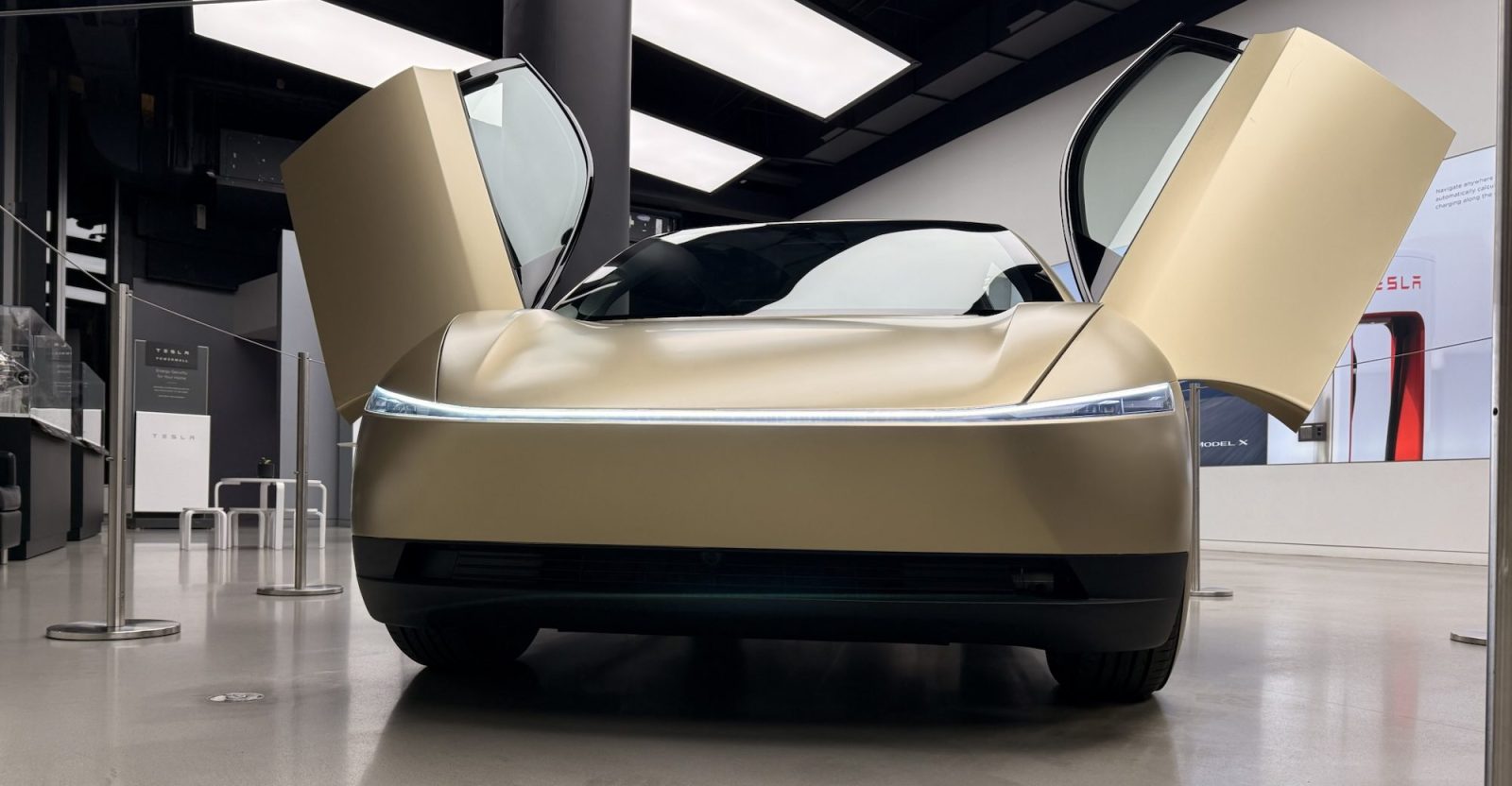
Tesla is putting its Cybercab on public display in China this week, but the company wants to be clear about one thing it isn’t: a vehicle it plans to sell there.
Tesla China said the showcase “does not involve” selling the Cybercab in the Chinese market or launching a driverless ride-hailing service — even as China’s own robotaxi operators run paid rides at scale.
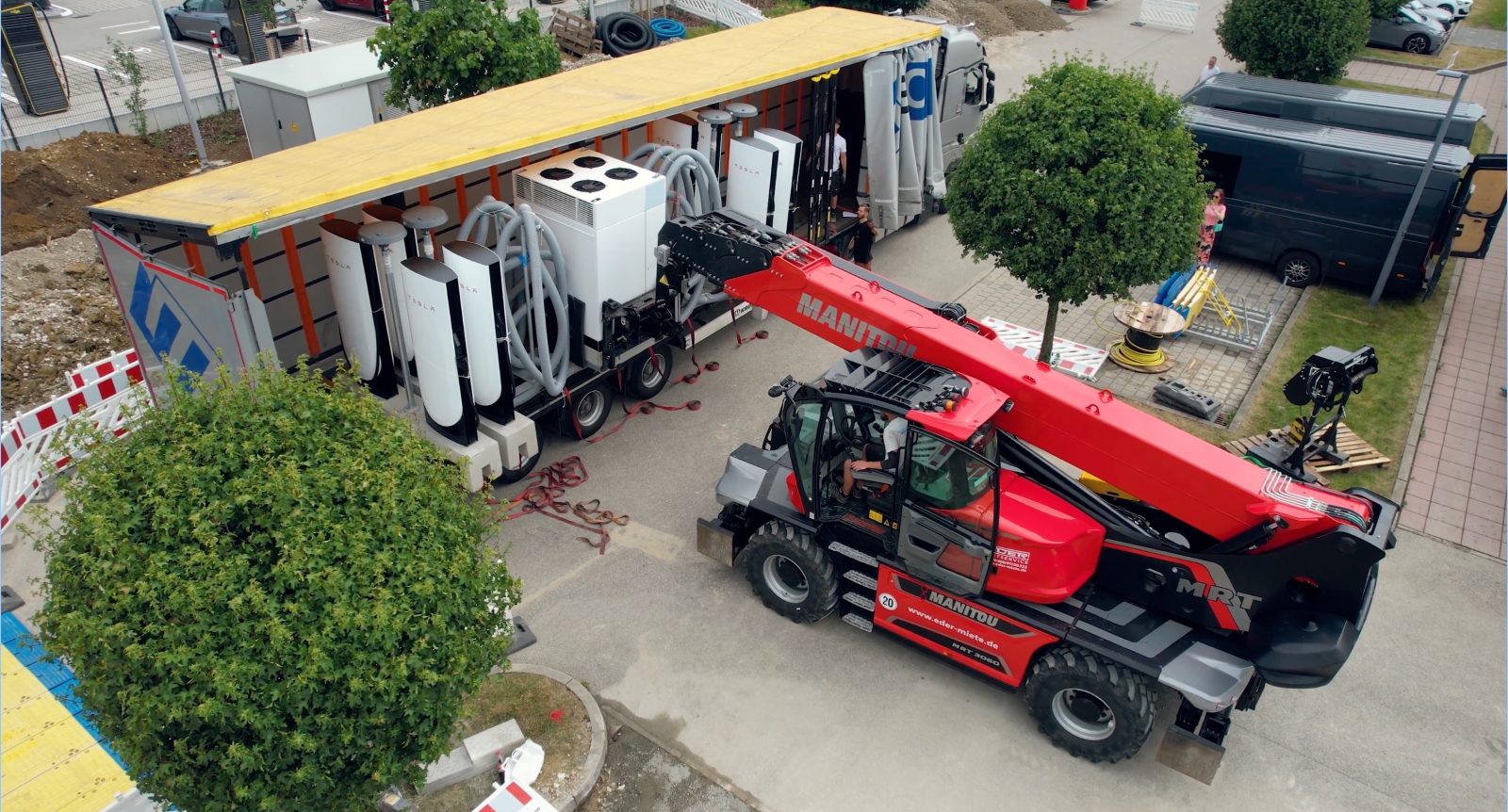
Tesla deployed its first “Accordion” Supercharger, a pre-assembled charging unit that ships 16 stalls on a single truck and installs 20% cheaper than a conventional site.
Tesla’s charging team says the goal is now to pre-assemble every Supercharger in a factory. It’s a smart move, and one the company badly needs after two years of slower deployment.
The Tesla Cybercab is innovating impressively impractical ways of getting from Point A to Point B.
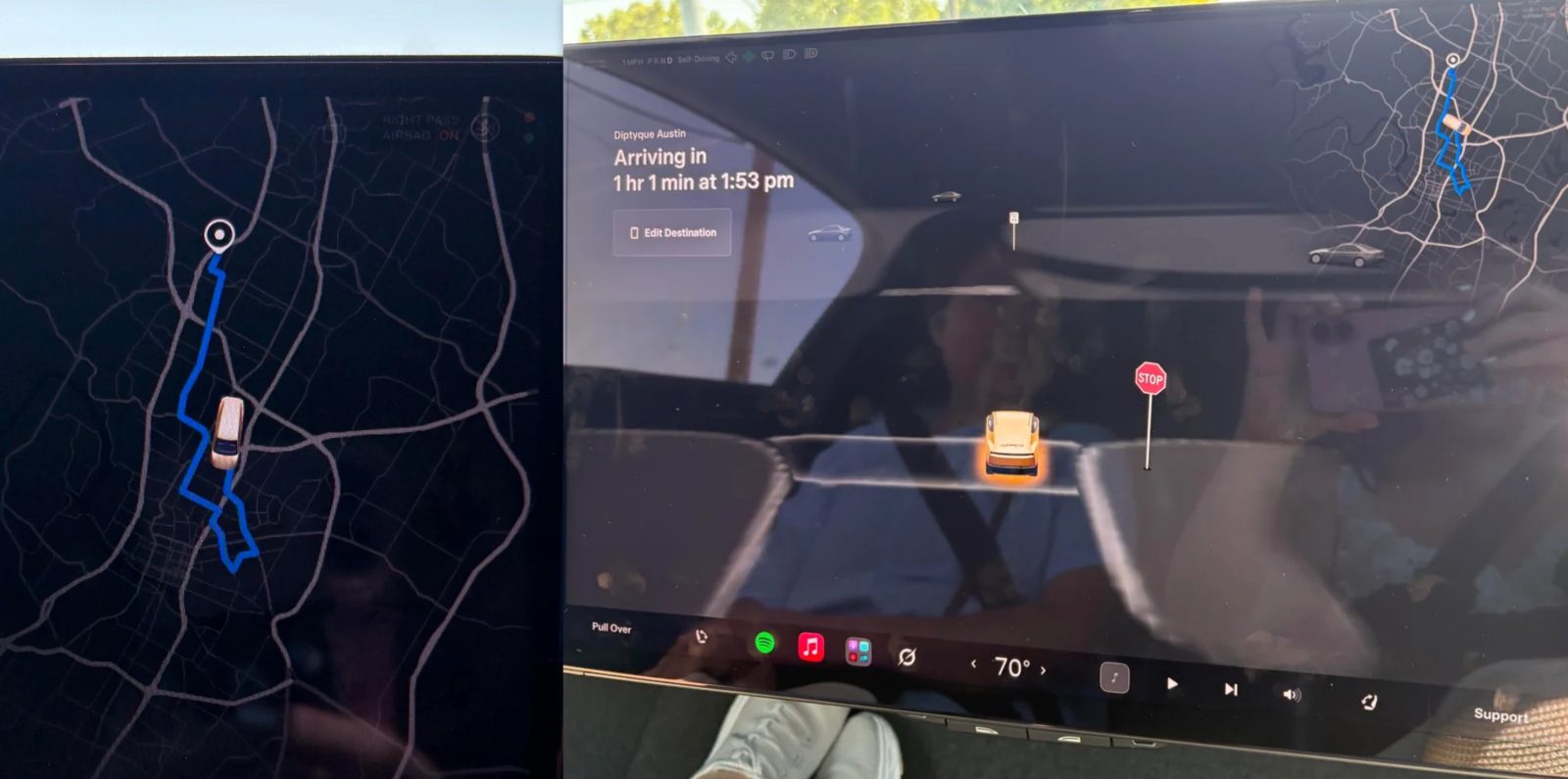
One Cybercab passenger in Austin complained that what should’ve been a ten minute trip devolved into a 70-minute long nightmare as the steering-wheel-free robotaxi spiraled its way down the most circuitous route possible.
The driverless cab started the journey by driving in the complete opposite direction of the destination for miles, the exasperated passenger wrote in a Reddit thread, then turned around and took a “massive” detour through east Austin.
If it was instead a Google Maps car trying to image every inch of the city, you’d have to admit it was a job well done.
“My Cybercab held me hostage for an hour,” the rider wrote in the post, spotted by Electrek. “Guess the Cybercab wanted the scenic route today.”
According to Electrek, the reason that the trip took so long is almost certainly because the Tesla Cybercabs can’t drive on highways yet. The consequently tortuous routes that the cabs have to take may not immediately be clear to a passenger, though, as the app only shows a price estimate and not a projection of how long the trip will take, the blog noted.
Like other robotaxi services, the Cybercabs — which use a version of Tesla’s Full Self-Driving software that hasn’t been released to the public — operate only within a geofenced area that’s been extensively mapped. (Waymo, the leading robotaxi company, does already allow its cars to use highways in some cities.)
There are other signs that the Cybercabs (and Tesla’s confusing named “Robotaxis,” which are self-driving taxis in the form of modified Model Ys, instead of a purpose-built vehicle), are still walking on eggshells compared to its competitors. Some passengers say that the cabs also avoid railroad crossings, which could add to trip times. (Tesla is being investigated for FSD frequently going haywire near these crossings and driving into the path of oncoming trains.)
Do all these restrictions make for a properly autonomous cab? If you had a time machine, you could go back to 2019 and ask CEO Elon Musk for an answer: “If you need a geofence area, you don’t have real self-driving!” he infamously proclaimed.
NHTSA has ordered Tesla to prove that its Cybercab is even legal to sell. The agency issued a formal Special Order on September 10 demanding that the company show, under oath, how a vehicle with no steering wheel, no pedals, and no mirrors complies with federal safety standards written for human drivers.
Tesla has until September 30 to respond. Failing to answer fully and truthfully carries penalties of up to $139 million.
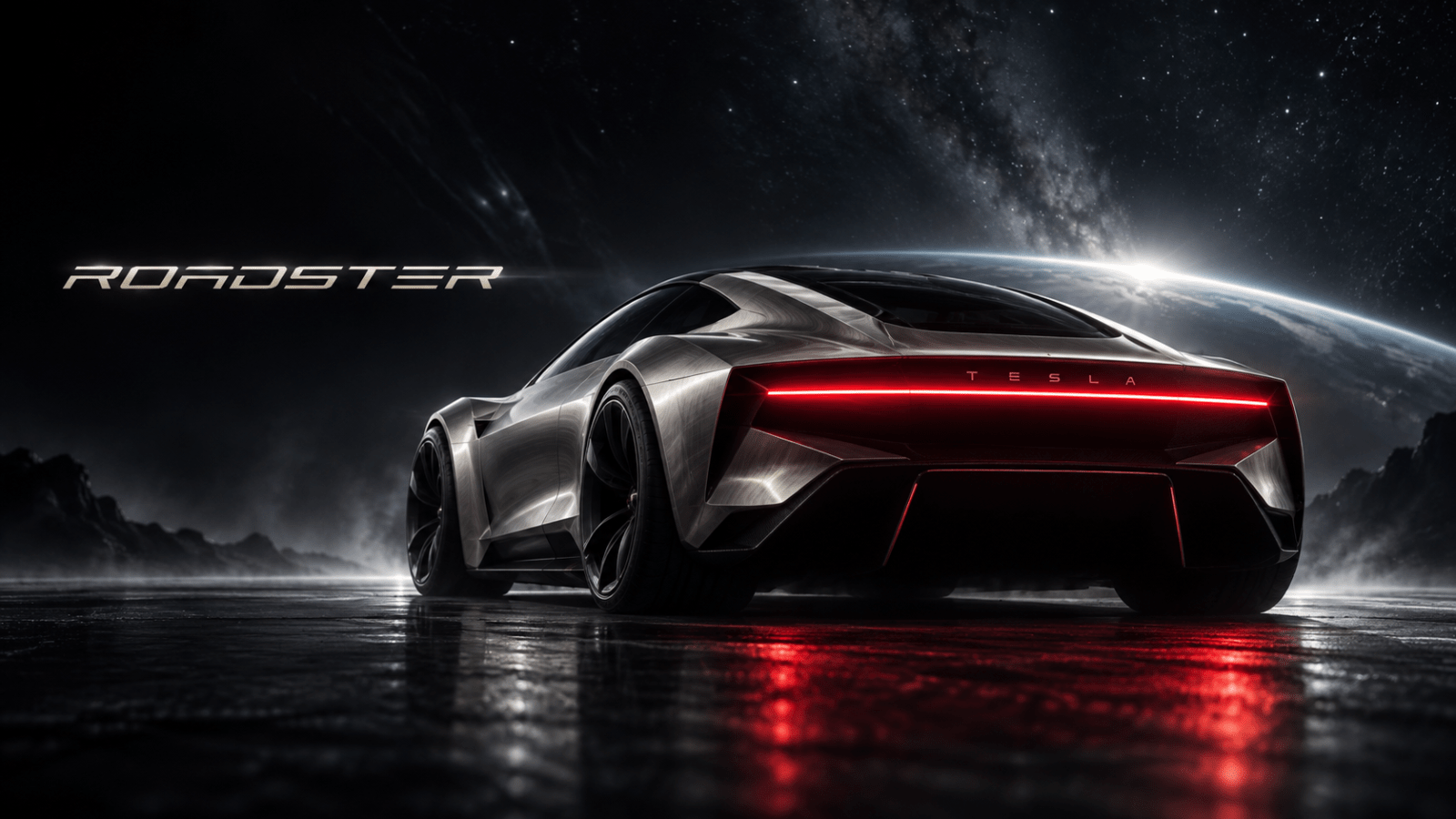
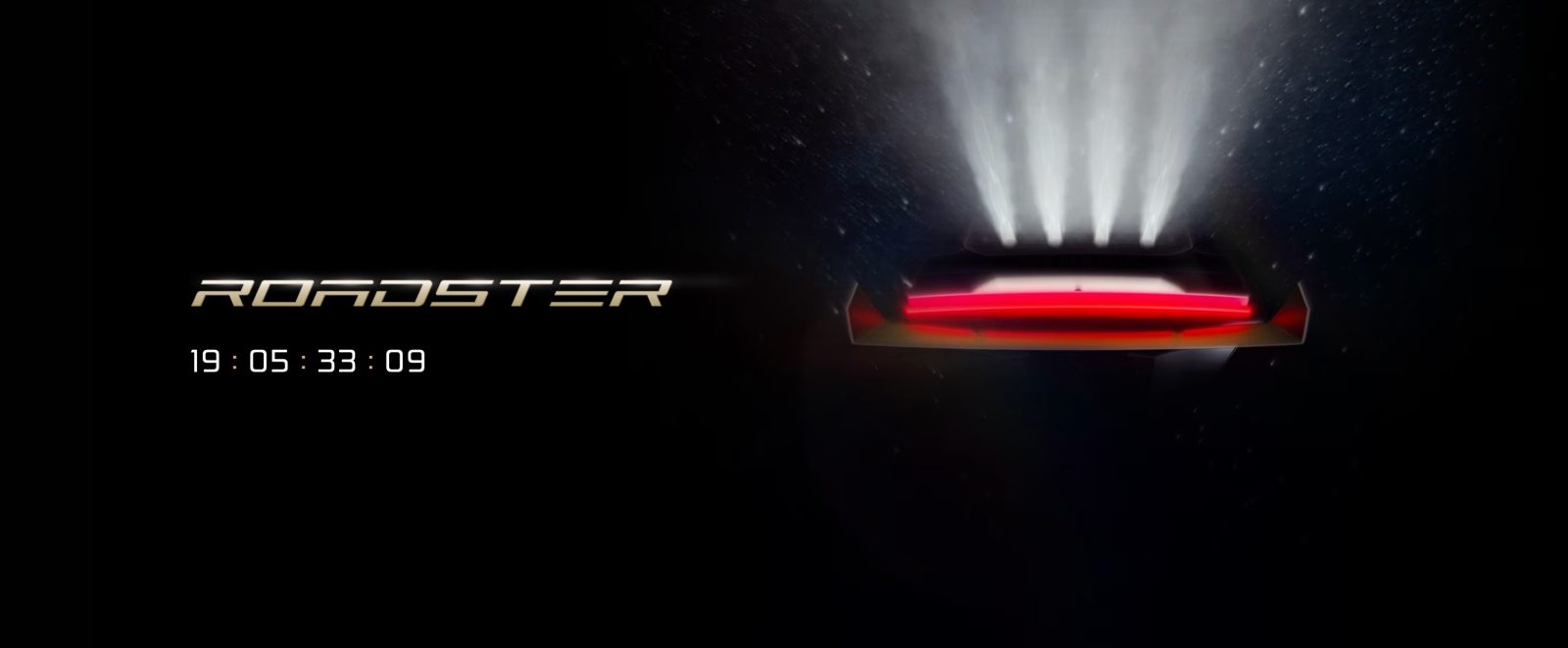
Tesla will finally unveil its new Roadster on October 1, more than eight years after it first showed the car in 2017. And a teaser this weekend suggests the production version is getting Tesla’s “Cyber” design treatment.
The teaser shows SpaceX cold gas thrusters firing out the back, and Elon Musk has promised “radical design changes.” But the Roadster never needed a redesign. It needed to ship.
There was no livestream and the media wasn’t invited. We didn’t even see a euphoric Elon Musk embarrassing himself on stage.
Tesla’s rollout of its two-seater Cybercab robotaxis on the streets of Austin, Texas, this month left investors scratching their heads. With little fanfare, the company stated on Musk’s social media platform X that “Cybercab rides” would “open to public” on September 4.
The “Cybercab event was largely a bust,” tweeted Future Fund Advisors co-founder Gary Black at the time. “The launch offered little detail and key questions remained unanswered.”
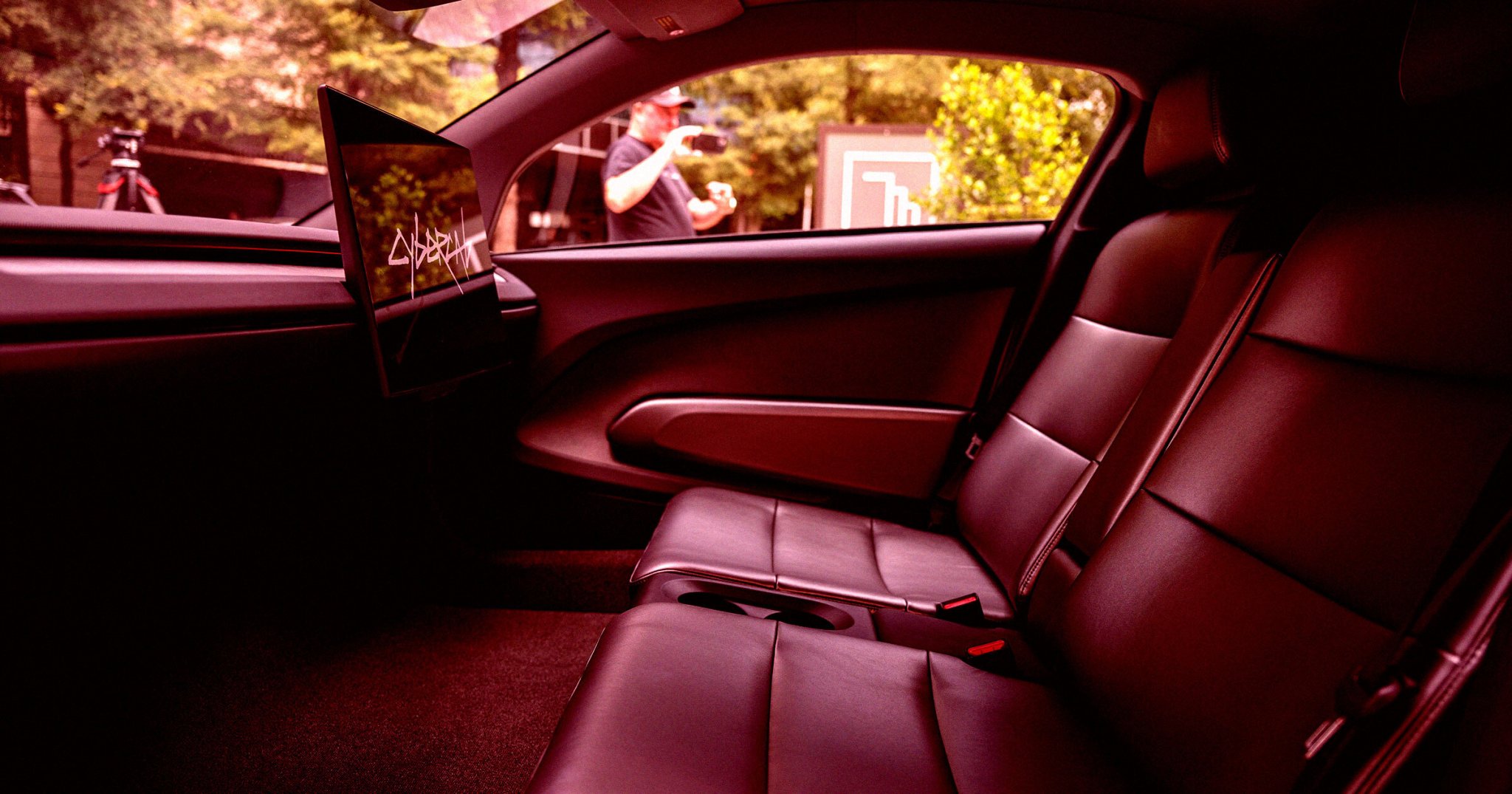
The lack of enthusiasm has reignited concerns over the company’s ability to catch up with some extremely steep competition. Its fleet remains extremely small and limited to a geofenced area of Austin. Major regulatory hurdles could make expansion into other states exceedingly challenging. Early testing and data gathering in New York City required the company to install steering wheels and hire human drivers for its Cybercabs, effectively turning them into glorified — and cramped — Tesla EVs.
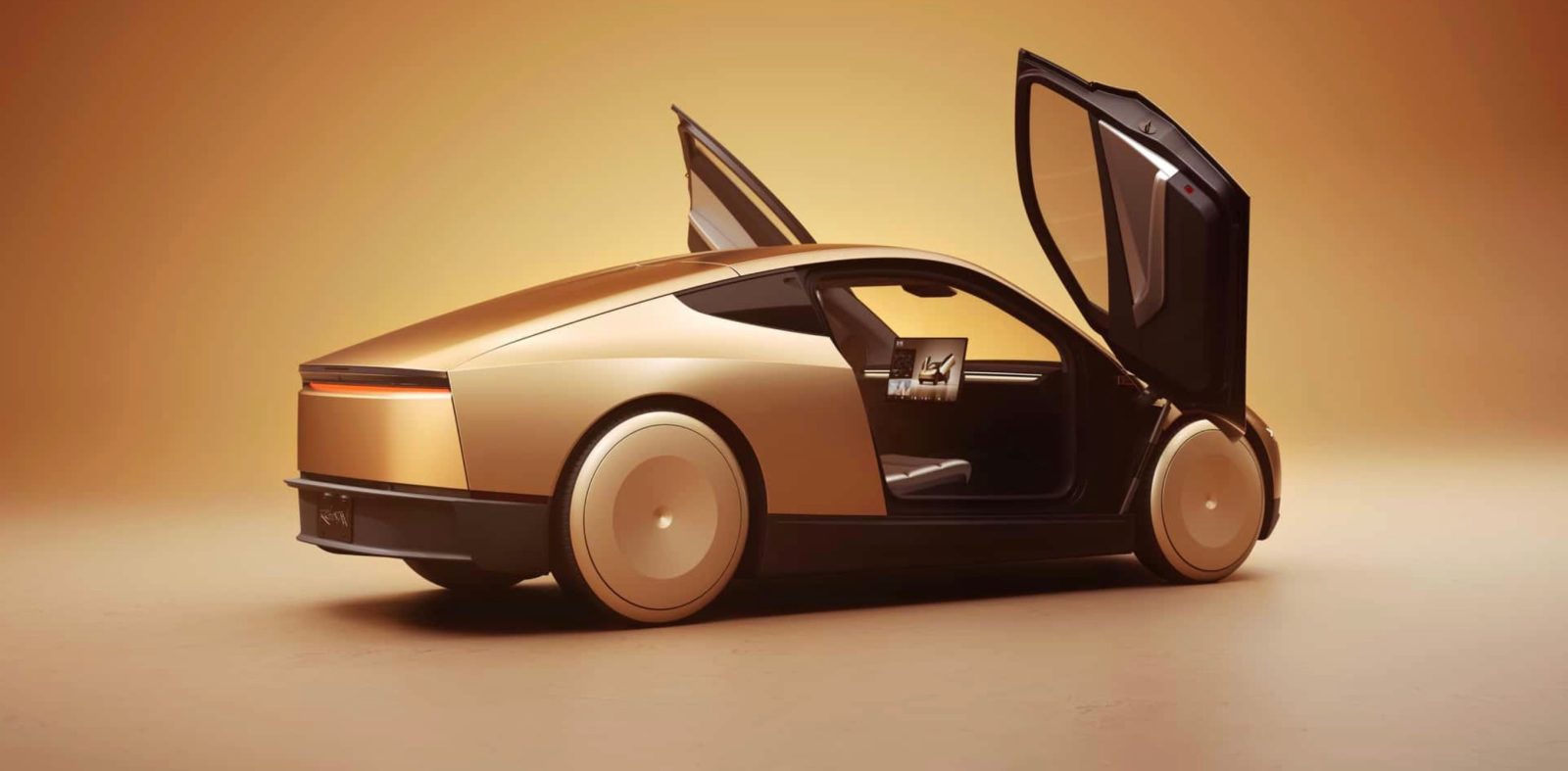
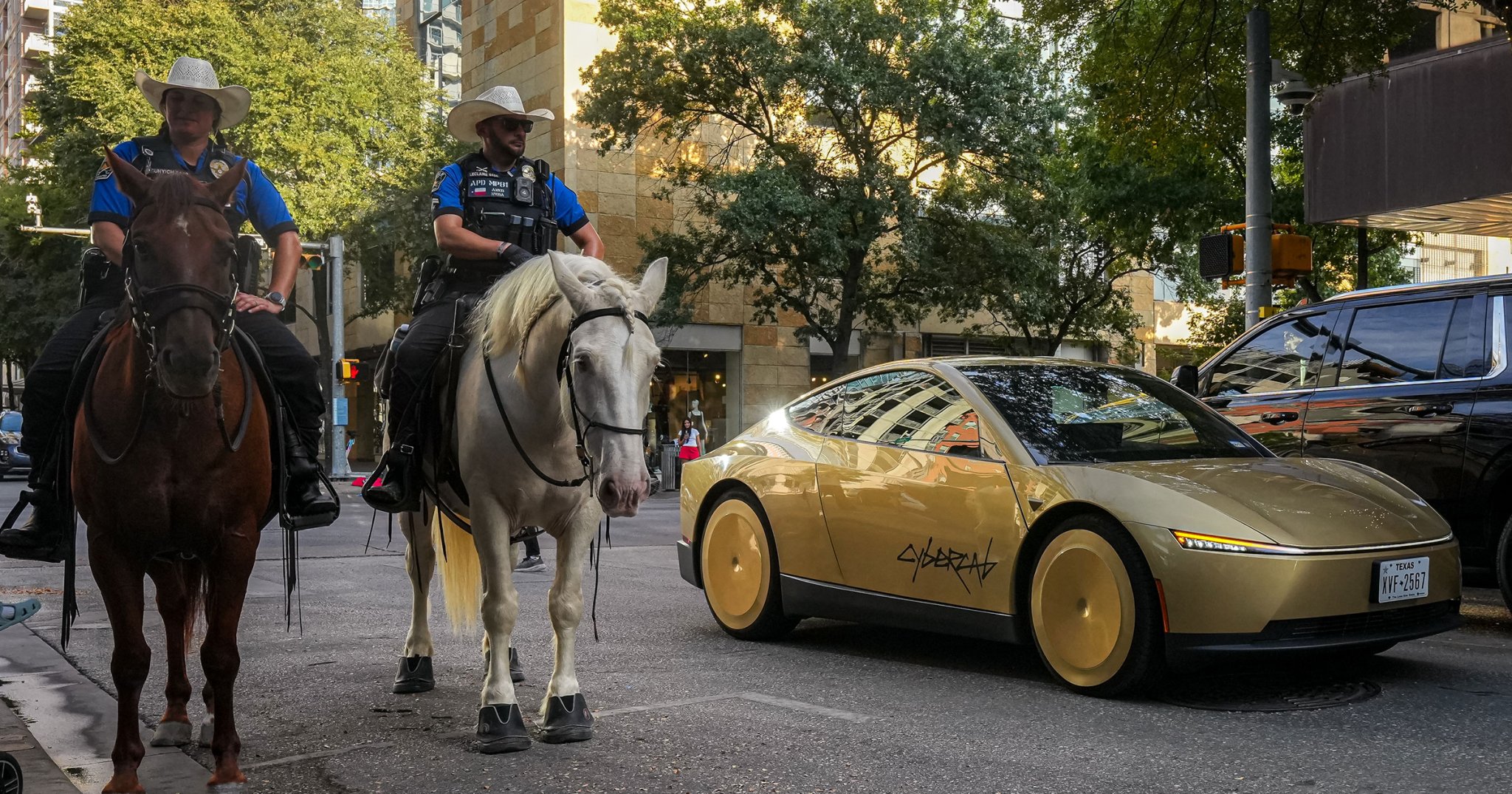
Investors are already peering through the thin coating of gaudy, gold-colored paint. As a group of asset managers and traders, who — perhaps ironically — refer to themselves as the “Bears of Wall Street” noted in a post on Seeking Alpha, they’re maintaining a “rating of Sell for Tesla.” That’s in large part due to “mounting risks,” such as a “negative free cash flow, surging [capital expenditures] above $25 billion, intensifying competition, and regulatory audits delaying robotaxi expansion.”
The Cybercabs are one of three pillars Musk has bet the fate of Tesla on, along with its humanoid robot Optimus and AI. But without any meaningful strides almost two years after Musk first showed off its robotaxi to the world, investors are left wanting a lot more.
That’s especially true as regulators are starting to ask some tough questions, with the National Highway Traffic Safety Administration opening a probe into the safety certification of its Cybercabs.
The company is also looking to a spend over a whopping $25 billion this year and taking on even more debt, with a “borrowing capacity” of up to $30 billion, as it attempts to stay relevant in the fast-moving AI race.
“Capex will grow for the next two or three years as we expand our Robotaxi fleet, expand our production capacity for Optimus, make investments for semiconductor fab, install solar manufacturing capacity, and AI compute infrastructure, in addition to all the other expansions we’ll do for other manufacturing for automotive,” the company’s CFO Vaibhav Taneja told investors in July.
Waymo continues to run circles around the company, offering its services across ten US metropolitan areas and providing half a million paid rides per week.
Meanwhile, its core business of selling cars continues to atrophy. While delivery numbers have recovered somewhat from a disastrous 2025 performance, the numbers still have a lot of ground to regain.
Then there’s the specter of a possible merge with Musk’s SpaceX, which is looking increasingly likely, at least in the long run. It’s a highly risky move that could saddle Tesla with even more debt.
“All of those risks make us believe that Tesla remains greatly overvalued even after the volatility of the last two months,” the Bears of Wall Street argued, valuing the company’s stock at “around 78 percent below the current market price.”
“The Cybercab launch was the catalyst that was supposed to justify Tesla’s valuation, and it delivered almost nothing that investors could measure,” the group concluded. “Instead of a fleet expansion plan, the company got a federal investigation, while its main competitor keeps adding cities.”
"Musk", de Alex Gibney, estreou no Festival de Veneza com quase quatro horas de duração e críticas muito positivas. Elon Musk não partilha a mesma opinião. Depois de reagir com fúria nas redes sociais, o magnata ameaçou o realizador com uma ação judicial.
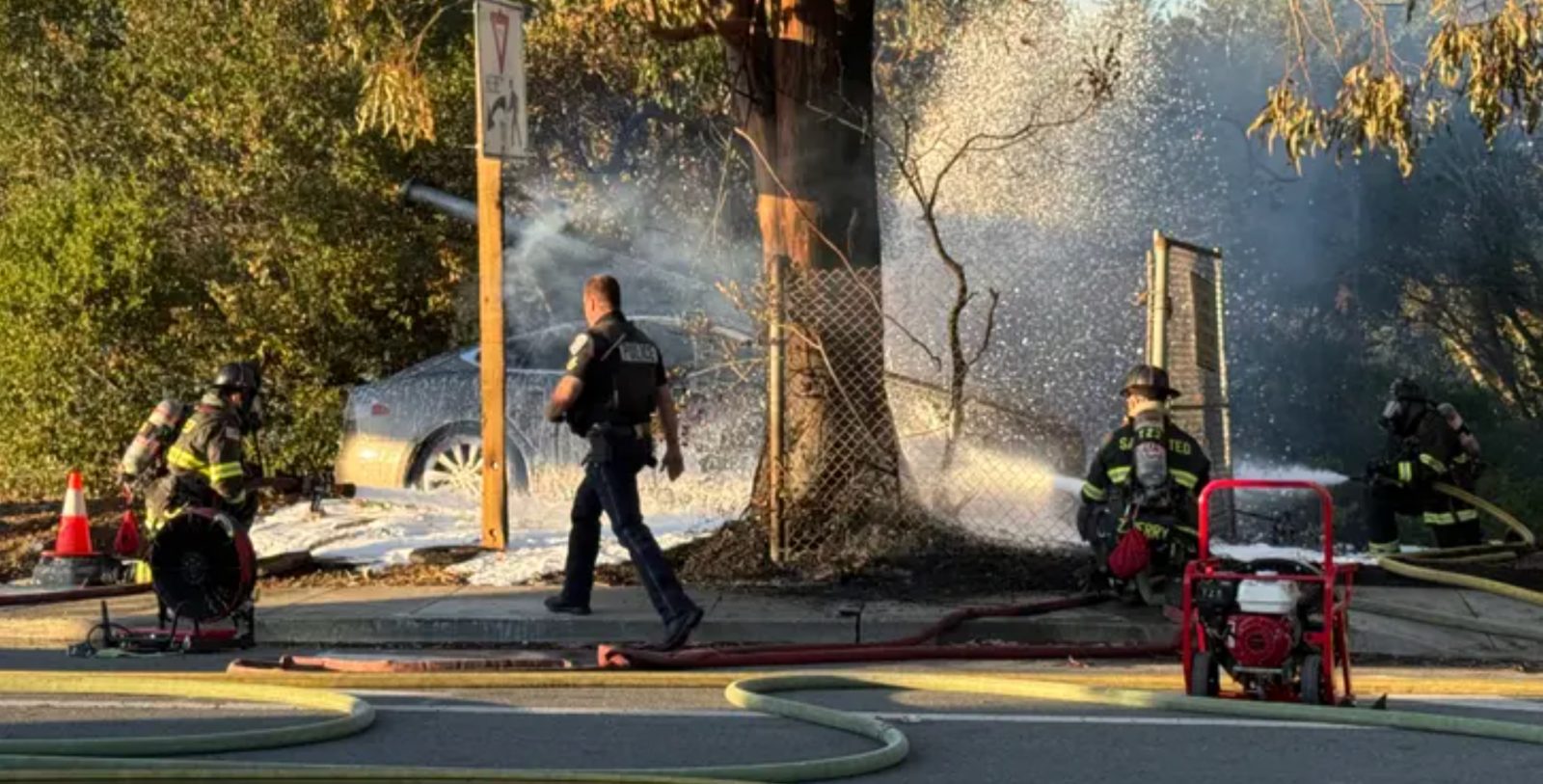
July 2026 was the worst month on record for Tesla driver-assist crashes. Tesla reported 236 of them to federal regulators, the most it has ever filed in a single month.
Four of those crashes killed someone. In every one, Tesla’s own data says Autopilot or “Full Self-Driving” was engaged, and in every one, the public was never told the system was involved. This is the latest from our ongoing investigation matching Tesla’s redacted NHTSA reports to real, named crashes.
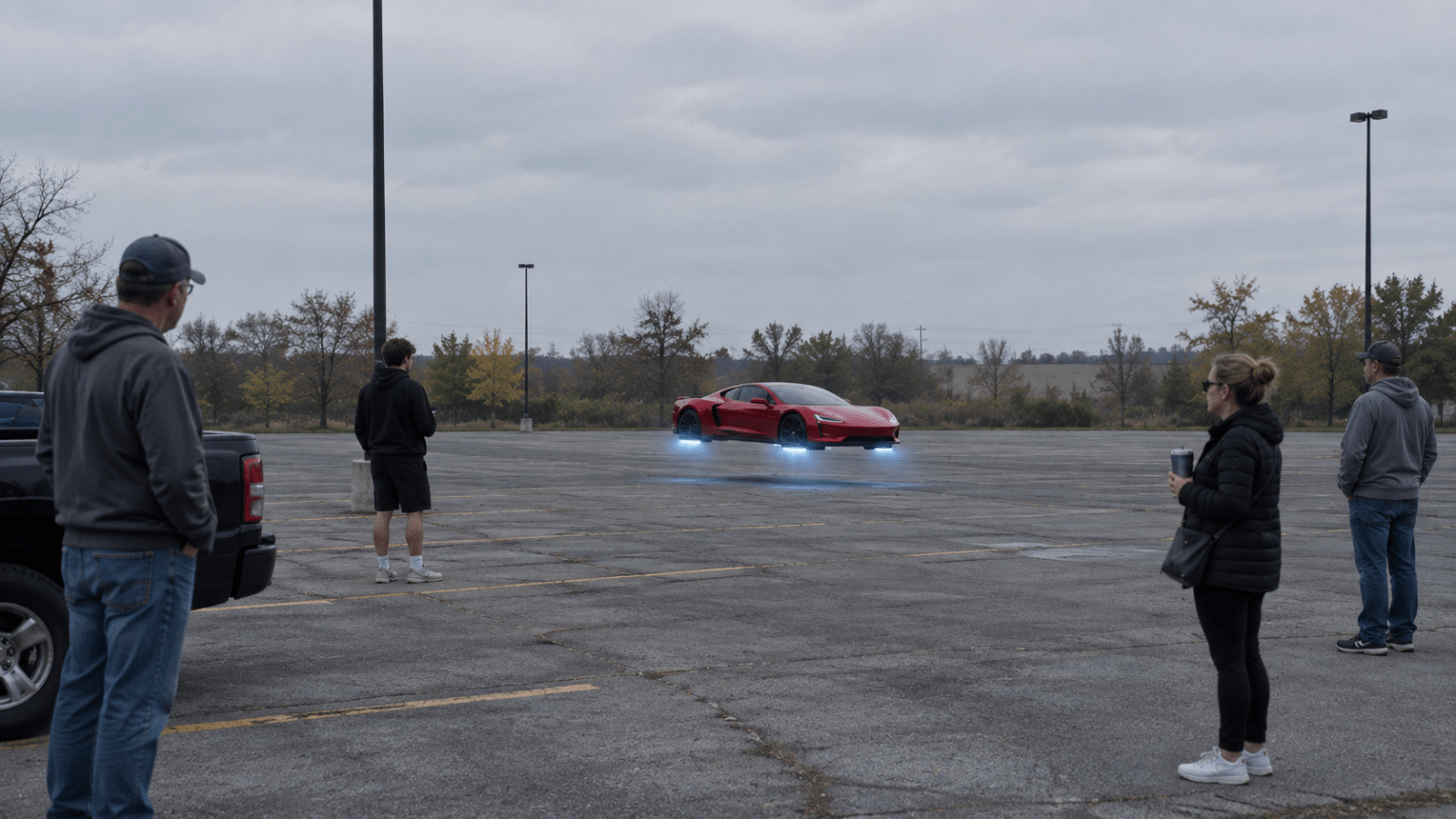
On today’s long-awaited and often delayed episode of Quick Charge, we talk up the reveal of a revolutionary, world-beating, and record-setting new sporty EV, as well as the “new” Tesla Roadster that’s going to hover around a parking lot (allegedly) in October.
A Tesla Cybercab rider in Austin says a 10-minute trip turned into a 70-minute ordeal after the driverless taxi took a long detour across the city.
The reason is a limitation Tesla still hasn’t solved. Its robotaxis can’t drive on highways, so a quick hop that a human would take up the freeway becomes a winding surface-street tour.
Tesla is teasing an October 1 reveal for the new Tesla Roadster, nine years after it first showed the prototype.
The company posted a “Go for launch” teaser image Friday showing the electric hypercar bathed in rocket-launch lighting, with the date “10.01” stamped across it.
Elon Musk’s Tesla has a lot of catching up to do when it comes to its Robotaxi autonomous ride-hailing network.
The company is currently operating a fleet of just 45 of its cramped Cybercabs in Austin, Texas, still falling well short of investor and Tesla bull Dan Ives’ lofty expectations of the company adding “$1 trillion of value” for Tesla “over the coming years” with the service.
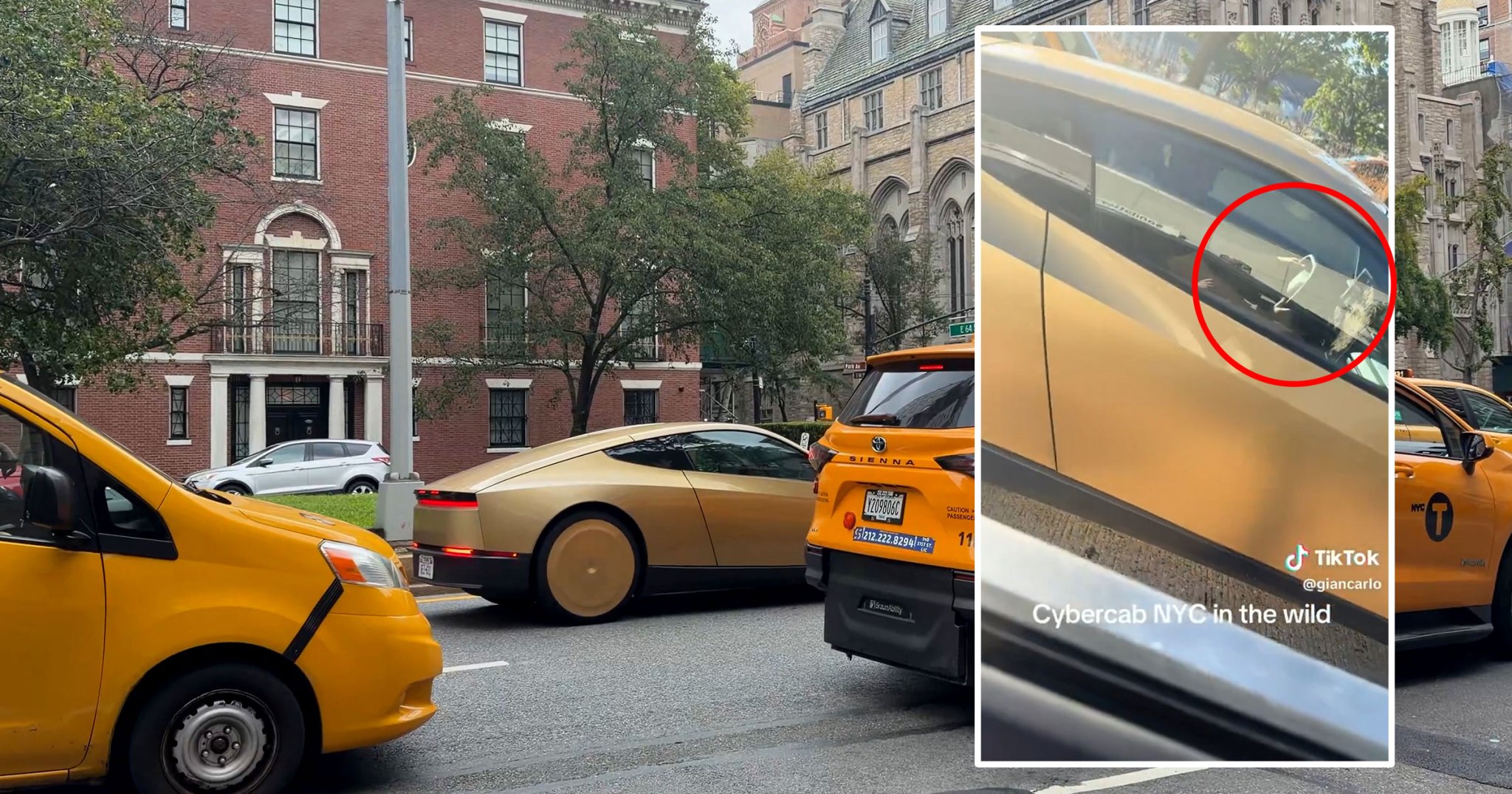
And unlike their counterparts in Texas and Florida, the Cybercabs that were recently spotted on the streets of New York City are featuring an unusual relic of a supposedly soon-to-be-bygone era: a steering wheel.
As Gothamist reports, the golden-hued cabs in the Big Apple are being overseen — and perhaps even operated — by a human in the driver’s seat with an old-fashioned steering wheel. It’s a significant departure from the original, steering wheel- and pedal-less Cybercabs Musk unveiled in 2024.
Officials confirmed the drivers are testing a “supervised” self-driving system, which still requires them to be able to take over control at any point. But Tesla refuses to say how many Cybercabs there are in the city or for how long they will be testing.
There’s likely a good reason Tesla has opted to go with more traditional controls. After all, it hasn’t even started the permit application process for autonomous vehicle testing with the New York Department of Motor Vehicles, as the Gothamist confirmed.
The EV maker is looking to collect driving data, not imminently launch a robotaxi service in the city.
In short, Tesla has a very long road ahead of it before it could ever roll out its Cybercabs nationally, let alone in other major urban areas. Other companies, however, have a massive head start, with Waymo claiming that it has already completed over half a million paid rides a week throughout the first quarter of this year. While Tesla has remained notably quiet on the matter, its numbers likely fall far short of that, considering it’s only operating with a fleet of a few dozen vehicles.
Meanwhile, Amazon’s Zoox vehicles received approval from regulators in late July to begin charging for rides in cars that don’t have a steering wheel. The company has been operating services free of charge in Las Vegas and San Francisco since 2025, according to the Associated Press.
Tesla’s mawkishly sleek new Cybercab has begun rolling out to Austin, Texas this week, with more sighted in cities like New York, Washington DC, and San Diego. It’s the latest development in the world of self-driving taxi cabs — and in one dubious economic indicator, the nation’s personal injury attorneys are on high alert.
Case in point, the New Jersey based law firm Sarofiem and Antoun already has a blog post up courting customers wronged by Cybercab accidents. Billing himself as a “Tesla Cybercab accident lawyer,” Kerollos Antoun poses an important question: “if a driverless Tesla Robotaxi causes an accident, who is responsible when there is no human driver behind the wheel?”
Though Antoun concedes that Cybercabs don’t appear to currently be active in New Jersey, his blog registers a laundry list of considerations considering who can be held liable in accidents involving the autonomous vehicles — each highly theoretical and short on concrete answers.
“Could autonomous-driving software cause an accident,” for example? “Potentially,” Antoun writes. “If an accident occurs, attorneys may need to determine whether the autonomous system perceived the environment correctly and whether the vehicle’s response contributed to the crash.”
Other firms, like Funes Law in Miami and Angel Reyes and Associates in Austin, offer similar pitches: if you’re in an accident with a Cybercab, they want to litigate your case.
Though the tailor-made Cybercab blogs follow a familiar pattern of opportunism by corporate law firms, their point is fair enough. The technology behind Cybercabs is in a very early stage, and the legal precedent is even younger.
Whichever firm happens to scoop up the first Cybercab injury case would be making legal history — a chance to litigate a brand new product made by one of the most valuable companies in the world.
Though self-driving cars are only a few years old at this point, they’ve already resulted in startling legal firsts. In August of 2025, a jury in Miami handed down a landmark verdict against Tesla over a fatal crash involving a Model S being driven on the company’s “Autopilot” mode.
In that case, the total damages came out to a whopping $243 million — a landmark verdict that the nation’s accident attorneys are eager to replicate as Tesla’s gold-tinted coupe hits the pavement.
Elon Musk is once again promoting the misuse of Tesla’s “Full Self-Driving” (FSD), this time by amplifying a video of a 98-year-old man who openly admits he has stopped watching the road.
The clip is charming. It’s also a textbook example of the exact driver behavior Tesla’s lawyers are fighting in a growing pile of crash lawsuits.
A pre-production Tesla Cybercab was spotted parked on a street in Berkeley, California, and it gives us the clearest look yet at how Tesla puts a steering wheel into a car it designed to have none.
The photos, shared with Electrek by reader Adam Machacek, show a Cybertruck steering wheel mounted on an exposed steering column that has been bolted into the two-seat robotaxi.
Tesla revealed the European specs for its Semi electric truck, and they don’t match the version already in production in the US. The truck will offer up to 550 km (342 miles) of range at 40 tonnes fully loaded.
Tesla Europe posted the numbers today, days before the company plans to formally launch the Semi in Europe at the IAA Transportation show in Hannover.
It’s no secret that car owners have handed an immense amount of control over their vehicles to software. From infuriating touchscreens and convoluted user interfaces, to advanced — albeit flawed — driver assistance programs, we’ve never been more removed from the actual driving experience.
The situation become particularly harrowing for Sydney native Narghiza Ergashova, who watched helplessly as her former partner — who she says had already been abusing her for four years — started remotely controlling her Tesla from his smartphone.
As The Guardian reports, police records detail her terrifying experience at the hands of her domestic abuser, 50-year-old businessman Enrico Pucci, last year. Ergashova found that Pucci had activated a “parental control” profile on the vehicle, going as far as to tail her in his own car as he yelled at her about her new partner.
“You thought you’d get away with this,” he yelled, according to police records quoted by The Guardian. “I am in your car. I am in your maps.”
While Ergashova technically owns the vehicle, Pucci had previously offered to “assist her” by using the accompanying Tesla app, giving him extensive control over the car.
According to Tesla’s website, parental controls can be accessed via the accompanying mobile app and allow the user to change a long list of settings.
It also allowed Pucci to bring the Tesla to a crawl at just 25 mph on main roads, for instance, by activating a “Valet Mode” intended to only be used by valets. That caused “significant safety issues for the victim on the road,” according to the police documents.
Pucci also started setting the cabin temperature of the vehicle to extremely cold and hot temperatures and could even predetermine when the car could be driven by implementing curfew hours, features clearly intended for young learners.
“The victim has not had any control of her vehicle since she noticed the parental control profile added on the 1st November 2025,” law enforcement noted. “The accused has been the only one with access to the vehicle’s controls utilising the Tesla app. This has caused the victim significant stress, mental harm and fears for her physical safety when operating her own vehicle.”
Ergashova’s abuser has an extensive track record. Pucci has been convicted of 30 domestic violence-related offences, according to the Sydney Morning Herald, including eight counts of stalking, two counts of choking, one count of coercive control, and assault leading to bodily harm. He has also been convicted of creating revenge porn and theft.
Fortunately, he has been brought to justice. Pucci pleaded guilty and was sentenced to two years in prison last week.
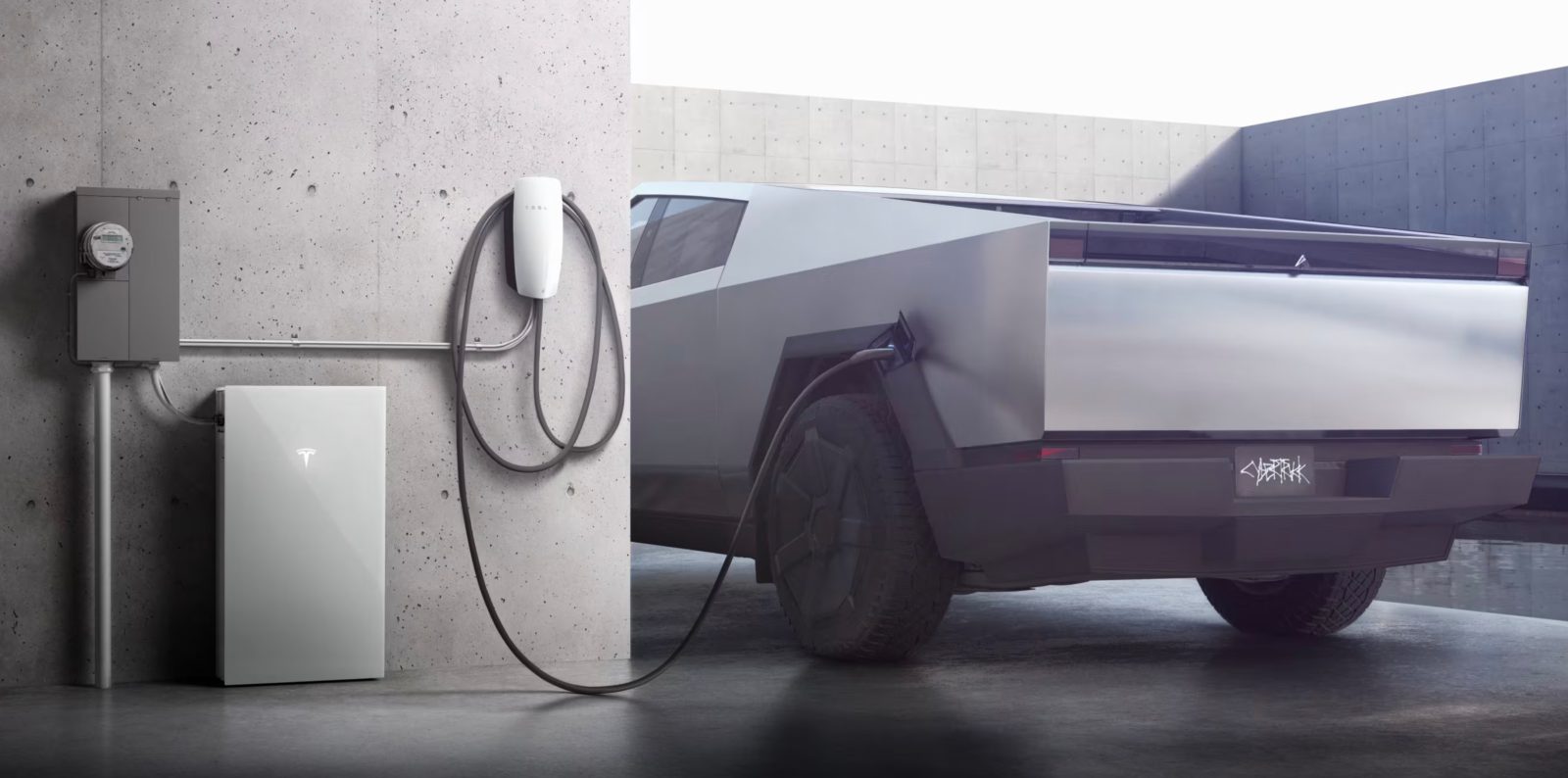
Tesla’s Cybertruck Powershare feature can now back up your home at the same time as a Powerwall 3, the company announced Thursday. Run together, the truck and the battery add more than three days of backup power, which Tesla says is the equivalent of nine extra Powerwalls.
It’s a feature Tesla first promised for 2025, and it’s showing up nearly two years after Cybertruck deliveries began. But it finally closes one of Powershare’s most annoying gaps.
A 2024 Tesla Model Y ran off Interstate 35 in rural Missouri, struck a guardrail, and killed its driver, a 64-year-old woman from Raymore. Troopers reported a single-vehicle wreck and said the car “went off the road.”
What they didn’t say, and likely didn’t know, is that Tesla’s own report to federal regulators says the car’s driver-assist system was engaged. This is part of an ongoing Electrek investigation matching reported crashes to Tesla’s redacted NHTSA data.

 Login