 Login

Trees Can Tell When They’re Crooked and Grow Special Wood to Straighten Themselves
 New experiments reveal a sophisticated posture-control system hidden inside living wood.
 New experiments reveal a sophisticated posture-control system hidden inside living wood.
Author: José Luis Granados Mateo is a postdoctoral researcher in the Department of Philosophy at the University of the Basque Country (EHU) and a member of the Integrated History and Philosophy of Science (iHPS) research group. His work focuses on history and philosophy of science, science and values, and the epistemology of scientific practices.
Water is H₂O. Few scientific formulas look more familiar, more compact, or more final. Two atoms of hydrogen, one of oxygen: the phrase seems to say what water really is beneath the shifting appearances of ice, vapour, rain, rivers and the liquid in a glass.
Yet that little subscript was not easy to earn.
By the early nineteenth century, chemists had good reasons to treat water as a compound of hydrogen and oxygen. The old idea of water as a simple element had lost its authority, as we saw in Is Water H₂O? (1) From Element to Compound. Electrolysis then gave that claim a new experimental force, making hydrogen and oxygen appear under electrical action, although not without raising puzzles of its own, as discussed in Is Water H₂O? (2) The Puzzle of Water Electrolysis. What remained unsettled was a more delicate question. Not whether water had constituents, but how many of each entered one molecule.
Was water HO? H₂O? Something else?
Today the answer feels almost automatic. In the first decades of atomic chemistry, it was not. Dalton’s atomic theory made HO the natural formula: one atom of hydrogen, one atom of oxygen. Avogadro proposed something much closer to the modern answer very early, but his proposal did not settle the matter. For more than half a century, some of the best chemists in Europe disagreed over the formula of one of the most ordinary substances in the world.
The confusion was public enough to become comic. In the 1860s, when agreement was finally beginning to form, an author identifying himself as a certified lunatic at Hanwell Asylum wrote to Chemical News mocking the chemists’ inability to agree even about water. One could contemplate the bewildering variety of formulas, he suggested, until the brain first became confused, then swam, and finally softened.
The joke had bite because the embarrassment was real. Chemical tables were full of combining weights, volumes, radicals, equivalents and atomic symbols. Water had long ceased to be elementary. Yet the old difficulty remained: to know the formula, chemists had to count atoms; to count atoms, they would have had to see them. And they could not.
Liebig put the matter painfully in 1851. Chemists possessed no direct means of ascertaining the number of atoms even in the simplest compound, because that would require seeing and counting them. Atomic chemistry needed numbers for entities no one could inspect.
So the problem was not that the answer lay beyond all reach. It lay beyond direct reach. Chemists had to learn to count invisible things by making them answer to operations that could be performed.
The difficulty begins with a ratio.
Hydrogen and oxygen combine in fixed proportions by weight. In round modern numbers, water contains one part hydrogen for eight parts oxygen. Chemists could establish the ratio; the difficulty began when that ratio had to be translated into atoms.
Suppose water is HO. One atom of hydrogen combines with one atom of oxygen. Since the oxygen contribution weighs eight times as much as the hydrogen contribution, the oxygen atom must weigh eight times as much as the hydrogen atom.
Now suppose water is H₂O. Two atoms of hydrogen combine with one atom of oxygen. The same measured ratio now yields a different atomic weight: oxygen must weigh sixteen times as much as hydrogen.
The laboratory ratio has not changed. The invisible architecture has.
That was the circular trap. Molecular formulas required atomic weights; atomic weights required molecular formulas. Measurement gave combining proportions, not little labelled particles waiting to be counted. A consistent chemistry could be built with HO and oxygen as 8. Another could be built with H₂O and oxygen as 16. Once the difficulty spread across many compounds, chemists were no longer facing a local uncertainty about water. They were choosing among possible atomic worlds.
The difficulty appeared at the worst possible place: the point where atomic chemistry had to begin producing reliable numbers.
Dalton knew that atomic theory needed a starting point.
He approached water from within a broader problem. Chemical substances combined in fixed proportions; in some cases, the same elements combined again in different but still simple ratios. Atomic theory offered a machinery for these regularities. If matter consisted of particles with definite weights, then chemical combination could be understood as their joining in determinate numbers, and the arithmetic of chemistry began to point towards an unseen order. What it still failed to provide was the count itself: the number of atoms entering each compound.
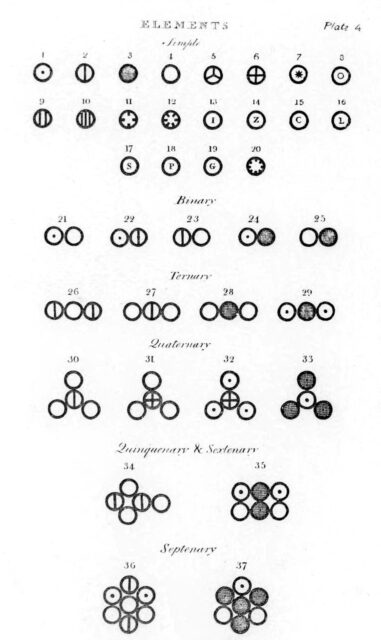
Dalton therefore introduced rules of simplicity. They were not decorative assumptions added to an otherwise complete theory. They were what allowed the theory to produce numbers at all. When only one compound of two elements was known, Dalton assumed the simplest possible atomic constitution: one atom of each. Since water was the known compound of hydrogen and oxygen, its formula became HO. Hydrogen could be assigned atomic weight 1, oxygen 8, and the system could begin to move.
Judged from later chemistry, Dalton’s rule has an air of innocence. It was a methodological expedient rather than an experimental result, a way of allowing atomic theory to proceed when direct counting was unavailable. Dalton was not looking into water molecules and counting badly; he was working with weights, tables and regularities, in a period before spectroscopy, quantum theory or a settled molecular chemistry had made atoms answerable in other ways.
HO was wrong. It was not random. It belonged to a method that could bring order to combining weights before chemistry had better ways of counting atoms.
Another route opened through gases.
Volumes could be measured, and gases combined with a striking regularity. Gay-Lussac showed that gases entered reactions in simple volume ratios. Two volumes of hydrogen combine with one volume of oxygen to form water vapour; other gases display similarly neat relations. To anyone looking for a way to count invisible particles, this was tempting.
If equal volumes of gases contained equal numbers of particles, volume could become a counting device. It would not show atoms individually, but it might give chemists a way to infer how many particles were involved.
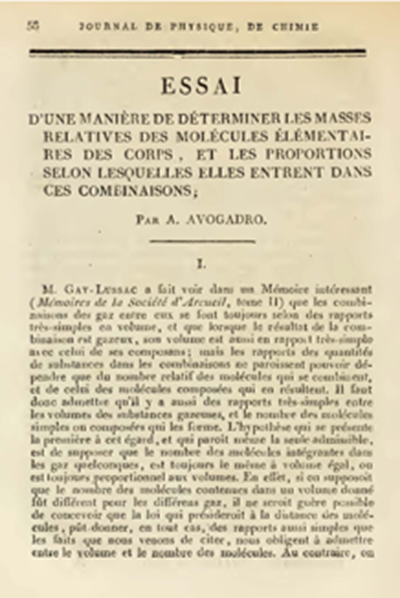
Avogadro made that move. Equal volumes of gases, under the same conditions, contain equal numbers of molecules. Grant that, and the formation of water vapour changes shape. Two volumes of hydrogen and one volume of oxygen produce two volumes of water vapour. The arithmetic works if hydrogen and oxygen gases are themselves molecular, H₂ and O₂, and if water is H₂O:
2H₂ + O₂ → 2H₂O
There it is, almost modern chemistry.
Yet the hypothesis did not conquer the field. The reasons were not merely psychological, nor reducible to conservatism. Avogadro solved one problem while creating others that looked serious at the time. Dalton saw no obvious reason why atoms of the same element should join into stable pairs. In his picture, atoms were surrounded by repulsive atmospheres of caloric; piling like atoms together was hardly the natural assumption. For electrochemical dualists, the difficulty sharpened further. Like atoms ought to have like electrical characters, and like electrical characters ought to repel. Why should oxygen atoms pair with oxygen atoms? Why should hydrogen atoms pair with hydrogen atoms? Why stop at pairs?
The hypothesis also asked chemists to treat elementary gases as molecules containing several atoms of the same element, and to imagine those molecules splitting during chemical combination. To those who trusted weights more readily than invisible gas particles, this was a large demand.
Even sympathetic chemists found the route uneven. Dumas tried, for a time, to develop Avogadro’s approach, but vapour-density results did not behave with perfect neatness. Mercury, phosphorus and sulphur made it hard to treat every elementary vapour on the model of hydrogen or oxygen.
Avogadro had offered a powerful clue. It was not yet the common language of chemistry. Water could have been H₂O in 1811; historically, that was not enough.
Behind the disagreement over water lay a larger problem. Nineteenth-century chemists were learning how to handle atoms at all: as weights, as volumes, as equivalents, as electrical units, as radicals, as centres of substitution.
For some, atoms were bearers of weight. For others, units in an electrochemical opposition. In Avogadro’s programme, gases offered a way of counting particles by volume. In organic chemistry, atoms and radicals became things that could be moved, exchanged and followed through reactions. Later structural chemistry would give them positions and patterns of connection.
Atoms entered chemistry through these practices unevenly: as things to be weighed, counted, exchanged, classified or connected.
A formula could be useful in one setting and awkward in another. Atomic weights could seem natural when derived from one class of operations and arbitrary when forced into another. Equivalents worked well for neutralisation and replacement. Volumes worked well for gases, though not without trouble. Substitution worked powerfully in organic chemistry. Electrochemical dualism arranged substances by polarity and affinity.
No single practice simply revealed atoms as they were. Each gave atoms a handle.
That is why the history of H₂O is not just a story about choosing the correct formula. The formula became convincing when atoms could be made to enter operations: weighed in one context, counted in another, substituted in a third, arranged elsewhere by their capacities for connection. Seeing was unavailable; work had to do the job of sight.
One response to the circular trap was to avoid stepping fully into it.
Many chemists were cautious about atoms. Atomic language sounded metaphysical, or at least more speculative than the discipline required. Equivalent weights appeared safer. One substance could neutralise, replace or combine with another in a definite proportion, and those relations could be measured without deciding what atoms really were or how many of them sat inside a molecule.
Equivalents allowed calculation while holding invisible architecture at arm’s length. A chemist could say how much of one substance answered to another in reaction, without committing to a microscopic count.
This caution was productive. It helped chemists calculate, compare and classify. It also preserved ambiguity. In practice, an equivalent could behave rather like an atomic weight, even when chemists insisted that they were avoiding speculative atomism.
Water once again exposed the difficulty. If oxygen’s equivalent was 8 relative to hydrogen, HO looked natural. If oxygen’s atomic weight was 16, H₂O became natural. The issue depended on the passage from observable combining relations to invisible atomic units.
The appeal to equivalents allowed chemists to postpone bolder claims about atoms, while leaving a theoretical judgment embedded in the passage from measurable reactions to invisible units.
The decisive work did not come from staring harder at water.
That is one of the surprises in this history. H₂O gained its strength elsewhere: in the movement of radicals, in substitutions, in families of organic compounds. Organic chemistry gave chemists a way to manipulate groups of atoms and to follow their replacements through reactions.
The key idea was the water type.
If water is H₂O, oxygen can be treated as holding two units together. In water, the two units are hydrogens. In alcohols and ethers, one or both hydrogens can be replaced by organic radicals. Water, alcohols and ethers could therefore be seen as members of a family, built around oxygen’s capacity to connect two branches.
At first this sounds like a tidy diagram. It became much more than that.
Williamson’s work on etherification gave the water type experimental substance. The older Liebig-Dumas view treated etherification largely as a removal of water from alcohol under the dehydrating action of sulphuric acid. Williamson rewrote the process as a traffic of groups. Sulphuric acid took an ethyl group from alcohol, leaving water behind; the resulting sulphovinic acid then handed that ethyl group to another alcohol molecule, taking hydrogen in return. Sulphuric acid was regenerated, and ether was produced.
The formula was doing work. It allowed chemists to follow the movement of groups through a sequence of transformations instead of merely recording elemental proportions at the beginning and the end.
Then came the sharper test. If the water-type picture was right, oxygen could hold two different radicals at once. Williamson therefore contrived ethers containing different combinations of methyl, ethyl and amyl groups. These were mixed ethers, not mere mixtures of symmetrical ethers. Under the rival Liebig-Dumas scheme, such mixed ethers should not have appeared as distinct compounds at all; at most, the experiments should have produced mixtures of symmetrical ethers.
Their production gave the water type operational force.

H₂O gained strength because it travelled. It helped chemists understand not only water, but alcohols, ethers and families of organic compounds. It made substitutions intelligible. It made room for oxygen as an atom with a definite combining capacity.
The problem had widened. Water was no longer an isolated substance to be analysed, but the simplest expression of oxygen’s capacity to bind, exchange and organise chemical groups.
Substitution reactions gave atoms a kind of experimental visibility.
No one saw oxygen holding two hydrogens. No one watched radicals attach themselves like beads on a wire. But chemists could replace one group with another and see what sort of compound resulted. If an atom or radical could be substituted without the molecule falling apart, that said something about the architecture of the compound. If replacing a central atom broke the molecule into two products, that said something else.
Here the language of valency began to acquire force. Oxygen and sulphur behaved as if they could bind two units. Chlorine behaved differently, as if it had only one hand. The metaphor is crude, but useful; later it would be disciplined into valency.
Water became the simplest member of a larger argument. If oxygen could connect two radicals in ethers, then the two hydrogens in water no longer looked like an arbitrary doubling. They were the simplest expression of oxygen’s twofold combining capacity.
The older picture of a central binding atom would later lose its privileged status. What remained was more durable: a number attached to an element’s capacity for combination.
This was a different kind of counting from Dalton’s simplicity rule or Avogadro’s gas volumes. Dalton counted by assuming the simplest combination. Avogadro counted through equal volumes. Organic chemists counted through substitutions, replacements and families of compounds. None of these methods made atoms visible. Each made them usable in a different way.
H₂O became embedded in a network of operations in which oxygen’s twofold capacity could be tested across many compounds. The formula began to earn its keep.
There is a familiar heroic version of the story. Avogadro discovered the key; chemists forgot it; Cannizzaro revived it at Karlsruhe in 1860; the fog lifted; H₂O won.
There is some truth in this. Not enough.
Cannizzaro’s intervention mattered. His presentation of atomic and molecular weights was clear, forceful and timely. By using Avogadro’s ideas, he gave chemists a way to distinguish atoms from molecules, molecular weights from atomic weights, formulas from combining proportions. His pamphlet circulated after Karlsruhe and influenced younger chemists who were looking for order in a confusing field.
The achievement was real. It was not miraculous.
By the time of Karlsruhe, many of the crucial battles had already been fought elsewhere. Organic chemistry had done a great deal of the work. Substitution, types, radicals and valency had given chemists practical ways to count and sort atoms. Cannizzaro clarified and spread a system that was already becoming workable; he did not unlock the problem by himself.
Nor did his account contain the strongest organic side of the story. Williamson, types, radicals and substitution had already made H₂O useful in ways that a purely Avogadrian argument could not.
Consensus emerged because several practices began to reinforce one another. Volumes, atomic weights, substitution patterns, organic structures and valencies gradually pulled in the same direction. H₂O did not win because an old hypothesis was finally remembered. It won because chemists had learned to make the formula work across a widening range of operations.
A formula becomes harder to doubt when it begins to do work elsewhere.
By the 1860s, H₂O was no longer an isolated claim about water. It belonged to a broader chemical world.
Hydrogen was monovalent. Oxygen was divalent. Water belonged to a family of compounds in which oxygen could connect two units. Gas volumes supported the distinction between atoms and molecules. Organic substitutions gave chemists ways to test combining capacities. Atomic weights and molecular formulas could now be adjusted together with less arbitrariness than before.
Agreement on H₂O did not mean agreement on the reality of formulas. Some chemists treated them as useful instruments; others took them as claims about molecular architecture; many occupied positions somewhere between those poles. Chemical atomism became operationally secure before philosophical realism about atoms became uncontested.
The settlement also did not turn chemistry into a single perfectly unified language. Equivalent weights, atomic weights, empirical formulas, structural formulas and physical atomism did not collapse into one view. The field was rearranged. H₂O became stable within that rearrangement, not because every older tension disappeared, but because enough practices now supported the same count.
Once that happened, HO no longer looked like a reasonable simplification. It looked wrong. But it looked wrong from inside a later practice.
H₂O looks almost weightless on the page. Three symbols, one subscript, a formula learnt so early that it seems to have no history at all.
It has a long one.
Before chemists could write that subscript with confidence, water had to lose its ancient simplicity, acquire hydrogen and oxygen as constituents, and then submit to a harder demand. Its invisible parts had to be counted.
That last demand was the strangest. Weights could be measured, gases collected, volumes compared, substances replaced, compounds arranged into families. Yet no one could open a molecule and inspect its furniture. The number two had to come from elsewhere.
It came from operations. From volumes that made gases countable; from equivalents that allowed calculation; from substitutions that let radicals change places; from families of compounds in which oxygen repeatedly behaved as a twofold centre of combination. A count that no eye could read became stable through chemical work.
This is what the formula now conceals. H₂O is neither a convention nor a snapshot of an invisible object. It is a compressed history of practices, a small sign in which balances, gases, paper formulas, ethers, substitutions and valencies have disappeared into familiarity.
Water is H₂O. The difficulty lies in remembering how much chemistry had to be invented before that sentence could become obvious.
References
Avogadro, A. (1811). ‘Essai d’une manière de déterminer les masses relatives des molécules élémentaires des corps, et les proportions selon lesquelles elles entrent dans ces combinaisons’. Journal de physique, de chimie, d’histoire naturelle et des arts, 73, pp. 58–76.
Cannizzaro, S. ([1858] 1910). Sketch of a Course of Chemical Philosophy. Alembic Club Reprints, no. 18. Edinburgh: The Alembic Club.
Chang, H. (2012). Is Water H₂O? Evidence, Realism and Pluralism. Dordrecht: Springer. DOI 10.1007/978-94-007-3932-1.
Dalton, J. (1808). A New System of Chemical Philosophy, Part I. Manchester: Printed by S. Russell, for R. Bickerstaff, Strand, London.
Gay-Lussac, J. L. (1809). ‘Mémoire sur la combinaison des substances gazeuses, les unes avec les autres’. Mémoires de physique et de chimie de la Société d’Arcueil, 2, pp. 207–234.
Klein, U. (2003). Experiments, Models, Paper Tools: Cultures of Organic Chemistry in the Nineteenth Century. Stanford: Stanford University Press.
Liebig, J. von. (1851). Familiar Letters on Chemistry, in Its Relations to Physiology, Dietetics, Agriculture, Commerce, and Political Economy. 3rd ed. London: Taylor, Walton, & Maberly.
Rocke, A. J. (1984). Chemical Atomism in the Nineteenth Century: From Dalton to Cannizzaro. Columbus: Ohio State University Press.
Rocke, A. J. (2010). Image and Reality: Kekulé, Kopp, and the Scientific Imagination. Chicago: University of Chicago Press.
Williamson, A. W. (1850). ‘Theory of Ætherification’. The London, Edinburgh, and Dublin Philosophical Magazine and Journal of Science, 3rd series, 37(251), pp. 350–356.
Williamson, A. W. (1852). ‘On Etherification’. Quarterly Journal of the Chemical Society of London, 4, pp. 229–239. DOI 10.1039/QJ8520400229.
The post Is water H₂O? (3): How chemists learned to count invisible atoms appeared first on Mapping Ignorance.
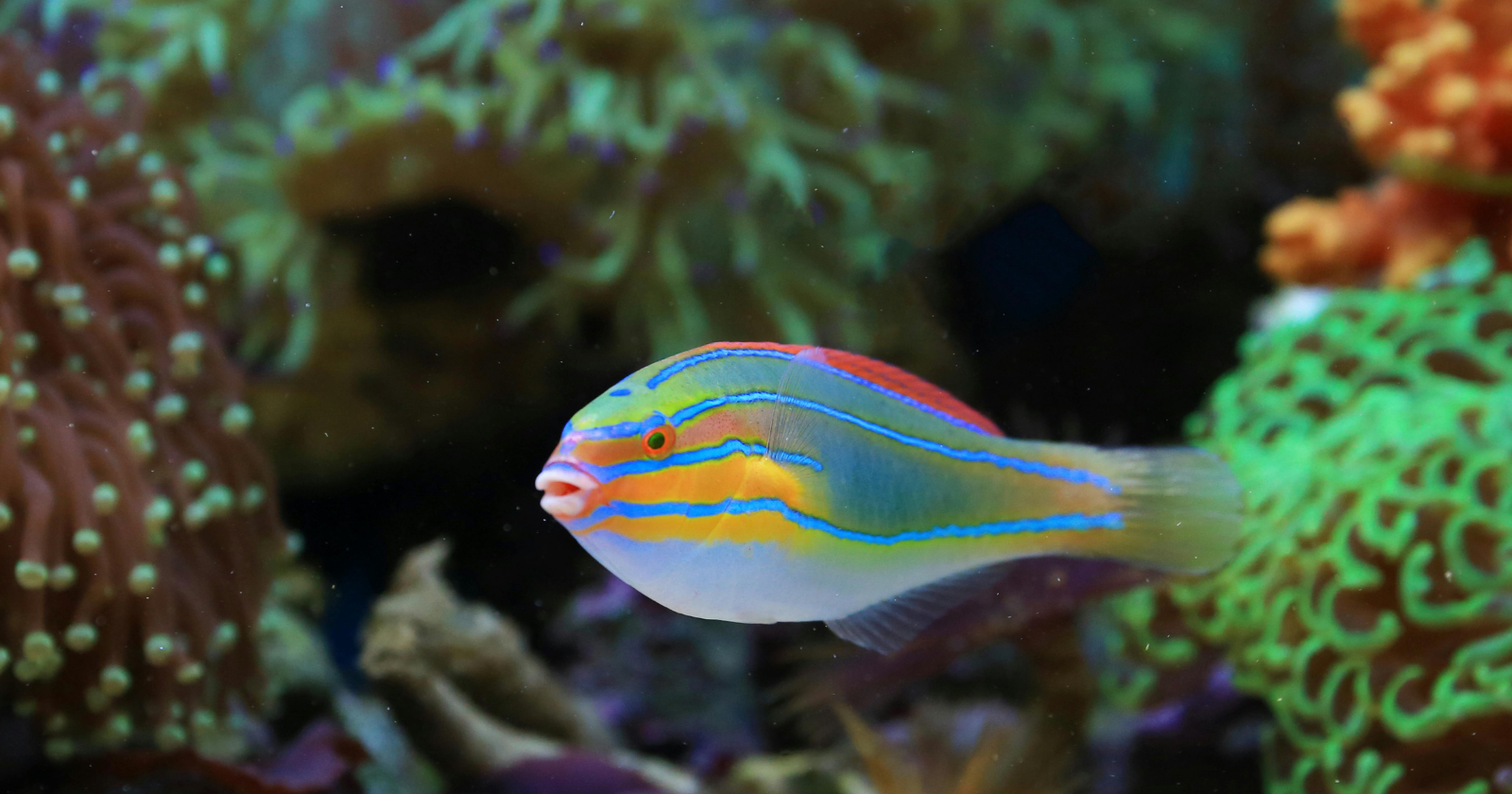
Marine biologists have documented five species of wrasse in the western Atlantic using rocks, coral rubble and shells as makeshift anvils to crack open crabs, mollusks and other armored prey — a foraging technique already documented in fish from the Indo-Pacific but never before filmed in the Atlantic. A study published in Coral Reefs in March 2025 provides the first evidence of anvil use in three of the five species and the first video documentation of the behavior in the other two.
The research, led by Dr. Juliette Tariel-Adam of the Fish Lab at Macquarie University’s School of Natural Sciences in Sydney, focused on New World wrasses in the genus Halichoeres: the slippery dick (H. bivittatus), the Brazilian wrasse (H. brasiliensis), the yellowhead wrasse (H. garnoti), the black-ear wrasse (H. poeyi), and the puddingwife wrasse (H. radiatus), documented at Fernando de Noronha Island off Brazil’s northeast coast.
The paper lists co-authors Jaqueline G. Toledo, C. E. O’Brien, Sergio R. Floeter and Professor Culum Brown alongside Tariel-Adam. Anvil use in fish is not new to science. Since it was first documented in an orange-dotted tuskfish roughly fifteen years ago, researchers have logged the behavior in roughly two dozen of the more than 550 known wrasse species, almost all of them in the Indo-Pacific and Indian Ocean. What sets this study apart is geography and scale: it is the first systematic documentation of anvil use among wrasses native to the western Atlantic, and it draws on the largest video dataset yet assembled for the behavior in this ocean basin.
The team built that dataset by turning to citizen scientists. Divers, snorkelers and underwater photographers working across the Caribbean, the Caicos Islands and Brazil submitted footage and written accounts through a public call for observations, contributing 16 new records to the study. Combined with existing records, the dataset gave researchers close, repeated looks at details of the behavior that had previously been described only impressionistically.
Fish in the study grabbed a hard-shelled item — in most cases a crab, mollusk, sea urchin or hermit crab — and swam it to a chosen surface before repeatedly slamming it against that surface to crack it open. Successful cracking attempts required an average of six or more strikes and took at least a minute to complete, and prey was successfully accessed and consumed in 12 of the 19 documented events, according to the published paper. One of the study’s more striking findings involves anvil choice.
The wrasses used a range of materials as anvils — rock outcrops, coral rubble, reef platforms and shells — without sticking to a single preferred striking surface, switching anvils mid-attempt in 53 percent of observed strikes.
Researchers interpreted this flexibility as a sign the fish are actively assessing which surface will most efficiently break a given prey item rather than relying on a classic bite-and-swim mechanism regardless of the target.
Tariel-Adam framed the findings as part of a broader case for taking fish cognition seriously. “Tool use is typically associated with humans, but this behaviour is proof that fish are far cleverer than they get credit for,” she said, in comments reported by Phys.org. Senior author Culum Brown, who has spent much of his career studying fish behavior and welfare, added that the wrasses “demonstrate flexible and dexterous tool use, expanding our understanding of tool use evolution in the animal kingdom.”
The paper situates the discovery within debates over how and why tool use evolves. Because anvil use has now turned up independently in wrasse lineages on opposite sides of the globe, the behavior increasingly looks like a foraging strategy that several unrelated reef fish lineages have independently evolved — one that is easily missed by divers not specifically watching for it, which is part of why the researchers built their dataset largely around community-contributed footage, supplemented by only a handful of controlled observations.
Coverage of the paper by Scimex and Oceanographic magazine both note that the research team is continuing to solicit new footage from divers and underwater photographers, on the expectation that further observations will clarify how widespread the behavior is among western Atlantic reef fish and whether other genera beyond Halichoeres practice it as well.
Further detail on the study is available via the Macquarie University research profile and additional reporting from ZME Science.
The post Five species of wrasse fish in the western Atlantic have been filmed selecting a specific rock or coral slab as an anvil, smashing shellfish against it, and switching anvils depending on the prey — the first video evidence of the behavior in the western Atlantic, extending a foraging technique already known among Indo-Pacific fish to a new ocean basin appeared first on Space Daily.

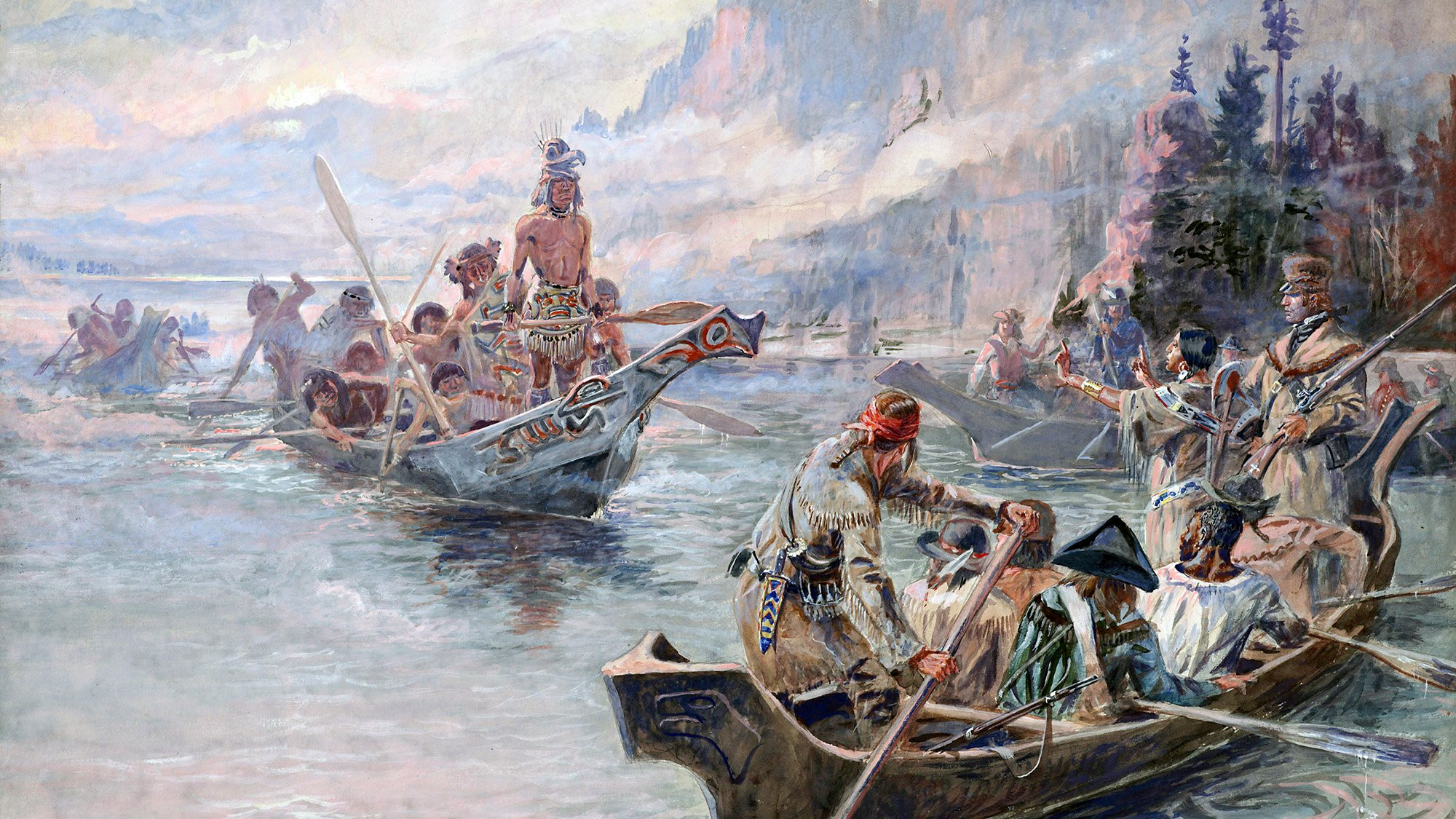
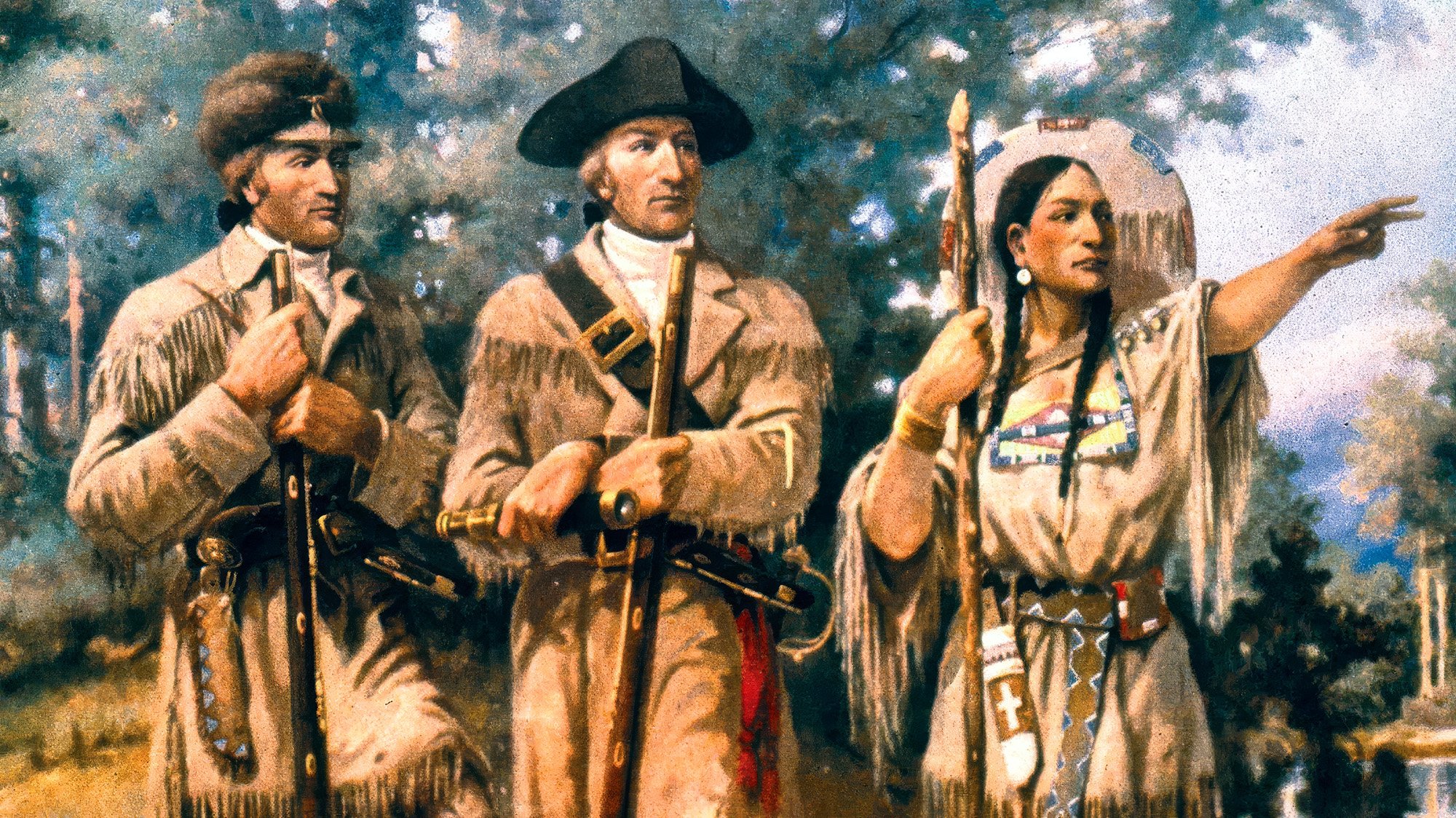
The Corps of Discovery Expedition set out in 1804, directed by President Thomas Jefferson to survey the United States’ newly acquired Louisiana Purchase. The exploration forms a core piece of early U.S. history. Picture a scene from the journey: It’s a cool morning, the silence punctuated by birdsong and the rustle of the breeze through the cottonwood trees. To one side, Commander William Clark, his rifle leaning against a plum tree and his rucksack nearby, squats over a latrine pit, unceremoniously heeding the call of nature.
The Louisiana Purchase constituted a territory of around 828,000 square miles, which the U.S. had bought from France in 1803. This was, it is worth noting, largely without the consent of the Indigenous groups who had lived there for millennia. The purpose of the expedition was threefold: to find a practical trade route westward to the Pacific coast, to explore and document the territory, and to stake a claim to the area before any other European powers butted in. Led by Meriwether Lewis and William Clark, the 40-man team, plus their guide Sacagawea, spent more than two years trekking westward.
Believe it or not, the holes that were used as toilets along the march to the Pacific have been invaluable for archaeologists and historians. This is thanks especially to a type of treatment included in the expedition’s medical kit.
Everybody poops—it’s a universal human need. But most accounts of the Corps of Discovery’s journey leave out the details of how the Corps members dealt with bathroom business.
Each of the campsites where the expedition spent time had an accompanying latrine pit, situated well away from camp for sanitary (and privacy) reasons. The latrines would have seen a lot of use, because the Corps of Discovery’s diet wasn’t the best for gut health.
While the expedition members relied heavily on foraged and hunted food, they also carried backup rations. These included nearly 14,000 pounds of dry goods, including flour, salt, coffee, dried pork, and lard. All told, each member of the Corps ate around nine pounds of meat per day. All of that protein without lots and lots of fiber added up to frequent constipation. The untreated water they drank from rivers and creeks they encountered probably didn’t help their circumstances. Enter…Dr. Rush’s Bilious Pills.
In 1803, as preparation for the upcoming expedition, William Clark traveled to Philadelphia for a two-week medical crash course with Dr. Benjamin Rush. Rush was a prominent physician in his day, and a Founding Father of the United States. His signature is one of the 56 on the Declaration of Independence.
Rush taught Clark some basic field skills, such as bone-setting and wound treatment. Clark left Philadelphia with new skills and a well-stocked medical kit that included 50 dozen of Doctor Rush’s Bilious Pills. These were compounded tablets about the size of a raisin, composed of powerful laxative ingredients. The pills were nicknamed “thunderclappers” because of the speed with which they took effect. The main ingredient of the thunderclappers was calomel, or mercury chloride.
Mercury, historically also called quicksilver, has been thought to have curative effects for centuries. It’s a metal that is liquid at room temperature, which seems miraculous in and of itself.
It was also a popular treatment for syphilis. This is not to say it was an effective treatment for syphilis. When it was administered for that disease, slowly in low doses, patients were more likely to die from mercury poisoning than from the STI.
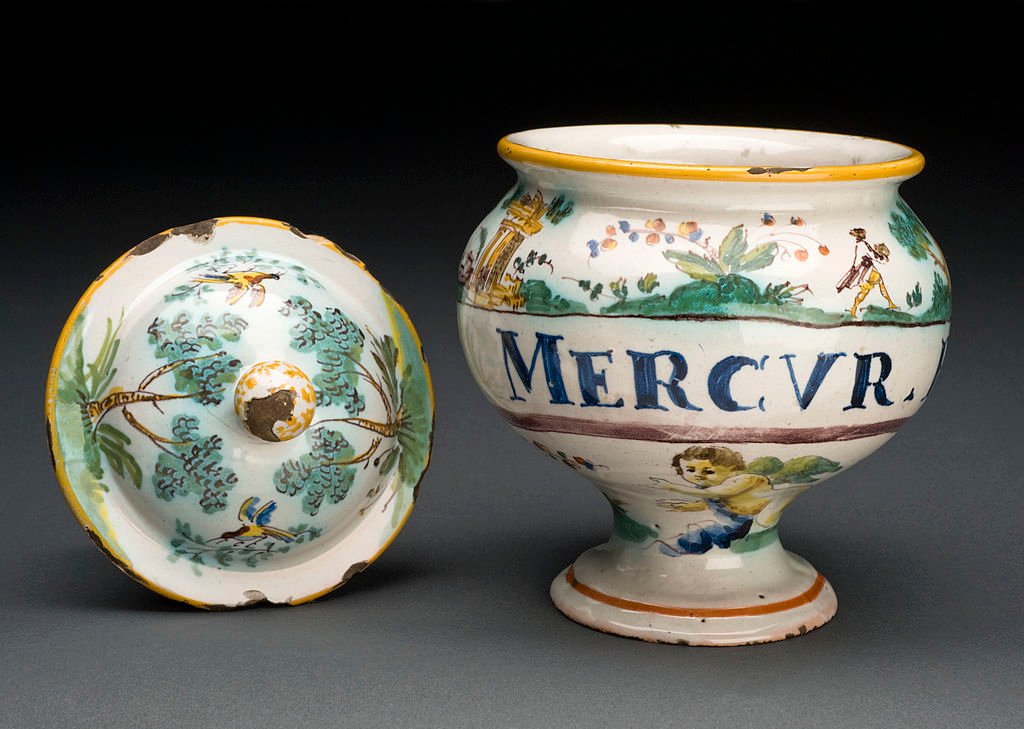
When taken in larger doses, though, as in the thunderclapper pills, it prompted a quick evacuation, the body’s way of ejecting poison. The men of the Lewis and Clark expedition used these pills freely as a way to compensate for their high-protein and low-fiber diet. As a result, all the latrine pits they used between the Midwest and the Pacific coast were laced with high concentrations of mercury.
As many an environmentalist will caution, mercury does not decompose when it’s in the ground. It stays put, and is detectable through modern soil testing techniques. The 600-plus latrines dug and used by the Corps of Discovery form a trail of their own, marked by mercury.
The expedition was a government-sanctioned military expedition, so Lewis and Clark both kept copious notes on every aspect of their travels. Historians have tried to pinpoint the locations of these camps based on the expedition journals, with minimal success.
The only campsite that archaeologists have been able to confirm so far is the Traveler’s Rest camp, just outside of Missoula, Montana. This is all thanks to the remains of Dr. Rush’s Bilious Pills, which left enough mercury in the ground to differentiate the remains of a latrine pit (or “sink” as they were called in the 1800s) from animal burrows or agricultural ditches.
Archaeology is all about reconstructing the lives of people in the past, and it’s worth remembering that this means all aspects of life. Our own bodily functions remind us that we all share complex and interwoven histories, and that even the most mundane parts of our lives can be important in the future.
In That Time When, Popular Science tells the weirdest, surprising, and little-known stories that shaped science, engineering, and innovation.
In the 1890s, the U.S. hired a team of globe-trotting plant hunters
In 1926, a Russian biologist tried to create a human-chimpanzee hybrid
During WWII, Great Britain poisoned sheep with anthrax on an idyllic Scottish island
After WWII, flying saucer-shaped houses almost filled American suburbs
The CIA once trained cats to be Cold War spies
When the U.S. almost nuked Alaska—on purpose
During WWII, a dress-wearing squirrel sold war bonds alongside FDR
The post Lewis and Clark’s mercury-laced poop helped archaeologists trace their expedition appeared first on Popular Science.

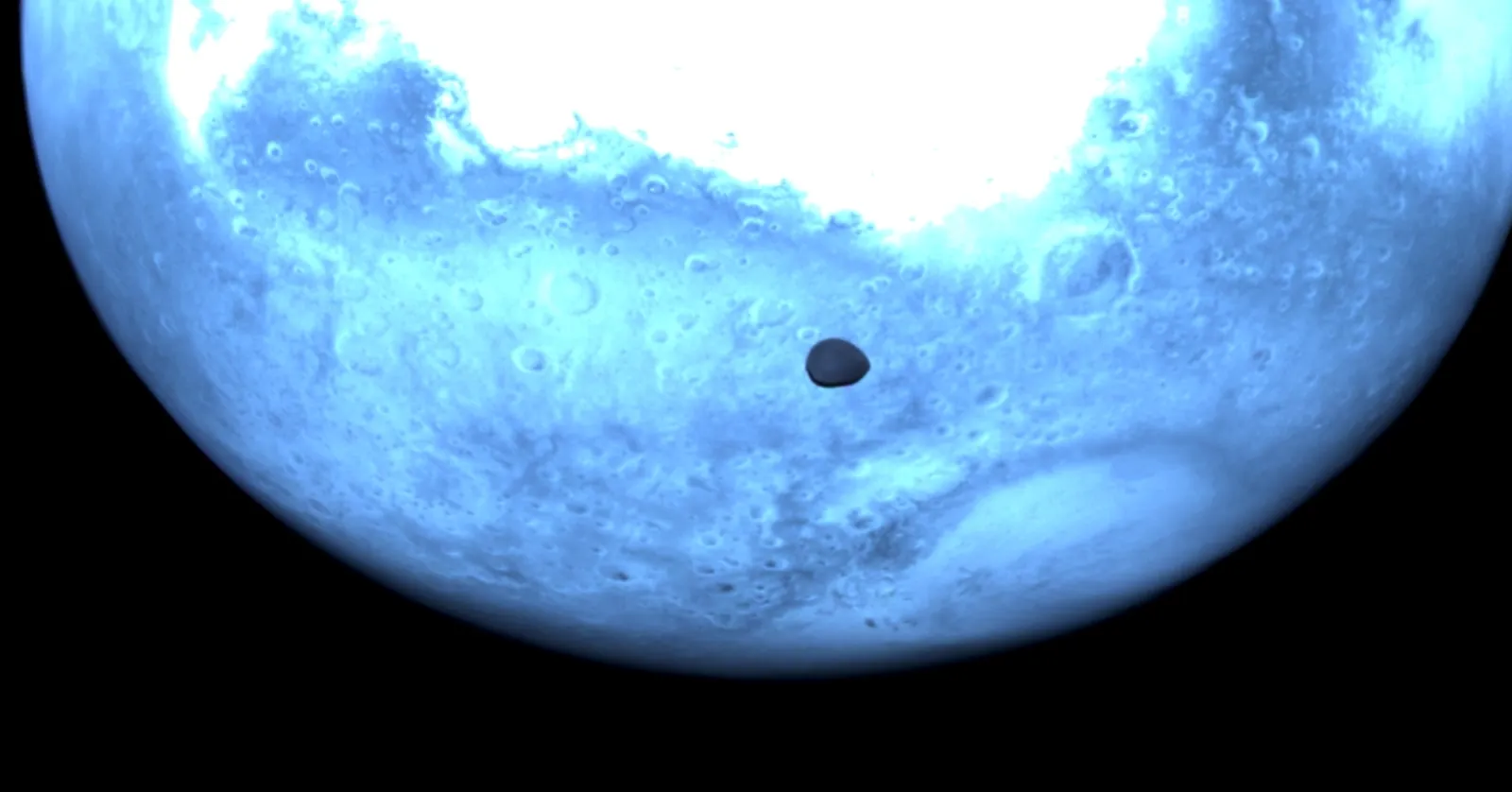
University of Bern simulations and ESA Hera observations point to one non-destructive asteroid impact as the source of Deimos’ southern depression and dusty surface.
The post A Single Asteroid Impact May Have Shaped Mars’ Moon Deimos appeared first on Curiosmos.
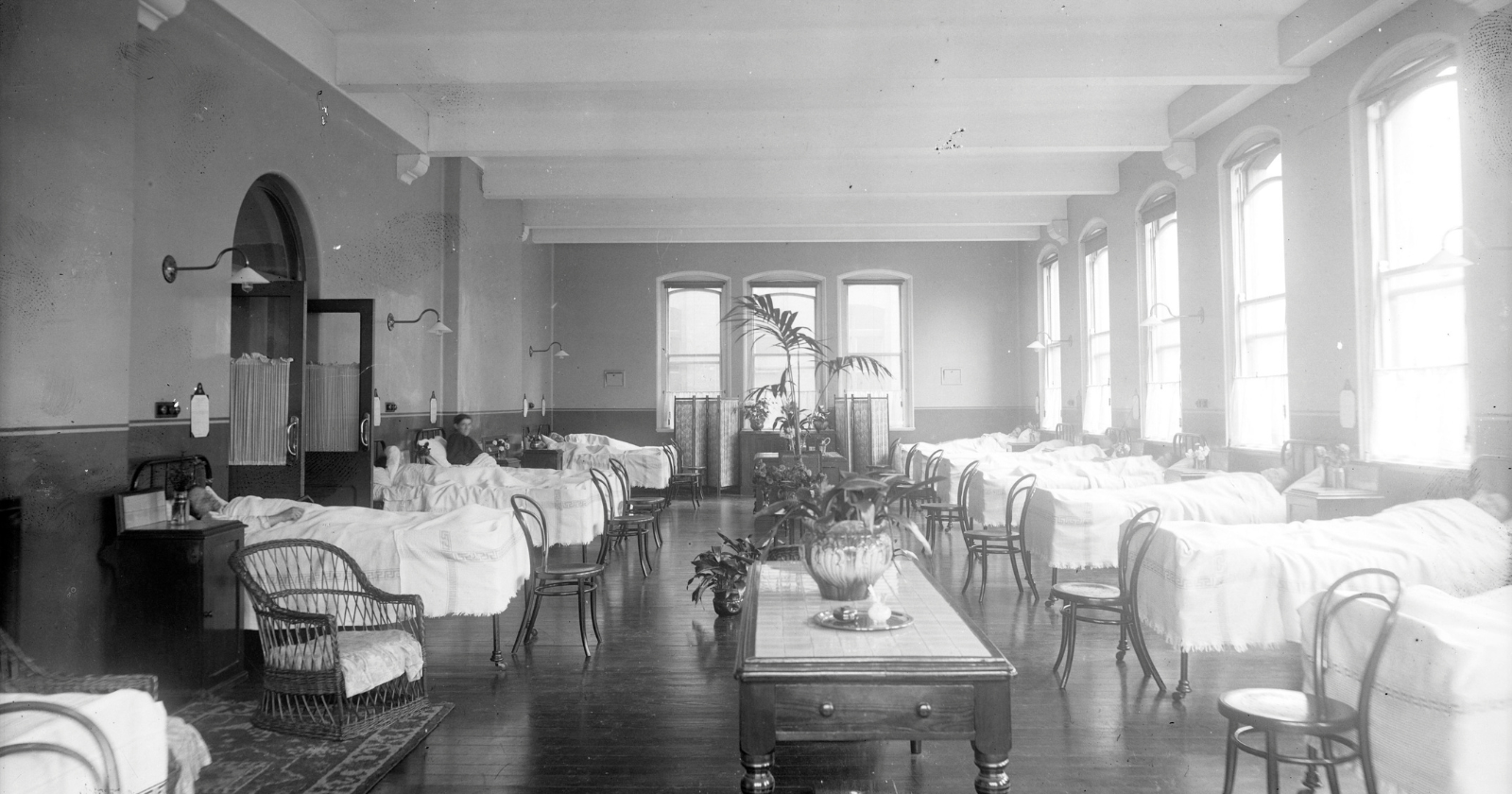
A mother rinsed her baby’s dirty nappy in a bucket and tipped the water into the cesspool outside her front door. Within ten days, more than 500 of her neighbours were dead. If Henry Whitehead’s later reconstruction was right, hers was where it started.
The baby was five months old and lived at 40 Broad Street, Soho, in a district of tenements chopped into cheap rented rooms. Her death, on 2 September 1854, went into the records as diarrhoea rather than cholera, so she never appeared in the tally that made the street famous, as Gavi’s account of the outbreak notes.
Ten minutes’ walk away in Sackville Street lived a physician named John Snow, who had spent five years arguing that cholera travelled in water and getting nowhere. His 1849 essay on the subject was largely ignored by the medical profession. Respectable opinion held that epidemic disease rose off rotting matter as a poisonous vapour, a theory called miasma. Under miasma, the smell was the disease.
Snow got the addresses of the dead from the General Register Office and walked them. He knocked on doors, asked survivors where they drew their water and worked out that the deaths clustered overwhelmingly around one public pump on Broad Street.
Months later he turned that investigation into the map that became famous, marking each known death as a short black bar at the address where it happened. By December he had tracked down 616 deaths, though only 574 could be placed on the map itself, the rest belonging to people who had died away from the district with no address on record. He published it in the second edition of On the Mode of Communication of Cholera in 1855.
He had no germ, no culture and no microscope image worth anything, only addresses.
Seventy men worked at the brewery on Broad Street and not one of them died. They drank a daily beer allowance, used a private well and never touched the public pump, per the Science History Institute’s account of the investigation. A workhouse squarely inside the death zone held over 500 people, lost only a handful and had its own supply.
Then there was the widow. A woman in Hampstead, miles to the north, died on 2 September, her visiting niece the day after. Neither had set foot in Soho for years. Snow went up to interview her son and learned she had once lived on Broad Street, liked the taste of the water and kept a servant carting bottles of it north. Her last delivery arrived on 31 August, the night the outbreak began.
Geography was the wrong variable and plumbing was the right one.
On the evening of 7 September, Snow put his case to the Board of Guardians of St James parish. They were sceptical of the theory and impressed by the arithmetic, and the handle was unscrewed the following morning.
Deaths were already falling by then, as Snow himself acknowledged. Thousands had fled the neighbourhood, and the contamination that triggered the outbreak had probably washed through days before.
The national verdict was blunter. England’s General Board of Health reviewed Snow’s theory through its Committee for Scientific Inquiries and rejected it outright: “After careful inquiry we see no reason to adopt this belief.” That committee, as Nigel Paneth and colleagues documented in the American Journal of Public Health, spent roughly a third of its 352-page scientific appendix on barometric pressure, wind direction, cloud cover and ozone levels. One of its own inspectors had handed Snow the Hampstead evidence.
Henry Whitehead, assistant curate of St Luke’s on Berwick Street, had spent the outbreak climbing those stairs with food and last rites. He thought Snow was wrong, and joined the parish inquiry committee partly to clear the pump’s name. Snow gave him a copy of the monograph and he read it and stayed unconvinced, so he went out to disprove it. In April 1855, seven months after the last death, he traced the chain back to the baby at number 40, a case Snow had never counted, as S.P.W. Chave set out in Medical History.
The parish surveyor dug up the well and found the cesspool brickwork rotted through, inches from the well lining.
Whitehead also worked out what taking the handle off achieved. The baby’s father came down with cholera on 8 September, the morning the parish disabled the pump, and his waste would have gone the same way his daughter’s had.
Snow died in 1858, aged 45, with the profession still against him. In Florence that same autumn of 1854, an anatomist named Filippo Pacini had put cholera discharges under a microscope, seen comma-shaped organisms swarming in them and published. Italian medicine believed in bad air too, and Pacini’s finding went unnoticed by Snow, by Robert Koch and by almost everybody else until long after his death. Bacteriologists made it official in 1965, naming the organism Vibrio cholerae Pacini 1854.
Two men landed on the answer in the same year, in two cities, and the medical establishment believed neither of them. The handle came off anyway.
The post A London doctor traced hundreds of cholera deaths in 1854 to one neighborhood water pump and persuaded the parish to remove its handle — months later he mapped the outbreak, years before contaminated water was widely accepted as a cause of cholera appeared first on Space Daily.

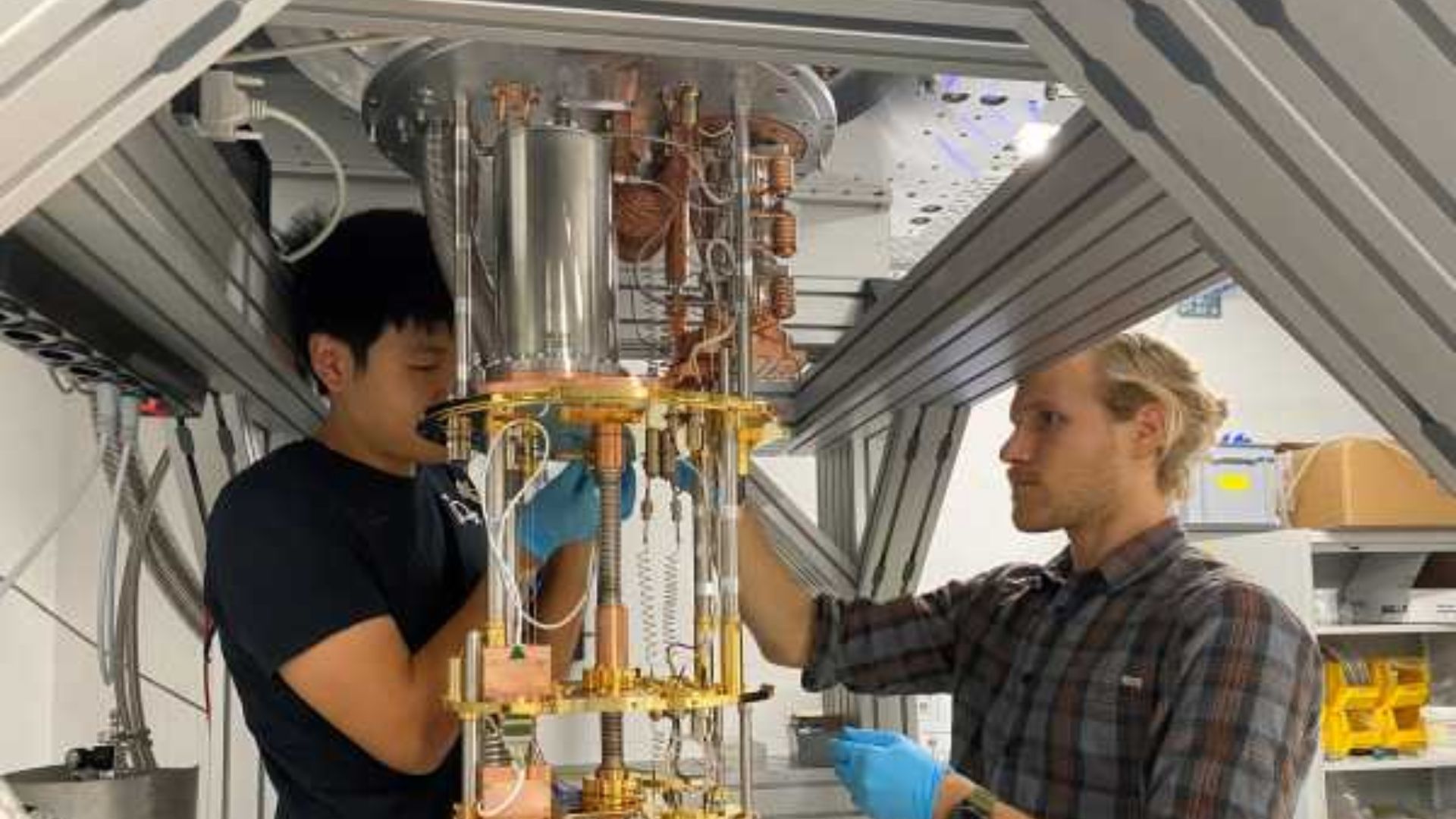
Researchers at the Swiss institutes of ETH Zurich and Paul Scherrer Institute (PSI) in Villigen have produced an intense beam of cold atoms that they plan to use to test Einstein’s theory of gravity. This cold beam consists of muonium, a second-generation antiparticle, and the researchers want to test its interaction with gravity to know if another force of nature also exists that we haven’t spotted yet.
The matter we see around us is made up of protons, neutrons, and electrons, which scientists call the first generation of particles. The other two generations of particles are heavier than the first-generation particles but also unstable and rapidly decay into first-generation particles.
A muon is the heavier cousin of an electron from the second generation of particles. Researchers at PSI have successfully generated muons and their antiparticles using a particle accelerator. When such an antimuon combines with an electron, a neutral muonium atom is formed. Together with researchers at ETH Zurich, the scientists want to measure how the muonium atom falls under gravity.
From the times of Galileo, through Newton and then Einstein, physicists have confirmed the universality of free fall. This equivalence principle states that all bodies inside a gravitational field fall with the same acceleration, irrespective of their mass or internal structure.
Einstein used this principle as a foundational pillar for this famous theory of relativity, but this has only been tested on matter and antimatter particles of the first generation. Measuring this on a muonium atom would be the first instance of testing it on a second-generation particle.
Muonium is well suited for this experiment because it is electrically neutral. In comparison, a charged particle can be impacted by stray magnetic fields and mask the effect of the weak force of gravity.
A major hurdle in performing such an experiment has been the quick decay of muonium. In addition to their rapid decay in just 2.2 microseconds, muonium produced in previous attempts also traveled at different speeds, making it difficult to conduct experiments with them.
PSI researchers used a quantum fluid to generate a steady flow of muonium atoms. “We used superfluid helium that was cooled to near absolute zero at minus 273 degrees Celsius,” explained Jesse Zhang, researcher at PSI in a press release. “Superfluid helium is a so-called quantum liquid in which the individual helium atoms lose their identity and do not like impurities inside.”
Antimouns generated in the PSI’s particle accelerator were then shot into the quantum liquid, where they meet free electrons and form the muonium atom. A positive chemical potential formed during this reaction kicks the muonium atom to the surface, where the chemical potential is converted to kinetic energy, shooting it vertically out of the liquid.
The researchers now plan to build an interferometer that will use the wave properties of the muonium atom to create an interference pattern capable of detecting the impact of gravity on the muonium. The device might take two to three years to build, but when ready, it will answer an important question that has long been pending: does gravity act differently on exotic matter?
If gravity does indeed act differently, it would point to the presence of a fifth force of nature. For now, the team is focused on determining if the equivalence principle applies to the second generation of particles.
The research findings were published in the journal Nature Physics.
Two NASA-funded studies trace how the Sun’s changing galactic surroundings may have altered Earth’s climate and helped warm the young planet.
The post The Sun’s Ancient Journey Through the Galaxy May Have Changed Earth’s Climate appeared first on Curiosmos.


Networks shape much of the world around us. Friendships form social networks, computers connect through the internet, brain regions communicate with one another, and countries are linked through trade. However, scientists often face two major difficulties when studying these systems. They may see only part of a network, and they must decide whether an apparent […]
The post Scientists Develop “Pizza Model” to Reveal Hidden Links in Complex Networks appeared first on Knowridge Science Report.

Quantum computers promise to solve some problems that are extremely difficult for today’s computers. But there is a major obstacle: quantum information is very fragile, and even tiny disturbances can cause a calculation to go wrong. Researchers at Chalmers University of Technology in Sweden have now proposed a way to perform a wide range of […]
The post New Method Could Make Advanced Quantum Computer Operations 1,000 Times Faster appeared first on Knowridge Science Report.
 Ancient ferns may have helped keep Triassic Europe burning by rapidly regrowing after fires and supplying fresh fuel for the next blaze. Around 201 million years ago, Earth was rocked by the end-Triassic mass extinction. The crisis has been linked to enormous volcanic activity associated with the breakup of Pangea. Those eruptions released huge quantities [...]
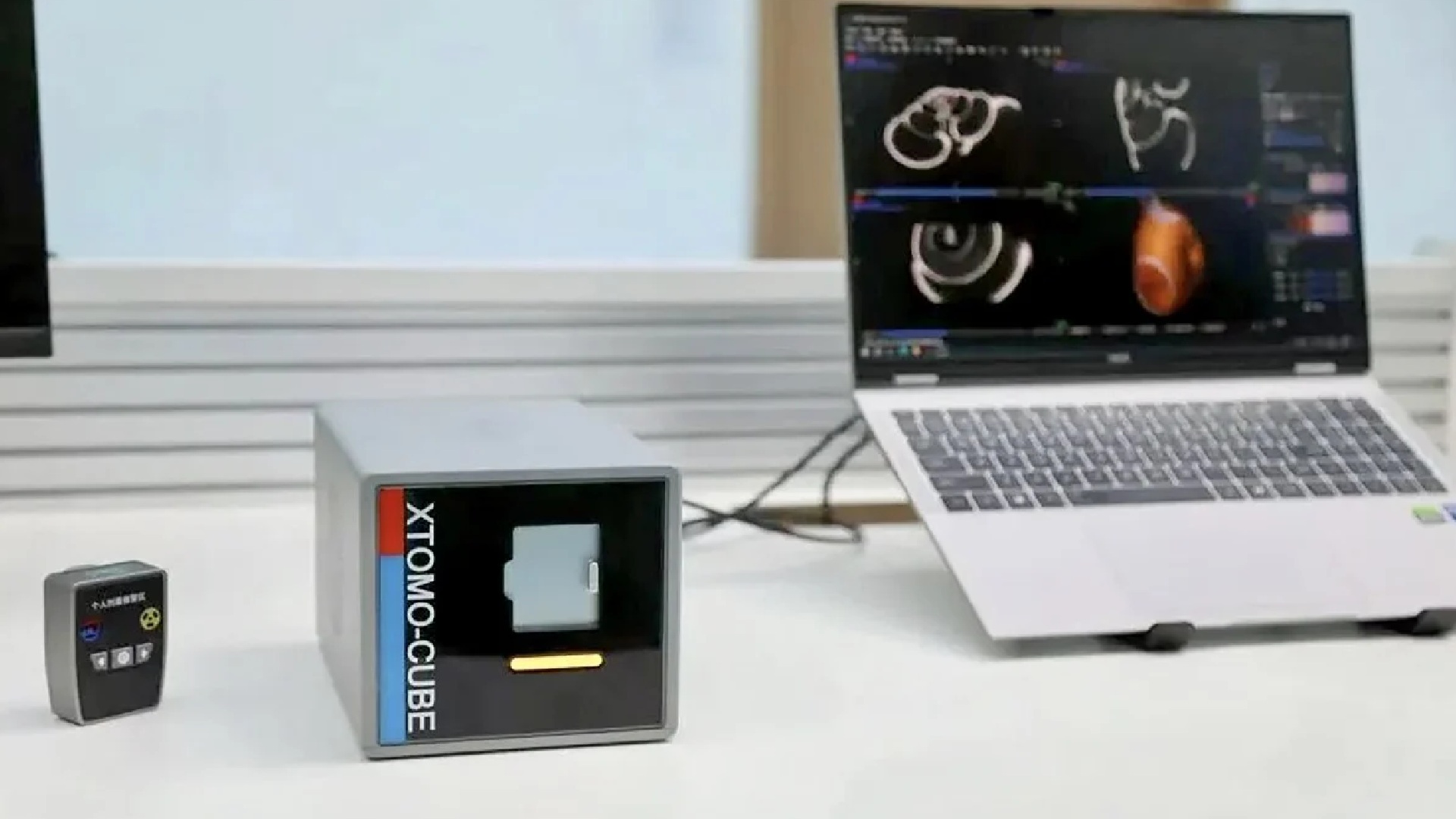
A newly developed CT scanner small enough to hold in one hand can now produce detailed 3D images of tiny fossils and archaeological relics. Researchers built the Xtomo-Cube, a device roughly the size of a desktop speaker. It weighs just 6 kilograms (13.2 pounds), earning it a nickname that undersells just how compact it really is.
Liu Baodong, a senior engineer at the Chinese Academy of Sciences and general manager of the company behind the device, described the machine’s standing plainly. It holds the title of world’s smallest and lightest CT system, earning it the nickname “palm-sized CT scanner.”
The device carries a spatial resolution of 80 micrometers, roughly the width of a human hair. That precision lets it analyze objects ranging from snail shells to medicine capsules.
The machine draws only about 200 watts of power, low enough to run off an ordinary portable power bank during fieldwork. Liu said every key component, including the X-ray source, rotating platform, and detector, was developed and manufactured domestically.
The previous record holder for smallest CT machine was a German-developed device weighing 19 kilograms, more than three times the new scanner’s weight. Liu described the central engineering challenge as squeezing an X-ray source, detector, and rotating platform into a four-liter package while still maintaining fine imaging detail.
CT scanning uses X-rays captured from multiple angles to build a detailed 3D model of an object’s internal structure. The first clinical CT scanner appeared in London in 1971, built by British engineer Godfrey Hounsfield. That original machine measured 3 meters (9.8 feet) long, could only scan a patient’s head, and took roughly five minutes to generate just two 2D images.
Hospitals today rely on CT scanners routinely to spot tumors, internal bleeding, and other injuries. Researchers also use similar machines to examine fossils, archaeological finds, and industrial components without causing damage. Despite those expanding applications, CT scanners have remained large and heavy. A typical hospital scanner stands roughly 2 meters tall and wide and weighs around 2 metric tons, while some industrial systems grow even larger.
Liu compared the range of CT scanners to vehicles, from sports cars to trucks, describing the new device as the compact car of the category. He said the goal was never to scan everything, but specifically to look inside small objects that existing large machines handle poorly.
The scanner’s compact size and relatively low-energy X-rays could also suit university classrooms and research labs. Unlike many commercial CT systems, its settings and raw imaging data remain open to users. That openness lets students and researchers experiment directly with how CT images are collected, reconstructed, and improved.


