❌

Reading view

Denisovans Once Roamed Southwest China, New Fossils Reveal

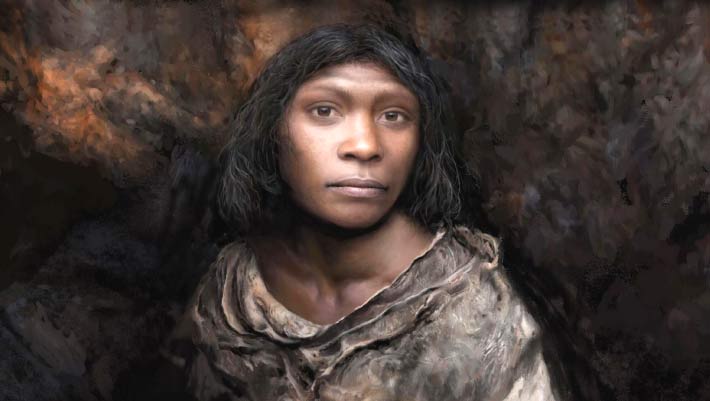
An artist’s concept of a Penghu Denisovan walking under the bright Sun during the Pleistocene of Taiwan. Image credit: Cheng-Han Sun.

Paleoanthropologists have identified a trove of Denisovan fossils from a cave in China’s Yunnan province, extending the known range of the elusive human relative and providing the first-ever direct evidence of what its forearm bones looked like.

The post Denisovans Once Roamed Southwest China, New Fossils Reveal appeared first on Sci.News: Breaking Science News.

  •  

For 15 Years We Knew Denisovans Only From Their DNA. A Chinese Cave Just Gave Them an Arm

In 2019, workers doing routine ecological restoration at a quarry in China’s Yunnan province hit something under the soil: bones and stone tools. Nobody realized at the time that this unassuming hole — known as Bianfu Cave, “bat cave,” after its former residents — would turn out to hold the largest collection of Denisovan remains […]

  •  

Denisovans in southwestern China reveal their ancient subsistence strategies

The Denisovans, the enigmatic archaic human relatives first identified from a finger bone and a handful of teeth in a Siberian cave, have long been known almost exclusively through their DNA. Now, a landmark study published in Nature has pulled back the curtain on how these ancient hominins actually lived — what they ate, how they hunted, what tools they made, and the environments they braved — through an extraordinary assemblage of fossils and artefacts from Bianfu Cave in Yunnan Province, southwestern China. The findings paint the most detailed portrait to date of Denisovan biology, behaviour and ecology in eastern Asia, and suggest that these vanished people left a deep genetic and cultural imprint on later populations across Southeast Asia and Oceania.

The research team, led by Qingfeng Ruan, Hua Li and Song Xing and their colleagues, conducted a comprehensive analysis of hominin fossils and the associated archaeological remains recovered from Bianfu Cave. The hominin fossils themselves date to roughly 167,000 to 134,000 years ago, placing them firmly in the Middle Pleistocene. But the cultural sequence preserved in the cave’s sediments is far longer, stretching from approximately 190,000 years ago to about 70,000 years ago. That span — some 120,000 years of continuous or near-continuous occupation — makes Bianfu Cave one of the longest cultural records that can most parsimoniously be attributed to Denisovans anywhere in the world.

The Denisovan identity of the fossils was established through two independent and technically demanding lines of evidence. The first involved analysis of the enamel–dentine junction, the internal boundary between the enamel cap and the underlying dentine of the teeth. This three-dimensional morphological interface acts something like a fingerprint of evolutionary relationships, revealing diagnostic traits of the tooth’s internal architecture that are invisible from the outside but characteristic of particular hominin lineages. The second line of evidence came from palaeoproteomics, the recovery and identification of ancient proteins preserved within fossilized tissues. Because proteins are far more abundant and durable than DNA, they can survive in warm, humid environments like those of southern China, where genetic material degrades rapidly. Sequencing these ancient proteins allowed the researchers to place the Bianfu hominins on the Denisovan branch of the human family tree with confidence.

The fossil collection itself is remarkable. It includes four teeth that substantially expand the known range of dental variation within the Denisovan lineage — a critical contribution, since Denisovans were previously represented by a very small number of dental specimens, making it difficult to gauge how variable their teeth could be. The new fossils also include two cranial fragments and a radius, a forearm bone, providing rare glimpses of Denisovan skull and postcranial anatomy that were previously almost entirely unknown. Together, these remains transform Denisovans from a genome and a scatter of isolated teeth into a population with recognizable skeletal biology.

Beyond the fossils, the archaeological record from Bianfu Cave offers something equally precious: a window into Denisovan daily life. The researchers reconstructed the ancient environment using faunal remains and pollen preserved in the cave deposits. These records indicate that across Marine Isotope Stages 6 through 4 — a period encompassing major glacial–interglacial climatic swings between roughly 190,000 and 57,000 years ago — the landscape around the cave was dominated by coniferous forest or a mosaic of forest and steppe. This was a cool, variable environment that Denisovans exploited successfully across tens of thousands of years, demonstrating a resilience to climatic change that adds to growing evidence of their adaptability, from the high altitudes of the Tibetan Plateau to the subtropical latitudes of mainland Southeast Asia.

The subsistence evidence is particularly striking. Analysis of the animal bones from the cave shows that its inhabitants practised specialized hunting focused on medium- to large-bodied prey. This was not opportunistic scavenging but a sustained, targeted hunting strategy — one that would have required knowledge of animal behaviour, coordinated effort and effective weaponry. Specialized big-game hunting of this kind has often been associated with modern humans and late Neanderthals in western Eurasia, so finding it in a Denisovan context more than 150,000 years ago dramatically narrows the perceived behavioural gap between these archaic lineages and our own species.

Yet the technological strategy documented at Bianfu Cave is, at first glance, surprisingly simple. The stone tool assemblage is characterized by expedient core reduction and tool production — that is, the inhabitants struck flakes from cores as needed, used them, and discarded them, rather than investing in carefully shaped, curated tools that were carried, maintained and resharpened over time. Alongside this, the Denisovans of Bianfu Cave made pervasive use of unmodified bones, employing skeletal elements of their prey directly as tools without altering them beforehand.

Taken together, the researchers interpret this pattern as an adaptive system that prioritized the exploitation of what they call object affordance — the inherent functional possibilities already present in a raw material or object — over intensive tool manufacture. A suitably shaped bone fragment could serve as a hammer, a digging implement or a scraping tool with little or no modification; a sharp flake struck from a convenient core could cut and butcher without further refinement. In the rich, resource-diverse environments of subtropical southwestern China, where raw materials and animal resources were plentiful, such a flexible, low-investment strategy may have been not a sign of simplicity but a highly efficient way of life. It suggests that Denisovans measured success not by the sophistication of their toolkit but by how skilfully they read and exploited the opportunities their landscape provided.

This behavioural portrait gains added significance when set against the wider geography of Denisovan presence. Over the past decade and a half, Denisovans have been documented across a staggering range: from the original genomic discoveries in the Altai Mountains of Siberia, first reported in 2010, to the mandible from the Tibetan Plateau described in 2019, Denisovan DNA recovered from sediments at Baishiya Karst Cave in 2020, a molar from the Annamite Chain of northern Laos announced in 2022, a male Denisovan mandible from Pleistocene Taiwan reported in 2025, and proteomic identification of the 146,000-year-old Harbin cranium, also in 2025. Bianfu Cave now anchors this story firmly in southwestern China, a region long suspected to have been a Denisovan heartland and a critical corridor for hominin movements between mainland Asia and Southeast Asia.

The study’s authors argue that the region’s Denisovans point to a substantial genetic and cultural legacy in later human populations. Modern populations in Southeast Asia and Oceania carry the highest known proportions of Denisovan ancestry anywhere in the world — a legacy of interbreeding that occurred as modern humans moved through and beyond island Southeast Asia. The new evidence from Bianfu Cave suggests that the ways of life practised by Denisovans in this region — their hunting strategies, their flexible technological approaches, their hard-won knowledge of tropical and subtropical environments — may have been part of the inheritance, alongside their genes, that helped later human populations thrive as they spread across the diverse and challenging landscapes of Asia and the Pacific.

For palaeoanthropologists, the significance of the Bianfu Cave discoveries is difficult to overstate. Denisovans have been the least anatomically documented of all known hominin groups — a lineage defined first by DNA and only slowly fleshed out with fragmentary fossils. The new teeth, cranial fragments and radius from Yunnan, combined with an unmatched 120,000-year archaeological sequence, mean that researchers can finally study Denisovans not just as a genome or a set of molecular signatures but as a living, adapting population: hunters of large game, makers and users of expedient tools, and inhabitants of conifer forests that swung between glacial cold and interglacial warmth. As analysis of the Bianfu material continues, it promises to reshape our understanding of how archaic humans lived in eastern Asia and how deeply their story is woven into our own.

Subject of Research: Denisovan fossils and archaeological remains from Bianfu Cave, Yunnan Province, southwestern China, revealing Denisovan biology, technology, subsistence strategies and palaeoecology

Article Title: Denisovans from southwestern China and their subsistence strategies

Article References: Ruan, Q., Li, H., Xing, S., Zhao, K., Liu, J., Zanolli, C., Doyon, L., Delpiano, D., Peresani, M., d’Errico, F., Demeter, F., Hublin, J.-J., Xiao, P., Wang, Y., Jia, Z., Yang, Q., Fu, Q., Sun, Q., Zhao, Y., … Chen, F. (2026). Denisovans from southwestern China and their subsistence strategies. Nature. https://doi.org/10.1038/s41586-026-10997-4

Image Credits: AI Generated

DOI: 10.1038/s41586-026-10997-4

Keywords: Denisovans, Bianfu Cave, Yunnan, palaeoproteomics, enamel–dentine junction, Middle Pleistocene, subsistence strategies, expedient tool use, object affordance, specialized hunting, Marine Isotope Stages, Southeast Asia ancestry

  •  

Homo antecessor Had Surprisingly Modern Skull, New Fossils Suggest

An artist’s rendering of a Homo antecessor individual known as the Girl of Gran Dolina. Image credit: Tom Björklund.

A new analysis of three skull fragments unearthed at the Gran Dolina cave site in Spain indicates that Homo antecessor had bone thickness closer to that of Neanderthals and modern people than to more archaic hominins.

The post Homo antecessor Had Surprisingly Modern Skull, New Fossils Suggest appeared first on Sci.News: Breaking Science News.

  •  

The Neanderthals of a Cave in Northern Spain Were Already Making and Reusing Bone Tools in a Standardized and Planned Way

A team of researchers from the University of Burgos and the Atapuerca Foundation has published the first detailed analysis of the bone retouchers found in the Valdegoba cave, in the municipality of Huérmeces (Burgos). This site, occupied by Neanderthals during the Middle Paleolithic, has yielded 38 bone fragments that were used as tools to retouch […]

  •  

Neanderthal Gene Still Shapes Muscle and Jaws in Some Living Humans

Velazquez-Arcelay et al. found that genetic material from Neanderthal ancestors may have contributed to the propensity of some people today to be early risers, the sort of people who are more comfortable getting up and going to bed earlier. Image credit: Holger Neumann / Neanderthal Museum.

Neanderthals vanished roughly 42,000 years ago, but a piece of their biology appears to be quietly at work in some people today, according to a new study led by scientists from the Max Planck Institute for Evolutionary Anthropology.

The post Neanderthal Gene Still Shapes Muscle and Jaws in Some Living Humans appeared first on Sci.News: Breaking Science News.

  •  

Scientists Discover that the Increase in Visual Information Was What Allowed the Development of Ape and Human Brains

The research, published in the journal Science, was led by Richard F. Kay, emeritus professor of Evolutionary Anthropology at the Trinity College of Arts & Sciences and at the Nicholas School of the Environment at Duke University. The work, which used a unique collection of skulls mostly from the Natural History Museum of the Duke […]

  •  

Study Points to Sugar, Not Just Meat, as Fuel for Human Brain Evolution

Paranthropus boisei. Image credit: © Roman Yevseyev.

A team of researchers from the University of Sydney and the University of Glasgow argues that dietary sugars, not animal foods, may have played the decisive role in the expansion of the human brain over the past 4 million years, as hominin brain size grew nearly fivefold, from about 300 grams in early relatives like […]

The post Study Points to Sugar, Not Just Meat, as Fuel for Human Brain Evolution appeared first on Sci.News: Breaking Science News.

  •  

1.4-Million-Year-Old Footprints Reveal a Giant Human Relative

1.4 Million Year Old Footprint From KenyaA 1.4-million-year-old trail of footprints reveals that a powerful human relative grew nearly as large as us and may have traveled in all-male groups. Eight individuals walked across the wet ground beside an ancient Kenyan lake. Within a short time, sediment buried their footprints and preserved a scene that would remain hidden for roughly 1.4 [...]
  •  

Scientists Find Traces of Two Unknown Archaic Hominins in Human DNA

An archaic hominin. Image credit: Ninara / CC BY 2.0.

New research led by the University of California, Berkeley reveals that beyond Neanderthals and Denisovans, humans interbred with two mysterious ‘ghost’ lineages: one in Africa more than 50,000 years ago, another in Eurasia over 1.7 million years ago.

The post Scientists Find Traces of Two Unknown Archaic Hominins in Human DNA appeared first on Sci.News: Breaking Science News.

  •  

224,000-Year-Old Homo Skull Fragment Adds New Mystery to Human Origins

A Homo heidelbergensis, a Neanderthal and a Cro-Magnon. Image credit: SINC / José Antonio Peñas.

A fossilized skull fragment of Homo sp. unearthed in central Spain offers paleoanthropologists a fresh window into the story of ancient humans who lived in Europe hundreds of thousands of years ago.

The post 224,000-Year-Old Homo Skull Fragment Adds New Mystery to Human Origins appeared first on Sci.News: Breaking Science News.

  •  

Ancient Footprints in Kenya Hint at Bigger Bodies and Group Behavior among Early Human Relatives

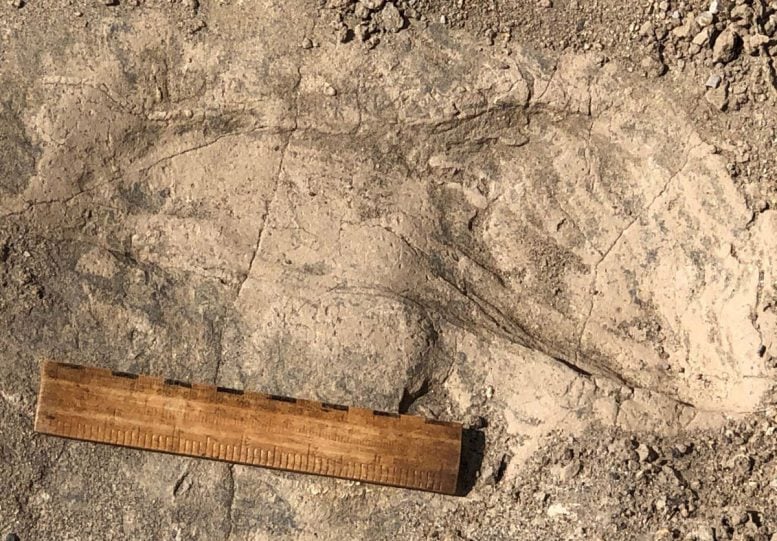
One of 1.43-million-year-old footprints found at the GaJi10 site in the Koobi Fora Formation in northern Kenya; a 15-cm (6-inch) ruler is shown for scale. Image credit: Kay Behrensmeyer.

A set of 1.43-million-year-old fossil footprints preserved along the margin of an ancient lake in northern Kenya is offering paleoanthropologists new evidence about the size, gait and social lives of the beings who made them and reopening questions about which species they belonged to.

The post Ancient Footprints in Kenya Hint at Bigger Bodies and Group Behavior among Early Human Relatives appeared first on Sci.News: Breaking Science News.

  •  

The discovery of footprints from a hominid that lived 1.4 million years ago by a Kenyan lake reveals it could reach 180 centimeters in height

An international team of researchers has documented a set of fossilized footprints that offer an exceptional snapshot of the behavior of a group of ancient human relatives who inhabited the shores of a lake in northern Kenya. The recently published study analyzes the imprints belonging to eight individuals of the species Paranthropus boisei, an extinct […]

  •  

Scientists May Have Finally Solved One of Human Evolution’s Biggest Mysteries: When Our Ancestors Grew Larger

For decades, paleoanthropologists have largely agreed that somewhere along the evolutionary course from apelike ancestors to modern humans, our bodies got dramatically larger. However, one lingering mystery has been when this intense growth began.

Did our ancestors gradually grow bigger over millions of years? Did the shift coincide with the emergence of the genus Homo? Or did it occur later, after some of the earliest human species had already appeared?

A new study published in the Proceedings of the National Academy of Sciences (PNAS) argues that the answer is more complex than any single theory has suggested.

Rather than supporting a single long-standing hypothesis, researchers used a sophisticated statistical method to show that human body size likely followed two evolutionary courses simultaneously: a slow, steady increase spanning millions of years, punctuated by a much larger leap in later members of the genus Homo.

The findings help reconcile decades of conflicting research while offering one of the clearest pictures yet of how, and perhaps why, our ancestors evolved into larger-bodied humans.

“Despite its central role in hominin evolution, there is little consensus on how body size increased through time,” researchers write. “We provide strong evidence for a marked size increase in later-occurring Homo, alongside a moderate general increase over time among all hominins.”

Body size is one of the defining characteristics of an organism. In humans and our extinct relatives, it has been linked to everything from brain expansion and walking efficiency to metabolism, hunting behavior, and the ability to travel across increasingly large landscapes. Understanding when body size changed, therefore, helps researchers reconstruct not only what our ancestors looked like, but how they lived.

Yet despite decades of fossil findings, scientists have struggled to agree on the evolutionary pattern behind those changes.

Some previous studies suggested that hominins simply became larger over time. Some contended that body size remained relatively stable until the emergence of Homo. Still others have proposed that the real transformation arose only after early species such as Homo habilis, often regarded as one of the first members of our genus.

According to researchers, one reason for the disagreement is that earlier analyses typically examined these competing ideas independently. They also often failed to account for uncertainties inherent in the fossil record, including disagreements over species classification, differences in body mass estimation methods, and uncertainties in evolutionary relationships among fossil species.

To address those limitations, researchers compiled one of the largest hominin body-size datasets assembled to date, incorporating body mass assessments from 386 fossil specimens representing 21 different taxa.

They then analyzed the data using Bayesian phylogenetic generalized linear mixed models—a statistical approach that accounts for evolutionary relationships while encompassing multiple layers of uncertainty.

The team repeated its analyses across 1,000 different phylogenetic trees and 1,000 separate datasets, allowing them to test whether the overall pattern remained consistent despite uncertainties.

The results pointed to two simultaneous trends.

The first was a modest but persistent increase in body size across the hominin family as a whole. On average, body mass increased by roughly 2 pounds (0.9 kilograms) every million years, suggesting that larger bodies gradually became more common throughout human evolution.

However, the second trend proved far more dramatic.

Instead of all members of Homo becoming substantially larger, the researchers found the strongest evidence for a distinct jump in body size among later members of the genus, particularly species that appeared after Homo habilis. That pattern regularly emerged regardless of how the fossil data were analyzed.

In other words, early members of Homo may not have represented the major biological turning point scientists once assumed.

This finding disputes a common assumption that simply belonging to the genus Homo meant possessing a significantly larger body. Instead, the study suggests that some hallmark features traditionally associated with humans, including larger body size, may have evolved after the genus’s origin.

That interpretation also corresponds to broader changes that occurred later in human evolution.

Researchers note that this period coincides with evidence for more efficient upright walking, greater reliance on meat consumption, and expanding home ranges. Larger bodies may have been both a consequence of and a contributor to those behavioral and ecological shifts.

The study likewise reinforces another growing theme that evolution rarely follows a straight line.

Species such as Homo floresiensis, often nicknamed the “Hobbit” because of its diminutive stature, and Homo Naledi frequently appeared as outliers with unusually small body sizes despite belonging to relatively recent branches of the human family tree. Their existence demonstrates that body size did not simply increase in a uniform march toward modern humans.

Instead, evolution repeatedly experimented with different solutions depending on local environments and ecological constraints.

The researchers also argue that part of the longstanding disagreement over body-size evolution stems from the fossil record itself. Different studies have estimated fossil body masses using different skeletal elements, comparison populations, and statistical techniques, sometimes producing substantially different results for the same individual.

By expressly incorporating those uncertainties into their analysis, rather than treating them as fixed values, the new framework seeks to capture the range of plausible evolutionary scenarios rather than relying on a single interpretation.

Even so, researchers caution that important questions remain unresolved.

Improved fossil discoveries, more accurate body-mass estimation methods, and a better understanding of species relationships could all further refine the picture. The study also does not explicitly account for sexual size differences between males and females, which may have been greater in some early hominin species than in modern humans.

Nevertheless, the wider conclusion is intriguing.

Rather than choosing between competing theories, the evidence suggests both contain elements of the truth.

Body size did increase gradually across the hominin lineage. But the most considerable leap appears to have occurred later, after the earliest representatives of Homo had already evolved.

That conclusion may help settle one of paleoanthropology’s longest-running debates while showing how advances in statistical methods are transforming scientists’ ability to extract new insights from fossils that have often been studied for decades.

“Overall, these findings bring clarity to a fundamental question in human evolution and show how the application of rigorous phylogenetic comparative tools can unlock patterns previously hidden in the fossil record while accounting for multiple sources of uncertainty,” researchers write. “By reconciling conflicting findings within a single framework, our results clarify key evolutionary transitions and highlight the complex nature of body size change in human evolution.”

Tim McMillan is a retired law enforcement executive, investigative reporter and co-founder of The Debrief. His writing typically focuses on defense, national security, the Intelligence Community and topics related to psychology. You can follow Tim on Twitter: @LtTimMcMillan.  Tim can be reached by email: tim@thedebrief.org or through encrypted email: LtTimMcMillan@protonmail.com 

  •  

A Lost Human Lineage May Have Left a Genetic Legacy in People Today

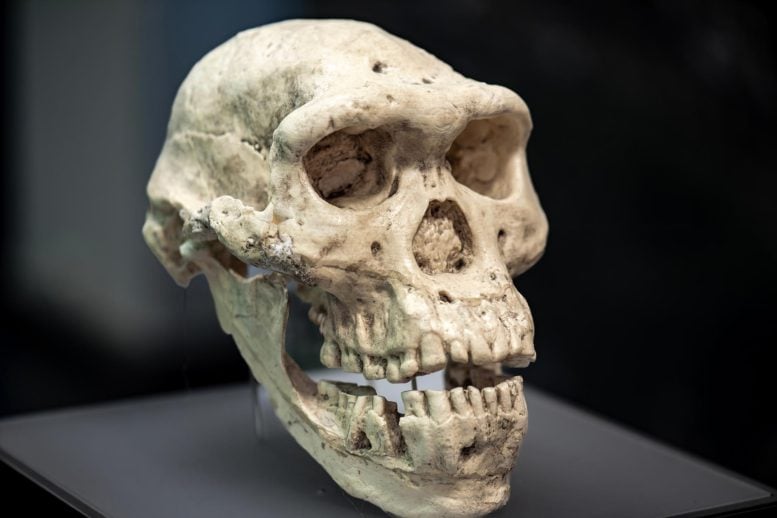
Homoerectus dmanisi Skull PaleontologyHomo erectus may have left a detectable genetic trace in living humans through ancient interbreeding with Denisovans. For much of the 20th century, human evolution was often pictured as a branching tree. One trunk split into separate limbs, and each ancient human relative, or hominin, occupied its own tidy branch. That was the version many [...]
  •  

Ancient DNA Reveals the Hidden Origins of China’s Mysterious Shimao Civilization

Carving Stone at Shimao CityAncient DNA from Shimao reveals local origins, broad prehistoric connections, a patrilineal social structure, and gender-specific patterns of human sacrifice. At Shimao, a vast stone-walled settlement in northern China, ancient DNA is filling in details that archaeology alone could not fully resolve. The genetic evidence is helping trace where the people of this late Neolithic [...]
  •  

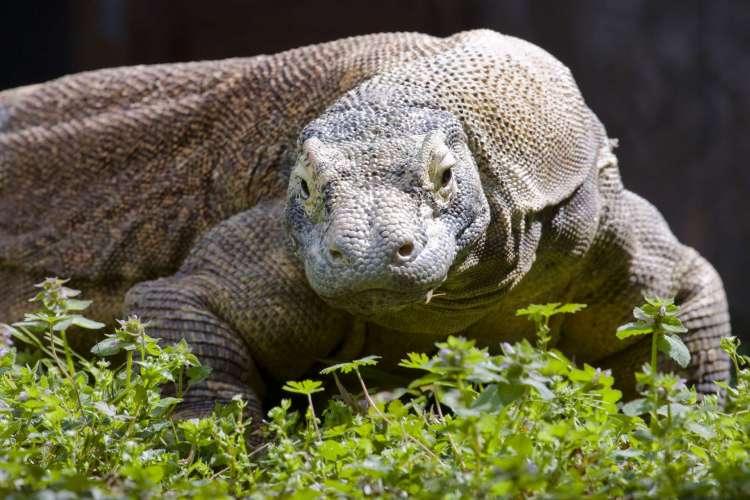
Flores Hobbits' eating habits offer clues about their evolutionary past

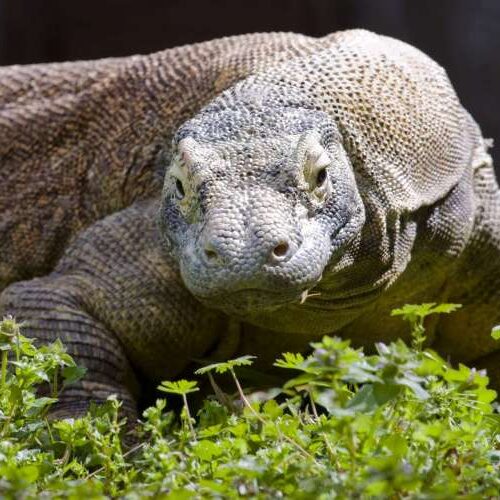
Until about 60,000 years ago, diminutive hominin cousins, Homo floresiensis (affectionately nicknamed Hobbits for obvious reasons), shared the island of Flores with Komodo dragons, pygmy elephants, and giant rats.

Based on the presence of hominin and pygmy elephant bones in the same layers of cave sediment, it originally looked like the Hobbits had hunted and butchered dwarf elephants—an impressive feat for such a tiny hominin. But according to University of Tübingen anthropologist Elizabeth Veatch and her colleagues, it was the Komodo dragons that were the hunters, while the Hobbits only showed up to scavenge what was left.

If Veatch and her colleagues are right, their findings may challenge some of the assumptions we’ve made about Homo floresiensis—and about which hominin species was the first to venture into the wider world beyond Africa.

Read full article

Comments

© Zoo Atlanta

  •  

Ancient Turkish Cave Reveals Neanderthals and Homo sapiens Shared Same Way of Life

A group of Neanderthals in a cave. Image credit: Tyler B. Tretsven.

Üçağızlı II Cave on Türkiye’s Mediterranean coast has yielded a rare and detailed record of two Homo species living the same way of life, one after the other, over more than 20,000 years, offering new evidence that the transition from Neanderthals to modern humans in the region was far more culturally seamless than previously understood.

The post Ancient Turkish Cave Reveals Neanderthals and Homo sapiens Shared Same Way of Life appeared first on Sci.News: Breaking Science News.

  •  

Evidence of Fire Use by Early Humans May Date Back Nearly 1.8 Million Years

Shaar et al. unveil the oldest evidence of human activity in Wonderwerk Cave, South Africa. Image credit: Michael Chazan.

Scientists have uncovered compelling new evidence that early human ancestors, likely Homo erectus, were deliberately bringing fire into Wonderwerk Cave in South Africa as far back as 1.79 million years ago.

The post Evidence of Fire Use by Early Humans May Date Back Nearly 1.8 Million Years appeared first on Sci.News: Breaking Science News.

  •  
❌