❌

Reading view

What Caused Antarctica to Freeze Millions of Years Ago? New Clues Could Finally Solve This Longstanding Climate Mystery

New clues to the formation of our planet’s oldest and largest ice sheet could help resolve a longstanding enigma about the southernmost continent.

Around 34 million years ago, Antarctica’s ice sheet began to take shape during a period when global temperatures were predominantly warmer than they are at present. The exact reason why such a large portion of Earth’s water would be subsumed into a massive ice sheet under such conditions has long perplexed researchers.

Now, a new study published in the journal Science suggests that clues to the mystery may exist beneath the ice itself, according to researchers who point to geological evidence that could help explain what led to the formation of Antarctica’s glaciers during a comparatively warm period in our planet’s history.

Clues to Why a Continent Froze

The East Antarctic Ice Sheet (EAIS) holds enough frozen water that it could raise sea levels around the world by more than 50 meters if a sudden, total melting event were ever to occur. Fortunately, scientists don’t anticipate that happening any time soon, although questions over what caused the formation of the largest mass of ice on our planet have remained one of the most predominant mysteries about Antarctica’s ancient history.

Based on geological evidence and paleo-climatological proxy data, the ice sheet’s formation occurred near the transition between the Eocene and Oligocene eras around 34 million years ago, marking a significant step along our planet’s path toward the cooler conditions that prevail today, even amid anthropogenic factors that contribute to ongoing climate changes.

As far as the causes behind this, scientists have long pointed to a reduction in atmospheric carbon dioxide as one potential driver of glaciation in Antarctica. However, this explanation also leads to questions: namely, that if falling CO2 and global cooling are believed to be the main factors behind the formation of Antarctica’s ice, then similar freezing should have occurred close to the North Pole as well.

Curiously, evidence suggests that glaciation in Earth’s northernmost regions didn’t begin catching up to its southern counterpart for another 20 to 25 million years. But what might account for this?

An Ancient Climate Missing Link

The new research, led by scientists at the University of Southampton in collaboration with an international team of researchers from Durham University and several other institutions, points to Antarctica’s changing landscape as a likely missing piece to this ancient puzzle.

“Antarctica’s land surface was gradually lifted to the point where ice could gain a permanent foothold, even while the surrounding polar oceans as well as global temperatures remained surprisingly warm,” said Thomas Gernon, a Professor of Earth Science at the University of Southampton and the study’s lead author.

By employing models that helped the team map the evolution of the Antarctic landscape, they were able to successfully reconstruct the ancient geological processes going all the way back to the original breakup between Africa and Antarctica that reshaped East Antarctica. This continental breakup led to the formation of a coastal escarpment in the region identified today as Dronning Maud Land, where an elevated plateau rose to nearly two kilometers, and extended close to 2,000 kilometers inland.

Over the 100 million years that followed, a wave of uplift and erosion gradually migrated inland toward Antarctica’s Gamburtsev Mountains, a process which would recur again during the Eocene, further elevating the region and increasing the amount of ancient Antarctica’s landmass that was above the permanent snow line, all of which occurred roughly 15 million years before mass-scale glaciation would begin on the continent.

Based on the team’s models, these major changes to the landscape shifted East Antarctica above the threshold where ice-sheet growth could begin occurring, the onset of which began around 45 million years ago.

Combined Factors Behind Antarctica’s Freeze

Another factor the team identified involves how the large-scale glaciation also caused more sunlight to be reflected away from Earth due to the icy surface’s light coloration, a process known as albedo feedback. The team believes this reflected sunlight may have contributed to as much as an additional degree Celsius of total global cooling.

That cooling alone, the researchers note, would not have been enough to cause widespread glaciation across the Northern Hemisphere, which generally features lower elevations.

Overall, the findings do indicate that Earth’s transition into an icehouse wasn’t something that was driven solely by climate. Instead, what seems most likely is that slow geological transformations occurring over many millions of years were likely to have been a primary contributor to this process, raising Antarctica’s landscape enough to facilitate ice sheet formation, and revealing how the evolution of landscapes can ultimately reshape the climate of an entire planet.

The recent study, “Continental breakup–driven uplift instigated East Antarctic Ice Sheet formation,” appeared in the journal Science.

Micah Hanks is the Editor-in-Chief and Co-Founder of The Debrief. A longtime reporter on science, defense, and technology with a focus on space and astronomy, he can be reached at micah@thedebrief.org. Follow him on X @MicahHanks, and at micahhanks.com.
  •  

Scientists Add Unlikely New Member to World’s Carnivorous Plants

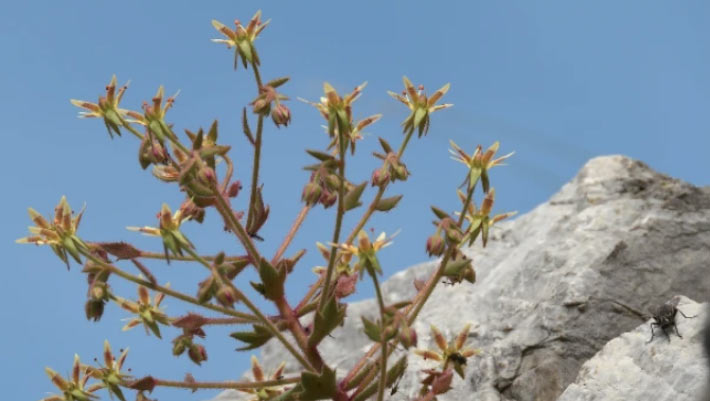
Morphology of Saxifraga candelabrum. Image credit: Zhang et al., doi: 10.1038/s41467-026-75288-y.

More than 150 years after Charles Darwin first wondered whether certain sticky-leaved Saxifraga plants might be secretly carnivorous, Kunming Institute of Botany researcher Tao Deng and colleagues say they have finally confirmed it.

The post Scientists Add Unlikely New Member to World’s Carnivorous Plants appeared first on Sci.News: Breaking Science News.

  •  

40,000-Year-Old Bird Figurines Found in German Cave

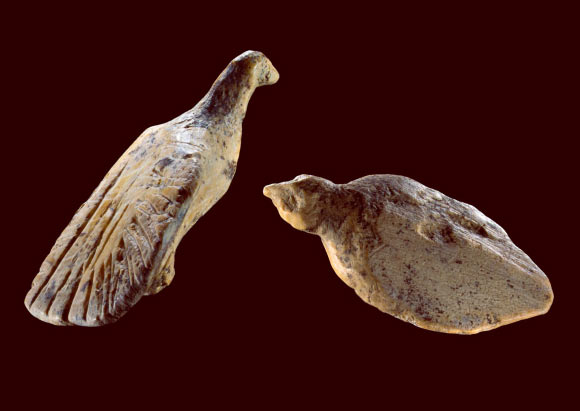
Two bird figurines found at Hohle Fels Cave in Germany. Image credit: Ralf Ehmann / University of Tübingen / Museum of Prehistory and Ice Age Art.

Archaeologists in southwestern Germany have unearthed two miniature bird figurines carved from mammoth ivory, among the smallest and most delicate examples of Ice Age art ever found.

The post 40,000-Year-Old Bird Figurines Found in German Cave appeared first on Sci.News: Breaking Science News.

  •  

Researchers Create OnlyFans for Marmots to Bridge Funding Gap

Daniel Blumstein, a professor of ecology and evolutionary biology at U.C.L.A., faced a funding issue amid federal cuts to scientific research. To raise money for its marmot research, his team started “OnlyMarms,” a free, G-rated account of cute videos that collects money through tips.
  •  

Stone Tools from Armenian Cave Reveal Split Strategy for Survival 50,000 Years Ago

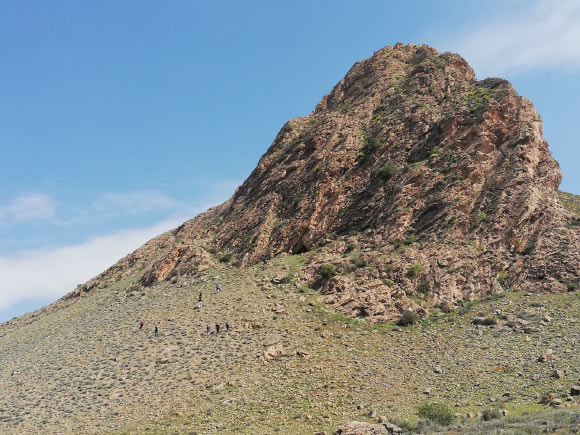
A look at Ararat-1 Cave from the bottom of the Ararat Depression. Image credit: Ariel Malinsky Buller.

Ararat-1, a modest limestone cave that lies at an elevation of 1,034 m on the eastern flanks of the Ararat Depression in central Armenia, has yielded a striking puzzle about how Middle Paleolithic humans moved across their landscape.

The post Stone Tools from Armenian Cave Reveal Split Strategy for Survival 50,000 Years Ago appeared first on Sci.News: Breaking Science News.

  •  

“This is Far from an Ordinary Burial”: Archaeologists Have Made Rare Discoveries in an ‘Elite’ Siberian Grave

A burial site uncovered by archaeologists in southern Siberia has revealed a series of unusual discoveries, which include ritually broken artifacts surrounding human and horse remains.

The burial site was uncovered in the Sayan Mountains and was discovered during a survey in advance of railway construction planned for the area. Archaeologists believe that the grave dates to the tenth century.

Originally uncovered in 2014, excavations at the site of the unusual grave and several others found nearby have been ongoing, revealing discoveries that researchers say are unusual for the period and location.

“It is quite clear that this is far from an ordinary burial,” according to Andrey Poliakov, a researcher with the Russian Academy of Sciences and one of the co-authors of a new study detailing the findings, which appeared in Bulletin of Novosibirsk State University, Series: History, Philology.

Curious Discoveries in a Siberian Grave

Among the unusual discoveries in the Siberian grave were human remains—those belonging to a woman, as well as a newborn child—and animal remains belonging to a horse, including the creature’s skull, skin, and limbs, and a spine that belonged to a sheep.

The woman’s remains were also accompanied by several artifacts, which included bronze earrings, a spindle whorl crafted from stone, and an iron knife. Also associated with the woman’s remains was a mirror, which archaeologists believe may have been intentionally broken for ritual purposes—a practice maintained by many ancient cultures throughout the world.

Siberian elite burial
The woman’s remains at the burial site in the Sayan Mountains revealed a range of artifacts, many of which were dated to earlier times, suggestive of heirlooms that may represent an “elite” burial (Image Credit: Press Service of the Institute of the History of Material Culture of the Russian Academy of Sciences)

Eastern Connections

Also of interest was the design of the mirror, which features carvings of a vine that winds along the artifact and clusters of grapes. The research team believes this could indicate that this artifact, and possibly some of the others found in the grave, may have originated from China.

Additionally, the researchers report that items associated with the remains of the horse contained within the burial site are associated with older periods, which would have made them antiques at the time they were included within the grave. Another example of artifacts with possible eastern origins includes a stirrup, which features decorations that bear resemblance to ancient art found in China and India.

Such stirrups were often employed by nomads who once dwelt on the Eurasian Steppe, and featured on the left side of their saddles—a position which archaeologists also believe may have held ritual significance.

An Elite Burial from the 10th Century

According to the researchers in their study, “The entire set of items constitutes a complete set of riding horse equipment,” which they say has “an archaic appearance and could be preserved for a long time as ‘family heirlooms’.”

The researchers add that such items were particularly popular in ancient nomadic society along the Eurasian Steppe and were viewed “as an indicator of social prestige” during the 8th and 9th centuries.

The unusual collection of artifacts within the grave was considered a rare find for this region, although further interpretation about the remains of the woman and the infant, which may had been her child, may be required.

The paper, “Riding Horse Equipment from a Medieval Burial on the Idzhim River in the Usinskaya Basin,” by Andrey Poliakov and colleagues, appeared in Bulletin of Novosibirsk State University, Series: History, Philology.

Micah Hanks is the Editor-in-Chief and Co-Founder of The Debrief. A longtime reporter on science, defense, and technology with a focus on space and astronomy, he can be reached at micah@thedebrief.org. Follow him on X @MicahHanks, and at micahhanks.com.
  •  

A Hidden Treasure of Rare Snake Specimens

In the foothills of the Ecuadorean Amazon, a 101-year-old farmer and a young scientist turned an amateur collection into a scientific survey of one of the most diverse snake habitats on Earth.
  •  
❌