Ancient teeth suggest humans were using psychoactive betel nuts 25,000 years ago, pushing the history of habitual drug use deep into the Ice Age. Archaeologists from Griffith University have found evidence suggesting that humans were using mind-altering substances far earlier than previously believed. The research team, led by Professor Adam Brumm of Griffith’s Australian Research [...]
For more than a century, pharmaceutical companies have relied on flat structures called aromatic rings, which can help drugs bind to target sites in the body. They include benzene rings and other flat, nitrogen-containing rings. But there are limits to their usefulness.
For more than a century, pharmaceutical companies have relied on flat structures called aromatic rings, which can help drugs bind to target sites in the body. They include benzene rings and other flat, nitrogen-containing rings. But there are limits to their usefulness.
Life in the deep sea is under immense pressure—literally. Such extreme conditions can disrupt the delicate structures of proteins essential to life. Yet somehow, the proteins in deep-sea creatures remain functional. This raises an intriguing question: how?
Life in the deep sea is under immense pressure—literally. Such extreme conditions can disrupt the delicate structures of proteins essential to life. Yet somehow, the proteins in deep-sea creatures remain functional. This raises an intriguing question: how?
Lipid droplets in the kidneys may help cats maintain a consistent chemical “scent identity.” Scent marks can linger long after an animal has moved on, allowing urine and other chemical signals to carry information across both distance and time. Yet the molecules responsible for odor do not remain unchanged. They evaporate, break down, and shift [...]
Researchers from the Singapore-MIT Alliance for Research & Technology's (SMART) Antimicrobial Resistance (AMR) interdisciplinary research group, alongside collaborators from Massachusetts Institute of Technology (MIT), Nanyang Technological University (NTU Singapore), and institutions in the United States, Poland and France, have discovered aminovaleramididine synthetase (AvaS), the first identified pyridoxal phosphate (PLP)-dependent enzyme responsible for producing a chemical modification linked to how bacteria respond to metabolic stress.
For more than seven decades, phosphorus has represented one of the great paradoxes in the study of the origin of life. This element, indispensable for the existence of living beings as we know them, forms the structural backbone of DNA and RNA, allows cells to store and transfer energy through the molecule adenosine triphosphate (ATP), […]
Researchers from the Manchester Institute of Biotechnology, including Dr. Zachary Birch-Price and professor Anthony Green, have developed a new family of engineered enzymes that can create several different types of chemical bonds used to build complex molecules. This work demonstrates how artificial enzymes can be adapted to carry out a broad range of carbon-carbon (C-C) and carbon-nitrogen (C-N) bond-forming reactions with high selectivity, offering new possibilities for biocatalysis.
Researchers from the Manchester Institute of Biotechnology, including Dr. Zachary Birch-Price and professor Anthony Green, have developed a new family of engineered enzymes that can create several different types of chemical bonds used to build complex molecules. This work demonstrates how artificial enzymes can be adapted to carry out a broad range of carbon-carbon (C-C) and carbon-nitrogen (C-N) bond-forming reactions with high selectivity, offering new possibilities for biocatalysis.
It makes sense to think that the T3SS didn’t evolve into the bacterial flagellum, but that the bacterial flagellum shed some protein parts to become a T3SS.
A worker at a US government lab got bitten by a monkey carrying a deadly virus, and it turned out nobody knew what to do about it. Around the same time, someone from the same lab tried to smuggle outbreak samples into the country. All of this while everyone's worried about AI making bioweapons. Let's take a look.
Scientists trained artificial intelligence on libraries of DNA and then asked the model to create recipes for viral genomes. Sixteen of them were viable, yielding new viruses.
Macrobiological features have been cited as irreducibly complex, including animal joints and the trap mechanisms of carnivorous plants, even the cell itself.
Nitrogen gas is abundant in Earth's atmosphere, but most living organisms can't readily use it. Only a subset of microbes with enzymes known as nitrogenases can break nitrogen gas apart and convert it into ammonia.
NYU researchers have made microscopic oil droplets in water do something usually reserved for living cells: change shape in complex, controllable ways and even engulf their surroundings.

 Login

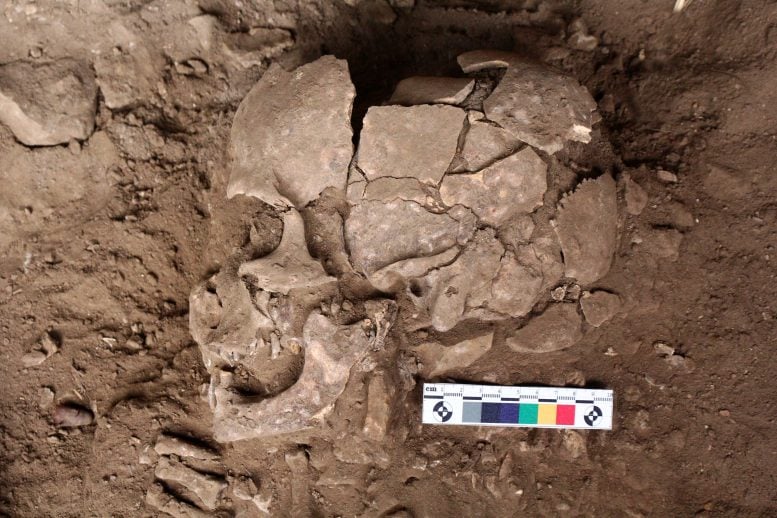 Ancient teeth suggest humans were using psychoactive betel nuts 25,000 years ago, pushing the history of habitual drug use deep into the Ice Age. Archaeologists from Griffith University have found evidence suggesting that humans were using mind-altering substances far earlier than previously believed. The research team, led by Professor Adam Brumm of Griffith’s Australian Research [...]