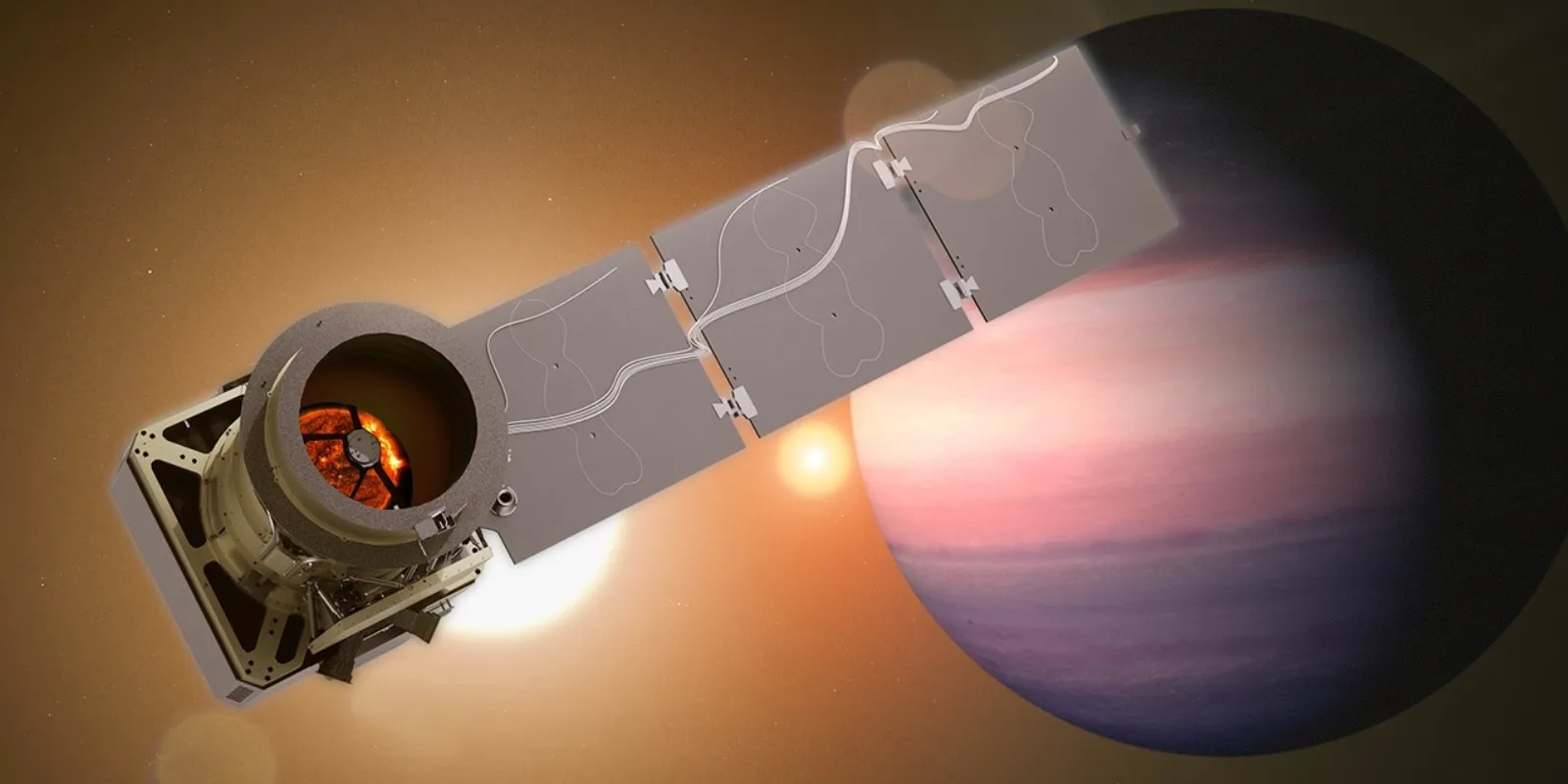
NASA’s Pandora satellite has started science observations of at least 20 exoplanets, measuring their host stars so Webb’s atmospheric results can be read more reliably.
The Hubble and James Webb space telescopes have teamed up to target some of the smallest, most distant objects in the solar system, discovering that the history of these tiny objects is more puzzling than we'd realized.
The two orbiting observatories collectively discovered 27 new Trans-Neptunian Objects, or TNOs, all less than 25 miles (40 kilometers) across, with the smallest being only 6 miles (10 kilometers) in diameter. As their name suggests, TNOs orbit the sun from far beyond Neptune. Some of them were born out there, at the dawn of the solar system, as small planetesimals unable to take the extra step to form planets.
Models of how these TNOs formed predicted that they should have been peppered with impacts that mixed up their surface material so that their composition, and therefore color, would be different than larger TNOs. Yet new observations, led by two PhD candidates, Anastasia Morgan of Northern Arizona University and Marielle Eduardo of the University of Victoria found the opposite – the little TNOs still look as pristine as the day they formed.
"You could imagine a scenario where getting knocked around and fragmented would change the surface composition, and then you would see a different surface color for tiny TNOs compared to their larger siblings," said Morgan, who led the color and composition analysis, in a statement. "So it's really fascinating to see that the smallest objects are somehow 'remembering' and preserving the history of how they were made."
TNOs native to the Kuiper Belt move in near-circular orbits around the sun and are level with the ecliptic plane, the imaginary flat 'disc' on which the planets and other objects orbit our star. They are said to be dynamically 'cold' because they haven't really budged since they formed.
Other TNOs, however, formed between the seventh and eighth planets, Uranus and Neptune, but before they could be assimilated into those worlds while those planets were growing, they were ejected by gravitational resonances into the region far beyond Neptune, collectively forming a 'Scattered Disk' of objects on highly elongated orbits significantly inclined to the plane of the solar system. Such TNOs are referred to as being dynamically 'hot'.
Yet even the 'hot' TNOs seem to have resisted any changes to their surface composition.
"These dynamically hot TNOs retain a signature of where they were born, even though they've been orbitally scrambled since then," said David Trilling of Northern Arizona University.
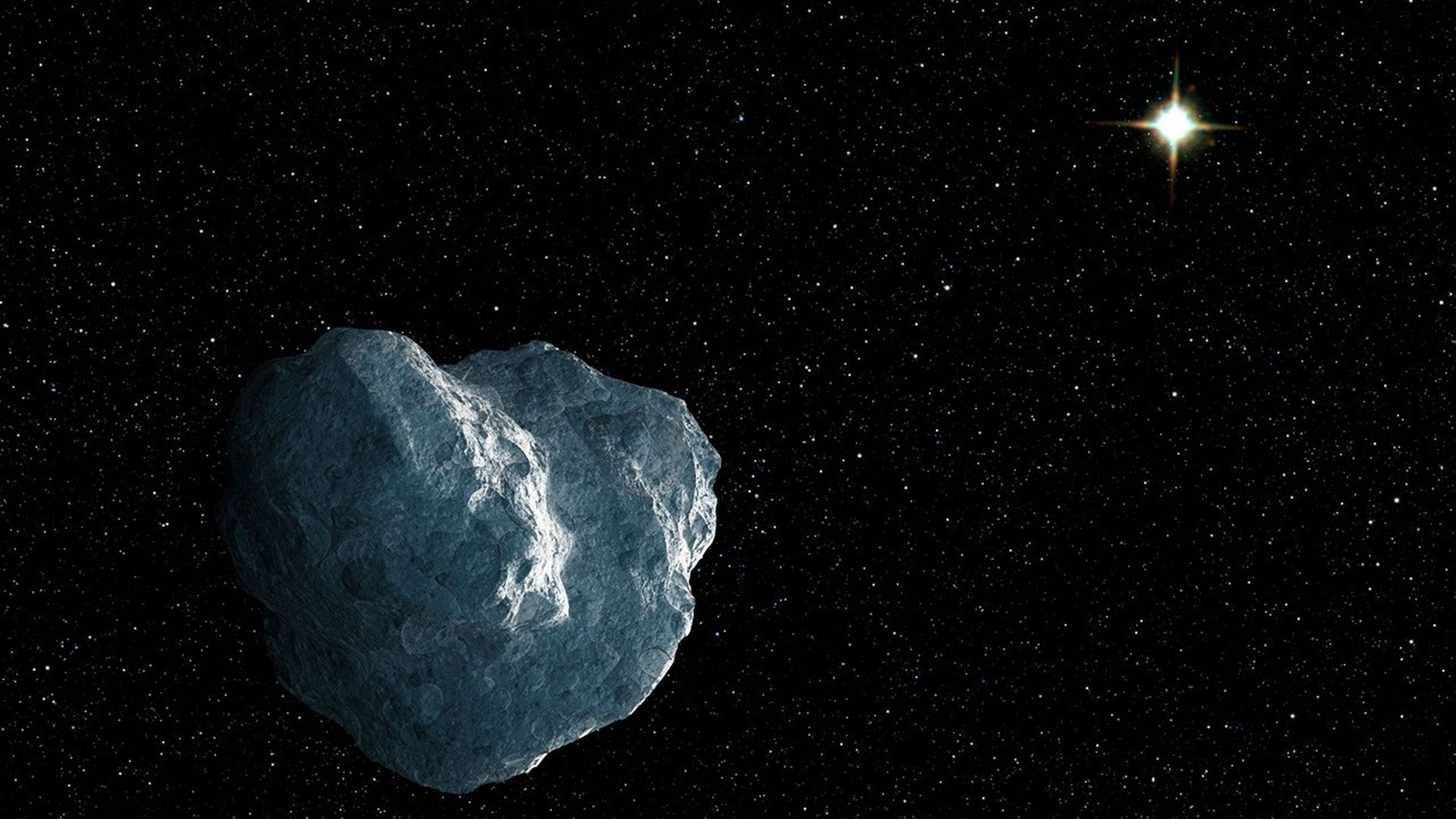
An artist's interpretation of a trans-Neptunian object. (Image credit: Artwork: NASA, ESA, and G. Bacon (STScI); Science: NASA, ESA, and C. Fuentes (Harvard-Smithsonian Center for Astrophysics))
This leads to one of two surprising possibilities. Either there are far fewer impacts taking place far from the sun than astronomers thought, which doesn't match with what we think we know about the population density of objects out there, or the impacts and collisions do take place but for some reason do not tear up the surface of the small TNOs as much as we might expect.
Thanks to the James Webb Space Telescope's (JWST's) infrared vision, Marielle Eduardo was able to figure out the size distribution of the TNOs. When we look in visible light, how bright a TNO appears depends in part on how reflective its surface is, a property referred to as albedo. A larger body with a composition that isn't very reflective might appear fainter at the same distance as a smaller object covered in shiny ice.
However, at infrared wavelengths the brightness of an object is dependent mostly on its size, allowing accurate determinations of the diameters of the 27 TNOs. Surprisingly, there seem to be fewer of the very small TNOs than what models of their formation predict.
"It's very interesting that the process of planetesimal formation ends up producing the same distribution of sizes for both cold and hot populations, despite forming in different regions of the early solar system," said Eduardo. "The process seems to be insensitive to [planet-forming] disk conditions, producing similar planetesimal sizes whether the disk is hot or cold, and dense or fluffy."
These observations push Hubble's and JWST's abilities to the limit. The TNOs are incredibly faint, shining between magnitudes 24.1 and 29.3, described as being equivalent to seeing a swarm of fireflies on the moon from Earth. As such, it is the deepest survey yet into the relatively unknown realm beyond Neptune, just as you'd expect from these two powerful space telescopes getting together.
The research was published in The Astronomical Journal as two separate papers on Sept. 8, one on color and composition, the other on the size distribution of the TNOs.
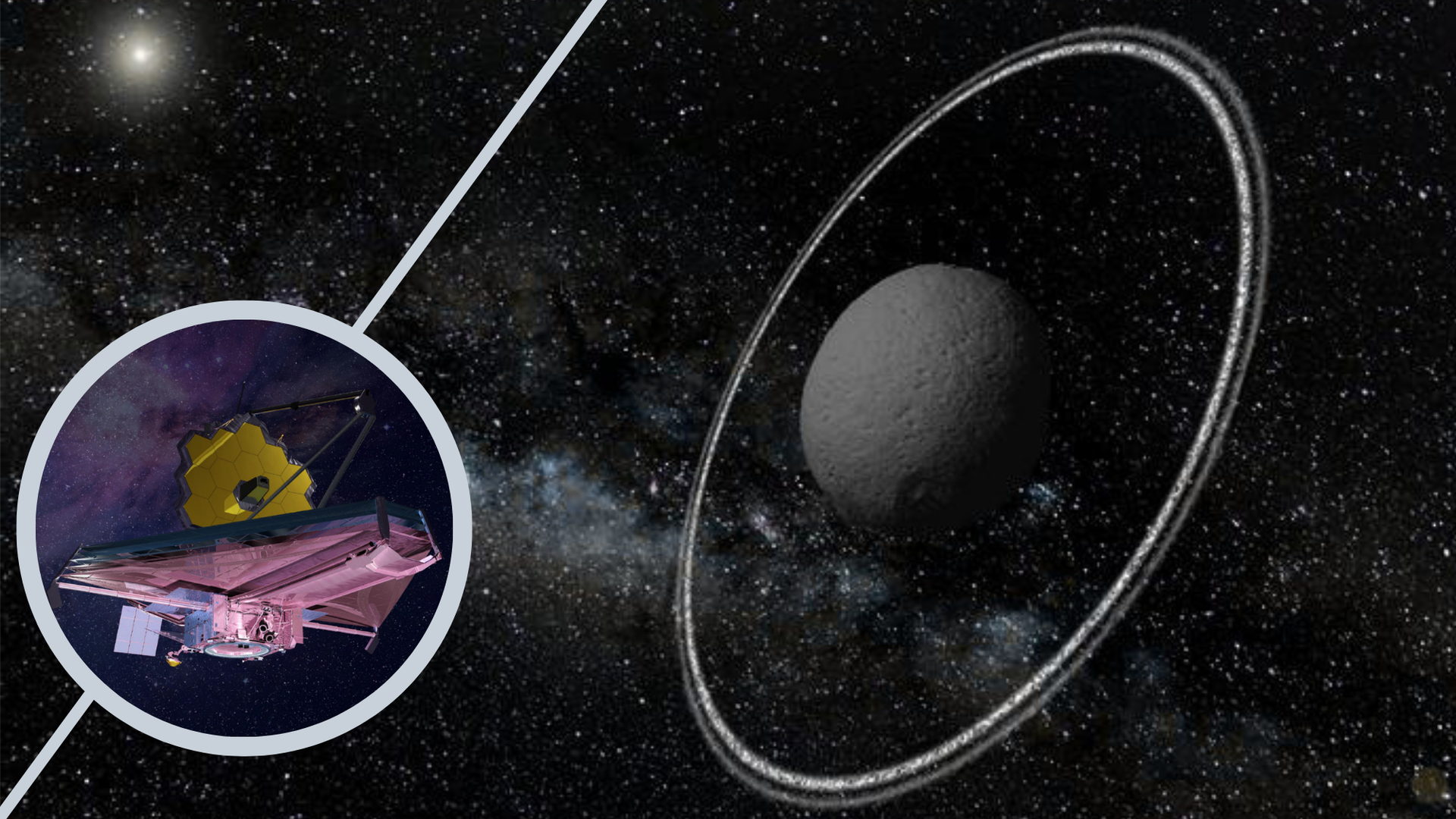
Using the James Webb Space Telescope (JWST), astronomers have discovered that the ring system of a tiny solar system body is even more interesting than they knew.
The object in question is Chariklo, which orbits the sun between Saturn and Uranus, at around 17 times the distance between Earth and the sun. Despite only being around 155 miles (250 kilometers) wide, Chariklo, part of the Centaur family of asteroids, possesses two thick rings.
Though Saturn is the solar system body most famous for its rings, other planets also have ring systems, albeit less prominent. That includes Uranus, Neptune, and Jupiter. However, Chariklo and the even smaller body Chiron, show that even the most diminutive bodies can develop rings. Now, thanks to the incredible sensitivity of the JWST, scientists know that the rings of Chariklo are even stranger than their initial discovery in 2013 suggested.
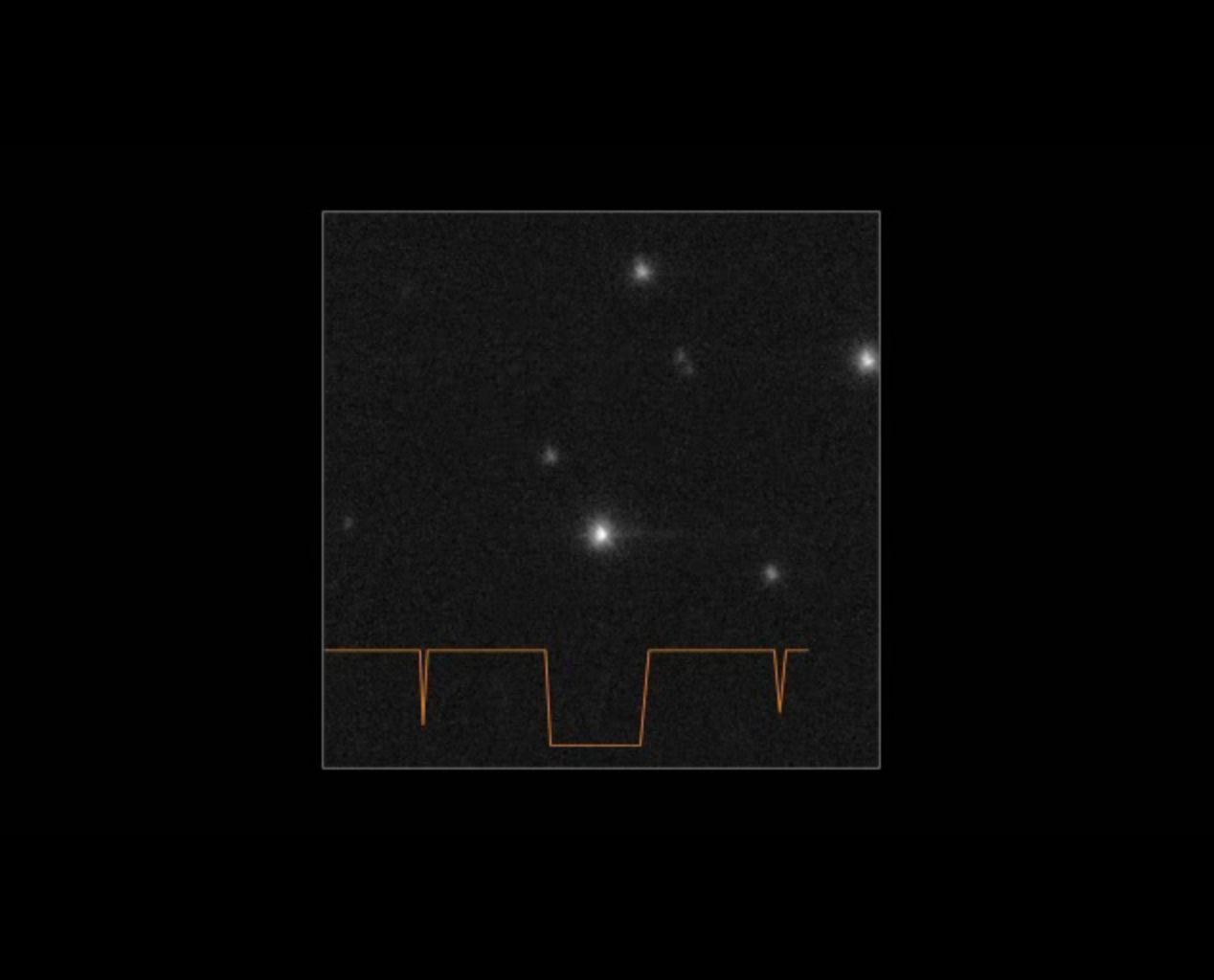
The team, led by researchers from the Institute of Astrophysics of Andalusia (IAA-CSIC), began observing Chariklo with the JWST in Oct. 2022. They used a technique called stellar occultation, which measures the decrease in light from a star when an object passes in front of it.
"By comparing JWST observations with those obtained during other stellar occultations over the last decade, we discovered opposite changes in the two rings: while the inner ring shows significantly higher opacity, the outer ring shows lower opacity," team leader Pablo Santos-Sanz of the IAA-CSIC said in a statement.
The changing rings of the asteroid suggest that it experiences more complex physics than previously thought. This is important because scientists had previously believed that small bodies had relatively stable rings.
"Our results force us to rethink how they form, how they evolve, and what mechanisms maintain their stability," Santos-Sanz said. "The ability to detect these changes opens a new window for understanding the evolution of these systems and, possibly, that of other ring systems in the solar system."
The cause of these changes remains a mystery.
Another milestone for the JWST and Gaia
The research doesn't just represent an important step in our understanding of asteroids and solar system rings, but it is also an important milestone for the JWST.
"Achieving this required knowing with extraordinary precision the orbit of Chariklo, the position of the star, thanks to the European Space Agency’s Gaia mission, and the trajectory of JWST itself around the L2 Lagrange point, a region of space located about 1 million miles (1.5 million kilometers) beyond Earth, away from the sun," team member Yücel Kilic of the IAA-CSIC said. "The JWST follows an orbit around this region that requires periodic corrections through station-keeping maneuvers."
Dips in light from a distant star caused as it is occulted by Chariklo and its rings (Image credit: ESO/Felipe Braga Ribas/M. Kornmesser)
During the occultation the team used in their research, Chariklo was traveling at around 5,600 miles per hour (2.5 kilometers per second) relative to the JWST.
This is incredibly fast by Earth standards, but relatively slow for objects racing through the solar system. This low speed allowed the rings of Chariklo to be resolved in unprecedented detail. Astronomers currently rely on occultation to study Chariklo and its rings, as even the JWST isn't powerful enough to directly image this small and distant asteroid.
The team's research was published on Tuesday (Sept. 9) in the journal Science Advances.
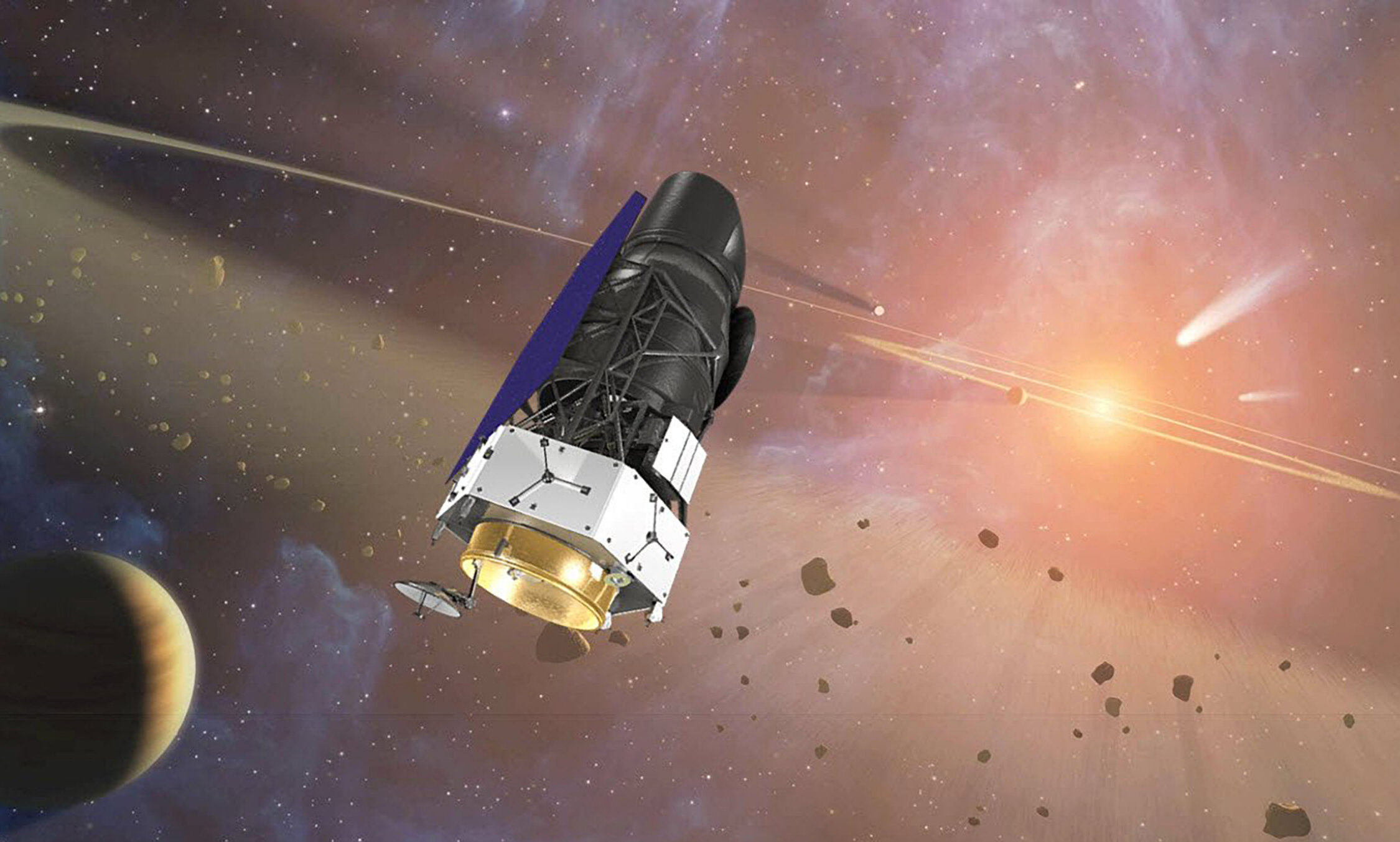
The Nancy Grace Roman Space Telescope, set to launch into orbit, aims to explore dark energy and dark matter, potentially addressing the unresolved Hubble Tension. This discrepancy highlights conflicting measurements of the universe's expansion rate. Some scientists believe Roman may confirm flaws in the standard cosmological model, leading to new physics.
When NASA announced that the new Nancy Grace Roman Space Telescope will perform its science duties from a point in space known as Lagrange 2, many observers noted that the space agency’s current state-of-the-art space observatory, the James Webb Space Telescope, shares this same orbital location.
Due to the extremely sensitive nature of both satellites and their sensors, and the irreplaceable scientific value they will provide in the future, it might seem natural to wonder whether these two space observatories are at risk of a deep-space collision.
Fortunately, that’s a very unlikely prospect, and here’s a look at all the space separating Roman and Webb—and how NASA will ensure the two observatories remain safely apart.
Nancy Grace Roman Space Telescope Heading for Lagrange 2
Many scientific satellites reside a little over 200 miles above Earth in an orbital plane called Low Earth Orbit (LEO). This proximity enables communication with Earth and offers the potential for future servicing missions.
For example, NASA’s groundbreaking Hubble Space Telescope orbits LEO at about 300 miles above Earth. This proximity enabled servicing missions that have kept Hubble delivering valuable scientific data for over three and a half decades since its 1990 launch. Still, LEO also limits which missions Hubble can undertake.
More recently, NASA launched JWST. However, unlike Hubble, Webb rocketed roughly one million miles from Earth before arriving at Lagrange 2. According to a NASA fact sheet detailing the Roman Space Telescope’s mission, this location offers several benefits over LEO.
“At L2, the gravity of the Sun and Earth, together with an object’s motion around the Sun, let it stay lined up with Earth as they orbit,” NASA explains, “allowing Roman to have a relatively steady orbit without using much fuel.”
NASA also notes that heat from Earth, the Sun, and the Moon has less impact on infrared telescopes designed to “see” heat. L2 also offers JWST and Roman, “a constant, unobstructed view of a wide swath of the sky.”
“Earth won’t block much of Roman’s view since it will be so distant,” NASA explains.
Is There a Danger of a Roman-JWST Collision?
Instead of sitting still at the heart of L2, NASA notes that Webb “traces out a large orbit around the actual L2 point.” For comparison, the space agency noted that JWST’s orbit around L2 is “much larger than the Moon’s orbit around Earth.”
Like Webb, the Nancy Grace Roman Space Telescope is also destined for L2. The new space telescope will also trace out an orbit around L2 rather than remaining comparatively stationary.
Because of the wide orbits of both spacecraft and the efforts of the mission’s controllers, NASA said the two valuable space telescopes “will easily be kept far apart.”
Five-Year Mission Could Stretch to Ten or Beyond with Refueling
Like previous NASA missions, Roman will have a primary lifetime and a backup plan if the observatory remains viable after the first mission ends. For Roman, both the primary and secondary missions are slated for five years, bringing the observatory’s planned potential lifetime up to a possible ten years.
Notably, several NASA missions have continued to deliver scientific data well beyond their planned primary and secondary missions. Perhaps the most famous example is Voyager 1. Launched in 1977, the interplanetary mission has since left the solar system and continues to return data from beyond the heliopause, an area of deep space over 14 billion miles from Earth.
When discussing what obstacles may result in a shorter mission profile, NASA said that “fuel is expected to be the mission’s life-limiting resource.”
“While NASA does not currently have an ability to service observatories at L2, Roman is designed to be refuellable,” they added.
Christopher Plain is a Science Fiction and Fantasy novelist and has spent the last six years as Associate News Editor and Head Science Writer at The Debrief. Follow and connect with him on X, learn about his books at plainfiction.com, or email him at christopher@thedebrief.org.
Little red dots, an astronomical mystery unveiled by NASA’s James Webb Space Telescope, have perplexed researchers since their discovery—and now, according to new findings, we may be closer than ever to unraveling their mystery.
According to new research that appeared in Nature Astronomy, the enigmatic little red dots could be residents of very small, but also very dense galaxies with masses close to a billion times our Sun’s mass.
If confirmed, the new research may set the pace for unraveling how these cosmic curiosities, first detected in 2023, first came to be in the early stages of the universe’s development. Not only that, it could hint at the possibility that these “little” cosmic curiosities may also be keeping a big secret.
What Are Little Red Dots?
One of the reasons little red dots remained unknown until recent years has to do with their great distances from Earth. With the help of the Webb telescope’s powerful eye, these tiny objects were initially detected three years ago and detailed in a formal scientific paper in 2024.
The nature of these objects remains unknown, and astronomers still aren’t certain about what the exact source of the light they produce might be. In past research, some clues have pointed to the possibility of material around these objects at ultraviolet wavelengths—this would potentially offer a strong hint that these faint, distant objects are galaxies, or are at least related to them in some way.
One of the challenges astronomers have encountered is the lack of optical light measurements indicating the presence of galactic material. Because of this, questions remain about the mass that could be present in stellar bodies associated with the little red dots.
Capturing Optical Emissions from Enigmatic Objects
Now, in new research by Xuheng Ding, Lilan Yang, and colleagues, imagery captured by the James Webb Space Telescope of 217 examples of little red dots has produced new clues about their mysterious origin.
A key component of the new imagery includes the detection of optical emissions, albeit faint ones, observed beyond the primary central objects themselves. The detections are strong enough to be clearly observed, and based on the team’s models, these emission lines are indeed most likely linked to the presence of stellar mass, meaning that the little red dots are good candidates for star-forming galaxies, as many astronomers have suspected.
If correct, this would help confirm a potentially big secret about these objects, since it would also mean the little red dots reside at the centers of these galaxies—as supermassive black holes.
Anatomy of a Little Red Dot
Additional clues about these objects include new estimates for their size, clocking in with a radius of about 210 parsecs—roughly 685 light-years—on average. This means that the little red dots are far more compact than the kinds of star-generating galaxies expected to possess comparable mass, which date to around the same time in our universe’s development that the dots are believed to originate.
Based on the new research, little red dots are more than just unusual light sources in the distant universe, and their likely association with star-forming galaxies offers a significant clue toward revealing their exact nature.
Still, a few questions remain, and the team cautions that their analysis deals with the average properties based on the recent collection of Webb imagery of these cosmic features, since many of the individual characteristics of the little red dots remain too faint to characterize on an individual basis.
Going forward, the team believes additional observations that include spectrographic analysis of the light produced by little red dots will offer more clues about not only their origins, but will also help astronomers determine clearer estimates for their distances.
Micah Hanks is the Editor-in-Chief and Co-Founder of The Debrief. A longtime reporter on science, defense, and technology with a focus on space and astronomy, he can be reached atmicah@thedebrief.org. Follow him on X @MicahHanks, and at micahhanks.com.
JWST‘s ability to see deep into the cosmos gives astronomers insight into the early universe and challenges prior expectations of what they would find there. Now, an international team led by astronomers from the Netherlands’ Leiden University recently reported the discovery of new stars in a paper published in Nature Astronomy.
With the discovery of these many previously unknown small stars, the researchers say astronomers may need to reconsider the expected mass of these early galaxies, as JWST reveals unexpected levels of development shortly after the Big Bang.
James Webb Space Telescope Observations
For their new work, the astronomers focused on nine massive galaxies in the early universe that had completed their main star-formation period. They combined JWST data with earlier observations from the Very Large Telescope in Chile, operated by the European Southern Observatory.
Spectroscopy is a crucial element of JWST data, breaking light down into separate spectra that allow astronomers to study stars and even planetary atmospheres across extreme distances. However, the smaller, fainter stars revealed in this new research can be much harder to detect than the brighter, more powerful ones.
“If a galaxy were a city, the brightest stars would be the skyscrapers you can immediately see from far away,” said first author Chloe Cheng. “Our models show that behind the brightest stars there is a much larger population of small stars, like houses among the skyscrapers. This means that the galaxy as a whole is much more massive than previous estimates suggested.”
Stellar Birth
Working with data limited by the sensitivity of tools, researchers previously were unable to see as many smaller stellar objects. Researchers then assumed a similar ratio of small to large stars across the universe, which these new findings are now challenging.
Instead, they found ancient massive galaxies filled with many more small stars than previously expected, and far more than in our own Milky Way galaxy today, which is a smaller galaxy. The mass differences produced by this glut of tiny stars increased the expected mass of the galaxy under 1.5 billion years old by fourfold.
“Measurements like these were simply not possible until recently,” explained co-author Martje Slob. “We needed not only a telescope capable of collecting enough light, but also exceptionally high-quality spectra and new analysis techniques. Only then could we reliably distinguish the subtle features of small stars from the light of much brighter stars.”
JWST Discoveries
Launched almost five years ago, JWST has continually defied what astronomers expected to find in the ancient universe. It turns out that the universe shortly after the Big Bang was more massive and had undergone more development than previously considered possible. The new findings add to those ongoing discoveries.
“This result shows that much more mass than we thought is hidden in small stars,” said study lead Professor Mariska Kriek. “It has implications for many areas of astronomy. Small stars often have planets orbiting them, so if there were many more small stars in the early Universe than we thought, there may also have been more planets.”
To follow up on this exciting discovery, the team plans to look even further back into the universe’s past in future observations that will study some of the universe’s very earliest stars.
Ryan Whalen covers science and technology for The Debrief. He holds an MA in History and a Master of Library and Information Science with a certificate in Data Science. He can be contacted at ryan@thedebrief.org.
Stunning new imagery of the distant celestial object NGC 2392, better known as the “Lion Nebula,” has been obtained by NASA’s James Webb Space Telescope.
The cosmic vista captured by Webb reveals a colorful view of the ancient nebula, whose characteristic appearance resembles one of nature’s most respected apex predators, complete with a bushy-looking “mane” composed of hazy stellar gases and objects similar to comets.
The new high-resolution imagery offers one of the clearest and most detailed views of the Lion Nebula ever seen. Previous images captured by Webb’s predecessor, the Hubble Space Telescope, were obtained in 2000, featuring the same celestial feature in visible light.
With the added spectral ranges Webb’s Near Infrared Camera (NIRCam) and Mid-Infrared Instrument (MIRI) can capture, the Lion Nebula now appears in colorful pinks and indigo hues, surrounded by distant galaxies blazing in brilliant orange from across vast cosmic distances, whose light has traveled billions of years to reach our Solar System.
A Lion Roars Across the Cosmos
A particularly striking feature about the new imagery is the way cosmic dust and regions of ionized gas are showcased in the new Webb imagery.
“It’s taken several thousand years for this collection of gas and dust to reach its current shape, and the nebula’s components continue to be altered,” read a portion of a statement released by the European Space Agency (ESA) that accompanied the new images.
The Lion Nebula, as seen with the MIRI instrument on board the James Webb Space Telescope (Image Credit: NASA, ESA, CSA, STScI; Image Processing: Alyssa Pagan (STScI)).
One reason that helps account for the changing appearance of the Lion Nebula over time can be found at its center, where the remnants of a slowly dying white dwarf star (which effectively forms the nose in the lion’s face after which the nebula is named) continues to supercharge the surrounding cosmic structures made visible in the new Webb imagery.
The rest of the lion’s face is composed of an expanding bubble of ionized gas, the nature of which remains somewhat mysterious. Presently, astronomers are uncertain about what exact mechanisms give rise to the complex appearance of this gassy bubble and its internal structures, which are a recurring element in ancient nebulae such as this.
NGC 2392 isn’t the only celestial feature known as the “Lion Nebula.” An entirely separate diffuse nebula located in the Cepheus constellation, known as Sharpless 2-132, also shares this nickname due to its shape, which resembles a lion’s body seen from the side.
A Cosmic Visage Frozen in Time
For now, the Lion Nebula is captured in the Webb imagery, which, despite its almost serene beauty, represents a highly active area of the cosmos, undergoing constant change as material is continually ripped away from the stellar central core.
Sometime in the next 10,000 years or so, this striking celestial feature will eventually be destroyed, once the white dwarf powering the nebula completely dies and the remnants of stellar material are completely dispersed into the surrounding space.
Until then, this remarkable cosmic feature will remain a target of study by astronomers, whose inquiries are helped significantly by the unprecedented clarity offered in the latest Webb images.
Micah Hanks is the Editor-in-Chief and Co-Founder of The Debrief. A longtime reporter on science, defense, and technology with a focus on space and astronomy, he can be reached atmicah@thedebrief.org. Follow him on X @MicahHanks, and at micahhanks.com.
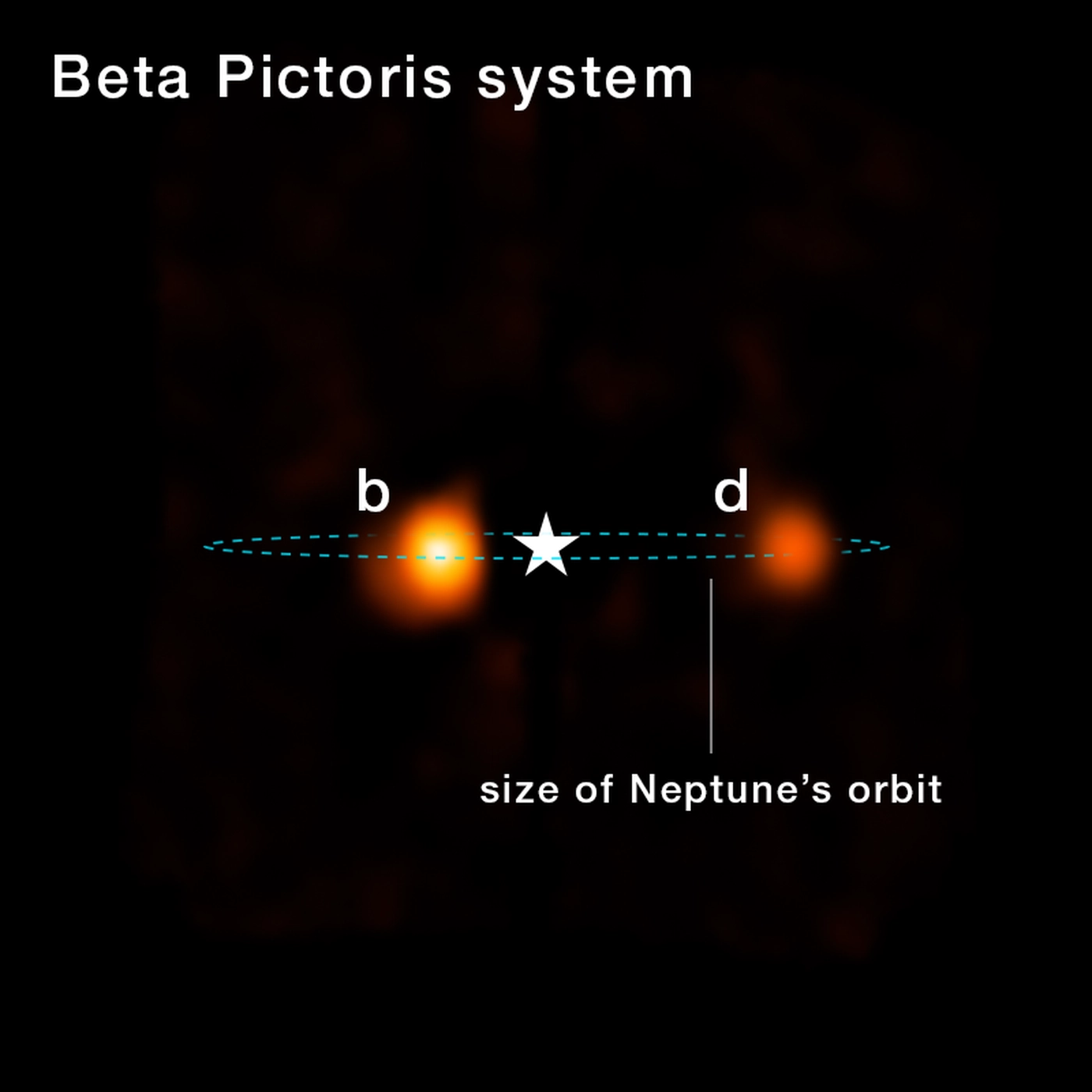
Astronomers have found a third giant planet around Beta Pictoris, one of the best-known young planetary systems near Earth. The discovery is striking because the planet was not first picked out as a bright dot in a telescope image. NASA’s James Webb Space Telescope found it in the spectrum of light coming from the system: […]
New evidence has come to light showing that the mysterious 'little red dots' discovered in the early universe by the James Webb Space Telescope could evolve into the active centers of fully formed galaxies.
"Everything created in the early universe must evolve into something around us," said George Rieke of the University of Arizona in a statement. "We have had little idea of what little red dots become, but these results finally show us how to find their progeny."
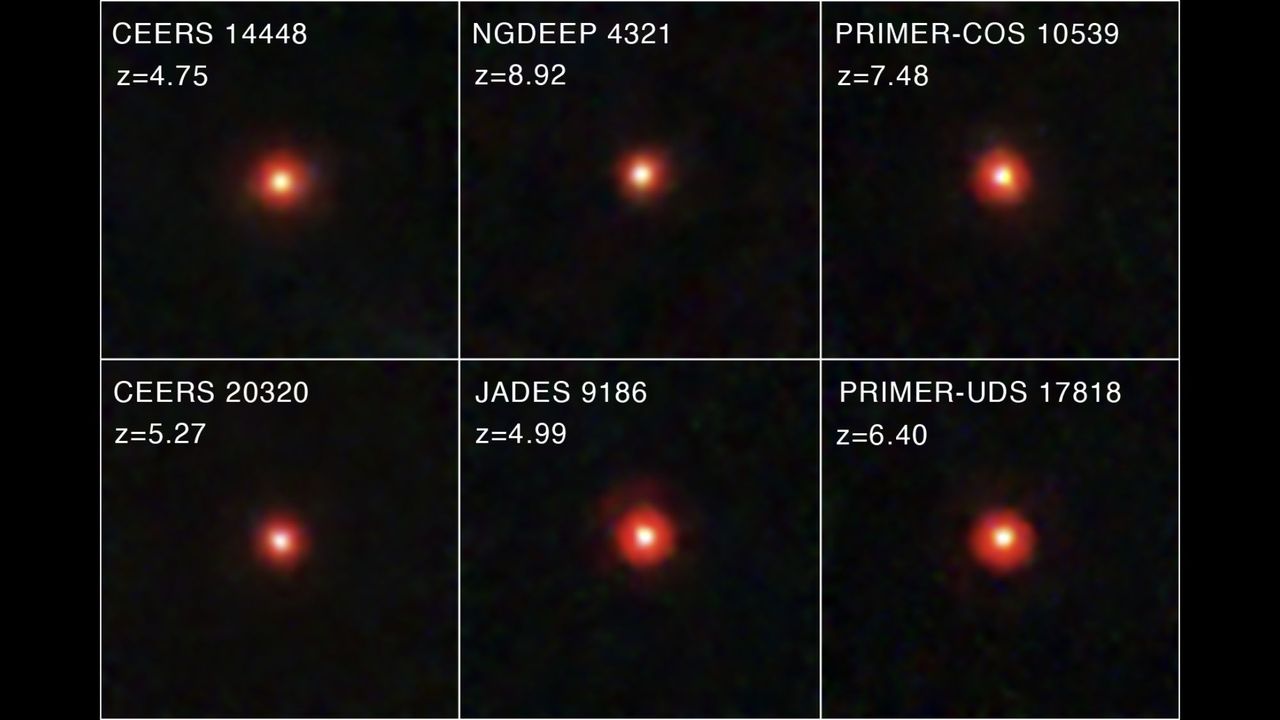
Discovered by the James Webb Space Telescope (JWST) almost as soon as it became operational in 2022, little red dots have been a perplexing cosmological mystery. As their name suggests, they appear small, red and surprisingly bright. They are mostly found at redshift values suggesting they existed between 13.2 and 12.2 billion years ago. To shine so brightly at such great distances would usually imply these objects are quasars — which are luminous nuclei of galaxies powered by active supermassive black holes — but the light coming from little red dots is more like that of bloated stars. It looks to be mostly in infrared with some ultraviolet, and none of the X-rays that one would expect from an active black hole chomping down on material.
As such, researchers have come up with the hypothesis that little red dots are "black hole stars," or vast clouds of gas heated from within by a concealed but growing supermassive black hole.
However, the population of little red dots drops off a cliff at redshifts equating to less than 12 billion years ago. Where did they all go? There are two options. Either they all died off, or they developed into objects more familiar to us.
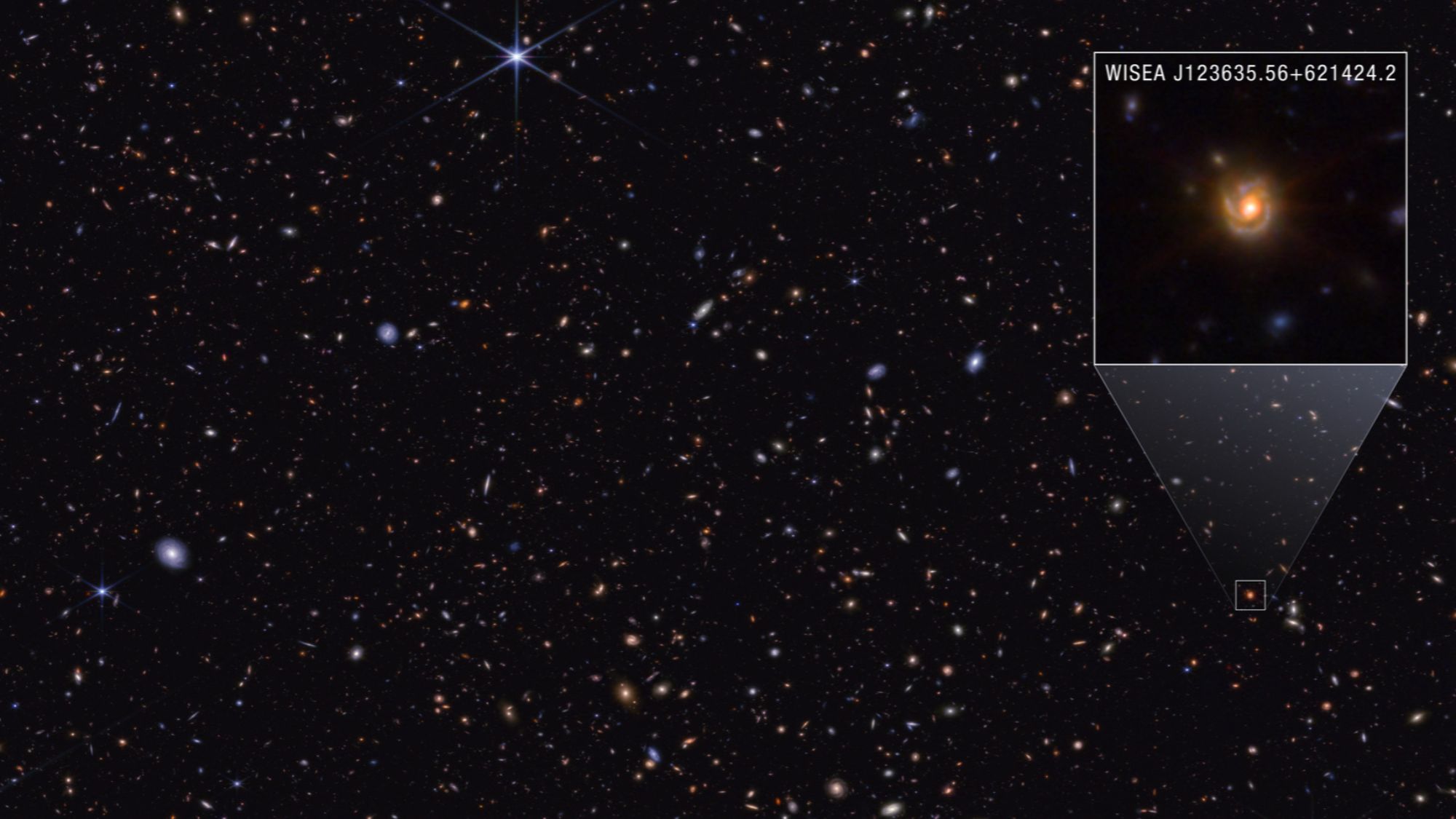
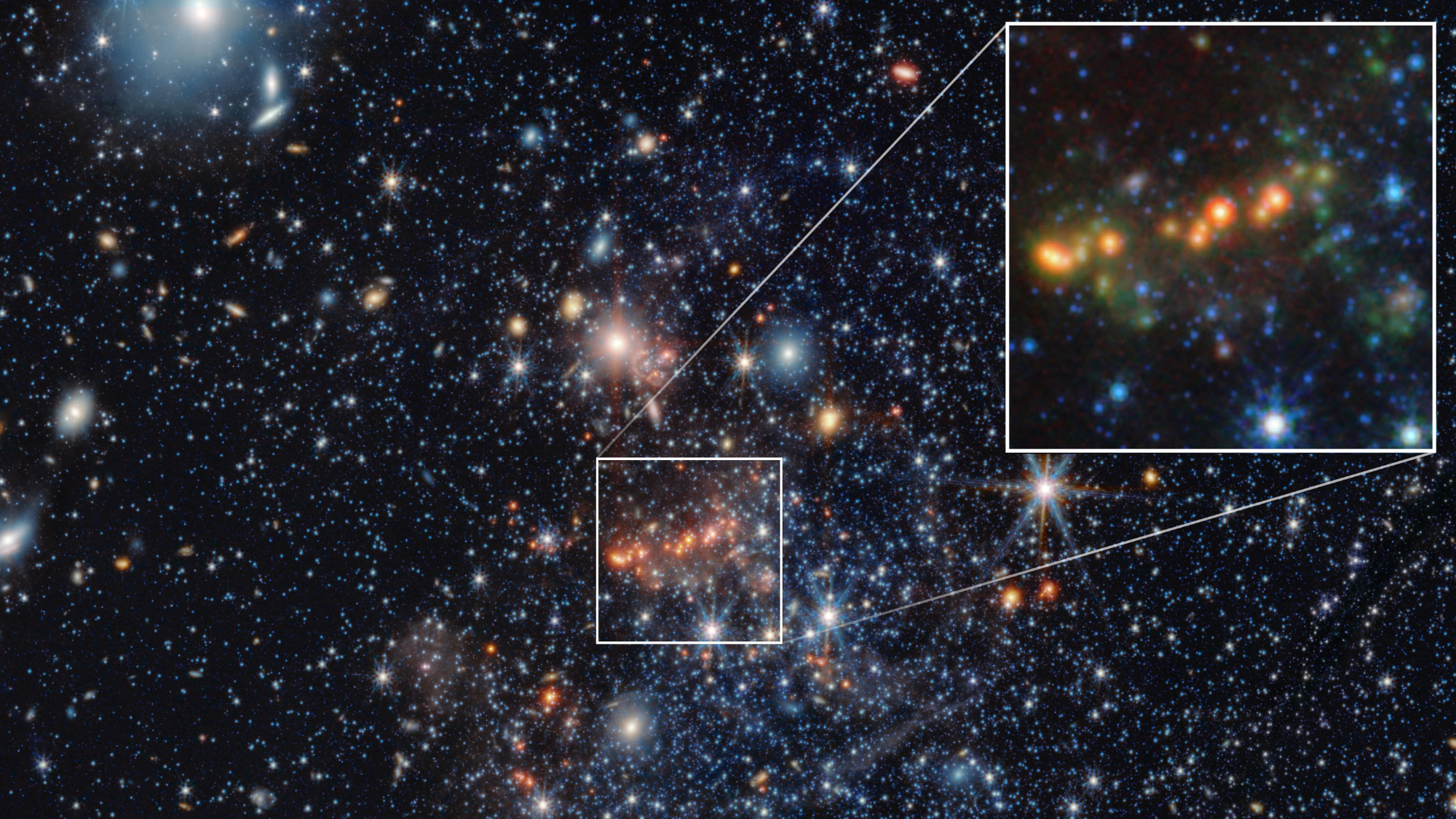
A team led by Pierluigi Rinaldi, who was at the University of Arizona's Steward Observatory when conducting this research but is now at the Space Telescope Science Institute (STScI) in Baltimore, think it has identified a descendent of a little red dot. It appears to be in the form of a distant galaxy, catalogued as WISEA J123635.56+621424.2, which is found at a redshift of 2, meaning that we see it as it was 10.5 billion years ago.
The galaxy displays neat spiral arms around a red core. Rinaldi's team have nicknamed it the Saguaro, after a species of cactus native to the Sonoran desert in the United States' south-west, thanks to the galaxy's arms and how its core resembles the red fruit produced by the cactus.
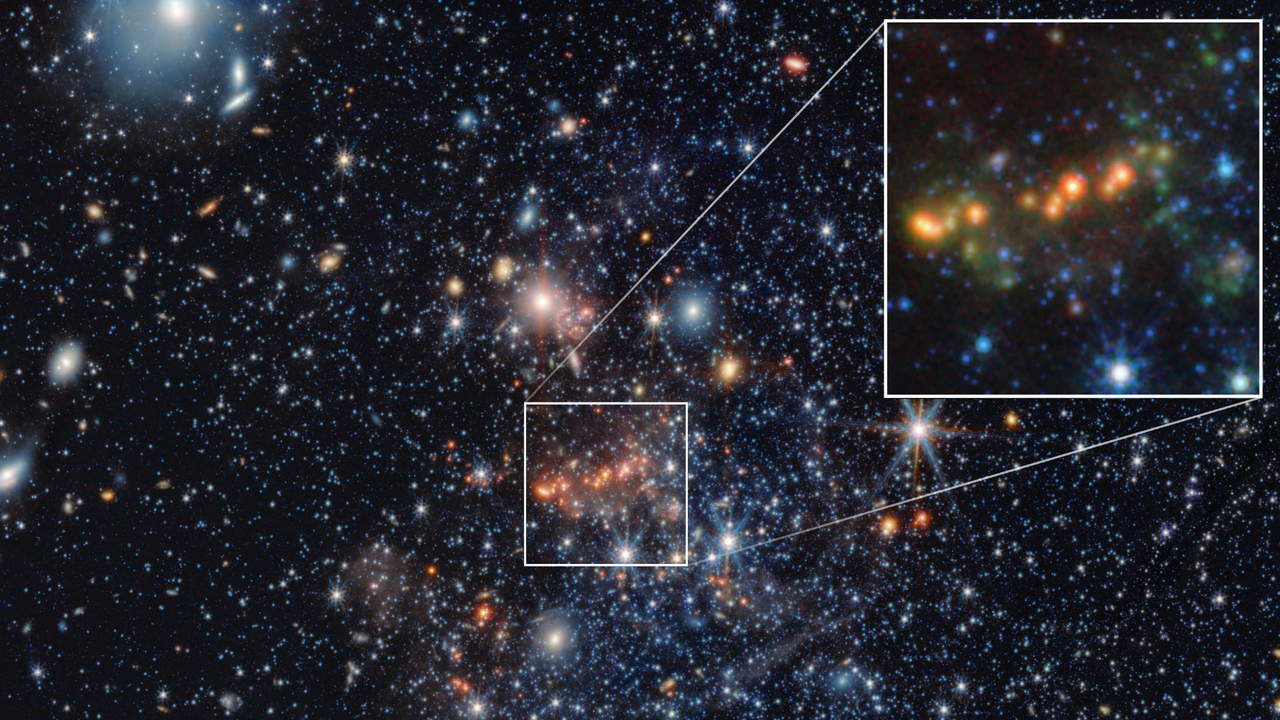
A field of galaxies in Ursa Major, with the Saguaro galaxy inset. (Image credit: NASA/ESA/CSA/STScI/Pierluigi Rinaldi (Steward Observatory); Image Processing: Alyssa Pagan (STScI))
Saguaro's core has all the hallmarks of a little red dot. It shines bright in infrared as seen by JWST, and also emits in ultraviolet as detected by the Hubble Space Telescope. Yet, NASA's Chandra X-ray Observatory has also detected faint X-rays originating from Saguaro.
"What the X-ray observations show is that this galaxy has an active galactic nucleus, and a very obscured one at that," Carys Gilbert of the University of Cape Town in South Africa, who participated in the study alongside Rinaldi, said in the statement. "It's not only obscured but also X-ray weak. That kind of combination could explain the lack of X-ray emission that we see from all other little red dots. It fits the puzzle of little red dots nicely."
This is not the first time X-rays have been seen coming from a little red dot. Earlier this year it was reported that scattered X-rays were seen breaking through from a little red dot called 3DHST-AEGIS-12014, given credence to the hypothesis that little red dots are black hole stars, where the black hole gradually consumes the "star" from the inside out, eventually carving holes through which X-rays can escape. We see 3DHST-AEGIS-12014 as it was 11.8 billion years ago, meaning that Saguaro, which existed 1.3 billion years later, is a little bit further on in its development.
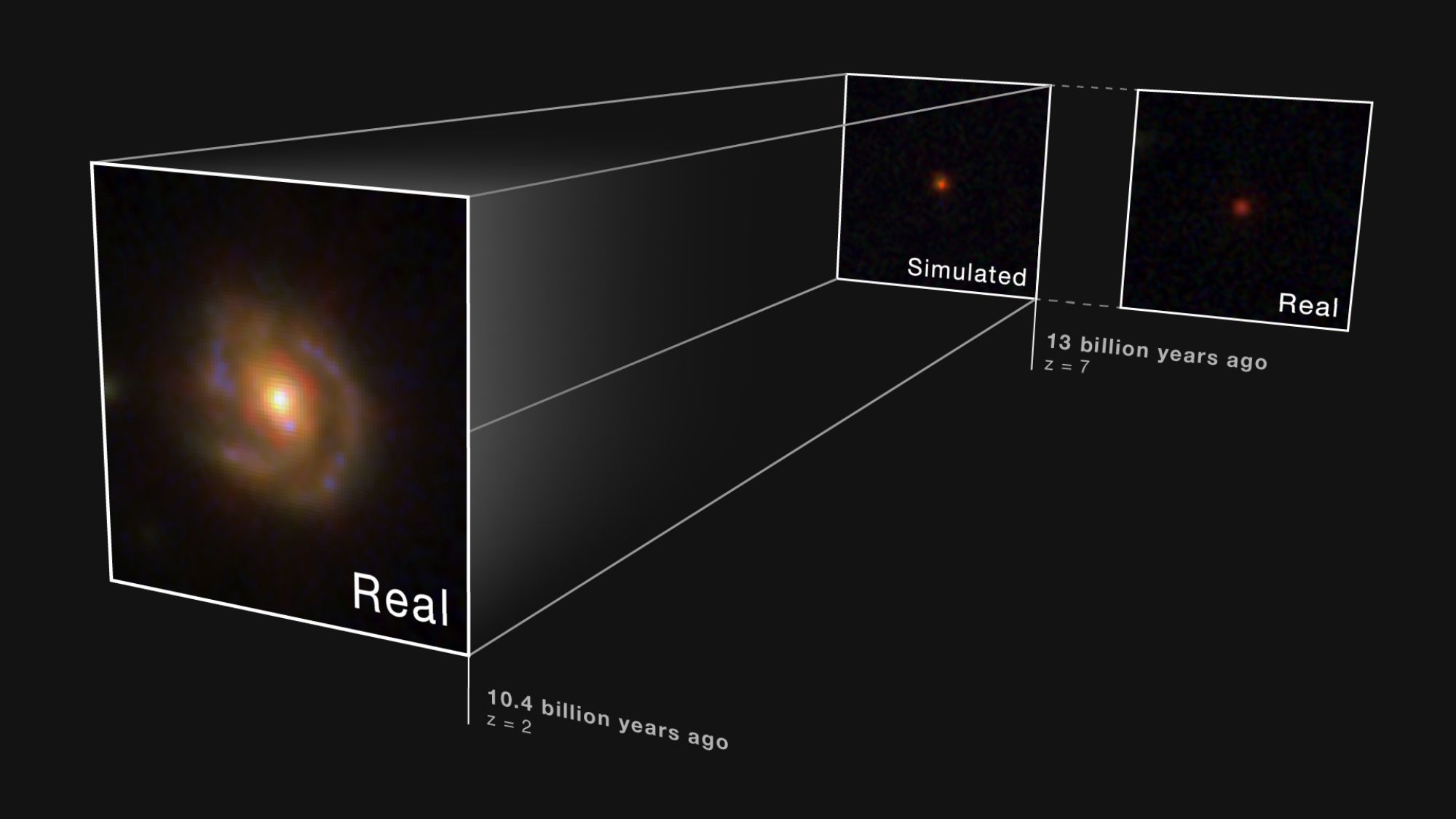
A comparison to how the Saguaro galaxy appears to us now, and how it would appear as a little red dot if it existed at a higher redshift. (Image credit: Alyssa Pagan (STScI); Illustration: Leah Hustak (STScI))
"Because the Saguaro is at lower redshift, we can see the very beautiful and bright host galaxy in high resolution and detail with Webb and Hubble," said Harvard's Zihao Wu, who was also part of Rinaldi's team.
Intrigued, Rinaldi's team simulated how Saguaro would appear to us if it existed a billion years after the big bang. Much of its galactic structure would either be less developed or simply just too faint to be seen at such distance. All that would be visible would be the nucleus, looking very much like all the other little red dots.
This implies that little red dots are not a unique population of their own, but are simply a phase in the development of galaxies with supermassive black holes. Our own Milky Way could have been a little red dot once upon a time.
Saguaro is a crucial link in the story of little red dots and how they connect with modern galaxies. While there is still much to learn, such as the beginning of their story and how they form, the middle and end of their story is now beginning to take shape.
The Carina Nebula's "Treasure Chest" stuns in this new image captured by the James Webb Space Telescope. (Image credit: ESA/Webb, NASA & CSA, M. Reiter)
In a nebula far, far away, colossal clouds of dust and gas tower amongst the stars.
What is it?
This spectacular new image from the James Webb Space Telescope showcases the brilliant majesty of the Carina Nebula, a giant cloud of dust and gas found 7,500 light-years away in the constellation Carina.
In this new image, captured by JWST's Near-Infrared Camera (NIRCam), you can see the nebula in a whole new light. This snapshot captures a specific feature that is being dubbed the "Treasure Chest," as it vaguely resembles a glowing coffer overflowing with stellar jewels.
This "Treasure Chest" contains a cluster of young stars, approximately 70 stars in total. While these might be young, growing stars, the most massive of the bunch is a whopping 19 times more massive than our sun.
Why is it incredible?
While JWST has looked at the Carina Nebula before, new observations can reveal completely new details and help scientists uncover new information about the nebula and the strange ways in which the universe works.
Right now, scientists think that the star cluster in the "Treasure Chest" is about 1.3 million years old. However, previous estimates thought the grouping could be just 100,000 years old. So, new observations by powerful telescopes like JWST can significantly change our understanding of the cosmos.
With each new observation or data point, the history and context of the universe around us could completely transform. And, as this star cluster grows over time, its stars will become more brilliant. They may therefore illuminate more of this star cluster, potentially revealing details and secrets of this "treasure" that scientists might never have predicted.
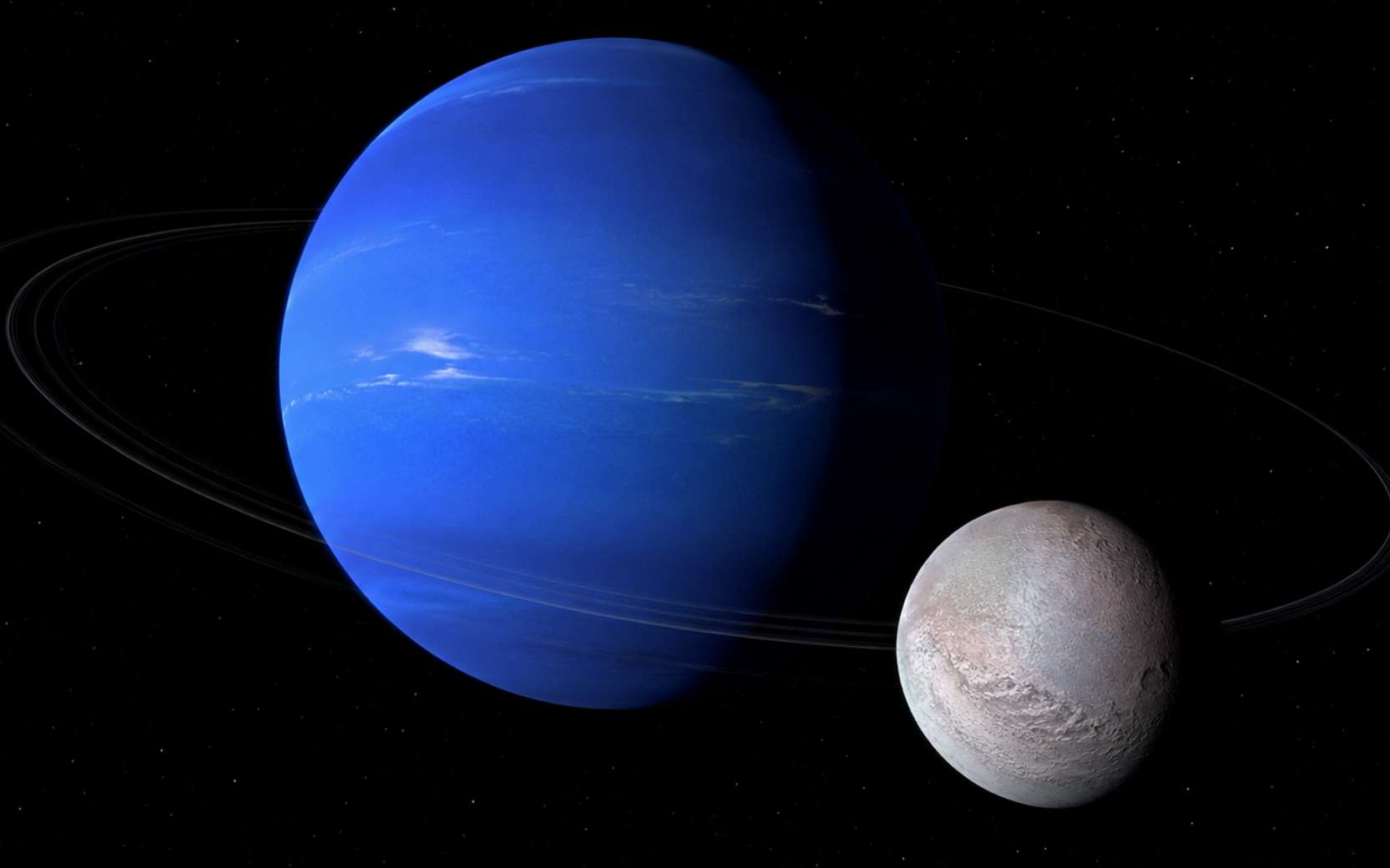
Certaines des caractéristiques du Système solaire, à commencer par l'origine de la Lune, s'expliquent par des événements et des scénarios violents. Que faut-il en penser dans le cas de certaines des lunes de Neptune depuis que le télescope James-Webb a pris le relais de Hubble ?
A giant planet spent more than a decade concealed inside one of astronomy’s most closely watched star systems. Astronomers have discovered a planet named Beta Pictoris d orbiting a young star just 63 light-years from Earth. The gas giant is about 100 times fainter than Beta Pictoris b, the first planet found in the system, [...]
Webb found a hidden giant planet by detecting its atmospheric chemistry through a bright debris disk. For years, a third giant planet remained concealed within the bright dust surrounding Beta Pictoris, one of the most closely observed planetary systems in the Milky Way. NASA’s James Webb Space Telescope has now exposed the hidden world by [...]
Il existe plusieurs objets et phénomènes exotiques en astrophysique qui sont des serpents de mer, comme on dit. Des signes de leur existence apparaissent parfois et à répétition dans les observations, sans que l'on puisse aboutir vraiment à une conclusion. C'est le cas avec une nouvelle...
Paleontologists now know that many of the dinosaurs didn't disappear but instead evolved into modern birds, and new research suggests that "cosmic dinosaurs" observed by the James Webb Space Telescope (JWST) didn't go extinct either. Rather, they may have evolved into familiar sights in the modern universe: vast conglomerations of densely packed stars called "globular clusters."
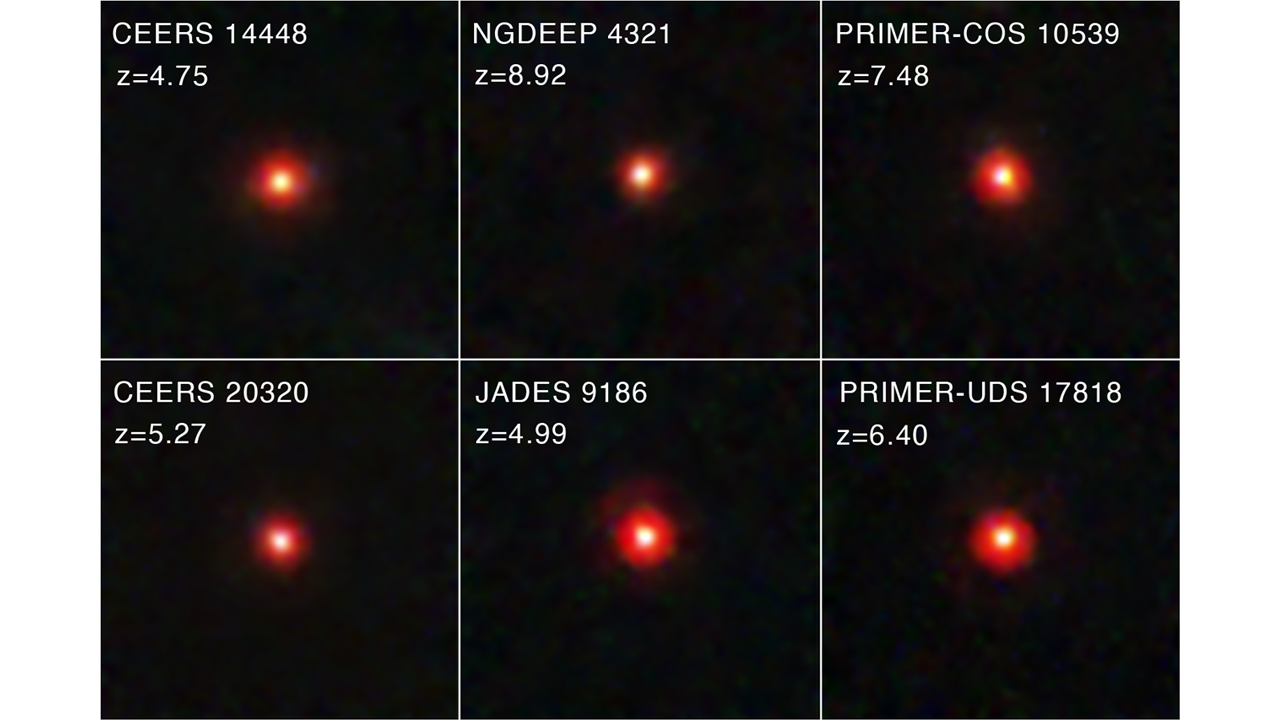
Little Red Dots became quite the puzzle for astronomers in 2022, when the JWST began to routinely spot them in abundance around 600 million years after the Big Bang. That is because these objects seemingly disappear before the cosmos gets to around 2 billion years old.
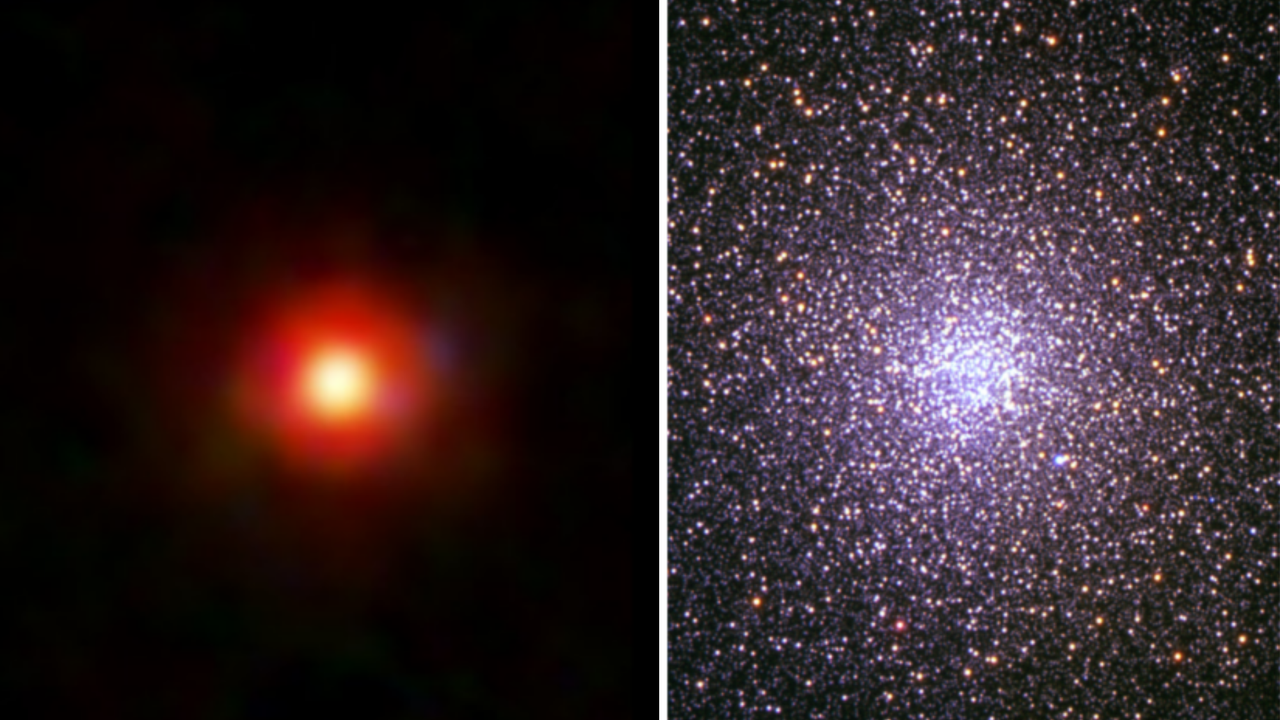
Astronomers have proposed many different explanations for Little Red Dots, including the suggestion that they could be "black hole stars," or black holes wrapped in vast shrouds of dense gas and dust. This team theorizes that a forming globular cluster with a supermassive star, a hypothetical short-lived stellar body with between 1,000 and 10,000 times the mass of the sun, would also look a lot like a Little Red Dot at its heart.
"These may not be just a strange new JWST population with no connection to the universe around us today," team leader John Chisholm of the University of Texas Austin said in a statement. "Instead, Little Red Dots may persist past the early universe, evolving into something relatively familiar.
"Little Red Dots could be galaxies, they could involve black holes, or they could be something even more unexpected. Our work shows that forming globular clusters with supermassive stars should be part of that conversation."
An unfamiliar side to a familar sight
Globular clusters are generally seen in large galaxies and are densely packed with up to many millions of ancient stars. Our galaxy, the Milky Way, is host to at least 150 globular clusters, and though familiar, astronomers still aren't quite sure how they form.
"We usually see them [globular clusters] after billions of years of evolution, at a time when their massive stars are gone, their gas has been cleared out, and dynamical processes have changed their masses and structures," team member Danielle Berg of UT Austin said in the statement. "That makes it very hard to reconstruct the original conditions they formed in."
It is thought that the stars in globular clusters all formed at the same time in the early universe. However, at this time the cosmos should only have had hydrogen, helium and a smattering of heavier elements (which astronomers call "metals") available for star construction. Yet, many stars in globular clusters are strangely abundant in helium and metals like nitrogen, sodium and aluminum, while lacking the expected levels of carbon, oxygen and magnesium.
"This specific pattern indicates nuclear fusion at very high temperatures, much higher than in the cores of even massive normal stars," team member Mike Boylan-Kolchin of UT Austin said in the statement. "A supermassive star is precisely the kind of environment that could produce this combination."
Globular cluster NGC 6638, as seen by the Hubble Space Telescope. (Image credit: ESA/Hubble & NASA, R. Cohen)
Supermassive stars capable of generating this kind of heat would form in the dense environments of early globular clusters in which stellar collisions and mergers would be expected to occur over and over again. The resultant supermassive stars would be short-lived, lasting just around 1 million years (remember the sun is middle-aged at 4.6 billion years old) — but this would be sufficient time to forge the elements needed to explain the peculiar chemistry of globular clusters.
When these supermassive stars die in supernova explosions, the elements they forged would be blasted out to become the building blocks of the next generation of stars. This would provide the stars of modern globular clusters with their unusual chemical fingerprints.
"In our model, the supermassive star that helps make the object look like a Little Red Dot would live for only a short time," Chisholm continued. "Once that star dies, the object may no longer look like a Little Red Dot, even if the cluster itself survives billions of years."
Just some of the "little red dot" galaxies discovered by the JWST. (Image credit: NASA, ESA, CSA, STScI, Dale Kocevski (Colby College))
Strange chemistry isn't the only thing linking early globular clusters with Little Red Dots, however. Not only does the team propose that the distribution of Little Red Dots in the early universe matches the distribution of modern globular clusters, but they also say models of Little Red Dot evolution show that their estimated masses could easily lead to the masses of globular clusters seen in the recent universe.
There is also the issue of timing. Little Red Dots appear around 600 million years after the Big Bang, and that is also the time that scientists estimate that globular clusters would have begun to form.
"There's no single smoking gun at this point that says Little Red Dots are globular clusters, but it would explain a lot of diverse and surprising observations," said Boylan-Kolchin.
This study is currently available to view as a pre-print on the paper repository arXiv.
Using the James Webb Space Telescope (JWST), astronomers have discovered the secrets of early galaxies that pumped the infant cosmos full of dust, which would become vital for the birth of new stars and the growth of galaxies.
However, while the JWST is powerful enough to see many of these early galaxies, it is still limited when it comes to delving into them in great detail. So, the team at the heart of this research worked around this by studying a much closer and more modern galaxy with many characteristics that resemble the universe's first galaxies.
In lieu of being able to study the processes that occurred in the early universe that allowed galaxies to be seeded with "metals, (the term astronomers use to describe elements heavier than hydrogen and helium), the researchers turned their attention to a dwarf galaxy just 4.6 million light-years away.
"Directly studying the galaxies that populated the early universe is still very difficult, which is why observing a nearby galaxy like Sextans A, which presents similar chemical conditions, offers us a precious opportunity to understand how the first generations of stars evolved and what role they played in transforming the interstellar medium," team leader Claudio Gavetti of the National Institute for Astrophysics (INAF) said in a statement.
How does Sextans A impersonate ancient galaxies?
The early universe was a pretty dull place in terms of chemistry. That is because it was dominated by the lightest element, hydrogen, with some helium and a tiny smattering of heavy elements, or metals. That means that the first generation of stars, so-called POP III stars, were correspondingly metal-poor.
During their lives, however, POP III stars fused hydrogen and helium in their cores to forge heavier elements. When these original stars reached the ends of their lives, they exploded in supernova explosions that dispersed these metals into the interstellar medium, the vast clouds of dust and gas between stars.
Eventually, dense and cool patches in these vast clouds collapsed under their own gravity, birthing the next generation of stars, POP II stars, which, thanks to the supernova deaths of their predecessors, were richer in metals.
The dwarf galaxy Sextans A observed by the James Webb Space Telescope. (Image credit: NASA, ESA, CSA, STScI, Janice Lee (NOIRLab). Image processing: Alyssa Pagan (STScI).)
Our own star, the sun, is classed as a POP I star, meaning it is even richer in metals than these second-generation stars. However, not all modern galaxies are so metal-rich; this is especially true for dwarf galaxies like Sextans A, even though it lies at the outer edge of our cosmic backyard, known as the "local group."
Sextans A is so metal-poor that it is estimated to contain only between 1% and 7% of the heavy elements found in the sun. That makes it a great proxy for the study of metal-poor early galaxies.
Using the JWST's NIRCam (Near-InfraRed Camera) and MIRI (Mid-Infrared Instrument) instruments, Gavetti and colleagues obtained high-resolution observations of Sextans A that allowed them to map the dwarf galaxy's entire population of stars during an evolutionary phase known as the "asymptotic red giant branch."
This phase occurs when stars larger than the sun exhaust helium in their cores, creating an inert carbon heart, but nuclear fusion continues in outer alternating helium- and hydrogen-burning layers. These stars "puff out" as a result of this and can undergo thousandfold increases in brightness.
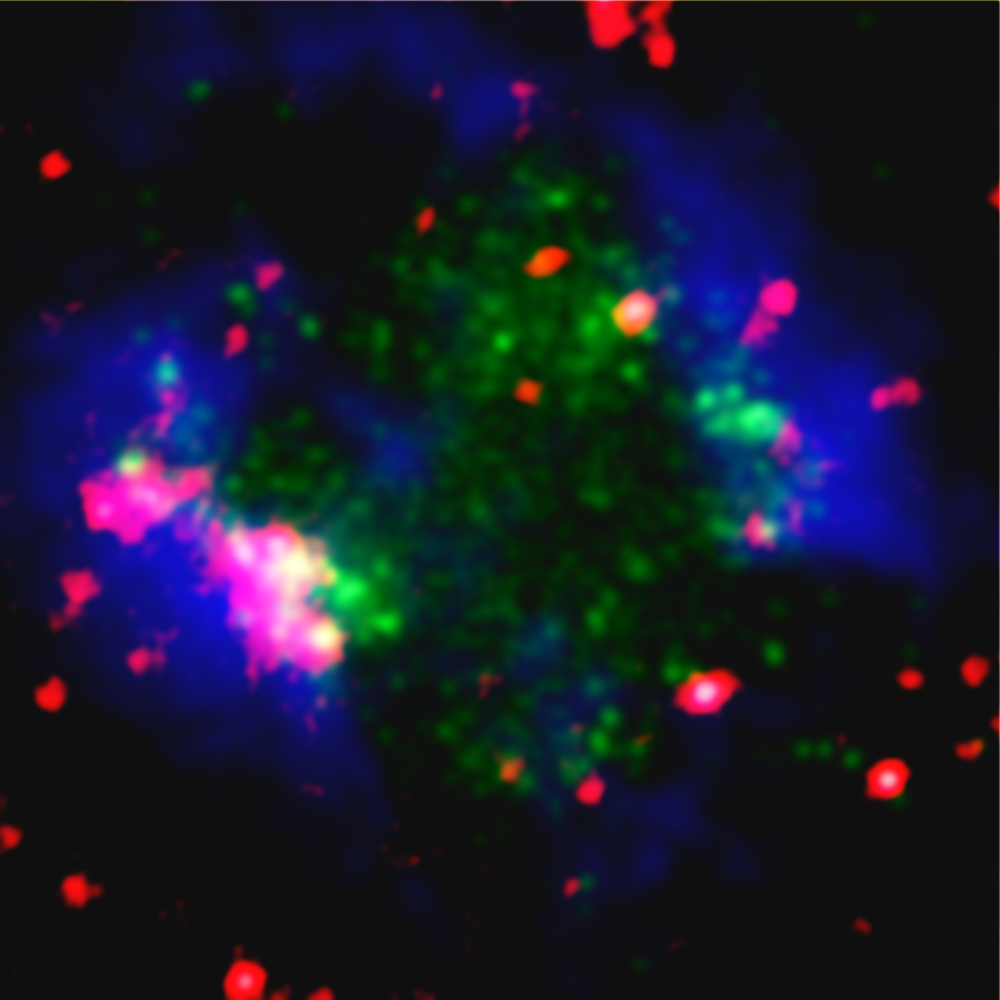
An image of the galaxy Sextans A where Red indicates the infrared emission of dust, blue the emission of atomic hydrogen gas, and green the far-ultraviolet emission created by newly formed stars. (Image credit: Yong Shi)
The team's findings revealed that around 90% of the asymptotic red giant branch stars they studied were not surrounded by envelopes of dust. However, around 20 or so of these stars were embedded in thick dust shells. They also found that these "dust factories" formed between 2 billion and 3 billion years ago from stars with an initial mass about 1.5 times the mass of the sun.
This research is a leap forward in understanding which stars in the early universe were most likely to create the metal dust that would have enriched the next generations of stars. That means it helps paint a complete picture of how the universe as we see it today took shape.
The scientists behind this study say that this type of research would have been impossible before the launch of Webb.
"The JWST allows us to observe in unprecedented detail environments that until a few years ago were beyond our reach," team member Flavia Dell'Agli of the INAF. "The value of these data lies not only in the images, but in the ability to compare them with theoretical models and verify how correctly they describe the evolution of stars."
Separated by billions of miles and shaped by very different environments, Saturn's smoggy moon Titan and the dwarf planet Pluto have, on paper, little in common.
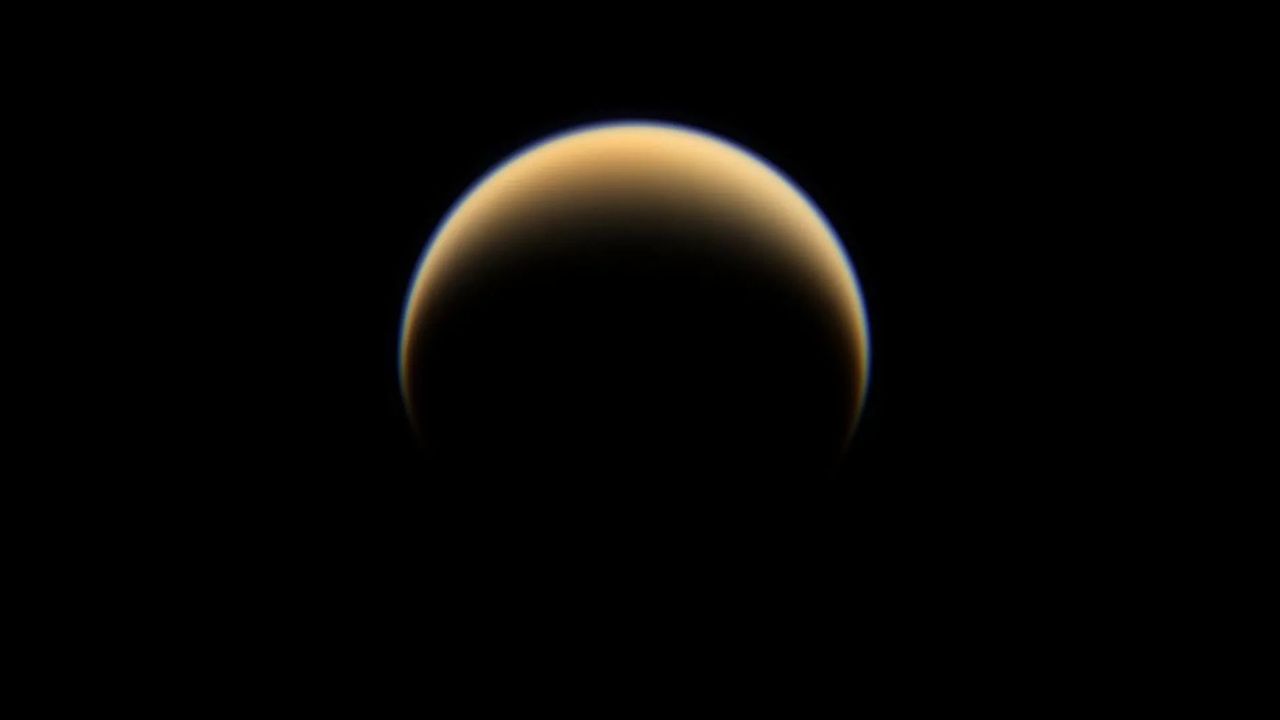
Titan is a geologically active world cloaked in an atmosphere denser than Earth's, its landscape shaped by seas of liquid methane and vast dunes built from organic particles that rain out of its skies. Pluto, by contrast, is a frigid outpost with a tenuous atmosphere hovering above an icy, frozen surface.
Yet, observations from the James Webb Space Telescope (JWST) have revealed these two disparate worlds share an identical, unexplained infrared signature on their surfaces — a sign that similar chemistry may be unfolding on both worlds despite their stark differences, scientists say.
Detailed in a new study, the feature appears at precisely the same infrared wavelength on both Titan and Pluto, indicating that it absorbs light identically on both worlds. The signal points to the presence of an unknown compound, or a family of related compounds, that scientists have yet to identify.
"It's rather mysterious," Bruno Bézard, a planetary scientist at the Paris Observatory who led the discovery, told Space.com. "We cannot say what it is."
Chasing the signal
Bézard first spotted the unexplained feature while analyzing Titan observations from November 2022, when JWST gathered infrared light leaking through the haze in very specific, narrow wavelength bands, allowing scientists to peer directly through the otherwise opaque atmosphere.
To make sense of this light, researchers rely on spectroscopy, a technique used to identify compounds by the specific wavelengths of light they absorb. Because every molecule leaves behind a unique spectral fingerprint that telescopes can detect, astronomers can routinely identify substances across the solar system and beyond, ranging from simple water ice to complex molecules.
But the newly detected feature neither matches any of the standard library spectra cataloged so far, nor does it appear to be a fluke of the hardware, the study notes. The exact same absorption feature was detected by two different JWST instruments — the Near-Infrared Spectrograph (NIRSpec) and the Mid-Infrared Instrument (MIRI) — ruling out the possibility of an instrumental artifact.
After failing to find a match with the cataloged spectral fingerprints of the simplest and most common planetary ices, Bézard wondered whether another world with similar atmospheric chemistry might hold a clue. He turned to his colleague Emmanuel Lellouch of the Paris Observatory, who had led a JWST program that had observed Pluto in May 2023.
"I asked him, 'Do you also have a signature [on Pluto] at this exact wavelength?'" Bézard recalled in the interview with Space.com. "So we looked, and we found that it is present there."
The ground truth
There is no evidence that the mystery molecule is a biosignature, Bézard said. Instead, it likely reflects the kind of prebiotic chemistry that has been operating in Titan's oxygen-free environment for more than 4 billion years.
One compelling possibility is that it belongs to a family of hydrocarbons known as allenes, which the study notes are essentially the only organic compounds known to exhibit strong absorption bands within the same 5-micron infrared range as the mystery signal.
But the allene family contains many complex variations for which complete spectra do not yet exist, Bézard said. Alternatively, the signature could belong to a known molecule whose spectral fingerprint has shifted, potentially because it is mixed with other planetary ices that have not yet been fully cataloged.
"We only have spectra for the simplest of them," Bézard said. "But it is possible that within this family you could find one or several compounds which are present together and make such an absorption feature."
Whatever the compound ultimately proves to be, he and his team believe it forms in the atmosphere through photochemical reactions before eventually "snowing" down onto the surface.
Despite their stark differences, both Titan and Pluto possess atmospheres dominated by nitrogen and methane. Scientists know from spacecraft observations and lab simulations that in the upper reaches of the planets' atmospheres, ultraviolet sunlight breaks these molecules apart, triggering a cascade of highly reactive chemical fragments. These fragments then reassemble into complex organic compounds, some of which condense and snow back down onto the surface below, which is where the JWST detected them.
A couple of different lines of evidence support this atmosphere-to-surface pipeline. First, the team analyzed how the signal behaved across Titan's disk. As the JWST scanned Titan from the center of its circular face toward its outer edge, or limb, the mysterious signal steadily weakened, the study notes.
"This is what you expect if it comes from the surface," said Bézard.
Because of the three-dimensional geometry of looking at a sphere, a signal coming from a flat surface will appear strongest at the center and grow fainter near the edge, where the angle of view through the atmosphere becomes longer and more obscured. This specific dimming trait was not shared by atmospheric carbon monoxide the team checked, which remained essentially unchanged from center to limb, Bézard said, which helped the team infer that this mystery molecule likely resides on the ground.
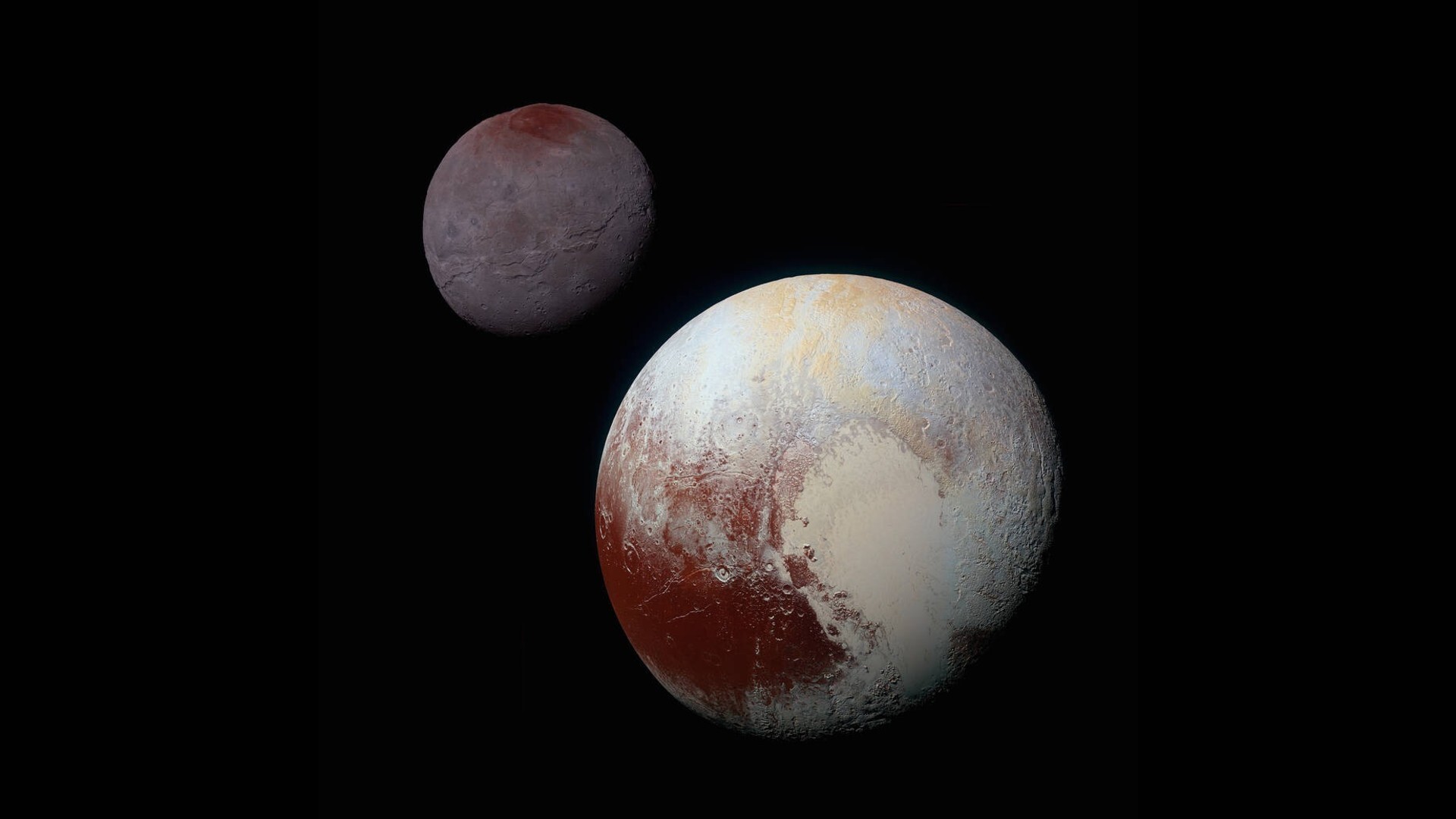
An image showing Pluto and its moon Charon in the back. (Image credit: NASA/JHUAPL/SwRI)
Pluto offered an independent line of evidence to back up this surface theory. Its near-vacuum atmosphere is physically too thin and sparse to generate an absorption feature of the observed depth, Bézard said, leaving the dwarf planet's solid surface as the only plausible source for the deep signature.
To further test their atmospheric-origin hypothesis, the team studied JWST observations of Jupiter's moon Ganymede. Because Ganymede lacks a nitrogen-methane atmosphere, it cannot run the same photochemical engine like Titan and Pluto do. Sure enough, the researchers found no trace of the mysterious feature, lending additional support to the theory that the compound is uniquely tied to the chemistry of nitrogen and methane skies.
Mapping Titan's surface
More clarity may arrive in the coming months. Researchers are currently analyzing newer JWST observations that provide a more complete view of Titan as it rotates. The data will allow the team to map the mysterious infrared signature across the moon's surface and determine whether it is associated with specific geologic features, such as Titan's vast organic-rich dune fields, which are continually replenished by a slow drizzle of complex particles produced in the atmosphere, Bézard said.
Further clues may have to wait for NASA's Dragonfly mission, a car-sized rotorcraft expected to launch in 2028 and arrive at Titan in the mid-2030s.
Although Dragonfly does not carry an infrared spectrometer to replicate JWST's light measurements, its onboard mass spectrometer will allow it to "taste" organic molecules across the various geologically interesting areas the spacecraft will fly to. By revealing which compounds are actually present on Titan's surface, the mission could give scientists a shortlist of candidates to replicate in laboratories back on Earth to see if they match the traits of the mystery molecule, Bézard said.
"It's always exciting when you discover something that was not seen before," Bézard said. "It's really the nicest part of our job."
The new study was accepted for publication in the journal Astronomy & Astrophysics.

 Login