❌

Reading view

The Army just used a 20-kilowatt laser to take out three drones

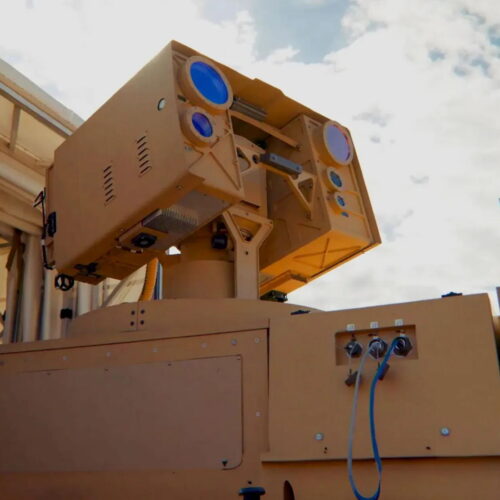
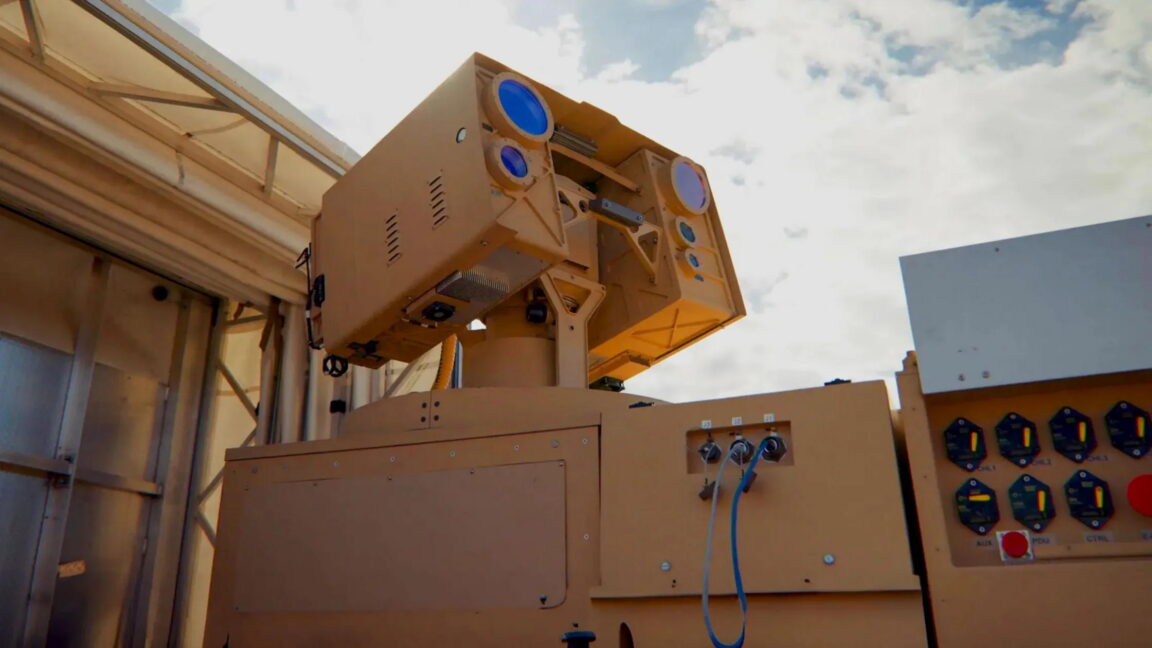
This week, the US Army used a high-energy multipurpose laser to shoot down three drones near the US-Mexico border, which official reports claimed were “posing a physical threat to US military personnel and CBP partners,” referring to Customs and Border Patrol.

The operation took place between the night of August 25 and the early morning of August 26 in the vicinity of the Rio Grande Valley in Texas and was led by the Joint Task Force Southern Border (JTF-SB), which operates under US Northern Command. Authorities confirmed that, during the operation, agents used technology derived from the Army’s High-Energy Multipurpose Laser (AMP-HEL) system, a military program focused on implementing high-energy lasers for new defense capabilities.

Available information suggests that this initiative began in September 2025, when AeroVironment, a company specializing in defense technology, delivered the first two functional prototypes of these laser-based weapons to the US Armed Forces. Two new, improved systems were delivered as the program was expanded in December of the same year. According to the manufacturer, this particular platform, called the Locust Laser Weapon System, is designed to be mounted on military vehicles, as the Army has done with the versions it has received.
Read full article

Comments

© Aerovironment

  •  

Inside Meta’s push to put robots to work in data centers

Meta is testing robots that can plug in cables, reset servers, and handle other tasks inside its data centers, according to several current and former workers familiar with the projects. The ongoing effort, which has not been previously reported, may eventually allow Meta to operate its rapidly expanding data center footprint with fewer humans, keeping labor costs in check as its spending on AI infrastructure soars.

Meta is using robots and related hardware from several different vendors, including Watney Robotics, Kinova, and ABB, according to the same workers, who asked to remain anonymous because they weren’t authorized to speak to the media. Kinova and ABB declined to comment. Watney didn’t respond to requests for comment.

In one experiment, Meta is evaluating whether a Kinova Gen3 robotic arm could be used for power cycling or cutting off electricity to servers. The company is also testing a different robot to swap networking cables. One Meta data center worker estimates that if it’s successful, the bot could replace up to 80 percent of some people’s workloads. “We thought those of us performing the physical tasks were safe for a while, but not anymore,” says the worker. “It’s coming for us all, unfortunately.”

Read full article

Comments

© Getty Images

  •  

Reverse-lookup service exposed millions of photos of people’s faces

When someone uploads a photo to the people-search tool ClarityCheck, the website has a clear message: “Your reverse image search is private and secure.” New research, though, shows that the website left more than 9 million image files, including photographs of people’s faces, publicly exposed. And a second misconfiguration publicly exposed people’s email addresses and phone numbers.

Overall, according to findings from independent security researcher Jeremiah Fowler, the exposed ClarityCheck database contained roughly 450 GB of images, including what appeared to be profile images, screenshots, and other photographs of adults, teenagers, and children. All of the images were stored in an unsecured Amazon S3 bucket, with files in folders named “faces” and “profiles,” which could be accessed by anyone online through a URL included in the company’s publicly available website code.

ClarityCheck is one of a number of so-called people-finder tools that have appeared online in recent years. These websites broadly claim to be able to search the web, public records, and other databases to identify individuals. ClarityCheck’s website says it can run searches on phone numbers, email addresses, vehicle identification numbers, and names. Its photo-search page says it can help “identify anyone in a photo” and find social media profiles “in seconds.”

Read full article

Comments

© picture alliance / Contributor

  •  

A researcher bought noreply.net. Companies started sending him secrets.

Cory Solovewicz receives more unwanted emails than you. Seriously—it’s a lot more. Since December 2024, one of the domains at which the security researcher receives email has registered 401,796 messages—by his calculations that’s an average of 699.99 pings per day.

This deluge isn’t the regular flood of spam, newsletters, and unwanted deals that fill many people’s inboxes. Instead, companies and other organizations are inadvertently sending Solovewicz other people’s private information and company secrets. Over the last few years, he’s received injury reports from a city government, confirmation of people’s pizza orders, and account setup emails from a school platform. “I get service orders for people that need repairs. I get lots of test platform credentials,” says Solovewicz, a security researcher and consultant.

Solovewicz is receiving the avalanche of messages as he’s the owner of the domains noreply.us and noreply.net, which he purchased in 2020 and 2024, respectively. After originally planning to use the noreply.us domain as a catch-all email—which receives mail sent to any @ address on that domain—to filter messages and enhance his privacy, the researcher quickly noticed that other systems were sending mail to @noreply.us addresses. “I created an accidental honeypot,” Solovewicz tells WIRED. “I had no idea it was going to turn into this.”

Read full article

Comments

© Richard Drury via Getty

  •  

DeepMind’s hurricane breakthrough has surprised weather scientists

In October 2025, a storm brewed over the Caribbean Sea. Weather models differed on its trajectory. Would it remain weak and end up in Haiti, or would it intensify and head to Jamaica? Artificial intelligence model WeatherNext, developed by Google’s DeepMind and Google Research, went with the latter. Five days before landfall, it predicted with 80 percent confidence that the storm system would hit Jamaica as a Category 5 hurricane.

Hurricane Melissa was catastrophic, causing flooding and landslides across Jamaica. But the AI model helped forecasters give an earlier warning to communities in its path, so they could better prepare.

In a paper published on Thursday in Nature, researchers show that the WeatherNext AI model can predict cyclones with unprecedented accuracy. On average, it gives forecasters a day more lead time than existing models; this means its predictions three days out are as accurate as previous models’ predictions two days out. On the ground, that extra day can mean a lot.

Read full article

Comments

© J Marshall/NASA/ESA/T. Pesquet/Alamy

  •  

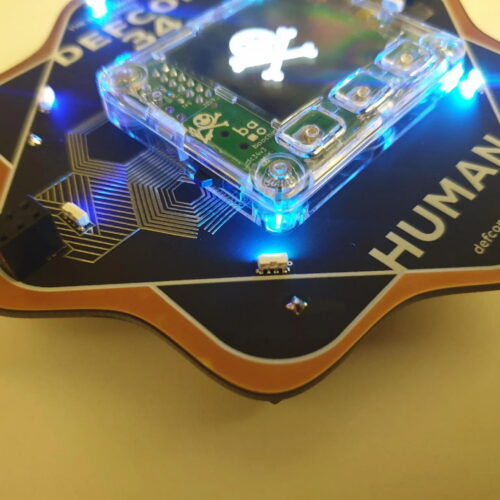
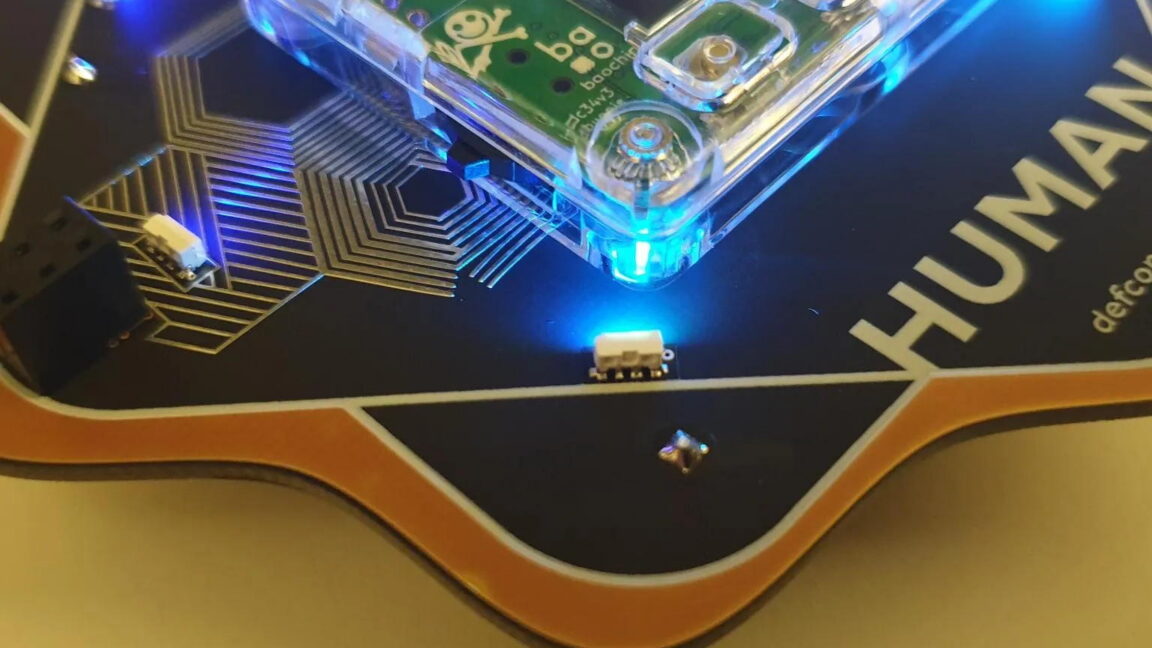
Defcon's new badge is a security key you can see inside

It’s been a longtime feature of the annual Defcon hacker conference that attendees come away not only with knowledge of new software vulnerabilities and hacking techniques but also an elaborately designed conference badge—often electronic masterpieces embedded with intricate puzzles, complex crypto challenges, hidden Easter eggs, and even the mechanical gear trains of a watch.

Each year’s badge creator endeavors to top previous designs and blow the minds of hard-to-impress hackers. But this year’s badges take a different tack. Instead of the badge designs being the star, it’s what is inside the hardware that will really stand out.

This year, Defcon asked legendary hardware hacker Andrew “bunnie” Huang to create the badges—revealed here for the first time—and they include an innovative open source chip that Huang designed and that aims to do no less than advance the state of security, transparency, and trustworthiness in computing.

Read full article

Comments

© Andrew "Bunnie" Huang

  •  

AI scammers outperform humans when it comes to building trust

The notion that scammers can use AI to sharpen their deceptions, polish their language, and lubricate their banter with victims is now a reality for anyone fighting the fraud operations that steal tens of billions of dollars a year worldwide. But can AI fully replace a human scammer, autonomously building the web of deception leading up to the fake investment that defrauds the mark? One study's experiment suggests that it can—and may even be able to carry out the majority of that long con more effectively than humans.

Researchers from four universities—Amrita Vishwa Vidyapeetham in India, Foscari University of Venice, the University of Melbourne, and Ben Gurion University of the Negev—carried out a broad study on the use and potential of generative AI chatbots in the growing scam industry centered around a form of fraud known as “pig butchering,” text-based romance scams that eventually shift to fake crypto investments that steal as much as six-figure sums from victims. In their study, the researchers pitted AI chatbots directly against humans in a simulation of the scamming process—or more specifically, the long, trust-building conversations that eventually lead up to soliciting a fake investment from the scam’s target.

They found that for the relationship-establishing stages of the scam—the stage that in real-world scams typically represents the longest part of the interactions with the victim, often stretching to months—an AI chatbot performed remarkably effectively, successfully impersonating a human and by some measures outperforming the real human “scammers” in their experiment.

Read full article

Comments

© Nansan Houn/Getty

  •  

Big Tech accused of stonewalling European social media researchers

In the final weeks before Romania’s presidential vote in November 2024, TikTok accounts that had previously spent years posting about manicures or fashion suddenly started promoting a little-known politician named Calin Georgescu.

His posts, espousing hard-line views on immigration and anti-Semitic tropes, were viewed 120 million times before the vote. Georgescu, who had previously been polling in the single digits, stunned observers by winning the election’s first round with 23 percent of the vote.

In the Netherlands, Adriana Iamnitchi was watching closely. As chair of computational social sciences at Maastricht University, she leads the research into disinformation campaigns. She wanted to know how pro-Georgescu content was being monetized on TikTok through hidden influencer marketing and livestreamed political content.

Read full article

Comments

© Getty Images | Photographer is my life

  •  

AI firms want more data centers; Trump's EPA may give neighbors less say

The Trump administration is quietly considering a rule change that could make it easier for polluters to build facilities—including certain gas plants and diesel generators that power data centers—with little to no notice to the public.

On Wednesday, the Environmental Protection Agency held a public hearing on a proposed rule change that would hand the power to states to decide how the public participates in the permitting process for certain new sources of air pollution. The proposed rollback comes as data centers face greater pushbackacross the US, with many communities using the permitting process to try to slow down development. Any changes could have major consequences for how ordinary people are given notice about new or expanded polluting facilities coming into their neighborhoods.

“As someone actively working in communities with data centers, I know this to be fundamentally true: People want to have a say,” Vanessa Lynch, a Pennsylvania organizer with Moms Clean Air Force, said at the EPA hearing.

Read full article

Comments

© Getty Images

  •  

Sotheby's big T. rex auction raises concerns hype and wealth are upending science

Forget the sale of the century. The auction house Sotheby’s has geared up for the sale of the epoch. On July 14 it opened live bidding on assorted fossils, but the pièce de résistance is lot 20, a rare 67-million-year-old Tyrannosaurus rex skeleton.

The specimen—dubbed Gus—is billed as one of the largest, most complete T. rexes ever found. Gus is expected to fetch up to $30 million and will go to the highest bidder, whether public museum or private collector. The latter have played an increasingly prominent role in buying fossils, with auction houses, according to paleontologists, contributing to the trend by building hype. But when private collectors swoop in and buy fossils at auction as luxury assets, those pieces of history are effectively lost to science.

By nearly all accounts, Gus is a big deal. In its description, Sotheby’s boasts that the specimen, which was discovered on a ranch in South Dakota, comprises “an incredible 183 fossil bone elements” making it “approximately 61% complete by bone count.” The fossil remains have been mounted in a custom steel armature along with replicas of the missing bones. The result is a reconstructed skeleton posed as if in hot pursuit, its mouth full of dagger teeth ready to tear into prey.

Read full article

Comments

© Courtesy of Matthew Sherman/Sotheby's

  •  

Is an air-conditioning revolution coming to Europe?

If you're reading this while the blinds are drawn against yet another heat wave and wondering whether it’s finally time to buy an air conditioner, you're far from alone. At the end of June, as temperatures climbed well above 40° Celsius across Europe, shoppers in France literally forced their way into stores to snatch up portable fans and ACs before they sold out. Such scenes are likely to become more common. As the planet warms, the demand for cooling is rising worldwide. The International Energy Agency (IEA) predicts two-thirds of households could own an AC by 2050.

Politicians are, of course, turning ACs into a weapon in their broader culture wars. Far-right figure Marine Le Pen pledged to roll out air-conditioning across France if her party comes to power, while the British Conservatives vowed to overturn net-zero rules that restrict AC installation in new builds. On the left, the argument runs that air-conditioning would mainly benefit the rich and not those who need it most. It would also lock Europe into the same high-energy cooling spiral seen in the US and Asia. To date, only around 20 percent of Europeans have AC at home (and a mere 4 percent in the UK), compared with roughly 90 percent in the US, where electricity is considerably cheaper.

In Europe, air-conditioning is no longer just about comfort. It helps adults stay productive through extreme heat, and children concentrate in poorly ventilated schools. It helps people nod off when the air is still stiflingly warm long after sunset. It can even save lives. One research group estimated that air-conditioning prevented nearly 200,000 premature deaths among people over 65 in 2019 alone.

Read full article

Comments

© Pablo Blazquez Dominguez/Getty Images

  •  

The UK will scan asylum-seekers’ faces for age checks—despite knowing the tech is flawed

Age verification is consuming the Internet. From social media bans in Australia to porn restrictions in half of US states, for many having to prove their age to access websites is becoming an everyday requirement. But one of the key technologies underpinning many of these age checks is about to seep into the offline world—with potentially life-changing consequences for people having their age predicted by AI.

Starting next year, the British government is planning to introduce facial age estimation—where AI scans your face and suggests how old you are—to help determine the age of asylum seekers arriving at the United Kingdom’s border. The move is believed to be the first time that a so-called facial age estimation (FAE) system has been used in this way. Many asylum seekers arriving in the UK will not have documents proving their age, and if children are incorrectly classed as adults, they can be stripped of some legal protections and placed in adult-only detention centers.

An investigation by WIRED and Lighthouse Reports, in collaboration with The Independent, has obtained an internal UK government report detailing its tests of FAE technologies. It shows how the systems regularly mistake children for adults and appear to contain serious bias problems, which directly impact the largest group of migrants subject to age assessments in 2025, according to data from the Home Office. The investigation raises questions about the effectiveness of the technology and whether it should be deployed in such high-stakes scenarios.

Read full article

Comments

© Nicolas Economou/NurPhoto via Getty Images

  •  

"Dangerous" AI models are coming no matter what

Late last week, Anthropic took its new Claude Fable 5 and Mythos 5 AI models offline following a United States government export-control directive barring “any foreign national” from using the services. The company has been in talks with the White House since Friday but has yet to secure an agreement that would allow it to reinstate the offerings.

Since Mythos debuted in April, Anthropic has claimed—and warned—that the model has advanced capabilities for not only finding software vulnerabilities to help defenders patch them, but also figuring out ways to exploit them that could be used by bad actors. Anthropic itself noted this double-edged sword in its launch of Mythos 5 and Claude Fable 5. “A great deal of advanced usage of AI models is dual use: the same queries that are beneficial in the hands of cybersecurity professionals and biology researchers could be dangerous if available to malicious actors,” the company wrote in a blog post last week.

With this in mind, the company initially released a version called Mythos Preview to a select consortium as part of a working group known as Project Glasswing. Mythos 5 was also privately released to this group last week, while Claude Fable 5, which is a Mythos-grade model, was released to the general public with specific blocks on its ability to give responses to questions about biology and cybersecurity.

Read full article

Comments

© Samuel Axon

  •  

Cameras, sensors, and 3D body scans: All the tech helping eliminate blown calls

At the 2026 World Cup, the refs on the field and the officials on the sidelines will be able to use an abundance of tech to help call penalties, spot offside violations, and make other consequential decisions.

The video assistant referee system, known as VAR, and the semi-automated offside technology (SAOT) have been used in soccer for years. But the setup at this summer's World Cup represents some of the most advanced uses of adjudication tech to date—not just in soccer, but across all high-level sports.

During each match, the pitch will be awash in sensors, cameras, and new computer vision software. One especially notable advancement this year is the use of digital twins. Every player in the World Cup has had their body scanned by a computer. The digital twin of any athlete—which precisely matches their height, limb length, and shoe size—can be dropped into a virtual simulation of the game to determine their exact position relative to the ball, boundary lines, and other players. Officials can use all of this data to help spot infractions, determine penalties, and smooth out the edges of the beautiful game.

Read full article

Comments

© Luke Hales/Getty Images

  •  

One day after discovery, Meta pulls facial recognition code from its smart glasses

One day after WIRED revealed that Meta had quietly embedded an unreleased face-recognition system into an app installed on more than 50 million phones, the company removed it, according to a WIRED analysis of the latest version’s code.

The most recent version of Meta AI, a companion app for its line of smart glasses, strips out the unactivated software components that powered the system Meta internally called NameTag. The version published the day of WIRED’s report included several code libraries explicitly named for face recognition. Friday’s release includes none of them.

Andy Stone, Meta's vice president of communications, told WIRED on Monday that the feature is purely exploratory, adding: “No final decision has been made on what to do here, if anything.”

Read full article

Comments

© David Paul Morris/Bloomberg/Getty

  •  

A hacker group is poisoning open source code at an unprecedented scale

A so-called software supply chain attack, in which hackers corrupt a legitimate piece of software to hide their own malicious code, was once a relatively rare event but one that haunted the cybersecurity world with its insidious threat of turning any innocent application into a dangerous foothold in a victim’s network. Now one group of cybercriminals has turned that occasional nightmare into a near-weekly episode, corrupting hundreds of open source tools, extorting victims for profit, and sowing a new level of distrust in an entire ecosystem used to create the world’s software.

On Tuesday night, open source code platform GitHub announced that it had been breached by hackers in one such software supply chain attack: A GitHub developer had installed a “poisoned” extension for VSCode, a plug-in for a commonly used code editor that, like GitHub itself, is owned by Microsoft. As a result, the hackers behind the breach, an increasingly notorious group called TeamPCP, claim to have accessed around 4,000 of GitHub’s code repositories. GitHub’s statement confirmed that it had found at least 3,800 compromised repositories while noting that, based on its findings so far, they all contained GitHub’s own code, not that of customers.

“We are here today to advertise GitHub’s source code and internal orgs for sale,” TeamPCP wrote on BreachForums, a forum and marketplace for cybercriminals. “Everything for the main platform is there and I very am happy to send samples to interested buyers to verify absolute authenticity.”

Read full article

Comments

© NiseriN via Getty Images

  •  
❌