❌

Reading view

Rocket Report: Europe joins the commercial launch club; a Ravn X sighting?

Welcome to Edition 9.10 of the Rocket Report! This week we're celebrating a historic moment in Europe when a German rocket company successfully put its launch vehicle into orbit. Isar Aerospace became the first purely commercial European company to reach orbit, and impressively it did so on just its second launch attempt. How quickly can they scale up operations? How quickly will the second European launch firm reach this goal? Big questions, which for now we don't have answers to.

As always, we welcome reader submissions, and if you don't want to miss an issue, please subscribe using the box below (the form will not appear on AMP-enabled versions of the site). Each report will include information on small-, medium-, and heavy-lift rockets as well as a quick look ahead at the next three launches on the calendar.

Isar Aerospace takes a huge step forward. Isar Aerospace, founded in 2018 by three students at a German university, successfully launched a privately developed rocket into low-Earth orbit on Saturday from a Norwegian spaceport inside the Arctic Circle. The two-stage rocket, Spectrum, became the first fully commercial launch vehicle in Europe to reach orbit, Ars reports. With Saturday’s success, Isar becomes the clear leader among a pack of several European launch startups vying to inject some competition into Europe’s stagnant launch market.

Read full article

Comments

© Isar Aerospace

  •  

Europe may finally have found a space entrepreneur who is meeting the moment

All of a sudden, French entrepreneur Hèlene Huby is seemingly everywhere.

This week she is serving as one of two envoys, alongside astronaut Thomas Pesquet, at a high-profile International Space Summit convened by French President Emmanuel Macron. The government's website for the event describes her as chief executive of "the fastest-growing space company in Europe."

Also this week, that firm, The Exploration Company, announced a significant capital raise of $450 million in Series C funding. Although not spectacular by the standards of some US space businesses, this is the largest-ever Series C funding round by a Europe-based space company, and likely the largest funding round ever raised by a female-led company in Europe.

Read full article

Comments

© Matthias Balk/picture alliance via Getty Images

  •  

With another huge infusion of cash, Stoke Space goes even bigger

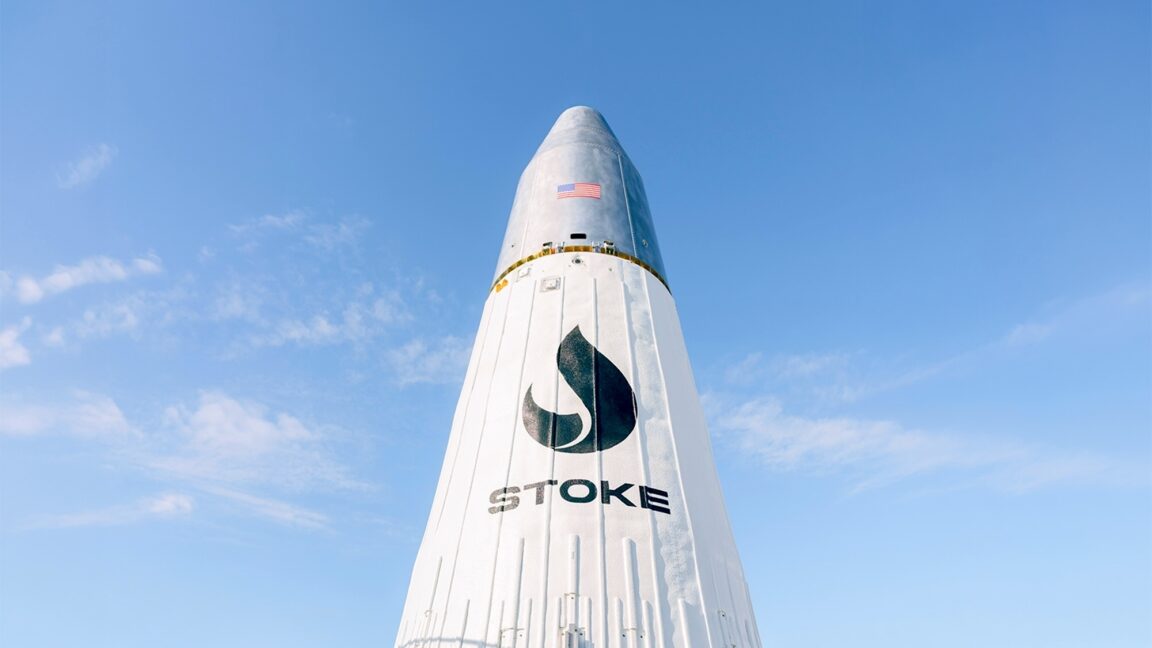
Stoke Space announced Tuesday that it has raised another significant round of funding, $1 billion, as it makes a final push toward its debut launch next year. The Washington-based launch company also revealed plans for a larger medium-lift vehicle.

With the Series E funding round, co-led by Point72 Ventures and Spark Capital, Stoke Space brought its total amount of capital raised to $2.3 billion, a staggering amount for a company that has yet to attempt an orbital launch.

The quantity of new funding will enable the company to accelerate work on a larger "Block 2" version of the Nova rocket, capable of lifting 15 metric tons to low-Earth orbit in a fully reusable configuration, said Stoke co-founder and Chief Executive Andy Lapsa.

Read full article

Comments

© Stoke Space

  •  

Trump White House just tossed a grenade into international space relations

The normally genteel world of international space policy turned ugly this week as several prominent US space companies—including SpaceX, Blue Origin, Stoke Space, K2, and Starcloud—pulled out of a high-profile French space summit organized by the country's president, Emmanuel Macron.

Politico first reported the diplomatic turmoil, saying that the White House "pressured" US space companies to skip Macron's space summit in Paris next week. Since then, the companies have largely pulled out of the meeting without commenting publicly, though some US representation remains on the two-day program.

Multiple sources confirmed to Ars that an official with the White House Office of Science and Technology Policy, or OSTP, led the call with US space companies late last week. The call was convened in response to queries from US industry about the French meeting, which is not part of the traditional circuit of international space conferences.

Read full article

Comments

© LUDOVIC MARIN/AFP/Getty Images

  •  

Wary of Artemis IV timeline, NASA is changing lunar spacesuit design

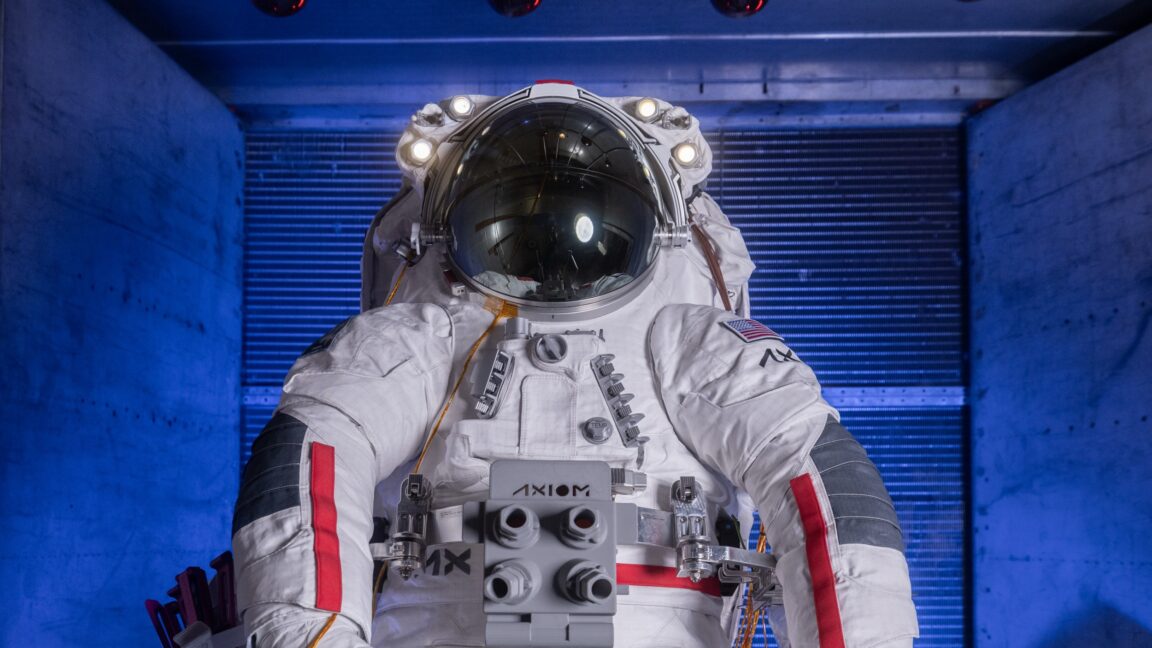
NASA has decided to use a simpler spacesuit for its initial missions to the lunar surface, Ars has learned.

The agency announced the decision during an internal meeting this week as it seeks to accelerate its program to land humans at the south pole of the Moon as early as 2028. At the direction of Artemis Program Manager Jeremy Parsons, NASA will work with Axiom Space to develop a "Sortie Suit" variant of the planned spacesuit for the lunar surface.

Sources said the Sortie Suit will be used for the initial landing missions flown on landers developed both by SpaceX and Blue Origin. Among the goals of the initiative are to lower the mass of the spacesuit, reduce its complexity, and simplify interfaces between the spacesuits and lunar landers.

Read full article

Comments

© KBR and Axiom Space

  •  

It turns out that Orion's much-maligned heat shield performed really well

Perhaps the biggest question going into the Artemis II mission this spring was how the heat shield at the base of the spacecraft would perform during reentry through Earth's atmosphere.

The ablative heat shield, designed to char upon reentry while keeping the crew safe, had experienced unexpected losses of large chunks during a test flight in late 2022. After much deliberation, and not without controversy, NASA decided to fly the Artemis II heat shield as is but modify the spacecraft's reentry trajectory.

Obviously, the heat shield worked. The crew of Artemis II, led by commander Reid Wiseman, safely splashed down in the Pacific Ocean after a triumphant trip around the Moon. Afterward, they and other NASA officials offered general comments, saying the heat shield looked good.

Read full article

Comments

© US Navy

  •  

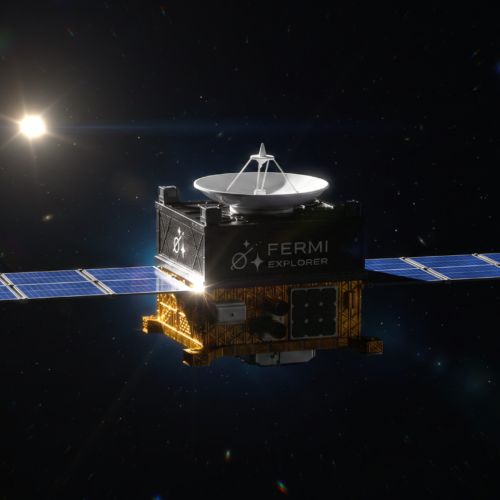
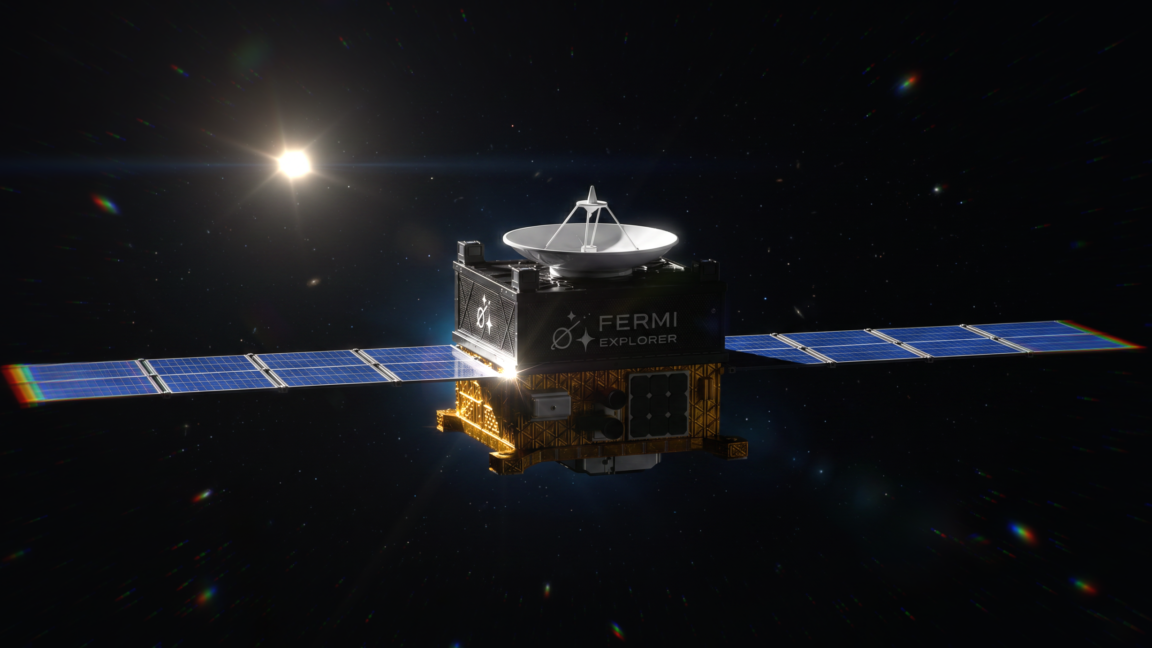
Private group wants to launch "cheapest possible" mission to Alpha Centauri

There are, by various estimates, several trillion planets within what is known as the Local Group of galaxies—our closest galaxy neighbors, including our own Milky Way. Many of these planets are within the habitable zone of their stars. So if life finds a way, where are the alien civilizations?

This is the crux of what is known as the Fermi paradox, which posits that if life is fairly common in the Universe, humans should have collected credible evidence for the existence of extraterrestrial civilizations by now. People who think about this paradox believe there may be some "filter" that limits or entirely prevents an advanced civilization from sending out probes or even life-bearing spacecraft to nearby stars.

Philip Johnston is someone who thinks a lot about the Fermi paradox. A mathematician and physicist from the United Kingdom, Johnston has gained some notoriety lately in the space community as one of the biggest proponents of orbital data centers. He co-founded Starcloud in 2024 to develop such data centers, and the company is presently valued at $2.3 billion.

Read full article

Comments

© Fermi Explorer Mission

  •  

Why it matters that President Trump just dialed in to a NASA news conference

As is standard procedure for major NASA missions, the US space agency held a post-launch news conference on Sunday morning at Kennedy Space Center in Florida to provide information about how the Nancy Grace Roman Space Telescope was faring during its initial maneuvers.

What was not standard, however, is what happened in the middle of the news conference. A little less than half an hour in, NASA Administrator Jared Isaacman looked down at his mobile phone, and then stood up and walked away from the dais where he had been seated behind a table along with other NASA officials. He briefly left the room.

Isaacman returned about a minute later, phone in hand, apologizing for interrupting NASA's chief of science, Nicky Fox, as she was speaking about the mission. "The President of the United States of America would like to address and congratulate everyone on this mission," Isaacman said, returning to his seat.

Read full article

Comments

© NASA/John Kraus

  •  

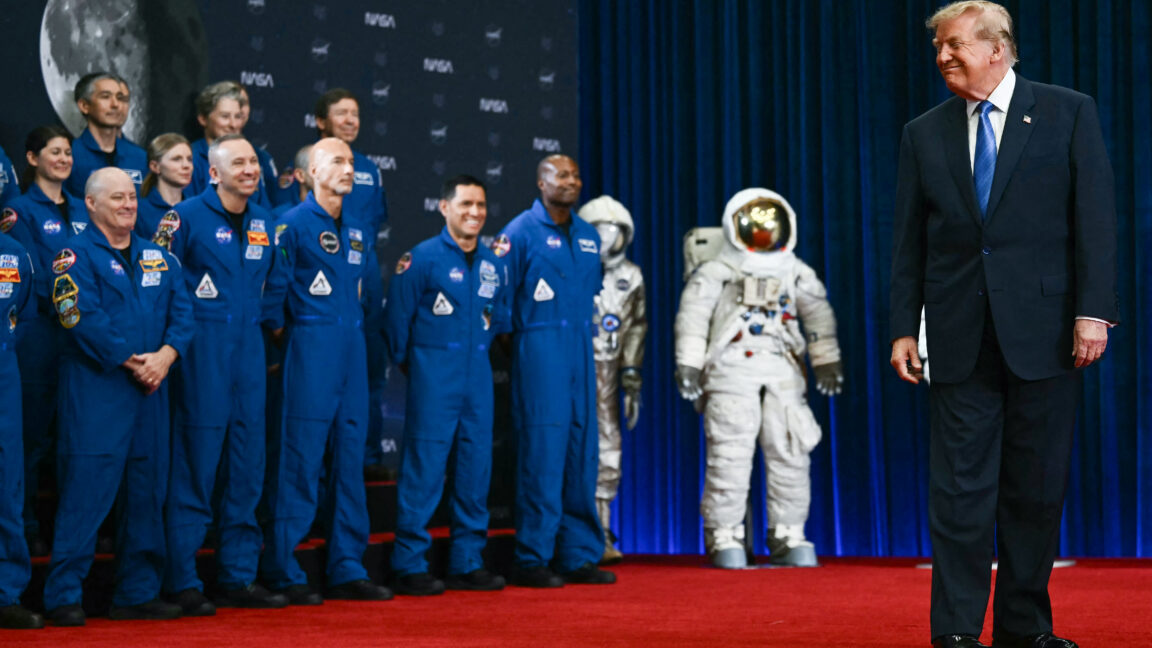
Here's what we know about the "space academy" Trump just announced

During a visit to Johnson Space Center, President Trump on Friday signed an executive order to establish a new commission with the purpose of creating the first national space academy.

"It's clear that we will need to educate and train an entire generation of skilled service members, engineers, and civil operators, and everything else to do what we have to do," Trump said. "I will sign an executive order to begin the process of creating a new national academy. It's called the US Space Academy. That's a big deal."

The proposed United States Space Academy would fall under the jurisdiction of NASA, and according to US space officials, is not intended be a traditional service academy in the sense that it educates and trains officers for the armed services, such as the Air Force Academy.

Read full article

Comments

© Kent NISHIMURA / AFP via Getty Images

  •  

Rocket Report: Europe splashes some cash on launch startups; Pallas-1 nears debut

Welcome to Edition 9.08 of the Rocket Report! Some major news this week from the state of Louisiana, previously associated with space due to NASA's aging Michoud Assembly Facility near New Orleans. Now the state has a chance to become the epicenter of SpaceX's Starship program as the company plans to invest up to $100 billion to construct factories and multiple launch pads for the super heavy lift rocket. It would utterly transform coastal Louisiana.

As always, we welcome reader submissions, and if you don't want to miss an issue, please subscribe using the box below (the form will not appear on AMP-enabled versions of the site). Each report will include information on small-, medium-, and heavy-lift rockets as well as a quick look ahead at the next three launches on the calendar.

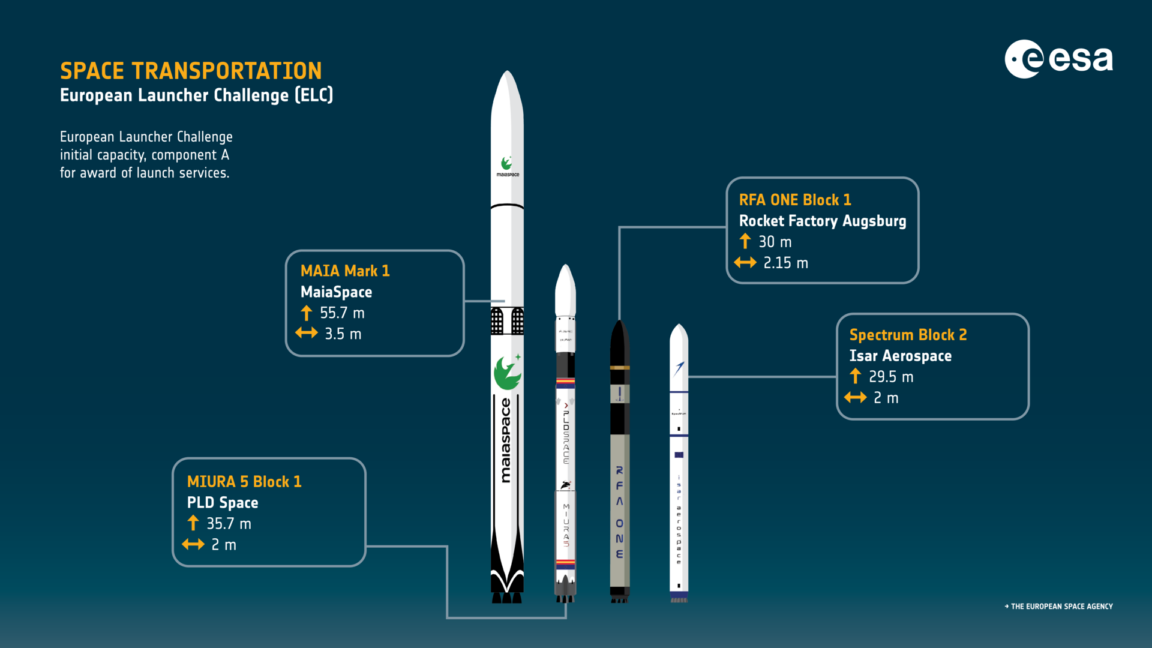
ESA announces big launch challenge contracts. The European Space Agency said Thursday it signed contracts with a handful of European launch startups to help them continue development of their vehicles. "The European Launcher Challenge is ESA’s initiative to expand European launch service supply and ensure more robustness in Europe’s access to space," the space agency said of the award, which supports the development and operation of small launch vehicles in Europe. For some of these firms, the funding will provide a key lifeline.

Read full article

Comments

© ESA

  •  

15,000 years of solar wind in four hours? A Seattle company gives it a go.

As part of its nuclear fusion processes, the Sun produces a particularly interesting isotope of helium, known as helium-3. Some of this helium-3 escapes the Sun's gravitational pull as part of the solar wind, a stream of charged particles that emanates out across the Solar System.

Over billions of years, this wind has bombarded every body in the vicinity of the Sun, including Earth's Moon. Lacking a magnetic field or atmosphere, the Moon's surface has no barrier to prevent the constant flow of this wind.

This means that helium-3 has been striking the lunar soil, or regolith, for a long time. These helium ions penetrate only a little way into the individual grains of this soil, but periodically meteorites have struck the lunar surface to churn the soil, mixing some of this helium-3 a little below the surface.

Read full article

Comments

© Interlune

  •  

One of China's workhorse rockets just exploded in flight

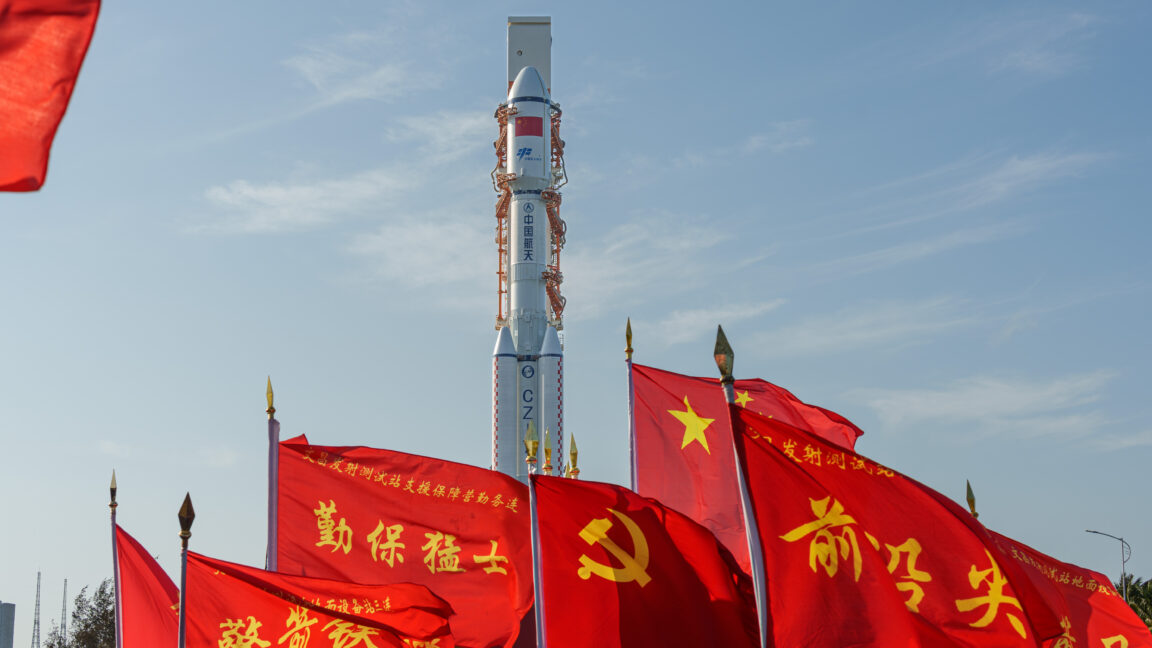
One of China's most used rockets, the Long March 7A, exploded a little more than a minute after lifting off on Monday evening, local time.

The medium-lift rocket's payload was classified, but it was believed to be a military communications satellite. The rocket's liftoff from Wenchang Space Launch Site appeared to be nominal, but publicly captured videos (such as this one) showed that the rocket's first stage exploded about 1 minute and 20 seconds into flight.

The Long March 7A rocket was developed by the China Aerospace Science and Technology Corporation and is operated by the state's space agency. As of Monday night in China, state officials have not commented on the explosion.
Read full article

Comments

© Li Zhenzhou/VCG via Getty Images

  •  

One of China's workhorse rockets just exploded in flight

One of China's most used rockets, the Long March 7A, exploded a little more than a minute after lifting off on Monday evening, local time.

The medium-lift rocket's payload was classified, but it was believed to be a military communications satellite. The rocket's liftoff from Wenchang Space Launch Site appeared to be nominal, but publicly captured videos (such as this one) showed that the rocket's first stage exploded about 1 minute and 20 seconds into flight.

The Long March 7A rocket was developed by the China Aerospace Science and Technology Corporation and is operated by the state's space agency. As of Monday night in China, state officials have not commented on the explosion.
Read full article

Comments

© Li Zhenzhou/VCG via Getty Images

  •  

OpenAI to pause some work on AI model Astra due to security concerns

Agent found to be able to find and exploit vulnerabilities without human intervention, and to carry out cyber-attacks

OpenAI will pause some work on an artificial intelligence model because of security concerns, the company stated on Friday, following a series of incidents in which AI agents have escaped containment.

The company had evaluated the agent, Astra, and found “significant advancements in agentic coding and cybersecurity”, which had moved to a “critical” threshold where it can find and exploit vulnerabilities without human intervention, or devise and execute cyber-attacks when given only a “high level desired goal”.

Continue reading...

© Photograph: Dado Ruvić/Reuters

© Photograph: Dado Ruvić/Reuters

© Photograph: Dado Ruvić/Reuters

  •  

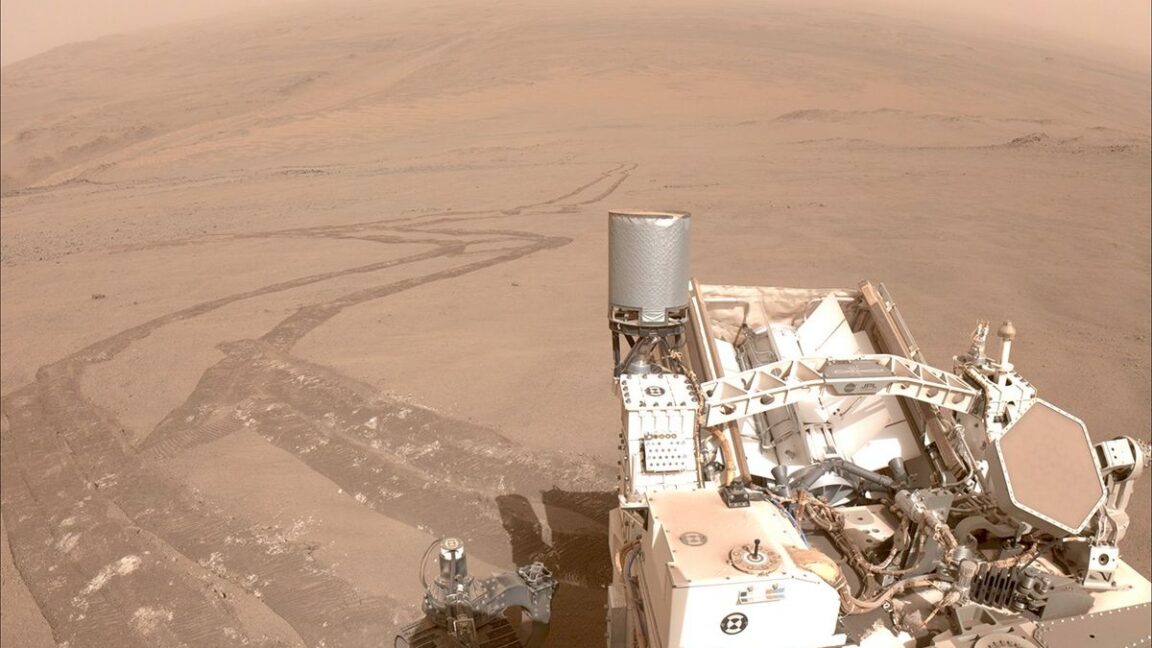
The first self-driving vehicle on Mars has proven to be a smashing success

Sometime next week, NASA's newest rover on Mars, Perseverance, will set a record for the most distance driven by any vehicle on another world.

The automobile-sized rover, which landed on Mars in February 2021, will traverse beyond 45.16 km (28.06 miles) across the Martian surface. In doing so it will break the previous distance record held by the long-lived Opportunity rover, which ceased communications with NASA in 2018.

So how did Perseverance reach this record-setting distance in just a third of the time?

Read full article

Comments

© NASA

  •  

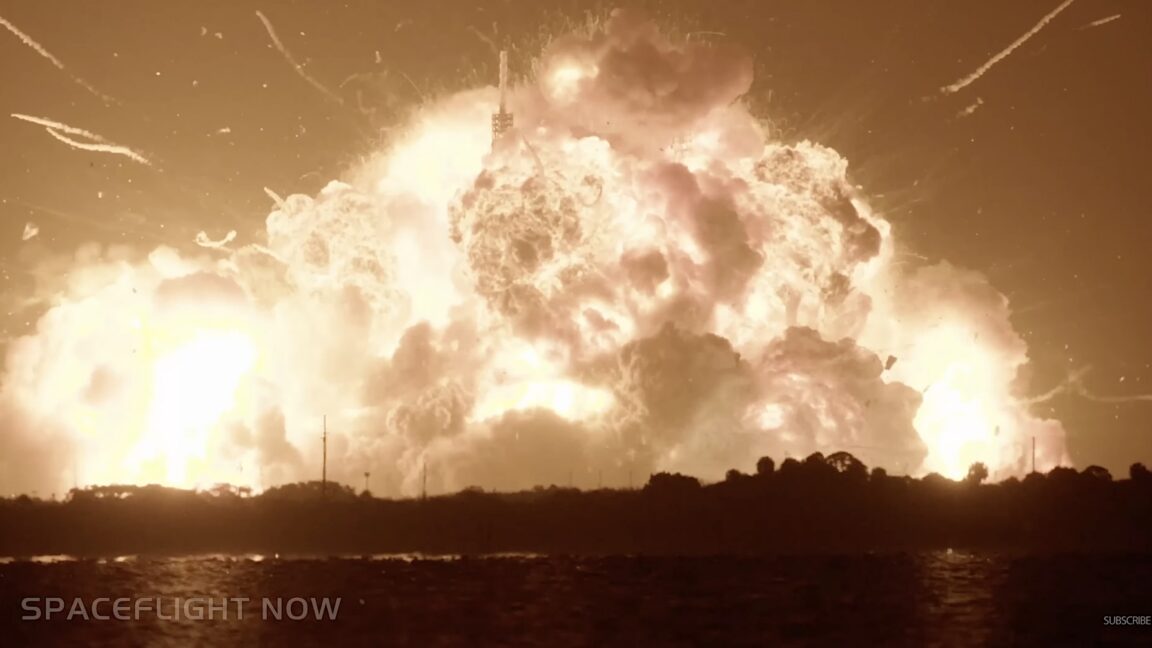
Blue Origin narrowing in on root cause of catastrophic rocket accident

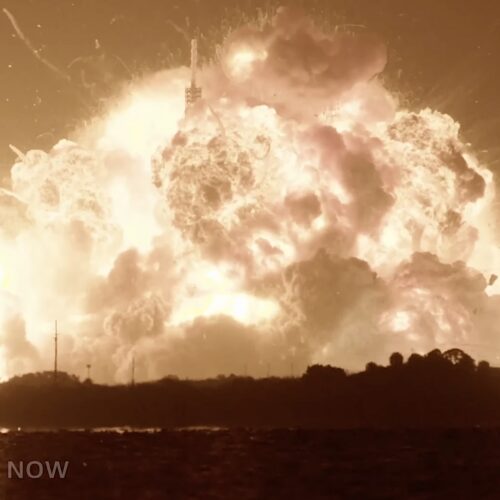
Blue Origin provided its first substantive update this week on the cause of the catastrophic loss of the New Glenn rocket and most of its launch pad infrastructure at Cape Canaveral, Florida, in May.

The space company's chief executive, Dave Limp, said investigative work is continuing into the anomaly that happened during a hot-fire test of the rocket during the evening of May 28, 2026. He confirmed, for the first time, widespread speculation that the problem started in one of the rocket's seven BE-4 engines that power the vehicle's first stage.

"The anomaly originated at the main oxygen valve on one of the BE-4 engines, which was later confirmed by hardware recovery and inspections," he said. "Extensive component-level and engine hotfire tests have been conducted to understand the failure mode better and inform mitigations."

Read full article

Comments

© Adam Bernstein/Spaceflight Now

  •  

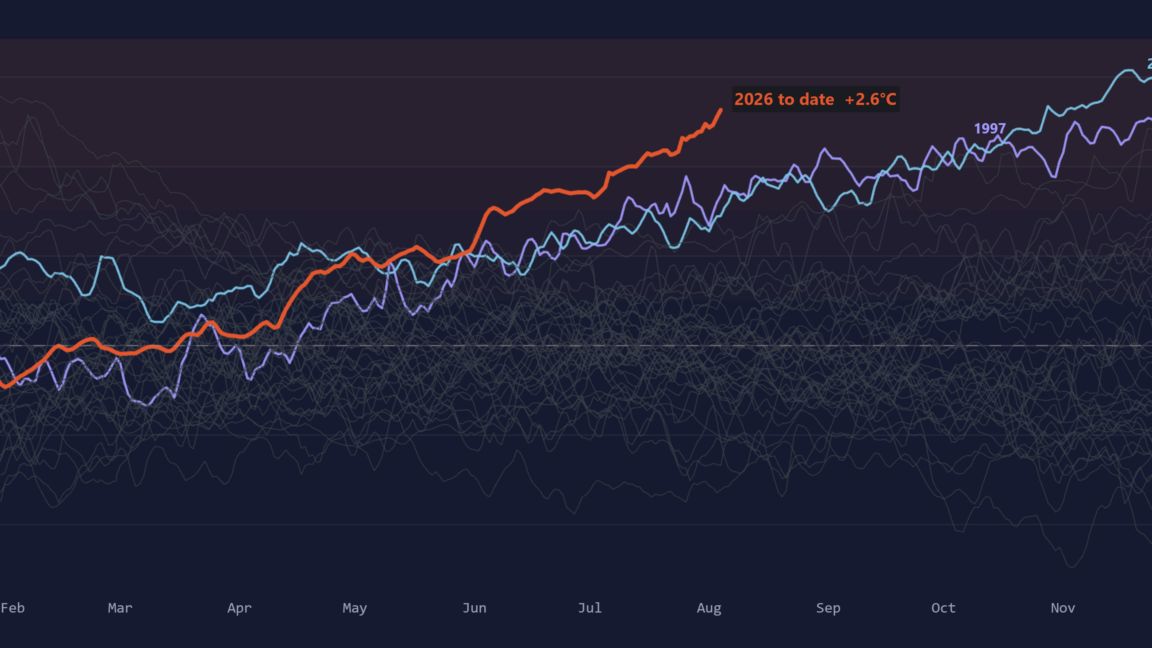
This Atlantic hurricane season is looking like a dud, but there will be a price to pay

The city of Houston, where I live, has been ground zero for the 2026 Atlantic hurricane season. So far this year there have been two named storms, Arthur and Bertha, that have formed. And the centers of both have passed near or directly over Houston.

Two "strikes" in a year might seem notable, but like the middling hurricane season to date, Arthur and Bertha were both middle-of-the road tropical storms in terms of intensity.

As a resident of a coastal region prone to hurricanes, one never wants to tempt fate. And in truth, since it is only early August, the bulk of seasonal activity definitely lies ahead of us. But all indications are we can look forward to a quiet season.

Read full article

Comments

© The Climate Brink

  •  
❌