❌

Reading view

Sargassum superbloom: Seaweed scourge or ecological boon?


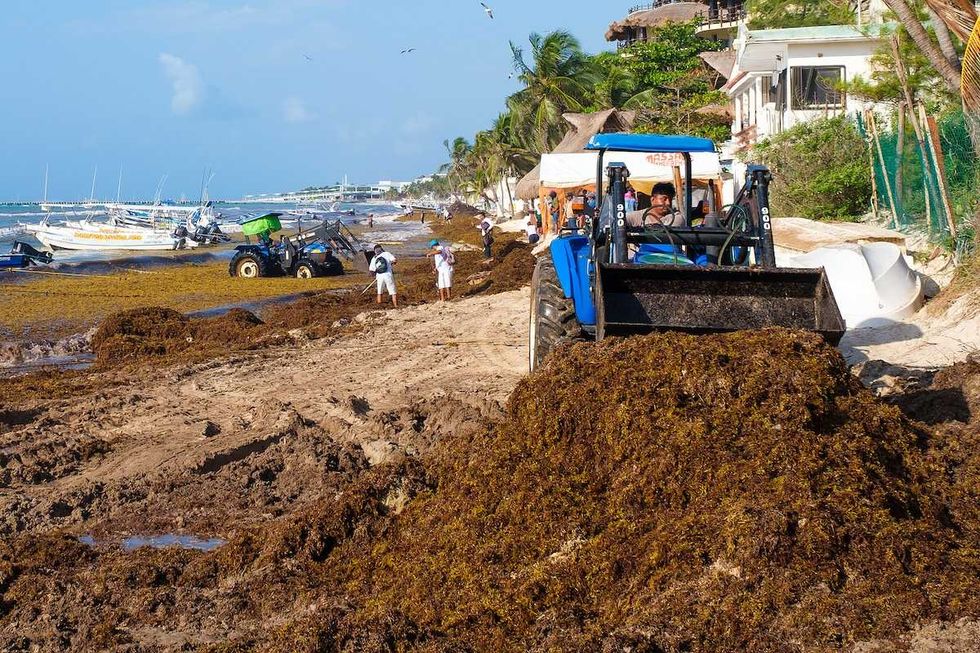
Stretching from West Africa to the Gulf of Mexico, a massive bloom of sargassum seaweed is swamping beaches and killing coastal wildlife. But scientists have discovered the floating algae also shelters a vast array of ocean creatures, and some are now calling for its protection. 

  •  

Amid PFAS pollution lawsuits, Perdue wants to increase its discharges. Residents are skeptical


For years, Perdue Agribusiness has been embroiled lawsuits over claims it polluted local groundwater with PFAS, the cancer-causing "forever chemical." So neighbors were skeptical when Perdue asked to increase the treated wastewater it pours in a local stream.

  •  

North Carolina secures $455 million PFAS settlement, plus $135 million cleanup reserve


North Carolina has secured $455 million in payments from Chemours, DuPont and Corteva over PFAS pollution, along with a separate $135 million reserve intended to protect future drinking water and cleanup work.

  •  

EPA coordinated with Bayer on reapproval for controversial herbicide dicamba


The US Environmental Protection Agency (EPA) worked directly with pesticide maker Bayer in approving the controversial herbicide dicamba earlier this year, presenting the company with different options for how to reduce drift and runoff and then aligning on those options in the final decision, according to internal agency records.  

  •  

UK Ministers Weigh Higher Water Prices for Industry as Drought Deepens

UK Ministers Weigh Higher Water Prices for Industry as Drought Deepens

UK ministers are considering raising water prices for industrial users as the country grapples with an unusually severe water crisis. The Environment Agency has confirmed that talks are underway to explore price increases aimed at curbing wasteful water management practices among large-scale users.

The move comes as the UK’s water supply faces unprecedented strain this summer. Despite its reputation as a rain-soaked nation, nearly three-quarters of England and the entirety of Wales are currently experiencing drought conditions. The impact is far-reaching, with an estimated 27 million people now living under some form of water use restriction.

The scale of the shortage has prompted officials to question long-standing assumptions about the UK’s water security. Industrial users, who often consume large volumes of water at relatively low cost, are being seen as a key target for reform. By making water more expensive for these users, ministers hope to incentivize more efficient practices and reduce overall demand during a period when reservoirs and natural water sources are under significant pressure.

The discussions signal a potential shift in how water resources are managed and priced in the UK, as climate pressures increasingly test the resilience of infrastructure once considered reliable. Further details on the scope and timeline of any pricing changes are expected as talks between government bodies and regulators continue.

The post UK Ministers Weigh Higher Water Prices for Industry as Drought Deepens first appeared on EnviroLink Network.

  •  

Choking Global Trade

Low rainfall and shrinking rivers are causing shipping bottlenecks, and higher prices, around the world.

© Ina Fassbender/Agence France-Presse — Getty Images

The Rhine River near Düsseldorf, Germany, last month.
  •  

Chemours, DuPont, Corteva settle North Carolina 'forever chemicals' claims for $455M


Chemours , DuPont, and Corteva on Thursday reached a $455 million settlement with North Carolina and 11 local entities over PFAS contamination claims tied to Chemours' Fayetteville Works plant and other historical discharges.

  •  

UK’s New North Sea Drilling Push Sparks Questions Over Climate Costs and Tiny Job Gains

UK’s New North Sea Drilling Push Sparks Questions Over Climate Costs and Tiny Job Gains

A fresh round of North Sea oil and gas approvals is raising eyebrows, with critics questioning why officials would expend so much political capital for such minimal economic return. The pattern feels familiar: significant political risk taken on for gains that appear vanishingly small once the numbers are examined closely.

The justification offered so far has been vague at best—essentially, that untapped resources exist and shouldn’t be ignored while people face economic hardship. But if the reasoning hinges on supporting struggling oil and gas workers, the math simply doesn’t add up. The Jackdaw gasfield, expected to receive approval imminently, will create just 27 direct full-time jobs. The Rosebank oilfield, likely to follow, will support an estimated 450 UK-based positions over its entire operational lifetime.

Compare these figures to the broader picture: the UK’s net zero economy already employs 300,000 people directly, with plans for 400,000 additional jobs in the pipeline. The wider green economy sustains more than 600,000 jobs altogether. Given these numbers, a just transition strategy—one that moves fossil fuel workers into the growing renewable energy sector—would seem to offer far better outcomes for workers and communities alike than doubling down on new drilling projects that promise so little in return.

The decision arrives at a moment when climate impacts are increasingly difficult to ignore, making the calculus behind expanding fossil fuel extraction even harder to justify on economic grounds alone.

The post UK’s New North Sea Drilling Push Sparks Questions Over Climate Costs and Tiny Job Gains first appeared on EnviroLink Network.

  •  

Toxic PFAS Cleanups at Military Sites Face Decades of Delay

The Pentagon has again postponed PFAS cleanups at hundreds of military sites, in some cases up to 19 years, prompting bipartisan anger in Congress.

© Kenny Holston/The New York Times

An email from the Pentagon to members of Congress said PFAS cleanups at nearly 243 military sites had been delayed.
  •  
❌