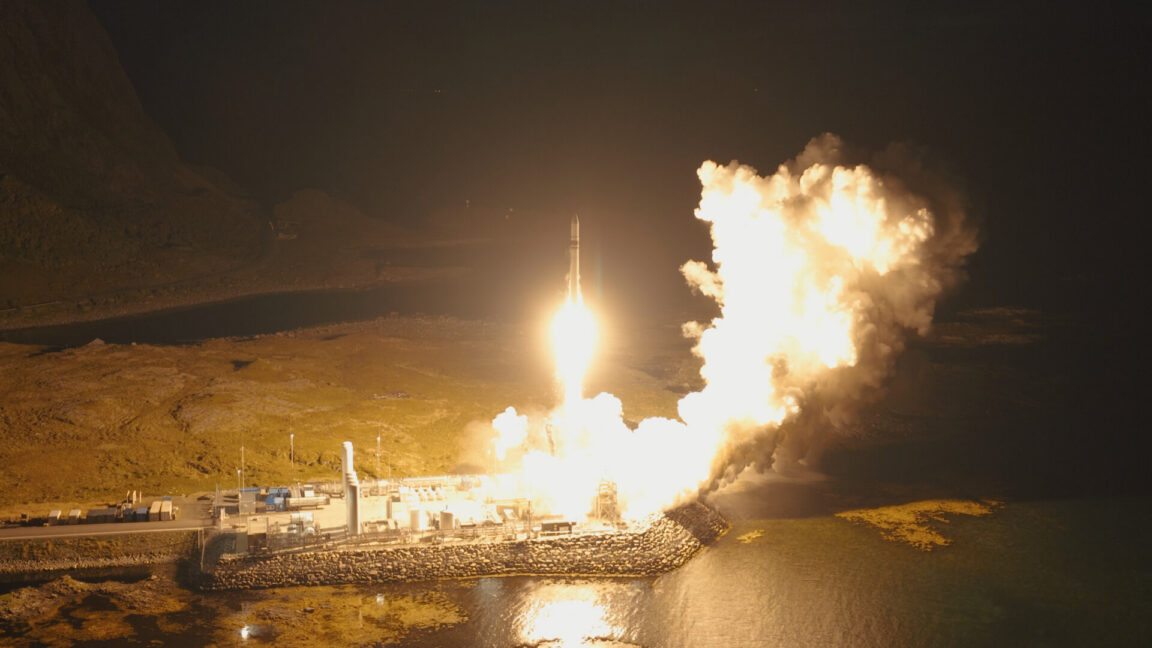
Isar Aerospace, founded in 2018 by three students at a German university, successfully launched a privately developed rocket into low-Earth orbit Saturday from a Norwegian spaceport inside the Arctic Circle.
The two-stage rocket, named Spectrum, became the first fully commercial launch vehicle in Europe to reach orbit. With Saturday's success, Isar is the clear leader among a pack of several European launch startups vying to inject some competition into Europe's stagnant launch market.
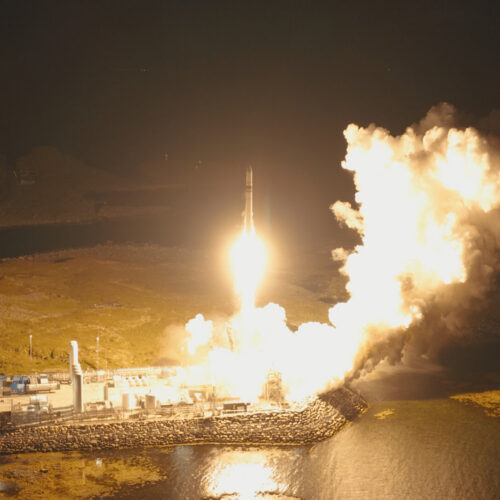
Isar's 92-foot-tall (28-meter) Spectrum rocket lifted off at 4:12 pm EST (20:12 UTC) Saturday from Andøya Spaceport in northern Norway, where it was 10:12 pm local time and the final bluish hues of daylight faded from the late summer sky. Seven minutes later, the rocket was in orbit.
In the millennia that followed the last Ice Age, early humans began making their way into the inland mountains of southern Norway as ancient glaciers receded, revealing new portions of the landscape.
However, the landscape in this region made it impossible for fish to make their way upstream into high mountain lakes, impeded by waterfalls and other barriers. Somehow, fish appeared in these upland bodies of water anyway—so how did they get there?
The natural answer to this ancient question is that humans must have carried fish from regions further downstream, populating these ancient and once-lifeless lakes with an abundant food source. The question archaeologists have been unable to answer is when, precisely, these ancient transplants of wildlife took place.
Now, archaeologists with the University of Oslo believe they have finally solved this longstanding riddle, with the discovery of the remains of 7,000-year-old fish traps that reveal the likely period during which early Mesolithic inhabitants of the region engaged in some of its earliest fish farming.
Radiocarbon dating of wood used in ancient fish traps in Norway’s Lake Tesse revealed them to be approximately 7000 years old (Image Credit: Antiquity, https://doi.org/10.15184/aqy.2026.10392)
The discovery not only offers archaeological evidence for when fish were likely first introduced into the region, but also reveals that agriculture was not the only means of nature management that these early Norwegians engaged in.
“For more than 100 years, it has been known that the fish inhabiting watercourses in the Norwegian mountains are descended from specimens translocated by humans,” says Axel Mjærum, a researcher at the University of Oslo and the lead author of a new study detailing the findings.
“However, until now, it has remained unclear when people first began transporting fish upstream into lakes and rivers that originally lacked natural fish,” he adds.
A 7000-Year-Old Discovery Leads to a Breakthrough
Offering a rare opportunity to unravel some of this mystery, the discovery of ancient fish traps constructed from wood, the remnants of which were discovered in southern Norway’s Lake Tesse, provided a unique look at the period during which fish transport and harvesting likely began.
Radiocarbon dating of the wood from the traps reveals that Salmo trutta, the region’s brown trout species, were relocated to the lake during the Mesolithic period.
Growing to considerable sizes, this species of trout was an ideal, high-protein food source that could readily be harvested from the lake once a thriving population had been established.
Although agriculture would later become a major source of food for these ancient Scandinavians, the period during which the fish traps are dated to predates farming in the region, which supports the idea that these people were hunter-gatherers, and also fishermen.
Environmental Management in Ancient Scandinavia
More broadly, the findings by Mjærum and his colleagues reveal the degree to which these Mesolithic Scandinavians were managing their food supply through direct control of the natural environment, setting the pace for several more millennia of food production.
Even today, brown trout are among the many fish species sportsmen harvest—the descendants of the very same fish originally carried to southern mountain Norwegian lakes thousands of years ago.
Mjærum says that the ancient Mesolithic Norwegian’s “release of brown trout into previously fishless lakes in the Norwegian mountains around 5000 B.C. is a very clear example of humans’ general capacity to reshape entire ecosystems, even before the introduction of farming.”
The study, “The introduction of fish to the Scandinavian mountains by hunter-fisher-gatherers 5000 BC,” appeared in the journal Antiquity.
Micah Hanks is the Editor-in-Chief and Co-Founder of The Debrief. A longtime reporter on science, defense, and technology with a focus on space and astronomy, he can be reached atmicah@thedebrief.org. Follow him on X @MicahHanks, and at micahhanks.com.
Isar Aerospace still commands top position among a new generation of European rocket startups, but the company's efforts to launch a critical test flight of its Spectrum rocket continue to encounter roadblocks.
The latest delay came Monday, when Isar scrubbed a launch attempt after "detecting off nominal behavior in the vehicle's fluid systems," according to a social media post. "The teams are analyzing the new data to isolate the root cause."
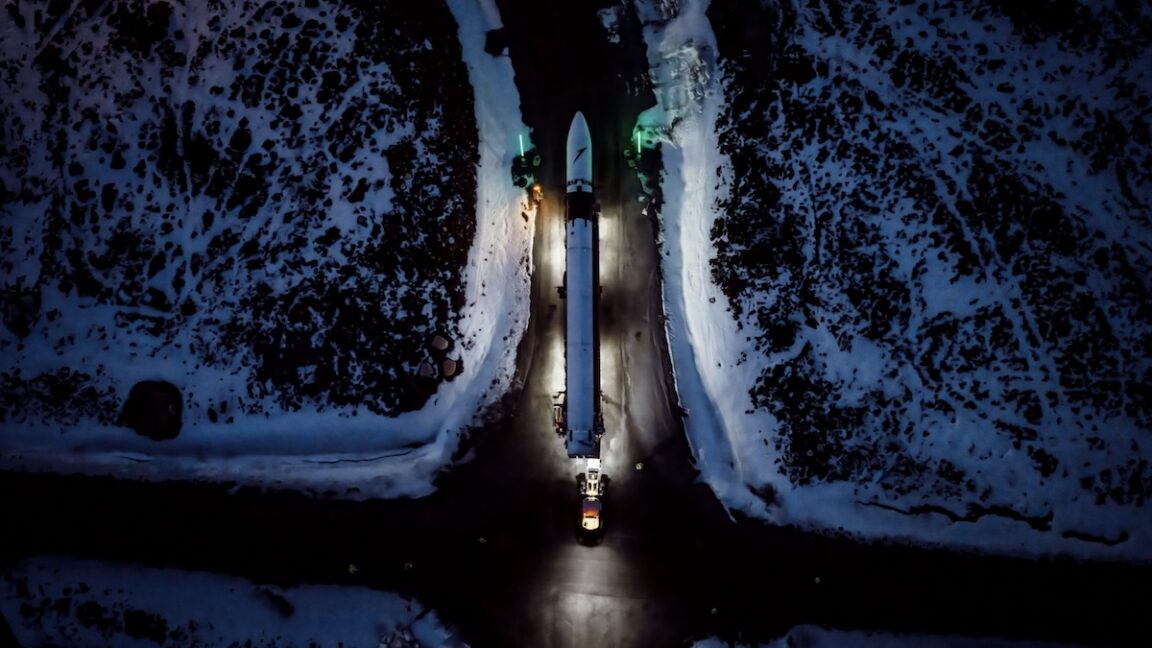
The two-stage, 92-foot-tall (28-meter) Spectrum rocket was awaiting liftoff from Andøya Spaceport in northern Norway. It was the fourth time in five months that Isar Aerospace, headquartered near Munich, Germany, had reached a target launch date for the second test flight of the Spectrum launch vehicle.

 Login