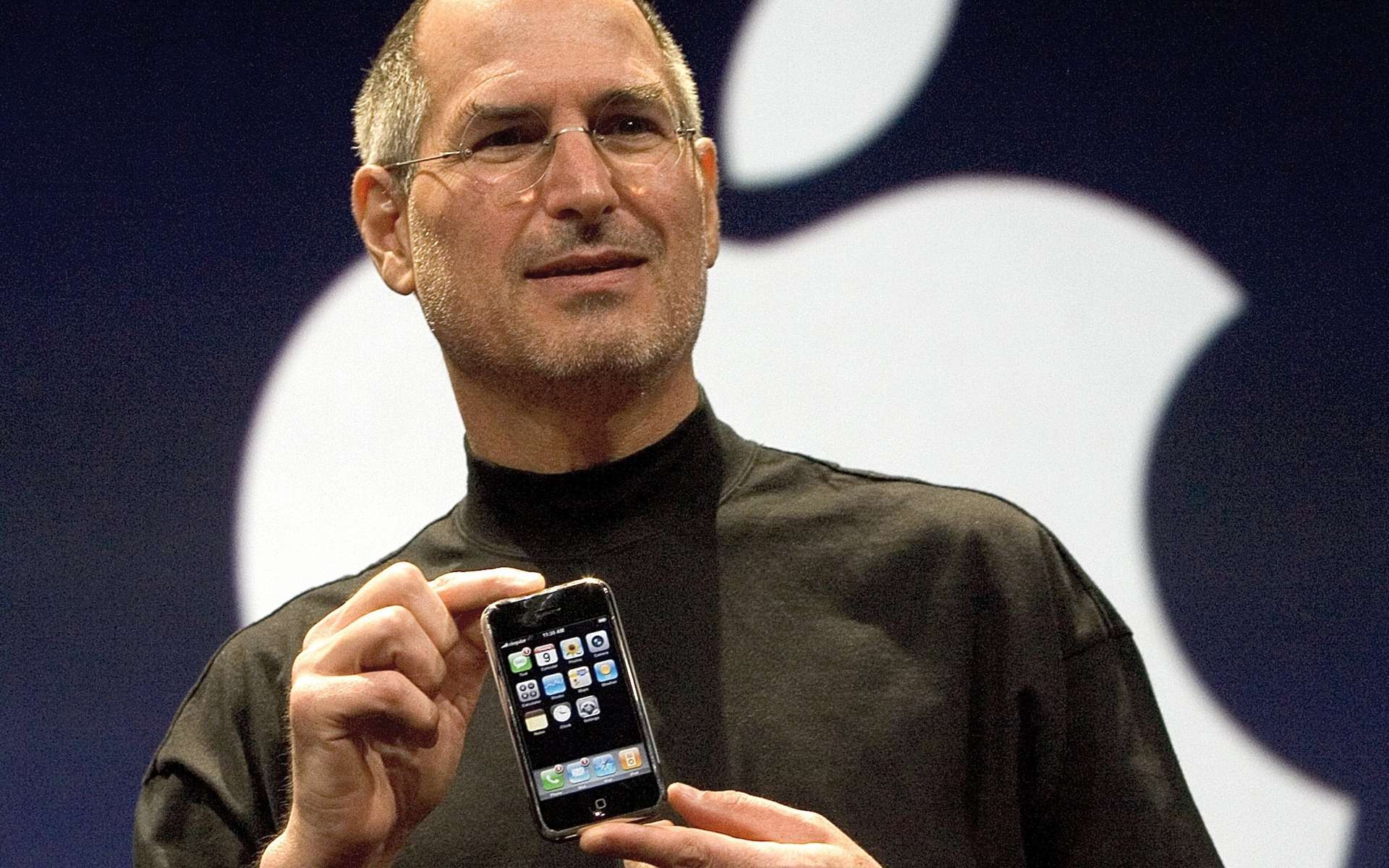
Pour fêter les 25 ans de Futura, chaque journaliste partage les images et évènements qui les ont le plus marqués au cours de ces décennies. Difficile de ne pas évoquer la sortie de l’iPhone, un véritable tournant dans l’évolution des smartphones.
A slew of recent studies indicate that AI isn’t dramatically displacing workers. At the same time, there were no indicators that the fast-moving technology is creating a lot of jobs, even as AI skills remain in high demand.
Stanford University researchers in an August study found that any AI-related job declines were concentrated among young workers aged 22–25. But for older and more experienced workers that wasn’t the case.
“Claims of economy-wide AI-driven job losses are not visible in payroll data through June 2026,” the researchers said, citing ADP payroll information. Stanford partnered with ADP to conduct the research.
The decline for young workers is more often related to the automation of some work tasks by AI, as opposed to its use to complement work. In contrast, AI is more often used by experienced workers to augment what they do.
According to the Stanford report, workers between 22 and 25 and employed in jobs highly exposed to disruption by AI are falling behind their older counterparts. Their employment levels in June were about 19% below the same age group in less-exposed occupations. That’s compared to where they would be if both groups had kept pace with each other.
“Experienced workers show no comparable gap,” the researchers said, adding that “this is consistent with recent reports of a worsening job market for entry-level workers.”
Employment of younger workers in AI-exposed jobs fell about 11% from late 2022, while the same age group in less-exposed jobs actually grew about 10%. “For older age groups, we find much less marked differences in employment growth across AI exposure quintiles,” the researchers said.
Stanford, which created a lab last year to study AI’s impact amid heightened fears of the technology’s economic effects, said its numbers were based on available indicators.
AI was cited for 116,175 job cuts in 2026, but that number is declining. The technology was blamed for 3,462 cuts in August, according to data from Challenger, Gray and Christmas.
It’s the “lowest monthly total since December 2025 when 142 cuts were attributed to AI,” the company wrote in a blog entry. The research firm also noted aggressive hiring plans for companies in 2027.
AI is adding value to companies in different ways, and humans are an important part of that process, said Michael Chui, a senior fellow at QuantumBlack, AI at McKinsey. “The night shift is real now,” he said. “People are sending off their agents to write code and checking in the morning.”
MIT late last year established an AI labor index to determine how agents are affecting the workforce. The school’s Project Iceberg looks at how the coordination and interaction with agentic AI changes how work is done.
Despite the disruptions, demand for AI-related talent continues to rise, tech industry consortium CompTIA said last week. About 320,000 job listings in August required AI-related capabilities, a 4.5% increase from July.
AI-related hiring is outperforming the broader tech market, with demand for AI skills up 96% year-over-year, said Kye Mitchell, head of Experis North America, which is part of ManpowerGroup.
“We’re seeing real growth…in marketing management and project management roles, suggesting employers are looking beyond the people building AI to the people applying it,” Mitchell said.
More broadly, the US economy added 162,000 jobs in August, according to US Department of Labor figures released last week. CompTIA noted that tech employment across all sectors rose by 86,000 workers in August.
But within the tech sector, 14,700 positions were cut, CompTIA said.
Thousands of Kenyans made a living writing essays for overseas students. With A.I., the work has dried up, a warning for online gig work that has been a global lifeline.
Earlier this year, Meta created a “plan” to reduce some of its teams by as much as 60 percent to make the company “AI native,” Reuters reported today, citing two people familiar with Meta’s internal affairs.
Reuters’ report highlights the challenges organizations face when analyzing the best uses for AI and determining when the technology is a better fit for certain tasks than employees.
Meta confirmed to Reuters that the plan, reportedly codenamed Project OT (short for organization transformation), explored scenarios in which Meta reduced some team headcounts by 60 percent and that the plan called for two rounds of layoffs. Meta wouldn’t confirm which teams Project OT affected.
It’s simple, says the SpaceX boss – according to something called the ‘Kardashev scale’, we just have to move energy production ‘off-planet’
Next time the weather gives the UK 61 days without rain and we wonder idly if this is the end, there is a term we may whistle up to soothe us. Like murmuring the rosary, or putting our fingers in our ears and humming, this phrase is to be mumbled on repeat – “the Kardashev scale, the Kardashev scale” – a buzzy concept in tech, much favoured by Elon Musk, and precisely the thing we’ve been waiting for. The Kardashev scale is the answer both to our impending doom and our anxiety around it – and if we decide to believe in it, we won’t have to give the climate crisis a single thought until the last drip falls from the tap.
This is the idea and it’s a familiar one to anyone who has watched tech billionaires take intractable, commonplace crises and decide that, among the measures and proposals in play, the vital missing ingredient so far has been them. Do you remember when Jeff Bezos, rather than doing something quotidian and loserish like funding public education by ensuring Amazon pays the same tax rate as regular Americans, decided instead to reinvent preschools?
Apple has again failed to earn a stay for fee calculations in its ongoing legal fight with Epic Games. Apple's case will be heard by the Supreme Court in the term that begins in October, and Apple asked the U.S. District Court for the Northern District of California to pause proceedings until then, but the court said no [PDF].
U.S. Supreme Court Justice Elena Kagan today granted Apple a one-day stay in its legal fight with Epic Games, giving Apple more time to outline the fees it wants to charge developers for linking out to purchase options on the web.
Apple tried to freeze the entire thing while they appealed to the Supreme Court – and the Supreme Court denied the freeze. But they didn’t deny hearing the case – yet. That’s why they’re pausing the proceedings for now (after Judge Gonzalez Rogers denied the same request), while they weigh Apple’s appeal. But before they do that, they’re basically likely to decide today – again, it was just a 24-hour delay – whether they should grant a longer stay. Presumably if the court thinks they’re unlikely to hear Apple’s appeal, they may not grant that longer stay. Or if they think Apple filing their number won’t harm their business, they’ll let it proceed. But Apple will argue that if the longer stay isn’t granted, it will cause major harm to their business because again, it will effectively end the App Store cut as we know it.
Apple today submitted a court-ordered proposal outlining the commission it believes is reasonable to collect from U.S. apps that link to purchase options outside of the App Store.
Apple is asking for half of its commission on standard apps, so apps that would pay 30 percent for an in-app purchase would pay 15 percent when linking to a web purchase option. Small Business Program participants that would normally pay 15 percent would pay 5 percent.
[…]
The appeals court suggested the commission could be limited to the direct costs of facilitating link-outs, and under that approach, the fee would be zero. Apple says a zero commission would not reflect the value that it provides developers, and its suggested commission gives it fair compensation for the App Store platform.
[…]
The district court will now evaluate Apple’s fee proposal and hear a response from Epic Games , and Apple will need to implement the fee the court sets.
Unlike cost-only based commissions, Apple’s revenue-based commissions incentivize
continued investment. Apple charges developers a $99 annual fee for the Apple Developer
Program. May 17, 2021 Trial Tr. at 2762:21–2763:13. This modest fee—designed to prevent fraud
and expressly not intended to compensate Apple for the use of its IP-protected tools, technologies,
and services (id.)—allows developers to build apps using Apple’s offerings and deliver experiences
to iOS and iPadOS users worldwide.
The annual developer fee is nominal. Apple relies on percentage-based commissions to
recoup and profit from its investments. See id. ¶¶ 87–93. Apple is incentivized to invest in IP-
protected tools, technologies, and services that generate revenue for developers (and benefit users).
[…]
Dr. Carlton explains that “reduc[ing] Apple’s incentive to invest and provide the technology and services that benefit users and developers” would harm users and developers, as well as Apple.
I like the part where Apple’s expert argues that its normal commission rates are so high that it would still be profitable for developers to pay the proposed linking commissions on top of what they would pay to Stripe or Paddle. In other words, paying Apple for “IP” almost twice what it admits the other companies charge for “full-service, turnkey payment processing.”
If the point [of the $99] is just to prevent fraud, why do we need to keep paying $99 yearly FOREVER? Is 10 years not enough to prove I’m not a fraud?!?
If the fee doesn’t help pay for Apple IP, then it’s even more blatantly unfair that a minority of apps have to pay for ALL apps to access Apple IP. Free apps, no matter how big or how much $ they make via ads, get access to Apple IP from OUR REVENUE CUT, and not even their $99 counts.
That’s what that enormous hardware margin from customers is already supposed to be paying for — Apple IP! In the early 00’s, I gladly paid the “Apple tax” (PowerBook G4) to get access to the Mac OS X software/ecosystem, including all the Unix and dev tools. I’m not sure why anyone thinks that double-dipping is fine on all the non-Mac platforms, App Store or not.
Schiller’s [previous] testimony about the previous program is extremely misleading, because the new program began in 2008 at the same time as the App Store, so there was no previous iOS developer program, and Mac Developer ID did not begin until 2012, so Apple Developer Program membership was not actually required to distribute Mac apps!
I want to quote another remarkable passage from Schiller’s testimony, again with questions from Apple’s own lawyer.
Q. And Mr. Jobs says, “And also just to make it a little
clearer, we don’t intend to make money off the App Store. I
mean, we don’t make a lot of money off iTunes, and the split
with the music companies is about the same, so in the case of
the iTunes Music Store, we give all the money to the content
owners, and we are basically giving all the money to the
developers here. And if that 30 percent of it pays for
running the store, well, that will be great, but we just want
to create a very efficient channel for these developers to
reach every single iPhone user.”
Is that a statement that Mr. Jobs made back in March 2008?
A. He did.
[…]
I won’t quote the following passage in which Schiller testifies about his internal email suggesting that Apple limit itself to $1 billion per year in profit from the App Store, hand-waving away the suggestion as merely “spurring conversation.” Of course the email also seems to contradict Schiller’s (absurd) testimony that Apple does not specifically calculate profit from the App Store, only company-wide profit. Apple’s public financial statements also appear to contradict Schiller’s claims.
On the same day, Apple submitted another motion, asking Judge Gonzalez Rogers to order the parties to attend a settlement conference.
[…]
Epic has now responded to Apple’s motion, stating that although the company “has been, and remains today, willing to entertain any direct approach from Apple with a serious settlement proposal that would introduce competition and benefit all developers,” it “does not believe the prospects of such settlement would be meaningfully advanced through referral to a settlement conference at this juncture.”
In addition to the proposal itself, Apple submitted supporting expert reports, alongside a request to seal portions of those filings containing financial data, link-out adoption estimates, developer survey results, and other information Apple considers commercially sensitive.
Epic has now filed an opposition to Apple’s request, arguing “Apple again seeks to conceal information from the public and unnecessarily hamper proceedings.”
A wide range of tech stories get the MacVoices treatment, starting with the quick sellout of the Steve Jobs commemorative coin and what strong MacBook Neo demand may say about Apple’s pricing, chip planning, and enterprise appeal. Chuck Joiner, David Ginsburg, Marty Jencius, Eric Bolden, Brian Flanigan-Arthurs, Jeff Gamet and Mark Fuccio also discuss Apple updates unexpectedly changing settings, a Canvas ransomware disruption affecting schools, Chrome’s hidden AI download, Google’s Liquid Glass similarities, Digg’s AI-focused return, and safer lithium coin batteries.
As Tim Cook hands the reins to hardware engineering chief John Ternus in September 2026, the company faces its biggest leadership transition in 15 years. While Cook’s tenure delivered massive revenue growth and operational excellence, many former employees and analysts say Apple has lost the product-first, risk-taking design culture that defined the Jobs years. Fortune explores whether Ternus can shift the company from steady iteration back to true innovation.
Matthew Rogers remembers Apple’s scrappy days when, as an engineer fresh out of college, he could debate ideas directly with Steve Jobs… “I was 23, 24 years old, and I interacted with Steve Jobs. That’s crazy, right? But that’s the organization he ran,” Rogers told Fortune from his Silicon Valley office (he now runs food-recycling startup Mill).
Back then, Apple’s hierarchy was much flatter. What made Apple special, he said, is that Jobs surrounded himself with consumer-minded product leaders who were expected to argue. The mandate was to build “the best thing out there” and take real risks. Some of Apple’s most iconic products came out of a skunkworks team across the street from the main office.
That much-mythologized era continues to shape — and perhaps burden — Apple as it navigates its biggest leadership transition in 15 years. Somewhere along the way, Apple lost a part of its design and product magic, Rogers and several former design and hardware employees, investors, and analysts said. The September handoff from Tim Cook to incoming chief executive John Ternus, who currently leads hardware engineering, has Rogers and other longtime Apple watchers wondering: Can the company reclaim its product-first soul?
Rogers, who also cocreated smart home company Nest with former Apple executive Tony Fadell, said Ternus now faces a defining test. “I’ll put it this way,” he said. “He has a tall task, but a big opportunity.”
Under Tim Cook, Apple systematically strayed from Steve Jobs’ core vision. Product Design, the very soul of the company Jobs rebuilt, was demoted, sidelined, and subordinated to operations, supply-chain efficiency, and services revenue. The result? Fifteen long years of polished, but profoundly boring iteration: thinner bezels, faster chips, incremental camera bumps, and endless “Pro” variants that rarely moved the industry forward the way the original iPhone, iPad, or even the aluminum unibody MacBooks once did.
Jobs put Design at the absolute top of the food chain. Jony Ive’s group wasn’t a service department; it was the engine. Cook flipped the hierarchy. Hardware engineering, operations, and finance called the shots (poorly; witness Luca Maestri famously rejecting calls to invest in AI early on which is why he’s now sidelined). Design became reactive instead of directive. The Vision Pro launched as an impressive, but overpriced, underbaked curiosity. After billions spent, the Apple Car evaporated. True category-defining leaps simply did not happen.
Now comes John Ternus, a product person, a hardware guy who has spent his career shipping actual devices rather than optimizing margins. Early signals are encouraging: bringing trusted hardware lieutenants back into the fold and already embedding himself with the industrial design group. That is exactly the right instinct.
If Ternus moves quickly to restore Design to its rightful place at the apex of Apple’s decision-making, the company might finally escape the long, comfortable, lucrative mediocrity of the Cook era. Apple doesn’t need another fifteen years of safer, prettier, or just different iterations. It needs the return of products that make people stop, stare, and rethink what a computer in their pocket, on their wrist, or on their face can be.
The hardware engineer is about to become CEO. The question is whether he has the will — and the authority with Cook looming as Executive Chairman — to put Design back on top where Jobs left it. The next few years will tell us if Apple can innovate again… or if the iteration treadmill simply continues under a new CEO.
Fingers crossed!
Please help support MacDailyNews — and enjoy subscriber-only articles, comments, chat, and more — by subscribing to our Substack: macdailynews.substack.com. Thank you!
After more than 30 years the cybersecurity field, Keith Jones recently realized that his role had changed, from being a single contributor to manager of a fairly large team. And this team was getting a lot accomplished — tasks that used to take up a huge chunk of his workday.
No, his company hadn’t hired a group of new employees to work under him. He simply accelerated his use of artificial intelligence tools. Now, instead of grinding through a lot of basic tasks, that work is done for him while he focuses on bigger-picture work.
“It really feels like I have a team behind the scenes, but what I have is Claude [Anthropic’s AI tool],” says Jones, who currently works as a cybersecurity researcher. “I’ve been thinking for the last several months about how much differently I work now than I did a year ago, when I would sit and write all the low-level stuff before I could get to the 10% of the good stuff I really wanted to focus on. Now I can sit back and say, ‘Give me three different ways to solve this problem.’”
Most people working in the technology field, like Jones, have had to figure out how best to work with AI. The technology has come on strong, with many companies making its use mandatory and actively evaluating whether employees are faster and more efficient because of it. And while it is boosting productivity and taking over the burden of repetitive, manual tasks, it’s also creating a new level of stress and a dizzying kind of mental exhaustion.
So what can tech workers do about the heavier mental load that comes with using AI, on top of escalating worries about the safety of their own jobs? AI users and industry analysts say there are specific ways to ease some of those burdens and prepare for a changing job market.
Combating the slop factor
When it comes to working with LLM tools, a well-known issue is dealing with AI workslop and hallucinations. The slop is AI-generated output that is low-quality, buzzword-heavy, and generic. It also can refer to bloated, boilerplate code. Hallucinations are inaccurate or completely made-up results. AI routinely offers this messy or incorrect information with total confidence, giving users a false sense of security.
Using this bad data can lead to anything from minor software bugs to severe liabilities. “Don’t believe the machine is infallible,” says Craig Shue, computer science professor and department head at Worcester Polytechnic Institute (WPI). “That’s when bugs will start working in. There’s a lot of misinformation on the internet, and that could be what the LLM is grabbing and using.”
Craig Shue, computer science professor and department head at Worcester Polytechnic Institute
WPI
Here are ways to combat the problem:
Make AI show its work: Ask it to cite its sources or explain its reasoning. Example prompt: Explain the logic and show the steps before writing the code.
Give the AI a source of truth: Instead of letting the AI search the internet for information, give it the exact source material (reports, transcripts, data sheets) to base its output on, telling it to use only the information provided.
Validate. Validate. Validate: Never let AI publish code directly to the main project without first reviewing and running it locally. Similarly, never take AI output and simply move it on to the next person in the project. Every single AI output needs review.
Don’t be fooled by confidence: As with managing a human, question the output. When you’re busy or tired, it’s easy to just go with the results it gives you. Don’t. Always analyze and question it.
Taking on AI-driven workload creep
Let’s face it: The great promise of AI is that it will take over repetitive, manual tasks, which will save you an incredible amount of time. What isn’t talked about as much is that it also can create a new workload — one that can be exhausting in a whole new way.
“Is AI saving people time? The short answer is yes,” says J.P. Gownder, vice president and principal analyst with Forrester Research. “But people also are being overwhelmed with overproduced things. Everyone wants to look busy and they’re producing more, but not necessarily better. Managers have to push back on that or it’s not really saving you time.”
In a multi-year study by Upwork, the largest online freelance marketplace, 77% of employees reported that AI had increased their workload. The report noted that a boost in productivity comes with a “significant emotional and relational cost,” with 88% of workers who saw the highest productivity gains also feeling burned out. And IDC’s Future of Work 2026 survey reported that 24% of IT workers report increased workload as a top AI concern.
Here are ways to combat the problem:
Keep it short: Part of the prompt — always — should be to tell any AI tool to be concise.
Build an anti-slop culture: Don’t simply accept and pass on workslop. It’s insulting for a co-worker to have to deal with pages of largely useless information.
Filter the noise: When everyone on a team starts using AI, the volume of Slack messages, long-form memos, and data reports skyrockets. Don’t treat it all with equal importance. Practice radical prioritization.
Manage the transcript deluge: Stop wading through 40-page meeting transcripts that bury action items. Instead, prompt the system to produce a concise summary focused strictly on deliverables or status updates.
Reduce the AI blast radius: When asked to fix a bug, AI tools often rewrite hundreds of lines of unrelated code, multiplying your code review time. Prevent this by instructing the tool to isolate its changes only to the specific function or file in question.
Managing the AI mental tax
Using AI often necessitates a different kind of mental processing, changing what had been the natural pacing of your day and dramatically increasing context switching. Instead of simply building and testing, someone might be jumping back and forth between auditing, fact-checking, prompting, and re-prompting. To manage strain and protect your focus, new strategies are needed.
Published this past March in the Harvard Business Review, a study by Boston Consulting Group and the University of California, Riverside, surveyed 1,500 workers and coined the term “AI brain fry.” The researchers found that juggling multiple AI tools causes decision fatigue and increases errors.
How to combat the problem:
Work in batches: Continuously reviewing AI output as it comes in can quickly lead to mental burnout. Dedicate blocks of time throughout your day to interact with your AI tools.
Create analog islands: Your brain needs time to decompress, and that means taking a break from digital processing… and from screen time in general. Make time in your day to step away from screens, such as taking a 15-minute walk or reading a book instead of watching a video online.
Know when to step in: Instead of endlessly tweaking prompts to get a perfect result, it is often faster and less mentally taxing to manually write or refactor the final 20% yourself.
Create base prompts: Writing custom prompts that include everything from guardrails to tone instructions for every new project quickly drains your mental energy. Instead, build two or three reusable system prompts, such as one for refactoring legacy code and another for drafting API docs, and use them as templates.
Proving your human value in a new job market
With companies regularly using AI-based applicant tracking systems to filter resumes, and AI actively shifting job responsibilities and skills requirements, the strategy for how you apply for roles and handle interviews is changing.
Leo Freitas, an analyst and research manager at IDC Research, says it’s critical for job applicants to show potential employers what they can do that machines cannot. “You need demonstrable achievements,” he adds. “It’s good to show highly human skills.”
Mirror their language: Use the exact language from the job description. Traditional applicant tracking systems rely heavily on structured information and keyword matching, says Teresa Hill, founder and leader of Anchor GTM, a growth marketing consultancy. That means if a posting says “product marketing manager,” don’t just write “PMM.” Write both.
Keep it simple: Use standard section headers, like “Experience” and “Education.” Creative alternatives and formatting can confuse parsers.
Avoid AI writing: Use AI to help structure your thinking, then edit until the copy sounds natural and authentically human.
Swap responsibilities for metrics: To stand out, especially with AI scanners, tie as many bullet points as possible from your work to business outcomes.
For the interview:
So, how do you use AI? Every interviewer eventually asks some version of this question. The best answers focus on judgment vs. simply name-dropping tools. Explain what you automate, what you never automate, and why.
Show that you’re a gatekeeper: AI tools can generate code or copy instantly, but they also introduce errors. To stand out, show that you know how to audit, verify, and safeguard quality.
Focus on learning: Don’t emphasize your expertise with a specific AI tool. Focus on being someone who is adaptable and learns quickly, Hill says.
What sets you apart from a machine: Show, don’t tell. Give work examples that demonstrate that you know how to be creative, collaborative, and problem solve. Show metrics whenever possible.
Demonstrate that you know the limits: Make it clear that you know when to use AI and what not to let it touch without heavy review.
Future-proofing your career in a shifting tech market
The anxiety echoing through the tech industry is tangible as companies reallocate corporate capital toward automation. While both Gownder and Freitas emphasize that there is far more fear than actual AI-driven layoffs, the shift in corporate spending is undeniably stoking job insecurity.
“There’s this apocalyptical view that AI will take everyone’s job in a few years,” says Freitas. “I don’t see that happening, but many things will change in the nature of how we work. I don’t think the world is going to end tomorrow. But it’s always good to do a self-assessment and look at whether AI can do what you’re doing now.”
How to combat the problem:
Use this technology to your advantage: Approach AI as a new tool, not a replacement. Use it to make yourself better and faster at your job. “I look at AI like it’s another new tool, and I’m going to learn it like I’ve learned any other tool,” says Jones.
Don’t bury your head in the sand: Take a look at what you do and consider if it could be done by AI.If your role is highly automatable, think about switching to a more advanced position or to a role, like security, that more clearly needs a human in the loop.
Take ownership of your career: Expand your knowledge and skills. Find courses and certifications (many are free online) and take advantage of employers’ training programs.
Work with the business side: Make sure you understand the business — its long-term goals, competitive market, and jargon. Be the bridge between the technical and business sides of the company, giving presentations and solving business problems with technology.
Highlight your in-house expertise: When you have institutional knowledge, make sure you are openly using it to benefit the business. Your knowledge can be your key differentiator.
Push the business forward: Think about the next app or customer-facing system that will propel the business forward. Be the one who is advancing the company with tech.
Continue to adapt: Don’t get stuck in your anxiety. Keep being curious and working your learning muscles.

 Login