In a joint interview with Tom's Guide and TechRadar, new Apple CEO John Ternus and marketing chief Greg Joswiak explained why the company waited until now to release a foldable, its design philosophy, and how it kept the iPhone Duo under wraps.
Ternus said the timing always comes down to when a product idea meets Apple's bar "for quality and durability, but also for design." He said the device "was like a greenfield of opportunity for us because it was an opportunity to rethink so many different things."
Apple took a hard look at what other foldable makers were offering and felt it "wasn't particularly inspiring," said Joswiak, adding that Apple's approach was "twofold – no pun intended."
First, Apple believes the device's wider 1:1.4 aspect ratio is the answer to designs that resemble two phones "awkwardly stuck together," said Joz. Second, Apple worked on the software to make the Duo "unlike any foldable that's out there."
As for the foldable display, Ternus said the inner screen's top layer is polymer, not glass, which meant devising an entirely new way of making Apple's nano-texture finish. Rival displays, he said, are "kind of cheap-feeling plastic surfaces. They don't feel good to touch, they're kind of wavy, wrinkly."
"The nano-texture just wipes that all out," he added. "It's beautifully flat. It feels amazing to touch and it's incredibly durable."
Joswiak said he is "super proud" that Apple kept the project relatively secret: "We put the extra security on it. We didn't talk about it to anybody. We had a very funny code name, which I won't even repeat, that had nothing to do with it. But we said we're going to keep this one extra secret because, look, people knew through leaks that we were working on a foldable."
Leakers did get the aspect ratio right, Joz conceded. "There were a lot of coincidental instances of people finding that an interesting aspect ratio. And this is when we said, okay, we're going to really keep this one locked down – and it worked."
As for the $1,999 starting price, Ternus mused: "Yes, it's more expensive than the other phones, but we think it's great value." Joz added: "It's called iPhone Duo for a reason. It's like two products."
You can watch the full interview via the embedded video above or on the YouTube website. Pre-orders for the iPhone Duo begin Friday, October 16, ahead of an October 23 launch.
Discrete graphics card shipments for desktop PCs in Q2 2026 totaled 12.5 million units, the highest number since Q1 2022 despite record-high prices and cratering shipments of desktop CPUs, according to findings from Jon Peddie Research. The result highlights a broader trend that shows that unit sales of standalone GPUs for gaming have so far remained immune to rising prices, perhaps because gamers are expecting even higher prices in the coming quarters.
The industry shipped 12.5 million standalone graphics cards for desktop PCs in the second quarter of 2026, up around 5.9% sequentially and 7.8% year-over-year. 12.5 million add-in boards (AIBs) is the highest number of graphics cards sold in one quarter since the first quarter of 2022, when the industry shipped 13.38 million AIBs.
It is particularly noteworthy that 2026 is shaping up to be better for unit sales of desktop graphics boards than 2025 despite raising prices. For the first half of 2026, 24.3 million desktop AIBs were shipped, up significantly from 20.8 million graphics cards supplied in the first half of 2026. JPR analysts also note that only around 14 million desktop PCs were sold during the quarter, which — given an unusually high 89% attach rate — largely means that the majority of AIBs shipped during the quarter were aimed at gamers buying in retail and not at PC makers.
"Defying common wisdom, high-end AIB sales spiked as prices increased," said Jon Peddie, president of JPR. "Our theory is consumers rushed to buy AIBs before the prices went any higher, as the war in Iran is driving prices up in all segments."
(Image credit: Data by Jon Peddie Research, compiled by Tom's Hardware)
Having shipped about 11.25 million discrete GPUs for desktop computers in Q2 2026, Nvidia remained the undisputed leader of the market with around 90% market share. AMD controlled roughly 8% of the market, shipping about one million discrete desktop GPUs, while Intel's share increased to 2% on shipments of several hundred thousand units. Meanwhile, Jon Peddie Research notes that market share changes were negligible during the quarter: AMD’s overall AIB market share decreased by -0.16% from the previous quarter, Intel's market share increased by 0.3%, and Nvidia's market share decreased by -0.1%.
(Image credit: Data by Jon Peddie Research, compiled by Tom's Hardware)
For Nvidia, the quarter was particularly good as it sold the highest quantity of discrete GPUs for desktop PCs in a single quarter since Q3 2017, when it sold approximately 11.72 million units. By contrast, sales of AMD's standalone graphics cards have been floating below or around one million units per quarter for nearly four years now, with only three quarters being exceptions (Q3 2023, Q4 2023, Q4 2024). Still, one million is higher than the around 700 thousand discrete desktop GPUs the company sold in Q2 2025.
(Image credit: Data by Jon Peddie Research, compiled by Tom's Hardware)
In total, Nvidia shipped approximately 17.365 million discrete graphics processors in the second quarter: roughly 11.25 million units went to desktops, and around 6.115 million units were installed into notebook and compact PCs. Since both AMD and Intel have quietly quit the market for standalone GPUs for mobile PCs, their shipments to this market segment were essentially zero.
Data by Jon Peddie Research, compiled by Tom's HardwareData by Jon Peddie Research, compiled by Tom's Hardware
In one of the most ambitious mapping efforts in the history of radio astronomy, China’s Five-hundred-meter Aperture Spherical radio Telescope — better known as FAST — has delivered a cosmic atlas of staggering proportions. The FASHI team, headquartered at the National Astronomical Observatories of the Chinese Academy of Sciences (NAOC), has announced the second data release of the FAST All Sky HI Survey, published as a cover story in the journal Science China Physics, Mechanics & Astronomy. Just two years after the survey’s first data release catalogued 41,741 galaxies, the new edition explodes that figure to 156,411 extragalactic sources detected in neutral hydrogen — nearly a fourfold leap that firmly establishes FASHI as the largest census of atomic hydrogen gas in galaxies ever compiled.
The scale of the achievement is difficult to overstate. FASHI DR2 now spans roughly 19,500 square degrees of sky, equivalent to 47.3 percent of the entire celestial sphere, and reaches out to redshifts below z = 0.09 — distances of well over a billion light years. For comparison, the previous benchmark in this field, the ALFALFA survey conducted with the now-collapsed Arecibo telescope in Puerto Rico, charted approximately 31,500 hydrogen-bearing galaxies across about 7,000 square degrees. FASHI DR2 has thus quintupled the galaxy count of its Arecibo predecessor while covering nearly three times the sky area, and it has done so with a sensitivity roughly 0.7 times deeper than ALFALFA’s, measured as a median noise level of 0.57 mJy per beam at a velocity resolution of 6.4 kilometers per second. In radio astronomy, lower numbers mean better sensitivity — and FASHI’s numbers are among the best ever achieved in a blind, wide-area survey.
The engine behind this performance is FAST itself. With its 500-meter dish nestled in the karst hills of Guizhou Province, the telescope remains the most sensitive single-dish radio instrument on Earth at the 21-centimeter wavelength of neutral hydrogen. The survey exploited a 19-beam receiver array, allowing the telescope to sweep the sky in an efficient drift-scan mode that turned routine transits of the sky above the dish into a torrent of data. Crucially, the instrument maintained exceptional stability across five full years of observing, from August 2020 through July 2025. In surveys of this kind, calibration drifts and instrumental fluctuations can quietly corrupt weak extragalactic signals; FAST’s long-term steadiness meant that faint hydrogen emission from distant galactic disks could be stacked, averaged and trusted.
Neutral hydrogen — the primordial fuel of star formation — is invisible to optical telescopes. The 21-centimeter spectral line, produced when the electron in a hydrogen atom flips its spin relative to the proton’s, provides the only direct tracer of the cold atomic gas from which galaxies build their stars. Detecting this feeble signal across cosmological distances requires both enormous collecting area and exquisite receiver stability. A blind HI survey, unlike targeted observations, simply listens to every direction on the sky and catalogs whatever whispers back, making it an unbiased inventory of gas-rich galaxies regardless of their optical brightness, dust content or morphology. That is precisely why such surveys are prized: they catch the dim, gas-dominated dwarfs and bloated hydrogen clouds that optical catalogs systematically miss.
To give the hydrogen detections physical meaning, the FASHI team cross-matched their radio catalog with the two great optical spectroscopic endeavors of the current era: the Dark Energy Spectroscopic Instrument survey and the Sloan Digital Sky Survey. This cross-identification yielded precise optical counterparts for approximately 64,000 sources, anchoring the hydrogen detections to galaxies with measured distances, stellar masses and star-formation rates. From these matches the team constructed a completeness-corrected statistical sample of more than 109,000 galaxies — a sample robust enough to push fundamental measurements into territory previously beyond reach.
The flagship result of the release is a new measurement of the HI mass function, the statistical distribution describing how many galaxies of a given hydrogen mass populate the local universe. Thanks to the sheer sample size and FAST’s depth, the team extended the reliable measurement range of this function down to hydrogen masses of about one million solar masses — roughly 10 to the power 6.2 in solar mass units — a regime where only the faintest dwarf galaxies live. These smallest gas reservoirs are the building blocks of galaxy evolution, the raw material that hierarchically assembles larger systems, and their census has long been fragmentary. Equally striking is the derived cosmic density of neutral hydrogen: Ω_HI equals (4.71 ± 0.03 statistical ± 0.40 systematic) × 10⁻⁴ in units of h₇₀³ Mpc⁻³ dex⁻¹. The statistical uncertainty is a mere 0.6 percent — the most precise determination of the universe’s atomic hydrogen budget ever made at low redshift.
Why does such a number matter? The cosmic HI density tracks how much raw fuel exists for future star formation, and comparing its evolution across cosmic time constrains how galaxies acquire and exhaust their gas. Because atomic hydrogen sits at the interface between the intergalactic medium and the star-forming interstellar medium, its abundance is a sensitive probe of gas accretion onto dark matter halos and of the feedback processes that heat or expel gas from galaxies. Baryonic matter, after all, is hidden in far more places than stars: cold gas, warm gas, plasma in and around halos. A precision measurement of the hydrogen component anchors models of where ordinary matter resides within the cosmic web of dark matter.
The applications of the new catalog ripple far beyond that single number. For galaxy evolution studies, the 156,411 detections provide direct observational constraints on gas accretion, star formation feedback and galaxy transformation — the processes that turn blue, gas-rich spirals into passive red systems. For cosmology, the HI mass function tests galaxy formation models within the prevailing dark matter framework. For large-scale structure work, the survey complements optical galaxy catalogs to trace the so-called HI cosmic web, revealing how diffuse gas threads through filaments and pools in voids — architecture that optical surveys alone can only infer. The dataset will also aid gravitational-wave and transient science: rapid localization of the host galaxies of gravitational-wave events depends on accurate galaxy catalogs, and an inventory of hundreds of thousands of nearby galaxies sharpens those host identifications. Finally, FASHI serves as a pathfinder for the Square Kilometre Array, the giant interferometric observatory under construction in Australia and South Africa, providing benchmark samples against which next-generation interferometric surveys will calibrate their systems and select their targets.
The trajectory of the project tells its own story. When FASHI DR1 appeared, it broke ALFALFA’s long-standing record for the largest blind HI survey. With DR2, the team argues, FASHI has moved from record-breaking to benchmark-setting — a transition that observers of Chinese radio astronomy describe as the shift from follower to leader in 21-centimeter science. The cover of the journal issue reinforces the mood: a warm sunset scene evoking the faint 21-centimeter photons from distant galaxies arriving at FAST after journeys of billions of light years, messengers of the cold gas that permeates the universe.
The survey’s story is also one of institutional perseverance. The work is led by NAOC in collaboration with the Guizhou Radio Astronomical Observatory, the Shanghai Astronomical Observatory, the CAS South America Center for Astronomy, Peking University and other partner institutions, with funding from the National Natural Science Foundation of China, the Chinese Academy of Sciences and the Ministry of Science and Technology of China. Sustained national investment in a single flagship instrument has now produced a dataset whose statistical power no other facility can currently match at these wavelengths.
The full FASHI DR2 source catalog has been released to the public through the FAST data portal, a decision that will likely seed hundreds of follow-up studies in the coming years, from targeted observations of hydrogen-rich dwarfs to statistical analyses of gas in galaxy groups and environmental studies of gas stripping in clusters. As the SKA era approaches, FASHI DR2 stands as both a scientific foundation and a demonstration: that a single dish, used patiently and precisely over five years, can still redraw the map of the gaseous universe. With nearly half the sky covered and a quarter of a million more square degrees potentially within reach, the question is no longer whether FAST will extend the hydrogen frontier, but how far.
Subject of Research: The FAST All Sky HI Survey (FASHI) second data release — a blind survey of extragalactic neutral hydrogen (21 cm) sources using the FAST telescope, measuring the HI mass function and cosmic HI density.
Article Title: FAST All Sky HI Survey completes “two-step leap” — from 41,741 to 156,411 galaxies, China’s FAST telescope maps the largest cosmic gas atlas
Keywords: FAST telescope, FASHI survey, neutral hydrogen, HI mass function, cosmic web, galaxy evolution, 21 cm line, ALFALFA, radio astronomy, Square Kilometre Array, dark matter halos, cosmology
In 2016, paleontologist David DeMar Jr. was crawling across a rocky outcrop in northeastern Montana, hunting for fish fossils, when he spotted a dark, reddish-brown nodule about half the size of a golf ball. He picked it up and looked at it through his hand lens. On its surface was something he didn’t expect: a […]
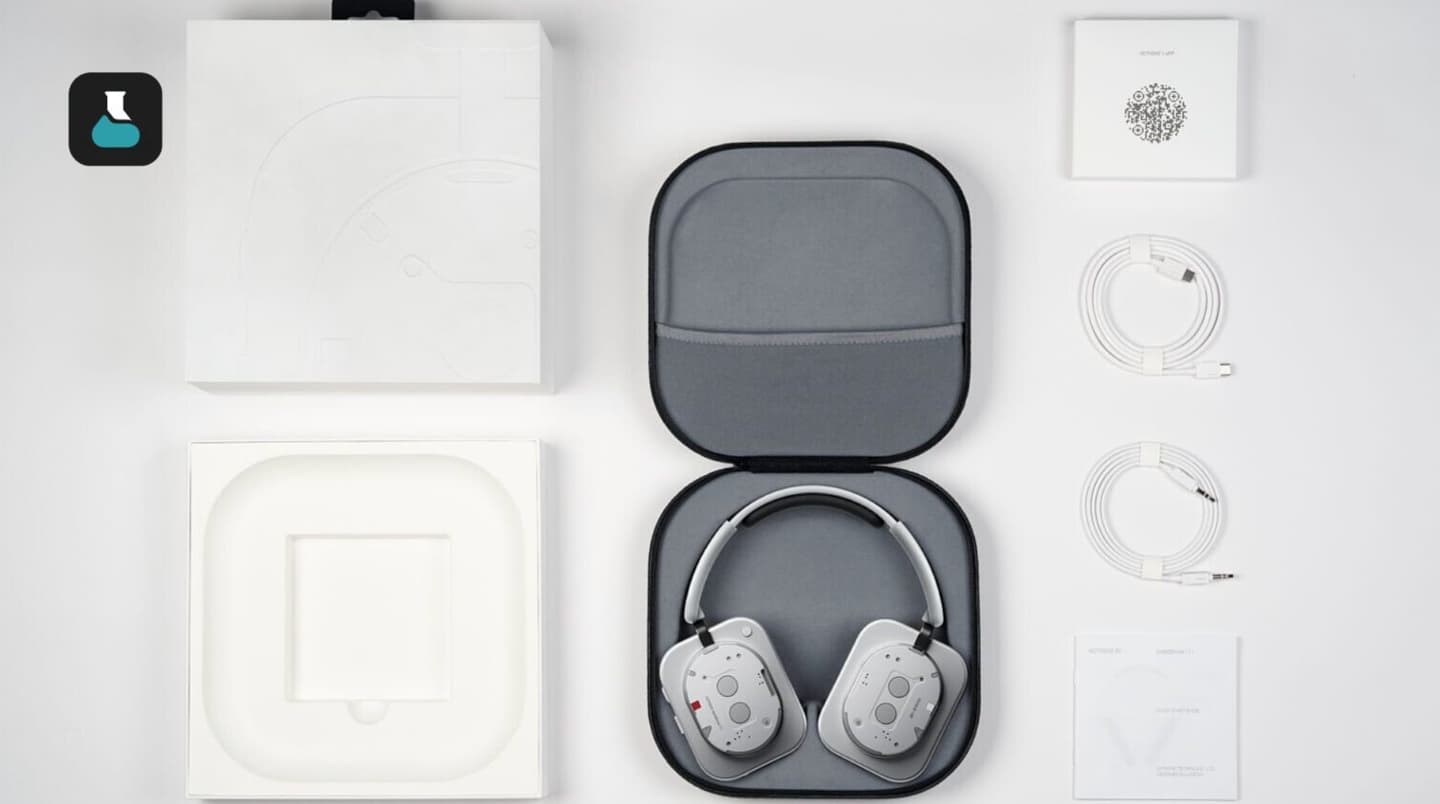
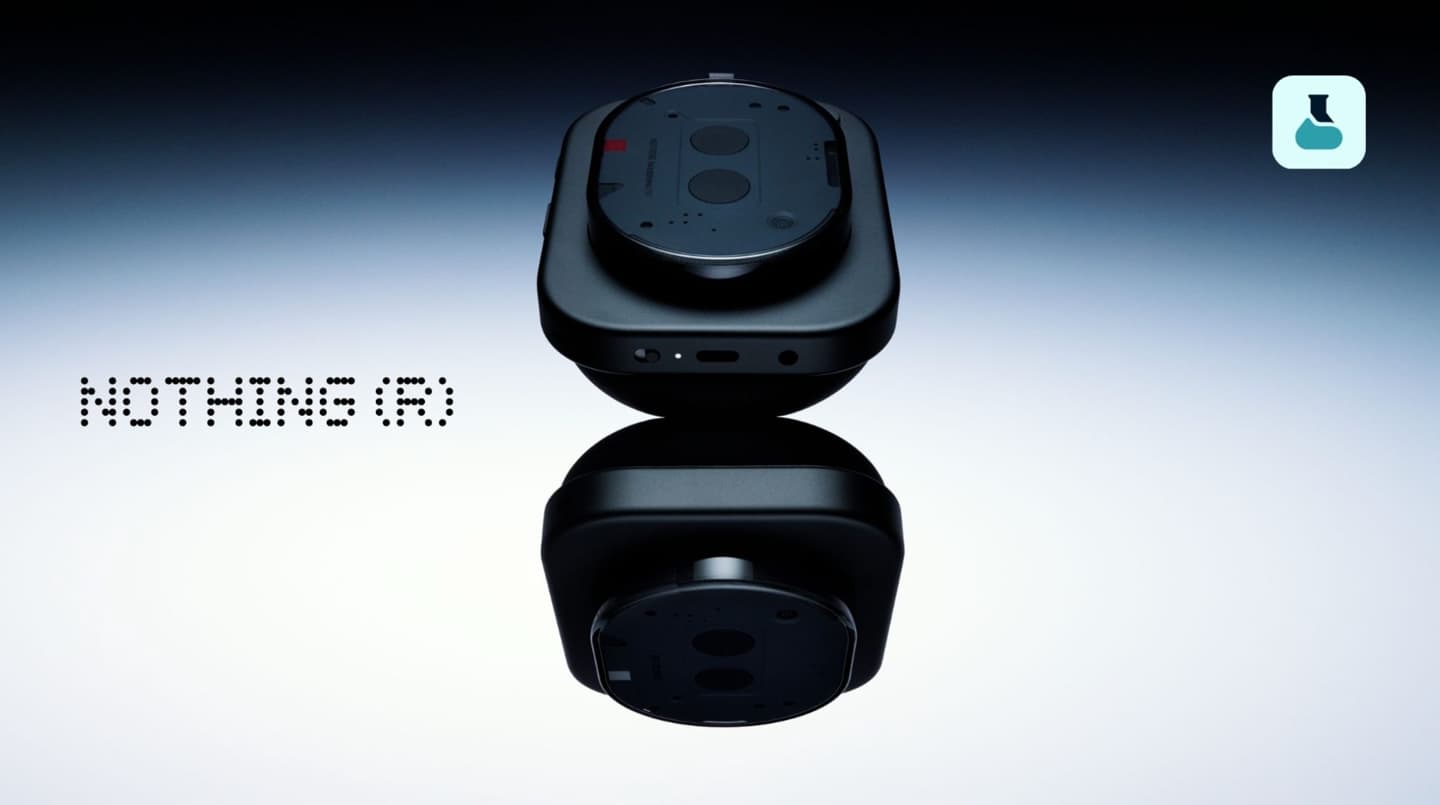
Nothing appears to be preparing a more premium version of its over-ear headphone lineup. According to information reported by Dealabs, the company is expected to introduce the Nothing Headphone (1) Pro in the coming weeks, with a European price of €349 and a U.S. price of $399. Nothing’s move into premium headphones also gives the brand another way to extend its distinctive Nothing’s transparent design language beyond smartphones and earbuds.
The new model is reportedly scheduled to launch on September 29, positioning it firmly in the premium wireless headphone market rather than the entry-level segment.
Nothing’s Transparent Design Gets a Premium Treatment
The Headphone (1) Pro is expected to continue Nothing’s recognizable design language, including the brand’s semi-transparent aesthetic. The headphones are reportedly offered in black and white, while the construction combines an aluminum body with scratch-resistant glass elements.
The headset is also said to carry an IP52 rating, providing some protection against dust and light water exposure. While that rating does not make the headphones suitable for heavy rain or water immersion, it could provide additional peace of mind during everyday use.
Triple-Driver System Could Be the Biggest Upgrade
One of the most interesting features of the Headphone (1) Pro is its reported three-driver audio architecture. Instead of relying on a conventional single-driver setup, the headphones are expected to use separate drivers to handle different parts of the frequency range.
The high-frequency section could use an XMEMS driver, a technology designed around extremely fast mechanical response and precise high-frequency reproduction. If implemented as reported, the combination could give Nothing a stronger technical selling point against other premium wireless headphones.
The company is also reportedly working with Metropolis Studios, a well-known London recording and mastering facility, on the headphone’s tuning. That collaboration could help Nothing pursue a more studio-oriented sound profile rather than simply emphasizing heavy bass or consumer-friendly sound.
10 Microphones and Adaptive ANC
The Headphone (1) Pro is expected to include 10 microphones, which could support both active noise cancellation and voice-related functions.
The headphones are reportedly equipped with adaptive active noise cancellation (adaptive ANC) that can adjust to surrounding conditions. A transparency mode is also expected, allowing users to hear environmental sounds without removing the headphones.
This combination should make the Headphone (1) Pro more practical for commuting, office use and other situations where users may need to switch between immersive listening and environmental awareness.
Hi-Res Audio, LDAC and More Sound Controls
For wireless audio, the new headphones are expected to support LDAC and Hi-Res Audio, potentially giving compatible devices access to higher-quality Bluetooth audio transmission.
Nothing is also reportedly preparing a Flat EQ option alongside more advanced sound-adjustment features. The company may position these controls toward listeners who want greater control over how their music sounds rather than relying solely on preset profiles.
The reported involvement of Metropolis Studios further suggests that audio quality will be one of the major selling points of the Pro model.
Bluetooth 6.1 and a 3.5mm Headphone Jack
Connectivity is another area where the Headphone (1) Pro could stand out. The headset is reportedly expected to use Bluetooth 6.1, while also retaining a 3.5mm audio jack.
The wired connection will be useful for listeners who prefer a direct audio connection, want to avoid Bluetooth compression, or need to connect the headphones to devices without wireless audio support.
The combination of modern Bluetooth connectivity and a traditional wired input also gives the headphones greater flexibility across different listening environments.
Up to 60 Hours of Battery Life
Battery life could be another major advantage. The Headphone (1) Pro is reportedly capable of delivering up to 60 hours of playback, although real-world endurance will likely depend on factors such as ANC usage, volume level, codec selection and connection mode.
The headphones are also expected to support fast charging, allowing users to restore listening time without keeping the headset connected to power for long periods.
Nothing Headphone (1) Pro: What to Expect
Based on the leaked information, the Nothing Headphone (1) Pro could be a significant step beyond a typical lifestyle-focused wireless headset. Its combination of a three-driver audio system, XMEMS technology, 10 microphones, adaptive ANC, LDAC, Bluetooth 6.1 and up to 60 hours of battery life gives it a specification sheet aimed squarely at the premium market.
The reported €349 European price and $399 U.S. price would also put it in direct competition with established premium headphone brands.
Nothing has yet to officially confirm all of these specifications, so the final hardware, features and regional pricing should be treated as unconfirmed until the company makes its announcement. If the September 29 launch date is accurate, more official details should emerge soon.
Agora, o assistente pode usar os modelos GPT-5.6 ou GPT-6 Astra quando precisa pesquisar ou raciocinar sobre questões mais difíceis — e o usuário pode escolher qual usar com um seletor.
Além disso, a empresa também simplificou os limites de uso diários do GPT-Live:
Go: até 3 horas com o GPT-Live-1 mini, substituindo o acesso ao GPT-Live-1;
Plus: até 3 horas com o GPT-Live-1;
Pro (US$100/mês): até 15 horas com o GPT-Live-1;
Pro (US$200/mês): uso ilimitado do GPT-Live-1;
Plus e Pro: não mudam mais para o GPT-Live mini depois de atingir o limite de uso do Voice.
Com essas mudanças, os planos Plus e Pro não mudam mais para o GPT-Live-1 mini depois de atingir o limite de uso do Voice. Além disso, os níveis separados de inteligência do Voice (Instant, Medium e High) foram descontinuados.
Novidades para o ChatGPT Work e Codex
A OpenAI anunciou também que a Deep Research está agora disponível no ChatGPT Work e no Codex para os planos Plus, Pro, Business, Enterprise e Edu. Basta ao usuário digitar @Deep Research ou pedir explicitamente para usá-la no comando.
Outra novidade chegando aos dois recursos é o plugin Data, que ajuda a analisar dados de negócios conectados. É possível fazer uma pergunta sobre um negócio, investigar mudanças ou até mesmo criar um dashboard interativo sobre o conteúdo analisado.
Now everyone can put data to work.
We’re introducing a new Data agent in ChatGPT Work so you can turn your company’s data into answers, interactive dashboards, and action—just by asking.
Just add the Data Plugin in ChatGPT Work, connect to the data sources and context you… pic.twitter.com/R7N3I2NFCN
Agora também é possível compartilhar arquivos e pastas no ChatGPT pela Biblioteca. É possível compartilhar com pessoas específicas ou com integrantes do workspace, com opções de gerenciamento de acesso e uma visualização dos conteúdos compartilhados.
Por fim, a Biblioteca também suporta agora o Box, o Dropbox e o SharePoint, que se juntam ao Google Drive para permitir que o usuário pesquise com facilidade por arquivos e pastas disponíveis nessas plataformas e os usem como contexto em conversas.
Paleontologists in Montana have discovered remarkably preserved feathers of an ancient aquatic bird inside a fossilized dinosaur dropping, offering rare insight into why certain birds survived the asteroid strike that wiped out the dinosaurs 66 million years ago.
In a new report, the A.I. start-up added that it could not determine whether the research was legitimate or nefarious, leading the company to shut down the work.
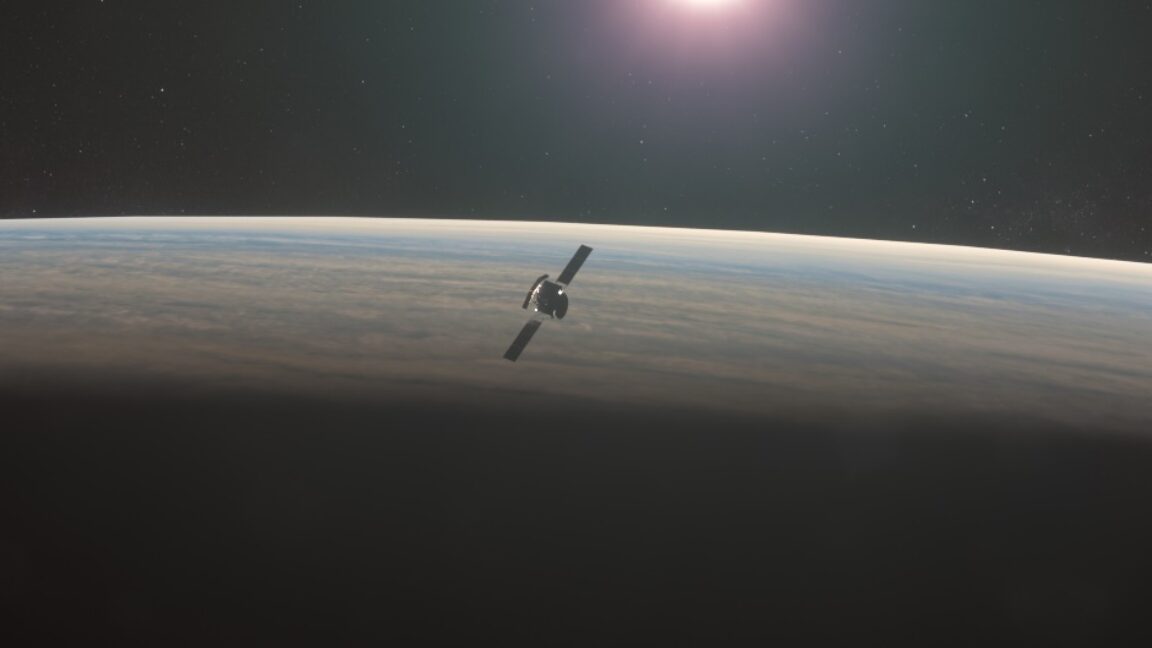
The European Space Agency is moving "full steam ahead" with development of a robotic mission to Venus after NASA officials determined they were unlikely to fulfill a commitment to provide a US-built radar instrument for the spacecraft, the mission's project scientist said.
The European orbiter, named Envision, will map the Venusian surface at 10 times higher resolution than the last radar mission sent to Venus by NASA in the 1990s. The planet is enshrouded in a blanket of thick clouds of sulfuric acid, rendering its mysterious surface unseen by optical cameras in orbit. Radar is the most effective way to penetrate the clouds of Venus to reveal the terrain below, and scientists will use Envision to look for signs of active volcanism.
NASA and ESA signed a memorandum of understanding in 2024 outlining their partnership on Envision. NASA agreed to supply a US-made synthetic aperture radar instrument, Envision's primary means of mapping the surface of Venus, along with providing tracking and communications support through NASA's Deep Space Network. In exchange, ESA would include US researchers on Envision's science team. Europe would build the Envision spacecraft and the rest of its science instruments and provide the launch on an Ariane 6 rocket.
Paleoanthropologists have identified a trove of Denisovan fossils from a cave in China’s Yunnan province, extending the known range of the elusive human relative and providing the first-ever direct evidence of what its forearm bones looked like.
Bank of America says John Ternus’ first major product launch as Apple CEO reinforced the company’s bet on hardware innovation, privacy, and more personalized, privacy-focused artificial intelligence.
Wamsi Mohan, Bank of America’s managing director and senior equity research analyst covering Apple, told Bloomberg Tech host Ed Ludlow that the new foldable iPhone Duo expands Apple’s addressable market. The book-style device, unveiled at Ternus’s debut event, opens to a 7.6-inch inner display from a 5.4-inch cover screen and starts at $1,999. Mohan framed it as more than a form-factor change: a way to pull new users and use cases into Apple’s ecosystem while keeping the iPhone at the center of the company’s strategy.
On AI, Mohan pointed to Apple’s split architecture. On-device processing handles as much as possible on Apple Silicon. When more compute is needed, Private Cloud Compute is designed to run larger models without sacrificing user privacy. That combination, he said, could make Siri more capable (able to work across apps and personal context) without the data-collection trade-offs seen in rivals’s offerings. Ternus used the launch to pitch the iPhone as an “intelligent personal hub,” with Siri positioned as a core interface rather than a bolt-on chatbot.
The message from BofA is continuity plus acceleration. Tim Cook’s era was iterative, built a vast installed base, services revenue, and supply-chain scale. Ternus, the longtime hardware chief who took over September 1st, is expected to keep that machine running while pushing devices that embed AI more tightly — foldables now, and later categories such as smarter wearables and home products. Mohan has maintained a Buy rating, arguing Apple can cement device dominance if silicon, privacy, operating systems, and personal context stay tightly integrated.
MacDailyNews Take: We’re not the only ones who are already loving John Ternus’ Apple!
Please help support MacDailyNews — and enjoy subscriber-only articles, comments, chat, and more — by subscribing to our Substack: macdailynews.substack.com. Thank you!
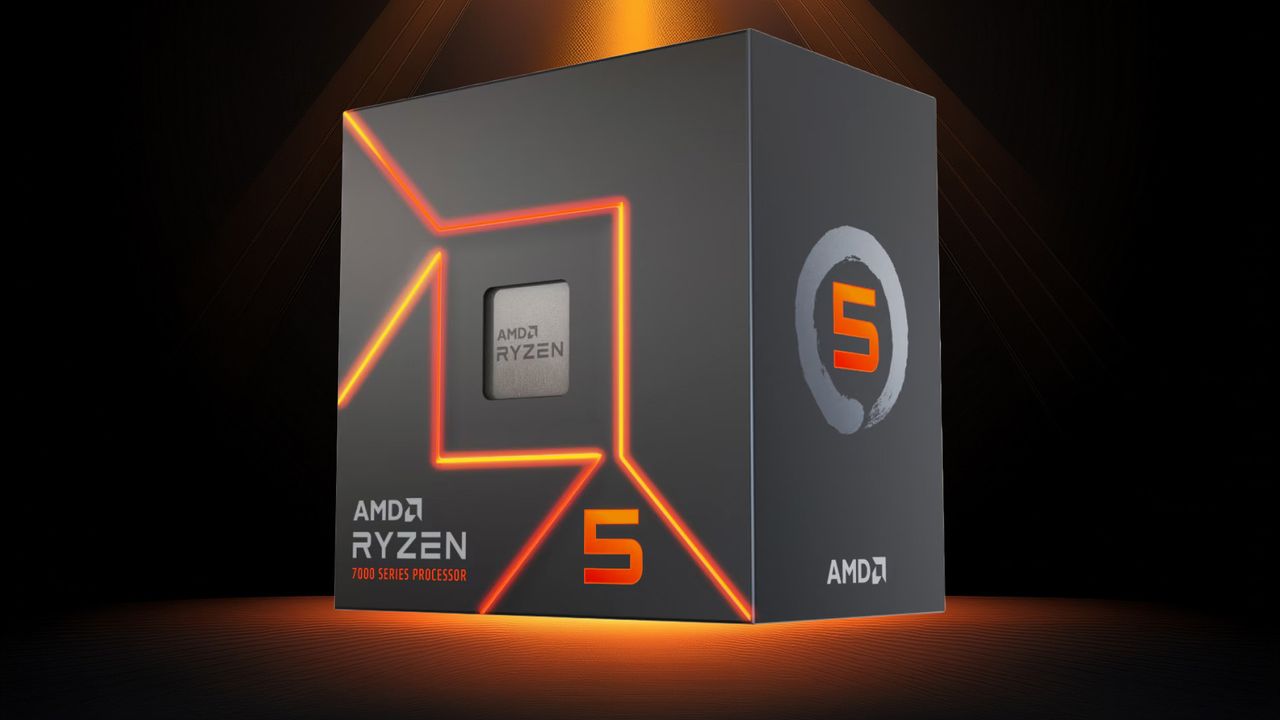
AMD has officially launched the Ryzen 5 5500F and Ryzen 5 7500, two strong contenders for the best CPUs on the market if you're on a budget. Both are hexa-core chips, with the Ryzen 5 5500F featuring AMD's Zen 3 execution cores and the Ryzen 5 7500 using the newer Zen 4 execution cores. The Ryzen 5 5500F and Ryzen 5 7500, priced at $99 and $189, respectively, are available at U.S. retailers starting today.
The Ryzen 5 5500F, despite its similar model name to the Ryzen 5 5500, belongs to a different family in AMD's portfolio. The Ryzen 5 5500F hails from the Ryzen 5000 series (codenamed Vermeer), which uses a multi-chiplet architecture. Meanwhile, the Ryzen 5 5500 comes from the Ryzen 5000G series (codenamed Cezanne), which uses a monolithic die design.
Therefore, it is more sound to call the Ryzen 5 5500F a lower-binned version of the Ryzen 5 5600, rather than an iGPU-less variant of the Ryzen 5 5500, which lacks integrated graphics to begin with. The distinction matters because the Ryzen 5 5500F is closer to the Ryzen 5 5600, albeit with a 500 MHz lower boost clock speed and half the L3 cache.
The Ryzen 5 5600, which launched at $199, now retails for around $159, making the new Ryzen 5 5500F approximately 38% more affordable. Meanwhile, the Ryzen 5 5500, which debuted at $159, has lost substantial value over the years. OEM tray versions of the Ryzen 5 5500 now start at just $74, so it is still the most cost-effective entry point into the AM4 ecosystem. Compared to the Ryzen 5 5500, the Ryzen 5 5500F carries a 34% price premium. The latter justifies its higher cost with a slightly higher boost clock speed, which translates to better gaming performance, and support for PCIe 4.0, unlocking faster SSDs and graphics cards.
Ryzen 5 5500F and Ryzen 5 7500 Specifications
Processor
MSRP / Current Price
Architecture / Codename
Platform
Cores / Threads
Base / Boost Clock (GHz)
L2 Cache (MB)
L3 Cache (MB)
Graphics Model
Graphics Core
Graphics Frequency (MHz)
Memory Support
PCIe Lanes
TDP (W)
Ryzen 5 7600
$229 / $226
Zen 4 / Raphael
AM5
6 / 12
3.8 / 5.1
6
32
AMD Radeon
2
2,200
DDR5-5200
24 PCIe 5.0
65
Ryzen 5 7500
$189 / $189
Zen 4 / Raphael
AM5
6 / 12
3.7 / 5.0
6
32
AMD Radeon
2
2,200
DDR5-5200
24 PCIe 5.0
65
Ryzen 5 7500F
$179 / $157
Zen 4 / Raphael
AM5
6 / 12
3.7 / 5.0
6
32
N/A
N/A
N/A
DDR5-5200
24 PCIe 5.0
65
Ryzen 5 5600
$199 / $159
Zen 3 / Vermeer
AM4
6 / 12
3.5 / 4.4
3
32
N/A
N/A
N/A
DDR4-3200
20 PCIe 4.0
65
Ryzen 5 5500F
$99 / $99
Zen 3 / Vermeer
AM4
6 / 12
3.0 / 4.4
3
16
N/A
N/A
N/A
DDR4-3200
20 PCIe 4.0
65
Ryzen 5 5500
$159 / $74
Zen 3 / Cezanne
AM4
6 / 12
3.6 / 4.2
3
16
N/A
N/A
N/A
DDR4-3200
20 PCIe 3.0
65
When it comes to the Ryzen 5 7500, little mystery surrounds its place in AMD's product stack. True to its name, the Ryzen 5 7500 is the same processor as the Ryzen 5 7500F, which launched three years ago, but with integrated Radeon graphics. This small addition suits users who need basic display output and do not plan to spend money on a discrete graphics card. Apart from the integrated graphics, all core specifications remain identical between the two models.
As a result, the difference between the Ryzen 5 7600 and the Ryzen 5 7500 stands. The former boasts a 100 MHz higher base and boost clock, so performance is somewhat better in certain processor-intensive workloads or gaming scenarios. However, most users may not notice the difference.
The Ryzen 5 7500F hit the market at $179, but over time its retail price has dropped to about $157. In contrast, the Ryzen 5 7600 has held its value over the years, falling only slightly from its original MSRP of $229 to around $226. As a result, the Ryzen 5 7500 positions itself as a mid-point option, priced 16% lower than the Ryzen 5 7600 and 20% above the Ryzen 5 7500F.
The Ryzen 5 7500 makes sense in this market because not everyone is a gamer, so integrated graphics mean you do not have to spend a fortune on a discrete graphics card at today's ridiculous prices. However, because it runs on AMD's AM5 platform, the Ryzen 5 7500 is still bound by the sky-high cost of DDR5.
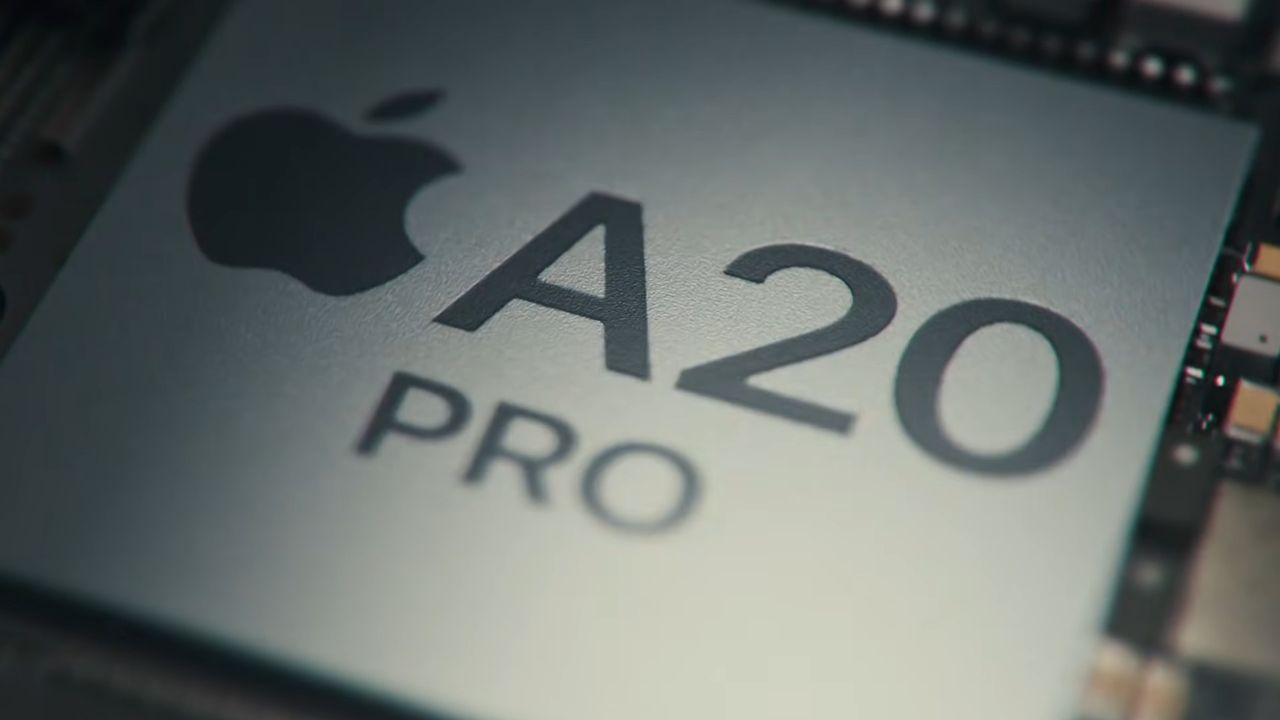
We reported on the new Apple A20 Pro system-on-a-chip (SoC) for smartphones yesterday, an integral attraction within Apple’s first foldable, the iPhone Duo, and in the iPhone 18 Pro devices. Now the first A20 Geekbench 6 benchmark results are starting to pop up online, and they’re very impressive, particularly in single-core performance. If the result spotted by Longhorn is a typical one, the 4,719 single-core and 12,677 multi-core scores mean the new A20 is around 25% faster than its predecessor. Its single-core score can also make some of the best PC CPUs look anemic.
huhApple A20 Pro Geekbench 6 numbers 🫠https://t.co/py5rdZ1ekk pic.twitter.com/Snrn9lTks9September 10, 2026
Apple’s official performance claims are interesting, as usual, but we’re always happy to see the third-party performance indicators start to emerge ahead of independent reviews. Heralding its new 2nm silicon yesterday, Apple might have actually understated the boost the A20 can deliver, with the official line about this “desktop-class” processor being the “fastest CPU in a smartphone,” and a claim that it is ‘just’ 20% faster than the previous gen. However, Geekbench isn’t the best indicator of real-world performance, and this is just a sample of one to sprinkle salt upon.
What are numbers without relevant comparisons, though? For more perspective on Apple’s newest silicon, which might also be thrown into a new Neo laptop (or desktop) in the coming months, check out the table below.
Above, we’ve pitted the Apple A19 Pro from last year’s iPhone 17 Pro as the second comparison column entrant. Apple has worked on multiple angles to deliver improvements over last year. It says that it has both new super-cores and efficiency cores in play. Then there’s the refined 2nm process and the faster clocks, too.
For some wider context, we’ve also tabulated one of Apple’s newest M5 computer chips, a modern Qualcomm Snapdragon Elite X2 laptop chip, and the AMD Ryzen 9 9950X3D2, for a fun desktop PC angle. Less fun is the comparison with the Asus Zephyrus G16 2024 laptop I’m using now, with an AMD Ryzen AI HX 370 chip. Its Geekbench 6 scores of roughly 2,800 / 14,500 are easily outclassed by Apple’s new smartphone processor in 1T tests, but retain a little dignity by winning by ~1,800 points in nT tests.
Apple is opening up pre-orders for its new iPhones with A20 silicon shortly, with retail release on Friday, September 18. It usually lifts review embargoes a few days before retail. We should therefore see a broader range of benchmarks and tests from good sources in the coming week.
The name that keeps pulling archaeologists back to the eastern frontier What if a city that appears in the records of ancient Egypt has been sitting in plain sight, hidden beneath later roads, barracks and stonework? That is the possibility raised by a new discovery at Tell Abu Seifi in northern Sinai. Archaeologists have found […]
Qualcomm is taking an unusual approach to the launch of its next-generation premium Snapdragon mobile platform this year. Instead of holding everything for its annual Snapdragon Summit in Maui happening later this month, the company has been methodically disclosing the architecture that will power the next wave of flagship Android phones over the past couple of weeks.
First, the company disclosed its new Oryon CPU architecture, followed by a major overhaul of its Adreno GPU. Today, Qualcomm is detailing the next-generation Hexagon NPU that will serve as the platform’s primary AI engine.
Taken together, the disclosures give us a pretty good picture of where Qualcomm is going before we even know the chip’s official name.
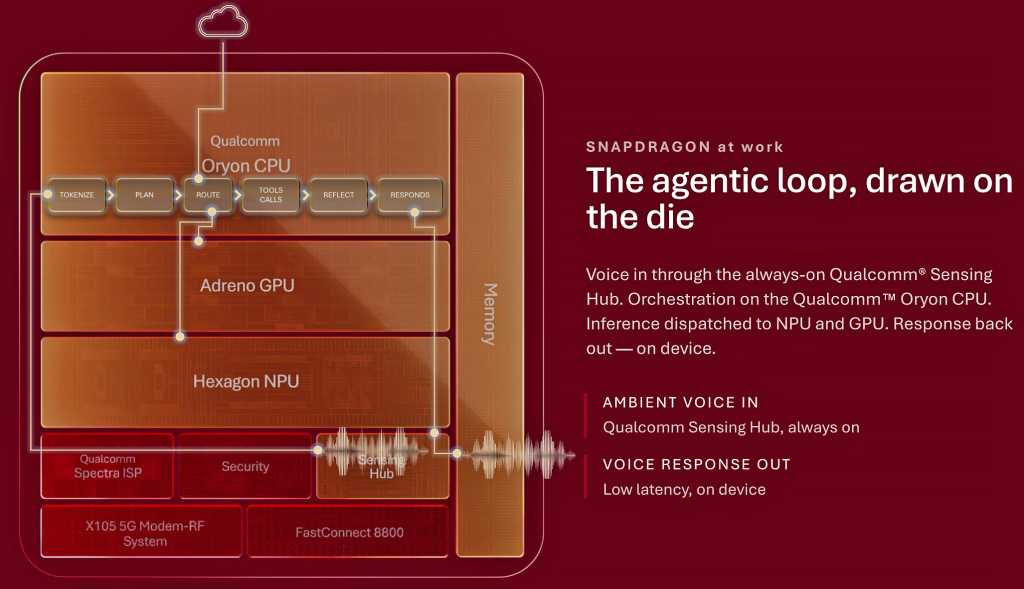
There is obviously a strong performance story here, anchored by a 5GHz CPU, but the more interesting theme running through the architecture is memory locality and specialized AI acceleration. Qualcomm is trying to keep more data close to the compute resources that need it, while distributing AI workloads across the CPU, GPU and NPU.
These architectural changes are important as the company continues to drive on-device AI beyond relatively simple generative features toward more persistent, agentic workloads.
Oryon hits 5GHz, bolstered by FlexCache
Qualcomm disclosed in August that its next Oryon CPU will be the first mobile CPU to reach 5GHz. The eight-core design includes two 5GHz Prime cores and six Performance cores, with Qualcomm attributing the frequency gains to its fully custom Oryon microarchitecture, an in-house Arm-based CPU design that gives the company full control over the cores, cache and memory hierarchy, branch prediction and CPU subsystem.
The 5GHz headline is certainly going to get attention. However, Qualcomm’s new FlexCache architecture may ultimately have a larger impact on sustained performance. FlexCache allows Oryon’s Prime and Performance cores to tap into the same shared cache pool, with capacity dynamically allocated based on the workload. So rather than a demanding core being limited to a fixed slice of cache, it can draw on more of the available pool when needed. This keeps larger working data sets close to the CPU cores and reduces high-latency trips out to system memory.
This approach should benefit everything from gaming and multitasking to content creation, but it also aligns well with agentic AI workloads, where tasks may move through several stages of processing and across different CPU cores. The basic goal is straightforward: keep the CPU fed and avoid expensive trips to external memory.
Qualcomm’s next-gen Adreno GPU adds dedicated AI engines
Qualcomm’s next disclosure focused on graphics, where the company is making one of the more significant changes to its Adreno GPU engine in recent years. The new GPU adds dedicated Adreno Matrix Cores for running AI models directly inside the graphics pipeline. They’re paired with 18MB of Adreno High-Performance Memory, or HPM, which provides low-latency local storage for tile-based rendering, frame buffers and GPU compute.
Qualcomm claims HPM provides a 12% power improvement compared to its previous-gen Snapdragon 8 Elite Gen 5.
The more visible feature for users, however, may be Adreno Neural Fusion, which combines AI super resolution, neural processing and frame generation in a unified graphics pipeline. There are obvious parallels here to what NVIDIA, AMD and others are doing with neural rendering on the PC, though Qualcomm’s next-gen Snapdragon SoC has to operate within a much tighter mobile power envelope.
Qualcomm claims enabling Neural Fusion reduces power consumption by up to 40% in its internal testing using the company’s Dragon Alley graphics demo. That’s an impressive number, though as always, we’ll want to see how the technology behaves across actual shipping games and devices before drawing any definitive conclusions.
Qualcomm has also helped integrate Neural Fusion technology into Unity and Unreal Engine, which may ultimately be just as important as the underlying hardware. Developer adoption determines whether features like this become meaningful platform advantages or just another tick box on a spec sheet.
Qualcomm’s Hexagon NPU is being reworked for agentic AI
Qualcomm
The most recent disclosure centers on Qualcomm’s Hexagon NPU, where the broader architecture starts to come together. The company’s next-generation Hexagon introduces a new Element Accelerator designed for transformer workloads, alongside its existing vector and scalar processing resources. Qualcomm says the new block is optimized for fast action loops, key-value (KV) cache acceleration and context lengths of up to 32K.
Hexagon is also getting 50% more shared memory, and again, that memory complement is important. Model state, context and KV-cache data can generate substantial memory traffic, particularly with larger language models. Keeping more of that data close to the NPU can reduce latency and power consumption. Qualcomm says the architecture is designed for long-context reasoning, multimodal models, concurrent agents and low-latency action loops.
For INT4 quantized models, the company claims up to a 50% improvement in pre-fill performance versus its previous-generation Snapdragon 8 Elite Gen 5. Qualcomm is also targeting Mixture-of-Experts, or MoE, models as large as 30 billion parameters. In its example, the company points to a 30B model that activates only about 3 billion parameters during a given token-generation step. That selective approach is a natural fit for the tight power and memory constraints of a handset.
Qualcomm isn’t suggesting that a smartphone will simply run a 30B dense model entirely from DRAM, however. By activating only the experts needed for a particular task, MoE architectures can dramatically reduce active compute and memory bandwidth requirements, potentially making much larger classes of AI models practical on mobile hardware.
Qualcomm’s next-gen Snapdragon mobile impact
There is a larger competitive story here as well. For years, flagship smartphone competition largely came down to CPU, GPU, modem performance and power efficiency. AI is now another major area of differentiation, and Qualcomm is clearly designing its next-gen Snapdragon mobile platform around this need.
Apple has the advantage of controlling its silicon, operating system and software stack end-to-end. MediaTek continues to push aggressively into premium Android devices as well. Qualcomm’s response is to make its custom Oryon CPU, Adreno GPU and Hexagon NPU work more like a fully integrated compute platform, tuned for modern AI and agentic workloads.
This is a solid advantage for Android handset OEMs because many don’t have the resources to engineer this level of silicon integration themselves. Qualcomm can effectively provide its Android OEM partners, including Samsung, Xiaomi, Honor and others, with a common hardware foundation for on-device AI, advanced graphics and agentic computing. It also gives Qualcomm another way to defend its premium Snapdragon position.
The company’s custom Oryon architecture now spans smartphones and Windows PCs, and soon servers, while AI acceleration is distributed across its CPU, GPU and NPU. For business users, that could mean more AI processing happens locally, reducing cloud and network dependence, improving response times and keeping more potentially sensitive data on-device. And for IT organizations, Qualcomm now has an opportunity to provide a more consistent AI compute foundation across Windows PCs with Snapdragon X and premium Android handsets.
There is still plenty we don’t know, however. Qualcomm hasn’t disclosed the complete SoC specifications, final performance or power characteristics, or which devices will ship with it initially. Many of these AI experiences will also depend heavily on Android, app developers and the models themselves.
The new 5GHz mobile CPU may generate the biggest headline at Snapdragon Summit, but the more important developments may be what sit around it: more local memory, specialized AI acceleration and tighter integration between the CPU, GPU and NPU.
If Qualcomm can translate this architecture into better sustained performance, enhanced power efficiency and useful on-device AI experiences, it could strengthen its position in premium Android phones while putting more competitive pressure on Apple. For business users, the payoff could be more capable local AI without sacrificing the performance and battery life expected of a flagship device.
That is the part I’ll be watching most closely when the complete silicon picture is unveiled at Snapdragon Summit later this month. And I may even get some hands-on time with it in some benchmarks, as we have in years past, so we shall see.
Modders at the YouTube channel TecLab have created what is being called the world’s first RTX 5090 powered by traditional 8-pin PCIe connectors. Not only were the modders able to successfully power up the graphics card, but they also proved that the older connector is still quite capable of handling the extreme power demands of a modern high-end GPU.
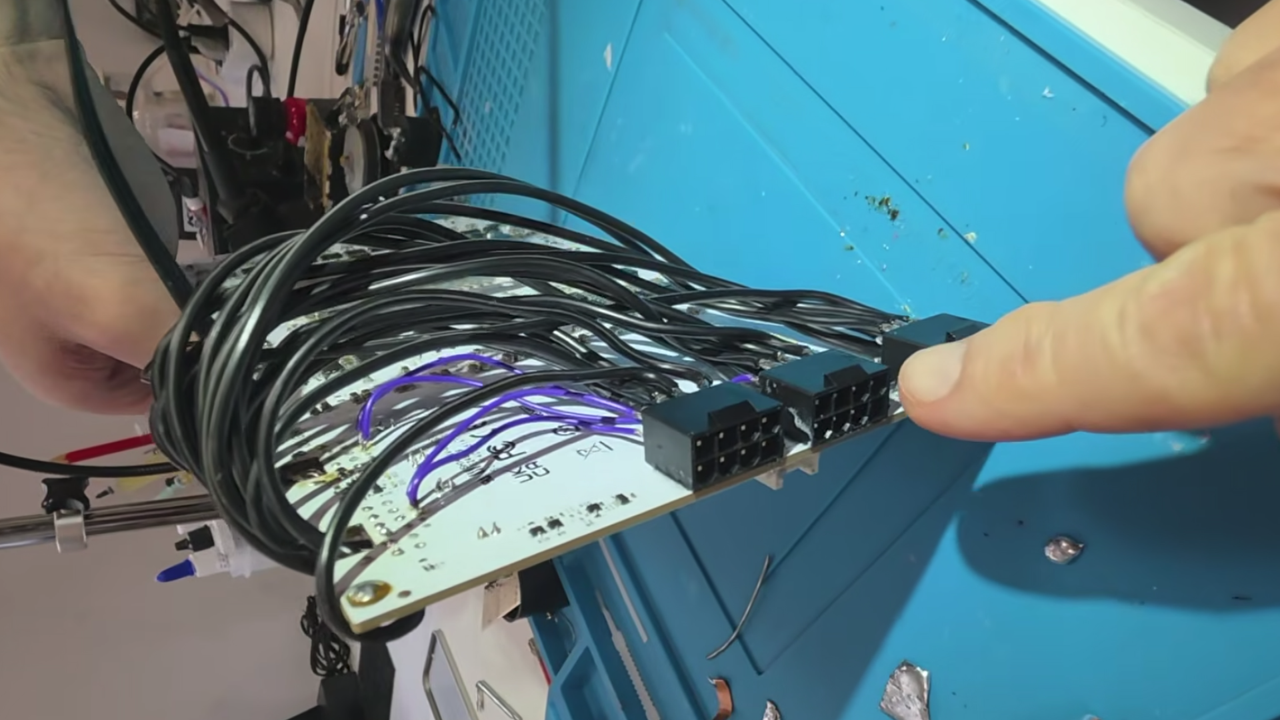
The card chosen for the experiment was a Galax GeForce RTX 5090D HOF OC LAB XOC, which is a top-of-the-line model that features a beefy cooler as well as dual 16-pin power connectors. The modders essentially dismantled the entire graphics card along with the dual 16-pin power connectors, stripping it down to just the bare PCB. Next, three 8-pin power connectors were installed at the rear, with each connector soldered directly to the power regulators on the PCB using heavy-gauge cables. Additionally, the sense pins had to be rewired to ensure that the card could reach its maximum power load without any restrictions. To keep the temperatures in check, they used a liquid cooling system with a GPU block.
An 8-pin PCIe power connector is officially rated for 150W, although its actual maximum capacity is much higher. During the one-hour livestream, the modders tested the GPU by gradually increasing the power draw, starting at 400W and going all the way up to 900W using three 8-pin power cables. At its peak, the modified RTX 5090 pulled more than 120A, with clock speeds reaching as high as 3,400 MHz. Notably, the mod was limited to only the hardware level, with no software or BIOS tweaks performed.
To further test the capability of the 8-pin connectors, the modders tested the modified RTX 5090 with just two cables. The overall power draw dropped to 66A, while clock speeds remained at a respectable 3,200 MHz. Going a step further, the card was tested with just one cable, which surprisingly only dropped the figures down to 65A and 3,100 MHz.
Despite the PCI-SIG (PCI Special Interest Group) revising the 16-pin power connector (12V-2x6) to improve reliability, reports of melting GPU connectors continue to haunt gamers. The issue is particularly more common among high-performance models, though not limited to Nvidia RTX 50 and RTX 40 series, as certain AMD Radeon graphics with the 16-pin connector are also at risk. TecLab's experiment shows that GPU manufacturers may want to reconsider the tried-and-tested 8-pin connector and explore whether it could still be a viable option in high-end graphics cards.
O ArtAtlas é um mapa interativo, feito em IA, com mais de 23 mil obras de arte, 400 artistas e 1.700 espaços em 800 cidades. Este é uma ferramenta ideal para descobrir tesouros escondidos, ou planear um itinerário artístico completo em qualquer cidade.
Dados do mais recente balanço do Serviço de Alterações Climáticas Copernicus (C3S), partilhado pelo pelo Centro Europeu de Previsões Meteorológicas de Médio Prazo (ECMWF), mostram que agosto de 2026 foi, a par de julho de 2023, o mês mais quente de sempre desde que há registos.