❌

Reading view

Multi-kilojoule lasers built for nuclear fusion could power next-gen air defense

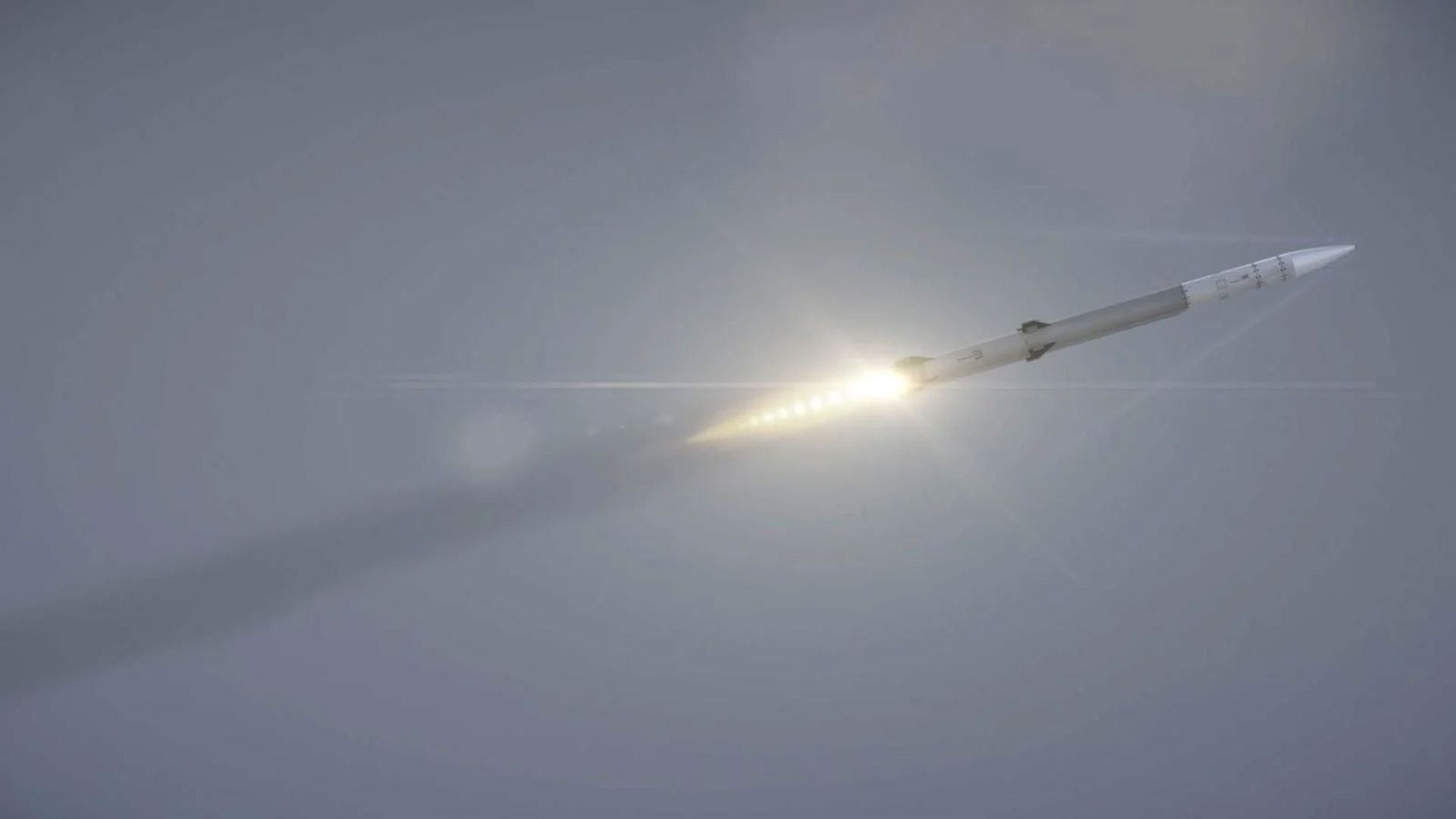
RTX Ventures has invested in laser fusion company Xcimer Energy to develop pulsed-laser technology for potential use in US military directed-energy systems.

The collaboration brings together two applications that share a fundamental engineering challenge: building powerful lasers that can fire repeatedly, reliably and affordably.

Xcimer is developing excimer laser technology for its fusion power system. The company says the same approach could provide the performance and scalability needed for directed-energy weapons, potentially offering longer-range capability than existing systems.

RTX’s investment is also intended to support Xcimer’s fusion program. In June, the US Department of Energy approved Xcimer’s fusion pilot power plant design under its Milestone-Based Fusion Development Program.

One laser, two missions

Laser fusion works by using intense laser pulses to compress and heat fuel until it reaches conditions where nuclear fusion can occur. The challenge is developing lasers that can deliver these pulses repeatedly while keeping energy consumption, maintenance, and operating costs under control.

Those same requirements matter for military laser systems. A directed-energy weapon must deliver enough energy to engage a target while remaining efficient and reliable enough for repeated use. Xcimer says its excimer-based system is designed around those requirements.

“As the United States accelerates the development of next-generation air defense, the need for affordable and scalable directed energy systems has never been more urgent,” said Conner Galloway, co-founder, CEO and Chief Science Officer at Xcimer. “Our excimer-based laser technology offers the performance, speed and inherent scalability needed at a fraction of the cost and complexity of today’s systems.”

The partnership will now examine how the laser technology could be integrated and containerized into RTX defense systems.

That could be important because one of the challenges facing directed-energy weapons is making them practical outside laboratory environments. Systems must fit into deployable platforms while generating enough power to engage threats.

Fusion technology enters air defense

RTX brings experience in sensing, command and control, and air-defense systems to the partnership. The company says those capabilities could help integrate Xcimer’s laser technology into future defense platforms.

“We believe Xcimer’s pulsed-laser technology lines up perfectly with our expertise in areas like advanced sensing, command and control and air defense,” said RTX Chief Technology Officer Juan de Bedout. “Together we will explore how we can best integrate these technologies into advanced, scalable defense systems able to defeat a range of new and evolving threats.”

Xcimer is pursuing commercial fusion power alongside the defense work. The company expects its fusion technology to begin delivering electricity to the grid by the mid-2030s.

The dual-use development could give the laser technology two potential markets: commercial fusion energy and military directed-energy systems.

For now, the RTX-Xcimer agreement is focused on exploring integration and development rather than announcing an operational weapon. The companies will need to demonstrate that the laser can meet the demanding requirements of a deployable defense system while maintaining the efficiency, reliability, and scalability needed for repeated operation.
  •  

New compact radar gives weapon stations faster tracking of hard-to-spot drones

Norwegian defense company KONGSBERG has selected Echodyne’s MESA radar platform for multiple air and surface applications, starting with its PROTECTOR remote weapon stations. The compact radar has already been integrated into the PROTECTOR RS4 and RS6 systems.

The collaboration brings together KONGSBERG’s weapon-station architecture and Collaborative Fire Control capabilities with Echodyne’s solid-state radar. It is designed for static, crewed, and uncrewed platforms. 

The system helps them detect, track, and engage fast-moving drones. It also requires less space, weight, and power than traditional high-performance electronically scanned array radars.

Compact radar strengthens weapon stations

The integration provides the PROTECTOR systems with the precise radar data required to operate as counter-unmanned aircraft system effectors. MESA delivers range, range-rate, bearing, and movement data while maintaining stable tracks on agile targets with low radar signatures.

This data allows the radar to direct and stabilize the weapon station’s optical fire-control system on a target.  According to Echodyne, the combination can help the system sustain its target lock, reduce the time between detection and engagement, and increase its chances of hitting a drone.

“KONGSBERG has set the standard for remote weapon systems through decades of field experience, disciplined engineering and close collaboration with operators,” said Eben Frankenberg, CEO of Echodyne. 

“Integrating MESA radar gives the PROTECTOR family the precise, stable and persistent tracks needed to cue the fire-control system, sustain target lock and act decisively against fast-moving, low-signature drone threats,” he added. 

“Just as important, MESA delivers that performance in a compact, software-defined package that can scale across a large installed base and adapt as the threat evolves,” he continued.

Radar supports precise airburst timing

Accurate radar measurements become particularly important when PROTECTOR weapon stations use programmable airburst ammunition. Range and range-rate information helps the fire-control system time the munition so that its effect occurs at the intended point along a drone’s flight path.

MESA can also operate as part of a wider network of sensors and weapon systems. A cooperative search radar or another sensor can initially detect a threat and send its track to a radar-equipped PROTECTOR station. The local radar can then refine the incoming information, maintain the track and provide the data needed for fire control. 

This process enables distributed systems to share an air picture, allocate targets and rapidly switch their attention as individual threats are addressed.

Companies explore wider radar applications

Echodyne and KONGSBERG spent several years integrating, testing and demonstrating the radar-enabled system in field conditions. The work reflects KONGSBERG’s approach of validating new capabilities through practical testing before broader deployment.

Beyond the RS4 and RS6 integrations, the companies are examining how high-performance radar could support other air and surface missions across KONGSBERG’s portfolio. Their continued technical work will focus on resilient sensing, networked fire control and protection that can scale as threats evolve.

Both companies are exhibiting at the International Defense Industry Exhibition in Kielce, Poland, from September 8 to 11, 2026.

  •  

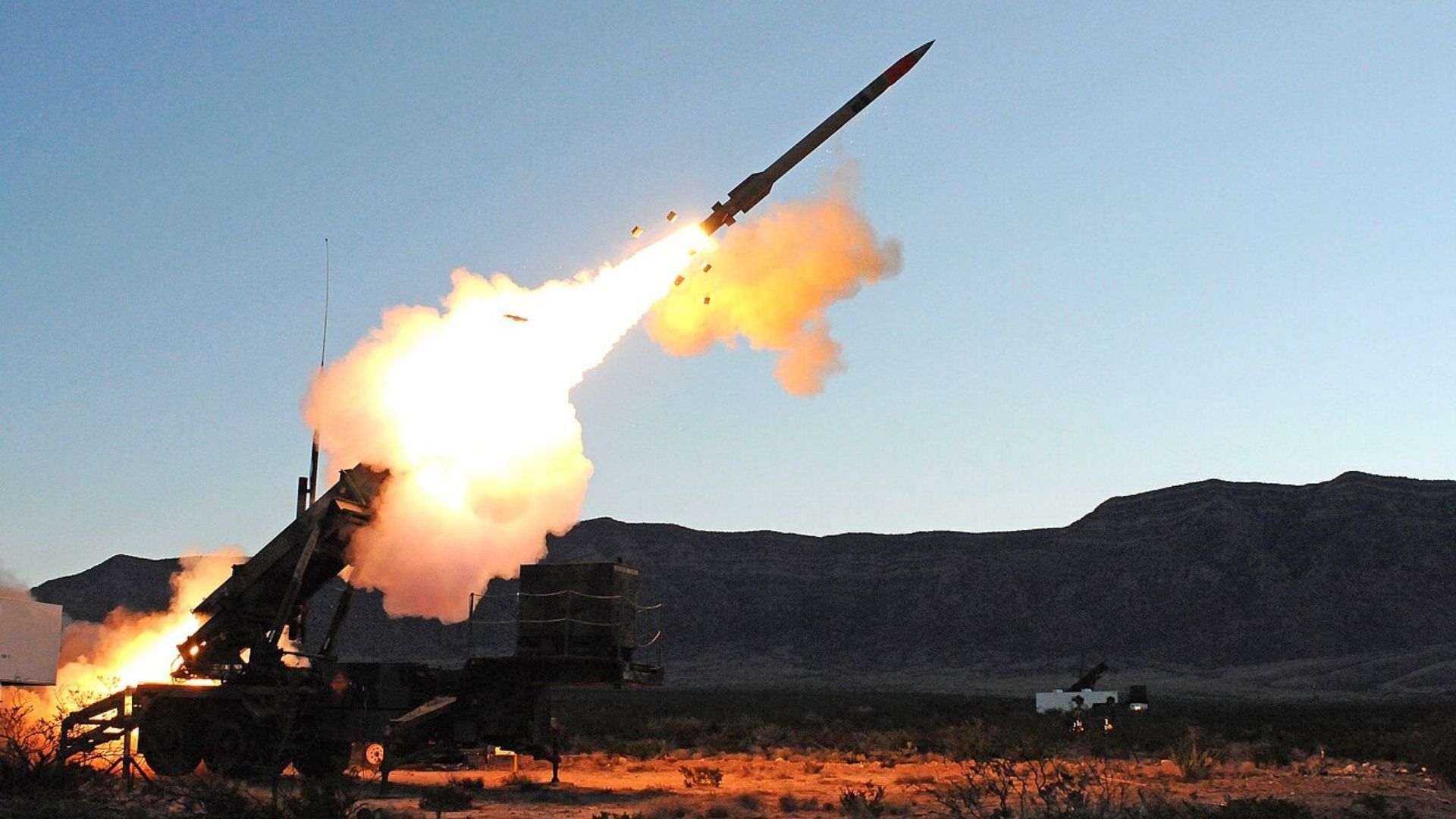
US Army picks Boeing and Anduril for its next-gen cruise missile defense

The U.S. Army has selected Boeing and Anduril to enter the next phase of a competition for a new midrange air-defense interceptor, the companies announced on September 9, 2026. The weapon is being developed to defend fixed and forward operating bases against cruise missiles, militarized drones, and other aerial threats.

The selection moves the program into Phase 2 of the Integrated Fires Protection Capability Increment 2 Second Interceptor effort. Boeing and Anduril will now carry out detailed design, development, integration, and demonstration work before facing a competitive test against Army requirements.

A new layer for base protection

The proposed interceptor is designed to fill a gap in the Army’s air-defense network. It would provide a midrange option between short-range systems used for point defense and longer-range weapons intended for protecting high-value targets.

Boeing is responsible for the seeker technology and compact airframe, while Anduril is developing the interceptor’s solid rocket motor. The weapon’s compact design is intended to allow military units to deploy more interceptors at each defended location.

The companies are also emphasizing affordability and production capacity. A larger number of available interceptors could help units respond to attacks involving large numbers of lower-cost aerial threats.

Modular design could speed upgrades

The interceptor will use a Modular Open Systems Architecture. This design lets crews replace or upgrade key components such as the seeker, avionics, and software without redesigning the entire weapon.

The approach could make it easier for the Army to adapt the system as aerial threats evolve. It is also intended to reduce the time and cost of introducing new capabilities.

“Our scalable production approach is designed to provide a reliable, affordable layer of defense against a range of aerial threats to protect the warfighter with practical, dependable capability when it matters most,” said Bob Ciesla, vice president of Boeing Precision Engagement Systems.

Boeing said its manufacturing approach is intended to support scaled production as the program develops.

Anduril expands rocket motor production

Anduril plans to manufacture the interceptor’s solid rocket motor at its 450-acre Mississippi Solid Rocket Motor Complex. The company has invested more than $100 million of its own money in the facility.

The site has also received $58 million through Defense Production Act funding. Anduril said the combined investment will support several propulsion programs while increasing production capacity.

The facility features a bladeless high-speed mixer that Anduril describes as the only one of its kind worldwide. Its manufacturing line can run multiple stages in parallel and produce different motor configurations.

The company said the U.S. solid rocket motor industry has become concentrated among two suppliers after decades of consolidation. Its Mississippi facility is intended to add capacity and improve supply-chain resilience.

Partnership moves into full development

Boeing and Anduril began exploring technologies for the Army program in 2024 and announced their partnership in December. Their selection now moves the concept into detailed system development and competitive demonstration.

The effort comes as the U.S. military faces growing demand for interceptors that can counter large numbers of relatively inexpensive cruise missiles and drones. Anduril said China, Russia, and Iran have spent the past decade developing mass-producible aerial threats designed to put pressure on U.S. interceptor inventories.

“We welcome the opportunity to continue in this competition,” stated Jim Bryan, executive director of Boeing Integrated Air and Missile Defense. “By combining proven seeker expertise with a purpose-built interceptor, we are delivering thoughtful, effective advances in air and missile defense that meet mission needs.”

  •  

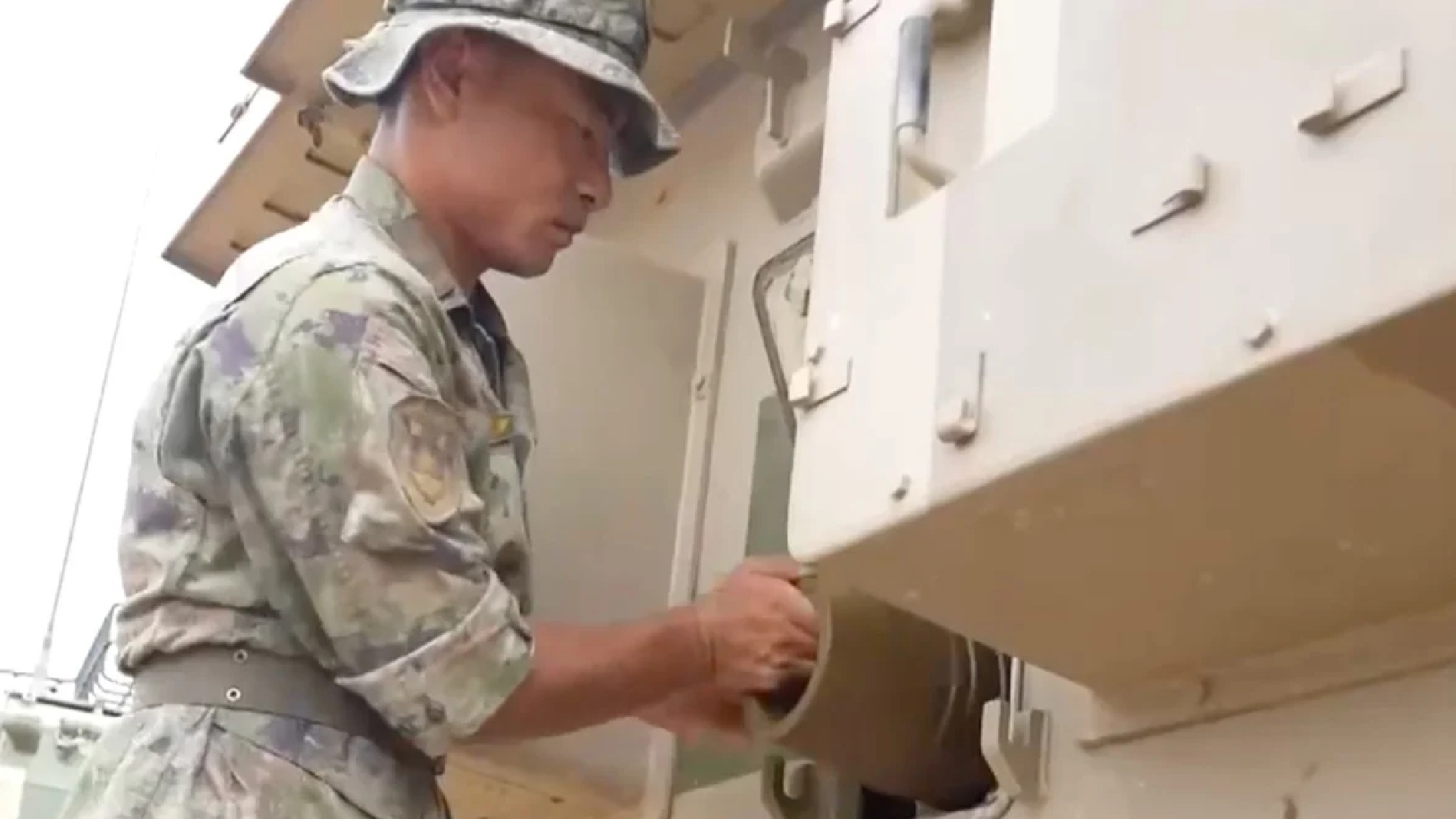
China reinforces Taiwan-facing artillery with upgraded 155mm howitzers this year

China has reinforced artillery firepower facing the Taiwan Strait, deploying additional 155mm PLZ-05 self-propelled howitzers to replace older equipment. State broadcaster CCTV reported Sunday that a combined-arms brigade under the People’s Liberation Army’s 71st Group Army received a batch of the howitzers over the past two months. The deployment phased out the brigade’s previous 122mm artillery, an older and less capable system.

The brigade conducted its first live-fire test with the new howitzers following the deployment. The 71st Group Army belongs to the Eastern Theatre Command, which holds primary responsibility for military operations facing Taiwan, the East China Sea, and Japan.

A brigade-level first

This deployment marks the first time the PLZ-05 has been assigned specifically at the brigade level. The system was originally fielded at the group-army level, where it operated as a long-range suppression weapon rather than equipment directly integrated into brigade formations. Moving the system down to the brigade level represents a structural shift in how the PLA organizes its heavy artillery assets.

Brigade officer Sun Xialong said receiving 155mm self-propelled howitzers for the first time significantly improved the unit’s overall combat effectiveness. That framing suggests the PLZ-05’s move down to brigade level reflects a deliberate effort to streamline artillery firepower closer to frontline combat units.

Swapping between commands

The howitzers arrived painted in brown desert camouflage. The tracked vehicles appear to have been relocated from the Western Theatre Command, rather than built as new equipment specifically for the 71st Group Army. In their place, the Western Theatre Command has instead received lighter, wheeled PCL-181 155mm self-propelled howitzers. That design is better suited to the plateau and mountainous terrain that command typically operates across.

That swap suggests Beijing is deliberately matching different howitzer designs to the specific terrain and operational demands each theatre command faces. It’s a different approach than distributing identical equipment uniformly across the PLA’s various regional forces.

  •  

DARPA launches new hypersonic missile program to counter China’s YJ-19 and CJ-1000

A year after China unveiled the world’s first operational air-breathing hypersonic missiles, the United States is launching a new program aimed at catching up. The Defense Advanced Research Projects Agency will bring contractors together later this month. The agency plans to outline requirements for its Next Generation Hypersonic Cruise Missile, according to its website, with air-breathing propulsion sitting at the center of the effort.

Unlike rocket-powered missiles, air-breathing weapons draw oxygen directly from the atmosphere instead of carrying an onboard oxidizer. That design frees up weight that can instead go toward additional fuel or a larger payload.

China went public first

China displayed that same air-breathing approach at a massive military parade in Beijing last year. The parade marked the 80th anniversary of the country’s victory in World War II. That event introduced the YJ-19 anti-ship missile and the larger, road-mobile CJ-1000. Both are believed to run on air-breathing scramjet engines and were presented as weapons already in active service with the People’s Liberation Army.

The YJ-19’s distinctive air intake was clearly visible during the parade. Chinese state media described the CJ-1000 as built for far longer-range strikes against targets on land, at sea, or in the air. Outside of Russia’s ship-based Zircon missile, the YJ-19 and CJ-1000 are considered the world’s only other operational scramjet-driven hypersonic weapons.

More than an upgrade

DARPA has signaled it isn’t simply looking to refine existing American hypersonic designs. In an industry request issued last month, the agency called for entirely new propulsion systems, fuels, and boosters. Those systems need supporting technologies capable of withstanding the extreme heat generated during hypersonic flight.

The resulting missile could ultimately come in multiple sizes, ranging from smaller weapons carried by tactical aircraft to considerably larger systems launched from bombers or ground-based platforms. That flexibility mirrors the range of launch options China has already demonstrated across its own hypersonic missile family.

Darpa’s earlier air-breathing hypersonic effort, the Hypersonic Air-breathing Weapon Concept, completed its first successful flight test in 2021. It has continued flight testing since, laying some of the technical groundwork this newer, more ambitious program now aims to build on.

  •  

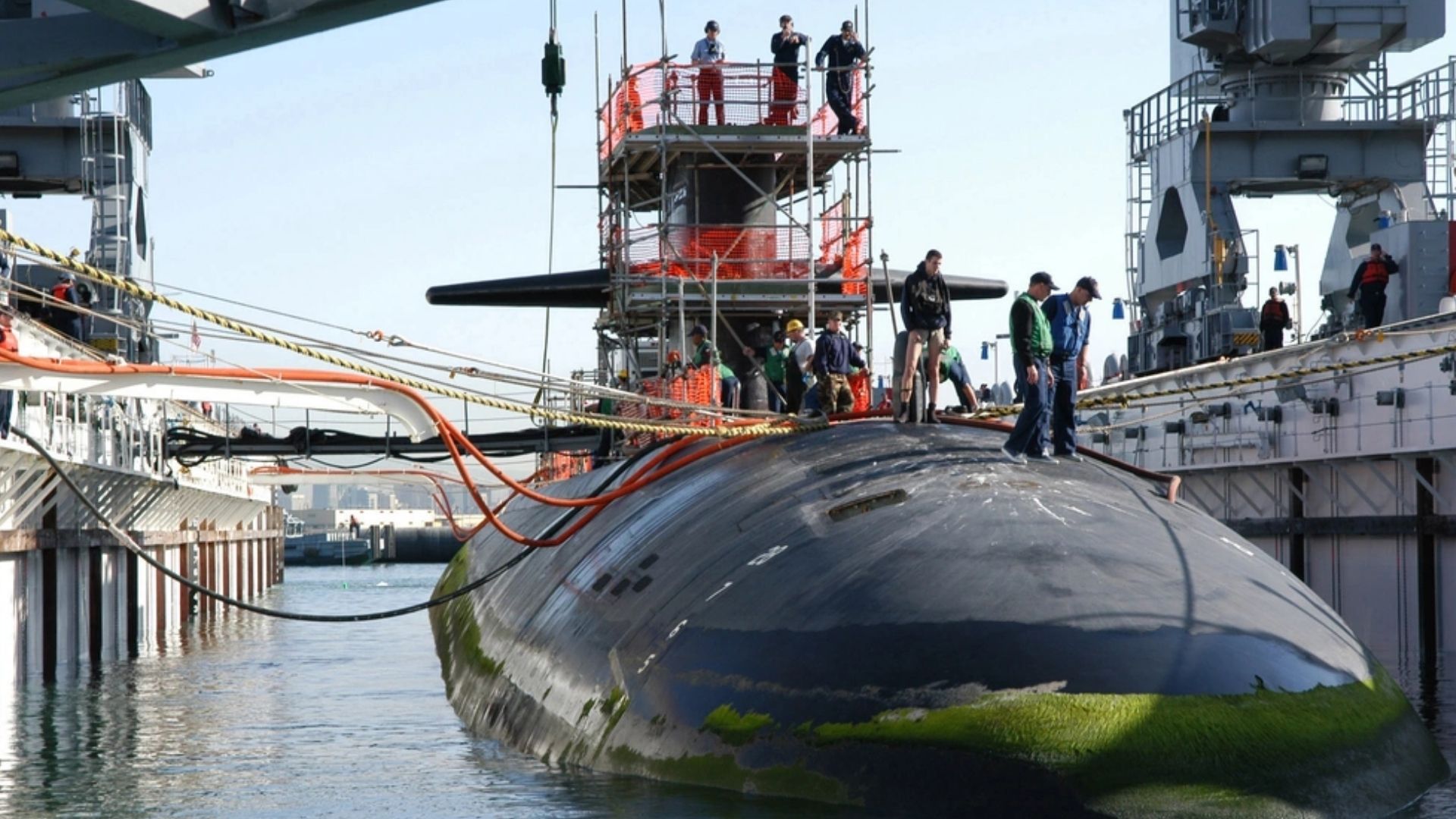
How nuclear submarines stay underwater for months without surfacing

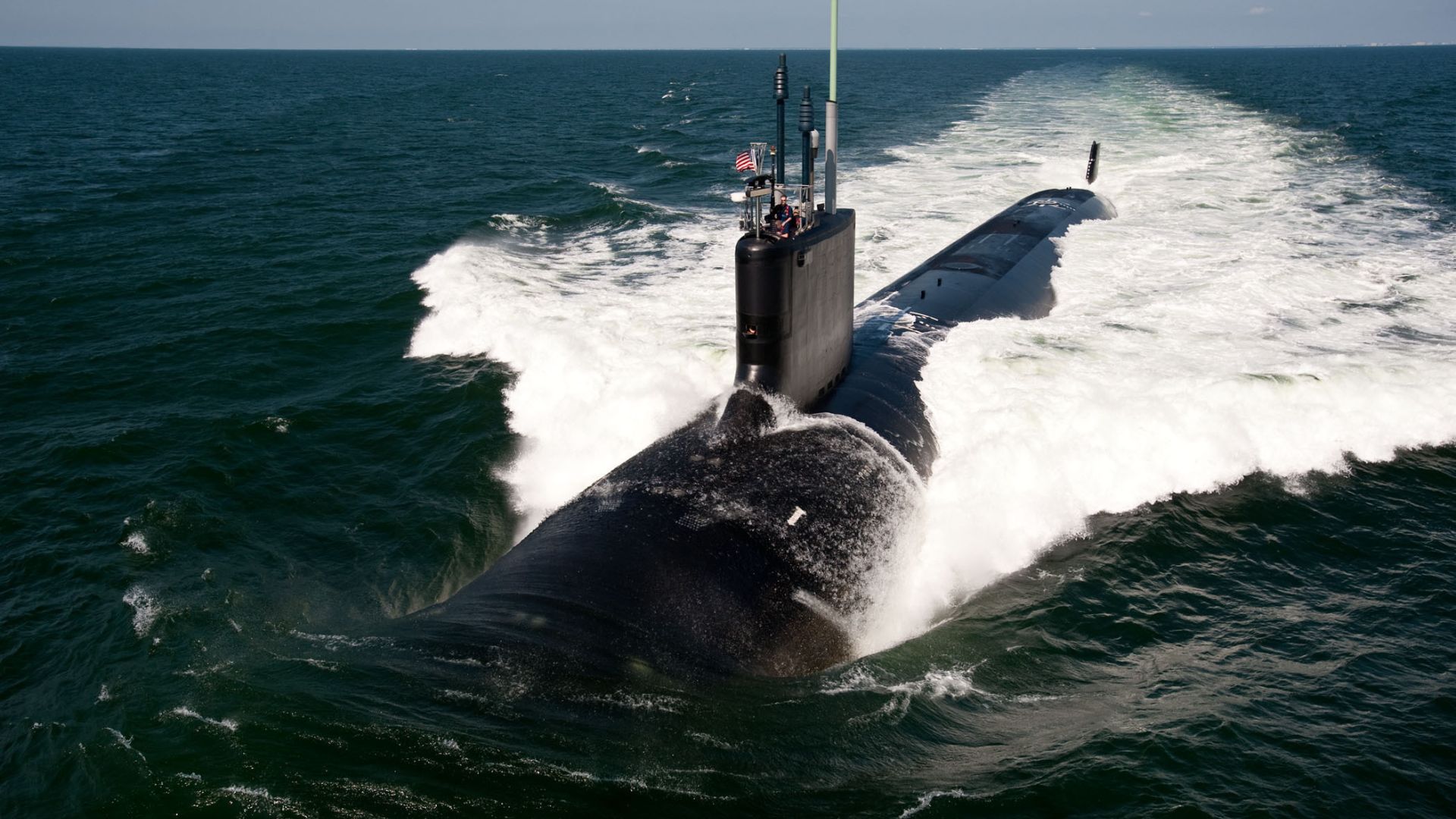
A nuclear-powered submarine can disappear beneath the ocean and remain there for weeks or even months without surfacing. Unlike conventional submarines, it does not need to regularly come up for air or surface to recharge its batteries.

The secret is not simply the nuclear reactor. A nuclear submarine is essentially a self-contained environment that can generate its own power, oxygen and fresh water while carrying enough food and supplies to keep its crew alive for extended periods.

Nuclear power removes the biggest limitation

The fundamental difference is the way the submarine generates energy. Conventional diesel-electric submarines need atmospheric oxygen to run their diesel engines, while their batteries eventually need to be recharged. 

A nuclear reactor, by contrast, produces heat through nuclear fission and does not need atmospheric oxygen to operate. That allows the submarine to keep generating power while completely submerged.

In a typical naval reactor system, heat from the reactor is transferred to water in a separate steam system. The resulting steam drives turbines, which provide propulsion and generate electricity for the submarine’s other systems. The steam is then condensed back into water and reused in a closed cycle.

This gives nuclear submarines essentially unlimited range from their reactor fuel compared with conventional submarines. The U.S. Department of Energy says modern naval reactor cores can last more than 1 million miles, although the submarine’s actual deployment duration is limited by other factors.

But what about oxygen?

The crew still needs it, of course. This is where the submarine becomes more like a miniature artificial ecosystem. Modern submarines can produce oxygen onboard, allowing the crew to breathe without drawing a fresh supply from the atmosphere. At the same time, systems remove carbon dioxide and other contaminants from the enclosed air.

The U.S. Navy’s historical account of submarine operations notes that modern boats use equipment to produce fresh air, remove carbon dioxide, and filter potentially harmful vapors.

The reactor is particularly useful here because its enormous energy supply can power these life-support systems continuously. In other words, the submarine does not need to conserve its oxygen simply because it is underwater. It has systems designed to continually maintain the atmosphere inside the boat.

How do they get fresh water?

Water is another resource that could quickly become a problem for a crew spending months underwater. Modern nuclear submarines can produce fresh water from seawater, using onboard distillation systems. 

The U.S. Navy says this capability, combined with oxygen production, allows a nuclear submarine to operate independently of Earth’s atmosphere for extended periods. Fresh water can therefore be produced for drinking and other onboard needs, rather than carrying every drop required for a months-long patrol.

So what eventually forces a submarine to surface?

Surprisingly, food is one of the biggest constraints. A nuclear reactor can keep producing power, and the submarine can produce oxygen and fresh water, but its crew still needs to eat. The U.S. Navy describes food as the primary limitation on the length of a submerged patrol, while an official U.S. Navy page for the Ohio-class submarine lists approximately 60 days of endurance with food supplies.

That does not mean a nuclear submarine must physically surface every time it needs supplies. Resupply can sometimes be conducted through specialized operations, but a submarine’s ability to remain completely independent is ultimately constrained by what it can carry and what its crew requires.

What about the people inside?

Keeping the machinery running is only half the challenge. Hundreds of sailors may spend months in a confined environment with no sunlight, limited personal space, and little contact with the outside world.

The Smithsonian’s National Museum of American History notes that nuclear submarines can operate submerged for months, while crews must cope with cramped living conditions and prolonged separation from their families. The U.S. Navy also studies the effects of disrupted sleep schedules, limited sunlight, and restricted exercise on submariners during long deployments.

That is why a nuclear submarine is better understood not simply as a warship with a reactor, but as a self-contained underwater city. The nuclear reactor supplies the energy needed to propel the vessel and operate its systems. Life-support equipment maintains the air. Desalination systems provide fresh water. Food stores sustain the crew.

Put those capabilities together, and a submarine no longer has to repeatedly return to the surface just to survive. That independence from the atmosphere is what transformed submarines from vessels that could briefly operate underwater into warships capable of remaining hidden beneath the ocean for months.

  •  

US Army to bolster its obstacle breaching capability with autonomous vehicles

A Seattle-based company is set to boost autonomous operations in the U.S. Army. Overland AI, the leader in ground-based autonomous capabilities, has been selected by the U.S. Army’s Capability Program Executive (CPE) Mission Autonomy for the Engineer Autonomous Breaching Capability (EABC) initiative.

This $20 million contract signifies a broader shift from proving that autonomy works to delivering an operational breaching package that soldiers can employ.

Breaching mission can be executed most effectively with truly autonomous vehicles

“A breaching mission can be executed most effectively with truly autonomous vehicles,” said Byron Boots, co-founder and chief executive officer of Overland AI.

“Our proprietary software stack is the best solution for ensuring the safety of soldiers by modernizing the battlefield.”

The company revealed that its Overland AI’s software stack, OverDrive, can be integrated onto any ground vehicles to make them autonomous and enable multi-robot coordination. This technology is being leveraged for complex military operations such as breaching to overcome obstacles and facilitate the safe passage of follow-on forces.

With one operator to many robotic platforms, the company’s autonomous systems are designed to reduce the number of combat engineers needed to complete a breach. In doing so, we can reduce unnecessary risk to soldiers during these exceptionally hazardous missions. For operations that have historically cost many American lives, this shift has meaningful implications, according to a press release.

Autonomous mission capabilities, spanning software stacks, hardware platforms

CPE Mission Autonomy was established to accelerate Army acquisition of autonomous mission capabilities, spanning software stacks, hardware platforms, and modular payloads. Along with its partners and subcontractors, Overland AI is delivering the full capability, from operator to battlefield effect. 

Overland AI was selected for its innovative approach to autonomous breaching, honed through extensive work with warfighters across multiple combat engineer units and Department of War research labs, and more than 25 government demonstrations for DARPA, DIU, and the U.S. Army. The EABC program is designed to deliver a cohesive autonomous breaching package, and Overland AI is honored to bring this next generation capability to warfighters, as per the release.

Breaching is a critical combat-engineering function. Forces may need to create passages through obstacles so that troops, vehicles and other equipment can continue advancing. Traditionally, combat engineers must operate in highly exposed environments while identifying and overcoming these obstacles.

The EABC initiative seeks to change that equation by introducing autonomous systems into the process.

The objective is not simply to put a vehicle under remote control. Instead, the Army is pursuing a broader autonomous capability that combines vehicles, software, sensors, control systems and mission-specific equipment into a coordinated package.

That distinction is important as military organizations increasingly look at autonomy as a way to reduce human exposure to battlefield hazards.

The company says its approach has been developed through work with combat engineers, military research organizations and government programs. Overland AI also says it has conducted more than 25 government demonstrations involving organizations including DARPA, the Defense Innovation Unit and the U.S. Army.

This operational experience appears to have been an important factor in the company’s selection.

The Overland AI contract comes as the U.S. military is accelerating the integration of artificial intelligence and autonomous systems across multiple domains.

The Army has increasingly emphasized systems capable of operating with greater independence, while recent programs have explored autonomous intelligence, sensing, targeting, logistics and maneuver.

  •  

US allies lack resources to keep pace on AI, top Pentagon official says

Cameron Stanley talks up ‘revolutionary’ AI capabilities and says Washington working with Nato and Five Eyes partners

The Pentagon’s top artificial intelligence official said on Tuesday that America’s closest allies lack the resources to keep pace with the US military’s adoption of AI, and that Washington is working to steer them away from mistakes it made along the way.

“They don’t have the resources that we do, they don’t have the experience that we do, they don’t have the scale that we do,” Cameron Stanley, chief digital and artificial intelligence officer at the Department of Defense, said at an event at the Billington Cybersecurity summit. Of Nato and the Five Eyes, an intelligence-sharing partnership of the US, UK, Canada, Australia and New Zealand, Stanley said Washington was “actively working with a number of our partners” so “they don’t make the same mistakes that we make”.

Continue reading...

© Photograph: Alexander Drago/Reuters

© Photograph: Alexander Drago/Reuters

© Photograph: Alexander Drago/Reuters

  •  

National Park Service’s WWII series highlights Washington State nature reserve

As the National Park Service (NPS) continues highlighting the many roles of its parks during World War II, the western most landmass in the contiguous United States is getting its due: Olympic National Park. 

First designated a monument by President Teddy Roosevelt in 1909 before President Franklin D. Roosevelt’s reclassification as a park in 1938, the 922,650 acre protected region in Washington State is also recognized by UNESCO as an International Biosphere Reserve. Olympic National Park includes temperate forests, stretches of Pacific coastline, as well as subalpine forests and meadows. Thanks to its location on an isolated peninsula, it’s also home to many endemic plant and animal species including the Olympic marmot (Marmota olympus) and Piper’s bellflower (Campanula piperi).

The national park received a lot of attention during WWII for very different reasons, however. Its history is laid out in a recent social media post by Pearl Harbor National Memorial due to an ongoing search-and-rescue operation in the park. Because the peninsula extends further west than any other landmass in the contiguous United States, military and government officials considered it one of the most strategic—and vulnerable—places in the nation. The nearby Strait of Juan de Fuca funneled all traffic to-and-from vital ports in Seattle and Tacoma, as well as the naval base in Bremerton.

Hurricane Ridge black and white photo from Olympic National Park
Two of the outposts are still accessible by trail today. Credit: NPS

U.S. Army and Coast Guard engineers began installing 13 Aircraft Warning Service (AWS) stations throughout Olympic National Park in 1942, many from converted fire lookouts. Park rangers even staffed some of the stations, and continuously monitored the skies for potential aerial bombardments. The installations remained operational throughout the entire year, regardless of the region’s notorious winter storms.

The many logistical and environmental challenges were even documented by Olympic National Park’s superintendent. At one point, it took two days for a six-person resupply crew to toboggan the three miles to Hurricane Lookout. Another team of eight workers backpacked six miles to one of the park’s most remote posts while carrying 400 pounds of supplies.

The AWS ended in 1944, but two of the original outposts still exist and are accessible to park visitors. Dodger Point and Pyramid Peak can be reached after hiking a steep trail north of Lake Crescent. 

Every week leading up to the 85th anniversary of the attack on Pearl Harbor on December 7, the National Park Service will take you across the country to explore America’s experience in World War II through the lens of national parks. The first week in the series also highlighted the roles of Golden Gate Recreation Area and Governors Island National Monument in protecting the coasts.

The post National Park Service’s WWII series highlights Washington State nature reserve appeared first on Popular Science.

  •  

Former Obama Admin Official Says It’s Time To Consider Military Strikes on Chinese Data Centers to Prevent Them From Reaching AGI

While American tech billionaires fret over the capabilities of Chinese AI, one national security advisor has a brilliant idea to flatten the competition: simply bomb their data centers to smithereens.

In a new report titled “Superpowers and AGI,” former Obama-era national security official Jacob Stokes calls for United States to begin preparing readiness drills in response to Chinese AI development — up to and including military strikes on the nation’s data centers, the South China Morning Post reported.

AGI, or artificial general intelligence, refers to the theoretical point at which an AI model achieves human, or superhuman, levels of reasoning and intelligence. Though the science is still out on whether such a system is even possible, Stokes’ report begins from the assumption that AGI is inevitable, and that if the US can’t get to it first, its military needs to prepare to take drastic action.

Referring to the US as a hypothetical “laggard state” behind China’s achievement of AGI, Stokes — now the deputy director of the Indo-Pacific Security Program at the Center for a New American Security, a prominent DC think tank — writes that the country could “try to sabotage the leading state’s AGI systems, either through physical infiltration or offensive cyber operations; that is, cyberattack.”

“Cyberattacks to sabotage AGI might not provoke large-scale retaliation,” Stokes considers, given that “cyberattacks are already to some extent considered normal state behavior below [the] threshold of war.”

But waging an unprecedented cyberwar is just one of many scenarios he outlines. As Stokes observes, AI doesn’t just live online; it also requires immense computing power from physical facilities to run.

“The final option,” therefore, “would be the most dangerous and carry the most escalation risk: kinetic attacks, meaning destroying things with missiles and bombs.”

“Data centers can be bombed with conventional munitions,” Stokes writes. (He’s not the first thinker to suggest bombings to stop powerful AI; in 2023, AI critic Eliezer Yudkowsky suggested that countries needed to be ready to “destroy a rogue data center by airstrike.”)

Of course, the China hawk isn’t numb to what such an attack would mean for the world.

“Bombing would cross a major threshold that heretofore has not been crossed in US-China relations,” Stokes continues. “Trying to think through the particulars of that will be especially important, in part because it will help policymakers… start to work backwards based on the unique nature of the technology, in the same way that in a past era, policymakers would learn about nuclear weapons.”

The difference is that nuclear weapons are physical objects which can be empirically observed. AGI, in contrast, remains a fantasy — albeit one which can evidently justify preparations to make war — not unlike the fiction of weapons of mass destruction which justified the brutal invasion and occupation of Iraq in 2003.

And that’s not to mention the fact that China’s approach to AI development is dramatically different than the United States’, which currently leads the world in most large language model (LLM) benchmarks. If anybody is chasing AGI, it’s the US — which surely wouldn’t take kindly to news that Chinese leaders were organizing war games around its own AI development.

Even so, Stokes is undeterred in painting China as the ultimate boogeyman. He warns that Chinese AI companies could make a “surprise technological breakthrough” that brings it closer to AGI, and thus the ability to produce cutting-edge “offensive cyber tools — in other words, cyber weapons.”

Stokes, who previously served as national security advisor to then-vice president Joe Biden as well as the Department of Homeland Security, has long worried about the economic strength of the US relative to its chosen adversaries. Still, his latest comments mark a severe escalation, even for the US national security establishment.

While making a mountain out of a Chinese molehill, Stokes’ report also takes a blind eye to the present-day use of AI by his own country’s military. In Iran, for example, US forces have used LLMs like Claude and Grok to help plan out bombing campaigns — which may have played a role in the Shajareh Tayyebeh girls’ school bombing, which killed over 150 elementary students and staff.

More on Chinese AI: US Companies Are Realizing That Chinese AI Models Are Way Cheaper, Ditch American Ones

The post Former Obama Admin Official Says It’s Time To Consider Military Strikes on Chinese Data Centers to Prevent Them From Reaching AGI appeared first on Futurism.

  •  

National Parks commemorate ties to WWII ahead of 85th Pearl Harbor anniversary

The United States’ 63 official National Parks are often renowned for their natural beauty, but many of them are also hubs of history. To help honor both the country’s 250th birthday and the upcoming 85th anniversary of the attack on Pearl Harbor, more than a dozen locations are participating in World War II Across America’s National Parks. According to a recent announcement, three parks from around the country will highlight “different parts of America’s wartime story, including both triumphs and tragedies” every week leading up to December 7.

“This list of parks is by no means exclusive, nor are the stories that will be shared,” park representatives wrote on social media. “They represent just a fraction of the war’s impact on our parks and the nation, with many of those impacts still felt today.”

While the project began with the Pearl Harbor National Memorial itself, the two subsequent entries are arguably lesser known for their relationships to WWII—Governors Island National Monument in New York and Golden Gate Recreation Area in California.

An eastern military headquarters

Located in New York Harbor near Lower Manhattan, Governors Island National Monument commemorates the location of the Eastern Theater of Operations, later renamed the Eastern Defense Command in 1942. The U.S. established the military headquarters here two weeks after the attack on Pearl Harbor. This headquarters oversaw protecting the then 40 states, Washington D.C., as well as Army bases in Bermuda, Iceland, Greenland, and Newfoundland. 

Governors Island also oversaw New York City’s defensive brownouts and blackouts to guard residents against any suspected aerial bombardments.

New York, UNITED STATES: Governors Island is pictured 11 May 2006 in New York harbor with lower Manhattan (L) in background. According to the National Park Service, Governors Island was the command headquarters and military post for the United States Army from 1794 until 1966. From 1966 to 1996 it was the US Coast Guard?s largest and most complex installation. In 2003, the island was sold and transferred to two parties: 22 acres, designated as the Governors Island National Monument, to the US Secretary of the Interior, and managed by the National Park Service; and 150 acres to the Governors Island Preservation and Education Corporation, a corporation formed jointly by the State and City of New York. Today, city, state and federal agencies are in the planning stages of converting this former military installation into new public parkland. AFP PHOTO/Stan HONDA (Photo credit should read STAN HONDA/AFP via Getty Images)
According to the National Park Service, Governors Island was the command headquarters and military post for the United States Army from 1794 until 1966. From 1966 to 1996 it was the US Coast Guard’s largest and most complex installation. Credit: STAN HONDA/AFP via Getty Images STAN HONDA

Anti-submarine nets, blackouts, and other domestic defences

On the other side of the country,the Golden Gate Recreation Area, was vital to the West Coast’s domestic defense during WWII. At the newly established Fort Cronkhite, thousands of troops in the Harbor Defenses of San Francisco mandated evening blackouts around the Bay Area, while maintaining an anti-submarine net, anti-aircraft weapons, and 600 underwater mines. The fort also included two 500-pound battery guns that were ready to aim at any potential incoming enemy naval vessels. Even today, many of the site’s hastily built, temporary wooden structures are still used by non-profit and educational park partners.

Sign for Golden Gate National Recreation Area near Crissy Field, in the Presidio, San Francisco, California, June 28, 2020. (Photo by Smith Collection/Gado/Getty Images)
A sign for Golden Gate National Recreation Area near Crissy Field, in the Presidio, San Francisco, California. Credit: Smith Collection/Gado via Getty Images Smith Collection/Gado

To keep up with the series, the National Park Service recommends following the #WWIINPS and #Freedom250 hashtags on social media. Next up for celebration: the Redwood National and State Parks.

The post National Parks commemorate ties to WWII ahead of 85th Pearl Harbor anniversary appeared first on Popular Science.

  •  

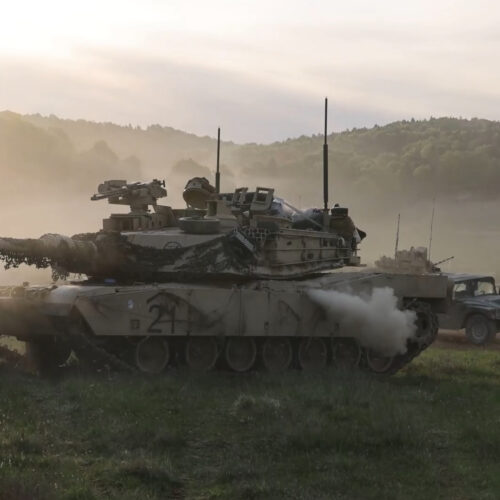
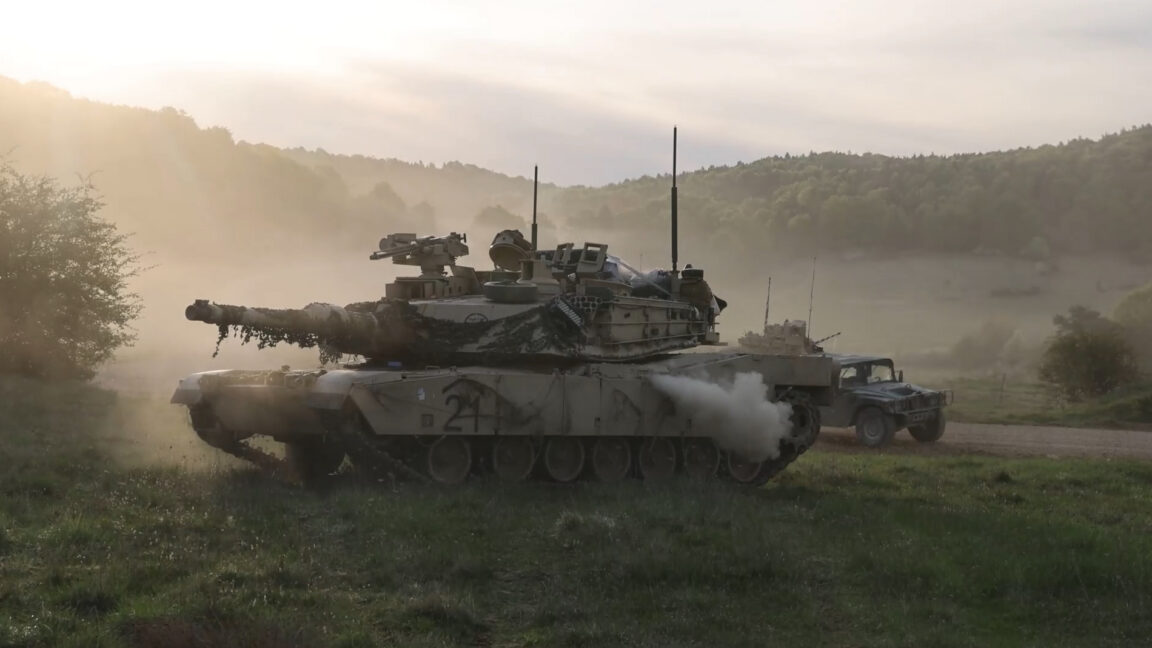
Ukrainian drones wipe out entire US tank brigade in live war game

Ukrainian drone teams demolished a brigade of US Army tanks and armored vehicles during a live war game held this year—but the US soldiers were lucky enough to get “respawn” attempts while learning from the experience.

The semiannual military exercise, called Combined Resolve, gave the US military a firsthand taste of how modern drone warfare has evolved on the battlefields of Ukraine. The Ukrainian drone operators participating in the exercise were easily able to spot and destroy US armored vehicles by mimicking the actions of dropping bombs from above or moving close enough to simulate a kamikaze strike, according to US officials and a participant who spoke with The Wall Street Journal.

US armored vehicles were being destroyed so quickly that they were “respawned” and sent back into the simulated fray, a US official told The Wall Street Journal. The US troops who participated in the exercise—held in Germany from April 9 to May 10—were on rotational deployment from Fort Hood, Texas.

Read full article

Comments

© Sgt. Joseph Mcdonald | US Army

  •  

New US missile interceptor passes major rocket motor test on road to deployment

Replicating the cold, airless void of space inside a high-vacuum chamber on Earth, defense giants Lockheed Martin and L3Harris Technologies have cleared a massive technical hurdle in the race to protect the American homeland.

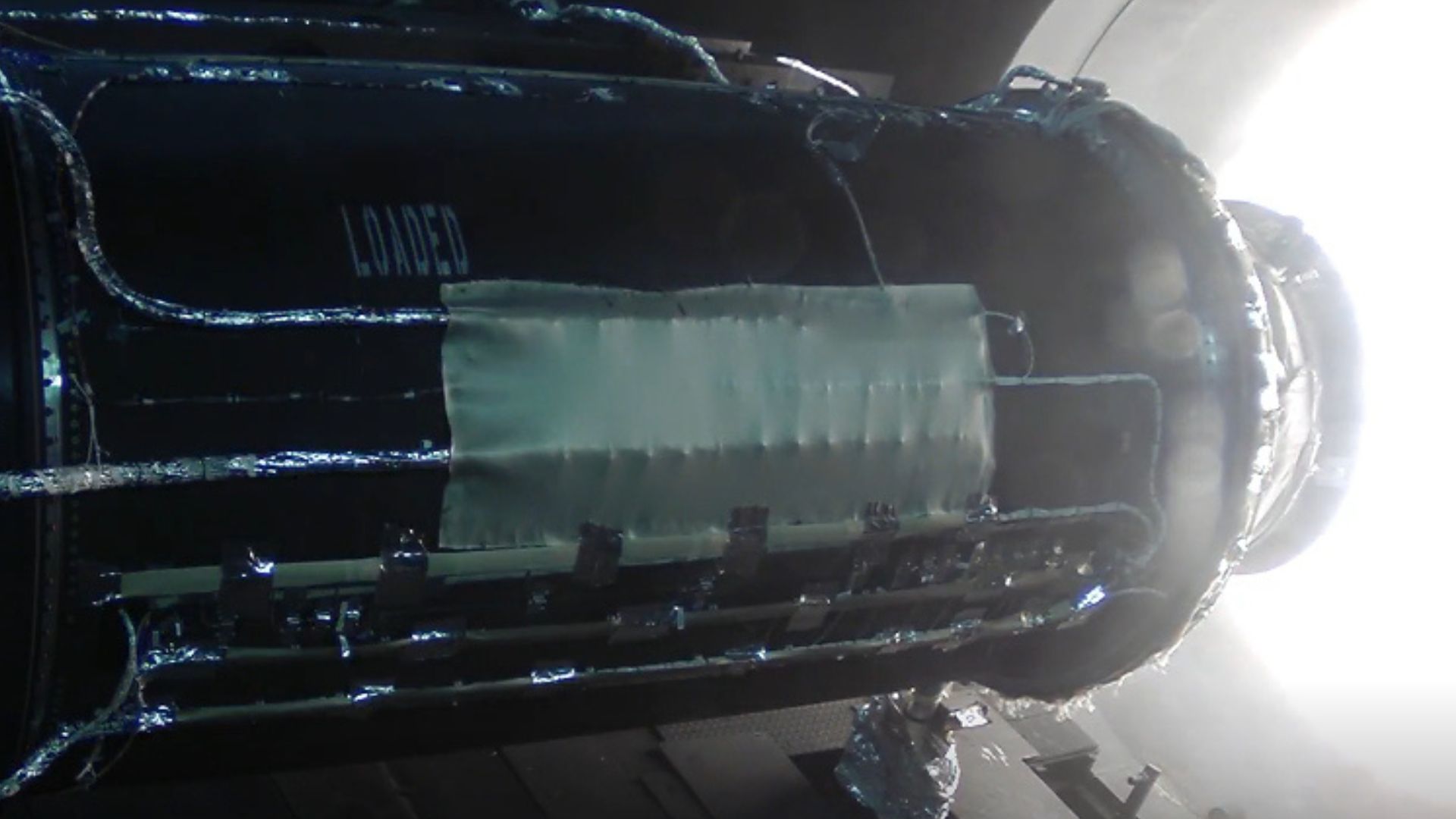
The companies successfully completed a static hot-fire test for the Stage 2 solid rocket motor of the Next Generation Interceptor (NGI). It was a demanding proof-of-concept run. Through simulated low-Earth orbit conditions, engineers proved the motor could deliver reliable performance where standard atmospheric tests fall short.

On-time fielding of the NGI fulfills an urgent need for advanced U.S. missile defense capabilities, with recent static-fire testing confirming its steady progress toward Critical Design Review.

“The test demonstrated the L3Harris Technologies’ Stage 2 motor will sustain the extreme thermal and pressure stresses expected during interceptor missions,” the company stated.

Test performance

The Next Generation Interceptor is the U.S. Missile Defense Agency’s upcoming homeland anti-ballistic missile system, designed to defend against intercontinental ballistic missiles (ICBMs). As part of the Ground-Based Midcourse Defense (GMD) architecture, it will replace older Ground-Based Interceptors (GBIs) currently housed in Alaska and California silos with an upgraded, modernized defense capability.

During the test, the L3Harris-built motor sustained intense thermal and pressure stresses. It did far more than survive; key metrics like thrust output, chamber pressure, and combustion stability matched design expectations across the board.

That stability is crucial. At hypersonic speeds, even a microsecond of thrust fluctuation can cause an interceptor to miss an incoming threat entirely.

“This successful static fire test is a significant milestone on the path to the Critical Design Review and confirms our confidence that the NGI motor will meet the demanding performance envelope required for fielding by 2030,” said Christopher Jewell, Lockheed Martin NGI vice president. 

The raw test data will now feed directly into finalizing the interceptor‘s complete blueprint, paving the way for full integration into the nation’s Ground-Based Midcourse Defense (GMD) network.

Other advancements in NGI tech

In early August, Lockheed Martin achieved another key milestone for the NGI program by successfully completing a critical burst test on its second-stage motor case. 

Engineers pressurized the carbon-fiber composite structure with water beyond expected launch limits. The testing confirmed its strength-to-weight ratio and ability to withstand extreme launch forces while delivering necessary orbital thrust.

NGI is progressing toward a key December design review, clearing the way for qualification testing, initial 2028 deliveries, and flight tests starting in 2029.

Despite an 18-month delay caused by supply chain problems and solid rocket motor design issues, it is said that recent performance has been strong, though the agency remains vigilant regarding potential component risks.

Also, in June, Lockheed Martin opened a new assembly facility in Courtland, Alabama, dedicated to manufacturing the NGI. Reportedly, the plant features a digitally driven production line engineered for flexible scalability and reconfiguration to meet evolving military demands. 

In 2024, the Missile Defense Agency awarded Lockheed Martin a $17 billion contract to deliver 20 NGIs. The system is expected to serve as a core component of “Golden Dome,” the Defense Department’s multi-domain missile shield linking sensors and interceptors. For this initiative, the Pentagon is requesting nearly $18 billion in fiscal 2027 as part of a projected $185 billion long-term investment.

💾

Lockheed Martin and sub-contractor L3Harris Technologies successfully completed a high-vacuum, static hot-fire test for the Stage 2 solid rocket motor of the Next Generation Interceptor (NGI) program.
  •  

Virginia-class nuclear submarines for Australia to get Lockheed combat systems

Australia is taking another step toward operating its future nuclear-powered submarine fleet, awarding Lockheed Martin a two-year, AUD$26.5 million contract to establish a sovereign Combat Systems Integration (CSI) capability for its future Virginia-class submarines.

The work is being undertaken through the Australian Submarine Agency (ASA) as part of the AUKUS partnership, with Australian engineers working alongside U.S.-based Virginia-class submarine specialists.

The technical capability being developed may sound like a relatively small part of a submarine program, but it sits at the heart of how a modern attack submarine turns information from its sensors into decisions and, ultimately, weapons effects.

What does combat-system integration actually mean?

A submarine’s combat system is essentially the technological nervous system connecting its sensors, communications, tactical information, and weapons.

A modern submarine can detect contacts using sonar and other sensors, build a picture of what is happening around it, determine whether a contact is a potential threat, and coordinate an appropriate response. Making all of those components work together reliably is the job of combat-system integration.

It is also an ongoing process rather than something completed when a submarine leaves the shipyard. Software, sensors, weapons and other components evolve throughout a submarine’s service life, requiring testing and integration to ensure new capabilities work with the rest of the system.

Australia’s Defense Department says the Combat System Integration Partner will help implement and test combat-system improvements and support submarine crews with maintenance and repair of the system.

Why Australia wants the capability at home

The objective is not simply to have Australian engineers working on American-designed equipment. Canberra wants to develop a sovereign integration capability that can support its own submarines over decades of operation.

That is particularly important for a fleet expected to remain in service for many years. A submarine’s combat system cannot simply be treated as a fixed piece of equipment; maintaining its effectiveness means continually integrating improvements as technology and operational requirements change.

Australia has already been involved with the AN/BYG-1 submarine combat control system, which is used by both Australian and U.S. submarines. The U.S. Navy describes AN/BYG-1 as a joint U.S.-Australian program and has been demonstrating its capabilities to AUKUS partners as part of broader efforts to ensure interoperability.

The new CSI capability builds on that broader experience while creating a larger Australian industrial and engineering base around the future Virginia fleet.

Building an Australian industrial base

Lockheed Martin says the contract will initially create more than 20 CSI engineering positions, with work beginning in Western Australia. Australia’s government previously said the broader CSI partner program could ultimately create around 100 additional jobs at Lockheed Martin Australia.

The companies will also examine Australia’s supply chain to identify local businesses that could contribute to Virginia-class combat-system integration.

That could become an important part of AUKUS. The partnership is not only about acquiring submarines and transferring technology; Australia is attempting to develop enough domestic expertise to operate, maintain and eventually sustain an advanced nuclear-powered submarine force.

The submarines behind the program

Australia’s future Virginia-class boats will be conventionally armed, nuclear-powered attack submarines operated under Australian command. The Australian government currently plans to acquire three Virginia-class submarines, with the first expected in the early 2030s.

The Virginia class is designed around long-duration submerged operations and combines nuclear propulsion with sophisticated sonar, combat-management and weapons systems. Australia’s future boats will therefore require a substantial technical workforce capable of supporting complex U.S.-origin systems within Australia’s own operational and maintenance structure. The CSI work is one piece of that much greater effort.

Australia is also building expertise through the broader AUKUS submarine ecosystem, including preparations for future SSN-AUKUS submarines that will eventually be designed and built jointly by Australia and the United Kingdom. The significance of the new contract is therefore less about the AUD$26.5 million itself and more about what it is intended to create.

  •  

Lockheed’s new defense hub to take missile sensors from sketch to test in months

Lockheed Martin has launched a new family of modular radio-frequency sensors, missile datalinks, and seeker technologies designed to help the United States and its allies respond faster to evolving battlefield threats.

Announced on August 10 in Orlando, Florida, the Strigo family uses common hardware and software architectures that can be rapidly reconfigured for air defense, missile defense, and air-to-surface engagements.

Lockheed has invested $250 million in a dedicated product center intended to move new technologies from initial concepts to tested systems in months rather than years.

Modular missile sensor tech for multiple missions

The Strigo portfolio is built around a common technical baseline, allowing Lockheed Martin to adapt individual solutions without developing every system from scratch.

This approach could shorten integration timelines while reducing development, lifecycle, and long-term sustainment costs.

Its technologies include RF sensors that detect and track targets, datalinks that allow missiles to receive updated information during flight, and seekers that guide weapons toward their targets.

Because these components are modular, they can be tailored to different weapons and operational requirements.

The architecture is intended to support a broad range of missions, including intercepting aircraft and missiles or striking targets on the ground.

It could also allow existing munitions to receive upgraded sensing and communications capabilities as new threats emerge.

Developing missile systems before formal demand

Lockheed Martin established the dedicated product center less than two years ago to accelerate the journey from concept to operational capability.

The facility functions as a storefront of ready and near-ready technologies that can be adapted to meet specific customer requirements.

Instead of waiting for the US military to formalize a requirement, engineers at the center conduct proactive research and build hardware around anticipated battlefield needs.

Lockheed said several concepts have already progressed from early design to successful testing.

Technologies developed through the modular family have also informed aspects of the seeker package for the Precision Strike Missile Increment 2.

The weapon is being developed to provide the US Army with a longer-range capability against moving maritime targets and other threats.

“By putting proactive research and development at the forefront, the Strigo Product Center lets us test and deploy new solutions at unprecedented speed. That’s how we turn ‘what if’ into ‘what’s next’ faster than ever before,” said Stacy Kubicek, vice president and general manager at Lockheed Martin Sensors and Global Sustainment.

Preparing for rapidly evolving threats

The $250 million investment reflects a wider defense-industry effort to increase missile production and accelerate the introduction of new capabilities.

Conflicts are demonstrating how quickly electronic warfare, countermeasures, and target profiles can change, placing pressure on traditional development cycles.

“Leveraging our deep expertise in advanced sensor and missile technologies, this long-term investment reshapes the way we develop and deliver next-generation, mission-ready capabilities, ensuring our warfighters have the solutions they need the moment threats evolve,” Kubicek added.

Lockheed plans to continue investing in RF sensors, missile seekers and datalinks.

The company says the technologies will support current efforts to accelerate munitions development while creating a foundation for future US military capabilities.

  •  

Cyber Vulnerability Sweep Picks Up Royal Navy Drones Sending Data To China

A routine security assessment found that cameras aboard Royal Navy Kraken unmanned surface vessels were sending "heartbeat" signals to an IP address in China. "A thorough investigation found no evidence of MoD data or systems being accessed, compromised or transmitted externally," said a Ministry of Defense spokesperson. "Our assurance and testing processes are designed to identify and address potential vulnerabilities early, and we continue to undertake routine security activity across our systems and equipment." The Register reports: According to reports, the talkative components were cameras sourced by Kraken from a third-party supplier. The incident raises questions about supply chains, audits, and cybersecurity in the British armed forces. The spokesperson said: "The first duty of government is national security, and we take the security of our equipment, networks, and data extremely seriously."

Read more of this story at Slashdot.

  •  

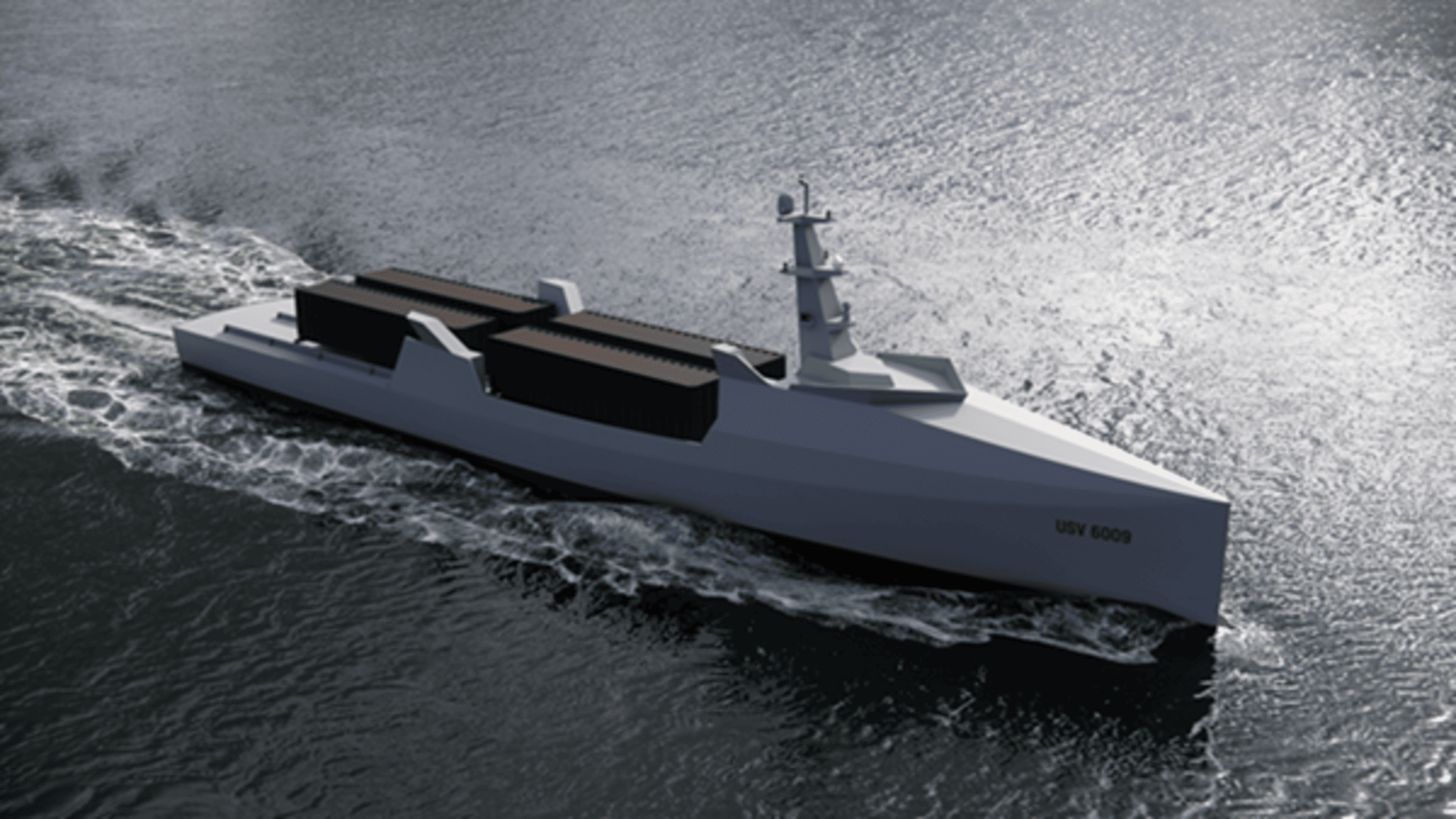
US Navy selects autonomous surface ships for deep-ocean mapping under $40M program

A new era of naval operations is on the horizon, as Blue Water Autonomy’s unmanned ships leverage tightly integrated hardware, software, and AI to map the ocean floor and transform maritime research.

Blue Water Autonomy is rapidly turning unmanned ships from a concept into an operational reality.

After showcasing its Liberty Class autonomous vessel to the U.S. Navy, the company announced a wave of strategic partnerships tied to the Navy’s Medium Unmanned Surface Vessel (MUSV) program, which includes $6 billion in funding to scale up production.

Currently under construction at Conrad Shipyard, these vessels merge traditional shipbuilding expertise with AI-enabled production systems.

“Traditional shipbuilding doesn’t scale, and pure software approaches don’t deliver hardware,” said Rylan Hamilton, CEO of Blue Water Autonomy, on the company’s website.

“We’re doing both. Integrating proven marine systems with AI-driven manufacturing and operations to fundamentally rethink how ships are built. By distributing and parallelizing work across proven partners, we’re creating a production system that can move at the pace required for a modern maritime industrial base.”

The power of many

The company is harnessing the power of many to realize the future of shipbuilding. Its manufacturing model incorporates multiple industrial partners responsible for different parts of the impressive ship: Tulip will provide a manufacturing execution system, Caterpillar Defense will supply marine diesel engines, and Valsted will support the automation systems.

“Shipbuilding has always required extraordinary coordination, and we’re giving that coordination a software backbone,” explained Erik Mirandette, chief business officer at Tulip. “Tulip connects every step on the factory floor with real-time data and AI-native tools, so Blue Water can orchestrate production at scale, catch issues earlier, and build with the speed and reliability that modern maritime demands.”

Building on this initiative, Blue Water Autonomy is quickly expanding its reach. According to a recent news release, its unmanned, AI-powered vessel will now map the ocean floor—a mission the Navy sees as central to the future of military marine research. The Navy’s interest underscores its commitment to using the most advanced systems available for modern maritime operations.

Moving fast

On August 4, 2026, Blue Water Autonomy won a multiple-award contract with the Naval Oceanographic Office (NAVOCEANO) to provide “high-resolution mapping using long-endurance uncrewed surface vessels” across the Indian and Pacific Oceans.

The company added that deep open-ocean surveys are “among the most demanding work at sea,” and the goal extends well beyond mapping, as the Navy must navigate not only the seas, but also underwater acoustics. These conditions “shape how naval forces move and operate far from the shore.”

Traditionally, these missions relied on costly crewed vessels—often running tens of thousands of dollars a day and requiring travel far from shore. With uncrewed, AI-powered ships, NAVOCEANO and the Navy aim to reduce costs, minimize risk, and dramatically expand the scope of ocean research.

Thanks to AI, these vessels “can operate on the open ocean for months at a time.”

The multi-year NAVOCEANO contract comes with a $40 million ceiling, but Blue Water Autonomy will still have to compete for funding alongside other selected companies.

“Mapping the open ocean is exactly the kind of long, high-endurance work that autonomous vessels are built for,” said Rylan Hamilton, CEO of Blue Water Autonomy. “This selection puts our autonomy to work across the Indian and Pacific oceans, well beyond the range of a crewed survey ship, and it shows the technology we are building serves many different missions.”

As artificial intelligence and automation reshape the naval landscape, the need for large crews is diminishing—and machines may well steer the future of the world’s oceans.

💾

Months-long autonomous ocean surveys aim to enhance navigation, mapping, and underwater acoustic modeling far from shore.
  •  

US submarine warfare capabilities advance with $43 million in new contracts

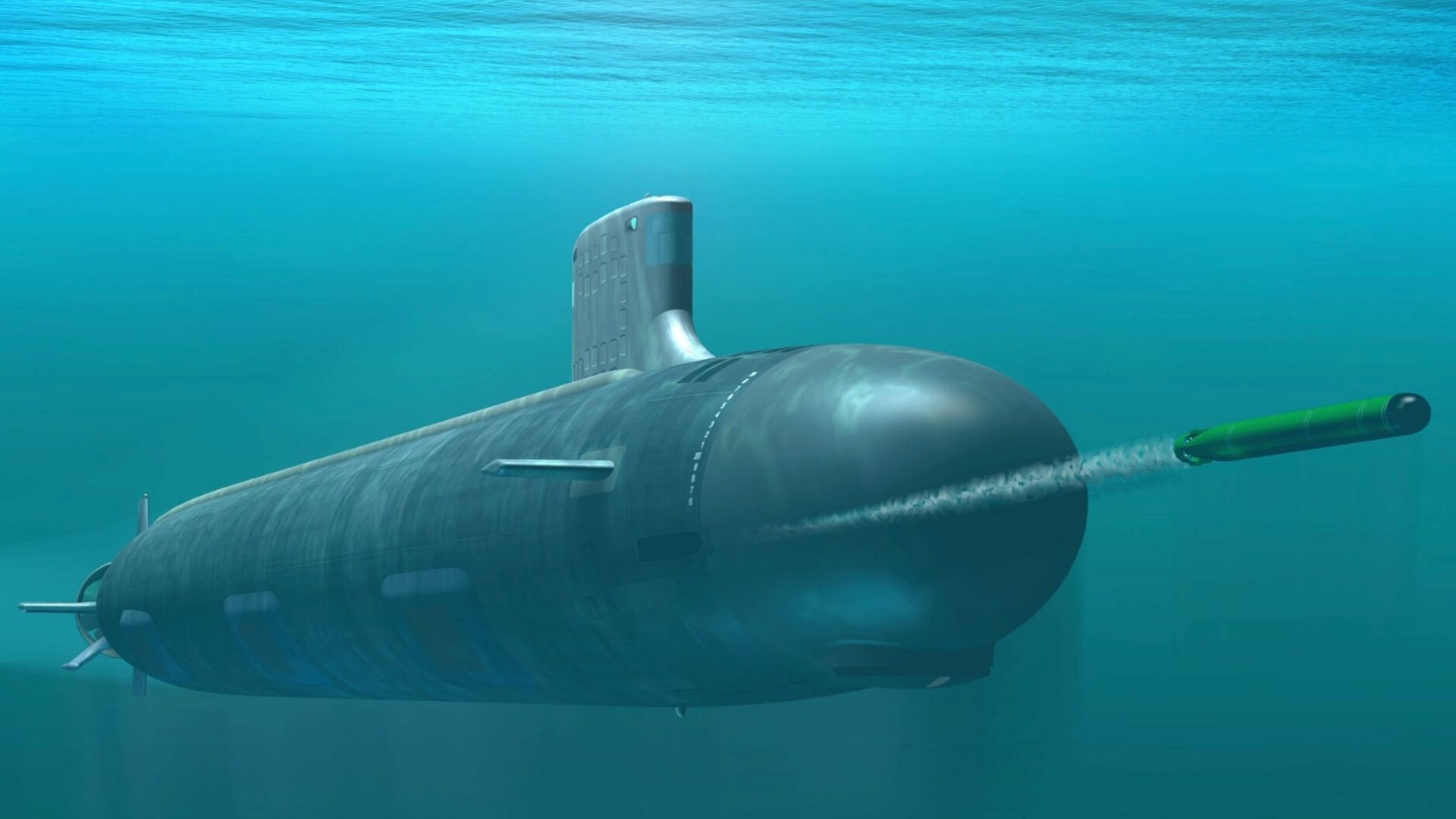
Graham Corporation has secured two US defense contracts worth more than $43 million to supply equipment for the MK48 Mod 7 heavyweight torpedo and the country’s submarine fleet.

The New York-based manufacturer announced the awards on August 7.

The contracts cover alternators and regulators for the torpedo program and new MK19 Mod 2 air turbine pump assemblies for submarine spares, supporting the US Navy’s undersea warfare capabilities and fleet readiness.

Power systems for the MK48 torpedo

The first award exercises the fourth option year of an existing contract supporting the MK48 Mod 7 Heavyweight Torpedo program. It was awarded during Graham’s first quarter of fiscal 2027, which ended June 30, 2026.

Under the option, Graham will continue supplying alternators and regulators used within the torpedo system. Alternators generate electrical power, while regulators manage the resulting voltage and current to help onboard electronics operate reliably.

These components are particularly important in a heavyweight torpedo, where propulsion, guidance, sensing and control systems must function under demanding underwater conditions.

Reliable power management can support target acquisition and navigation while helping the weapon maintain performance throughout its mission.

The MK48 is launched from submarines and is designed to engage hostile submarines and surface ships.

Continued component orders also indicate that the US is sustaining and upgrading an established weapon as undersea competition becomes increasingly important.

Submarine pumps to arrive from 2028

Graham received the second contract during its fiscal 2027 second quarter, which ends September 30, 2026. The company will manufacture new-build MK19 Mod 2 air turbine pump assemblies for the submarine fleet’s spare-parts inventory.

Deliveries are scheduled to begin in 2028 and continue through 2030. The extended delivery period could help the Navy maintain a dependable supply of replacement hardware for submarines already in service.

Air turbine pumps convert energy from pressurized air into mechanical pumping power.

On submarines, equipment of this kind can support essential fluid-handling functions in environments where compact construction, dependable operation and tight performance tolerances are critical.

Maintaining spare assemblies also reduces the risk of a component shortage keeping a submarine out of service for longer than necessary.

The contract therefore supports not only equipment production but also maintenance planning and operational availability.

$43 million added to defense backlog

Revenue from the MK48 Mod 7 and MK19 Mod 2 awards will be recorded in Graham’s fiscal 2027 first- and second-quarter backlog. The deals extend the company’s role as a supplier of specialized technologies for US defense platforms.

“These awards reflect the continued demand we’re seeing across our defense platforms, and demonstrate the durability of our customer relationships built over years of consistent execution,” said Matthew Malone, President and CEO of Graham Corporation.

“Our mission-critical applications remain vital in helping our customers meet high-level performance requirements. We’re proud to continue supporting the MK48 and submarine programs and look forward to building on this momentum,” he added.

Beyond defense, Graham develops fluid, power, heat-transfer, vacuum and advanced mixing technologies for the space, energy and process industries.

The latest awards reinforce how those engineering capabilities are being applied to torpedo reliability, submarine maintenance and the long-term readiness of America’s undersea fleet.

  •  
❌