❌

Reading view

Could United Launch Alliance's money problems finally force its owners to sell?

Pretty much every rocket company in the United States, save one, has embraced two fundamental tenets: reusability and diversification.

Most famously, SpaceX branched out from reusable rockets to pursue and dominate a growing spectrum of space services: cargo delivery, human spaceflight, satellite production, broadband, and, perhaps soon, orbital data centers and in-space manufacturing. Blue Origin is evolving from a pure rocket company into a satellite manufacturer, robotics developer, and, most recently, a potential competitor for SpaceX's Starlink network.

Rocket Lab used a different approach to diversify after achieving success with its small Electron launch vehicle. The company relocated its headquarters from New Zealand to Southern California, started building spacecraft and payloads, and then went on a spree of corporate acquisitions to expand into satellite communications and take on a new role as a merchant supplier of satellite components and sensors. It's now in a stage of advanced development of its partially reusable next-generation Neutron launch vehicle.

Read full article

Comments

© United Launch Alliance

  •  

Xiaomi Pad 9 Pro Max Review: 13.3-Inch Display Explained

The Xiaomi Pad 9 Pro Max makes an immediate impression with its 13.3-inch display and 3:2 aspect ratio. The larger screen provides noticeably more workspace, yet the tablet remains surprisingly portable at just 5.67mm thick and 653g. Despite its size, it does not feel like a device that needs to stay on a desk.

The model tested here is the Soft Light Edition. Unlike a standard display designed to deliver higher brightness and more vivid colors, the soft light panel is better suited to extended viewing. This gives the 13.3-inch tablet a clearer focus on productivity, reading, and long sessions.

However, the large display is not necessarily the most interesting part of the Xiaomi Pad 9 Pro Max. The bigger question is how Xiaomi intends users to take advantage of such a large tablet.

Flagship Performance in a Slim Body

The Xiaomi Pad 9 Pro Max is the first tablet to feature the Xiaomi Xring O3 chip, bringing the company’s flagship-level processor to a tablet form factor. Fitting such a powerful chip into a body measuring only 5.67mm thick makes the device particularly interesting from a hardware perspective.

However, the Xring O3 is not simply about achieving higher benchmark scores or faster gaming performance. Its real value becomes more apparent when combined with the tablet’s large display and software features.

The HyperOS 4 experience introduces large-screen features such as improved multitasking and multi-window functionality. When paired with the floating keyboard and touchpad, the Pad 9 Pro Max starts to feel less like a traditional tablet and more like a flexible productivity device.

Apps such as WPS Office and CapCut also benefit from the additional screen space, giving users more room to work with documents, timelines, and multiple applications. The inclusion of DP-in video input further expands the tablet’s potential use cases, allowing the large display to serve purposes beyond conventional tablet tasks.

This is what makes the Xiaomi Pad 9 Pro Max particularly interesting. Its appeal is not simply based on having a 13.3-inch screen or a powerful processor. Instead, Xiaomi appears to be exploring how hardware, software, and accessories can work together to make a large tablet genuinely useful.

During my experience with the Xiaomi Pad 9 Pro Max, the main question was not how powerful the Xring O3 could be. Instead, I wanted to see whether the combination of the Xiaomi Xring O3, 13.3-inch display, HyperOS 4, keyboard, touchpad, and other accessories could unlock the full potential of a large-screen tablet.

That approach makes the Pad 9 Pro Max more than simply a bigger tablet. It is an attempt to create a device that can adapt to productivity, entertainment, creative work, and other everyday scenarios. The rest of the review will explore whether Xiaomi has successfully achieved that goal.

Design and Screen

The Xiaomi Pad 9 Pro Max features a large 13.3-inch LCD display with a 3408 × 2272 resolution, delivering a sharp 3.4K viewing experience at 308 PPI. It also supports a 144Hz refresh rate, making scrolling, animations, and everyday navigation feel noticeably smoother.

One of the display’s standout features is its 3:2 aspect ratio. Compared with the more common 16:10 format, the taller screen provides additional vertical space, which is particularly useful for browsing websites, reading documents, and working with productivity apps. The panel also supports the P3 wide color gamut, HDR10, and Dolby Vision, while its peak brightness reaches 1,000 nits. As a result, the display is well suited to both office tasks and multimedia consumption.

The model featured in this review comes in a deep wine-red finish inspired by the Burgundy wine region of France. Its color sits between bright and dark red, giving the tablet a distinctive appearance without looking overly flashy. The overall finish feels refined and premium.

At just 653g, the tablet made an immediate impression with its relatively light weight. Considering its 13.3-inch display, it feels considerably easier to carry than a typical laptop of a similar screen size.

Flip the tablet over and you’ll find an all-metal unibody construction that gives it a sturdy and premium feel. The Xiaomi logo sits in the center, while the camera module is positioned toward the upper-right corner. Three metal contact points can be found near the opposite side for connecting the optional floating keyboard.

These three circular contacts allow the keyboard to attach directly to the tablet. Once the magnetic connection is made, the keyboard is ready to use without requiring additional pairing or complicated setup. It’s a simple but practical design for users who frequently switch between tablet and laptop-style workflows.

The rear camera module uses a rounded rectangular design and houses a 50MP main camera. The upper portion of the module also carries the “XRING” branding, highlighting Xiaomi’s in-house Xuanjie chip platform and giving the rear design a distinctive touch.

Along one side of the tablet, you’ll find the speakers and a USB Type-C 3.2 Gen 2 port. The port supports DP-in video input and can handle output of up to 3.4K at 120Hz. This expands the tablet’s versatility, allowing it to work as a secondary display when connected to a laptop or as a larger gaming screen when paired with devices such as a Nintendo Switch.

The opposite edge houses the power button, another speaker, and microphone openings. Xiaomi has also added a “Dolby Vision · Atmos” marking to the chassis, reflecting support for Dolby Vision and Dolby Atmos technologies.

Floating Keyboard

The accompanying Xiaomi Pad 9 Pro Max floating keyboard attaches magnetically and holds the tablet securely in place. Once connected, it is immediately ready for use, allowing the tablet to transition quickly from a traditional touchscreen device into a laptop-style workstation.

With the 13.3-inch display paired with a physical keyboard, tasks such as writing documents, responding to messages, and handling other productivity work become much more comfortable. The setup gives the tablet a laptop-like experience while retaining the flexibility of a detachable design.

The keyboard uses large 16mm keycaps with approximately 1mm of key travel. During typing, the keys provide clear feedback and a relatively crisp response, making the layout more familiar to users accustomed to conventional laptop or desktop keyboards.

The integrated touchpad uses a linear motor to provide tactile feedback and supports multiple gesture shortcuts. This makes navigation more convenient when the tablet is being used in laptop mode without relying heavily on the touchscreen.

The rear of the keyboard cover follows the tablet’s overall material and color scheme, creating a cohesive look when the two are attached. When closed, the cover sits firmly against the tablet and maintains a clean, integrated appearance.

Slim Design and Battery

At only 5.67mm thick, the Xiaomi Pad 9 Pro Max has an exceptionally slim profile for a device of this size. From the side, its thin body gives it an almost plate-like appearance. More impressively, Xiaomi has managed to fit a large 12,000mAh battery and its flagship Xring O3 chip into this slim chassis.

The tablet also comes with a 120W fast-charging adapter. According to Xiaomi’s official figures, the 12,000mAh battery can reach a full 100% charge in approximately 53 minutes. We will put that claim to the test later in the review to see how the real-world charging performance compares with the manufacturer’s specifications.

Hardware and Performance

The Xiaomi Pad 9 Pro Max is the first Xiaomi tablet to feature the company’s third-generation self-developed Xring O3 chipset. The processor uses a 10-core all-big-core CPU architecture and a 16-core Mali G2-Ultra NX GPU, giving it hardware specifications that are closer to desktop-class performance.

As Xiaomi’s most powerful tablet chipset to date, the Xring O3 achieved more than 5.22 million points in AnTuTu V11 under low-temperature laboratory conditions. In our own testing, we used the latest version of AnTuTu in a 25°C environment, where the Xiaomi Pad 9 Pro Max reached 5.53 million points. This puts the tablet firmly among the highest-performing Android tablets.

Thermal Performance and Cooling

To maintain sustained performance, Xiaomi has equipped the Pad 9 Pro Max with a 3,038 mm² vapor chamber (VC) cooling plate and a massive 10,112 mm² graphite heat-spreading layer. The tablet’s 13.3-inch chassis also provides additional internal space for its cooling hardware.

The key question is whether this thermal design can prevent performance from dropping during extended gaming sessions. To find out, we tested three demanding mainstream games under high-performance settings.

1. Honor of Kings

For Honor of Kings, we enabled Performance Mode and selected the highest available graphics quality and frame-rate settings.

During a standard 5v5 match, the Xiaomi Pad 9 Pro Max delivered an average frame rate of 144.22 fps, while the 1% Low frame rate reached 134.3 fps. The frame-rate curve remained remarkably stable throughout the test.

The large 13.3-inch display provides a clear advantage for MOBA games. The wider screen gives players more room to view the battlefield, while the larger interface makes controls and on-screen information easier to see. However, the tablet’s size also makes it less comfortable to hold for extended gaming sessions.

For longer gaming sessions, placing the tablet on a stand is a more practical solution. This is one of the main compromises of using a large-screen tablet for gaming.

Average power consumption during the test was 4.6W, with power consumption per frame measured at 31.9mW.

The highest surface temperature reached 31.9°C on the front and 31.5°C on the rear, showing that the cooling system kept temperatures under control.

2. Genshin Impact

For Genshin Impact, we enabled Performance Mode and frame interpolation. We then ran through Sumeru City for 10 minutes using the highest graphics settings.

Sumeru City is a demanding area because of its dense combination of NPCs, buildings, vegetation, and other environmental elements. This makes it a useful scenario for evaluating sustained GPU performance.

After 10 minutes of gameplay, the Xiaomi Pad 9 Pro Max achieved an average frame rate of 119.7 fps, while the 1% Low figure reached 94.9 fps. Overall, the tablet maintained performance close to a consistent 120 fps.

Average power consumption was 5.98W, while power consumption per frame was 49.98mW.

The highest temperature recorded on the front was 35°C, while the rear reached 33.6°C.

One of the more interesting features of the Xring O3 is its integrated AI rendering capability. The GPU includes eight AI rendering acceleration units that support 3.2K super-resolution and 120fps frame interpolation at the same time.

In practical terms, this allows the tablet to improve image sharpness and frame-rate smoothness without relying on a separate discrete graphics processor.

We also tested the feature directly in Genshin Impact. After opening the game toolbox, enabling Display Enhancement, and turning on super resolution, the visual quality became noticeably sharper. Fine details such as Keqing’s hair, clothing patterns, and textures on the stone walls appeared clearer, while distant building edges looked less blurred.

3. Honkai: Star Rail

For Honkai: Star Rail, we again enabled Performance Mode and frame interpolation. The game was tested for 10 minutes at the highest graphics settings while exploring the Golden Hour area.

After the 10-minute test, the average frame rate reached 119.27 fps, while the 1% Low frame rate was 74.1 fps. Performance remained generally stable, although frame-rate fluctuations became more noticeable during the second half of the test. Even so, the overall result remained within a reasonable range for demanding gameplay.

Average power consumption was 7.92W, with power consumption per frame reaching 66.37mW.

The highest temperature measured on the front was 34.9°C, while the rear reached 33.6°C.

The Xiaomi Pad 9 Pro Max demonstrates strong sustained gaming performance across all three tests. Its Xring O3 chipset, large cooling system, and spacious 13.3-inch chassis work together to maintain high frame rates without excessive surface temperatures.

The tablet is particularly well suited to players who prefer a large display and high refresh-rate gaming. Its main limitation is physical size: while the 13.3-inch panel improves visibility and immersion, holding such a large tablet for long gaming sessions can become uncomfortable.

For users who primarily game with the tablet supported on a desk or stand, however, the Xiaomi Pad 9 Pro Max offers a compelling combination of large-screen immersion, high frame rates, and strong thermal performance.

Productivity Experience

The Xring O3 showed impressive results in gaming, but raw performance is only part of what makes a premium tablet useful. For a device positioned as a large-screen productivity flagship, the more important question is whether its processor, 13.3-inch display, and Surge OS 4 can make everyday work faster and more convenient.

After spending time with the Xiaomi Pad 9 Pro Max, its productivity features make a stronger impression than benchmark numbers alone.

A 13.3-Inch Display Designed for Productivity

The Xiaomi Pad 9 Pro Max features a 13.3-inch display with a 3408 × 2272 resolution and a 3:2 aspect ratio. While the specifications are impressive, the real advantage becomes clear during office work.

When using WPS to write documents, the taller 3:2 screen shows more vertical content than a typical 16:10 tablet display. This means less scrolling when reading or editing long documents.

The Soft Light Edition is particularly useful outdoors. Its anti-glare treatment noticeably reduces reflections under strong lighting, making the display more comfortable to view during extended work sessions.

1. Six Apps Can Run at the Same Time

The Xiaomi Pad 9 Pro Max supports up to six application windows simultaneously. A four-finger pinch gesture opens the panoramic view, allowing all active windows to be displayed together and resized or repositioned as needed.

I tested this feature while planning a weekend trip to Shanghai Disneyland. I used Xiaohongshu to browse travel recommendations, Gaode Maps to check the route from Zhengzhou to Shanghai, Flightradar24 to compare flight information, QQ to communicate with my friend, the Disney store to check ticket prices, and the calculator to work out the overall budget.

With all six applications open, switching between them remained responsive, with no obvious stuttering. This is where the multi-core capability of the Xring O3 becomes useful in everyday productivity rather than simply in benchmarks.

For normal work, four windows feel more comfortable. Six windows are better when you need to compare several sources at once, such as when researching, shopping, planning a trip, or managing multiple work tasks.

2. Full-Featured WPS Brings a Desktop-Like Office Experience

Android tablets have traditionally offered a more limited WPS experience compared with desktop computers. Large spreadsheets could become sluggish when scrolling, while long documents sometimes suffered from delays when zooming or navigating.

The Xiaomi Pad 9 Pro Max takes a different approach with a full-featured version of WPS designed for the tablet. Xiaomi states that its performance is more than 20% higher than the previous container-based version, while scrolling through large spreadsheets, scaling lengthy documents, and rendering complex presentations have also been optimized.

In practical use, large Excel spreadsheets containing tens of thousands of rows remained smooth while scrolling. The brief delays that can occur on less powerful tablets were much less noticeable.

Adding the floating keyboard and touchpad makes the experience even closer to using a traditional computer. Document editing, navigation, and text input feel familiar enough for extended office sessions.

The built-in Lingxi AI features add another layer of convenience. Users can generate presentations, analyze Excel data, and create text content with AI-assisted commands, reducing the amount of repetitive work required for common office tasks.

3. CapCut Pro Makes Large-Screen Video Editing More Practical

The Xiaomi Pad 9 Pro Max comes with CapCut Pro pre-installed. Its interface provides a familiar editing environment, while the 13.3-inch display gives the timeline, media library, preview window, and editing controls more room than a smartphone.

The larger canvas makes dragging clips, adjusting effects, and managing multiple layers considerably easier.

Even with several video tracks, filters, transitions, and effects active, playback remained smooth during testing. This highlights one of the biggest advantages of combining a powerful processor with a large display: the goal is not simply achieving a high benchmark score, but maintaining a responsive experience during real work.

I also tested video export performance. A 30-second 4K video file measuring 113MB took less than 15 seconds to export from the moment the process was started. That makes the tablet particularly useful for creators who need to edit and share footage quickly while traveling or working away from a desk.

4. AI Features: Super Xiao Ai and Cross-Device File Management

Surge OS 4 introduces an expert mode for Super Xiao Ai that goes beyond basic question-and-answer functions. It can understand more complicated instructions, divide them into multiple tasks, and perform operations across different applications.

4.1 Cross-Device AI File Management

One of the more useful AI features is the ability to access files across tablets, smartphones, and computers using natural-language commands.

Instead of manually opening a file manager and transferring documents, users can simply tell Xiao Ai what they need. During testing, a request to send an order-data spreadsheet from a computer to the tablet prompted the system to locate the relevant file and transfer it to the Pad.

The process took only a few seconds and removed several manual steps from the workflow.

4.2 Super Xiao Ai Expert Mode

Expert Mode becomes more interesting when handling multi-step tasks. For testing, a six-minute meeting recording was used with a simple instruction: organize the latest recording, create notes, and prepare a PowerPoint presentation.

Super Xiao Ai automatically processed the recording, created structured meeting minutes, identified the main ideas, and summarized the advantages and risks of the five startup plans discussed during the meeting.

It then generated an 11-page business-style presentation containing a cover page, meeting overview, plan details, comparison information, and an action flow. After reviewing the generated content, the presentation could be created with a confirmation. The system can also generate interactive web pages, data dashboards, and other structured office content from basic instructions.

4.3 AI Notes Turn Recordings Into Structured Summaries

The AI Notes feature can automatically transcribe meeting recordings and turn them into organized summaries.

In one test, a six-minute recording was converted into approximately 660 words of structured notes. The result included the key discussion points, the five solutions mentioned during the meeting, and the final conclusion.

Different processing modes, including key-point summaries, meeting minutes, proofreading, and simplified content, provide additional flexibility.

AI can also answer questions about previously recorded meetings, making it easier to find information without manually searching through every note.

5. DP-In Could Be One of the Tablet’s Most Useful Features

DP-In is arguably one of the most interesting features of the Xiaomi Pad 9 Pro Max. Using a full-featured USB-C cable, the tablet can function as an external display and portable second monitor, supporting input of up to 3.4K at 120Hz.

Because the connection does not depend on Wi-Fi, it can also be useful in environments where wireless connectivity is unreliable.

5.1 Use the Pad as a Portable Second Monitor

I connected the Xiaomi Pad 9 Pro Max to a laptop and used it as a secondary display. Text remained sharp, and moving application windows between the two screens felt responsive.

A dual-screen setup is particularly useful for office work. For example, the laptop can display the main document while the Pad shows reference materials, communication apps, or meeting information.

The tablet also works with Mac devices and supports multiple HiDPI display modes, making it more flexible for different desktop setups.

5.2 Turn a Handheld Console Into a Larger Gaming Setup

DP-In can also expand the display of a handheld gaming device.

After connecting a handheld console, the 13.3-inch screen provided a much larger viewing area than the console’s built-in display. During testing with the SFC version of Chrono Trigger, the larger panel made the pixel graphics easier to appreciate and the dialogue easier to read.

This setup offers a portable alternative to carrying a separate desktop monitor when you want a larger gaming screen.

5.3 Use the Pad as a Portable Drawing Display

When connected to a PC and paired with the Xiaomi Focus Stylus Pro, the Pad can also function as a digital drawing display.

The stylus supports up to 16,384 levels of pressure sensitivity. Its gesture controls can be used to access the color palette, adjust brush settings, and change brush thickness, making common drawing operations easier to access.

I tested the setup with Drawing World Pro. The pen response was responsive, while the 13.3-inch canvas provided enough space for drawing and annotation work. For users who regularly create illustrations or annotate documents while traveling, this setup can be more convenient than carrying a dedicated graphics tablet.

The Xiaomi Pad 9 Pro Max can also connect directly to mainstream cameras. With compatible photo-editing software, photos can be transferred to the tablet for quick editing and output without first moving them to another computer.

Beyond traditional productivity, the tablet can also serve as a rear entertainment and control screen in supported Xiaomi vehicles, including the SU7 and YU7. Depending on the vehicle configuration, users can access functions such as air conditioning, seat controls, music, and navigation. Child-space and anti-motion-sickness features further expand its potential for passengers.

Battery Life and Charging

Battery life is an important consideration for any large-screen tablet, especially a 13.3-inch flagship model. A bigger display and powerful hardware can consume more power, making battery capacity and charging speed key factors in the overall user experience.

The Xiaomi Pad 9 Pro Max addresses this with a large 12,000mAh battery and support for 120W fast charging. While these specifications look impressive, real-world battery performance is a better measure of how well the tablet handles demanding tasks.

Battery Life Test

To evaluate the Xiaomi Pad 9 Pro Max’s endurance, we used BatteryDog, a battery testing tool developed by Fast Technology. The test combines several demanding scenarios to simulate typical daily use, including CPU-intensive workloads, multi-threaded processing, AI recognition, image browsing, video playback, and web browsing.

For consistency, the display brightness was set to 50%, automatic brightness was disabled, and the volume was fixed at 30% throughout the test. These settings help reduce external variables and provide more reliable results.

The test results provide a clearer picture of how the 12,000mAh battery performs under a mixed workload. For a tablet with a 13.3-inch display and flagship-level hardware, endurance under sustained use is particularly important, as it determines how long users can work, stream videos, browse the web, or handle demanding applications before needing to recharge.

Battery Life and Charging

Battery life is an important consideration for a large-screen tablet, especially when it combines a high-resolution display with flagship-level performance. The larger display and more powerful hardware can naturally lead to higher power consumption.

The Xiaomi Pad 9 Pro Max addresses this with a 12,000mAh battery and 120W fast charging. While these specifications are impressive, real-world performance is more important. Here is how the tablet performed in our battery and charging tests.

1. Battery Life Test

We used BatteryDog, a testing tool from Fast Technology, to evaluate the Xiaomi Pad 9 Pro Max under a range of simulated everyday workloads. The test included CPU-intensive tasks, multi-threaded processing, AI recognition, image browsing, video playback, and web browsing.

To maintain consistent testing conditions, the display brightness was fixed at 50%, automatic brightness was disabled, and the volume was set to 30%.

The Xiaomi Pad 9 Pro Max lasted 11 hours and 2 minutes, dropping from 100% to 20% battery capacity during the test. Based on this result, the tablet’s estimated full battery endurance is approximately 13 hours and 47 minutes.

The tablet also maintained a relatively low peak temperature of 35.3°C throughout the test, indicating good control over both heat and power consumption.

For a device featuring the Xring O3 flagship chipset and a 13.3-inch 3.4K high-refresh-rate display, this is a strong result. The combination of a large 12,000mAh battery and the chipset’s power-efficiency optimizations allows the Xiaomi Pad 9 Pro Max to provide enough endurance for a full day of typical use.

2. Charging Test

The Xiaomi Pad 9 Pro Max was also tested with its included 120W fast charger. We performed the test with the screen turned off to measure the charging performance under controlled conditions.

The results were impressive. The tablet charged from 1% to 25% in just 10 minutes, reached 63% after 30 minutes, and completed a full charge in approximately 57 minutes.

Considering the tablet’s large 12,000mAh battery, reaching a full charge in under an hour is particularly useful for users who need to quickly prepare the device before heading out.

The Xiaomi Pad 9 Pro Max also supports 27W wired reverse charging, allowing it to provide emergency power to a smartphone or other compatible device. Although 27W is considerably lower than the tablet’s own 120W charging speed, the feature can still be useful when another device needs a quick power boost.

Overall, the combination of a 12,000mAh battery, nearly 14 hours of estimated endurance, and 120W fast charging makes the Xiaomi Pad 9 Pro Max well suited to users who want both long battery life and fast recharge times from a large-screen flagship tablet.

Verdict

The Xiaomi Pad 9 Pro Max shows that a larger tablet display can offer more than simply extra screen space. After using the device, it becomes clear that the real advantage of its 13.3-inch panel comes from how Xiaomi integrates the display with the hardware and software.

A bigger screen alone does not necessarily make a tablet more useful. However, when the additional space is combined with productivity features, multitasking, creative tools, and support for external devices, the experience becomes significantly more practical.

This is where the Xiaomi Pad 9 Pro Max stands out.

The Xring O3 chip provides a strong performance foundation, but Xiaomi has designed the tablet around more than gaming and everyday performance. The 13.3-inch display works alongside Surge OS 4, a keyboard, and a range of software features to create a more desktop-like experience.

Features such as multi-window support, full-featured WPS, CapCut, AI tools, and DP-in make better use of the large display. Instead of simply showing larger versions of the same content, the screen provides additional room for office tasks, creative projects, and multitasking.

DP-In Adds Another Dimension

One of the most useful features is DP-in, which expands how the tablet can be used. The Xiaomi Pad 9 Pro Max can connect to a computer and serve as a secondary display. It can also work with gaming devices or be used as a digital display when paired with a stylus.

This makes the 13.3-inch screen more than a tablet display. It can become a portable workspace, secondary monitor, or entertainment screen depending on the situation.

For users who frequently switch between a laptop, desktop, gaming device, and tablet, this flexibility could be one of the tablet’s biggest advantages.

Is the Large Size a Problem?

The 13.3-inch form factor does have one obvious drawback: portability in the traditional tablet sense. Its larger body makes it less comfortable to hold for extended periods, particularly when using it without a stand.

For gaming, reading, or watching videos for a long time, placing the tablet on a desk or stand is likely to be more comfortable. However, this limitation matters less for users who primarily want a large workspace for office tasks, creative work, or multitasking.

In other words, the Xiaomi Pad 9 Pro Max is not designed to compete with smaller tablets purely on portability. Its strength lies in providing a much larger working area while retaining the flexibility of a tablet.

The Xiaomi Pad 9 Pro Max is not aimed at users who simply want the biggest tablet possible. Instead, it makes more sense for people who can take advantage of a large display and want one device that can combine tablet functionality, productivity features, creative tools, and secondary-screen capabilities.

Its 13.3-inch display is therefore more than a size upgrade. Combined with the Xring O3 chip, Surge OS 4, multitasking features, and DP-in, it gives the tablet a broader range of practical uses.

That is what makes the Xiaomi Pad 9 Pro Max interesting: it is not just a tablet with enough power to handle work. It is a tablet designed to become a more capable part of a user’s everyday workspace.

Read Also: Xiaomi 18 Pro Max Appears on Geekbench With Snapdragon 8 Super Gen 6

The post Xiaomi Pad 9 Pro Max Review: 13.3-Inch Display Explained appeared first on IGeeKphone China Phone, Tablet PC, VR, RC Drone News, Reviews.

  •  

Apple Watch Ultra 4 Launches With New Health Sensors and Up to 50 Hours of Battery Life

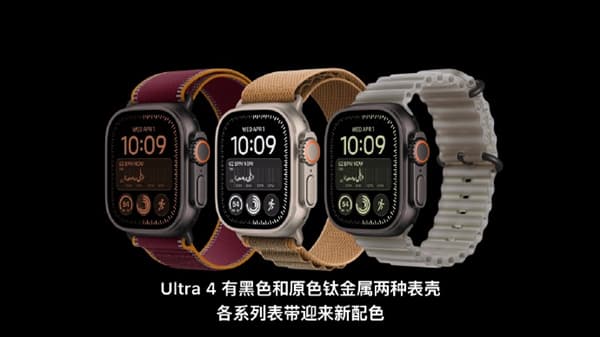
Apple has officially introduced the Apple Watch Ultra 4, bringing a new generation of health-sensing hardware, the company’s latest S11 chip, and longer endurance to its high-end smartwatch lineup.

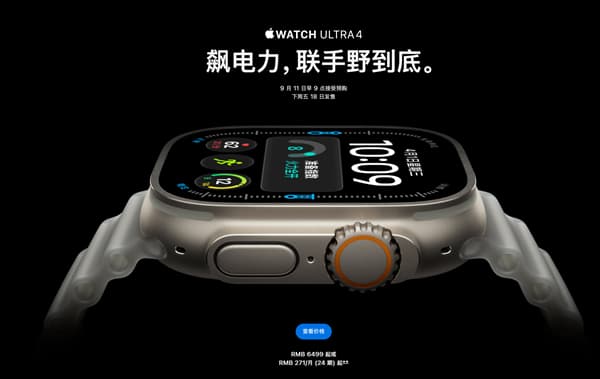
The new model was unveiled during Apple’s September 10 launch event alongside the iPhone 18 series and several other products. In China, the Apple Watch Ultra 4 starts at 6,499 yuan, with pre-orders opening September 11 and retail sales beginning September 18.

Apple Watch Ultra 4 Focuses Heavily on Health Tracking

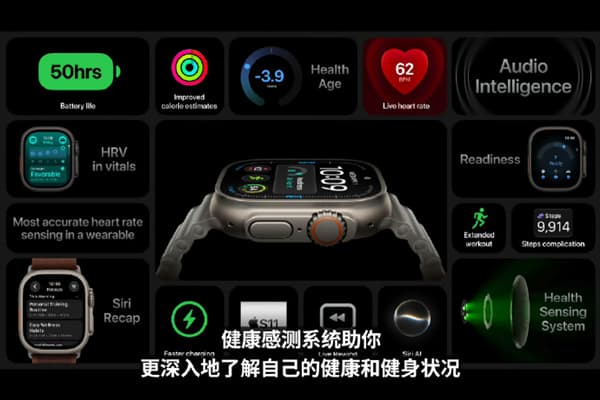
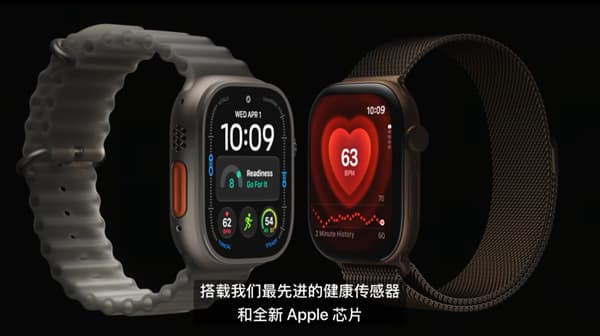
Apple says the Apple Watch Ultra 4 is designed to play a more important role in health and fitness tracking. One of the biggest changes comes from its updated health-sensing system, which features a larger electrode surface designed to maintain better contact with the skin during measurements.

The upgraded system also increases the frequency of heart-rate sampling. According to Apple, the watch can collect heart-rate data every five seconds, while heart-rate variability can be monitored every five minutes.

These changes are intended to give the Apple Watch Ultra 4 a more detailed picture of the user’s physiological data rather than relying solely on occasional measurements.

The Heart Rate app and watch-face complications have also received updates, making it easier to access health information directly from the watch.

New Fitness Features Add More Context to Health Data

Apple is also expanding the way the watch presents fitness information. Within the Fitness app, users can view a body score designed to provide a broader interpretation of their current physical condition.

Apple Intelligence can use available data to generate suggestions, with recommendations changing according to the user’s condition and collected activity information.

Another addition allows users to manually add and synchronize medical records. Based on available measurements, the system can also recommend related videos from clinical experts, giving users additional health information to explore.

These features make the Ultra 4 more than a conventional activity tracker, although the information should still be viewed as wellness data rather than a replacement for professional medical evaluation.

Apple Watch Ultra 4 Adds On-Device Sound Recognition

The new smartwatch also introduces expanded audio intelligence features.

The Apple Watch Ultra 4 can recognize certain everyday sounds, including alarms, doorbells and a baby’s crying. This could be particularly useful when the wearer is exercising, working with headphones on, or otherwise unable to immediately notice an environmental sound.

Apple is also adding a new recording-related feature that can turn conversations into text summaries. English will be supported first, while Apple says it has built privacy protections into the feature.

S11 Chip Brings More Processing Power

Under the hood, the Apple Watch Ultra 4 uses Apple’s new S11 chip, which combines upgraded CPU, GPU and NPU capabilities.

The additional processing power should help the watch handle more demanding health, fitness and intelligent features while keeping everyday interactions responsive.

The combination of new sensors and faster processing is particularly important because many of the Ultra 4’s new capabilities depend on analyzing information locally and presenting useful results without making the user manually interpret every measurement.

Up to 50 Hours of Battery Life

Battery life remains one of the Apple Watch Ultra series’ major advantages.

Apple rates the Apple Watch Ultra 4 for up to 50 hours of normal use. During standard workout tracking, the watch can operate for up to 18 hours.

For longer endurance activities, an extended workout mode can provide up to 45 hours of continuous tracking. That makes the Ultra 4 better suited to activities such as ultra-distance running, where keeping GPS and fitness monitoring active for many hours can quickly drain a smartwatch battery.

The combination of long battery life and advanced fitness tracking is therefore one of the clearest reasons to choose the Ultra 4 over a more conventional smartwatch.

Apple Watch Ultra 4 Price and Availability

The Apple Watch Ultra 4 is priced from 6,499 yuan in China.

Apple will begin accepting pre-orders on September 11, followed by official retail availability on September 18.

With its new health-sensing system, S11 processor, sound recognition, intelligent fitness features and up to 50 hours of battery life, the Apple Watch Ultra 4 represents a substantial upgrade focused less on appearance and more on health, endurance and intelligent tracking.

For athletes and users who regularly rely on a smartwatch for long workouts, navigation and health monitoring, those improvements could make the Ultra 4 one of Apple’s most capable wearable devices yet.

The post Apple Watch Ultra 4 Launches With New Health Sensors and Up to 50 Hours of Battery Life appeared first on IGeeKphone China Phone, Tablet PC, VR, RC Drone News, Reviews.

  •  

DeepSeek V4.1 Flash Set to Launch Around September 10, Reportedly Surpassing V4 Pro

DeepSeek is preparing to launch its V4.1 Flash model around September 10, 2026, according to a notice released by the company’s official open platform. The new model is expected to bring improvements across performance, response speed, operating costs and overall task completion time.

DeepSeek says that V4.1 Flash has gone through testing involving both internal teams and external evaluators. Based on those tests, the company claims the new Flash model has outperformed DeepSeek V4 Pro across multiple key metrics, making it a significant upgrade within the company’s model lineup.

V4 Pro Requests Will Move to V4.1 Flash

DeepSeek has also outlined how it plans to handle existing V4 Pro requests after the new model becomes available.

Once V4.1 Flash officially launches, but before the company releases V4.1 Pro, requests that would previously have been processed by V4 Pro will be automatically routed to V4.1 Flash. This pricing structure could make V4.1 Flash particularly attractive for developers and businesses running large volumes of AI workloads.

The move suggests that DeepSeek sees V4.1 Flash not simply as a faster alternative, but as a model capable of taking over a broader range of workloads previously handled by its Pro model.

DeepSeek Announces New Flash Pricing

Alongside the upcoming model launch, DeepSeek is also changing the pricing for its Flash series.

The new pricing is scheduled to take effect at 12:00 PM Beijing time on September 10, 2026. During off-peak periods, cached input will cost 0.02 yuan per million tokens, while uncached input will be priced at 1 yuan per million tokens. Output will cost 4 yuan per million tokens.

During peak hours, each of these rates will be twice the off-peak price.

This pricing structure could make V4.1 Flash particularly attractive for developers and businesses running large volumes of AI workloads, especially when response speed and API costs are both important considerations.

New Model Architecture and Native Multimodal Support

DeepSeek had already begun testing an intermediate version of V4.1 Flash before the official release.

According to a notice shared in one of DeepSeek’s official discussion groups, the test version uses a new model architecture and introduces native multimodal capabilities. The company also indicated that the model delivers stronger overall capabilities while responding faster and requiring lower operating costs.

Native multimodal support could be one of the more important changes in the V4.1 generation, potentially allowing the model to handle different types of information more naturally rather than focusing primarily on text-based tasks.

What to Expect From DeepSeek V4.1 Flash

The upcoming V4.1 Flash launch appears to be focused on improving the balance between AI performance, speed and cost.

Rather than relying solely on higher model capability, DeepSeek is positioning the new Flash model as a more efficient option for real-world workloads. Its planned replacement of V4 Pro requests also indicates that the company is confident in the model’s ability to handle demanding applications.

DeepSeek has not yet provided a complete breakdown of every benchmark or technical specification. More details should become available once V4.1 Flash officially goes live.

For now, the combination of a new architecture, native multimodal support, faster processing and lower pricing makes DeepSeek V4.1 Flash one of the company’s more notable model updates to watch in September 2026.

The post DeepSeek V4.1 Flash Set to Launch Around September 10, Reportedly Surpassing V4 Pro appeared first on IGeeKphone China Phone, Tablet PC, VR, RC Drone News, Reviews.

  •  

German company becomes first in Europe to launch fully commercial orbital rocket

Isar Aerospace, founded in 2018 by three students at a German university, successfully launched a privately developed rocket into low-Earth orbit Saturday from a Norwegian spaceport inside the Arctic Circle.

The two-stage rocket, named Spectrum, became the first fully commercial launch vehicle in Europe to reach orbit. With Saturday's success, Isar is the clear leader among a pack of several European launch startups vying to inject some competition into Europe's stagnant launch market.

Isar's 92-foot-tall (28-meter) Spectrum rocket lifted off at 4:12 pm EST (20:12 UTC) Saturday from Andøya Spaceport in northern Norway, where it was 10:12 pm local time and the final bluish hues of daylight faded from the late summer sky. Seven minutes later, the rocket was in orbit.

Read full article

Comments

© Isar Aerospace

  •  

iPhone 18 Launch: Apple Park Prepares for a Bigger In-Person Event

iPhone 18 launch, Apple Park, iPhone 18, iPhone 18 Pro, iPhone 18 Pro Max, iPhone Ultra, foldable iPhone, Apple event, September event, John Ternus, Steve Jobs Theater, iOS 27, iPhone camera, variable aperture, liquid metal hinge, foldable display, hands-on event, product launch, Cupertino, smartphone news

The iPhone 18 launch is turning Apple Park into more than a stage for Wednesday’s presentation. The September 9 Apple event already carries unusual expectations around a possible foldable iPhone, a new generation of Pro cameras, and John Ternus’ first major product introduction as CEO. Reports of additional event staff now suggest that the experience awaiting invited media could be larger and more demanding than a conventional iPhone demonstration.

The official event announcement confirms that “Surprise and shine” begins September 9 at 10 a.m. Pacific Time, with worldwide streaming through apple.com, Apple TV, and YouTube. The invited audience will attend from Apple Park, but the increased activity surrounding the event does not necessarily mean that the company will abandon its carefully produced video format for a completely live keynote.

A polished presentation can explain specifications, introduce software, and display new hardware from perfect angles. It cannot reproduce the first sensation of opening a foldable screen, examining a crease under direct light, testing a mechanical hinge, or watching a camera respond as the lighting changes. Those moments happen after the main presentation, inside the hands-on areas where early opinions begin to form.

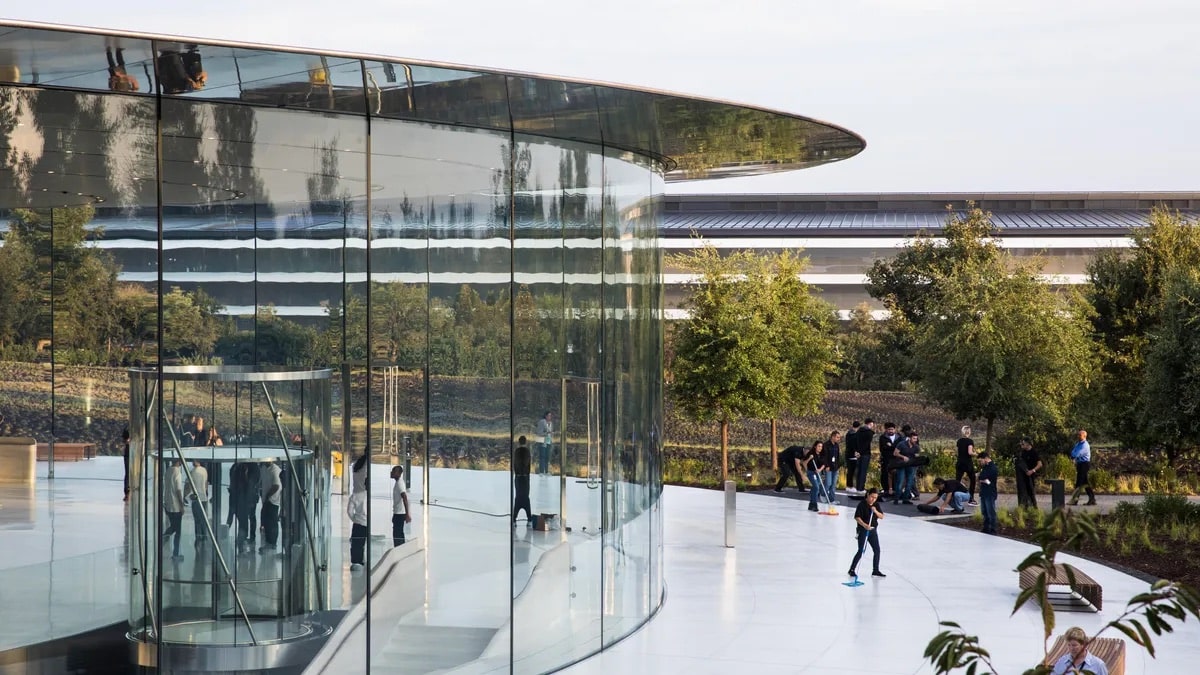
Apple Park

Apple Park Scales Up for the iPhone 18 Launch

The first indication of a larger operation arrived through an internal program for US retail employees. According to reporting distributed by Bloomberg, store employees were invited to enter a lottery for positions supporting the in-person unveiling.

Selected employees were expected to organize lines, check in guests, provide directions, welcome attendees, and assist security teams. Employees who participated in WWDC 2026 or the iPhone 17 event were reportedly excluded, allowing another group of retail workers to experience the launch.

The existence of the lottery does not prove that the keynote itself will return to a traditional live-stage presentation. Apple has previously recruited retail employees to support events, and the company has not disclosed how many people were selected this year.

It does confirm that the Apple Park gathering requires a substantial customer-facing operation beyond the team producing the presentation. Retail employees already know how to direct visitors, explain products without overwhelming them, manage queues, and identify when someone needs technical help.

Those skills become particularly useful during an event attended by journalists, photographers, analysts, creators, and international guests, all trying to reach the same devices within a short period. Additional staff can prevent the hands-on area from becoming a crowded ring around a few demonstration tables.

The iPhone 18 launch may also require more movement between specialized spaces. A conventional phone can be displayed in rows according to color or size. A foldable model needs room for repeated opening and closing, interface demonstrations, durability questions, and comparisons between its exterior and interior screens. Camera testing requires a different environment again.

Apple Park does not need to undergo a permanent architectural transformation for that expansion. Modular tables, managed lighting, guided demonstrations, additional charging equipment, and more employees can significantly enlarge the experience around Steve Jobs Theater for a single afternoon.

A person holds a foldable smartphone displaying the time, 09:07, in a cozy café with wooden tables, drinks, and a blurred background of people and large windows—perhaps testing out new features on iOS 27 Beta or eagerly comparing it to rumors about the upcoming iPhone 18.
Image Credit: AppleMagazine

A Foldable iPhone Needs a Different Kind of Demo

The rumored iPhone Ultra is likely to attract the longest lines if it appears on Wednesday. It would represent the first substantially new iPhone form factor since the current full-screen design became established, and its appeal cannot be communicated through processor charts alone.

Visitors will want to know how the hinge feels at different angles, whether the device stays open when partially folded, how much pressure is required to close it, and whether both sides align evenly. They will inspect the central folding area under bright light and move a finger across the display to determine whether the crease is visible, noticeable by touch, or effectively hidden during normal use.

Display stress remains one of the most difficult engineering problems in the foldable category. TrendForce’s analysis of foldable display technology explains that crease reduction depends on controlling stress across the panel’s multilayer structure. Ultra-thin glass, optically clear adhesive, support plates, and the position of the display’s neutral layer can all influence how the screen behaves after repeated folding.

Reports have associated the iPhone Ultra with a liquid-metal hinge and a virtually creaseless internal display, but neither detail has been announced. Even if the production device resembles those descriptions, “virtually creaseless” will remain a subjective claim until people can examine the screen from different angles and under different lighting conditions.

Apple will consequently need demonstration units that are fully accessible rather than fixed behind stands. A journalist should be able to fold the device repeatedly, rotate the internal display, type with the phone partially open, and watch iOS 27 transfer an activity between the exterior and interior screens.

Those interface transitions could be as revealing as the physical hardware. A larger display gains value when an app can reveal another column, create a more capable workspace, or reposition controls without simply enlarging the standard iPhone interface.

Demonstrators may need to direct visitors toward examples that reveal those differences within the limited time available. Mail, Maps, Photos, Safari, video calling, document editing, and drag-and-drop workflows could communicate the benefit of the larger display faster than a static home screen.

The hands-on area must also answer durability questions without pretending that a few minutes can replace months of ownership. Hinge resistance, protection around the folding axis, weight distribution, screen reflections, and off-center visibility can be judged immediately. Long-term wear, dust resistance, and thousands of folding cycles cannot.

Camera Testing Could Become Part of the Event

The Pro camera system is expected to receive one of the lineup’s most technical hardware changes. Previous iPhone 18 Pro camera reporting has centered on a mechanical or variable aperture, which could physically alter the amount of light passing through the main lens.

A conventional fixed-aperture smartphone camera manages exposure through shutter speed, sensor sensitivity, computational processing, and other electronic controls. A mechanical aperture can change the physical opening through which light reaches the sensor. Depending on its design, that could provide additional control over exposure, depth of field, highlights, and the appearance of subjects at different distances.

Current pre-event iPhone 18 expectations indicate that the feature may be exclusive to the iPhone 18 Pro Max, although its final availability will remain uncertain until the presentation.

A normal demonstration table would reveal little about such a camera system. Effective testing requires contrast, motion, faces, reflections, foreground objects, and meaningful changes in brightness.

Apple has previously used prepared scenes to demonstrate cameras, making controlled lighting stations a reasonable possibility for the iPhone 18 launch. No dependable report has confirmed that a dedicated photography pavilion or a particular new installation has been constructed for Wednesday, however.

A useful setup would allow creators to move between bright and dim areas while watching the aperture respond. A foreground object positioned near a person could demonstrate changes in depth of field. Directional lights could reveal highlight handling, while a darker scene could test whether the physical aperture works smoothly with computational photography.

Video creates another challenge. Any aperture adjustment during recording must appear gradual rather than causing sudden jumps in exposure or background separation. If manual control is available, photographers will immediately look for the number of supported aperture positions and whether a chosen setting can be locked before recording.

These demonstrations would offer the in-person audience something that cannot be reproduced during the stream. The presentation can display carefully selected photographs and video clips, but activity around the camera stations will reveal how quickly professionals understand the controls and whether the results remain convincing outside a prepared promotional sequence.

John Ternus Faces His First Apple Park Test

Wednesday’s event will be John Ternus’ first major product launch as CEO. That creates an unusual balance between continuity and change. The campus, production team, executives, and controlled demonstrations remain familiar, while the person responsible for the final message has changed.

Ternus does not need to replace every established event practice during his first days in the role. A larger in-person component would let him place more attention on direct product experience without sacrificing the timing and visual precision of a prerecorded presentation.

A live welcome, appearances around the campus, and extended media access after the video could establish his presence without forcing the event into an entirely different format. His background in hardware engineering also makes this a suitable launch for more detailed demonstrations, particularly if the lineup includes a new hinge, display construction, or mechanical camera component.

The hardware surrounding the iPhone 18 launch will test how well the company explains unfamiliar decisions. A foldable iPhone must justify its size, construction, software behavior, and likely premium price within minutes. The Pro camera must demonstrate an advantage that remains visible after computational processing. Accessories must protect new shapes without making them unpleasant to hold.

Retail employees working at Apple Park can observe those reactions closely. They will hear which controls require an explanation, which accessories create hesitation, and which claims prompt the same questions repeatedly. That experience can return to stores before customers begin arriving for demonstrations of their own.

The Hands-On Area Becomes the Real Examination

Apple controls every frame of its presentation video, but it cannot control every observation made after the screens turn off. A foldable display will be photographed from difficult angles. Its hinge will be opened hundreds of times. Camera samples will be compared before visitors have left Apple Park. Any awkward transition, reflection, or confusing control will circulate within minutes.

This makes the in-person operation more demanding than a larger guest list might suggest. Every demonstration unit must remain charged, connected, clean, updated, and ready for the next visitor. Foldable devices may require closer inspection between sessions, while camera areas need staff who understand both the feature and the conditions created to demonstrate it.

The employees around those spaces should provide enough guidance to help visitors locate unfamiliar features without turning every interaction into another scripted presentation. Excessive control makes a demonstration feel artificial; too little creates confusion and crowded tables.

Apple Park therefore becomes a second launch platform after the worldwide stream. The video introduces the products, while the hands-on area exposes them to fingers, lenses, questions, and immediate judgment. By Wednesday afternoon, the questions repeated most frequently around those demonstration tables may offer the first indication of how easily the iPhone 18 lineup can explain itself.

iPhone 18 red color concept shown front and back with edge-to-edge display.

The post iPhone 18 Launch: Apple Park Prepares for a Bigger In-Person Event appeared first on AppleMagazine.

  •  

The world's busiest spaceport is about to get a lot quieter, at least for now

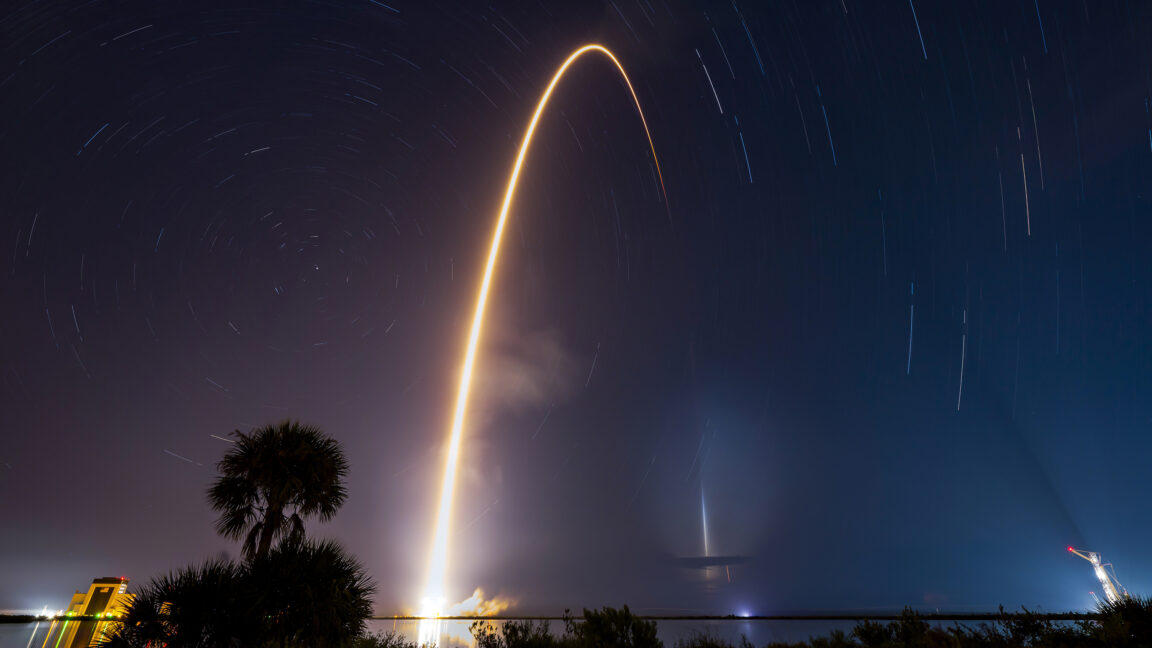
SpaceX made Florida's Space Coast home to the world's busiest spaceport for a decade, but that will change this year. The company is significantly cutting the number of launches from Florida until Starship arrives, a senior SpaceX official confirmed Tuesday.

The Falcon 9 rocket has been SpaceX's workhorse, routinely launching batches of satellites for the company's Starlink network, primarily from launch pads at Cape Canaveral Space Force Station and NASA's Kennedy Space Center in Florida. There were 165 Falcon 9 launches last year—about three flights per week—and about 75 percent of them carried Starlink satellites.

This year is different. SpaceX has launched more missions from its West Coast launch pad at Vandenberg Space Force Base in California since January, and this trend will amplify for the rest of the year.

Read full article

Comments

© SpaceX

  •  

Rocket Lab Unveils ‘GHOST,’ a Game-Changing New Portable Launch System That Can Carry Payloads to Orbit from Anywhere on Earth

Private space launch services company Rocket Lab has unveiled its GHOST (Global Hypersonic & Orbital Spaceport Technology) self-contained mobile launch system, capable of placing payloads in orbit or enabling suborbital launches from virtually anywhere on Earth.

Designed to accommodate the company’s Electron and HASTE rockets, the company said GHOST’s “launch-anywhere, launch-anytime” capability can support multi-launch flight campaigns for commercial applications. Rocket Lab said the system’s versatility also offers benefits for “critical” national security missions.

GHOST Private Space Launch System Fits Into Standard Shipping Containers

In science fiction, rockets can launch spacecraft from just about anywhere. However, until recently, most launches have occurred at dedicated, government-owned and operated facilities. Even the relatively recent proliferation of private launch services companies promising cheaper, faster alternatives hasn’t reduced the need for a launch facility specially designed to send rockets into orbit.

Now, Rocket Lab says the company has created an all-in-one launch solution called GHOST that can accommodate rocket launches from seemingly anywhere.

For example, when announcing the formal unveiling of GHOST, the company said the entire system can be packaged in standard shipping containers. This includes all the hardware to launch complete rockets and the ground support infrastructure needed to complete single-launch missions or multi-launch campaigns.

Perhaps most critically, the system can be shipped to any destination for customized launch services worldwide. If the already scheduled real-world inaugural launches prove the claims, that launch-location versatility could give Rocket Lab a technological edge over its private space launch competitors.

Two New Alaska Launch Pads Will Provide the System its First Real-World Test

When unveiling GHOST, Rocket Lab also announced its first launch site. Dubbed Rocket Lab Complex 4, GHOST’s new home will be at the Pacific Spaceport Complex at Kodiak, Alaska. The company said this inaugural site will include two distinct launch pads for “high-frequency launch campaigns.”

The new site will join the already operational Launch Complex 1 in New Zealand and Launch Complexes 2 and 3 in Virginia. The company said that taken together, Rocket Lab now controls six total launch pads “across two hemispheres.” Along with its reported mobility, the company emphasized GHOST’s ability to accommodate both Electron and HASTE.

“GHOST delivers a dual-launch capability across new locations, allowing Rocket Lab to expand the mission profiles of both vehicles and meet increasing international demand for orbital and suborbital sovereign launch capability,” the company explained.

Rocket Lab also said that the mobile launch platform is “purpose-built to support responsive launch needs and time-critical national security missions, enabling rapid site activation and simultaneous launch possibilities.”

The company expects to conduct its first GHOST-supported launch from Launch Complex 4 in 2027, including launches announced in July for the U.S. Space Force.

“The size and scale of this contract reflects the Space Force’s confidence in our ability to meet their urgent national security demands with speed, responsiveness, and scale, and we’re proud to provide the high-frequency launch capacity required to keep the U.S. ahead of global threats,” company CEO Sir Peter Beck said at the time of the announcement.

“Leading the Field in Small Launch for Missile Defense and National Security”

After noting that Rocket Lab has been “leading the field in small launch for missile defense and national security for years,” Sir Beck heralded GHOST’s seemingly sci-fi-sounding ability to launch a rocket into space from virtually anywhere in the world as another example of the launch service reliability and repeatability.

“Creating GHOST is about packaging that up into a deployable system that can serve the world’s most important programs from wherever those missions need,” Sir Beck said. “Whether it’s for missile defense and deterrence, or opening up more trajectories, orbital missions, and sovereign launch capabilities in allied nations, GHOST is the answer to launching anywhere, anytime, and without compromise.”

Christopher Plain is a Science Fiction and Fantasy novelist and has spent the last six years as Associate News Editor and Head Science Writer at The Debrief. Follow and connect with him on X, learn about his books at plainfiction.com, or email him at christopher@thedebrief.org.

  •  

Kepler books Neutron for 2028 optical relay launch

Kepler Communications plans to deploy next-generation optical relay satellites on Rocket Lab’s upcoming Neutron rocket in one of several launches the Canadian operator has slated for 2028.

The post Kepler books Neutron for 2028 optical relay launch appeared first on SpaceNews.

  •  

iPhone Ultra Price Could Take Apple’s Foldable Beyond $2,000

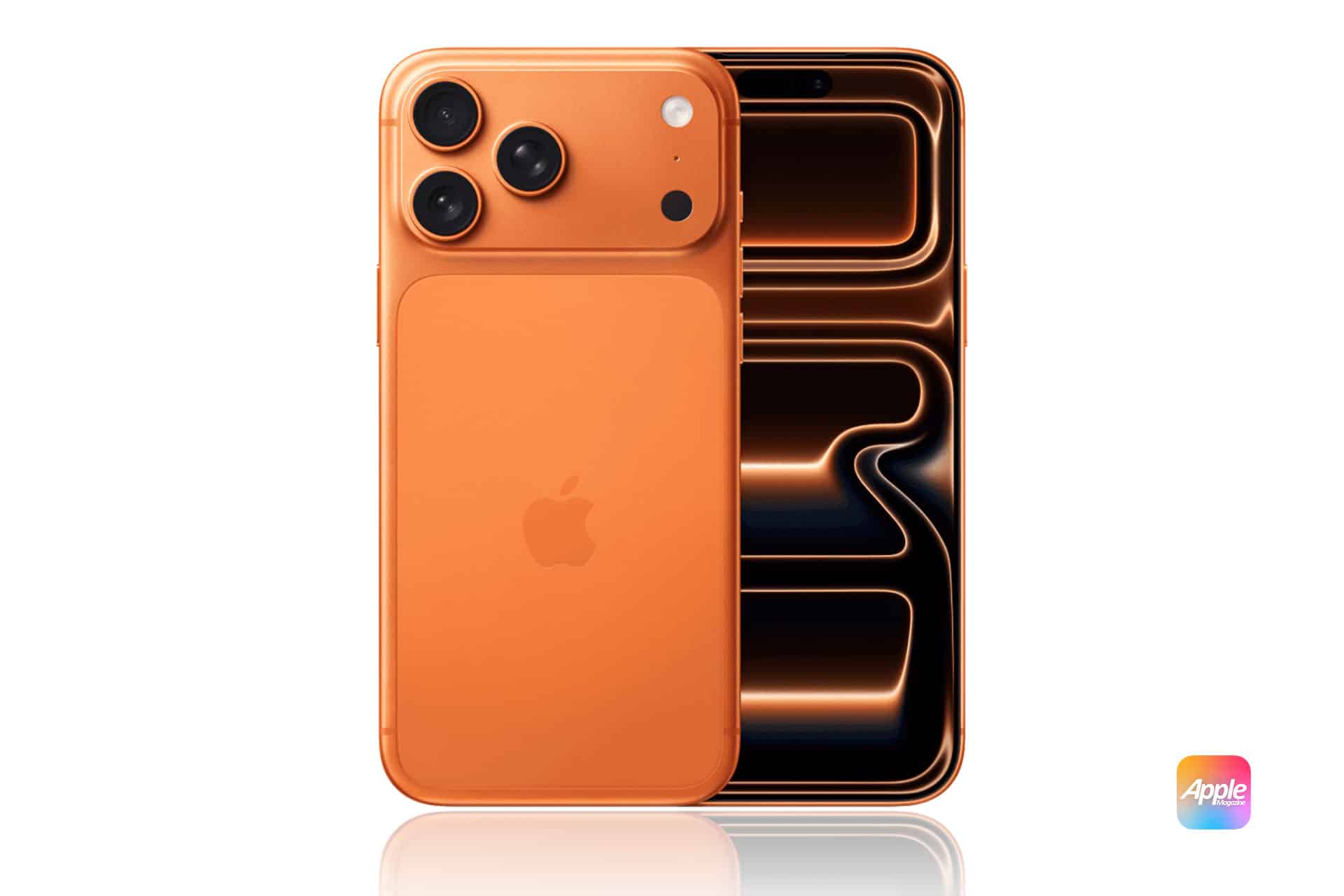
The iPhone Ultra price could establish an entirely new tier within Apple’s smartphone range. Current estimates place the company’s first foldable iPhone above $2,000, with some industry forecasts suggesting an average selling price near $2,500 and higher-storage configurations approaching $3,000.

Apple has not confirmed the device, its name, or its retail price. The iPhone Ultra branding also remains unofficial, although it has appeared repeatedly in reports concerning Apple’s planned expansion beyond the Pro and Pro Max levels.

The foldable is expected to join the iPhone 18 Pro family during Apple’s fall hardware cycle. Rather than replacing the iPhone Pro Max, it would sit above it as a separate model built around a book-style design and a display that expands to approximately the size of a small tablet.

A price beyond $2,000 would make it the most expensive iPhone Apple has released. The current iPhone 17 Pro Max starts at $1,199 in the United States, leaving a difference of at least $800 between Apple’s established flagship and the lowest estimates for the foldable.

Recent projections have pushed that gap even wider. Reports citing analyst Ming-Chi Kuo have discussed a possible range between $2,300 and $2,500, while an IDC estimate cited in supply-chain coverage placed the average selling price at approximately $2,500. Storage upgrades could take selected configurations closer to $3,000.

An orange smartphone, resembling an iPhone, is shown with both its front and back visible. The screen glows with an abstract pattern, and a small, colorful Apple logo appears—ideal for Belgian consumers exploring iPhone contracts or Lyca Mobile eSIM.

iPhone Ultra Price Creates a New Flagship Tier

Apple has spent years arranging the iPhone range around a price ladder. Standard models serve the center of the market, while Air and Pro devices address different preferences involving weight, cameras, materials, performance, and display size.

A foldable iPhone would require another level. Its internal display, hinge, structural materials, battery arrangement, and manufacturing tolerances introduce costs that do not exist in a conventional iPhone.

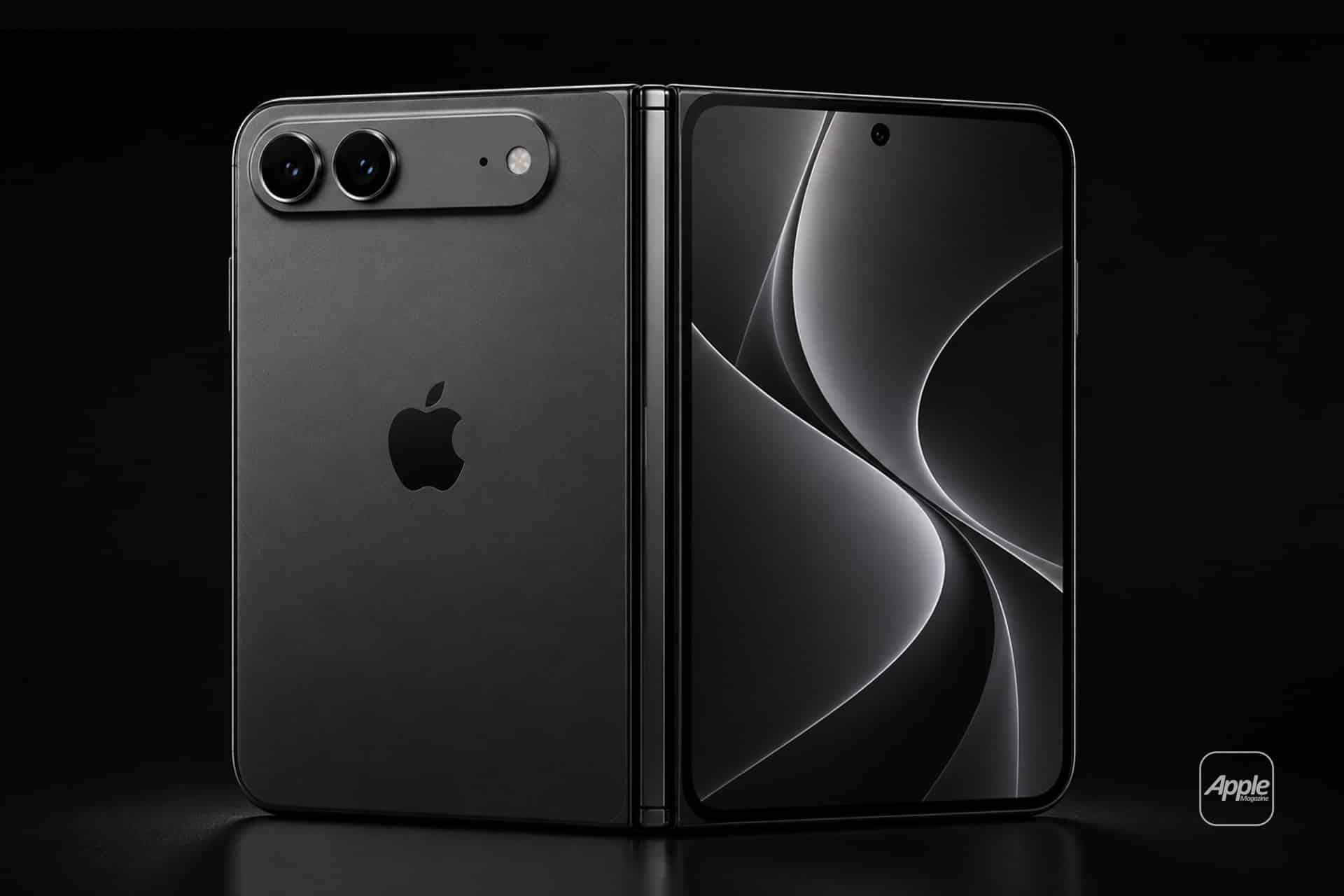
The rumored hardware points to a device intended to combine phone and tablet functions. Reports describe an outer screen measuring about 5.5 inches and an internal display of approximately 7.8 inches. When closed, the product would operate as a compact iPhone. Opening it would provide enough space for larger applications, side-by-side content, expanded video, and an iPad-style software interface.

Apple is reportedly developing interface changes that would let applications take greater advantage of the internal display instead of simply enlarging an iPhone layout. That software work may become one of the main distinctions between the device and existing foldables, particularly if Apple can connect it closely with iPad multitasking conventions.

The hinge is expected to use liquid metal, an amorphous alloy chosen for strength and resistance to deformation. Apple has also reportedly focused on reducing the visible display crease, one of the most recognizable compromises found on current folding phones.

Those elements help explain a premium price without guaranteeing that customers will accept it. A $2,000-plus phone would compete for spending that could otherwise purchase an iPhone and an iPad, a high-end Mac, or several years of conventional smartphone upgrades.

The device would therefore need to offer more than the novelty of a folding screen. Durability, battery life, camera performance, application behavior, repair costs, and long-term display reliability will influence whether buyers view the iPhone Ultra as a versatile computer or an unusually expensive phone.

Costly Engineering Behind the Fold

Rumors suggest Apple may use Touch ID in the side button instead of Face ID. The change would not necessarily represent a retreat from facial authentication across the rest of the iPhone range. A foldable chassis has limited internal space, and eliminating the TrueDepth camera hardware could help Apple manage thickness around the outer and inner displays.

The reported design includes two rear cameras and front-facing cameras accessible in both folded and unfolded positions. That arrangement may leave the iPhone 18 Pro Max with the more extensive photography system, despite the foldable carrying a much higher price.

Such a decision would position the iPhone Ultra around form factor and productivity rather than making it the automatic leader in every specification. Apple has used similar distinctions elsewhere, allowing one product to command a premium for its design while another retains advantages in cameras, battery endurance, or sustained performance.

Display production is another source of expense. Folding OLED panels require flexible materials, protective layers, specialized hinges, and tighter assembly controls. Apple’s reported pursuit of a nearly crease-free screen may increase component costs and reduce early manufacturing yields.

The company is also entering the category after competitors have spent several generations addressing hinge failures, screen damage, dust protection, and application scaling. Arriving later gives Apple access to a more mature supply chain, but its design standards may create additional production challenges.

Industry estimates suggest Apple’s arrival could help raise the average selling price of book-style foldables throughout 2026. Competitors already sell premium folding phones, yet a model priced near $2,500 would push the category further away from mainstream flagship pricing.

iPhone Ultra price - A sleek, black, foldable iPhone with the Apple logo, shown half-open with dual rear cameras and a modern abstract wallpaper on the inner display, set against a dark background.
Image Credit: AppleMagazine

Apple Upgrade Softens the Monthly Number

Apple Upgrade could make the iPhone Ultra price appear less intimidating at checkout. The Klarna-backed program lets eligible US customers lease selected Apple devices through fixed monthly payments rather than covering the entire retail price upfront.

Current iPhones can be leased for 12 or 24 months. At the end of the term, customers may return the device, move into another eligible Apple product, or pay the remaining amount required to keep it.

That structure can produce lower monthly payments than traditional financing because the customer is not necessarily paying the entire purchase price during the lease. Part of the product’s value remains in the device at the end of the agreement.

A future iPhone Ultra could fit naturally into this model. Its high retail price and expected resale value would give Apple and Klarna room to separate the cost of using the phone for two years from the cost of owning it permanently.

No monthly figure has been announced for the foldable. Apple cannot price an Apple Upgrade lease until it establishes the phone’s retail cost, residual value, eligible term, and trade-in conditions. A simple calculation that divides $2,000 or $2,500 by 24 months would therefore be misleading.

The monthly charge may be considerably lower than a standard purchase installment, but the customer does not automatically own the iPhone after making the scheduled lease payments. Keeping it requires an additional payment based on the remaining value specified by the agreement.

AppleCare+ is also separate from the current Apple Upgrade lease price. That differs from the former iPhone Upgrade Program, which bundled AppleCare+ coverage into its monthly payments. Protection could be particularly relevant for an expensive first-generation foldable containing a flexible display and complex hinge.

Trade-in credit may reduce the monthly charge, while storage selection would push it higher. Sales tax, cellular service, accessories, and optional protection would remain additional costs. Apple Upgrade changes when and how customers pay, but it does not turn a $2,000-plus product into a lower-priced iPhone.

Limited Supply Could Intensify Early Demand

Apple is reportedly preparing millions of foldable units, but production may be heavily weighted toward the final months of 2026 and 2027. Supply-chain estimates have ranged from 7 million to 10 million devices, with different reports using different production periods and assumptions.

The foldable may be announced alongside the iPhone 18 Pro and iPhone 18 Pro Max but reach customers later. That would resemble the 2017 launch of the iPhone X, which was introduced with the iPhone 8 family in September and released in November.

A delayed retail date would give Apple more time to accumulate inventory while preserving the device’s place in its fall presentation. It could also place the iPhone Ultra into the holiday quarter with considerable demand concentrated around a relatively small supply.

High pricing does not necessarily prevent shortages during the first weeks of an Apple product launch. Early adopters, developers, collectors, and customers waiting specifically for an Apple foldable represent a smaller audience than the conventional iPhone market, but they may still outnumber the units available at release.

Apple Upgrade could add another source of demand by replacing the full retail figure with a monthly lease price inside the Apple Store. That presentation may make the phone accessible to customers who would reject a $2,500 purchase while accepting a recurring payment and returning the device later.

Kuo expects only 500,000 to 1 million foldable iPhones to ship during the third quarter, a supply level that could push some deliveries four to six weeks beyond the opening preorder window.

The post iPhone Ultra Price Could Take Apple’s Foldable Beyond $2,000 appeared first on AppleMagazine.

  •  

Chinese launch startup Orienspace targets IPO, secures funding for reusable Gravity-2 rocket

HELSINKI — Commercial launch company Orienspace has kicked off preparations for an IPO coaching process while closing a funding round for accelerating its reusable Gravity-2 rocket. The Shandong-based company, formally […]

The post Chinese launch startup Orienspace targets IPO, secures funding for reusable Gravity-2 rocket appeared first on SpaceNews.

  •  
❌