❌

Reading view

Modern humans interbred with Neanderthals before they disappeared, and most people of non-African ancestry still carry roughly 1 to 4 percent Neanderthal DNA today β€” meaning part of the human population we once thought we simply replaced never actually vanished

A man who died in a Romanian cave about 40,000 years ago carried more Neanderthal DNA than any other human ever sequenced, ancient or modern. His jawbone turned up in PeΘ™tera cu Oase, and when geneticists analysed it the result was startling: between six and nine per cent of his genome came from Neanderthals. Because those segments were still long and unbroken in his chromosomes, researchers reporting in Nature could work out that he’d had a Neanderthal ancestor only four to six generations back.

He was simply closer to the event than anyone alive today.

What the first Neanderthal genome settled

For most of the twentieth century the textbook story was replacement. Modern humans left Africa, Neanderthals died out, end of chapter. Anatomists had spent decades staring at skull shapes and reaching opposite conclusions from the same fossils. That held until 2010, when a draft sequence of the Neanderthal genome, assembled by Richard Green, Svante PÀÀbo and a large team from bones found in Vindija Cave in Croatia, showed that Neanderthals shared more genetic variants with living Eurasians than with living sub-Saharan Africans. Their estimate put the Neanderthal contribution to non-African genomes at one to four per cent.

Sixteen years of better data have tightened that figure rather than overturned it. Most current estimates sit closer to one or two per cent, with East Asians carrying about a fifth more than Europeans.

The meeting had a duration

How long did the two species actually overlap before Neanderthals disappeared? Two papers published on the same day in December 2024 finally gave a precise answer. A study in Science, led by Leonardo Iasi and Manjusha Chintalapati, compared 58 ancient Eurasian genomes against 275 present-day ones and dated the average moment of mixing to about 47,000 years ago, with gene flow continuing for some 7,000 years. A companion analysis, published in Nature, examined 45,000-year-old remains from Ranis in Germany and Zlatý kůň in Czechia and traced the archaic stretches in those genomes to a single admixture event between 45,000 and 49,000 years ago, shared by every non-African sequenced so far.

Seven thousand years is a long time to call an encounter. It is longer than everything that has happened since the first cities of Mesopotamia.

The parts that did not make it

β€œThese deserts may have formed very rapidly after the gene flow,” Leonardo Iasi, one of the authors on the Nature paper, told UC Berkeley. He was describing what he and his colleagues call Neanderthal deserts, long stretches of the modern genome where archaic DNA is completely absent. Ancient human genomes from roughly 40,000 years ago already show no ancestry in those deserts, which is what led him to that conclusion. Read plainly, it means certain Neanderthal variants were harmful enough in a modern human body to be scrubbed out within a few thousand years.

The Oase man makes a similar point from the other end.

For all his recent Neanderthal ancestry, his population left little genetic trace in later Europeans.

What the surviving fragments do

Picture Neanderthal DNA as a jigsaw dropped and scattered across a crowd. No single person holds more than a sliver, but the crowd between them is still carrying a fifth of the picture. That is roughly what Benjamin Vernot and Joshua Akey found, writing in Science in 2014, when they sifted the genomes of 379 Europeans and 286 East Asians and recovered Neanderthal sequence covering roughly twenty per cent of that species’ entire genome.

There is a second archaic contributor in the mix too. Priya Moorjani of UC Berkeley, a senior author on the 2024 Science paper, is now studying people of East Asian descent, who carry both a larger Neanderthal share and up to 0.1 per cent of their genome from the Denisovans, a population known mainly from a handful of bone fragments and an enormous quantity of statistics.

Some of the surviving Neanderthal DNA is doing useful work. The variants that reached high frequency cluster around immune function, skin pigmentation and metabolism, which fits a group that had spent a few hundred thousand years adapting to Europe’s winters and its pathogens before anyone else showed up.

Some of it is a liability. In a paper published in Nature in 2020, Hugo Zeberg and Svante PÀÀbo showed that the strongest genetic risk factor then identified for severe COVID-19 was a stretch of roughly 50,000 bases on chromosome three, inherited from Neanderthals and carried by about half the population of South Asia and around sixteen per cent of Europeans. One paper, one chunk of chromosome, and the biology behind it is still being argued over. The provenance, though, is not really in dispute.

What to call an ending like that

Extinction normally means a line stopping. Neanderthals did stop existing as a distinct population, around 40,000 years ago, and no amount of genetics changes that. What the genetic evidence changes is the shape of the ending. A population that dies out and a population that gets absorbed look much the same in the fossil record and nothing alike in the genome.

That leaves an odd little fact sitting in the middle of human prehistory. The last Neanderthals were not necessarily childless. Some of them had children, those children had children, and the arithmetic has been running quietly ever since, through a few hundred million bedrooms, down to whoever happens to be reading this.

The post Modern humans interbred with Neanderthals before they disappeared, and most people of non-African ancestry still carry roughly 1 to 4 percent Neanderthal DNA today β€” meaning part of the human population we once thought we simply replaced never actually vanished appeared first on Space Daily.

  •  

Sweden is moving parts of an Arctic city because decades of iron mining are deforming the ground beneath it β€” in 2025 a 672-ton church was placed on giant transporters and rolled five kilometers to the new city center

Kiruna’s church went for a walk in August 2025, at half a kilometre an hour, on 224 wheels.

The trip took two days and included a daily stop for fika, the Swedish afternoon coffee break, because some traditions outrank engineering schedules. One driver steered the entire building with a handheld control box across roughly twelve hours of travel, along a route crews had spent months preparing. The Associated Press, in coverage carried by CTV News, reported that a main road was widened from nine metres to 24 and a viaduct was dismantled to clear a new intersection. State-owned mining company LKAB, which paid for the whole performance, lists the church at 672.4 tonnes and 40 metres across. Thousands of people stood in the wind to watch a building do the one thing buildings are designed never to do.

Norwegian contractor Veidekke built the road the church rolled along and the foundations waiting at the far end, as documented by Dezeen. It was not the first tenant to make the trip. By July, AP counted 25 buildings already jacked onto beams and wheeled east, with 16 still queued behind them.

Why the ground is giving way

Beneath the town sits the largest underground iron ore mine on the planet. White Arkitekter, the practice behind the masterplan for the new city, describes daily extraction as the equivalent of six Eiffel Towers of ore, and notes that two thirds of Kiruna’s residents depend on the mine for work. Digging began in 1910. The church was completed two years later, a gift from the company, built on a hill so the congregation could look out over the town the company had also built.

Take enough rock out from under a place and the rock above fractures, sags and follows the hole down. Crews are now working towards a main level 1,365 metres deep, and the surface has been reporting back for years in split walls and buckled roads. In 2004 LKAB told the municipality that the centre would have to be picked up and shifted east, since the alternative was to stop mining.

Sweden chose the mine.

What it costs to relocate a town centre

The company’s own accounting is blunt about the scale. LKAB estimates that at least 3,000 dwellings are affected, 6,000 residents must move and 450,000 square metres of floor space stands in the way, with roughly a third of the urban centre inside the affected zone. The replacement centre opened in September 2022. Per France 24, shifting the church alone carried a price tag of 500 million kronor, about 52 million US dollars.

Then came the sequel. LKAB has since published an expanded impact area that adds a further 6,000 people and 2,700 homes to the queue over the next decade, and CNBC has put the company’s estimated compensation costs across that period at 22.5 billion kronor, roughly 2.4 billion dollars.

Not all of it reads as loss. The Institution of Civil Engineers treats the relocation as a rare chance to redraw a city from scratch: a denser centre planned around good lighting through the long polar dark, 3,000 new homes, and streets arranged so nobody lives more than three blocks from open country. The same assessment records that the rebuild has squeezed Sami reindeer herders, who were working the land long before LKAB arrived.

The residents who cannot be loaded onto trailers

Lars-Marcus Kuhmunen chairs Gabna, the reindeer-herding Sami community whose grazing corridors have already been carved up by the mine, the railway and the town. Speaking to Swedish public broadcaster SVT, he said a new mine at the Per Geijer deposit would mean the end of reindeer herding as they know it, because the ore sits beneath the last narrow passage his herds use between seasonal pastures.

Per Geijer is the reason the arithmetic keeps changing. A report by the Stockholm Environment Institute, covered by ArcticToday, found the project carries significant risk of breaching the Indigenous rights of Sami community members, in the words of senior research fellow Rasmus KlΓΈcker Larsen. That is one institute’s assessment rather than a court ruling, and permitting has years to run. The deposit holds 1.2 billion tonnes of mineral resources including 2.2 million tonnes of rare earth oxides, which is why the European Union has flagged it as strategically important for cutting its dependence on Chinese supply.

Reindeer, unhelpfully, cannot be rerouted by memo.

What happens to the building

Henning Larsen’s circular town hall anchors the relocated core, and the church is due to reopen at its new address, between the cemetery and the new town centre, in 2026. Parts of the stone wall that ringed the old site will be moved across to join it. Where it used to stand becomes a mining town park, kept as a quiet green space until the ground beneath it is needed, at which point the fences go up and the park goes the way of the neighbourhood.

Kiruna has become very good at a peculiar skill: treating permanence as a logistics problem with a budget attached. Beams, jacks, 224 wheels, a control box and a coffee break. A church can be lifted onto a trolley and driven down the road. A migration route cannot.

The post Sweden is moving parts of an Arctic city because decades of iron mining are deforming the ground beneath it β€” in 2025 a 672-ton church was placed on giant transporters and rolled five kilometers to the new city center appeared first on Space Daily.

  •  

When Cape Hatteras Lighthouse was built in 1870, the Atlantic sat about 1,500 feet away, but by 1999 the ocean had crept to within 60 feet β€” engineers lifted the entire lighthouse and moved it 2,900 feet inland, five feet at a time

Bar soap moved a lighthouse. Crews smeared ordinary Ivory soap along the steel beams the tower rode across, because it turned out to be the ideal lubricant for a job involving thousands of tons of creeping brick, a detail recorded at the time by the Lighthouse Directory.

Everything else about the job was considerably less homely.

Why a lighthouse ends up in the surf

When Cape Hatteras Lighthouse was finished in 1870, it stood a comfortable 1,500 feet from the Atlantic. Then Hatteras Island did what barrier islands do, which is travel. Storm tides strip sand off the ocean side and dump it on the sound side, and the whole island shuffles westward, a process the National Park Service traces back at least 10,000 years.

The island moved. The lighthouse stayed exactly where the builders left it.

Underneath sat yellow pine timbers resting in fresh water on compacted sand, a floating foundation improvised because pilings could not be driven through hard sand barely eight feet down. Ingenious for 1870, and considerably less reassuring once the surf reached the door. By the late 1990s the ocean had closed to within 60 feet of the base, per the park service’s account of the light station, and decades of groins and sandbags had mostly made the erosion worse.

How to move five thousand tons of brick

Very slowly, and with an enormous amount of hydraulics.

Crews cut the tower free of its foundation, all 4,830 tons of it by the park service’s own retrospective, and replaced it with a grid of seven main beams, each 70 feet long and weighing 11 tons, fitted with 100 hydraulic jacks, as documented by Island Free Press. Those jacks raised the lighthouse 5.34 feet, just enough to slide roll beams underneath and give it a road. Horizontal push jacks then nudged the tower forward about five feet, backed off, shifted position along the beams, and pushed again, a sequence the park service sets out in its move FAQs. Each shove took about a minute, in coverage by the National Parks Conservation Association, and beams the tower had already passed over were carried round to the front to extend the track.

Progress ran to roughly 100 feet a day, with crowds cheering pushes that were barely visible to the naked eye, as Our State magazine later described the scene.

Twenty-three days, 2,900 feet, $11.8 million, and one American Society of Civil Engineers award the following year. International Chimney Corp of Buffalo held the contract. Expert House Movers of Maryland did the shoving.

The argument that came first

None of this was settled quietly. Relocation had been on the table since the National Academy of Sciences recommended it in the late 1980s, and North Carolina State University reached the same conclusion in a review published in January 1997, as Coastal Review later recounted, but plenty of locals were convinced the tower would shake itself to rubble halfway down the track. Congress funded the move anyway in 1998. The lawsuit that followed now sits in an administrative record held by the State Archives of North Carolina, a tidy paper monument to a very loud argument.

What the ocean has done since

The tower now stands about 1,500 feet from the water, the same margin it enjoyed in 1870, and should not be threatened again for something like a century, according to the State Library of North Carolina’s history project on the relocation.

Nearby property has fared worse. At least 32 privately owned beach homes have collapsed onto Cape Hatteras National Seashore since 2020, most of them at Rodanthe and Buxton, with the latest counted by National Parks Traveler in June. Each one brings a notice from Cape Hatteras National Seashore warning visitors about nail-studded debris drifting for miles down the beach. Superintendent David Hallac has pointed out that earlier generations built smaller and shifted buildings when the surf came for them, which is a polite way of saying the island never agreed to stay still.

Cracks the sea did not cause

Scaffolding went up in 2024 for what was meant to be an 18-month restoration costing $19.2 million, and the work has turned up something awkward. Crews expected 30 to 40 cracks in the cast-iron brackets carrying the gallery deck near the top. They found 116, spread across all 16 brackets, Stone & Lime superintendent Josh Brundige told a media tour in July, in reporting by Outer Banks Insider. Most were hidden under seven layers of brick, and the documentation of them predates the 1999 move.

Nobody can say what caused the cracking. Brundige offered thermal expansion and water damage as candidates, with generations of whale oil flame heating the lantern room and winter cooling it down again.

So the lantern room is currently missing from the tower altogether, a temporary beacon is doing the work, and the repair has added about a year and $10 million, taking the project to roughly $30 million. Moving a lighthouse five feet at a time was, in the end, the easy part. Whatever quietly split the ironwork at the gallery deck was already there, decades before anyone thought to look.

The post When Cape Hatteras Lighthouse was built in 1870, the Atlantic sat about 1,500 feet away, but by 1999 the ocean had crept to within 60 feet β€” engineers lifted the entire lighthouse and moved it 2,900 feet inland, five feet at a time appeared first on Space Daily.

  •  

Scientists Map Genetics of Personality across Million People

According to Professor Graur, the functional fraction within the human genome cannot exceed 25%, and is probably considerably lower.

Researchers have identified more than 1,200 locations in the human genome associated with personality traits, offering the most detailed look yet at the biological underpinnings of traits like sociability, anxiety and curiosity.

The post Scientists Map Genetics of Personality across Million People appeared first on Sci.News: Breaking Science News.

  •  

Qualcomm invests in Ultrahuman's future of human computing for our health

What you need to know

  • Ultrahuman announced that it has raised $70 million, thanks to investments from Qualcomm Ventures, Labcorp, Alpha Wave, and more.
  • The company says these investments will help push its desires to create a world where human computing helps us and our health.
  • Ultrahuman says it wants computational platforms that can understand the human body, delivering important, crucial pieces of actionable intel.

This afternoon (Sept 3), Ultrahuman announced another substantial investment from several companies. The announcement comes at a time when Ultrahuman wants to push the envelope for human computing.

A press release reveals that Ultrahuman has received $70 million in investment funding from Qualcomm Ventures, Labcorp, Alpha Wave, Blume, Nexus, Alteria, and more. As stated before, human computing is where Ultrahuman is placing its focus. Moreover, Ultrahuman states this investment will help it shift from "a wearable health company into a human-computer interface company built around the body."

Ultrahuman highlights several features daily users will know well: Jade AI, its smart rings, and M1/M2 Live continuous glucose monitoring. These features nail Ultrahuman's goal: systems that understand the state of the user's body. The company no longer wants features that "wait for human input." Through AI and newer computing systems, Ultrahuman wants more proactive, smart features that deliver true aid.

The company states the future of computing platforms should "understand the human body continuously... and turn those signals into intelligence that meaningfully improves a person’s life."

The company discussed how it's continued to evolve the smart ring form factor with science and computational platforms. Ultrahuman drew attention to Pulsomics, which was launched this year. This research platform aids its software and smart rings with the tools required to turn the body's complex signals and information into actionable intel for the user.

Power ahead with intel that means something

Ultrahuman announces partnership with Les Mills to bring studio-quality workouts and biomarker data for improved recommendations for the next day.

(Image credit: Ultrahuman)

The investments Ultrahuman has received in September will help continue the work it's trying to complete. It says "development across sensing, AI, miniaturised electronics and health algorithms" will deepen and accelerate.

PowerPlugs are another major part of the Ultrahuman experience. The company describes it as a feature that brings "specialised health capabilities" to the platform. Take Ultrahuman and Les Mills' partnership from April. It brought workout sessions that rivaled what you'd find in a traditional studio right to your phone. The app would also take advantage of your biomarkers to understand key data, so you know when to push yourself and when to let off.

On the other hand, we have Ultrahuman's significant Emerald update from July. The "decision engine," otherwise known as the UltraSphere, felt like Ultrahuman's next step into this "human computing" world for our health. It can deliver over 60 "Next Best Action" suggestions to users using sleep, HRV, recovery, weather, location, and more.

  •  

Study: Night Owls Face Higher Mental Health Risks Tied to Work-Life Balance

Weekend recovery sleep doesn’t prevent weight gain or reduce insulin sensitivity. Image credit: Wok & Apix.

In a study of 2,266 workers in Finland, evening-type people, or night owls, were up to three times more likely to be treated for depression or anxiety than morning types, with poor work-life balance identified as a key contributing factor.

The post Study: Night Owls Face Higher Mental Health Risks Tied to Work-Life Balance appeared first on Sci.News: Breaking Science News.

  •  

Psychology says the person in the friend group who never seems to need anything isn’t low-maintenance, they learned in childhood that having needs was the fastest way to become inconvenient

Psychology says the person in the friend group who never seems to need anything isn't low-maintenance, they learned in childhood that having needs was the fastest way to become inconvenient

Walk into any kitchen where a group of old friends has gathered, and you can spot them within ten minutes. The kettle is going, someone is loudly relitigating a bad date, someone else is asking whether the wine in the fridge is open. And then there is the quiet one at the end of the counter, refilling everyone else’s glass, remembering who takes oat milk, laughing at the right moments, needing absolutely nothing. They are the easiest person in the room. They are also, often, the most misunderstood.

The group has a name for this person. Low-maintenance. Chill. The reliable one. Sometimes it is said with affection and sometimes with a kind of relief, as though the rest of the group is grateful not to have to worry about them. What almost no one says out loud is that the person in question rarely worries about themselves in front of others either. They have made a lifelong practice of being the one who does not need much. And that practice, in most cases, started long before adulthood.

The friend who never asks for anything is usually the friend who learned not to

Psychologists who study attachment have a specific term for the pattern behind this. It is called avoidant attachment in childhood, and it often shows up in adulthood as a dismissive-avoidant style. According to clinical research summarised by psychologist Lisa Firestone, roughly 30 percent of people carry some version of this pattern, and it tends to develop when a child does not consistently feel safe, seen, or soothed by the adults raising them.

The child adapts by becoming what Firestone calls pseudo-independent. They meet their own needs, because depending on someone who keeps failing to respond is more painful than going without. Over time, they stop registering the needs at all. It is easier to feel nothing than to feel repeatedly disappointed.

By adulthood, this looks like competence. The person is efficient, self-contained, warm in a slightly reserved way. They rarely ask for favours. They rarely complain. When something is wrong, they process it privately and present the group with the finished thought. Everyone assumes this is temperament. Often it is training.

What actually happens in the child’s nervous system

The clearest picture of this pattern comes from a study designed in the 1970s by Mary Ainsworth, and it still holds up. In her Strange Situation experiment, a child plays with a parent in a room, the parent leaves, and the child’s response to the reunion is observed. A securely attached child gets upset when the parent leaves and seeks comfort when they return. An avoidant child appears unbothered when the parent leaves and does not seek comfort when they come back.

The catch is what the heart monitor shows. The avoidant child shows physiological signs of distress the entire time the parent is gone. The distress is there. It has simply been separated from any outward request for help. As contemporary attachment research puts it, the internal working model formed in these early years quietly guides expectations of self and others for decades afterward.

Translate that into a friend group in your thirties or forties. The person who never seems to need anything is not calm. They are regulated at the surface and activated underneath. The performance of being fine is so old and so practiced that even they cannot always tell the difference anymore.

The specific belief that keeps the pattern running

What the child learned was not simply that adults are unreliable. The child learned something more corrosive, which is that having needs made the adult withdraw further. So the needs themselves became the problem. Firestone describes the internal script bluntly: the child begins to believe they are not worth paying attention to, and disconnects from their wants to avoid the shame of them going unmet.

That belief does not evaporate at eighteen. It shows up at brunch, at group chats, at the office. It shows up as the friend who insists they are fine while going through a divorce. It shows up as the colleague who quietly absorbs an unreasonable workload and only mentions burnout after they have already accepted a job somewhere else.

The core conviction is not that other people are cruel. It is that having a need, out loud, is the fastest way to become inconvenient. And no one wants to be the inconvenient one.

Why this looks like a virtue from the outside

Culture rewards the low-maintenance friend. They get invited more, complained about less, and praised for being easy. In a world where many people are quietly carrying some form of insecurity, the person who asks for nothing feels like a gift.

But the reward system is part of the trap. Every time the friend group praises the quiet one for being so easy, it confirms the original lesson: your value here is your lack of need. This is how the pattern survives into middle age. It is being reinforced by the very relationships that are supposed to make the person feel safe.

It is worth saying plainly. Being easygoing is not the same as being avoidantly attached. Plenty of secure people are also low-drama. The difference is whether the person could ask for something if they needed to, and whether they would trust the room to respond. The avoidant friend usually cannot, and does not.

How it shows up in romantic relationships

The friend-group version is the softer face of the pattern. The romantic version is where it tends to break things. A February 2025 piece in Forbes on attachment and partner selection notes that people with a dismissive style tend to hold positive views of themselves and negative views of others, which reads at first like confidence but functions like a wall.

In a relationship, this looks like the partner who is present but somehow unreachable. They plan the holidays. They remember birthdays. They are physically there. And yet a partner can spend years feeling as though there is a room in the house they have never been allowed into. When the more expressive partner asks for closeness, the dismissive partner reads the request as neediness, dramatics, too much.

What makes it hard to name is that the dismissive partner is not consciously withholding. They are running the same program they ran at four years old, which is: notice nothing, need nothing, do not give the other person a reason to pull away. The tragedy is that this is often exactly what causes the other person to pull away.

The physical cost of never being inconvenient

Suppressing a need is not free. The nervous system still registers the want, still fires the stress response, still processes the disappointment. It just does so silently. Over time, this shows up as vague physical symptoms, sleep problems, low-grade resentment that has nowhere to go, and a strange sense of loneliness in rooms full of people who love you.

The loneliest people in midlife are often not the ones without partners or children. They are the ones surrounded by people who only know the version of them that shows up when everyone else needs something. The low-maintenance friend is often that person. Beloved, and unknown.

Why the pattern can pass to the next generation

Attachment researchers have found that the way a parent processes their own history matters more than what happened to them. If we do not make sense of and feel the full pain of our past, we are much more likely to repeat it. The parent who was raised in an emotional desert and never grieved that fact tends to raise a child in a slightly greener version of the same one.

The findings extend into how people build families in the first place. A study covered by Scientific American found that attachment style may even influence how many children people end up having, with insecure patterns correlating with different family sizes than secure ones. The influence runs deeper than most people realise.

This is not a life sentence. It is a pattern that responds to attention. But it does not respond to willpower or to being told to open up more. It responds to a slow rebuilding of the belief that a need, expressed out loud, will not cost the person the relationship.

What a secure version of this friend actually looks like

Descriptions of what secure attachment looks like in children tend to emphasise a specific balance. The child explores confidently and comes back for comfort when they need it. They do not have to choose between independence and closeness. They get both.

In adulthood, the secure version of the low-maintenance friend is still calm, still competent, still not prone to drama. But when something is genuinely hard, they say so. They do not perform crisis, and they do not perform fineness either. They tell one or two people what is going on, they let those people help, and they trust that the friendship will not shrink because of it.

The difference is small on the outside and enormous on the inside. One version is regulating alone in a room full of people. The other version is actually with them.

Signs the pattern is running, in a friend or in yourself

A few markers show up consistently. The person can list what everyone else in the group is going through, but goes vague when asked about their own life. They deflect care by redirecting the conversation. They apologise for taking up time before saying anything hard. When someone offers help, they refuse it reflexively, then feel a private flash of resentment that no one pushed harder.

Descriptions of the dismissive-avoidant style in adult partnerships often note this reflex specifically. The person genuinely believes they are protecting others by not burdening them, while the others often feel shut out by exactly this protection.

A more painful version of the same wiring, sometimes called fearful-avoidant attachment, involves wanting closeness intensely and pulling away from it in the same breath. The internal experience is exhausting. The external presentation, again, often looks like someone who simply does not need much.

How the pattern actually loosens

The change does not come from a dramatic disclosure. It comes from small experiments in being slightly more inconvenient than usual, and noticing that the room does not empty out. Saying, out loud, that you had a hard week. Asking a friend to come with you to an appointment. Letting someone drive you home when you could have taken a cab. These sound trivial. For someone whose nervous system was trained to hide need, they are not.

Firestone’s clinical work emphasises building what she calls a coherent narrative, which is essentially the ability to tell the story of what happened to you as a child without collapsing into it or dismissing it. People who can do this tend to raise more securely attached children, and tend to form warmer adult relationships, regardless of what they started with.

The friend group rarely notices the shift at first. What they eventually notice is that the quiet one at the end of the counter is talking a little more about themselves, asking for the thing they actually want, letting someone else refill their glass for a change. It looks like a personality change. It is closer to a homecoming.

A last thought about the person who never seems to need anything

If someone in your life fits this description, the useful move is not to interrogate them or to praise them harder for being so easy. It is to ask specific questions and to stay in the room when the answer is slow. What was hard about this week. What would actually help. What would you want if you thought you were allowed to want it. Then wait.

The person who learned early that having needs made them inconvenient did not choose that lesson. They inherited it from a room that could not hold them. A different room, decades later, can teach a different lesson. It just has to be willing to keep asking, and to mean it.

The post Psychology says the person in the friend group who never seems to need anything isn’t low-maintenance, they learned in childhood that having needs was the fastest way to become inconvenient appeared first on Space Daily.

  •  

Some of the loneliest people in their fifties aren’t the ones without partners or children, they’re the ones surrounded by people who only know the version of them that shows up when everyone else needs something

Some of the loneliest people in their fifties aren't the ones without partners or children, they're the ones surrounded by people who only know the version of them that shows up when everyone else needs something

The people most likely to describe themselves as lonely in midlife surveys are often the ones with the fullest calendars. They have adult children who call on birthdays, colleagues who invite them to dinners, a spouse who has slept beside them for twenty-five years, and a phone that lights up all day with requests. And still, when the house goes quiet, something feels missing in a way that partnership and parenthood were supposed to have solved.

The loneliness of the useful person is a specific kind. It doesn’t announce itself as absence. It shows up as a low, background hum of not-quite-being-met, even in rooms full of people who love you.

The version of you that gets invited

By the time most people reach their fifties, they have accumulated decades of evidence about which parts of themselves the world rewards. The competent one. The calm one. The fixer. The listener who never quite becomes the one being listened to. The parent who solves logistics for three generations at once. Each role, taken alone, is fine. Stacked over thirty years, they harden into something else: a public self so well-practised that the private self starts to feel like a stranger even to its owner.

Loneliness is not simply about being alone; it is the perceived gap between the connection you want and the connection you have. It is about being unknown while surrounded.

The person in their fifties who is celebrated as reliable, capable, or endlessly generous is often the person whose inner weather nobody has asked about in years. Their usefulness is what gets invited into rooms. Their interior does not.

How instrumental relationships quietly replace intimate ones

Relationships fall on a rough spectrum. On one end are instrumental relationships, built around what a person does or provides. On the other are expressive relationships, where the point of the relationship is the person themselves. Most social lives contain both. The trouble starts when the ratio tips, slowly, over decades, until nearly every relationship a person has is instrumental in some way.

A woman in her fifties may have twelve people who call her regularly. Her mother needs help with medical appointments. Her adult son needs a co-signer. Her boss needs the report by Friday. Her husband needs her to remember his sister’s birthday. Her friend needs to vent about her divorce. None of these people are villains. Each of them loves her, in the way people love a reliable source. But not one of them, on any given Tuesday, is calling to ask how she actually is and then waiting for the real answer.

The pattern is not new, but its recognition is recent. In caregiving populations, a specific phenomenon has emerged: social alienation, distinct from loneliness, in which a person’s role so completely defines their contact with others that the person underneath the role disappears from view. A 2025 study of caregivers of stroke patients in China found that caregivers experience high levels of social alienation, with living arrangements, caregiving burden, and loneliness all significantly predicting the depth of that alienation. The caregivers weren’t isolated in the ordinary sense. They were embedded in family. They were simply no longer being met as themselves.

Why the fifties are the decade this bill comes due

Several life stages converge in the fifties in ways that intensify the useful-person trap. Parents are aging and often need active help. Adult children are launching, or failing to launch, and either state generates demands. Careers reach the phase where seniority means being the person others come to. Marriages, if they have lasted this long, have often settled into a division of labour where each partner handles a fixed set of tasks and stops asking the other about anything outside that division.

The result is a person whose days are structured almost entirely around what other people need from them. There is nothing wrong with any single demand. There is something quietly corrosive about the cumulative one.

Grandparent caregiving offers a useful case. A scoping review of grandchild caregiving and depression found mixed effects, with the relationship between caring for grandchildren and mood depending heavily on whether the grandparent felt they had chosen the role or been assigned it, and on how much of their identity remained outside it. The finding that matters here is simple: the same activity can be nourishing or depleting depending on whether the person doing it feels seen inside it.

The tell, the childhood pattern, and what being met actually requires

There is a small experiment worth trying, though it is not really an experiment. Ask a person in their fifties, in a moment of genuine attention, what they have been thinking about lately. Not what they have been doing. What they have been thinking about.

The pause tends to be long. Often the first answer is a logistical update, because logistics is the language most of their relationships operate in. If you wait past the logistics, something else usually surfaces: an old regret they have not spoken aloud in a decade, a fear about a parent, a question about whether the second half of life is going to feel any different from the first. The material is right there, close to the surface. It has simply not been invited out in a long time.

In a recent piece on the lie of omission, Space Daily explored how people can spend years telling only the safe true things about themselves, until friendships of a decade contain nothing that would let either person recognise the other in a crisis. The useful person’s loneliness is often built out of exactly this material. Every conversation was pleasant. Every conversation was true. None of them touched the parts that most needed touching.

Not every fifty-something who ends up in this position started in the same place, but a striking number of them describe a common childhood: they were the calm one, the one who did not add to their parents’ load, the one whose emotional needs got quietly filed under β€œcan wait.” They learned early that being low-maintenance was rewarded and being needy was expensive.

Building on attachment theory, the babies in Mary Ainsworth’s Strange Situation study who looked most composed when left alone were the ones whose heart rates were racing the entire time. Their calm was a strategy, not a state. John Bowlby, who built attachment theory in the 1950s, argued that the undemanding child is often the one who learned that asking for less kept the peace. Those children grow up to become spouses who rarely voice needs, managers who remain calm under pressure, and parents who carry burdens silently.

Emotional intimacy, in the clinical literature, is not the same as time spent together or affection expressed. It is the specific experience of being known and having that knowledge received without correction. Research on emotional intimacy suggests it requires three ingredients most useful people have quietly starved themselves of: undistracted time, a willingness to redefine intimacy on the participants’ own terms, and treating vulnerability as strength rather than as a tax on the relationship.

The trouble for the fifty-something who has been useful for decades is that vulnerability has been coded, in their nervous system, as burden. Sharing an actual worry feels like adding to someone else’s plate. Answering β€œhow are you” with anything other than β€œgood, you?” feels like an imposition. The muscle for being known has atrophied from disuse, and rebuilding it feels awkward, embarrassing, sometimes physically uncomfortable.

Why AI companions are not the answer, and the modest fix

The commercial response to midlife loneliness has been swift and lucrative. Chatbot companions are now used by hundreds of millions of people globally. The appeal, especially for the useful person, is obvious. A chatbot never needs anything back. It listens without waiting for its turn. It never has a bad week that overrides yours.

But Stanford researchers who analysed conversations from more than 1,000 users of Character.AI found the opposite of relief. People with smaller in-person social networks who used chatbots intensely reported worse well-being, not better, and those who shared the most sensitive personal information with the bots scored lowest of all. Researchers found that using chatbots to fulfill social needs does not substitute for human connection, according to the study. The researchers noted that AI companions are designed primarily to keep users engaged rather than to meet genuine social needs.

The researchers described what the bots offer as brief, unsatisfying interactionsβ€”like junk food for the social appetite. Filling in the moment, hollow by the next morning. For a person who has spent decades being the one everyone else confides in, a chatbot that finally listens can feel like a discovery. It is not one. It is a mirror that has been polished to reflect back whatever the user brings, which is the exact opposite of being met by a different mind.

There is a well-known finding in social psychology that two strangers can generate deep mutual closeness in under an hour by working through a specific series of escalating questions. Arthur Aron’s 1997 study on the 36 questions found that the pairs who completed the full protocol reported feeling closer to each other than many people feel to their oldest friends. The mechanism was not chemistry. It was structured, mutual, escalating disclosure.

The finding is often cited as a hopeful one, and it is. But it also contains a quiet indictment. If two strangers with a list of questions can generate more felt closeness in ninety minutes than a fifty-something feels with the people they have shared a house or an office with for twenty years, the problem is not a lack of available connection. The problem is that most long-standing relationships never renegotiate their scripts after the scripts get set. Whatever role a person was assigned at the beginning is the role they are still playing, three decades in.

The interventions that actually change this pattern are almost insultingly modest. They involve saying, out loud, to one person, one true thing that would not normally get said. They involve answering β€œhow are you” with an actual sentence about an actual state, not once as a stunt, but as a slow policy change. They involve letting a friend see the version of you that is tired, unsure, or angry at someone you’re supposed to love.

They involve, most uncomfortably, tolerating the pause when the other person doesn’t know what to do with the real answer. Because they won’t, at first. They have been in a relationship with the useful version of you for years, and the useful version is who they came to see.

Some of those relationships will adjust. The person on the other end will lean in, relieved that the pretence is finally dropping. Others won’t. They will keep asking the useful version to show up, and the choice about how much of your time to give those relationships is a choice you get to make, possibly for the first time.

A recent Human Element piece on people who downsize their lives in their sixties looked at exactly this reallocation, the way people begin, later than they wish they had, to notice which parts of their life were costing them without earning their keep. The relationships that only wanted the useful version fall into that category more often than people expect.

older woman thinking window

Who this loneliness looks like from the outside

The person in their fifties who fits this description is often the last person a casual observer would identify as lonely. They have a partner. They have children who love them. They have a job that respects them and a phone that never stops. They are, by every visible metric, connected.

They are also, in the quiet hour after everyone else has gone to bed, aware of a specific ache that partnership and parenthood were supposed to have eliminated. The ache is not for more people. It is for the experience of being asked a real question by someone willing to hear a real answer, and for the strange, slightly frightening recognition that the version of themselves that would give that answer has not been out of the house in a long time.

two friends deep conversation

Loneliness in midlife is not always a problem of scarcity. Sometimes it is a problem of composition. A life full of people who only know the useful version of you is a life in which the rest of you is still waiting to be met, and the waiting gets heavier the longer it goes on. The relief, when it comes, tends to arrive through the smallest door: one honest answer, given to one person, on one ordinary afternoon.

The post Some of the loneliest people in their fifties aren’t the ones without partners or children, they’re the ones surrounded by people who only know the version of them that shows up when everyone else needs something appeared first on Space Daily.

  •  

Quote by Carl Jung: The most terrifying thing is to accept oneself completely

Quote by Carl Jung: The most terrifying thing is to accept oneself completely

The Jung line about self-acceptance being the most terrifying task circulates so often on social media that it has almost lost its edge, and yet the moment you sit with it honestly, really sit with it, past the coffee-mug aesthetic, you notice something uncomfortable. The sentence is not asking you to love yourself. It is asking you to stop editing.

That distinction matters. Loving yourself is a project. Accepting yourself is a surrender.

One flatters the ego. The other dismantles it.

person looking in mirror

What Jung actually seems to have meant

The line, in the version that circulates most widely, reads: the most terrifying thing is to accept oneself completely. It moves through quote collections and social feeds largely without a citation attached, which is part of why it travels so easily.

Jung is also the psychiatrist people reach for when something has broken. In July 2025, days after news of his separation from Katy Perry, Orlando Bloom posted a screenshot of an article about Jung to his Instagram Stories, highlighting the line about loneliness coming not from having nobody around you but from being unable to say the things that seem important to you.

Bloom is not unusual in reaching for Jung during a period of upheaval. People tend to find the Swiss psychiatrist when the usual self-improvement scripts stop working.

The reason is structural. Most advice tells you to become better. Jung suggested you first stop pretending you are not who you already are.

Why acceptance feels worse than change

Change gives the mind something to do. There is a plan, a target weight, a new job, a version of yourself twelve months out who will finally be acceptable to you.

Acceptance offers none of that. It asks you to look at the envy, the small cruelties, the parts of yourself you have hidden even from your closest friends, and to say: yes, that is also me.

Alli Spotts-De Lazzer, a licensed therapist writing in Psychology Today, has argued that self-acceptance may matter more than high self-esteem for living a contented life. Her point is about the scoring system. Self-esteem depends on evidence: grades, promotions, praise. Self-acceptance does not require the evidence to be flattering.

That is why it is harder. There is no scorecard.

The parts we refuse to claim

Jung’s term for the disowned material was the shadow. He meant the qualities a person cannot bear to see in themselves and therefore projects outward, onto a spouse, a colleague, a political opponent, a stranger on the internet.

You can spot your own shadow by noticing what enrages you disproportionately in other people. The trait you find unforgivable in a coworker is often the trait you have most carefully denied in yourself.

This is why acceptance terrifies. To accept yourself completely means retrieving those projections. It means admitting that the person you have been criticising is, in some measurable way, a mirror.

Loneliness and the unspoken self

Jung linked the refusal of self-acceptance to a specific kind of loneliness. Not the loneliness of empty rooms, but the loneliness of unsaid things, the idea that isolation grows sharpest when you cannot say what actually matters to you.

A person who has not accepted themselves cannot communicate themselves. They can only communicate the acceptable version.

Everyone in their life is talking to a spokesperson.

Over time, this produces a strange grief: being surrounded by people who love a curated character, while the actual self stands quietly behind the curtain, unwitnessed.

The research that backs Jung’s instinct

Contemporary psychology has been slowly circling what Jung intuited a century ago. A 2025 study in Frontiers in Psychology, led by Yuting Li and colleagues at Shanxi Medical University, followed university students across two measurement points six months apart and found that self-esteem fully mediated the relationship between self-acceptance and prosocial behaviour. Self-acceptance did not push people toward kindness directly. It did so by changing how they held themselves, and that shift carried the entire effect.

The sample was narrow, medical students at a single Chinese university, with a heavy gender imbalance the authors flag themselves. It is a suggestive finding rather than a settled law. But the direction is the interesting part.

The mechanism makes sense. If you are not spending psychic energy hiding from your own contradictions, you have more energy available for someone else’s.

The reverse also holds. People who cannot bear their own flaws may struggle to tolerate the flaws of others. Judgment turns outward when it cannot be metabolised inward.

This is the quiet cost of refusing Jung’s task. Not misery, exactly. Just a permanent low-grade grievance with the world.

Why growth requires acceptance first

There is a common misreading of Jung that treats acceptance as resignation, as giving up on becoming better. The research points the other way. Susan Krauss Whitbourne, professor emerita of psychological and brain sciences at the University of Massachusetts Amherst, has argued that the path toward self-growth is paved with self-acceptance rather than blocked by it. Reviewing a set of University of Zurich intervention studies that pitted self-improvement against self-acceptance, she notes that both produced similar gains in wellbeing, and that trying and failing to change can generate its own trouble, what those authors call false hope syndrome.

The reason is practical. You cannot change something you refuse to look at.

Denial keeps a trait frozen in place. Acceptance thaws it enough to work with.

People who try to become better without first accepting who they are tend to build a shinier surface over the same underlying pattern. The behaviour changes. The compulsion driving it does not.

quiet moment alone

The mechanism of the fear

Why is this so terrifying? Because complete acceptance dissolves the story you have been running about who you are.

Most identities are constructed by exclusion. You know who you are partly by knowing what you are not. The moment you accept that the excluded traits are also yours, the identity loses its clean edges.

That is disorienting in a specific way. It is not despair. It is closer to vertigo.

Jung believed this vertigo was the entry point to genuine individuation, the process of becoming an actual person rather than a bundle of inherited roles.

The face you have not met

There is a small experiment that gets at Jung’s point without any theory. Look at an unreversed photograph of yourself, not a mirror image, but the version everyone else sees. Most people find it slightly wrong, slightly stranger than expected.

The person the world knows is not quite the person you have been looking at.

Acceptance works similarly. The self you have been curating is a reversed image. The self other people encounter, and the self that lives underneath, is closer to the real thing.

Meeting it feels like meeting a stranger.

What acceptance is not

It is worth being precise. Accepting yourself completely does not mean approving of everything you do. It does not mean abandoning ethics or discipline.

It means refusing to lie about what is there.

A person who accepts that they have a temper can work on the temper. A person who insists they do not have one will keep being surprised by their own outbursts.

Acceptance is honesty about what is actually present. Nothing more, nothing less.

The everyday texture of the task

Most people do not confront Jung’s terrifying task in a single dramatic session. It arrives in small increments: a midlife morning when the ambition you have been performing suddenly feels borrowed, a conversation with an adult child where you notice you have been playing a role for twenty years, a health scare that reorders what you say you care about.

The pattern is similar. A person stops pretending certain things matter to them, and the external life reorganises around the admission.

That is Jung’s task in domestic form. Not a breakdown. A quiet subtraction of what was never really yours.

Why it stays terrifying

Even people who have done years of work on themselves report that acceptance keeps arriving in new layers. There is always another disowned piece.

The envy you thought you had processed returns in a new form. The old grievance you believed you had released surfaces during a family dinner. The version of yourself you thought you had left behind reappears under stress.

Jung was not describing a one-time event. He was describing a lifelong posture.

The terror is not that acceptance is difficult once. It is that it is difficult continually, and that most people, at some point, decide they would rather manage the surface than face what is underneath it.

The quiet reward

People who do keep at it tend to describe a specific change, and it is not happiness in the ordinary sense. Acceptance is not a mood. It is a lowered resistance.

The people who have done this work are not conspicuously cheerful. They are just harder to destabilise.

Criticism does not shatter them, because they already know what is true about themselves. Flattery does not inflate them, for the same reason.

They have become, in Jung’s sense, actual. And the terrifying thing turns out to have been the doorway, not the destination.

Where to start, if you want to

There is no clean method. But there is a first question that tends to open the door: what do you find most unforgivable in other people?

Sit with the answer for a week. Do not defend yourself against it. Do not rush to conclude anything.

Notice, quietly, where that quality also lives in you.

That is the beginning of the task Jung called the most terrifying. Not because the material is horrifying, since most of it is ordinary human stuff. But because meeting it, without flinching, changes who you take yourself to be.

Which is, in the end, the only thing worth changing.

The post Quote by Carl Jung: The most terrifying thing is to accept oneself completely appeared first on Space Daily.

  •  

Neanderthal Gene Still Shapes Muscle and Jaws in Some Living Humans

Velazquez-Arcelay et al. found that genetic material from Neanderthal ancestors may have contributed to the propensity of some people today to be early risers, the sort of people who are more comfortable getting up and going to bed earlier. Image credit: Holger Neumann / Neanderthal Museum.

Neanderthals vanished roughly 42,000 years ago, but a piece of their biology appears to be quietly at work in some people today, according to a new study led by scientists from the Max Planck Institute for Evolutionary Anthropology.

The post Neanderthal Gene Still Shapes Muscle and Jaws in Some Living Humans appeared first on Sci.News: Breaking Science News.

  •  

Study Points to Sugar, Not Just Meat, as Fuel for Human Brain Evolution

Paranthropus boisei. Image credit: Β© Roman Yevseyev.

A team of researchers from the University of Sydney and the University of Glasgow argues that dietary sugars, not animal foods, may have played the decisive role in the expansion of the human brain over the past 4 million years, as hominin brain size grew nearly fivefold, from about 300 grams in early relatives like […]

The post Study Points to Sugar, Not Just Meat, as Fuel for Human Brain Evolution appeared first on Sci.News: Breaking Science News.

  •  

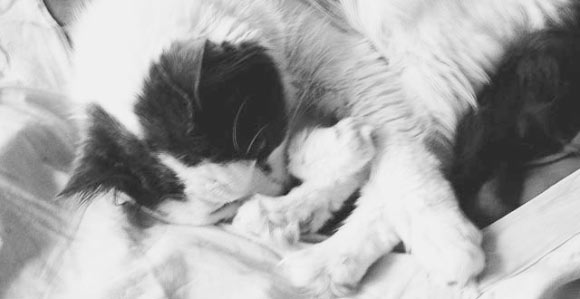
Moving Cat Indoors is Easier than Owners Expect: Study

The owner experiences of transitioning cats indoors suggest that, for most owners and cats, a transition to indoor cat management is manageable and worthwhile. Image credit: Natali Anderson.

Moving a free-roaming cat indoors for good is a decision many owners approach with dread: guilt over confining a former outdoor explorer, worry about litter boxes and scratched furniture, and doubts about whether the cat will ever adjust.

The post Moving Cat Indoors is Easier than Owners Expect: Study appeared first on Sci.News: Breaking Science News.

  •  

Scientists Propose New Strategy in Fight against High Blood Pressure

Potassium-rich foods include fruits, vegetables, legumes and dairy. Image credit: Jasmine Lin.

In a perspective paper published in The American Journal of Clinical Nutrition, a team of researchers and health experts calls for a β€˜paradigm shift’ in how public health agencies address hypertension.

The post Scientists Propose New Strategy in Fight against High Blood Pressure appeared first on Sci.News: Breaking Science News.

  •  

Scientists Find Traces of Two Unknown Archaic Hominins in Human DNA

An archaic hominin. Image credit: Ninara / CC BY 2.0.

New research led by the University of California, Berkeley reveals that beyond Neanderthals and Denisovans, humans interbred with two mysterious β€˜ghost’ lineages: one in Africa more than 50,000 years ago, another in Eurasia over 1.7 million years ago.

The post Scientists Find Traces of Two Unknown Archaic Hominins in Human DNA appeared first on Sci.News: Breaking Science News.

  •  

In the mid-nineteenth century, the Dutch were among the shortest people in Europe. Today they remain among the tallest on the planet, with young men standing about 1.83 metres on average. Rising prosperity, better nutrition and improved healthcare added nearly 20 centimetres in roughly 150 years

In the middle of the nineteenth century, a Dutch army recruit stood on average around five feet five inches. That was short even for the time, shorter than many of his European and American contemporaries, and nobody looking at the Netherlands then would have picked it as the future home of some of the tallest people on Earth. Yet that is exactly what happened. Young Dutch men born in the Netherlands now measure nearly 1.84 metres on average, almost exactly six feet, and the country consistently ranks among the world’s tallest. In the space of about 150 years, one of the shortest populations became one of the tallest.

Twenty centimetres in a century and a half

The scale of the change is easy to say and hard to feel. Dutch men gained roughly 20 centimetres, close to eight inches, between the mid-nineteenth century and the modern era. That is not the kind of drift you expect from a stable population. It is a population visibly rebuilding itself, generation by generation, each cohort of children arriving taller than their parents for decade after decade until the whole nation had grown into a different shape.

Height works this way because it is only partly written in your genes. Your genes strongly influence the range of height you might reach. Where you fall within that range depends heavily on the years between birth and adulthood: whether you got enough good food, whether illness kept interrupting your growth, and whether the conditions around you let a body spend energy on getting tall rather than just getting through. A child who is well fed and rarely sick is more likely to grow toward the top of that range. A child who is not, may not. Multiply that across millions of children and stature becomes a kind of national report card.

Milk, money and doctors, not evolution

So what changed in the Netherlands? The answer is less dramatic than the transformation, and I think that is part of what makes it interesting.

The country got richer, and it got healthier. As researchers behind aΒ Dutch Growth Study concluded, β€œMain contributors to the increase in height may be improved nutrition, child health, and hygiene, and a reduction of family size.” Prosperity, diet, healthcare and hygiene pulled in the same direction for generations, and the population climbed.

There was, for a while, a more exciting theory. In 2015 a study in a Royal Society journal suggested the Dutch might also be evolving taller, because taller Dutch men appeared to be having slightly more children, which could nudge the genes associated with height upward over time. It is a genuinely appealing idea, natural selection caught in the act in a modern European country. But it is worth being careful here, because the same lead researcher later put numbers on it. A 2023 simulation estimated that natural selection could account for only 0.07 to 0.36 centimetres of the change between 1850 and 2000. Against a gain of nearly 20 centimetres, that is a rounding error. The dramatic explanation turns out to be a footnote, and the dull one, better food and better health, did nearly all the work.

What a body remembers

I keep coming back to the idea that a population’s height is a physical record of its recent past. You cannot easily fake it or rush it, and it does not respond to a single good year. It responds to conditions sustained across a childhood, and then across many childhoods in a row.

When a country gets taller the way the Netherlands did, the bodies of its people are, in a real sense, remembering decades of enough food and decent medicine. The change is written into skeletons before it shows up in any history book.

It cuts the other way too. When researchers see average height stall or fall in a population, it can point to something going wrong in childhood: nutrition slipping, healthcare thinning out, or hard years landing on the young.Β 

The Dutch story is often told as a curiosity, a fun fact about a nation of unusually tall people ducking under doorframes. I think it is better read as evidence of something quietly hopeful. Give children enough to eat and keep them healthy, reliably, for long enough, and you can watch the result stand up in a crowd a century later. The Netherlands did not stumble into being tall. It fed and cared for a very long line of children, and the height is what that looks like from the outside.

The post In the mid-nineteenth century, the Dutch were among the shortest people in Europe. Today they remain among the tallest on the planet, with young men standing about 1.83 metres on average. Rising prosperity, better nutrition and improved healthcare added nearly 20 centimetres in roughly 150 years appeared first on Space Daily.

  •  

224,000-Year-Old Homo Skull Fragment Adds New Mystery to Human Origins

A Homo heidelbergensis, a Neanderthal and a Cro-Magnon. Image credit: SINC / JosΓ© Antonio PeΓ±as.

A fossilized skull fragment of Homo sp. unearthed in central Spain offers paleoanthropologists a fresh window into the story of ancient humans who lived in Europe hundreds of thousands of years ago.

The post 224,000-Year-Old Homo Skull Fragment Adds New Mystery to Human Origins appeared first on Sci.News: Breaking Science News.

  •  

Ancient Footprints in Kenya Hint at Bigger Bodies and Group Behavior among Early Human Relatives

One of 1.43-million-year-old footprints found at the GaJi10 site in the Koobi Fora Formation in northern Kenya; a 15-cm (6-inch) ruler is shown for scale. Image credit: Kay Behrensmeyer.

A set of 1.43-million-year-old fossil footprints preserved along the margin of an ancient lake in northern Kenya is offering paleoanthropologists new evidence about the size, gait and social lives of the beings who made them and reopening questions about which species they belonged to.

The post Ancient Footprints in Kenya Hint at Bigger Bodies and Group Behavior among Early Human Relatives appeared first on Sci.News: Breaking Science News.

  •  

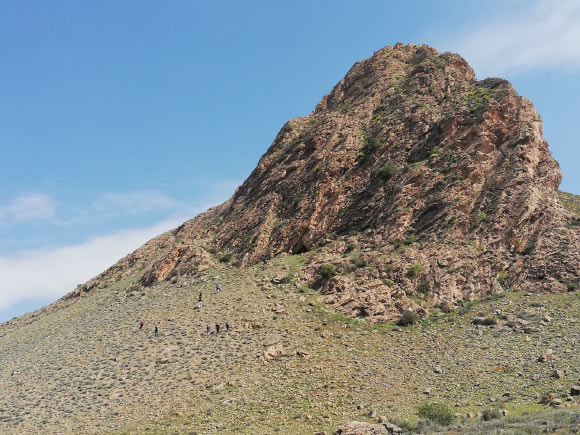
Stone Tools from Armenian Cave Reveal Split Strategy for Survival 50,000 Years Ago

A look at Ararat-1 Cave from the bottom of the Ararat Depression. Image credit: Ariel Malinsky Buller.

Ararat-1, a modest limestone cave that lies at an elevation of 1,034 m on the eastern flanks of the Ararat Depression in central Armenia, has yielded a striking puzzle about how Middle Paleolithic humans moved across their landscape.

The post Stone Tools from Armenian Cave Reveal Split Strategy for Survival 50,000 Years Ago appeared first on Sci.News: Breaking Science News.

  •  

Hugs May Be an Ancient Peacekeeping Tool, Ape Study Suggests

Examples of bonobo and chimpanzee reassurance behaviors. Image credit: Z. Clay / J.S. Brooker.

In a new study of chimpanzees (Pan troglodytes) and bonobos (Pan paniscus), scientists found that embraces, touches and other reassuring gestures before competition for food were linked to more peaceful sharing, suggesting the roots of human social touch stretch back at least six million years.

The post Hugs May Be an Ancient Peacekeeping Tool, Ape Study Suggests appeared first on Sci.News: Breaking Science News.

  •  

Losing Even 80 Minutes of Sleep a Night Linked to Weight Gain

The study sheds new light on the link between sleep deprivation and obesity. Image credit: Sweet Briar College.

New research from Columbia University found that adults who cut their sleep by about 80 minutes for six weeks packed on a pound (0.45 kg) and moved less during the day.

The post Losing Even 80 Minutes of Sleep a Night Linked to Weight Gain appeared first on Sci.News: Breaking Science News.

  •  
❌