❌

Reading view

This Southern-Style Mediterranean Diet Helped People Lose 10 Pounds

Mediterranean Diet Salmon With SaladIn a two-year head-to-head trial, researchers found that two very different dietary approaches produced similar changes in body weight. A Mediterranean-style eating plan adapted to Southern food preferences helped participants lose about as much weight as WeightWatchers over two years, but it produced substantially greater improvements in reported diet quality. The comparison was part of [...]
  •  

Most People Don’t Know This Popular Food Is Linked to Prostate Cancer Risk

Female Doctor Glass of Milk Thumbs DownMost men are unaware that a widely consumed part of the American diet has been linked to prostate cancer risk. A new national survey found that only 20% of men knew about the reported association between dairy consumption and prostate cancer. After learning about it, 66% said they would be likely to avoid dairy products. [...]
  •  

Denisovans in southwestern China reveal their ancient subsistence strategies

The Denisovans, the enigmatic archaic human relatives first identified from a finger bone and a handful of teeth in a Siberian cave, have long been known almost exclusively through their DNA. Now, a landmark study published in Nature has pulled back the curtain on how these ancient hominins actually lived β€” what they ate, how they hunted, what tools they made, and the environments they braved β€” through an extraordinary assemblage of fossils and artefacts from Bianfu Cave in Yunnan Province, southwestern China. The findings paint the most detailed portrait to date of Denisovan biology, behaviour and ecology in eastern Asia, and suggest that these vanished people left a deep genetic and cultural imprint on later populations across Southeast Asia and Oceania.

The research team, led by Qingfeng Ruan, Hua Li and Song Xing and their colleagues, conducted a comprehensive analysis of hominin fossils and the associated archaeological remains recovered from Bianfu Cave. The hominin fossils themselves date to roughly 167,000 to 134,000 years ago, placing them firmly in the Middle Pleistocene. But the cultural sequence preserved in the cave’s sediments is far longer, stretching from approximately 190,000 years ago to about 70,000 years ago. That span β€” some 120,000 years of continuous or near-continuous occupation β€” makes Bianfu Cave one of the longest cultural records that can most parsimoniously be attributed to Denisovans anywhere in the world.

The Denisovan identity of the fossils was established through two independent and technically demanding lines of evidence. The first involved analysis of the enamel–dentine junction, the internal boundary between the enamel cap and the underlying dentine of the teeth. This three-dimensional morphological interface acts something like a fingerprint of evolutionary relationships, revealing diagnostic traits of the tooth’s internal architecture that are invisible from the outside but characteristic of particular hominin lineages. The second line of evidence came from palaeoproteomics, the recovery and identification of ancient proteins preserved within fossilized tissues. Because proteins are far more abundant and durable than DNA, they can survive in warm, humid environments like those of southern China, where genetic material degrades rapidly. Sequencing these ancient proteins allowed the researchers to place the Bianfu hominins on the Denisovan branch of the human family tree with confidence.

The fossil collection itself is remarkable. It includes four teeth that substantially expand the known range of dental variation within the Denisovan lineage β€” a critical contribution, since Denisovans were previously represented by a very small number of dental specimens, making it difficult to gauge how variable their teeth could be. The new fossils also include two cranial fragments and a radius, a forearm bone, providing rare glimpses of Denisovan skull and postcranial anatomy that were previously almost entirely unknown. Together, these remains transform Denisovans from a genome and a scatter of isolated teeth into a population with recognizable skeletal biology.

Beyond the fossils, the archaeological record from Bianfu Cave offers something equally precious: a window into Denisovan daily life. The researchers reconstructed the ancient environment using faunal remains and pollen preserved in the cave deposits. These records indicate that across Marine Isotope Stages 6 through 4 β€” a period encompassing major glacial–interglacial climatic swings between roughly 190,000 and 57,000 years ago β€” the landscape around the cave was dominated by coniferous forest or a mosaic of forest and steppe. This was a cool, variable environment that Denisovans exploited successfully across tens of thousands of years, demonstrating a resilience to climatic change that adds to growing evidence of their adaptability, from the high altitudes of the Tibetan Plateau to the subtropical latitudes of mainland Southeast Asia.

The subsistence evidence is particularly striking. Analysis of the animal bones from the cave shows that its inhabitants practised specialized hunting focused on medium- to large-bodied prey. This was not opportunistic scavenging but a sustained, targeted hunting strategy β€” one that would have required knowledge of animal behaviour, coordinated effort and effective weaponry. Specialized big-game hunting of this kind has often been associated with modern humans and late Neanderthals in western Eurasia, so finding it in a Denisovan context more than 150,000 years ago dramatically narrows the perceived behavioural gap between these archaic lineages and our own species.

Yet the technological strategy documented at Bianfu Cave is, at first glance, surprisingly simple. The stone tool assemblage is characterized by expedient core reduction and tool production β€” that is, the inhabitants struck flakes from cores as needed, used them, and discarded them, rather than investing in carefully shaped, curated tools that were carried, maintained and resharpened over time. Alongside this, the Denisovans of Bianfu Cave made pervasive use of unmodified bones, employing skeletal elements of their prey directly as tools without altering them beforehand.

Taken together, the researchers interpret this pattern as an adaptive system that prioritized the exploitation of what they call object affordance β€” the inherent functional possibilities already present in a raw material or object β€” over intensive tool manufacture. A suitably shaped bone fragment could serve as a hammer, a digging implement or a scraping tool with little or no modification; a sharp flake struck from a convenient core could cut and butcher without further refinement. In the rich, resource-diverse environments of subtropical southwestern China, where raw materials and animal resources were plentiful, such a flexible, low-investment strategy may have been not a sign of simplicity but a highly efficient way of life. It suggests that Denisovans measured success not by the sophistication of their toolkit but by how skilfully they read and exploited the opportunities their landscape provided.

This behavioural portrait gains added significance when set against the wider geography of Denisovan presence. Over the past decade and a half, Denisovans have been documented across a staggering range: from the original genomic discoveries in the Altai Mountains of Siberia, first reported in 2010, to the mandible from the Tibetan Plateau described in 2019, Denisovan DNA recovered from sediments at Baishiya Karst Cave in 2020, a molar from the Annamite Chain of northern Laos announced in 2022, a male Denisovan mandible from Pleistocene Taiwan reported in 2025, and proteomic identification of the 146,000-year-old Harbin cranium, also in 2025. Bianfu Cave now anchors this story firmly in southwestern China, a region long suspected to have been a Denisovan heartland and a critical corridor for hominin movements between mainland Asia and Southeast Asia.

The study’s authors argue that the region’s Denisovans point to a substantial genetic and cultural legacy in later human populations. Modern populations in Southeast Asia and Oceania carry the highest known proportions of Denisovan ancestry anywhere in the world β€” a legacy of interbreeding that occurred as modern humans moved through and beyond island Southeast Asia. The new evidence from Bianfu Cave suggests that the ways of life practised by Denisovans in this region β€” their hunting strategies, their flexible technological approaches, their hard-won knowledge of tropical and subtropical environments β€” may have been part of the inheritance, alongside their genes, that helped later human populations thrive as they spread across the diverse and challenging landscapes of Asia and the Pacific.

For palaeoanthropologists, the significance of the Bianfu Cave discoveries is difficult to overstate. Denisovans have been the least anatomically documented of all known hominin groups β€” a lineage defined first by DNA and only slowly fleshed out with fragmentary fossils. The new teeth, cranial fragments and radius from Yunnan, combined with an unmatched 120,000-year archaeological sequence, mean that researchers can finally study Denisovans not just as a genome or a set of molecular signatures but as a living, adapting population: hunters of large game, makers and users of expedient tools, and inhabitants of conifer forests that swung between glacial cold and interglacial warmth. As analysis of the Bianfu material continues, it promises to reshape our understanding of how archaic humans lived in eastern Asia and how deeply their story is woven into our own.

Subject of Research: Denisovan fossils and archaeological remains from Bianfu Cave, Yunnan Province, southwestern China, revealing Denisovan biology, technology, subsistence strategies and palaeoecology

Article Title: Denisovans from southwestern China and their subsistence strategies

Article References: Ruan, Q., Li, H., Xing, S., Zhao, K., Liu, J., Zanolli, C., Doyon, L., Delpiano, D., Peresani, M., d’Errico, F., Demeter, F., Hublin, J.-J., Xiao, P., Wang, Y., Jia, Z., Yang, Q., Fu, Q., Sun, Q., Zhao, Y., … Chen, F. (2026). Denisovans from southwestern China and their subsistence strategies. Nature. https://doi.org/10.1038/s41586-026-10997-4

Image Credits: AI Generated

DOI: 10.1038/s41586-026-10997-4

Keywords: Denisovans, Bianfu Cave, Yunnan, palaeoproteomics, enamel–dentine junction, Middle Pleistocene, subsistence strategies, expedient tool use, object affordance, specialized hunting, Marine Isotope Stages, Southeast Asia ancestry

  •  

Ancient DNA Rewrites Story of Enigmatic β€˜American Cheetah’

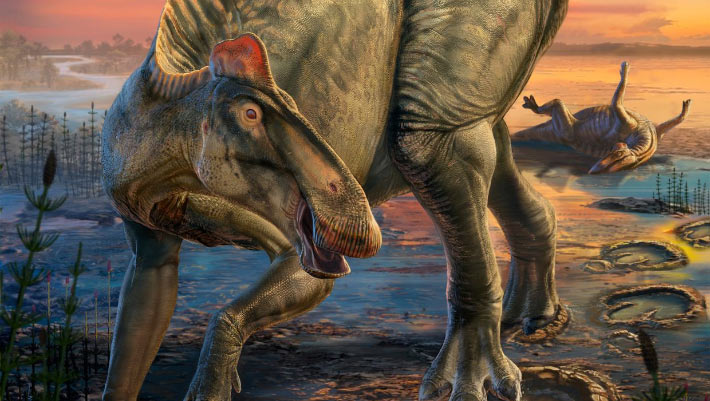
Miracinonyx trumani and the ecosystem this species lived in. Image credit: Julius Csotonyi.

For several decades, paleontologists have described Miracinonyx trumani -- an extinct species of cheetah-like felid that roamed the North American prairies and steppe terrains more than 13,000 years ago -- as North America’s answer to the African cheetah (Acinonyx jubatus).

The post Ancient DNA Rewrites Story of Enigmatic β€˜American Cheetah’ appeared first on Sci.News: Breaking Science News.

  •  

Short-Term Animal-Product Restriction Rapidly Alters Human Proteogenomic Profiles

A short-term decision to eat fewer or no animal products may begin reshaping the human body at the molecular level far sooner than many people expect, according to a new study published in Nature Communications. Research by A. Simistiras, O. Bocher, C. Emmanouil and colleagues examined how restricting animal-derived foods affects both gene activity and protein production in humans, revealing a complex biological response that unfolds beneath the visible changes on a plate.

The study focuses on proteogenomics, an approach that combines two powerful layers of biological information. Genomics and transcriptomics examine the instructions encoded in DNA and the messenger RNA molecules produced when genes are activated. Proteomics, by contrast, measures the proteins that cells actually manufacture. Because proteins perform most of the body’s day-to-day workβ€”from transporting nutrients to controlling immune reactionsβ€”studying them alongside gene activity can provide a more direct picture of how physiology responds to dietary change.

Rather than treating diet as a distant influence on long-term health, the research highlights it as an immediate biological signal. When people reduce their intake of animal products, the body is exposed to a different mixture of amino acids, fats, vitamins, minerals and other bioactive compounds. The quantity and timing of these nutrients can alter metabolic pathways, cellular signaling and the activity of genes involved in maintaining tissues. The researchers’ proteogenomic analysis was designed to capture these interconnected effects during a relatively short dietary intervention.

The significance of the work lies in its ability to distinguish between what cells are instructed to do and what they ultimately do. A gene may become more active without producing a corresponding increase in its protein, while a protein may remain stable because of slower turnover or regulation after translation. By examining both molecular layers, the study offers a more refined view of diet-responsive biology than either gene-expression or protein measurements alone. This is particularly important for nutrition research, where modest changes in multiple pathways can combine to influence health.

The findings indicate that restricting animal products can produce measurable molecular shifts even over a limited period. These changes do not represent a simple biological switch from β€œanimal-based” to β€œplant-based” physiology. Instead, they appear as a network of coordinated responses involving nutrient processing, energy metabolism and cellular regulation. Some proteins may respond directly to altered nutrient availability, while others may change indirectly as tissues adapt to new metabolic demands. The result is a biological signature of dietary transition rather than a single marker that explains every effect.

Such signatures could eventually help researchers understand why individuals respond differently to the same eating pattern. Two people can consume similar diets yet experience distinct changes in blood chemistry, metabolism or immune activity because of differences in genetics, gut microorganisms, age, lifestyle and baseline health. Proteogenomic profiles may help identify these sources of variation by showing which pathways are activated in each person. In the future, that information could support more individualized nutritional guidance instead of assuming that one dietary pattern produces the same outcome for everyone.

The study also underscores an important distinction between molecular response and clinical benefit. Detecting changes in proteins or gene activity does not automatically prove that a diet will prevent disease, improve performance or extend lifespan. Molecular alterations can be adaptive, neutral or potentially harmful depending on their intensity, duration and biological context. The research therefore provides evidence that the body responds rapidly to dietary restriction, while longer and larger studies will be needed to determine how these responses relate to cardiovascular health, metabolic disease, immune function and other outcomes.

The work arrives as plant-forward diets are drawing increasing interest for environmental, ethical and health reasons. Yet public discussions often reduce the science to competing claims about whether animal products are categorically beneficial or harmful. The proteogenomic perspective offers a more nuanced alternative. It suggests that dietary effects emerge through dozens, perhaps hundreds, of interacting pathways, and that the consequences of removing or reducing a food category depend on what replaces it. A diet rich in minimally processed legumes, grains, nuts, seeds, fruits and vegetables may produce a very different molecular response from one dominated by refined plant-based products.

For scientists, the study demonstrates the value of observing dietary change across multiple biological scales. For the public, its message is both striking and practical: the body does not wait years to notice what people eat. Even short-term restriction of animal products can be reflected in the molecular machinery of human cells. The findings do not settle the broader debate over the ideal diet, but they add a new layer of evidence showing that food choices are rapidly translated into biological signalsβ€”and that understanding those signals may be key to designing healthier, more personalized nutrition strategies.

Subject of Research: The proteogenomic effects of short-term restriction of animal products in humans.

Article Title: Diet-responsive proteogenomic effects following short-term restriction of animal products in humans.

Article References: Simistiras, A., Bocher, O., Emmanouil, C. et al. Diet-responsive proteogenomic effects following short-term restriction of animal products in humans. Nature Communications (2026). https://doi.org/10.1038/s41467-026-76379-6

Image Credits: AI Generated

DOI: 10.1038/s41467-026-76379-6

Keywords: proteogenomics, nutrition, animal-product restriction, plant-based diet, gene expression, protein response, human metabolism, dietary intervention, precision nutrition

  •  

A Vegan Diet May Begin Changing Gene Activity in Just 4 Weeks

Cutting Vegetables Vegan DietChanging what you eat may begin reshaping how your genes behave in as little as a few weeks, even though your DNA itself remains unchanged. In a randomized clinical trial, researchers found that healthy adults who followed a vegan diet for one month developed changes in chemical markers attached to their DNA. Compared with participants [...]
  •  

Why Low-Carb Diets Send Some People’s Cholesterol Soaring

Blood Cells CholesterolA study suggests that genetic factors may explain why LDL cholesterol rises sharply in some people who follow a low-carbohydrate, high-fat diet. Two people can follow the same low-carbohydrate diet and experience very different changes in cholesterol. One may see little difference, while the other develops a sharp increase in low-density lipoprotein (LDL) cholesterol. New [...]
  •  

Study Points to Sugar, Not Just Meat, as Fuel for Human Brain Evolution

Paranthropus boisei. Image credit: Β© Roman Yevseyev.

A team of researchers from the University of Sydney and the University of Glasgow argues that dietary sugars, not animal foods, may have played the decisive role in the expansion of the human brain over the past 4 million years, as hominin brain size grew nearly fivefold, from about 300 grams in early relatives like […]

The post Study Points to Sugar, Not Just Meat, as Fuel for Human Brain Evolution appeared first on Sci.News: Breaking Science News.

  •  

Scientists Propose New Strategy in Fight against High Blood Pressure

Potassium-rich foods include fruits, vegetables, legumes and dairy. Image credit: Jasmine Lin.

In a perspective paper published in The American Journal of Clinical Nutrition, a team of researchers and health experts calls for a β€˜paradigm shift’ in how public health agencies address hypertension.

The post Scientists Propose New Strategy in Fight against High Blood Pressure appeared first on Sci.News: Breaking Science News.

  •  

Is Sparkling Water Bad for Your Teeth? A New Study Has Answers

Young Happy Woman Pointing at Smile TeethA study found that unsweetened sparkling water lowers oral pH less than soda sweetened with sugar. A sip of sparkling water briefly makes the mouth more acidic, but not nearly as much as sugar-sweetened soda, according to a comparison of several common beverages. The findings suggest that choosing an unsweetened carbonated drink instead of soda [...]
  •  

New Study Finds Eating Breakfast Boosts Diet Quality in Teens Who Usually Skip It

Teenagers who regularly skipped breakfast improved the quality of their diets when they began eating a morning meal. Image credit: Pexels.

Adding breakfast back into the daily routine of teens around age 18 who habitually skip the meal can meaningfully improve their nutrition, with the biggest gains seen among those given protein-rich morning meals, according to a six-month clinical trial.

The post New Study Finds Eating Breakfast Boosts Diet Quality in Teens Who Usually Skip It appeared first on Sci.News: Breaking Science News.

  •  

Common Diet Advice About Water and Spicy Food May Be Completely Wrong

Man Hot Chili Pepper ForkWater and spice influenced eating in opposite and unexpected ways during controlled meal experiments. A glass of water beside a meal is often treated as an easy way to eat less. The usual explanation is that the water stretches the stomach and creates a sense of fullness before too much food is consumed. A Cornell [...]
  •  

Losing Even 80 Minutes of Sleep a Night Linked to Weight Gain

The study sheds new light on the link between sleep deprivation and obesity. Image credit: Sweet Briar College.

New research from Columbia University found that adults who cut their sleep by about 80 minutes for six weeks packed on a pound (0.45 kg) and moved less during the day.

The post Losing Even 80 Minutes of Sleep a Night Linked to Weight Gain appeared first on Sci.News: Breaking Science News.

  •  

Study Reveals a Surprising Link Between Birth Control Pills and Binge Eating

Woman Junk Food Binge Eating DisorderA large longitudinal study examined whether hormone exposure from combined oral contraceptives is associated with changes in emotional eating. Hormonal birth control is widely used, but its effects can extend beyond pregnancy prevention. New research suggests that, for some women, the active hormone pills in combined oral contraceptives may also influence eating behavior. In a [...]
  •  

Beans and Broccoli Linked to Lower Heart Risk in Young Adults

Sotos-Prieto et al show that modifying dietary habits can have a significant impact on health outcomes. Image credit: Silvia Rita.

A new analysis of data from the Western Australian-based Raine Study suggests that two humble vegetable groups -- legumes and cruciferous vegetables -- may play an outsize role in protecting young adults from early cardiometabolic risk, though the benefits appear to diverge sharply between men and women.

The post Beans and Broccoli Linked to Lower Heart Risk in Young Adults appeared first on Sci.News: Breaking Science News.

  •  

Secret to Heliconius Butterflies’ Longevity May Be Hidden in Pollen

Heliconius hecale. Image credit: Robert Lawton / CC BY-SA 2.5.

Entomologists have compiled decades of data from butterfly houses, wild field studies, and lab experiments to build the most comprehensive picture yet of how long Heliconius butterflies live and how slowly they age.

The post Secret to Heliconius Butterflies’ Longevity May Be Hidden in Pollen appeared first on Sci.News: Breaking Science News.

  •  

Nutrition and Neonatal Care: Tailored Approaches Unveiled

In a groundbreaking exploration destined to reshape neonatal care, the latest study by Lapillonne et al. dives deep into the intricate interplay between nutrition and neonatal morbidities, illuminating a path from broad dietary guidelines to finely tuned, condition-specific nutritional interventions. The research, published in Pediatric Research in June 2026, addresses a longstanding clinical challenge: how to optimize nutritional strategies that not only support survival but also minimize morbidities in vulnerable newborns.

Neonatal morbidity encompasses a spectrum of conditions that can dramatically impact the health trajectory of infants, especially those born preterm or with low birth weight. This study meticulously dissects the nutritional underpinnings that influence the onset and progression of these morbidities. By marrying clinical insights with molecular nutrition science, the researchers embark on an unprecedented journey to tailor nutritional care to the unique pathophysiological needs of each neonatal condition.

At the heart of the investigation lies a comprehensive evaluation of general nutritional recommendations, which have historically been formulated as one-size-fits-all protocols. Lapillonne and colleagues highlight the limitations of such broad strategies, revealing how they may fail to account for the intricate metabolic demands and altered physiological states characteristic of different neonatal morbidities. The study advocates a paradigm shift toward precision nutrition, where macronutrient and micronutrient compositions are meticulously calibrated to the specific disease processes at play.

The article details how newly refined biomarkers and diagnostic tools enable clinicians to discern nuanced nutritional requirements with greater accuracy. These advancements empower healthcare providers to move beyond the traditional reliance on birth weight and gestational age as primary determinants of nutritional plans. Instead, sophisticated metabolic profiling underpins the formulation of nutrients tailored to the infant’s biochemical milieu and vulnerability to morbid conditions such as bronchopulmonary dysplasia, necrotizing enterocolitis, and intraventricular hemorrhage.

One of the pivotal revelations pertains to the role of protein-energy intake and its dynamic adjustment according to the infant’s real-time metabolic status. Lapillonne et al. emphasize that inadequate or excessive protein provision can exacerbate neonatal morbidities, underscoring the necessity of ongoing nutritional assessment and personalized modulation. The ramifications extend to prospective neurodevelopmental outcomes, elucidating how early, optimized nutrition can confer lifelong benefits beyond immediate survival.

Fats and lipid profiles also receive detailed scrutiny. The research sheds light on the critical importance of polyunsaturated fatty acids, particularly those of the omega-3 series, in fortifying immune defenses and cellular membrane integrity in compromised neonates. The study provides compelling evidence that condition-specific modulation of lipid intake can modulate inflammatory pathways, offering new therapeutic angles for inflammatory-driven morbidities that pervade neonatal intensive care units.

Furthermore, the paper delves into the nuanced management of micronutrients, with a focus on minerals such as calcium, phosphorus, and trace elements essential for skeletal development and enzymatic functions. The authors meticulously map out how deficiencies or imbalances can precipitate morbid outcomes, reinforcing the imperative for vigilant monitoring and adjustment in parenteral and enteral feeding regimens.

A particularly innovative element of this work is its integration of emerging nutritional therapies, including the strategic use of probiotics and prebiotics. Lapillonne et al. discuss how modulating the neonatal microbiome through condition-specific nutritional approaches may mitigate the incidence of gastrointestinal morbidities, potentially altering the trajectory of diseases such as necrotizing enterocolitis, which remain significant causes of neonatal mortality and prolonged hospitalization.

Beyond the biological mechanisms, the study also reflects on the healthcare systems’ capability to implement these sophisticated nutritional protocols. It highlights the challenges and opportunities inherent in integrating precision nutrition into varied clinical settings, from tertiary care centers with advanced technological support to resource-limited environments where broad guidelines still dominate practice.

Equally fascinating is the research’s anticipation of a future where neonatal nutritional care leverages artificial intelligence and machine learning. Predictive algorithms could synthesize clinical, metabolic, and genetic data streams to dynamically individualize nutrition, dramatically improving outcomes and reducing neonatal morbidity burdens globally.

The implications of this comprehensive synthesis are profound. For clinicians, it signals a transition from reactive nutritional support toward proactive, tailored interventions that could dramatically reduce the incidence and severity of neonatal morbidities. For researchers, it opens fertile ground for investigating the molecular bases of nutritional needs and responses across the spectrum of neonatal diseases.

Educators and policymakers are also called upon to reimagine neonatal nutrition frameworks, advocating for the incorporation of condition-specific guidelines into training curricula and clinical practice standards. This cultural shift necessitates interdisciplinary collaboration, merging neonatology, nutrition science, bioinformatics, and family-centered care models to create cohesive, effective strategies.

Importantly, the authors note that while precision nutrition promises remarkable benefits, it demands rigorous clinical trials and longitudinal studies to validate safety, efficacy, and optimal implementation pathways. Ethical considerations in administering personalized nutrition to the most vulnerable populations underscore the need for meticulous oversight and evidence-based protocols.

In summary, this landmark study by Lapillonne et al. propels neonatal nutritional science into a new era where generalized recommendations give way to precision care intimately attuned to individual neonatal morbidity profiles. The convergence of advanced biomarker discovery, metabolic profiling, and therapeutic nutrition promises to revolutionize outcomes for newborns worldwide, mitigating morbidity burden and fostering robust early-life growth and development.

These insights herald an exciting frontier where nutrition transcends its traditional role, becoming a powerful, condition-specific therapeutic tool. As neonatal care embraces this shift, the prospect of safer, healthier futures for our most fragile infants moves from aspiration to tangible reality.


Subject of Research: Nutrition and its impact on neonatal morbidities, emphasizing the transition from general dietary recommendations to condition-specific nutritional care.

Article Title: Nutrition and neonatal morbidities: from general recommendations to condition-specific care.

Article References:
Lapillonne, A., Iacobelli, S., Johnson, M.J. et al. Nutrition and neonatal morbidities: from general recommendations to condition-specific care. Pediatr Res (2026). https://doi.org/10.1038/s41390-026-05220-z

Image Credits: AI Generated

DOI: 10.1038/s41390-026-05220-z

Keywords: Neonatal nutrition, neonatal morbidity, precision nutrition, protein-energy intake, polyunsaturated fatty acids, micronutrients, neonatal care, metabolic profiling, probiotics, infant development

  •  

113-Million-Year-Old Pterosaur Fossil Reveals What Flying Reptiles Ate

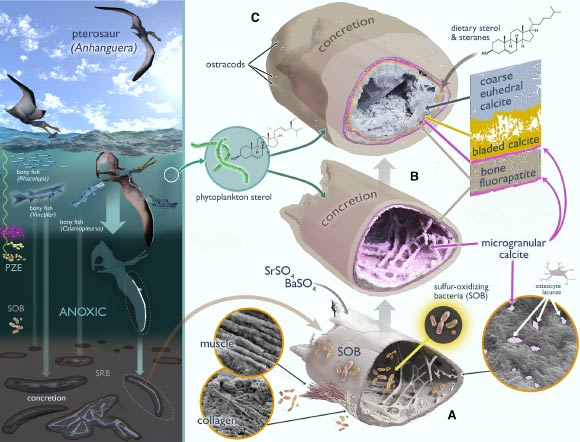
Grice et al. integrate organic geochemical analyses with high-resolution micro-mineral imaging of a three-dimensionally preserved Cretaceous pterosaur wing phalanx from Brazil to reveal steroid biomarkers and multi-stage mineralization pathways underlying its preservation. Image credit: Grice et al., doi: 10.1016/j.isci.2026.116199.

A 113-million-year-old pterosaur fossil from northeastern Brazil has yielded rare evidence of soft tissues, organic molecules and chemical traces of a diet heavy in fish and cephalopods such as squid or nautilus relatives.

The post 113-Million-Year-Old Pterosaur Fossil Reveals What Flying Reptiles Ate appeared first on Sci.News: Breaking Science News.

  •  
❌