❌

Reading view

The secret to protecting next-gen spacecraft might be eggshells

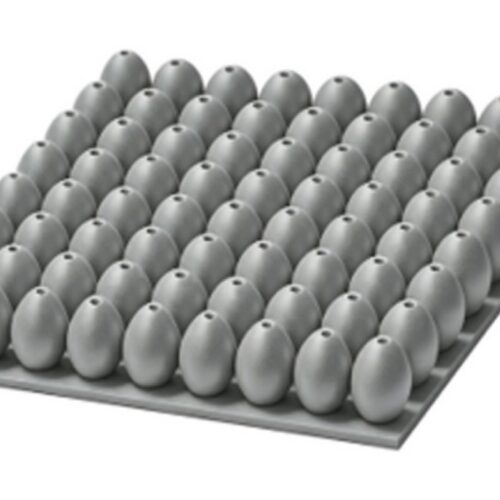
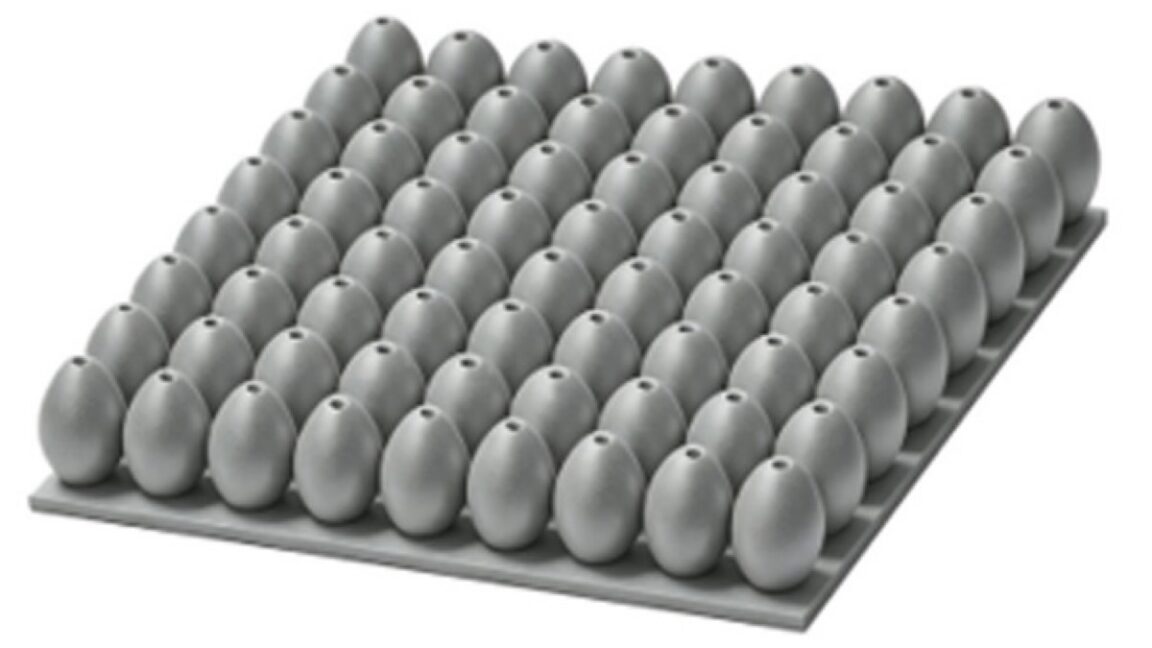
In 2007, a piece of space debris punched a bullet-like hole through the radiator panel of the US space shuttle Endeavor. The shuttle program ended in 2011, but the space debris problem has only intensifiedΒ as we launch more and more satellite constellations, telescopes, and spacecraft into orbit. That's why Chinese scientists have devised a new aluminum material inspired by eggshells that they believe could offer enhanced protection against debris fragments, according to a new paper published in the Journal of Applied Physics.

Eggshells have long fascinated scientists because of their mechanical properties. For instance, it's well known that cracking an egg requires applying just enough force to the center to achieve a clean break without completely shattering the shell. In 2012, MIT mechanical engineer Pedro Reis co-authored a paper demonstrating the link between an egg's ovoid geometry and its rigidity, a major factor when predicting how much force an object can endure before cracking. (As I wrote for Slate at the time, rigidity is related to, but distinct from, strength. If one eggshell has tiny cracks and the other doesn't, both shells have different strengthsβ€”the cracked one will break more easilyβ€”but the same rigidity.)

Reis started studying eggshells after participating in a popular physics demonstration: walking on cartons of eggs without breaking them. The key, he learned, was to align the eggs with their narrow tip (the most crack-resistant part) pointing up, and then carefully place one's feet to distribute one's weight over the entire surface area. This ensures that no single egg is overloaded. While it takes around 5.5 pounds of force to crack an egg, that depends on the direction in which the force is applied, as well as its distribution over the shell's surface.

Read full article

Comments

Β© Wang et al., 2026

  •  

Minnesota iron ore could be key to sustainable and lower cost semiconductor

For the first time, researchers at the University of Minnesota Twin Cities have demonstrated that the low-purity iron ore prevalent in Minnesota can be used to create semiconductor-quality iron sulfide, also known as "fool's gold" or pyrite. This discovery could have cost-effective and sustainable applications in future electronic devices and other technologies.

  •  

This AI Can Find the Missing Atoms That X-Rays Cannot See

Artistic Illustration of AI Adding Hydrogen AtomsAn AI model adapted from image inpainting can reconstruct missing atoms in crystal structures with a reported 97 percent success rate. A crystal structure can appear nearly complete yet still be unusable for computer simulations because some of its atoms are missing. Hydrogen is a frequent source of these gaps, and researchers have now adapted [...]
  •  

Scientists Catch a Hidden Electronic State Forming Almost Instantly

Photoinduced Hidden State Formation IllustrationResearchers observed a hidden state triggered by light forming within 30 femtoseconds. A pulse of light sent a metal-organic framework into a hidden electronic state in just 30 femtoseconds. By watching the transformation almost as it happened, researchers uncovered a fleeting intermediate stage that appears to guide the material into its new state. The work [...]
  •  

Silver nanocatalysts switch reaction sites between power generation and hydrogen production

For the first time, researchers have discovered that the same silver (Ag) nanocatalyst operates at different reaction sites depending on whether a solid oxide cell is generating electricity or producing hydrogen. This finding introduces a new design principle for improving the performance of next-generation solid oxide cells.

  •  

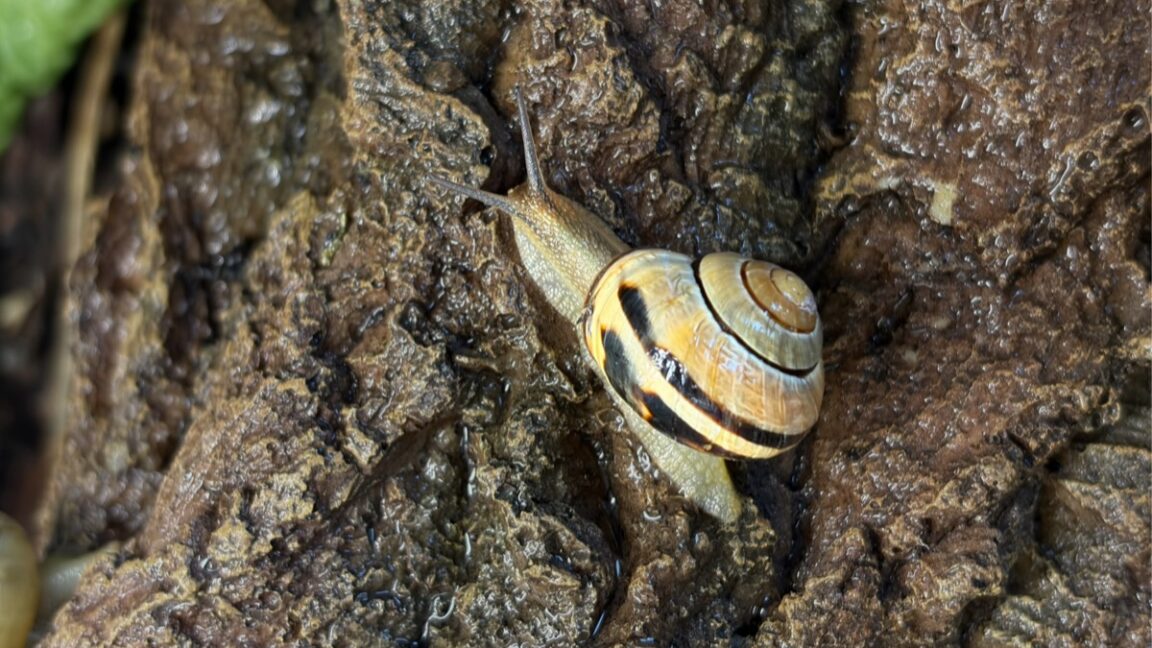
How snails engineer their slime

Snails are well-known for their mucus. The slime is highly valued as an anti-inflammatory and anti-aging ingredient in certain skin care products, and snails can secrete different kinds of mucus with properties tailored to specific functions. A team of German scientists has determined a recipe for how snails achieve that so-called tunability: Collagen and calcium work in tandem to achieve the varying mechanical properties, according to a new paperΒ in the journal Science.

Snail mucus is mostly water; it's the mucins (glycoproteins) and complex carbohydrates that give it that slimy, viscous texture. In addition to cosmetics, the mucus holds great potential for drug delivery. In 2020, scientists found that combining snail slime from a common garden snail with gold nanoparticles helped accelerate wound healing and exhibited anti-inflammatory properties in mice. Most relevant to this latest paper is a 2023 study on garden snail slime that identified three distinct types of secreted mucus: a hydrating version to protect its skin, one that acts as an adhesive glue, and a third that serves as a lubricant so the snail can more easily glide across a surface.

The team focused their research efforts on the grove snail/lemon snail (Cepaea nemoralis), which they deemed well-suited as subjects because the snails secrete five different kinds of mucus with distinct functions. As with the garden snails, there is one that acts as a lubricant to help with locomotion and an adhesive mucus to help the snail stick to various surfaces. Then there's a mucus layer known as the epiphragm that the snail secretes when it hibernates in winter, which contains calcite and effectively seals the shell to protect the snail from predators and harsh environmental conditions.

Read full article

Comments

Β© Max Planck Institute of Colloids and Interfaces

  •  

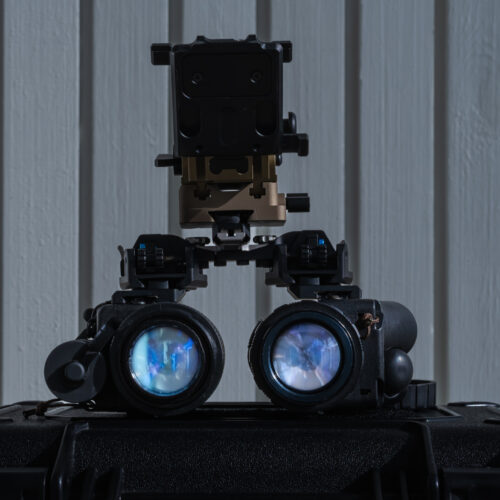
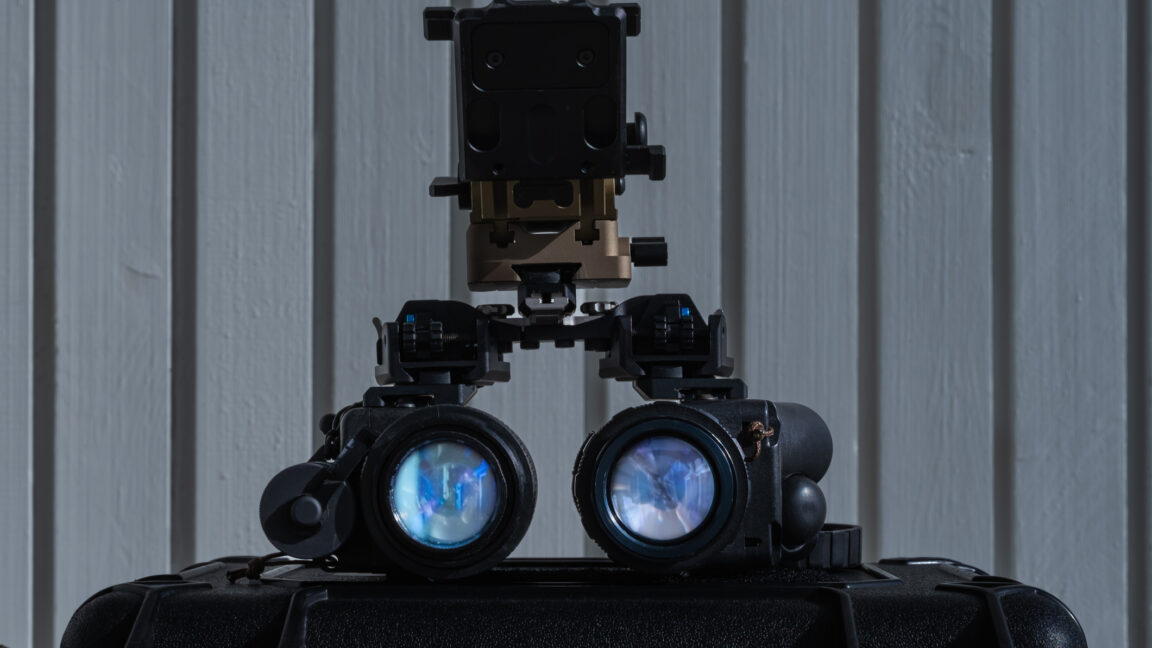
Researchers devise a full-color night vision goggle

Human eyes don’t register the infrared portion of the light spectrum because infrared photons don't carry enough energy to trigger the signaling pathway inside our light-sensing cells. But we’ve been able to make devices that give us a visual representation of what’s happening in the infrared.

A team at the Beijing Institute of Technology, led by Xin Tang and Ge Mu, has now built a device that lets people see infrared in a new way. Instead of just translating it to visible shades of green as it’s done in standard night-vision goggles, it translates different infrared wavelengths into distinct parts of the visual spectrum, giving the eye something closer to natural vision.

Researchers achieved that by combining mercury telluride colloidal quantum dots, which absorb infrared light, and a dual-layer OLED, which converts that absorbed energy into visible color. Stacked together with the right internal wiring, they make incoming infrared radiation come out the other side as an ordinary-looking, full-color image.

Read full article

Comments

Β© Dmitri Toms

  •  

Scientists Watch Chemistry Unfold Atom by Atom

UV and X Ray Probing of 3 FluoropyridineStudy suggests a new method for tracking electronic and vibrational dynamics in real time. Within a few trillionths of a second after absorbing light, a molecule bends out of shape, shifts its electrons, and converts electronic energy into vibrations. These changes happen too quickly for ordinary instruments to follow, but flashes from the European XFEL [...]
  •  

Scientists Build the First 3D Cloak That Makes Objects Invisible To Heat

3D Printed, Hybrid Aluminum and Rubber Cloaking DeviceA new 3D material can guide heat around complex objects while shielding them from extreme temperatures and infrared detection. On an infrared camera, a warm object normally stands out clearly against cooler surroundings. Researchers have now built a three-dimensional cloak that bends heat around an object, erasing its thermal outline while protecting the space inside [...]
  •  

β€˜Mechanical’ Properties of This Predatory Sea Worm’s Jaws Could Inspire a New Class of β€˜Bio-Metal’ Material

A predatory sea worm known as Perinereis cultrifera possesses jaws that do not fit neatly into either biological or metallic categories. These jaws consist of structural proteins reinforced with metal ions, giving them mechanical properties unlike those of either conventional metals or ordinary biological tissue.

This unique combination of composition and mechanical behavior led researchers from TU Wien and the University of Vienna to propose an entirely new material classification. In a recent paper published in Biophysics Reviews, the team suggests that the creature’s jaws represent a distinct class of material, which they term bio-metal.

The jaws of bristle worms such as P. cultrifera are formed by linking structural proteins with metal ions, producing a material tough enough to crush and bite prey. Previous studies called these tissues metallike biomaterials, meaning they share some properties with metals, like strength or conductivity. The new study argues that this term is too broad. According to the researchers, a true bio-metal must meet three criteria: it must be hard, display specific strain mechanics, and have a well-defined ion-protein structure.

Hardness With a Metal Signature

To test if the jaw met these criteria, the researchers used nanoindentation, which means pressing a tiny probe into the tissue to measure its properties. They also conducted chemical tests and imaging at the same time. The results confirmed earlier findings that the jaw tips contain higher concentrations of metal ions than the center, likely making the tips harder.

When the probe pressed into the jaw at different depths, the researchers observed something called the Nix-Gao size effect. This effect, seen before in metals like copper and silver, means that smaller areas resist deformation more than larger ones. The reason is that strain gradients become larger in smaller regions, increasing resistance to deformation. Finding this metal-like behavior in worm jaws is one reason scientists have compared the material to metals.

Where the Metal Comparison Breaks Down

However, the jaw does not behave exactly like metals such as copper. Its elasticity changes depending on the size of the area tested, which is not seen in crystalline metals.

β€œBristle worm jaws also showed size-dependent elasticity β€” this is a distinguishing feature of bio-metals when compared to standard crystalline metals like copper or silver,” said Christian Hellmich, one of the paper’s authors. Copper and silver can show a hardness size effect, but neither exhibits the size-dependent elasticity that the team measured in the worm jaw. That distinction is one reason the researchers argue that these materials deserve their own category.

To explain this property, the researchers built a mathematical model showing how the jaw’s atomic structure leads to the elastic size effect. This model helps explain the effect and gives a basis for future research.

β€œWe plan to extend the experimental database by investigating additional species to refine the theoretical concept and perform dedicated computations, and β€” perhaps most interestingly β€” to explore the link between genetic interventions and the corresponding material design space,” Hellmich said. β€œAll this comes with true excitement about the beauty, elegance, and refinement found in and produced by nature.”

Next, the researchers plan to explore how genetic changes influence the development of these materials. If successful, the work could eventually help engineers develop new biomimetic materials inspired by the ion-protein architecture found in these worms.

Austin Burgess is a writer and researcher with a background in sales, marketing, and data analytics. He holds an MBA, a Bachelor of Science in Business Administration, and a data analytics certification. His work focuses on breaking scientific developments, with an emphasis on emerging biology, cognitive neuroscience, and archaeological discoveries.

  •  

Prototype bicycle tire uses silk to outperform nylon in strength and endurance

Researchers in Thailand have developed a prototype high-performance bicycle tire that replaces conventional nylon fabric reinforcement with natural silk. The team combined laboratory-scale material testing with pilot-scale tire manufacturing. Natural rubber composites were produced by placing a layer of silk or nylon fabric between rubber sheets and bonding the layers using a resorcinol-formaldehyde-latex coating. The selected composite formulation was then used to manufacture full bicycle tires.

  •  
❌