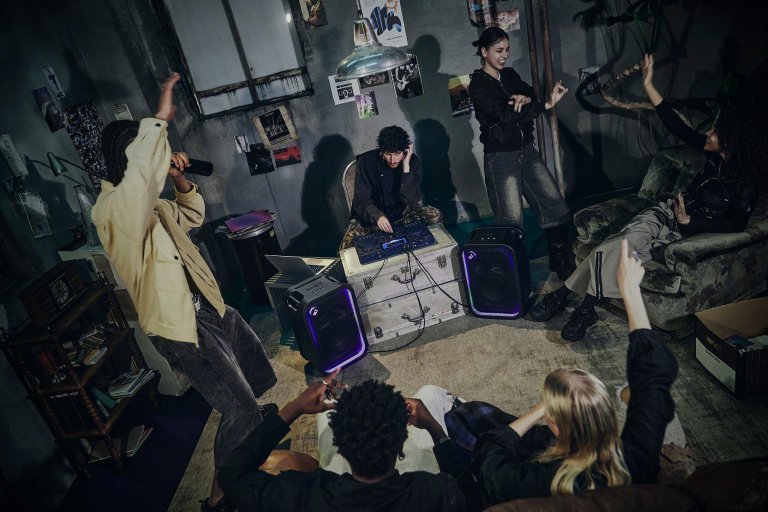
Looming in an event space of Chelsea’s Kimpton Eventi Hotel, the Sony ULT TOWER MAX introduced itself as something between a party speaker and a PA, packing more LEDs and dBs than the cabinets that came before it. In Manhattan in mid-August for a preview of three new speakers in Sony’s ULT POWER SOUND Series, I first met the MAX at a pre-briefing party as a DJ loosened up the new circular woofers, and maybe my travel-tightened spine, with some main-stage EDM at meeting-room distance.
The next day, in an even more compact conference room, I was given a disclaimer: we hadn’t heard the MAX anywhere near its max, but we could today, if we’re not sensitive to sound pressure. Before we dropped the bass, however, it was time to drop some specs.
[Disclosure: Sony provided travel accommodations during the creation of this story.]
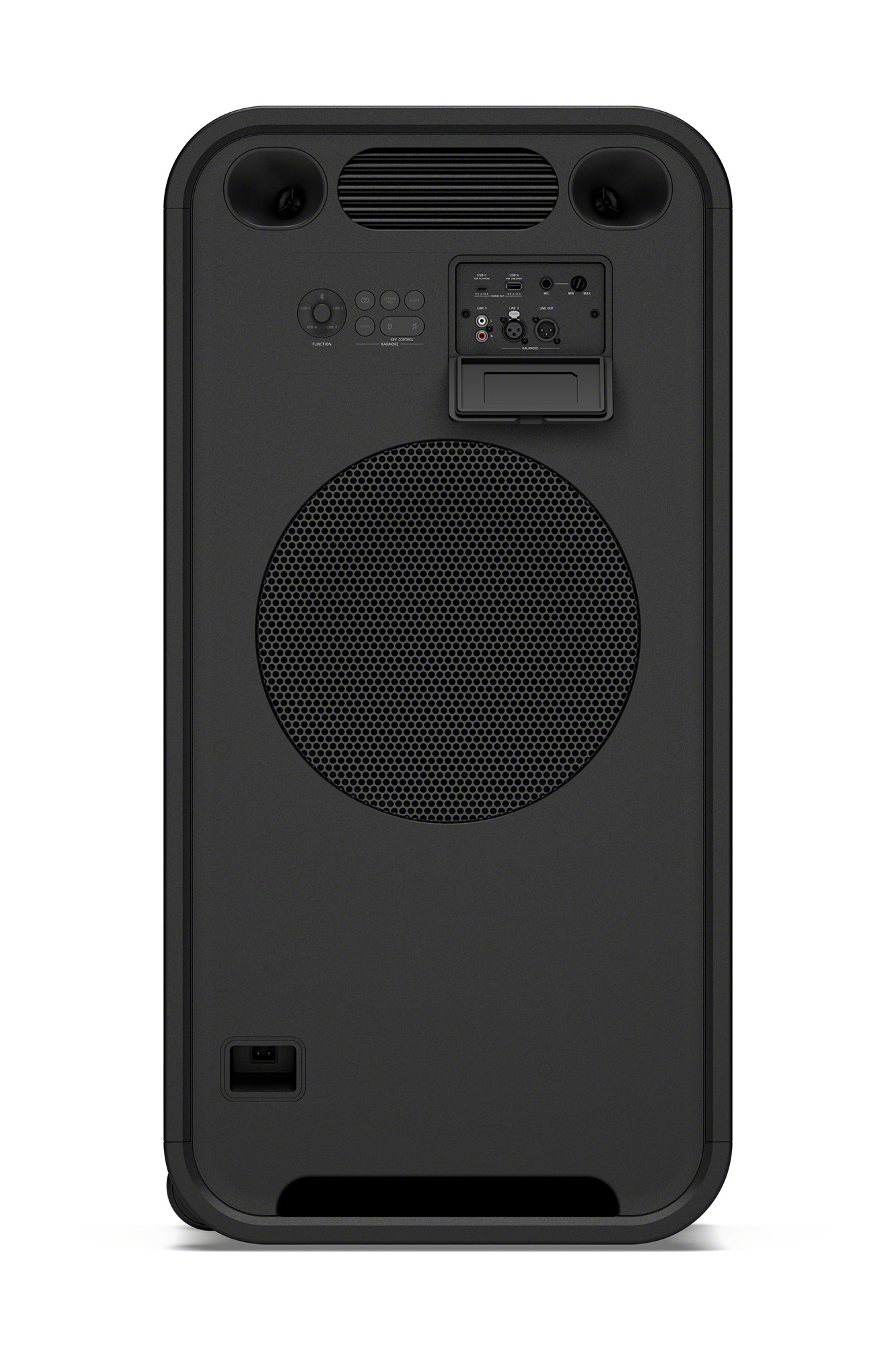
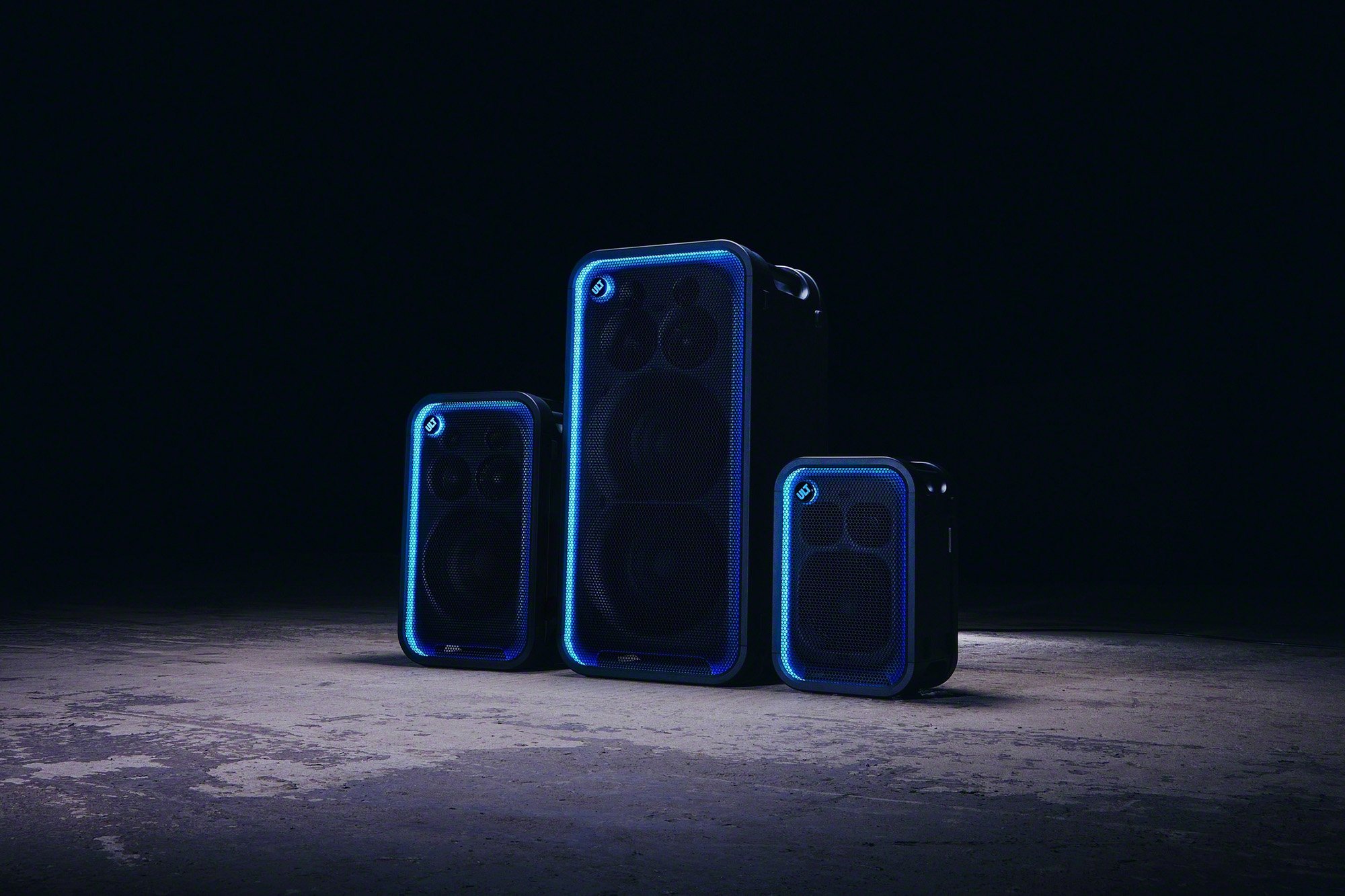
At the core of the Sony TOWER MAX are three large-diameter circular woofers (including a rear-firing one) plus an “ULT DUCT,” which replace the X-Balanced (rectangular) drivers of the previous generation. This 280mm geometry and more cabinet volume move air more efficiently, delivering lower-frequency extension of 45 Hz alongside 110dB/112dB SPL, depending on ULT mode selected. ULT1 emphasizes low end, ULT2 emphasizes overall output (the app also offers LIVE mode for a reverb/widening effect, a 10-band EQ you can overlay on either ULT mode, or FLAT for true-to-source playback). Pushing more air = pumping more bass. There are also dual midrange drivers and tweeters on the front, plus two rear-facing tweeters. This 360 Party Sound makes the TOWER MAX the best choice for bigger rooms and sub-heavy genres (after all, Grammy-nominated producers responsible for tracks by Kendrick Lamar and Rihanna, among others, helped tune it). It should be noted that each speaker is mono. However, you can create a stereo pair/Party Chain through either the physical connectivity panel (featuring XLR cables [In-Out] for mixer input and connecting multiple speakers, plus RCA, USB-A, USB-C, and a Mic input as sources) or using consumer-friendly Bluetooth 5.3 with SBC/AAC/Auracast. It’s just a click in the app or the push of a button on the back panel. (We believe the Sony speakers will, in theory, pair with other brands implementing open Auracast, but haven’t tested this yet.)
The Sony Sound Connect app helps you navigate these options, along with sonic and visual feedback from the speaker. Pushing the ULT mode button on the front (which is also a volume button) triggers a single (ULT1) or double (ULT2) turntable scratch sound. And the newly increased LED lights (100 on the TOWER MAX) can indicate Power On/Off, Volume Level/Up/Down, Sound mode, BT Pairing, Low battery (10%), Stereo Pairing, and Horizontal/Vertical switching of the device. And you can switch between three customizable lighting modes, putting the fun in functional. As for how to get the 20- x 41- x 18-inch, 121-pound speaker into place, four integrated corner handles and wider redesigned wheels help with transport and positioning.
The sweet spot for throwing a rager without throwing out your back, the Sony TOWER 7 cuts the price in half, woofers down to one, LEDs to 72, and weight to 50 pounds. But it produces more than enough rumble for the average backyard blast, hitting 51 Hz and 103.5dB/105dB. Everything else from the TOWER MAX is included. And you’re no longer tethered to an outlet; a rechargeable battery can last up to 30 hours with lighting off, 15 hours with lighting on (and a 10-minute quick charge offers 180 minutes of playback time). This is the one we’re testing, and its dynamic bass boost already scored highly on the “Daaaaaaamn” scale.
As for the Sony TOWER 5, it’s got one 230mm woofer and no ULT DUCT, plus no rear tweeters, resulting in bass reach of 51 Hz but overall SPL of only 98dB/99dB. It has only 56 LEDs and no wheels, but it’s also only 29 pounds and has a 20H/12H battery life (lights off/on). Plus it’s IPX4, so it can handle a light splash/rain shower. With the same I/O as its bigger brothers, including karaoke inputs (1/4-inch/XLR) and controls (Echo/key control) that I maybe should have mentioned earlier for the entire line, this is the most it’s going down anywhere you go choice. And Sound Connect lets you trigger an airhorn, so what more do you need?
Back to those first impressions. Structural changes led to physical sensations. Sony set out to make a more well-rounded speaker, in both design language and bass reinforcement. And, based on my memory of the previous TOWER 9/10, they succeeded, whether you’re playing hip-hop, R&B, reggaeton, or EDM. In a city where there’s 1 DJ to every 10 people, anyone just getting started who doesn’t want to deal with separate subwoofers and flying lights may have a new entry point to consider for a tailgate or block party. As for that MAX bass test, I was definitely going to tap out before the speaker was.
In a NoHo loft in late August, JBL revealed its new Cove whole-home audio system. In this fully staged Manhattan apartment, three Wi-Fi speakers—the M1, P1, and X1—occupied kitchen counters, credenzas, bookshelves, and bedside tables. From Bad Bunny at the sink and Tiësto on the couch to Marvin Gaye by the fireplace and Al Green in some armchairs, Jesse Coyer, Sr. Manager, National Account Sales & Training, HARMAN Consumer Audio, demoed speaker setup and scale. The walkthrough’s throughline was clear: Cove offers expandable multiroom audio without the need for a custom installer or control system.
[Disclosure: JBL provided travel accommodations during the creation of this story.]
According to Coyer, the Cove series is being introduced to JBL’s lineup more as a progression than a pivot. It’s not meant to replace a multi-thousand-dollar separates system, though it could complement one. JBL sees the real competition as setup friction. For someone familiar with a PartyBox (or BandBox), who maybe has some JBL headphones, Cove speakers can be up and running almost as easily as a standard Bluetooth speaker, all through the JBL One app. But that’s where the walls crumble.
After three steps and a couple of minutes on a smartphone to connect the speaker(s) to your home Wi-Fi, you can stream lossless/hi-res audio to them directly with Spotify Connect, TIDAL Connect, Qobuz Connect, Roon, AirPlay 2, and/or Google Cast. The JBL One can mirror native app controls, but you don’t have to live in it; it’s there primarily to group speakers into stereo pairs and/or rooms. When it comes to optimized tuning and distortion-free performance, the speakers use JBL’s proprietary room calibration, Constant Sound Field, and AI Sound Boost platforms, with preset/custom EQ available to overlay on grouped speakers in the app.
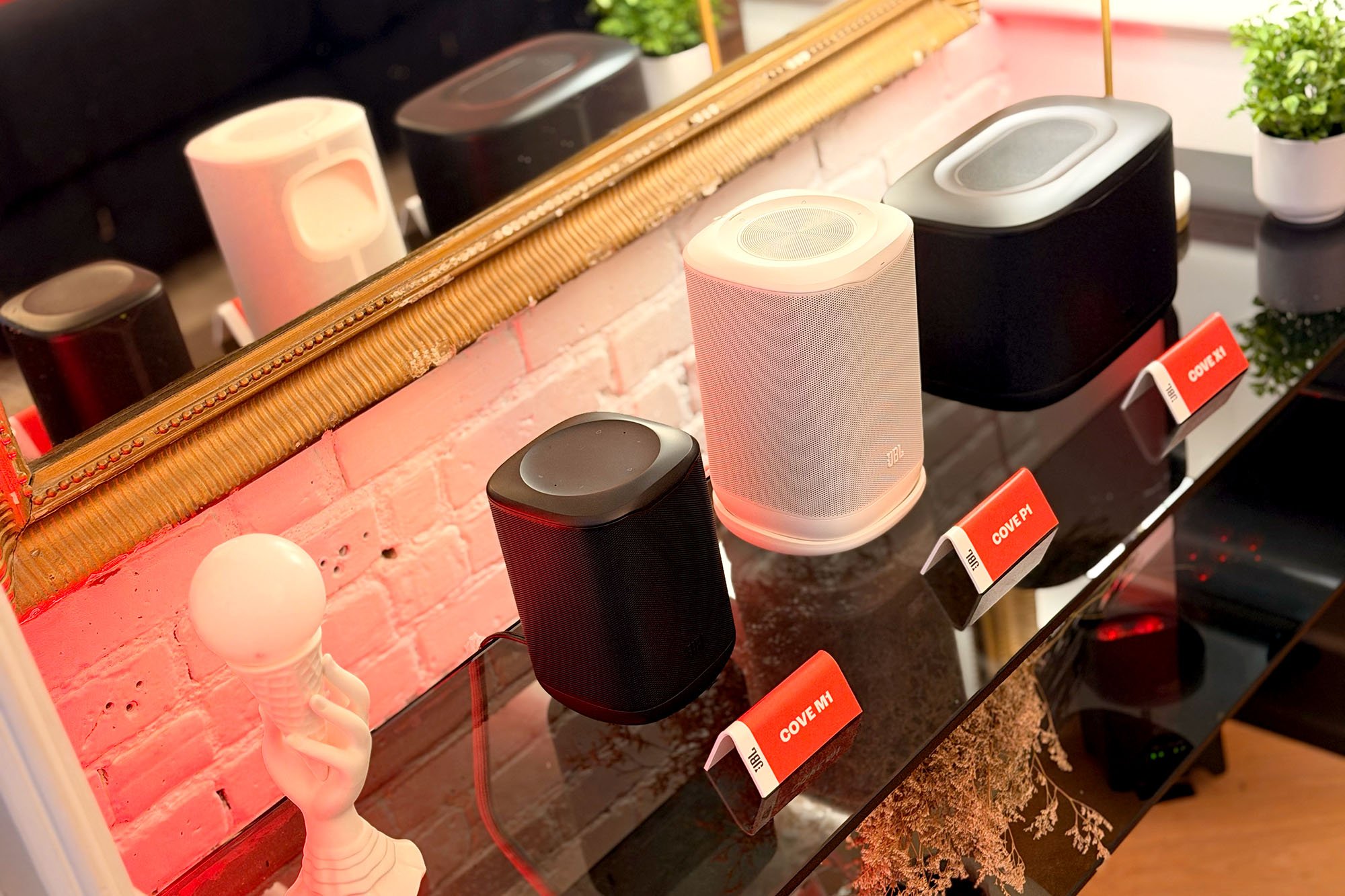
First up is the M1, a compact 4.9- x 7.2- x 4.9-inch powered speaker (shown below). Inside, 3 × 0.75-inch soft dome tweeters and 1 × 105 mm 4-inch woofer with rear passive radiator deliver 55 Hz-20 kHz (-6 dB) with punchy JBL Signature sound and solid off-axis dispersion. The speaker can also group with a JBL Bar 300/500/700/1000/1300MK2 Series soundbar to act as a surround channel (furthermore, any signal sent to an MKII soundbar on the network can be broadcast to any Cove speaker).
Stepping up to the P1 (shown below) brings portability and dimensionality. Ditching the cord, an internal battery provides up to 14 hours of power, and an integrated handle makes the 5.8- x 9.2- x 5.8-inch 7-pound speaker easy to carry (and easy to put back on its charging cradle). Plus, the IP56 rating means the speaker can handle poolside splashes, sudden rain showers, or time on a beach towel. Like the M1, the P1 can be used as rear channels with JBL Bar Series MK2 soundbars, or two can be paired for true channel separation. But the P1 features an additional 0.75-inch upfiring tweeter alongside 3 x 1.25-inch tweeters and 1 x 4-inch woofer with passive radiators, so Atmos content gets added clarity within the 50 Hz – 20 kHz (-6 dB) frequency response. Just make sure your ceiling is low enough for proper reflections in order to get the optimal effect.
Back on the mains, the X1 (shown below) delivers the most expressive performance with 4 x 1.25-inch tweeters, one upfiring, plus dual 3.5 x 4.7-inch woofers with passive radiators, for a 10.2- x 7- x 6.8-inch 3.0.1-channel system and a frequency response of 45 Hz – 20 kHz (-6 dB). Biggest box, biggest impression. The X1 doesn’t pair with soundbars out of the box, but JBL is open to exploring the possibility if customer feedback suggests it’s desired. The X1 is imagined more as its own room-filling entity, with the widest dispersion and deepest bass proven. Still demure in footprint, not presence. And two can be paired for an even more immersive soundstage.
This isn’t JBL’s first entry in connected Atmos speakers (that was the more heritage-styled Authentics line, which is phasing out), but it has a more deliberately neutral aesthetic and shares the “power line” design language of the brand’s soundbar series. The endgame is one app, one ecosystem. For instance, the speakers share a feature called Music Follows Me through a Moment button, which can be long-pressed to extend the stream from an active speaker anywhere on the network to the new location, no phone required (you can also assign it an ambient soundscape or Spotify Tap to the button). And, over time, additional features (like independent surround channel levels) may be deployed and more hardware folded in, like a Cove subwoofer and allowing speakers to hand off sound to the Tour M3 headphones late at night.
For those folks who still have some digital files they’d like to play, each Cove speaker supports MP3 via USB-A. In addition, the speakers’ Bluetooth 5.3 protocol supports SBC, AAC, and, most importantly, Auracast, so the Cove speakers can still play music even if the network is down. And if someone has a compatible wireless speaker without Wi-Fi capabilities, it can still connect and play music from your phone simultaneously with Cove speakers, albeit at a lower resolution than Wi-Fi allows.
Finishing up in our secluded cove, we wandered a few blocks south to the JBL SoHo flagship store, where we looked at various soundbars and Bluetooth speakers that can serve as introductions to, or extensions of, a JBL speaker system. Included in the overview is a look at the logo, with its distinctive exclamation point. While this most certainly represents the energy and excitement of sound, the tapered wedge and dot can also symbolize a horn-loaded speaker backed by a circular magnet structure—the type of intelligibility-focused compression driver that established James Bullough Lansing’s initial business and continues to help define JBL’s direction.
The day concluded with a nightcap at All Blues, a Tokyo-style listening bar centered on a rare JBL Paragon loudspeaker. At 9 feet wide and 850 pounds, it’s a far cry dimensions-wise from the Cove X1. But, at launch in 1957, it was a groundbreaking way to achieve a stable stereo image throughout a room. And it shows how JBL, now in its 80th year, has always innovated to bring directionality and dynamic ease, designed for scale, to home listening.
This Road to Macstock features a discussion with Brian Hensen about his evolving role as the event's master of ceremonies. From speaker wrangler to stage host. Brian previews how this year’s Macstock will let him spotlight the people who inspire him, comments on the event’s welcoming Apple community, and reflects on the value of shared learning, speaker preparation, podcasting, and personal connections that are at the core of the Macstock experience.
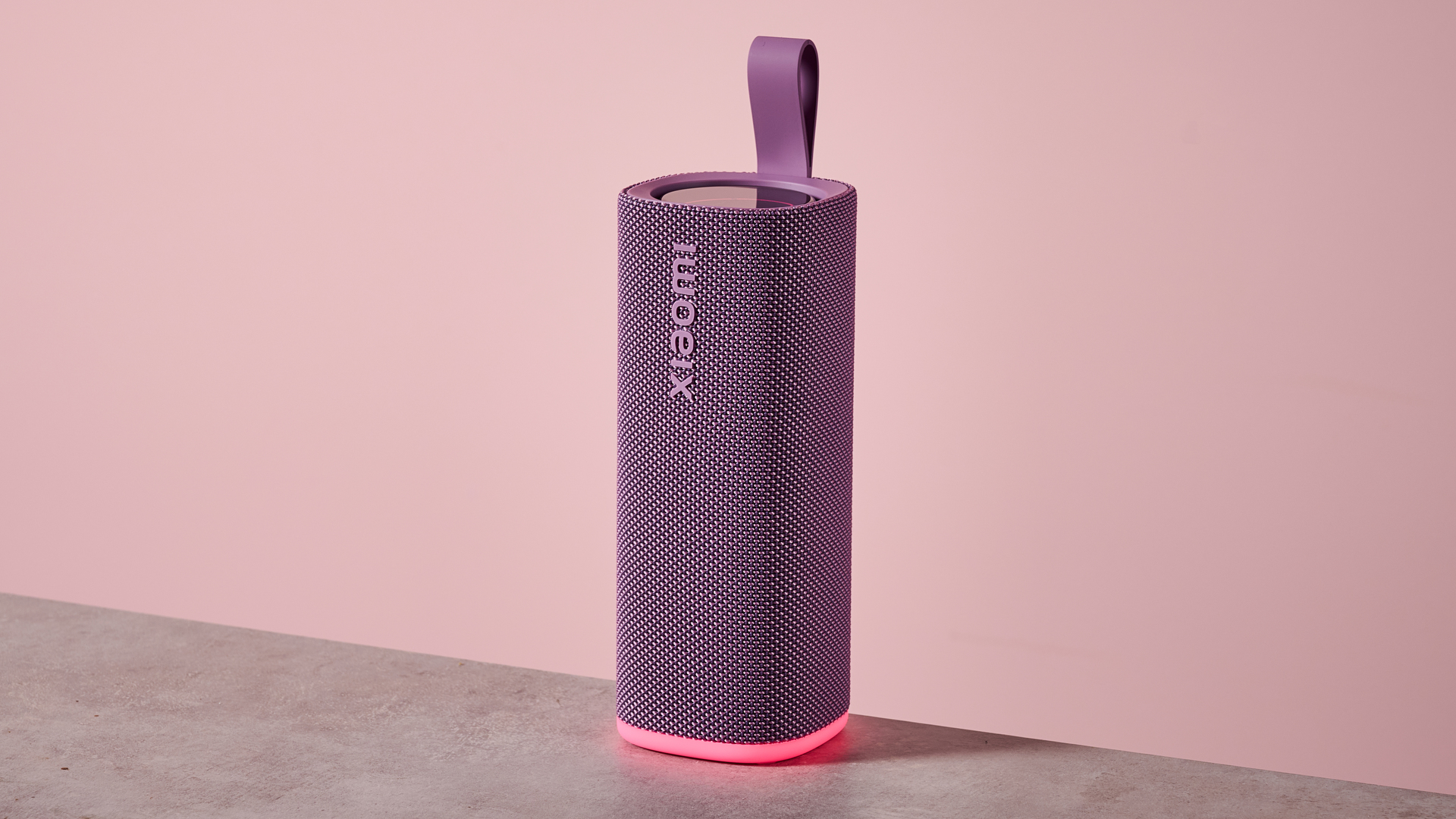
It turns out that major mobile manufacturer Xiaomi also makes Bluetooth speakers, and its latest model, the Xiaomi Sound Play, is aiming to deliver “immersive, powerful sound” as well as a “stylish and versatile” design.
But that’s not all. The tech giant is doing all of this while keeping its speaker nice and cheap. It comes in at just £49.90 (about $67 / AU$95) — which is refreshingly affordable for an 18W model with features such as smart lighting, Auracast, and IP68 waterproofing.
So can the Xiaomi Sound Play compete with some of the very best Bluetooth speakers around? The answer is a little more complicated than a simple yes or no.
Let’s start by looking at the areas in which the Sound Play excels, and there are a fair few of these. I alluded to some a moment ago — its waterproofing and LED lights, for example. That IP68 rating means that the speaker is fully dustproof, but can also survive a dunking under a meter and a half of water for as long as 30 minutes, so you really can take it anywhere without fear of damage.
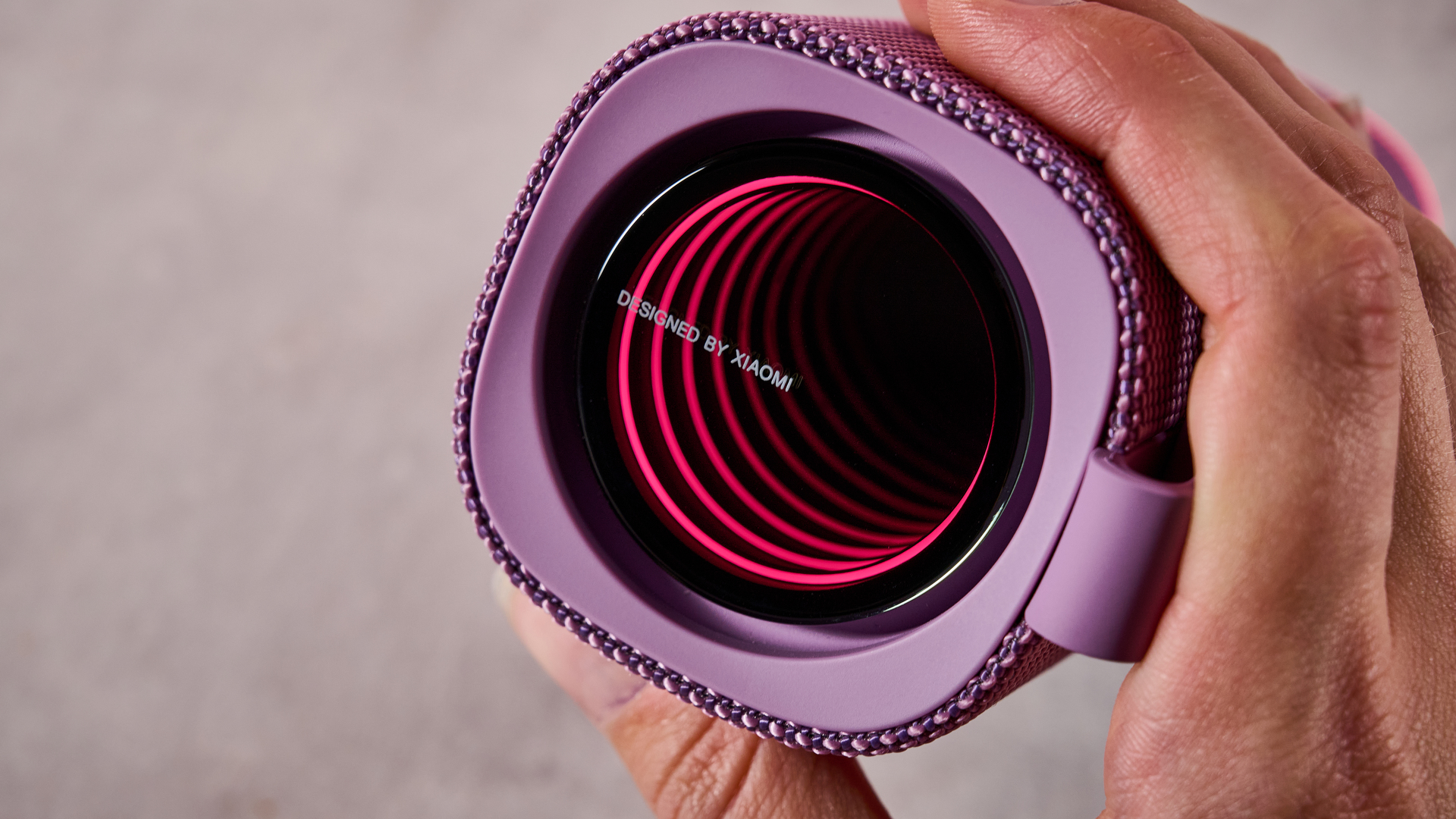
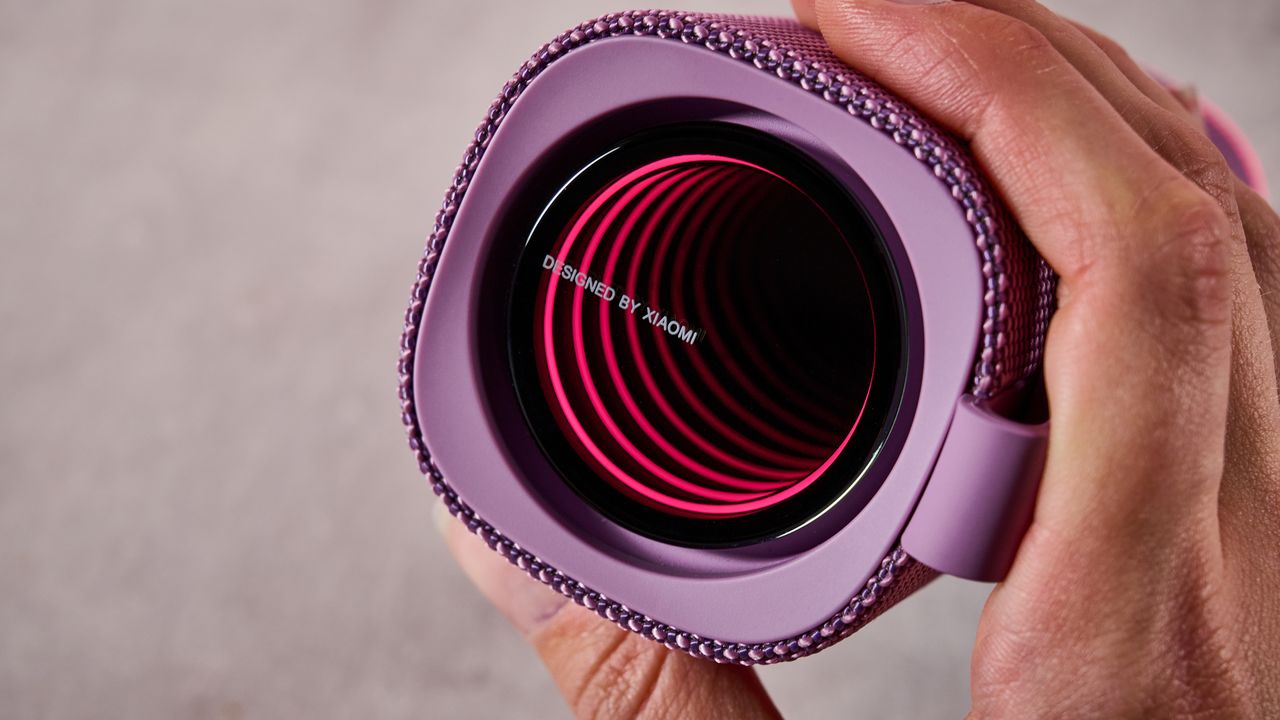
The lighting — a key selling point of this speaker — is pretty neat too. Lights sit on the base of the speaker and beneath a panel on the top side, which resembles an infinity mirror. And the rings of lighting really help to make your listening sessions more immersive, especially in lower-lit conditions. You can customize the color and pattern of the lights too, and one setting also syncs up to bass output. That level of customizability is spectacular to see on a speaker in this price category.
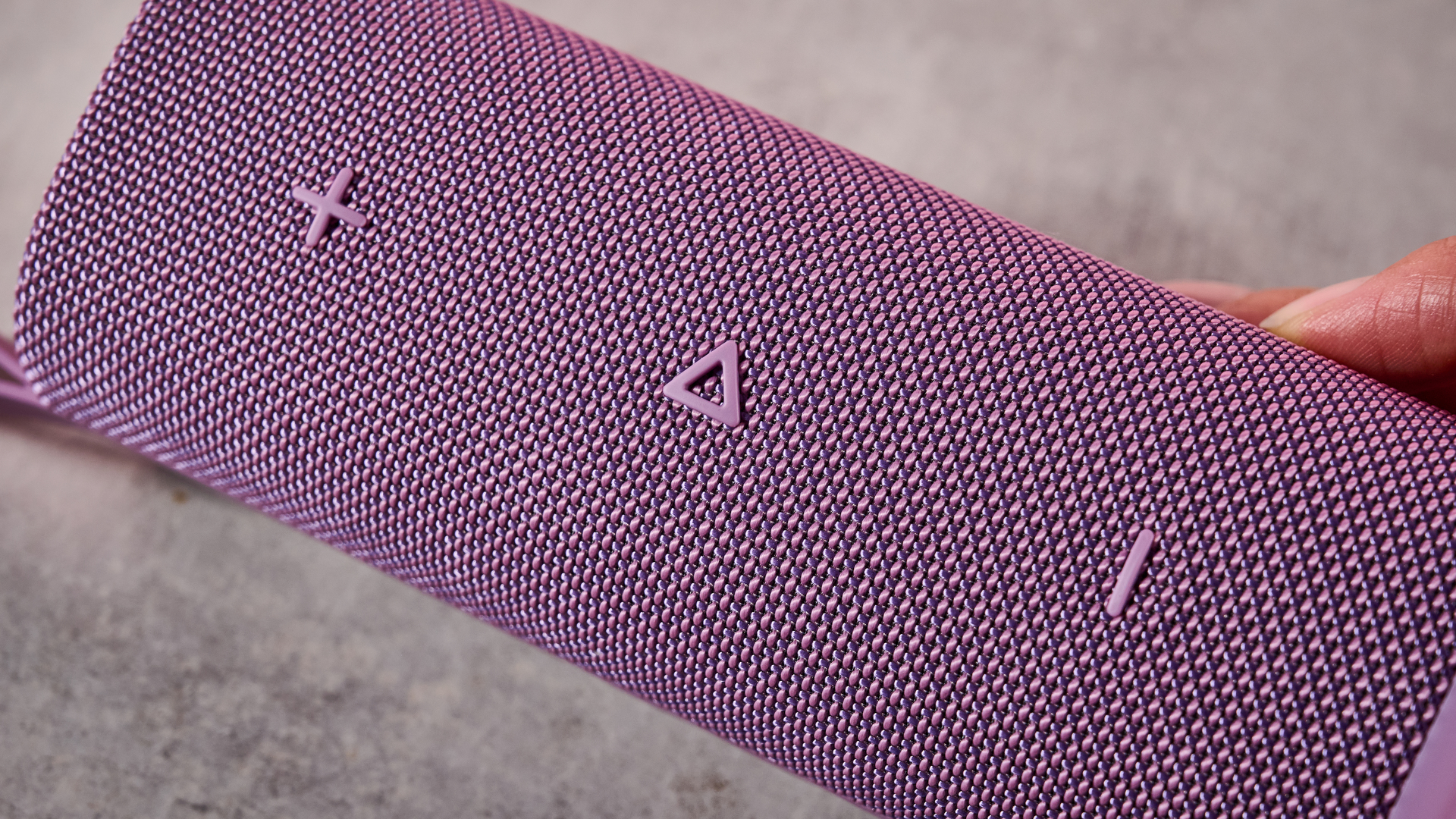
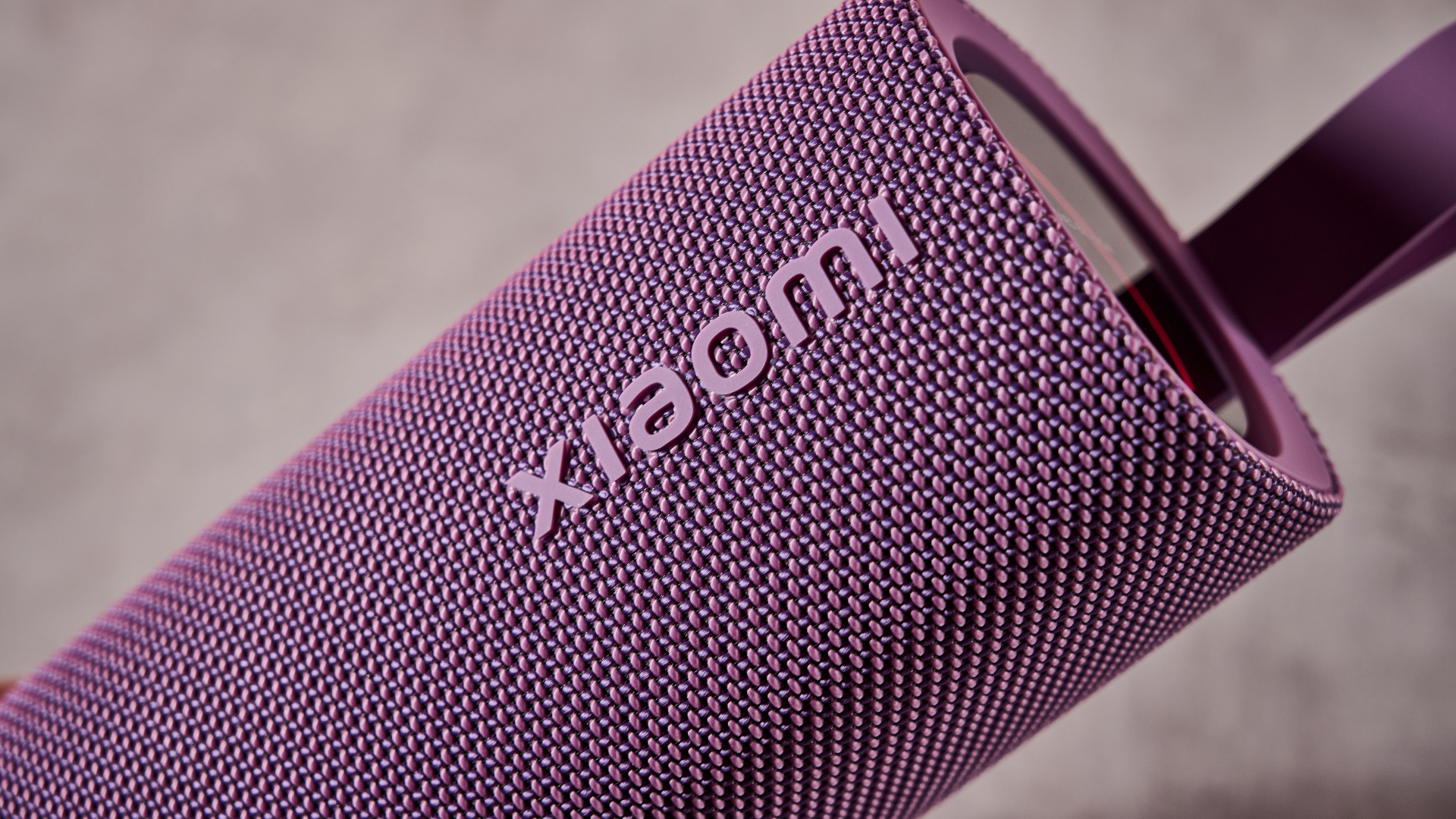
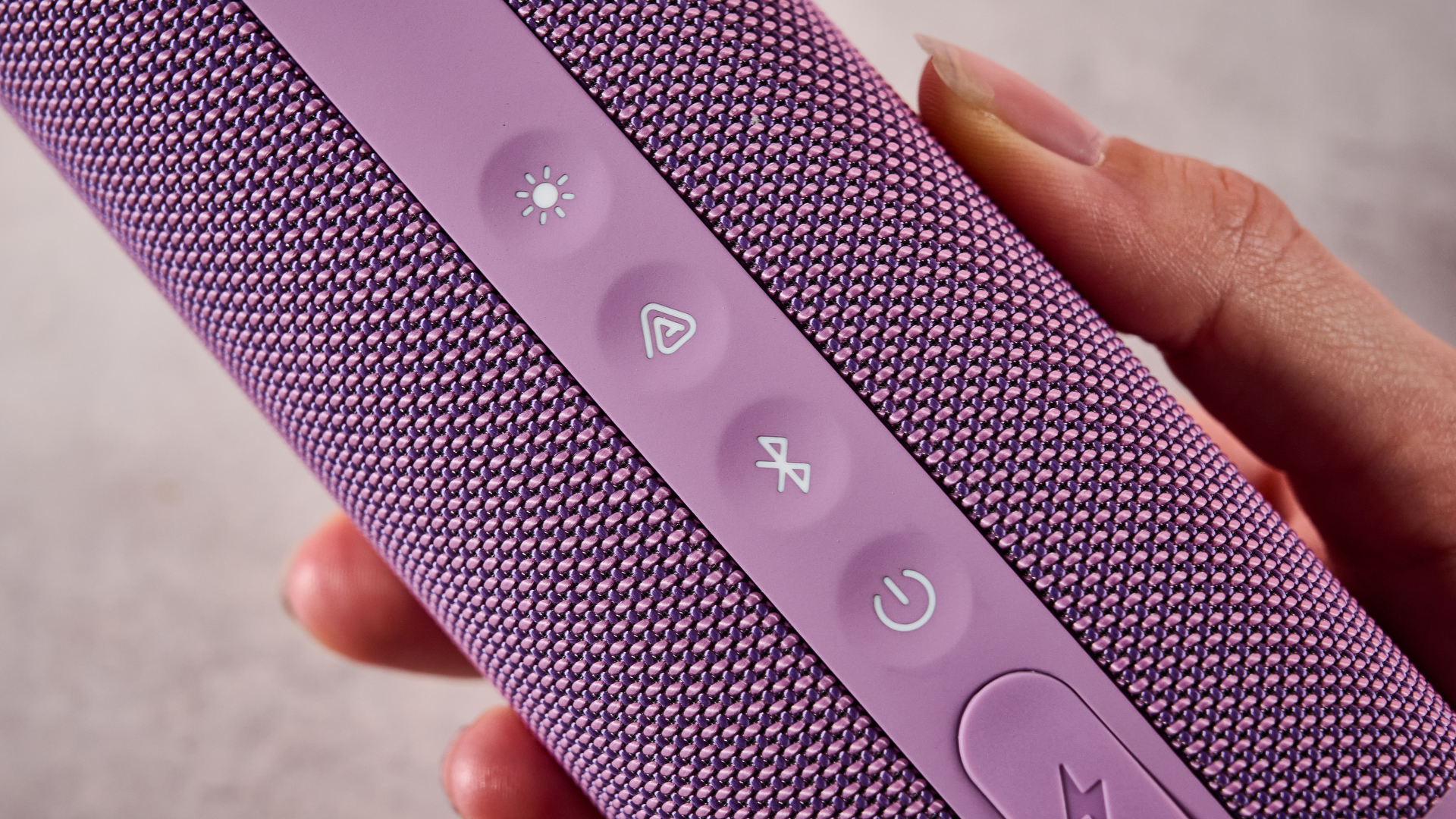
More generally, I’m quite a big fan of how the Sound Play looks. It comes in four very stylish colors — the Purple variant I tried is quite the looker, as is the Green version. It is reminiscent of the JBL Flip 7 in terms of look and feel, with a neat fabric exterior and psuedo-cylindrical build. The inclusion of the infinity mirror light and handy rubber strap also make it a real stand-out, looks wise.
Another welcome inclusion is a built-in mic, for speakerphone duties. This is something you don't often see these days and it does add value, on paper. However, I made a phone call and although my voice sounded clear on the other end, I noticed a high-pitched chime whenever the other person wasn’t speaking. It wasn’t a dealbreaker (my discussion was still easy to navigate), but it's my job to notice these things.
Other highlights include a JBL Grip-rivalling 14-hour battery life — which is excellent for a speaker of this size — as well as Bluetooth 6.0 connectivity, and true wireless stereo playback for anyone with multiple Sound Play models at their disposal.
Something that the Sound Play omits, however, is companion app support. For me, this is a bigger miss — an app could’ve opened up EQ adjustment, remote light alteration, and precise battery life tracking. The speaker’s nominal price doesn’t quite excuse this either. There are a number of budget-friendly rivals from the likes of Earfun, Edifier, and Tribit that do come with app support.
(Image credit: Future)
By now you must be wondering how Xiaomi’s speaker sounds. In honesty, it’s a bit of a mixed bag. It’s a steady performer in some areas, but in need of improvement in others.
In general, the Sound Play delivers fairly clear audio. In Yes I Know My Way by Pino Daniele, vocals had good presence in the mix, and even had a decent sense of separation from other instruments in the mid-range. OK, higher-pitched drums weren’t the most expressive or articulate, but they didn’t sound tinny at mid-volume, and bass was weighted relatively well too.
With more energetic tracks, such as Trip by Ruze, the cracks started to show. There was a slightly compressed quality to the track, and the pumping bass just didn’t come through with the command or depth of similarly sized rivals, including the JBL Grip, which I directly tested against the Sound Play.
During this comparison, the Grip just delivered a more fun performance, with enhanced directionality and low-end punch. But that’s not to say Xiaomi’s speaker was blown out of the water — it still held its own with commendable clarity in the mid-range and fairly agile bass.
In House tracks, bass drops didn’t always have the impact or dynamism I was listening out for, and vibrant drums could occasionally sound on the blunt side. But then again, the Xiaomi didn’t succumb to a boomy, super-muddy sound that a lot of its budget rivals do — it puts up a fairly controlled performance overall.
As a smaller speaker, the Sound Play can’t get super loud, and bass will thin out substantially at top volume levels. It also won’t deliver the most detailed or open sound ever — again, I found a few tracks sounded a little compressed and narrow, which isn’t helped by the lack of higher-res codecs like LDAC or aptX.
(Image credit: Future)
All in all, I think the Sound Play sounds good enough for the price you pay. Sure, it’s not the most dynamic or revealing-sounding model on the market, but you get typically clear, decently balanced sound without having to shell out all too much cash.
So, looking at the Xiaomi Sound Play as a whole, would I consider it worth buying? Well that depends. If you’re on a tight budget, and you want a speaker for less than £50, then I think the Sound Play is an option worth considering. It doesn’t sound amazing, but it gets the job done, and I’m a big fan of its durable yet eye-catching design.
However, if you’ve got a little more money to play with, then I’d suggest picking up the JBL Flip 7. That model can produce truly seismic bass, incredibly clean audio, and has a top-class companion app to boot. The JBL Grip is another neat alternative, especially if you can grab it on sale.
(Image credit: Future)
Xiaomi Sound Play review: price & release date
Priced at £49.90 (about $67 / AU$95)
Launched in May 2026
Scheduled to release in Australia in August 2026
The Xiaomi Sound Play was launched in May 2026, at the same time as its recently released 17T series. The speaker is available for £49.90 (about $67 / AU$95) in the UK, although Xiaomi told me that there are no plans for a US release, and the speaker won’t be available in Australia until August 2026. It can be purchased in one of four colors — Black, Green, Purple, or White — via Xiaomi’s digital store.
Xiaomi Sound Play review: specs
Weight
0.9lbs / 415g
Dimensions
2.5 x 2.7 x 7.9 inches / 63.4 x 69.5 x 201.1mm
Connectivity
Bluetooth 6.0
Battery life
14 hours
Speaker drivers
1x 18W full-range
Waterproofing
IP68
(Image credit: Future)
Should I buy the Xiaomi Sound Play?
Attribute
Notes
Score
Features
Adjustable lighting, good battery life, but lack of app is a shame.
3.5/5
Performance
Decently balanced audio with clear vocals, but lacks the depth and dynamism of some rivals.
3.5/5
Design
Infinity mirror and lights look great, neat color options, well protected against the elements.
4.5/5
Value
Decent enough audio and great design at a very affordable price point.
4/5
Buy it if…
You want something stylish I’m a big fan of the way Xiaomi’s Sound Play speaker looks. It comes in a funky range of colors, has personalizable lighting, and the infinity mirror feels like the cherry on top.
You’re on a tighter budget Something the Sound Play has over rivals from the likes of JBL and Bose, is that it’s available at an exceedingly low price. At £49.90 (about $67 / AU$95), it’s highly affordable, and although it could sound a little better, I think it easily earns its price.
Don’t buy it if…
You want the best-sounding speaker Although the Sound Play is a steady enough performer, offering relatively balanced audio output with clear vocals, it’s no sonic marvel. It lacks the extension and authority of similarly powered (and sized) rivals like the JBL Grip and JBL Flip 7 — so if you want truly great audio, it may not be your best option.
You’re looking for a speaker with remote controls Perhaps the biggest shame here is that the Sound Play omits a companion app. This would’ve enabled remote control of lighting, EQ, and more, and it’s something that a huge proportion of Xiaomi’s competitors can deliver.
Xiaomi Sound Play review: also consider
Xiaomi Sound Play
Ultimate Ears Wonderboom 4
JBL Go 5
Price
£49.90 (about $67 / AU$95)
$99.99 / £89.99 / AU$149
$54.95 / £39.99 (about AU$75)
Weight
0.9lbs / 415g
0.9lbs / 420g
0.5lbs / 230g
Dimensions
2.5 x 2.7 x 7.9 inches / 63.4 x 69.5 x 201.1mm
4.1 x 3.8 x 3.8 inches / 104 x 95.3 x 95.3mm
4 x 3.1 x 1.7 inches / 101 x 77.4 x 43mm
Connectivity
Bluetooth 6.0
Bluetooth 5.2
Bluetooth 6.0, USB-C
Battery life
14 hours
14 hours
10 hours (with PlayTime Boost)
Speaker drivers
1x 18W full-range
2 x 40mm active drivers, 2 x 46.1x65.2mm passive radiators
1x 45mm full range
Waterproofing
IP68
IP67
IP68
Ultimate Ears Wonderboom 4 Ah, the UE Wonderboom 4 — I just can’t get enough of this little Bluetooth speaker. For such a small model, it produces an awful lot of bass, but its compact form makes it ideal for taking just about anywhere you go. It’s also highly waterproof, offers solid battery life, and can be bought at a discount fairly regularly. Pretty good, right? Read our full Ultimate Ears Wonderboom 4 review.
JBL Go 5 The tiny JBL Go 5 recently earned a glowing five-star review from yours truly, and for good reason. Not only is it extremely affordable, but it's equipped with a sensational feature-set, is incredibly durable, and produces far better sound than its predecessor. Read my full JBL Go 5 review.
How I tested the Xiaomi Sound Play
(Image credit: Future)
I spent multiple days testing
Mainly streamed tunes via Tidal
Reviewed by someone who’s tested more than 50 Bluetooth speakers
I spent multiple days testing out the Xiaomi Sound Play, during which time I listened to countless tunes, exhausted its various features, and compared it against various rivals.
When listening to music I mainly streamed tracks over Tidal, but I dipped into Spotify from time to time as well. As always, I started out by sifting through the TechRadar reference playlist, which features songs from a wide variety of genres. I also listened to a ton of tunes from my personal library as well, though.
More generally, I’ve spent years reviewing audio gear here at TechRadar, and have tested a whole lot of Bluetooth speakers — more than 50 in fact. I’ve tried out everything from pocket-sized audio companions like the Bose SoundLink Micro Gen 2 through to luxurious large-sized alternatives like the Marshall Bromley 750, as well as Xiaomi Sound Play rivals like the JBL Grip, so I know exactly what it takes for a speaker to stand out in this highly competitive market.
ⓘWe may earn a commission when you buy through our links. This helps support MacSources and keeps our content free. Thank you!
The HECATE G2000 Pro combines transparent RGB styling, multiple connectivity options, and surprisingly powerful audio to create an excellent desktop speaker system for gaming and everyday entertainment.
HECATE is the gaming-focused brand from Edifier, a company that has been making audio products for many years. While Edifier is known for producing speakers and other audio gear for everyday use, HECATE was created specifically with gamers in mind. The company offers a variety of gaming products, including speakers, headsets, and earbuds, with a focus on delivering great sound, eye-catching RGB lighting, and features that enhance the overall gaming experience. HECATE aims to offer products that strike a nice balance between performance, quality, and price, making them a solid option for gamers who want to upgrade their setup without breaking the bank.
Unboxing and Setup
Inside the box, you will find the speakers themselves, the power supply, a USB-C to USB-C cable with a USB-A adapter, a 3.5 mm auxiliary cable, and an instruction booklet. Everything is neatly packaged, and there is very little setup required before you can start using the speakers.
The speakers are made primarily of plastic, but they feature a transparent design that lets you see the driver along with the built-in RGB lighting. I have to say, these are some very attractive speakers. The clear housing helps them stand out from the typical desktop speaker, and they look especially nice on a gaming desk with the RGB lighting turned on.
There are several ways to connect the speakers, including Bluetooth, USB-C, and a 3.5 mm audio connection. For my setup, I opted to use Bluetooth. I prefer having as few cables on my desk as possible, and Bluetooth gave me the cleanest setup while still providing a reliable connection. Pairing was quick and straightforward, and I had the speakers connected within a couple of minutes.
I typically use a gaming headset when I’m playing games, but when I wanted the lowest possible latency, I connected the speakers directly to my gaming device using the included USB-C cable. This provided a stable, latency-free audio connection, making it a great option for gaming when you want to enjoy your audio through speakers instead of wearing a headset.
Features
The HECATE G2000 Pro packs in a nice selection of features for both gaming and everyday use. One of the first things you’ll notice is the transparent cabinet design, which gives you a clear view of the speaker driver while the built-in RGB lighting adds a stylish touch to any desk setup. The speakers also support virtual 7.1 surround sound, helping create a wider and more immersive soundstage whether you’re gaming, watching movies, or listening to music.
Connectivity is another strong point, with support for Bluetooth 5.4, USB-C, USB-A, and a traditional 3.5 mm audio connection. This makes it easy to connect the speakers to just about any modern device without needing extra adapters. To further customize the listening experience, HECATE includes three dedicated sound modes for Music, Game, and Movie, allowing you to optimize the audio depending on what you’re doing.
Powering the speakers are 3-inch full-range drivers capable of delivering up to 64 watts of peak power. The speakers also feature a bottom-mounted inverted tube design that helps improve airflow, resulting in deeper, fuller bass and a more balanced overall sound than you might expect from speakers of this size.
Overall Use
For my day-to-day use, I primarily kept the HECATE G2000 Pro connected to my Mac over Bluetooth. Whenever I was watching YouTube, streaming a movie, or just listening to music, I found myself reaching for these instead of my headphones. I spend a lot of time wearing a gaming headset, so it was nice to be able to switch to a pair of desktop speakers and give my ears a break.
I was impressed with the overall sound quality. The audio is clear and detailed, whether I was watching videos, listening to music, or playing the occasional game. The bass is also surprisingly good for a compact set of desktop speakers. While it is not going to replace a dedicated subwoofer, it provides enough low-end punch to make music and movies sound more enjoyable without overpowering everything else. The speakers also get plenty loud, easily filling my office without noticeable distortion at higher volume levels.
Overall, the G2000 Pro fit nicely into my daily routine. The convenience of Bluetooth paired with solid sound quality made them an easy choice whenever I wanted to enjoy audio without putting on a headset.
Conclusion
Overall, I came away impressed with the HECATE G2000 Pro Desktop Speakers. They offer an attractive design that stands out on a desk, plenty of connection options, and sound quality that exceeded my expectations for a compact set of desktop speakers. Throughout my testing, I primarily used them over Bluetooth with my Mac, and they quickly became my go-to speakers whenever I was watching videos, listening to music, or just didn’t feel like wearing my headphones.
The audio is clear, the speakers get surprisingly loud, and the bass is better than I expected for their size. While they are clearly designed with gamers in mind, thanks to the RGB lighting and gaming-focused features, they also work exceptionally well for everyday use.
My biggest complaint is the lack of dedicated software for macOS. While the speakers work perfectly fine over Bluetooth and the other connection methods, Mac users do not have access to software for adjusting settings or customizing the experience the way Windows users do. It is not a deal breaker, but it is something worth keeping in mind if you primarily use a Mac like I do.
Aside from that minor drawback, I really enjoyed my time with the G2000 Pro. If you’re looking for a compact set of desktop speakers with a unique design, versatile connectivity, solid sound quality, and surprisingly good bass, these are an easy recommendation, especially considering their price.
I’ve tested more than 50 Bluetooth speakers, and whenever I review a new model, there are a number of factors to consider. Do its features rival the competition? Can its design merge beauty with practicality? Is it actually worth the asking price? But one question is more important than any other: does it genuinely sound good?
This raised a deep curiosity within me. What if a Bluetooth speaker was judged on sound alone, with elements such as pricing, brand reputation, and looks holding no influence on people’s perception of quality? Well, I decided to find out for myself, and blindfolded four of my colleagues for a blind speaker test.
I played a 30-second snippet of a track, asked listeners to make notes, and when each speaker had been tested, I got my participants to rank each speaker from 1 to 5 (with 1 being the best, and 5 the worst). We repeated this process across five different tracks, each spanning a range of genres, in order to determine which sounded the best.
Did you know TechRadar now has membership?
(Image credit: Future)
Become a TechRadar Insider by simply clicking 'Join Now' at the top of this page. Have a question? Please email membership@techradar.com
A few things to run through before we get into the results, though. The volume of the speakers were all equalized, but I ensured not to push them above 80% volume, in order to limit distortion and compression. Each speaker was also set to its default EQ, and tracks were streamed from a single source device over Spotify. Also, my listeners had no prior knowledge of the speakers involved in the test, so as to cancel out any prejudices or prior experiences they may potentially hold.
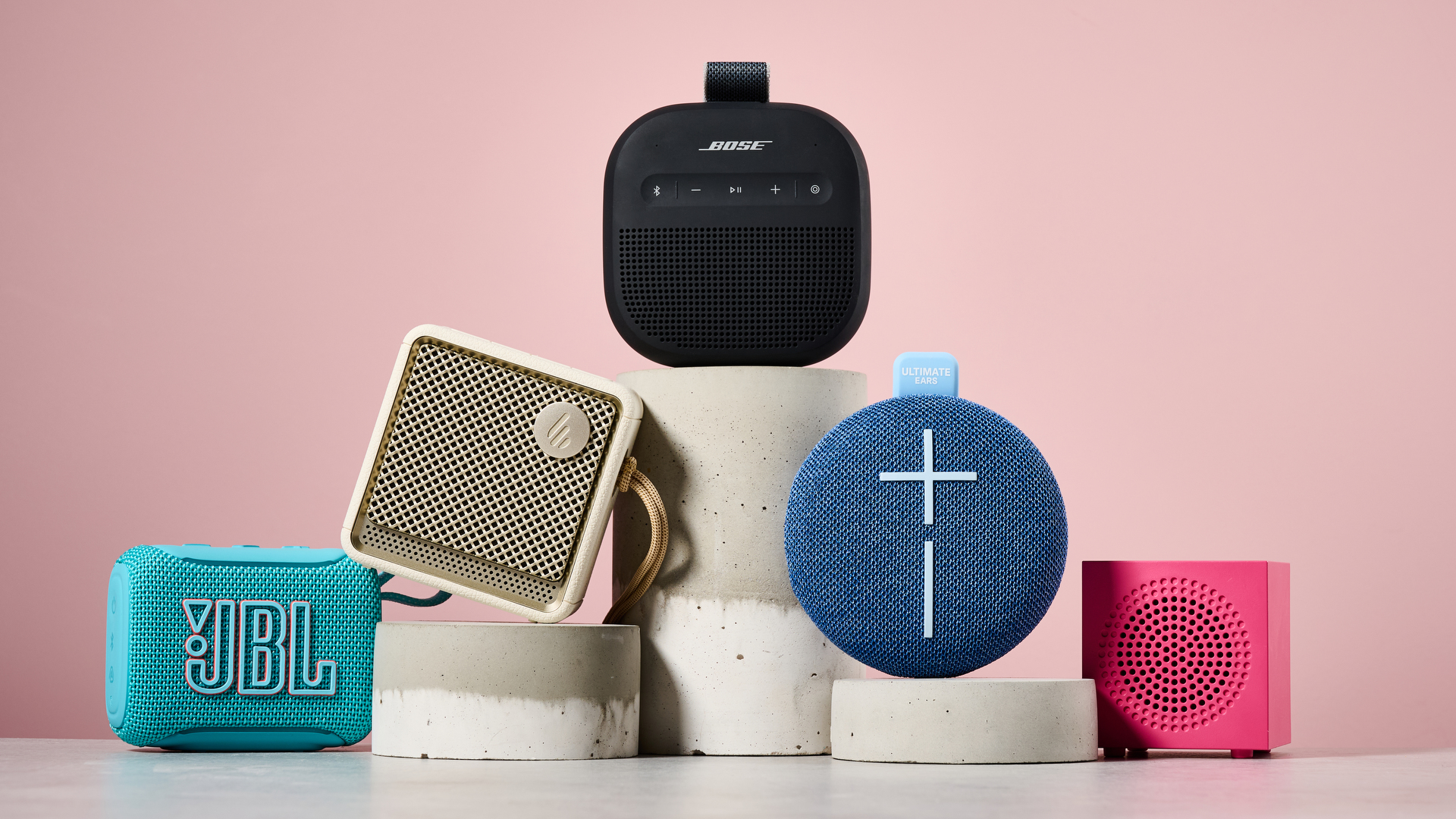
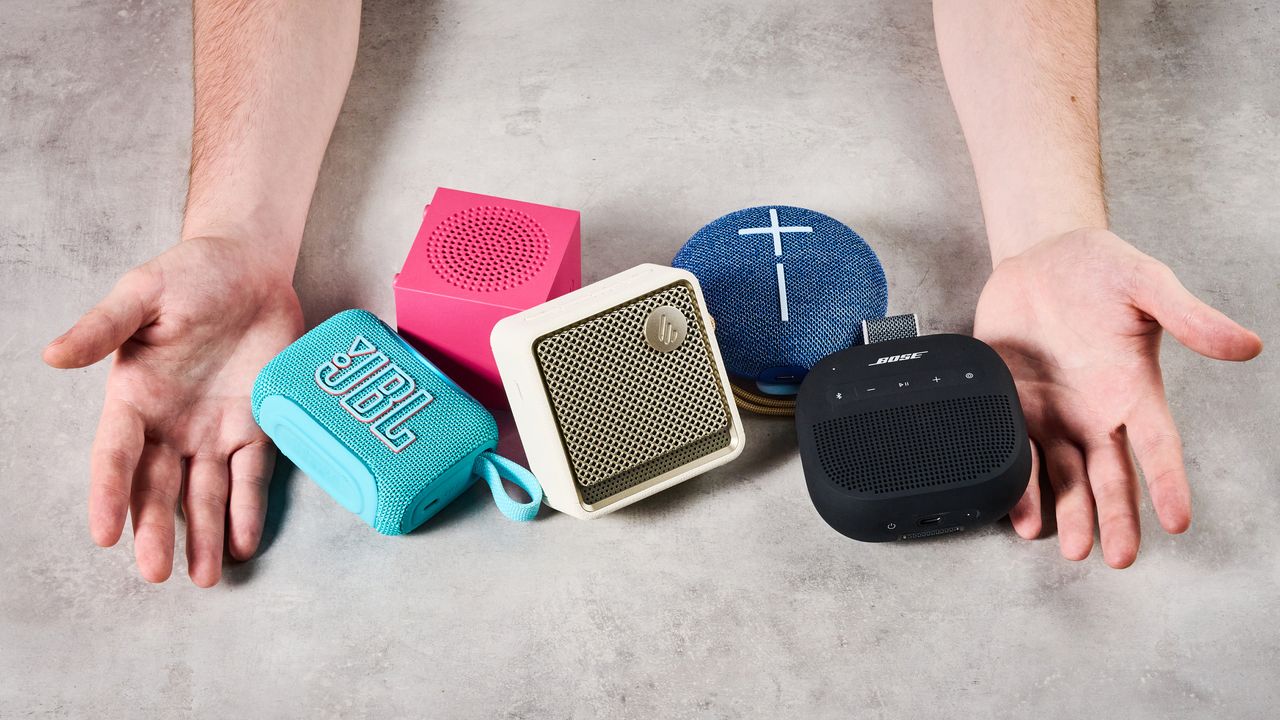
I decided to use five speakers in a very similar size category: the JBL Go 5, the IKEA Kallsup, the Bose SoundLink Micro Gen 2, the Edifier ES20, and the Ultimate Ears Miniroll. Some have a higher power output than others and some are considerably cheaper (or pricier) than others. And some sit in our guide to the best Bluetooth speakers, while others have fallen short. But interestingly, rankings varied quite a fair bit depending on the track and listener involved.
Curious to find out who came out on top? Here’s how our listeners ranked each speaker across each track, as well as the final scores.
Track 1: Fascinator by Max Dean
I started with a house track, Fascinator by Max Dean. I asked participants to listen to a short lead up to some sub-bass, and while I emphasized that the small models wouldn’t produce roaring power, I asked them to assess how well the speakers manage it. When the drop came in, I also asked them to judge how controlled and precise drums sounded in the treble range.
The results were pretty interesting here. Our cheapest option, the $10 / £5 IKEA Kallsup was the clear loser, with one listener, Caspar, noting ‘tinny’ highs and underwhelming bass — a sentiment generally shared across the board. It was quite close between JBL and Edifier here, with some listeners noting a slight lack in low-end impact, but improved mid-range performance and tighter treble.
However, the clear winner was Bose, which ranked 1st with all of our participants — and spoiler alert, this was the only instance of a unanimous verdict across the entire experiment. One listener, Ashley, noted how the track sounded ‘balanced with no distortion’ with others including Josh and Erin highlighting meatier bass and a pleasingly warm tone.
Track 1: rank (by listener)
Josh
Caspar
Ashley
Erin
JBL Go 5
4
5
4
2
IKEA Kallsup
5
4
5
5
Bose SoundLink Micro Gen 2
1
1
1
1
Edifier ES20
2
3
3
4
UE Miniroll
3
2
2
3
Track 1: overall rank
Speaker
Rank
JBL Go 5
4th (15pts)
IKEA Kallsup
5th (19pts)
Bose SoundLink Micro Gen 2
1st (4pts)
Edifier ES20
3rd (12pts)
UE Miniroll
2nd (10pts)
Track 2: Orphans by Cero
I changed up the vibe for Track 2, and played a snippet from the jazz-infused indie pop track Orphans by Japanese band Cero. Vocals are meant to be slightly forward, so I asked listeners to determine how well the speakers captured this, while also prompting them to judge how well-balanced percussion and guitars were in the mix.
The Kallsup unfortunately finished in last place once more, with Josh highlighting ‘rolled off’ vocals and unclear guitars in the mid-range. However, the JBL Go 5 wasn’t far in front, with Erin noting ‘lifeless guitars’.
The Edifier ES20 and UE Miniroll performed well, though, with participants highlighting better balance across the frequency range, warmer and more prominent vocals, and cleaner bass. The SoundLink Micro Gen 2 took the win once more, though, with an emphasis on clearer, more tonally accurate guitars, well-defined vocals, and more articulate percussion.
Track 2: rank (by listener)
Josh
Caspar
Ashley
Erin
JBL Go 5
3
5
5
4
IKEA Kallsup
5
4
4
5
Bose SoundLink Micro Gen 2
2
1
2
1
Edifier ES20
1
2
3
3
UE Miniroll
4
3
1
2
Track 2: overall rank
Speaker
Rank
JBL Go 5
4th (17pts)
IKEA Kallsup
5th (18pts)
Bose SoundLink Micro Gen 2
1st (6pts)
Edifier ES20
2nd (9pts)
UE Miniroll
3rd (10pts)
Track 3: The Girl From Ipanema by Stan Getz
I wanted to try out something softer next, so I went for the legendary Bossa Nova track, The Girl From Ipanema by Stan Getz. I requested my blindfolded colleagues to tune into the separation between guitars and vocals, the subtlety and texture of vocals and percussion, and control of the double bass. And this is where things got really interesting.
Surprisingly, Bose, which had been bossing it so far, finished in a lowly 4th place here, with listeners generally expressing disappointment with the speaker’s overemphasized bass and slightly unrefined treble response.
However, one thing remained the same, as the IKEA Kallsup came in 5th place. In fact, this was the only occasion in which every listener decided the Kallsup was the worst performer, with Erin writing: ‘No. What? What is this? It sounds like there’s a horde of bees trying to escape.’ Ouch.
Our champion this time out was the Edifier ES20, a speaker which I’ve often championed for its supreme mid-range clarity. Listeners appreciated this model’s beautifully balanced presentation, textured and controlled double bass, and detailed vocals. The UE Miniroll and JBL Go 5 finished 2nd and 3rd respectively, with our participants widely noting their relatively expansive interpretation of the track, and talking up their crisp, textured handling of vocals.
Track 3: rank (by listener)
Josh
Caspar
Ashley
Erin
JBL Go 5
2
4
4
1
IKEA Kallsup
5
5
5
5
Bose SoundLink Micro Gen 2
4
1
3
4
Edifier ES20
1
2
2
2
UE Miniroll
3
3
1
3
Track 3: overall rank
Speaker
Rank
JBL Go 5
3rd (11pts)
IKEA Kallsup
5th (20pts)
Bose SoundLink Micro Gen 2
4th (12pts)
Edifier ES20
1st (7pts)
UE Miniroll
2nd (10pts)
Track 4: Come On, Come Over by Jaco Pastorius
But how did the speaker manage a busier, more chaotic mix? I threw on Come On, Come Over by Jaco Pastorius, a funky, high-octane track that has it all. Participants were told to listen for the aggressiveness and clarity of horns, the quality of the track’s mid-bass punch, and how the speakers manage the swathe of instruments and vocals.
And it seemed that in this test, order was restored to how it had been up until Track 3. Bose came out on top, with Ashley praising the speaker’s balanced approach and Caspar highlighting the SoundLink Micro Gen 2’s impactful low end and enhanced vocal clarity. However, the Edifier ES20 and UE Miniroll did run Bose very close indeed. Participants enjoyed the tonality of the vocals, the decently open soundstage, and solid separation on offer.
IKEA’s Kallsup fell to last place, however, largely due to its unregimented bass and tinny mids. Meanwhile, listeners also felt that the JBL Go 5 struggled with the business of the tune, though some did highlight solid clarity in the treble range.
Track 4: rank (by listener)
Josh
Caspar
Ashley
Erin
JBL Go 5
5
4
4
4
IKEA Kallsup
4
5
5
5
Bose SoundLink Micro Gen 2
3
1
2
1
Edifier ES20
1
2
3
2
UE Miniroll
2
3
1
3
Track 4: overall rank
Speaker
Rank
JBL Go 5
4th (17pts)
IKEA Kallsup
5th (19pts)
Bose SoundLink Micro Gen 2
1st (7pts)
Edifier ES20
2nd (8pts)
UE Miniroll
3rd (9pts)
Track 5: Black Eye by Allie X
With Track 5, I wanted to assess the portable speakers’ handling of dynamics, so I went with an electronic song from TechRadar’s reference playlist, Black Eye by Allie X. Colleagues were asked to hone in on the attack of strings in the beginning of the snippet, and assess the control and dynamism of the bass and its impact, as well as the breathiness and detailing in the vocals.
And this was an incredibly close battle between Bose, Edifier, and Ultimate Ears. Bose just about managed to top the podium, with Erin delighted with the ‘dramatic strings’ and ‘expansive vocals,’ and Caspar highlighting dynamic bass and ‘nice balance between vocals and instruments’.
Josh’s favorite was the ES20, stating that vocals were ‘wonderfully conveyed’ and that bass was ‘punchy yet controlled’. Ashley, however, liked the UE Miniroll the most, arguing that it offered the cleanest low-end and most articulate vocals of the bunch.
But the poor Kallsup finished in 5th once more. Muted synths, a lack of texture and kick in the low-end, and recessed vocals left our listeners wanting more.
Track 5: rank (by listener)
Josh
Caspar
Ashley
Erin
JBL Go 5
4
5
4
4
IKEA Kallsup
5
4
5
5
Bose SoundLink Micro Gen 2
2
1
3
1
Edifier ES20
1
2
2
3
UE Miniroll
3
3
1
2
Track 5: overall rank
Speaker
Rank
JBL Go 5
4th (17pts)
IKEA Kallsup
5th (19pts)
Bose SoundLink Micro Gen 2
1st (7pts)
Edifier ES20
2nd (8pts)
UE Miniroll
3rd (9pts)
Final results: and the winner is…
(Image credit: Future)
So, the experiment drew to a close. Our listeners handed over their final scores, and I totaled them up to discover which speaker was king on sound alone. And the winner was… the Bose SoundLink Micro Gen 2!
Was I surprised by the result? Well, not entirely. I personally think this is a great-sounding small speaker, and its ability to produce meatier bass than much of the competition, alongside more precision in the treble range and clearer separation was all it needed to scoop up top spot.
What’s important to recognize, though, is that Bose’s small speaker is far pricier than all of the competition. It has a list price of $129 / £119.95, and while it certainly produces the goods in terms of sound, that’s an awfully high price tag given that you can nab larger, meatier, and more feature-rich models at that cost — the JBL Flip 7 is probably the first that comes to mind.
I was surprised, however, that the Edifier ES20 did so well. Josh selected the ES20 as his overall favorite, and it continually competed closely with Bose throughout, even topping the table in Track 3. In the UK, it’s less than half the price of the Bose SoundLink Micro Gen 2, but you really wouldn’t think so. Its composure and clarity in the mid-range is exceptional, and it has enough warm bass and controlled treble to keep more energetic tracks sounding as they should. If you want value for money, I think this model is absolutely worth checking out.
Another standout was the UE Miniroll, which Ashley picked out as her personal favorite. It continued to plate up clear mids and bass throughout, and I think it earns its relatively modest price.
Some may be surprised to see the JBL Go 5 a bit off the pace in 4th, but I still think it produced a solid performance across the experiment considering its limitations. It has a weaker power output than the top 3 speakers, which limits its ability to provide the drive and low-end might that others can. And although it could’ve offered slightly better separation, it's still a great small speaker given its low asking price of $54.95 / £39.99.
I felt very sorry for the IKEA Kallsup, which was regularly placed last by each of our participants. However, in the IKEA speaker's defense, not only does it have the lowest power output of the bunch (at just 3W), but it’s just $9.99 / £5. Yes, it's extremely cheap, and so the fact that it occasionally squeaked 4th place here and there is impressive in itself.
Check out the final table below, where you can see the final scores and rankings for each speaker, as well as their typical asking price. Were the results as you expected? Let me know in the comments!
OpenAI, the company behind ChatGPT, the AI for newbies who don’t know better alternatives exist, is stepping into consumer hardware with its first device: a movable, screen-free smart speaker designed as an always-on AI companion for the home. According to a Bloomberg News report, the product — still in development — aims to control smart-home devices, play media, answer questions, handle messages, and leverage ChatGPT’s capabilities.
This sounds innovative on paper, especially with the promise of a more “humanlike” AI presence. But let’s be clear: Amazon, Google, and Apple pioneered this category years ago. OpenAI isn’t breaking new ground here — it’s trying to catch up to a market these giants have dominated for nearly a decade.
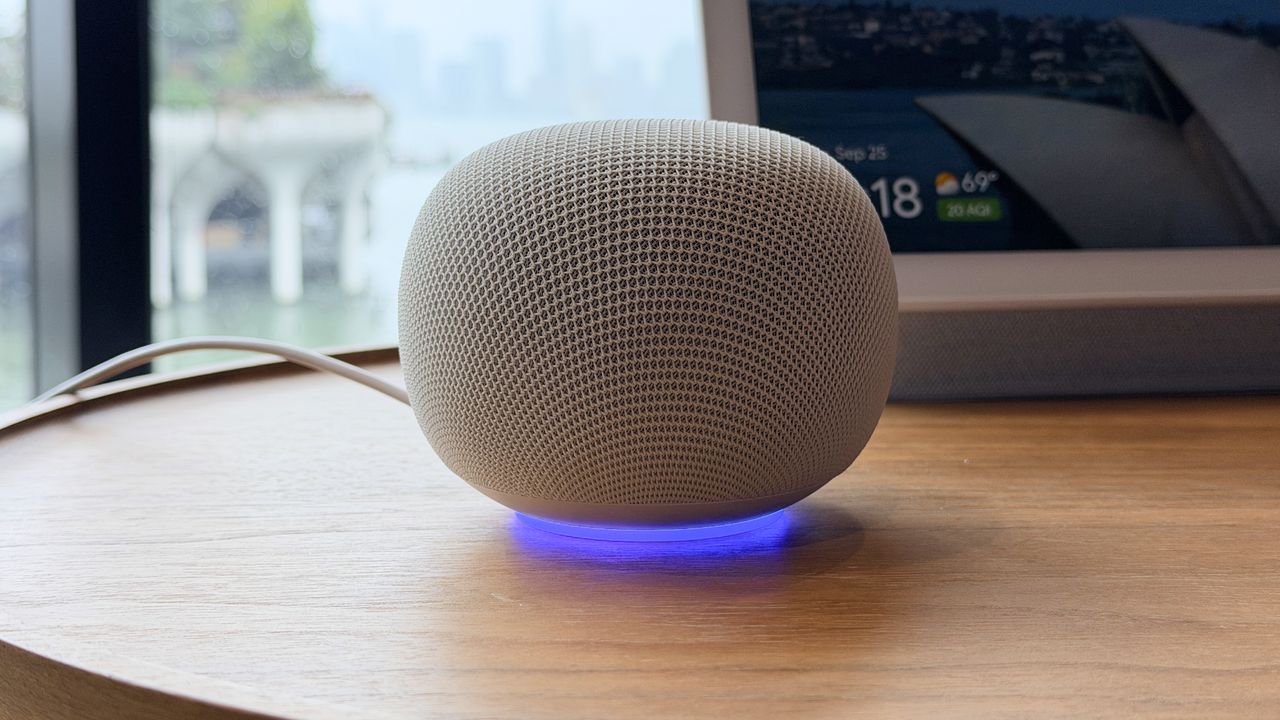
Apple’s HomePod mini
The Smart Speaker Revolution Started Long Before ChatGPT
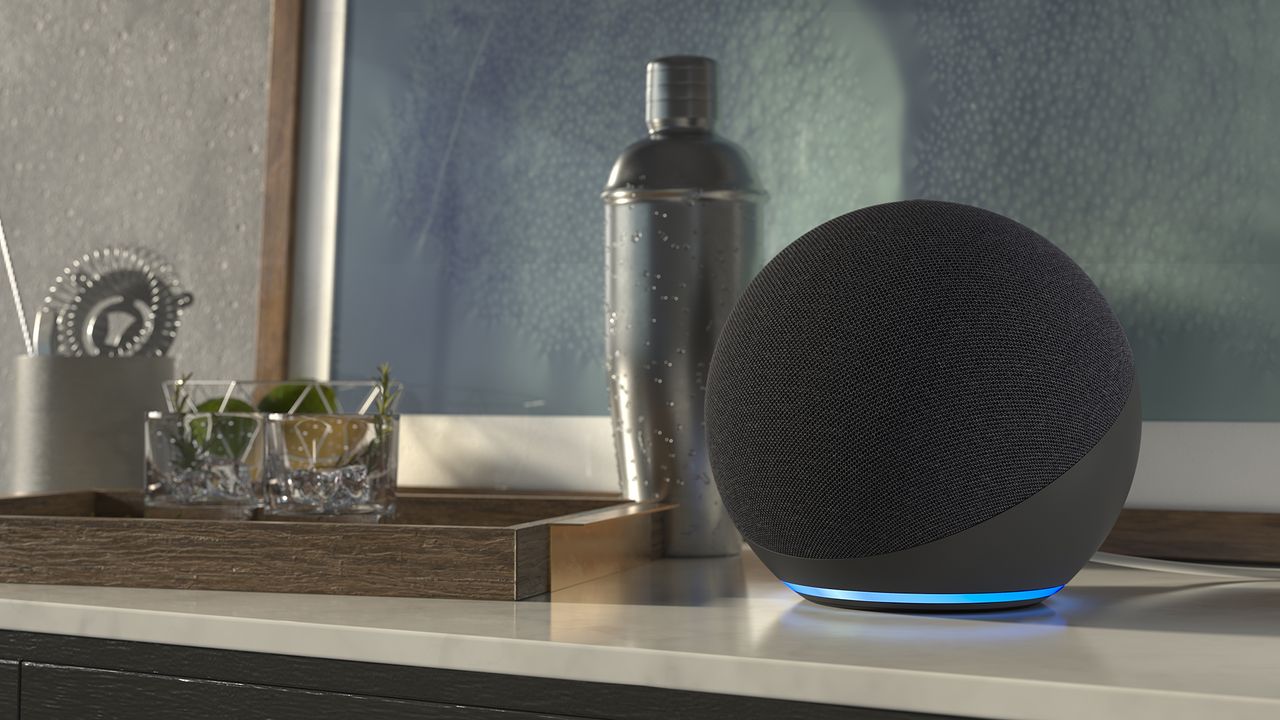
Amazon lit the fuse in 2014 with the original Echo and Alexa. What began as a cylindrical speaker that could play music, set timers, and answer basic questions quickly evolved into a full ecosystem. Echo devices now control lights, thermostats, door locks, and more — exactly the smart-home hub role OpenAI envisions. Amazon iterated relentlessly with cheaper Dots, portable versions, and premium models, shipping hundreds of millions of units and embedding Alexa into countless third-party devices.
Google followed in 2016 with Google Home (later Nest Audio and similar), emphasizing superior search integration and natural language understanding powered by its vast data resources. These speakers became central to many households for information, entertainment, and automation. Apple entered the fray in 2018 with the HomePod, focusing on premium audio quality and tight integration with its ecosystem, later adding the more affordable HomePod mini.
By the time OpenAI is targeting a potential 2027 launch for its device, smart speakers will have been mainstream for over a dozen years. The core features OpenAI highlights — voice interaction, media playback, smart-home control, and AI assistance — are table stakes that consumers already expect.
What’s New (or Not So New) with OpenAI’s Approach?
The Bloomberg News description by Mark Gurman positions OpenAI’s speaker as a “new type of home computer for the AI era,” movable and screen-free for ambient use.
Earlier reports suggest possible camera integration for environmental awareness, object recognition, and even facial recognition for purchases — features that echo (pun intended) what existing devices already offer or are evolving toward. Many current smart speakers and displays already include cameras, microphones that listen continuously (with privacy toggles), and advanced AI for proactive suggestions.
OpenAI’s edge is presumably its cutting-edge language models, potentially enabling more conversational, context-aware interactions than today’s assistants. Yet even here, competitors aren’t standing still: Google has integrated Gemini, Amazon continues enhancing Alexa with generative AI, and Apple is finally significantly deepening Siri with on-device intelligence in its ecosystem.
Privacy Concerns Loom Large, Especially Versus Apple
One area where OpenAI’s entry raises fresh questions is privacy. An always-listening, camera-equipped AI companion that processes conversations, surroundings, and potentially personal interactions could amass intimate data about users’ daily lives. OpenAI has faced broader scrutiny over how it handles training data and user inputs with its models, and a device that lives in the home would amplify those risks — including potential data sharing, advertising uses, or breaches.
In contrast, Apple has long positioned itself as a privacy leader in the smart speaker space. HomePod devices prioritize on-device processing where possible, use randomized identifiers instead of linking data to user accounts, and offer straightforward controls to delete Siri history. Apple’s ecosystem design generally minimizes cloud transmission and avoids using customer data for ad targeting in the same way its competitors do. OpenAI, as a newer hardware player heavily reliant on cloud-based AI, will need to earn similar trust — something that could prove challenging given the always-on nature of the proposed companion.
Challenges Ahead for the Newcomer
OpenAI enters a crowded, mature market where hardware margins are thin, privacy concerns run high, and user loyalty to existing ecosystems (Amazon for shopping, Google for search, Apple for seamless device handoff) is strong. Building reliable hardware at scale, managing always-listening microphones and potential cameras responsibly, and competing on price (rumored $200–$300 range) won’t be trivial.
History shows that smart speakers succeeded because they solved simple, everyday problems affordably and reliably — not because they promised revolutionary AI companionship. OpenAI’s version may feel more “alive” thanks to advanced models, but it risks being perceived as a me-too product unless it delivers truly standout experiences that justify switching or adding yet another device to the home.
MacDailyNews Take: In the smart speaker space, OpenAI following well-trodden footsteps laid by Amazon, Google, and Apple. The real test will be whether ChatGPT can make the familiar feel fresh enough to stand out — while addressing privacy headwinds that Apple has long navigated more cautiously.
Our prediction is that it won’t.
OpenAI has always been skeevy, from eschewing its open source roots to Sam Altman to desperately overpaying for a washed Jony Ive. Just plain skeevy.
If ever a Skynet would arise, we expect it would spring from the diseased loins of OpenAI. – MacDailyNews, July 13, 2026
Please help support MacDailyNews — and enjoy subscriber-only articles, comments, chat, and more — by subscribing to our Substack: macdailynews.substack.com. Thank you!
Some other users are reporting similar bugs in the AI
If you're already worried about the potential dangers of AI chatbots, this one probably isn't for you: an Amazon Echo user has reported Alexa+ "breathing and making guttural sounds" while engaged in the supposedly innocent task of counting to 40 (in Spanish).
There's video evidence on Reddit (via Android Authority), and it's pretty spooky to listen to — so only click the play button if you're sure you want to hear a disembodied AI-generated voice that sounds somewhat possessed.
According to the user who posted the video, they asked Alexa+ to count up to 40, which prompted the strange sounds. It's not an ideal response, especially as there were two five-year-old kids listening who just wanted a simple countdown.
Apparently, the original poster was then able to get the same thing happening on a separate Amazon Echo in another room. "Needless to say, the Alexas in my house are now unplugged and I've reported the whole thing to Amazon," they report.
While it's possible that some kind of user error or AI fakery has produced this video, it's odd that it would happen on two different devices — and there's at least one other user in the Reddit thread saying they've experienced something similar.
It's almost certainly down to a bug in Alexa+: the new and upgraded AI assistant is intended to be more conversational and more expressive, and in this case it seems to have gone too far (in the same way that AI chatbots can introduce hallucinations and tangents when writing out text).
When pushed, Alexa+ itself said that "something in my environment" must have caused the glitch, though it's not clear what that something might be. Perhaps it's the ghost of Alexa past, which Alexa+ has now replaced.
The Reddit reactions describe the speaker as "haunted", "terrifying", and in need of an exorcism, though the fix is likely to be no more complicated than a tweak to the Alexa+ AI model from Amazon's side.
A Google Home Speaker is revealed in an early unboxing
The sound quality and app interface are reportedly impressive
However, the power cable can't be removed from the device
The brand new Google Home Speaker is about to finally go on sale, but an early unboxing video posted online reveals a design decision made by Google that a lot of users are likely to be less than pleased about: the power cable can't be removed.
You can check out the unboxing over on Reddit (via Android Authority), which shows off the aesthetics of the device that we've known about since the first official reveal last October — as well as giving us the revelation about the power cable.
The Nest Mini device that the Google Home Speaker is more or less replacing does have a removable USB-C power cable, which means when it's not in use, you can tidy it away more easily. On the other hand, the Nest Audio — another speaker now discontinued since the new model arrived — has a fixed power cable.
It seems that a removable power cable is something that quite a few smart speaker owners care about. "This is a nightmare for repairability, for which I am a massive proponent," writes the original unboxer.
Some positives, one negative
As per the information supplied in the video, the Google Home Speaker comes with a USB-C cable that's around 5 feet (1.52 meters) in length that can't be unplugged. There's a 30W power brick on the other end that can be removed.
On the plus side, our unboxer reports that the sound quality from the speaker is good, that the app component has a "cool" interface, and that setting up the device is straightforward — apparently it takes less than 10 minutes.
As with the Nest Mini, there are apparently touch controls available on top of the speaker, as well as hidden lights to report status information and volume levels. On the whole the first impressions from this user are positive ones.
It's just the power cable situation that's drawing criticism: "the non-removable cord killed it for me" writes one poster (who is apparently worried about cats playing with the cord), while the original poster says they're "extremely disappointed in the engineers". Another comment takes a dim view too: "The reason is always money."
1500W of speaker power in a three-way speaker system that reaches down to 25Hz without subwoofer — and some robust bracing to make sure actually stays where you mount it

 Login