❌

Reading view

Huawei Mate XT 2 aposta na privacidade e num ecrã de 10,2 polegadas em formato tripartido

O Huawei Mate XT 2 apresenta uma nova arquitetura de dobra interna que protege melhor o ecrã quando está fechado, além do primeiro “privacy display” da marca a chegar aos seus smartphones.

The post Huawei Mate XT 2 aposta na privacidade e num ecrã de 10,2 polegadas em formato tripartido appeared first on Tek Notícias.

  •  

Apple after Cook: The Ternus age begins this week

We’re hurtling toward the loss of something big. Finally, after months of speculation, Apple is about to introduce its first-ever folding smartphone. And once it does, the conversation will change as the annual iPhone rumor season is replaced with the reality of whatever Apple unveils.

Except, it won’t quite be the same as in the past. Because no sooner will new Apple CEO John Ternus finish his iPhone announcement keynote speech tomorrow than the speculation will shift to next year’s 20th-anniversary iPhone, what’s coming to the iPhone 18 and e-series iPhones, and expectations around Apple’s upcoming wave of smart home products, including health and home security services. There’s a lot going on.

Meet John Ternus

Having a lot going on is one of the prime expectations of Apple under its new boss. A family man with a wife and kids, he’s led Apple’s hardware division for five years after an eight-year stint running hardware engineering. He joined the company in 2001 and is described as a highly competent, hugely talented, and modest by nature. 

His hobby is quite revealing — he drives race cars, is a regular at California’s Laguna Seca Raceway, and owns an incredibly rare 2019 Porsche 935. To me it suggests a calm, competent, individual with excellent mental and physical reflexes who can make life or death decisions at speed. He’s also deeply committed to good product design.

He’ll need that calm embrace of speed and adrenaline to manage the company his predecessor, Tim Cook, led to become the world’s most valuable firm. 

A hard act to follow

He’s also got a hard act to follow, as while Cook had to carve out his reputation in the shadow of Steve Jobs, Ternus must sculpt his own destiny in the shadow of Cook, who managed to make shareholders of record in 2011 around 20 times richer by the time he quit. (Apple stock rose from $13.74 per share on a split adjusted basis to $319.97 per share today.)

While Cook was frequently criticized for not being a product guy, he presided over the launch of the Apple Watch, AirPods, Apple Silicon, and the Vision Pro, and helped grow Apple’s services income to become its second-biggest product category, diversifying Apple’s revenue and creating financial stability. That’s no easy task.

Building his own team

Can Ternus improve on that? He’s certainly being positioned as someone who can. His deep experience in hardware has led to expectations that Apple will double down on product under his watch, so a great deal is expected of him in consequence. He is also putting together a hardware-focused team, including Laura Legros, former vice president of hardware engineering, as a direct report.

What will we see of this tomorrow? To be fair, while he will lead the announcement on the keynote stage, development of this first tranche of products took place under the leadership of Cook, and while Ternus will have had a big hand in development, this year’s Apple event should be seen as a moment of transition. 

“I’m just as excited about what lies beyond that, including the incredible products already in the works and the ones we haven’t even imagined yet that we’ll dream up and create together. There’s no team in the world I’d rather build the future with,” Ternus told Apple staff in his first memo as CEO.

It’s what Apple does in the next couple of years that will truly define the new leadership. He’s literally been CEO for a week!

What to expect on Sept. 9

Here’s my TL; DR list:

  • First folding iPhone: Apple’s response to folding devices from Samsung, Google, Huawei, Xiaomi. It’s expected to have a highly durable, near invisible hinge and a powerful 2nm A20 chip around 20% more performant than the 17 series devices; Touch ID; a 48MP camera; and be able to unfold from a 5.5-in. to a 7.8-in. display. Potentially called iPhone Ultra, some predict it might be the “iPhone Duo” or “iPhone Fold.” It’s likely to cost $2,000+.
  • iPhone 18 Pro series: Equipped with a fantastic new display, smaller Dynamic Island, 48MP main camera, and telescopic lens and supported by a fresh tranche of pro-photography features, the 18 Pro/Pro Max range will also use A20 chips. Both the fold and Pro devices will carry significantly more RAM, enabling them to handle on-device AI tasks. Apple is expected to introduce the iPhone 18, iPhone Air 2, and iPhone 18e devices at a spring 2027 event. Prices on all iPhones are expected to increase by $100 or more, depending on model.
  • Apple Watch Series 12, Apple Watch Ultra 4: While Apple is thought to be working on new designs for next year, this year’s models will — for the first time in years — include an improved processor, better networking, and more accurate heart monitors. A model with a ceramic body is expected, while the devices will be equipped with additional storage, and integrated satellite emergency features. 
  • AirPods 5: Earlier speculation about cameras inside AirPods remains, but these aren’t expected at the launch. Instead, Apple’s AirPods 5 will be boosted with a new H3 Wireless Chip for better voice isolation, noise cancellation, and spatial audio. They may also provide some basic health monitoring features with a built-in temperature sensor and heart rate monitoring.
  • Smart home products: Apple is still expected to introduce additional products for smart homes, including an Apple TV with a faster processor and SiriAI support, a HomePod mini upgrade, and — potentially — a new home hub. The latter could effectively be a combination of an iPad with a HomePod to run apps, control smart devices, take and make calls, and run Siri.

Finding the next big thing

While all these products are important to the company, the smart home devices should demand attention (if they appear at all), as the indicators suggest Apple intends to explore the smart home space with a range of future hardware, including domestic robotics, security services, and smart devices. This hardware proliferation in new markets could end up becoming one of the hallmarks of Ternus’ Apple leadership, as will Apple’s AR spectacles (once they are introduced). 

Equally, it cannot be ignored that one of Ternus’ main tasks since becoming vice president of hardware has been the introduction of new Macs and the transition to Apple Silicon. So he’ll be expected to strike a balance between improving Apple’s traditional product lines while racing his company toward new and emerging opportunities in hardware. (I believe Apple should pay much more attention to the enterprise space within that.) 

Apple’s little AI problem

The biggest challenge to all of this will be Apple’s success in implementing AI that’s good enough to get things done while avoiding the unexpected dangers of poor implementation. We don’t want AI agents corroding smart home security, for example, which is why Ternus seems likely to maintain Cook’s focus on security and privacy as enabling technologies to support trusted hardware/software product designs.

Another thing? Tomorrow’s keynote will likely begin with the single word, “Hello,” and feels very likely to also include that classic Apple keynote line, “…One more thing.”

We’ll find out more as the conversation moves from speculation to reality after the 10am (PT) keynote.

Please subscribe to my daily, human-curated Apple-related news headline feed at The Core, or follow me on BlueSky, LinkedIn, or Mastodon.

  •  

eTravelSim Europe : l’eSIM à enveloppe fixe pour garder la main sur son budget data

Partir quelques jours en Europe avec son forfait français suffit parfois. Mais dès que le voyage s’allonge, que l’itinéraire traverse plusieurs pays ou que le partage de connexion entre en jeu, la question de la data devient moins anodine. eTravelSim Europe répond à ce besoin avec une eSIM...

  •  

MacVoices #26160: Jeff Gadway of Clicks On Their Power Keyboard and Clicks Communicator

In a catch-up interview after a lost CES interview, Jeff Gadway, SVP for Clicks discusses the Power Keyboard, a universal MagSafe-style Bluetooth keyboard and power bank for iPhone, Android, tablets, TVs, and more. He also details the Clicks Communicator, a smartphone built around physical keys, purposeful communication, productivity, security, and the idea of a task-focused […]

💾

  •  

Jogo EA Sports FC Mobile oferece 1 mês grátis de Apple TV

E cá estamos nós com mais uma oferta do Apple TV para que novos assinantes (e ex-assinantes qualificados) tenham a oportunidade de testar o serviço por um mês gratuitamente.

Embora esse tipo de iniciativa pinte ocasionalmente sem uma causa especial, a oferta parece estar vinculada a uma ação com o game de futebol da EA Sports FC Mobile (ainda que não seja necessário ter qualquer vínculo com o jogo para resgatar o teste).

A página faz menção aos jogos da Major League Soccer (MLS), que passaram a ser contemplados por padrão no serviço da Apple (ou seja, sem custos adicionais) a partir deste ano, fruto de um acordo estabelecido entre a liga estadunidense e a Maçã em 2022. A notícia chegou na mesma época em que se descobriu que o acordo entre as partes seguirá até 2029, três anos antes da previsão original de encerramento do contrato — em 2032.

No mês passado, a Electronic Arts chegou a anunciar uma parceria com a Maçã relacionada ao Desafio de Habilidades All-Star e à Partida All-Star da MLS — eventos ocorridos nos dias 28 e 29 de julho, respectivamente. Embora essas datas já tenham obviamente passado, a oferta continuará de pé até 31 de dezembro de 2026, o que significa que usuários ainda têm mais algum tempo para iniciar o teste.

Caso você nunca tenha utilizado o streaming da Apple (ou mesmo se você já foi assinante no passado), vale checar a disponibilidade do teste, que pode ser resgatado clicando aqui.

O Apple TV está disponível no aplicativo Apple TV em mais de 100 países e regiões, seja em iPhones, iPads, Apple TVs, Macs, dispositivos Android, smart TVs ou online — além de também estar em aparelhos como Roku, Amazon Fire TV, Chromecast com Google TV, consoles PlayStation e Xbox. O serviço custa R$29,90 por mês, com um período de teste gratuito de 7 dias. Por tempo limitado, quem comprar e ativar um novo iPhone, iPad, Apple TV ou Mac ganha 3 meses do Apple TV. Ele também faz parte do pacote de assinaturas da empresa, o Apple One.

NOTA DE TRANSPARÊNCIA: O MacMagazine recebe uma pequena comissão sobre vendas concluídas por meio de links deste post, mas você, como consumidor, não paga nada mais pelos produtos/serviços usando os nossos links de afiliado.

  •  

AST SpaceMobile revenue rockets

AST SpaceMobile booked a big year-on-year rise in revenue in Q2, driven by gateway deliveries and milestones tied to US government contracts as the direct-to-device (D2D) satellite operator continues to scale ahead of a planned beta service launch later this year.

The company stated it remains on track to meet its full-year 2026 revenue guidance of $150 million to $200 million on the back of additional contract awards from the US government.

Revenue backlog grew to approximately $1.3 billion in aggregate contracts with commercial partners and government.

Chair and CEO Abel Avellan said the company’s technology platform, spectrum strategy and manufacturing capabilities position it to deliver D2D connectivity for commercial and government customers globally, pointing to the growth of its constellation to 13 spacecraft in orbit

On its earnings call, president Scott Wisniewski highlighted growing momentum with US government customers who he said view the company’s technology as unique, strategic, innovative and flexible for communications and non-communications uses.

He said AST SpaceMobile previously flagged a trend of small development contracts evolving into larger awards, eventually maturing into full programmes of record.

“Today, you can see that trend as we are announcing three new contract awards with funded near-term value of over $100 million in total expected during 2026 and 2027.”

Further public details on the awards are expected soon, but Wisniewski described them as capabilities developed in partnership with the US Department of War over several years which employ the company’s technology to address a significant strategic need.

Trends
AST SpaceMobile booked revenue of $31.5 million compared with $1.2 million in Q2 2025.

Net loss attributable to common stockholders grew from $99.4 million to $230.9 million.

Trends in the opening half followed suit, with revenue of $46.3 million compared with $1.9 million, and attributable net loss up from $145.1 million to $421.9 million.

The post AST SpaceMobile revenue rockets appeared first on Mobile World Live.

  •  

Apple’s real memory problem isn’t cost, it’s supply

Apple continues work to get White House go-ahead to source memory from Chinese supplier CXMT, which the US government has placed restrictions on.

For Apple, the issue comes down to simple math. With the cost of making iPhones up 38% because of eye-watering memory price increases — up almost 7-fold since the beginning of 2025 — it makes sense to make pragmatic choices when it comes to sourcing supply, particularly when other computer companies (including HP and Acer) already obtain memory from CXMT.

US resistance to the plan is that because of the way Apple packages memory on chip, the use of that memory might partly contravene the technology transfer restrictions the US has in place. Note: use of off-the-shelf components is fine.

Apple has been lobbying to use memory from the supplier only on devices made and sold in China and would likely argue this is reasonable given that both HP and Acer already use CXMT memory in products sold outside the US. 

Why it’s really about supply

The iPhone maker’s dilemma isn’t just about memory price, it’s also about ensuring it has enough component supply to satisfy demand for its products. This is plausibly a bigger challenge for the company, which is already warning of constrained supply because of lack of available memory. Samsung, Micron, and SK Hynix have allegedly already sold through all their DRAM production for 2027, which only sharpens Apple’s case to secure alternate sources.

With that in mind, it matters that China consumes around 20% of all Apple hardware sold globally. All the company needs is the go-ahead to use RAM from CXMT in those Chinese-made, China-sold devices.

That alone would effectively grow its usable memory supply by the same amount, because the non-restricted memory it currently has to use in Chinese-market products could be freed up for devices sold elsewhere, with CXMT covering the China-sold units instead.

With demand for its products accelerating —even amid a broad industry downturn — Apple really wants to make sure it has enough of the component to meet demand. Those powerful, on-premises 1.5TB RAM-equipped M7 Ultra Mac Studio AI clusters won’t exist unless it’s possible to find memory to put inside them.

The timeline challenge

The proposed arrangement with CXMT might not be a quick fix. Recent reporting indicated the company has already reached its production capacity for 2026, though it is working to double capacity by 2028. Apple has already tested memory chips from the company across products including iPhones and MacBooks.

While Apple this year has applied steep price increases across all its products (except for iPhones), it is now expected to increase the cost of the current iPhone 17 models perhaps as soon as this week. 

Market reports already warn that Apple will raise prices on its soon-to-debut iPhone 18 Pro and iPhone Ultra devices next month, and we expect availability to be constrained, once again as a result of RAM shortages. Even if Apple gets the go-ahead to work with CXMT to close the gap, the positive impact of that arrangement is unlikely to kick in before next year.

Enjoy the pain

Elsewhere, big memory manufacturers, including SK Hynix, have announced plans to invest in new DRAM manufacturing capacity. But this will not be operational until 2029, at the earliest.

This suggests constrained product availability and higher prices for the coming months — and the only way Apple, or anyone else, will be able to limit the impact of those price increases across the entire electronics industry will be if they can obtain additional stocks of memory from vendors outside the big three. If they cannot, you can kiss the age of abundance goodbye.

You can follow me on social media! Join me on BlueSky,  LinkedIn, Mastodon and subscribe to The Core.

  •  

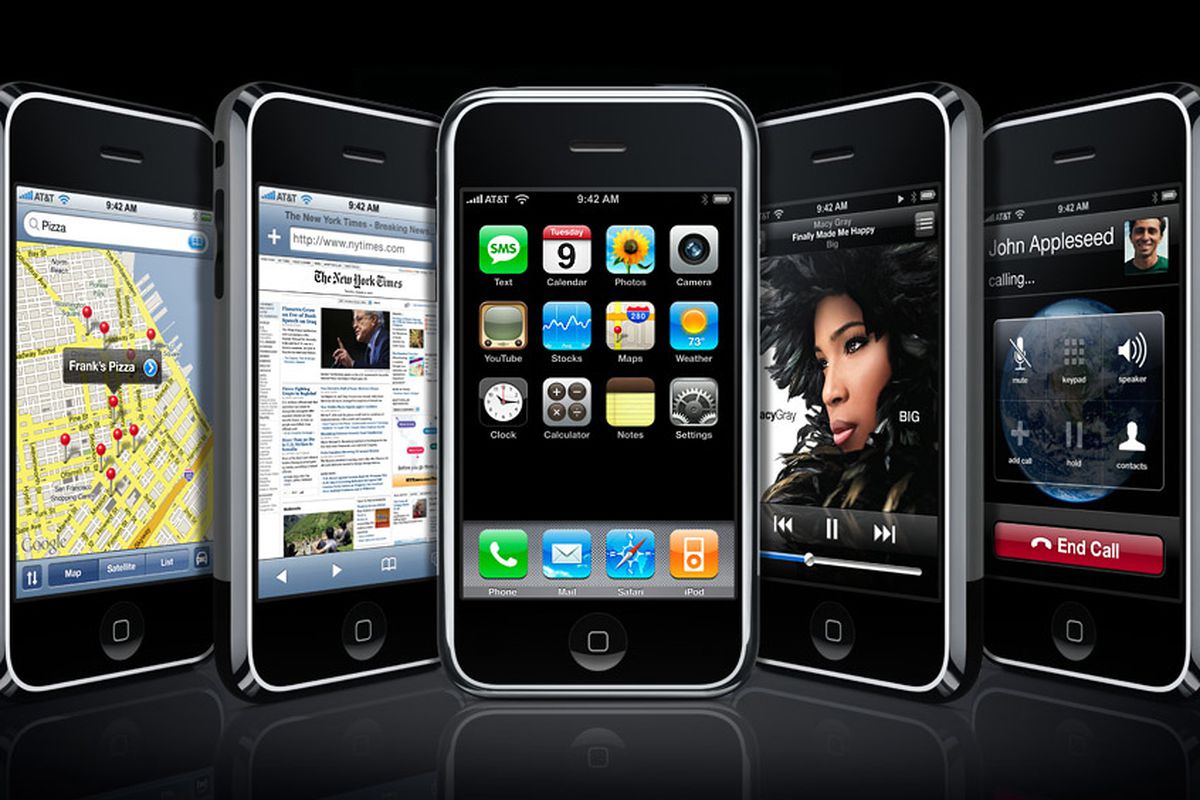
T-Mobile shuts down 2G network, ending U.S. cellular service for Apple’s original iPhone

Apple's revolutionary iPhone
Apple’s revolutionary iPhone (2007)

T-Mobile officially retired its 2G GSM network on August 3, 2026, marking the end of 2G service from all three major U.S. carriers. With AT&T having discontinued 2G in 2017 and Verizon following in 2020, devices that rely solely on the older standard—including the original 2007 iPhone — can no longer connect to any cellular network in the United States. The move also affects remaining smartphones, alarm systems, payment terminals, and other IoT devices still using 2G, though T-Mobile had given customers advance notice to upgrade or transition.

Juli Clover for MacRumors:
‎

T-Mobile kept its 2G network active because it still had some legacy customers who were using it. Some customers visiting the United States and using international roaming carrier agreements for connectivity also needed 2G for voice calling, but T-Mobile worked with carriers globally to prepare for the end of its 2G network.

Customers who were still on T-Mobile’s 2G network were warned well ahead of time about the shutdown and given time to transition. Smartphones, alarm panels, payment terminals, and other IoT accessories that used 2G will no longer function.

AT&T ended support for 2G almost a decade ago in 2017, and Verizon stopped supporting 2G in 2020. Now that no carriers in the U.S. support 2G, legacy devices like the original iPhone will not be able to connect to any cellular network.

‎
MacDailyNews Take: Time marches on!


‎
Please help support MacDailyNews — and enjoy subscriber-only articles, comments, chat, and more — by subscribing to our Substack: macdailynews.substack.com. Thank you!

Support MacDailyNews at no extra cost to you by using this link to shop at Amazon.

The post T-Mobile shuts down 2G network, ending U.S. cellular service for Apple’s original iPhone appeared first on MacDailyNews.

  •  

Original iPhone Loses Its Last Cellular Network as T-Mobile Kills 2G

T-Mobile retired its 2G GSM network on Monday, August 3, which means all three major carriers in the United States have now ended 2G service.


T-Mobile kept its 2G network active because it still had some legacy customers who were using it. Some customers visiting the United States and using international roaming carrier agreements for connectivity also needed 2G for voice calling, but T-Mobile worked with carriers globally to prepare for the end of its 2G network.

Customers who were still on T-Mobile's 2G network were warned well ahead of time about the shutdown and given time to transition. Smartphones, alarm panels, payment terminals, and other IoT accessories that used 2G will no longer function.

AT&T ended support for 2G almost a decade ago in 2017, and Verizon stopped supporting 2G in 2020. Now that no carriers in the U.S. support 2G, legacy devices like the original iPhone will not be able to connect to any cellular network. The iPhone technically lost cellular support in 2017 when AT&T sunset its 2G network, and now the last workaround is gone.

All three carriers also ended support for 3G back in 2022, and have also abandoned early LTE iPhones without VoLTE support.
This article, "Original iPhone Loses Its Last Cellular Network as T-Mobile Kills 2G" first appeared on MacRumors.com

Discuss this article in our forums

  •  

How AI is killing smartphone apps in China

Chinese smartphone makers have been followers in the global market, embracing the concepts and paradigms set in the past 20 years by Apple and Google. But AI may be giving the Chinese an opportunity to break away and set their own path forward. 

Specifically, Chinese companies are integrating AI more fully into smartphones, and also using AI for limited robotics in phones. Here’s what you need to know about these emerging trends. 

China’s ZTE recently showed its Nubia NaviX Ultra. The phone runs ByteDance’s Doubao AI agent, which users can access with voice commands or by pressing a button on the phone. The phone has no home screen and no conventional app store.

Another Chinese company, called StepFun — it was founded in 2023 by Jiang Daxin, a former Microsoft vice president and chief scientist at Microsoft’s Software Technology Center Asia — sells a phone called the StepX Neo. It runs a proprietary operating system called Step AOS based on Android, Linux, and an RTOS containing a built-in AI agent called Step Amoo. The StepX Neo splits phone functions into four primitives (communication, apps, files, system tools) that the agent recombines based on the stated goals of the user. 

Honor, a phone maker spun off from Huawei, has an AI agent the company built with input from Alibaba called the YOYO Intelligent Agent. It ships on Honor’s entire MagicOS 10-eligible lineup.

Note: an American company is enabling this. All three phones use Anthropic’s Model Context Protocol (MCP) to give system-level access to the agents. 

None of these phones will become available in the United States. ZTE is banned from the US by the FCC over national-security concerns, while the StepFun and Honor phones are built for the Chinese market with no US version planned. 

All modern smartphones can run AI. By simply visiting the Apple App Store or the Google Play Store, anyone can download dozens of AI apps, including those offered by the frontier model companies. Or they can use the AI services and tools built in to phones by Apple and Google. 

How agentic AI phones are different

What’s different about the new agentic AI phones in China is that the operating system itself has an agentic AI layer that enables it to function across apps and instead of apps. 

While agentic AI phones represent a minority of the current market, they feel like the future. And that future is consequential. First, it’s a another step toward independence from Android. Google’s services layer is already gone from China. Now the Android app layer is being replaced by vertically integrated agent stacks owned by Chinese super-app companies. 

Despite building agentic features that cross app boundaries to a limited degree, Apple and Google are unlikely to allow third-party agents to replace the app layer of their mobile OSs anytime soon. 

Apple takes 15% to 30% of app revenue. And (according to an estimate introduced during the Epic v. Apple/Google litigation but not confirmed by Google), the Play Store has historically accounted for somewhere between 17% and 26% of Google’s operating income. The entire economic logic of iOS and Android depends on apps. An agentic layer that dissolves those apps into tasks isn’t something either company wants to think about. The Chinese OEMs can blow up the app model because they had no stake in it. 

Meanwhile, the AI trend is suffocating mobile app in-app purchases, which dropped by roughly 40% by early 2026, even as people pay more for those purchases compared to a few years ago (because they’re dominated by subscriptions to AI and vibe-coded apps). In other words, even inside the app stores, there’s a shift from the old app model to AI replacements. 

AI is not only changing the software model, but the hardware model, too. 

Robot phones

Another categorical way China is splitting off from the global smartphone concept is the nascent market of robot phones. A robot phone is one that uses AI to control physical robotic components on an actual phone. 

The leading contender in this field is a device called the Honor Robot Phone, which I wrote  about in March. A leaked unboxing video of the Honor Robot Phone appeared this week on the Chinese social network Weibo.

The robotic element is a gimbal with a 200-megapixel camera on it. One basic use is that the phone can remain stationary while propped up on a table or clamped to a tripod, while the camera tracks a moving subject using AI. Another use is to walk while using it and let the gimbal smooth out the jiggling and movement. Software on the phone also enables automated cinematic special effects. 

But the real leap forward is in “self expression” for the phone. The Honor Robot Phone exhibits subtle Attachment Economy features. It shakes its “head” no and nods yes. And it can do a “backflip” to “cheer you up.” The phone gets a personality. 

Honor plans to launch the phone on Aug. 12 in China. 

So-called “robot phones” are even more rare in China than agentic AI phones. Still, the Honor Robot Phone represents another Chinese departure from the Silicon Valley smartphone hardware model of a static pane of glass. The Honor Robot Phone has a body. It feels like the future, too, as it’s one of the rare products in the emerging Attachment Economy, where humanlike attributes (in this case, gestures and body language) are deployed to make the consumer more “attached” to devices that seem like they have thoughts and feelings. 

The AI future of phones

As the Chinese smartphone market splits off from the American one, it presents an alternative for the world. Because if the agentic AI phones succeed in China, they’ll almost certainly be offered internationally. 

That represents not only hardware sales, but the penetration of Chinese super-apps, Chinese financial services, Chinese AI-based information (and along with it, the Chinese government’s world view, we can expect). 

The only question is: Will the world prefer the Chinese agentic AI approach or the US AI app model? 

Adding to the complexity is the coming wave of AI wearables, most of which will likely be wirelessly “tethered” to smartphones that provide intelligence and connectivity. Soon, we’ll be conversing with our glasses and watches. Our glasses and watches will be “conversing” with our phones. And our phones will be conversing with AI models that represent the values, beliefs and biases of their creators. 

The Chinese agentic AI movement represents a split in how phones work and how the people worldwide interact with information, technology and each other. 

AI disclosures: This article is 100% human-written by the author, Mike Elgan. Some research, ideation, and fact- and grammar-checking was performed using AI tools.

  •  

Foldables are sort of boring now — and that’s great news for Apple

This is The Stepback, a weekly newsletter breaking down one essential story from the tech world. For more on smartphones and Android, follow Dominic Preston. The Stepback arrives in our subscribers' inboxes on Sunday at 8AM ET. Opt in for The Stepback here.

How it started

Believe it or not, it didn't all start with Samsung. Royole, a now-bankrupt manufacturer of flexible displays, was the first to release a commercial folding phone, the "charmingly awful" FlexPai. Samsung's first Galaxy Fold followed a year later, plagued by a variety of faults that saw review units break within days. That launch went so badly that it prompted Chinese riva …

Read the full story at The Verge.

  •  

Case Solved: The London Files desafia-o a pensar como um detetive para desvendar uma série de mistérios

Fã de jogos de mistério e aventuras "point and click"? Case Solved: The London Files coloca os jogadores no papel de um detetive que tem como missão investigar uma série de crimes, num título que promete pôr à prova as suas capacidades de observação e dedução.  

The post Case Solved: The London Files desafia-o a pensar como um detetive para desvendar uma série de mistérios appeared first on Tek Notícias.

  •  

Qualcomm shows Apple’s modem transition is almost complete

Apple may be moving faster than expected in its modem development work, and Qualcomm’s latest comments suggest that shift is already reshaping the iPhone supply chain. 

Qualcomm overnight said supply constraints are shrinking some of its Apple business faster than anticipated. “It’s availability of supply,” CEO Cristiano Amon told Reuters.

While he wasn’t specific, that likely reflects the broader industry shortage in memory, storage, and everything else and means the company’s share of components used for the next iPhone launch will fall “well below” its anticipated estimates. Amon says this is part of a transition in which future Qualcomm income will be generated by AI datacenter demand.

The company also intends to boost modem prices on Sept. 1 (And remember, the patent licensing agreement between Apple and Qualcomm expires in March 2027.)

Given Apple is selling plenty of smartphones (even as the broader industry shrinks), supply constraints won’t necessarily be because of demand for the devices; this could reflect Apple’s plan to divide the iPhone release schedule across several months, as well as its future modem development efforts. 

Reports for months have indicated Apple plans to introduce new iPhones twice a year, with the Pro range updated each fall and entry-level devices scheduled for spring. It’s a move that’s likely to help build more consistent quarterly earnings by spreading demand across different parts of the year and could reduce short-term demand for components.

Things look a little different this year, of course; the expected introduction of the new iPhone Ultra means Apple will be making three new iPhone models, not the customary four – though there is also speculation the Ultra may not ship in quantity until later on this year. 

How much does Apple need Qualcomm? Not much

There’s also Apple’s own modem development plans to consider. We know Apple’s relationship with Qualcomm isn’t easy. The two firms were engaged in costly litigation before they found a way to bury the hatchet and work together on 5G iPhones while Apple developed its C-series modems.

Those C-series modems are already used in Apple devices. The iPhone 16e, 17e and iPhone Air carry Apple’s C1/C1X modem, with the C2 variant expected in the 18 Pro series this year. 

Apple’s new modem is expected to deliver better battery efficiency, improved cellular network privacy, and AI-supported network efficiency. So, your device should last longer, be less visible to your carrier, and better able to get a connection — even when connectivity is constrained. 

Next year’s 18-series devices will certainly stick with Apple’s modems, meaning Qualcomm’s remaining Apple business should be wrapped up in the release this fall. As Apple’s modem appears in more devices, you’ll probably only see Qualcomm modems used to provide mmWave support, which realistically has very little traction or carrier support outside America.

Waiting to replace mmWave

That view is supported by reports based on information recently stolen from Apple’s India-based iPhone partner, Tata. It claimed Apple will use the C2 in internationally sold iPhones Pro and Max, while keeping to Qualcomm in US devices.

If Apple takes the same approach with next year’s iPhone releases, it would mean only US iPhones — and probably not all of them — have mmWave. As a result, Qualcomm’s modems will only be available in a very small subset of iPhones sold. That would almost certainly account for the modem maker’s reduced Apple optimism. (Apple is also part of the 6G standard development group, which implies it hopes to find some way to replace mmWave.)

It also indicates Apple is less likely to renew its current patent licensing deal, though it could still require some licenses since Qualcomm’s SEPs include some 5G-essential technologies. The other takeaway here: Apple has a high degree of confidence in its forthcoming C2 modem, which makes sense given how well-received its C1 modem has been. 

A clean sweep

One more thought. It is interesting the extent to which Tim Cook’s Apple seems to be finalizing much of its business before the transition to new CEO John Ternus on Sept. 1. (It is also notable that Qualcomm also intends to raise its prices on the same date.)

You can follow me on social media! Join me on BlueSky,  LinkedIn, Mastodon and subscribe to The Core.

  •  
❌