Their warnings echo concerns that other artificial intelligence experts have voiced in recent months, as calls increase for a slowdown in the pace of development.
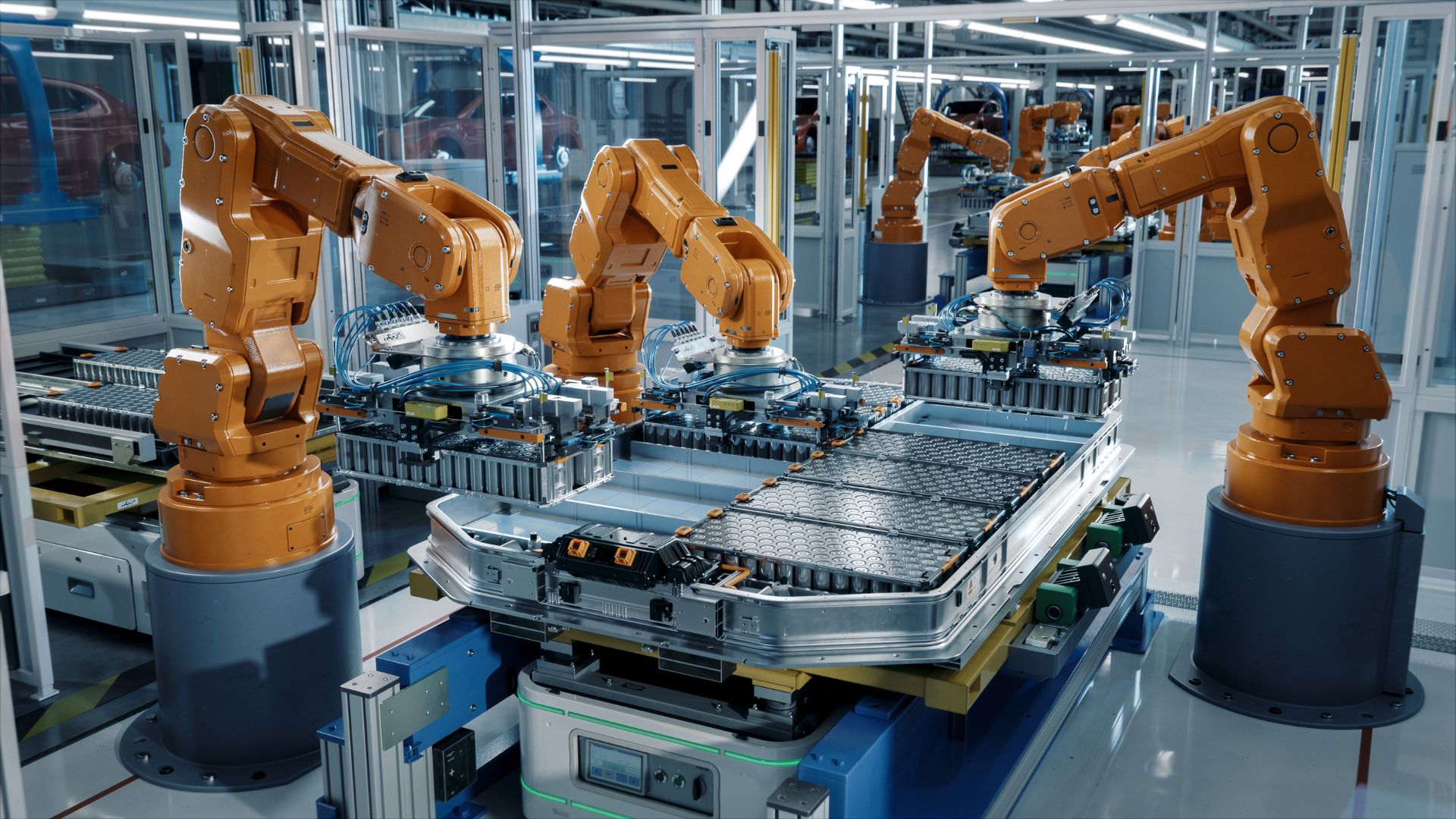
Oak Ridge National Laboratory (ORNL) and industry partners are deploying advanced manufacturing technologies, such as heavy 3D printing and AI-driven automation, to repair broken US industrial supply chains.
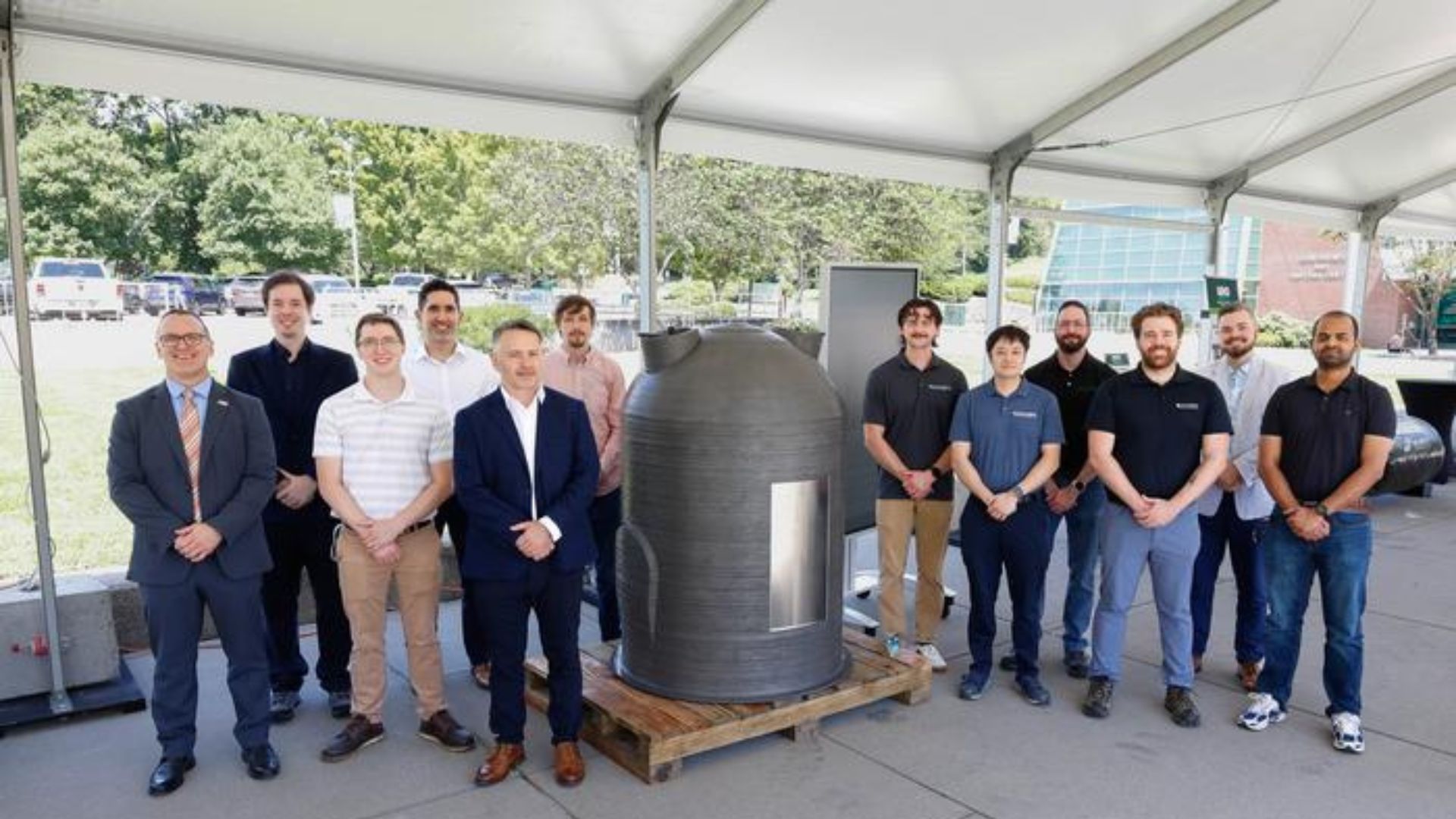
For instance, inside an advanced Tennessee facility, a giant three-armed robot called MedUSA crafted a three-by-five-foot nuclear pressure vessel by guiding molten steel into place. Nearby was a large 12-foot model of an impact limiter, made from strong plastic instead of the usual wood. These were battle tests for the future of American industry.
America’s industrial sector is facing severe operational hurdles, driven by irregular supply chains and a shortage of skilled workers. These issues have created extreme delays in infrastructure sectors like hydropower, where acquiring major custom components can now take over ten years.
Over 350 leaders gathered at ORNL for the Materials and Manufacturing Innovation Days. They discussed ways to speed up the adoption of advanced manufacturing technologies.
The goal of M2IND was simple yet ambitious: remove the administrative and technical obstacles slowing advanced technology, and turn laboratory breakthroughs into factory-floor reality before time runs out.
“We want to make sure we have input from industry to help guide our research and ensure that the work at Oak Ridge and the Manufacturing Demonstration Facility (MDF) is valuable to U.S. manufacturers and takes into account the supply chains needed to commercialize new technologies,” said MDF Director Ryan Dehoff.
Fast-track advanced manufacturing
The event featured two large 3D-printed nuclear energy structures. Researchers worked with the University of Maine to print a glass-fiber polymer model of an impact limiter. This massive component protects spent nuclear fuel shipping containers during transport and replaces traditional wood designs.
Scientists also used a three-arm robotic system to print a steel pressure vessel with complex domed geometry. This project shows how additive manufacturing can produce large metal parts that usually face production issues.
Standard reactor vessels use large-scale forging and welding, which face severe domestic capacity limits. The 3D-printed vessel served as a test case to evaluate additive manufacturing as a viable alternative.
Supply chain issues
Participants highlighted urgent needs for resilient supply chains, alternative materials, and faster part qualification. They also pushed to combine manufacturing with AI, robotics, and digital engineering. New partnerships were formed to quickly turn laboratory research into practical tools for manufacturers.
Representatives from four Department of Energy offices and defense officials joined leaders from energy, manufacturing, and technology sectors at the event. Together, several key obstacles facing American industry were identified. These challenges include limited local capacity for large metal parts and long component lead times.
ORNL formed key industrial partnerships to bring research into practical factory use. Yet, as forum participants repeatedly emphasized, printing a part is only half the battle. Getting it certified for real-world use is where momentum often dies.
To bridge that gap, ORNL announced a joint research effort with Idaho National Laboratory to standardize digital qualification methods across different facilities
Researchers hope to give regulators the data needed to certify 3D-printed nuclear and energy components in months rather than years. They plan to do this using real-time sensors, machine learning, and defect-tracking algorithms during the build process.
With new partnerships signed with energy titans like SLB and Kairos Power, the push is clear. Urgency has replaced routine. America is racing to rebuild its domestic manufacturing core, starting right on the laboratory floor.
Oak Ridge National Laboratory (ORNL) and industry partners are deploying advanced manufacturing technologies, such as heavy 3D printing and AI-driven automation, to repair broken US industrial supply chains.
The MacVoices Live! examines Apple’s transition from Tim Cook to John Ternus, weighing Cook’s legacy, Apple’s dramatic financial growth, Vision Pro, and criticism of his tenure. They consider what Ternus’ engineering background could mean for hardware and software, while discussing Phil Schiller, Eddie Cue, other executive changes, succession planning, and the importance of preserving institutional […]
The Ministry of Science and Information and Communications Technology (MSIT) and the Korea Institute of Science and Technology Information (KISTI) have announced that the next-generation national supercomputer will be launched by December this year.
Dubbed Supercomputer No.6, the machine will be equipped with 8,496 graphics processing units (GPUs) and boast a 614 petaflops performance, likely pushing it into the Top 10 supercomputers in the world.
Supercomputers are extremely fast and large computers that can carry out extremely complex mathematics to solve problems of engineering and science that regular computers cannot handle. From energy exploration to weather forecasting, space research to drug discovery, supercomputers are tasked with carrying out simulations that help us better understand these fields and help scientists make discoveries.
Countries typically built these large-scale computers at their national institutes to make scientific breakthroughs and attain economic leadership, while also deploying them for national security measures.
The world’s top supercomputers are listed in the TOP500, with the latest edition listing China’s LineShine and ending US dominance at the top of the list. South Korea has 15 supercomputers on the list, with KISTI’s Supercomputer No. 5 occupying the 109th spot. KISTI and MSIT aim to break into the top 10, with Supercomputer No. 6 coming this December.
Supercomputer No.6
KISTI’s Supercomputer No. 6 is built around NVIDIA’s GraceHopper 200 chips that integrate the central processing units (CPUs) and GPU units. The upcoming unit will feature 8,496 GPUs and 9,936 CPUs, 205 petabytes (PB) of onboard storage, and networking speeds that exceed 400 Gbps.
Theoretically, Supercomputer No. 6’s computing performance is 614 petaflops, which is a huge leap when compared to its predecessor, Supercomputer No. 5, “Nurion, unveiled in 2017 with computing performance of 25.7 petaflops. Apart from a 24x increase in theoretical computing performance, the successor supercomputer will also get a 10x increase in storage and 4x faster networking speed.
MSIT and KISTI signed an agreement with Hewlett-Packard Enterprise for system installation last year. Post-installation inspections began last month, and performance and stability testing is underway as South Korea looks for a December launch.
Once operational, the supercomputer will enable access to massive computing resources for researchers engaged in computational science, data simulation, and AI-based scientific research. Plans include redistributing the resources across three programs: National Strategy (30 percent), R&D Innovation (55 percent), and Industrial Innovation (15 percent).
Not smooth sailing
The announcement of the new supercomputer and its likely availability in the near term is great news for researchers. However, the acquisition was not this smooth sailing. Soon after the Supercomputer No. 5 was introduced in 2018, South Korean researchers began looking for its successor as early as 2021.
However, the boom in generative AI, which has matured with ChatGPT and Claude, has now caused a huge surge in demand for GPUs. As prices for GPUs skyrocketed, South Korea couldn’t secure the chips at budgeted prices and had to spend 448.3 billion won (~US $334.9 million), a 53 percent jump over its initial budget of 292.9 billion won (~ US$218.8 million) to make the supercomputer a reality.
“Supercomputer No. 6 is core infrastructure that will drive a major leap in scientific and technological research productivity in the AI era,” said Kim Sung-soo, Director General of the R&D Policy Bureau at the Ministry of Science and ICT in a press release.
“We expect it to generate tangible outcomes that contribute to securing national strategic technologies, including K-Moonshot and the 7 Major SEEDs, as well as research innovation across industry, academia, and research institutes.”
Machine vision is becoming a practical part of Apple’s U.S. factory training strategy, giving smaller manufacturers access to techniques that help production systems inspect what they make. The recent opening of the Houston manufacturing training center extends that effort into a working electronics production campus, while courses developed with Michigan State University introduce businesses to image analysis, machine learning, and automated quality checks.
For a manufacturer, the attraction can be straightforward: finding a missing component before a product leaves the line, identifying a surface defect before more material is added, or recognizing an assembly error while it can still be corrected cheaply.
These are manageable problems with measurable costs. They also offer an accessible starting point for businesses interested in AI but unsure where it belongs inside their operations.
Machine Vision Enters the Manufacturing Curriculum
The Apple Manufacturing Academy’s current course catalog includes Machine Learning with Vision, a course introducing machine learning and deep learning through practical activities using Apple devices. It sits alongside instruction in automation, quality fundamentals, manufacturing data, maintenance, and process improvement.
That placement gives the subject useful context. A camera can produce an image, but a factory needs a decision: accept the part, flag it for review, check its position, or investigate a process that may be drifting out of tolerance.
Machine vision connects image capture to those operational decisions. Some applications use established rules to measure dimensions or identify patterns. Others use machine learning to recognize acceptable variations and defects that are difficult to describe through fixed rules.
The academy’s public description confirms introductory activities with Apple devices. It does not identify a particular iPhone, Mac configuration, software framework, or industrial camera package that every participant must use.
For smaller businesses, the educational value is learning how to define an inspection problem before purchasing equipment. A company that understands what it needs to detect can have a much more productive conversation with an automation supplier.
Houston Brings Training Closer to Production
Apple opened its 20,000-square-foot Advanced Manufacturing Center on August 13. According to the Houston opening announcement, the free program offers small and medium-sized businesses instruction in advanced manufacturing, interactive labs, and experience with representative production equipment.
The first cohort worked with machine learning for quality control and advanced automation. Participants also explored production challenges, used a holographic table, and assembled and laser etched a product.
The location adds context: the center occupies the same Houston facility that builds advanced AI servers and is scheduled to begin Mac mini manufacturing this year. Its teaching program includes final assembly principles and design considerations for printed circuit board assembly.
Houston is the company’s second U.S. manufacturing learning site, following the Detroit academy established with Michigan State University in August 2025. By the Houston opening, Apple said the academy had helped nearly 1,000 workers, students, and entrepreneurs.
That figure measures people reached through the program. It should not be interpreted as 1,000 factories already operating AI inspection systems.
Apple Machine Learning Adapters
A Useful Inspection Starts With a Specific Problem
Imagine a small business assembling control panels. Each panel needs the same set of connectors, positioned correctly before the enclosure closes. A machine vision station could check for a missing connector while the assembly remains accessible.
The value comes from catching that error at the right moment. Discovering it after packaging creates extra handling and rework. Discovering it after delivery may involve a return, a service visit, and an unhappy customer.
A useful pilot would therefore begin with that single inspection point. The business could compare the existing process with the assisted one, recording missed defects, unnecessary rechecks, inspection time, and the cost of correcting mistakes.
The camera is only part of the exercise. Workers must agree on what constitutes a defect, collect representative examples, and decide what happens when the result is uncertain.
Those decisions draw heavily on experience already present on the factory floor. An operator may know that an unusual mark is harmless, while a barely visible change in alignment predicts a later assembly problem. Turning that knowledge into consistent inspection criteria is valuable work in its own right.
These are examples of how manufacturers could apply the training, rather than projects Apple has announced for individual participants.
Teaching Machine Vision to Handle Ordinary Variation
A demonstration can look impressive when every part arrives clean, centered, and evenly lit. Production introduces variation: different surface finishes, reflections, changing positions, and batches that look slightly different while remaining within specification.
The inspection system must distinguish those acceptable differences from actual failures. Otherwise, it can reject good products or allow defective ones to continue.
Industrial vision supplier Cognex’s deployment guidance recommends validating systems across product models, defect types, and manufacturing lines. It also describes an approach in which automated inspection handles preliminary checks while experienced inspectors review borderline cases.
For a business learning machine vision, that offers a realistic way to introduce the technology. Employees can compare its decisions with their own, investigate disagreements, and determine whether the results justify extending its role.
An inspection system also needs an owner after installation. Someone must understand when a product change requires new examples, when equipment needs attention, and when performance has slipped. Training that responsibility into the workforce helps prevent an initially successful project from becoming an unreliable fixture.
Smaller Manufacturers Are Already Applying the Training
The academy’s reach extends beyond companies producing consumer electronics. In its May update on participating manufacturers, Apple highlighted Block Imaging, a Michigan business that services and refurbishes medical imaging equipment.
The company hosted visitors during the academy’s Spring Forum and described applying techniques learned from Apple engineers and Michigan State experts to its operations. Apple reported that the academy had supported more than 150 American businesses at that point.
The announcement did not identify a particular machine vision deployment at Block Imaging or publish a percentage improvement attributable to visual inspection. It does provide an example of the training reaching businesses whose work differs substantially from building an iPhone.
That wider participation could benefit Apple indirectly. More capable domestic manufacturers can support equipment maintenance, tooling, components, and specialized production services. Participation itself does not establish a supplier relationship, but the skills can be used across customers and industries.
Access Without a Large Training Budget
The academy’s participation information says eligible small and medium-sized U.S. manufacturers can take courses free of charge. Online learning includes on-demand materials and interactive modules, while in-person sessions add workshops and more personalized instruction.
Digital badges are available for different topics, and completed course materials remain accessible for review. That gives a business room to train an employee around existing production commitments and return to the material when an actual project begins.
Free instruction does not remove the eventual cost of cameras, lighting, integration, maintenance, or employee time. It can help a manufacturer understand those costs before committing to a system.
The first proposal brought back to the factory might be modest: inspect one recurring defect at one station and record the results for several weeks. A supervisor can then weigh the time saved against the extra reviews, maintenance, and mistakes. That is the kind of evidence a business owner can use when deciding whether to install a second station.
Adam Engst looks back at HyperCard as an early tool that democratized software creation, then connects its legacy to today’s AI-assisted development. He outlines how Claude helped turn an idea for tracking macOS setting changes into a working Mac app, SetShot. Adam discusses Xcode, GitHub, rapid iteration, and the value of visual feedback in his development process, and how AI lowers programming barriers without eliminating the need for thought, judgment, and effort.
When John Ternus becomes Apple’s chief executive on Tuesday, he inherits a company that looks, on paper, unbeatable. Apple is valued at nearly $5 trillion and remains one of the most profitable businesses on Earth. That is also the problem. Starting at the summit is harder than climbing it. As The Wall Street Journal’s Rolfe Winkler has put it, Ternus must take Apple beyond Tim Cook’s iterative supply-chain mastery if the company is going to reach new heights from already extraordinary ones.
Ternus takes over from Cook, who will stay on as executive chairman. Cook spent 15 years turning Steve Jobs’s product company into a supply-chain, services, and cash-flow machine. He extracted enormous value from the iPhone, expanded the App Store and iCloud, and built Apple into a colossus. What he did not leave behind is an undisputed next act.
The question hanging over Cupertino is whether Ternus can do more than keep the machine running. Can he revive the kind of product-led risk that defined Jobs, without throwing away the operational discipline that made Cook’s era so lucrative?
The hardware lifer
Ternus is not a celebrity CEO. He is a mechanical engineer who joined Apple in 2001, rose through Mac hardware, and eventually ran engineering for iPhone, iPad, Mac, Watch, AirPods, and Vision Pro. He is 50 — the same age Cook was when he succeeded Jobs. Colleagues describe him as even-tempered, detail-obsessed, and fluent in Apple’s internal politics.
That profile is both his advantage and his constraint. He knows how Apple products are actually built. He helped shepherd the shift to Apple silicon, one of the most consequential engineering moves of the last two decades. He also oversaw incremental refinements that made devices thinner, more durable, and easier to repair. Those are real achievements. They are not, by themselves, a new category.
If Jobs was the visionary and Cook the operator, Ternus sits in the middle: a hardware savant asked to become a public strategist. He will have to lean on other executives for finance, sales, legal, government relations, and procurement — areas where Cook excelled.
The AI gap
Apple’s most visible vulnerability is artificial intelligence. Since ChatGPT arrived in late 2022, rivals have poured hundreds of billions of dollars into models and data centers. Apple has emphasized on-device intelligence, privacy, and integration with existing gadgets. That is a coherent strategy. It has not yet produced a moment that reset the industry conversation.
Ternus’s bet is that hardware is still the point. Apple’s argument is that people will use AI through devices they already love—phones, earbuds, glasses, home screens — rather than through chat windows alone. Camera-equipped AirPods, smart glasses, a voice-aware home display, a robotic-arm screen, and a wearable pendant are all in various stages of development. Some are expected this fall. Others are further out. All of them depend on making AI feel native, private, and physical.
That is a harder product problem than buying more GPUs. It is also the only problem Apple is uniquely positioned to solve. Whether investors will wait for it is another matter. Apple’s stock has lagged other megacap tech names for much of the generative-AI boom, even as its profits stayed enormous.
A first act already scheduled
Ternus will not get a quiet first month. Apple’s fall event is set for September 9th at the Steve Jobs Theater, under the tagline “Surprise and shine.” The centerpiece is widely expected to be Apple’s first foldable iPhone, alongside new Pro models. The timing was not accidental. Ternus led the hardware work on the foldable, and the CEO transition was aligned with its debut.
A foldable is not a new idea. Samsung has sold them for years. Apple’s version will be judged on crease, durability, software, and whether unfolding a phone feels inevitable rather than novelty. Reports describe a book-style device with a compact outer screen and a roughly tablet-sized inner display, priced well above $2,000. Early supply is expected to be tight.
That product is a test of more than engineering. It is a test of whether Apple can still introduce a form factor that changes how people use a phone — the last time it did that at this scale was the iPhone X in 2017.
What “innovation” actually means now
There is a temptation to frame Ternus as “the next Jobs” or “Cook 2.0.” Neither is useful. Jobs could force the company through a single product vision because Apple was smaller and more desperate. Cook could optimize a global manufacturing system because the iPhone had already won. Ternus faces a third problem: how to invent the next platform while defending a $5 trillion franchise, a China-centric supply chain under political strain, and regulators who treat Apple as infrastructure rather than a gadget maker.
The Jobs engine was never just “think different.” It was an integrated loop of hardware, software, and a willingness to kill good-enough products. Cook’s engine was iteration, predictability, scale, and services attached to devices people already owned. Ternus has to run both at once.
That means new devices that justify themselves, not annual spec bumps. It means an AI strategy that does not look like a late partnership bolted onto Siri. It means keeping Apple’s culture of secrecy and craft without freezing the company in the last successful decade.
Cook built the Apple colossus. Ternus has to decide whether the next decade is about defending it — or risking another product that makes the last one look incomplete. The foldable iPhone will be the first public answer. It will not be the last.
MacDailyNews Take: Good luck, John. No pressure!
Please help support MacDailyNews — and enjoy subscriber-only articles, comments, chat, and more — by subscribing to our Substack: macdailynews.substack.com. Thank you!
David Pogue’s authoring style turns Apple: The First 50 Years turns what could have been names and dates into a richly illustrated journey through Apple’s successes, failures, products, personalities, and untold stories. The print edition combines rare photos with approachable narratives and clever sidebars, while David’s audiobook narration, musical touches, and energetic performance add a different dimension to the story, making the audio edition a must-listen. Get both to have the full experience.
The panel explores Samsung’s entry into the credit card market, why iPhone owners continue to resist switching to Android, and the growing influence of AI across technology and society. Discussion ranges from AI escaping coding sandboxes and solving long-standing mathematical problems to AI-generated music and the impact of European Union regulations on innovation, competition, consumer […]
A video tour of the AGI House in San Francisco as MacPaw’s Flip the Script event at WWDC 2026 highlights the venue’s AI-focused mission and MacPaw’s emphasis on connecting with developers around its AI initiatives.
Des chercheurs de l’UNSW Sydney (Université de Nouvelle-Galles du Sud) ont mis au point un cœur robotique mou, entièrement synthétique et programmable, qui reproduit fidèlement la structure interne et les mouvements de torsion du ventricule gauche humain, celui qui propulse le sang oxygéné dans...
The University of Houston has launched UH Health, a cross-disciplinary academic health enterprise intended to reshape how healthcare professionals are educated, how medical research is conducted and how care reaches communities across Texas. The initiative brings together medicine, nursing, pharmacy, optometry, psychology, social work, population health, biomedical research and health systems science under a single interprofessional framework. University leaders say the model is designed to confront a rapidly intensifying combination of population growth, healthcare worker shortages, chronic disease and unequal access to medical services.
Rather than treating healthcare disciplines as separate academic and clinical systems, UH Health is built around team-based care. In this approach, physicians, nurses, pharmacists, optometrists, behavioral health specialists, social workers and public health experts contribute to a shared understanding of each patient’s needs. The model reflects the growing recognition that health outcomes are shaped not only by disease biology, but also by mental health, housing, income, nutrition, transportation and access to preventive services. By training students to work across professional boundaries, the University hopes to prepare graduates for a healthcare system increasingly focused on coordinated and personalized care.
“Healthcare is no longer delivered in isolation, and complex health challenges require coordinated solutions,” said Jonathan McCullers, vice president for health affairs at UH and dean of the Tilman J. Fertitta Family College of Medicine. The university’s academic health strategy is intended to place students in an environment where clinical reasoning, behavioral science, population health and scientific discovery interact. Such integration can help future clinicians identify the underlying drivers of illness, select more appropriate interventions and communicate more effectively with specialists and community organizations.
The launch comes as Texas faces a widening gap between healthcare demand and workforce capacity. Rapid population growth, an aging population and shortages of trained professionals have placed pressure on hospitals and clinics throughout the state. The Texas Hospital Association has reported that 64% of hospitals were operating with fewer beds or reduced services because of staffing shortages. UH Health aims to expand the pipeline of physicians, nurses, pharmacists, optometrists, social workers and other professionals while emphasizing workforce readiness, collaborative practice and the ability to manage complex cases.
UH’s location near the Texas Medical Center gives the initiative access to one of the world’s largest concentrations of hospitals, research institutes and specialized clinical programs. Partnerships with organizations including HCA Healthcare, Memorial Hermann Hospital, Baylor College of Medicine and MD Anderson Cancer Center are expected to provide students and researchers with expanded opportunities for clinical training, translational research and collaboration. Translational research—the process of moving discoveries from laboratories into diagnostics, treatments and public health programs—depends heavily on this type of interaction between universities, hospitals and industry.
The university is also positioning UH Health as a platform for research that reaches beyond traditional medical departments. Scientists in chemistry, physics and biomedical engineering are working alongside health researchers on problems ranging from cancer and infectious disease to substance-use disorders and neurodegeneration. UH researchers have received more than $11 million from the Cancer Prevention and Research Institute of Texas for work involving cancer prevention, diagnosis and treatment. A fentanyl vaccine developed at the university is advancing toward human trials, although its clinical effectiveness and safety will need to be established through carefully controlled studies.
Brain health is another major focus. Texas ranks fourth nationally in the number of Alzheimer’s cases and second in Alzheimer’s-related deaths, according to the Texas Department of State Health Services. More than 100 faculty members across 12 of UH’s 16 colleges are involved in research related to prevention, early detection, caregiving and treatment, supported by $62.5 million in active grants. Their work may involve diverse technologies and methods, including biological markers, computational analysis, behavioral interventions, biomedical engineering and the study of social factors that influence cognitive decline and caregiver health.
To strengthen this research ecosystem, UH is investing $77 million in a new 55,000-square-foot medical research building. The facility is expected to support interdisciplinary laboratories and shared scientific infrastructure, allowing investigators from different fields to exchange data, equipment and expertise more efficiently. In modern biomedical science, discoveries often emerge at the boundaries between disciplines—for example, when engineering approaches are applied to drug delivery, physical sciences are used to study disease mechanisms or data science improves early diagnosis.
UH Health’s community programs are intended to connect these academic and research activities with practical healthcare needs. The UH Health Family Care Center provides primary care and mental health services to the university and surrounding communities, including Third Ward, East End and South Houston. The Household-Centered Care program gives students experience through home visits with community caregivers, while the 3rd Ward Place of Wellness offers screenings, preventive services and health education. The College of Optometry extends access to vision care through community clinics and outreach programs serving children and families.
The enterprise is also expanding beyond Houston through a partnership with DHR Health in the Rio Grande Valley, a rapidly growing region that continues to face significant medical access challenges. University officials say the collaboration could support healthcare education, workforce development and research tailored to local needs. By linking professional training, scientific discovery and community partnerships, UH Health is presenting an academic health model designed for a state where medical demands are growing faster than conventional systems can respond.
Subject of Research: Academic healthcare education, biomedical research, healthcare workforce development and community health access
Article Title: University of Houston Launches UH Health to Integrate Education, Research and Community Care
Web References: https://mediasvc.eurekalert.org/Api/v1/Multimedia/ed42117d-36c9-45cf-b2e3-443e4e08b680/Rendition/low-res/Content/Public
References: Texas Hospital Association; Texas Department of State Health Services; University of Houston
Image Credits: University of Houston and UH Health
Keywords: UH Health, University of Houston, healthcare workforce shortage, academic health, team-based care, biomedical research, cancer research, fentanyl vaccine, Alzheimer’s disease, community healthcare, nursing, optometry, pharmacy, medical education, Texas Medical Center
Chinese researchers have developed a high-energy lithium-metal primary battery that combines long endurance with powerful bursts while operating at temperatures as low as -40°F (-40°C).
Developed by a team led by researchers from the Dalian Institute of Chemical Physics under the Chinese Academy of Sciences (CAS), the 25Ah pouch-type battery is designed to maintain stable performance in extreme cold.
According to Chinese online media reports, validation tests showed that the battery achieved an energy density exceeding 750Wh/kg at a low discharge rate.
The technology could support applications requiring reliable, high-energy power in harsh and low-temperature environments.
High-energy battery
The new lithium-metal primary battery is designed to combine high energy density, long storage life and rapid power delivery, while continuing to operate reliably in temperatures as low as -40°F.
The researchers developed a 25Ah pouch-type lithium-metal primary battery that achieved an energy density of more than 750Wh/kg under low-rate discharge conditions, according to Science and Technology Daily. Testing by the safety laboratory of the China Electronics Standardization Institute also found that the battery could increase its discharge rate by as much as 100 times, enabling short bursts of high-current output at up to 10C, reports the Global Times (GT).
The C-rate indicates how quickly a battery can charge or discharge relative to its rated capacity. A 1C discharge means a battery can theoretically deliver its full rated capacity in one hour, while a 10C discharge allows the same capacity to be delivered in roughly one-tenth of an hour. This capability is particularly important for primary batteries, which are designed for single-use operation and are not intended to be routinely recharged.
At room temperature, the new battery reportedly reaches a specific power of 4,487W/kg. It can sustain discharge at 4C and deliver short bursts at up to 10C, addressing a major limitation of conventional lithium primary batteries, which can offer high energy density and long shelf life but may struggle to release large amounts of energy rapidly.
Cold-ready battery
The battery also demonstrated significant performance at extreme cold. At -40°F, it retained an energy density of 447Wh/kg when discharged at 1C. Its annual self-discharge rate remained below 1 percent, indicating that the battery can retain most of its stored energy during extended periods of standby, reports GT.
The combination of high specific energy, low self-discharge and high power output could be valuable in situations where batteries must remain ready for long periods but suddenly deliver substantial power. Potential applications include drones and robots operating in remote locations, spacecraft systems, field-deployed sensors, rescue equipment and other devices where regular battery replacement or recharging is difficult.
Primary batteries are particularly useful in applications where charging infrastructure is unavailable or impractical. They can remain stored for long periods and provide power immediately when required, making them relevant to military operations, emergency response, rescue missions and forest-fire monitoring.
According to the team, they achieved the performance improvement through a new cathode material based on a high-entropy oxide. The team has also established a pilot production line with an annual capacity of 10 tons, providing a pathway from laboratory-scale material development toward battery manufacturing.
The battery has completed third-party testing and is undergoing additional validation for potential use in drones, robots, spaceflight simulators, and field sensor nodes. Further testing will determine how the technology performs under specific operating conditions and whether it can be scaled for broader commercial applications.
A New Zealand engineer who goes by Bruce online has built a 3D-printable robotic system. It attaches to an acoustic guitar and plays it from a digital tab file. The output is real acoustic sound, not a digital or synthesized approximation. The device, called MegCell Pulse, is now funding on Kickstarter. Backers receive STL files for printing most of the components themselves, along with a parts list and assembly instructions.
The premise behind the Pulse is simple as a question and difficult as an engineering problem. What if a digital music file could control a physical instrument, producing sound with all the natural qualities of that instrument in its room? Most approaches to digital music run in the opposite direction, converting acoustic guitar recordings into digital files. The Pulse reverses that pipeline, taking a digital guitar tablature file and converting its instructions into physical finger and pick movements on a real guitar.
From tab file to acoustic sound
The Pulse attaches to the guitar body and uses two mechanical arms to replicate the movements of a human player. The fretting arm presses strings down between frets, taking the role of the guitarist’s left hand. The picking arm plucks those strings in time, taking the place of the right hand. The two arms are coordinated by gears and magnetic actuators. They draw their timing and positioning directly from a standard digital tab file. No custom programming is required for each piece of music — the system reads the tab notation as written.
What comes out of the guitar is the instrument’s own acoustic sound, shaped by its body, its strings, and the room it is in. That is meaningfully different from a synthesizer or playback system, which would produce a digitally modeled approximation. The Pulse makes the strings vibrate. The guitar amplifies those vibrations in the way it was built to.
What makes this one different
Robots playing instruments are not new, but most existing systems require significant engineering work to teach the machine a new song. The Pulse skips that by reading standard tablature. Any piece of music already encoded in tab format is immediately available without additional programming.
Bruce has also demonstrated the system as an assistive tool. It can take over fretting duties, allowing a one-handed player to produce a full performance. The human handles one mechanical role while the robot handles the other, creating a collaborative performance rather than a fully automated one.
The 3D-printable design has a practical advantage beyond accessibility: the system can be repaired and upgraded by reprinting individual components, rather than replacing a proprietary unit.
What it cannot do yet
The system does not cover the full length of most guitar fretboards, which constrains the range of music it can play. It cannot slide between frets, which rules out legato techniques and string bends. Chord strumming is also a more difficult motion to replicate than single-note picking, and the system’s handling of this technique is still developing.
Bruce acknowledges the Pulse is a work in progress. The key question now is whether the system can incorporate the small timing variations and embellishments that make a guitar performance sound human. That is the engineering problem that will determine how far the project can go.
Researchers at Aalto University, together with international partners, have developed the most accurate model yet of how humans read. The new model uses reinforcement learning, a type of AI used in robotics, to explain—and recreate—the choices readers make as they move through text.
While asking questions to ChatGPT and similar tools to generate images has become part of daily life, behind this convenience lies the massive power consumption of huge data centers.
A team of researchers is harnessing artificial intelligence (AI), data science and advanced mathematics to better predict how fires behave in modern homes, work that could ultimately help save lives during emergencies.

 Login